

Zoom Magic Show: What to Tell Your Performer Before the Session
Zoom Magic Show: What to Tell Your Performer Before the Session
Most virtual bookings are made with four pieces of information: a date, a time, a rough headcount, and a platform. That's enough to confirm a booking and it isn't enough to get the best out of one, which is why many organizations receive a competent generic session rather than something that felt built for their room.

The gap is almost always information, and virtual sessions need different information from in person ones. I'm Magical Katrina, an award winning magician and mentalist, and I want to set out what's genuinely worth telling a performer before a Zoom magic show, and what you don't need to worry about.
The Platform and Who Controls It
Start with the practical basics, since they cause more day of confusion than anything else. Which platform are you using, who is hosting, who admits people, and is there a waiting room.
Most bookings work with the client hosting on their own account and the performer joining as a participant, which suits most organizations since your environment is yours. What matters is that everyone knows the arrangement in advance. Also flag whether your organization restricts external participants or requires approval for guests, since that's a configuration problem to solve in advance rather than a surprise five minutes before a Zoom magic show is due to start.
Realistic Attendance, Not Registrations
The number most often wrong, and it matters differently online than in a room. Virtual registrations routinely exceed attendance by a wide margin, and the figure you give a performer should be your honest expectation rather than the sign up list.
Say if it's uncertain and give a range. A session for thirty runs differently from one for three hundred, particularly regarding how interaction works, and a performer planning for one and finding the other has to adjust live rather than having prepared properly. Being upfront about uncertainty is more useful than a confident figure that turns out to be wrong.
Where People Are Joining From
Specific to virtual and frequently omitted. Tell your performer the time zones involved and roughly how the audience is distributed, since a session where half the room is joining at nine in the evening behaves differently from one where everybody is at their desk mid morning.
Also mention whether people will watch individually from their own screens or gathered around one in a meeting room or break area, since addressing a room of twelve through a single camera is genuinely different from addressing twelve separate squares. A performer who knows which they're facing will handle it considerably better.
What the Session Is For
Worth stating explicitly, since it changes the approach. A team social, a thank you after a difficult period, a wellbeing week item, an onboarding session for new joiners, a client event, and a break in a long conference agenda are all different jobs.
Say which yours is and what you'd like people to take from it, even briefly. A performer who knows the session exists to help new joiners feel part of something will pitch differently from one who thinks it's end of year entertainment. Among things worth telling a performer before a Zoom magic show, the objective is the one most likely to change what they actually do.
Who's in the Room
Useful context and easy to supply. Roughly how senior, whether people know each other, whether several teams or offices are joining, whether it's internal or includes clients, and whether the audience spans a wide range of ages or technical confidence.
That last point matters more virtually than in person, since a group unfamiliar with the platform needs a different pace and clearer instructions. If your audience includes people who rarely use video calls, say so, and consider whether joining instructions need to be more detailed than you'd normally send.
Anything Sensitive
Worth raising even though it feels awkward. A recent redundancy round, a difficult set of results, a colleague who died, a restructure people are unhappy about, or a subject that would land badly.
A brief note is enough and no explanation is needed. Performers work in rooms with histories constantly and would far rather know than discover it, and the alternative is an upbeat session pitched into a room that isn't. This is the information that prevents genuine awkwardness rather than merely improving the hour, and it's the one clients most often leave out.
Whether You Want to Record
Best settled at booking rather than on the day. A performer's material is their intellectual property, and permissions vary: some allow recording freely, some for internal use only, some for a limited period, and some not at all.
If you need a recording for colleagues in other time zones, say so early, since it may affect the arrangement and it certainly affects what needs agreeing. Turning a camera on and hoping is the version that produces an awkward conversation afterwards, and a two minute discussion at the enquiry stage prevents it entirely.
The Household Objects Message
Practical and the single most common avoidable problem. A participatory Zoom magic show requires attendees to have one or two ordinary items to hand, and your performer should tell you exactly what to mention.
Your job is putting that in the invitation and repeating it in a reminder the day before, ideally prominently. People miss it once, and attendees without the items feel excluded immediately. If a performer doesn't give you this proactively, ask, since either the session isn't genuinely participatory or they haven't thought about it.

What You Don't Need to Worry About
Worth stating, since clients apologize for things that don't matter. You don't need to worry that some people will have cameras off, that a few will join late, that your platform isn't the one the performer usually uses, or that the room contains people who won't say anything.
You don't need a run of show, a rehearsal, or a technical contact standing by. And you don't need to warn people that something is happening beyond mentioning the objects. A good virtual performer handles their own camera, lighting, sound, and contingency, and everything else people worry about is not an obstacle.
Send It in One Message
Practically, put all of this in a single message when you book rather than in six over the following weeks, and add anything that changes as it changes.
Platform, hosting arrangements, realistic numbers, time zones, viewing setup, objective, audience, sensitivities, and recording intentions, in one email, takes ten minutes and transforms what a performer can prepare. Most clients send a fraction of it and receive a correspondingly generic session, which is a shame given how little the difference costs.
Why Book Magical Katrina
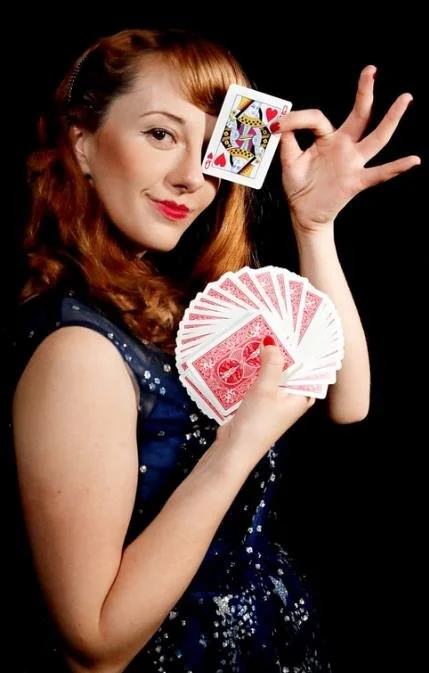
If you'd like a performer who'll ask for all of this, here's my case. I'm a member of the Magic Circle in London and the Academy of Magical Arts in Hollywood, I've earned multiple magic awards, and I've performed for companies including Formula 1, the Olympics, Porsche, Zapier, and the Ritz Carlton, with appearances on Penn & Teller: Fool Us. I'll ask about your platform, audience, time zones, and objective before the day, I'll tell you exactly what to put in the invitation, and I handle my own technical setup including contingency.
Frequently Asked Questions
What are the basics to confirm?
Which platform, who's hosting, who admits people, and whether there's a waiting room, since those cause more day of confusion than anything technical. Also flag whether your organization restricts external participants or requires guest approval, which is a configuration problem to solve in advance rather than a surprise five minutes before a Zoom magic show is due to start.
What number should we give?
Your honest expectation rather than the registration list, since virtual sign ups routinely exceed attendance by a wide margin. Say if it's uncertain and give a range, because a session for thirty runs differently from one for three hundred, particularly regarding interaction, and a performer planning for one and finding the other has to adjust live rather than prepare properly.
Why do time zones matter to the performer?
Because a session where half the room is joining at nine in the evening behaves differently from one where everyone is at their desk mid morning, and a performer who knows can pitch accordingly. Also mention whether people watch individually or gathered around one screen, since addressing a room of twelve through a single camera differs from addressing twelve separate squares.
Does it matter what the session is for?
It's the single thing most likely to change what a performer actually does. A team social, a thank you after a difficult period, an onboarding session, a client event, and a break in a conference agenda are different jobs, and a performer who knows the session exists to help new joiners feel included will pitch differently from one expecting end of year entertainment.
Should we mention difficult things?
Yes, and a brief note without explanation is enough. A recent redundancy round, poor results, a bereavement, or an unpopular restructure are all worth flagging, since performers work in rooms with histories constantly and would far rather know. The alternative is an upbeat session pitched into a room that isn't, which is the awkwardness this prevents.
When should we discuss recording?
At booking rather than on the day. A performer's material is their intellectual property and permissions vary, from free recording to internal use only to not at all. If you need a recording for other time zones, say so early since it may affect the arrangement. Turning a camera on and hoping produces the awkward conversation this avoids.
What don't we need to worry about?
Cameras off, people joining late, your platform not being the one the performer usually uses, or quiet attendees who won't speak. You don't need a run of show, a rehearsal, or a technical contact standing by, and you don't need to warn people beyond mentioning the objects. A good virtual performer handles their own setup and contingency.
How do I book you, and what should I send?
Reach out with your date, platform, expected attendance, and time zones. Once booked, one message covering hosting arrangements, viewing setup, your objective, who's in the room, anything sensitive, and recording intentions is ideal. I'll tell you exactly what to put in the invitation about household objects, and I'll ask about anything you haven't mentioned.

Ten Minutes That Change the Hour
The difference between a generic virtual session and one that felt built for your organization is rarely the fee and almost always the brief. Tell your performer the platform and hosting arrangements, your realistic numbers, the time zones and viewing setup, what the session is for, who's in the room, anything sensitive, and whether you want to record it.
That's one email before a Zoom magic show, and most clients send a fraction of it, which is why most sessions deliver a fraction of what they could have.
Reach out with your event details, and I'll ask about the rest.