

7 Ways Magic Makes Events More Interactive (From a Las Vegas Mentalist's Playbook)
7 Ways Magic Makes Events More Interactive (From a Las Vegas Mentalist's Playbook)

Here's a confession that might surprise you coming from a performer: I think most event entertainment is too passive.
Guests sit. They watch. They clap politely. And then they go back to their phones. The performance happened at them, not with them and the moment it ends, so does the energy. For years I've watched hosts spend enormous effort on entertainment that their guests experience like background television.
That's exactly why I fell in love with mentalism. Because the work I do as a Las Vegas mentalist isn't something you watch it's something you participate in. It pulls people out of their seats and into the experience. It turns a roomful of passive spectators into an electrified, leaning-in, "wait, do me next!" crowd.
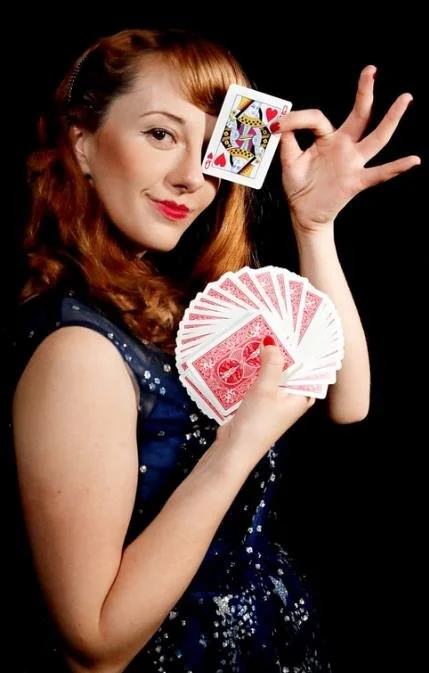
I'm Magical Katrina, a magician and mentalist who performs at events across the country including Las Vegas, and interactivity is the thing I obsess over. So let me share the playbook. Here are seven specific ways magic and mentalism make events genuinely more interactive — and why that interactivity is the secret ingredient behind every event people actually remember.
1. It Puts Your Guests Inside the Magic, Not in the Audience
The single biggest shift mentalism creates is this: your guests stop being spectators and become participants. When I work a room as a Las Vegas mentalist, the magic doesn't happen on a distant stage — it happens through the people in front of me. I'm reading their thoughts, revealing their choices, guessing the word they're only thinking. They're not watching a performance; they're in one.
That's a profound psychological difference. A passive audience member can drift; a participant cannot. The second a guest realizes they might be part of what happens next, they're locked in — alert, engaged, and a little thrilled. Interactivity isn't a bonus feature of what I do. It's the entire mechanism.
2. It Creates Shared "Did You See That?!" Moments
Interactivity isn't just one-on-one — it's contagious. When a Las Vegas mentalist reveals something impossible about one guest, everyone else in the room reacts together. That collective gasp, the heads turning to each other, the spontaneous "did you SEE that?!" — those are shared moments, and shared moments are what bond a room.
I've watched a single mentalism reveal ripple across a corporate reception like a wave: the group I'm performing for erupts, the groups nearby turn to look, and within seconds people who'd never spoken are comparing notes and laughing together. That's interactivity at the level of the whole room, not just the volunteer. The magic becomes a shared social experience rather than a solo performance.
3. It Gives Shy Guests a Way In — Without the Spotlight
Here's something a lot of hosts worry about: not everyone wants to be pulled onstage. The introverts, the guests who'd rather die than perform in front of a crowd — traditional "audience participation" can feel like a threat to them.
This is where mentalism shines, and where a thoughtful Las Vegas mentalist makes all the difference. So much of what I do is intimate and low-pressure — a guest simply thinks of something, or makes a private choice, and the interaction happens quietly between us before the reveal delights everyone. There's no need to perform, no spotlight, no risk of embarrassment. The shy guest gets to be part of the wonder on their own terms. Real interactivity includes everyone, not just the extroverts willing to grab a microphone.
4. It Sparks Conversation That Outlasts the Performance
The best interactive entertainment keeps working long after it's over. When guests experience a piece of mentalism together, they don't just enjoy it in the moment — they talk about it. For the rest of the night, and often for weeks afterward.
As a Las Vegas mentalist, I think of myself as planting conversation seeds. Every astonishing moment gives guests something to debate, dissect, and retell. "How did she know?" "Did you tell her beforehand?" "No, I swear I just thought it!" That back-and-forth is interactivity — it's your guests actively engaging with the experience and each other. A great mentalism set doesn't end when I step away; it keeps your room buzzing on its own.
5. It Adapts in Real Time to the People in the Room
Passive entertainment is fixed — a video plays the same way no matter who's watching. Interactive entertainment is responsive, and that responsiveness is a huge part of what makes it feel alive.
When I perform as a Las Vegas mentalist, I'm reading the room constantly and adjusting on the fly — who's loving it, who's skeptical, who's quietly hoping I'll come to their group next. The performance bends to the actual humans in front of me rather than running on rails. That means every group gets an experience that feels personal and spontaneous, tailored to them. Interactivity, at its core, is a two-way street — and a skilled performer is responding to your guests as much as they're responding to the magic.
6. It Turns Skeptics Into the Most Engaged People in the Room
Every event has them: the arms-crossed skeptic, the "I'll figure this out" guest, the person determined not to be impressed. And here's the beautiful irony — those skeptics become the most interactive people in the room once a Las Vegas mentalist gets going.
Skepticism is just engagement in disguise. A skeptic is paying more attention, not less — they're actively trying to solve the puzzle. So when something happens that they genuinely can't explain, they don't disengage; they double down. They want to test it again. They start recruiting their friends to watch. I've turned more than one determined skeptic into my loudest advocate of the night, dragging coworkers over going "you have to see this, I tried to catch her and I couldn't." That transformation is interactivity at its most fun.
7. It Can Be Built Around Your Event's Theme or Message
The deepest form of interactivity is when the magic connects to something your guests already care about. A skilled Las Vegas mentalist can weave your event's theme, your company's message, or your celebration's story directly into the performance — so guests aren't just interacting with the magic, they're interacting with your content through it.
For a corporate event, I can build a mentalism routine around a product launch or a conference theme so the brand moment becomes the magic moment. For a milestone celebration, I can fold in details about the guest of honor. When the interaction is personalized like that, guests lean in even harder — because now it's not just astonishing, it's about them. That's the difference between generic entertainment and an experience designed for your specific room.

Why Interactivity Is the Whole Point
Step back and look at those seven, and a pattern emerges. Every one of them is about the same thing: closing the gap between performer and audience until there isn't one. That's what separates an event people attended from an event people experienced.
Passive entertainment fills time. Interactive entertainment creates memories — because we remember what we participate in far more vividly than what we merely watch. A Las Vegas mentalist is, in a sense, an interactivity engine: a way to reliably pull a roomful of people out of their own heads and into a shared, electric, unforgettable experience.
And the best part? Your guests do half the work. All they have to do is think of something.
Frequently Asked Questions
What does a Las Vegas mentalist do at an event?
A Las Vegas mentalist performs mind-reading and psychological illusion — revealing thoughts, predicting choices, and creating moments that feel genuinely impossible — in a way that's highly interactive, since the magic happens through your guests rather than on a distant stage. I can perform it strolling through a reception for small groups, as a stage show for a seated audience, or woven into a keynote. Tell me your event type and I'll recommend the format that creates the most engagement.
How is mentalism different from regular magic?
Magic is largely visual — sleight of hand, vanishing objects, things appearing where they shouldn't. Mentalism is the mind side: predictions, influencing decisions, and revealing what someone is only thinking. Magic makes people gasp; mentalism leaves them genuinely unsettled in the best possible way, because it feels like a real superpower. I blend both, but as a Las Vegas mentalist the mentalism is usually what people can't stop talking about afterward.
Are you based in Las Vegas, or do you travel there for events?
I'm based in the Los Angeles area and travel regularly to Las Vegas and elsewhere for events. Booking a touring performer is simple — travel is just part of the planning conversation, and I handle the logistics so it's painless for you. In return you get a performer who has worked events in over 20 countries and brings that experience to your Las Vegas room.
Will a mentalist make my shy guests uncomfortable?
Not at all — and it's something I'm very intentional about. A lot of mentalism is low-pressure and intimate: a guest simply thinks of something privately, with no need to perform in front of a crowd. Shy guests get to be part of the wonder on their own terms, without the spotlight. Making people feel like the star, never the punchline, is a non-negotiable for me.
Can you tailor the performance to my specific event or audience?
Absolutely — it's one of the biggest advantages of interactive entertainment. I read each audience and adjust on the fly, and I can build the mentalism around your event's theme, your brand or product, or details about the guest of honor. That personalization makes guests lean in even harder, because the experience becomes about them. Share your event details and I'll tailor it accordingly.
How do I book you, and what do you need to get started?
The easiest first step is to reach out with your date, location, event type, and rough guest count — that's enough for me to check availability and send a quote. From there we'll talk through the format, your goals, and any travel or venue logistics, and a deposit secures your date. Then I show up and turn your guests into an engaged, buzzing, "do me next!" crowd.
Ready to Make Your Event Truly Interactive?
If there's one idea to take from all seven of these, it's this: the events people remember are the ones they got to participate in. Passive entertainment washes over a room and disappears. Interactive entertainment pulls people in, connects them to each other, and leaves them with a story they'll be retelling for years.
That's the magic I love most — not making people watch, but making them part of it. If you want an event where your guests are leaning in, gasping together, and begging to go next, I'd love to bring that energy to your room.
Reach out with your date and details, and let's design an experience your guests won't just watch — they'll live it.
- Magical Katrina