











The Business Case for a Corporate Magician: How to Get Leadership to Say Yes
The Business Case for a Corporate Magician: How to Get Leadership to Say Yes
The Slack message comes in at 4:47 p.m.
“A magician? For the leadership summit? Really?”
If you’ve ever suggested magic for a company event, you may have gotten a reply like that. Maybe it was a raised eyebrow in a planning meeting. Maybe it was a budget spreadsheet with your line item highlighted in yellow. Somewhere along the way, magic picked up a reputation for being a little cheesy, a little childish, or a nice-to-have that’s easy to cut.
I understand why. But I’d gently argue that it’s one of the most misunderstood options on the entertainment menu.

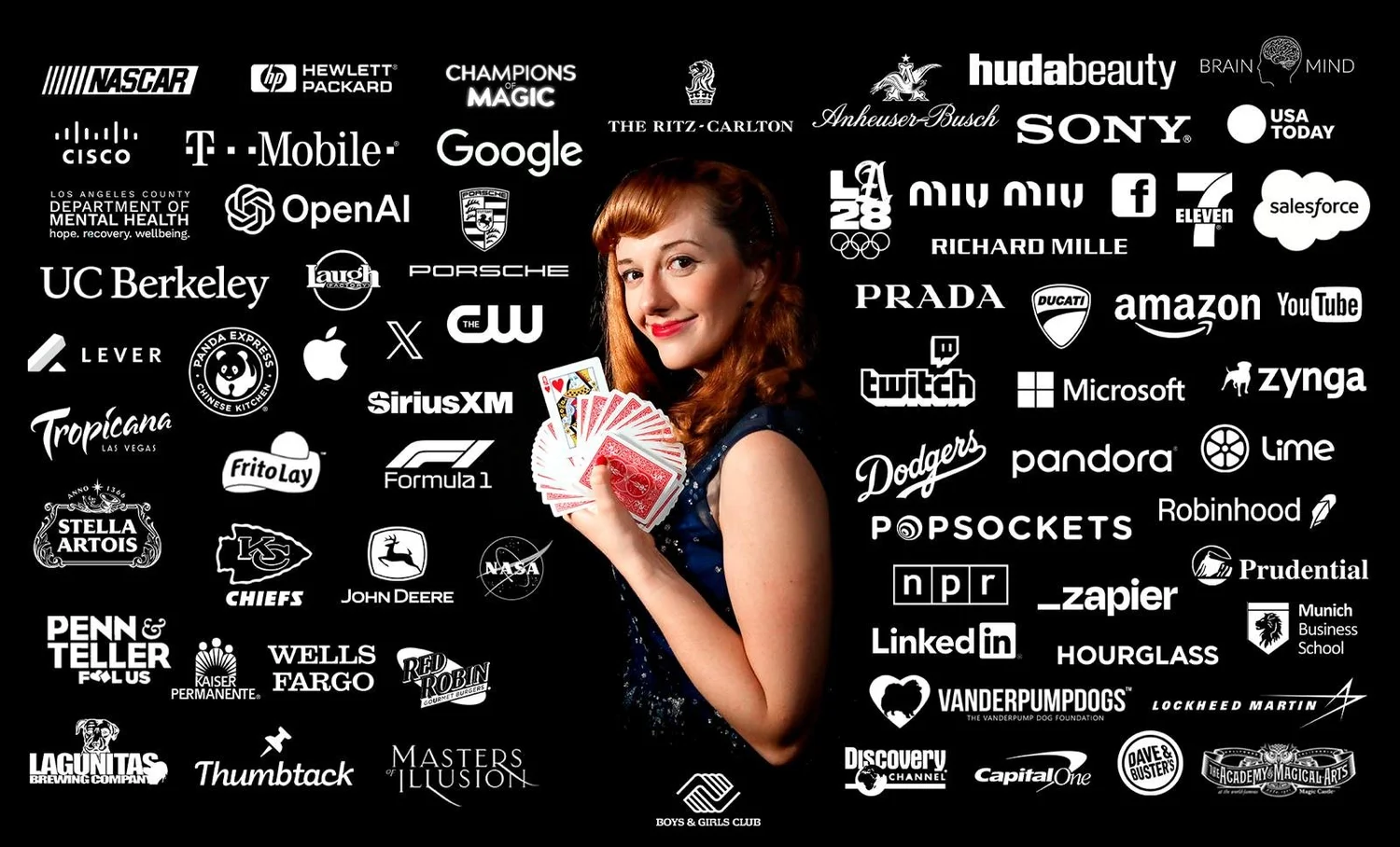
I’m Magical Katrina, a professional magician and mentalist based in Las Vegas. I’ve spent more than 13 years performing in over 20 countries, including work connected to Formula 1, the Olympics, Porsche, Prada, and Ritz-Carlton. A big part of my work is as a corporate magician, and I’ve seen firsthand what happens when a skeptical room gets genuinely surprised.
This guide is for the planner who believes in the idea but needs to convince someone else. I’ll walk you through the business case, the common objections, and what to include in your proposal. At the end, I’ll share the one sentence I’d put at the top of that proposal. It changes the whole conversation.
What Is a Corporate Magician, Really?
Let’s clear up the biggest misconception first.
A corporate magician is not a birthday party performer in a suit. The material, pacing, and humor are designed for adults in professional settings. It’s smart, clean, and inclusive, and it’s built so nobody leaves feeling embarrassed in front of their boss.
My work blends two crafts:
Magic: impossible moments, often with borrowed objects, happening right in front of your guests.
Mentalism: the appearance of reading minds, predicting decisions, and revealing thoughts nobody said out loud.
Mentalism in particular tends to win over serious audiences. It isn’t about props. It’s about people, which makes it feel intelligent, personal, and surprisingly sophisticated.
The Business Case: What a Corporate Magician Actually Delivers
When you’re making the case to leadership, focus on outcomes, not tricks. Here’s what live corporate magic is genuinely good at.
It Breaks Down Silos
At most company events, people stick with the people they already know. Sales stays with sales. Engineering finds its corner. A corporate magician moving through a reception gives strangers a reason to gather and something to talk about. Being amazed together is one of the fastest icebreakers there is.
It Holds Attention When Attention Is Scarce
Your attendees are juggling notifications, deadlines, and the temptation to check email. Live, interactive entertainment from a corporate magician pulls them back into the room. When people know they might be part of the moment, they put their phones down.
It Creates Memories Tied to Your Event
People forget slides. They remember experiences. The story of “the time she read the VP’s mind” gets retold in hallways and team chats long after the event. That kind of memory becomes part of how people feel about the company that brought them together.
It Can Carry Your Message
Depending on the event, a corporate magician can weave your company name, theme, product, or key message into the performance. I also build magic into keynotes on marketing, entrepreneurship, communication, and ADHD, using illusions to make ideas stick.
It Works for Almost Any Audience
Unlike some entertainment, magic doesn’t require people to dance, drink, sing, or compete. Introverts and extroverts, new hires and executives, local teams and international guests can all enjoy it equally. Participation is always optional.
It’s Flexible and Low-Maintenance
A corporate magician can fit into a cocktail hour, a dinner, a conference session, a trade show booth, or a virtual event. Close-up magic doesn’t need a stage or a crew. That flexibility makes it easy to fit into an existing program.

Answering the Common Objections
Chances are, your leadership team will raise at least one of these. Here’s how I’d respond.
“Isn’t magic a little cheesy?”
It can be, when it’s the wrong performer for the room. That’s why choosing a corporate magician who specializes in professional audiences matters. The right performer reads the room, keeps the material sophisticated, and makes your guests the stars instead of the props.
“Our team is too serious for that.”
In my experience, serious audiences are often the best ones. Analytical people love a puzzle, and skeptics pay closer attention than anyone, because they’re trying to figure it out. That attention is exactly what makes the moment of surprise land.
“What if someone gets embarrassed?”
They shouldn’t. A professional corporate magician makes volunteers look great, never foolish. In my shows, participation is always optional and nobody is forced into the spotlight.
“We can’t justify the cost.”
Think about the full investment in your event: venue, catering, travel, and, most of all, your people’s time. If the event doesn’t hold attention or create connection, much of that investment is lost. Hiring a corporate magician who makes the event memorable protects everything else you’re spending.
“We’re remote. Does that even work?”
Yes. I perform live, interactive virtual shows for distributed teams. My virtual Zoom shows typically range from $1,400 to $5,000, depending on audience size, format, and customization.
Ways to Use a Corporate Magician
To make your proposal concrete, show leadership exactly where magic would fit. Common formats include:
Strolling magic during receptions, cocktail hours, and networking events
Featured stage shows after dinner, at awards nights, or at company parties
Keynotes that use magic to illustrate business ideas
Team-building workshops where participants get involved rather than just watching
Trade show booth performances that draw traffic and deliver your message
Client dinners and VIP events with intimate close-up mentalism
Virtual shows for remote and hybrid teams
Picking one or two formats tied to clear goals makes your request much easier to approve than a vague “let’s book a corporate magician.”
What to Include in Your Proposal
Here’s a simple structure you can use when pitching the idea internally:
The goal. What should this event achieve? Connection, celebration, client relationships, energy, or a message?
The format. Where will the performance fit in the schedule, and why there?
The audience. Who’s attending, and why this style of entertainment suits them.
The performer. Credentials, experience with corporate audiences, and how the material stays professional.
The investment. The quote, and how it compares with the overall event budget.
The success measure. How you’ll know it worked, such as post-event survey feedback or how people talk about the event afterward.
If you’re considering me, I’m happy to help you put the details together. Tell me about your event and I’ll explain what I’d recommend and why, in a way that’s easy to share with your decision-makers.
How to Choose the Right Corporate Magician
Not every performer is right for every company. When comparing options, look for:
Clean, inclusive material suited to mixed professional audiences
Experience with corporate events, not just theaters or private parties
Professionalism behind the scenes, including coordination with planners, venues, and AV teams
Customization that connects the performance to your event
Verifiable credentials and real clients
For my part, I’ve appeared on Penn & Teller: Fool Us and Masters of Illusion, and I’m a member of The Magic Circle in London and the Academy of Magical Arts in Hollywood. When you’re bringing a corporate magician in front of your people, you deserve to know exactly who you’re hiring.
Frequently Asked Questions
What does a corporate magician do?
A corporate magician performs magic and mentalism designed specifically for professional audiences. The performance is clean, interactive, and adaptable to events like receptions, conferences, company parties, client dinners, trade shows, and virtual gatherings.
How much does it cost to hire a corporate magician?
For in-person events, pricing depends on the date, location, format, length, audience size, and customization, so the best approach is to send your event details for a quote. My virtual Zoom shows typically range from $1,400 to $5,000.
Can the performance include our company’s message?
Often, yes. Depending on the event, I can weave in your company name, a product, a theme, a milestone, or a key message. Share what you’d like to highlight when you reach out.
Do you travel for corporate events?
As a corporate magician based in Las Vegas, I’ve performed in over 20 countries. Share your event location and details, and we can talk through availability and logistics. I also perform live virtual shows for distributed teams.
What information should I send to get a quote?
Your event date, location or venue, estimated guest count, the type of event, who’s attending, your goals, and whether you’re interested in an in-person or virtual performance.

The Sentence I’d Put at the Top of Your Proposal
So here’s the sentence I promised:
“We’re not paying for magic tricks. We’re paying for the moment our people stop acting like coworkers and start acting like a team.”
That’s what a great corporate magician really delivers. The tricks are just the vehicle. The real value is the shared gasp, the laughter that spreads across departments, and the conversation that starts between two people who never would have spoken otherwise.
Leadership doesn’t need to be convinced that magic is fun. They need to see that connection, attention, and memorable experiences are worth investing in. When you frame it that way, the conversation changes.
If you’re planning a conference, company party, client event, trade show, or virtual gathering and want a corporate magician who can win over even the most skeptical room, I’d love to hear about it. Reach out with your date, location, guest count, and what you’re hoping to achieve. I’ll help you make the case, and then I’ll help you prove it.