


Corporate Christmas Party Entertainment for a Very Large Party
Corporate Christmas Party Entertainment for a Very Large Party
Entertainment that works beautifully for eighty people does something quite different at five hundred. The format is identical, the room is six times the size, and a proportion of your guests will go home having experienced none of it.

That's an arithmetic problem rather than a quality one. I'm Magical Katrina, an award winning magician and mentalist, and I want to set out how corporate Christmas party entertainment scales, and what a large party actually needs.
Do the Coverage Arithmetic
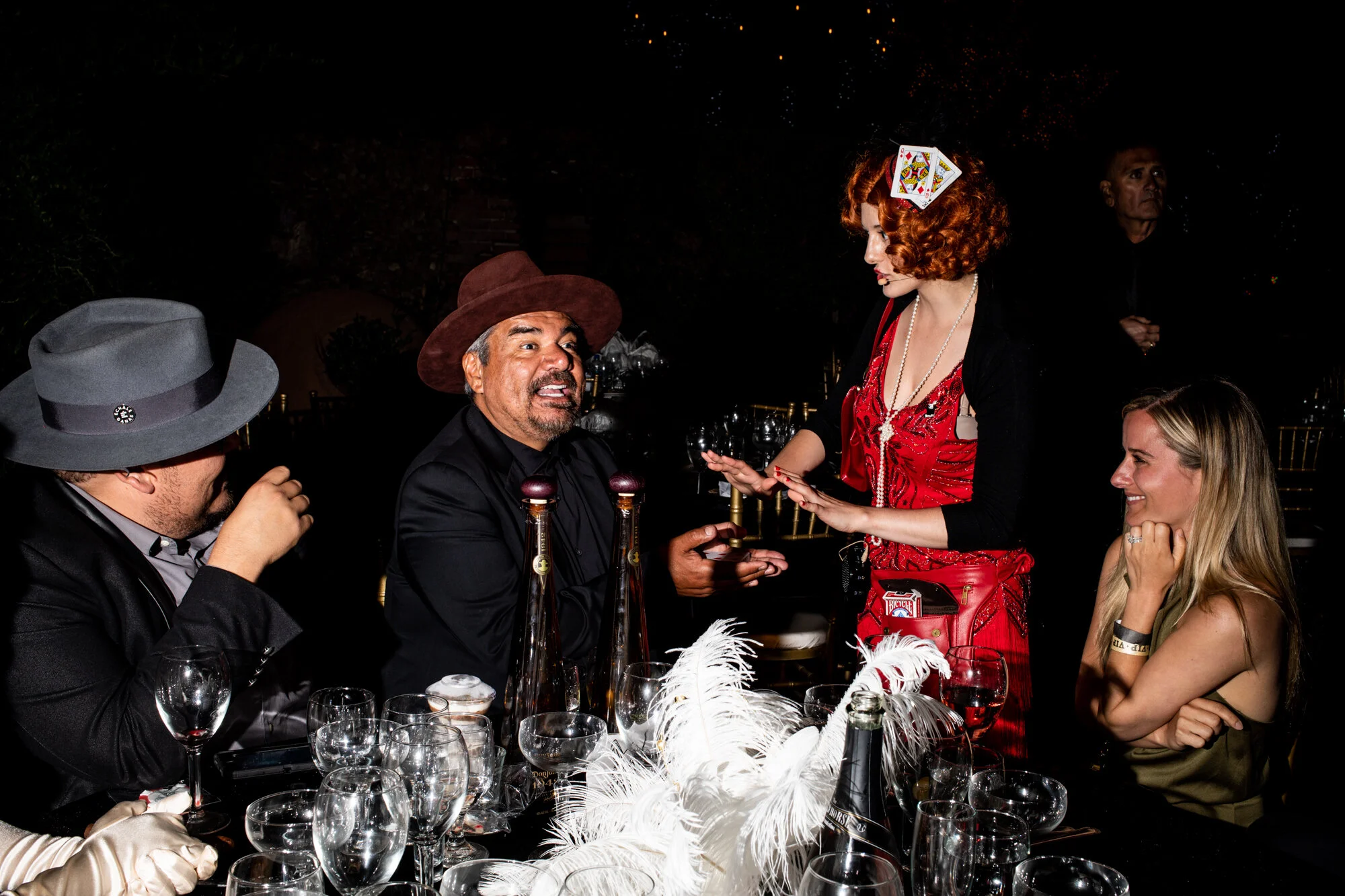
Start with the calculation almost nobody does. A performer working close up reaches groups of four or five for a few minutes each, which across three hours covers a meaningful number of people and nowhere near five hundred.
Work it out before you book: a performer might reach somewhere between eighty and a hundred and fifty guests in an evening depending on the room and the format. Divide your headcount by that and you have the number of performers your party actually needs, which is frequently more than one and almost never the one everybody books by default.
Partial Coverage Is Fine If You Plan It
Worth saying, since the arithmetic above sounds discouraging. A single performer at a party of five hundred is not a wasted booking, provided you understand what it achieves and position it accordingly.
Place them where the concentration is: a reception area, a particular room, or the stretch before dinner when people are standing. What doesn't work is booking one performer and expecting the room to be covered, then concluding afterwards that it didn't land. Decide what you're buying and the result matches.
Two Performers Is a Different Product
Worth knowing, since it's the usual answer at this size. Two performers working different areas cover roughly twice the room and change the feel of an event considerably, since guests encounter something wherever they are rather than in one corner.
That's not twice the cost of one in every case, since performers who work together regularly frequently quote more favorably as a pair. Ask about it rather than assuming, and ask whether they've worked together before, since two performers who coordinate are considerably better than two who happen to be in the same room.
A Staged Element Earns Its Place at Scale
The point where the calculation changes. At eighty people, a stage show is one option among several. At five hundred, it's the only format that reaches everybody at once.
That's a genuine argument for a staged element at a large party, provided your room has sightlines and your program has a slot. A common structure at this size is strolling work during the reception for as much of the room as it reaches, then something from the stage after dinner that everybody experiences. The two do different jobs and the combination covers the arithmetic.

Your Room Decides What's Possible
Practically decisive at scale. Five hundred people in a ballroom with a stage and sightlines supports a staged element. Five hundred spread across three rooms and a mezzanine does not, however good the performer.
Walk the space and be honest about where people will actually be. A large party frequently spreads into areas the plan didn't account for, and entertainment placed in the main room reaches whoever stayed in it. If your venue has multiple spaces, that's an argument for more performers rather than a longer booking.
Dinner Service Creates Natural Gaps
Worth using at this size. A seated dinner for five hundred takes a long time to serve, and the stretches between courses are when guests are captive, seated, and available.
A performer working tables during service gaps reaches a defined group properly rather than catching people in passing, which at a large party is a more efficient use of the time than working a crowded reception. Ask your venue how long service will take, since it's usually longer than they first say and it's your best coverage window.
Don't Book One of Everything
Worth cautioning, since large budgets invite it. A party of five hundred with a band, a DJ, a photo booth, a caricaturist, and a magician has spent a great deal on elements competing with each other for the same guests.
Fewer things done properly reaches more people than many things done thinly. If your budget is substantial, two performers of the same kind covering the room beats five different attractions each reaching a corner of it. That's the opposite of how large party budgets usually get spent.
Tell the Performer the Real Number
Practically important and frequently fudged. A booking made for three hundred that turns out to be five hundred means the same performer reaching a smaller proportion, and the organizer concluding afterwards that it didn't work.
Give the honest figure at enquiry, and tell them if it changes. Any professional will tell you what coverage to expect at that number and whether you need more than one, and a performer who doesn't raise it when you say five hundred hasn't thought about your event.
Frequently Asked Questions
How many people can one performer reach?
Somewhere between eighty and a hundred and fifty in an evening depending on the room and format, since close up work reaches groups of four or five for a few minutes each. Divide your headcount by that and you have the number of performers your party actually needs, which is frequently more than one.
Is one performer at a big party a waste?
No, provided you understand what it achieves and position them where the concentration is, such as a reception area or the stretch before dinner. What fails is booking one and expecting the room covered, then concluding it didn't land. Decide what you're buying and the result matches.
Should we book two?
At this size usually, since two performers working different areas cover roughly twice the room and guests encounter something wherever they are. It isn't always twice the cost, since performers who work together regularly often quote favorably as a pair, and ask whether they've worked together before.
Does a stage show make more sense at scale?
Yes, since at eighty people it's one option and at five hundred it's the only format reaching everybody at once, provided your room has sightlines and your program has a slot. A common structure is strolling during the reception then something staged after dinner.
What if our venue has several rooms?
That's an argument for more performers rather than a longer booking, since entertainment placed in the main room reaches whoever stayed in it and a large party frequently spreads into areas the plan didn't account for. Walk the space and be honest about where people will be.
When's the best coverage window?
Dinner service, since a seated dinner for five hundred takes a long time and the gaps between courses are when guests are captive, seated, and available. A performer working tables reaches a defined group properly rather than catching people in passing. Ask your venue how long service takes.
Should we book several different attractions?
Usually not, since a band, a DJ, a photo booth, a caricaturist, and a magician compete for the same guests, and fewer things done properly reaches more people than many done thinly. Two performers of the same kind covering the room beats five attractions each reaching a corner.
What should we tell the performer?
The real headcount at enquiry and any change afterwards, since a booking made for three hundred that turns out to be five hundred means a smaller proportion reached and an organizer concluding it didn't work. A performer who doesn't raise coverage when you say five hundred hasn't thought about your event.
Work Out the Coverage First
The corporate Christmas party entertainment decision at scale is arithmetic before it's taste. Work out how many guests one performer realistically reaches, divide your headcount by it, and decide honestly whether you're buying coverage or a feature in one part of the room.
Then use the structure that fits: two performers rather than one, a staged element that reaches everybody at once, dinner service gaps rather than a crowded reception, and fewer things done properly rather than five attractions competing for the same five hundred people.
Reach out with your headcount and venue, and I'll tell you honestly what one performer covers.