


Corporate Christmas Party Entertainment at a Shared Party Night
Corporate Christmas Party Entertainment at a Shared Party Night
A shared party night is how a great many companies do December. A hotel sells tables to thirty different organizations, puts on a meal, a DJ, and a theme, and each company gets a table or a block of them in a room full of strangers.

It's good value and it comes with an obvious limitation: you don't control any of it. I'm Magical Katrina, an award winning magician and mentalist, and I want to set out what corporate Christmas party entertainment can still do for your team on a night like that, and where it fits.
You Bought a Venue, Not an Event
Start with the honest framing. What a shared night gives you is a room, a meal, and a DJ, which solves the logistics entirely and does nothing specific for your organization.
Your team's experience of the evening is the people at their table and whatever happens there. The entertainment on the stage is generic by design, since it has to work for thirty different companies, and nothing about the night is about your organization at all. That's the gap worth filling, and it's smaller and cheaper to fill than most people assume.
Your Team Is Three Tables Among Thirty
The structural reality. Your group is seated together in a large room with no privacy, a high noise level, and a program happening around them that nobody chose.
That makes the arrival hour and the period around the meal the only times your people really interact as a group. Once the music starts, the room belongs to everybody, and whatever your team was going to get out of the evening has either happened by then or won't.
The Arrival Hour Is Yours
Practically the most useful observation. Shared nights almost always have a drinks reception before the meal, and that hour is the part of the evening where your group is together, can hear each other, and isn't competing with a sound system.
That's where anything you add belongs. Something during the reception reaches your whole team, works in the noise level that exists at seven rather than the one at ten, and happens before the evening becomes a room of strangers dancing. If you're doing one thing, do it then.
Check With the Venue First
Worth doing early, since shared nights have rules. The hotel is running an event for thirty clients and will have a view on anything a single company brings in, particularly anything that affects other tables or the room's program.
Ask before you book. Most venues are entirely fine with something at your own tables during the reception or the meal, and most would refuse anything amplified, staged, or visible to the whole room, which is reasonable. Close up magic is usually straightforward to approve because it affects nobody else, and getting that confirmed in writing takes one email.
Nothing Can Need Power, Sound, or Space
Practically the governing constraint. You have a table, possibly a small area near it, no access to the venue's sound, no stage, no power, and no ability to change the lighting or the room.
That rules out most formats entirely. What works is something that happens at and around your own tables with nothing installed and nothing plugged in, which also means nothing for you to set up while your team is arriving. For a night where you control nothing, entertainment that requires nothing is the only workable kind.
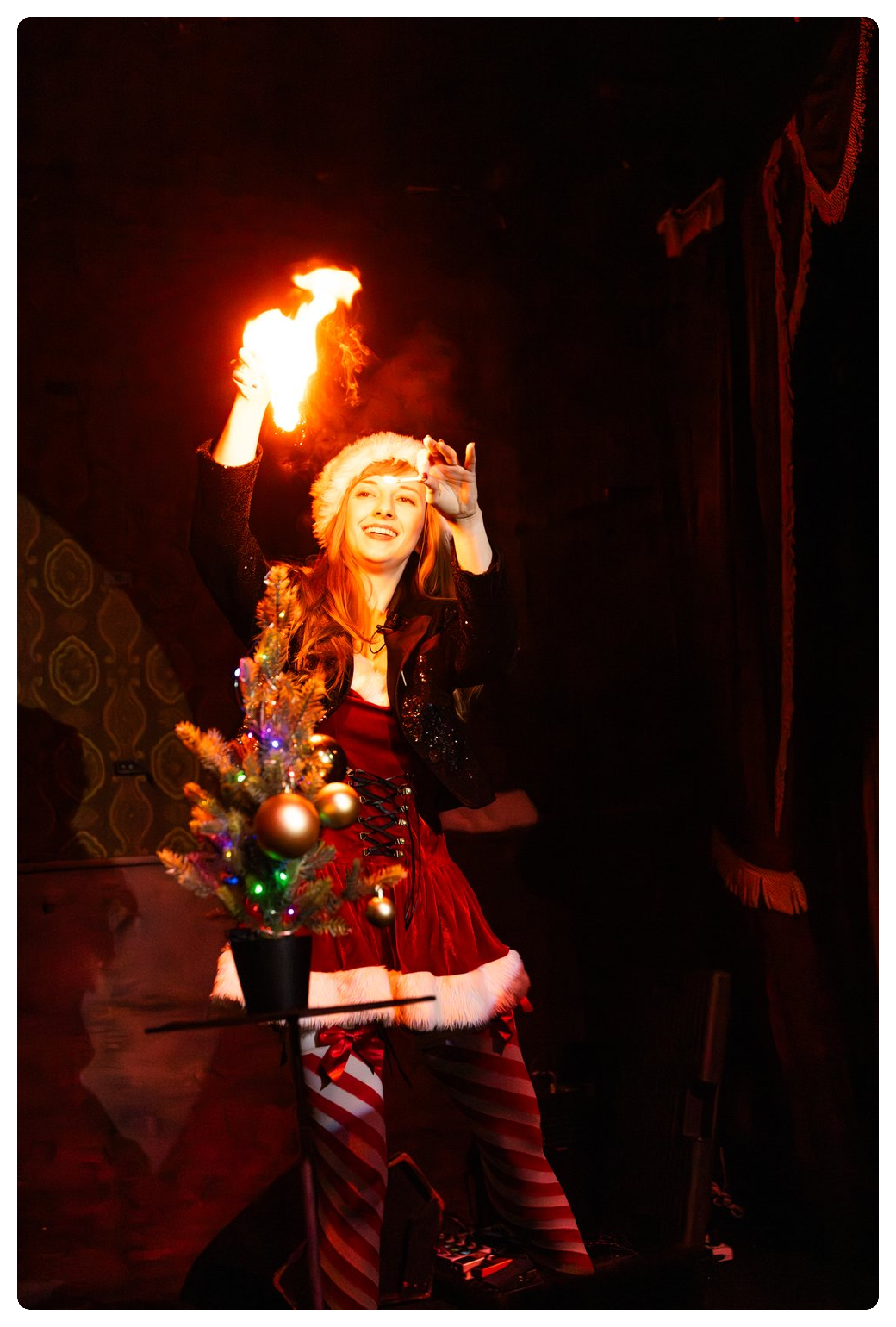
It Makes Your Table the Interesting One
Worth saying, since it's a real effect. In a room of thirty companies all having the same evening, the table with something happening at it is noticeably different, and your team will feel that.
That matters more than it sounds at a shared night, because the implicit comparison with the other twenty nine tables is running all evening whether anybody mentions it or not. For a modest cost you've given your people an evening slightly better than the one everybody else in the room is having, which is the whole proposition.
It Mixes Your Own Group
Worth planning for, since your team has the same problem every group does. People sit with the colleagues they already know, and at a shared night there's nowhere else to go and nobody else to talk to.
Something moving between your tables gives people a reason to turn round and talk to the colleagues they didn't sit with, which at a company dinner is usually the point of the evening. Three tables of eight that mixed is a better result than three tables of eight that didn't, and nothing about the venue's own program will make that happen.
Book Earlier Than the Party Itself
The practical timing note. Companies book shared nights early because the hotel sells out, then think about anything extra in November, by which point December availability is largely gone.
The entertainment calendar fills faster than the venue one. If you've got a shared night in the diary, sort anything you want to add to it now rather than treating it as a decision for later, since the first three weeks of December go first and the weekend dates go first of all.
Why Book Magical Katrina
If your team is at a shared night, here's my case. I'm a member of the Magic Circle in London and the Academy of Magical Arts in Hollywood, I've earned multiple magic awards, and I've performed for clients including Formula 1, the Olympics, Porsche, Prada, Zapier, and the Ritz Carlton, with appearances on Penn & Teller: Fool Us and Masters of Illusion. I need no stage, power, sound, or space so venues approve it easily, I work at your own tables without affecting anybody else's evening, I'm fully insured with a certificate your hotel can have on request, and there's nothing for you to set up.
Frequently Asked Questions
What's actually missing from a shared party night?
Anything specific to your organization. You've bought a room, a meal, and a DJ, which solves the logistics and does nothing for your team, since the stage program is generic by design because it has to work for thirty different companies.
When should we schedule something?
The arrival reception, since that's when your group is together, can hear each other, and isn't competing with a sound system. Once the music starts the room belongs to everybody, so whatever your team was going to get from the evening has happened by then or won't.
Do we need to ask the hotel?
Yes, and early, since they're running an event for thirty clients and will have a view on anything a single company brings in. Most are fine with something at your own tables and would refuse anything amplified or visible to the whole room, which is reasonable.
What format can actually work there?
Something needing no stage, power, sound, or floor space, since you have a table and nothing else. Close up magic happens at and around your own tables with nothing installed, which also means nothing for you to set up while your team arrives.
Isn't this just showing off?
It's giving your people a slightly better evening than the other twenty nine tables, and at a shared night that comparison is running all evening whether anybody mentions it or not. For a modest cost, the table with something happening at it is noticeably the interesting one.
Will it help our team actually mix?
Yes, which is usually the point of a company dinner. People sit with the colleagues they know and at a shared night there's nowhere else to go, so something moving between your tables gives them a reason to turn round and talk to somebody else.
How far ahead should we arrange it?
Now, if your shared night is already booked, since the entertainment calendar fills faster than the venue one. Companies book the hotel early and think about extras in November, by which point the first three weeks of December are largely gone.
What will the venue need from us?
Usually just notice and a certificate of insurance, both of which I can provide the day you ask. Confirming in writing that the hotel is happy takes one email and avoids any conversation on the night.

Make Your Corner of the Room Different
A shared party night handles the venue, the meal, and the music, and leaves your organization with a table in somebody else's event. Good corporate Christmas party entertainment in that setting isn't about competing with the stage, it's about making the hour before the meal genuinely yours.
Check with the hotel, pick something that needs nothing from the room, put it in the arrival reception, and book it now rather than in November. Your team gets an evening slightly better than everybody else's, which at a shared night is exactly what you were missing.
Reach out with your venue and date, and I'll tell you how I'd work your tables.