


Corporate Magician for Company Family Days
Corporate Magician for Company Family Days
A company family day has a harder brief than almost any other corporate event. You're programming simultaneously for employees who want to relax, children of every age from two to fifteen, partners who know nobody, and grandparents who came along because somebody was looking after them that day.

Most family days solve this by becoming children's parties with adults standing around the edges. I'm Magical Katrina, an award winning magician and mentalist, and I want to set out what a corporate magician contributes to a family day, and how to program one that works for everybody in the field.
Decide Who the Day Is Actually For
Start with the question most organizers skip. A family day can be an event for employees that children can attend, or an event for children that employees bring them to, and those are different days requiring different programs.
Both are legitimate and the failure is not choosing. The default is the second one: bouncy castles, face painting, and a long afternoon where the adults watch their own children and talk to nobody. If the point was for colleagues and their families to spend time together, that version hasn't achieved it, and nobody noticed because the children enjoyed themselves.
Partners Are the Group Nobody Plans For
Worth taking seriously, since they're a large share of the attendance. An employee's partner arrives knowing one person, surrounded by colleagues talking about work, at an event hosted by an organization they don't belong to.
That's an uncomfortable afternoon, and it's why some employees stop bringing them. Something that gives strangers a shared thing to react to helps considerably, as does any programming that isn't aimed exclusively at either the children or the staff. A family day where partners had a good time is one people bring their families to again next year.
The Age Range Is Wider Than You Think
The structural problem. A company family day has toddlers, primary age children, teenagers who were made to come, parents, and sometimes grandparents, and a single activity rarely serves more than one of those bands.
Teenagers in particular are badly served by most family day programming and spend the afternoon on their phones at the edge of the field. Magic crosses the range properly, since astonishment needs no particular age, and a performer adjusts between a group of six year olds and a cluster of bored fourteen year old’s without changing what they're doing. For the widest audience you'll ever program for, that matters.
People Arrive and Leave Across the Whole Day
Practically the most important scheduling point. Families come when the youngest child's nap allows, leave when somebody has had enough, and stay for ninety minutes of a four hour event.
That makes scheduled performances a poor fit, since whoever is on the field at two o'clock sees it and everybody else doesn't. Something moving through the event across the afternoon reaches far more families, and it means the people who arrived at noon and the people who arrived at three both get something rather than one group getting everything.
Outdoor Means Two Plans
Worth settling early, since most family days are outdoors. A field, a marquee, a car park, or a company lawn is weather dependent, and the decision gets made the morning of the event.
Anything with a stage, power, or sound becomes a problem when you move indoors at short notice. Close up magic works in a marquee, on grass, or in a canteen with nothing to relocate or reconnect, which means the contingency plan is simply the same event somewhere else. For an outdoor event you're committed to months ahead, that's worth more than it sounds.

Your Site Has No Infrastructure
Worth knowing when choosing what to book. Family days frequently happen at a company's own premises: a car park, a lawn, a warehouse yard, or a canteen, none of which have a stage, usable sound, or spare power, and all of which have to go back to being a workplace on Monday.
Entertainment that needs nothing installed and leaves nothing to strike is the practical choice in that setting, and it means your facilities team isn't managing a build on a Saturday.
Employees Are Hosts, Not Guests
Worth recognizing, since it changes the experience for your own people. An employee at a family day is supervising their children, introducing their partner to colleagues, and quietly checking everybody is having a good time, which is work of a kind.
Anything that occupies their children properly gives them twenty minutes of not doing that, which is the thing they'll remember. A parent who got to have an actual conversation with a colleague while their child was genuinely absorbed has had a better day than one who spent four hours supervising in a field.
It Says Something About the Company
Worth considering for the budget conversation. A family day is one of the few occasions where an employee's family forms a direct impression of their employer, and that impression reaches people who otherwise only hear about work secondhand.
An afternoon that was clearly thought about does more for how an employee's household feels about the company than most internal communication ever will. That's a reasonable argument when the family day budget is being questioned, since it reaches an audience nothing else you do goes near.
Why Book Magical Katrina
If you're planning a family day, here's my case. I've earned multiple magic awards including a Family Entertainer of the Year honor, I'm a member of the Magic Circle in London and the Academy of Magical Arts in Hollywood, and I've appeared on Blippi as a performer and magic consultant alongside Penn & Teller: Fool Us and Masters of Illusion, with corporate clients including Formula 1, the Olympics, Porsche, and the Ritz Carlton. I perform for every age in the same afternoon including the teenagers, I need no stage, power, or sound so a lawn or a canteen works as it is, I move indoors if the weather turns, and I work across the afternoon rather than at a single scheduled time.
Frequently Asked Questions
What's the most common mistake?
Not deciding who the day is for. A family day can be an event for employees that children attend, or a children's event employees bring them to, and the default is the second: bouncy castles and a long afternoon where adults watch their own children and talk to nobody.
What about employees' partners?
They're a large share of attendance and the group nobody plans for, arriving knowing one person at an event hosted by an organization they don't belong to. Something that gives strangers a shared thing to react to helps, and a family day partners enjoyed is one people return to.
How do we handle the age range?
Book something that crosses it, since you'll have toddlers through to teenagers, parents, and sometimes grandparents, and most activities serve one band. Teenagers are particularly badly served and spend the afternoon on their phones at the edge of the field.
Should we schedule a performance?
Not a single one, since families arrive when the youngest child allows and leave when somebody has had enough, so whoever is there at two sees it and nobody else does. Something moving through the afternoon reaches far more families.
What if it rains?
Have one plan that works either way. Anything with a stage, power, or sound becomes a problem when you move indoors at short notice, whereas close up magic works in a marquee, on grass, or in a canteen with nothing to relocate.
Will it work on our own site?
Yes, and that's where most family days happen: a car park, a lawn, a yard, or a canteen with no stage, sound, or spare power, all of which revert to a workplace on Monday. Entertainment with nothing to install means no Saturday build for your facilities team.
What does it do for our employees?
Gives them twenty minutes of not hosting, since an employee at a family day is supervising children, introducing a partner, and checking everybody is enjoying themselves. A parent who had an actual conversation with a colleague has had a better day than one who supervised in a field for four hours.
How do we justify the budget?
It's one of the few occasions where an employee's family forms a direct impression of the company, reaching people who otherwise hear about work secondhand. An afternoon that was clearly thought about does more for how a household feels about an employer than most internal communication.
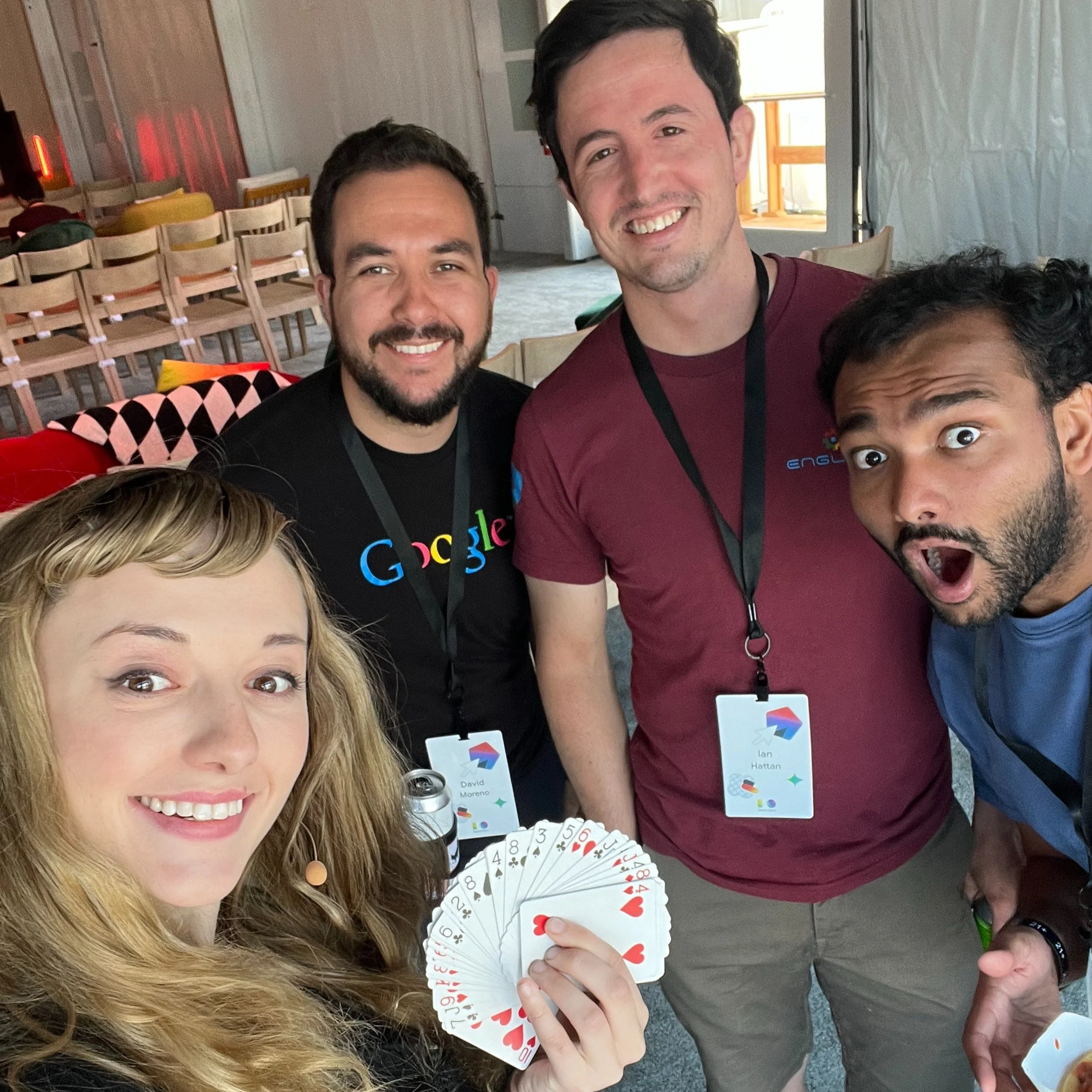
Program for the Whole Field
A company family day is the widest audience you'll ever program for, and the version that works serves the adults as well as the children rather than parking the grown ups at the edge.
A corporate magician booking suits that brief: it reaches every age including the teenagers, it works across the afternoon as families come and go, it needs nothing from a lawn or a canteen, and it moves indoors with everybody if the weather turns. Decide who the day is for before you book anything, plan for the partners, and give your employees twenty minutes where they aren't hosting.
Reach out with your date, your site, and roughly who's coming, and I'll tell you how I'd work the afternoon.