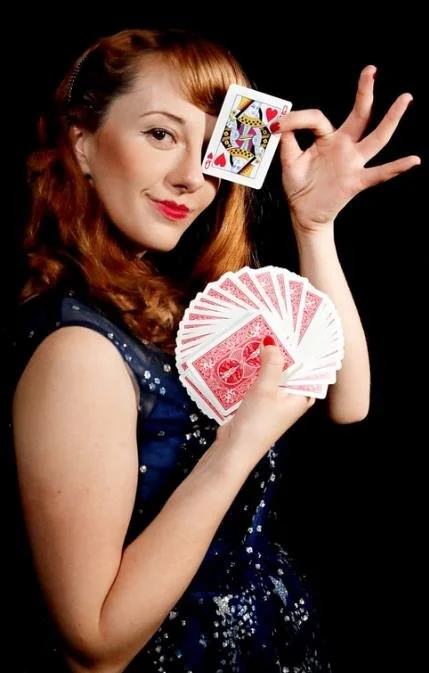


Female Magician in New York for Women's Networks in Finance and Law
Female Magician in New York for Women's Networks in Finance and Law
A women's network at a bank, a law firm, or a consultancy faces a particular problem. Attendance competes directly with billable hours, the audience is professionally skeptical, and the senior women you most want in the room are the ones least able to give up an evening.

That makes programming harder than it is almost anywhere else. I'm Magical Katrina, an award winning magician and mentalist, and I want to set out what a female magician in New York brings to a network event in this sector, beginning with the part that has nothing to do with gender.
Skill Decides It
Worth establishing first. Skill in magic and mentalism has nothing to do with gender, and you should book a female magician in New York because she's genuinely excellent, assessed on exactly the criteria you'd apply to anyone.
What follows is context rather than justification. For a women's network, a woman doing something technically demanding at a high level in a field that has been overwhelmingly male carries the theme without a word of framing, which is a real addition on top of excellence.
Your Audience Is Skeptical by Training
Start with what makes this room distinctive. Lawyers, bankers, and consultants are trained to identify weak arguments, and they apply that instinct to internal programming as readily as to a deal.
Anything that reads as a soft initiative, a box ticking exercise, or an afternoon of being told things they already know will be attended politely and remembered as time lost. That isn't cynicism, it's an occupational habit, and the only reliable response is programming something genuinely worth the hour rather than something worthy.
Attendance Competes With Billable Time
The constraint that governs everything. In an environment where time is literally accounted for, attending a network event has a measurable cost, and people make that calculation whether or not anybody says so.
That raises the bar considerably. An event has to be worth more than the hour it displaces, which rules out most generic programming. It also argues for formats that are genuinely enjoyable rather than instructive, since people will give up an hour for something good considerably more readily than for something improving.
Senior Women Are the Hardest to Get
Worth planning around deliberately, since their presence determines everything else. Junior colleagues attend network events partly to see senior women there, and senior women are the busiest people in the building with the least discretionary time.
Ask them directly, specifically, and early, with a date rather than a general invitation. Their diary is the constraint rather than their willingness. And program something they'd actually enjoy rather than something they're expected to endorse, since an hour they found genuinely good is what gets them to the next one.
Demonstration Beats Assertion Here
Worth considering when choosing the format. A session about barriers asks a skeptical professional audience to accept propositions, and a proportion of any such room will privately evaluate rather than absorb.
Watching a woman do something genuinely difficult at a high level requires nobody to accept anything, since the impression forms without an argument being made. For an audience whose entire professional training is the assessment of claims, that's a considerably more effective route than a presentation, which is why this format suits this sector particularly.
Time It Around the Working Day
Practical and frequently got wrong. An evening event in these firms competes with work that will still be there afterwards, which means people leave early or decline entirely.
A breakfast, a lunch, or something at the end of the afternoon that releases people rather than extending their day performs considerably better. If it must be an evening, keep it genuinely short and say so in the invitation, since an open ended evening event reads as a risk to somebody with a deadline.

Your Venue Is an Office or a Private Room
Practically, these happen in a firm's own space, a private dining room, or a client entertaining suite, none of which has a stage, sound, or spare floor area.
Close up magic needs none of it, works in a boardroom or around a dinner table exactly as it is, and requires no production. For a network with a modest budget inside a firm where room booking is its own process, entertainment requiring nothing is what makes the event straightforward rather than merely possible.
Be Honest About What It Does
Worth saying, since this audience will notice overclaiming faster than most. An event doesn't change progression, retention, or how work is allocated, and presenting it as though it might invites exactly the scrutiny this room is good at.
What it does is produce a well attended evening that senior and junior women both enjoyed, contact between people who don't normally speak, and goodwill towards a network that has to keep earning it. Those are modest and genuine, and they're what makes the next event easier to fill.
A Note on "Local vs. Traveling In"
Worth knowing: there are relatively few women working professionally in magic, so restricting your search to New York based performers shrinks an already small pool, particularly in busy periods. Many travel in, with travel discussed openly and factored into the quote. I'm based in the Los Angeles area and travel to New York for corporate events.
Why Book Magical Katrina
If you run a network program, here's my case. I'm a member of the Magic Circle in London and the Academy of Magical Arts in Hollywood, I've earned multiple magic awards, and I've performed for clients including Formula 1, the Olympics, Porsche, Prada, and the Ritz Carlton, with appearances on Penn & Teller: Fool Us and Masters of Illusion. I blend close up magic with mentalism, which suits a skeptical room, nobody is put on the spot, and I need no stage, sound, or setup, so your own floor works exactly as it is.
Frequently Asked Questions
What makes this audience different?
Professional skepticism, since lawyers, bankers, and consultants are trained to identify weak arguments and apply that to internal programming as readily as to a deal. Anything resembling a box ticking exercise is attended politely and remembered as time lost, so the only reliable response is something genuinely worth the hour.
Why is attendance so hard?
Because in an environment where time is accounted for, attending has a measurable cost that people calculate whether or not anybody says so. That raises the bar considerably, and it argues for formats that are genuinely enjoyable rather than instructive, since people give up an hour for something good more readily than for something improving.
How do we get senior women to attend?
Ask directly, specifically, and early with a date rather than a general invitation, since their diary is the constraint rather than their willingness. Program something they'd actually enjoy rather than something they're expected to endorse, since an hour they found genuinely good is what gets them to the next one.
Should we book a speaker or a performance?
Consider demonstration over assertion, since a session about barriers asks a skeptical professional audience to accept propositions and a proportion will privately evaluate rather than absorb. Watching a woman do something genuinely difficult requires nobody to accept anything, which suits an audience trained in assessing claims.
When should we hold it?
A breakfast, a lunch, or something at the end of the afternoon that releases people rather than extending their day, since an evening event competes with work that will still be there afterwards. If it must be an evening, keep it genuinely short and say so, since an open ended invitation reads as a risk.
Will it work in our own offices?
Yes, and that's the usual venue alongside private dining rooms and client suites, none of which has a stage, sound, or spare floor area. Close up magic needs none of it and works in a boardroom or around a dinner table exactly as it is, which matters when room booking is its own process.
What should we claim it achieves?
Something modest and true, since this audience notices overclaiming faster than most. It won't change progression, retention, or how work is allocated, and presenting it as though it might invites exactly the scrutiny this room is good at. A well attended evening people enjoyed is a genuine outcome.
How do I book you, and what do you need to get started?
Reach out with your date, the venue or floor, expected numbers, and what the network is trying to achieve. That's enough for me to check availability, suggest a length, and send a quote including travel, and tell me about the seniority mix since it affects how I'd handle participation.
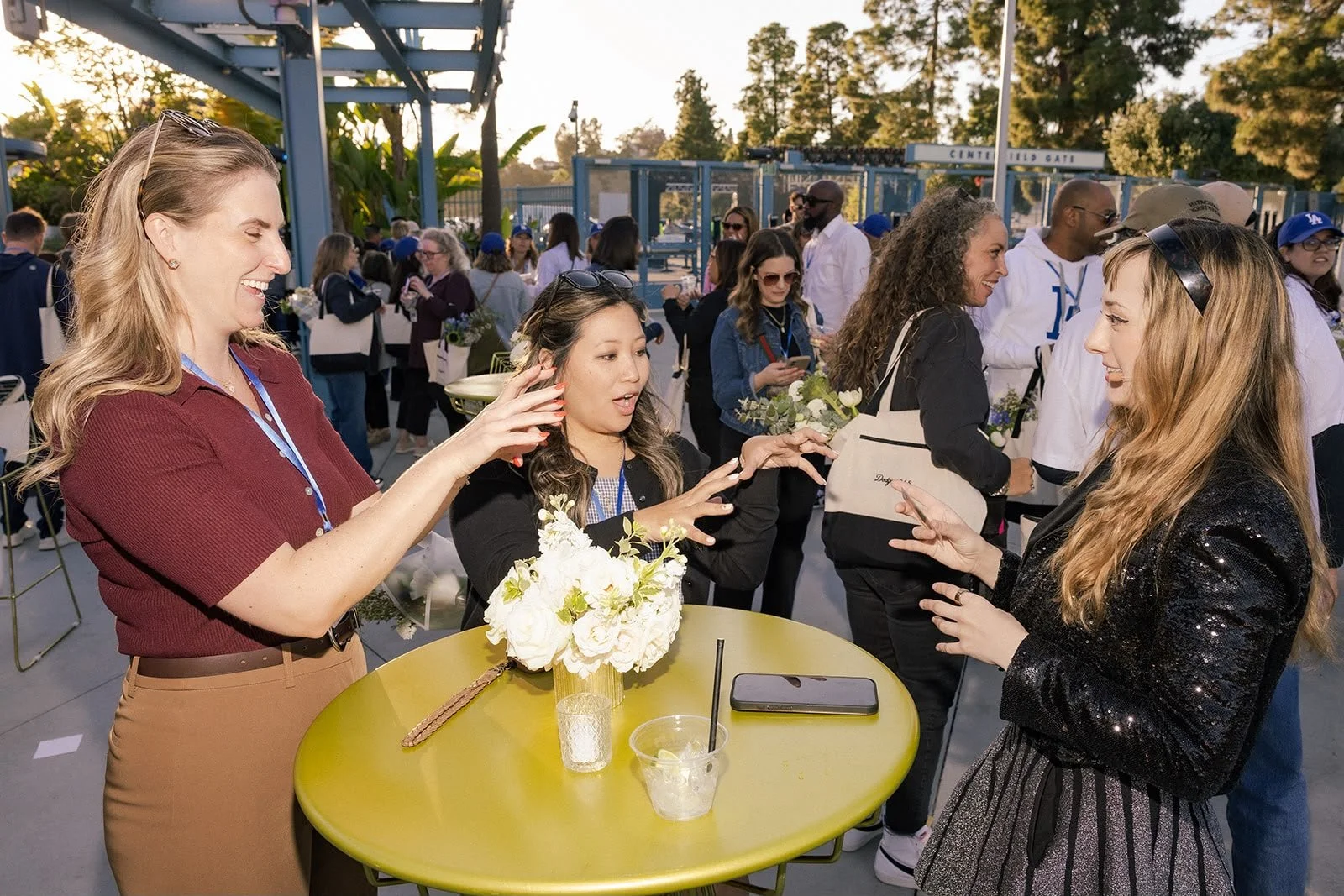
Program Something Worth the Hour
A women's network in a professional services firm is competing for time that's literally counted, in front of an audience trained to evaluate what it's offered. That rules out the worthy version of this and leaves a narrower, better question: what would these people genuinely choose to attend?
A female magician in New York answers it for a skeptical room, since being thoroughly fooled by somebody doing something difficult requires no argument and leaves an impression that a presentation wouldn't. Ask your senior women directly, hold it at an hour that releases people, and claim only what it genuinely does.
Reach out with your date and what your network is aiming at, and let's talk about the format.