

How to Plan a Women's Month Magic Show
How to Plan a Women's Month Magic Show
If you've decided to book a magician for your organisation's Women's History Month programming, the case has already been made to whoever needed convincing. What's left is the part nobody writes about: actually planning it well, within a budget, around a month when everyone else is trying to book something too.
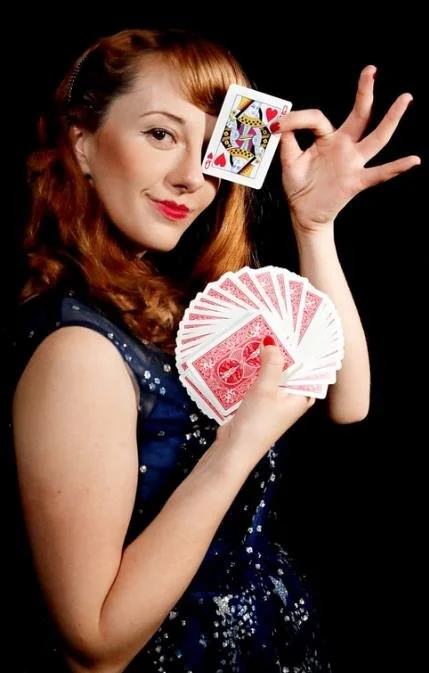
I'm Magical Katrina, an award winning magician and mentalist, and I want to cover the practical side of arranging a women month magic show, the timing, the format decisions, the briefing, and the things organisers commonly get wrong. This is the operational article rather than the persuasive one.
Book in January, Not February
Start with timing, because it's the constraint that shapes everything else. March programming gets arranged in the new year, and performers who work Women's History Month events are frequently booked out by early February.
If you're reading this in February hoping to arrange something for the third week of March, you may still find someone, but you'll be choosing from what's left rather than who's best. Ideally, a women month magic show gets booked in January or earlier, and if your organisation runs this annually, booking twelve months ahead for a repeat is genuinely worth doing. It also usually secures a better date rather than whatever midweek slot remains.
Decide What You Actually Want
The most common planning mistake is booking a performer without deciding what role the session plays in your programming. There are three broadly different options and they suit different aims.
A performance. Pure entertainment with thematic resonance, best when your programme already has substantive content and needs something people genuinely enjoy.
A keynote woven with magic. A talk carrying a real message about building a career against expectation, with magic throughout, best when you want the session to say something.
Both. A longer session combining them, best as a centrepiece when this is your main Women's Month event.
Decide which before you enquire, since it changes the quote, the length, and who you should be talking to.
Place It Where the Programme Needs It
Where a women month magic show sits matters more than organisers expect. Opening a programme, it sets an energetic tone and rewards punctual attendees. Closing one, it sends people away on something memorable rather than logistics.
Placed in the middle, it resets attention after panels and presentations, which is where most Women's Month programming loses a room. If your event is otherwise a series of people talking, the middle placement usually does the most work. And if you're running a whole month of activity rather than a single event, consider whether this is your anchor session or a lighter moment within a fuller programme, since that affects length and format.

Brief the Performer Properly
Ten minutes of context noticeably improves the result, and most organisers don't provide it. A good performer will ask, but volunteer it anyway.
Tell them who's in the room: employees, members, students, a mix, and roughly how senior. Tell them what else is in the programme, so the session complements rather than repeats it. Tell them what your organisation is trying to achieve with its Women's Month activity, and mention anything sensitive. If you'd like the personal story element emphasised or kept light, say so. A women month magic show briefed properly fits your event, whereas one briefed with a date and a headcount is generic by default.
Be Realistic About Budget
Worth addressing plainly. A women month magic show costs what a professional performer costs, and March demand doesn't make it cheaper. If your Women's Month budget is modest, there are ways to make it work.
Sharing across departments or employee resource groups is the most straightforward, since several groups contributing turns a stretch into a manageable spend. Multiple offices or chapters can join one virtual session, which spreads the cost further. And a shorter session costs less than a long one while still giving your programme a centrepiece. What's rarely worth doing is booking a cheaper, weaker performer, since a session people politely tolerate serves your programming worse than not having one.
Promote It Properly Internally
A well booked session that forty people attend is a waste, and Women's Month programming frequently suffers from being announced rather than promoted.
Give people a concrete reason to come. "A Women's History Month event" is a calendar entry, whereas "a magician and mentalist on how she built a career in a field that was almost entirely men, plus a show" is a reason. Send it more than once, mention it in the channels people actually read, and if leadership are attending, say so, since visible senior attendance materially affects turnout. A women month magic show is unusual enough to promote well, which is an advantage worth using.
Include Everyone
Worth saying, since it's frequently mishandled. Women's Month programming that's implicitly for women only halves its reach and arguably misses the more consequential audience.
Make it explicit that everyone is welcome, and if your organisation has a habit of women's programming being attended almost entirely by women, address that directly in how you promote it. A women month magic show is genuinely easier to open up than a panel discussion, because it's enjoyable on its own terms and nobody feels they're intruding on something not meant for them. Use that.
Judge It Honestly Afterwards
Finally, if you run this annually, evaluate properly rather than by vibes. Useful questions: how many attended relative to your other Women's Month sessions, did people stay to the end, did anyone mention it unprompted afterwards, and did the message land or was it just enjoyable.
Both outcomes are legitimate, but knowing which you got tells you what to book next year. If a women month magic show produced strong attendance and enjoyment but no message retention, and message was your aim, ask for more keynote weighting next time. Good performers would rather be briefed better than praised vaguely.
What I Offer
For clarity on my own side: I perform magic and mentalism, and I can deliver a straight performance, a keynote woven with magic and my own story of building a career in a field where women were long the exception, or a combination of the two. I'm a member of the Magic Circle in London and the Academy of Magical Arts in Hollywood, I've earned multiple magic awards, and I've performed for organisations including Formula 1, the Olympics, Porsche, Prada, and Zapier, with appearances on Penn & Teller: Fool Us. I work in person and virtually, which matters for distributed teams, and I'm happy to talk through what would suit your programme before you commit to a format.
Frequently Asked Questions
When should we book?
January or earlier. March programming gets arranged in the new year and performers who work Women's History Month events are frequently booked out by early February, so a late enquiry means choosing from what remains rather than who's best. If you run this annually, booking twelve months ahead for a repeat is genuinely worth doing and usually secures a better date rather than whatever midweek slot is left.
Should we book a performance or a keynote?
Depends on the role the session plays. A performance suits programming that already has substantive content and needs something people genuinely enjoy. A keynote woven with magic suits an event you want to say something. A combination works as a centrepiece when this is your main Women's Month event. Decide before enquiring, since it changes the quote, the length, and the conversation.
Where should it go in our programme?
Opening sets an energetic tone and rewards punctuality, closing sends people away on something memorable, and the middle resets attention after panels and presentations. If your event is otherwise a series of people talking, the middle placement usually does the most work, since that's where Women's Month programming typically loses a room. For a month long programme, decide whether this is your anchor session or a lighter moment within it.
What should we tell the performer?
Who's in the room and roughly how senior, what else is in the programme so the session complements rather than repeats it, what your organisation is trying to achieve with its Women's Month activity, and anything sensitive. Say whether you want the personal story element emphasised or kept light. A women month magic show briefed properly fits your event, whereas one booked with just a date and a headcount is generic by default.
How do we manage this on a limited budget?
Share the cost across departments or employee resource groups, which turns a stretch into a manageable contribution from several groups. Multiple offices or chapters can join one virtual session, spreading it further. A shorter session costs less while still giving your programme a centrepiece. What's rarely worth doing is booking a weaker performer cheaply, since a session people politely tolerate serves your programming worse than none.
How do we get good attendance?
Promote rather than announce. "A Women's History Month event" is a calendar entry, whereas describing what people will actually see is a reason to come. Send it more than once, use the channels people genuinely read, and mention leadership attendance if applicable, since that materially affects turnout. Make explicit that everyone is welcome, since programming implicitly aimed at women only halves its reach.
How do I book you, and what do you need to get started?
Reach out with your date or rough timeframe, location or platform, expected attendance, and what you want the session to achieve. That's enough for me to check availability, recommend a format, and send a quote. I'm glad to talk through options before you commit, particularly if you're weighing a performance against a keynote. March fills up early, so enquiring in January or before genuinely helps.

Plan It Like Any Other Event
A women month magic show succeeds or fails on the same things any event does: booking early enough to have a choice, deciding what the session is actually for, placing it where the programme needs it, briefing the performer properly, promoting it so people come, and evaluating it honestly afterwards. The theme doesn't exempt it from ordinary event discipline, and applying that discipline is what turns a good idea into a session people remember.
If you'd like to talk through what would suit your programme, I'd be glad to.