


Magician for Zoom: Professional Services Firms and Partner Events
Magician for Zoom: Professional Services Firms and Partner Events
Professional services firms have an engagement problem that most organisations don't. When an hour of someone's time has a recorded value and a target attached to it, every internal event competes directly with billable work, and everybody in the room knows exactly what attending is costing.

That makes firm events a harder sell than almost anywhere else. I'm Magical Katrina, an award winning magician and mentalist, and I want to explain where a magician for Zoom fits into a law firm, accountancy practice, or consultancy, which is narrower and more practical than it sounds.
The Hour Has a Number Attached
Start with the constraint that shapes everything. In most organizations, an internal session costs attention. In a firm where time is recorded in six minute units, it costs something quantifiable that appears on a report.
That means an event needs to be obviously worth the hour rather than merely pleasant, and a session described as team building or engagement will be attended by whoever couldn't find an excuse. A magician for Zoom doesn't solve that by itself, and it changes the calculation at the margin, since something genuinely enjoyable is easier to justify to yourself at six in the evening than another discussion about firm values.
Trainee and Graduate Cohorts
The strongest application, and the one firms find easiest to approve. Trainees, graduates, and junior associates join in intakes, go through their early years together, and either form a cohort that supports each other or don't.
That cohort matters commercially, since people with peers to talk to leave less often, and retention in the early years is expensive to get wrong. A magician for Zoom during an induction or a cohort event gives a group a shared experience at the point the group either forms or doesn't, and it's a considerably easier sell than a session about wellbeing to people who've just started and want to appear robust.
Partner Meetings Across Offices
A different application and a useful one. Firms with several offices hold partner and director level meetings that are usually entirely business, conducted efficiently, and attended by people who have no social relationship with counterparts in other cities.
Those relationships matter for referrals, cross selling, and whether a partner in one office thinks to involve someone from another. A magician for Zoom placed at the start of such a meeting does what a dinner does in person: it moves a formal group from transactional to human before the substantive discussion. For a small senior group, close up magic works better than it would with a larger audience, since everyone sees everything.
Client Sessions Without a Pitch
Worth considering for business development, and the logic differs from ordinary marketing. Firms invite clients to seminars, updates, and briefings constantly, and senior clients decline nearly all of them because the value is speculative and the hour is expensive for them too.
A magician for Zoom changes what the invitation offers. It's particularly suited to small curated groups of clients from target accounts, where the objective is the relationship rather than a lead. Keep any technical content short and genuinely useful, or omit it, since a session that turns out to be a disguised pitch spends goodwill you'll need for the next invitation.
Your Audience Is Professionally Skeptical
Worth knowing, since it affects what works. Lawyers, accountants, and consultants are trained to find the flaw, examine the reasoning, and not accept what they're shown at face value.
That makes them a better audience for skilled mentalism rather than a harder one. Someone applying genuine analytical scrutiny who still cannot account for what happened experiences astonishment more intensely than a casual observer, because their certainty was better founded. A magician for Zoom blending magic with mentalism tends to get its strongest reaction from precisely the partner who arrived determined to work it out.
Keep It Short and Say So
Practical, and it affects attendance more than the content does. A ninety minute session will be declined, whereas a clearly bounded forty five minutes will not.
State the finish time in the invitation and honor it. Professional services audiences are unusually sensitive to events overrunning, because the cost is real and immediate rather than theoretical, and a session that runs long teaches people to decline the next one. Among practical decisions about a magician for Zoom at a firm, the stated end time is one of the more consequential.
Don't Call It Team Building
A framing point that matters with this audience specifically. Professionals in these firms are alert to corporate language and tend to treat sessions labelled as engagement, wellbeing, or team building as things being done to them.
Describe it plainly instead: an hour of something genuinely good, arranged because people have been working hard. That description is accurate, it doesn't invite skepticism, and it's considerably more appealing than the alternative. The same session with two different descriptions produces noticeably different attendance, and the honest one performs better.

Where It Genuinely Fits
A summary of the placements worth considering:
Trainee and graduate inductions. Where a cohort either forms or doesn't.
Partner and director meetings across offices. Opening a formal session before the business.
Client sessions for small curated groups. Where the objective is the relationship.
End of financial year or after a major matter. Marking something that genuinely was hard.
Firm wide socials for distributed teams. Where an in person event excludes several offices.
Why Book Magical Katrina
If you'd like a magician for Zoom for a firm event, here's my case. I'm a member of the Magic Circle in London and the Academy of Magical Arts in Hollywood, I've earned multiple magic awards, and I've performed for companies including Formula 1, the Olympics, Porsche, Zapier, and the Ritz Carlton, with appearances on Penn & Teller: Fool Us. My virtual material is built for video and genuinely participatory, it works particularly well with small senior groups, and I blend magic with mentalism, which suits an audience trained to look for the flaw. I keep to the stated finish time, which with this audience matters.
Frequently Asked Questions
Why is attendance harder at a professional services firm?
Because an hour has a recorded value and a target attached, so every internal event competes directly with billable work and everyone knows what attending costs. That means an event needs to be obviously worth the hour rather than merely pleasant, and anything described as team building will be attended by whoever couldn't find an excuse.
Where does it work best?
Trainee and graduate cohorts, where a group either forms or doesn't and retention in the early years is expensive to get wrong. It's also an easier approval than a wellbeing session for people who've just started and want to appear robust. Partner meetings across offices are the second strongest, since those relationships affect referrals and cross selling.
Does it work for a small partner group?
Particularly, since close up magic improves as the group shrinks and everyone sees everything from a few feet away. Partner meetings across offices are usually entirely business, conducted efficiently between people with no social relationship, and a magician for Zoom at the start does what a dinner does in person: it moves a formal group from transactional to human.
Can we use it with clients?
Yes, and it suits small curated groups where the objective is the relationship rather than a lead. Senior clients decline most seminar invitations because the value is speculative and their hour is expensive too, and this changes what the invitation offers. Keep any technical content short and genuinely useful, since a disguised pitch spends goodwill you'll need next time.
Will a room of lawyers actually enjoy it?
More than most audiences. Lawyers, accountants, and consultants are trained to find the flaw and not accept what they're shown at face value, and someone applying genuine scrutiny who still cannot account for what happened is more astonished than a casual observer. The strongest reaction usually comes from the partner who arrived determined to work it out.
How long should it be?
Forty five minutes, stated clearly in the invitation and honored. A ninety minute session will be declined outright, and this audience is unusually sensitive to overrunning because the cost is immediate rather than theoretical. A session that runs long teaches people to decline the next one, which is a more expensive outcome than it appears.
How should we describe it internally?
Plainly. Professionals here are alert to corporate language and treat anything labelled engagement, wellbeing, or team building as something being done to them. Describe it as an hour of something genuinely good, arranged because people have been working hard. That's accurate, it doesn't invite skepticism, and the same session with the honest description attracts noticeably better attendance.
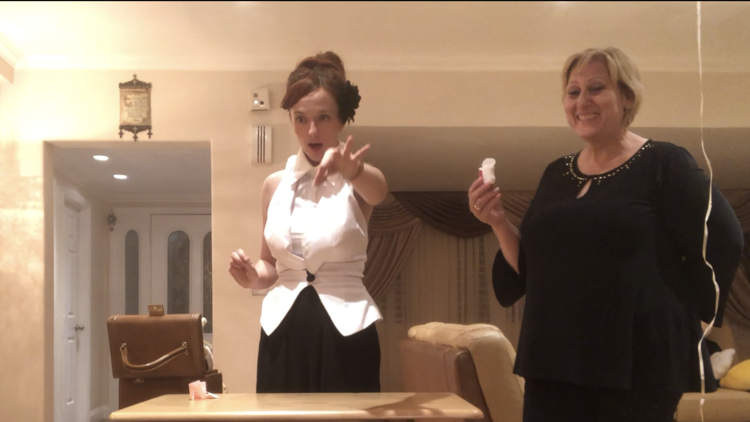
Earn the Hour Honestly
Professional services firms are among the harder places to run an internal event, because the cost of attending is visible and everyone can calculate it. A magician for Zoom works there when it's placed where it genuinely helps: a trainee cohort forming, a partner group meeting across offices, a client session where the relationship is the objective, and always described plainly rather than dressed in the language people here have learned to discount.
Keep it short, finish when you said you would, and it will be the firm event people actually turn up to.
Reach out with your date and group, and let's work out where it fits.