


Activities for Women's Empowerment: Running an ERG Program Without Burning Out
Activities for Women's Empowerment: Running an ERG Program Without Burning Out
Employee resource groups run on a small number of people doing a second job for nothing. The lead has a full role, a committee that helps when it can, a budget that requires justifying, and a workload that spikes every March before subsiding into eleven months of trying to keep something going.

Most advice for these groups is about what to program. Very little is about how to sustain it. I'm Magical Katrina, an award winning magician and mentalist who speaks at women's events, and I want to offer activities for women's empowerment designed around the reality that the person organizing them is already stretched.
Name the Structural Problem First
Worth saying plainly, since it underlies everything else. The work of running a women's network usually falls to women, unpaid and unrecognized, in addition to jobs they're actually assessed on.
That's a genuine equity issue rather than a grumble, and it's worth raising with whoever sponsors your group. Options exist: recognizing the work in performance reviews, allocating protected time, or resourcing it centrally rather than relying on goodwill. Among activities for women's empowerment an organization could undertake, properly resourcing the people delivering them is one of the more substantive and least common.
Sustainability Beats Ambition
The programming principle that keeps a group alive. An ambitious calendar that exhausts its organizers is worse than a modest one that runs for years, because groups rarely fail dramatically, they simply stop.
Choose formats you could repeat without reinventing them: a recurring circle, a regular slot, something with a structure that doesn't require fresh planning each time. Grand annual events have their place, and a group survives on the ordinary rhythm between them. Ask honestly whether you could still be doing this in eighteen months, and if the answer is no, program something else.
Stop Doing Things That Aren't Working
Rarely discussed and genuinely useful. ERG programs accumulate activities because somebody started them, and they continue long after they've stopped earning their effort, since nobody wants to be the person who cancelled something.
Review annually and stop things deliberately. The monthly session six people attend, the newsletter nobody reads, the initiative that made sense two years ago. Stopping frees capacity for something that works, and it's considerably better than continuing everything at diminishing quality. Among activities for women's empowerment, the most valuable decision in any given year is frequently a subtraction.
Use the Expertise in the Membership
The approach that solves the perennial speaker problem without budget. Your members negotiate, present, hire, manage difficult stakeholders, and run projects, and most of them would say yes if asked directly.
Member led sessions cost nothing, strengthen the person delivering as much as those attending, and build the reciprocity that keeps a group alive. Ask specific people rather than issuing an open call, since most won't volunteer and will agree when approached. It also removes the task that quietly consumes most organizer's time, which is finding someone to speak.
Get Executive Sponsorship That Means Something
Worth distinguishing from nominal sponsorship, which every group has. A sponsor who lends their name and attends once a year provides very little, whereas one who allocates budget, protects time, attends regularly, and raises the group's work in leadership conversations changes what's possible.
Ask for specifics rather than support in principle: a budget line, time recognized somewhere, and their presence at more than the March event. If you can't get that, it's worth knowing, since it tells you how much the organization actually values this and lets you scale your ambition to the reality rather than to the rhetoric.
Plan for the Lead Leaving
The failure mode that ends more groups than any other. Networks built around one committed person dissolve when that person changes role, leaves, or simply runs out of energy, because nothing was documented and nobody else knows how anything works.
Write down what you do and how. Share the mailing list and the supplier contacts. Bring in a deputy early and let them run things while you're still there. Among activities for women's empowerment, none matter if the group folds in two years, and succession is the unglamorous work that determines whether it doesn't.
Spread the Calendar Beyond March
A practical point with several benefits. Concentrating everything into one month exhausts organizers, competes with every other internal event, and signals that this is an annual obligation rather than an ongoing concern.
Spreading activity across the year reduces the spike in your workload, improves attendance because your sessions aren't competing with four others, and gives you genuine choice of speakers, since March books out months ahead while September doesn't. It's better for the program and considerably better for the people running it.
Program Something People Simply Enjoy
Worth including deliberately, since ERG calendars tend towards the earnest. Panels on barriers, sessions on progression, and discussions about structural issues are valuable and, cumulatively, quite heavy.
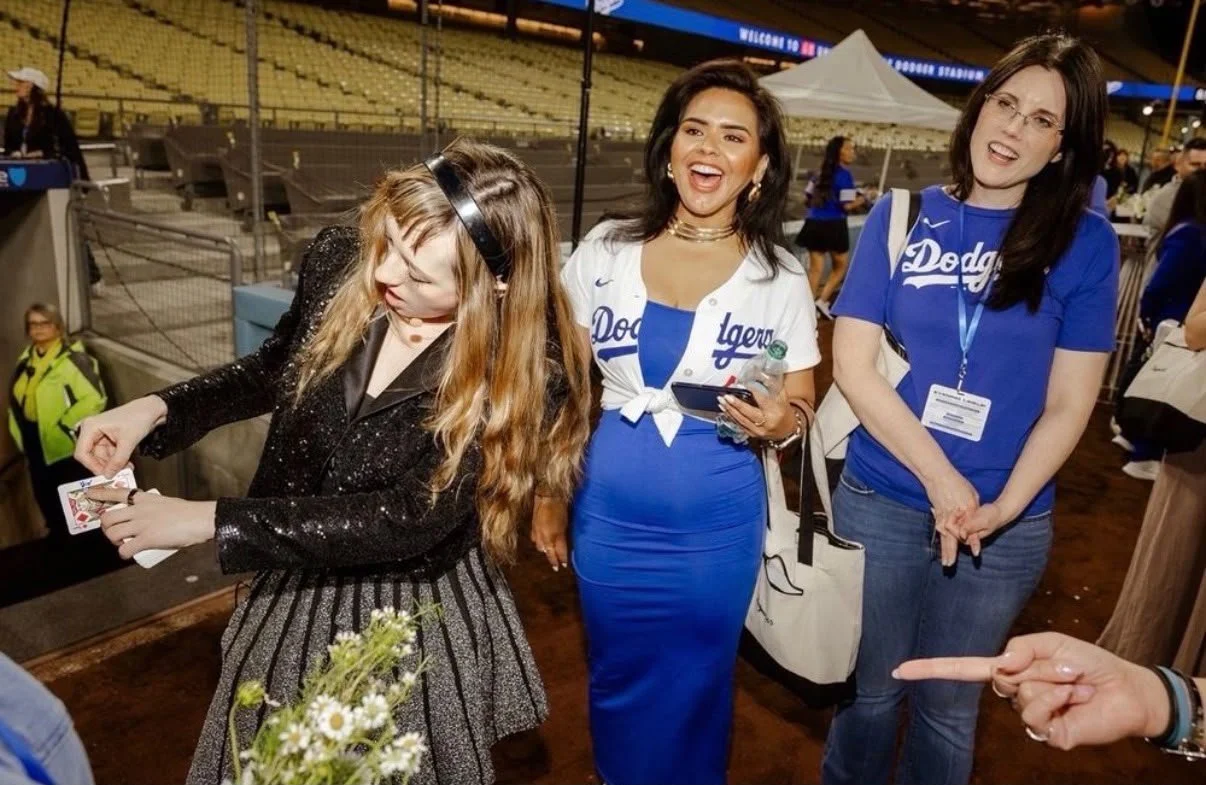
At least one genuinely enjoyable event a year reaches members who wouldn't attend a panel, gives you something easy to promote, and reminds people that belonging to this group is a pleasure rather than an obligation. It's also considerably less work to organize than a panel, which for a stretched committee is not a trivial consideration.
Measure Something That Justifies the Budget
Practical, since you'll be asked. Attendance numbers are the easiest thing to report and the least persuasive, because they're dominated by people who were already engaged.
More useful: how many members made a connection they'd describe as valuable, whether anyone got an opportunity through the group, whether first time attendees returned, and whether your membership is growing beyond the committed core. Those answers are harder to gather and considerably more convincing to whoever controls the budget, and they tell you what to keep doing.
Where My Work Fits
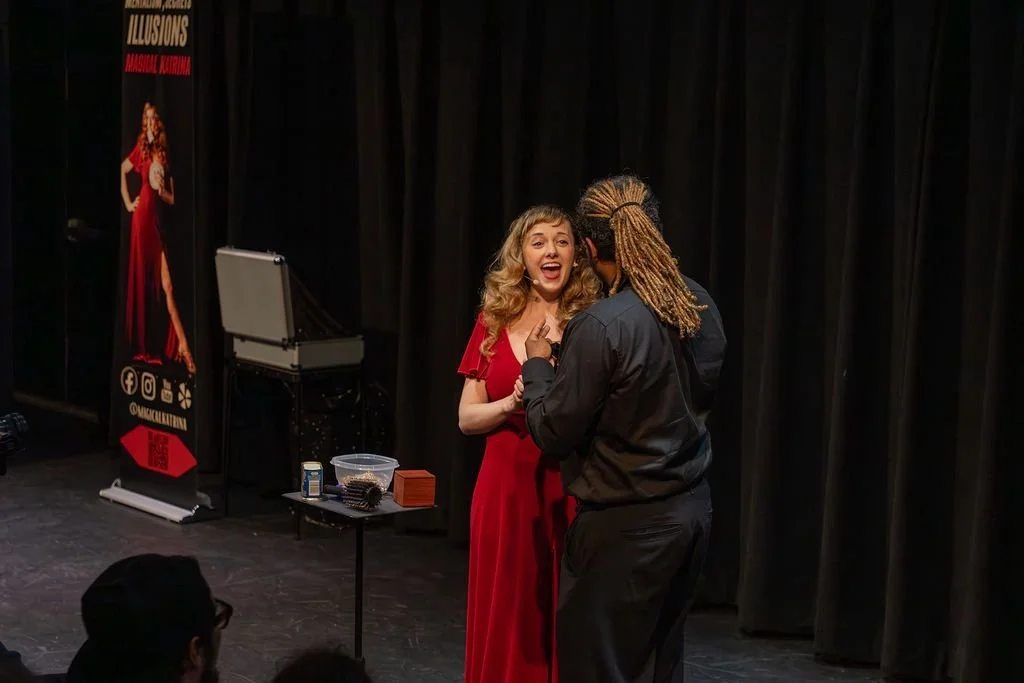
Briefly. I perform magic and mentalism and speak about building a career in a field, magic, that has been overwhelmingly male, as a performance, a talk woven with magic, or both, in person or virtually.
For an ERG it tends to work as the enjoyable event that still carries the theme: something that draws members who skip the panels, is easy to promote, and requires very little organizing from a committee that hasn't got spare capacity. It also works at any point in the year rather than only in March, which matters given how oversubscribed that month is. If you're planning, I'm glad to talk it through.
Frequently Asked Questions
Why does ERG work fall on the same people?
Because it's usually unpaid, unrecognized, and taken on in addition to jobs people are actually assessed on, and it typically falls to the women the group serves. That's a genuine equity issue worth raising with your sponsor, since options exist: recognition in performance reviews, protected time, or resourcing the work centrally rather than relying on goodwill.
How do we keep the group going long term?
Prioritize sustainability over ambition, since groups rarely fail dramatically and simply stop. Choose formats you could repeat without reinventing them each time, and ask honestly whether you could still be doing this in eighteen months. Grand annual events have their place, but a group survives on the ordinary rhythm between them.
What should we stop doing?
Whatever has stopped earning its effort, which accumulates because nobody wants to cancel something somebody started. The monthly session six people attend, the newsletter nobody reads, the initiative that made sense two years ago. Reviewing annually and stopping things deliberately frees capacity, and the most valuable decision in a given year is frequently a subtraction.
How do we find speakers without a budget?
Look inward, since your members negotiate, present, hire, and manage difficult stakeholders, and most would say yes if asked directly rather than through an open call. Member led sessions cost nothing, strengthen the person delivering, and build reciprocity, and they remove the task that quietly consumes most organizers' time.
What should we ask from an executive sponsor?
Specifics rather than support in principle: a budget line, time recognized somewhere, and attendance at more than the March event. A sponsor who lends their name and appears annually provides very little. If you can't get specifics, that's worth knowing, since it tells you how much the organization values this and lets you scale ambition to reality.
How do we stop the group folding when the lead leaves?
Document what you do and how, share the mailing list and supplier contacts, and bring in a deputy early who runs things while you're still there. Networks built around one committed person dissolve when that person moves on, because nothing was written down and nobody else knows how anything works. Succession is unglamorous and it determines survival.
Should everything happen in March?
No, and spreading activity across the year reduces your workload spike, improves attendance because you aren't competing with four other internal events, and gives genuine choice of speakers, since March books out months ahead while September doesn't. It also signals an ongoing concern rather than an annual obligation, which members notice.
What should we measure?
Not attendance, which is dominated by people already engaged. Ask instead how many members made a connection they'd describe as valuable, whether anyone got an opportunity through the group, whether first time attendees returned, and whether membership is growing beyond the committed core. Harder to gather and considerably more convincing to whoever holds the budget.
Build Something That Survives You
The most useful activities for women's empowerment in an ERG context are shaped by what the people running it can sustain: repeatable formats rather than ambitious ones, sessions led by members rather than sourced externally, a calendar spread across the year rather than concentrated in March, an annual decision about what to stop, and a deputy who could run it tomorrow.
And it's worth asking your organization to resource the work properly, since a program delivered by exhausted volunteers is a strange way to demonstrate that the organization values the people delivering it.
Reach out if you're planning something, and I'm glad to talk about what would suit your group.