


Zoom Magician Cost: What the Cheapest Option Usually Means
Zoom Magician Cost: What the Cheapest Option Usually Means
Anyone gathering quotes for a virtual performer discovers a considerable spread, and the natural assumption is that the expensive ones are charging what they can get away with. Sometimes that's true. Frequently the difference is substance rather than margin, and it's worth knowing what you're comparing.
I'm Magical Katrina, an award winning magician and mentalist, and I want to set out what tends to differ across the range of a zoom magician cost, including when the cheaper option is genuinely the right call.
Adapted Versus Built for Video
The biggest difference and the least visible one in a quote. A performer who works live and does virtual sessions on the side is generally delivering an adapted version of a live set, with the camera pointed at material designed to be seen in a room.
A performer who has genuinely built for video has different material: effects that work in a frame, participation that happens in each attendee's own hands rather than on the performer's table, and pacing designed for people watching on a screen. The second costs more and is a substantially different product, and it's the single thing most worth asking about.
Picture and Sound
Immediately visible and frequently the giveaway. At the lower end you get a laptop webcam, room lighting, and whatever audio the computer provides, which on a large corporate call looks exactly like what it is.
Higher up you get a proper camera, deliberate lighting, and a dedicated microphone, because the performer has invested in the thing your audience actually experiences. That matters more than it would in a room, since on video the production quality is the performance quality as far as your attendees can tell. Ask what their setup is, and ask for footage from an actual virtual session rather than a live one.
Contingency
Worth asking about specifically, since it's invisible until it matters. Established performers have a backup connection, a plan for a failed platform, and a network of colleagues if they're ill.
At the lower end, frequently none of that exists, and the answer to what happens if their internet fails is that your event has a problem. That risk is worth pricing: a session that doesn't happen costs you considerably more than the difference between two quotes. It's also a fair proxy for how much of their income this represents, since people who do this seriously have insured against it.
Communication and Briefing
A reliable indicator available before you commit. A higher end booking generally involves being asked about your audience, your objective, your platform, your time zones, and anything sensitive, because that's what shapes the session.
A cheaper booking is frequently transactional: a date, a price, and a link. Neither is wrong, and the first produces something built for your event while the second produces a standard set delivered competently. If your session has a purpose beyond filling an hour, that difference shows up on the day, and you can assess it during the enquiry rather than afterwards.
Reading a Virtual Room
The hardest thing to evaluate and the most experience dependent. A virtual audience gives a performer very little feedback: no laughter to speak of, a gallery of faces, and a chat that may or may not be active.
Performers who work virtually constantly have learned to read that and adjust. Those who do it occasionally tend to deliver their planned session regardless of how it's landing, which is fine when it's landing and awkward when it isn't. That skill is genuinely worth paying for on a session that matters, and it's part of what separates the ends of the market.
A Real Anchor
Since vagueness doesn't help when budgeting: my virtual shows start around $1,400, with the figure depending on length, audience size, and customization.
That's a mid to upper market figure for a performer who works virtually as a substantial part of their business, with material built for video and a professional setup. Quotes considerably below that generally reflect one or more of the differences above, and quotes considerably above usually reflect television profile or a name your audience would recognize. None of those is wrong, and knowing which you're buying is the point.
When Cheaper Is Genuinely Right
Worth saying clearly, since this article would otherwise read as an argument for spending more. Plenty of situations don't need the upper end.
A small informal internal session, a team social where the objective is a pleasant hour, a low stakes event with a modest budget, or an audience who'd be perfectly happy with something competent. In those cases a lower priced performer delivers what's needed and the difference buys you nothing. The mistake isn't choosing the cheaper option, it's choosing it for a client event, a conference session, or anything where a poor result would matter.
Match the Spend to the Stakes
The principle underneath all of this. Ask what happens if the session is merely adequate rather than good.
If the answer is that people had a slightly dull hour on a Thursday, book accordingly. If it's that your clients formed an impression of your organization, your conference program has a gap in it, or your international team's one annual gathering fell flat, spend accordingly. A zoom magician cost should reflect the consequence of it not working rather than the length of the session.
How to Tell Which You're Looking At
Practically, three checks. Ask for sustained footage from a real virtual session rather than a live one or a promotional edit, and watch how the audience is being used.
Ask what their technical setup is and whether they have contingency, expecting specifics. And notice whether they ask about your event before quoting. Those three take ten minutes and tell you considerably more than a price comparison does, since they reveal which product you're being offered rather than which number is lowest.
Why Book Magical Katrina
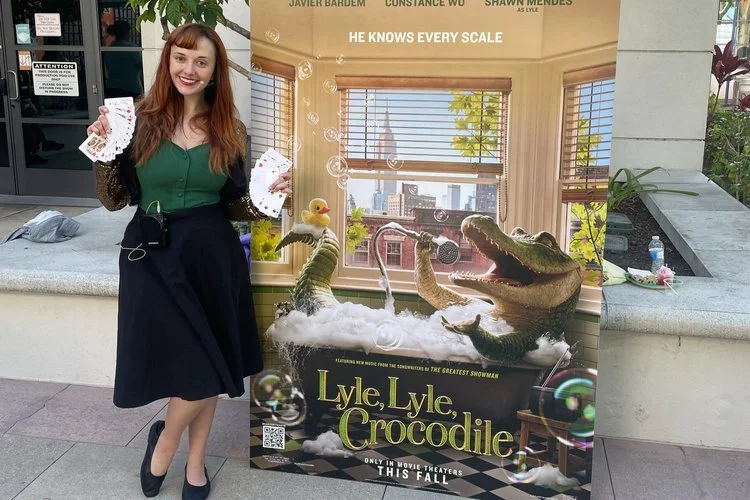
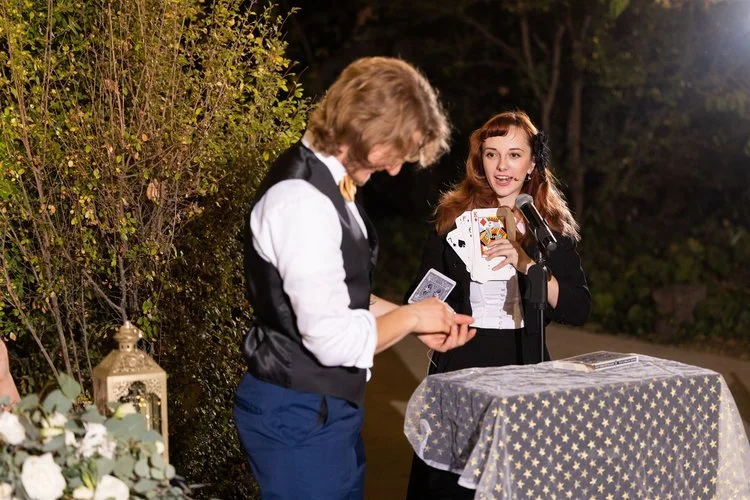
If you're comparing, here's my case. I'm a member of the Magic Circle in London and the Academy of Magical Arts in Hollywood, I've earned multiple magic awards, and I've performed for companies including Formula 1, the Olympics, Porsche, Zapier, and the Ritz Carlton, with appearances on Penn & Teller: Fool Us. My virtual shows start around $1,400, my material is built for video rather than adapted from a live set, I have a professional setup with contingency, and I'll ask about your event before quoting for it. If your situation genuinely calls for something simpler, I'll say so.
Frequently Asked Questions
Why is the range so wide?
Because the product genuinely differs rather than only the margin. The main variables are whether the material was built for video or adapted from a live set, the technical setup, whether contingency exists, how much briefing happens, and how much experience the performer has reading a virtual room. Those add up to different products at different prices.
What's the biggest difference?
Adapted versus built for video, and it's the least visible one in a quote. A performer who works live and does virtual on the side points a camera at material designed for a room, whereas one who has built for video has effects that work in a frame and participation that happens in each attendee's own hands. It's the thing most worth asking about.
Does the technical setup really matter?
On video, yes, since the production quality is the performance quality as far as your attendees can tell. At the lower end you get a laptop webcam, room lighting, and computer audio, which on a large corporate call looks exactly like what it is. Ask what their setup is and for footage from an actual virtual session.
What about contingency?
Ask specifically, since it's invisible until it matters. Established performers have a backup connection, a plan for a failed platform, and colleagues if they're ill, whereas at the lower end frequently none of that exists. A session that doesn't happen costs considerably more than the difference between two quotes.
How much should we expect to pay?
My virtual shows start around $1,400 depending on length, audience size, and customization, which is a mid to upper market figure for someone who works virtually as a substantial part of their business. Considerably below generally reflects the differences above, and considerably above usually reflects television profile or name recognition.
When is the cheapest option fine?
For a small informal internal session, a team social where the objective is a pleasant hour, or a low stakes event with a modest budget, where a lower priced performer delivers what's needed and the difference buys nothing. The mistake is choosing it for a client event or a conference session where a poor result would matter.
How do we decide what to spend?
Ask what happens if the session is merely adequate. If the answer is that people had a slightly dull hour on a Thursday, book accordingly, and if it's that clients formed an impression of your organization or your team's one annual gathering fell flat, spend accordingly. The zoom magician cost should reflect the consequence of it not working.
How do we tell which we're looking at?
Three checks taking ten minutes: ask for sustained footage from a real virtual session rather than a live one or a promotional edit, ask what their technical setup and contingency are and expect specifics, and notice whether they ask about your event before quoting. Those reveal which product you're being offered rather than which number is lowest.
Compare the Product, Not the Number
The spread in a zoom magician cost reflects genuine differences: material built for video rather than adapted from a room, a professional setup rather than a laptop, contingency that exists rather than doesn't, briefing that shapes the session, and experience reading an audience that gives almost no feedback.
None of that means you should always buy the expensive option. It means you should know which you're buying and match it to what happens if the session is merely adequate, which for plenty of internal sessions is nothing much and for a client event is quite a lot.
Reach out with your event and what's riding on it, and I'll tell you honestly what you need.