


Magician for Zoom Farewells and Retirement Send Offs
Magician for Zoom Farewells and Retirement Send Offs
A colleague retires after twenty two years, or leaves a team they built, and the people who want to mark it are spread across four countries. What usually happens is a video call where everybody says something kind in turn, the connection drops once, and the person leaving sits watching a grid of faces being nice to them for forty minutes.

They deserve better than that, and it's achievable. I'm Magical Katrina, an award winning magician and mentalist, and I want to set out what booking a magician for Zoom does for a farewell, and how to run the hour so it's genuinely good rather than merely well meant.
The Round of Speeches Is the Problem
Start with the format that fails. The default send off is a sequence of people saying warm things, and it has two faults: it's excruciating for anybody self conscious, and after the fourth person the tributes start to sound alike.
It also puts the person leaving in a strange position, receiving praise in silence on camera while twenty people watch their face. Plenty of people find that genuinely uncomfortable, and the ones who'd hate it most are frequently the quiet, long serving colleagues these events are most often held for.
Ask What They'd Actually Want
Worth doing, and almost nobody does. The person leaving has an opinion about this and asking takes a minute, and the answer frequently surprises the organizers.
Some people want the tributes and would be hurt to miss them. Others would far rather the hour was just everybody together, enjoying something, with two short speeches and no spotlight. A send off designed around what the person wants rather than what's customary is a better farewell, and asking is itself a kindness.
Keep the Speaking Short and Chosen
Practically the most useful structural change. Two or three people speaking well is better than fourteen speaking adequately, and the difference in the room is considerable.
Choose who speaks, tell them beforehand, and ask them to keep it to two minutes. Then open the chat for everybody else, which lets forty people contribute something personal without the call lasting ninety minutes. People write things in a chat they'd never say aloud, and the person leaving can read it afterwards, which many prefer to having heard it live.
Give the Hour Something Other Than Tributes
Why entertainment belongs at a farewell specifically. An hour entirely composed of people being nice about somebody is emotionally one note, and it leaves nowhere for the person leaving to go except gracious.
Something enjoyable in the middle changes the texture completely. It gives everybody, including the guest of honor, a stretch where they're simply part of a group having a good time rather than at the centre of a tribute. That turns the occasion into an event rather than a ceremony, which for most people is the better memory to leave with.
Remote Colleagues Never Got a Leaving Do
The structural argument for taking this seriously. Somebody who worked in an office gets a pub, a card passed round, and the gradual farewell of a last week where people stop by their desk.
A distributed colleague gets none of that. There's no corridor, no leaving drinks, and no accumulation of small goodbyes, so the call is the whole thing. That raises the stakes considerably and it's an argument for treating the hour as a real event rather than a formality, particularly for somebody who gave an organization fifteen or twenty years.

It Gathers People Who Scattered Long Ago
Worth knowing, since the guest list is unusual. A long serving colleague's send off attracts people who left the organization years ago, people now at other companies, and colleagues from parts of the business they worked in a decade back.
Those people won't all know each other, and a call full of strangers connected only by one person needs something to focus on. It's also the one occasion where former colleagues reconnect, which for the person leaving is frequently the most valuable thing about the hour.
Time Zones and a Hard Finish
Practically important for an international team. A farewell for somebody whose colleagues span continents means an hour that's evening for some and very early for others, and people will join from kitchens and cars.
Pick the least bad hour, say when it will end, and finish on time, since somebody joining at ten at night deserves to know when they can go. A send off that overruns by twenty minutes loses the people furthest away, which is exactly the group who made an effort to be there.
Cost Doesn't Move With the Guest List
Worth knowing for the budget. An online performance costs the same whether thirty or three hundred attend, since there's one performance regardless of how many are watching, and my virtual shows start around fourteen hundred dollars.
For a retirement after a long career, that's usually a modest line against what the occasion warrants, and it reaches everybody who wants to be there rather than only the people who could travel. Set against a leaving gift nobody remembers, it's worth considering where the money does more.
Why Book Magical Katrina
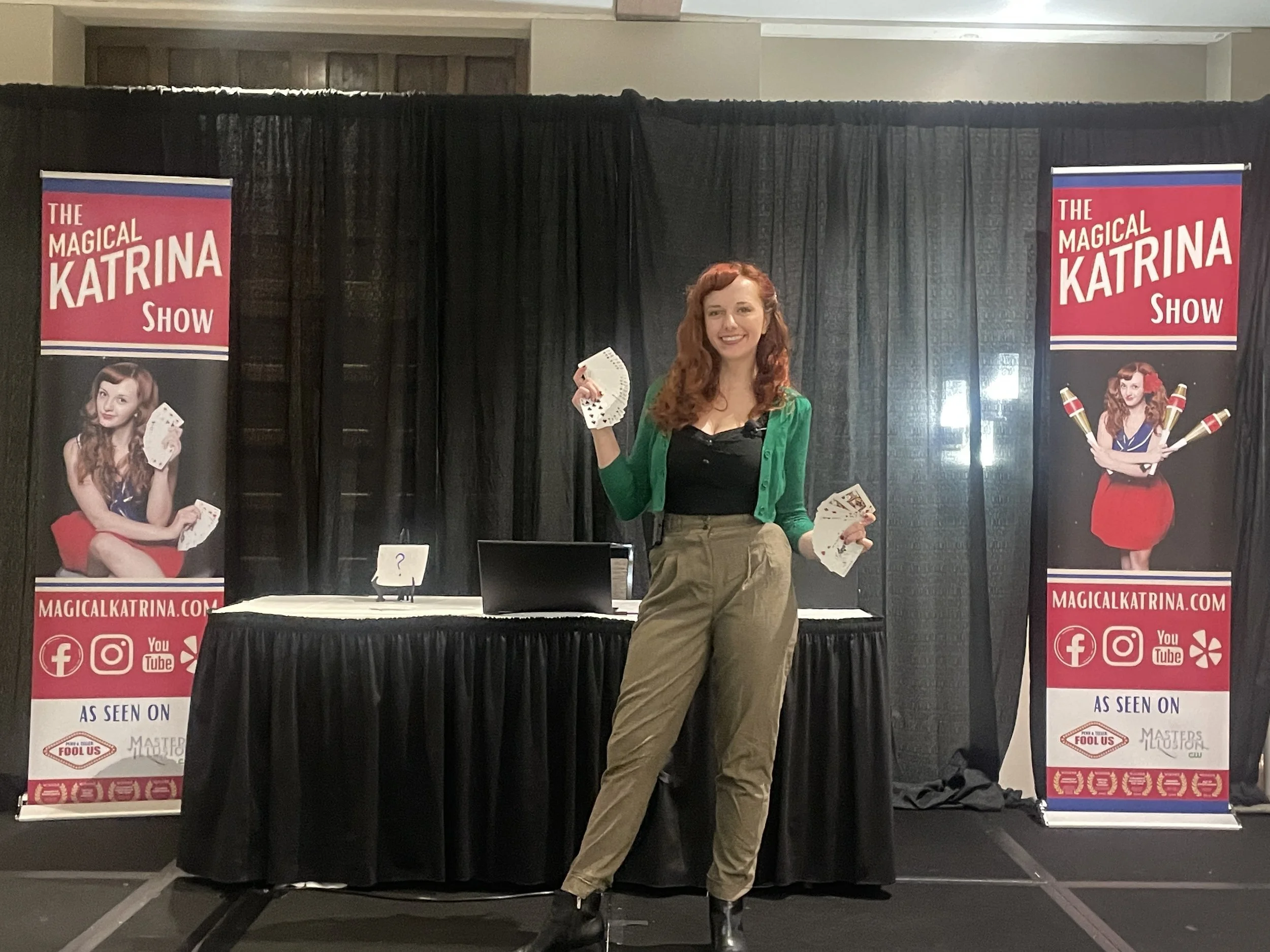
If you're planning a send off, here's my case. I'm a member of the Magic Circle in London and the Academy of Magical Arts in Hollywood, I've earned multiple magic awards, and I've performed for clients including Formula 1, the Olympics, Porsche, Prada, Zapier, and the Ritz Carlton, with appearances on Penn & Teller: Fool Us and Masters of Illusion. I'll build the hour around the person leaving rather than around a format, nothing in it requires anybody to speak who'd rather not, I work in your existing Zoom setup with nothing to install, and my fee is the same whether thirty or three hundred join.
Frequently Asked Questions
What's wrong with a round of speeches?
It's excruciating for anybody self conscious, the tributes start to sound alike after the fourth person, and it leaves the person leaving receiving praise in silence on camera while everybody watches their face. The colleagues who'd find that hardest are frequently the quiet, long serving ones these events are held for.
Should we ask the person what they want?
Yes, and almost nobody does. Some people want the tributes and would be hurt to miss them, while others would rather the hour was everybody together with two short speeches and no spotlight, and asking is itself a kindness.
How should we handle the speaking?
Choose two or three people, tell them beforehand, and ask for two minutes each, since a few speaking well beats fourteen speaking adequately. Then open the chat for everybody else, which lets forty people contribute without a ninety minute call, and people write things they'd never say aloud.
Why book entertainment for a farewell?
Because an hour composed entirely of people being nice about somebody is emotionally one note and leaves the guest of honor nowhere to go except gracious. Something enjoyable in the middle gives everybody, including them, a stretch of simply being part of a group having a good time.
Does this matter more for remote colleagues?
Considerably, since somebody office based gets a pub, a card passed round, and a last week of people stopping by their desk. A distributed colleague gets none of that, so the call is the whole thing, which raises the stakes for somebody who gave fifteen or twenty years.
Who tends to attend these?
More people than you'd expect, including former colleagues who left years ago and people now at other companies. They won't all know each other, so a call connected only by one person needs something to focus on, and the reconnection is frequently the most valuable part of the hour.
How do we handle international colleagues?
Pick the least bad hour, state when it ends, and finish on time, since somebody joining at ten at night deserves to know when they can go. A send off that overruns loses the people furthest away, who are exactly the ones who made an effort.
What does it cost for a big guest list?
The same as for a small one, since there's one performance regardless of how many are watching, and my virtual shows start around fourteen hundred dollars. For a retirement after a long career that's a modest line, and it reaches everybody rather than only those who could travel.
Send Them Off With an Event, Not a Ceremony
A farewell for a remote colleague is the only goodbye they'll get, which is reason enough to design it rather than default to a round of tributes. Ask the person what they'd like, pick two or three speakers and keep them brief, put the rest in the chat, set a finish time and honor it.
Then book a magician for Zoom for the middle of it, so that for twenty minutes everybody including the guest of honor is simply enjoying themselves together, which is a considerably better note to leave a career on than a grid of people saying kind things in turn.
Reach out with your date and a little about the person leaving, and I'll build the hour around them.