

Virtual Magic Show for a Wellbeing Week or Employee Wellbeing Programme
Virtual Magic Show for a Wellbeing Week or Employee Wellbeing Program
There's a recognisable pattern to corporate wellbeing weeks. A calendar goes out with a session each day: a webinar on managing stress, a lunchtime talk about sleep, a mindfulness session, a Q and A with someone from the employee assistance provider. All of it well intentioned, and all of it asking employees to spend more time in meetings learning about being less overwhelmed.

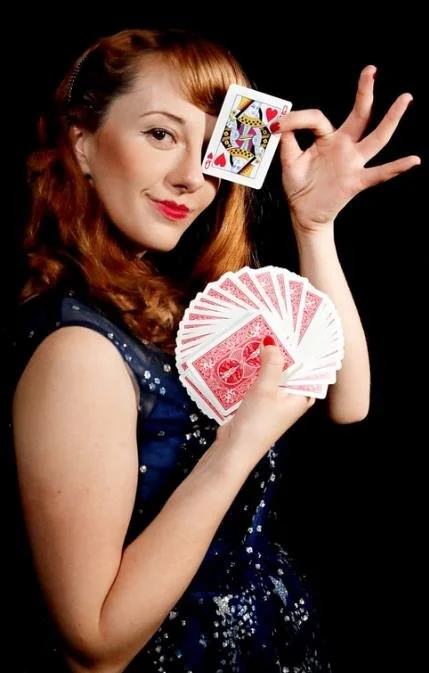
The people who most need it are precisely the people with no capacity to attend. I'm Magical Katrina, an award winning magician and mentalist, and I want to make a modest, honest case for including a virtual magic show in a wellbeing program, along with a clear statement of what it doesn't do.
What This Isn't
Let me start there, because wellbeing is an area where overclaiming is common and unhelpful. A virtual magic show is not therapy, it is not a mental health intervention, and it will not address burnout, unmanageable workloads, poor management, or understaffing.
Nothing on a wellbeing calendar addresses those things, which is a wider problem worth naming honestly. If your organization has structural issues, an entertainment session is not the answer and shouldn't be presented as one. What it can genuinely offer is a proper break, an hour that isn't work, and a shared moment of enjoyment with colleagues. That's a real but limited thing, and it's better to say so plainly.
Wellbeing Programming Often Adds to the Load
Here's the honest observation behind this. Most wellbeing content is content: something to attend, absorb, and ideally act upon afterwards. It arrives as another calendar entry in a week that already has too many, and it asks for attention from people who are short of it.
A virtual magic show asks nothing. There's no material to absorb, no action to take afterwards, no self assessment, and no homework. Employees join, are astonished, laugh, and leave. For a week otherwise full of sessions telling people how to feel better, one session that simply lets them feel better for an hour is a genuine contrast, and it's frequently the item people actually attend.
A Break Is Only a Break If It's Not Work
Worth drawing out, because it's the mechanism. Employees are routinely told to take breaks, and then their breaks are colonized by work adjacent activity: a lunch and learn, a wellbeing webinar, a team check in framed as social.
A virtual magic show is genuinely not work. It has no professional development angle, no skills content, and no relevance to anybody's objectives, which is precisely the point. That distinction matters more than it sounds, because a break that's actually a meeting doesn't function as rest. Giving employees an hour that has no purpose beyond enjoyment is a clearer signal about wellbeing than a session explaining the importance of rest.
It Reaches People Who Skip the Rest
A practical argument for program designers. Wellbeing sessions tend to attract a self selecting group, generally people already engaged with the topic, while the employees quietly struggling frequently attend nothing at all.
A virtual magic show has a different attendance profile because it doesn't require anyone to identify as needing support. Attending a session on managing anxiety is a small disclosure, whereas attending a magic show is not. For anyone designing a wellbeing week and worrying about who isn't showing up, including something with no threshold to attend is a reasonable way to reach a broader group, even if what they get from it is modest.
Shared Enjoyment Is Doing Something
Worth being clear about the mechanism rather than gesturing at it. Distributed teams have very few genuinely shared experiences, and isolation is a real feature of remote work that gets discussed constantly in wellbeing contexts.
A virtual magic show creates a moment where everybody reacts at once, which is a small piece of collective experience in working lives that offer few. It won't transform anyone's connection to their colleagues, but the reactions in a chat window during a good virtual show are genuinely different from a normal team call, and colleagues reference it afterwards. That's a modest, real contribution to the thing wellbeing programs talk about when they talk about connection.
Everyone Participates, Including the Quiet Ones
Related, and relevant to inclusion. Wellbeing sessions that involve discussion, sharing, or breakout groups favor the people comfortable with that, and can be actively uncomfortable for those who aren't.
With a virtual magic show, participation means holding an object and being astonished rather than speaking about how you're feeling. Nobody is asked to disclose anything, contribute to a discussion, or perform openness in front of colleagues. For employees who find wellbeing programming intrusive rather than supportive, and there are more of them than most program designers assume, that's a session they can attend without cost.

Where It Fits in the Calendar
Practically, a few placements work. Mid week, when a wellbeing program has started to feel like a series of obligations and attendance is dipping. At the end, as a closing session people look forward to rather than a summary nobody attends.
It also works outside a formal wellbeing week entirely, as a standalone break during a demanding period: after a major deadline, a difficult quarter, a big launch, or a reorganization. Some organizations use a virtual magic show precisely at those moments rather than on a scheduled calendar, which is arguably better targeting, since the need is real and the timing is meaningful rather than administrative.
Practical Notes
Keep it to a defined stretch, usually thirty to forty five minutes, and schedule it at a time that doesn't require people to give up their actual lunch break, since that undermines the point. Make attendance genuinely optional and say so, because mandatory wellbeing is a contradiction.
Tell people in advance so they can plan around it rather than discovering it in a calendar invitation. And mention the one or two ordinary household objects people will need, which goes in the same message. Beyond that a virtual magic show requires nothing from your team: it runs on your existing platform and the performer handles their own setup.
Why Book Magical Katrina
If you'd like a virtual magic show for your wellbeing program, here's my case. I'm a member of the Magic Circle in London and the Academy of Magical Arts in Hollywood, I've earned multiple magic awards, and I've performed for companies including Formula 1, the Olympics, Porsche, Zapier, and the Ritz Carlton, with appearances on Penn & Teller: Fool Us. My virtual material is built for video and designed so everyone participates using ordinary household items without anyone needing to speak up. I have a polished technical setup, I work across time zones, and I'd rather describe what this genuinely offers than overstate it.
Frequently Asked Questions
Is this actually a wellbeing intervention?
No, and it shouldn't be presented as one. A virtual magic show is not therapy or a mental health intervention, and it won't address burnout, workload, management problems, or understaffing. What it genuinely offers is a proper break, an hour that isn't work, and a shared moment of enjoyment with colleagues. That's real but limited, and organizations are better served by describing it accurately than by overclaiming.
Why include entertainment in a wellbeing week?
Because most wellbeing programming is content that arrives as another calendar entry, asking for attention from people who are short of it and telling them how to feel better. A virtual magic show asks nothing: no material to absorb, no action afterwards, no self assessment. For a week otherwise full of sessions about wellbeing, one session that simply lets people enjoy themselves for an hour is a genuine contrast and often the best attended item.
Will it reach people who skip other sessions?
Often, yes. Wellbeing sessions attract a self selecting group already engaged with the topic, while employees who are quietly struggling frequently attend nothing. Attending a session on managing anxiety is a small disclosure, whereas attending a magic show isn't. Including something with no threshold to attend is a reasonable way to reach a broader group, even if what they take from it is modest.
What about employees who find wellbeing programming intrusive?
There are more of them than program designers usually assume, and this suits them. Sessions involving discussion, sharing, or breakouts favor people comfortable with that and can be uncomfortable for others. With a virtual magic show, participation means holding an object and being astonished rather than speaking about how you're feeling, so nobody is asked to disclose anything or perform openness in front of colleagues.
When should we schedule it?
Mid week works well, when a program has started to feel like a series of obligations and attendance dips, as does a closing session people look forward to. It also works outside a formal wellbeing week entirely, as a standalone break after a major deadline, a difficult quarter, a launch, or a reorganization, which is arguably better targeting since the timing is meaningful rather than administrative.
Should attendance be mandatory?
No, and it's worth saying so explicitly in the invitation, since mandatory wellbeing is a contradiction. Also avoid scheduling it over people's actual lunch break, which undermines the point of offering a break. Tell people in advance so they can plan around it rather than discovering it in a calendar invitation, and mention the one or two household objects they'll need in the same message.
How do I book you, and what do you need to get started?
Reach out with your preferred date, platform, expected attendance, and time zones, plus a sense of where it sits in your program. That's enough for me to check availability and send a quote. From there I'll confirm the household objects to mention and we'll settle timing. I'm happy to talk through whether this suits what you're trying to achieve before you commit.

An Hour That Asks Nothing
Wellbeing programs are full of sessions explaining how to feel better, delivered to people whose main problem is that they have too much to do. A virtual magic show offers something different and deliberately modest: an hour with no content to absorb, no disclosure required, no relevance to anyone's objectives, and a genuine shared moment with colleagues. It won't fix anything structural, and it isn't meant to. It's a break that's actually a break.
If that's a useful thing to include in your program, I'd be glad to hear about it.
Reach out with your date and details, and let's give your team an hour off.