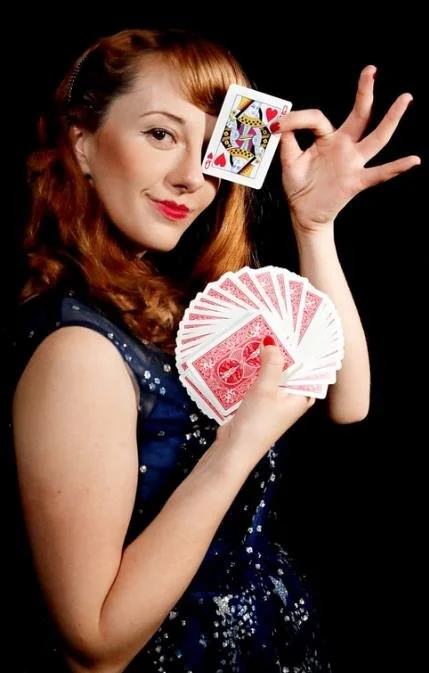


Women's History Month for Kids: Ideas for Families at Home
Women's History Month for Kids: Ideas for Families at Home
March rolls around, your child comes home with something from school about Women's History Month, and you think: I'd like to do something with this at home. Not a project, not a lecture, just something that actually sticks. Then the month slips by and you're not quite sure what you did with it.
That's an entirely normal experience, and it's fixable with surprisingly little effort. I'm Magical Katrina, an award winning magician and mentalist, and as a woman who built a career in a field where women were long the exception, this matters to me. So here are practical ideas for marking Women's History Month for kids at home, things that fit around real family life and genuinely land with children rather than feeling like homework.
Start With Curiosity, Not a Lesson
The instinct is to teach something, but the version that works best for Women's History Month for kids is usually a question rather than a lesson. Children switch off quickly when they sense they're being educated at, and switch on immediately when they're being asked what they think.
Try openers like: who's someone brave you've heard of? Do you know any women who invented things? Why do you think we know more about some people than others? Questions like these invite children into the topic rather than delivering it to them, and the conversations tend to go somewhere far more interesting than a prepared explanation would. Marking Women's History Month for kids through genuine curiosity also models something valuable, that history is something you wonder about, not just something you're told.
Notice the Gaps Together
Here's an activity that works remarkably well with children from about seven upwards, and takes no preparation at all. Look together at the stories your child already encounters, films, books, games, and simply count.
How many of the main characters are girls or women? Who's the one solving the problem? Who's the one being rescued? Children are startlingly good at this once you point them at it, and they notice patterns adults have stopped seeing. It's one of the most effective ways to make Women's History Month for kids feel real rather than abstract, because it connects to things they already love. And it isn't about criticizing what they enjoy, it's about noticing, which is a genuinely useful habit of mind.
Read Together, Widely
Books remain the easiest entry point for Women's History Month for kids, and there's now an enormous range of picture books, chapter books, and illustrated biographies about women in science, exploration, sport, activism, art, and invention.
Two suggestions for making this land. First, choose women whose work connects to what your child already cares about, a child obsessed with animals will engage far more with a naturalist than a general list of important figures. Second, mix in stories from beyond your own country and culture, since the familiar names get repeated everywhere and the less familiar ones are often more interesting. A few well chosen books do more for Women's History Month for kids than any amount of explaining.
Point Out the Women Around Them
History can feel distant to children, so one of the most effective approaches to Women's History Month for kids is bringing it into the present and the immediate. Point out the women your child actually encounters: their doctor, their coach, the engineer who fixed something, a relative who runs a business, a neighbour who does something interesting.
Even better, let them ask questions. Children are far more affected by a real conversation with a woman doing something they find cool than by any biography. If a relative or family friend has an interesting job, five minutes of your child interviewing them does more than a week of reading. Marking Women's History Month for kids this way makes the whole idea concrete: not just women in the past, but women right here.
Do Something Hands On
Reading and talking are good, but children remember what they did. So build at least one hands on activity into Women's History Month for kids.
Some that work well: try a simple experiment connected to a woman scientist you've read about, cook something from a country whose history you've explored, make a small poster or timeline together, write a letter to a woman your child admires (many will genuinely reply), or draw portraits of women they've learned about. The specific activity matters less than the fact that your child made something. Hands on projects give Women's History Month for kids a physical anchor, and children will often return to something they built weeks later.
Include Boys Fully
Worth saying plainly, because it's often quietly missed. Women's History Month for kids isn't content for girls, and treating it that way undercuts the entire point. Boys benefit enormously from growing up assuming that women invent things, lead things, explore things, and excel at things.
So involve every child in your household equally, and use language that includes them, not "this is for your sister" but "look what she figured out." The children who most need to absorb these stories are frequently the ones excused from them. Making Women's History Month for kids genuinely universal, rather than a girls' topic, is one of the more consequential choices a parent can make about it.
Keep It Going After March
The honest limitation of any awareness month is that it ends. The families who do this well treat March as a prompt rather than the whole exercise, using Women's History Month for kids to establish habits that continue quietly through the year.
That might mean keeping a mix of stories on the bookshelf, continuing to notice patterns in films together, or simply pointing things out when they come up naturally. None of that requires effort or planning, it's just staying alert. A month is a useful starting gun, but children absorb their sense of what's normal over years, not weeks. The families who keep it casual and constant tend to have the most effect.
Where a Bit of Wonder Comes In
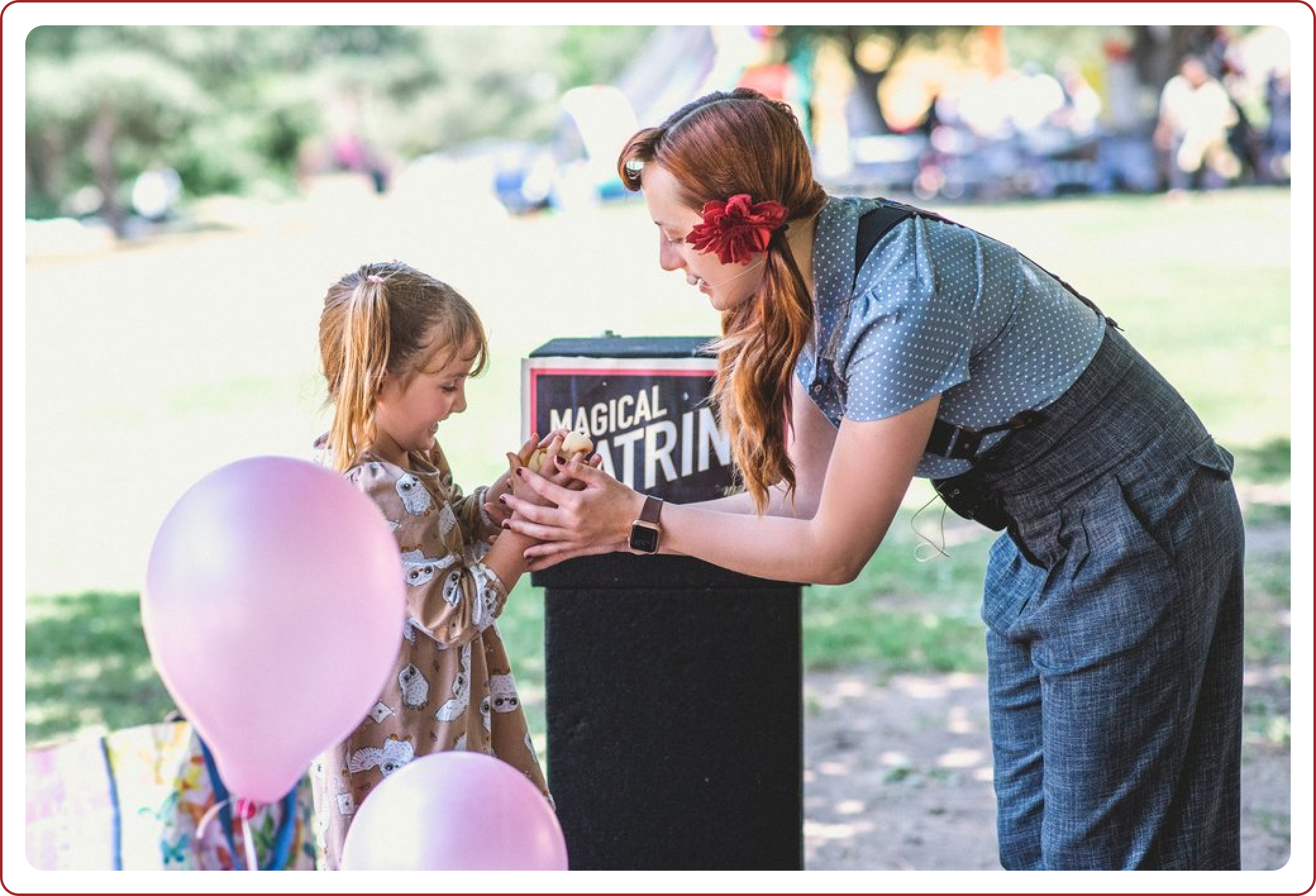
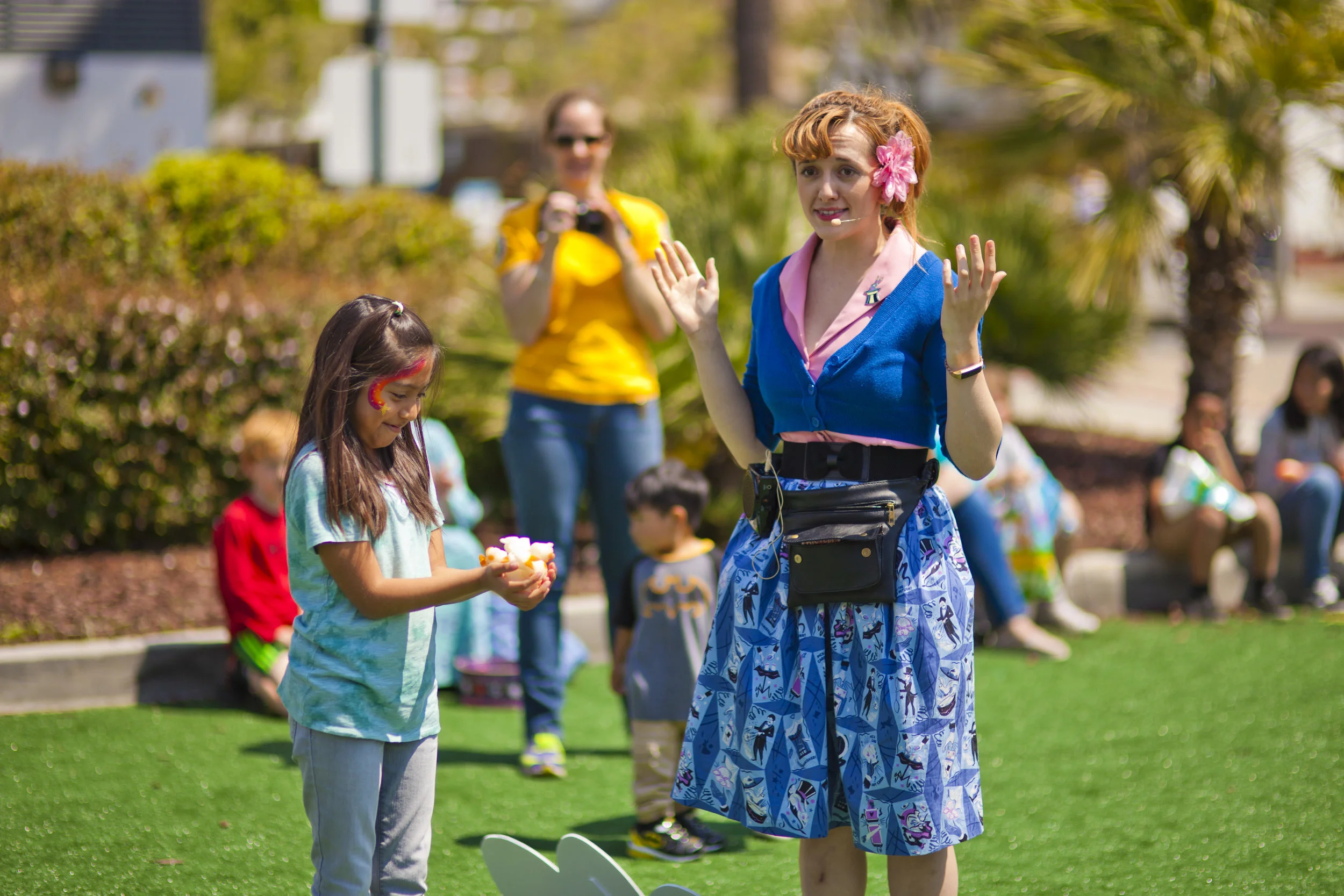
I'll mention my own corner of this briefly, because it's relevant. Magic has historically been overwhelmingly male, and one of the things I notice performing for family audiences is how children react when they realise the person doing the impossible is a woman. There's often a small recalibration happening, particularly with girls, but honestly with everyone in the room.
That's the underlying principle behind all of this. Children build their picture of what's possible from what they actually see, so seeing counts for more than being told. If your child's school or community group marks the month with an event, performances and speakers from women in unexpected fields do that work vividly, and I'm always glad to be part of those.
Frequently Asked Questions
How do I explain Women's History Month to a young child?
Keep it simple and lead with curiosity rather than explanation. Something like: for a long time, people mostly wrote down stories about men, so lots of amazing things women did got left out, and this month we go looking for them. Then ask what they think about that. Approaching Women's History Month for kids through questions rather than lessons keeps children engaged, and the conversations usually go somewhere more interesting than a prepared explanation would.
What activities work best for kids?
Hands on ones, because children remember what they did rather than what they were told. Try a simple experiment connected to a woman scientist, cooking something from a place you've explored, making a poster or timeline, writing a letter to a woman your child admires, or drawing portraits of women they've learned about. Alongside that, reading widely and noticing gender patterns together in films and books both work very well for Women's History Month for kids.
What age should I start?
Earlier than most parents assume, though the approach changes. With very young children it's mostly about the stories and characters they encounter, making sure girls and women appear as heroes, inventors, and problem solvers. From around seven, children can notice patterns themselves and engage with real biographies. Teenagers can handle the harder history directly. Women's History Month for kids works at every age, adjusted for what they can meaningfully engage with.
Should boys be included?
Absolutely, and fully. Women's History Month for kids isn't content for girls, and treating it that way undercuts the point entirely. Boys benefit enormously from growing up assuming women invent, lead, explore, and excel, since that shapes their expectations for life. Involve every child equally and use inclusive language. The children who most need these stories are frequently the ones quietly excused from them.
How do I keep it going after March?
Treat the month as a prompt rather than the whole exercise. Keep a varied mix of stories on the bookshelf, continue noticing patterns in films and books together, and point things out when they arise naturally. None of that takes planning, it just takes staying alert. Children build their sense of what's normal over years rather than weeks, so casual and constant beats intensive and brief.
Do you perform for schools or community events?
Yes, I perform magic and mentalism for family and community audiences, and I sometimes speak about building a career in a field where women were long the exception. If your child's school or group is planning something for the month, I'm always glad to hear about it, reach out with the date, location, and age range and we can talk it through.
Small Things, Repeated
Marking Women's History Month for kids at home doesn't require a project plan. Ask questions instead of giving lessons, notice patterns together in the stories they already love, read widely, point out the women around them, do something with their hands, include every child equally, and let March start habits that quietly continue afterwards. Children absorb what's normal from what surrounds them, so small consistent things genuinely outperform grand gestures.
And if your child's school or community group is planning something, a bit of wonder delivered by someone unexpected goes a long way.
Reach out if you'd like to talk about an event, and let's give them something they remember.