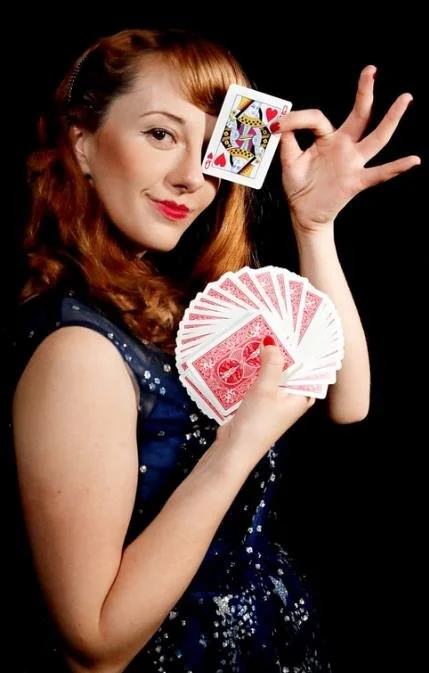


Strolling Magician New York for Holiday Parties
Strolling Magician New York for Holiday Parties
New York holiday parties are shaped almost entirely by what was available. The good venues went in September, budgets were set before anyone saw the room, and a great many companies end up in an office floor cleared for the evening, a restaurant buyout with the tables pushed back, or a bar with a section roped off.

That's the reality your entertainment has to work in. I'm Magical Katrina, an award winning magician and mentalist, and I want to explain why a strolling magician New York companies book suits a December party here, starting with the rooms rather than the atmosphere.
The Room Was Chosen by Availability
The defining constraint. By the time most companies confirm a December date, they're selecting from what remains rather than what they wanted, and the result is frequently a space that wasn't designed for a party at all.
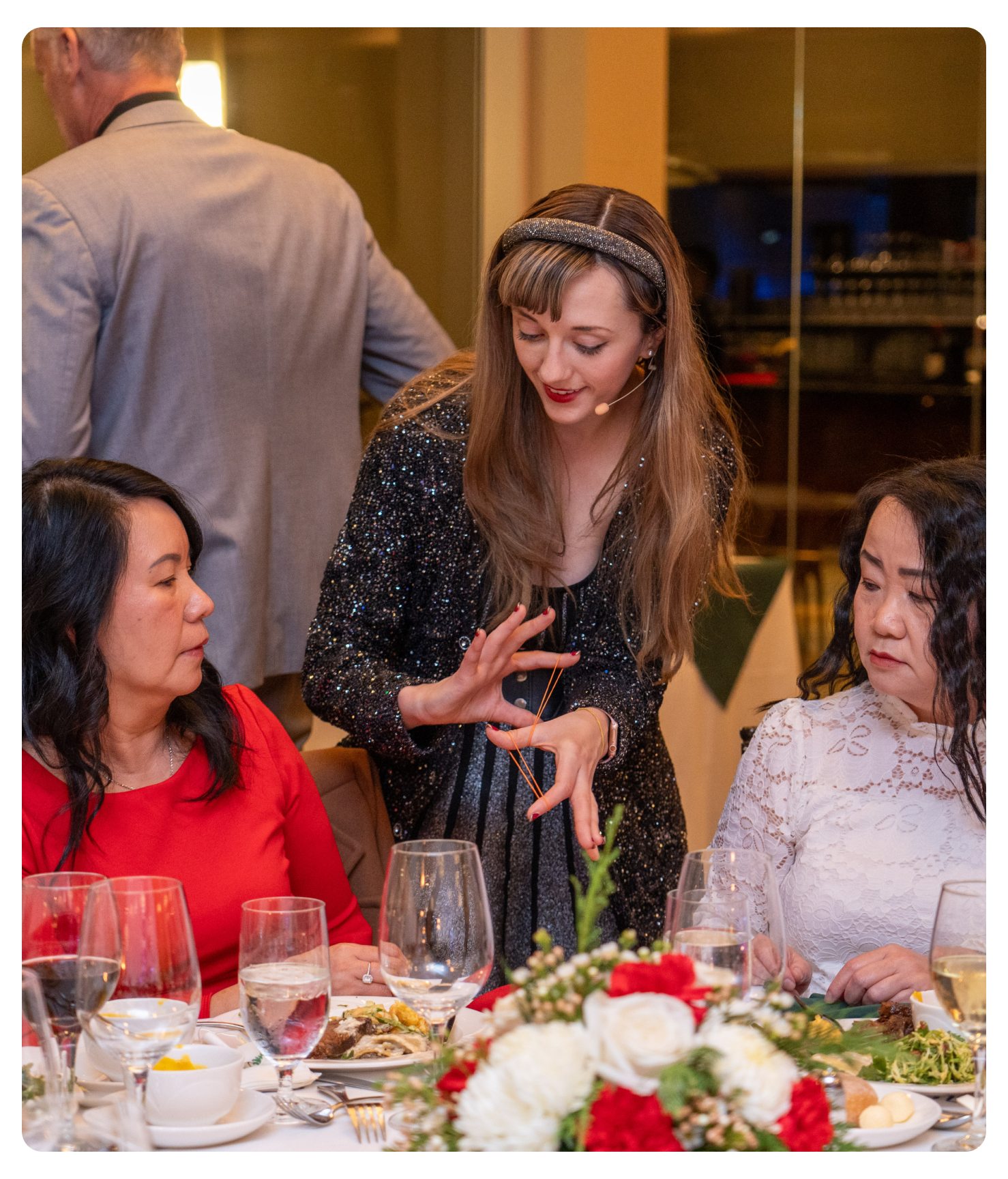
Office floors have no stage, hard surfaces, and strip lighting. Restaurant buyouts have furniture that can't be moved far and service running through the evening. Bars are loud by design. A strolling magician New York performing close up magic needs no stage, power, sound, rigging, or floor space beyond where guests already stand, which means whatever room you ended up with will work exactly as it is.
Office Parties in the Office
Worth addressing directly, since a great many New York companies hold the party where they work. It saves the venue cost and creates a specific problem: the space is familiar, functional, and doesn't feel like an occasion.
Decoration helps marginally, and what changes a room is something happening in it. A performer moving between groups gives an ordinary floor the sense that this is an event rather than a Thursday with drinks, and it does so without requiring anything to be installed, hired, or removed at the end. For a company party held in the office, that's frequently the only practical way to change how the space feels.
Nobody Has Any Spare Space
Practically decisive here more than in most cities. New York venues are tight, and in December they're tighter, because you've squeezed more people in than the room comfortably holds.
Anything requiring a footprint competes directly with your guests, and in a restaurant buyout it competes with tables you're paying for. A strolling magician New York occupies no space at all: the performer stands where guests are already standing, moves as they move, and leaves nothing behind. For a room at capacity, that's the difference between possible and not.
Two Hours Is the Format
The New York December reality. Holiday parties here are frequently short, an early evening window between the office and whatever people are doing afterwards, because that's what guests will give you in a month when everyone has several commitments.
Anything requiring a program slot competes with a schedule that's already compressed, and anything asking the room to stop and watch loses the people who came to talk. Strolling magic works inside the reception that's already happening, beginning as guests arrive and continuing until the end, covering the whole event while occupying none of your run of show.
Guests Arrive Across the Whole First Hour
Something particular to this city and this month. People come from different offices, meetings overrun, the subway is unpredictable, and your seven o'clock start means a room that fills gradually until nearly eight.
That early stretch is awkward: the first arrivals stand about, the host watches the door, and energy doesn't build until enough people are present. A strolling magician New York works from the first arrivals rather than requiring a full room, so the people who came on time get something rather than waiting. It makes the party feel like it has started before it technically has.
Colleagues Still Won't Mix
The universal problem, sharper in large New York offices where people genuinely don't know colleagues on other floors. People arrive, find the team they see daily, and talk to them.
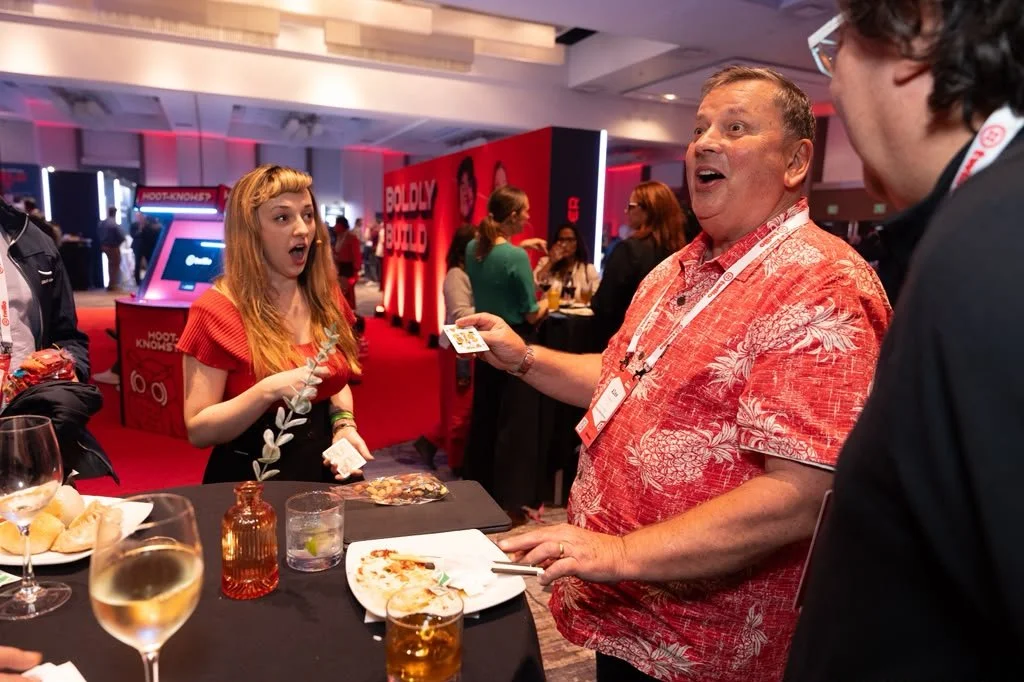
Left alone that persists all evening, and the company concludes its culture is fine because everyone seemed to have a pleasant time in their own group. A performer working the room breaks that up mechanically: four people from three teams react to something together and are a group for the next twenty minutes. That's considerably more reliable than hoping the bar manages it.
It Suits a Restaurant Buyout
Worth separating out, since it's the most common New York solution for parties of forty to a hundred. A buyout means the restaurant's own space, its own service, and a room designed for eating rather than for an event.
Entertainment competing with the room's noise will lose, and anything needing a focal point has nowhere to go. Close up magic operates within the ambient level rather than above it, works in small groups at conversational distance, and doesn't interrupt service. Among strolling magician New York bookings for December, buyouts are where the format's fit is most obvious.
Book Considerably Earlier Than Feels Necessary
The constraint that governs everything. December compresses a year of demand into four weeks, and the first three weeks on a Thursday or Friday are the most contested dates of the year by a wide margin.
A specific performer for a prime date realistically means enquiring in the summer, and by October most established options are committed. If your party is an annual fixture, book next year's as soon as this year's date is confirmed. If it's already November, enquire widely rather than sequentially and be flexible on day and time, since a Tuesday or an earlier start opens options a Friday won't.
A Note on "Local vs. Traveling In"
Worth knowing: performers who travel to New York work from a different calendar than those based there, so a December date that's impossible locally is sometimes straightforward for someone travelling. I'm based in the Los Angeles area and travel to New York, with travel discussed openly and factored into the quote rather than appearing later.
Why Book Magical Katrina
If you're planning a December party, here's my case. I'm a member of the Magic Circle in London and the Academy of Magical Arts in Hollywood, I've earned multiple magic awards, and I've performed for companies including Formula 1, the Olympics, Porsche, Prada, Zapier, and the Ritz Carlton, with appearances on Penn & Teller: Fool Us and Masters of Illusion. I need no stage, power, sound, or setup, so whatever room you secured will work, I start with the first arrivals rather than waiting for a full room, and I'm fully insured with a COI available.
Frequently Asked Questions
Our venue isn't really designed for a party. Does that matter?
Not for this format, and it's the usual December situation since the good rooms went in September. Office floors, restaurant buyouts, and roped off bar sections all work, because close up magic needs no stage, power, sound, rigging, or floor space beyond where guests already stand. Whatever room you ended up with will accommodate it exactly as it is.
We're holding it in our own office. Will it feel like an event?
It will if something is happening in the space, since decoration alone changes a familiar functional floor only marginally. A performer moving between groups gives an ordinary office the sense that this is an occasion rather than a Thursday with drinks, without anything being installed, hired, or removed afterwards, which is frequently the only practical way to change how the space feels.
The room is already at capacity. Is there space for entertainment?
There's no space required. Anything with a footprint competes directly with your guests and, in a buyout, with tables you're paying for, whereas a strolling magician New York stands where guests already stand, moves as they move, and leaves nothing behind. For a room packed tighter than it comfortably holds, that's the difference between possible and not.
We only have two hours. Does that work?
Well, and it's an argument for the format. Strolling magic works inside the reception that's already happening, beginning as guests arrive and continuing until the end, rather than requiring a slot or asking the room to stop. Covering the whole event while occupying none of your run of show suits the compressed early evening window New York parties actually use.
Guests arrive over an hour. Is that a problem?
It's a reason to book this rather than something scheduled. People come from different offices with meetings overrunning, so a seven o'clock start means a room filling until nearly eight, leaving early arrivals standing about while energy fails to build. A performer works from the first arrivals, so the party feels like it has started before it technically has.
Will it actually get people mixing?
More reliably than a bar and a playlist. In large New York offices people genuinely don't know colleagues on other floors, so they arrive, find the team they see daily, and stay there all evening. A performer approaching four people from three teams gets them reacting together, and they remain a group afterwards.
How late can we leave the booking?
Earlier than feels necessary, since December compresses a year of demand into four weeks and the first three weeks on a Thursday or Friday are the most contested dates of the year. A prime date realistically means enquiring in the summer, and by October most established options are committed. If it's already November, enquire widely and be flexible on day and time.
Make the Room You Got Work
New York December parties are shaped by what was available rather than what was wanted, which means the entertainment has to fit an office floor, a buyout, or a bar section rather than a room designed for an occasion. A strolling magician New York does exactly that: nothing required from the venue, no space consumed in a room already at capacity, working from the first arrivals through to the end, and getting colleagues from different floors talking to each other.
If you're planning something for December, I'd be glad to hear about it.
Reach out with your date and venue, and I'll confirm it works.