


Strolling Magician San Francisco for Investor and LP Events
Strolling Magician San Francisco for Investor and LP Events
An investor event is the hardest kind of room to program, because nothing you add can interrupt the reason people came. Limited partners, founders, and prospective investors turn up to have conversations with specific people, and anything that stops the room to look at a stage has cost them the hour they allocated.

That's a real constraint and it doesn't mean the room should be bare. I'm Magical Katrina, an award winning magician and mentalist, and I want to set out what a strolling magician San Francisco booking does at an investor event, and why the format suits this room better than any alternative.
Nobody Came for the Program
Start with the honest framing. At a fund's annual meeting, a portfolio dinner, a demo day reception, or an LP gathering, the attendees are there to speak to a handful of named people and the event is the pretext.
Anything requiring their attention competes with that purpose rather than serving it. This is why so much investor event programming fails: a speaker, a band, or a scheduled performance interrupts the thing the room is actually for, and the attendees politely wait for it to finish. Strolling works precisely because it never asks the room to stop.
The Room Needs a Reason to Mix
The real problem worth solving. An investor reception reliably sorts itself within ten minutes: the fund's team talks to the fund's team, founders talk to founders they already know, and the LPs who flew in stand in a cluster near the bar wondering who to approach.
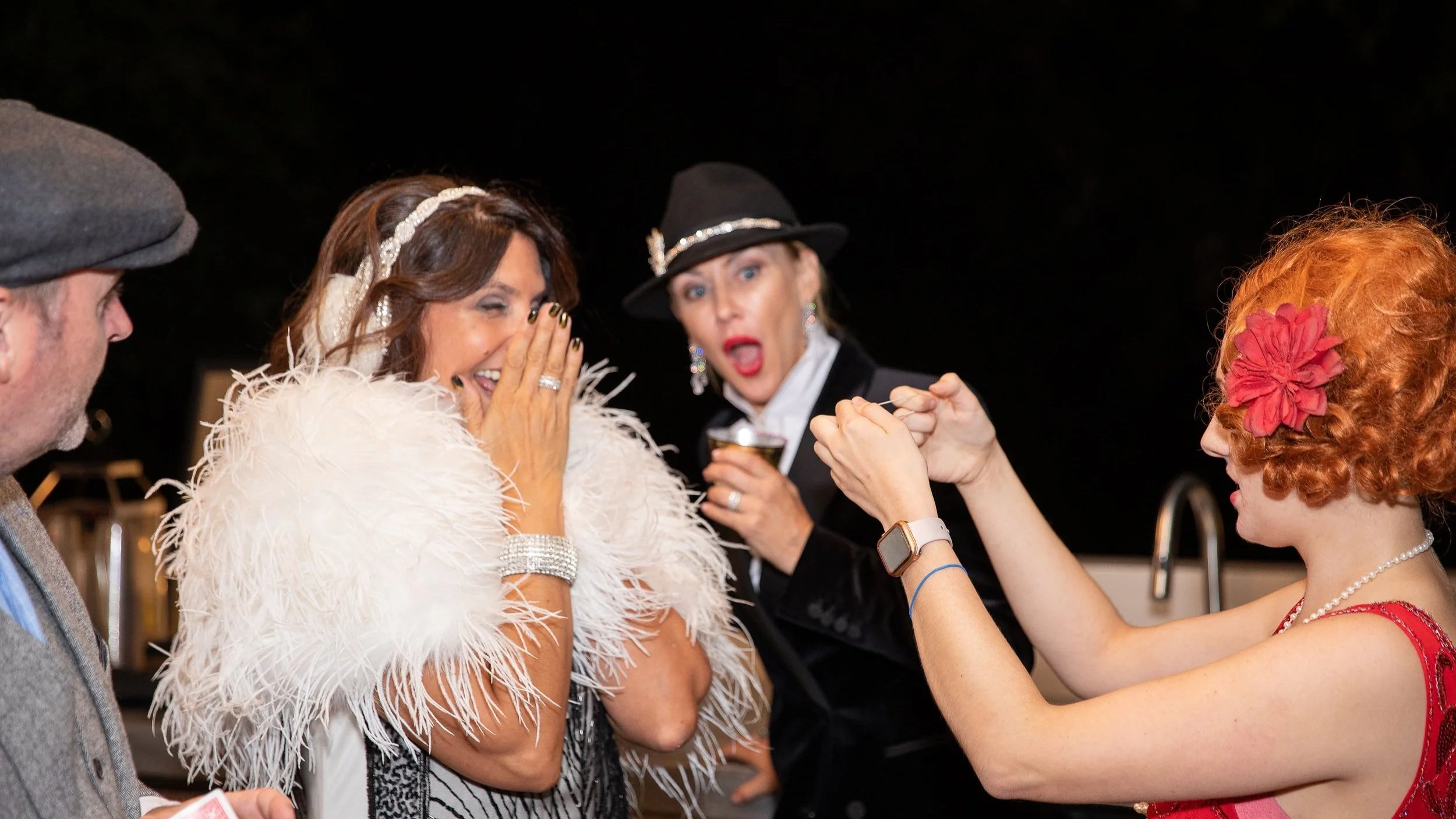
That sorting is the failure mode, because the value of the evening lies in the connections that don't happen automatically. Something moving through the room gives strangers a shared thing to react to, which is the oldest and most reliable way to convert two people standing near each other into two people in conversation. For an event whose whole purpose is introductions, that's substantive rather than decorative.
Founders Are Pitching, and It's Exhausting
Worth considering, since it shapes the mood. Every founder in the room is working: calibrating how they come across, watching for the partner they wanted to meet, and delivering some version of their company for the ninth time that evening.
A few minutes of something genuinely surprising is a release from that, and founders consistently remember the event that gave them one. It also softens the room generally, which makes the conversations after it better. If you're hosting people who are performing all evening, giving them ninety seconds of not performing is a kindness with a commercial return.
Small Rooms, High Value Guests
The structural feature of these events. A conference has two thousand attendees and an LP dinner has thirty five, where every single person is individually significant and the host knows all their names.
That changes what good looks like. At thirty five people a performer reaches everybody properly, with time at each group rather than a circuit, which is a considerably better experience than the same booking at a large reception. It also means nothing can be rough, because there's no crowd to hide in and every interaction is with somebody who matters to you.
Discretion Is Part of the Job
Worth being explicit about, since these rooms are sensitive. Conversations at an investor event are frequently confidential, people are negotiating, and an attendee may not want it known publicly that they were in the room at all.
A performer working these events reads a closed conversation and doesn't approach it, leaves a group that's mid negotiation alone, and doesn't photograph anybody or post about the evening. That's not a small thing. It's one of the few genuine differences between somebody who works corporate rooms regularly and somebody who performs at parties, and it's worth asking about directly.
San Francisco Venues Are Frequently Not Event Spaces
Practically relevant here more than almost anywhere. These events happen in a fund's own office, a private dining room in Jackson Square, a converted SoMa space, a rooftop in the Financial District, or somebody's home in Pacific Heights.
None of those have a stage, usable sound, or a lighting rig, and most of them have a strict noise or capacity arrangement. Close up magic needs none of it and works in the room as it is, which is why it suits the venues this city's investor events actually use. For an office reception where the furniture is desks pushed back, it's the only format that works properly.
Timing Around the Real Agenda
Worth planning carefully, because these events have a sequence that matters. The partner remarks, the portfolio presentations, or the fund update are the formal part, and everything else is arranged around them.
Strolling belongs in the arrival window and the period after the formal remarks, when conversations are forming and people are deciding whether to stay. It should stop entirely while anybody is speaking. A performer who understands they're supporting the agenda rather than being part of it is the one who makes this work, and that's worth stating when you book.
Demo Days Need the Opposite of a Show
Worth separating out, since demo days are their own thing. The presentations are the event, the reception afterwards is where investors actually approach founders, and the reception is frequently under programmed because all the planning went into the stage.
That reception is where the value is created and it benefits enormously from something that keeps people in the room longer. A reception that empties twenty minutes after the last pitch has wasted its purpose, and the most useful thing you can do is give attendees a reason to stay and circulate while the conversations they came for actually happen.
A Note on "Local vs. Traveling In"
Worth knowing: I'm based in the Los Angeles area and travel to San Francisco regularly for corporate and investor events. Travel is discussed openly and factored into the quote rather than being something you arrange, and for a Bay Area date it's a short hop that rarely changes the shape of a booking.
Why Book Magical Katrina
If you're hosting founders or LPs, here's my case. I'm a member of the Magic Circle in London and the Academy of Magical Arts in Hollywood, I've earned multiple magic awards, and I've performed for clients including Formula 1, the Olympics, Porsche, Prada, Zapier, and the Ritz Carlton, with appearances on Penn & Teller: Fool Us and Masters of Illusion. I work corporate and investor rooms constantly, I read a closed conversation and leave it alone, I need no stage, power, or sound so your office or a private dining room works as it is, and I stop entirely while anybody is speaking.
Frequently Asked Questions
Won't entertainment interrupt the networking?
Not if it's the right format, since strolling never asks the room to stop and a scheduled performance does. At a fund's annual meeting or a portfolio dinner, attendees came to speak to specific people, so anything requiring their attention competes with the purpose rather than serving it.
What problem does it actually solve?
The room sorting itself, since an investor reception reliably separates within ten minutes into the fund's team, founders who already know each other, and LPs standing near the bar. Something moving through gives strangers a shared thing to react to, which is how two people standing near each other become two people talking.
Does it work for a group of thirty five?
Better than for a large reception, since a performer reaches everybody properly with time at each group rather than running a circuit. It also raises the bar, because at that size every person is individually significant and there's no crowd for anything rough to hide in.
Our conversations are confidential. Is that a problem?
It shouldn't be, and it's worth asking about directly. A performer who works these rooms reads a closed conversation and doesn't approach, leaves a group mid negotiation alone, and doesn't photograph anybody or post about the evening, which is a real difference from somebody who performs at parties.
Our venue is our own office. Does that work?
Yes, since close up magic needs no stage, power, sound, or lighting and works in the room as it is. That matters in San Francisco particularly, where these events happen in offices, private dining rooms, converted SoMa spaces, and homes rather than in event venues.
Where does it fit around our remarks?
In the arrival window and after the formal part, when conversations are forming and people are deciding whether to stay, and it should stop entirely while anybody is speaking. A performer who understands they're supporting your agenda rather than being part of it is what makes this work.
What about a demo day?
Focus it on the reception rather than the presentations, since the pitches are the event but the reception is where investors actually approach founders, and it's usually under programmed. A reception that empties twenty minutes after the last pitch has wasted its purpose.
What do you need to know to quote?
Your date, the venue or area, roughly how many attendees, and the shape of the evening including when any formal remarks sit. That's enough for me to check availability and send a quote, and I'll plan the coverage around your agenda rather than against it.

Serve the Conversations, Don't Interrupt Them
An investor event exists so that particular people talk to each other, and the best thing programming can do is help that happen rather than pause it. A strolling magician San Francisco booking suits this room because it never stops the evening, gives strangers an opening, works in an office or a private dining room with nothing installed, and goes quiet the moment somebody picks up a microphone.
For a demo day reception or an LP dinner, that combination does more for the purpose of the evening than any scheduled act would.
Reach out with your date and the shape of your evening, and I'll tell you how I'd work the room.