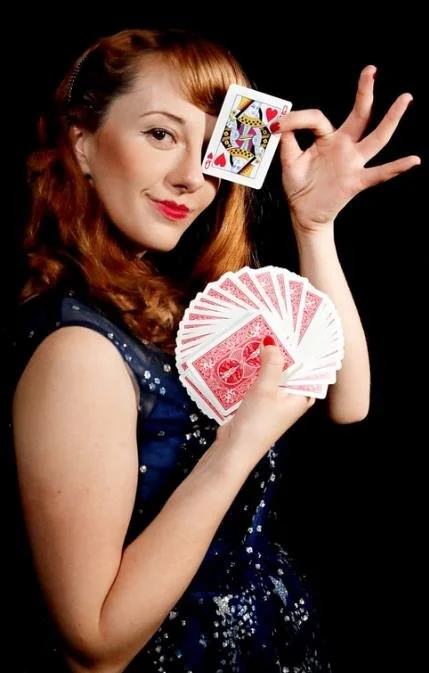


Strolling Magician San Francisco for Bar and Bat Mitzvahs
Strolling Magician San Francisco for Bar and Bat Mitzvahs
A bar or bat mitzvah is two events sharing a building. There's a room of thirteen year olds who came because their friend is having a party, and a room of adults who came because it's family, and most entertainment serves one of those groups properly.

Bay Area celebrations tend to be smaller and less formal than the East Coast norm, which helps and doesn't solve it. I'm Magical Katrina, an award winning magician and mentalist, and I want to set out what a strolling magician San Francisco families book brings to a mitzvah.
Teenagers Are the Hard Half
Start with the audience everything else depends on. Thirteen year old’s are old enough to find things childish, self conscious about appearing impressed in front of friends, and entirely willing to ignore anything that doesn't earn attention quickly.
That rules out anything pitched young. What holds them is material genuinely baffling enough that not reacting isn't an option, delivered by somebody who treats them as the near adults they're trying to be. It's worth asking any performer specifically about experience with this age, since it's a different skill from children's work and from adult corporate events.
They Won't React First
Worth knowing, since it unsettles the adults watching. A group of teenagers won't visibly respond in the first few minutes, because reacting first in front of friends carries a social cost nobody volunteers for.
An experienced performer expects that and works through it, and the group breaks once one person gives in. If you're watching from the side wondering whether it's working, ninety seconds is the wrong moment to judge. That's the normal shape of this audience rather than a problem.
The Adults Usually Get Nothing
The other half, and the one families forget. Parents, grandparents, and family friends spend a mitzvah watching children enjoy themselves, which is lovely and entirely passive.
Close up magic reaches both groups on the same terms, since a performer works the teenagers at one table and the grandparents at the next without changing what they're doing. That's genuinely rare: a DJ serves the children, a speech serves the adults, and almost nothing serves both. For an event with two distinct populations, entertainment crossing between them does something the rest of the day can't.
The Cocktail Hour Is the Slot
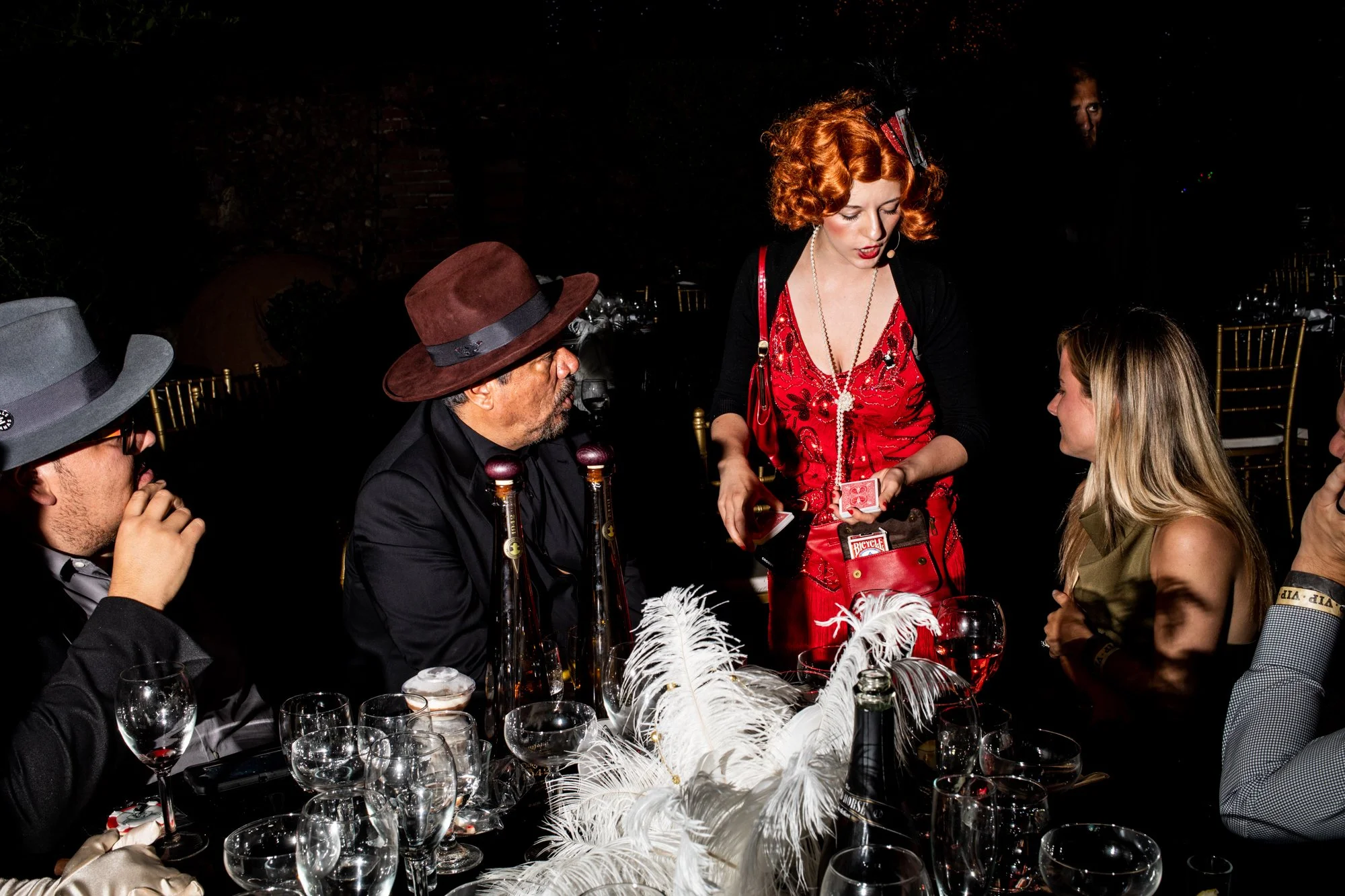
Practically, the adult reception during photographs is where this earns most. The children are elsewhere or arriving, the adults are standing with drinks, and there's typically an hour with nothing programmed.
A strolling magician San Francisco working that hour means guests who've travelled and know half the room have something to do and someone to talk to. It also warms the room before the main event rather than letting energy build from scratch when everyone sits down. If you book one hour of anything, that's usually the hour.
Bay Area Celebrations Are Less Formal
Worth noting, since families planning here sometimes compare themselves unfavorably to what they've seen elsewhere. Mitzvahs in this region tend to be smaller, less produced, and more relaxed than the large East Coast versions, with a stronger emphasis on the family than the spectacle.
That suits close up work particularly, since it's intimate rather than theatrical and works in a room of eighty as readily as three hundred. A smaller celebration isn't a lesser one, and the format you choose should follow the event you're actually having rather than the one on somebody else's social media.
Your Venue Probably Has Nothing
Practically relevant. Mitzvahs here happen in synagogue halls, hotel function rooms, restaurants, event spaces, and occasionally homes, with wildly varying facilities.
Close up magic needs no stage, power, sound, or setup, so whichever you've chosen works exactly as it is, and it doesn't compete with a DJ for space or volume. It also moves between rooms, which matters when the adults are in one space and the children in another, though genuinely separate simultaneous spaces need either a longer booking or a second performer.
It Doesn't Touch Your Schedule
Worth noting, since a mitzvah run of show is full: service, photographs, cocktail hour, entrance, speeches, candle lighting, dancing, and food.
Nothing should be added that needs its own slot. Close up magic works inside the gaps that already exist, particularly the cocktail hour and the stretches between programmed moments, without your planner finding minutes that aren't there. That's frequently why families choose it over something requiring the room's attention.
Tell the Performer About the Family
Worth doing properly. Who's being celebrated, what they're like, whether they'd enjoy being the center of a moment or would find it excruciating, and anything sensitive about the family.
Thirteen year olds vary enormously in how much attention they want, and a performer who knows can build a moment around them or deliberately avoid it. Mention grandparents who've travelled, anyone who won't know many people, and any family situation worth handling gently. Ten minutes, and it noticeably improves what a performer can do.
A Note on "Local vs. Traveling In"
Worth knowing: the right performer needn't be Bay Area based, and many travel in, with travel discussed openly and factored into the quote. I'm based in the Los Angeles area and travel to San Francisco and the wider Bay Area for family celebrations, which sometimes means availability on dates when local performers are committed.
Why Book Magical Katrina
If you're planning a mitzvah, here's my case. I'm a member of the Magic Circle in London and the Academy of Magical Arts in Hollywood, I've earned multiple magic awards including a Family Entertainer of the Year honor, and I've appeared on Penn & Teller: Fool Us and Masters of Illusion. I perform for teenagers without pitching young and for adults without losing the room, I read participants carefully so nobody is embarrassed, and I need no stage, power, or setup, so whichever venue you've chosen will work.
Frequently Asked Questions
Will it hold a room of thirteen year old’s?
If the material is genuinely baffling, yes. Teenagers are old enough to find things childish, self conscious about appearing impressed in front of friends, and willing to ignore anything that doesn't earn attention, which rules out anything pitched young. Ask specifically about experience with this age group.
They didn't react at first. Is that normal?
Entirely, since reacting first in front of friends carries a social cost nobody volunteers for, so a group of teenagers won't visibly respond in the first few minutes. An experienced performer expects it and works through it, and the group breaks once one person gives in. Ninety seconds is the wrong moment to judge.
What about the adults?
They're the half that usually gets nothing, spending the event watching children enjoy themselves. Close up magic reaches both groups on the same terms, since a performer works the teenagers at one table and the grandparents at the next. A DJ serves the children and a speech serves the adults, whereas almost nothing else serves both.
When should it happen?
The adult cocktail hour during photographs is usually best, since the children are elsewhere or arriving, the adults are standing with drinks, and there's typically nothing programmed. It gives guests who've travelled something to do, and warms the room before the main event rather than starting from scratch.
Our celebration is fairly small. Does that matter?
Not at all, and Bay Area mitzvahs tend to be smaller and less produced than large East Coast versions, with more emphasis on family than spectacle. Close up work suits that particularly, being intimate rather than theatrical and working in a room of eighty as readily as three hundred.
Will it work at our venue?
Almost certainly, since close up magic needs no stage, power, sound, or setup and doesn't compete with a DJ for space or volume. Mitzvahs here happen in synagogue halls, hotel rooms, restaurants, event spaces, and homes with wildly varying facilities, and whichever you've chosen works as it is.
Our schedule is already full. Does it need a slot?
No, and that's frequently why it's chosen. A mitzvah run of show already contains the service, photographs, cocktail hour, entrance, speeches, candle lighting, dancing, and food, and close up magic works inside the gaps that exist rather than requiring minutes that don't.
What should we tell the performer?
Who's being celebrated and what they're like, particularly whether they'd enjoy being the center of a moment or would find it excruciating, since thirteen year olds vary enormously. Also mention grandparents who've travelled, anyone who won't know many people, and any family situation worth handling gently.
Serve Both Rooms
A mitzvah is two audiences in one building, and most of what gets booked reaches one of them. A strolling magician San Francisco working close up crosses between them: material teenagers can't dismiss, something for the adults who'd otherwise spend the day watching, an hour of the reception that's currently empty, and nothing added to a schedule that's already full.
Tell your performer about the young person being celebrated, and the day gets a moment that belongs to them rather than to the program.
Reach out with your date and venue, and let's talk about the day.