

Women's History Month for Kids: How to Choose Books and Stories That Land
Women's History Month for Kids: How to Choose Books and Stories That Land
The default approach to this month is a stack of picture book biographies, and it's a reasonable instinct that produces mixed results. Some of those books genuinely capture children. Others get read once, politely, and returned to the shelf, and the difference isn't quality of production so much as what's actually on the page.

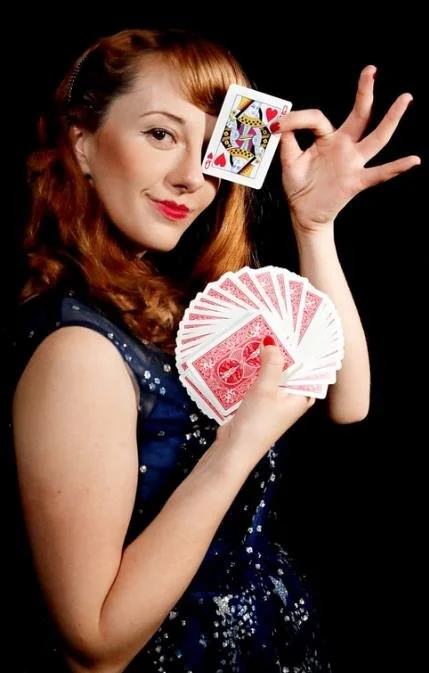
Worth understanding before you build a reading list. I'm Magical Katrina, an award winning magician and mentalist, and while I'm not a teacher or a librarian, I perform for a great many children and notice what holds them. Here's how I'd think about choosing material for Women's History Month for kids.
Specifics Beat Summaries
The single most useful principle. Children engage with concrete detail and disengage from achievement described at a distance, which is the trap most short biographies fall into.
"She was a pioneering scientist who overcame great obstacles" is information. "She kept her equipment in a shed because the laboratory wouldn't give her space, and it was so cold her hands shook" is a story a child can picture and will remember. When choosing books for Women's History Month for kids, look for the ones that slow down and describe something specific rather than the ones summarizing a career across sixteen pages. Detail is what children carry away.
The Same Five Names Get Dull
A practical problem in schools particularly. A child who has encountered the same handful of famous women every March since they were five has stopped hearing it, however remarkable those women were.
There is no shortage of alternatives, and unfamiliarity is genuinely valuable, since a story you haven't heard before commands attention that a familiar one doesn't. When building a list for Women's History Month for kids, deliberately include at least some names the children won't recognize. It also quietly makes a useful point: that the number of women worth knowing about is much larger than the standard set suggests.
Widen the Fields
Related, and worth being deliberate about. Reading lists skew heavily towards science and activism, which are important and are two categories out of many.
Children's ideas about what's possible form partly from what they see represented, and a list containing only scientists and campaigners implies a narrow set of options. Consider engineers, chefs, pilots, architects, athletes, musicians, entrepreneurs, doctors, farmers, comedians, and people whose work children can actually picture happening. Variety of field does more for a child's sense of possibility than variety of era, which is the axis lists usually vary along instead.
"First Woman To" Is One Frame, Not the Only One
Worth noticing, since it dominates the genre. An enormous proportion of children's books about women are structured around being first: the first to fly something, the first to be elected, the first to win an award.
That framing is accurate and it has a limitation, which is that it defines someone by the barrier rather than by the work. A child who reads twenty books structured that way learns that women's stories are about obstacles, which is only part of the truth. Balance the list with books about women who were simply extremely good at something, where the interest is what they did rather than who let them do it.
Include Living People
Frequently missed and genuinely useful. History is the frame for the month, and a child's sense of what's possible is affected more by people who exist now than by people who existed in 1890.
A woman doing remarkable work today is someone a child could plausibly become, whereas a historical figure is a story about the past. Contemporary subjects also allow a child to look someone up, watch a video of them working, or in some cases write to them. When assembling material for Women's History Month for kids, a mix of historical and living subjects works better than either alone.
Fiction Counts, and Sometimes More
Worth stating, because reading lists for this month are usually all non fiction. A novel or picture book in which a girl invents something, solves a problem, leads an expedition, or fixes what's broken does something biography doesn't.
Children identify with fictional characters in a way they rarely do with real historical figures, who arrive pre labelled as important. A story where the girl is simply the person who works it out normalizes rather than commemorates, and normalizing is the more durable effect. Among material for Women's History Month for kids, the fiction frequently does quieter and better work than the biography sitting next to it.
Let Children Choose
A practical mechanism that improves engagement considerably. A curated list handed to children is homework, whereas a selection they pick from is a choice.
Put out a range and let them take what appeals, or give them the task of finding someone themselves and reporting back, which for older children produces far more engagement than being assigned a subject. Children who chose their own subject remember it, and they frequently find people no adult would have selected, which is usually more interesting than the alternative.
Read Some of It in June
The point that undermines the premise of a reading list slightly, and it's worth making. Books about women read exclusively in March communicate that these stories belong to a designated month.
Read them across the year and they become ordinary, which is the actual goal. That doesn't mean skipping March, it means not confining it, and a book about a woman engineer read in October does more for a child's assumptions than the same book read alongside eleven others in the first week of March. The concentration is the thing worth loosening rather than the content.

Where a Live Example Fits
Briefly, since it connects. Books do a great deal and there's something a book can't do, which is put a person in front of a child doing something impressive in real time.
Magic has been overwhelmingly male throughout its history, and when I perform for families I notice a particular reaction, especially among girls, when the person doing the impossible thing turns out to be a woman. Nothing is explained, which is why it works. If your school, library, or group is planning something for March, I'm glad to talk it through.
Frequently Asked Questions
Why do some biographies fall flat with children?
Because they summarize rather than describe. Children engage with concrete detail and disengage from achievement described at a distance, so a book covering a whole career across sixteen pages gives them information without giving them a picture. The books that land slow down and describe something specific, and that specific thing is what a child actually remembers.
Should we include the famous names?
Some of them, and not only them. A child who has met the same handful of women every March since they were five has stopped hearing it, however remarkable those women were. Deliberately include names the children won't recognize, since unfamiliarity commands attention, and it quietly makes the point that the number of women worth knowing about is far larger than the standard set.
What's wrong with the "first woman to" framing?
Nothing, except as the only frame. It's accurate and it defines someone by the barrier rather than the work, so a child who reads twenty books structured that way learns that women's stories are about obstacles, which is only part of the truth. Balance the list with books about women who were simply extremely good at something.
Does fiction count?
Yes, and it frequently does better work than the biography beside it. Children identify with fictional characters in a way they rarely do with historical figures, who arrive pre labelled as important, so a story where a girl invents something or solves the problem normalizes rather than commemorates. Among material for Women's History Month for kids, normalizing is the more durable effect.
Should we include people who are still alive?
Yes, and lists routinely miss this. A woman doing remarkable work today is someone a child could plausibly become, whereas a historical figure is a story about the past. Contemporary subjects also let a child look someone up, watch them working, or occasionally write to them. A mix of historical and living subjects works better than either alone.
How do we get children more engaged with the list?
Let them choose. A curated list handed over is homework, whereas a selection they pick from is a choice, and for older children the task of finding someone themselves and reporting back produces considerably more engagement than being assigned a subject. They also tend to find people no adult would have picked, which is usually more interesting.
Should this only happen in March?
Read some of it across the year. Books about women read exclusively in March communicate that these stories belong to a designated month, whereas reading them in June and October makes them ordinary, which is the actual goal. A book about a woman engineer read in October does more for a child's assumptions than the same book read alongside eleven others in March.

Choose for the Child, Not the Theme
The reading lists that work for Women's History Month for kids are chosen the way you'd choose any book a child might enjoy: concrete rather than summarized, unfamiliar rather than obligatory, varied in field rather than only in era, including living people and fiction alongside the biographies, and picked by the children themselves wherever possible.
And then read some of them in June, which does more than any single March ever will.
Reach out if your school or group is planning something for March, and let's talk.