

Corporate Christmas Party Entertainment for a Lunch or Daytime Event
Corporate Christmas Party Entertainment for a Lunch or Daytime Event
More organizations are holding their Christmas party at lunchtime, and the reasons are sound: it costs less, it includes people who can't do evenings, attendance is better, and nobody has to arrange childcare or a taxi home. It's a genuinely good decision that solves several problems at once.

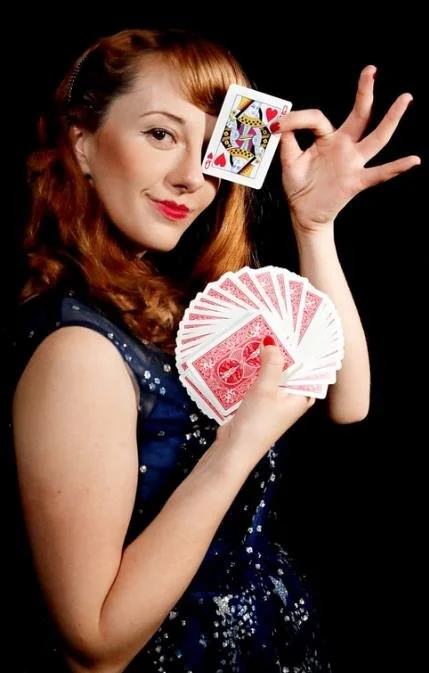
It also creates one that catches organizers out, which is that entertainment designed for an evening party frequently doesn't work at midday. I'm Magical Katrina, an award winning magician and mentalist, and I want to explain what changes and what corporate Christmas party entertainment actually suits a daytime event.
The Room Is Sober
Start with the difference that governs everything else. A great deal of party entertainment relies, quietly, on an audience that has been drinking for two hours, and performers know it even if organizers don't.
At midday your colleagues are sober, alert, and considerably more discerning. Anything that would have carried a relaxed evening room on energy alone falls flat, and anything requiring people to be uninhibited will be met with polite refusal. That isn't a worse audience, it's a more honest one, and it means corporate Christmas party entertainment for a lunch has to be genuinely good rather than merely lively.
People Are Going Back to Work
The second constraint, and it shapes the mood more than organizers expect. If your lunch finishes at three and people return to their desks, nobody is fully letting go, and they shouldn't be expected to.
That rules out anything demanding abandon, and it argues for something people can enjoy without having to shift register. It also means a shorter, tighter event: two hours is generous for a daytime party, and entertainment needs to fit inside that rather than assuming an evening's worth of runway. Plan the whole thing to finish cleanly rather than trailing off.
Nobody Is Hiding in the Dark
An underrated difference. Evening parties happen in low light, which flatters everything and lets people stand at the edges comfortably, and daytime events happen in ordinary light in ordinary rooms.
That exposes weak entertainment considerably. Something staged looks staged, a performer working a bright function room has nowhere to hide, and the atmosphere a dimly lit evening supplies for free has to be generated by the content instead. It's a genuine reason to choose skill over spectacle for a lunch, since spectacle depends on production that daylight tends to undermine.
Close Up Magic Suits Daytime Particularly
Since it's my area, the specific case. Close up magic doesn't rely on atmosphere, low light, or an audience several drinks in, because it happens at conversational distance and the astonishment is the same in any lighting.
A sober audience is also a better audience for it rather than a harder one, since people paying genuine attention who still cannot explain what happened experience it more forcefully than a relaxed evening crowd. Among corporate Christmas party entertainment options for a lunch, formats that improve with attention rather than depending on its absence are the ones that transfer.
It Works Around a Meal
Practically decisive for a lunch specifically, since the meal is usually the entire structure of the event. There's no reception, no dancing, and no long evening, just people at tables for a couple of hours.
That eliminates anything needing a standing crowd or a separate slot. Table magic between courses works inside the meal that's already happening, gives a long lunch shape, and stops a table of eight fragmenting into three separate conversations. For a daytime party built entirely around a seated meal, entertainment that works at the table rather than requiring an audience is the format that fits.
Colleagues Still Don't Mix
Worth noting, since the problem doesn't disappear at lunchtime. People sit with the colleagues they see daily and talk to them, and a seating plan helps only if you use one.
Entertainment moving between tables reshuffles attention if not seating, and it gives people from different teams a shared reaction to discuss. That matters as much at a lunch as an evening party, and it's frequently the reason organizations hold the event at all. If your daytime party is meant to connect people, something that moves through the room does more than a longer lunch would.
What Doesn't Transfer
Worth naming plainly. Anything built for a late evening crowd struggles: comedy pitched at a loosened room, party bands, anything requiring dancing, and formats that depend on people being uninhibited.
Also anything requiring darkness or heavy production, since a bright function room defeats it and hiring lighting for a lunch is disproportionate. And anything requiring a full evening's runway, since your two hours are largely occupied by a meal. Among corporate Christmas party entertainment options, the evening staples are precisely the ones to reconsider when you move to midday.

Keep It Short and Deliberate
Practical guidance on the shape of the day. A daytime party works best tightly run: arrival and drinks briefly, the meal, entertainment during or immediately after it, and a clean finish.
Resist the temptation to stretch it, since a lunch that drifts into an awkward afternoon serves nobody and people start checking the time. Ending while everyone is still enjoying it is the right instinct, particularly if colleagues are returning to work, and it leaves the event remembered as good rather than long.
Why Book Magical Katrina
If you're planning a Christmas lunch, here's my case. I'm a member of the Magic Circle in London and the Academy of Magical Arts in Hollywood, I've earned multiple magic awards, and I've performed for companies including Formula 1, the Olympics, Porsche, Prada, Zapier, and the Ritz Carlton, with appearances on Penn & Teller: Fool Us and Masters of Illusion. My work doesn't depend on low light or a drinking audience, it works at a table between courses without interrupting service, and it needs no stage, sound, power, or setup. I'm fully insured with a COI available.
Frequently Asked Questions
Why doesn't evening entertainment work at lunchtime?
Because a great deal of it quietly relies on an audience that's been drinking for two hours. At midday colleagues are sober, alert, and more discerning, so anything that would have carried an evening room on energy falls flat and anything requiring uninhibited participation meets polite refusal. It's a more honest audience rather than a worse one.
Does it matter that people go back to work?
It shapes the mood considerably. If the lunch finishes at three and people return to their desks, nobody is fully letting go and they shouldn't be expected to, which rules out anything demanding abandon. It also means a shorter event, since two hours is generous for a daytime party, and entertainment has to fit inside that rather than assuming an evening's runway.
Why does the lighting matter?
Because evening parties happen in low light that flatters everything and lets people stand comfortably at the edges, whereas daytime events happen in ordinary light in ordinary rooms. That exposes weak entertainment, since something staged looks staged and a performer in a bright function room has nowhere to hide. Atmosphere has to come from the content rather than the setting.
What actually works at a Christmas lunch?
Formats that don't depend on atmosphere or alcohol and work around a meal, since the meal is usually the entire structure. Table magic between courses fits inside what's already happening, gives a long lunch shape, and stops a table fragmenting into separate conversations. A sober audience is also a better audience for close up work, since attention intensifies the effect.
Will colleagues still mix at a daytime event?
Not on their own, since people sit with the colleagues they see daily regardless of the hour. Entertainment moving between tables reshuffles attention if not seating and gives people from different teams a shared reaction. If your daytime party exists partly to connect people, something moving through the room does more than a longer lunch would.
What should we avoid booking?
Anything built for a late evening crowd: comedy pitched at a loosened room, party bands, anything requiring dancing, and formats depending on people being uninhibited. Also anything requiring darkness or heavy production, since a bright room defeats it and hiring lighting for a lunch is disproportionate. The evening staples are exactly what to reconsider at midday.
How long should the event be?
Around two hours, tightly run: brief arrival and drinks, the meal, entertainment during or immediately after, and a clean finish. Resist stretching it, since a lunch drifting into an awkward afternoon serves nobody and people start checking the time. Ending while everyone is still enjoying it leaves the event remembered as good rather than long.

Plan for Midday, Not a Shrunken Evening
Moving your Christmas party to lunchtime is a sensible decision that solves several problems, and it fails when the entertainment is chosen as though it were still an evening event. A sober room in ordinary light with two hours and a meal in the middle needs something different: corporate Christmas party entertainment that doesn't depend on atmosphere, works at a table, improves with attention rather than requiring its absence, and finishes cleanly.
Choose for the room you'll actually have and a Christmas lunch frequently produces a better event than the evening version it replaced.
Reach out with your date and the shape of your lunch, and let's talk about what would suit.