


Why Virtual Magic Shows Still Work Surprisingly Well
Why Virtual Magic Shows Still Work Surprisingly Well
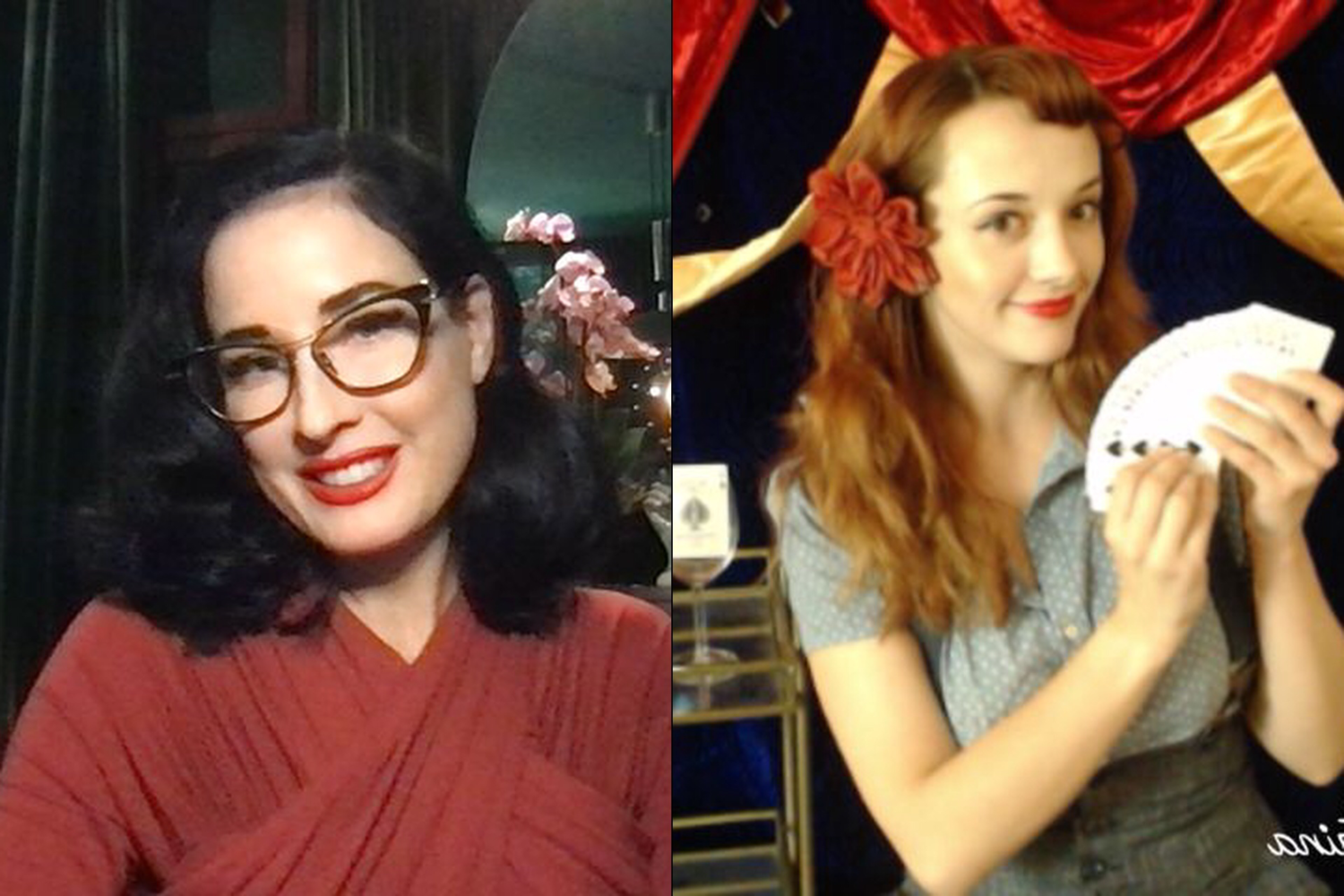
I'm going to be honest with you about something, because I think it'll make the rest of this more believable.
The first time someone asked me to perform magic over a screen, my gut reaction was: this is going to be terrible.
I mean, think about it. Magic lives on presence. On the gasp when something happens inches from your face, on the energy of a room full of people reacting together, on a borrowed ring you can actually hold. Take all of that away and pipe it through a laptop camera to a grid of muted boxes, half of which have their video off? I was convinced it couldn't possibly work. I figured I'd be that sad little square in the corner of a Zoom call while everyone quietly checked their email.
I have never been so happy to be wrong.
I'm Magical Katrina, and I've now performed as a virtual magician for teams scattered across the globe — and not only does it work, it works surprisingly well. Well enough that the same skeptics who rolled their eyes at "virtual entertainment" end up shouting at their webcams. So let me tell you why, because if you're a planner or a team lead eyeing virtual entertainment with that same doubt I had, I'd like to talk you out of it.
Why People Assume Virtual Entertainment Is Boring
Let's start by being fair to the skepticism, because it's earned.
Most people's experience of "virtual events" is genuinely dreary. We've all sat through the webinar where someone reads slides in a monotone. The virtual happy hour where eight people take turns awkwardly talking over each other. The all-hands where you're technically "present" but actually doing three other things. By the time someone suggests virtual entertainment, most of us have already filed it under "another thing to half-watch with my camera off."
So when a company books a virtual magician and tells the team about it, there's often a collective internal groan. People expect to passively watch a tiny performer do tricks they can't quite see, feeling about as engaged as they do during a software update.
That expectation is exactly why it works so well. Because the reality is the complete opposite — and the gap between what people expect and what they get is its own kind of magic.
Why Interactive Virtual Magic Feels Completely Different
Here's the thing the skeptics (including past me) get wrong: they're picturing passive virtual entertainment. A performance that happens at them through a screen. And they're right — that would be boring.
But a great virtual magician doesn't perform at you. They perform with you. The entire show is built around interaction, and that changes everything.
Instead of watching me do a trick, you're the one holding the card. You're the one thinking of a number that I somehow reveal. Your coworker in the box next to you is the one whose freely chosen object ends up matching a prediction I made before the call even started. The magic doesn't happen on my screen — it happens on yours, in your hands, in your own head. The camera stops being a barrier and becomes a kind of portal.
That's the secret. Interactive virtual magic flips the dynamic. You're not an audience member watching a stream; you're a participant inside an experience. And a participant cannot be bored, because the next moment might involve them.
What Audience Reactions Actually Look Like
I wish you could see the faces, because the reactions are what convinced me.
There's a specific moment I look for on every virtual show. It's the instant a skeptic — arms crossed, camera half-off, clearly attending under duress — realizes that the impossible thing just happened to them, in their own home, with no one else around. They lean toward the camera. The arms uncross. And then comes my favorite sound in the world: a genuine, involuntary "WAIT — what?! How did you—" shouted at a laptop.
I've watched a CFO on a remote leadership call hold up an object I'd correctly predicted and just start laughing in disbelief while his whole team erupted in their little boxes. I've had someone turn their camera back on specifically so they could show me their face while they lost their mind. I've seen entire chat windows explode with rows of shocked emojis and "NO WAY" and "do it again." On one call, a usually silent engineer typed, in all caps, that he'd been trying to catch me the entire time and couldn't — and then spent the rest of the show as my loudest cheerleader.
Those reactions aren't politeness. You can't fake a gasp. That's the sound of genuine astonishment traveling through a webcam, and it's every bit as real as the in-person version.
The Zoom Fatigue Problem (and Why Magic Cuts Through It)
Let's talk about the elephant in every virtual room: Zoom fatigue.
We're all exhausted by video calls. The endless grid of faces, the slight audio lag, the strange effort of performing attentiveness while your brain quietly wanders. After a couple of years of this, most people's default setting on any video call is partial presence — physically there, mentally somewhere else. It's the single biggest enemy of any virtual gathering.
And here's why a virtual magician cuts straight through it: magic is a pattern interrupt. Zoom fatigue is a product of predictability — every call feels the same, so your brain stops paying full attention. Magic shatters that predictability. The moment something genuinely impossible happens on a call where you expected nothing but another boring meeting, your brain snaps to full alert. It has to. Astonishment isn't something you can experience with your camera off and your attention on email.
That's the irony I love most: the very thing people assume will be another tedious video call becomes the one call all year where nobody is checking their inbox.

How Virtual Magic Keeps People Genuinely Involved
So beyond the wow moments, how does a good virtual magician keep a remote audience engaged for an entire show? A few mechanisms working together:
It uses your world. The best virtual magic incorporates objects from your own home, choices you make in real time, things you're thinking — so you can't disengage, because the show literally needs you. Your participation is the raw material.
It works the whole room, not one volunteer. A skilled performer pulls in different people across the grid, so everyone feels like the spotlight might land on them next. That keeps the entire group leaning in, not just whoever's "up."
It uses the chat as a playground. The chat window becomes part of the experience — guesses, reactions, predictions flying in real time. It turns a passive feature into an interactive one and gets even the quieter folks participating without pressure.
It reads the energy and adapts. Just like in person, a good virtual magician is watching the faces and the chat, adjusting on the fly to keep things moving and responsive rather than running on a fixed script.
Put together, these mean the show isn't something happening on a screen in front of your team — it's something happening to and with your team, no matter how many miles apart they are.
Why Virtual Entertainment Still Matters
You might be thinking: sure, but isn't everyone going back to in-person anyway? Why does virtual entertainment still matter?
Because distributed teams aren't going anywhere. Plenty of companies are permanently remote or hybrid, with people spread across cities, time zones, and continents. For those teams, getting everyone in one physical room is rare, expensive, or simply impossible. Virtual entertainment isn't a pandemic-era stopgap — it's how a genuinely distributed team creates shared experiences at all.
And shared experiences are exactly what remote teams are starving for. When you only ever see your colleagues as talking heads discussing work, you never get the human connection that happens naturally in a shared space. A virtual magician creates a rare moment where a distributed team laughs, gasps, and reacts together — a "remember when we all lost it on that call?" memory that builds the kind of bond remote work usually erodes. That's not a frivolous nice-to-have. For a remote team, connection is the whole game, and shared wonder is one of the most reliable ways to manufacture it.
So virtual entertainment still matters because people still matter, wherever they happen to be logging in from.
Frequently Asked Questions
What does a virtual magician do, and how does a virtual magic show work?
A virtual magician performs interactive magic and mentalism over video for remote and hybrid audiences. Rather than just performing on screen, I build the show around your team's participation — they hold objects, make choices, and think of things that get revealed in astonishing ways, so the magic happens on their side of the screen. It runs on standard video platforms, needs no special setup from guests, and is designed to keep a distributed group genuinely engaged and reacting together.
Does virtual magic actually work as well as in person?
Surprisingly, yes — when it's built to be interactive. The reactions are genuine because you can't fake a gasp, and a well-designed virtual show pulls participants directly into the experience rather than leaving them as passive viewers. It's a different format from in-person, but the core ingredient — real astonishment — comes through the screen completely intact. Many clients are shocked by how engaged their remote team gets.
How many people can join a virtual magic show?
It scales well, from small team gatherings to large company-wide events across multiple time zones. For smaller groups everyone can be highly involved; for larger audiences I structure the show so people are pulled in throughout and the chat keeps everyone participating. Just tell me your headcount and I'll recommend the best format for that size.
What do my team members need to participate?
Very little — just their device, a working camera, and ideally a couple of common household items I'll mention ahead of time. No special equipment or magic skills required. I'll send simple instructions in advance so everyone's ready, and the experience is built to be effortless to join.
Can you customize a virtual show for our company or event?
Absolutely. I can weave in your company's message, a product, a milestone, or an event theme so the magic reinforces what your gathering is about. For remote teams I can also tailor the show to your group's vibe, making it feel personal rather than off-the-shelf. Share your goals and I'll build it around them.
How do I book you for a virtual event, and what do you need to get started?
The easiest first step is to reach out with your date, time zone(s), platform, and rough headcount — that's enough for me to check availability and send a quote. From there we'll talk through your goals and any customization, and a deposit secures your date. Then I handle the rest and turn your video call into the one your team actually looks forward to.
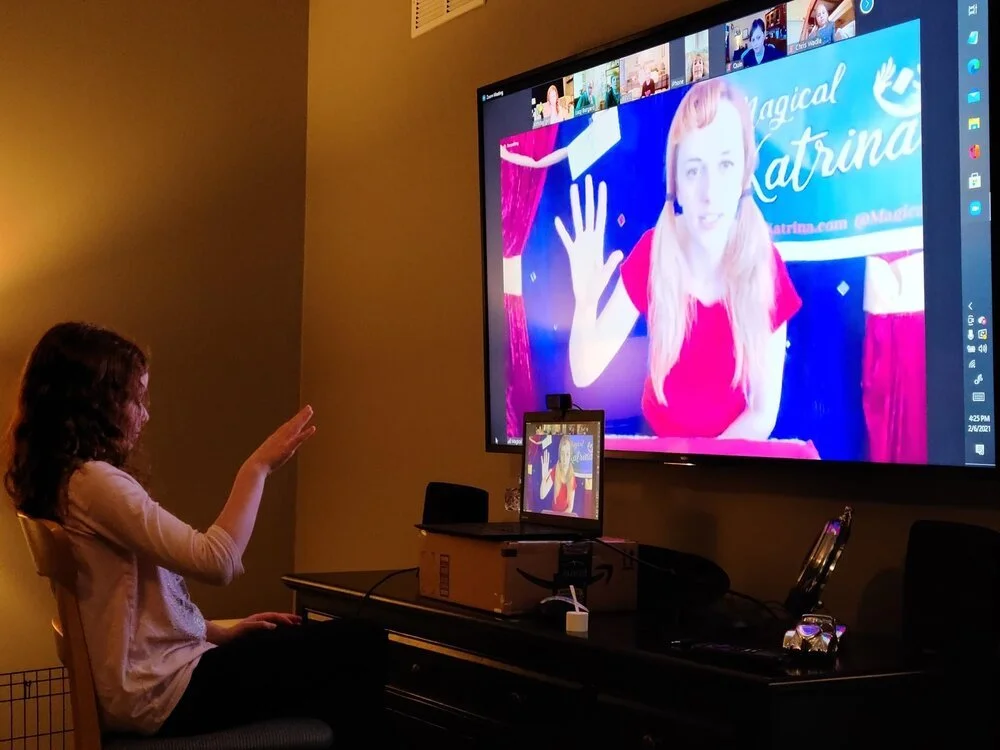
Don't Count Out the Little Square on the Screen
I started out certain that magic couldn't survive the journey through a webcam. I was wrong, and I'm glad, because I've now watched too many remote teams light up to doubt it. The trick isn't pretending a screen is the same as a room — it's understanding that interactivity travels through the screen just fine, and astonishment doesn't care how far apart people are.
So if you've been eyeing virtual entertainment with that familiar skepticism, I get it. I had it too. But a great virtual magician turns the call everyone expected to half-watch into the one they're still talking about weeks later.
If you want to give your remote or hybrid team a genuine moment of shared wonder, I'd love to show you what's possible.
Reach out with your date and details, and let's turn your next video call into something nobody saw coming.