

Women's History Month for Kids: Programming for Libraries and Youth Groups
Women's History Month for Kids: Programming for Libraries and Youth Groups
Programming for a public children's audience is a different job from teaching one. You don't know who's coming, you don't know how old they'll be, half of them are there because a parent needed somewhere to go on a wet Saturday, and the session has to work whether eight children turn up or forty.

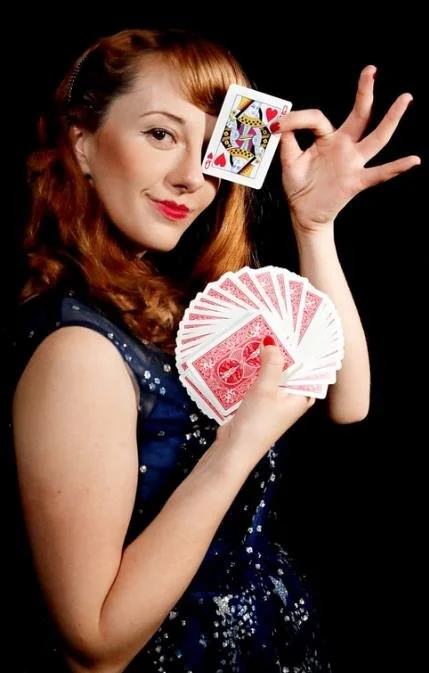
Most March programming advice assumes a classroom. I'm Magical Katrina, an award winning magician and mentalist who performs for libraries and family audiences, and I want to offer Women's History Month for kids ideas built for public programming, where the constraints are attendance, age range, and a budget of almost nothing.
You Are Programming for an Unknown Room
Start with the defining constraint. A teacher knows exactly who's in front of them. You'll get whoever walks in, which might be toddlers with a parent, a group of nine year old’s, and a teenager who came with a younger sibling, all in the same session.
That rules out anything pitched at a single age band, and it argues for activities that work across a range rather than being aimed at the middle of one. Among Women's History Month for kids ideas for public settings, the ones that survive an unpredictable room are those where a four year old and a ten year old can both take something from the same thing, at different levels.
Avoid Anything With a Cost Per Head
The practical constraint that shapes budgets. Craft materials, printed packs, and anything requiring supplies mean either buying for a number you don't know or turning families away, and both are uncomfortable.
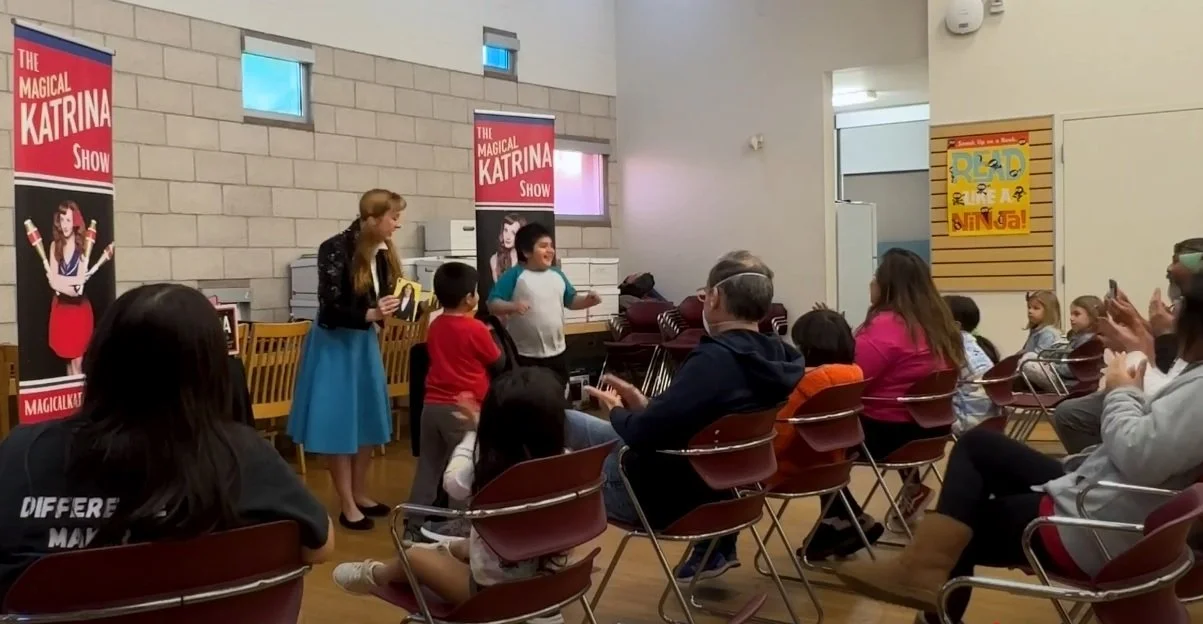
Activities with no per head cost are considerably easier to run: something to watch, something to look at, something families do with what's already in the room. That's also why a performance based session works well for public programming, since forty children cost no more than twenty and a performer can adjust on arrival if the turnout is very different from what you expected, which with drop in sessions it frequently is.
Displays Only Work If Children Use Them
Worth being honest about, since every library will do one. A display of notable women is easy to produce and largely decorative, because children walk past displays at roughly the level of wallpaper.
What changes that is giving them something to do with it: a question to answer, a name to find, a sticker to add, a vote for who they'd most like to meet, a blank space for their own suggestion. That converts a display into an activity and costs the same. Among Women's History Month for kids ideas requiring no budget, making a display interactive is the highest return change available.
Program for the Children Who Came Reluctantly
Worth thinking about specifically. A proportion of any public session contains children who didn't choose to be there, and they'll decide within two minutes whether this is something they're going to engage with.
Anything that opens with an explanation loses them. Anything that opens with something happening keeps them. That's a general principle for children's programming and it applies with particular force to a topic they may have already encountered at school, since a child who thinks they know what this is about has already decided to be elsewhere mentally.
Let the Point Arrive Sideways
The approach that works best with a public children's audience. A session announced as being about women's history sets an expectation of a lesson, whereas a session that's genuinely enjoyable and happens to involve women doing remarkable things makes the point without anyone having to sit through it being made.
That's not avoiding the subject, it's recognizing that demonstration reaches children where explanation doesn't. Among Women's History Month for kids approaches in a library, the ones that work tend to lead with the activity and let the theme emerge, rather than the reverse. Children who enjoyed something come back, and children who were taught something politely don't.
Something Concrete to Promote
The attendance problem, which is where public programming lives or dies. Families choose between your session and everything else available on a Saturday, and a listing saying activities for Women's History Month competes poorly.
A named, specific thing performs considerably better: a performance, a visitor, a workshop with a title, something with a clear picture attached. That gives you something for the noticeboard, the newsletter, and the local parents' group, and it reaches families who don't usually attend. For sessions where you need a room full rather than a room, a concrete draw does more than a general invitation.
School Groups Are a Different Session
Worth separating, since many libraries host both. A visiting school group is a known age band, a captive audience, and a teacher who has expectations, which is closer to classroom programming than to a public session.
If you're running both in March, don't use the same plan. The school session can be more structured and can assume everyone is roughly the same age, whereas the public session needs to survive whoever arrives. Among Women's History Month for kids programming, the commonest mistake in a library is treating a drop in family session like a class visit.

Reach the Families Who Don't Come
The ambition worth holding, since public programming tends to serve the families who already use the library. Those are frequently not the families the program would most benefit.
Practical ways in: promote through schools rather than only through library channels, run a session at a time that suits working parents rather than mid morning on a weekday, and make it explicitly free and drop in so nobody worries about booking or cost. A concrete attraction helps here too, since it gives a parent who doesn't usually visit a specific reason rather than a general invitation to a building they don't use.
Where a Live Performance Fits
Briefly, since it's my corner of this. Magic has been overwhelmingly male throughout its history, and when I perform for family audiences I notice a particular reaction, especially among girls, when the person doing the impossible thing turns out to be a woman.
Nothing is explained, which seems to be why it works. It also solves several of the constraints above at once: it works across an unpredictable age range, it has no cost per head, it gives you something concrete to promote, and it needs no stage or AV in a room that wasn't built for performance. If you're planning March programming, I'm glad to hear about it.
Frequently Asked Questions
How do we plan when we don't know who's coming?
Choose activities that work across an age range rather than being pitched at one. A public session might contain toddlers with a parent, nine year old’s, and a teenager who came with a sibling, so anything aimed at a single band loses most of the room. The sessions that survive are those a four year old and a ten year old can both take something from.
What can we run with almost no budget?
Anything without a cost per head, since craft materials and printed packs mean buying for an unknown number or turning families away. Something to watch, something to look at, or something families do with what's in the room all work. A performance based session suits public programming for the same reason: forty children cost no more than twenty.
Are displays worth doing?
Only if children use them, since a display of notable women is easy to produce and largely decorative, and children walk past displays at roughly the level of wallpaper. Give them something to do with it: a question, a name to find, a sticker to add, a vote, or a blank space for their own suggestion. That costs the same and changes everything.
How do we reach children who didn't want to come?
Lead with something happening rather than an explanation, since a proportion of any public session contains children who didn't choose to be there and they decide within two minutes whether to engage. That applies with particular force to a topic they may have met at school, because a child who thinks they know what this is about has already checked out.
Should we announce the theme?
Let it arrive sideways. A session announced as being about women's history sets an expectation of a lesson, whereas one that's genuinely enjoyable and happens to involve women doing remarkable things makes the point without anyone sitting through it being made. Children who enjoyed something come back, and children who were taught something politely don't.
How do we improve attendance?
Give families something concrete to choose. A listing saying activities for Women's History Month competes poorly against everything else available on a Saturday, whereas a named performance, visitor, or workshop with a picture attached performs considerably better. That also gives you something for schools, newsletters, and local parents' groups.
Is a school visit the same session?
No, and treating a drop in family session like a class visit is the commonest mistake here. A visiting school group is a known age band with a captive audience and a teacher with expectations, so it can be more structured. A public session has to survive whoever arrives, which requires a different plan entirely.
Prograe for the Room You'll Actually Get
Public Women's History Month for kids programming succeeds on attendance and on surviving an unpredictable room, neither of which classroom advice addresses. Choose activities that work across ages, avoid anything with a cost per head, make your display something children interact with, lead with something happening rather than an explanation, and give families a concrete reason to choose your session over everything else on a Saturday.
Do that and the theme lands without anyone having to be taught it, which is the version children remember.
Reach out if you're planning something for March, and let's talk about your room.