


Zoom Magic Show for Schools and Virtual Classrooms
Zoom Magic Show for Schools and Virtual Classrooms
Anyone who has tried to run something engaging for a class over video knows the particular challenge. Children who are perfectly focused in a classroom become distractible the moment they're on a screen, attention fragments across twenty five little windows, and the usual tools a teacher relies on, proximity, eye contact, the energy of a room, are all unavailable.
So virtual enrichment has to work harder to earn attention than the in person equivalent does. I'm Magical Katrina, an award winning magician and mentalist with a Family Entertainer of the Year honor, and I want to explain why a Zoom magic show works unusually well for schools and virtual classrooms, and what teachers and organizers should know practically.
Why Magic Holds Attention Over Video
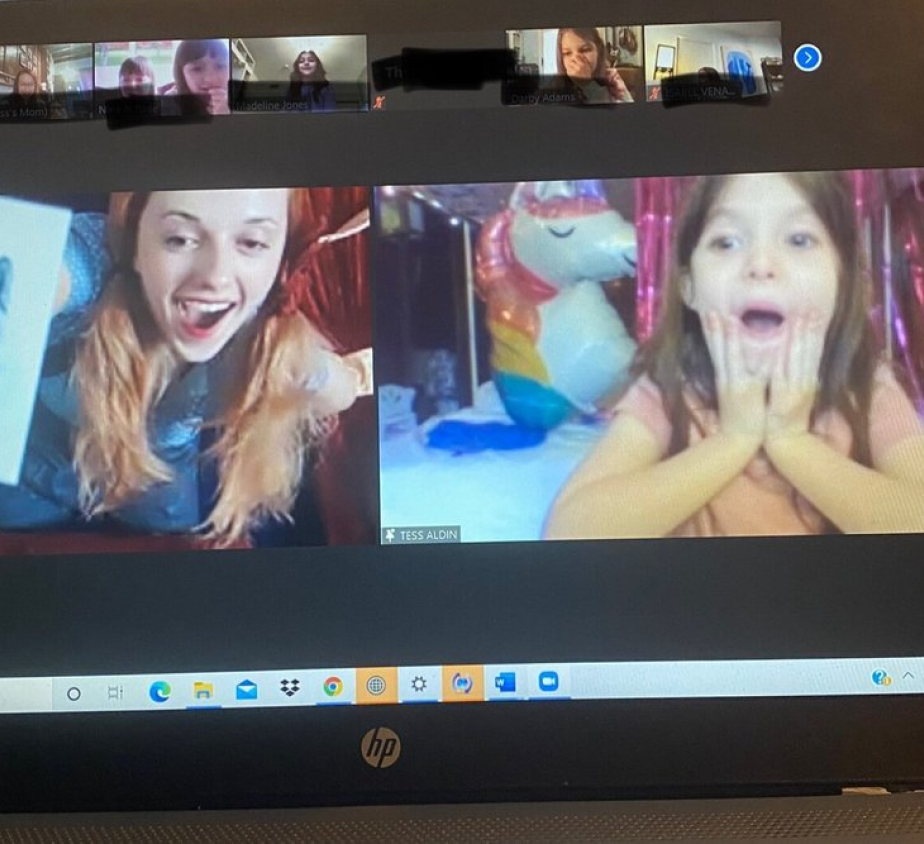
The reason magic works where other virtual content struggles is that it doesn't ask children to concentrate, it compels them. A child watching something impossible happen isn't exercising discipline to stay focused, they're focused because they genuinely need to know what just happened.
That's a meaningful difference in a virtual setting, where sustained voluntary attention is exactly what children find hardest. A Zoom magic show also creates a visible reaction across the class, children gasping and shouting at once, which restores some of the collective energy that video normally strips away. For a group that has been on screens all morning, something that captures attention involuntarily is genuinely valuable.
Children Participate From Home
Here's what turns a Zoom magic show from a video into an experience. The children aren't watching something happen to a performer, things happen in their own hands, at their own desk or kitchen table.
A well designed virtual show uses ordinary household items, a piece of paper, a pencil, a coin, sometimes nothing at all, so every child can take part rather than watching one chosen volunteer. That matters enormously for engagement, because a child holding the paper that inexplicably changes is fully present in a way a child watching a screen isn't. When comparing options for virtual enrichment, ask specifically whether children participate directly, since a Zoom magic show built that way is far more effective.
It Suits Assemblies and Whole Year Groups
A practical advantage: a Zoom magic show scales in a way most virtual activities don't. A craft session or a discussion works for one class and breaks down at fifty children. Magic works for one class, a year group, or a whole school assembly with equal effectiveness, because everyone can see the screen and everyone can participate simultaneously with household items.
That makes it useful for the occasions schools genuinely struggle to fill: a virtual assembly, an end of term event, a wet weather day, or an enrichment slot that needs to reach several classes at once. A single Zoom magic show can serve hundreds of children without any loss of impact, which is unusual and administratively convenient.
Age Matters More Than You'd Think
Worth being clear, because it's the most common mismatch. A show pitched at five year old will lose a class of ten year old’s within minutes, and a show pitched at ten year old will sail over the heads of reception children.
For younger children, a Zoom magic show should be short, bright, and immediate, with plenty of noise and silliness, and realistically around thirty minutes. For upper primary and middle school, material needs to be genuinely baffling rather than merely colorful, and children this age respond well to being treated as the sharp audience they are. When booking, be specific about year groups, and expect a good performer to ask rather than offering one fixed show for everyone.
What Teachers Actually Need Logistically
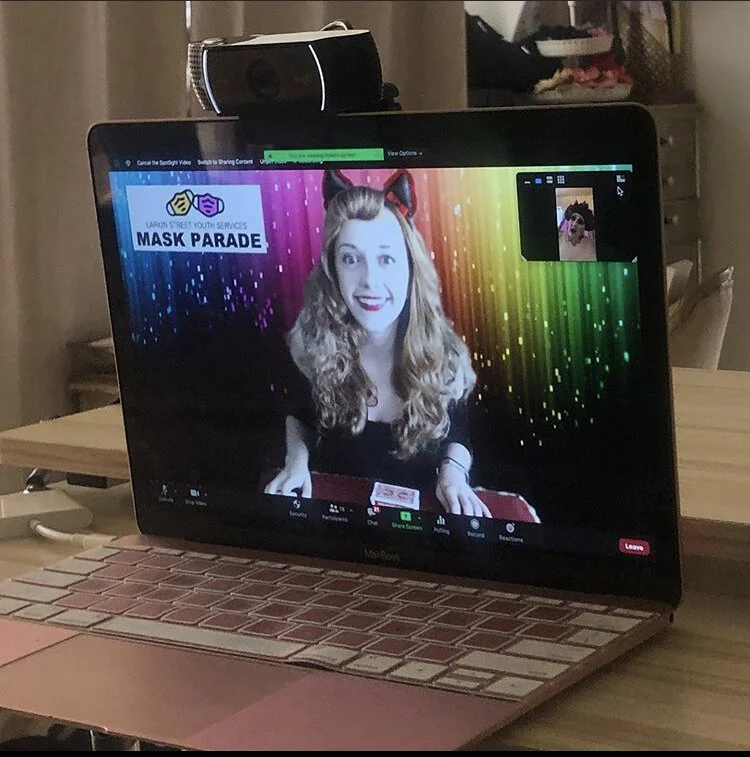
Speaking to the practical, because teachers are the people who have to make this work. A Zoom magic show requires very little: the platform your school already uses, a link, and ideally a note to families in advance about the one or two household items children should have to hand.
The performer supplies their own camera, lighting, and audio, so the production quality isn't your responsibility. There's no software to procure, no training, and no technical setup at your end. For a teacher or administrator already managing a great deal, that simplicity matters, and it's worth confirming with any performer that they handle their own technical side rather than expecting school support.
It Works for Hybrid and Remote Situations
Schools now routinely have children learning in different places, some in the classroom, some at home, some on a hospital or absence arrangement. Most enrichment activities serve one group and exclude the other.
A Zoom magic show reaches everyone identically. A child at home participates on exactly the same terms as a child at a classroom desk, using the same household items and having the same experience simultaneously. For schools trying to ensure remote learners aren't receiving a lesser version of everything, that equality is genuinely useful, and it's one of the situations where virtual enrichment is arguably better than the in person alternative rather than a compromise.
PTA and Fundraising Events
Beyond curriculum time, a Zoom magic show suits the events parent associations organize. A virtual family evening, an end of term celebration, or a fundraising event all benefit from something that engages children and parents simultaneously.
That dual appeal is worth noting: good magic works on children and adults at once, so a family session doesn't leave parents watching politely while their children enjoy themselves. For fundraising specifically, an event with genuine entertainment draws better attendance than one without, which matters when the purpose is raising money. A Zoom magic show is straightforward for a volunteer committee to organize, since it needs no venue and no equipment.
Why Book Magical Katrina
If you'd like a Zoom magic show for your school, here's my case. I'm a member of the Magic Circle in London and the Academy of Magical Arts in Hollywood, I've earned multiple magic awards including a Family Entertainer of the Year honor, and I've appeared on Blippi as a performer and magic consultant, along with Penn & Teller: Fool Us and Masters of Illusion. My virtual material is built specifically for video and designed so every child participates using ordinary household items rather than watching one volunteer. I tailor the show to the year groups involved, I handle my own camera, lighting, and audio so nothing falls to your staff, and I'm comfortable with anything from a single class to a full school assembly. Most importantly, my whole philosophy is making the children feel like the stars.
Frequently Asked Questions
Does a magic show actually work over video for children?
Yes, and for a specific reason: magic doesn't ask children to concentrate, it compels them. A child watching something impossible isn't exercising discipline to stay focused, they're focused because they need to know what happened. That matters in a virtual setting where sustained voluntary attention is what children find hardest. A Zoom magic show also produces visible collective reactions across the class, restoring some of the shared energy video normally removes.
Do the children take part, or just watch?
They take part, and that's what makes it work. A well designed Zoom magic show uses ordinary household items, paper, a pencil, a coin, sometimes nothing at all, so every child participates at their own desk or table rather than watching one chosen volunteer. A child holding the paper that inexplicably changes is fully present in a way a child watching a screen isn't. Ask any performer specifically whether children participate directly.
How many children can join?
As many as you need. A Zoom magic show scales in a way most virtual activities don't, working equally well for one class, a year group, or a whole school assembly, since everyone can see the screen and participate simultaneously with household items. That makes it useful for virtual assemblies, end of term events, wet weather days, and enrichment slots that need to reach several classes at once.
What do we need to prepare?
Very little. A Zoom magic show runs on the platform your school already uses, so all you need is a link, plus ideally a note to families in advance about the one or two household items children should have to hand. The performer supplies their own camera, lighting, and audio, so production quality isn't your responsibility, and there's no software to procure or training required.
Will it suit our age group?
It should, but be specific when booking, since age mismatch is the most common problem. For younger children a show should be short, bright, and immediate, realistically around thirty minutes. For upper primary and middle school, material needs to be genuinely baffling rather than merely colorful, and children respond well to being treated as a sharp audience. Expect a good performer to ask about year groups rather than offering one fixed show.
How do I book you, and what do you need to get started?
Reach out with your preferred date, the platform your school uses, the year groups involved, and roughly how many children will join. That's enough for me to check availability, recommend a length suited to the age group, and send a quote. From there I'll confirm the one or two household items to mention to families, and we'll settle the timing. I'm happy to work around school schedules.
Enrichment That Genuinely Lands
Virtual enrichment has to earn attention rather than assume it, and a Zoom magic show does that by compelling focus rather than requesting it, putting the magic in children's own hands at home, scaling from a single class to a full assembly, and reaching remote and classroom learners on genuinely equal terms. For teachers and organizers, it also asks very little logistically, which matters when everything else does.
If you're planning an assembly, an enrichment session, or a family event, I'd love to hear about it.
Reach out with your date and year groups, and let's give them something they remember.