


Zoom Magician for Public Library Programming
Zoom Magician for Public Library Programming
Public libraries run some of the most imaginative programming anywhere, on budgets that would make a corporate events team laugh. Virtual sessions have become a permanent part of that, because they reach patrons who can't get to a branch, they serve several locations at once, and they don't need a room.

They also have their own difficulties, and most advice about online events assumes a corporate audience. I'm Magical Katrina, an award winning magician and mentalist, and I want to set out what a Zoom magician booking looks like for library programming, and how to make the economics work.
One Session Can Serve the Whole System
Start with the arithmetic that makes this viable. An online performance costs the same whether thirty people attend or three hundred, since there's one performance regardless of how many are watching.
For a single small branch with a programming budget measured in hundreds, a booking is hard to justify. For a system of eight branches sharing one session, or several neighboring library districts partnering, the same fee becomes very manageable. My virtual shows start around fourteen hundred dollars, and the first question worth asking isn't whether your branch can afford it but whether your system or your consortium can.
Registration Tells You Less Than You Think
Practically important for planning. Library programming attracts generous registration and variable attendance, because signing up is free and plans change, and a session with ninety registered may see forty.
Plan for the range rather than the number. Something that works for forty and for a hundred and forty takes the anxiety out of it, and that means avoiding formats that depend on a specific group size. It also means not treating a lower turnout as a failure, since the forty who came are the forty who wanted it.
Your Audience Is Every Age at Once
The structural feature of public programming. A library session advertised to the community brings small children with a parent, teenagers, adults attending alone, and older patrons, frequently in the same hour.
That rules out a great deal. Content pitched at children loses the adults, content pitched at adults excludes the children, and the room you actually have contains both. Magic crosses the whole range, since astonishment needs no shared knowledge and the reaction is the same at seven and at seventy. For an all ages program slot, that's the practical reason it works.
People Join From Everywhere and Everything
Worth planning around. Library patrons join on a borrowed laptop, a phone, an older tablet, and sometimes from a branch computer with a time limit on the session.
That argues for something that needs nothing from the attendee: no app to install, no second window, no account to create, no typing. If a patron has to do anything beyond click a link, a proportion of the people your programming exists to serve will not get in. Ask any presenter plainly what attendees must do, and treat anything beyond joining as a barrier.
Cameras Will Be Off, Mostly
Worth settling in advance. Unlike a workplace session, a library audience is a group of strangers, and plenty of patrons will not turn a camera on in a room of people they don't know, which is entirely reasonable.
A presenter accustomed to a visible room will struggle. One who works public audiences builds around chat, simultaneous actions everybody can do at home, and a small number of volunteers rather than expecting a gallery. Tell whoever you book what to expect so the hour is designed for the room you'll actually have.

Grant Funding Changes What's Possible
Worth knowing if your programming line is small. A great deal of library programming runs on grants, friends of the library funding, and state or regional program money, and those sources frequently fund things an operating budget cannot.
A performer who can provide a clear written quote, a W9, proof of insurance, and an invoice in whatever format your finance office requires makes a grant funded booking straightforward. Ask for that paperwork at the point of enquiry rather than after approval, since that's the step that delays library bookings more than the cost does.
Summer Reading Is the Obvious Slot
Worth planning for early. Summer programming is when library systems have the most attendance, the most funding, and the most need for sessions, and it's also when every presenter in the country is booked.
Plan a summer session in the winter. If you're working to a theme, say so when you enquire, since a presenter who knows the theme can shape the session around it rather than delivering something generic alongside it. The systems that get the presenters they want are the ones that ask in January.
Say Who It's Really For
Worth deciding before you advertise. A session billed to the whole community gets a mixed audience, which is fine if you've booked something that works for one. A session billed as a children's program that adults also attend is a different thing again.
Be clear in your own planning and clear in the listing, since patrons who arrive expecting something else are the only unhappy people at an otherwise good event. If you want a family audience, say family. If you want an adult evening session, say so plainly and you'll get one.
Why Book Magical Katrina
If you're programming for a library, here's my case. I've earned multiple magic awards including a Family Entertainer of the Year honor, I'm a member of the Magic Circle in London and the Academy of Magical Arts in Hollywood, and I've appeared on Blippi as a performer and magic consultant as well as on Penn & Teller: Fool Us and Masters of Illusion. I perform for every age at once, attendees need nothing beyond clicking a link, my fee is the same whether forty or four hundred join so a multi branch booking is straightforward, and I can provide a W9, proof of insurance, and an invoice in whatever form your finance office needs.
Frequently Asked Questions
How can a small branch afford this?
Frequently it can't alone, and a system or a consortium can. An online performance costs the same whether thirty or three hundred watch, so eight branches sharing one session makes the fee very manageable, and my virtual shows start around fourteen hundred dollars.
How do we plan for uncertain attendance?
Plan for a range rather than a number, since registration is free and generous while attendance is variable, and ninety registered may be forty present. Choose something that works at forty and at a hundred and forty, and don't treat a smaller turnout as failure.
Our audience is all ages. What works?
Something that crosses the range, since a community session brings small children, teenagers, adults alone, and older patrons in the same hour. Content pitched at children loses the adults and the reverse is also true, whereas astonishment reads the same at seven and seventy.
What should attendees have to do?
Nothing beyond clicking a link, since patrons join on borrowed laptops, phones, older tablets, and branch computers with time limits. Anything requiring an app, an account, a second window, or typing will exclude a proportion of the people your programming exists to serve.
Will people turn their cameras on?
Mostly not, since a library audience is strangers to each other and that's entirely reasonable. Tell whoever you book, because a presenter used to a visible room will struggle while one who works public audiences builds around chat and simultaneous actions instead.
Can this be grant funded?
Frequently yes, since a lot of library programming runs on grants, friends of the library funding, and regional program money that covers what an operating budget can't. Ask for the W9, insurance, and invoice format at enquiry rather than after approval, since paperwork delays these bookings more than cost does.
When should we book for summer?
In the winter, since summer is when systems have the most attendance and funding and when every presenter is already committed. Mention your theme when you enquire so the session can be shaped around it rather than sitting alongside it.
How should we advertise it?
Decide the audience first and say so plainly, since a session billed to the whole community gets a mixed room while one billed for children gets families. Patrons who arrive expecting something else are the only unhappy people at an otherwise good event.
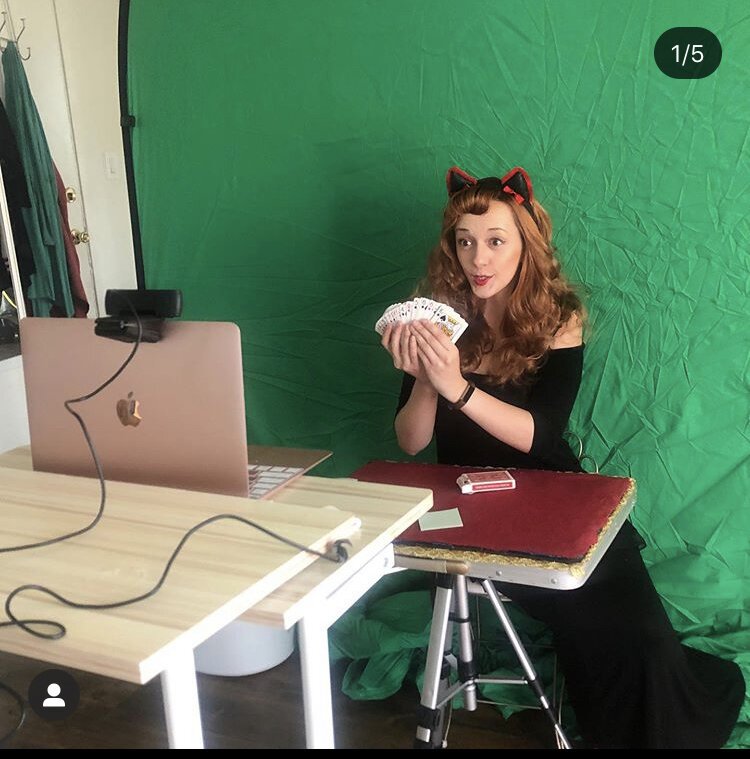
Programme for the Room You'll Actually Get
Library virtual programming works when it's planned around its real conditions: uncertain attendance, every age at once, patrons on whatever device they have, cameras off, and a budget that needs a system or a grant behind it.
A Zoom magician booking fits those conditions well. It reaches every age in the same hour, asks nothing of attendees beyond joining, costs the same across one branch or eight, and works in whatever platform your system already uses.
Reach out with your dates, your system, and your theme if you have one, and I'll tell you how it would work.