


Women's History Month for Kids: How to Answer the Hard Questions
Women's History Month for Kids: How to Answer the Hard Questions
The activities are the easy part. You read a book about a woman who did something remarkable, or your child comes home from school having made a poster, and then somewhere in the middle of it a question arrives that you weren't quite ready for.

Why weren't women allowed to do that? Or, more pointedly, was that allowed? Or the one that stops most adults briefly: is it still like that? I'm Magical Katrina, an award winning magician and mentalist, and while I'm not a teacher, I perform for a great many children and hear these questions regularly. Here's how I'd think about answering them during Women's History Month for kids.
The Questions Are the Point
First, a reframe. Adults often feel they've mishandled something when a child asks a difficult question, as though the goal was a tidy story that didn't provoke one.
The opposite is true. A child asking why women weren't allowed to do something has understood the thing you were trying to convey, which the poster on the wall was never going to achieve on its own. During Women's History Month for kids, those questions are the moment the topic stops being decorative and becomes real. The aim isn't to avoid them but to answer in a way that's honest, proportionate to the child's age, and doesn't leave them either misinformed or upset.
Be Honest, and Keep It Short
The most useful principle. Children generally want considerably less detail than adults assume, and a short truthful answer works better than a careful, lengthy one.
"For a long time, lots of people believed women shouldn't do certain jobs, so women weren't allowed to. People were wrong about that, and it took a lot of work to change it." That's enough for most young children, and if they want more they'll ask. The instinct to soften it into vagueness is worth resisting, because children detect evasion and it makes the subject seem more alarming than a plain answer would. During Women's History Month for kids, plain and brief beats thorough.
"Was That Fair?"
The question children ask most, and the easiest to answer well because you can simply agree with them.
No, it wasn't fair, and you don't need to complicate that. Children have an extremely well developed sense of fairness, which is precisely why this lands, and confirming their instinct rather than adding nuance is the right move. What you can add, if they're old enough, is that people at the time often thought it was normal, which is a genuinely useful idea: that whole societies can be wrong about something everybody accepts. That thought will do more long term work than any individual fact.
"Is It Still Like That?"
The harder one, and where adults tend to either overclaim progress or overstate difficulty.
An honest answer holds both: things are much better than they were, women can do all of those jobs now, and there are still some places and situations where it's harder for women than it should be. Both halves matter. A child told everything is fixed will be confused when they notice otherwise, and one told nothing has changed is being handed a false and discouraging picture. During Women's History Month for kids, the accurate answer is that a great deal changed and some things haven't yet, which children handle perfectly well.
Adjust for Age Without Sanitizing
The practical calibration. Younger children need the simplest version: some people were wrong, it's better now, look at all these women doing brilliant things. That's not a distortion, it's an age appropriate summary.
Older children can handle specifics: laws that excluded women, jobs they couldn't hold, the fact that changes were fought for rather than granted. Teenagers can and should handle the genuine complexity, including that progress was uneven and that different groups of women experienced it differently. What you're avoiding is sanitizing for older children who can tell they're being managed, and overwhelming younger ones who can't yet place it.
When You Don't Know, Say So
Frequently the situation, and it's fine. Children ask specific questions about history that most adults can't answer, and pretending otherwise is both unnecessary and a missed opportunity.
"I don't know, let's find out" models exactly the behavior you want, and looking it up together is more valuable than a confident wrong answer or a vague deflection. It also removes the pressure to be an authority on the topic, which stops many parents engaging with Women's History Month for kids at all. You don't need to be well informed to have these conversations, you need to be willing to have them.
Don't Let It End in Despair
Something worth watching, particularly with sensitive children. It's possible to answer honestly and leave a child feeling that the world is unfair and there's nothing to be done, which is neither accurate nor useful.
The corrective is emphasis rather than dishonesty. The story of women's history contains a great deal of injustice and a great deal of people successfully changing things, and the second half is as true as the first. End on what changed and who changed it rather than on what was wrong. During Women's History Month for kids, the useful takeaway isn't that things were bad, it's that things can be changed by people who decide to change them.

Let Them Reach Their Own Conclusions
The most effective approach with children over about seven, and it requires some restraint. Rather than telling them what to think about what they've learned, ask what they think.
"Why do you think people believed that?" or "What would you have done?" produces considerably more engagement than a conclusion handed down. Children who arrive at a view themselves hold it more firmly than children who were given one, and they're less likely to treat the whole subject as an adult message being delivered at them. It also frequently produces observations sharper than anything you'd have offered.
Boys Ask These Questions Too
Worth noting since it's often overlooked. Boys ask exactly the same questions, sometimes more directly, and they deserve the same honest answers rather than a sense that this topic isn't really about them.
A boy who understands that people used to be wrong about what women could do, and that it took effort to change, carries that into how he thinks about capability for the rest of his life. During Women's History Month for kids, treating boys' questions as equally worth answering, rather than as slightly off topic, is one of the more consequential small choices available to a parent or teacher.
Where a Bit of Wonder Helps
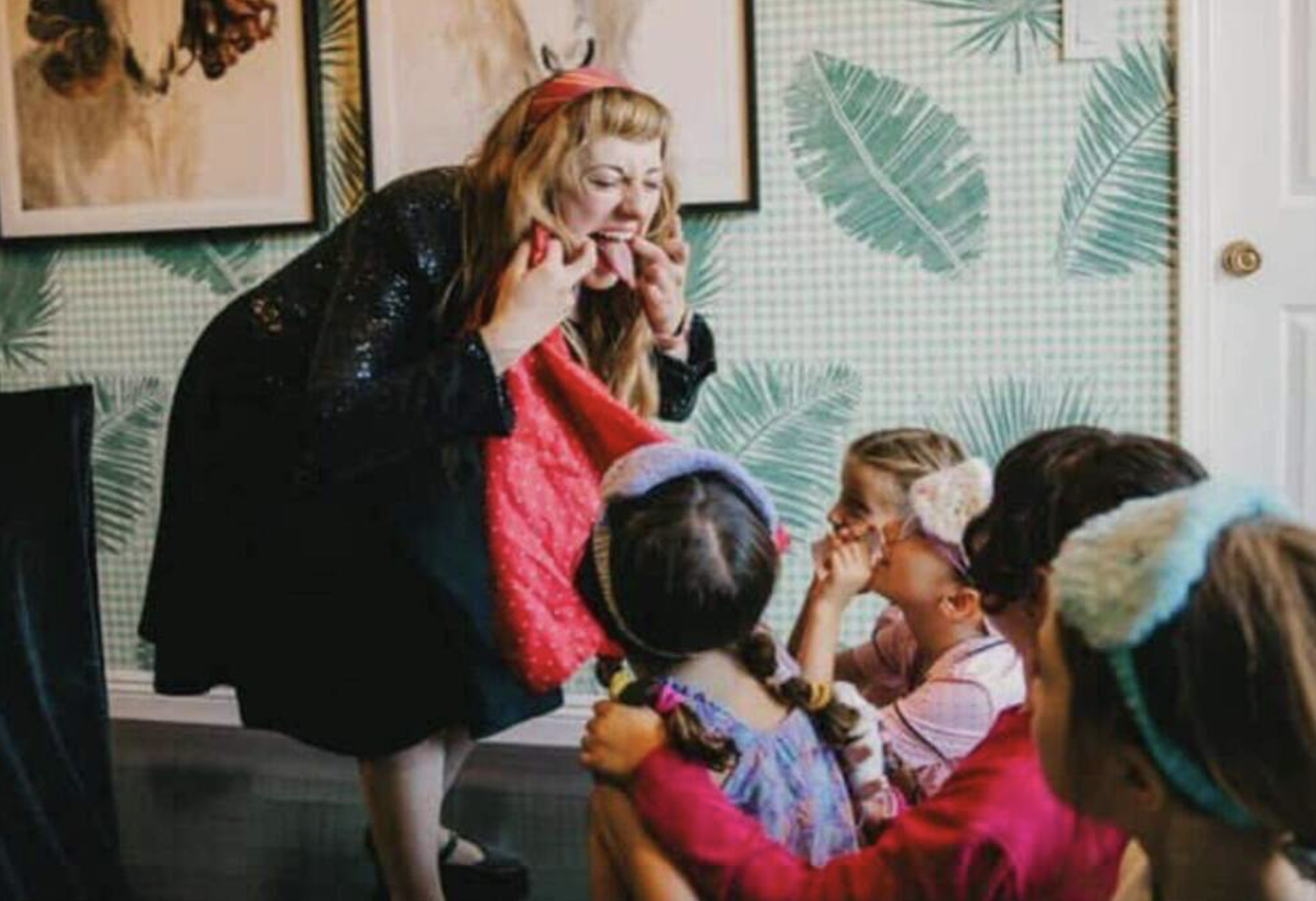
Briefly, since it's my corner of this. Magic has historically been overwhelmingly male, and when I perform for families I notice something in the room, particularly among girls, when the person doing the impossible thing turns out to be a woman who is very good at it.
Nobody explains anything, which is rather the point. It's demonstration rather than instruction, and it tends to prompt exactly the sort of questions this article is about, asked at home afterwards rather than in the moment. If your school or community group is planning something for March, I'm glad to hear about it.
Frequently Asked Questions
What do I say when a child asks why women weren't allowed?
Keep it short and honest. Something like: for a long time lots of people believed women shouldn't do certain jobs, so women weren't allowed to, and people were wrong about that, and it took a lot of work to change. That's enough for most young children, and if they want more they'll ask. Resist softening it into vagueness, since children detect evasion and it makes the subject seem more alarming.
How do I answer "was that fair?"
Agree with them. It wasn't fair, and that doesn't need complicating, since children have a well developed sense of fairness which is precisely why this lands. For older children you can add that people at the time often thought it was normal, which introduces a genuinely valuable idea: that whole societies can be wrong about something everybody accepts.
What about "is it still like that?"
Hold both halves. Things are much better than they were and women can do all those jobs now, and there are still places and situations where it's harder for women than it should be. A child told everything is fixed will be confused when they notice otherwise, and one told nothing has changed is handed a discouraging and false picture. The accurate answer is that a lot changed and some things haven't yet.
How much detail is appropriate at different ages?
Younger children need the simplest version: some people were wrong, it's better now, look at these women doing brilliant things. Older children can handle specifics like laws that excluded women and the fact that changes were fought for rather than granted. Teenagers can handle genuine complexity, including that progress was uneven. Avoid sanitizing for older children, who notice being managed, and overwhelming younger ones.
What if I don't know the answer?
Say so, and look it up together. Children ask specific historical questions most adults can't answer, and "I don't know, let's find out" models exactly the behavior you want while being more valuable than a confident wrong answer. It also removes the pressure to be an authority, which is what stops many parents engaging with Women's History Month for kids at all.
How do I stop it feeling depressing?
Through emphasis rather than dishonesty. The story contains a great deal of injustice and a great deal of people successfully changing things, and the second half is as true as the first. End on what changed and who changed it rather than on what was wrong. The useful takeaway isn't that things were bad, it's that things can be changed by people who decide to change them.
Should boys be part of these conversations?
Absolutely, and they ask the same questions, sometimes more directly. They deserve the same honest answers rather than a sense that the topic isn't really about them. A boy who understands that people used to be wrong about what women could do, and that changing it took effort, carries that into how he thinks about capability for life. Treating their questions as equally worth answering matters.
Answer Plainly and Keep Going
The hard questions during Women's History Month for kids are a sign the topic has landed rather than a sign you've mishandled it. Answer briefly and honestly, agree that it wasn't fair, be accurate that things improved without pretending everything is resolved, adjust the detail to the age in front of you, admit when you don't know, end on the people who changed things, and include every child in the conversation.
None of that requires expertise. It requires being willing to have the conversation, which is most of the job.
Reach out if your school or group is planning something for March, and let's talk.