


Activities for Women's Empowerment That Men Actually Attend
Activities for Women's Empowerment That Men Actually Attend
Most women's empowerment programming is attended almost entirely by women. The invitation goes to everybody, the room fills with the same committed group, and the senior people who make hiring and promotion decisions send apologies or simply don't reply.
That attendance pattern is the central weakness of this work, and it's a design problem rather than an attitude problem. I'm Magical Katrina, an award winning magician and mentalist, and I want to offer activities for women's empowerment built to reach a mixed room rather than a self selecting one.
The People Who Need to Hear It Aren't There
Start with the uncomfortable arithmetic. If your organization's decisions about who gets promoted are made largely by men, and your programming is attended largely by women, the programming is reaching the people affected by the problem rather than the people who can change it.
That doesn't make the events worthless, since the network and the solidarity matter in their own right. It does mean a program measured on whether anything changes has to solve attendance first, because no amount of excellent content delivered to the wrong room moves a promotion rate.
The Framing Decides Who Comes
The most useful single change. An event titled as being for women tells everybody else it isn't for them, and they are not being obstructive when they conclude that, they're reading the invitation accurately.
An event about how promotion decisions get made, how sponsorship works, or how a particular team builds its pipeline is about the organization, and the whole organization can attend without anybody feeling they've wandered into somebody else's meeting. The content need not change at all. What changes is who believes they're invited, which is the thing you were trying to fix.
Nobody Comes to Be Told They're the Problem
Worth being honest about, since this is the real barrier. Plenty of men avoid these events because they expect to spend an hour as the implied subject of a critique, and whether or not that expectation is fair, it determines attendance.
An event people expect to feel accused at will be attended by the people who already agree. If you want a mixed room, the programming has to be genuinely useful to everybody in it rather than an argument delivered to a captive audience. That's not softening the message, it's the difference between the message being heard and being avoided.
Make It Worth Attending on Its Own Terms
Practically the most effective lever. People attend things they expect to enjoy or to learn from, and a lunchtime session with a panel and a slide deck competes poorly against the work on somebody's desk.
Something genuinely good in the program changes the calculation for the person who was going to skip it. That's not a trick, it's how every well attended internal event works, and it's why the organizations getting mixed attendance at this programming are usually the ones putting real effort into the hour rather than relying on the importance of the subject.
Put It Where People Already Are
Worth considering, since optional attendance is the whole problem. A session attached to an existing all hands, a team day, or a conference agenda reaches everybody, whereas a standalone invitation reaches whoever opts in.
That removes the self selection entirely. It also sends a different signal, since programming inside the main agenda says this is company business while a lunchtime optional session says this is a side interest for the people who care about it. If you only change one thing, change where it sits.
Seniority in the Room Changes Everything
Worth arranging deliberately. Attendance at optional events follows the most senior person who comes, and one director visibly attending brings more of their team than any number of reminder emails.
Ask specific senior people to attend rather than inviting them, and ask them to be present rather than to speak, since a leader sitting in the audience communicates something a leader delivering opening remarks and then leaving does not. This takes two conversations and it's the highest leverage thing on the list.
Why Magic Suits a Mixed Room
Worth explaining, since it's the practical reason I get booked for this. A speaker on this subject has to calibrate carefully for a room containing people at different levels of agreement, and that calibration is difficult and frequently lands badly in one direction or the other.
Magic sidesteps it. Everybody in the room experiences the same thing, nobody is positioned as the problem or the beneficiary, and the hour is good for all of them equally. Then whatever message you want to deliver lands on a warm room that chose to be there, which is a considerably better position than a cold room that felt obliged.
And Being the Performer Is Part of It
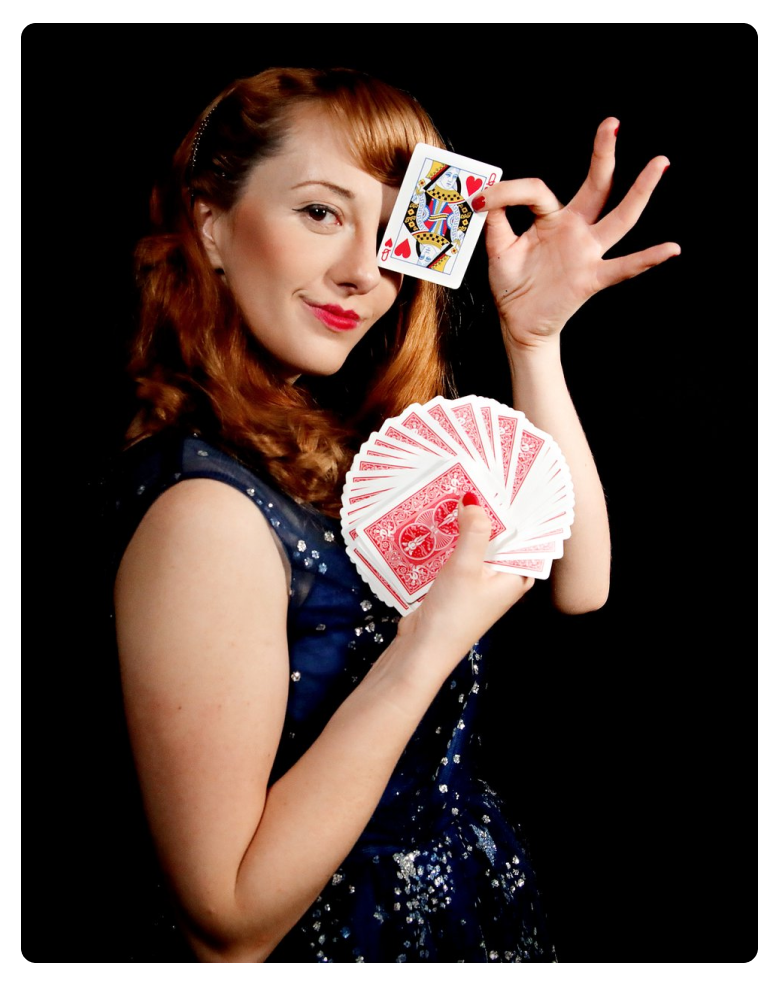
Worth saying plainly, with the usual caveat. I'm booked for these events because I'm genuinely good at this, which is the only reason worth booking anybody, and the fact that I'm a woman in a field that is overwhelmingly male is a bonus on top rather than the argument.
It does mean something, though, and it means it without anybody having to say it. A mixed room watching somebody be excellent at a thing they didn't expect her to be excellent at has absorbed the point of your programming without a slide being shown, which is frequently more effective than the slide would have been.
Why Book Magical Katrina
If you're designing this programming, here's my case. I'm a member of the Magic Circle in London and the Academy of Magical Arts in Hollywood, one of relatively few women to hold both, I've earned multiple magic awards, and I've performed for clients including Formula 1, the Olympics, Porsche, Prada, Zapier, and the Ritz Carlton, with appearances on Penn & Teller: Fool Us and Masters of Illusion. I work mixed rooms constantly, nothing in what I do positions anybody as the problem, I need no stage or setup so a session can sit inside an existing agenda, and I'm happy to speak to the subject or simply be the reason people came.
Frequently Asked Questions
Why does attendance matter so much?
Because if promotion decisions are made largely by men and your programming is attended largely by women, you're reaching the people affected rather than the people who can change things. The network matters in its own right, but a program measured on outcomes has to solve attendance first.
What's the single most useful change?
The framing. An event titled as being for women tells everybody else it isn't for them, whereas an event about how promotion decisions get made or how sponsorship works is about the organization. The content needn't change, only who believes they're invited.
Why don't men attend?
Frequently because they expect to spend an hour as the implied subject of a critique, and whether or not that's fair, it determines attendance. An event people expect to feel accused at gets attended by the people who already agree.
Does that mean softening the message?
No, it means making the hour genuinely useful to everybody in the room rather than delivering an argument to a captive audience. That's the difference between a message being heard and being avoided, which is not the same as diluting it.
Where should the session sit?
Inside something that already exists: an all hands, a team day, or a conference agenda, which reaches everybody rather than whoever opts in. It also signals that this is company business rather than a side interest for the people who care about it.
How do we get senior people there?
Ask specific individuals rather than inviting them generally, and ask them to be present rather than to speak, since attendance follows the most senior person who comes. A leader sitting in the audience says something that opening remarks followed by leaving does not.
Why does magic work for a mixed room?
Because a speaker has to calibrate for a room at different levels of agreement and that frequently lands badly in one direction. Magic sidesteps it, since everybody experiences the same thing, nobody is positioned as the problem, and your message then lands on a warm room.
Does it matter that you're a woman?
It's a bonus rather than the argument, and you should book me because I'm good at this. It does communicate something without anybody saying it, since a mixed room watching somebody be excellent at a thing they didn't expect has absorbed the point without a slide.

Design for the Room You Need, Not the One That Shows Up
The most useful activities for women's empowerment are the ones the whole organization attends, because the people who make decisions about progression are the people the programming needs to reach. Frame the session as being about the organization rather than about women, put it inside an agenda people are already attending, ask named senior people to be in the room, and make the hour genuinely worth turning up to.
Do that and you stop running an excellent event for the forty people who were already convinced.
Reach out with your date and who you're hoping to reach, and I'll tell you how I'd build the session.