


Ideas for a Company Christmas Party With an International Team
Ideas for a Company Christmas Party With an International Team
An international team turns a simple December decision into a complicated one. Not everyone marks Christmas, public holidays fall on different dates, year end means different things in different places, and any single event means somebody is joining at an hour nobody would choose.

Most advice assumes one country and one set of customs. I'm Magical Katrina, an award winning magician and mentalist, and I want to go through ideas for company Christmas party planning when your colleagues are spread across several countries and don't all share the same December.
Not Everyone's December Looks the Same
Start with the obvious point that organizations still get wrong. Christmas is a public holiday in many countries and not in others, it's a religious occasion for some colleagues and a cultural one for others, and for a portion of any international workforce it's simply a period when clients in other markets are unavailable.
That doesn't mean avoiding the occasion, which frequently reads as awkward overcorrection. It means not assuming the reference points are shared, and being aware that a celebration built entirely around one country's traditions positions everybody else as a guest at it. Among ideas for company Christmas party planning internationally, that awareness matters more than any specific choice.
Name It Carefully
A small decision with a disproportionate effect on how the invitation reads. Christmas party is accurate in some markets and inaccurate in others, and in a genuinely international organization it signals whose calendar the company runs on.
End of year celebration, winter party, annual party, or simply a thank you for the year all work and none of them read as a correction of anything. That's not about avoiding the word, it's about choosing one that includes everyone rather than one that requires most of your colleagues to translate. If your company genuinely is a Christmas celebrating organization in one market, name the local event accordingly and the global one differently.
Local Events Usually Beat a Global One
The structural decision, and for most international organizations the answer is regional. A single global event means one or two time zones are served well and the rest are joining early in the morning or late at night, which is a poor basis for a celebration.
Regional or country level events let each group have something at a reasonable hour, in a format that suits local expectations, with colleagues they actually work alongside. Among ideas for company Christmas party planning across borders, several good local events generally beat one compromised global one, and the total cost is frequently comparable.
If You Do Run Something Global, Keep It Short
Where a single company wide moment matters, and sometimes it genuinely does, design it as a short shared element rather than a full event.
Thirty or forty five minutes at a time that's tolerable for most regions, with the actual celebrating happening locally afterwards, works considerably better than a two hour global session somebody is attending at midnight. Rotate which region is inconvenienced if you do this annually. And be honest in the invitation about the compromise, since acknowledging it explicitly is received far better than pretending the time suits everybody.
Budget Parity Matters More Than Format
The thing colleagues notice and organizations rarely examine. If headquarters holds a substantial evening event and the smaller offices receive a modest lunch, people compare, and the comparison reaches conclusions about where the company's attention sits.
Aim for genuine parity of spend per head rather than identical formats, since what's appropriate varies considerably by market and cost of living differs. That may mean different events of comparable investment rather than the same event replicated. Among ideas for company Christmas party planning internationally, spend equity is the one most likely to be noticed if you get it wrong.
Let Regions Choose Their Own Format
Related, and it solves several problems at once. What constitutes a good work celebration differs genuinely between countries: expectations about alcohol, timing, whether partners attend, formality, and whether a meal is central all vary.
Central teams designing one format and imposing it internationally produce events that feel imported in most markets. Give regions a budget and a broad intention and let them decide what suits, which produces better events and considerably less work for whoever is coordinating. Set the standard for spend and inclusion centrally, and leave the format to people who know their own market.
Watch the Public Holidays
Practical and easily missed. December holiday patterns differ substantially between countries, with some marking dates others don't, and a date that's ordinary in one market may be a public holiday or a significant family occasion in another.
Check before fixing regional dates rather than assuming a shared calendar, and be aware that some colleagues take extended leave across the period while others don't. It's a small research task that prevents the specific awkwardness of scheduling a celebration on a day a portion of your team was never going to be available.
Include the People Who Aren't Celebrating
Worth thinking about, since every international organization has colleagues for whom this period isn't personally significant. They're frequently the ones still working while others are away, covering for absent teams, or handling clients in markets that don't pause.
Acknowledging that is worth more than an invitation to a party. A genuine thank you to the people covering, flexibility for those observing other occasions during the year, and awareness that January or another moment might matter more to some colleagues than December does. Among ideas for company Christmas party planning, that broader awareness is what distinguishes a genuinely international approach from a translated one.
Something That Works Across Markets
If you do want a shared element, choose one that doesn't depend on language, humor, or cultural reference. Comedy fragments across markets, anything built on shared references excludes people, and a quiz about the year tends to favor whoever was closest to head office.
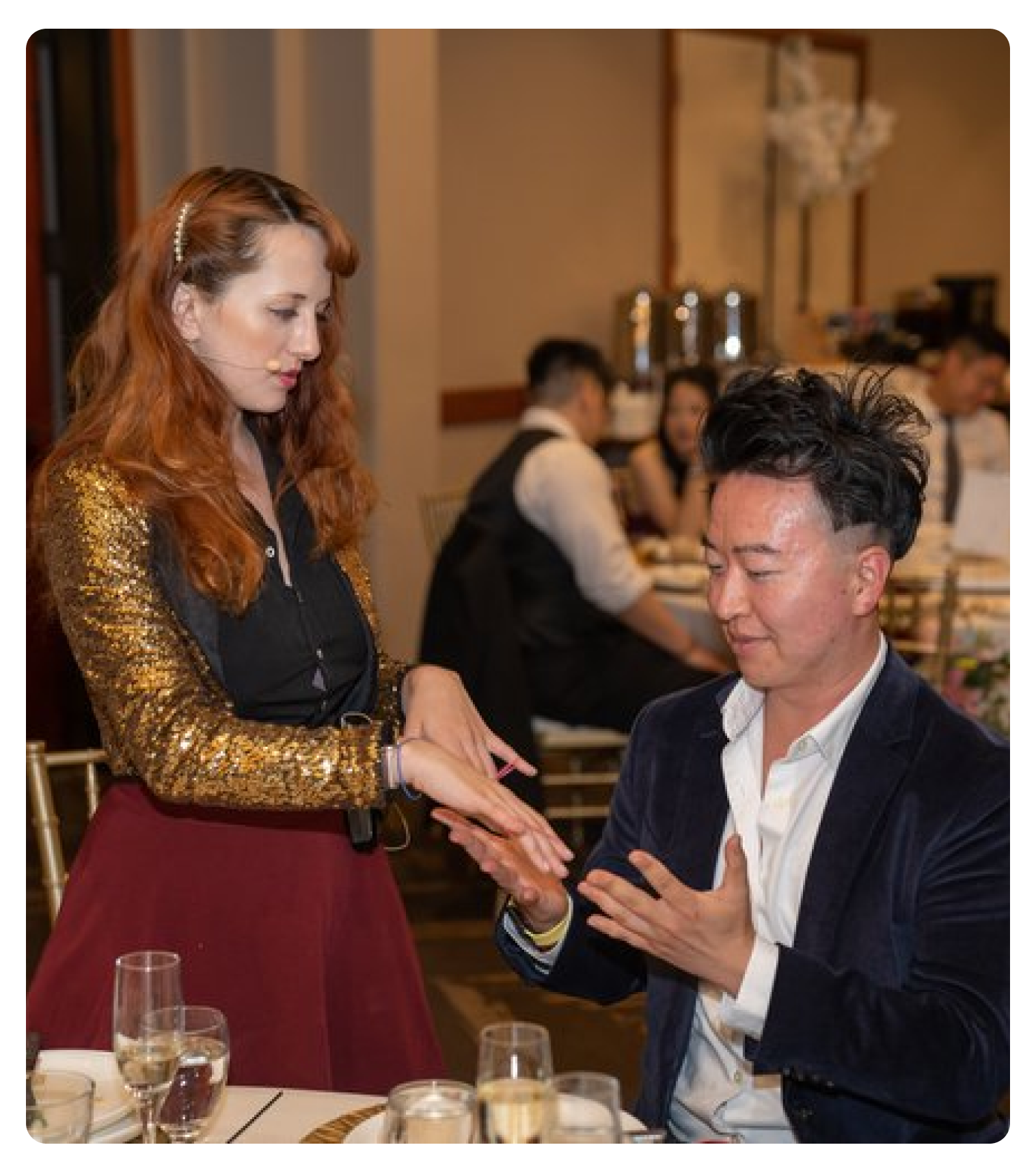
Something visual and participatory travels considerably better, since astonishment doesn't require translation and everyone can take part with an ordinary object regardless of where they are. Among the options for a company wide moment across borders, formats that work identically in every market are worth more than impressive ones that only land in one.
Frequently Asked Questions
Should we still call it a Christmas party?
It depends on your organization. Christmas party is accurate in some markets and not in others, and in a genuinely international company it signals whose calendar you run on. End of year celebration, winter party, or annual party all work without reading as a correction. If one market genuinely celebrates Christmas, name the local event accordingly and the global one differently.
One global event or several local ones?
Usually several local ones. A single global event serves one or two time zones well and leaves the rest joining early or late, which is a poor basis for a celebration, whereas regional events let each group have something at a reasonable hour in a format suiting local expectations. The total cost is frequently comparable.
What if we want one company wide moment?
Keep it short and design it as a shared element rather than a full event. Thirty or forty five minutes at a tolerable hour, with the actual celebrating happening locally afterwards, works far better than a two hour session somebody attends at midnight. Rotate which region is inconvenienced, and acknowledge the compromise honestly in the invitation.
How do we make it fair across countries?
Aim for genuine parity of spend per head rather than identical formats, since appropriate formats and costs of living vary considerably. If headquarters holds a substantial evening event and smaller offices get a modest lunch, colleagues compare and draw conclusions about where the company's attention sits. Among ideas for company Christmas party planning, spend equity is most noticed when it's wrong.
Should regions choose their own format?
Yes, since what constitutes a good work celebration differs genuinely between countries, including expectations about alcohol, timing, whether partners attend, and formality. Central teams imposing one format produce events that feel imported in most markets. Set the standard for spend and inclusion centrally and leave the format to people who know their own market.
What about colleagues who don't mark the occasion?
Acknowledge them beyond an invitation. They're frequently the ones still working while others are away, covering for absent teams, or handling clients in markets that don't pause. A genuine thank you to the people covering, and awareness that another moment in the year may matter more to some colleagues, distinguishes a genuinely international approach from a translated one.
What shared element actually works across markets?
Something visual and participatory rather than dependent on language, humor, or reference. Comedy fragments across markets and a quiz about the year favors whoever sits closest to head office, whereas astonishment doesn't require translation and everyone can take part with an ordinary object wherever they are. Formats working identically everywhere beat impressive ones that land in one market.

Plan for Several Decembers, Not One
An international team doesn't share a December, and the ideas for company Christmas party planning that work across borders start from that rather than working around it. Name the event so it includes everybody, let regions run their own celebrations at sensible hours in formats that suit them, aim for parity of spend rather than identical events, check the public holidays before fixing dates, and acknowledge the colleagues for whom this period isn't personally significant.
And if you want one shared moment, keep it short and choose something that works the same in every market rather than something that only lands in one.
Reach out with your regions and time zones, and let's talk about what would work everywhere.