

Strolling Magician Las Vegas: What to Tell Your Performer Before the Event
Strolling Magician Las Vegas: What to Tell Your Performer Before the Event
Briefing a performer for a Las Vegas event involves a few things that never come up elsewhere. Resort properties have their own access procedures, schedules move because a session ran long half a mile away, and your guests may have been awake since four in the morning in another time zone.

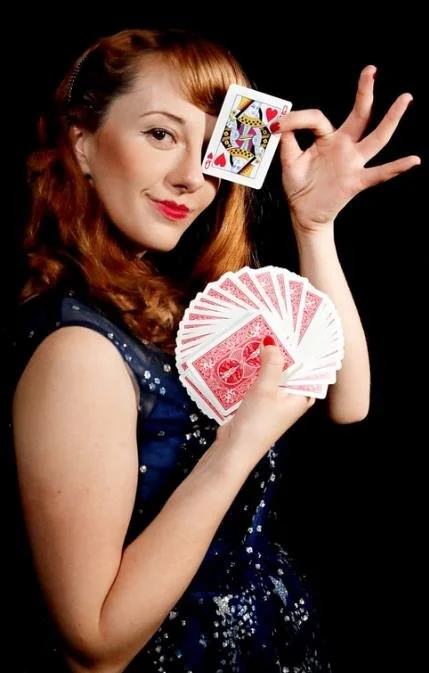
None of it is complicated and all of it helps. I'm Magical Katrina, an award winning magician and mentalist, and I want to set out what's genuinely worth telling a strolling magician Las Vegas before your event, beyond the usual date and headcount.
Property Access and Credentials
The Vegas specific item that catches people out. Resort properties frequently require vendors to enter through a particular entrance, register in advance, collect credentials, or be escorted, and convention properties can be stricter still.
Find out what your performer will need and tell them in advance rather than letting them discover it at a security desk. It's rarely difficult and it's frequently a process with a lead time, and a performer standing at the wrong entrance twenty minutes before they're due to start is an avoidable problem. Ask your venue contact directly, since the answer varies considerably by property and by event type.
Insurance Documentation
Related and worth handling early. Most resort and convention venues require a certificate of insurance from outside suppliers, sometimes naming the property specifically, and the request frequently arrives late in the process.
Ask your performer for one at booking rather than in the final week, since it's routine for any professional and irritating to chase when you're busy. If your venue has specific wording requirements, pass those on at the same time. A strolling magician Las Vegas who works property events regularly will have this ready without prompting.
The Schedule Will Move
Worth saying explicitly rather than hoping. Vegas events run late more reliably than events elsewhere, because sessions overrun, guests are walking considerable distances inside properties, and a group coming from a conference session across a resort will not arrive when the agenda says.
Give your performer the realistic timings rather than the printed ones, and tell them where the flexible portions are. Also give them a contact number for the day, since the useful thing on a moving schedule is being able to send a message rather than relying on a plan agreed three weeks earlier. Any professional expects drift and handles it easily, provided they're told.
How Guests Are Arriving
Specific to this city and worth mentioning. Distances inside resorts are deceptive, and a group coming from a session, a meal, or another part of the property will filter in across a longer window than you'd expect.
Tell your performer that, since it changes how they start. A room that fills over forty minutes needs a performer working from the first arrivals rather than waiting for everyone, and knowing in advance means they plan for it rather than standing at the side wondering whether to begin. It also affects how long the useful window actually is.
Whether Guests Have Been Drinking Since Lunch
Worth flagging honestly, because it genuinely changes the room. A corporate group at an evening reception on day one behaves differently from the same group on the final night of a conference after a day at the pool.
Neither is a problem and they're different audiences. Tell your performer which you're expecting, since the pacing, the material, and the approach to participation all adjust. It's the sort of thing clients feel awkward mentioning and performers are grateful to know, and it's considerably better raised in advance than assessed in the first five minutes.
Time Zones and Fatigue
Frequently overlooked and genuinely relevant. Attendees who flew in from the east coast or from overseas may be several hours out, and a nine o'clock start feels like midnight to a portion of your room.
That affects energy and attention, and a performer who knows will pitch accordingly rather than assuming a fresh audience. For international groups it matters more, and it's worth mentioning alongside the language mix if your attendees are travelling from several countries. Among things to tell a strolling magician Las Vegas, this is one that rarely occurs to clients and consistently helps.
Describe a Room You Haven't Seen
The situation many Vegas planners are in, since the event may be the first time you've stood in the space yourself. Say so rather than describing it confidently.
What helps: whether it's a suite, a ballroom, a private dining room, a cabana, or a convention space, roughly how many people it holds, whether any of it is outdoors, and whether guests will be seated or standing. If you genuinely don't know, say that too, since a performer would far rather plan for uncertainty than arrive expecting something different. Close up magic adapts to almost any room, and the adaptation is easier when it isn't a surprise.
Who Is Actually in the Room
Worth a line, since Vegas events assemble unusual mixes. Internal team, clients, prospects, partners, a mixture, or a group where several companies are represented.
Also mention if the group has been together all week or has just arrived, since a group who've spent three days together behaves entirely differently from strangers on their first evening. And flag anyone being celebrated or recognized, since a moment built around a person is straightforward to arrange and easy to leave out if you'd rather.

Anything Sensitive
The same principle that applies anywhere, and worth stating. A difficult announcement earlier in the program, a restructure, a departure, or a subject to avoid.
A brief note is enough and no explanation is needed. Performers work in rooms with histories constantly and would far rather know than discover it. This is the information that prevents genuine awkwardness rather than merely improving the evening, and it's the item clients most often leave out of a brief.
What You Don't Need to Worry About
Worth stating, since clients apologise for things that don't matter. You don't need to worry that your room has no stage, that the space is oddly shaped, that guests will be spread across indoor and outdoor areas, or that your timings will move.
You don't need to provide equipment, a table, power, or a technical contact. And you don't need a run of show for close up work, since it operates in whatever gaps exist. A strolling magician Las Vegas needs a room with your guests in it, and nearly everything else people worry about mentioning is not an obstacle.
Why Book Magical Katrina
If you'd like a performer who'll ask for all of this, here's my case. I'm a member of the Magic Circle in London and the Academy of Magical Arts in Hollywood, I've earned multiple magic awards, and I've performed for clients including Formula 1, the Olympics, Porsche, Prada, and the Ritz Carlton, with appearances on Penn & Teller: Fool Us and Masters of Illusion. I'll ask about property access, your realistic timings, and who's in the room before the day, I provide a COI without being chased, and I arrive early because Vegas schedules move.
Frequently Asked Questions
What's the Vegas specific thing to check?
Property access, since resort venues frequently require vendors to use a particular entrance, register in advance, collect credentials, or be escorted, and convention properties can be stricter. Find out what your performer needs and tell them in advance rather than letting them discover it at a security desk, since it's often a process with a lead time.
When should we sort the insurance certificate?
At booking rather than the final week, since most resort and convention venues require one from outside suppliers, sometimes naming the property specifically, and the request frequently arrives late. It's routine for any professional and irritating to chase when you're busy. Pass on any specific wording requirements at the same time.
Our schedule will probably slip. Should we say so?
Yes, and give the realistic timings rather than the printed ones. Vegas events run late more reliably than events elsewhere, since sessions overrun and guests walk considerable distances inside properties. Also give a contact number for the day, since sending a message beats relying on a plan agreed three weeks earlier. Professionals expect drift and handle it easily when told.
Does it matter how guests arrive?
It changes how a performer starts. Distances inside resorts are deceptive, so a group coming from a session or a meal filters in across a longer window than expected, and a room filling over forty minutes needs someone working from the first arrivals rather than waiting. Knowing in advance means they plan for it rather than hesitating at the side.
Should we mention that guests have been drinking?
Yes, and performers are grateful to know. A corporate group at an evening reception on day one behaves differently from the same group on the final night after a day at the pool, and neither is a problem. The pacing, material, and approach to participation all adjust, and it's better raised in advance than assessed in the first five minutes.
What if we haven't seen the room ourselves?
Say so rather than describing it confidently. What helps is whether it's a suite, ballroom, private dining room, cabana, or convention space, roughly its capacity, whether any of it is outdoors, and whether guests will be seated or standing. Close up magic adapts to almost any room, and the adaptation is easier when it isn't a surprise.
What don't we need to worry about?
No stage, an oddly shaped space, guests spread between indoor and outdoor areas, or timings that will move. You don't need to provide equipment, a table, power, or a technical contact, and you don't need a run of show for close up work since it operates in whatever gaps exist. Nearly everything people apologise for isn't an obstacle.
How do I book you, and what should I send?
Reach out with your date, the property or venue, event type, and rough guest count. Once booked, one message covering property access requirements, realistic timings, who's in the room, how guests will arrive, and anything sensitive is ideal. I'll ask about anything you haven't mentioned and send a COI for your venue without being chased.

Ten Minutes That Change the Evening
Briefing a strolling magician Las Vegas takes the same information as anywhere, plus a handful of things specific to this city: how vendors get into your property, what the schedule will realistically do, how your guests will arrive and what state they'll be in, and what the room actually is if you've never stood in it.
That's one message, and it's the difference between a performer arriving prepared and one adapting on the spot while your event is already running.
Reach out with your event details, and I'll ask about the rest.