

Ideas for a Company Christmas Party Without the Bar at the Centre
Ideas for a Company Christmas Party Without the Bar at the Centre
More organizations are holding Christmas parties where alcohol isn't the organising principle, for a mix of reasons: a workforce where a meaningful proportion doesn't drink, budgets that don't stretch to an open bar, and conduct incidents that made somebody reconsider.

It's a sound decision that frequently produces a worse party, because the bar was doing more work than anyone acknowledged. I'm Magical Katrina, an award winning magician and mentalist, and I want to set out ideas for company Christmas party planning when drinking isn't the center of the evening.
Understand What the Bar Was Doing
Start here, since it explains why removing it is harder than it looks. A bar isn't only a drinks service, it's a destination, an excuse to move, a way to join a group, something to hold, and a socially acceptable reason to end a conversation.
Take it away and every one of those functions needs replacing. That's why a party with the alcohol removed and nothing added feels flat: people stand in their arrival groups with nothing to do and nowhere to go. Among ideas for company Christmas party planning without alcohol, the useful question is what replaces those functions rather than what replaces the drinks.
Soft Drinks Aren't a Plan
Worth stating plainly, since it's the usual approach. Offering non alcoholic options alongside a full bar is good practice and it isn't designing an event that works without alcohol.
The people who don't drink at a drinking party are still at a drinking party, standing with a soft drink while the room gets progressively louder around them. If you're genuinely moving away from an alcohol led event, design the whole thing differently rather than improving the options at the margin. Half measures produce an evening that satisfies nobody and costs the same.
Something Has to Happen
The central principle. An alcohol led party works because drinking is the activity, which means nothing else has to be, and colleagues will stand and talk for three hours because the drinking supplies momentum.
Without it, the evening needs content. That might be a meal that's genuinely good, an activity, entertainment, or something to watch, and it doesn't need to be elaborate. What it can't be is an empty room with people in it, which is what a dry party becomes by default. This is the single most important difference between planning the two kinds of event.
Daytime Removes the Problem Entirely
The simplest structural answer. A lunch or an afternoon event carries no expectation of drinking at all, which means nothing is being withheld and nobody notices an absence.
An evening party without a bar invites comparison with every evening party people have attended, whereas a Christmas lunch is simply a different format. It's also cheaper, better attended, and includes people who can't do evenings. If your main reason for moving away from alcohol is inclusion or cost, moving to daytime achieves both without the event feeling like something was taken away.

Don't Frame It as a Restriction
A communications point that determines how it lands. An invitation explaining that this year's party will be alcohol free reads as a policy, and people respond to policies by resenting them.
An invitation describing a Christmas lunch, an afternoon event with something good happening, or a celebration built around a meal doesn't require the explanation at all. Describe what the event is rather than what it isn't, and most of the resistance evaporates. The same evening framed two ways produces noticeably different attitudes before anyone arrives.
Food Can Carry an Evening
Worth considering, since it's the most straightforward substitute. A genuinely good meal gives an evening structure, a reason to be seated together, something to talk about, and a natural shape with a beginning and an end.
That's most of what the bar was supplying. A proper dinner, a tasting format, or something interactive around food works considerably better than drinks and canapés without the drinks. It also tends to be where the budget goes anyway once the bar is removed, which makes it an easy internal case.
Entertainment Does the Rest
Since it's my area, the honest version. What entertainment provides at an alcohol free event is the momentum that drinking usually supplies: a reason for the room to be animated, something for strangers to react to together, and a shared experience that doesn't require anybody to be uninhibited.
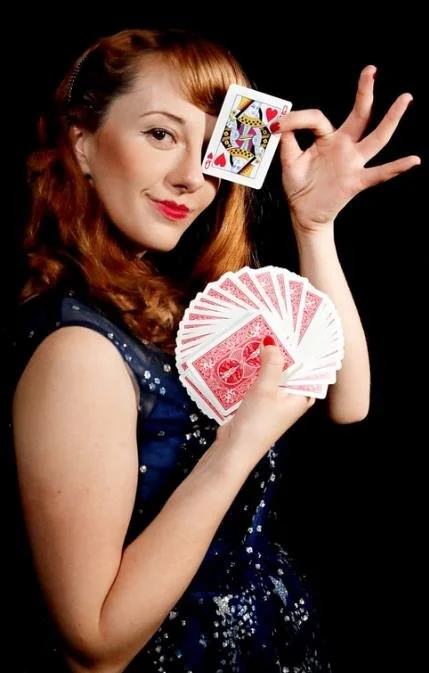
Close up magic suits that particularly, since it needs no participation beyond watching, works identically on someone sober at seven and someone sober at ten, and moves through a room reshuffling groups. At a drinking party it's an addition, and at an alcohol free one it's doing structural work.
Be Honest That Some People Will Miss It
Worth acknowledging rather than pretending otherwise. A proportion of your staff enjoy a drink with colleagues at Christmas and will be quietly disappointed, and treating that as unreasonable doesn't help.
You can acknowledge it without changing course: say the event is different this year, explain briefly why if there's a good reason, and make it good enough that the question doesn't dominate. What causes resentment isn't the absence of alcohol so much as the sense that something was removed and nothing replaced it, which is a planning problem rather than a cultural one.
Frequently Asked Questions
Why do alcohol free parties often feel flat?
Because the bar was doing more than serving drinks: it's a destination, an excuse to move, a way to join a group, something to hold, and a socially acceptable way to end a conversation. Remove it without replacing those functions and people stand in their arrival groups with nothing to do and nowhere to go.
Isn't offering soft drinks enough?
It's good practice and it isn't the same thing, since people who don't drink at a drinking party are still at a drinking party, standing with a soft drink while the room gets louder around them. If you're genuinely moving away from an alcohol led event, design the whole thing differently rather than improving options at the margin.
What's the simplest solution?
Move it to daytime, since a lunch or afternoon event carries no expectation of drinking, which means nothing is being withheld and nobody notices an absence. It's also cheaper, better attended, and includes people who can't do evenings, so if your reasons are inclusion or cost, daytime achieves both without the event feeling diminished.
How should we describe it in the invitation?
By what it is rather than what it isn't. An invitation explaining that the party will be alcohol free reads as a policy and people resent policies, whereas describing a Christmas lunch or an afternoon celebration with something good happening needs no explanation. The same event framed two ways produces noticeably different attitudes.
What actually replaces the bar?
Content, since an alcohol led party works because drinking is the activity and nothing else has to be. Without it the evening needs something happening: a meal that's genuinely good, an activity, or entertainment. It needn't be elaborate, and it can't be an empty room with people in it, which is what a dry party becomes by default.
Can food carry the evening?
Frequently, since a good meal supplies structure, a reason to be seated together, something to talk about, and a natural beginning and end, which is most of what the bar was providing. A proper dinner or something interactive around food works considerably better than drinks and canapés without the drinks, and it's usually where the budget goes anyway.
Won't some people be disappointed?
Some will, and acknowledging that is better than pretending otherwise. You can say the event is different this year, explain briefly why if there's a good reason, and make it good enough that the question doesn't dominate. Resentment comes less from the absence of alcohol than from the sense that something was removed and nothing replaced it.

Design the Evening, Don't Just Remove the Drinks
The ideas for company Christmas party planning that work without alcohol all follow from one observation: the bar was supplying structure, movement, and momentum, and those have to come from somewhere else. Move to daytime if you can, build the event around food or around something genuinely happening, describe what the evening is rather than what it lacks, and accept that a few people will miss the old version.
Do that and you'll have an event people enjoy on its own terms rather than one they compare unfavorably with last year's.
Reach out with your date and format, and let's talk about what would give the evening some shape.