

Strolling Magician Las Vegas for Pool Parties and Daytime Events
Strolling Magician Las Vegas for Pool Parties and Daytime Events
Las Vegas does daytime outdoor events at a scale nowhere else attempts. Corporate groups take over pool decks, cabanas become hospitality suites, and a convention afternoon frequently ends with a reception beside water rather than in a ballroom.

They're also the hardest conditions in the city to program entertainment for. I'm Magical Katrina, an award winning magician and mentalist, and I want to set out what a strolling magician Las Vegas can and can't do at a pool party, and how to plan one that works.
Heat Governs Everything
Start with the constraint that overrides all others. Between roughly May and September, an afternoon outdoors in Las Vegas is genuinely punishing, and anything scheduled between noon and four is fighting conditions rather than working with them.
Guests retreat to shade, drink, and don't want to stand attentively anywhere. That's not a failure of the entertainment, it's physics. The practical answer is timing: late afternoon into evening works considerably better than midday, and a reception starting at five is a completely different event from one starting at one, even in the same space.
Your Guests Are Spread Out
The structural difference from an indoor reception. A pool deck distributes people across cabanas, loungers, bar areas, and the water itself, and they don't gather.
That rules out anything requiring an audience and suits strolling work exactly, since a performer moves between groups rather than asking them to assemble. It also means coverage takes longer than it would indoors, because the distances are greater and groups are smaller. A strolling magician Las Vegas at a pool event reaches fewer people per hour than the same performer in a ballroom, which is worth factoring into how long you book.
Music Is Usually Non Negotiable
Worth knowing, since pool venues come with a sound environment you may not control. Many run music as part of their identity, at a volume set by the venue rather than by your event, and it isn't always adjustable for a private booking.
Close up magic operates at conversational distance, which is the only format that functions in that environment, since anything requiring the room to listen at a distance will lose. Ask the venue directly what the music situation is during your hours, and tell your performer, since it affects how they work rather than whether they can.
Sun and Shade Matter More Than You'd Think
Practical and frequently overlooked when planning. A performer working in direct sun for two hours in August is a genuine welfare consideration, not a preference, and so is asking guests to stand in it.
Plan for shade: cabana areas, covered sections, or the shaded side of the deck as the sun moves. It's also worth knowing that some effects and materials behave differently in heat and direct sun, which any experienced performer accounts for. A shaded reception area where people naturally congregate is where this works best.
The Audience Changes Across the Afternoon
Worth planning around, since it genuinely does. A corporate pool reception at four contains people who have just come from a session and are relatively sober, and the same event at seven contains a different crowd entirely.
Neither is a problem and they suit different approaches, so tell your performer which you expect. Earlier is better for anything requiring attention, later is louder and more sociable, and a performer who knows adjusts pacing accordingly. If your event spans both, that's worth flagging too, since the room they start in isn't the room they'll finish in.
Water and Props
A practical note people find surprising. Close up magic frequently involves objects that don't respond well to being wet, and a pool deck contains water, drinks, sunscreen, and hands that have been in all three.
That doesn't prevent anything, and it means a performer works slightly differently: more mentalism, fewer materials that suffer, and an awareness of where they're standing. It's not something you need to manage, and it's worth knowing so that a performer asking about the layout isn't being fussy. They're planning around conditions most clients never think about.
Cabana Hospitality Is the Sweet Spot
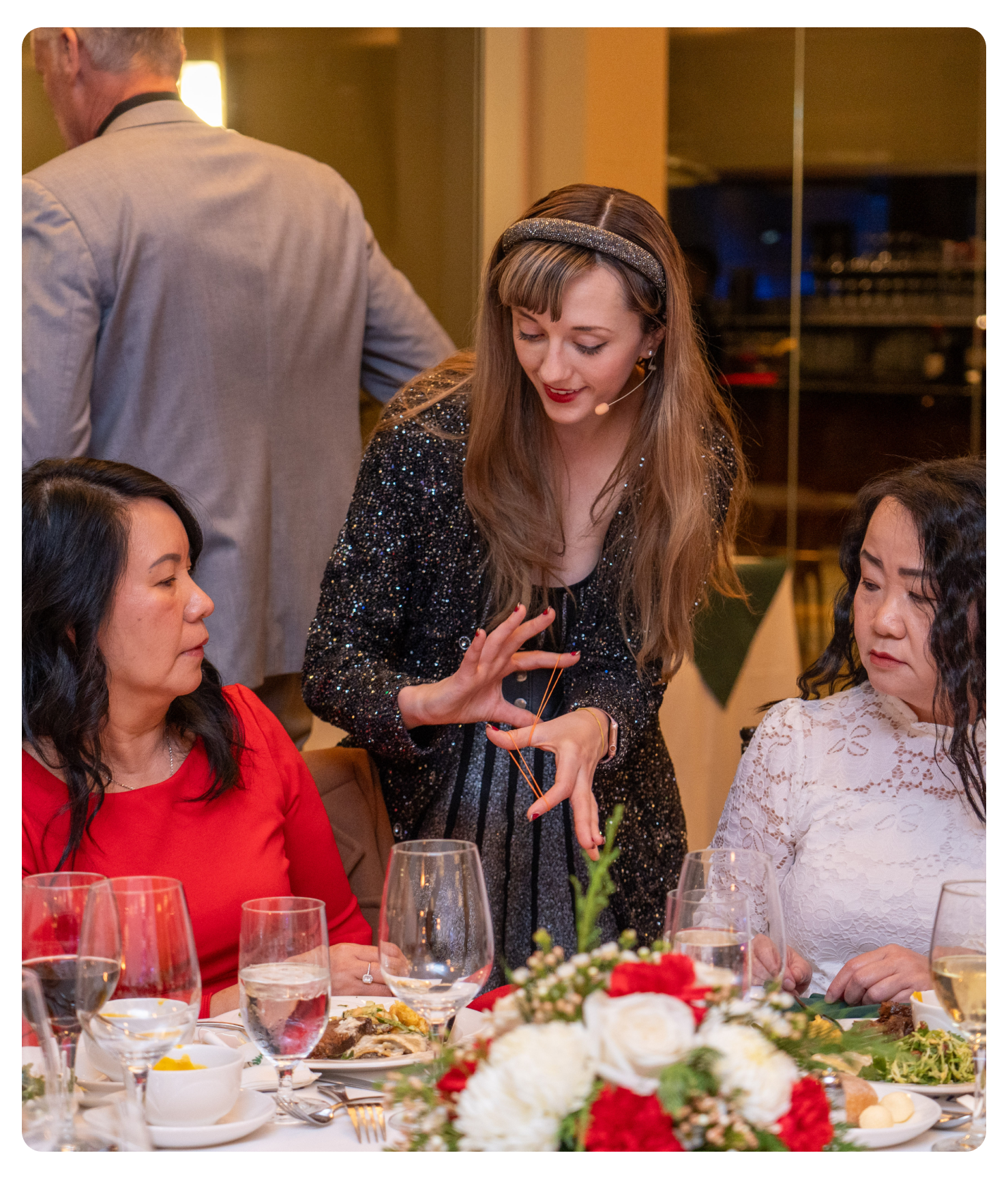
Worth separating out, since it's where this works best. A cabana or a reserved section with a defined group of guests is a smaller, shaded, more contained version of a pool party, and considerably easier to program.
Guests are seated or standing nearby, the group is finite, and a performer can cover it properly. For corporate groups using cabanas as hospitality during a convention or an incentive trip, a strolling magician Las Vegas works there much as it would in a suite. If your event has both a general pool area and reserved cabanas, the cabanas are where to concentrate.
Be Realistic About What It Can Do
Worth saying honestly. A pool party at full volume in the afternoon heat with two hundred guests spread across a deck is not a setting where any entertainment covers the room.
What a performer can do is work the shaded and seated areas, reach the groups who are gathered rather than swimming, and give a substantial portion of your guests something. That's a genuine contribution and it isn't full coverage, and anyone promising otherwise hasn't worked one. Book on that basis and it delivers, book expecting a ballroom result and it won't.
A Note on "Local vs. Traveling In"
Worth knowing: many performers travel to Las Vegas, with travel discussed openly and factored into the quote rather than being your problem to arrange. I'm based in the Los Angeles area and travel to Vegas regularly, including for daytime and outdoor corporate events rather than only evening ones.
Why Book Magical Katrina
If you're planning a daytime event, here's my case. I'm a member of the Magic Circle in London and the Academy of Magical Arts in Hollywood, I've earned multiple magic awards, and I've performed for clients including Formula 1, the Olympics, Porsche, Prada, and the Ritz Carlton, with appearances on Penn & Teller: Fool Us and Masters of Illusion. I work at conversational volume, which is the only thing that functions beside a pool, I plan around heat and shade rather than being surprised by them, and I'll tell you honestly what coverage to expect from your particular setting.
Frequently Asked Questions
When should we schedule it?
Late afternoon into evening rather than midday, since between roughly May and September an afternoon outdoors here is punishing and anything between noon and four is fighting conditions. Guests retreat to shade and don't want to stand attentively anywhere, so a reception starting at five is a completely different event from one starting at one.
Our guests will be spread across the deck. Does that work?
It suits strolling work and rules out anything requiring an audience, since a performer moves between groups rather than asking them to assemble. It does mean coverage takes longer than indoors, because distances are greater and groups smaller, so a strolling magician Las Vegas reaches fewer people per hour at a pool than in a ballroom.
What about the venue's music?
Ask the venue what the situation is during your hours, since many pool venues run music as part of their identity at a volume set by them rather than by your event, and it isn't always adjustable. Close up magic operates at conversational distance, which is the only format that functions there, since anything requiring listening at a distance loses.
Does sun matter?
Considerably, since a performer working in direct sun for two hours in August is a welfare consideration rather than a preference, and so is asking guests to stand in it. Plan for shade: cabana areas, covered sections, or the shaded side as the sun moves. Some materials also behave differently in heat, which experienced performers account for.
Will the crowd be different later?
Genuinely, since a reception at four contains people who just came from a session and are relatively sober, while the same event at seven contains a different crowd. Neither is a problem and they suit different approaches, so tell your performer which you expect, and flag it if your event spans both.
Is water an issue?
Mildly, since close up magic frequently involves objects that don't respond well to being wet, and a pool deck contains water, drinks, sunscreen, and hands that have been in all three. A performer works slightly differently in response, with more mentalism and fewer vulnerable materials. It's not something you need to manage.
Where does it work best?
Cabanas and reserved sections, which are smaller, shaded, more contained, and considerably easier to program than an open deck. Guests are seated or nearby, the group is finite, and a performer can cover it properly. If your event has both a general pool area and cabanas, concentrate on the cabanas.
How much of our event will it reach?
Less than an indoor equivalent, honestly. A full volume afternoon pool party with two hundred guests spread across a deck isn't a setting where any entertainment covers the room. A performer can work the shaded and seated areas and reach the gathered groups, which is a genuine contribution rather than full coverage, and anyone promising otherwise hasn't worked one.

Program for the Conditions, Not the Photograph
A Las Vegas pool event looks like the easiest party in the world to plan and is one of the harder ones to program, since heat, distance, and volume all work against anything requiring attention. A strolling magician Las Vegas is one of the few formats that functions there, provided it's timed for late afternoon rather than midday, concentrated on shaded and seated areas, and booked with realistic expectations about coverage.
Get those right and it adds something genuine to an event that otherwise relies entirely on the setting.
Reach out with your date, venue, and timings, and I'll tell you honestly what to expect.