


Fun Conference Ideas When the Budget Has Been Cut
Fun Conference Ideas When the Budget Has Been Cut
Somebody has taken a percentage off last year's figure and the conference still has to happen. The temptation is to reduce everything slightly, which produces an event that's uniformly a bit worse and satisfies nobody.
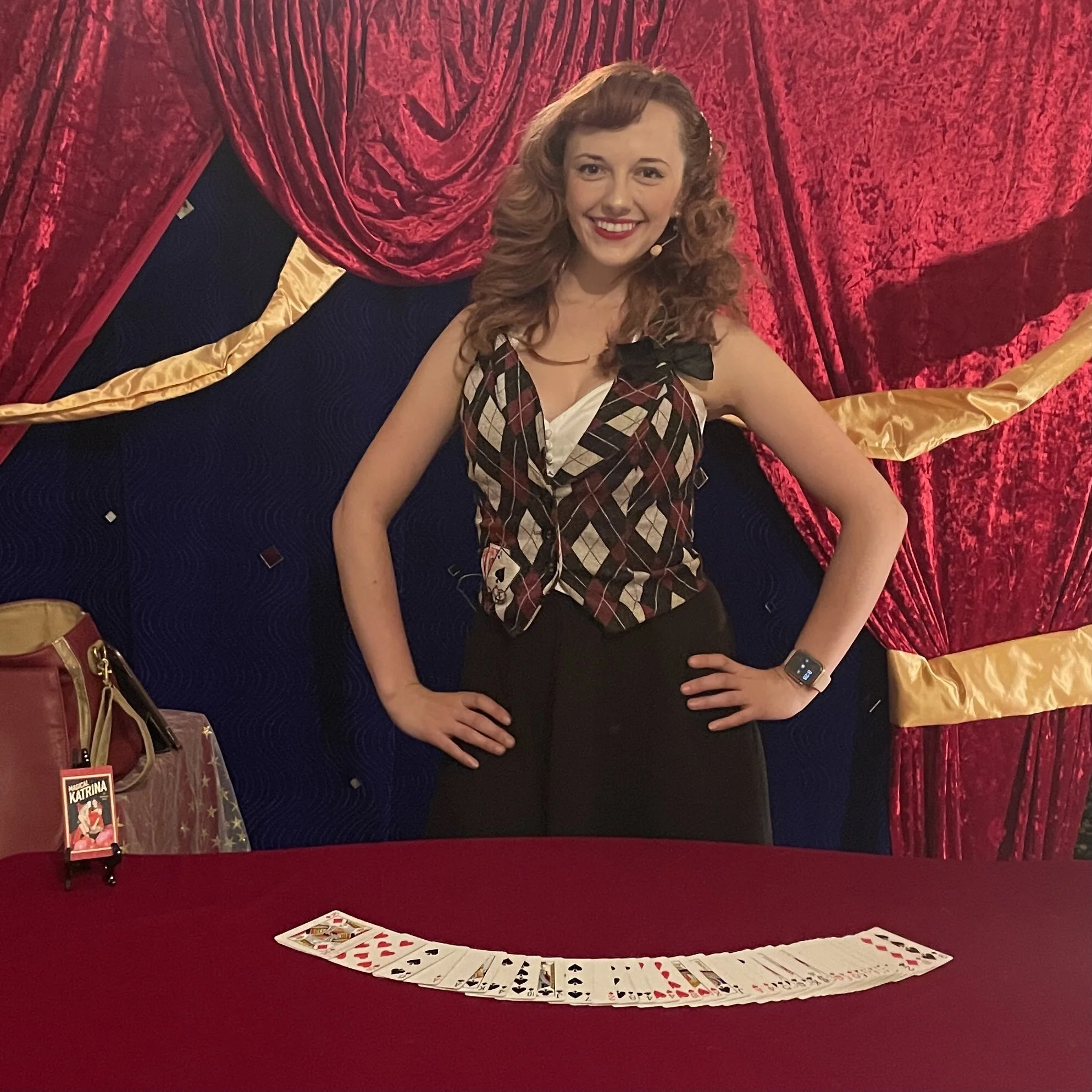
Better to cut deliberately, since delegates notice some things acutely and others not at all. I'm Magical Katrina, an award winning magician and mentalist who works conferences, and I want to offer fun conference ideas for an organizer working with less than they had.
Delegates Never Notice Production
Start with the biggest saving nobody wants to make. Staging, lighting, set design, and screen graphics consume a substantial share of most conference budgets and delegates do not notice them unless they're poor.
Nobody has ever left a conference describing the lighting design. They describe a speaker, a conversation, a thing that happened, or the food. If you need to remove a large number from a budget, production is where it can come from with the least effect on how the event is experienced, provided what remains works properly.
They Notice Food and Coffee Acutely
The reverse, and it's worth protecting. Delegates form a view of an event partly from what they were fed, and bad catering is remembered and mentioned in a way good catering isn't.
Coffee particularly, since it's consumed constantly and a queue or a shortage is felt by everybody. If your budget is shrinking, protect the food and drink before almost anything else, since it's the element with the shortest distance between spending and experience. Among fun conference ideas for a reduced budget, spending proportionally more on catering while cutting elsewhere is the trade most likely to go unnoticed.
Comfort Is Cheap and Felt
Worth attending to, since it costs almost nothing. Chairs people can sit in for an hour, a room at a reasonable temperature, somewhere to charge a phone, and water available without queueing all affect how a day feels considerably more than their cost suggests.
Delegates rarely praise these and consistently complain about their absence. A conference that got the basics right in a plain room outperforms one with impressive production and uncomfortable chairs, which is a useful principle when deciding where a reduced budget goes.
Cut Branded Items Without Hesitation
An easy saving. Bags, notebooks, lanyards with elaborate printing, water bottles, and the rest are expensive in aggregate, largely discarded, and increasingly resented as waste.
Delegates do not attend conferences for tote bags, and removing them is unlikely to be mentioned. If you want to keep something physical, keep one good item rather than a bag of mediocre ones, which costs less and is more likely to be used. That's a straightforward cut with no experiential cost.
Fewer Sessions Is Better and Cheaper
The change that improves the event while saving money. Organizers over program to justify a ticket price, and delegates experience a packed agenda as exhausting rather than valuable.
Cutting a session saves a speaker fee, a room, and an hour of AV, and it extends the break, which is where delegates say the value actually is. That's a rare case where the cheaper option is genuinely the better one. Among fun conference ideas, removing content to lengthen breaks is the one that improves feedback while reducing spend.

Protect One Memorable Thing
The principle for what survives the cut. Delegates remember events by their peaks rather than their averages, which means a day with one outstanding element and several ordinary ones is recalled better than a uniformly competent one.
Keep one thing that will be described afterwards: a speaker worth the fee, something unusual in the program, or an evening people enjoyed. Spread the reduction across everything else. A uniformly reduced conference produces no peaks and is remembered as the year the event got worse, which is the outcome worth avoiding.
Ask Sponsors to Fund Specific Elements
Practical and underused. Sponsors are frequently willing to fund a named element rather than contribute to a general pot, and they get better value from it too.
The drinks reception, the coffee, the entertainment, or a networking element are all fundable by a sponsor who wants association with something delegates enjoy rather than a logo on a slide. That moves a cost off your budget entirely and gives the sponsor something to point at. Ask specifically rather than generally, since a named element is considerably easier to say yes to.
Be Straightforward With Delegates
Worth considering, since pretending is transparent. If your event is noticeably leaner than last year, delegates will notice, and an organizer who acknowledges it briefly is received better than one who doesn't.
That doesn't require an apology or an explanation of your finances. A line noting that you've focused the program on what people valued most is honest and sufficient. Delegates are considerably more forgiving of a deliberate reduction than of an event that's quietly worse with nobody mentioning it.
Where Entertainment Fits in a Reduced Budget
Briefly, since it's my area and the question arises. Entertainment is frequently first on the cut list, and it's worth checking whether it's actually the expensive item, since production and catering usually dwarf it.
A performer working a reception typically costs a fraction of the AV package and has no production requirements attached, which means no staging, lighting, or technical hire. If your budget is under pressure, the useful question is which elements cost a great deal and go unnoticed, and entertainment is usually the reverse of that.
Frequently Asked Questions
Where should the cut come from?
Production, since staging, lighting, set design, and screen graphics consume a substantial share of most budgets and delegates don't notice them unless they're poor. Nobody leaves a conference describing the lighting design, whereas they describe speakers, conversations, and food, so that's where a large number can come from with least effect.
What should we protect?
Food and coffee, since delegates form a view partly from what they were fed and bad catering is remembered in a way good catering isn't. Coffee particularly, because it's consumed constantly and a queue is felt by everybody. It's the element with the shortest distance between spending and experience.
What's cheap and worth getting right?
Comfort, since chairs people can sit in, a room at a reasonable temperature, somewhere to charge a phone, and water without queueing cost almost nothing and affect the day considerably. Delegates rarely praise these and consistently complain about their absence, and getting them right in a plain room beats impressive production with bad chairs.
Can we drop the branded items?
Without hesitation, since bags, notebooks, printed lanyards, and bottles are expensive in aggregate, largely discarded, and increasingly resented as waste. Delegates don't attend for tote bags. If you want something physical, keep one good item rather than a bag of mediocre ones, which costs less and is more likely to be used.
Should we reduce the program?
Yes, and it's the rare case where cheaper is better, since organizers over program to justify a ticket price and delegates experience a packed agenda as exhausting. Cutting a session saves a fee, a room, and an hour of AV while extending the break, which is where delegates say the value actually is.
What should survive the cut?
One memorable thing, since delegates remember events by their peaks rather than their averages. Keep a speaker worth the fee, something unusual in the program, or an evening people enjoyed, and spread the reduction across everything else. A uniformly reduced conference produces no peaks and is remembered as the year it got worse.
Can sponsors help?
Frequently, and asking them to fund a named element rather than contribute to a general pot works better for both sides. The reception, the coffee, the entertainment, or a networking element are all fundable by a sponsor wanting association with something delegates enjoy, and a named element is much easier to say yes to.
Should we tell delegates?
Briefly, since pretending is transparent and they'll notice anyway. A line noting that you've focused the program on what people valued most is honest and sufficient, without an apology or an explanation of your finances. Delegates forgive a deliberate reduction far more readily than an event that's quietly worse.
Cut the Things Nobody Sees
A reduced conference budget produces a worse event only if the reduction is spread evenly, since that removes the peaks and leaves everything slightly diminished. The fun conference ideas that survive a cut are the ones delegates actually experience: the food, the coffee, the chairs, the breaks, and one thing worth describing afterwards.
Take the money from production, branded items, and an over full program, ask a sponsor to fund a named element, and tell delegates plainly that you've focused on what they valued. Done that way, a smaller budget frequently produces a better rated event than the larger one did.
Reach out with your program and what's left in the budget, and I'll tell you honestly whether I fit it.