

London Magician: Which Type Suits Your Event?
London Magician: Which Type Suits Your Event?
People searching for a London magician usually have one particular thing in mind, and there are at least five distinct formats sold under that heading. Which one you need depends on the shape of your event rather than on preference, and booking the wrong format is the most common reason entertainment disappoints.
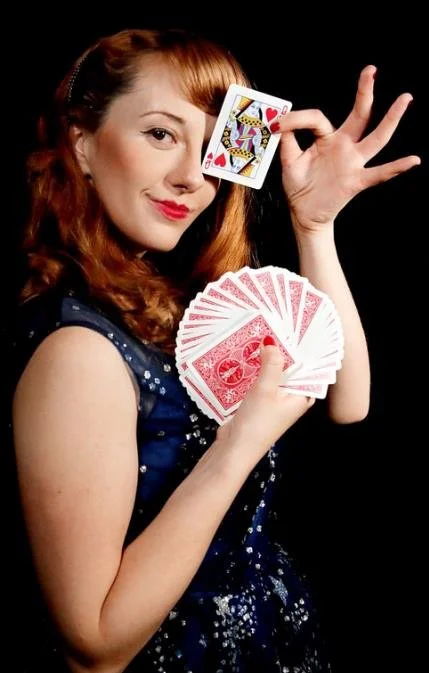
Worth sorting before you compare performers. I'm Magical Katrina, an award winning magician and mentalist and a member of the Magic Circle here in London, and I want to set out what each type actually is and which events it suits.
Two Questions Settle Most of It
Before the formats themselves, two questions resolve the majority of cases. Will your guests be standing and mingling, or seated as an audience? And does your program have a slot for a performance, or only gaps between other things?
Mingling guests with no slot points firmly to close up or strolling magic. A seated audience with a defined slot allows a stage set or an after dinner piece. Some events have both phases in sequence, which opens more options and requires knowing which portion the entertainment is for.
Close Up and Strolling Magic
The most commonly booked format and what most events actually need. A performer moves among your guests, performing for groups of three or four at conversational distance, with the magic happening in people's own hands.
It needs nothing: no stage, sound, power, rigging, or space beyond where guests already stand, and no slot in your running order, since it works inside receptions and mingling that are already happening. Among London magician options, this is what suits weddings, corporate receptions, private parties, and any venue where nothing else will fit, which in this city is a great many of them.
Stage and Cabaret Sets
A defined performance for a seated audience, typically twenty to forty five minutes, delivered from the front of a room.
This suits events with a program: an awards dinner, a gala, a conference session, or a party where guests will be seated anyway. It needs a microphone, usually some staging, and an audience facing one direction, which rules it out at a standing reception or anywhere people are circulating. If your event has a genuine slot and a seated crowd, it's a strong choice, and if it doesn't, it's the wrong purchase.
Mentalism
Less a separate format than a different discipline, deliverable close up or from a stage. Rather than objects behaving impossibly, a mentalist appears to know what someone is thinking, predict a choice, or reveal something they couldn't know.
It suits adult and corporate audiences particularly, since it engages people intellectually as well as producing astonishment, and it lands well with London rooms full of professionals trained to evaluate what they're shown. Ask any London magician you're considering how much of their work is mentalism, since it varies enormously between performers.
After Dinner and Keynote Formats
Distinct from entertainment and worth knowing exists. An after dinner piece or a keynote uses magic as a delivery mechanism for content rather than as the content itself, demonstrating ideas to a seated audience rather than describing them.
That suits conferences, leadership events, and company dinners where you want a message retained rather than a slot filled. It's a different booking from entertainment, priced and briefed differently, and it needs the same staging your other speakers use. If your program has a keynote to fill, it's worth asking about rather than assuming a magician only does entertainment.
Children's Entertainment
A genuine specialty rather than a scaled down adult show, and the skills barely overlap. A children's performer's real work is managing a room of excited small people, which being excellent at magic doesn't confer.
Length follows age: around thirty minutes for young children, forty five for school age, and longer with genuinely baffling material for older children. If you're booking for a child's party, look specifically for demonstrated children's experience and footage of them performing for children rather than at corporate events, since websites frequently lead with the latter.
Virtual
Now a standing option rather than a substitute. A virtual show is built for video rather than adapted from a live set, with everyone participating using ordinary household objects.
It suits distributed teams, multi site organizations, international groups, and any event where gathering in person would exclude part of your audience. It also scales, costing the same for thirty people as three hundred. For organizations with offices beyond London or staff across several countries, it frequently reaches more of them than an in person event would.

London Venues Narrow the Choice
Practically relevant here more than in most cities. A great many London events happen in livery halls, listed buildings, members' clubs, museums, and converted spaces where nothing can be fixed to anything, amplified sound is restricted, and production meets a policy list.
Those venues rule out stage formats and suit close up magic exactly. Hotel ballrooms and conference facilities give you genuine choice. Ask your venue about staging, sound, and noise restrictions before choosing a format, since those answers narrow the field faster than preference does.
Can You Have More Than One
Frequently, and worth asking about. A common structure is close up magic during a drinks reception followed by a stage set after dinner, which covers both phases of an evening.
That's two bookings' worth of work and priced accordingly, though usually more economical than hiring two performers. It also requires an event with a genuine seated portion, so it suits awards dinners and galas rather than parties. If you're unsure, describe the shape of your evening and expect a recommendation rather than an upsell.
A Note on "Local vs. Traveling In"
Worth knowing: the right performer for your format needn't be London based. Many travel in, with travel discussed openly and factored into the quote. I'm based in the Los Angeles area and travel to London for events, and I have a genuine tie to London's magic world through the Magic Circle. Judge on skill and format fit rather than location, particularly for specialisms like mentalism or keynote work.
Why Book Magical Katrina
If you're working out what you need, here's my case. I'm a member of the Magic Circle in London and the Academy of Magical Arts in Hollywood, I've earned multiple magic awards, and I've performed for clients including Formula 1, the Olympics, Porsche, Prada, and the Ritz Carlton, with appearances on Penn & Teller: Fool Us and Masters of Illusion. I work across close up, stage, mentalism, keynote, family, and virtual formats, which means I can tell you which suits your event rather than selling you the one I do.
Frequently Asked Questions
How do I know which format we need?
Answer two questions first: will guests be standing and mingling or seated as an audience, and does your program have a slot or only gaps. Mingling with no slot points to close up or strolling magic, while a seated audience with a defined slot allows a stage set or after dinner piece.
What's the difference between close up and stage magic?
Close up magic happens among your guests in small groups at conversational distance, needing no stage, sound, power, or slot in your running order. A stage set is a defined performance for a seated audience from the front of a room, needing a microphone and usually staging. They suit completely different events and aren't interchangeable.
What is mentalism and who is it for?
A different discipline rather than a separate format, deliverable close up or from a stage, where the performer appears to know what someone is thinking rather than making objects behave impossibly. It suits adult and corporate audiences particularly, and lands well with London rooms full of professionals trained to evaluate what they're shown.
Do magicians do after dinner speaking?
Some do, and it's a genuinely different booking from entertainment. It uses magic as a delivery mechanism for content, demonstrating ideas rather than describing them, which suits conferences and company dinners where you want a message retained. It's priced and briefed differently and needs the same staging your other speakers use.
Is a children's magician just a shorter version?
No, and the skills barely overlap, since a children's performer's real work is managing a room of excited small people. Length follows age, and if you're booking for a child's party, look for demonstrated children's experience and footage of them performing for children rather than at corporate events.
Will our venue limit our options?
Frequently, and more than in most cities, since many London events happen in livery halls, listed buildings, members' clubs, and museums where nothing can be fixed to anything and amplified sound is restricted. Those rule out stage formats and suit close up magic exactly. Ask about staging, sound, and noise restrictions before choosing.
Can we book two formats for one event?
Often, and a common structure is close up magic during the reception followed by a stage set after dinner. That's two bookings' worth of work priced accordingly, though usually more economical than two performers, and it needs an event with a genuine seated portion. Describe your evening and expect a recommendation rather than an upsell.
How do I decide, and how do I book you?
Reach out with the shape of your event: guest numbers, whether they'll be seated or mingling, your venue, and whether you have a slot. I'll tell you honestly which format suits, including if it isn't one I'd deliver, and send a quote for whichever makes sense.

Book the Format, Not the Word
Searching for a London magician returns performers doing genuinely different work, and the term itself won't tell you which you need. What resolves it is your event: whether guests are seated or mingling, whether your program has a slot, what your venue can accommodate, and whether you want an audience entertained or a message retained.
Answer those and the right format becomes obvious. For most London events it's close up magic, largely because so many of the city's best venues can't accommodate anything else.
Reach out with the shape of your event, and I'll tell you honestly which format suits it.