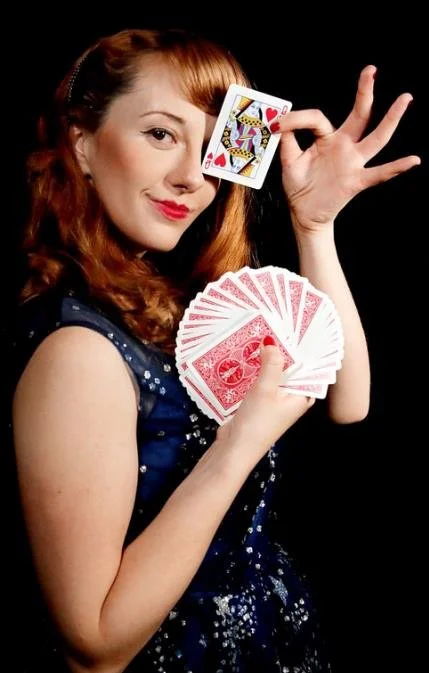


Strolling Magician New York for Boat and Yacht Charters
Strolling Magician New York for Boat and Yacht Charters
I still remember the first charter I ever worked on the Hudson. It was a crisp October evening, the sky going orange behind New Jersey, and I walked up the gangway carrying a bag that was far too big. I'd packed it the way I pack for a ballroom. Within ten minutes I'd learned that a boat is not a ballroom, and that the best thing I owned that night was a deck of cards in my jacket pocket.

That evening changed how I think about events on the water. I'm Magical Katrina, an award-winning magician and mentalist, and I've since spent a lot of nights drifting past the Manhattan skyline with a drink in one hand and someone's borrowed ring in the other. If you're wondering what a strolling magician New York booking really looks like on a charter, let me walk you through it, along with the things I wish someone had told me before that first gangway.
Nobody Can Leave, and That Changes Everything
Here's the thing about a boat. On land, a guest who isn't enjoying themselves quietly slips out at nine. On the water, they're with you until the vessel is back at the dock. I've seen that work in an organiser's favour more times than I can count, because suddenly everybody's attention is on one shared experience for three hours.
I've also seen the other side. A dull stretch on a boat is properly dull. There's no bar next door, no phone call that turns into a taxi home. If the evening sags, everyone feels it together, and nobody can do anything about it.
The charters that disappoint almost always have the same story behind them: an hour in the middle where the novelty of the skyline wore off and nothing else had been planned. That isn't the boat's fault, or the caterer's. It's just an easy gap to miss, because the start and end of a cruise look so good on paper. Booking a strolling magician New York guests can find wherever they are on board is one of the simplest ways to close it.
The Middle Hour Is Where the Evening Is Won
I think of a charter in three parts. The first thirty minutes take care of themselves, because everybody is on deck photographing the city. The last thirty are lovely too, when the boat turns back, the lit skyline slides past, and a whole room goes quiet.
The hour and a half in between is where evenings are won or lost. I remember a company party where I watched it happen in real time. Around the sixty-minute mark, a man by the window checked his watch, then his phone, then his watch again. His colleagues had run out of small talk and the photos were done. You could almost hear the room deflate.
I wandered over and asked if he'd help me with something. Ten minutes later, that same man was leaning across the table explaining to his boss, with total confidence, exactly how I'd done it. (He was wrong. I'll leave it there.)
Most organisers spend their budget on the parts of the evening that were already going to work. The middle is the part nobody plans, and it's the part your guests will talk about on the way home. A strolling magician New York charters can lean on is one of the most reliable ways to cover it.
The Cabin Has Nothing You Can Use
Before you plan any entertainment, picture the cabin honestly. Low ceilings. A space that's smaller than it looked in the listing photos. Limited power, a sound system meant for background music, and no room for anything to be set up.
I once watched a lovely duo try to squeeze their speakers and a keyboard into one corner of a charter cabin. They were wonderful musicians, and they spent the first half hour apologising to people whose drinks they'd bumped. A stage show, a band, a technical setup: all of them end up competing with the furniture and the guests, and there's far less of both than you imagine.
Close up magic needs none of it. My whole kit lives in my pockets. I don't need a stage, a plug, or a spotlight, just a few inches of space and someone willing to be amazed. On a boat, that isn't a small advantage. It's the entire reason a strolling magician New York booking works where bigger acts can't.
Going Up to Find Them
People move constantly on a charter. They go up for the views, down when it's cold, out when the skyline is spectacular, and back in when the food arrives. By the second hour, your guest list has spread across two or three levels, and it keeps shifting.
That's why I don't wait for people to gather. I remember a woman on the upper deck, wrapped in a borrowed blanket with her hair whipping in the wind, who told me she'd decided to skip the entertainment downstairs because she preferred the view. I asked her to pick a card and not tell me what it was. By the time the wind had finished with her hair, she'd stopped looking at the skyline and was looking at me, one hand over her mouth.
Anything scheduled misses people like her. If you announce a show at eight, half your guests will be upstairs when it starts. A strolling magician New York charters can keep moving goes to them, and on a boat that quite literally means climbing the stairs.
The Weather Gets a Vote
It's colder on the water than on land, and I mean meaningfully colder. Wind on the Hudson in October is a different proposition from the same temperature on shore. I've watched guests board in silk dresses and thin suits, delighted with the evening, and feel quite differently about it ten minutes after the boat leaves the dock.
A short note on the invitation asking people to bring a coat will improve your evening more than most things you could spend money on. And plan for the possibility that everybody ends up in the cabin all night, which makes it busier and smaller than the layout suggested.
That's another reason I love working on boats. When the cabin is packed, close up magic doesn't struggle. It thrives, because everybody is already standing close enough to see every detail.
Dock Times Are Fixed and Real
Your charter leaves and returns at set times, boarding always takes longer than anyone expects, and the vessel won't wait for your running order. I've learned to ask for the departure time, the return time, the boarding window, and any speeches or dinner service before I plan a thing.
My advice is simple. Give yourself a proper boarding window. Let your strolling magician New York performer begin once you're underway rather than at the dock, because people who are still finding their seats and their first drink aren't ready to be amazed. And wrap up the formal part well before the return. The last twenty minutes belong to the skyline, and I'm happy to slip into the background and let it have them.
What I Actually Do on a Charter
People often ask what a strolling magician New York guests will remember looks like in practice, so here's a typical evening.
I board quietly, usually with the guests, and keep a low profile for the first stretch. Nobody wants a performer in their face while they're photographing the Statue of Liberty. Once the boat settles and the first drinks are poured, I start to drift through the cabin, introducing myself to small groups.

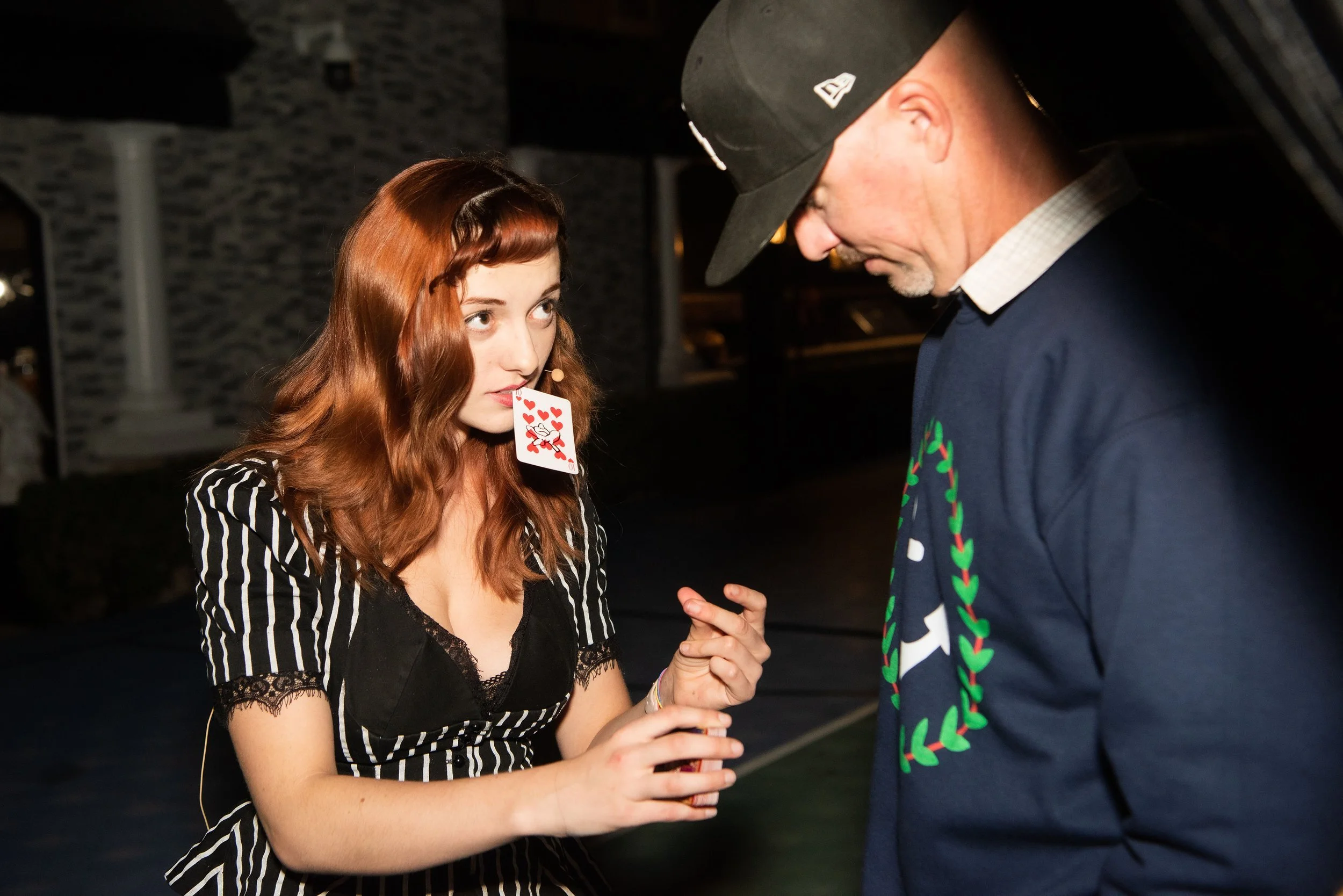
What happens next is hard to describe without spoiling it, which is rather the point. A card that finds its way to the one place it absolutely shouldn't be. A prediction I wrote down before we'd even met. Something borrowed from a guest's pocket that does something it has no business doing. Each moment lasts a few minutes, which suits a charter perfectly, because people dip in and out of conversations all night.
Then I climb up to the deck, where groups are looser and the light is better than anyone expects. I circle between levels through the middle of the cruise, and I step back before the return so the skyline gets the room it deserves.
My favourite part is the quiet moment right after, when a guest realises something shouldn't have been possible and looks up to see who else saw it. I can't tell you how it works. I can promise you'll want to know.
Strangers, Meet Each Other
Charters are popular for company parties, milestone birthdays, wedding events, and client entertaining, which means they mix people who've never met. The confined setting makes that more obvious than it would be in a bar, because there's nowhere to wander off to.
I once worked a cruise where a finance team and a visiting client group were standing in two polite, separate clusters at opposite ends of the cabin. I did one small piece for three people from each side at once. By the end of it, a client was arguing happily with someone from accounts about how I'd done it, and the two clusters had quietly become one crowd.
On a boat, a guest who hasn't found anybody to talk to by the second hour is having a noticeably bad evening. A strolling magician New York charters can host gives strangers a reason to turn toward each other, and it's a conversation starter that nobody has to be brave to use.
Planning It Without the Stress
If you're organising a charter, here's the order I'd tackle things in. Six to eight weeks out, confirm your date, vessel, and operator, and ask about outside performers, since peak summer and autumn dates fill early. Four weeks out, share the schedule with whoever is entertaining: boarding, departure, return, and any speeches or dinner service.
Two weeks out, tell your guests to dress warmly and arrive on time. On the day, keep the first half hour relaxed and let the skyline do its job before anything else begins. None of it is complicated, but it's easy to skip when you're juggling catering, guest lists, and budgets.
Check With the Operator
Vessels have rules, so ask early. Charter operators have capacity limits, safety requirements, and often their own views about what may be brought aboard or where anybody may stand. Some have preferred vendor lists, and some restrict movement between decks while the boat is underway.
Booking a strolling magician New York charters can accommodate is usually straightforward, because close up magic brings nothing aboard and takes up no space, but the question should still be asked. I'm fully insured and happy to send a certificate to your operator, so that part is rarely a hurdle.
Coming In From Los Angeles
I'm based in the Los Angeles area and travel to New York regularly as a strolling magician New York clients can book for corporate and private events. Travel is discussed openly and built into the quote, so it never becomes your problem to arrange. For the summer and autumn charter season, it's worth reaching out early, since that's when the calendar fills fastest.
A Little About Me
I'm a member of the Magic Circle in London and the Academy of Magical Arts in Hollywood, and I've earned multiple magic awards. I've performed for clients including Formula 1, the Olympics, Porsche, Prada, and the Ritz Carlton, with appearances on Penn & Teller: Fool Us and Masters of Illusion.
What matters more on a boat, though, is how I work as a strolling magician New York charters can rely on. I bring nothing aboard and take up no deck space. I move between cabin and deck rather than waiting for everybody to gather. I work the middle of your cruise rather than competing with the skyline. If that sounds like the evening you're picturing, I'd love to hear about it.
Frequently Asked Questions
What's different about an event on a boat?
Nobody can leave, so you have everybody's attention for three hours, and a dull stretch is genuinely dull. Charters that disappoint nearly always have an unplanned hour in the middle.
Which part of the cruise should we programme?
The middle. The first thirty minutes work by themselves because everybody is photographing the city, and the last thirty work because of the lit skyline on the way back. The hour and a half between is where the evening is decided.
Will the cabin accommodate entertainment?
Only the kind that needs no space. Ceilings are low, power is limited, and the sound system is for background music, so a strolling magician New York booking works precisely because close up magic has no footprint.
Our guests will be spread across two levels. Does that work?
It's normal, and it rules out anything scheduled, since half your guests will be on the upper deck when it happens. A strolling magician New York goes up to find them rather than waiting for everybody to come down.
What about the weather?
It's meaningfully colder on the water, and wind on the Hudson changes the evening. Tell guests to dress for it, and make sure whatever you've booked works in a cabin that's full because nobody is outside.
How do dock times affect planning?
They're fixed and boarding takes longer than you expect, so build in a proper boarding window, start once you're underway, and finish the formal part before the return.
Does it help with a mixed guest list?
Considerably. On a boat there's nowhere else to go, so a strolling magician New York booking that gives strangers a reason to talk makes a real difference by the second hour.
Do we need to clear it with the operator?
Yes, and early. Vessels have capacity limits, safety requirements, and views about what comes aboard. Close up magic is usually simple because it brings nothing and occupies nothing.
Plan the Hour the Skyline Doesn't Cover
A New York charter gives you a captive guest list, a view that does half the work, and an hour and a half in the middle that nobody plans. A strolling magician New York booking is built for exactly that stretch. It needs no space on a crowded vessel, it moves between cabin and deck as your guests do, and it gives people who don't know each other something to talk about when there's nowhere else to go.
Bring a coat, build in a real boarding window, and check with the operator before you book anything. Then send me your charter dates and operator, and I'll tell you how I'd work the cruise.