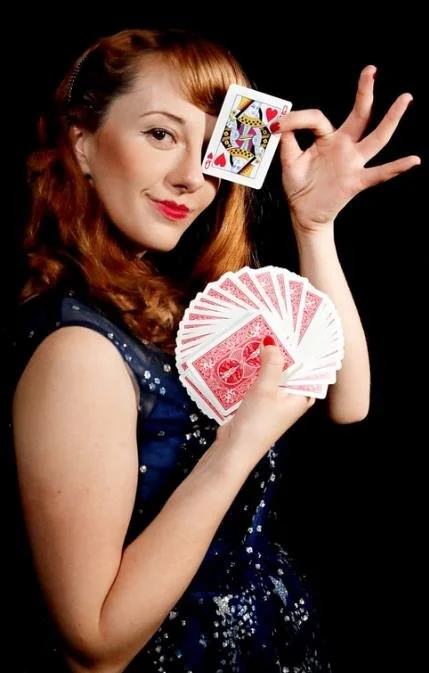


Strolling Magician Los Angeles for Hotels and Resorts
Strolling Magician Los Angeles for Hotels and Resorts
A hotel has guests in the building every night who have nothing planned, a bar that's quiet on weekdays, and a guest experience team measured on scores they can't directly control. That's a different brief from a private event, and most entertainment sold to hotels ignores it.

I'm Magical Katrina, an award winning magician and mentalist based right here in Los Angeles, and I want to set out what a strolling magician Los Angeles does in a hotel, which is a revenue and guest satisfaction question rather than an entertainment one.
Your Guests Have Nowhere to Be
Start with the audience you already have. A substantial proportion of guests on any given evening are travelling alone or in pairs, have finished whatever brought them to the city, and are deciding between the hotel bar and their room.
That decision is worth money. Something happening in the bar makes it the obvious choice rather than the default one, and a guest who stays for two drinks instead of none is both a better experience and a better margin. Among reasons a hotel books a strolling magician Los Angeles, converting room nights into bar covers is the one that shows up in numbers.
It Extends Dwell Time
The commercial mechanism, and it's measurable. Guests who are engaged stay longer, order again, and leave with a better impression of the property than guests who had one drink and went upstairs.
Close up magic does that without changing anything about the bar: no stage, no sound, no reserved area, and no interruption to service. A performer moving between tables and the bar reaches people where they're already sitting, which for a hotel bar on a weekday evening is a considerably better use of floor space than anything requiring installation.
Weekdays Need It More Than Weekends
Worth thinking about when scheduling. A hotel bar on a Friday fills regardless, whereas Tuesday and Wednesday are the nights with capacity and the guests least likely to come down.
Programming the quiet nights produces more lift than programming the busy ones, and it costs the same. That's the opposite of how most venues schedule entertainment, and it's the version that affects revenue rather than atmosphere. Try it midweek before committing to a weekend residency.
Your Guests Don't Share a Language
Worth considering in this market particularly, since LA hotels serve a genuinely international guest base. Entertainment depending on language, humour, or cultural reference reaches a fraction of the room.
Magic doesn't, since astonishment needs no shared context and the experience happens visually and in people's own hands. For a property with guests from a dozen countries in the lobby on any given evening, that's a practical consideration rather than a nicety, and it's why this format works in hospitality where comedy or music frequently doesn't.
It Helps Your Events Sales Too
Worth raising internally, since it's an argument the commercial team will understand. A hotel that can offer entertainment as part of a private event package has something to sell beyond the room and the catering.
That means your events team can propose it to a corporate client or a wedding party without the client sourcing it themselves, which makes your proposal stronger and keeps the margin in the building. Plenty of properties use a regular performer that way, with guest programming and event work from the same relationship.
Nothing Gets Installed
Practically decisive for a working hotel. A lobby and a bar have to function normally, look right in photographs, and accommodate whatever else the property is doing that evening.
Close up magic needs no stage, power, sound, rigging, or reserved floor area, sets up in the time it takes to put a coat down, and leaves nothing behind. For a director of guest experience who'd otherwise be negotiating with facilities about a platform, that's the difference between a program that happens and one that's discussed for a year.

Measure the Right Things
Worth deciding before you trial it. Footfall through a lobby tells you about the hotel rather than the programming.
Better measures: bar covers and revenue on programmed nights against comparable unprogrammed ones, average dwell time, and whether it appears in guest feedback unprompted. Those are what the entertainment actually affects, and a property that tracks them properly can decide whether to continue on evidence rather than impression.
Trial Before a Residency
The sensible approach for both sides. A few evenings tells you how your guests respond, whether your bar team likes working alongside it, and what it does to the numbers, without committing a budget line for a year.
Most performers would rather do that too, since a residency that isn't working serves nobody. Agree what you're measuring before the first night, compare against a like for like evening, and decide from there. If it works, a regular arrangement is straightforward and considerably better value than ad hoc bookings.
Being Local Makes a Residency Practical
Worth mentioning, since regularity is the point. Unlike a performer travelling in, I'm based right here in the LA area, so there are no travel costs on a recurring arrangement and no logistics to coordinate week to week.
That matters for a hotel more than for a one off client, since a weekly or monthly booking with travel attached stops being viable quickly. It also means flexibility when your calendar changes, which in a hotel it constantly does.
Why Book Magical Katrina
If you're programming a property, here's my case. I'm based in the LA area, I'm a member of the Magic Circle in London and the Academy of Magical Arts in Hollywood, I've earned multiple magic awards, and I've performed for clients including Formula 1, the Olympics, Porsche, Prada, and the Ritz Carlton, with appearances on Penn & Teller: Fool Us and Masters of Illusion. I need nothing installed, I work in a bar without interrupting service, I'm happy to trial before anything regular, and there are no travel costs on a recurring booking.
Frequently Asked Questions
What's the commercial case?
Converting room nights into bar covers, since a substantial proportion of guests on any evening have finished whatever brought them here and are choosing between the bar and their room. Something happening makes the bar the obvious choice, and a guest who stays for two drinks instead of none is a better experience and a better margin.
How does it affect revenue specifically?
Through dwell time, since guests who are engaged stay longer, order again, and leave with a better impression. Close up magic does that without changing anything about the bar: no stage, no sound, no reserved area, and no interruption to service, reaching people where they're already sitting.
Which nights should we program?
The quiet ones, since a Friday fills regardless while Tuesday and Wednesday have capacity and guests least likely to come down. Programming the quiet nights produces more lift at the same cost, which is the opposite of how most venues schedule and the version that affects revenue rather than atmosphere.
Our guests are international. Does that matter?
It's an argument for this format, since entertainment depending on language, humour, or cultural reference reaches a fraction of the room. Magic needs no shared context, happening visually and in people's own hands, which is why it works in hospitality where comedy or music frequently doesn't.
Can we use it for our events business?
Yes, and it's worth raising with your commercial team, since a hotel that can offer entertainment within a private event package has something to sell beyond the room and the catering. Your events team can propose it rather than the client sourcing it, which strengthens your proposal and keeps the margin in the building.
What do you need installed?
Nothing, since close up magic needs no stage, power, sound, rigging, or reserved floor area, sets up in the time it takes to put a coat down, and leaves nothing behind. For a lobby and bar that must function normally and look right, that's the difference between a program that happens and one that's discussed.
How should we measure it?
On bar covers and revenue on programmed nights against comparable unprogrammed ones, average dwell time, and whether it appears unprompted in guest feedback. Footfall through a lobby tells you about the hotel rather than the programming, and tracking the right things lets you decide on evidence.
Should we commit to a residency straight away?
Better to trial a few evenings, since that tells you how guests respond, whether your bar team likes working alongside it, and what it does to the numbers without committing a budget line. Agree what you're measuring beforehand, compare like for like, and decide from there.

Program the Quiet Nights
A hotel already has the audience, the room, and the reason: guests with nothing planned choosing between the bar and the lift. A strolling magician Los Angeles turns that decision, extends how long people stay, works across an international guest base without depending on language, and needs nothing installed in a space that has to function normally.
Trial it midweek, measure covers rather than footfall, and talk to your events team about offering it to clients as well.
Reach out and let's arrange a trial evening.