


Female Magician in San Francisco for Sales Kickoffs
Female Magician in San Francisco for Sales Kickoffs
A sales kickoff is two or three days of content delivered to people whose job is talking, and by the afternoon of day one the room has absorbed the new territory model, the new comp plan, and four product updates. They are not tired of the company. They are tired of sitting down.

What you put in the evening slots decides whether they arrive at day two restored or merely later. I'm Magical Katrina, an award winning magician and mentalist, and I want to set out what booking a female magician in San Francisco brings to an SKO, and where in the agenda it belongs.
Skill Decides It
Let me be direct about the keyword. Skill in magic has nothing to do with gender, and you should book me because I'm genuinely excellent at this: thirteen years of performance, awards from my peers, and a room full of experienced sales people who've seen a lot of event programming and still can't work out what happened.
That said, there's a bonus. A sales organization's SKO stage is frequently a succession of men, and the field notices who gets put in front of them. Somebody different in the program registers, and that's a real benefit on top of the work being good. Book me for the performance, and take the rest as a bonus.
Your Audience Is the Hardest in Business
Start with the honest assessment. Sales people are professionally resistant to being sold to, highly attuned to anything inauthentic, and quick to form a collective verdict on whether something is worth their attention.
That makes an SKO audience unforgiving and genuinely rewarding. A room of two hundred reps who decide something is good will say so loudly, and the same room will visibly disengage from anything that feels like filler. Programming for this audience means choosing things that survive scrutiny rather than things that look good on an agenda.
The Evening Is Not a Reward, It's Part of the Design
Worth reframing, since the evening slot is usually treated as the fun bit after the real work. The reason you flew everybody to San Francisco is partly content and largely the relationships between people who normally sell alone from different cities.
That happens in the evening. A rep who now knows three colleagues well enough to text them about a deal has produced more value than any session in the deck, and the evening programming either enables that or gets in its way. Treat it as structural rather than decorative and the whole SKO works better.
Receptions Beat Sit Down Shows After a Content Day
Practically the most useful scheduling point. A room that has been seated and facing forward since eight in the morning does not want to be seated and facing forward again at seven.
Strolling magic during the reception works with that rather than against it, since people stand, move, hold a drink, and encounter something in groups of six or eight. If you want something from a stage, put it at the start of the evening and keep it short, then let the room go back to talking. The single most common SKO programming error is a second sitting down after a day of sitting down.
Mixing the Regions Doesn't Happen on Its Own
The real problem to solve. An SKO reception sorts instantly: East sits with East, the enterprise team sits with the enterprise team, and the new hires stand together because they don't know anybody.
That's the opposite of why you gathered them. Something moving through the room gives people from different teams a shared thing to react to, which is how two strangers holding drinks become two colleagues who'll answer each other's messages in March. For a distributed sales organization, those connections are the actual return on the event.
Awards Nights Need Something Between the Categories
Worth planning for specifically. An SKO awards dinner has a long sequence of categories, and the room's attention drops sharply after the first few while the people who haven't won yet wait.
Something in the gaps changes the shape of that evening. Strolling between courses, or a short set positioned between award blocks, resets the room so the later categories land with energy rather than politeness. If you're running thirty minutes of awards, the thing that goes beside them matters more than most agendas acknowledge.
Mentalism Suits a Sales Audience Particularly
Worth knowing when choosing what to book. I work in both magic and mentalism, and for a room of sales people the mentalism lands hard, because reading a room and reading a person is adjacent to what they do all day.
A rep who spends their working life trying to understand what somebody isn't saying watches that with a different kind of attention. It also makes for conversation afterwards that connects to their work rather than sitting apart from it, which for an SKO is a useful quality in anything you programme.
San Francisco Venues Come With Constraints
Practically relevant for a Bay Area SKO. Your reception is likely in a hotel function room, a restaurant buyout, a Mission or SoMa event space, or a venue with a firm curfew and a noise arrangement with its neighbors.
Close up magic needs no stage, power, sound, or setup, works in the room as it is, and doesn't compete with the volume ceiling a San Francisco venue has agreed with the building next door. For an agenda that's already tight and a venue that's already complicated, entertainment with no technical requirement is one fewer thing to coordinate.
A Note on "Local vs. Traveling In"
Worth knowing: I'm based in the Los Angeles area and travel to San Francisco regularly for corporate events. Travel is discussed openly and factored into the quote rather than being your problem to arrange. For January SKO season, booking early matters considerably, since the whole technology sector runs kickoffs in the same few weeks.
Why Book Magical Katrina
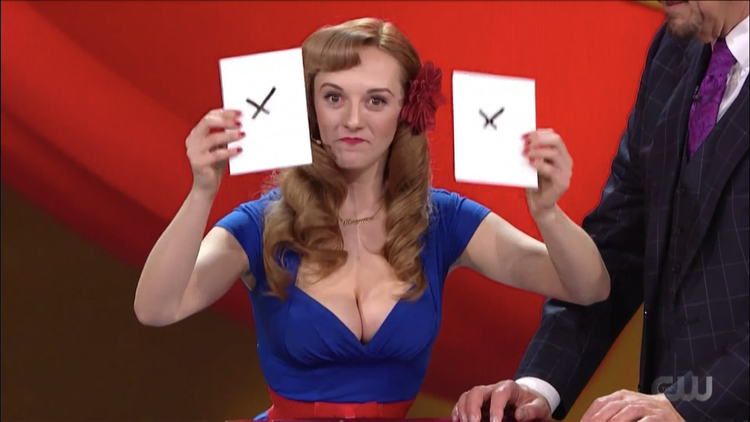
If you're building an SKO agenda, here's my case. I'm a member of the Magic Circle in London and the Academy of Magical Arts in Hollywood, I've earned multiple magic awards, and I've performed for clients including Formula 1, the Olympics, Porsche, Prada, Zapier, and the Ritz Carlton, with appearances on Penn & Teller: Fool Us and Masters of Illusion. I work magic and mentalism so a sales audience gets the version that suits them, I need no stage, power, or sound, I'll work a reception rather than requiring your room to sit down again, and I'm fully insured with a certificate available on request.
Frequently Asked Questions
Is a sales audience difficult?
Demanding and rewarding, since sales people are professionally resistant to being sold to and quick to form a collective verdict. Two hundred reps who decide something is good will say so loudly, and the same room visibly disengages from filler, so program things that survive scrutiny rather than things that look good on an agenda.
Where should entertainment sit in the agenda?
In the evening, and treated as structural rather than decorative, since the relationships between reps who normally sell alone from different cities are a large part of why you flew everybody in. A rep who now knows three colleagues well enough to text them about a deal has produced real value.
Reception or a stage show?
Reception, after a content day, since a room seated and facing forward since eight does not want to be seated and facing forward again at seven. Strolling works with that, and if you want something from a stage, put it early and keep it short before letting the room go back to talking.
What problem does it actually solve?
The room sorting by region and team, since an SKO reception separates instantly and the new hires stand together because they know nobody. Something moving through gives people from different teams a shared thing to react to, which is how strangers become colleagues who answer each other's messages in March.
What about our awards dinner?
Put something between the award blocks, since attention drops sharply after the first few categories while the people who haven't won wait. Strolling between courses or a short set between blocks resets the room so the later categories land with energy rather than politeness.
Magic or mentalism for this room?
Mentalism lands particularly hard with sales people, since reading a room and reading a person is adjacent to what they do all day. It also produces conversation afterwards that connects to their work rather than sitting apart from it, which is useful in anything you program at an SKO.
Will it work in our venue?
Yes, since close up magic needs no stage, power, sound, or setup and doesn't compete with the volume ceiling a San Francisco venue has agreed with its neighbors. For a tight agenda and a complicated venue, entertainment with no technical requirement is one fewer thing to coordinate.
When should we book for January?
Earlier than feels necessary, since the whole technology sector runs kickoffs in the same few weeks and the available dates in January go quickly. If your SKO is annual, booking the following year's as soon as this one finishes is the straightforward approach.
Design the Evening, Don't Fill It
An SKO succeeds on content and on the relationships it creates between people who sell alone for the rest of the year, and the evening is where the second one happens. Booking a female magician in San Francisco gives you something a demanding audience will actually rate, works in a reception rather than asking a tired room to sit down again, resets an awards dinner between categories, and needs nothing from a venue that's already complicated.
Book it because the performance is good. That it's somebody your field hasn't seen on an SKO stage before is a bonus on top.
Reach out with your dates and the shape of your agenda, and I'll tell you where I'd fit.