

Women's History Month for Kids: A Practical Guide for Classroom Teachers
Women's History Month for Kids: A Practical Guide for Classroom Teachers
March arrives, and somewhere in the back of your mind is the knowledge that you should probably do something for Women's History Month. There's no time in the curriculum for a new unit, the display board is already covered in something else, and the default option, printing biographies of five famous women and putting them on the wall, doesn't feel like it achieves much because it probably doesn't.
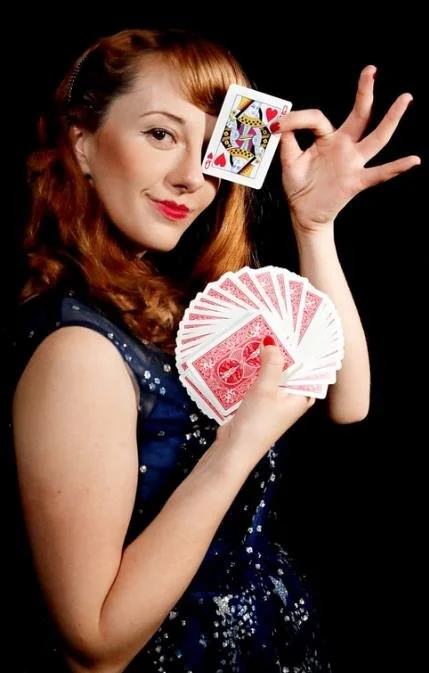
I'm Magical Katrina, an award winning magician and mentalist who performs for schools, and I want to offer a practical take on Women's History Month for kids from the perspective of what actually works in a classroom, given the time you genuinely have rather than the time an ideal version of this would require.
The Poster Problem
Let's start with why the standard approach underdelivers. A display of notable women is not wrong, and it's certainly better than nothing, but children walk past displays. The information doesn't get engaged with, it gets absorbed at roughly the level of wallpaper.
The reason is that biography without context is inert. A name and a photograph and a sentence about being the first woman to do something communicates a fact rather than an idea. Effective Women's History Month for kids work gives children something to do with the information: a question to answer, a pattern to notice, something to make, or a person to actually meet. The display can stay, it just shouldn't be the whole strategy.
Embed It Rather Than Adding It
The single most useful principle for a teacher with no spare hours: don't create a separate unit, put it inside what you're already teaching.
If you're doing a science topic, the relevant scientist can be a woman. If you're studying a historical period, spend a lesson on what women's lives actually involved rather than treating it as a side note. In math’s, use a mathematician. In English, choose a text with a girl solving the problem. Framed this way, Women's History Month for kids costs you no additional curriculum time, and it arguably works better, because it presents women's contributions as part of the subject rather than as a special topic bolted on in March.
What Works at Primary Level
For younger children, abstract framing does very little, since the concept of historical underrepresentation isn't yet meaningful. What shapes their sense of normal is simply what they repeatedly see.
So the practical work here is exposure: stories where girls invent and explore and solve, picture book biographies of women in unexpected jobs, and images of women doing things children wouldn't predict. No explanation required, and explanation often gets in the way. A child who has encountered a female engineer, pilot, or deep sea diver in a story doesn't need to be told women can do those things. Women's History Month for kids at this level is mostly a curation task rather than a teaching one.
What Works at Upper Primary and Middle School
From roughly seven or eight, children can do something considerably more interesting: notice patterns themselves.
Give them the analytical task rather than the conclusion. Ask them to count the male and female characters in the books on the classroom shelf, or the named scientists in their textbook, or who solves the problem in the films they watch. Children are startlingly good at this and reach the point unaided, which lands far better than being told it. Among approaches to Women's History Month for kids, this one turns a passive topic into an investigation, and the conclusions belong to them rather than to you.
What Works With Teenagers
Older students reject anything that feels like a lesson in what to think, particularly the ones who most need it to land. The framing has to change.
What works is genuine complexity: primary sources, real historical argument, honest discussion of why certain contributions were recorded and others weren't, and figures whose stories aren't tidy. It also means being willing to let students disagree in discussion rather than steering them to the expected conclusion. Women's History Month for kids at secondary level works when it's treated as history with genuine intellectual content, and fails when it's treated as a message to be delivered.
Bring Someone In If You Can
The highest impact option, and worth the organizational effort if your school can manage it, is putting a real woman in front of students doing something they didn't expect.
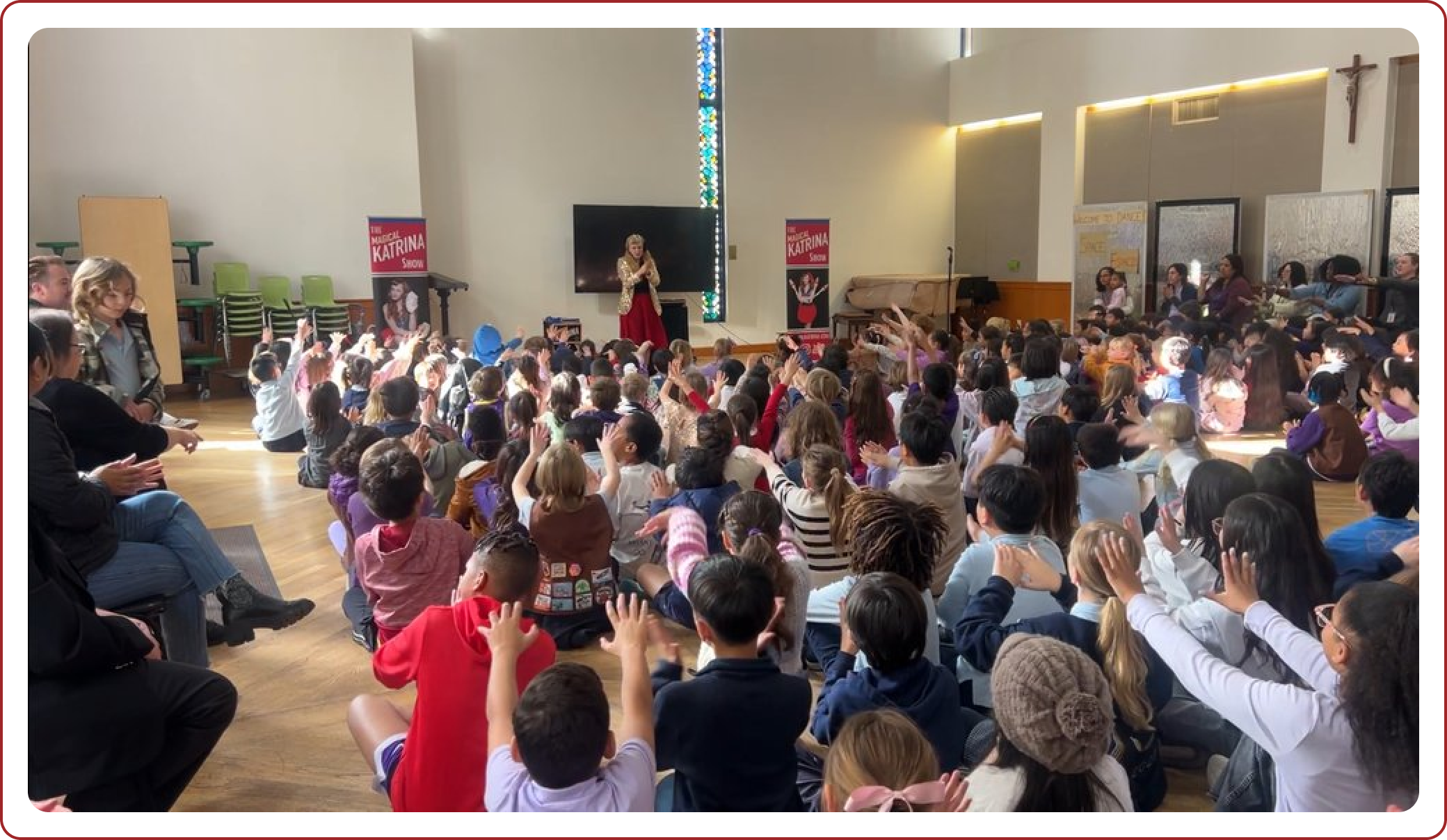
Demonstration outperforms instruction at every age, and a visitor whose job surprises children does more in twenty minutes than a fortnight of display material. The more unexpected the field, the better: an engineer, a pilot, a stunt performer, a marine biologist, a magician. It also makes the month memorable, and memorable is the whole game, since forgettable Women's History Month for kids programming achieves nothing regardless of how well intentioned it was.
Include the Boys Deliberately
Worth stating plainly because it's the most common structural error. Programming that implicitly targets girls, or worse, physically separates them for a special session, teaches the boys something you didn't intend.
Boys form their assumptions about who does what during exactly these years, and a boy who watches a woman be visibly excellent at something impressive carries that into how he behaves as a colleague and manager decades later. Whole class, same content, same message. Women's History Month for kids aimed at half the class misses the audience whose assumptions have the longer consequences.
Aim Small and Honest
Finally, a note on expectations. There's a temptation to frame this work as transformative, and children detect inflated framing immediately.
What a month of good work realistically achieves is modest: a few children whose sense of what's possible has widened slightly, one visitor someone remembers, a pattern noticed that can't be unnoticed. Those accumulate over years of schooling into something substantial, but no single March does it. Planning Women's History Month for kids with that in mind produces better work than aiming for a transformation, because you'll choose the small genuine thing over the grand gesture.
Where My Work Fits
Briefly, since it's relevant. Magic has historically been overwhelmingly male, and I perform for schools and family audiences, sometimes alongside talking about building a career in a field where women were the exception.
It works for school programming for practical reasons: an assembly reaches a whole year group at once, it needs no stage or AV, and it draws children who wouldn't engage with a talk. The recalibration I notice in the room, particularly among the girls, when the person doing the impossible thing turns out to be a woman, is demonstration rather than instruction, which is the thing that actually sticks. If your school is planning something for March, I'm glad to hear about it.
Frequently Asked Questions
How do I fit this in with no spare curriculum time?
Embed it rather than adding it. Put the relevant scientist, mathematician, or historical figure inside the topic you're already teaching, or choose a text where a girl solves the problem. Framed that way, Women's History Month for kids costs no additional teaching hours and arguably works better, since it presents women's contributions as part of the subject rather than as a special topic bolted on for March.
Why aren't displays enough on their own?
Because children walk past displays and absorb them at roughly the level of wallpaper. Biography without context is inert: a name, a photograph, and a sentence about being first communicates a fact rather than an idea. Effective work gives children something to do with the information, a question to answer, a pattern to notice, something to make, or a person to meet. Keep the display, just don't let it be the strategy.
What works with younger children?
Exposure rather than explanation, since historical underrepresentation isn't a meaningful concept at that age. Use stories where girls invent, explore, and solve, picture book biographies of women in unexpected jobs, and images of women doing things children wouldn't predict. A child who meets a female engineer or pilot in a story doesn't need telling that women can do those jobs. At this level it's mostly a curation task.
What works with older students?
Give them the analytical task rather than the conclusion. Upper primary children can count male and female characters on the classroom shelf or named scientists in a textbook and reach the point unaided, which lands far better than being told. Teenagers need genuine complexity: primary sources, real historical argument, and freedom to disagree in discussion. Women's History Month for kids works at secondary level when treated as history with intellectual content.
Should boys be included?
Yes, and separating them out teaches something unintended. Boys form assumptions about who does what during exactly these years, and one who watches a woman be visibly excellent carries that into how he behaves as a colleague and manager decades later. Whole class, same content, same message. Programming aimed at half the class misses the audience whose assumptions have the longer consequences.
Is a visiting speaker or performer worth the effort?
Usually yes, if your school can manage the organization. Demonstration outperforms instruction at every age, and a visitor whose job surprises children does more in twenty minutes than a fortnight of display material, particularly if the field is genuinely unexpected. It also makes the month memorable, which matters, since forgettable programming achieves nothing regardless of how well intentioned it was.
Do you visit schools?
Yes. I perform magic and mentalism for school and family audiences and can also speak about building a career in a field where women were long the exception. It suits assemblies practically, reaching a whole year group at once with no stage or AV required, and it engages children who wouldn't sit through a talk. Reach out with your date and year groups and we can discuss what would suit.

Small, Embedded, and Genuine
The best approach to Women's History Month for kids in a classroom isn't the most ambitious one, it's the one you'll actually do well: embedded in existing lessons rather than added on top, pitched properly for the age in front of you, giving children something to do rather than something to read, including every child in the room, and ideally featuring one real person they'll remember.
If a visit would help with what you're planning, I'd be glad to hear about it.
Reach out with your date and year groups, and let's give them something they remember.