


Women's History Month for Kids: What Works With Teenagers
Women's History Month for Kids: What Works With Teenagers
Teenagers have been receiving versions of this since they were six. Assemblies, posters, worksheets, and a rotating cast of the same admirable figures, delivered with an earnestness they learned to recognise somewhere around year five.

By thirteen they're alert to being managed, and anything that feels like a lesson with a predetermined conclusion gets dismissed before it starts. I'm Magical Katrina, an award winning magician and mentalist, and I want to set out what Women's History Month for kids looks like when the kids are teenagers.
They've Heard It Before
Start with the honest assessment. A fifteen year old has encountered this topic annually for a decade, and the version they've received has been consistently simplified: remarkable women who overcame obstacles, presented approvingly.
That's not wrong and it's been said to them enough. Repeating it produces polite disengagement rather than interest, and the polite disengagement is worse than resistance because nobody notices it. Among Women's History Month for kids approaches for this age, assuming the subject is fresh is the mistake that undermines everything else.
Earnestness Is What They're Reacting To
Worth being precise about the obstacle, since it isn't the subject. Teenagers are alert to adults telling them what to think, and a session where the conclusion is evident from the title invites them to switch off rather than engage.
They'll engage with the same subject presented as genuinely complicated, contested, or open. What they won't engage with is being walked towards a position everyone in the room already knows they're expected to reach. That's not cynicism, it's a reasonable response to a decade of exactly that, and it's the thing to design around.
Give Them Something to Argue With
The approach that works at this age. Teenagers engage through disagreement, and a session that invites genuine argument produces attention that a session inviting agreement doesn't.
That means material with actual complexity: a figure whose legacy is contested, a question without a settled answer, a decision people still disagree about. Let them take positions and defend them, including positions adults in the room find uncomfortable. A room arguing is a room paying attention, and it's considerably more productive than a room nodding.
Contemporary Beats Historical
Practical and worth acting on. Historical figures feel finished to teenagers, and admirable people from a century ago register as a different category of person rather than as anyone they could resemble.
Someone working now, in a field they recognize, facing obstacles that plainly still exist, lands completely differently. That's true whether it's a scientist, a founder, an athlete, or anyone whose work is visibly unfinished. Among Women's History Month for kids choices for teenagers, the shift from historical to contemporary does more than any change of format.
Don't Patronize the Material
Worth stating, since programming for teenagers frequently gets this wrong in both directions. Simplified content is noticed immediately and resented, and so is content that assumes they can't handle complexity or difficult detail.
Fifteen year old’s can discuss structural obstacles, contested legacies, and uncomfortable history. What they can't do is pretend to find a sanitized version interesting. If the honest version of a subject is complicated, give them the complicated version, since the simplified one signals that you don't think they're capable of the real one.
The Boys Are Half the Room
Worth planning around, since this is where sessions most often fail with this age group. Teenage boys are acutely sensitive to being cast as the problem, and a session framed that way produces defensiveness and disengagement that spreads.
Frame it as a subject rather than a message, let the boys hold opinions and argue them, and avoid anything that makes them the audience for a correction. That isn't softening the content, it's recognizing that a room where half the participants have disengaged isn't achieving anything regardless of how accurate the material is.
Show Rather Than Tell
The principle that applies across ages and matters most here. Teenagers discount assertion and respond to demonstration, which is why a person in the room doing something genuinely difficult lands where a presentation about achievement doesn't.
That might be a visitor with a real job, someone whose work they can see rather than hear about, or anything where the evidence is in front of them. The point arrives without an argument being made, which is precisely what an audience alert to being persuaded responds to. Nothing needs saying about it afterwards.
Be Honest About What One Session Does
Worth acknowledging, since expectations shape disappointment. A single session doesn't change how a fifteen year old thinks about anything, and treating it as though it might sets you up to conclude it failed.
What it can do is present something they hadn't considered, complicate a picture they thought was settled, or introduce a person they remember. That's modest and real. Over years and across many small encounters, those accumulate into something, which is a reasonable thing to aim at and a poor thing to claim.
Where a Live Performance Fits
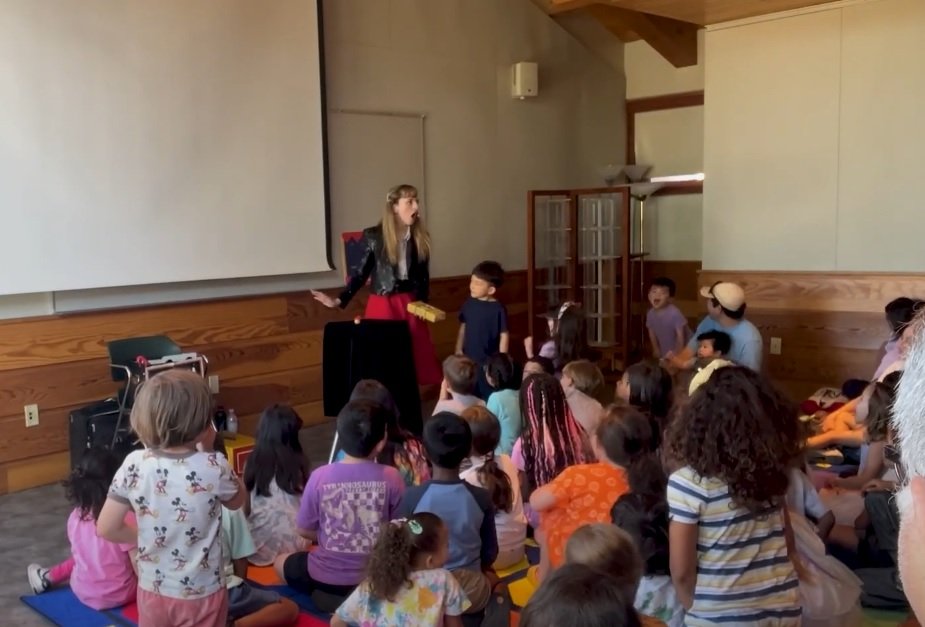
Briefly, since it's my corner. Magic has been overwhelmingly male throughout its history, and when I perform for teenage audiences, the fact that the person doing something genuinely difficult and baffling is a woman does its own work without a word of framing.
It also solves the engagement problem, since teenagers who'd dismiss a talk can't dismiss something they can't explain. The material is genuinely hard, the skill is undeniable, and the point is demonstrated rather than delivered. If you're planning March programming for this age group, I'm glad to talk it through.
Frequently Asked Questions
Why doesn't the usual approach work at this age?
Because a fifteen year old has encountered the topic annually for a decade in a consistently simplified form, so repeating it produces polite disengagement rather than interest. That disengagement is worse than resistance because nobody notices it, and assuming the subject is fresh undermines everything else you plan.
What are they actually reacting to?
Earnestness rather than the subject, since teenagers are alert to adults telling them what to think and a session whose conclusion is evident from the title invites switching off. They'll engage with the same subject presented as genuinely complicated or contested, and won't engage with being walked towards a position they know they're expected to reach.
What does work?
Giving them something to argue with, since teenagers engage through disagreement and a session inviting genuine argument produces attention that one inviting agreement doesn't. That means real complexity: a contested legacy, a question without a settled answer, or a decision people still disagree about, with room to take positions and defend them.
Historical figures or contemporary ones?
Contemporary, since historical figures feel finished and people from a century ago register as a different category rather than as anyone a teenager could resemble. Someone working now, in a recognizable field, facing obstacles that plainly still exist, lands completely differently and does more than any change of format.
Are we pitching it too simply?
Possibly, since simplified content is noticed immediately and resented at this age, as is anything assuming they can't handle complexity. Fifteen year old’s can discuss structural obstacles and uncomfortable history, and the simplified version signals that you don't think they're capable of the real one.
How do we avoid losing the boys?
Frame it as a subject rather than a message, let them hold and argue opinions, and avoid anything casting them as the audience for a correction, since teenage boys are acutely sensitive to being made the problem and the resulting disengagement spreads. That's recognizing a practical reality rather than softening the content.
Why does demonstration work better than explanation?
Because teenagers discount assertion and respond to evidence in front of them, which is why a person doing something genuinely difficult lands where a presentation about achievement doesn't. The point arrives without an argument being made, which is what an audience alert to being persuaded actually responds to.
What can one session realistically achieve?
Presenting something they hadn't considered, complicating a picture they thought was settled, or introducing a person they remember. It won't change how a fifteen year old thinks about anything on its own, and treating it as though it might sets you up to conclude it failed. Over years, small encounters accumulate.

Stop Explaining and Start Showing
Women's History Month for kids looks completely different at fifteen than at five, because the audience has heard the simplified version for a decade and can spot a predetermined conclusion from the title. What works instead is complexity they can argue with, contemporary figures rather than finished historical ones, material that doesn't patronize them, framing that doesn't cast the boys as the problem, and demonstration rather than explanation.
And it's worth being honest that one session presents something rather than changes anything, which is a reasonable aim and a poor claim.
Reach out if you're planning something for this age group, and I'm glad to talk about what would land.