

Magic Show Las Vegas for Retirement Communities and Senior Living
Magic Show Las Vegas for Retirement Communities and Senior Living
The Las Vegas valley has one of the larger concentrations of retirement communities in the country, and the activity directors running them program more entertainment in a month than most event planners book in a year. It's a genuinely demanding job, and it gets almost no attention from performers, who mostly write for weddings and corporate events.

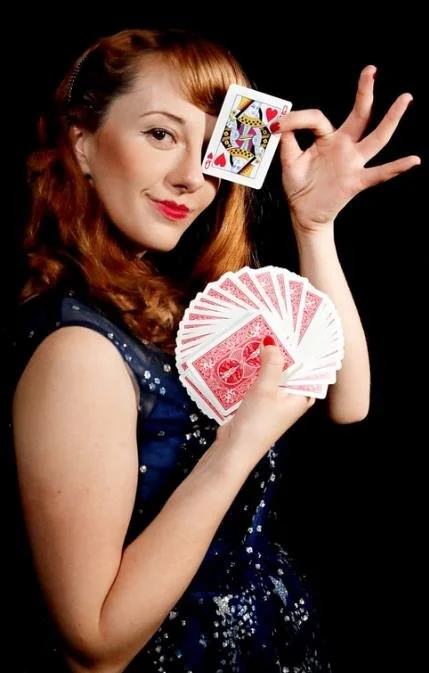
So this is written for that reader. I'm Magical Katrina, an award winning magician and mentalist, and I want to explain what a magic show Las Vegas communities book actually involves, and what makes the difference between a session residents enjoy and one they endure politely.
Program for Adults
The most important point and the one performers most often get wrong. Residents in a retirement community are adults with careers behind them, considerable life experience, and no patience whatsoever for being addressed as though they were children.
Entertainment pitched that way is noticed immediately and resented quietly. What works is exactly what works for any adult audience: genuinely skilled material, an assumption of intelligence, and a conversational manner rather than an exaggerated one. A magic show Las Vegas communities rebook is one where residents felt respected, and activity directors can tell within five minutes which sort of performer has arrived.
Mentalism Lands Particularly Well
Worth knowing when choosing. Traditional magic delights, and mentalism engages, which suits an audience with time, curiosity, and the inclination to think about what they've just seen.
Residents frequently have more appetite for a genuine puzzle than a general audience does, and the conversations afterwards are often better. A magic show Las Vegas blending close up magic with mentalism gives people something to discuss over dinner and at the next day's coffee, which is worth more in a community setting than in a one off event, since the audience continues living together afterwards.
Sightlines Matter More Than Volume
The practical consideration that most affects how well a session goes. Community rooms are frequently wide rather than deep, with seating arranged for meetings, and residents at the edges can end up watching a performer's shoulder.
Arrange seating in a shallower arc rather than long rows, keep the front row genuinely close, and if the room is large, consider two shorter sessions rather than one that half the audience can't see properly. Close up magic works best when people are near it, so a magic show Las Vegas in a community setting is considerably better with forty people close than eighty spread across a hall.
Sound and Clarity
Related and worth planning. A proportion of any adult audience has some hearing loss, and community rooms often have hard surfaces and poor acoustics.
A performer who speaks clearly, faces the audience, and doesn't rely on quick verbal patter is doing most of the work. If your room has a sound system, offer it, and check whether residents using hearing loops need anything specific. It's also worth seating people who prefer to be closer at the front as a matter of course rather than waiting for anyone to ask, which most activity directors already do instinctively.
Timing Suits the Afternoon
Practical scheduling advice. Mid to late afternoon generally works better than evening in these settings, both for energy and because evening programming competes with dinner service and residents' own routines.
Around forty five minutes is a sensible length, occasionally an hour where the audience is engaged, and shorter is better than longer if you're unsure. In Vegas specifically, summer afternoons keep everyone indoors anyway, which makes programming during those months both easier to fill and more welcome. A magic show Las Vegas scheduled for a July afternoon is likely to draw a fuller room than one in March.
It Needs Nothing From Your Space
The reason this format suits community programming particularly. A magic show Las Vegas performed close up or as a small stage set requires no stage, no power, no rigging, and no setup beyond a performer arriving with a case.
That means a multipurpose room, a dining room after service, a library, or a lounge all work without borrowing equipment, moving furniture, or involving maintenance. For an activity director programming several things a week with limited support, entertainment that requires nothing is considerably easier to say yes to than something needing an AV setup nobody has time to arrange.
Participation, Handled Carefully
Worth being deliberate about. Residents participating in magic is a genuine pleasure for them and for the room, and it needs to be done with the same care you'd apply to any adult audience.
Nobody should be made to look foolish, put on the spot without an easy way out, or asked to do anything physically awkward. A participant should end up as the person something remarkable happened to, and a performer with experience in these settings reads that instinctively. If particular residents would love to be involved or would rather not be, tell the performer beforehand, since activity directors usually know exactly who's who.
Independent Living, Assisted Living, and Memory Care
Different settings with different considerations, and worth being clear when booking. Independent living residents are, for programming purposes, simply an adult audience, and the session should be pitched exactly as it would be anywhere else.
Assisted living settings may call for a shorter session and a smaller room. Memory care requires genuine specialist experience, a different pace, and a performer who has worked in those settings before, and any performer without that experience should say so rather than improvising. Tell whoever you book which setting they're coming into, and expect an honest answer about their experience with it.

Recurring Programming
Practically, communities tend to book differently from event clients. Rather than a single date, activity directors are filling a calendar continuously and value performers they can call again.
That usually means a booking is the start of a conversation rather than a transaction, with seasonal returns, different sessions across a year, or a rotation among several communities under the same management. Among magic show Las Vegas options, performers who understand that pattern are easier to work with than those treating each date as a one off negotiation.
A Note on "Local vs. Traveling In"
Worth knowing: performers who travel to Las Vegas often have availability when local ones are booked, particularly during convention weeks when corporate clients take the calendar. Travel is discussed openly and factored into the quote rather than being your problem. I'm based in the Los Angeles area and travel to Las Vegas regularly, including for community and family audiences rather than only tourist and corporate work.
Why Book Magical Katrina
If you'd like a magic show Las Vegas for your community, here's my case. I'm a member of the Magic Circle in London and the Academy of Magical Arts in Hollywood, I've earned multiple magic awards, and I've appeared on Penn & Teller: Fool Us and Masters of Illusion. I blend close up magic with mentalism, which suits an audience that enjoys a genuine puzzle, I perform for adults as adults, and I need no stage, power, or setup, so any room in your community works as it is. I'm fully insured with a COI available.
Frequently Asked Questions
What do residents actually respond to?
Being treated as the adults they are. Residents have careers behind them and considerable life experience, and entertainment pitched as though for children is noticed immediately and resented quietly. What works is genuinely skilled material, an assumption of intelligence, and a conversational manner. Activity directors can usually tell within five minutes which sort of performer has arrived.
Is mentalism suitable for this audience?
Particularly, since it engages rather than simply delights, and suits an audience with time, curiosity, and an inclination to think about what they've seen. Residents frequently have more appetite for a genuine puzzle than a general audience, and it gives people something to discuss afterwards, which matters more in a community where the audience continues living together than at a one off event.
How should we arrange the room?
In a shallower arc rather than long rows, with the front row genuinely close, since community rooms are often wide rather than deep and residents at the edges end up watching a performer's shoulder. Close up magic works best when people are near it, so forty people close is considerably better than eighty spread across a hall. Consider two shorter sessions for a large room.
What about residents with hearing loss?
A performer who speaks clearly, faces the audience, and doesn't rely on rapid verbal patter does most of the work. Offer your sound system if you have one, check whether anyone using a hearing loop needs something specific, and seat people who prefer to be closer at the front as a matter of course. Hard surfaced community rooms make clarity matter more than volume.
When should we schedule it?
Mid to late afternoon generally works better than evening, both for energy and because evening programming competes with dinner service and residents' routines. Around forty five minutes is sensible, and shorter is better than longer if you're unsure. In Vegas, summer afternoons keep everyone indoors, so a magic show Las Vegas in July is likely to draw a fuller room than one in March.
Does it work in assisted living or memory care?
Assisted living usually calls for a shorter session and a smaller room. Memory care requires genuine specialist experience, a different pace, and a performer who has worked in those settings, and anyone without that experience should say so rather than improvising. Tell whoever you book which setting they're coming into and expect an honest answer about their experience with it.
How do I book you, and what do you need to get started?
Reach out with your community, the setting, your preferred dates, the room you'd use, and roughly how many residents you expect. That's enough for me to check availability, recommend a length, and send a quote including travel. If you're programming across several communities under the same management, mention that, since it's usually easier to arrange together.

Program It Like Any Adult Audience
The communities that program entertainment well do one thing consistently: they book for residents as capable adults rather than as a category. A magic show Las Vegas works in that setting when the material is genuinely good, the room is arranged so everyone can see, the session is pitched at a sensible length in the afternoon, participation is handled with care, and nothing is required from a space that wasn't built for performance.
If you're filling a calendar and want something residents will still be talking about at coffee the next morning, I'd be glad to hear from you.
Reach out with your community and dates, and let's find something that works.