

Magic Show Las Vegas for Schools, Libraries, and Community Events
Magic Show Las Vegas for Schools, Libraries, and Community Events
Almost everything written about entertainment in Las Vegas is aimed at people who flew in for a weekend. Which is odd, because the city has hundreds of thousands of children in it, a substantial library district, community centers across the valley, and a year round need for programming that has nothing to do with the Strip.

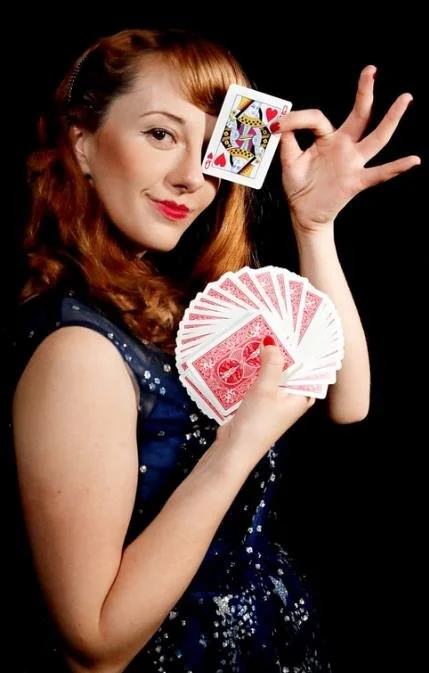
If you're a librarian, a teacher, or a community programmer here, none of that content is for you. I'm Magical Katrina, an award winning magician and mentalist with a Family Entertainer of the Year honor, and I want to write the version that is: what a magic show Las Vegas schools and libraries book actually involves.
Attendance Is the First Problem
Worth starting here, because a great deal of good community programming goes unattended for want of something concrete to promote.
"A family event" is a calendar entry. "A magic show" is a reason to come, and it's the sort of thing parents forward to each other and mention at the school gate. A magic show Las Vegas libraries and schools book gives you something specific for a flyer, a newsletter, and a noticeboard, which materially affects turnout. For branches trying to reach families who don't usually visit, a named draw does considerably more than a general invitation to a program.
It Handles a Public Age Range
The structural advantage for institutional programming. Most activities serve one age band, so a craft session loses the older children and a story time loses the ten year olds, and you end up running several things or accepting that part of the room is waiting.
Good magic works on several levels at once. Young children respond to the visual surprise, older children engage with the puzzle, teenagers get pulled in if it isn't pitched at babies, and the adults who came as chaperones are frequently the most astonished people present. A magic show Las Vegas at a family event gives a mixed public audience one shared experience rather than something that splits them by age.
It Needs Almost Nothing From Your Space
Practically decisive for most venues. School multipurpose rooms, library program rooms, and community center halls frequently have no stage, limited AV, awkward acoustics, and a layout designed for something else.
A magic show Las Vegas performed close up or as a small stage show needs no stage, no sound system, no power, and no setup beyond arriving. That means it works in a library room among the shelves, a cafeteria with tables pushed back, or a community room with a low ceiling, and you won't need to borrow equipment or move furniture. For programmers without technical support, that's often what makes something bookable at all.
Numbers Can Be Unpredictable
A genuine advantage for drop in events, where you never quite know whether twelve people or ninety will turn up.
Activities requiring materials mean either buying for an unknown number or turning families away, both uncomfortable. Magic doesn't have that problem: everyone watches, everyone reacts, and there's no cost per head. A magic show Las Vegas serves a room of twenty and a room of a hundred equally well, and a performer can adjust the format on arrival if the turnout is very different from what you expected, which with public programming it frequently is.
The Summer Problem
Specific to this city and worth planning around. Las Vegas summers push families indoors, and libraries and community centers become genuinely important spaces for children with nowhere else comfortable to be.
That makes summer programming both more needed and more attended here than in milder places, and summer reading programs in particular draw families who don't visit at other times. A magic show Las Vegas as an anchor event for a summer program is a strong use of a limited budget, since it draws attendance during the months when your rooms are most valuable to the community and when families are actively looking for something to do.
Budget Realities
Worth addressing plainly, since schools and library branches rarely have much. A magic show Las Vegas costs what a professional performer costs, but there are ways to make it work.
Several branches or schools can share a performer across a day, which spreads travel and usually reduces the cost per site considerably. A shorter session costs less while still anchoring your event. Friends groups, parent associations, and library foundations are frequently willing to fund something that visibly drives attendance, since that's the outcome they exist to support. What's rarely worth doing is booking the cheapest available option, since a show that doesn't hold the room is worse than none.

Practical Notes for Programmers
A few things that make these sessions work. Keep the length age appropriate: around thirty minutes for young children, forty five for a school aged group. Schedule around your actual quiet periods rather than institutional convenience.
Tell the performer the real age range, the expected numbers, and the room, since a cafeteria with three hundred students and a library room with twenty families need different approaches. And mention if you'd like the session tied to a theme, a summer reading program, a literacy initiative, or a seasonal event, since that's usually straightforward to accommodate and makes the booking work harder for you.
A Note on "Local vs. Traveling In"
Worth knowing: performers who travel to Las Vegas often have availability when local ones don't, particularly during convention weeks when local performers are booked by corporate clients. Travel is discussed openly and factored into the quote rather than being your problem to arrange. I'm based in the Los Angeles area and travel to Las Vegas regularly, including for schools and community events rather than only tourist and corporate work.
Why Book Magical Katrina
If you'd like a magic show Las Vegas for your school, library, or community event, here's my case. I'm a member of the Magic Circle in London and the Academy of Magical Arts in Hollywood, I've earned multiple magic awards including a Family Entertainer of the Year honor, and I've appeared on Blippi as a performer and magic consultant, along with Penn & Teller: Fool Us and Masters of Illusion. I perform for every age from preschoolers to adults, which is what a public audience requires, I need no stage or setup, and I'm used to rooms where numbers are unpredictable. I'm fully insured with a COI available.
Frequently Asked Questions
Will it work for a wide range of ages?
Yes, and that's the main reason it suits public programming. Most activities serve one age band, so a craft session loses older children and a story time loses the ten year olds. Good magic works on several levels at once: young children respond to the visual surprise, older children engage with the puzzle, teenagers get drawn in if it isn't pitched young, and accompanying adults are often the most astonished people there.
What does it need from our room?
Almost nothing, which matters for multipurpose rooms, library program spaces, and community halls. A magic show Las Vegas performed close up or as a small stage show needs no stage, sound system, power, or setup beyond arriving, so it works among library shelves, in a cafeteria with tables pushed back, or in a low ceilinged community room. You won't need to borrow AV or rearrange furniture.
What if we don't know how many people will come?
That's fine, and it's an advantage of the format. Activities requiring materials mean buying for an unknown number or turning families away, whereas magic has no cost per head and serves twenty people or a hundred equally. A performer can also adjust the format on arrival if turnout differs from expectations, which with drop in public programming it frequently does.
Is this good for summer programming?
Particularly, since Las Vegas summers push families indoors and libraries and community centers become genuinely important spaces for children. Summer programming is both more needed and better attended here than in milder places, and summer reading programs draw families who don't visit at other times. An anchor event during those months is a strong use of a limited budget, because that's when your rooms matter most.
How can we afford it?
Several branches or schools can share a performer across a day, which spreads travel and reduces the cost per site considerably. A shorter session costs less while still anchoring your event. Friends groups, parent associations, and library foundations are frequently willing to fund something that visibly drives attendance. What's rarely worth doing is booking the cheapest option, since a show that doesn't hold the room is worse than none.
How long should the session be?
Age appropriate rather than as long as possible. Around thirty minutes suits young children, since attention at that age genuinely doesn't stretch further, and forty five works for a school aged group. Tell the performer your real age range, expected numbers, and the room, since a cafeteria with three hundred students and a library room with twenty families call for different approaches entirely.
How do I book you, and what do you need to get started?
Reach out with your date, venue, expected audience and age range, and anything about your program worth knowing, including whether you'd like it tied to a theme such as summer reading. That's enough for me to check availability, recommend a format and length, and send a quote. If you're a school or library group considering several sites, mention that, since it's often more affordable than it looks.

Programming That Fills the Room
The test for community programming is whether people come and whether they're glad they did. A magic show Las Vegas helps with both: something concrete to promote, one activity that works across every age in a public room, no demands on a space that wasn't built for performance, and no problem if twice as many families turn up as you expected.
If you're planning something for your school, library, or community center, I'd be glad to hear about it.
Reach out with your date and audience, and let's put on something they turn up for.