Zoom Magician Cost Compared With Other Virtual Event Options

Zoom Magician Cost Compared With Other Virtual Event Options

Most people researching virtual entertainment aren't choosing between two magicians, they're choosing between categories: a speaker, a comedian, a hosted quiz, a tasting with kits posted out, an escape room, or simply nothing at all. Those options work differently and cost differently, and the headline figures aren't comparable in the way they appear.
So this is a benchmarking piece rather than a pitch. I'm Magical Katrina, an award winning magician and mentalist, and I want to set out how a zoom magician cost compares with the alternatives, including where the alternatives are the better choice.

The Structure Matters More Than the Number

The first thing to understand, because it changes every comparison. Some virtual options are a flat fee regardless of audience size, and some carry a cost per person that scales with attendance.

A performer, speaker, or host is generally a flat fee: the same figure whether thirty people watch or three hundred. Anything involving a physical kit is per head, and the total rises with every person you add. That difference determines which option is cheaper for you, and it depends entirely on your numbers rather than on which category is inherently more expensive.

A Real Anchor

Since vagueness is unhelpful, here's a concrete figure from my own pricing: my virtual shows start around $1,400, with the exact number depending on length, audience size, and customization.

That gives you something to hold the alternatives against. For a group of thirty, it's a meaningful figure. For a group of three hundred, the cost per person is very low indeed, because a zoom magician cost doesn't rise with attendance. Understanding which side of that your audience sits on tells you a great deal about whether it's the efficient option for your event.

Speakers

A speaker is the closest comparison structurally: a flat fee, no materials, no logistics, and a wide range of prices depending on profile.

The difference is what the hour does. A good speaker delivers content people can act on, and a well known one lends the event significance. What a speaker rarely does is get an audience participating, and virtual audiences are considerably harder to hold through a talk than an in person room. If your objective is information or credibility, book a speaker. If it's engagement and attendance, the calculation runs the other way.

Comedians

Structurally similar again, and the pricing range is comparable to entertainment generally. The practical differences are audience fit and risk.

Comedy depends heavily on shared reference and language, which fragments across an international audience, and it carries content risk at a work event in a way most alternatives don't. It's also passive: people watch. Where it works, it works very well, and for a domestic audience with a compatible culture it's a legitimate choice. For a global team or a mixed corporate room, a zoom magician cost buys something with fewer variables attached.

Quizzes and Hosted Games

The cheapest category, frequently by a wide margin, and that's a genuine advantage. A hosted quiz costs relatively little and can absorb a large audience.

The trade off is memorability. Quizzes are pleasant and generic, most teams have done several, and they're rarely mentioned afterwards. There's also a participation problem, since the confident and competitive engage while others coast. If budget is the binding constraint and you need something acceptable rather than memorable, a quiz is the sensible answer, and it's worth being clear with yourself that acceptable is what you're buying.

Tastings and Kit Based Events

Popular, genuinely enjoyable, and the option where headline pricing is most misleading. A wine, cocktail, or chocolate tasting is quoted as a facilitator fee plus a kit per person, and the kits are where the money goes.

Add shipping, and add the logistics of collecting home addresses, chasing people who didn't respond, handling failed deliveries, and dealing with the person whose kit arrived broken an hour before the event. For a group of thirty, the total is frequently well above a zoom magician cost, and for a global team the shipping alone can be prohibitive. It's a lovely format with a real administrative burden attached.

Escape Rooms and Team Challenges

Priced per person or per team, and effective for small groups with a genuine collaboration objective. They produce real interaction and are among the better options for a team that needs to work together.

The limitations are size and inclusion. They don't scale well beyond a modest group, they take longer than most alternatives, and they favor a particular kind of participant while the quieter half of a team hangs back. For a small team with a specific objective they're a strong choice, and for a large mixed audience the cost per person and the participation profile both work against them.

Doing Nothing

Worth including honestly, since it's a real option and frequently the right one. If your team is exhausted, over scheduled, or would genuinely rather have the hour back, giving them the hour is better value than any entertainment.

The comparison that matters isn't between options, it's between the best option and the alternative of doing nothing. If nobody wants an event, the cheapest thing is not to hold one, and a zoom magician cost spent on a session people resented is worse than a saving. Ask the team occasionally rather than assuming.

Cost Per Person Genuinely Engaged

The metric I'd suggest using, since it exposes what headline figures hide. A cheap option that half the audience ignores is expensive per person actually reached, and a flat fee for a session everyone attends and remembers is cheap at scale.

Work out what you're spending and divide it by the number of people who will genuinely engage rather than attend nominally. That calculation frequently reverses the ranking a headline comparison produces, and it's a considerably better basis for a decision than which quote was lowest.

Why Book Magical Katrina

If a zoom magician cost is on your shortlist, here's my case. I'm a member of the Magic Circle in London and the Academy of Magical Arts in Hollywood, I've earned multiple magic awards, and I've performed for companies including Formula 1, the Olympics, Porsche, Zapier, and the Ritz Carlton, with appearances on Penn & Teller: Fool Us. My virtual shows start around $1,400, the figure doesn't rise with audience size, there are no kits to ship or addresses to collect, and everyone participates using ordinary household items. If another option genuinely suits your event better, I'll say so.

Frequently Asked Questions

Which virtual option is cheapest?

A hosted quiz, usually by a wide margin, and it's a legitimate choice if budget is the binding constraint. The trade off is memorability, since quizzes are pleasant and generic, most teams have done several, and they're rarely mentioned afterwards. If you need something acceptable rather than memorable, that's the sensible answer, and worth being clear about with yourself.

Why do tastings look cheaper than they are?

Because the quote is usually a facilitator fee plus a kit per person, and the kits are where the money goes. Add shipping, plus collecting home addresses, chasing non responders, failed deliveries, and broken kits arriving an hour before. For a group of thirty the total is frequently above a zoom magician cost, and for a global team shipping alone can be prohibitive.

How does audience size change the comparison?

Completely, since some options are a flat fee and others scale per person. A performer, speaker, or host costs the same for thirty people or three hundred, whereas anything with a physical kit rises with every attendee. Which option is cheaper depends entirely on your numbers rather than on which category is inherently more expensive.

When is a speaker the better choice?

When your objective is information or credibility rather than engagement. A good speaker delivers content people can act on and a well known one lends the event significance, which entertainment doesn't. What speakers rarely do is get an audience participating, and virtual audiences are harder to hold through a talk than an in person room, so it depends what the hour is for.

What about comedy?

It works well where it works, and it carries more variables. Comedy depends on shared reference and language, which fragments across international audiences, and it carries content risk at a work event that most alternatives don't. For a domestic audience with a compatible culture it's legitimate, while for a global or mixed corporate room there are fewer variables elsewhere.

Are escape rooms worth it?

For small teams with a genuine collaboration objective, yes, since they produce real interaction. The limitations are size and inclusion: they don't scale well beyond a modest group, they take longer than most options, and they favor a particular kind of participant while the quieter half hangs back. For a large mixed audience, both the cost per person and the participation profile work against them.

What's the right way to compare?

Cost per person genuinely engaged rather than headline price. A cheap option half the audience ignores is expensive per person actually reached, and a flat fee for something everyone attends and remembers is cheap at scale. That calculation frequently reverses the ranking a headline comparison produces, and it's a better basis for a decision.
Compare Structure, Not Just Price

The useful way to assess a zoom magician cost against the alternatives isn't to line up quotes, since they're built differently. Establish which options are flat fee and which scale per person, add the hidden logistics for anything involving kits, consider what each format actually does for your audience, and then divide by the number of people who'll genuinely engage rather than merely attend.

Do that and the right answer for your event becomes obvious, and it won't always be me.

Reach out with your numbers and objective, and I'll tell you honestly whether this is the right fit.
Katrina Kroetch
Magician for Zoom Party: Virtual School and University Reunions

Magician for Zoom Party: Virtual School and University Reunions

Reunion calls follow a reliable pattern. Everyone joins, there's genuine warmth at seeing faces you haven't seen in fifteen years, and then a round of updates: where people live, what they do, how many children. It's lovely for about twenty five minutes.

Then it stalls, because a group whose only shared reference is a place they left decades ago has one topic and exhausts it quickly. I'm Magical Katrina, an award winning magician and mentalist, and I want to explain how a magician for Zoom party changes the shape of a virtual reunion, and why it solves the specific problem these gatherings have.

The Updates Run Out

Worth naming, since it's what actually happens. A reunion call has two natural subjects: what everyone is doing now, and what everyone remembers. The first is finished in half an hour, and the second is only enjoyable for the people who feature in the stories.

After that, the conversation becomes a series of pairs talking while everyone else watches, and someone eventually says they should probably go. A magician for Zoom party gives the group something happening in the present, which is precisely what a reunion lacks. Instead of excavating a shared past, everyone reacts to the same thing at the same time, which is a different and considerably easier kind of connection.

Not Everyone Enjoyed School

Worth thinking about when you're organizing, because it shapes who attends. A proportion of any year group has complicated feelings about the place, and an event built entirely on nostalgia asks them to celebrate something they'd rather not revisit.

Those people frequently want to see specific friends and don't want the reminiscing. An evening with something else in it gives them a reason to come, since the point of attending isn't the memories. A magician for Zoom party shifts the center of gravity from what happened then to something enjoyable now, which quietly widens who's willing to join.

Virtual Reaches People a Reunion Never Does

The practical advantage over a physical event. A formal reunion requires travel, a hotel, a free weekend, and a certain confidence about walking into a room, all of which filter attendance heavily.

The people who move abroad, who can't afford a weekend away, who have small children, or who simply don't fancy a hall full of half remembered faces are the ones a virtual gathering reaches. That group is frequently larger than the group who'd attend in person. A magician for Zoom party for a scattered year group means people in four countries can join something they'd otherwise have declined for reasons that have nothing to do with wanting to see everyone.

It Removes the Social Threshold

Related and worth stating. Physical reunions have a genuine barrier: walking into a room alone, scanning for anyone you recognize, and finding an opening line for someone you last spoke to in 1998.

None of that exists on a call. You join, you're immediately visible, and nobody has to cross a room. Adding something everyone experiences together removes the remaining awkwardness, since a shared reaction supplies the conversation that people would otherwise be manufacturing. For anyone who wanted to attend and dreaded the first fifteen minutes, that difference is the whole thing.

Everyone Is Equal Again, Briefly

An observation about how these gatherings feel. Reunions carry an undertow of comparison: careers, houses, how people look, who did well. It's rarely stated and it's usually present.

Being astonished flattens that momentarily, since nobody has an advantage and the person who runs a company is as baffled as everyone else. It's a small thing and I wouldn't overstate it, and a few minutes where a year group is simply an audience together rather than quietly assessing each other is a pleasant interruption to the dynamic these events tend to produce.

Keep It Shorter Than You Think

Practical advice for whoever is organizing. Ninety minutes is too long for a reunion call, however much everyone enjoys the first half.

A workable shape: half an hour of catching up, then the magic, then informal time for anyone who wants to stay and talk properly. That way the group experiences the good parts while still fresh, and the people who want a longer conversation with two specific friends can have it without everyone else sitting through it. Ending while people wish there were more is the right instinct, particularly for a group who'll organize another one if this goes well.

The Organiser Should Get to Enjoy It

Worth mentioning, since there's always one person who tracked down forty email addresses and chased everyone twice.

A magician for Zoom party requires almost nothing from them: the same link they'd send anyway, plus one message about the ordinary household objects people should have to hand. The performer handles their own camera, sound, and everything else. For someone who has spent weeks assembling a year group, an evening that runs itself means they get to be a guest at their own reunion, which is rarer than it should be.

Time Zones and Decades

Two practical notes. If your year group has scattered internationally, pick a time that's genuinely workable for the furthest person rather than convenient for the majority, and keep it short, since an hour at eleven at night is manageable and two is not.

And expect a wide range of technical confidence, particularly for reunions of older year groups. Send clear joining instructions, offer to do a test call with anyone unsure, and mention the household objects twice. A magician for Zoom party works regardless of anyone's comfort with technology, provided they actually manage to join.

Why Book Magical Katrina

If you'd like a magician for Zoom party for a reunion, here's my case. I'm a member of the Magic Circle in London and the Academy of Magical Arts in Hollywood, I've earned multiple magic awards, and I've performed for clients including Formula 1, the Olympics, Porsche, and Prada, with appearances on Penn & Teller: Fool Us and Masters of Illusion. My virtual material is built for video and designed so everyone participates using ordinary household items, whatever their age or confidence with technology. I handle all the technical side, and I work across time zones.

Frequently Asked Questions

Why do reunion calls stall?

Because a group whose only shared reference is a place they left decades ago has two subjects: what everyone does now, which is finished in half an hour, and what everyone remembers, which is only enjoyable for the people in the stories. After that it becomes pairs talking while everyone else watches. A magician for Zoom party gives the group something happening in the present instead.

What about people who didn't enjoy school?

They're a real proportion of any year group, and an event built entirely on nostalgia asks them to celebrate something they'd rather not revisit. Many want to see specific friends without the reminiscing, and an evening with something else in it gives them a reason to come, since attending stops being about the memories and becomes about an enjoyable hour.

Is virtual worse than a proper reunion?

It reaches different people, and frequently more of them. A physical reunion requires travel, a hotel, a free weekend, and confidence about walking into a room, which filters attendance heavily. The people abroad, with small children, or who don't fancy a hall of half remembered faces are exactly who a virtual gathering includes, and that group is often larger.

What about the awkwardness of reconnecting?

A call removes most of it, since nobody has to walk into a room alone, scan for a familiar face, or find an opening line for someone they last spoke to decades ago. You join and you're visible. Adding something everyone experiences together handles the rest, because a shared reaction supplies the conversation people would otherwise be manufacturing.

How long should it be?

Shorter than instinct suggests. Ninety minutes is too long however much everyone enjoys the first half. Half an hour of catching up, then the magic, then informal time for anyone who wants to stay works well, so the group experiences the good parts while fresh and the people wanting a longer conversation can have it without everyone else waiting.

Our year group is spread across several countries. Does that work?

Yes, and it's a reason to do it virtually. Pick a time genuinely workable for the furthest person rather than the majority, and keep it short, since an hour at eleven at night is manageable and two isn't. Expect a range of technical confidence too, so send clear joining instructions and offer a test call to anyone unsure.

How do I book you, and what do you need to get started?

Reach out with your date and time, the platform, roughly how many will join, and the time zones involved. That's enough for me to check availability and send a quote. From there I'll tell you the household objects to mention when you send the link, and we'll settle where the magic sits relative to the catching up.

Give Them Something to Do, Not Just Recall

Reunions are built on a shared past, which is precisely why they run out of conversation: the past is finite and the updates take half an hour. A magician for Zoom party supplies what these gatherings lack, which is something happening now that everybody experiences together, reaching people who'd never travel to a formal reunion, removing the first fifteen minutes of awkwardness, and briefly flattening the comparison these events quietly encourage.

If you've spent weeks tracking down a year group, I'd love to help make the evening worth it.

Reach out with your date and numbers, and let's give them a proper evening.

Katrina Kroetch
Magician for Zoom: Professional Services Firms and Partner Events

Magician for Zoom: Professional Services Firms and Partner Events

Professional services firms have an engagement problem that most organisations don't. When an hour of someone's time has a recorded value and a target attached to it, every internal event competes directly with billable work, and everybody in the room knows exactly what attending is costing.

That makes firm events a harder sell than almost anywhere else. I'm Magical Katrina, an award winning magician and mentalist, and I want to explain where a magician for Zoom fits into a law firm, accountancy practice, or consultancy, which is narrower and more practical than it sounds.

The Hour Has a Number Attached

Start with the constraint that shapes everything. In most organizations, an internal session costs attention. In a firm where time is recorded in six minute units, it costs something quantifiable that appears on a report.

That means an event needs to be obviously worth the hour rather than merely pleasant, and a session described as team building or engagement will be attended by whoever couldn't find an excuse. A magician for Zoom doesn't solve that by itself, and it changes the calculation at the margin, since something genuinely enjoyable is easier to justify to yourself at six in the evening than another discussion about firm values.

Trainee and Graduate Cohorts

The strongest application, and the one firms find easiest to approve. Trainees, graduates, and junior associates join in intakes, go through their early years together, and either form a cohort that supports each other or don't.

That cohort matters commercially, since people with peers to talk to leave less often, and retention in the early years is expensive to get wrong. A magician for Zoom during an induction or a cohort event gives a group a shared experience at the point the group either forms or doesn't, and it's a considerably easier sell than a session about wellbeing to people who've just started and want to appear robust.

Partner Meetings Across Offices

A different application and a useful one. Firms with several offices hold partner and director level meetings that are usually entirely business, conducted efficiently, and attended by people who have no social relationship with counterparts in other cities.

Those relationships matter for referrals, cross selling, and whether a partner in one office thinks to involve someone from another. A magician for Zoom placed at the start of such a meeting does what a dinner does in person: it moves a formal group from transactional to human before the substantive discussion. For a small senior group, close up magic works better than it would with a larger audience, since everyone sees everything.

Client Sessions Without a Pitch

Worth considering for business development, and the logic differs from ordinary marketing. Firms invite clients to seminars, updates, and briefings constantly, and senior clients decline nearly all of them because the value is speculative and the hour is expensive for them too.

A magician for Zoom changes what the invitation offers. It's particularly suited to small curated groups of clients from target accounts, where the objective is the relationship rather than a lead. Keep any technical content short and genuinely useful, or omit it, since a session that turns out to be a disguised pitch spends goodwill you'll need for the next invitation.

Your Audience Is Professionally Skeptical

Worth knowing, since it affects what works. Lawyers, accountants, and consultants are trained to find the flaw, examine the reasoning, and not accept what they're shown at face value.

That makes them a better audience for skilled mentalism rather than a harder one. Someone applying genuine analytical scrutiny who still cannot account for what happened experiences astonishment more intensely than a casual observer, because their certainty was better founded. A magician for Zoom blending magic with mentalism tends to get its strongest reaction from precisely the partner who arrived determined to work it out.

Keep It Short and Say So

Practical, and it affects attendance more than the content does. A ninety minute session will be declined, whereas a clearly bounded forty five minutes will not.

State the finish time in the invitation and honor it. Professional services audiences are unusually sensitive to events overrunning, because the cost is real and immediate rather than theoretical, and a session that runs long teaches people to decline the next one. Among practical decisions about a magician for Zoom at a firm, the stated end time is one of the more consequential.

Don't Call It Team Building

A framing point that matters with this audience specifically. Professionals in these firms are alert to corporate language and tend to treat sessions labelled as engagement, wellbeing, or team building as things being done to them.

Describe it plainly instead: an hour of something genuinely good, arranged because people have been working hard. That description is accurate, it doesn't invite skepticism, and it's considerably more appealing than the alternative. The same session with two different descriptions produces noticeably different attendance, and the honest one performs better.

Where It Genuinely Fits

A summary of the placements worth considering:

Trainee and graduate inductions. Where a cohort either forms or doesn't.

Partner and director meetings across offices. Opening a formal session before the business.

Client sessions for small curated groups. Where the objective is the relationship.

End of financial year or after a major matter. Marking something that genuinely was hard.

Firm wide socials for distributed teams. Where an in person event excludes several offices.

Why Book Magical Katrina

If you'd like a magician for Zoom for a firm event, here's my case. I'm a member of the Magic Circle in London and the Academy of Magical Arts in Hollywood, I've earned multiple magic awards, and I've performed for companies including Formula 1, the Olympics, Porsche, Zapier, and the Ritz Carlton, with appearances on Penn & Teller: Fool Us. My virtual material is built for video and genuinely participatory, it works particularly well with small senior groups, and I blend magic with mentalism, which suits an audience trained to look for the flaw. I keep to the stated finish time, which with this audience matters.

Frequently Asked Questions

Why is attendance harder at a professional services firm?

Because an hour has a recorded value and a target attached, so every internal event competes directly with billable work and everyone knows what attending costs. That means an event needs to be obviously worth the hour rather than merely pleasant, and anything described as team building will be attended by whoever couldn't find an excuse.

Where does it work best?

Trainee and graduate cohorts, where a group either forms or doesn't and retention in the early years is expensive to get wrong. It's also an easier approval than a wellbeing session for people who've just started and want to appear robust. Partner meetings across offices are the second strongest, since those relationships affect referrals and cross selling.

Does it work for a small partner group?

Particularly, since close up magic improves as the group shrinks and everyone sees everything from a few feet away. Partner meetings across offices are usually entirely business, conducted efficiently between people with no social relationship, and a magician for Zoom at the start does what a dinner does in person: it moves a formal group from transactional to human.

Can we use it with clients?

Yes, and it suits small curated groups where the objective is the relationship rather than a lead. Senior clients decline most seminar invitations because the value is speculative and their hour is expensive too, and this changes what the invitation offers. Keep any technical content short and genuinely useful, since a disguised pitch spends goodwill you'll need next time.

Will a room of lawyers actually enjoy it?

More than most audiences. Lawyers, accountants, and consultants are trained to find the flaw and not accept what they're shown at face value, and someone applying genuine scrutiny who still cannot account for what happened is more astonished than a casual observer. The strongest reaction usually comes from the partner who arrived determined to work it out.

How long should it be?

Forty five minutes, stated clearly in the invitation and honored. A ninety minute session will be declined outright, and this audience is unusually sensitive to overrunning because the cost is immediate rather than theoretical. A session that runs long teaches people to decline the next one, which is a more expensive outcome than it appears.

How should we describe it internally?

Plainly. Professionals here are alert to corporate language and treat anything labelled engagement, wellbeing, or team building as something being done to them. Describe it as an hour of something genuinely good, arranged because people have been working hard. That's accurate, it doesn't invite skepticism, and the same session with the honest description attracts noticeably better attendance.

Earn the Hour Honestly

Professional services firms are among the harder places to run an internal event, because the cost of attending is visible and everyone can calculate it. A magician for Zoom works there when it's placed where it genuinely helps: a trainee cohort forming, a partner group meeting across offices, a client session where the relationship is the objective, and always described plainly rather than dressed in the language people here have learned to discount.

Keep it short, finish when you said you would, and it will be the firm event people actually turn up to.

Reach out with your date and group, and let's work out where it fits.

Katrina Kroetch
Magician for Birthday Party Las Vegas: Children's Parties

Magician for Birthday Party Las Vegas: Children's Parties

Almost everything written about entertainment in Las Vegas assumes you flew in for a weekend, which is unhelpful if you live here and are planning a party for a seven year old in Summerlin next month. Local families have entirely different questions: how long a show should be, where to hold it, and what to do about the heat.

So this is the local version. I'm Magical Katrina, an award winning magician and mentalist with a Family Entertainer of the Year honor, and I want to set out what a magician for birthday party Las Vegas actually involves for a children's party here.

Length Follows Age, Not Budget

The most important thing to get right, and the one parents most often get wrong by booking the longest option available.

For three to five year old’s, around thirty minutes is realistic, because attention at that age genuinely doesn't stretch further and a show that runs long unravels visibly. Six to eight year old’s comfortably handle forty five minutes. Nine and up can go longer, and need material that's genuinely baffling rather than colorful, since children that age reject anything they consider babyish. Expect a magician for birthday party Las Vegas to recommend a length based on the ages rather than offering one fixed duration.

Where to Hold It

Local families have more options than visitors, and the best one is frequently your own house. Homes here generally have space, a back yard, and no minimum spend or time limit, and close up magic needs no stage, power, or setup, so nothing has to be cleared or hired.

Beyond that: community centers, park pavilions, clubhouses in master planned communities, and dedicated party venues all work. Most have no stage and limited AV, which rules out a lot of entertainment and doesn't affect this at all. A magician for birthday party Las Vegas performing close up or a small stage show works in a living room, a clubhouse room, or a pavilion equally.

The Heat Decides Your Timing

The genuinely local consideration. From roughly June through September, an afternoon party outdoors is not comfortable for children, parents, or performers, and a back yard in July is not a viable venue for a show.

Practically: indoors during those months, or an evening party if you want to use the yard. From October through April, afternoons outside are excellent and the weather is one of the real advantages of living here. Worth deciding this before booking rather than hoping, since a party planned outdoors in August generally becomes an indoor party at short notice anyway.

Sit Them on the Floor

The setup detail that most affects how the show goes, and it surprises parents who've laid out chairs. Children sitting on the floor in a loose semicircle works considerably better than children on chairs.

They can see past each other at staggered heights, they're closer together which concentrates the energy, and getting up becomes a deliberate act rather than an easy fidget. Ask adults to stand or sit behind the children rather than at the sides, which keeps everyone facing one direction and stops the show having two audiences. Most performers will ask for this, so clear the floor space in advance.

Where the Show Sits in the Party

Timing within the party matters more than parents expect. Allow twenty minutes of arrival and free play first, since guests trickle in and a performer starting at the advertised time plays to a third of the room.

Then the show, then food, then cake as the finale before collection. Running the show before food means children are settled but not yet sugared, and food becomes the calm after the excitement rather than an unpredictable block you're waiting on. Leave fifteen minutes after the show before collection time. A magician for birthday party Las Vegas worth booking will help you plan this if you ask.

Mixed Ages Are Normal

Worth mentioning, since most parties have them. Alongside your child's classmates there'll be a two year old sibling, a ten year old cousin, and several adults, and material pitched at one band loses the others.

Good children's magic works across that range, and it helps to tell your performer the actual spread rather than just your child's age. If there are several much younger children, mention it, since a performer can adjust and having one adult loosely responsible for wandering toddlers makes the whole thing easier. Nobody minds a bit of wandering, and it's easier when somebody is watching for it.

What to Ask Before Booking

A short list. Ask what they'd do for your child's specific age, and expect a specific answer rather than a reassurance that it works for everyone. Ask to see footage of them performing for children rather than at an adult event, since websites frequently lead with corporate work.

Ask about insurance, which any professional carries and provides without awkwardness, and about a background check if that matters to you. And notice whether they ask you questions: ages, numbers, the room, and who the party is for. A magician for birthday party Las Vegas who asks about your child before you mention them is preparing rather than turning up.

Booking Is Easier Off Peak

A local advantage worth using. Demand here spikes around conventions, holidays, and major event weekends, when performers are booked by visiting groups and corporate clients at premium rates.

A children's party on an ordinary Saturday in February is a much easier booking than one during a convention week or in December. If your date is flexible, avoiding those peaks improves availability and often what you pay. If it isn't, book earlier than you otherwise would, since a magician for birthday party Las Vegas may have their weekend claimed by a corporate client months ahead.

A Note on "Local vs. Traveling In"

Worth knowing: performers who travel to Las Vegas often have availability when local ones are booked, particularly during busy weeks. Travel is discussed openly and factored into the quote rather than being your problem to arrange. I'm based in the Los Angeles area and travel to Las Vegas regularly, including for family parties rather than only corporate and visitor events.

Why Book Magical Katrina

If you'd like a magician for birthday party Las Vegas for your child, here's my case. I'm a member of the Magic Circle in London and the Academy of Magical Arts in Hollywood, I've earned multiple magic awards including a Family Entertainer of the Year honor, and I've appeared on Blippi as a performer and magic consultant, along with Penn & Teller: Fool Us and Masters of Illusion. I'll recommend a length suited to your children rather than the longest option, I make the birthday child the star, I need very little space or setup, and I'm fully insured with a COI available if your venue asks.

Frequently Asked Questions

How long should the show be?

Follow the age rather than the budget. Around thirty minutes suits three to five years old, since attention at that age genuinely doesn't stretch further and a longer show unravels visibly. Six to eight years old comfortably handle forty five minutes, and nine and up can go longer with genuinely baffling material rather than anything they'd consider babyish.

Where's the best place to hold it?

Frequently your own house, since homes here have space, a yard, and no minimum spend or time limit, and close up magic needs no stage, power, or setup. Community centers, park pavilions, clubhouses, and party venues all work too. Most have no stage and limited AV, which rules out a lot of entertainment and doesn't affect this at all.

What about the summer heat?

It decides your timing. From June through September an afternoon outdoors isn't comfortable for children, parents, or performers, so plan indoors or hold an evening party if you want the yard. October through April, afternoons outside are excellent. Decide before booking rather than hoping, since an outdoor August party usually becomes an indoor one at short notice anyway.

Should the children sit on chairs or the floor?

The floor, in a loose semicircle. Children at staggered heights can see past each other, sitting close concentrates the energy, and getting up becomes a deliberate act rather than an easy fidget. Ask adults to stand behind rather than at the sides, which keeps everyone facing one direction and stops the show having two audiences in different places.

When in the party should the show happen?

Allow twenty minutes of arrival and free play first, since guests trickle in and starting on time means playing to a third of the room. Then the show, then food, then cake as the finale. Running the show before food means children are settled but not yet sugared, and leave fifteen minutes after it ends before collection.

What should we ask before booking?

What they'd do for your child's specific age, expecting a specific answer rather than a reassurance. Footage of them performing for children rather than at an adult event, since websites often lead with corporate work. Insurance, which any professional provides without awkwardness. And notice whether they ask you questions, since a performer who asks about your child is preparing rather than turning up.

How do I book you, and what do you need to get started?

Reach out with your party date, your area, whether it's at home or a venue, your child's age, the guest ages, and rough numbers. That's enough for me to check availability, recommend a length, and send a quote. Weekends book up, particularly around convention weeks and holidays, so earlier is better if your date is fixed.

Plan It for the Children You Have

A children's party here is a local event rather than a Vegas one, and the things that make it work are unglamorous: a show length that matches the ages, a room where children sit on the floor and adults stand behind, timing that accounts for the heat, and the show placed before food rather than after.

Get those right and a magician for birthday party Las Vegas gives your child an afternoon they'll remember, whether it's in a living room in Henderson or a clubhouse in Summerlin.

Reach out with your date and your child's age, and let's plan it properly.

Katrina Kroetch
Activities for Women's Empowerment That Involve Managers

Activities for Women's Empowerment That Involve Managers

Most organizations run their women's programming for women. Sessions on confidence, negotiation, visibility, and career progression, attended by the people who need sponsors rather than the people who could be sponsors, while the managers making decisions about assignments and promotions attend none of it.

That's a structural problem rather than an oversight, and it has an obvious fix that organizations avoid because it's harder. I'm Magical Katrina, an award winning magician and mentalist who speaks at women's events, and I want to look at activities for women's empowerment designed for managers, and why they're usually avoided.

Why Manager Sessions Get Skipped

Worth being honest about the reasons, since they're understandable. Programming for women is welcomed by the people attending, produces good feedback, and nobody objects. Programming for managers is a harder sell, risks defensiveness, and requires senior sponsorship that the person organizing may not have.

So organizations do the easier thing repeatedly and wonder why the numbers don't move. Among activities for women's empowerment, the manager focused version is the one with the most leverage and the most friction, and those two facts are related. It's worth attempting anyway, and it's worth designing carefully rather than borrowing the format used for everything else.

Make It About Decisions, Not Attitudes

The single most important design choice. Sessions framed around bias, attitudes, or what people believe produce defensiveness, because nobody thinks they're the problem and being told otherwise invites resistance rather than reflection.

Sessions framed around decisions do not. Who got the stretch assignment last quarter and why. How the shortlist for that role was built. Who's been given client facing work and who's been given the operational work nobody notices. Those are concrete, checkable, and don't require anybody to accept a characterization of themselves. Among activities for women's empowerment for managers, the shift from attitudes to decisions is what makes the session possible at all.

Run a Decision Audit

The most useful format, and it's straightforward. Ask managers to look at their own last twelve months: assignments given, people put forward, opportunities offered, and who received them.

Most managers have never looked at this, and looking at it produces more reflection than any presentation would. It's also personal to them rather than abstract, which is why it lands. Some will find nothing, which is fine and worth knowing. Others will notice a pattern they hadn't seen, and a manager who noticed it themselves behaves differently from one who was told about it in a session.

Use Real Scenarios From Your Organization

The second format that works. Rather than general principles, present situations that actually happen where you work: a promotion round, a client allocation, a returner from parental leave, a team where the same person always takes the notes.

Ask managers what they'd do and let them disagree with each other, which they will. That disagreement is the valuable part, since it surfaces the actual reasoning behind decisions in a way a presentation never does. Among activities for women's empowerment, sessions where managers argue about a realistic case produce considerably more change than sessions where they listen to someone explain a concept.

Keep It Short and Specific

Practical, and it affects attendance more than content does. A half day workshop on inclusive leadership will be resented and attended reluctantly. A forty five minute session about how your promotion process actually works will not.

Specific beats comprehensive with this audience, and short beats thorough. Managers are considerably more willing to spend forty five minutes on something concrete and relevant to their own team than a morning on something general. If you have a series of things to cover, cover them separately over months rather than in one session that requires clearing a diary.

Don't Make It a Women's Session With Men Present

A trap worth naming. Some organizations solve the manager problem by inviting managers to the existing program, which usually means men sitting through a session designed for a different audience with a different purpose.

That produces polite attendance and no change, and it can be actively counterproductive if the session's framing implicitly positions attendees as the problem. Manager programming needs to be designed for managers, addressing what they actually control, rather than being the same event with a wider invitation list. The audiences need different things, and pretending otherwise serves neither.

Give Them Something to Do

The measure of whether a session was worth running. Managers should leave with a specific action rather than an awareness, because awareness decays and actions can be checked.

That might be reviewing their own assignment history, changing how they build a shortlist, committing to a specific sponsorship relationship, or altering one thing about how their team meetings run. Among activities for women's empowerment aimed at managers, the ones that end with a concrete commitment produce change and the ones that end with a discussion produce a pleasant hour. Ask about it three months later, which also signals that the session mattered.

Senior Sponsorship Decides Whether It Happens

The practical reality underneath all of this. Manager programming that's optional will be attended by the managers who least need it, and one that's mandated without genuine senior backing will be resented.

What makes it work is a senior person visibly taking it seriously: attending, referring to it afterwards, and asking about the commitments made. Without that, you're organizing a session that managers correctly identify as optional and inconsequential. If you can't secure that sponsorship, it may be better to wait until you can rather than running something that quietly demonstrates the topic isn't a priority.

Be Honest About What a Session Changes

Worth saying, since overclaiming undermines the case. A single session does not change how someone allocates work, and behavior follows incentives and habits rather than training.

What a well designed session can do is prompt a manager to look at their own decisions, surface reasoning they hadn't examined, and produce one specific commitment. Repeated over time, alongside processes that actually check outcomes, that contributes to something. Presented as a solution in itself, it's the kind of activity that makes an organization feel it has addressed something while nothing changes, which is the failure mode this entire category is prone to.

Frequently Asked Questions

Why do organizations avoid manager programming?

Because it's harder. Programming for women is welcomed, produces good feedback, and nobody objects, whereas manager sessions are a harder sell, risk defensiveness, and need senior sponsorship the organizer may not have. So organizations do the easier thing repeatedly and wonder why the numbers don't move. The manager version has the most leverage and the most friction, and those facts are related.

How do we avoid defensiveness?

Frame it around decisions rather than attitudes. Sessions about bias or what people believe invite resistance, because nobody thinks they're the problem. Sessions about who got the stretch assignment, how a shortlist was built, and who's given client facing work are concrete and checkable, and they don't require anybody to accept a characterization of themselves.

What format actually works?

A decision audit, where managers examine their own last twelve months of assignments, nominations, and opportunities, and realistic scenarios from your own organization that managers discuss and disagree about. Both are personal and concrete rather than abstract, and a manager who notices a pattern themselves behaves differently from one who was told about it.

How long should a session be?

Short and specific rather than comprehensive. A half day workshop on inclusive leadership is resented and attended reluctantly, whereas a forty five minute session about how your promotion process actually works is not. Managers will give time to something concrete and relevant to their own team, and a series covered separately beats one session requiring a cleared diary.

Can we just invite managers to our existing program?

It rarely works, since that means men sitting through a session designed for a different audience with a different purpose, which produces polite attendance and no change. It can be counterproductive if the framing implicitly positions attendees as the problem. Manager programming should address what managers actually control rather than being the same event with a wider invitation.

What should managers leave with?

A specific action rather than an awareness, since awareness decays and actions can be checked. Reviewing their assignment history, changing how they build a shortlist, committing to a sponsorship relationship, or altering one thing about their team meetings all work. Then ask about it three months later, which produces follow through and signals that the session mattered.

Will one session change anything?

Not by itself, and claiming otherwise undermines the case. Behavior follows incentives and habits rather than training. What a good session does is prompt managers to examine their own decisions, surface reasoning they hadn't looked at, and produce one commitment. Repeated over time alongside processes that check outcomes, that contributes. Presented as a solution, it's exactly the failure this category is prone to.

Program for the People Who Decide

The ceiling on activities for women's empowerment is that they're almost always aimed at the people affected by decisions rather than the people making them. Involving managers is the obvious fix and the harder one, and it works when the session is about decisions rather than attitudes, built on their own data and your organization's real scenarios, kept short and specific, designed for them rather than borrowed from the existing program, and ending in a commitment somebody follows up.

None of that requires a bigger budget. It requires senior backing and a willingness to run the harder session rather than the comfortable one.

Reach out if you're planning a program, and I'm glad to talk honestly about where a session fits.

Katrina Kroetch
What to Expect When You Book a Strolling Magician in Los Angeles

What to Expect When You Book a Strolling Magician in Los Angeles

Booking entertainment for the first time involves a fair amount of guessing. You send an enquiry, get a quote, pay a deposit, and then wait several months wondering whether you've arranged something properly and whether you're supposed to be doing anything about it.

The process is straightforward once you know its shape. I'm Magical Katrina, an award winning magician and mentalist based right here in Los Angeles, and I want to walk through what genuinely happens when you book a strolling magician Los Angeles, from the first email through to the end of the night.

The Enquiry and What Comes Back

A professional response should arrive quickly, usually within a day, and it should ask questions rather than simply quoting a figure. Expect to be asked about your date, venue, event type, guest numbers, and the shape of your evening.

Those questions determine what's actually appropriate for your event, and a performer who quotes without asking any of them is pricing a generic booking rather than yours. The reply to a first enquiry is genuinely informative: prompt, curious, and clear at that stage usually predicts the same on the night.

The Quote and the Agreement

You should receive a clear figure, what it covers, and how long the performance runs. Expect a written agreement setting out date, timings, fee, and terms, plus a deposit that secures the date with the balance due around the event.

With a locally based strolling magician Los Angeles, that quote shouldn't include travel costs, which is one fewer line to query. If your venue requires insurance documentation, ask for a certificate at this stage rather than the week before, since it's simpler when nobody is busy. Reluctance to put terms in writing is worth taking seriously rather than treating as informality.

The Quiet Middle

Then, usually, several months of nothing, which is normal and mildly unsettling for a first time booker. The date is held, the agreement exists, and there's genuinely nothing to do.

What should happen is a check in as the event approaches, typically two to four weeks out, confirming timings, numbers, the venue address, and anything that's changed. If your performer doesn't initiate that, initiate it yourself. The ones who confirm details in advance rather than arriving on assumptions are the ones who handle the inevitable schedule change smoothly.

A Site Visit If It Helps

Something specific to booking locally. If your venue is unusual, a private estate, a studio lot, a house with an awkward layout, or somewhere with restrictions, a local performer can visit beforehand.

That's rarely necessary for close up magic, which needs nothing, and it occasionally saves a surprise at a venue with genuine constraints. It's also worth mentioning if you're planning something more elaborate, or if the venue has rules you're unsure about. A strolling magician Los Angeles who is actually in Los Angeles can do this in an afternoon rather than treating it as a logistical exercise.

What to Send Beforehand

Worth doing properly, since it's the difference between a competent evening and one that felt made for your room. Send realistic guest numbers rather than optimistic ones, your actual likely timings rather than the running order, venue details, and who's being celebrated if anyone is.

Mention anything sensitive, and flag any guest who would particularly love or particularly dislike being involved. It takes ten minutes and transforms what a performer can prepare. Most clients send a fraction of this, which is why most events get a correspondingly generic result.

Arrival, and Why LA Timing Is Different

On the day, expect your performer to arrive early, typically thirty to forty five minutes before they start, and to find you rather than the other way round.

Here that early arrival matters more than in most cities, because traffic makes precise timing unreliable and a performer cutting it fine is taking a risk with your evening. A local performer builds that in as a matter of course. For close up work, setup is essentially nothing: somewhere to leave a coat and case, and a moment to see the room, with no equipment to install and nothing for venue staff to accommodate.

What the Performance Looks Like

This surprises first time bookers most. There's no announcement, no gathering of guests, and no moment where the room stops. A strolling magician Los Angeles performing close up magic simply begins: approaching a group of three or four guests, performing for a few minutes, and moving on.

From your side as host, it looks like your party carrying on with something happening inside it. You'll notice small bursts of noise moving around the room. Guests pull friends over. People who arrived not knowing anyone end up in a group with strangers. It's considerably less disruptive and more effective than most people expect.

Indoors and Out

Worth knowing here specifically, since so many LA events use both. If your party moves from a patio to a living room, or the terrace becomes uncomfortable at nine o'clock, close up magic moves with it without any adjustment.

There's nothing to relocate, no power to reconnect, and no pause while something is set up again. Tell your performer that both spaces are in play and they'll work the whole event rather than one half of it. For an evening where the weather makes the plan provisional, that flexibility is one less thing to manage.

What You Do During It

Almost nothing, which is the point. You don't need to introduce anyone, manage the schedule around them, or check whether they're all right.

The one useful thing is telling them if the evening shifts, since it will. If dinner is called early or speeches overrun, a quick word means they adjust rather than working to a plan that stopped being accurate. Beyond that, enjoy your own event. A good booking removes work from your evening rather than adding any, and if you find yourself managing a performer, something has gone wrong.

Afterwards

The performer leaves without ceremony once the agreed time is finished, usually with a word to you rather than a departure anybody notices. The balance is settled per your agreement, and that's the end of it.

If you were happy, a review or a recommendation matters enormously to a working performer and takes two minutes. If something wasn't right, say so directly rather than in a review, since most issues are fixable and any professional would rather hear it. And if you have another event coming, mention it, since a strolling magician Los Angeles you've already worked with is easier to book again with notice.

Why Book Magical Katrina

If this is your first booking, here's my case. I'm based in the LA area, I'm a member of the Magic Circle in London and the Academy of Magical Arts in Hollywood, I've earned multiple magic awards, and I've performed for clients including Formula 1, the Olympics, Porsche, Prada, and the Ritz Carlton, with appearances on Penn & Teller: Fool Us and Masters of Illusion. I reply quickly, ask about your event before quoting, provide a written agreement and a COI without being chased, confirm details ahead of the day, arrive early, and need no stage or setup. You shouldn't have to think about me at all on the night.

Frequently Asked Questions

How quickly should someone respond to an enquiry?

Usually within a day, and the reply should ask questions rather than simply quoting: your date, venue, event type, guest numbers, and the shape of your evening. Those questions determine what's appropriate for your event, and a prompt, curious, clear response at the enquiry stage generally predicts the same on the night.

What paperwork should we expect?

A clear quote setting out what's covered and how long the performance runs, a written agreement with date, timings, fee, and terms, and a deposit securing the date. With a locally based performer, the quote shouldn't include travel costs. If your venue requires insurance documentation, ask for a certificate early rather than in the final week.

What happens between booking and the day?

Usually several months of nothing, which is normal, followed by a check in two to four weeks out confirming timings, numbers, address, and anything that's changed. If your performer doesn't initiate that, do it yourself. Performers who confirm details in advance rather than arriving on assumptions handle the inevitable schedule change smoothly.

Can you visit the venue beforehand?

If it helps, yes, which is one advantage of booking locally. It's rarely necessary for close up magic, which needs nothing, and it occasionally saves a surprise at a private estate, a studio lot, or somewhere with unusual restrictions. A strolling magician Los Angeles who is actually in Los Angeles can do that in an afternoon rather than as a logistical exercise.

What does the performance actually look like?

There's no announcement, no gathering, and no moment where the room stops. The performer approaches a group of three or four guests, performs for a few minutes, and moves on. From your side it looks like your party carrying on with something happening inside it, with bursts of noise moving around the room. Less disruptive and more effective than people expect.

What if our party moves from outside to inside?

Nothing changes, which matters here where so many events use both. Close up magic moves with your guests without adjustment, since there's nothing to relocate, no power to reconnect, and no pause for setup. Tell your performer both spaces are in play and they'll work the whole event rather than one half of it.

How do I book you, and what happens next?

Reach out with your date, venue or location, event type, and rough guest count. I'll come back quickly with availability and a clear quote, send a written agreement and a COI if you need one, and confirm details a few weeks before. On the night I'll arrive early, find you, work the room, and you shouldn't have to think about me again.

Simpler Than It Feels

Booking a strolling magician Los Angeles involves fewer moving parts than most first time hosts expect: an enquiry answered with questions, a clear quote and written agreement, a quiet few months, a confirmation a fortnight out, an early arrival, and an evening that carries on around the performance rather than pausing for it.

The only part requiring real effort from you is the brief, and it's ten minutes that changes what the evening can be.

Reach out with your event details, and I'll walk you through the rest.

Katrina Kroetch
Ideas for a Company Christmas Party in January

Ideas for a Company Christmas Party in January

December is the worst month of the year to hold a company party, and almost everyone holds one then anyway. Venues charge their highest rates, availability disappeared in September, your colleagues have four other commitments that week, and the entertainment you wanted was booked before you started looking.

An increasing number of organizations have simply moved it. I'm Magical Katrina, an award winning magician and mentalist, and I want to set out the honest case for January, along with the reasons it doesn't suit everyone, since this is a decision worth making deliberately rather than by default.

Your Choice of Venue Rather Than What's Left

The most immediate benefit. December venues are booked months ahead at premium rates, and by the time most companies confirm they're choosing from what remains rather than what they wanted.
In January, you can have the room you'd actually like, frequently at a lower rate, on the date that suits you. That single change improves the party more than most of the decisions that follow it, since a good room does a great deal of work on its own. Among ideas for company Christmas party planning, moving the date is the one that widens every subsequent option rather than narrowing them.

Attendance Is Genuinely Better

The argument that surprises people, and it's the strongest one. December evenings are contested: colleagues have their partner's work party, family commitments, school events, and their own social calendar, all in the same three weeks.

January has none of that. People are available, they've had a quiet few weeks, and an evening out is a considerably more appealing prospect than it is during the sixth week of continuous socializing. Companies that move consistently report better attendance, and since a party's success depends more on who turns up than on what's arranged, that alone frequently justifies the change.

Suppliers Are Available and Attentive

Practically important. The entertainment, catering, and production people you wanted in December were booked from the summer, and whoever remains in November is available for a reason.

In January they're available, they have time to plan properly, and the conversation is different. A performer with genuine time to think about your event asks more questions and tailors more than one confirming a booking in a fortnight when they have eleven other December dates. Among ideas for company Christmas party planning, having your first choice of supplier rather than your fourth changes the evening noticeably.

It Costs Less for the Same Party

Worth stating plainly, since budget frequently drives the decision. December carries a premium across venues, catering, and staffing, and January does not.

That means either a cheaper party or, more usefully, a considerably better party for the same money: the venue you wanted, the food you wanted, and the entertainment you wanted, rather than the compromises a December budget forces. For a company that has held a disappointing party for three years because the budget never stretched, moving the date is a more effective fix than increasing the budget.

People Need It More in January

A softer argument and a real one. December is full of celebration, and January is the month when nothing is happening, the weather is poor, and everyone is back at work facing a long stretch with nothing to look forward to.

A party in that month lands differently. It gives people something in a period that badly lacks it, rather than being the fifth event in a fortnight of them. Among ideas for company Christmas party timing, this is the argument that tends to persuade colleagues who were initially skeptical about the change, since most people recognize January as the month that could use an evening out.

What to Call It

A small point that determines how the change is received. Calling it a Christmas party in January is faintly odd and invites the obvious comment.

Better options: a new year party, a winter celebration, an annual party, or simply naming it after what it is, which for most companies is a thank you for the previous year. Framing matters, because a party described as a delayed Christmas party sounds like something that didn't happen on time, whereas one described as a new year celebration sounds like a deliberate choice. It's the same evening with a different reception.

Frame It as a Choice, Not a Cut

The one genuine risk, and it's manageable. If you move the party and say nothing, some colleagues will assume it was a cost saving measure, which is a poor impression to create even when it's partly true.

Explain the reasoning: better venue, better date, better attendance, and something to look forward to in the emptiest month of the year. People accept that readily because it's obviously sensible. What they react badly to is a change that appears to have been made for reasons nobody explained, which invites the least generous interpretation available.

When December Is Still Right

Being fair to the other side, since it sometimes is. If your organization's rhythm genuinely ends in December, if the party marks the close of a financial year, or if it's part of a tradition people value, moving it costs you something real.

Client facing parties are also frequently better in December, when the seasonal context does some work for you. And if your team is genuinely enthusiastic about the December party as it stands, don't fix what isn't broken. Among ideas for company Christmas party planning, moving the date solves specific problems, and if you don't have those problems, the argument doesn't apply.

A Hybrid Approach

Worth considering for organizations that can't quite commit. Some companies keep something small in December, drinks after work on the last Thursday, and hold the actual party in January.

That preserves the seasonal moment while putting the money and the effort where they produce more. It also solves the specific problem of people who genuinely want a December drink with colleagues, without requiring the entire event to sit in the most expensive and least available month of the year. For a company nervous about the change, it's a reasonable first step and easy to reverse.

Frequently Asked Questions

Why is December such a bad month for a party?

Because everything about it is contested. Venues are booked months ahead at premium rates, suppliers were committed from the summer, and colleagues have their partner's work party, family commitments, and their own social calendar in the same three weeks. You end up paying more for a room you didn't want on a night half your team can't attend.

Does attendance really improve in January?

Consistently, and it's the strongest argument. December evenings compete with a great deal, whereas January has almost nothing happening, people have had a quiet few weeks, and an evening out is genuinely appealing rather than the sixth in a fortnight. Since a party's success depends more on who turns up than on what's arranged, that alone frequently justifies the move.
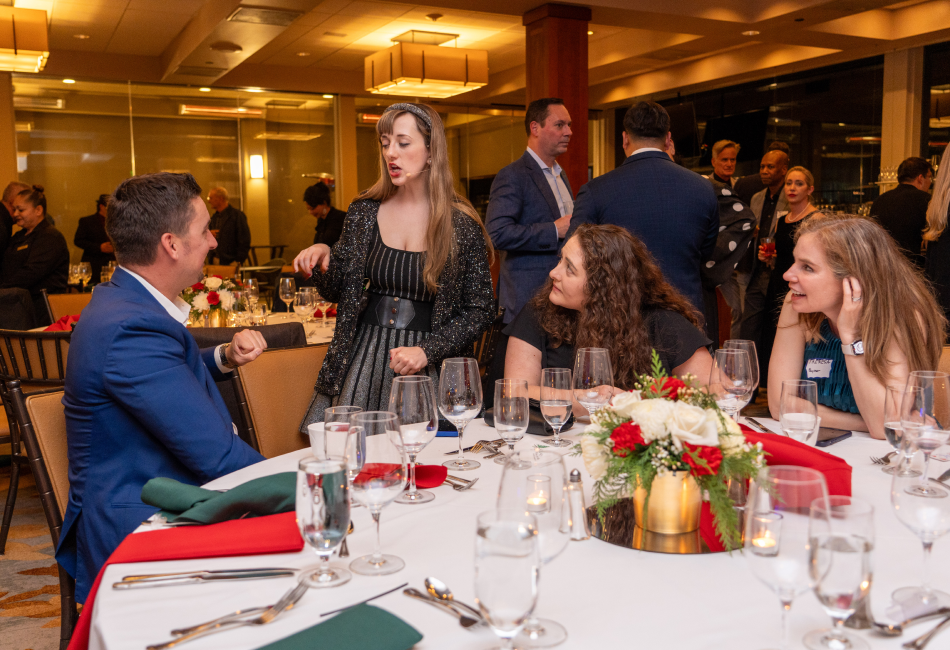
Will it cost less?

Yes, since December carries a premium across venues, catering, and staffing that January doesn't. More usefully, it means a considerably better party for the same money: the venue, food, and entertainment you actually wanted rather than the compromises a December budget forces. For a company that's held a disappointing party for years, moving the date beats increasing the budget.

What should we call it?

Not a Christmas party, since that's faintly odd in January and invites comment. A new year party, a winter celebration, an annual party, or simply a thank you for the previous year all work. A delayed Christmas party sounds like something that didn't happen on time, whereas a new year celebration sounds like a deliberate choice, and it's the same evening either way.

How do we announce the change?

As a choice rather than a cut, with the reasoning explained: a better venue, a better date, better attendance, and something to look forward to in the emptiest month of the year. People accept that readily because it's obviously sensible. A change made for unexplained reasons invites the least generous interpretation, which is usually that it was a cost saving.

When should we stay in December?

When your organization's rhythm genuinely ends then, when the party marks a financial year close, when it's a tradition people value, or when it's client facing and the seasonal context does some work for you. If your team is enthusiastic about the December party as it stands, there's nothing to fix, and these arguments only apply if you have the problems they solve.

Is there a middle option?

Yes, and it suits companies nervous about committing. Keep something small in December, drinks after work on the last Thursday, and hold the actual party in January. That preserves the seasonal moment while putting the money and effort where they produce more, and it's easy to reverse if it doesn't suit. It's a reasonable first step rather than a compromise.

Move the Date, Improve Everything Else

Most ideas for company Christmas party planning are attempts to make the best of December: work around the venue you could get, the budget the month demands, and the colleagues who can't come. Moving to January removes those constraints rather than managing them, giving you the room you wanted, suppliers with time to plan, a lower cost for the same evening, and considerably better attendance.

Frame it as a deliberate choice, call it something other than a Christmas party, and keep a small December drink if people would miss it. Then hold the party you actually wanted.

Reach out with your date, whenever it is, and let's talk about the evening.

Katrina Kroetch
Strolling Magician Las Vegas for Arena Suites and Season Hospitality

Strolling Magician Las Vegas for Arena Suites and Season Hospitality

Las Vegas now has professional sport across the calendar, which has quietly created a category of corporate hospitality that barely existed here a decade ago: companies holding suites across a season and hosting clients in them a dozen or more times a year.

That's a different problem from a one off event, because you have to make the same suite feel worth attending repeatedly. I'm Magical Katrina, an award winning magician and mentalist, and I want to explain where a strolling magician Las Vegas fits into arena hospitality, which is around the game rather than in competition with it.

The Game Is Not the Problem

Start with the obvious point, because it's the one that governs everything. Your guests came for the sport, the sport is genuinely entertaining, and nothing should be happening while play is live.

What surrounds the game is a different matter. Guests arrive well before the first whistle, there are intermissions or quarters, there's the stretch when the score has settled and attention drifts, and there's time afterwards. Those gaps are where hospitality either works or simply provides seating with a view. A strolling magician Las Vegas working those windows adds something without touching the reason people came.

Every Suite Offers the Same Thing

The competitive reality worth naming. Your client has been in suites before, frequently in the same building, hosted by your competitors, and the offering is broadly identical: good seats, a bar, food arriving at intervals, and a decent view.

That makes differentiation genuinely hard, and spending more on catering doesn't achieve it because nobody remembers the catering. Something happening in your suite that isn't happening in the forty others is what gets mentioned afterwards, and a strolling magician Las Vegas provides that at a fraction of what any comparable upgrade would cost.

Suites Rule Out Almost Everything Else

Practically decisive. A suite has seating oriented towards the glass, a bar, a counter, and perhaps twenty people, with no stage, no sound system available to you, and no floor space that isn't a walkway.

That eliminates every entertainment option except one. Close up magic needs nothing at all, works in the space exactly as it is, and operates at conversational volume so it never competes with the broadcast or the crowd noise. For a host who cannot install, move, or add anything to a suite the building controls, entertainment with no requirements is the only workable kind.

It Fills the Arrival Stretch

The most useful placement, and the one most hosts overlook. Guests arrive across half an hour before the game, and that period is currently a drink and a look at the view.

It's also when your guests are most available for conversation, before the game starts and attention moves to the ice or the field. A strolling magician Las Vegas working that arrival window means guests who came separately are talking to each other by the first whistle, in a good mood, rather than standing in the clusters they arrived in. For hospitality whose purpose is relationships, that early window is worth more than the third period.

Intermissions Are Longer Than They Feel

The second placement, and it addresses a real lull. An intermission is fifteen to twenty minutes of people standing up, queueing for something, and making conversation that stops abruptly when play resumes.

Something happening in those windows uses time that's currently spent waiting. It also has a natural stopping point, which matters: a performer working an intermission finishes when the game restarts, with no awkward negotiation about attention. A strolling magician Las Vegas experienced with this setting will read that instinctively rather than needing to be told.

Your Guests Came for Something Else

Worth being clear about the register, since this determines whether it lands. Suite hospitality entertainment must be secondary by design, and a performer who tries to become the center of the evening has misunderstood the booking.

The right approach is quiet, brief, and worked around the sport: small groups, a few minutes each, stopping entirely when play matters. A strolling magician Las Vegas who understands hospitality behaves like an excellent addition to your evening rather than a feature of it, and that judgement is worth checking when you book, since a performer used to parties may not adjust.

Season Long Hospitality Has Different Economics

Worth thinking about if you hold a suite across a season rather than for a single event. You're hosting different clients repeatedly in the same room, and the challenge is that your tenth guest group should have as good an evening as your first.

Rotating entertainment through a few dates across the season, rather than every game, gives you something to offer clients on those nights specifically and keeps the hospitality from becoming routine. Some companies use it for their most important accounts and keep the other nights simple, which is a sensible allocation and considerably cheaper than upgrading everything.

Corporate Nights and Season Ticket Events

Beyond client hospitality, there's an internal version. Companies with season tickets frequently run employee nights, and organisations hosting partner or dealer groups use arena events for the same reason they use dinners.

Those evenings have the same shape and the same gaps, and the same logic applies. A strolling magician Las Vegas works equally for a suite of employees, a group of partners, or a mixed room, since the format adapts to whoever is standing there rather than requiring a particular kind of audience.

A Note on "Local vs. Traveling In"

Worth knowing: many performers travel to Las Vegas, with travel discussed openly and factored into the quote rather than being your problem to arrange. I'm based in the Los Angeles area and travel to Vegas regularly, which suits selected dates across a season rather than a standing weekly arrangement. If you want someone at every home game, a Vegas based performer will serve you better, and I'd say so rather than taking something I can't sustain.

Why Book Magical Katrina

If you're hosting in a suite, here's my case. I'm a member of the Magic Circle in London and the Academy of Magical Arts in Hollywood, I've earned multiple magic awards, and I've performed for clients including Formula 1, the Olympics, Porsche, Prada, and the Ritz Carlton, with appearances on Penn & Teller: Fool Us and Masters of Illusion. I've worked plenty of hospitality where the event itself is the draw, so I work the gaps and stop when attention returns to the game, I need no stage, power, or setup, and I'm fully insured with a COI available for the venue.

Frequently Asked Questions

Won't it compete with the game?

Not if it's handled properly, and a performer who tries to become the center of the evening has misunderstood the booking. Guests came for the sport and nothing should happen while play is live. The right approach works the arrival stretch and intermissions in small groups, stopping entirely when the game resumes, which has a natural stopping point built in.

Where does it fit best?

The arrival window before the first whistle, which is currently a drink and a look at the view and is when guests are most available for conversation. Working that stretch means people who came separately are talking to each other by the time play starts. Intermissions are the second placement, using fifteen or twenty minutes that are otherwise spent queueing.

Does it work in a suite?

It's one of very few things that does. A suite has seating oriented to the glass, a bar, a counter, and perhaps twenty people, with no stage, no available sound system, and no floor space that isn't a walkway. Close up magic needs nothing, works in the space as it is, and operates at conversational volume so it never competes with the broadcast.

Every suite is the same. Does this actually differentiate ours?

That's precisely the argument. Your client has been in suites before, often in the same building hosted by your competitors, and the offering is identical: good seats, a bar, food, and a view. Spending more on catering doesn't differentiate because nobody remembers catering. Something happening in your suite that isn't happening in the others is what gets mentioned afterwards.

We hold a suite all season. Should we do it every game?

Rarely worth it, and rotating across a few dates works better. You're hosting different clients repeatedly in the same room, and the challenge is that your tenth group should have as good an evening as your first. Many companies use it for their most important accounts and keep other nights simple, which is a sensible allocation and cheaper than upgrading everything.

Does it work for employee or partner nights?

Yes, since those evenings have the same shape and the same gaps. Companies with season tickets frequently run employee nights, and organizations hosting partner or dealer groups use arena events for the same reasons they use dinners. The format adapts to whoever is standing there rather than requiring a particular kind of audience.

How do I book you, and what do you need to get started?

Reach out with your dates, the venue and suite, roughly how many guests, and whether they're clients, employees, or a mixed group. That's enough for me to check availability and send a quote including travel. If you're considering several dates across a season, mention that, since selected dates suit me better than a standing weekly arrangement and are easier to schedule with notice.

Host the Gaps, Not the Game

A suite gives you excellent seats and a view, and so does every other suite in the building. What distinguishes yours is what happens in the stretches around the sport: the arrival window when guests are most available, the intermissions currently spent queueing, and the periods when the score has settled. A strolling magician Las Vegas works exactly there, needing nothing from a room you don't control and stopping the moment attention returns to the game.

If you're hosting clients across a season, I'd be glad to hear which dates matter most.

Reach out with your dates and suite details, and let's make the evenings work.

Katrina Kroetch
San Francisco Magician: Serving the Wider Bay Area

San Francisco Magician: Serving the Wider Bay Area

Most people planning a Bay Area event search for a San Francisco magician regardless of where the event actually is, because the city is the obvious search term. Then they discover their venue is in Menlo Park, or Walnut Creek, or an hour north in Sonoma, and start wondering whether that changes anything.

It changes some things and not others, and it's worth knowing which. I'm Magical Katrina, an award winning magician and mentalist, and I want to set out what actually differs across the region, so you can work out what your event needs regardless of which side of a bridge it's on.

The Region Is Several Markets

Worth establishing first. The Bay Area functions as one metropolitan area and behaves like several distinct event markets, with different venue types, event styles, and expectations in each.

A corporate event in the Financial District, a company party in Menlo Park, a fiftieth birthday in Berkeley, and a wedding in Sonoma are genuinely different bookings, and treating them as interchangeable is how people end up with entertainment that doesn't suit the room. Searching for a San Francisco magician is a reasonable starting point, and the useful question is what your particular corner of the region calls for.

The Peninsula and Silicon Valley

The largest source of corporate work in the region, and it has its own character. Events here happen in company offices, hotel function rooms, private clubs, and restaurant spaces, and the audiences skew heavily technical.

That means rooms full of engineers, product people, and researchers, who are among the best audiences for skilled close up magic and mentalism rather than difficult ones. It also means venues that were built for work rather than for events, with no stage, poor acoustics, and no space to create either. A San Francisco magician performing close up magic fits those rooms exactly, since nothing needs installing and nothing needs moving.

The East Bay

A different mix, and one people underestimate. Oakland and Berkeley have a genuinely strong venue scene, converted industrial spaces, arts venues, restaurants, and a good deal of private entertaining in homes with more space than the city allows.

Events here tend to be less formal than their equivalents across the bay, and homes are frequently the venue rather than a hired room, which suits strolling magic well since guests distribute across kitchens, gardens, and living rooms. Travel from the city is straightforward outside peak hours, and a San Francisco magician covering the region should treat the East Bay as ordinary rather than as an outlying request.

Marin and the North Bay

Beautiful venues and different practical constraints. Marin has estate properties, outdoor spaces, and venues chosen for setting rather than facilities, which frequently means limited power, no staging, and partly outdoor events.

That rules out a lot and suits close up magic entirely, since it needs nothing at all and moves indoors without adjustment when an evening cools, which north of the bridge it reliably does. Travel is the main variable to discuss, particularly around timing, and it should be raised openly at the enquiry stage rather than appearing later.

The South Bay

San Jose and the surrounding area is a substantial market in its own right, with convention facilities, hotels, corporate campuses, and a large residential population holding private celebrations.

It's also far enough from the city that a performer's willingness to travel there genuinely matters, and some city based performers quietly prefer not to. Ask directly rather than assuming. A San Francisco magician who covers the South Bay as a matter of course will say so, and one who hedges is telling you something useful about how the booking will feel closer to the date.

Wine Country

An hour or more north, and a category of its own. Napa and Sonoma venues are chosen for setting, which usually means outdoor or partly outdoor spaces, generator power, no stage, gravel underfoot, and local ordinances imposing curfews.

Entertainment requiring nothing is worth a great deal in that context, since there's no generator load, nothing to transport over difficult access, and no adjustment when the party moves inside. Travel is a genuine factor here and should be discussed and quoted openly rather than assumed. Among things a San Francisco magician should be clear about for a wine country booking, travel and timing are the two that matter.

How Travel Actually Works

Worth explaining, since it's the practical question underneath all of this. Local travel within a reasonable radius is normally absorbed into a quote rather than itemized, and longer journeys are usually reflected.

What you shouldn't encounter is a surprise. Ask whether the figure you've been given is inclusive, and expect a straight answer. A slightly higher all in quote is frequently cheaper than a lower one with travel added afterwards, and a performer who's clear about this at the enquiry stage is demonstrating the same clarity you'll want closer to the event.

Location Should Not Narrow Your Shortlist

The point worth making plainly. Restricting your search to performers based in your particular part of the region shrinks your options considerably, and travel is usually a modest component of a total rather than a decisive one.

That's especially true for anything with a small pool of specialists. A better performer an hour away is a better booking than a nearer one who suits your event less well, and travel is the performer's problem to arrange rather than yours. Judge on skill, format, and fit, then treat location as a logistical detail to confirm rather than a filter to apply first.

A Note on "Local vs. Traveling In"

Relatedly, and honestly: I'm based in the Los Angeles area and travel to San Francisco and the wider Bay Area for events, with travel discussed openly and factored into the quote rather than added later. For a performer travelling into the region, a booking in San Jose or Sonoma is not meaningfully different from one in the city, which occasionally means availability when locally based performers are committed elsewhere.

Why Book Magical Katrina

If your event is anywhere in the region, here's my case. I'm a member of the Magic Circle in London and the Academy of Magical Arts in Hollywood, I've earned multiple magic awards, and I've performed for clients including Formula 1, the Olympics, Porsche, Zapier, and the Ritz Carlton, with appearances on Penn & Teller: Fool Us and Masters of Illusion. I blend close up magic with mentalism, which suits the region's analytical audiences, I need no stage, power, or setup, so office spaces, estates, and wine country venues all work, and I quote travel openly rather than adding it later.

Frequently Asked Questions

Does it matter where in the Bay Area our event is?

For what suits the room, yes. The region functions as one metropolitan area and behaves like several distinct event markets, with different venue types and styles across the Peninsula, East Bay, Marin, South Bay, and wine country. For availability and travel it matters less than people assume, since travel is usually a modest component rather than a decisive one.

What suits a Silicon Valley corporate event?

Close up magic, generally, since events there happen in company offices and function rooms built for work rather than events, with no stage, poor acoustics, and no space to create either. The audiences skew technical, which makes them among the best audiences for skilled magic and mentalism rather than difficult ones, since analytical scrutiny intensifies the effect rather than defeating it.

Do performers cover the East Bay and South Bay?

Good ones do as a matter of course, though it's worth asking directly rather than assuming, particularly for the South Bay, which is far enough from the city that some city based performers quietly prefer not to travel there. A San Francisco magician who covers the region will say so plainly, and hedging tells you something about how the booking will feel later.

What about wine country venues?

They're chosen for setting rather than facilities, which usually means outdoor or partly outdoor spaces, generator power, no stage, difficult access, and local curfews. Entertainment requiring nothing is worth a great deal there, since there's no generator load, nothing to transport over gravel, and no adjustment when the party moves inside. Travel is a genuine factor and should be quoted openly.

How is travel usually charged?

Local travel within a reasonable radius is normally absorbed into the quote rather than itemised, and longer journeys are usually reflected. What you shouldn't encounter is a surprise, so ask whether the figure is inclusive and expect a straight answer. A slightly higher all in quote is frequently cheaper than a lower one with travel added afterwards.

Should we only consider performers based nearby?

No, and it narrows your options considerably for little benefit. Travel is usually a modest component of a total rather than a decisive one, and it's the performer's problem to arrange rather than yours. A better performer an hour away is a better booking than a nearer one who suits your event less well, so treat location as a detail to confirm rather than a filter.

How do I book you, and what do you need to get started?

Reach out with your event date, the venue or town, event type, and rough guest count. That's enough for me to check availability and send a quote with travel included rather than added later. Since I need no stage, power, or setup, the answer for Bay Area venues is almost always that it works, whether you're in the city, on the Peninsula, or an hour north.

Search the City, Book for Your Venue

Searching for a San Francisco magician is a sensible starting point wherever your event is, and the useful next step is thinking about what your particular corner of the region calls for: a technical audience and an office room on the Peninsula, a house party in the East Bay, an estate in Marin, or an outdoor venue in wine country with a curfew and a generator.

Then judge performers on skill and fit rather than postcode, and confirm travel openly at the enquiry stage. The right booking is rarely the nearest one.

Reach out with your venue and date, and I'll confirm it works and quote travel upfront.

Katrina Kroetch
Fun Conference Ideas That Make Networking Actually Work

Fun Conference Ideas That Make Networking Actually Work

Every conference programme includes networking, usually as a labelled block between sessions, and almost every delegate feedback form asks for more of it. What people rarely say is that the networking sessions themselves are frequently the least enjoyable part of the day.

The reason is that "networking" isn't an activity, it's an outcome, and scheduling a block for it doesn't produce it. I'm Magical Katrina, an award winning magician and mentalist who works conferences, and I want to offer fun conference ideas aimed specifically at getting delegates talking to people they don't know.

A Room and a Coffee Is Not a Plan

Start with why the standard approach underdelivers. Put three hundred people in a room with refreshments and label it networking, and what happens is that colleagues talk to colleagues, people who arrived together stay together, and anyone who came alone stands near the food looking at their phone.

That isn't a failure of the delegates. It's a room with no structure, in which approaching a stranger requires an act of social courage most people won't perform before their second coffee. Among fun conference ideas for the networking problem, anything that removes the need for that initial act of courage does more than extending the break by fifteen minutes.

The Delegate Who Came Alone

Worth thinking about specifically, since they're the person your networking is nominally for. Someone attending alone, from a smaller organization or a different sector, is the delegate with most to gain and the least social cover.

They will not approach a group mid conversation, and nobody in that group will break off to include them. So they attend the whole conference, learn a good deal, speak to almost nobody, and record on the feedback form that there wasn't enough networking. Designing for that person specifically improves the event for everybody, and it's a more useful design brief than "encourage networking" in the abstract.

Structured Icebreakers Are Resented

The obvious solution and a frequently counterproductive one. Asking professional adults to turn to the person beside them and share a fact, or to complete a bingo card of introductions, produces visible reluctance from exactly the senior people whose attention you most want.

The problem isn't the goal, it's being made to perform sociability on instruction. Among fun conference ideas in this category, anything requiring delegates to publicly participate in an exercise designed to make them talk will be endured rather than enjoyed, and the resistance is strongest among the delegates with the most professional standing to protect.

Shared Experience Beats Introduction

The principle that actually works. People who have just experienced something together have a subject, which is the missing ingredient in every awkward networking exchange.

Two strangers who have both just watched something impossible happen have an immediate and genuine thing to react to, and the conversation starts itself rather than requiring an opening line. That's why the moments after a striking keynote produce better conversations than the coffee break before it. Among fun conference ideas for networking, anything creating a shared reaction across a room is doing the work that structured introductions attempt and rarely achieve.

Design the Seating

An unglamorous fix with a disproportionate effect. Rows facing forward produce no conversation at all, whereas round tables produce conversation whether you plan it or not.

If any part of your program can be delivered to seated tables rather than theatre rows, you have created networking without labelling it. Assigning seats, or at least discouraging colleagues from sitting together at lunch, does more than a dedicated session. Delegates grumble mildly about assigned seating and consistently report better conversations, which is a trade most organizers should take.

Timing Matters More Than Duration

A scheduling point worth acting on. Networking placed at the end of day one competes with people wanting to check into hotels and call home, and networking on the final afternoon competes with trains.

Placed early, on the first morning before the room has formed into groups, it works considerably better, because nobody has yet settled into the people they arrived with. Among fun conference ideas, moving the networking element earlier costs nothing and changes the social structure of the entire event, since the groupings formed on the first morning tend to persist for the duration.

Give People a Reason to Move

The practical mechanism behind several of the above. Delegates form a group and stay in it, so anything that legitimately requires movement produces mixing.

That might be an activity in the exhibition hall, refreshments in a different space from the session room, a program element that requires relocating, or a performer moving through a room and reshuffling small groups as they go. The point isn't the activity itself, it's that people end up standing next to somebody different. Among fun conference ideas, the ones that quietly rearrange the room outperform the ones that ask delegates to introduce themselves.

Use Table Hosts

A specific and underused technique. Assign someone at each table, a committee member, a speaker, or a willing volunteer, whose job is simply to make sure everyone at that table has spoken and that nobody is left out.

It costs nothing, it takes very little briefing, and it solves the lone delegate problem more reliably than anything else on this list. People who would never introduce themselves to a stranger will happily talk when somebody else opens the door. If you do one thing from this article, this is probably it, since it addresses the actual mechanism rather than the atmosphere.

Where a Performer Fits

Since it's my area, specifically. A performer working a reception or an exhibition hall reshuffles the room continuously: a group forms to watch, reacts together, and disperses into different configurations than it started in.

Close up magic suits this because it happens to small groups rather than to an audience, needs no stage or slot, and gives strangers a shared reaction rather than requiring them to generate conversation from nothing. Among fun conference ideas for networking specifically, that combination of movement and shared experience is what the labelled networking block is trying and failing to produce.

Frequently Asked Questions

Why do networking sessions fail?

Because networking is an outcome rather than an activity, and scheduling a block doesn't produce it. A room with refreshments and no structure means colleagues talk to colleagues, people who arrived together stay together, and anyone alone stands near the food. Approaching a stranger requires social courage most delegates won't summon, and extending the break doesn't change that.

What about the delegate who came alone?

They're the person your networking is nominally for and the one it serves worst, since they won't approach a group mid conversation and nobody in that group will break off to include them. Designing specifically for that delegate improves the event for everyone, and it's a far more useful brief than encouraging networking in the abstract.

Do icebreakers help?

Rarely, and they frequently backfire. Asking professional adults to share a fact with a neighbor or complete a bingo card of introductions produces visible reluctance from exactly the senior delegates you most want engaged. The goal is right and the imposition is wrong, and resistance is strongest among people with professional standing to protect.

What actually gets strangers talking?

A shared experience, which supplies the missing subject. Two people who have just watched something impossible have an immediate and genuine thing to react to, so the conversation starts itself rather than needing an opening line. That's why the moments after a striking keynote produce better conversations than the coffee break beforehand.

Does seating really matter?

Disproportionately. Rows facing forward produce no conversation, whereas round tables produce it whether you plan it or not, so delivering any part of your program to seated tables creates networking without labelling it. Assigning seats, or discouraging colleagues from sitting together at lunch, does more than a dedicated session, and delegates consistently report better conversations despite mild grumbling.

When should networking happen?

Early, ideally the first morning before the room has formed into groups. Placed at the end of day one it competes with hotel check ins, and on the final afternoon it competes with trains. Moving it earlier costs nothing and changes the social structure of the whole event, since the groupings formed on the first morning tend to persist.

What's the single most effective fix?

Table hosts. Assign someone at each table, a committee member, speaker, or volunteer, whose job is making sure everyone has spoken and nobody is left out. It costs nothing, needs little briefing, and solves the lone delegate problem more reliably than anything else, because people who'd never introduce themselves will talk once somebody opens the door.

Design It, Don't Schedule It

The most useful fun conference ideas for networking aren't sessions at all. They're design decisions: seat people at tables rather than in rows, place the social element early before groups form, give delegates a legitimate reason to move around, assign table hosts to include the people who came alone, and program something that gives strangers a shared reaction rather than an instruction to introduce themselves.

Do that and your feedback forms will stop asking for more networking, because the conversations will have happened without anyone having to call them networking.

Reach out with your agenda, and let's look at where the room could be doing more.

Katrina Kroetch
Corporate Magician Los Angeles for Client Entertaining and Hospitality

Corporate Magician Los Angeles for Client Entertaining and Hospitality

Client entertaining in Los Angeles has a structural problem: your competitors are taking the same clients to the same restaurants. The city has an exceptional dining scene, everyone in your industry knows it, and a client who matters to you has been to your first choice venue twice this quarter with somebody else.

That's what a hospitality budget is actually up against. I'm Magical Katrina, an award winning magician and mentalist based right here in Los Angeles, and I want to explain where a corporate magician Los Angeles fits into client entertaining, which is a differentiation problem rather than a catering one.

A Good Dinner Is the Baseline

Start with the honest position. Taking a client somewhere excellent is table stakes rather than a gesture, and it's what everyone competing for that relationship is also doing.

That doesn't make it wrong, it makes it insufficient on its own. The evenings clients remember have something in them beyond the food, and the ones they describe to colleagues afterwards have something specific to describe. A corporate magician Los Angeles provides that at a fraction of what upgrading the venue or the wine would cost, and it's considerably more memorable than either, because nobody recounts a wine list.

Small Senior Groups Are Hard to Entertain

The particular difficulty with client hospitality. These evenings are usually eight to sixteen people, senior on both sides, and almost all performance entertainment is designed for scale and fails badly at that headcount.

A band makes no sense, a comedian for twelve is uncomfortable for everyone, and anything requiring participation risks asking a client's chief executive to do something undignified. Close up magic is the exception, since it's built for exactly this: performed at conversational distance for a handful of people at a time, and it improves as the group shrinks rather than needing a crowd to work.

It Moves the Evening From Formal to Human

The functional argument, and the reason to consider it for a client dinner specifically. These evenings begin carefully, with both sides slightly performing, aware of the commercial relationship underneath the conversation.

That formality usually dissolves somewhere into the second course, and everything valuable happens afterwards. A corporate magician Los Angeles accelerates it, because genuine astonishment produces an unguarded reaction from people who spend their working lives composed. If the point of the evening is the relationship rather than the meal, arriving at that state an hour earlier is worth more than the wine you'd have spent it on.

Your Clients Are Difficult to Impress

Worth acknowledging, since it shapes what works here. LA client lists frequently include people who work in or adjacent to entertainment, who have attended events with production budgets no company can match and who make impressive things professionally.

Spending more places you somewhere on a scale they stopped noticing years ago. Intimacy is the thing production cannot deliver: something impossible six inches from a guest's face, with no crew, no camera, and nothing between them and it. People who understand how effects are made frequently react hardest, because the explanations their expertise usually supplies simply aren't available to them.

It Gives Them a Story With Your Name On It

The commercial mechanism, stated plainly. What you want from client hospitality is that your organization comes up in a conversation you're not part of, and a good dinner rarely achieves that because there's nothing to recount.

An evening where something genuinely inexplicable happened at the table produces a story your client tells colleagues, and your organization is attached to it every time. Among reasons to book a corporate magician Los Angeles for hospitality, that downstream effect is the one that justifies the line, since it extends the evening's reach well beyond the people who attended it.

It Suits the Venues You'd Actually Use

Practically, client entertaining here happens in restaurant private rooms, at private estates, in studio adjacent spaces, and occasionally at a home, and most of those have no stage, no available sound, and no space to spare.

That eliminates nearly every alternative. A corporate magician Los Angeles performing close up magic needs no stage, power, sound, or setup, works at a table between courses without altering the restaurant's service, and moves between a terrace and a dining room without adjustment. For a host who chose the venue for its quality rather than its facilities, that flexibility is what makes entertainment possible at all.

Dignity Is the Requirement

Worth being clear about, because it's the risk that makes people hesitate. Senior clients cannot be made to look foolish in front of their colleagues or yours, and a performer who doesn't understand that will produce a genuinely bad evening.

Done properly, a participant becomes the person something extraordinary happened to rather than the subject of anything. Nobody is put on the spot without an easy way out. Ask any corporate magician Los Angeles directly how they handle senior participants, and expect an answer reflecting experience rather than reassurance, since at this kind of event it's the only thing that can genuinely go wrong.

Discretion Comes With It

Related and worth establishing. Client evenings involve conversations that aren't public, occasionally people whose presence isn't advertised, and an organization that would rather the evening wasn't discussed elsewhere.

A performer at that table should treat that as a requirement: no photographs, no social media, no mention of who was present, and no lingering once the booking finishes. Performers who work at this level understand it without being asked, and it's worth confirming at the outset alongside insurance and terms rather than assuming.

Being Local Simplifies It

Worth noting, since client entertaining tends to be arranged at short notice and moved more than once. Unlike a performer flying in, I'm based right here in the LA area and serve all of Southern California, so there are no travel costs on your hospitality budget and no logistics to coordinate.

It also means flexibility if the dinner shifts, which client evenings frequently do when a senior person's schedule changes, and familiarity with the venues you're likely to be using. For a booking that may move twice before it happens, a locally based corporate magician Los Angeles removes a set of complications rather than adding them.

Why Book Magical Katrina

If you're entertaining clients here, here's my case. I'm based in the LA area, I'm a member of the Magic Circle in London and the Academy of Magical Arts in Hollywood, I've earned multiple magic awards, and I've performed for companies including Formula 1, the Olympics, Porsche, Prada, and the Ritz Carlton, with appearances on Penn & Teller: Fool Us and Masters of Illusion. I work particularly well with small senior groups, I blend close up magic with mentalism, which suits a sharp commercial room, and I treat participants with care so nobody is ever the joke. I need no stage, sound, or setup, and I'm fully insured with a COI available.

Frequently Asked Questions

Isn't a good restaurant enough?

It's the baseline rather than a gesture, and it's what everyone competing for that relationship is also doing, frequently at the same venues. The evenings clients remember have something in them beyond the food, and the ones they describe afterwards have something specific to describe. A corporate magician Los Angeles provides that for a fraction of what upgrading the venue or wine would cost.

Our dinner is only twelve people. Does that work?

Better than at scale, which surprises people. Almost all performance entertainment is designed for a crowd and fails badly at that headcount, whereas close up magic is built for exactly this, performed at conversational distance for a handful at a time. A band makes no sense for twelve and a comedian is uncomfortable, but this improves as the group shrinks.

How does it help the business relationship?

By moving the evening from formal to human faster. Client dinners begin carefully with both sides slightly performing, and that formality usually dissolves somewhere into the second course, with everything valuable happening afterwards. Genuine astonishment produces an unguarded reaction from people who spend their working lives composed, which arrives an hour earlier than it otherwise would.

Will it impress clients who work in entertainment?

More reliably than spending more will. LA client lists frequently include people who make impressive things professionally and have attended events with budgets no company can match, so competing on production places you on a scale they stopped noticing. Intimacy is what production can't deliver, and people who understand how effects are made frequently react hardest.

Could it embarrass a senior client?

Not with a performer who understands the requirement, and it's the only thing that can genuinely go wrong at this kind of event. A participant should become the person something extraordinary happened to rather than the subject of anything, with nobody put on the spot without an easy way out. Ask directly how they handle senior participants and expect experience rather than reassurance.

Will it work at a restaurant or private estate?

Yes, and that's where these evenings happen. Restaurant private rooms, estates, and studio adjacent spaces mostly have no stage, no available sound, and no space to spare, which eliminates nearly every alternative. Close up magic works at a table between courses without altering the restaurant's service and moves between a terrace and a dining room without adjustment.

How do I book you, and what do you need to get started?

Reach out with your date, the venue, how many will attend, and whether it's clients, prospects, or a mixed group. That's enough for me to check availability and send a quote. It's worth mentioning anything sensitive about the group, and since client evenings often move, being local means rescheduling is straightforward rather than a complication.

Give Them Something to Describe

Client entertaining in Los Angeles is a differentiation problem, because the good venues are known to everyone and your competitors are using them too. A corporate magician Los Angeles addresses it directly: something at the table that isn't on anyone else's menu, an evening that becomes human faster than it otherwise would, intimacy an industry client can't dismiss, and a story your organization is attached to every time they tell it.

If you're hosting clients here, I'd be glad to hear what you're planning, and as a local, I'm right here.

Reach out with your date and venue, and let's make the evening worth their time.

Katrina Kroetch
Female Magician Los Angeles for Holiday Parties

Female Magician Los Angeles for Holiday Parties

December in Los Angeles produces a particular kind of party. Half of them are still outdoors, because the weather permits it, guests arrive from three different freeways at slightly different times, and a decent proportion of the room works in an industry that produces spectacle for a living and is therefore quite difficult to impress with a room and a bar.

That's the environment your holiday party has to work in. I'm Magical Katrina, an award winning magician and mentalist based right here in the LA area, and I want to explain what a female magician Los Angeles brings to a December event, starting with the part that has nothing to do with gender.

Skill Decides It

Worth establishing before anything else. Skill in magic and mentalism has nothing to do with gender, and you should book a female magician Los Angeles because she's genuinely excellent, assessed on exactly the criteria you'd apply to anyone: sustained live footage, relevant experience, reviews, and professional communication.

Everything after this is context rather than justification. A booking made on any basis other than quality is apparent within a few minutes, and it's your party carrying it. The distinctiveness is a bonus on top of genuine excellence rather than a substitute for it, which belongs at the top rather than buried in a closing paragraph.

Your December Party Is Probably Partly Outdoors

The local particularity, and it rules out more than people expect. LA holiday parties happen on patios, terraces, rooftops, and in venues that open to the outside, with guests moving between inside and out across the evening.

Amplified entertainment outdoors runs into noise restrictions, anything needing power is awkward, and anything that can't relocate becomes a problem when the evening cools, which in December it does. A female magician Los Angeles performing close up magic needs no stage, power, sound, or setup, works on a terrace exactly as in a room, and moves indoors without anyone noticing. For a party spread across both, that's one of very few workable options.

Guests Arrive Across an Hour

Something specific to this city that shapes the evening. People come from across the county, traffic is unpredictable, and your seven o'clock start means a room that fills gradually until nearly eight.

That early stretch is awkward: the first arrivals stand about, the host watches the door, and the energy doesn't build until enough people are present. A female magician Los Angeles works from the moment guests arrive rather than requiring a full room, so the people who came on time get something rather than waiting. It also means the party feels like it has started before it technically has, which changes how the whole evening goes.

Colleagues Find Their Team and Stay There

The universal holiday party failure. People arrive, locate the colleagues they see daily, and talk to them, which is precisely what the party was meant to interrupt.

Left alone that persists all evening. A performer working the room breaks it up mechanically: four people from three departments react to something together and are a group for the next twenty minutes. For a company hoping people from different teams might actually meet, a female magician Los Angeles is considerably more reliable than hoping the bar and a playlist manage it.

An Industry Crowd Needs Intimacy, Not Scale

Worth knowing, since it determines what lands here. A meaningful proportion of LA guests work in or adjacent to entertainment, which means they produce illusions professionally and have attended events with budgets no company party can match.

Competing on production is therefore pointless. What large production structurally cannot deliver is intimacy: something impossible happening six inches from a guest's face, with no camera, no cut, and no crew. A female magician Los Angeles performing close up magic offers exactly that, and people who understand professionally how effects are made frequently react hardest, because their usual explanations aren't available.

It Costs Nothing From Your Schedule

Practical, since December evenings are usually full: arrival, food, a few words from someone senior, awards or a raffle, and then the party proper.

Anything requiring a program slot competes with a schedule that's already tight, and anything asking the room to stop and watch loses people who came to talk. A female magician Los Angeles works inside the reception and mingling that already exist, beginning as guests arrive and continuing through the evening. Covering the whole event while occupying none of your run of show is straightforwardly efficient.

It Suits People Who Aren't Drinking

Worth mentioning, since December parties are built around a bar and a meaningful proportion of any workforce isn't drinking, whether for health, preference, or because they're driving home across the county afterwards.

Close up magic works identically on someone sober at seven and someone relaxed at ten, requires no participation beyond watching and holding something, and gives colleagues who aren't drinking something to do with an evening otherwise composed of conversation and a soft drink. Among choices for a holiday party, entertainment landing the same for everyone in the room is quietly one of the more inclusive ones.

Being Local Matters in December

The practical advantage in the most contested month of the year. Travel costs sit on your budget when a performer flies in, and December is when they're least likely to have flexibility if your timings shift.

I'm based right here in the LA area and serve all of Southern California, so there are no travel costs, no logistics to coordinate, and straightforward scheduling if the evening moves. It also means a late enquiry is worth making rather than assuming it's hopeless, since a locally based female magician Los Angeles can frequently accommodate a date that a travelling performer couldn't.

Book Earlier Than Feels Necessary

The seasonal constraint. December compresses a year of demand into four weeks, and the first three weeks on a Thursday or Friday are among the most contested dates of the year.

A specific performer for a prime date realistically means enquiring in the summer, and by October most established options are committed. If your party is an annual fixture, book next year's as soon as this year's date is confirmed. If it's already November, enquire widely rather than sequentially and be flexible on day and time, since a Tuesday or an earlier start opens options a Friday won't.

Why Book Magical Katrina

If you'd like a female magician Los Angeles for your holiday party, here's my case. I'm based in the LA area, I'm a member of the Magic Circle in London and the Academy of Magical Arts in Hollywood, I've earned multiple magic awards, and I've performed for companies including Formula 1, the Olympics, Porsche, Prada, Zapier, and the Ritz Carlton, with appearances on Penn & Teller: Fool Us and Masters of Illusion. I blend close up magic with mentalism, which holds up in front of an industry crowd, I work indoors and out without adjustment, and there are no travel costs on your budget. I'm fully insured with a COI available.

Frequently Asked Questions

Our party is partly outdoors. Is that a problem?

No, and it's the usual LA December situation. Amplified entertainment outdoors runs into noise restrictions, anything needing power is awkward, and anything that can't relocate becomes a problem when the evening cools. Close up magic needs no stage, power, sound, or setup, works on a terrace exactly as in a room, and moves indoors without anyone noticing.

Guests arrive over an hour. Does that matter?

It's an argument for this format. People come from across the county and a seven o'clock start means a room filling until nearly eight, which leaves early arrivals standing about while energy fails to build. A female magician Los Angeles works from the moment guests arrive rather than needing a full room, so the party feels like it has started before it technically has.

Why does a holiday party need entertainment?

Because colleagues find their own team and stay there, which is exactly what the party was meant to interrupt and persists all evening if left alone. A performer approaching four people from three departments gets them reacting together, and they remain a group afterwards. That's considerably more reliable than hoping a bar and a playlist manage it.

Will it impress guests who work in entertainment?

More reliably than production will, since they produce illusions professionally and have attended events with budgets no company party can match. Competing on spectacle is pointless, whereas intimacy is what large production can't deliver: something impossible six inches from their face with no camera, cut, or crew. People who understand how effects are made frequently react hardest.

Does it take time from our program?

No, which matters when December evenings already include arrival, food, a few words from someone senior, and awards or a raffle. It works inside the reception and mingling that already exist, beginning as guests arrive and continuing through the evening, rather than requiring a slot or asking the room to stop and watch.

Does booking someone local help?

In December particularly. Travel costs sit on your budget when a performer flies in, and that's the month they're least likely to have flexibility if your timings shift. A locally based performer means no travel costs, no logistics, straightforward rescheduling, and a genuine chance of accommodating a late enquiry that a travelling performer couldn't.

How late can we leave the booking?

Earlier than feels necessary, since December compresses a year of demand into four weeks with the first three weeks on a Thursday or Friday most contested. A prime date realistically means enquiring in the summer. If it's already November, enquire widely rather than one at a time and be flexible on day and time, and as a local I can sometimes help at short notice.

Make December Worth Attending

Holiday parties succeed on whether anything actually happened, and in a city where guests arrive late from three freeways and half the room produces spectacle professionally, that takes more than a bar and a playlist. A female magician Los Angeles addresses it directly: something working from the first arrival, breaking up the teams who won't otherwise mix, offering intimacy an industry crowd can't dismiss, working indoors and out, and taking nothing from your schedule or your travel budget.

If you're planning something for December, I'd be glad to hear about it, and as a local, I'm right here.

Reach out with your date and venue, and let's make it the one people remember.

Katrina Kroetch
Zoom Magician for Sports Clubs and Supporters' Organizations

Zoom Magician for Sports Clubs and Supporters' Organisations

Clubs live on their calendar. During the season there's a reason to turn up every week, the bar is busy after matches, and the committee's main problem is finding enough volunteers. Then the season ends, and for several months there's nothing bringing anybody together at all.

That gap is where memberships quietly erode. I'm Magical Katrina, an award winning magician and mentalist, and I want to explain how a Zoom magician works for sports clubs, supporters' organizations, and member associations, both during the quiet months and for the events you already run.

The Off Season Is When Clubs Lose People

Start with the structural problem. Members don't usually resign, they simply stop coming, and the drift begins during whatever period your club has no fixtures.

By the time the season restarts, a proportion of last year's members have found something else to do on a Saturday. Anything that keeps the club present in members' lives during that gap addresses the actual mechanism of attrition. A Zoom magician is one of the few things a committee can arrange in the quiet months without a venue, a bar roster, or anyone giving up an evening to set up chairs.

Members Move Away and Stay Members

Something clubs frequently underuse. A lot of organizations have people on the membership list who no longer live locally: someone who moved for work, a family who relocated, players who left but still care.

Those members rarely attend anything, and they're often the ones with the strongest sentimental attachment. A Zoom magician reaches them on exactly the same terms as the members who live down the road, which for a club with a long history and a dispersed alumni of former players is a genuine opportunity rather than a consolation. It's also an easy thing to invite them to, since it asks nothing but an evening at home.

Awards and Presentation Nights

The event most clubs already run, and one that works surprisingly well virtually when the alternative is a poorly attended function room.

A presentation night is essentially a list of names read aloud, which is meaningful for the recipients and long for everyone else. A Zoom magician placed before the awards gives the evening something beyond the list, holds families through the presentations rather than losing them after their own child's category, and means the whole club can attend regardless of childcare, distance, or a shift that finishes late. For clubs with a junior section particularly, that reach matters.

Junior Sections and Families

Worth separating out, since clubs with youth teams have a different audience. Junior club events compete with everything else a family does, and an evening at the clubhouse requires parents to organize a trip.

A virtual event asks for forty five minutes at home with the children present, which is a considerably easier proposition. A Zoom magician performing for families rather than pitching at children or adults specifically gives a junior section a proper club event without a hall, a rota, or anyone tidying up afterwards. It's also one of the few things that reaches both the children and the parents who volunteer to run everything.

As a Fundraiser, the Math’s Is Reasonable

Worth setting out honestly, since fundraising is the reason many clubs consider anything. A virtual event has no venue cost, no bar staff, no printing, and no volunteer hours, so almost everything you take is surplus.

Ticket it modestly per household rather than per person, since a family ticket is easier to sell and increases attendance. Compare it with a race night or a quiz requiring a room, a license, prizes, and six volunteers, and the effort per pound raised is considerably better. It won't out raise your main annual event, and it will out raise most of the smaller things your committee spends weekends on.

Be Honest About the Ceiling

Worth stating plainly. A virtual event raises a useful sum rather than a transformative one, and it won't fund new floodlights or a clubhouse roof.

What it does is generate a reasonable amount with very little committee time, reach members who never attend anything, and require nobody to give up a Saturday. Framed that way it's an easy decision for a committee with no spare capacity. Framed as a solution to a serious funding gap it will disappoint, and it's better run alongside your major fundraising rather than instead of it.

It Suits a Committee With No Time

The practical argument, and the reason these get repeated once a club has run one. A physical event means booking the room, arranging the bar, finding volunteers, setting up, and clearing away, which for most committees is the real constraint rather than money.

A Zoom magician means sending a link and one message telling members which ordinary household objects to have ready. That's the entire operational burden. For a club where the same four people organize everything and are frankly tired of it, an event that runs itself is worth more than one that raises slightly more and costs a weekend.

Timing and Format

A few practical notes. Early evening suits families and members finishing work, and around forty five minutes is right for a mixed audience of adults and children.

Send the household objects list with the link and again the day before, since people miss it once. Expect a livelier chat than at a corporate event, since club members generally know each other and will comment throughout, which is part of the character rather than a problem. And if you're combining it with awards, put the magic first so people stay for the presentations rather than leaving after their own category.

Why Book Magical Katrina

If you'd like a Zoom magician for your club, here's my case. I'm a member of the Magic Circle in London and the Academy of Magical Arts in Hollywood, I've earned multiple magic awards including a Family Entertainer of the Year honor, and I've appeared on Penn & Teller: Fool Us and Masters of Illusion. I perform for families rather than pitching at children or adults separately, my virtual material works with everyone participating using ordinary household items, and I handle all the technical side. I'm happy to work around an awards presentation and to keep it short.

Frequently Asked Questions

Why does the off season matter so much?

Because members don't usually resign, they stop coming, and the drift begins during whatever period your club has no fixtures. By the time the season restarts, a proportion have found something else to do on a Saturday. Anything keeping the club present during that gap addresses the actual mechanism of attrition, and a Zoom magician needs no venue, bar roster, or volunteers.

Can members who moved away take part?

Yes, and clubs underuse this. Most membership lists include people who no longer live locally, who rarely attend anything and frequently have the strongest sentimental attachment. A virtual event reaches them on the same terms as members down the road, which for a club with a long history and dispersed former players is a genuine opportunity rather than a consolation.

Does it work with an awards night?

Well, and it addresses a real weakness. A presentation night is essentially a list of names read aloud, meaningful for recipients and long for everyone else. Placing a Zoom magician before the awards gives the evening something beyond the list and holds families through the presentations rather than losing them after their own child's category.

Is it suitable for our junior section?

Particularly, since junior events compete with everything else a family does and an evening at the clubhouse requires organizing a trip. A virtual event asks forty five minutes at home with the children present, and a performer working for families rather than pitching at one age gives your junior section a proper club event with no hall, roster, or clearing up.

Does it raise money?

Reasonably, within limits. There's no venue cost, bar staff, printing, or volunteer hours, so almost everything you take is surplus, and a modest household ticket rather than a per person one increases attendance. Compared with a race night needing a room, license, prizes, and six volunteers, the effort per pound raised is considerably better.

How much can we realistically raise?

A useful sum rather than a transformative one. It won't fund floodlights or a clubhouse roof. What it will do is raise a reasonable amount with very little committee time, reach members who never attend anything, and require nobody to give up a Saturday. Run it alongside your main fundraising rather than instead of it, and it's an easy decision.

How much work is it for the committee?

Sending a link and one message about the household objects members will need. That's the entire operational burden, compared with booking a room, arranging a bar, finding volunteers, setting up, and clearing away. For a club where the same four people organize everything, an event that runs itself is frequently worth more than one raising slightly more at the cost of a weekend.

Keep the Club Present Between Seasons

Clubs lose members in the gaps rather than during the season, and most committees have neither the time nor the volunteers to run something in the quiet months. A Zoom magician fits that constraint: no venue, no rota, no clearing up, reaching members who moved away as easily as those who live nearby, working for families as well as adults, and raising a reasonable sum if you ticket it.

If your club has a quiet stretch coming or an awards night to plan, I'd be glad to help.

Reach out with your date and member numbers, and let's work out what suits.

Katrina Kroetch
When to Book a Strolling Magician in Los Angeles

When to Book a Strolling Magician in Los Angeles

"Book early" is the standard advice and it's useless without a number attached, because early means one thing for a Saturday wedding in September and something entirely different for a Tuesday in August. What you need is a sense of where your event sits in the local calendar.

Los Angeles has a calendar unlike any other city, largely because of what the industry here does in the first quarter. I'm Magical Katrina, an award winning magician and mentalist based right here in the LA area, and I want to set out the real booking picture for a strolling magician Los Angeles, so you know how urgent your enquiry actually is.

Awards Season Is the Local Peculiarity

The thing that makes this market different. From January through early March, Los Angeles runs an intense season of ceremonies, nominee events, viewing parties, brand activations, after parties, and industry hospitality that has no equivalent elsewhere.

That period is genuinely busy for performers here, at exactly the time other cities are at their quietest. If your event falls in that window, particularly around the major ceremony dates, treat it like December elsewhere and book months ahead. And if your event is flexible, checking the awards calendar before fixing a date is worth doing, since venues and suppliers across the city are affected rather than just entertainment.

December Is the Other Hard Peak

The corporate holiday season compresses a year of party demand into roughly four weeks, and the first three weeks on a Thursday or Friday are among the most contested dates of the year.

Realistically, a specific performer for a prime December date means booking in the summer, and by October most established options are committed. If your holiday party is an annual fixture, book next year's as soon as this year's date is confirmed, which removes the problem permanently. This applies across the whole region rather than just central LA, since December demand is citywide.

Wedding Season Is Long Here

An advantage of the climate. Where Seattle compresses its weddings into three months and London into five, Los Angeles has a genuinely long season running from spring through late autumn, with October and November remaining entirely viable.

That spreads demand rather than concentrating it, which is good news, though Saturdays across the peak months still go first. Couples routinely book a strolling magician Los Angeles twelve to eighteen months ahead, and a year is normal. If your date falls on a Saturday between May and October, arrange entertainment shortly after confirming the venue rather than treating it as a final detail.

Industry Events Follow Product Calendars

Something specific to this market and worth knowing. A substantial share of LA corporate work is brand activations, launches, press events, and production related hospitality, and those follow release schedules, campaign calendars, and shoot dates rather than traditional event seasons.

That means demand appears at moments that don't align with anything else: a launch in February, a wrap party in July, an activation timed to a campaign. The practical implication is that Los Angeles has fewer genuinely dead periods than other cities, so don't assume a strolling magician Los Angeles will be freely available in an ordinary month simply because nothing seasonal is happening.

Galas Cluster in Spring and Autumn

The benefit and fundraising calendar here concentrates roughly April through early June and late September through November, when arts organizations, hospitals, schools, and nonprofits hold their annual events.

Three to six months ahead is a reasonable target, and organizations with a fixed annual date should book considerably further out. Since gala dates are usually set early for venue reasons, there's rarely a good excuse for leaving entertainment until the run of show is being finalized, at which point your options have narrowed to whoever happens to be free.

The Genuinely Quieter Windows

Useful if your event is flexible. Late summer, particularly August, is quieter here as the industry slows and families travel. Mid to late March, once awards season finishes, is a brief and genuinely available window before spring events begin.

If you're planning something internal, a team event, or a private celebration that could happen in one month as easily as another, those periods offer better availability and often a more attentive planning conversation, since a performer with fewer competing enquiries has more time for yours.

Lead Times at a Glance

A summary to work from:

Peak season weddings. Twelve to eighteen months, especially Saturdays between May and October.

December corporate parties. Six months, ideally booked the previous summer.

Awards season events. Several months, treated like December.

Galas and fundraisers. Three to six months, longer for fixed annual dates.

Launches and activations. Four to eight weeks is normal, though earlier widens choice.

Private parties. Two to three months, more within a peak.

Early Booking Buys Choice, Not Just Availability

Worth understanding what you gain. Booking early means selecting from everyone rather than from whoever remains, which is the difference between hiring the right strolling magician Los Angeles and hiring an available one.

It also produces a better event. A performer with three months to think about yours will ask more questions, suggest more, and tailor more than one confirming a booking eleven days out. That shows in preparation as much as in who you end up with, and it's the part people don't anticipate when entertainment is left until last.

If You're Already Late

None of this helps if your event is in three weeks, so practically: enquire anyway, and enquire widely rather than one at a time. Availability is genuinely unpredictable, cancellations happen, and performers sometimes have gaps in otherwise busy periods.

Be flexible where you can, since a Tuesday or an earlier start may open options a Saturday evening won't. Be upfront about the timeline rather than burying it, because anyone who can't help will say so quickly and might suggest someone who can. And ask about the actual date rather than assuming it's gone, since a great deal of last minute availability goes unclaimed simply because nobody asked.

Being Local Helps With Short Notice

Worth mentioning, since it matters specifically for late bookings. A performer travelling in needs flights and logistics arranged, which narrows what's possible at short notice, whereas someone based locally can frequently accommodate a date that appears with two weeks' warning.

I'm based right here in the LA area and serve all of Southern California, so a late enquiry is worth making rather than assuming it's hopeless. There are also no travel costs on your budget and no logistics to coordinate, which simplifies matters when you're already short of time.

Why Book Magical Katrina

If you're planning ahead, here's my case. I'm based in the LA area, I'm a member of the Magic Circle in London and the Academy of Magical Arts in Hollywood, I've earned multiple magic awards, and I've performed for clients including Formula 1, the Olympics, Porsche, Prada, and the Ritz Carlton, with appearances on Penn & Teller: Fool Us and Masters of Illusion. I confirm availability quickly with a clear quote and written agreement, I need no stage or setup, and being local means no travel costs and straightforward scheduling even at short notice.

Frequently Asked Questions

What makes the LA calendar different?

Awards season, which runs January through early March and has no equivalent elsewhere. Ceremonies, nominee events, viewing parties, activations, and industry hospitality make that period genuinely busy for performers here at exactly the time other cities are quietest. If your event falls in that window, treat it like December elsewhere, and if your date is flexible, check the awards calendar before fixing it.

When should we book a December corporate party?

The summer before, realistically. Holiday parties compress a year of demand into four weeks, with the first three weeks on a Thursday or Friday among the most contested dates of the year, and by October most established options are committed. For an annual fixture, book next year's as soon as this year's date is confirmed, which removes the problem permanently.

How far ahead do weddings need?

Twelve to eighteen months, particularly Saturdays between May and October. The good news is that LA's season is genuinely long thanks to the climate, running from spring through late autumn with October and November entirely viable, which spreads demand rather than concentrating it. Arrange entertainment shortly after confirming your venue rather than treating it as a final detail.

Is there a quiet season here?

Fewer genuinely dead periods than other cities, because a large share of LA corporate work follows product and campaign calendars rather than traditional seasons, producing demand at unpredictable moments. The genuinely quieter windows are August, when the industry slows and families travel, and mid to late March once awards season finishes and before spring events begin.

What about a gala or fundraiser?

Three to six months, and longer for annual events with fixed dates. The benefit calendar here clusters roughly April through early June and late September through November. Since gala dates are usually set early for venue reasons, there's rarely a good excuse for leaving entertainment until the run of show is being finalized, when options have narrowed to whoever is free.

Our event is in three weeks. Is it hopeless?

Not necessarily, and being local helps here specifically. A performer travelling in needs flights and logistics arranged, which narrows what's possible at short notice, whereas someone based in the area can frequently accommodate a date appearing with two weeks' warning. Enquire widely, be flexible on day and time, and ask rather than assuming the date has gone.

How do I check your availability?

Reach out with your date, location or venue, event type, and rough guest count, and I'll confirm availability quickly and send a clear quote. If the date is taken I'll say so immediately rather than leaving you waiting, and if a different timing or format would serve your event better I'll mention it. Being local, there are no travel costs and scheduling is straightforward.

Work Out Which Window You're In

The useful version of "book early" is knowing your own calendar. A Saturday wedding in September, a party during awards season, a December corporate evening, and an internal event in August are entirely different problems, and treating them the same is how people end up disappointed. Identify which window your event falls into, aim for the matching lead time, and remember that booking early buys choice and preparation rather than simply avoiding a scramble.

And if your event is close, ask anyway. As a local, I can often accommodate what a travelling performer can't.

Reach out with your date and details, and let's see what's possible.

Katrina Kroetch
Zoom Magic Show for Parent Associations and School Fundraisers

Zoom Magic Show for Parent Associations and School Fundraisers

Parent associations run on a small number of people doing a great deal of unpaid work around jobs and their own children, and the recurring frustration is always the same: you organise something, and the parents who most need to feel part of the school community are precisely the ones who can't come.

The barrier is rarely interest. It's childcare, shift work, a second job, a baby, or simply not having anyone to leave the children with. I'm Magical Katrina, an award winning magician and mentalist, and I want to explain how a Zoom magic show works for parent associations, both as a family event and as a fundraiser.

It Reaches the Parents Who Never Come

Start with the structural advantage. An evening event at the school requires a parent to arrange childcare, travel, and two or three hours, which is a genuine obstacle for a substantial portion of any parent body.

A virtual event asks for forty five minutes from their own living room, with the children present rather than parked somewhere. That's a completely different proposition. A Zoom magic show reaches single parents, shift workers, families without a car, and parents of babies, which is usually the group your association has been trying and failing to include for years. For an organization measured on community rather than attendance, that reach is the point.

Children Can Be Part of It

Worth stating, since school events are frequently either for adults or for children rather than both. A virtual show works with a family watching together, which suits the actual shape of a parent's evening.

That means parents don't need to choose between attending and putting the children to bed, and it means the event includes the children the association exists for. A Zoom magic show performed for families rather than for adults or children specifically gives you a genuine family event without a hall, a roster of volunteers on the door, or anyone having to tidy up afterwards.

It Costs Almost Nothing to Run

The practical argument for a committee with no capacity. A physical event means booking the hall, arranging insurance, staffing a door, setting up, clearing away, and finding volunteers for all of it.

A virtual event means sending a link. That's the entire operational burden, plus one message telling families which ordinary household objects to have to hand. For an association where three people do everything, a Zoom magic show is one of very few events that can be organized by someone who genuinely doesn't have time to organize anything, which is why it gets repeated once a committee has run one.

As a Fundraiser, the Economics Work

Worth setting out properly, since this is frequently the reason for booking. A virtual event has no venue cost, no catering, no printing, and no volunteer hours to absorb, which means almost everything you take is surplus.

Ticket it modestly per family rather than per person, since a family ticket is easier to justify and increases attendance, and the arithmetic works at a scale most school fundraisers can reach. Compare it with a quiz night requiring a hall, a license, volunteers, and prizes, and the effort per pound raised is considerably better. A Zoom magic show won't out raise your summer fair, and it will out raise most of the smaller events your committee spends weekends on.

Be Honest About the Ceiling

Worth saying plainly. A virtual event is capped by how many families you can persuade to buy a modest ticket, which for most schools means a useful sum rather than a transformative one.

It won't fund a new library. What it will do is raise a reasonable amount with very little committee time, reach families your other events don't, and require nobody to give up a Saturday. Framed that way it's an easy decision. Framed as a replacement for your major fundraiser it will disappoint, and it's better to run it alongside the big events rather than instead of them.

It Helps New Families Most

An underrated benefit. Every school has families who joined recently, know nobody, and haven't found a way into the community, and they're the ones least likely to attend a hall event where everyone else already knows each other.

A virtual event has no social threshold: you join from home, nobody is watching you arrive alone, and you don't have to stand in a room making conversation. A Zoom magic show gives those families a genuinely enjoyable first contact with the association, which is frequently more effective than the welcome coffee morning they didn't come to. It's also easier to promote, since it asks for so little.

Practical Timing

A few things that make these work. Early evening suits families best, around the time between dinner and bedtime, and around forty five minutes is right for a mixed family audience.

Send the household objects list clearly with the link and again the day before, since parents will miss it once and children without the items feel left out. Ask families to join a few minutes early. And be realistic that some households will have a toddler wandering through the frame and a dog barking, which is entirely fine and part of the character of these events rather than a problem.

Promote It as an Event, Not an Ask

Worth thinking about for the fundraising version. Parents receive a great many requests from school, and another appeal for money competes with all of them.

Promote it as something families will enjoy, with the fundraising mentioned rather than led with. Attendance is considerably higher when the message is that there's something good happening than when it's that the association needs funds. Among ways to run a Zoom magic show as a fundraiser, the framing affects the total more than the ticket price does, since the constraint is participation rather than price sensitivity.

Why Book Magical Katrina

If you'd like a Zoom magic show for your association, here's my case. I'm a member of the Magic Circle in London and the Academy of Magical Arts in Hollywood, I've earned multiple magic awards including a Family Entertainer of the Year honor, and I've appeared on Blippi as a performer and magic consultant, along with Penn & Teller: Fool Us and Masters of Illusion. I perform for families rather than pitching at children or adults separately, my virtual material is built for video with everyone participating using ordinary household items, and I handle all the technical side. I'm fully insured with documentation available for your school.

Frequently Asked Questions

Why do our events always miss the same parents?

Because an evening at school requires childcare, travel, and two or three hours, which is a genuine obstacle for single parents, shift workers, families without a car, and parents of babies. A virtual event asks forty five minutes from their own living room with the children present, which is a completely different proposition and reaches exactly the group your association has been trying to include.

Can children watch too?

Yes, and it's part of why this works. School events are usually either for adults or for children, whereas a Zoom magic show works with a family watching together, so parents don't choose between attending and doing bedtime. It gives you a genuine family event with no hall, no roster of volunteers on the door, and nothing to clear away.

How much work is it for the committee?

Very little, which is the main practical argument. A physical event means booking the hall, arranging insurance, staffing a door, setting up, and clearing away. A virtual one means sending a link, plus a message telling families which household objects to have ready. For a committee where three people do everything, it's organizable by someone who genuinely has no time.

Does it work as a fundraiser?

Yes, within limits. There's no venue cost, catering, printing, or volunteer hours to absorb, so almost everything you take is surplus, and a modest family ticket rather than a per person one increases attendance. It won't out raise your summer fair, and it will out raise most smaller events your committee spends weekends on, with far better effort per pound raised.

How much can we realistically raise?

A useful sum rather than a transformative one, capped by how many families buy a modest ticket. It won't fund a new library. What it will do is raise a reasonable amount with very little committee time, reach families your other events don't, and require nobody to give up a Saturday. Run it alongside your major fundraiser rather than instead of it.

How should we promote it?

As an event rather than an ask. Parents receive a great many requests from school, and another appeal for money competes with all of them, whereas a message saying something good is happening produces considerably higher attendance. Mention the fundraising rather than leading with it, since the constraint on your total is participation rather than price sensitivity.

How do I book you, and what do you need to get started?

Reach out with your preferred date and time, roughly how many families you expect, and whether it's a social event or a fundraiser. That's enough for me to check availability, recommend a length, and send a quote. I'll tell you exactly what household objects to mention when you send the link, and I'm happy to advise on timing that suits families.

An Event Everyone Can Actually Attend

Parent associations spend a great deal of effort on events that reach the same committed families, while the ones who'd most benefit from feeling part of the community stay home because they can't do otherwise. A Zoom magic show removes that barrier: no childcare, no travel, children included rather than parked, no social threshold for new families, and almost no work for a committee that hasn't got any spare capacity.

If you're planning something this term, I'd be glad to help.

Reach out with your date and family numbers, and let's put on something everyone can join.

Katrina Kroetch
Female Magician in New York

Female Magician in New York

New York has seen it all. It's a city where the best of everything passes through, where audiences are sharp and discerning, and where standing out takes something genuinely special. So when you're planning a New York event and looking for entertainment that cuts through, that feels fresh even to a crowd that's been to a hundred events, consider a female magician.

I'm Magical Katrina, an award winning magician and mentalist, and I want to show you why a female magician in New York is such a fresh and memorable choice, what she brings to a New York event, why the element of surprise makes her especially effective with a hard to impress city crowd, and how she delivers world class magic with a distinctive edge.

Why a Female Magician Feels Fresh

Let's start with what makes a female magician in New York such a memorable choice: the element of surprise. Most people, even now, still picture a magician as a man in a suit. So when a confident, skilled woman takes command of the room, reading minds and making the impossible look effortless, she's already overturned your guests' expectations before the first bit of magic.

That built in surprise matters even more in New York, a city where guests have genuinely seen everything and are famously hard to impress. A female magician in New York offers something they didn't expect, which is exactly what cuts through a jaded crowd and makes an event memorable. For a city where standing out is the whole challenge, a female magician in New York brings a freshness that a predictable choice simply can't match.

Cutting Through a Crowd That's Seen It All

There's a reason a female magician in New York is so effective specifically in this city. New York audiences are used to the best of everything, corporate crowds in finance, media, and tech who attend event after event and aren't easily wowed. Cutting through that requires something that surprises them.

A female magician in New York does exactly that on two levels: the surprise of a woman commanding the stage in a field long dominated by men, and the genuine astonishment of world class magic itself. Together, they break through the "been there, seen that" mindset in a way ordinary entertainment can't. For a New York event where impressing a discerning crowd is the goal, a female magician in New York is uniquely well suited to the challenge.

But It's About Skill First

Let me be clear about something important, because it matters: the value of a female magician in New York isn't about gender alone, it's about getting a genuinely excellent performer plus the fresh surprise on top. Skill in magic and mentalism has nothing to do with gender; great magic is great magic.

So when you book a female magician in New York, you're getting everything you'd want from any top performer, genuine astonishment, warmth, polish, and the ability to captivate even a tough room, with the added freshness as a bonus. That freshness is exactly that, a bonus, never a substitute for excellence. It's what makes booking a female magician in New York a smart, savvy choice rather than a symbolic one: you get the skill and the distinctive edge, which is exactly what a demanding New York crowd requires.

Perfect for New York's Sophisticated Crowds

New York audiences, especially at corporate and upscale events, are smart, quick, and skeptical, and that's exactly the crowd great magic is built for. A female magician in New York who blends magic and mentalism is ideal for these discerning guests.

When people are sure they can't be fooled, the analytical, "I'll figure this out" types so common at New York events, genuine astonishment lands even harder, because they've been actively trying to crack it and can't. Mentalism in particular fascinates a sharp New York crowd intellectually as well as entertaining them. So a female magician in New York isn't just a fresh novelty; she's a perfect match for the city's sophisticated audiences, delivering the kind of wonder that genuinely impresses them.

Versatile for Any New York Event

A female magician in New York is wonderfully versatile, fitting the city's huge range of events. She can perform strolling close up magic that moves through a reception, a stage show for a seated audience, or sophisticated mentalism for a corporate crowd, adapting to whatever your event needs.

Picture a female magician in New York at a corporate party in Midtown, a wedding cocktail hour in a downtown loft, a gala at an elegant hotel, a product launch, a gallery opening, or a networking reception in the Financial District. Whatever the occasion, she brings wonder, engagement, and that fresh, memorable edge. That flexibility makes a female magician in New York a reliable, standout choice for any city celebration.

A Note on "Local vs. Traveling In"

Worth knowing: the best female magician in New York for your event isn't necessarily one based in the city. Many world class performers travel in for New York events, and that's simple to arrange. I'm based in the Los Angeles area and travel to New York for events. Travel is just part of the planning conversation, and the logistics are handled for you, so booking a performer who travels in is easy and painless. What matters is finding the right fit for your event, so focus on that, and share your date and venue when you reach out.

Why Book Magical Katrina

If you'd like a female magician in New York who delivers on all of this, here's my case. I'm a member of the Magic Circle in London and the Academy of Magical Arts in Hollywood, I've earned multiple magic awards, and I've performed for clients like Formula 1, the Olympics, Porsche, Prada, and the Ritz Carlton, with appearances on Penn & Teller: Fool Us and Masters of Illusion. I blend magic and mentalism for a range most performers can't match, perfect for New York's sharp, skeptical crowds, and I bring that fresh, distinctive edge along with genuine world class skill. I read each group and tailor the tone to your event, I'm professional and fully insured (COI available), and I'm based in the LA area and travel to New York with the logistics handled. Most importantly, my whole philosophy is making your guests feel like the stars.

Frequently Asked Questions

Why hire a female magician in New York?

A female magician in New York brings a fresh, memorable edge that cuts through even a hard to impress city crowd. She subverts expectations (since most people still picture a magician as a man), which makes the astonishment land harder and helps your event stand out, exactly the challenge in a city that's seen everything. And that freshness comes on top of genuine world class skill. You get everything you'd want from a top performer, plus a distinctive edge that makes your New York event more memorable.

Are female magicians as skilled as male magicians?

Completely, skill in magic and mentalism has nothing to do with gender. Great magic is great magic. The appeal of a female magician in New York is that you get top tier skill plus the fresh surprise of subverting expectations. The freshness is a bonus, not a substitute for excellence, which is exactly why booking one is a smart, savvy choice rather than a symbolic one. You're getting a genuinely excellent performer who also brings a distinctive edge, which matters with a demanding New York crowd.

Can a female magician impress a tough New York crowd?

Yes, and she's especially well suited to it. New Yorkers are used to the best of everything and are famously hard to impress, so cutting through requires genuine surprise. A female magician in New York delivers it on two levels: the surprise of a woman commanding the stage in a field long dominated by men, and the genuine astonishment of world class magic itself. Together, they break through the "seen it all" mindset in a way ordinary entertainment can't.

What kinds of New York events suit a female magician?

Almost any. A female magician in New York is versatile, performing strolling close up magic for receptions, a stage show for a seated audience, or sophisticated mentalism for a corporate crowd. She's perfect for corporate parties, weddings, galas, product launches, gallery openings, and networking receptions across the city. Whatever the occasion and venue, she brings wonder, engagement, and that fresh, memorable edge, adapting the show to fit your specific event.

Are you based in New York, or do you travel there?

I'm based in the Los Angeles area and travel to New York for events. Booking a touring performer is simple, travel is just part of the planning conversation, and I handle the logistics so it's painless for you. You get a performer with experience across events in over 20 countries bringing that polish to your New York event, no need to limit yourself to only local options.

How do I book you, and what do you need to get started?

The easiest first step is to reach out with your event date, location or venue, type, and rough guest count. That's enough for me to check availability and send a quote. From there we'll talk through your event and any custom touches, and a deposit secures your date. Then I travel in and bring world class magic, with a fresh, distinctive edge, to your New York event.

A Fresh, Memorable Choice for Your New York Event

A female magician in New York is one of the most distinctive and memorable ways to elevate a city event, world class magic with a built in element of surprise that cuts through even the toughest, most discerning crowd. Best of all, that freshness comes on top of genuine skill, so you get a standout experience and a top performer, exactly what a demanding New York audience calls for.

If you'd like to give your New York guests an unforgettable experience with a distinctive edge, I'd love to help.

Reach out with your event date and venue, and let's make your New York event genuinely unforgettable.

Katrina Kroetch
Virtual Magic Show for a Virtual or Hybrid Sales Kickoff

Virtual Magic Show for a Virtual or Hybrid Sales Kickoff

Sales kickoffs are among the most content dense events any company runs. Numbers, territory changes, product updates, compensation, methodology, a keynote, and breakouts, frequently compressed into one or two days because that's all the selling time you can justify taking.

In a room, the energy carries some of that. On video it does not, and by the second afternoon you're presenting critical information to a gallery of people who have quietly gone. I'm Magical Katrina, an award winning magician and mentalist, and I want to explain where a virtual magic show fits into a virtual or hybrid kickoff, which is a scheduling question rather than an entertainment one.

Attention Collapses Faster on Video

Start with the mechanism. In a room, a tired audience is still physically present, visible to the speaker, and carried along by the people around them. On a call, a tired audience opens a second window and answers email.

That happens considerably earlier than most agenda planners assume, usually around ninety minutes, and it happens invisibly. The gallery looks the same whether people are engaged or not. A virtual magic show placed at the right point resets that, and the reason to consider it isn't that the day needs a treat, it's that the content after it needs an audience.

Protect the Sessions That Matter

Worth framing commercially, since that's how a sales leader will assess it. Your kickoff contains a few genuinely consequential sessions: compensation, territory, product changes that reps will need to explain to customers next week.

Those sessions determine whether the year starts well, and they frequently sit in the afternoon, which is exactly when a virtual audience has stopped absorbing anything. Placing a reset before them rather than after protects the part of your agenda with actual consequences. A virtual magic show in that position is a scheduling decision aimed at retention of information rather than a morale gesture.

The Second Day Is Worse

Worth planning for specifically. Day one of a virtual kickoff runs on novelty and reasonably good intentions. Day two runs on nothing, and attendance itself frequently slips as people decide a session is skippable.

If your event runs across multiple days, the strongest placement is usually early on the second day rather than anywhere on the first, since that's where the drop happens. It also gives people a reason to join on time rather than drifting in, and a virtual magic show that people don't want to miss is one of the few things that measurably affects day two attendance in an event nobody is required to attend fully.

Reps Across Regions Never Meet

The second problem a kickoff is supposed to solve and virtual formats handle badly. A distributed sales organization has people who have worked alongside each other for years without ever having a conversation, and the kickoff is nominally where that changes.

In practice, virtual kickoffs produce presentations rather than contact, and breakout rooms produce polite introductions rather than connection. A virtual magic show gives the whole organization a shared moment, which is more than a session in common. It won't build relationships by itself, and a team that reacted to something together behaves differently in the chat afterwards than one that has only watched the same slides.

The Hybrid Problem

Specific and worth addressing, since many kickoffs now run this way. A hybrid kickoff has a room of people having one experience and a remote audience having a considerably worse one, watching others enjoy something they aren't part of.

Remote attendees at hybrid events consistently report feeling peripheral, and they're frequently the regions furthest from headquarters. A virtual magic show is one of the few elements that works identically for both: everyone participates using ordinary household objects, wherever they are, with nobody advantaged by being in the room. If your kickoff is hybrid, choosing at least one element that doesn't disadvantage the remote half is worth doing deliberately.

Where to Place It

Practical guidance. Early on day two, as described, is usually strongest. After a long content block and before something important is next best. And immediately after lunch on any day, since the post lunch slot is where virtual audiences reliably disappear.

What doesn't work is the end of the final day, which reaches only the people who stayed and rewards the group you'd already kept. A virtual magic show at the close of a kickoff is a nice finish for the committed and does nothing for the attention problem, which is the reason to book it in the first place.

Keep It Short

Worth stating, since kickoff agendas encourage bloat. Thirty to forty five minutes is right, and it should feel like a reset rather than another session.

Longer and it becomes part of the endurance test rather than relief from it. Shorter is fine. The measure is whether the session immediately afterwards lands better than it would have, which is the entire point, and a well placed thirty minutes achieves that more reliably than an hour that starts to feel like more programming.

Be Honest About What It Doesn't Do

Worth saying, because sales teams are alert to this. A virtual magic show does not fix an unrealistic quota, a bad territory carve, a compensation plan people distrust, or a product that's hard to sell.

If your kickoff is delivering difficult news, entertainment placed nearby will not soften it and may read as an attempt to. What it does is protect attention across a long agenda and give a distributed team a shared moment, which are real and limited. Framed that way it's welcome. Framed as a morale intervention alongside a quota increase, it invites the reaction it deserves.

Why Book Magical Katrina

If you'd like a virtual magic show for a kickoff, here's my case. I'm a member of the Magic Circle in London and the Academy of Magical Arts in Hollywood, I've earned multiple magic awards, and I've performed for companies including Formula 1, the Olympics, Porsche, Zapier, and the Ritz Carlton, with appearances on Penn & Teller: Fool Us. My virtual material is built for video and genuinely participatory, so reps take part rather than watch, it works identically for a room and a remote audience in a hybrid setup, and it works across time zones. I understand that a kickoff has objectives and that the entertainment serves the agenda rather than interrupting it.

Frequently Asked Questions

Why does attention drop faster on a virtual kickoff?

Because a tired audience in a room is still physically present, visible to the speaker, and carried by the people around them, whereas a tired audience on a call opens a second window and answers email. That happens earlier than planners assume, usually around ninety minutes, and it happens invisibly since the gallery looks identical whether people are engaged or not.

Where should we place it in the agenda?

Early on day two is usually strongest, since that's where attendance and attention drop most. After a long content block and before something important is next best, as is immediately after lunch on any day. What fails is the end of the final day, which reaches only the people who stayed and does nothing for the attention problem you booked it to solve.

How does it help the business content?

By protecting it. Your kickoff contains genuinely consequential sessions on compensation, territory, and product changes reps must explain to customers next week, and those frequently sit in the afternoon when a virtual audience has stopped absorbing anything. A reset placed before them rather than after means the content lands on people who are present.

Does it help with a hybrid kickoff?

Particularly, since hybrid events give the room one experience and remote attendees a considerably worse one, watching others enjoy something they aren't part of. A virtual magic show works identically for both, with everyone participating using ordinary household objects and nobody advantaged by being in the room. Choosing at least one element that doesn't disadvantage the remote half is worth doing deliberately.

How long should it be?

Thirty to forty five minutes, and it should feel like a reset rather than another session. Longer and it becomes part of the endurance test rather than relief from it. The measure is whether the session immediately afterwards lands better than it would have, and a well placed thirty minutes achieves that more reliably than an hour that starts to feel like more programming.

Will it help morale if we're delivering difficult news?

No, and it shouldn't be positioned that way. A virtual magic show doesn't fix an unrealistic quota, a bad territory carve, a compensation plan people distrust, or a hard product. Placed near difficult news it may read as an attempt to soften it, which sales teams notice immediately. Framed as protecting attention and giving a distributed team a shared moment, it's welcome.

How do I book you, and what do you need to get started?

Reach out with your dates, platform, expected attendance, the regions and time zones involved, and your agenda, particularly where the heavy content blocks sit. That's enough for me to check availability, suggest placement, and send a quote. If your kickoff is hybrid, mention that too, since it affects how I'd run the session for the room and the remote audience together.

Protect the Agenda You Built

A sales kickoff is expensive in selling time before you add a single supplier, and the risk isn't that the content is wrong but that a virtual audience stops receiving it somewhere in the second afternoon. A virtual magic show addresses that specifically: a reset placed before the sessions that matter, a reason to join on time on day two, a genuine shared moment for reps who never meet, and an element that treats the room and the remote half identically.

If you're building a kickoff agenda, I'd be glad to look at where the difficult slots are.

Reach out with your dates and agenda, and let's work out where it should sit.

Katrina Kroetch
Strolling Magician New York for Private Parties and Milestone Celebrations

Strolling Magician New York for Private Parties and Milestone Celebrations

New Yorkers keep their social circles separate. Work friends, college friends, the people from your building, the group from the running club, the friends you've had since you moved here at twenty three, and they rarely meet, because there's no occasion that brings them together and the city makes it easy to keep them apart.

Then you turn forty and invite all of them to the same room. I'm Magical Katrina, an award winning magician and mentalist, and I want to explain why a strolling magician New York hosts book suits exactly that situation, and what it does for a party where half your guests are strangers to the other half.

Your Guests Don't Know Each Other

The defining feature of a New York milestone party, and the thing that determines whether it works. Everyone in the room knows you, and most of them know almost nobody else, which is a considerably harder social situation than it appears from the invitation list.

What happens is predictable: people cluster with whoever they arrived with, the groups stay distinct all evening, and you spend the party moving between them making introductions that don't take. A strolling magician New York interrupts that mechanically. A performer approaches four people from three different parts of your life, they react to something impossible together, and they're a group afterwards, which is a considerably more reliable method than hoping the bar does it.

You Won't Get to Enjoy It Otherwise

The host's problem, and it's specific to this kind of party. When everyone knows only you, you become the connective tissue for the entire evening, which means you spend it circulating dutifully rather than talking to anyone properly.

Entertainment moving through the room takes that over. Groups get something happening in their corner without requiring you to bring it, energy arrives at the edges of the room where it usually doesn't, and you get to have an actual conversation with a friend you haven't seen in a year. Among reasons hosts book a strolling magician New York, being freed from managing your own party is the one they mention afterwards.

Space Is Rented and Timed

The practical constraint that shapes New York private parties. Apartments are too small for forty people, so celebrations here happen in rented spaces, restaurant back rooms, bar buyouts, and private dining rooms, usually with a fixed window and a minimum spend.

Those rooms have no stage, no available sound system, and no square footage to spare, which eliminates most entertainment. A strolling magician New York performing close up magic needs none of it and works in a back room, a bar, or a private dining space exactly as it is. There's nothing to set up, nothing to remove at the end of your window, and nothing consuming space you're paying for by the hour.

Your Guests Have Been to a Lot of Parties

Worth acknowledging, since it affects what registers. New Yorkers attend a great many parties, and a good bar and decent food describe the last four they went to.

That doesn't mean you need spectacle, which they've also seen. It means something has to actually happen, and close up magic is a different category from production: something impossible occurring six inches from someone's face, with nothing between them and it. For a room of people who are pleasant, sociable, and slightly hard to impress, a strolling magician New York offers something they don't have a comparison for.

The Guest of Honor Gets a Moment

For a milestone, this is where magic does something other entertainment can't. The performance can be built around the person being celebrated.

Rather than a general set, you become the center of the evening's most astonishing moment, holding something impossible while friends from every part of your life watch and react at once. That's a better focal point than a speech, particularly in a rented room where getting forty people's attention is genuinely difficult. If you're organizing for someone else, tell your performer who's being celebrated and something about them.

Occasions It Suits

A strolling magician New York works across the range of private celebrations here:

Milestone birthdays. Fortieth, fiftieth, sixtieth, where sophisticated magic suits an adult crowd.

Engagement parties. Where two entire social circles meet for the first time.

Anniversaries. A personal moment built around the couple.

Housewarmings. Once you finally have somewhere worth showing people.

Leaving parties. For someone moving away, where the room is entirely their people.

Dinner parties. Close up magic between courses, needing only the table.

Dinner Parties Work Particularly Well

Worth separating out, since a great many New York celebrations are a long table for twelve rather than a party for forty. That format has its own problem: the table fragments into three separate conversations and the two people at the far end never speak to the two at the other.

Close up magic between courses gives the whole table a single shared focus without anyone making a speech, and it improves as the group gets smaller, since everyone sees everything from a few feet away. For a milestone dinner in a private room, a strolling magician New York is working in the format's ideal conditions rather than adapting to them.

A Note on "Local vs. Traveling In"

Worth knowing: the right performer for your celebration needn't be New York based. Many travel in, with travel discussed openly, factored into the quote, and handled by the performer rather than by you. I'm based in the Los Angeles area and travel to New York for private events. Weekend dates go early, particularly in the autumn and December, so enquiring ahead genuinely helps.

Why Book Magical Katrina

If you'd like a strolling magician New York for your celebration, here's my case. I'm a member of the Magic Circle in London and the Academy of Magical Arts in Hollywood, I've earned multiple magic awards, and I've performed for clients including Formula 1, the Olympics, Porsche, Prada, and the Ritz Carlton, with appearances on Penn & Teller: Fool Us and Masters of Illusion. I blend close up magic with mentalism, which suits an adult New York room, I love building a moment around a guest of honour, and I need no stage, power, or setup, so a rented space or a restaurant back room works exactly as it is. I'm fully insured with a COI available.

Frequently Asked Questions

Our friend groups don't know each other. Does that matter?

It's the defining feature of a New York milestone party and the thing that determines whether it works. Everyone knows you and almost nobody else, so people cluster with whoever they arrived with and stay that way all evening. A strolling magician New York interrupts that mechanically: four people from three parts of your life react to something together and are a group afterwards.

How does it help me as the host?

By taking over the connective work. When everyone knows only you, you become the tissue holding the evening together and spend it circulating dutifully rather than talking to anyone properly. A performer moving through brings energy to each group without requiring you to deliver it, which means you get an actual conversation with a friend you haven't seen in a year.

We're in a rented space with a fixed window. Is that a problem?

No, and it's the usual situation here since apartments are too small for forty people. Back rooms, bar buyouts, and private dining spaces have no stage, no available sound, and no spare square footage, which eliminates most entertainment. Close up magic needs none of it, sets up in no time, and consumes none of the space you're renting by the hour.

Will it impress guests who go to a lot of parties?

More reliably than production would, since New Yorkers have seen good bars, decent food, and spectacle. Close up magic is a different category: something impossible happening six inches from someone's face with nothing between them and it. For a room that's sociable and slightly hard to impress, it's something they don't have a comparison for.

Can it feature the person we're celebrating?

Yes, and it's a common reason hosts book it. Rather than a general set, they become the center of the evening's most astonishing moment, holding something impossible while friends from every part of their life react at once. It's a better focal point than a speech, particularly in a rented room where getting forty people's attention is genuinely difficult.

What if it's a dinner rather than a party?

It suits that particularly. A long table for twelve fragments into separate conversations, and the two people at one end never speak to the two at the other. Close up magic between courses gives the whole table a shared focus without a speech, and it improves as the group shrinks, so a milestone dinner is ideal conditions rather than a compromise.

How do I book you, and what do you need to get started?

Reach out with your date, the venue or space, rough guest count, and who you're celebrating. That's enough for me to check availability and send a quote including travel. From there we'll talk through timing across the evening and any moment you'd like built around the guest of honor, and a deposit secures your date. Autumn and December dates go early.

Get Your Circles Talking

A New York milestone is frequently the only time all the parts of your life are in one room, which is what makes it worth doing and what makes it socially difficult. A strolling magician New York solves the specific problem: strangers reacting to something together and becoming a group, energy reaching the corners of a rented room, a genuine moment for whoever is being celebrated, and a host who gets to enjoy their own party instead of running it.

If you're marking something properly, I'd love to be part of it.

Reach out with your date and details, and let's talk.

Katrina Kroetch
Corporate Christmas Party Ideas After a Difficult Year

Corporate Christmas Party Ideas After a Difficult Year

Some Decembers arrive after a year nobody wants to celebrate. There have been redundancies, or the numbers were bad, or a restructure left everyone tired and wary, and the person organising the party is now trying to work out whether holding one is thoughtful or tone deaf.

It's a genuinely difficult judgement and it gets very little honest discussion. I'm Magical Katrina, an award winning magician and mentalist, and I want to work through corporate Christmas party ideas for a year that hasn't gone well, including the possibility that the right answer is a smaller thing than usual.

Should You Hold One at All

The first question, and worth actually asking rather than assuming. Cancelling the party after a bad year sends its own message, which is that things are worse than people thought and that the organization has stopped bothering.

That's rarely the message intended and it's frequently how it lands. In most circumstances holding something is better than holding nothing, provided the scale and framing fit the year. The exception is if redundancies are ongoing or imminent, where a party during an active process is genuinely difficult for everyone and postponing to January is usually kinder than proceeding. Among corporate Christmas party ideas in that situation, timing matters more than content.

Scale Is Read as a Statement

The thing people get wrong most often. After a year of cuts, a lavish party is not received as generosity, it's received as evidence about priorities, and someone will do the arithmetic on what it cost per head against what was said about the budget.

That doesn't mean a joyless evening, it means proportion. A good venue rather than an expensive one, decent food rather than a tasting menu, and something genuinely enjoyable rather than something impressive. People are considerably more forgiving of a modest party than of an extravagant one following redundancies, and the modest version frequently produces a better evening anyway.

Say Something, Briefly

The judgement call most organizers agonize over. Pretending the year didn't happen is uncomfortable, and dwelling on it turns a party into a debrief.

The version that works is brief and honest: someone senior acknowledging that it's been a hard year, thanking people genuinely, and then getting out of the way. Two minutes, not ten, and no attempt to reframe difficulty as opportunity, which people see through instantly. Among corporate Christmas party ideas for a bad year, the shortest speech you can give while still saying something true is almost always the right one.

Don't Demand Enthusiasm

A specific and common failure. Entertainment or activities requiring colleagues to be visibly enthusiastic land badly when people are tired, and they land worse when someone is worried about their job.

Anything asking employees to perform enjoyment on command, to compete energetically, or to be silly in front of managers will produce compliance rather than pleasure. What works better is something people can receive: watch, enjoy, react to, without being required to participate in a mood. The distinction is subtle and it's very visible in the room, particularly to people who arrived reluctantly.

Make Attendance Genuinely Optional

More important this year than usual. Some colleagues will not want to attend a work social after a difficult period, and the reasons range from exhaustion to circumstances they have no obligation to explain.

Say plainly that attendance is optional, mean it, and ensure non attendance isn't noted or joked about afterwards. Compulsory fun is a poor idea in any year and a genuinely bad one in this one. Among corporate Christmas party ideas for a hard year, an evening people chose to attend is better attended and better enjoyed than one they felt obliged to endure.

Consider a Different Shape

Worth thinking about, since the standard format may not suit. A large evening party with a bar and a dance floor assumes a workforce in the mood for it, which yours may not be.

Alternatives that frequently land better: a long lunch instead of an evening, which is lower pressure and lets people leave naturally. A daytime event with something enjoyable at the center. Team level gatherings rather than one large one, which allows people to be with colleagues they actually know. Among corporate Christmas party ideas after a difficult year, changing the shape is often more effective than changing the budget.

Spend Where People Feel It

A practical allocation point. If your budget is smaller than usual, spend it on what employees experience directly rather than on production.

Decent food and a comfortable venue register immediately. Elaborate staging, branding, and décor do not, and after a hard year they read as money spent on appearances. Something genuinely good happening in the room registers more than any of it. The party people remember fondly after a difficult year is usually the one that felt considered rather than the one that looked expensive, and those are different things.

Don't Pretend It's a Reward

Worth stating, since organizations sometimes frame a party as recognition for a tough year, which invites an obvious response.

If people took a pay freeze, absorbed extra work, or watched colleagues leave, an evening out is not compensation and describing it as such is worse than saying nothing. Frame it as what it is: a chance to be together, mark the end of the year, and have a decent evening. People accept that framing readily. They react badly to an evening presented as though it settles something.

Where Entertainment Fits

Briefly, since it's my area and the choice matters more this year. What suits a difficult year is something that gives people an hour of genuine enjoyment without asking anything of them.

Close up magic works for that specifically: nobody has to volunteer, perform, or be enthusiastic in front of a manager, and it reaches people standing at the edges rather than requiring them to join in. It also works on someone who arrived reluctantly and isn't drinking, which after a hard year describes more of the room than usual. Among corporate Christmas party ideas in this situation, entertainment people receive rather than participate in is the safer and better choice.

Frequently Asked Questions

Should we cancel the party after redundancies?

Usually not, since cancelling sends its own message that things are worse than people thought and the organization has stopped bothering. Holding something modest is generally better than holding nothing. The exception is if redundancies are ongoing or imminent, where a party during an active process is genuinely difficult for everyone and postponing to January is usually kinder than proceeding.

How lavish can the party be?

Proportionate rather than impressive. After a year of cuts, a lavish party is read as evidence about priorities, and someone will calculate the cost per head against what was said about budgets. A good venue rather than an expensive one and decent food rather than a tasting menu land far better, and people are considerably more forgiving of a modest party than an extravagant one.

Should leadership mention the difficult year?

Briefly and honestly, since pretending it didn't happen is uncomfortable and dwelling on it turns the party into a debrief. Someone senior acknowledging it's been hard, thanking people genuinely, and then getting out of the way works well. Two minutes rather than ten, and no attempt to reframe difficulty as opportunity, which people see through instantly.

What kind of entertainment suits this year?

Something people can receive rather than participate in. Anything requiring colleagues to be visibly enthusiastic, compete energetically, or be silly in front of managers produces compliance rather than pleasure when people are tired or worried. Among corporate Christmas party ideas for a hard year, entertainment that lets people watch, enjoy, and react without performing a mood is the safer choice.

Should attendance be optional?

Yes, explicitly, and it matters more this year. Some colleagues won't want a work social after a difficult period, for reasons ranging from exhaustion to circumstances they needn't explain. Say attendance is optional, mean it, and ensure non attendance isn't noted afterwards. An evening people chose to attend is better attended and better enjoyed than one they endured.

Would a different format work better?

Frequently. A large evening party with a bar and dance floor assumes a workforce in the mood for it. A long lunch is lower pressure and lets people leave naturally, a daytime event with something enjoyable at the center works well, and team level gatherings let people be with colleagues they actually know. Changing the shape is often more effective than changing the budget.

Can we frame the party as a thank you?

As a chance to be together and mark the end of the year, yes. As a reward or compensation for a difficult year, no, since if people took a pay freeze, absorbed extra work, or watched colleagues leave, an evening out doesn't settle that and describing it as though it does invites an obvious response. The honest framing is accepted readily.

Modest, Honest, and Optional

Planning a December party after a hard year isn't about finding clever corporate Christmas party ideas, it's about proportion and framing. Hold something rather than nothing unless a process is actively ongoing, keep the scale sensible, say something brief and true rather than nothing or too much, make attendance genuinely optional, consider a lunch instead of an evening, and choose entertainment that asks nothing of people who are tired.

Done that way, a party after a difficult year is frequently better received than the lavish one in a good year, because it reads as considered rather than as a line in a budget.

Reach out with your date and details, and I'll be honest about whether it would suit your room.

Katrina Kroetch
When to Book a London Magician

When to Book a London Magician

"Book early" is the standard advice and it's useless on its own, because early means one thing for a December corporate party and something entirely different for a Tuesday in February. What you need is a sense of where your event sits in London's calendar and how much room that leaves you.

London's calendar is unusually sharp, particularly around Christmas. I'm Magical Katrina, an award winning magician and mentalist and a member of the Magic Circle here in London, and I want to set out the real booking picture for a London magician, so you know how urgent your enquiry actually is.

December Is the Hardest Month by a Distance

The defining feature of the London calendar. The corporate Christmas party season compresses an extraordinary amount of demand into roughly four weeks, and London's density of companies makes it sharper here than almost anywhere.

Within that, the first three weeks of December on a Thursday or Friday are the most contested dates of the year. Realistically, a specific performer for a prime December date means booking in the summer, and by October most established options have gone. If your Christmas party is an annual fixture, book next year's as soon as this year's date is confirmed, which is the simplest way to avoid the scramble permanently.

The Summer Season Is the Other Peak

May through September carries the weddings, the garden parties, the outdoor corporate events, and a good deal of the social calendar, and Saturdays across those months go first.

Weddings book furthest ahead of anything: couples routinely secure a London magician twelve to eighteen months out, and a year ahead is normal rather than cautious. If your wedding falls on a summer Saturday, treat entertainment as something to arrange shortly after confirming the venue. Off season and weekday weddings genuinely have better availability, which is one of several practical arguments in their favor if you have any flexibility.

August Is Genuinely Quieter

The London specific exception worth knowing. The city empties in August: firms slow down, families are away, and a substantial portion of the usual event calendar simply pauses.

Weddings still happen, but corporate demand drops noticeably, which makes August one of the easier months to book for an internal event, a team gathering, or anything that could happen at any point in the year. Availability is better and the planning conversation is usually more attentive, since a performer with fewer competing enquiries has more time for yours.

Awards and Gala Season

London's awards, benefit, and industry dinner calendar clusters in two windows, roughly late April through June and late September through November, when a great many organizations hold their annual events.

Three to six months ahead is a reasonable target, and organizations with a fixed annual date should book considerably further out. Since gala and awards dates are usually set early for venue reasons, there's rarely a good excuse for leaving entertainment until the run of show is being finalized, at which point your options have narrowed to whoever happens to be free.

Corporate Events Outside December

The rest of the corporate calendar runs on shorter timelines, often four to eight weeks for a client event, a launch, a summer party, or an internal celebration. That's simply how corporate planning works, and performers who do this expect it.

The tradeoff is choice rather than availability. A London magician booked six weeks out will be available, though not necessarily the specific person you wanted, particularly if your date sits near a peak. If you have flexibility on date, ask about availability before fixing it, and if you're planning several events across a quarter, booking them together is considerably easier than approaching each as it arrives.

The Quiet Window Is January and February

Genuinely easier, and useful if your event is flexible. The early part of the year is the quietest stretch, with December finished, wedding season months away, and the weather discouraging anything outdoors.

If you're planning something internal or anything that could happen in one month as easily as another, that window offers better availability and often a more attentive planning conversation. It's also a period when people are pleased to have something to look forward to, which is not the worst reason to schedule an event in a month otherwise short on them.

Lead Times at a Glance

A summary to work from:

Summer weddings. Twelve to eighteen months, especially Saturdays between May and September.

December corporate parties. Six months, ideally booked the previous summer.

Awards and galas. Three to six months, longer for fixed annual dates.

Corporate events outside December. Four to eight weeks, though earlier widens choice.

Private parties. Two to three months, more within a peak.

Anything in August. Genuinely available at shorter notice.

Early Booking Buys Choice, Not Just Availability

Worth understanding what you gain. Booking early means selecting from everyone rather than from whoever remains, which is the difference between hiring the right London magician and hiring an available one.

It also produces a better event. A performer with three months to think about yours will ask more questions, suggest more, and tailor more than one confirming a booking eleven days out. That shows in preparation as much as in who you end up with, and it's the part people don't anticipate when entertainment is left until last.

If You're Already Late

None of this helps if your event is in three weeks, so practically: enquire anyway, and enquire widely rather than one at a time. Availability is genuinely unpredictable, cancellations happen, and performers sometimes have gaps in otherwise busy periods.

Be flexible where you can, since a Tuesday or an earlier start may open options a December Friday won't. Be upfront about the timeline rather than burying it, because anyone who can't help will say so quickly and might suggest someone who can. And consider performers who travel in, since their calendars differ from locally based ones.

A Note on "Local vs. Traveling In"

Relatedly: performers who travel to London work from a different calendar than those based here, so a date that's impossible locally is sometimes straightforward for someone travelling. I'm based in the Los Angeles area and travel to London, with travel discussed openly and factored into the quote, and I have a genuine tie to London's magic world through the Magic Circle. For a contested December date, widening the search geographically is one of the more effective things you can do.

Why Book Magical Katrina

If you're planning ahead, here's my case. I'm a member of the Magic Circle in London and the Academy of Magical Arts in Hollywood, I've earned multiple magic awards, and I've performed for clients including Formula 1, the Olympics, Porsche, Prada, and the Ritz Carlton, with appearances on Penn & Teller: Fool Us and Masters of Illusion, across events in over 20 countries. I confirm availability quickly with a clear quote and written agreement, I'm fully insured, and I travel to London, so my calendar may differ from locally based performers on a contested date.

Frequently Asked Questions

When should we book a December corporate party?

The summer before, realistically. London's Christmas party season compresses extraordinary demand into four weeks, and the city's density of companies makes it sharper here than almost anywhere, with the first three weeks on a Thursday or Friday the most contested dates of the year. By October most established options have gone. For an annual fixture, book next year's as soon as this year's date is confirmed.

How far ahead do weddings need?

Twelve to eighteen months, particularly Saturdays between May and September, which carry the bulk of the season. Couples routinely book based on their venue date rather than treating entertainment as a final detail. Off season and weekday weddings genuinely have better availability, which is one of several practical arguments in their favor if you have any flexibility at all.

Is August really quieter?

Yes, and it's the London specific exception worth using. The city empties, firms slow down, and a substantial portion of the usual event calendar pauses, so corporate demand drops noticeably even though weddings continue. That makes August one of the easier months for an internal event or anything that could happen at any point, with better availability and a more attentive planning conversation.

What about an awards dinner or gala?

Three to six months, and longer for annual events with fixed dates. London's awards and benefit calendar clusters roughly late April through June and late September through November. Since those dates are usually set early for venue reasons, there's rarely a good excuse for leaving entertainment until the run of show is being finalized, when options have narrowed to whoever is free.

When is the easiest time to book?

January and February, with December finished, wedding season months away, and the weather discouraging outdoor events. If your event is flexible, that window offers better availability and often a better planning conversation. It's also a period when people appreciate having something to look forward to, which is a reasonable argument for scheduling an event in a month otherwise short on them.

Our event is in three weeks. Is it hopeless?

Not necessarily. Enquire widely rather than sequentially, since availability is unpredictable and cancellations happen. Be flexible where possible, as a Tuesday or an earlier start may open options a Friday won't, and be upfront about the timeline so anyone who can't help says so quickly. Consider performers who travel in, since their calendars differ from local ones.

How do I check your availability?

Reach out with your date, venue or location, event type, and rough guest count, and I'll confirm availability quickly and send a clear quote including travel. If the date is taken I'll say so immediately rather than leaving you waiting, and if a different timing or format would serve your event better, I'll mention that too. A deposit secures the date once you're happy.

Work Out Which Window You're In

The useful version of "book early" is knowing your own calendar. A Saturday wedding in July, a December corporate party, and an internal event in August are entirely different problems, and treating them the same is how people end up disappointed. Identify which window your event falls into, aim for the matching lead time, and remember that booking early buys choice and preparation rather than simply avoiding a scramble.

Whenever your event is, I'd be glad to check availability.

Reach out with your date and details, and let's see what's possible.

Katrina Kroetch