Female Magician in San Francisco for Holiday Parties

Female Magician in San Francisco for Holiday Parties

Company holiday parties in the Bay Area have a recognisable shape. A venue booked later than anyone intended, a room containing people from four teams who rarely speak, a bar doing most of the work, and a period around nine o'clock where the energy quietly decides whether the evening is going to be memorable or merely adequate.
That hour is what entertainment is actually for. I'm Magical Katrina, an award winning magician and mentalist, and I want to explain what a female magician in San Francisco brings to a December party, starting with the part that has nothing to do with gender.

Skill Decides It

Worth establishing first. Skill in magic and mentalism has nothing to do with gender, and you should book a female magician in San Francisco because she's genuinely excellent, assessed on exactly the criteria you'd apply to anyone: real footage of live performance, relevant experience, reviews, and professional communication.

What follows is context rather than justification. A booking made on any basis other than quality is apparent within a few minutes, and it's your event carrying it. The distinctiveness is a bonus on top of genuine skill rather than a substitute for it, which is worth saying at the top rather than burying at the bottom.

Your Colleagues Don't Actually Mix

The problem every holiday party has and few solve. People arrive, find their own team, and talk to them, which is precisely what they do at work and precisely what the party was supposed to interrupt.

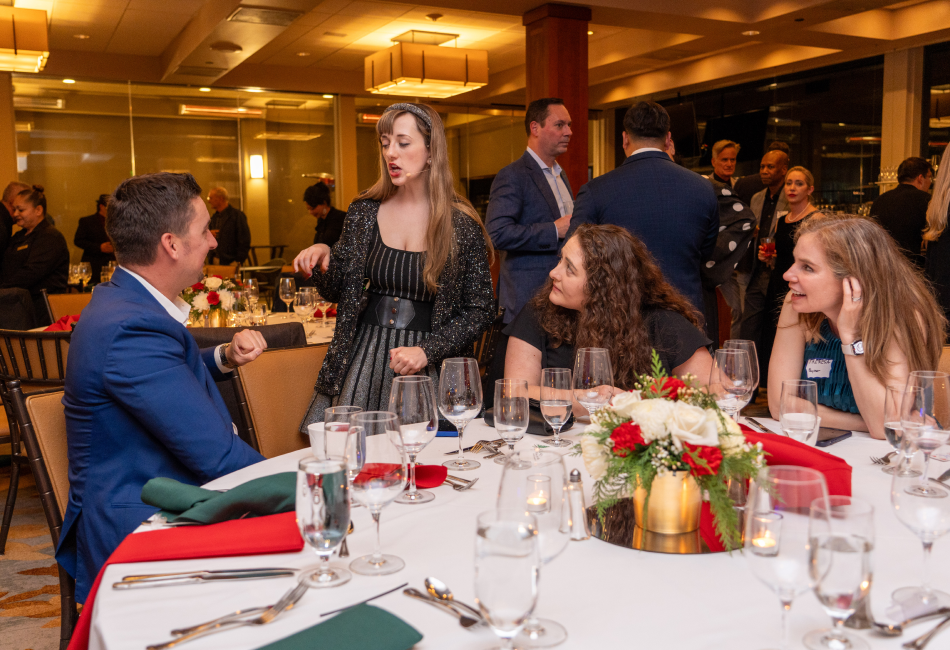
Left alone that persists all evening, and companies conclude their culture is fine because everyone seemed to have a pleasant time in their own group. A female magician in San Francisco working the room breaks it up mechanically: a performer approaches four people from three teams, they react together, and they're a group for the next twenty minutes. That's a considerably more reliable way to get colleagues mixing than hoping the bar does it.

December Venues Come With Constraints

The practical reality of a party booked in a competitive month. By the time most companies confirm a venue, they're choosing from what's available rather than what's ideal, which frequently means an office space, a restaurant buyout, a rooftop, or a room with no stage and awkward acoustics.

That eliminates a lot of entertainment. A female magician in San Francisco performing close up magic needs no stage, power, sound, rigging, or setup, and no floor space beyond where guests already stand. Whatever room you ended up with will accommodate it, which matters when the venue decision was made under pressure and nobody wants a second problem in December.

It Works in the Gaps You Already Have

Related and practically decisive. Holiday party schedules are usually full: arrival, food, a few words from someone senior, a raffle or awards, and then the evening proper.

Anything requiring a slot competes with a program that's already tight, and anything asking the room to stop and watch loses people who came to talk. A female magician in San Francisco works inside the reception and the mingling that already exist, beginning as guests arrive and continuing through the evening. In a schedule where every minute is spoken for, entertainment occupying none of your run of show while covering the whole event is straightforwardly efficient.

Bay Area Rooms Are a Good Audience

Worth knowing, since it affects what lands. December parties here contain a lot of engineers, product people, researchers, and founders, whose instinct on encountering something impossible is to work out how.

That makes them a better audience rather than a harder one. Someone applying genuine analytical attention who still cannot account for what happened is more astonished than a casual observer, because their certainty was better founded. A female magician in San Francisco blending close up magic with mentalism tends to get the strongest reaction from exactly the colleague who arrived most confident they'd catch it, which is usually the person still talking about it in January.

It Reads as a Considered Choice

A practical observation about how these evenings land. Employees infer the effort behind a party from small signals, and entertainment is among the most legible of them.

A playlist and a bar read as a party that was arranged. Something slightly unexpected reads as a party somebody thought about. That distinction affects how the evening is received more than the catering budget does, and a female magician in San Francisco contributes to it. That's a distinctiveness argument rather than a gender one, and it applies to any element guests weren't expecting.

It Suits People Who Don't Drink

Worth mentioning, since December parties are frequently built around a bar and a meaningful proportion of any workforce isn't drinking.

Close up magic works identically on someone sober at seven and someone relaxed at ten, requires no participation beyond watching and holding something, and gives colleagues who aren't drinking something to do with an evening that would otherwise be conversation and a soft drink. Among the choices available for a holiday party, entertainment that lands the same for everyone in the room is quietly one of the more inclusive ones.
Book Earlier Than You Think

The seasonal constraint that shapes everything. December compresses a year of demand into four weeks, and the first three weeks on a Thursday or Friday are the most contested dates of the year.

Realistically, a specific performer for a prime date means enquiring in the summer, and by October most established options are committed. If your party is an annual fixture, book next year's as soon as this year's date is confirmed. If you're reading this in November, enquire widely rather than one at a time and be flexible on day and time, since a Tuesday or an earlier start opens options a Friday evening won't.

A Note on "Local vs. Traveling In"

Worth knowing: there are relatively few women working professionally in magic, so restricting your search to Bay Area based performers shrinks an already small pool, particularly in December when local calendars fill first. Many travel in, with travel discussed openly and factored into the quote. I'm based in the Los Angeles area and travel to San Francisco and the wider Bay Area, which frequently means availability on dates when local options have gone.

Why Book Magical Katrina

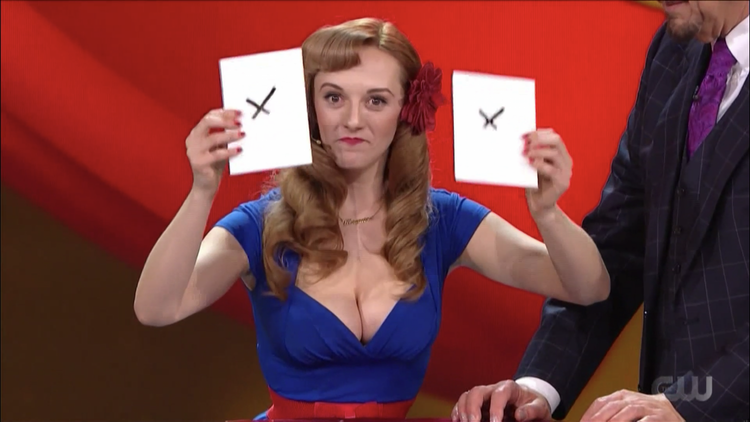
If you'd like a female magician in San Francisco for your holiday party, here's my case. I'm a member of the Magic Circle in London and the Academy of Magical Arts in Hollywood, I've earned multiple magic awards, and I've performed for companies including Formula 1, the Olympics, Porsche, Prada, Zapier, and the Ritz Carlton, with appearances on Penn & Teller: Fool Us and Masters of Illusion. I blend close up magic with mentalism, which is what lands with an analytical Bay Area room, I need no stage, power, or setup, so whatever venue you secured will work, and I'm fully insured with a COI available.

Frequently Asked Questions

Why does a holiday party need entertainment?

Because colleagues don't mix on their own. People arrive, find their own team, and talk to them, which is what they do at work and what the party was meant to interrupt. A performer approaching four people from three teams gets them reacting together, and they stay a group afterwards, which is considerably more reliable than hoping the bar does it.

Our venue has no stage. Is that a problem?

No, and it's common in December when companies book from what's available rather than what's ideal. Close up magic needs no stage, power, sound, rigging, or setup, and no floor space beyond where guests already stand, so an office space, a restaurant buyout, or a rooftop all work. Whatever room you ended up with will accommodate it.

Does it take time from our program?

No, which matters when the schedule already includes arrival, food, a few words from someone senior, and a raffle or awards. It works inside the reception and mingling that already exist, beginning as guests arrive and continuing through the evening, rather than requiring a slot or asking the room to stop and watch. Covering the whole event without consuming run of show time is efficient.

Will it land with a technical crowd?

Better than with most audiences. Bay Area December parties contain engineers, product people, researchers, and founders whose instinct is to work out how something functions, and someone applying real analytical attention who still cannot account for it is more astonished than a casual observer. The colleague most confident they'd catch it is usually the one still discussing it in January.

Does it matter that the magician is a woman?

Book on skill first, since skill in magic has nothing to do with gender. What a female magician in San Francisco adds is distinctiveness, because magic has been overwhelmingly male historically and most guests carry a default mental image that a woman performing quietly overturns. That's a genuine bonus on top of real excellence rather than a reason on its own.

What about colleagues who aren't drinking?

It suits them particularly. December parties are frequently built around a bar and a meaningful proportion of any workforce isn't drinking, whereas close up magic works identically on someone sober at seven and someone relaxed at ten, needs no participation beyond watching, and gives those colleagues something to do with an evening that would otherwise be conversation and a soft drink.

How late can we leave it to book?

Earlier than feels necessary. December compresses a year of demand into four weeks, with the first three weeks on a Thursday or Friday the most contested dates of the year, so a specific performer for a prime date means enquiring in the summer. If it's November already, enquire widely rather than sequentially and be flexible on day and time.

Fix the Nine O'Clock Problem

Every holiday party has an hour where it either becomes memorable or stays merely pleasant, and it usually turns on whether anything is happening beyond conversation and a bar. A female magician in San Francisco addresses that directly: colleagues from different teams reacting together, an analytical room genuinely impressed, nothing required from a venue you booked under pressure, and not a minute taken from a schedule that's already full.

If you're planning something for December, I'd be glad to hear about it.

Reach out with your date and venue, and let's make it the one people remember.

Katrina Kroetch
Strolling Magician San Francisco for Private Parties and Milestone Celebrations

Strolling Magician San Francisco for Private Parties and Milestone Celebrations

San Francisco homes were not designed for entertaining forty people. Victorians and Edwardians run vertically rather than horizontally, flats are compact, and a party that looked manageable on paper becomes a group of eight in the kitchen, six on a landing, four in a bedroom looking at coats, and a lonely cluster in the front room wondering where everybody went.

That distribution is the actual problem with hosting here. I'm Magical Katrina, an award winning magician and mentalist, and I want to explain why a strolling magician San Francisco hosts book suits these particular homes and celebrations, which is less about spectacle than about how people physically spread out.

Your Guests Are on Three Floors

Start with the structural issue. A party in a house that goes up rather than out doesn't have a room, it has several, and guests distribute themselves across them within the first forty minutes and largely stay put.

That defeats almost every form of entertainment. A performer on a stage reaches whoever is in that room, music competes with itself between floors, and anything requiring an audience to gather means asking guests to abandon the spot they've settled into. A strolling magician San Francisco simply goes to them, floor by floor and group by group, which is the only approach that treats a vertical house as the several small rooms it actually is.

Small Rooms Are an Advantage

Worth knowing, because hosts frequently apologies for their space. Close up magic performs better in a room of eight than in a hall of two hundred, since everyone sees everything from a few feet away and the whole group shares each reaction rather than hearing about it secondhand.

So the kitchen with six people crammed round the counter is ideal conditions rather than a compromise. A strolling magician San Francisco working a compact home is operating exactly as the format is designed to work, and it requires no stage, no power, no sound, and no floor space beyond where your guests are already standing. Nothing needs moving, which for a host is genuinely useful.

It Solves the Host's Problem

The practical benefit hosts notice most. In a house of this shape you spend the evening circulating: refilling glasses, checking on the group who've been in the kitchen for an hour, and worrying that people on the top floor are having a worse time than people downstairs.

A strolling magician San Francisco moving through the house takes that over. Energy arrives at each group in turn rather than depending on you to generate it, and the clusters you were worrying about get something happening in their corner. It's the difference between hosting your own party and working it, which is the least enjoyable role at any celebration and the one hosts fall into by default.

Bay Area Guests Are a Good Audience

Worth noting, since it affects what works. Guest lists here contain a lot of people from technology, science, and academia, whose instinct on encountering something impossible is to begin working out how.

That makes them a better audience rather than a harder one. Someone applying genuine analytical attention who still cannot account for what happened is more astonished than a casual observer, because their certainty was better founded. A strolling magician San Francisco blending close up magic with mentalism tends to get the strongest reaction from precisely the guest who arrived most confident they'd catch the method, and they usually spend the rest of the evening telling everyone.

The Guest of Honor Gets a Moment

For a milestone specifically, this is where magic does something other entertainment can't. The performance can be built around the person being celebrated.

Rather than a general set, the birthday person, the couple marking an anniversary, or the friend being sent off becomes the center of the evening's most astonishing moment, holding something impossible while the people who came for them watch and react. That's the thing that gets filmed and retold, and it's a considerably better focal point than a speech in a room where half your guests are on another floor. Tell your performer who's being celebrated.

Occasions It Suits

A strolling magician San Francisco works across the range of private celebrations here:

Milestone birthdays. Fortieth, fiftieth, sixtieth, where sophisticated magic suits an adult crowd.

Anniversaries. A personal moment built around the couple.

Engagement parties. Interactive entertainment while two friend groups meet properly.

Housewarmings. Where guests are exploring a home and naturally scattered anyway.

Retirement and send offs. Genuinely difficult events to give shape to.

Dinner parties. Close up magic between courses, needing only the table.

If You're Not Hosting at Home

Plenty of Bay Area celebrations happen in restaurant private rooms instead, which suits this equally. A private dining room is a table in a room with no stage, no available sound, and service running throughout, which eliminates nearly every form of entertainment.

Close up magic between courses fits without asking the restaurant to alter anything, and it solves the specific problem of a long table fragmenting into three separate conversations. For a milestone dinner of fourteen, a strolling magician San Francisco gives the whole table a shared focus without anybody having to make a speech, which several hosts have told me was the part they were dreading.

A Note on "Local vs. Traveling In"

Worth knowing: the right performer for your celebration needn't be Bay Area based. Many travel in, with travel discussed openly, factored into the quote, and handled by the performer rather than by you. I'm based in the Los Angeles area and travel to San Francisco and the wider Bay Area for private events. Weekend dates go early, particularly in the autumn, so enquiring ahead genuinely helps.

Why Book Magical Katrina

If you'd like a strolling magician San Francisco for your celebration, here's my case. I'm a member of the Magic Circle in London and the Academy of Magical Arts in Hollywood, I've earned multiple magic awards, and I've performed for clients including Formula 1, the Olympics, Porsche, Prada, and the Ritz Carlton, with appearances on Penn & Teller: Fool Us and Masters of Illusion. I blend close up magic with mentalism, which lands particularly well with an analytical Bay Area guest list, I love building a moment around a guest of honor, and I need no stage, power, or setup, so a compact flat works exactly as well as a large house. I'm fully insured.

Frequently Asked Questions

Our house is small and spread over floors. Does that work?

It's the situation this format handles best. A vertical home doesn't have a room, it has several, and guests distribute across them within forty minutes and stay put, which defeats stages, music, and anything requiring an audience to gather. A strolling magician San Francisco goes to them floor by floor and group by group, which treats the house as the several small rooms it actually is.

Isn't our space too small for entertainment?

The opposite, since close up magic performs better in a room of eight than a hall of two hundred. Everyone sees everything from a few feet away and the whole group shares each reaction rather than hearing about it. A kitchen with six people round the counter is ideal conditions, and it needs no stage, power, sound, or floor space beyond where guests already stand.

How does it help me as the host?

By taking over the circulating. In a house of this shape you spend the evening refilling glasses and worrying whether the group upstairs is having a worse time, whereas a performer moving through brings energy to each cluster in turn rather than it depending on you. It's the difference between hosting your own party and working it.

Our friends are mostly engineers. Will they enjoy it?

More than most audiences. Bay Area guest lists contain a lot of people from technology, science, and academia whose instinct is to work out how something functions, and someone applying real analytical attention who still cannot explain it is more astonished than a casual observer. The guest most confident they'd catch the method usually spends the evening telling everyone about it.

Can it feature the person we're celebrating?

Yes, and it's a common reason hosts book it. Rather than a general set, the birthday person, couple, or friend being sent off becomes the center of the evening's most astonishing moment, holding something impossible while the people who came for them react. It's a better focal point than a speech in a house where half your guests are on another floor.

What if we're at a restaurant instead?

It suits that equally. A private dining room is a table in a room with no stage, no available sound, and service running throughout, which eliminates nearly everything else. Close up magic between courses fits without the restaurant altering anything, and it solves a long table fragmenting into separate conversations, giving fourteen people a shared focus without anyone making a speech.

How do I book you, and what do you need to get started?

Reach out with your party date, location, rough guest count, and who you're celebrating. That's enough for me to check availability and send a quote including travel. From there we'll talk through timing across the evening and any moment you'd like built around the guest of honor, and a deposit secures your date. Weekend dates go early, so sooner helps.

Take the Party to Where Your Guests Are

Hosting in San Francisco means accepting that your guests will scatter across whatever rooms and floors your home has, and that no amount of planning will keep forty people in one place. A strolling magician San Francisco works with that rather than against it: reaching every group where they've settled, performing better in small rooms than large ones, giving the guest of honor a genuine moment, and letting you enjoy an evening you'd otherwise spend managing.

If you're marking something properly, I'd love to be part of it.

Reach out with your date and details, and let's talk.

Katrina Kroetch
How to Choose a Birthday Party Magician, and What to Ask

How to Choose a Birthday Party Magician, and What to Ask

Parents choosing a children's entertainer usually compare the same things: price, availability, and whether the photographs look professional. Those tell you very little about what will happen in your living room on Saturday afternoon with twenty five year olds on the floor.

The things that genuinely predict a good party are different, and they're easy to check once you know what they are. I'm Magical Katrina, an award winning magician and mentalist with a Family Entertainer of the Year honor, and I want to set out how to choose among the birthday party magicians near me options, and what to ask before you commit.

Skill With Children Is a Separate Ability

The most important thing to understand. Being excellent at magic and being excellent with children are two different skills, and plenty of accomplished performers have only the first.

A children's entertainer's real work is managing a room of excited small people: holding attention, handling the child who shouts out, including the shy one, and keeping twenty children with them for half an hour. The magic is the vehicle. When comparing birthday party magicians near me, weight demonstrated experience with children heavily, because a technically brilliant performer who can't hold a room of six year old’s will produce a worse party than a competent one who can.

Ask What They'd Do for Your Child's Age

The question that reveals most in one answer. Ask how they'd approach a party for your child's specific age and listen to whether the answer is specific.

A performer who works with children will tell you immediately that four year old’s need something shorter, brighter, and more visual, that six to eight year old’s handle a fuller show, and that nine and up need genuinely baffling material rather than anything they'd consider babyish. Someone who says it'll be great for any age hasn't thought about it, and age is the single biggest determinant of whether a children's show lands.

How Do They Handle the Birthday Child

Worth asking directly, since it's what your child will remember. A good performer makes the birthday child the star of the party without overwhelming them, which requires actual judgement rather than a formula.

Some children want to be at the front the entire time and others find that excruciating, and the right answer to your question is one that acknowledges both. Tell whoever you book which yours is. Among birthday party magicians near me, the ones who ask about your child before you mention it are demonstrating exactly what you want, since the party is for one specific person rather than for twenty children generally.

Watch Footage of an Actual Children's Show

Non negotiable, and frequently skipped because performers' websites lead with corporate or wedding material. What you want is sustained video of them performing for children, not a promotional edit and not footage from an adult event.

Watch how they speak to children, whether the children are engaged or restless, how they handle a child who interrupts, and whether the room looks like it's enjoying itself or being managed. Thirty seconds of real footage tells you more than any amount of description. If a performer has no children's footage to share, they may be a fine magician who doesn't do many children's parties.

Ask About Insurance and Checks

Standard questions and entirely reasonable to ask, though many parents feel awkward raising them. Any professional working with children should carry public liability insurance and be able to provide a certificate, which some venues require anyway.

It's also reasonable to ask whether they hold a current background check, and a professional will answer without any awkwardness because they're asked regularly. The response matters more than the specifics: someone who provides documentation promptly and matter of factly is demonstrating that they operate properly. Hesitation or vagueness here is worth taking seriously rather than smoothing over.

Ask for References From Other Parents

More useful than reviews, and rarely requested. Ask whether you can speak to a parent whose party they've done recently, or at minimum for reviews specifically from children's bookings rather than corporate ones.

What you're checking isn't whether the magic was good, it's whether the performer was easy to deal with, arrived when they said, handled the room well, and left the parents relaxed. Those are the things that determine whether your afternoon is enjoyable, and they're exactly what another parent will tell you unprompted. Among birthday party magicians near me, a performer who works regularly with families will have references readily available.

Check They Ask You Questions

A signal rather than a question, and a reliable one. A performer who takes your booking without asking about the ages, the numbers, the room, and your child is planning to deliver the same show they always deliver.

Expect to be asked how old the children are, how many, whether it's at home or a venue, what time, and who the party is for. Those questions determine what they'll actually do, and a performer asking them is preparing rather than turning up. Among the things that predict a good party, being asked good questions at the booking stage is one of the most reliable.

Be Wary of the Cheapest Option

Worth saying plainly. Children's entertainment has a wide range of prices, and the bottom of it is usually people building experience rather than a bargain.

That's not a criticism, everyone starts somewhere, but a party is a poor place to find out. A show that doesn't hold a room of children is worse than no entertainment at all, because you've paid for it and you have twenty restless children and a disappointed birthday child. Judge on what a performer delivers rather than on the number, and treat a quote dramatically below the others as information rather than a saving.

Warning Signs

A short list. Slow or vague replies at enquiry stage, which reliably predicts the same on the day. No footage of children's shows. Reluctance to provide insurance documentation. Elaborate technical requirements for a children's party, which the format genuinely doesn't need.

Also: a performer who won't commit to a length appropriate for the age group, or who promises an hour for four year old’s, since attention at that age doesn't stretch that far and the last twenty minutes will unravel. And anyone who doesn't ask a single question about your child. Among birthday party magicians near me, those signals sort the field quickly.

Why Book Magical Katrina

If you're comparing options, here's my case. I'm a member of the Magic Circle in London and the Academy of Magical Arts in Hollywood, I've earned multiple magic awards including a Family Entertainer of the Year honor, and I've appeared on Blippi as a performer and magic consultant, along with Penn & Teller: Fool Us and Masters of Illusion. I perform for every age from preschoolers to adults, I'll recommend a length suited to your children rather than the longest option, I make the birthday child the star, and I need very little space or setup. I'm fully insured with a COI available and happy to answer any of the questions above.

Frequently Asked Questions

What matters most when choosing?

Demonstrated experience with children, which is a separate skill from being good at magic. A children's entertainer's real work is managing a room of excited small people: holding attention, handling the child who shouts out, including the shy one, and keeping twenty children engaged. A technically brilliant performer who can't hold a room of six year old’s produces a worse party than a competent one who can.

What's the single most revealing question?

How they'd approach a party for your child's specific age. Someone who works with children will immediately distinguish between four year old’s needing something shorter and more visual, six to eight year old’s handling a fuller show, and nine and up needing genuinely baffling material. Anyone saying it'll be great for any age hasn't thought about it, and age determines everything.

What should we look for in their videos?

Sustained footage of them performing for children, not a promotional edit and not an adult event, since websites often lead with corporate or wedding material. Watch how they speak to children, whether the room is engaged or restless, how they handle an interruption, and whether it looks like enjoyment or management. Thirty seconds of real footage beats any amount of description.

Is it rude to ask about insurance and background checks?

Not at all, and professionals are asked regularly. Anyone working with children should carry public liability insurance and provide a certificate, which some venues require anyway, and it's reasonable to ask about a current background check. What matters is the response: prompt, matter of fact documentation shows someone operating properly, whereas hesitation or vagueness is worth taking seriously.

Should we ask for references?

Yes, and few parents do. Ask to speak to a parent whose party they've done recently, or at minimum for reviews from children's bookings rather than corporate ones. You're checking whether they were easy to deal with, arrived on time, handled the room, and left the parents relaxed, which is what determines whether your afternoon is enjoyable and what another parent will tell you unprompted.

Is the cheapest option a false economy?

Usually. The bottom of the price range is generally people building experience rather than a bargain, which isn't a criticism but a party is a poor place to find out. A show that doesn't hold a room of children is worse than nothing, since you've paid and you have twenty restless children and a disappointed birthday child. Treat a very low quote as information rather than a saving.

How do I book you, and what do you need to get started?

Reach out with your party date, location, your child's age, the guest ages, and rough numbers. That's enough for me to check availability, recommend a length suited to that age group, and send a quote. I'll ask about your child too, since the party is for one specific person, and I'm happy to send footage, insurance documentation, and references before you decide.

Ask Three Questions and You'll Know

Choosing among birthday party magicians near me comes down to a handful of checks most parents never make: ask what they'd do for your child's specific age, ask how they'd handle your child, and watch genuine footage of them performing for children rather than adults.

Add insurance documentation, a reference from another parent, and a note of whether they asked you anything, and the field sorts itself quickly. The performer who asks about your child before you mention them is usually the one to book.

Reach out with your party details, and ask me anything on this list.

Katrina Kroetch
Online Magician for Account Based Marketing and Prospect Events

Online Magician for Account Based Marketing and Prospect Events

Account based programs run into the same wall repeatedly. You've identified the accounts, mapped the buying group, and produced genuinely good content, and then you invite a senior person at a target account to a webinar and they don't come, because senior people at target accounts do not attend webinars.

That's the actual constraint, and more content doesn't solve it. I'm Magical Katrina, an award winning magician and mentalist, and I want to explain where an online magician fits into an account based program, which is narrower and more practical than it might sound.

The Invitation Is the Bottleneck

Worth being precise about where these programs fail. It isn't targeting, and it usually isn't the content, which is frequently excellent and expensively produced.

It's that a senior executive receives a great many invitations to sessions about industry trends, and declines nearly all of them, because an hour is expensive and the value is speculative. An online magician changes what the invitation is offering: not another discussion of a topic they already understand, but something they'd genuinely rather not miss. For a program where acceptance rate is the metric everything else depends on, that's the lever worth pulling.

Small and Curated Beats Broad

The format that suits this. A webinar for four hundred is a different proposition from a session for twelve senior people from eight target accounts, and the second is where account based programs actually work.

Close up magic improves as the group shrinks, which makes it well matched to that format rather than adapted to it. A group of twelve sees everything from a few feet away and shares each reaction, and it feels like something arranged for them rather than a broadcast they joined. An online magician for a small curated group is closer to hosting a dinner than running a webinar, which is the right register for this audience.

It Warms the Room Before the Business

The functional argument. A virtual roundtable of senior people who have never met begins formally, with everyone slightly guarded and nobody wanting to speak first, and the useful conversation only starts once that dissolves.

At an in person dinner, the food and the drinks do that work over ninety minutes. Virtually there's no equivalent, which is why virtual roundtables so often stay stilted throughout. An online magician at the start does what the first course does in a restaurant: it gives people a shared reaction, gets them talking, and moves the group from formal to human before you ask anyone to discuss their challenges.

Compare It to a Prospect Dinner

Worth doing the arithmetic, since the alternative is the usual approach. A dinner for eight prospects in a major city costs a substantial amount per head once you include the venue, the wine, and the travel for your own team, and it reaches eight people in one location.

A virtual session reaches the same eight, or twenty across four countries, for considerably less, without anyone travelling and without the diary negotiation that makes prospect dinners take two months to arrange. It isn't a replacement for hospitality where a dinner is genuinely warranted, and for the middle tier of an account list, where a dinner can't be justified but a webinar won't be attended, an online magician fills a real gap.

Place It First, Not Last

Practical guidance, and it matters more here than anywhere. With a voluntary senior audience, anything at the end reaches only the people who stayed, and senior people leave the moment the substantive portion concludes.

Open with it. That rewards punctual attendance, gets the group talking before the discussion starts, and means the people you most wanted to reach actually experience the thing that persuaded them to accept. Placing an online magician at the end as a reward for sitting through a pitch inverts the logic entirely and wastes the reason they came.

Don't Oversell What Follows

An honest note that will improve your results. The reason this works is that the invitation is straightforward: something genuinely enjoyable, a short conversation, an hour of their time.

If the session turns out to be a product demonstration with a magician at the front, you've spent the goodwill and taught that account not to accept your next invitation. Keep the commercial content proportionate and genuinely useful, or keep it minimal and let the relationship be the outcome. Senior people are entirely willing to spend an hour with a supplier they like, and entirely unwilling to be ambushed, and the difference determines whether the second invitation works.

It Gives Your Team a Reason to Follow Up

A practical benefit worth noting. Following up after a webinar is awkward, because there's no shared experience to reference and the message reads as a sales approach with a thin pretext.

Following up after a session where something memorable happened is straightforward, since there's something genuine to mention and the recipient remembers the sender. That's a small advantage repeated across an account list, and it makes the difference between a follow up that gets answered and one that doesn't. For a program measured on meetings booked rather than attendance, that downstream effect matters as much as the session itself.

It Works Across a Distributed Account List

Practically, target accounts are rarely in one city, and an ABM program covering several regions cannot run dinners in each of them without a considerable budget and a great deal of travel.

An online magician reaches prospects wherever they are on the same afternoon, and because the material is visual and participatory rather than dependent on language or local reference, it works across an international account list. For a program covering multiple markets with one budget, that reach is the difference between running something everywhere and running something in headquarters' city.

Why Book Magical Katrina

If you'd like an online magician for an account based program, here's my case. I'm a member of the Magic Circle in London and the Academy of Magical Arts in Hollywood, I've earned multiple magic awards, and I've performed for companies including Formula 1, the Olympics, Porsche, Zapier, and the Ritz Carlton, with appearances on Penn & Teller: Fool Us. My virtual material is built for video and genuinely participatory, it works particularly well with small senior groups, and it works across countries without depending on shared references. I understand that a prospect session has a commercial objective and that the entertainment serves it rather than the reverse.

Frequently Asked Questions

Why don't senior prospects attend our webinars?

Because an hour is expensive and the value is speculative. A senior executive receives a great many invitations to sessions about industry trends and declines nearly all of them, and better content doesn't change that calculation. An online magician changes what the invitation offers: not another discussion of something they already understand, but something they'd rather not miss.

What size of group works best?

Small and curated, typically ten to twenty senior people from a handful of target accounts, which is where account based programs work anyway. Close up magic improves as the group shrinks, so it's well matched to that format rather than adapted to it, and a session for twelve feels like something arranged for them rather than a broadcast they joined.

How does it help the actual conversation?

By warming the room. A virtual roundtable of senior people who have never met begins formally, with everyone guarded and nobody wanting to speak first, and there's no virtual equivalent of the first course at a dinner doing that work. An online magician at the start gives people a shared reaction and moves the group from formal to human before you ask anyone to discuss their challenges.

How does it compare with a prospect dinner?

Considerably cheaper per head, and it reaches accounts across several regions rather than one city, without travel or the diary negotiation that makes dinners take two months to arrange. It doesn't replace hospitality where a dinner is genuinely warranted, but for the middle tier of an account list, where a dinner can't be justified and a webinar won't be attended, it fills a real gap.

Where should it sit in the agenda?

First, always. With a voluntary senior audience, anything at the end reaches only the people who stayed, and senior people leave the moment the substantive portion ends. Opening with it rewards punctuality, gets the group talking before the discussion, and means the people you most wanted to reach experience the thing that persuaded them to accept.

Should we include a pitch?

Keep it proportionate or minimal. The reason this works is that the invitation is honest: something enjoyable, a short conversation, an hour. If the session turns out to be a product demonstration with a magician at the front, you've spent the goodwill and taught that account not to accept the next invitation. Senior people will happily spend an hour with a supplier they like and won't be ambushed.

How do I book you, and what do you need to get started?

Reach out with your date, platform, expected numbers, the regions and time zones involved, and how the session is structured. That's enough for me to check availability, suggest placement, and send a quote. If you're planning several sessions across an account program, mention that, since running them as a series is usually easier to schedule and more economical than booking each separately.

Earn the Acceptance First

Account based programs are limited by acceptance rather than by targeting or content, and a senior person at a target account declines invitations that offer information they can already get. An online magician addresses that specific bottleneck: an invitation worth accepting, a small curated group that feels arranged rather than broadcast, a room warmed before the conversation that matters, and something genuine for your team to reference afterwards.

If your program is well built and thinly attended, the invitation is where to look.

Reach out with your dates and account numbers, and let's make the invitation worth accepting.

Katrina Kroetch
Magician Rental Near Me: What Happens If Your Plans Change

Magician Rental Near Me: What Happens If Your Plans Change

Nobody asks about this at the enquiry stage, because raising cancellation while you're trying to book something feels pessimistic. Then a venue falls through, a date moves, someone gets ill, or the guest list doubles, and you're reading terms you skimmed four months ago hoping they say something helpful.

Better to understand it beforehand. I'm Magical Katrina, an award winning magician and mentalist, and I want to set out how changes usually work when you've booked among the magician rental near me options, and which questions to ask before you sign anything.

What a Deposit Actually Buys

Worth understanding, since it shapes everything else. A deposit isn't a part payment towards services, it's compensation for a performer holding a date and declining other work for it.

That's why deposits are typically non refundable across the industry. It isn't sharp practice, it's the mechanism that makes a booking meaningful: once a date is held, every other enquiry for that date gets turned away. When you're comparing magician rental near me options, a performer with no deposit and no agreement isn't offering better terms, they're offering a booking that neither party is genuinely committed to, which is worse for you than for them.

Postponement Is Usually Easier Than Cancellation

The most useful thing to know. Most performers will move a booking to a new date where they're available, frequently carrying the deposit across, which is a considerably better outcome than cancelling and rebooking.

That flexibility depends entirely on availability, so a postponement to a Tuesday in February is straightforward and one to a Saturday in December may not be possible at all. If your event might move, say so early and ask how postponement is handled rather than assuming. Among magician rental near me options, the answer to that question varies more than the headline price does.

Notice Periods Matter Most

The practical variable in any cancellation. Terms generally scale with notice: cancelling six months out is different from cancelling six days out, because the performer's chance of filling the date is completely different.

Expect terms that reflect that, typically with the deposit forfeited at any point and a proportion or all of the balance due within some window of the event. What that window is varies, and it's worth reading rather than assuming. If your plans are genuinely uncertain, ask about the notice thresholds before booking, since knowing the dates on which your exposure changes is more useful than a vague sense that cancelling would be costly.

Outdoor Events and Weather

Worth addressing specifically, since it's the most common source of last minute change. A performer booked for a garden party in an English summer, a Vegas patio in August, or an LA rooftop in February needs a plan for weather.

The good news is that close up magic requires no adjustment: it works indoors and out, so an event moving inside is not a problem at all. What matters is telling your performer there's an indoor fallback and where it is, since a room change on the day is easier when it isn't a surprise. If a magician rental near me option requires staging or sound, weather becomes a genuine issue and worth discussing at length rather than in passing.

If the Performer Can't Make It

The scenario clients worry about most and ask about least. Performers get ill, have accidents, and occasionally have transport fail, and a professional should have an answer for what happens then.

Ask directly. Expect either a network of performers they'd recommend and help arrange, or a clear commitment to return your money promptly, ideally both. What you don't want is someone who has never considered the question. Among magician rental near me options, the ones who work regularly have thought about this because it has happened to them or to colleagues, and their answer will be specific rather than reassuring.

Venue and Date Changes

Common and usually manageable. A change of venue within the same area is rarely an issue for close up work, since there's nothing to reconfigure, though it's worth telling your performer promptly rather than on the day.

A significant change of location may affect travel and therefore the quote, which is reasonable rather than opportunistic. A change of time within the same day is usually fine if it's flagged in advance. What causes genuine problems is a change nobody mentions, so the rule is simply to tell your performer when anything moves, even if you think it's minor. Most changes are absorbed easily when they're known about.

Guest Numbers Changing

Worth flagging as its own category, since it affects delivery rather than terms. A booking made for sixty that becomes a hundred and forty isn't a cancellation issue, it's a coverage issue, and the performer cannot reach everybody in the time booked.

If your numbers grow substantially, tell your performer and ask whether you need longer or a second performer. That conversation weeks ahead produces a solution, whereas the same information on the night produces an evening where a third of your guests saw nothing. Among the changes worth reporting promptly to a magician rental near me booking, this is the one most likely to affect how the event actually goes.

What to Check Before You Book

A short list worth reading in any agreement rather than skimming. What the deposit secures and whether it's refundable. How postponement is handled and whether the deposit transfers. The notice thresholds at which balance becomes payable.

Also: what happens if the performer cancels, whether travel is included or itemized, and whether any recording or photography permissions matter to you. None of this is unusual to ask about, and a performer who answers clearly is demonstrating exactly the professionalism you're hoping for. Vagueness about terms tends to predict vagueness elsewhere.

Say Something Early

The practical advice underneath all of this. When plans start looking uncertain, tell your performer at that point rather than waiting until you're sure.

Early notice widens what's possible: a postponement can be arranged, a date can potentially be refilled, and a solution can be found that suits both sides. Late notice narrows it to whatever the terms say, which is usually worse for you. Most performers are considerably more flexible with someone who communicated early than with someone who went quiet for a month, and that isn't a policy, it's simply how people behave.

Why Book Magical Katrina

For transparency about how I handle this: I'm a member of the Magic Circle in London and the Academy of Magical Arts in Hollywood, I've earned multiple magic awards, and I've performed for clients including Formula 1, the Olympics, Porsche, and Prada, with appearances on Penn & Teller: Fool Us and Masters of Illusion. I provide a written agreement setting out terms clearly before you pay anything, I'll answer any of the questions above directly, and I'd rather discuss a possible change early than receive an apologetic email a week before. I'm fully insured with a COI available.

Frequently Asked Questions

Why are deposits non refundable?

Because a deposit isn't a part payment towards services, it's compensation for holding a date and declining other work for it. Once your date is held, every other enquiry for it gets turned away. That's why it's standard across the industry, and a performer with no deposit and no agreement isn't offering better terms, they're offering a booking neither party is genuinely committed to.

Can we move the date instead of cancelling?

Usually, and it's a much better outcome. Most performers will move a booking to a new date where they're available and frequently carry the deposit across, though it depends entirely on availability. A move to a quiet Tuesday is straightforward, whereas a peak Saturday may not be possible. If your event might move, ask how postponement is handled before booking.

How do cancellation terms usually work?

They scale with notice, since a performer's chance of filling a date six months out is completely different from six days out. Expect the deposit forfeited at any point and a proportion or all of the balance due within some window of the event, with that window varying between performers. If your plans are uncertain, ask about the specific thresholds before booking.

What if it rains and we move indoors?

For close up magic, nothing changes, since it works indoors and out with no adjustment. What matters is telling your performer there's an indoor fallback and where it is, so a room change on the day isn't a surprise. If an option requires staging or sound, weather becomes a genuine issue worth discussing at length rather than in passing.

What happens if the performer falls ill?

Ask before booking, since it's the scenario clients worry about most and raise least. Expect either a network of performers they'd recommend and help arrange, or a clear commitment to return your money promptly, ideally both. Performers who work regularly have thought about this because it has happened to them or colleagues, and their answer will be specific rather than reassuring.

Our guest numbers have doubled. Is that a problem?

It's a coverage issue rather than a terms issue, and worth raising immediately. A booking made for sixty that becomes a hundred and forty means the performer cannot reach everybody in the time booked. Told weeks ahead, you can add time or a second performer. Told on the night, a third of your guests see nothing, which is the most avoidable disappointment in this business.

How do I book you, and what are your terms?

Reach out with your event details and I'll send a clear quote and a written agreement setting out the deposit, balance, timings, and terms before you pay anything. I'm happy to answer any of the questions in this article directly, and if your plans are uncertain, tell me at the enquiry stage rather than afterwards, since it's much easier to build flexibility in at the start.

Ask the Awkward Questions First

Nobody enjoys discussing cancellation while booking something they're looking forward to, and ten minutes spent on it at the start saves a great deal of anxiety later. Establish what the deposit secures, how postponement works, where the notice thresholds sit, what happens if the performer can't attend, and how to handle a change of venue or numbers.

Then, if something does move, tell your magician rental near me booking early rather than late, because early notice is what makes a good outcome possible.

Reach out with your event details, and I'll set the terms out plainly before you commit.

Katrina Kroetch
Women's History Month Event Ideas for Small Organisations

Women's History Month Event Ideas for Small Organizations

Almost everything written about March assumes an organization with an employee resource group, a diversity lead, a budget line, and enough people to fill a room. If you're twelve people above a shop, or thirty in an office where everyone does three jobs, none of that applies and most of the advice reads as though it's for somebody else.

Small organizations have their own version of this, and it's genuinely different. I'm Magical Katrina, an award winning magician and mentalist, and I want to offer Women's History Month event ideas that work when you have no program, no committee, and one person who thought somebody ought to do something.

The Awkwardness Is Real

Worth naming first, since it stops most small organizations from attempting anything. At a company of five hundred, a March event is one of many things happening and nobody thinks about it much. At a company of fifteen, gathering everybody for a session about women is conspicuous, and if three of your employees are women, it's conspicuous for them specifically.

That awkwardness is a genuine constraint rather than squeamishness. The way through it isn't to do nothing, it's to choose something that doesn't require a small group to sit through an earnest presentation about a topic that maps directly onto people in the room. Among Women's History Month event ideas for small teams, format solves most of the discomfort.

Don't Make It the Women's Job

The most common failure at small organizations, and it happens with entirely good intentions. Somebody suggests marking March, and it lands with the women to organize, because it's about them.

That's an additional task, unpaid and unrecognized, given to the people the exercise is supposedly for. If you're the owner or manager, organize it yourself, or ask someone whose job includes organizing things. Ask the women in your organization what they'd find worthwhile, by all means, but asking is different from delegating. Among Women's History Month event ideas, the one that costs you nothing is not making this somebody's extra work.

One Good Thing Beats a Program

Small organizations frequently look at what larger companies do in March and conclude they can't compete, which is the wrong comparison entirely.

A month of programming at a large company is diluted across a workforce that mostly ignores it. One genuinely good thing at a company of fifteen reaches everybody, and everybody knows it happened. That's a better outcome on any measure that matters. Pick one thing, do it properly, and resist the urge to build a program you don't have the capacity to sustain. Among Women's History Month event ideas at this scale, ambition is the enemy of actually doing it.

Take Everyone Out Together

The simplest option and frequently the best. Book something the whole company does together, over a lunch or an afternoon, that's genuinely enjoyable and has a woman at the center of it.

That might be a speaker, a performer, a workshop, or a visit somewhere relevant. What makes it work is that everyone attends, it isn't a lecture, and the point is demonstrated rather than delivered. At a small headcount you can actually do this, since fifteen people can go somewhere or gather round a table in a way five hundred cannot. Use the advantage rather than trying to replicate a corporate program in miniature.

Do Something With Real Substance Instead

An alternative worth considering, and arguably better. Rather than an event, spend the same effort on something that changes a working condition: reviewing how you write job adverts, checking pay across comparable roles, formalizing flexible working that currently depends on asking, or writing down a parental leave policy that lives in someone's head.

Small organizations can actually do these things, because there's no committee, no approval chain, and no legacy policy to unpick. Among Women's History Month event ideas, the ones with the longest tail aren't events at all, and March is a reasonable prompt for a task you'd been meaning to get to.

Ask Rather Than Assume

Practical, and it removes most of the risk. The women in a small organization have views on what would be worth doing and what would be excruciating, and they're rarely asked.

A quiet conversation, individually rather than as a group, resolves most of the uncertainty in this article. Some will want something substantive, some would rather nothing conspicuous, and some will have a specific suggestion nobody would have guessed. Asking also demonstrates that the exercise is genuine rather than performative, which at a small headcount is transparent either way. Then act on what you hear, including if the answer is a preference for something low key.

Include Everyone, Obviously

Worth stating because small organizations sometimes get this backwards. An event for the three women in a company of fifteen is a strange thing to organize and an uncomfortable thing to attend.

Whatever you do should involve the whole team, since the point isn't to give women a session, it's for everyone to encounter something worthwhile. The men in a small company are also the people whose assumptions shape daily working life, and a small organization is exactly where individual behavior has the most effect. Among Women's History Month event ideas for small teams, anything that splits a team of fifteen is the wrong shape.

Don't Post About It

A small point that saves embarrassment. Large organizations mark March publicly, and small ones sometimes follow, which lands differently when the whole company is visible on one page.

If you employ twelve people and post about your commitment to women in the workplace, anyone who knows your team is doing arithmetic. Do the thing because it's worth doing, and let it be internal. If you have something genuinely worth saying publicly, a policy change, a commitment with substance behind it, that's different, but an event photograph from a company of fifteen invites a scrutiny you probably don't want.

Where My Work Fits

Briefly, since it's relevant to the first option. I perform magic and mentalism and speak about building a career in a field, magic, that has been overwhelmingly male, either as a performance, a talk woven with magic, or both.

For a small organization it works because it doesn't require a stage, an audience of hundreds, or a formal setting, and close up magic genuinely improves as a group gets smaller. A team of fifteen round a table gets a better experience than a room of three hundred, and it demonstrates the point rather than delivering it as a message. If you're thinking about March, I'm glad to talk it through.

Frequently Asked Questions

Isn't it awkward at a small headcount?

It can be, and that's a genuine constraint rather than squeamishness. Gathering fifteen people for a session about women is conspicuous, particularly for the three women present. The way through isn't to do nothing, it's to choose a format that doesn't require a small group to sit through an earnest presentation mapping directly onto people in the room. Format solves most of the discomfort.

Who should organize it?

Not the women, by default, which is the most common failure and happens with good intentions. Marking March frequently lands with them because it's about them, which is an unpaid extra task given to the people the exercise is supposedly for. If you're the owner or manager, organize it yourself, and ask the women what they'd find worthwhile rather than delegating it to them.

We can't do a month of programming. Does one thing count?

One thing done properly is better, not merely acceptable. A month of programming at a large company is diluted across a workforce that mostly ignores it, whereas one genuinely good thing at a company of fifteen reaches everybody and everybody knows it happened. Among Women's History Month event ideas at this scale, ambition is what stops things actually happening.

What if an event doesn't feel right for us?

Do something substantive instead. Review how you write job adverts, check pay across comparable roles, formalize flexible working that currently depends on asking, or write down a parental leave policy that lives in someone's head. Small organizations can actually do these things, since there's no committee or approval chain, and March is a reasonable prompt for a task you'd been meaning to get to.

Should we ask our team what they want?

Yes, individually rather than as a group, since it resolves most of the uncertainty. Some will want something substantive, some would rather nothing conspicuous, and some will have a suggestion nobody would have guessed. Asking also demonstrates the exercise is genuine rather than performative, which at a small headcount is transparent either way. Then act on what you hear.

Should the whole team be involved?

Yes, and an event for the three women in a company of fifteen is a strange thing to organize and an uncomfortable thing to attend. The point isn't to give women a session, it's for everyone to encounter something worthwhile, and in a small organization individual behavior has more effect on daily working life than anywhere else. Anything splitting a team of fifteen is the wrong shape.

Do you work with small teams?

Yes, and close up magic genuinely improves as a group gets smaller, so fifteen people round a table get a better experience than a room of three hundred. It needs no stage, no formal setting, and no audience of any size, and it demonstrates the point rather than delivering it as a message. Reach out with your date and headcount.

Do One Thing, Properly

The Women's History Month event ideas that work at a small organization aren't scaled down versions of what large companies do. They're shaped by what a small headcount actually allows: one good thing rather than a program, organized by whoever organizes things rather than by the women it concerns, involving everybody, chosen after asking rather than assuming, and kept internal rather than posted about.

And if an event doesn't suit you, the substantive alternative is genuinely better anyway, and small organizations are the ones that can actually do it.

Reach out with your date and team size, and let's talk about what would suit.

Katrina Kroetch
Magicians in Las Vegas for International Groups and Inbound Delegations

Magicians in Las Vegas for International Groups and Inbound Delegations

Las Vegas hosts an enormous volume of inbound international business: incentive groups rewarded with a trip, distributor and dealer delegations, sales teams flown in for a conference, and corporate parties where a third of the room is more comfortable in another language than in English.

Entertaining those groups is genuinely harder than entertaining a domestic one, and most options fail in the same way. I'm Magical Katrina, an award winning magician and mentalist, and I want to explain why magicians in Las Vegas suit international audiences particularly well, and what to consider when booking for a mixed language room.

Language Is the Constraint Nobody Budgets For

Start with the problem. Entertainment that depends on words fails across languages, and a great deal of it does: comedy relies on timing, wordplay, and shared reference, a singer relies on lyrics landing, and a host relies on being followed at conversational speed.

Put any of those in front of a room where English fluency varies and you get a portion of the audience laughing and a portion politely waiting. That split is visible from the front and uncomfortable for everyone. Magicians in Las Vegas performing visual, participatory work avoid it entirely, because astonishment doesn't require translation and the reaction is the same in every language.

It Works Group by Group

Something specific to close up magic that helps here. A performer moving through a room works with three or four people at a time rather than addressing everybody at once, which allows genuine adaptation.

At a table of colleagues from one country, the pacing and interaction adjust naturally. At the next table, they adjust again. That's impossible for a stage act delivering one performance to a whole room at a fixed pace. For a delegation containing several nationalities and a wide range of English fluency, magicians in Las Vegas working the room can meet each group where it is rather than pitching to an average that suits nobody.

Participation Doesn't Require Fluency

Worth drawing out, since it's the practical mechanism. Participation in close up magic means holding an object, making a choice, or thinking of something, none of which requires anyone to speak in a second language in front of colleagues.

That matters more than it sounds. Delegates with limited English frequently spend an entire trip in a slightly passive role, unable to join conversations at speed and reluctant to be the person asking for repetition. Being the person something extraordinary happened to, in front of the whole group, is a genuinely different experience, and it's available to them on exactly the same terms as everyone else.

Avoid Culturally Specific Material

A booking consideration worth raising directly. A performer whose material leans on domestic references, local celebrities, sports, or idiom will lose an international room even if the language is understood.

Ask any magicians in Las Vegas you're considering how they adapt for international audiences, and expect a substantive answer rather than reassurance. Someone who works internationally will describe what they change: reference points, pacing, the balance of talking to doing, and how they handle a room where a joke might land in one corner and not another. Someone who hasn't will say it'll be fine.

Incentive Groups Have Raised Expectations

Specific to a common Vegas booking. An incentive trip is a reward for performance, the recipients know what it cost, and they have spent several days having impressive things arranged for them.

By the final dinner they've seen a show, eaten somewhere notable, and been to a venue with production values, which makes the closing event genuinely hard to land. Magicians in Las Vegas performing close up magic offer something different rather than something bigger: intimate, personal, and happening at their table rather than on a stage they're watching. In a week of scale, intimacy is the scarce commodity.

Suites and Dinners Suit This

Practically, most international group entertainment happens in a hospitality suite, a private dining room, or a function space, and the constraints are the same as anywhere in this city: no stage, no available sound system, and no space to create either.

Close up magic needs none of it, which matters when your group's schedule is already complicated by transfers, translation, and a program built around a conference. Entertainment requiring nothing from the venue and no slot in a run of show is one fewer thing for a DMC or a program manager already coordinating a great deal.

It Gives Delegates a Story to Take Home

Worth considering for the client paying. An incentive or delegation trip is meant to produce something delegates talk about when they return, and the things they describe are rarely the itinerary items.

A performance arranged specifically for their group, in their room, with people from their own team at the center of it, produces exactly that kind of story. Among magicians in Las Vegas bookings for international programs, that's usually what the client is actually buying: not entertainment for an evening, but something delegates recount to colleagues who didn't come, with the host organization attached to it.

Practical Notes for DMCs and Planners

A few things worth establishing early. Tell your performer the language mix and the approximate range of English fluency, since it genuinely changes the approach rather than being a courtesy detail.

Mention the nationalities present, any cultural considerations relevant to material or interaction, and whether the group has been together all week or has just arrived. Confirm insurance documentation early, since properties will ask. And flag the schedule honestly, since international programs run late more often than domestic ones, with transfers and translation adding time nobody allowed for.

A Note on "Local vs. Traveling In"

Worth knowing: the right performer needn't be Vegas based, and many travel in, with travel discussed openly and factored into the quote. I'm based in the Los Angeles area and travel to Las Vegas regularly. During peak convention weeks, when a lot of international programs run, local performers book out early, so travelling performers frequently have availability when local options have gone.

Why Book Magical Katrina

If you're hosting an international group, here's my case. I'm a member of the Magic Circle in London and the Academy of Magical Arts in Hollywood, I've earned multiple magic awards, and I've performed across events in over 20 countries for clients including Formula 1, the Olympics, Porsche, and Prada, with appearances on Penn & Teller: Fool Us and Masters of Illusion. Working internationally means my material doesn't depend on domestic references or idiom, I adapt group by group rather than pitching to an average, and I need no stage, sound, or setup. I'm fully insured with a COI available.

Frequently Asked Questions

Why does entertainment fail with international groups?

Because most of it depends on words. Comedy relies on timing, wordplay, and shared reference, singers rely on lyrics landing, and hosts rely on being followed at conversational speed. In a room where English fluency varies, you get a portion laughing and a portion politely waiting, which is visible from the front. Visual, participatory work avoids that entirely.

How does close up magic adapt to a mixed language room?

By working group by group rather than addressing everyone at once. A performer moving through a room engages three or four people at a time, adjusting pacing and interaction naturally at each table, which is impossible for a stage act delivering one performance at a fixed pace. Magicians in Las Vegas working a room can meet each group where it is.

Can delegates with limited English take part?

Yes, on exactly the same terms as everyone else, since participation means holding an object, making a choice, or thinking of something rather than speaking in a second language in front of colleagues. That matters, because delegates with limited English often spend a whole trip in a passive role, and being the person something extraordinary happened to is genuinely different.

What should we ask a performer about international audiences?

How they adapt, and expect substance rather than reassurance. Someone who works internationally will describe what changes: reference points, pacing, the balance of talking to doing, and how they handle a room where something might land in one corner and not another. Material leaning on domestic references, local celebrities, or idiom will lose an international room even where the language is understood.

Why does this suit an incentive group?

Because by the final dinner they've seen a show, eaten somewhere notable, and been somewhere with production values, which makes the closing event hard to land. Magicians in Las Vegas offer something different rather than something bigger: intimate, personal, and happening at their table rather than on a stage. In a week of scale, intimacy is the scarce commodity.

What should we tell the performer beforehand?

The language mix and approximate range of English fluency, the nationalities present, any cultural considerations relevant to material or interaction, and whether the group has been together all week or just arrived. Also flag the schedule honestly, since international programs run late more often than domestic ones, with transfers and translation adding time nobody allowed for.

How do I book you, and what do you need to get started?

Reach out with your dates, the venue or property, group size, the countries represented, and where in the program you're considering it. That's enough for me to check availability and send a quote including travel. If you're a DMC or agency handling several inbound programs, mention that too, since recurring arrangements are easier to schedule with notice.

Something That Doesn't Need Translating

International groups are among the harder audiences to entertain well, and most options fail on the same point: they depend on language, and a room with mixed fluency splits visibly. Magicians in Las Vegas performing close up magic sidestep that, adapting table by table, letting every delegate participate without speaking a second language in front of colleagues, and giving a group something intimate at the end of a week built on scale.

If you're programming for an inbound group, I'd be glad to hear what you're planning.

Reach out with your dates and group details, and let's talk.

Katrina Kroetch
What to Expect When You Book a Magician in New York

What to Expect When You Book a Magician in New York

Booking entertainment for the first time involves a fair amount of guessing. You send an enquiry, receive a quote, pay a deposit, and then wait several months wondering what you've actually arranged and whether you're supposed to be doing something about it.

Worth demystifying, since the process is straightforward once you know its shape. I'm Magical Katrina, an award winning magician and mentalist, and I want to walk through what genuinely happens when you book among the magicians New York offers, from the first email to the end of the evening.

The Enquiry and What Comes Back

A professional response should arrive quickly, usually within a day, and it should ask questions rather than simply quoting. Expect to be asked about your date, venue, event type, guest numbers, and the shape of your evening.

Those questions aren't administrative, they determine what's actually appropriate for your event, and a performer who quotes without asking any of them is quoting for a generic booking rather than yours. Among magicians New York clients contact, the response to a first enquiry is genuinely informative: prompt, curious, and clear usually predicts the same on the night.

The Quote and the Agreement

You should receive a clear figure, what it covers, and how long the performance runs. Expect a written agreement setting out the date, timings, fee, and terms, and a deposit that secures the date with the balance due around the event.

None of that should be difficult to obtain or vague. If your venue requires insurance documentation, ask for a certificate at this stage rather than in the final week, since it's simpler when nobody is busy. A professional will have it ready. Reluctance to put terms in writing is worth taking seriously rather than treating as informality.

The Quiet Middle

Then, usually, several months of nothing, which is normal and occasionally unsettling for a first time booker. The date is held, the agreement exists, and there's genuinely nothing to do.

What should happen is a check in as the event approaches, typically two to four weeks out, confirming timings, numbers, the venue address, and anything that has changed. If your performer doesn't initiate that, initiate it yourself. Among magicians New York hosts book, the ones who confirm details in advance rather than arriving on assumptions are the ones who handle the inevitable schedule change smoothly.

What You Should Send Beforehand

Worth doing properly, since it's the difference between a competent evening and one that felt made for your room. Send realistic guest numbers rather than optimistic ones, your actual likely timings rather than the running order, the venue details, and who's being celebrated if anyone is.

Mention anything sensitive, a difficult year at work, a recent bereavement, a subject to avoid, and flag any guest who would particularly love or particularly dislike being involved. It takes ten minutes and transforms what a performer can prepare. Most clients send a fraction of this, which is why most events receive a correspondingly generic result.

Arrival and Setup

On the day, expect your performer to arrive early, usually thirty to forty five minutes before they're due to start, and to find you rather than the other way round.

For close up work, setup is essentially nothing: they need somewhere to leave a coat and case and a moment to see the room. There's no equipment to install, no sound check, and nothing for your venue staff to accommodate, which matters in New York where load in windows and building rules complicate anything more elaborate. If a performer needs longer or more, they should have told you weeks earlier rather than on arrival.

What the Performance Actually Looks Like

This surprises first time bookers most. There's no announcement, no gathering of guests, and no moment where the room stops. A magicians New York booking for strolling close up magic simply begins: the performer approaches a group of three or four guests, performs for a few minutes, and moves on.

From your side as host, it looks like your party carrying on with something happening inside it. You'll notice small bursts of noise moving around the room as each group reacts. Guests pull friends over. People who arrived not knowing anyone end up in a group with strangers. It's considerably less disruptive and considerably more effective than most people expect.

What You Do During It

Almost nothing, which is the point. You don't need to introduce anyone, manage the schedule around them, or check whether they're all right.

The one useful thing is telling them if the evening shifts, since it will. If dinner is called twenty minutes early or speeches overrun, a quick word means they adjust rather than working to a plan that stopped being accurate. Beyond that, enjoy your own event. A well chosen magicians New York booking should remove work from your evening rather than adding any, and if you find yourself managing a performer, something has gone wrong.

How Guests React

Worth setting expectations. Reactions are louder than people anticipate, and the room gets noticeably more animated as the performance moves through it.

You'll also find guests asking you about it afterwards, particularly the ones who were most sceptical beforehand. At corporate events, the person who was determined not to be impressed is frequently the one still discussing it at the end. And a proportion of guests will ask whether they can book something similar, which is worth knowing if you'd rather not field it yourself.

Afterwards

The performer leaves without ceremony once the agreed time is finished, usually with a word to you rather than a departure anybody notices. The balance is settled per your agreement, and that's the end of it.

If you were happy, a review or a recommendation matters enormously to a working performer and takes two minutes. If something wasn't right, say so directly rather than in a review, since most issues are fixable and any professional would rather hear it. And if you have another event coming, mention it, since repeat bookings are easier to schedule when there's notice.

A Note on "Local vs. Traveling In"

Worth knowing: the process is identical whether your performer is New York based or travelling in, with travel discussed openly and factored into the quote rather than being your problem to arrange. I'm based in the Los Angeles area and travel to New York for events. The only practical difference is that a travelling performer will confirm logistics slightly earlier, which is a benefit rather than a complication.

Why Book Magical Katrina

If this is your first booking, here's my case. I'm a member of the Magic Circle in London and the Academy of Magical Arts in Hollywood, I've earned multiple magic awards, and I've performed for clients including Formula 1, the Olympics, Porsche, Prada, and the Ritz Carlton, with appearances on Penn & Teller: Fool Us and Masters of Illusion, across events in over 20 countries. I reply quickly, ask about your event before quoting, provide a written agreement and a COI without being chased, confirm details ahead of the day, and need no stage or setup. You shouldn't have to think about me at all on the night.

Frequently Asked Questions

How quickly should someone respond to an enquiry?

Usually within a day, and the response should ask questions rather than simply quoting: your date, venue, event type, guest numbers, and the shape of your evening. Those questions determine what's appropriate for your event, and among magicians New York clients contact, a prompt, curious, clear reply generally predicts the same on the night.

What paperwork should we expect?

A clear quote setting out what's covered and how long the performance runs, a written agreement with date, timings, fee, and terms, and a deposit securing the date with the balance due around the event. If your venue requires insurance documentation, ask for a certificate early rather than in the final week. Reluctance to put terms in writing is worth taking seriously.

What happens between booking and the day?

Usually several months of nothing, which is normal, followed by a check in two to four weeks out confirming timings, numbers, the address, and anything that has changed. If your performer doesn't initiate that, do it yourself. The ones who confirm details in advance rather than arriving on assumptions handle the inevitable schedule change smoothly.

What does the performance actually look like?

There's no announcement, no gathering, and no moment where the room stops. The performer approaches a group of three or four guests, performs for a few minutes, and moves on. From your side it looks like your party carrying on with something happening inside it, with small bursts of noise moving around the room. It's less disruptive and more effective than people expect.

Do we need to do anything during it?

Almost nothing, and that's the point. You don't introduce anyone, manage the schedule around them, or check on them. The one useful thing is telling them if the evening shifts, since it will, so they adjust rather than working to a plan that stopped being accurate. A good booking removes work from your evening rather than adding any.

How much setup do they need on the day?

For close up work, essentially none. Expect arrival thirty to forty five minutes early, somewhere to leave a coat and case, and a moment to see the room. There's no equipment to install, no sound check, and nothing for venue staff to accommodate, which matters in New York where load in windows and building rules complicate anything more elaborate.

How do I book you, and what happens next?

Reach out with your date, venue or location, event type, and rough guest count. I'll come back quickly with availability and a clear quote, send a written agreement and a COI if you need one, and confirm details a few weeks before the day. On the night I'll find you on arrival, work the room, and you shouldn't have to think about me again.

Less Complicated Than It Feels

Booking among the magicians New York offers involves fewer moving parts than most first time hosts expect: an enquiry answered with questions, a clear quote and written agreement, a quiet few months, a confirmation call, an early arrival, and an evening that carries on around the performance rather than pausing for it.

The only part requiring effort from you is the brief, and it's ten minutes that changes what the evening can be.

Reach out with your event details, and I'll walk you through the rest.

Katrina Kroetch
Women's History Month for Kids: How to Choose Books and Stories That Land

Women's History Month for Kids: How to Choose Books and Stories That Land

The default approach to this month is a stack of picture book biographies, and it's a reasonable instinct that produces mixed results. Some of those books genuinely capture children. Others get read once, politely, and returned to the shelf, and the difference isn't quality of production so much as what's actually on the page.

Worth understanding before you build a reading list. I'm Magical Katrina, an award winning magician and mentalist, and while I'm not a teacher or a librarian, I perform for a great many children and notice what holds them. Here's how I'd think about choosing material for Women's History Month for kids.

Specifics Beat Summaries

The single most useful principle. Children engage with concrete detail and disengage from achievement described at a distance, which is the trap most short biographies fall into.

"She was a pioneering scientist who overcame great obstacles" is information. "She kept her equipment in a shed because the laboratory wouldn't give her space, and it was so cold her hands shook" is a story a child can picture and will remember. When choosing books for Women's History Month for kids, look for the ones that slow down and describe something specific rather than the ones summarizing a career across sixteen pages. Detail is what children carry away.
The Same Five Names Get Dull

A practical problem in schools particularly. A child who has encountered the same handful of famous women every March since they were five has stopped hearing it, however remarkable those women were.

There is no shortage of alternatives, and unfamiliarity is genuinely valuable, since a story you haven't heard before commands attention that a familiar one doesn't. When building a list for Women's History Month for kids, deliberately include at least some names the children won't recognize. It also quietly makes a useful point: that the number of women worth knowing about is much larger than the standard set suggests.

Widen the Fields

Related, and worth being deliberate about. Reading lists skew heavily towards science and activism, which are important and are two categories out of many.

Children's ideas about what's possible form partly from what they see represented, and a list containing only scientists and campaigners implies a narrow set of options. Consider engineers, chefs, pilots, architects, athletes, musicians, entrepreneurs, doctors, farmers, comedians, and people whose work children can actually picture happening. Variety of field does more for a child's sense of possibility than variety of era, which is the axis lists usually vary along instead.

"First Woman To" Is One Frame, Not the Only One

Worth noticing, since it dominates the genre. An enormous proportion of children's books about women are structured around being first: the first to fly something, the first to be elected, the first to win an award.

That framing is accurate and it has a limitation, which is that it defines someone by the barrier rather than by the work. A child who reads twenty books structured that way learns that women's stories are about obstacles, which is only part of the truth. Balance the list with books about women who were simply extremely good at something, where the interest is what they did rather than who let them do it.

Include Living People

Frequently missed and genuinely useful. History is the frame for the month, and a child's sense of what's possible is affected more by people who exist now than by people who existed in 1890.

A woman doing remarkable work today is someone a child could plausibly become, whereas a historical figure is a story about the past. Contemporary subjects also allow a child to look someone up, watch a video of them working, or in some cases write to them. When assembling material for Women's History Month for kids, a mix of historical and living subjects works better than either alone.

Fiction Counts, and Sometimes More

Worth stating, because reading lists for this month are usually all non fiction. A novel or picture book in which a girl invents something, solves a problem, leads an expedition, or fixes what's broken does something biography doesn't.

Children identify with fictional characters in a way they rarely do with real historical figures, who arrive pre labelled as important. A story where the girl is simply the person who works it out normalizes rather than commemorates, and normalizing is the more durable effect. Among material for Women's History Month for kids, the fiction frequently does quieter and better work than the biography sitting next to it.

Let Children Choose

A practical mechanism that improves engagement considerably. A curated list handed to children is homework, whereas a selection they pick from is a choice.

Put out a range and let them take what appeals, or give them the task of finding someone themselves and reporting back, which for older children produces far more engagement than being assigned a subject. Children who chose their own subject remember it, and they frequently find people no adult would have selected, which is usually more interesting than the alternative.

Read Some of It in June

The point that undermines the premise of a reading list slightly, and it's worth making. Books about women read exclusively in March communicate that these stories belong to a designated month.

Read them across the year and they become ordinary, which is the actual goal. That doesn't mean skipping March, it means not confining it, and a book about a woman engineer read in October does more for a child's assumptions than the same book read alongside eleven others in the first week of March. The concentration is the thing worth loosening rather than the content.

Where a Live Example Fits

Briefly, since it connects. Books do a great deal and there's something a book can't do, which is put a person in front of a child doing something impressive in real time.

Magic has been overwhelmingly male throughout its history, and when I perform for families I notice a particular reaction, especially among girls, when the person doing the impossible thing turns out to be a woman. Nothing is explained, which is why it works. If your school, library, or group is planning something for March, I'm glad to talk it through.

Frequently Asked Questions

Why do some biographies fall flat with children?

Because they summarize rather than describe. Children engage with concrete detail and disengage from achievement described at a distance, so a book covering a whole career across sixteen pages gives them information without giving them a picture. The books that land slow down and describe something specific, and that specific thing is what a child actually remembers.

Should we include the famous names?

Some of them, and not only them. A child who has met the same handful of women every March since they were five has stopped hearing it, however remarkable those women were. Deliberately include names the children won't recognize, since unfamiliarity commands attention, and it quietly makes the point that the number of women worth knowing about is far larger than the standard set.

What's wrong with the "first woman to" framing?

Nothing, except as the only frame. It's accurate and it defines someone by the barrier rather than the work, so a child who reads twenty books structured that way learns that women's stories are about obstacles, which is only part of the truth. Balance the list with books about women who were simply extremely good at something.

Does fiction count?

Yes, and it frequently does better work than the biography beside it. Children identify with fictional characters in a way they rarely do with historical figures, who arrive pre labelled as important, so a story where a girl invents something or solves the problem normalizes rather than commemorates. Among material for Women's History Month for kids, normalizing is the more durable effect.

Should we include people who are still alive?

Yes, and lists routinely miss this. A woman doing remarkable work today is someone a child could plausibly become, whereas a historical figure is a story about the past. Contemporary subjects also let a child look someone up, watch them working, or occasionally write to them. A mix of historical and living subjects works better than either alone.

How do we get children more engaged with the list?

Let them choose. A curated list handed over is homework, whereas a selection they pick from is a choice, and for older children the task of finding someone themselves and reporting back produces considerably more engagement than being assigned a subject. They also tend to find people no adult would have picked, which is usually more interesting.

Should this only happen in March?

Read some of it across the year. Books about women read exclusively in March communicate that these stories belong to a designated month, whereas reading them in June and October makes them ordinary, which is the actual goal. A book about a woman engineer read in October does more for a child's assumptions than the same book read alongside eleven others in March.

Choose for the Child, Not the Theme

The reading lists that work for Women's History Month for kids are chosen the way you'd choose any book a child might enjoy: concrete rather than summarized, unfamiliar rather than obligatory, varied in field rather than only in era, including living people and fiction alongside the biographies, and picked by the children themselves wherever possible.

And then read some of them in June, which does more than any single March ever will.

Reach out if your school or group is planning something for March, and let's talk.

Katrina Kroetch
How to Choose a Halloween Magician, and What to Ask

How to Choose a Halloween Magician, and What to Ask

October produces a particular kind of booking problem. Every performer available becomes a Halloween performer for a month, marketing materials acquire cobwebs, and it becomes genuinely difficult to tell who has thought about the season and who has simply added a hat to their standard set.

That difference shows in the room. I'm Magical Katrina, an award winning magician and mentalist, and I want to set out how to choose a Halloween magician properly, including the questions that reveal whether you're booking something suited to the occasion or something merely available during it.

Seasonal Material or a Cape

The first thing to establish, and it's a fair question to ask directly. Does the performer have material developed for this time of year, or are they performing their usual show with different dressing?

Both are legitimate and they produce quite different evenings. A performer with genuine seasonal work has effects, framing, and presentation built around mystery and the uncanny rather than a standard set with an October wrapper. Ask a Halloween magician what specifically changes for these bookings, and listen for whether the answer concerns material and tone or costume and props. The vaguer the answer, the more likely it's a cape.

Ask About Tone Calibration

The question that matters most, and the one clients rarely think to ask. Halloween performance can sit anywhere from playful and family friendly to genuinely unsettling, and the right point on that scale depends entirely on your audience.

A corporate party, a children's event, a public community gathering, and an adult private party want different things, and a performer with one fixed pitch will deliver it regardless. Ask how they'd approach your specific room and whether they adjust. A good Halloween magician will ask you questions back, about ages, about the setting, about whether you want atmospheric or straightforwardly fun, before telling you what they'd do.

Mixed Public Audiences Need Care

Worth separating out, because it's where things go wrong. If your event is open to the public, a community gathering, a library program, a shopping center, a family festival, you have no control over who turns up, which means young children will be present.

That rules out anything genuinely frightening regardless of how enjoyable it would be for a different crowd. Ask directly how the performer handles a mixed public audience, and be wary of anyone who treats the question as unnecessary. The failure mode here isn't a disappointing show, it's a distressed four year old and a complaint, and it's entirely avoidable by asking one question in advance.

Mentalism Suits the Season Better

Worth knowing when comparing formats. Traditional magic delights, which is lovely and slightly cheerful, while mentalism unsettles gently, which is closer to what most Halloween bookings are actually after.

A performer who works in mentalism has something genuinely suited to October rather than adapted for it, since the register is already right. For adult events particularly, a Halloween magician blending close up magic with mentalism will produce the atmosphere you were imagining more reliably than one performing card tricks in a top hat. Ask what proportion of their work is mentalism and whether they'd lean into it for your event.

The Honesty Question Matters More in October

A specific consideration for this season. Some performers claim genuine psychic ability, and some maintain a deliberate ambiguity that lets audiences conclude what they like, and October is when that framing gets pushed hardest because it fits the theme.

It's worth asking where a performer stands. A Halloween magician who is honest that this is skill and psychology rather than supernatural ability is comfortable for a mixed audience, since nobody is asked to believe anything, and guests who'd be genuinely uneasy about such claims aren't put in that position. That matters at a work event, a public gathering, or any room with a broad guest list, and it doesn't reduce the atmosphere at all.

Check the Format Fits Your Room

The same discipline you'd apply to any booking, and it's frequently skipped in October because the theme dominates the thinking. Will your guests be standing and mingling, seated at tables, or gathered as an audience?

Anything needing a seated audience fails at a mingling party, and anything designed to work a room has nowhere to go once people are seated. Ask what format the performer works in and tell them what your event actually looks like. A Halloween magician who asks about your room before quoting is demonstrating the awareness you want, and one who doesn't is likely to arrive prepared for a different evening.

Watch Real Footage

Non negotiable, and particularly relevant here. A promotional edit with atmospheric music and quick cuts tells you nothing about what happens in a room, and October marketing is heavier on that than any other time of year.

What you want is sustained live footage: how the performer approaches a group, how they treat a participant, whether the reactions look genuine, and whether their manner suits your guests. Any working performer has this and will share it. Reluctance to provide anything beyond a polished reel is informative, and in a month when everyone's marketing looks similar, footage is the thing that actually distinguishes options.

Ask What They Need From You

The practical check. Some Halloween performances involve staging, sound, lighting effects, or props requiring setup, and your venue may not accommodate any of it.

Ask specifically what your venue must provide, and check it against reality rather than assuming. Close up work typically needs nothing at all, which is why it suits parties, community sites, and venues with restrictions, while anything more elaborate may add costs you hadn't budgeted. Establish this before comparing prices, since a lower quote requiring production is frequently more expensive than a higher one that doesn't.

Book Earlier Than Feels Necessary

Finally, the practical constraint that shapes everything. October concentrates a season's demand into a few weeks, with the weekend nearest Halloween absorbing most of it, so the strongest options go first.

That means the vetting above only helps if you're choosing from a genuine field rather than from whoever remains. Corporate bookings for the peak weekend should be arranged by late summer, family and community events four to six weeks ahead. If you're already late, the same questions still apply, and being flexible on date or time widens what's available considerably.

Why Book Magical Katrina

If you're comparing options, here's my case. I'm a member of the Magic Circle in London and the Academy of Magical Arts in Hollywood, I've earned multiple magic awards including a Family Entertainer of the Year honour, and I've appeared on Penn & Teller: Fool Us and Masters of Illusion. I blend close up magic with mentalism, which is the combination Halloween actually calls for, I pitch the tone for your specific audience rather than delivering one fixed version, I'm honest that this is skill rather than supernatural ability, and I need no stage, power, or setup. I have live footage to share and I'm fully insured.

Frequently Asked Questions

How do I tell if someone has genuine Halloween material?

Ask what specifically changes for these bookings and listen to the answer. A performer with genuine seasonal work will describe effects, framing, and presentation built around mystery, whereas someone doing their usual set will talk about costume and props. Both are legitimate and they produce different evenings, so it's worth knowing which you're getting before you book.

What's the most important question to ask?

How they'd calibrate the tone for your specific audience. Halloween performance runs from playful and family friendly to genuinely unsettling, and the right point depends entirely on your room. A good Halloween magician will ask you questions back, about ages, setting, and whether you want atmospheric or straightforwardly fun, before telling you what they'd do.

What if our event is open to the public?

Then young children will be present whether you planned for them or not, which rules out anything genuinely frightening. Ask directly how the performer handles a mixed public audience and be wary of anyone treating the question as unnecessary. The failure mode isn't a disappointing show, it's a distressed small child and a complaint, and one question in advance prevents it.

Is mentalism better than magic for Halloween?

For adult events, frequently. Traditional magic delights, which is cheerful, while mentalism unsettles gently, which is closer to what most Halloween bookings want. A performer working in mentalism has something suited to October rather than adapted for it. Ask what proportion of their work is mentalism and whether they'd lean into it for your event.

Should I ask whether they claim psychic ability?

Yes, and October is when that framing gets pushed hardest because it fits the theme. A Halloween magician honest that this is skill and psychology is comfortable for a mixed audience, since nobody is asked to believe anything and guests who'd be uneasy about such claims aren't put in that position. It matters at work events and public gatherings, and it doesn't reduce the atmosphere.

What should I look for in their materials?

Sustained live footage rather than a promotional edit with atmospheric music and quick cuts, which tells you nothing and is especially common in October marketing. Watch how they approach a group, treat a participant, and whether reactions look genuine. Any working performer has this and shares it readily, and in a month when all marketing looks similar, footage is what actually distinguishes options.

How do I book you, and what do you need to get started?

Reach out with your date, venue or location, event type, guest numbers, and the age range, plus whether you want it atmospheric or straightforwardly fun. That's enough for me to check availability, recommend an approach, and send a quote. I'll tell you honestly if your event would be better served differently, and October books up early, so earlier enquiries genuinely help.

Ask Two Questions and You'll Know

Choosing a Halloween magician comes down to two things most clients never ask: whether the seasonal material is genuine or decorative, and how the tone would be calibrated for your particular audience. Everything else follows from the answers, and a performer who engages properly with both is demonstrating exactly the judgement the season requires.

Add real footage, a check on what your venue must provide, and an early enquiry, and you'll be choosing from a genuine field rather than from whoever was still free.

Reach out with your event details, and ask me anything on this list.

Katrina Kroetch
Why Mentalism Fools Smart People: A Female Mentalist Explains

Why Mentalism Fools Smart People: A Female Mentalist Explains

There's a moment I see at almost every corporate event. Someone in the room has decided, quite reasonably, that they're going to work out how this is done. They're paying closer attention than anyone else, they're not laughing along, and they're watching my hands rather than my face.

They are, almost without exception, the person who reacts hardest when it lands. I'm Magical Katrina, an award winning magician and female mentalist, and I want to explain why that happens, because it's more interesting than it first appears and it has very little to do with intelligence.

Skepticism Doesn't Protect You

The intuitive assumption is that a critical, analytical person is a harder audience, and it's wrong in a specific way. Skepticism affects what someone believes about what happened, not what they perceive while it's happening.

Perception runs on machinery nobody has conscious access to, and deciding in advance to be alert doesn't give you access to it. So the sceptic sees exactly what everyone else sees. What differs is that they had a stronger prior conviction that they wouldn't, which means the gap between expectation and outcome is larger for them. A female mentalist working a room of analysts isn't fighting harder, she's working with a group whose certainty makes the effect bigger.

Attention Is Narrower Than It Feels

The most useful thing to understand about all of this. Subjectively, attention feels like a floodlight: you're in a room, you can see the room, you're taking it in.

It functions much more like a torch beam. You attend to a small portion of what's available and construct the impression of having seen everything, and the construction is seamless, which is why nobody notices the gap. That isn't a flaw in your attention, it's how attention has to work given how much information a room contains. Every performing art that involves misdirection is built on this, and no amount of concentration converts the torch into a floodlight.

Memory Rewrites Itself

The second mechanism, and the one people find most uncomfortable. What you remember of an event is not a recording, it's a reconstruction assembled after the fact, and it incorporates what you expected, what you were told, and what made narrative sense.

That matters here because people frequently remember a sequence as tighter, cleaner, and more impossible than it was. They're not lying and they're not stupid, they're doing what memory does. A female mentalist doesn't need your memory to be faulty in any unusual way, only to be ordinary, and the tidying happens automatically because a coherent story is easier to store than a messy one.

Expectation Is a Working Material

Worth naming, since it's where the extra few seconds come from at the start of a performance. Audiences arrive with a model of what's about to happen, built from everything they've seen before, and that model shapes what they notice.

Anything that doesn't match the model gets a moment of genuine attention before it's filed. That's part of why an unexpected performer holds a room slightly differently: the audience hasn't settled into assuming they know what's coming, so their model is doing less work for them. It's a small advantage, it's real, and it lasts about four seconds, after which the material has to earn everything.

Trying Harder Makes It Worse

The genuinely counterintuitive part, and the reason engineers and lawyers make such good audiences. Deciding to catch the method means committing attention somewhere specific, which necessarily means committing it away from somewhere else.

A relaxed observer distributes attention loosely and notices a bit of everything. A determined one focuses it, which is exactly the condition under which structured attention works most predictably. So the person most determined not to be fooled has, without knowing it, made themselves the easiest to work with, and afterwards they know they were watching closely, which makes the effect more troubling for them rather than less.

Certainty Is What Actually Breaks

Here's what I think the reaction is really about, and why it's stronger in analytical people. Most guests at an event experience astonishment as a pleasant surprise. Someone who builds things, tests things, or reasons for a living experiences something slightly different, because they had a working model of what's possible and it just produced the wrong answer.

That's a genuinely unusual sensation for an adult, and it's why the response is frequently a laugh followed by a slightly indignant demand to know what happened. A female mentalist isn't producing confusion in those moments, she's producing a brief and harmless failure of a model that's usually reliable, which is a rarer experience than surprise.

What This Isn't

Worth being straightforward, since it's the question everyone asks. What I do is entertainment built on skill, practice, psychology, and technique. It is not psychic ability, and I don't claim it is.

Some performers maintain a deliberate ambiguity about this, and that's a choice I'd rather not make, partly because it's dishonest and partly because it's unnecessary. Nothing about the experience diminishes when the audience knows it's a performance. Your certainty still failed, you still can't account for it, and the fact that a rational explanation exists somewhere doesn't help you locate it. Wonder survives honesty perfectly well.

Why This Matters for Booking

A practical note, since this is a genuine consideration for anyone booking entertainment for a demanding room. Organizations frequently worry that a technical or senior audience will be a difficult crowd, and it's the wrong worry.

Rooms full of engineers, researchers, clinicians, lawyers, and founders are among the best audiences for skilled mentalism, not despite their scrutiny but because of it. If you've been avoiding this kind of entertainment for a sharp audience, a female mentalist performing well is likely to land harder there than it would at a more casual event, which is the opposite of what most people expect.

Frequently Asked Questions

Why do skeptical people react so strongly?

Because skepticism affects what someone believes about what happened rather than what they perceive while it's happening. Perception runs on machinery nobody has conscious access to, so a determined sceptic sees what everyone else sees. What differs is that they had a stronger prior conviction they wouldn't be fooled, which makes the gap between expectation and outcome larger.

Does concentrating harder help?

It usually does the opposite. Deciding to catch the method means committing attention somewhere specific, which necessarily means committing it away from somewhere else, whereas a relaxed observer distributes attention loosely and notices a bit of everything. The person most determined not to be fooled has, without realizing, made themselves easier to work with.

Is this about intelligence?

No, which is the point. It's about how attention and memory function, and those work the same way regardless of how clever someone is. Attention feels like a floodlight and functions like a torch beam, and memory is a reconstruction rather than a recording. Neither of those is a personal failing, and no amount of intelligence converts one into the other.

What's actually happening with memory?

What you remember of an event is assembled afterwards, incorporating what you expected, what you were told, and what made narrative sense, which is why people frequently recall a sequence as tighter and more impossible than it was. That's not dishonesty or poor recall, it's ordinary memory doing what it does, since a coherent story is easier to store than a messy one.

Are you claiming any psychic ability?

No. What I do is entertainment built on skill, practice, psychology, and technique, and I say so freely. Some performers maintain deliberate ambiguity about that, and I'd rather not, partly because it's dishonest and partly because it's unnecessary. Your certainty still failed and you still can't account for it, so wonder survives honesty perfectly well.

Will a technical audience be a difficult crowd?

It's the wrong worry. Rooms of engineers, researchers, clinicians, lawyers, and founders are among the best audiences for skilled mentalism, not despite their scrutiny but because of it, since they had a working model of what's possible and it produced the wrong answer. If you've avoided this kind of entertainment for a sharp audience, it's likely to land harder there.

Can you explain how any of it is done?

No, and not out of mystique. The methods aren't mine alone, they belong to a craft other performers depend on, and explaining them would damage their livelihoods as well as the experience for future audiences. What I'm happy to discuss is the principles underneath, attention, memory, and expectation, which are genuinely interesting and give nothing away.

Certainty Is the Fun Part

The reason mentalism works on smart people isn't that they're insufficiently sharp, it's that attention narrows without announcing it, memory reconstructs rather than replays, and expectation shapes what gets noticed. None of that is a weakness, and none of it can be concentrated away.

What a female mentalist offers a room of people who reason for a living is a brief, harmless failure of a model that's normally reliable, which is a rarer and more enjoyable experience than surprise. It's also why the person who tried hardest to catch it is usually the one still talking about it at the end of the evening.

Reach out if you have a room like that and want to see what happens.

Katrina Kroetch
Female Magician: A Note for Event Planners and Agencies

Female Magician: A Note for Event Planners and Agencies

If you book entertainment professionally, you'll have noticed that your magic options are almost entirely male. That isn't a preference you formed, it's what the market presented, and most planners never examine it because there's rarely a reason to.

Occasionally a client asks, and then it becomes a scramble. I'm Magical Katrina, an award winning magician and mentalist, and I want to write something practical for the trade side rather than for end clients: why rosters look like this, how to fix it properly, and how to handle the request when it arrives.

It's a Supply Problem, Not an Intent Problem

Worth establishing, since nobody built these rosters deliberately. Magic has been overwhelmingly male throughout its history, so the professional field is genuinely smaller on this side, and your roster reflects the pool you drew from.

It's also a search problem. Generic searches return the performers with the strongest marketing and the longest track record, which skews the results further, and a planner working quickly picks from page one. So a roster ends up looking a particular way through ordinary process rather than any decision. Finding a female magician who suits your clients usually requires looking slightly harder rather than looking differently.

Vet on Exactly the Same Criteria

The important principle, and one worth stating plainly for a trade audience. A female magician goes on your roster because she's genuinely excellent, assessed on the criteria you'd apply to anyone: sustained live footage rather than a promotional edit, experience with the kind of events your clients run, references from comparable bookings, professional communication, insurance, and reliability.

Anything else is a disservice to your clients and to the performer. A booking made for any reason other than suitability shows in the room, and it's your reputation attached to it rather than theirs. The bar doesn't move, the search area does.

Where to Actually Look

Practically, since generic searching returns the same names. Magic societies and their member directories, particularly the established ones, which list performers by discipline. Specialist agencies rather than general entertainment listings. Industry awards and competition results, which surface people who are technically excellent but less visible commercially.

Also worth doing: ask performers you already trust, since magicians know who else is good and will tell you honestly. And look beyond your immediate area, because the pool is small enough that geography is a genuine constraint. Many performers travel, with travel factored into the quote, so a female magician two states away may be a better fit than the fifth local option.

When a Client Asks Specifically

The situation this article is really for. A client asks for a woman, usually because of a supplier diversity policy, a women's event, or a personal preference, and you have nobody suitable on file.

Handle it honestly. If you don't have someone excellent, say you'll source rather than offering whoever you can find in an afternoon, and use it as a prompt to build the roster properly rather than solving one booking. Clients notice a scramble, and they notice more when the performer isn't good. Among the reasons to have vetted a female magician before you need one, this is the practical one: the request always arrives with a short deadline.

Diversity as a Tiebreaker, Not a Criterion

Worth being clear, because the alternative serves nobody. Where two performers are genuinely comparable and a client has a supplier commitment, letting that inform the choice is entirely sensible.

Where one is materially better, book them. A performer booked to satisfy a policy despite being weaker produces a worse event, which reflects on you, and it also undermines the policy itself by suggesting the two things are in tension. The version that works is a roster deep enough that the comparable option exists, which is a sourcing task rather than a booking decision and is best done when you're not under pressure.

There's a Commercial Argument Too

Beyond client requests, worth noting for your own positioning. Planners compete partly on being able to offer something the client hasn't already seen, and magic is a category where most proposals look identical.

A female magician on a shortlist reads as a considered suggestion rather than a default one, particularly for client events where the impression matters. Audiences carry a default mental image of what a magician looks like, and a performer who overturns it buys a few seconds of extra attention before the work has to hold it. That's a small edge in a proposal, and small edges are frequently what distinguishes one agency's shortlist from another's.

What to Have on File

Practical roster maintenance. For any performer you list, hold sustained live footage rather than a reel, a certificate of insurance, clear terms including cancellation, references from events comparable to your clients', and a note of what formats they work in.

Also useful: which markets they cover and whether they travel, their typical lead time, and any specialisms such as mentalism, children's work, or trade show experience. Among performers on your roster, the ones you actually use are the ones you can brief a client about in two sentences without checking, and building that file properly once saves considerable time later.

Brief Them Properly and They'll Deliver

A final trade point. Performers are only as good as the information they're given, and agency bookings frequently pass through several hands with the context lost somewhere along the way.

Tell your performer who's in the room, how senior, what the client is trying to achieve, and anything sensitive. That's true for anyone on your roster, and it's the difference between a booking that satisfies the brief and one that impresses the client. A female magician briefed properly delivers exactly what any well briefed professional does, which is a considerably better event than the same booking made blind.

Why Add Magical Katrina to Your Roster

If you're building a file, here's my case. I'm a member of the Magic Circle in London and the Academy of Magical Arts in Hollywood, I've earned multiple magic awards, and I've performed for clients including Formula 1, the Olympics, Porsche, Prada, Zapier, and the Ritz Carlton, with appearances on Penn & Teller: Fool Us and Masters of Illusion, across events in over 20 countries. I blend close up magic with mentalism, I work corporate, wedding, private, and trade show formats, I need no stage or setup, and I'm fully insured with a COI available on request. I'm based in the Los Angeles area and travel, with travel factored into quotes rather than added later.

Frequently Asked Questions

Why do magic rosters skew male?

Because the professional field genuinely is smaller on this side, magic having been overwhelmingly male throughout its history, and because generic searching returns performers with the strongest marketing and longest track record, which reinforces it. No planner built their roster deliberately this way. Finding a female magician who suits your clients usually means looking slightly harder rather than differently.

How should we vet them?

On exactly the criteria you'd apply to anyone: sustained live footage rather than a promotional edit, experience with the events your clients run, references from comparable bookings, professional communication, insurance, and reliability. The bar doesn't move, the search area does. Anything else is a disservice to your clients, and it's your reputation attached to the booking rather than the performer's.

Where do we find them?

Magic societies and their member directories, specialist agencies rather than general entertainment listings, and awards or competition results, which surface technically excellent performers who are less visible commercially. Also ask performers you already trust, since magicians know who else is good. And look beyond your immediate area, since the pool is small enough that geography is a real constraint and many performers travel.

A client has asked and we have nobody. What now?

Say you'll source rather than offering whoever you can find in an afternoon, and use it as a prompt to build the roster properly rather than solving one booking. Clients notice a scramble and notice more when the performer isn't good. This request always arrives with a short deadline, which is the practical argument for having vetted someone before you need them.

How should diversity factor into the decision?

As a tiebreaker rather than a criterion. Where two performers are genuinely comparable and a client has a supplier commitment, letting that inform the choice is sensible. Where one is materially better, book them, since a performer booked to satisfy a policy despite being weaker produces a worse event and undermines the policy by implying the two things are in tension.

Is there a commercial reason beyond client requests?

Yes. Planners compete partly on offering something a client hasn't already seen, and magic is a category where most proposals look identical. A female magician on a shortlist reads as a considered suggestion rather than a default, and audiences carry a default image that a performer overturning it can use. That's a small edge, and small edges distinguish shortlists.

What should we hold on file for each performer?

Sustained live footage, a certificate of insurance, clear terms including cancellation, references from comparable events, formats they work in, markets covered and whether they travel, typical lead time, and any specialisms. The performers you actually use are the ones you can brief a client about in two sentences without checking, and building that file once saves considerable time later.

Widen the Search, Keep the Bar

Magic rosters look the way they do because of supply and search rather than intent, which means the fix is sourcing rather than standards. Look in societies, specialist agencies, and awards results, ask performers you trust, consider people who travel, and vet everyone on the same criteria you always have.

Do it before a client asks rather than afterwards, and the request becomes a two minute answer rather than an afternoon of scrambling.

Reach out if you'd like my materials for your roster, and I'll send footage, terms, and a COI.

Katrina Kroetch
Harry Potter Wedding: Choosing a Venue That Does the Work for You

Harry Potter Wedding: Choosing a Venue That Does the Work for You

Couples planning this kind of wedding usually start with the styling: the stationery, the table names, the details. It's the enjoyable part. It's also the part that costs the most and achieves the least, because a room without the right bones cannot be decorated into atmosphere no matter how much you spend.

The venue does that work, or it doesn't. I'm Magical Katrina, an award winning magician and mentalist who performs at weddings, and I want to go through what actually creates the feeling couples are after at a Harry Potter wedding, so your venue budget does the heavy lifting your décor budget otherwise has to.

Look for Bones, Not Themes

The principle underneath everything here. What produces the atmosphere is architecture: stone, dark wood, height, age, and the quality of light a room holds.

A modern function room with a low ceiling and recessed lighting cannot be styled into that, and couples who try end up spending a great deal on props that read as props. A historic hall with bare stone and a vaulted ceiling requires almost nothing, because the room is already doing it. Among decisions at a Harry Potter wedding, choosing a venue with the right bones is the one that determines how much everything else has to work.

The Features That Genuinely Matter

Worth knowing what to look for when you're visiting. Stone or exposed brick walls. Dark wood paneling, beams, or a timber roof. Height, particularly vaulted or trussed ceilings. Long rooms that suit banquet tables rather than rounds.

Also: fireplaces, leaded or arched windows, stone floors, a staircase worth photographing, and any sense of the building having a history. Any three of those and the room is doing most of the work. None of them and you're funding an entire atmosphere from scratch, which is expensive and rarely convincing.

Venue Types Worth Considering

Practically, certain categories deliver this reliably. Historic halls and manor houses, particularly ones with a great hall or a long dining room. Livery halls, colleges, and institutional buildings with age. Converted churches and chapels. Libraries and reading rooms, which are frequently available for events and almost perfect for this.

Also worth considering: barns with genuine timber structure rather than modern reproductions, museums with period interiors, and older hotels with paneled rooms rather than ballrooms. Among options for a Harry Potter wedding, a library or a great hall gets you further than any amount of styling in a neutral space.

Long Tables Change Everything

A specific and underrated point. Round tables of eight are the standard wedding configuration and they produce a completely different room from long banquet tables.

Long tables running the length of a hall create the sense of a shared feast rather than a dinner party, and they photograph in a way rounds simply don't. Check whether your venue has them, whether they're included, and whether the room's proportions suit them, since a long table in a wide square room loses the effect entirely. It costs nothing extra at venues that already have them and it does more for the atmosphere than most décor lines.

Ask About Candles Early

The practical question that catches couples out. Candlelight is the single most effective thing you can do for this atmosphere, and a significant number of venues restrict or prohibit real flames, particularly historic ones with insurance conditions or listed status.

Ask before booking rather than after. Find out whether real candles are permitted, whether they must be enclosed, whether there are restrictions on placement, and whether the venue has its own stock. If real flames aren't allowed, good quality alternatives exist and it's worth seeing them lit before committing, since the difference between convincing and obviously fake is considerable at close range.

Check You Can Control the Lighting

Related and equally important. A beautiful stone hall lit by overhead fluorescents looks like a school assembly, and couples frequently discover this at the reception rather than during a daytime viewing.

Visit in the evening if you possibly can, and ask specifically what lighting control exists: can the overheads be dimmed or turned off, is there any warm uplighting, what does the room look like at nine o'clock in October. Among the questions to ask at a Harry Potter wedding venue viewing, this is the one that most often reveals a problem, and it's very hard to fix afterwards.

Outdoor Space and the Approach

Worth considering beyond the main room. A courtyard, cloister, gardens, or simply an approach through grounds adds enormously and costs nothing to use.

The arrival matters too: guests walking up to a building through trees or across a courtyard experience the day differently from guests arriving in a car park adjacent to a function suite. If two venues are otherwise comparable, the one with a better approach and some outdoor space is worth more than the difference usually suggests, particularly for photographs at an October wedding when the light is low and the grounds are at their best.

Where the Budget Actually Goes

The argument for spending here rather than elsewhere. A venue with the right architecture might cost more than a neutral space, and it replaces a substantial styling budget rather than adding to one.

Couples who choose a plain room and try to build the atmosphere spend heavily on draping, props, lighting hire, and décor, and frequently end up with something that reads as decorated rather than atmospheric. Couples who choose the right room spend on candles, flowers, and a few good details. For a Harry Potter wedding specifically, that reallocation usually produces a better day for the same total.

Questions Worth Asking on a Viewing

A short list to take with you. What lighting control is there, and can we see the room in the evening. Are real candles permitted, and under what conditions. Do you have long tables, and do the proportions suit them.

Also: what's the latest we can stay, are there restrictions on what can be fixed to walls or floors, is there somewhere for a drinks reception if the weather turns, and what does the room look like set up for a wedding rather than empty. Venues with historic status frequently have policy lists that only appear after booking, so ask for them upfront.

Where Entertainment Fits

Briefly, since it connects. Once you've chosen a room with genuine atmosphere, entertainment that requires staging, rigging, or sound becomes awkward, since those venues frequently prohibit installation and the equipment sits oddly against the architecture.

Close up magic needs none of it, works in a candlelit hall exactly as the room is, and suits the register of the day rather than competing with it. It's also one of very few things that reads as on theme without any decoration, which at a Harry Potter wedding is a useful quality to have in a supplier.

Frequently Asked Questions

What should we actually look for in a venue?

Architecture rather than styling potential. Stone or exposed brick, dark wood paneling or timber beams, height and vaulted ceilings, long rooms suiting banquet tables, fireplaces, leaded or arched windows, and a sense of age. Any three of those and the room does most of the work. None of them and you're funding an entire atmosphere from scratch, which is expensive and rarely convincing.

Which venue types work best?

Historic halls and manor houses with a great hall or long dining room, livery halls and older institutional buildings, converted churches, and libraries or reading rooms, which are frequently available and almost perfect. Also barns with genuine timber structure, museums with period interiors, and older hotels with paneled rooms rather than ballrooms.

Do long tables really matter?

More than most décor decisions. Round tables produce a completely different room from long banquet tables, which create the sense of a shared feast and photograph in a way rounds don't. Check whether your venue has them, whether they're included, and whether the room's proportions suit them, since a long table in a wide square room loses the effect entirely.

What should we ask about candles?

Whether real flames are permitted at all, whether they must be enclosed, what the placement restrictions are, and whether the venue supplies its own. Many historic venues restrict or prohibit them for insurance or listing reasons, and candlelight is the single most effective element for this atmosphere. Ask before booking, and if alternatives are necessary, see them lit before committing.

Why does lighting control matter so much?

Because a beautiful stone hall lit by overhead fluorescents looks like a school assembly, and couples usually discover this at the reception rather than during a daytime viewing. Ask specifically whether overheads can be dimmed or turned off and what warm lighting exists, and visit in the evening if you can. It's the problem most often missed and hardest to fix afterwards.

Is it worth paying more for the right venue?

Usually, because it replaces a styling budget rather than adding to one. Couples who choose a plain room and build atmosphere spend heavily on draping, props, lighting hire, and décor, and frequently end up with something that reads as decorated. Couples who choose the right room spend on candles, flowers, and a few details, often for a better day at the same total.

Are there any restrictions we should know about?

Ask for the venue's policy list before booking rather than after, since historic and listed buildings frequently restrict what can be fixed to walls or floors, limit amplified sound, and have conditions on what may be brought in. Those lists often arrive late in the process, and they can rule out suppliers you'd already been considering.

Choose the Room, Then Decorate Lightly

The most effective decision at a Harry Potter wedding isn't a styling choice at all, it's booking a room that already has stone, wood, height, and age, and then letting candlelight and a few good details finish it. Everything else follows from that: less spent on décor, less that reads as props, and photographs that look like the place rather than like a themed event held somewhere neutral.

Ask about candles, lighting control, and long tables before you sign anything, and the rest of the planning becomes considerably easier.

Reach out with your wedding date and venue, and let's talk about the evening.

Katrina Kroetch
Magician Near Me: What to Tell Them Before Your Event

Magician Near Me: What to Tell Them Before Your Event

Most people book a performer by supplying a date, a location, and a rough headcount, then wait for the day. That's enough to make a booking and it isn't enough to get the best out of one, which is why so many events receive a competent generic performance rather than something that felt made for the room.

The gap is almost always information. I'm Magical Katrina, an award winning magician and mentalist, and I want to set out what's genuinely worth telling a magician near me before your event, and equally what you don't need to worry about.

Realistic Numbers, Not Optimistic Ones

The most important single detail, and the one most frequently wrong. People give the number they invited, the number who said yes, or a figure from three months ago rather than what will actually be in the room.

That matters because coverage is arithmetic. A performer booked for sixty who arrives to a hundred and forty cannot reach everybody, and the guests who miss out notice. If your number is uncertain, say so and give a range, since any professional would far rather plan for uncertainty than discover it on arrival. A magician near me can adjust the approach for a range, but only if they know there is one.

The Schedule You'll Actually Run

Give the realistic timings rather than the ones on the running order. Events slip, guests arrive late, dinner service runs long, and speeches always overrun.

Tell your performer when things are genuinely likely to happen and where the flexible portions are. That lets them plan around the shape of your evening rather than a document that stopped being accurate by seven o'clock. It's also worth flagging anything fixed, a venue curfew, a hard finish, a slot that cannot move, since those are the constraints a performer needs to work within rather than discover.

What Guests Will Be Doing

Related, and it determines the format entirely. Standing and mingling, seated at tables, moving between rooms, or waiting during photographs are completely different situations.

Say which applies and when. A magician near me working a reception plans differently from one working a seated dinner, and a performer told the wrong thing will arrive prepared for the wrong event. If your evening has phases, a drinks reception then a meal then dancing, describe the sequence, since the useful window is frequently not the one people assume.

The Venue and Its Constraints

Worth mentioning even if you think it's irrelevant. Is it a private dining room, a marquee, a house, a hotel function room, a historic building with rules? Is any of it outdoors? Is there a stage, and is there anywhere for a performer to leave a coat and case?

Most close up work needs nothing, so this is less about requirements than about preparation. A performer who knows they're working a candlelit room, a bright marquee at four in the afternoon, or a venue where the ceremony is in one space and the reception in another can plan accordingly. If your venue has asked for insurance documentation, mention that too, since it's easier to send early than in the final week.

Who's Being Celebrated

Frequently the difference between a nice booking and a memorable one. If there's a birthday person, a couple, a guest of honor, a retiring colleague, or someone being recognized, say so.

Give a name, roughly their age if relevant, and a detail or two: what they do, what they're interested in, whether they'd love being the center of attention or would rather not be. A good magician near me will build a moment around them, and that moment is usually what people describe afterwards. It costs you thirty seconds and it's the single highest return piece of information you can provide.

Who Would Love It and Who Wouldn't

The detail people rarely think to offer and performers genuinely value. Most rooms contain one person who would adore being involved and one who would find it excruciating, and you almost certainly know which is which.

Tell them. A performer will read a room reasonably well, but being told in advance that your father in law would love to be part of something, or that a particular colleague would be mortified, means it's handled correctly from the first moment rather than after a near miss. This applies especially to senior people at corporate events and to anyone whose dignity matters to the occasion.

Anything Sensitive

Worth raising even though it feels awkward. A difficult year, a recent redundancy round, a colleague who died, a family situation, a divorce nobody mentions, a subject that would land badly.

You don't need to explain, and a brief note is enough: something like please avoid any material about family, or the team has had a hard year so keep it light. Performers work in rooms with histories all the time and would far rather know. Among the things worth telling a magician near me, this is the one that prevents genuine awkwardness rather than merely improving the evening.

What You Want It to Achieve

Useful particularly for corporate and client events. Is this hospitality, a thank you, a launch with a message, an icebreaker for people who don't know each other, or simply entertainment?

Different objectives change how a performer approaches the same booking. Something aimed at getting strangers talking is planned differently from something aimed at impressing clients or conveying a product message. Say what the event is for, and if you'd like a brand, a theme, or a message woven in, mention it at the enquiry stage rather than the week before, since integration takes preparation.

What You Don't Need to Worry About

Equally worth knowing, since people apologize for things that genuinely don't matter. You don't need to worry that your venue has no stage, that your group is small, that the room is oddly shaped, that there's no sound system, or that the lighting is dim.

You don't need a table, a plan for where a performer stands, or a special area. And you don't need to apologize for a schedule that's likely to shift, because they always do and any professional expects it. A magician near me doing close up work needs a room with your guests in it, and almost everything else people worry about is not an obstacle.

Send It Once, Early

Practically, put all of this in one message when you book rather than in six over the following weeks, and add anything that changes as it changes.

Numbers, timings, venue, who's being celebrated, sensitivities, and objective, in a single email, takes ten minutes and transforms what a performer can prepare. Most clients send a fraction of it and receive a correspondingly generic result, which is a shame given how little the difference costs. If you'd rather talk it through, ask for a call, since most performers are glad to have one.

Why Book Magical Katrina

If you'd like a performer who'll ask for all of this, here's my case. I'm a member of the Magic Circle in London and the Academy of Magical Arts in Hollywood, I've earned multiple magic awards, and I've performed for clients including Formula 1, the Olympics, Porsche, and Prada, with appearances on Penn & Teller: Fool Us and Masters of Illusion, across events in over 20 countries. I'll ask about your room, your guests, your schedule, and who's being celebrated before the day, I need no stage or setup, and I'm fully insured with a COI available.

Frequently Asked Questions

What's the most important thing to get right?

Realistic guest numbers rather than optimistic ones, since coverage is arithmetic. A performer booked for sixty who arrives to a hundred and forty cannot reach everybody, and the guests who miss out notice. If your number is uncertain, give a range and say so, because any professional would far rather plan for uncertainty than discover it when they walk in.

Should we give the schedule even though it'll change?

Yes, and give the realistic version rather than the running order. Events slip, guests arrive late, and speeches overrun, so tell your performer when things are genuinely likely to happen and where the flexible portions are. Also flag anything fixed such as a curfew or an immovable slot, since those are constraints to work within rather than discover.

Why does it matter what guests will be doing?

Because it determines the format entirely. Standing and mingling, seated at tables, or waiting during photographs are completely different situations, and a magician near me told the wrong thing will arrive prepared for the wrong event. If your evening has phases, describe the sequence, since the most useful window is frequently not the one people assume.

What should we say about the guest of honor?

A name, roughly their age if relevant, a detail or two about them, and whether they'd love being the center of attention or would rather not be. A good performer builds a moment around them, and that moment is usually what people describe afterwards. It takes thirty seconds and it's the highest return piece of information you can give.

Do we need to mention difficult things?

Yes, and a brief note is enough without explanation. A recent redundancy round, a bereavement, a family situation, or a subject that would land badly are all worth flagging, since performers work in rooms with histories constantly and would far rather know. This is the information that prevents genuine awkwardness rather than merely improving the evening.

What don't we need to worry about?

The things people most often apologize for: no stage, a small group, an oddly shaped room, no sound system, dim lighting, no table, and a schedule likely to shift. Close up magic needs a room with your guests in it, and any professional expects timings to move. Almost everything people worry about mentioning is not an obstacle at all.

How do I book you, and what should I send?

Reach out with your date, location or venue, event type, realistic guest count, and the shape of the evening. Once booked, one message covering timings, the venue, who's being celebrated, any sensitivities, and what you want the booking to achieve is ideal. I'm also glad to talk it through on a call if that's easier, and I'll ask about anything you haven't mentioned.

Ten Minutes That Change the Evening

The difference between a competent booking and one that feels made for your event is rarely money and almost always information. Give a magician near me realistic numbers, the schedule you'll actually run, what guests will be doing, who's being celebrated, who'd love or hate being involved, anything sensitive, and what the evening is meant to achieve.

That's one email. Most clients send a fraction of it, which is why most events get a fraction of what they could have had.

Reach out with your event details, and I'll ask about the rest.

Katrina Kroetch
Why Corporate Christmas Party Entertainment Goes Wrong

Why Corporate Christmas Party Entertainment Goes Wrong

Most organisers who've had entertainment fall flat at a company party conclude they booked the wrong act. Occasionally that's true. Far more often the performer was perfectly good and the booking was set up to fail, in ways that were entirely fixable and invisible at the time.

Worth understanding, since the same mistakes recur annually across thousands of parties. I'm Magical Katrina, an award winning magician and mentalist, and I want to go through why corporate Christmas party entertainment goes wrong, which is mostly a matter of decisions made weeks before anyone arrives.

It Was in the Wrong Slot

The most common failure by a considerable margin. Entertainment requiring attention gets scheduled after dinner, after speeches, and after three hours of a free bar, at which point the room is incapable of watching anything.

That isn't the performer's fault and it's rarely recoverable. A room that has been drinking since seven will not sit quietly for a set at half past ten, and asking them to is unfair to everyone involved. Among the reasons corporate Christmas party entertainment disappoints, placing something in a slot the room can't give it accounts for more failures than every other cause combined.

The Format Didn't Suit the Room

The second most common. A standing, mingling crowd was booked something that needed a seated audience, or a seated dinner was booked something designed to work a room.

Both fail, and the mismatch is usually invisible until the night. Entertainment isn't interchangeable, and the useful question when booking is what your guests will physically be doing at the moment it happens. Anything designed for scale struggles with forty people, anything designed for intimacy is lost in a room of four hundred, and a format needing quiet cannot compete with a venue built for noise.

It Was Booked Too Late

The structural cause behind a lot of the rest. December books out months ahead, so an organisation deciding in November is choosing from whoever remained rather than whoever suited.

That's not a quality judgement about the performers still available, it's arithmetic: the more constrained your choice, the lower the chance of a genuine match. Late booking also removes preparation time, so nobody has a conversation about the room, the audience, or the schedule. A great deal of disappointing corporate Christmas party entertainment traces back to a decision made in week forty five that should have been made in week thirty.

Nobody Briefed Anyone

The cheapest fix available and the one most consistently skipped. Most performers receive a date, a venue, and a headcount, and are then expected to deliver something suited to a room they know nothing about.

Ten minutes of context changes the outcome noticeably: who's in the room, how senior, whether people know each other, what the culture is like, and anything sensitive such as a difficult year or a recent restructure. Suppliers can only calibrate to what they know. If your entertainment felt generic, it's worth asking honestly whether anyone gave them anything to work with.

The Evening Was Already Full

An overloading problem that organisers create with good intentions. The agenda has a welcome, dinner service, a video, an awards section, a speech from the chief executive, and then entertainment, and by the time it happens the running order is forty minutes behind.

Entertainment then gets compressed, moved, or cut, and whatever survives lands badly. If your evening is genuinely full, the sensible choice is a format that occupies no slot at all and works in the gaps that already exist rather than one competing for minutes you don't have. Trying to fit a scheduled performance into an overloaded programme is how corporate Christmas party entertainment ends up being blamed for a scheduling failure.

The Audience Was Asked to Participate

A specific and painful failure mode. Anything requiring colleagues to volunteer, perform, or be visibly silly in front of their manager will be resisted by exactly the people you most wanted to include.

Some workplaces genuinely enjoy that, and most don't, particularly where hierarchy is visible or the culture is formal. It's worth being honest about which yours is rather than optimistic. Entertainment guests receive tends to work far more reliably than entertainment guests are asked to perform, and the difference between the two is usually apparent in the first thirty seconds.

It Competed With the Room

An underrated cause. A venue with a loud bar, an adjoining function room, or acoustics designed to be full of conversation will defeat anything that needs to be heard.

Guests then talk over it, the performer works harder, and the whole thing feels awkward. That's a venue and format question rather than a performer question. Something operating at conversational volume within the room's ambient level, rather than above it, doesn't have this problem, which is one of the reasons close up work suits noisy venues where staged formats struggle badly.

Expectations Were Never Set

Finally, a mismatch that isn't about the evening at all. If the person who booked expected a spectacle and the performer was booked for something intimate, or vice versa, the evening will feel wrong regardless of how well it went.

Establish what you're actually buying: how long, in what format, in which part of the evening, for whom, and what it's meant to achieve. A short conversation before booking prevents the specific disappointment of getting exactly what was agreed and finding it wasn't what you pictured. Most complaints about corporate Christmas party entertainment are really complaints about an expectation nobody wrote down.

Frequently Asked Questions

What's the single most common cause of failure?

The slot. Entertainment requiring attention gets scheduled after dinner, speeches, and three hours of a free bar, at which point the room can't give it what it needs. That isn't recoverable and it isn't the performer's fault. Placing something where the room can't attend to it accounts for more disappointing evenings than every other cause combined.

How do we know if the format suits our party?

Ask what your guests will physically be doing at the moment it happens. A standing, mingling crowd and a seated dinner audience need completely different things, and the mismatch stays invisible until the night. Anything built for scale struggles with forty people, anything built for intimacy is lost in four hundred, and formats needing quiet fail in venues designed for noise.

Does booking late really matter that much?

Yes, and mostly through arithmetic rather than quality. December books out months ahead, so deciding in November means choosing from whoever remained rather than whoever suited, and a constrained choice lowers the chance of a genuine match. Late booking also removes preparation time, so nobody discusses the room, the audience, or the schedule beforehand.

Our entertainment felt generic. Why?

Possibly because nobody briefed them. Most performers receive a date, a venue, and a headcount, then deliver into a room they know nothing about. Ten minutes of context changes the outcome noticeably: who's attending, how senior, whether people know each other, the culture, and anything sensitive. Suppliers can only calibrate to what they're told.

Should we avoid anything involving participation?

Be honest about your workplace rather than optimistic. Anything requiring colleagues to volunteer or be visibly silly in front of a manager is resisted by exactly the people you most wanted to include, particularly where hierarchy is visible or the culture is formal. Entertainment guests receive works more reliably than entertainment guests are asked to perform.

What if our agenda is already packed?

Choose a format that occupies no slot at all and works in the gaps that already exist, rather than one competing for minutes you don't have. Full agendas run late, and a scheduled performance then gets compressed, moved, or cut, after which whatever survives lands badly. That's a scheduling failure, though it usually gets blamed on the entertainment.

How do I avoid all this when booking you?

Tell me the shape of the evening, whether guests are seated or mingling, roughly who's in the room, and where in the running order you're thinking. I'll tell you honestly whether it suits, and if a different placement or format would work better I'll say so. I need no stage, sound, or slot, so I work in the gaps rather than competing with your programme.

Fix the Booking, Not the Act

When corporate Christmas party entertainment falls flat, the instinct is to book something different next year, which often means repeating the same mistakes with a new supplier. The recurring causes are structural: the wrong slot, a format mismatched to the room, a late decision that limited the choice, no briefing, an overloaded agenda, participation a workplace didn't want, a venue that drowned it, and expectations nobody articulated.

All of those are fixable, and none of them require a bigger budget. Get the booking right and most acts will land.

Reach out with the shape of your evening, and I'll tell you honestly whether it would work.

Katrina Kroetch
Halloween Magic Show for Community and Neighborhood Events

Halloween Magic Show for Community and Neighborhood Events

Community Halloween events are organized by people doing it around their actual jobs: a parks department programmer with eleven other events that month, an HOA committee member who volunteered in June and regretted it by September, a church or community center coordinator working from a budget that wouldn't cover a single corporate booking.

They also draw a genuinely mixed public crowd, outdoors, in fading light, with attendance nobody can predict. I'm Magical Katrina, an award winning magician and mentalist, and I want to set out what a Halloween magic show actually involves in that setting, and what makes it workable rather than a logistical problem.

Attendance Is Unknowable

The defining feature of community programming. You might get sixty people or four hundred, depending on the weather, what else is happening that weekend, and whether the flyer went out in time.

That makes anything with a cost per head genuinely difficult, since you're either buying for a number you don't have or turning families away. A Halloween magic show doesn't have that problem: everyone watches, nobody needs a kit, and it serves eighty people or two hundred and eighty equally. A performer can also adjust the format on arrival if the turnout is very different from what you expected, which with public events it frequently is.

It Needs Nothing From an Outdoor Site

Practically decisive for park and street events. Community sites rarely have power, almost never have a stage, and anything requiring either means generators, permits, or a hire budget you don't have.

A Halloween magic show performed close up or as a small stage set needs no power, no sound system, no rigging, and no setup beyond a performer arriving. That means it works in a park, a parking lot, a community center hall, a church fellowship room, or a cul de sac, without borrowing anything or filing for anything. For an organizer already coordinating tables, volunteers, and traffic cones, entertainment with no requirements is the easiest thing on the list.

Plan Around the Light

Specific to late October and easily overlooked. Daylight goes early, and an outdoor event scheduled for five o'clock is partly in the dark by six, which affects visual entertainment considerably.

Either program the performance earlier while there's still light, or make sure there's usable illumination where it happens, which for most community sites means a hall, a pavilion, or somewhere near existing lighting. It's a small planning point that makes a substantial difference, and it's worth deciding before the day rather than discovering it as the sun goes down with a hundred families waiting.

The Age Range Is Genuinely Public

Community events attract everyone: toddlers in costume, primary school children, teenagers who came with younger siblings, parents, and grandparents, all in one crowd with no filtering whatsoever.

Most activities serve one band of that, which is why community programming often ends up as several parallel things. Magic works across it: young children respond to the visual surprise, older children engage with the puzzle, teenagers get drawn in if it isn't pitched at babies, and the adults who came as chaperones are frequently the most astonished people present. A Halloween magic show gives a genuinely mixed public crowd one shared thing.

Keep It Spooky Rather Than Frightening

Worth being clear about, since a public audience includes small children and you have no control over who turns up. Community Halloween events want atmosphere rather than genuine fright, and there's a real difference.

A Halloween magic show for this audience should be mysterious, surprising, and fun rather than anything that would upset a four year old or that parents would find inappropriate. Any performer used to family audiences pitches this correctly without being asked, but it's worth confirming when you book, particularly if your event is run by a church, a school district, or an organization with community expectations to meet.

It Gives You Something to Promote

Beyond the event itself, there's an attendance argument. "Neighborhood Halloween event" is a calendar entry, whereas a named attraction is a reason to come and something people forward to each other.

That matters when your turnout depends on flyers, a community page, and word of mouth rather than a marketing budget. A Halloween magic show gives you something specific for the poster and the post, which materially affects who shows up. For events trying to reach families who don't usually attend community programming, a concrete draw does considerably more than a general invitation.

Budget Realities

Worth addressing honestly, since these events rarely have much. Community programming budgets are small, frequently raised rather than allocated, and every line gets scrutinized by someone.

Ways to make it work: several neighboring communities or HOAs sharing a performer across one day, which spreads travel and reduces the cost per site considerably. A shorter session, which costs less and still anchors the event. Or a local business sponsoring the entertainment specifically, which is an easier ask than general sponsorship because there's something concrete attached to it. Among ways to fund a Halloween magic show, that last option is the one organizers most often overlook.

Practical Notes for Organizers

A few things that make these sessions work. Announce the performance time clearly and repeat it, since public crowds drift and people miss things they'd have wanted to see.

Give the performer somewhere for people to gather rather than a spot in the middle of general circulation, ideally with something at their back. Keep the session to around thirty to forty five minutes depending on the crowd's age skew. And have one volunteer available during the performance to manage the edges, which lets the performer concentrate on performing rather than on the toddler wandering into the middle of the set.

A Note on "Local vs. Traveling In"

Worth knowing: performers who travel often have availability when local ones are booked, and October fills up early for everyone. Travel is discussed openly and factored into the quote rather than being your problem to arrange. I'm based in the Los Angeles area and travel for events, including community and family programming rather than only corporate work.

Why Book Magical Katrina

If you'd like a Halloween magic show for a community event, here's my case. I'm a member of the Magic Circle in London and the Academy of Magical Arts in Hollywood, I've earned multiple magic awards including a Family Entertainer of the Year honour, and I've appeared on Blippi as a performer and magic consultant, along with Penn & Teller: Fool Us and Masters of Illusion. I perform for every age from preschoolers to adults, which is what a public crowd requires, I keep it atmospheric rather than frightening, and I need no power or setup. I'm fully insured with a COI available for your site or permit.

Frequently Asked Questions

What if we don't know how many people will come?

That's normal for community events and it's an advantage of this format. Turnout depends on weather, competing events, and whether flyers went out, which makes anything with a cost per head difficult since you're buying for a number you don't have. A Halloween magic show serves eighty people or two hundred and eighty equally, and a performer can adjust on arrival.

Does it work outdoors in a park?

Yes, and it's one of very few options that does without infrastructure. Community sites rarely have power, almost never have a stage, and anything requiring either means generators, permits, or a hire budget. Close up magic and small stage sets need no power, sound, rigging, or setup, so a park, a parking lot, a hall, or a cul de sac all work as they are.

What about it getting dark?

Plan for it, since late October daylight goes early and an event starting at five is partly dark by six, which affects visual entertainment considerably. Either program the performance earlier while there's light, or hold it somewhere with usable illumination such as a hall, a pavilion, or near existing lighting. Decide before the day rather than as the sun goes down.

Will it suit our age range?

That's the main reason to book it. Community events draw toddlers, primary children, teenagers, parents, and grandparents with no filtering, and most activities serve one band of that. Magic works across it: young children respond to the surprise, older children engage with the puzzle, teenagers are drawn in if it isn't pitched young, and accompanying adults are frequently the most astonished people there.

Will it frighten small children?

It shouldn't. Community Halloween events want atmosphere rather than genuine fright, and a Halloween magic show for a public audience should be mysterious and fun rather than anything that would upset a young child. Performers used to family audiences pitch this correctly without being asked, though it's worth confirming when you book, particularly for church, school district, or community run events.

How can we afford it?

Several neighboring communities or HOAs can share a performer across one day, which spreads travel and reduces cost per site considerably. A shorter session costs less while still anchoring the event. And a local business sponsoring the entertainment specifically is an easier ask than general sponsorship, because there's something concrete attached, which is the option organizers most often overlook.

How do I book you, and what do you need to get started?

Reach out with your date, the site, expected age range, roughly how many families you anticipate, and whether it's indoors or out. That's enough for me to check availability, recommend a format and length, and send a quote. If several communities are considering sharing a day, mention that, since it's usually more affordable than each booking separately.

Something Worth Turning Up For

Community Halloween events succeed on whether families come and whether they're glad they did, and both are decided by whether there's something specific happening. A Halloween magic show helps with each: something concrete to put on the flyer, one activity that works for a crowd spanning toddlers to grandparents, no demands on a site with no power or stage, and no problem at all if twice as many people turn up as you planned for.

If you're organizing something for your neighborhood, I'd be glad to hear about it.

Reach out with your date and site, and let's give your community something to turn up for.

Katrina Kroetch
Illusionist NYC for Fashion, Showroom, and Industry Events

Illusionist NYC for Fashion, Showroom, and Industry Events

New York's fashion and industry calendar runs on events that are exhausting to attend and harder still to make memorable. Presentations, showroom appointments, market week receptions, and industry parties, all attended by editors, buyers, stylists, and creators who go to several a week and have refined a professional method for moving through them efficiently.

That's the audience your event is competing for. I'm Magical Katrina, an award winning magician and mentalist, and I want to explain how an illusionist NYC brands and showrooms book actually helps, which is more specific than adding atmosphere to a room.

Your Guests Are Professionally Efficient

Start with the behavior. Industry guests arrive, take in the collection or the product, photograph what's relevant, greet the two or three people they need to greet, and leave. It's not rudeness, it's how anyone attending four events in a week manages their time.

Which means your event has a very short window to be anything other than a stop on a list. An illusionist NYC performing close up magic interrupts that pattern, because astonishment stops people involuntarily before the decision to leave has been made. Someone genuinely surprised has already stayed longer than they planned, which is the whole difficulty solved.

Appointment Based Events Have Dead Time

The structural feature of showroom work that entertainment can actually address. Appointments run late, guests arrive staggered, and there's frequently a stretch where someone is waiting for a rail to free up or for a colleague to finish.

That waiting is where a showroom either feels considered or feels like a queue. An illusionist NYC working those gaps gives waiting guests something genuinely enjoyable rather than a seat and a beverage, and it does so without interfering with the appointments themselves. For a showroom running back to back meetings across market week, entertainment that fills the interstitial time rather than requiring its own slot is the only workable kind.

Showroom Space Is Too Expensive to Give Away

The practical argument, and it's sharper in this industry than most. New York showroom space is costly per square foot and every part of it is working: rails, tables, seating for appointments, and room for people to move.

Anything requiring a stage, staging, sound, or a footprint takes space you're paying premium rates for and that your collection needs. An illusionist NYC performing close up magic requires no stage, power, sound, rigging, or setup, and no floor area beyond where guests already stand. Nothing to install, nothing to remove afterwards, and no negotiation with a building that probably has views about load in anyway.

Content People Film Because They Want To

Every industry event brief includes coverage, and the usual approach is a branded moment guests photograph out of professional obligation.

An illusionist NYC produces something guests film because they'd rather not have missed it. Astonishment is inherently shareable, and your product or space appears in the frame of something people chose to post rather than were prompted to. For an audience whose own channels carry genuine reach, content produced willingly is worth considerably more than another step and repeat, and it reaches beyond the guest list, which the room itself never does.

Industry Parties Have the Opposite Problem

Distinct from showroom appointments and worth separating. A market week party is loud, crowded, and full of people who mostly know each other, where the difficulty isn't dead time but rather that nothing distinguishes it from the three other parties happening that evening.

Guests will attend, stay forty minutes, and go to the next one. An illusionist NYC gives them a reason to describe yours specifically, and gives people standing in clusters something to react to together. In a week where everyone's schedule is identical, being the event people mention the following morning is genuinely valuable and surprisingly cheap to achieve.

Mentalism Suits a Creative Room

Worth a specific note on format. This audience works in image, presentation, and constructed impressions professionally, which makes them sharp about how effects are produced and slightly resistant to anything that looks like production.

Mentalism sits differently, since it isn't about objects behaving impossibly but about someone appearing to know what you were thinking. For a room of people who spend their working lives reading and creating signals, that lands harder than a traditional trick would, and it produces the conversation that follows guests out of the door. An illusionist NYC blending close up magic with mentalism suits this crowd better than either alone.

It Fits a Space That Isn't Yours

Practical for anyone doing a temporary activation, which this industry does constantly. Pop up showrooms, borrowed galleries, hotel suites during market, and short lease spaces all come with restrictions on what you can install and how long you have to do it.

Entertainment requiring production is difficult in that context and occasionally impossible. Something arriving in a case, needing nothing, and leaving no trace fits a temporary space exactly. Among illusionist NYC options for a short activation, that's frequently the deciding factor rather than anything about the performance itself.

A Note on "Local vs. Traveling In"

Worth knowing: the right performer needn't be New York based. Many travel in, with travel discussed openly, factored into the quote, and handled by the performer rather than by you. I'm based in the Los Angeles area and travel to New York for events. Market weeks book out early across every supplier category, so if your dates fall in one, widening the search geographically genuinely helps.

Why Book Magical Katrina

If you'd like an illusionist NYC for a showroom or industry event, here's my case. I'm a member of the Magic Circle in London and the Academy of Magical Arts in Hollywood, I've earned multiple magic awards, and I've performed for brands including Formula 1, the Olympics, Porsche, Prada, and the Ritz Carlton, with appearances on Penn & Teller: Fool Us and Masters of Illusion. My work is elegant rather than showy, which suits a fashion room, I blend close up magic with mentalism, and I need no stage, power, or setup, so nothing competes with your collection for space. I'm fully insured with a COI available.

Frequently Asked Questions

Will this hold guests who attend events constantly?

Better than most things, because it interrupts behaviour rather than competing with it. Industry guests arrive, take in what's relevant, greet who they need to, and leave, which is how anyone attending four events a week manages time. Astonishment stops people involuntarily before they've decided to go, and someone genuinely surprised has already stayed longer than they planned.

How does it work with appointment based showroom events?

By filling the interstitial time. Appointments run late, guests arrive staggered, and there's usually a stretch where someone waits for a rail to free up or a colleague to finish, which is where a showroom either feels considered or feels like a queue. An illusionist NYC works those gaps without interfering with the appointments themselves.

What space does it need?

None beyond where guests already stand, which matters when showroom space is expensive per square foot and every part of it is working. Close up magic needs no stage, power, sound, rigging, or setup, so nothing takes room your collection needs, nothing gets installed, and there's no negotiation with a building that probably has views about load in anyway.

Will it generate content?

Yes, and the useful kind. The usual approach produces photographs taken out of professional obligation, whereas an illusionist NYC produces something guests film because they'd rather not have missed it, with your product or space in frame. For an audience whose own channels carry real reach, content produced willingly is worth more than another step and repeat.

Is it different at an industry party?

The problem is inverted. A market week party isn't short of energy, it's short of distinction, since guests will attend, stay forty minutes, and move to the next one. Entertainment gives them a reason to describe yours specifically and gives people standing in clusters something to react to together, which in a week of identical schedules is worth a great deal.

Why mentalism for this audience?

Because this room works in image, presentation, and constructed impressions professionally, which makes them sharp about how effects are produced and slightly resistant to visible production. Mentalism isn't about objects behaving impossibly but about someone appearing to know what you were thinking, which lands harder with people who read and create signals for a living.

How do I book you, and what do you need to get started?

Reach out with your dates, the space, expected guest numbers, and whether it's a presentation, showroom appointments, or a party, since those are genuinely different jobs. That's enough for me to check availability and send a quote including travel. Market weeks book out early across every category, so earlier enquiries help considerably.

Be the One They Mention

New York's industry calendar produces guests who are efficient, well practised at moving through events, and difficult to impress with anything they've seen before. An illusionist NYC addresses that directly: it stops people involuntarily rather than asking for their attention, fills the waiting time appointment based events create, occupies none of the space your collection needs, and produces content guests choose to share.

If you're hosting during market week or opening a showroom, I'd love to hear what you're planning.

Reach out with your dates and space, and let's make yours the one they talk about.

Katrina Kroetch
Women Month Magic Show: Why You Might Not Want to Book It in March

Women Month Magic Show: Why You Might Not Want to Book It in March

Every organization that programs for Women's History Month does it in March, which is entirely logical and creates a problem nobody quite acknowledges. Demand for speakers, performers, and facilitators concentrates into four weeks, availability disappears by January, prices reflect the scarcity, and your employees receive four sessions in one month and nothing for the remaining eleven.

I'd rather say that plainly than pretend otherwise. I'm Magical Katrina, an award winning magician and mentalist, and I want to make the case for booking a women month magic show at a different time of year, and be clear about when March genuinely is the right answer.

The Availability Problem

Start with the practical reality. Speakers and performers who work in this space are booked for March months ahead, frequently by the previous autumn, and the good dates go first.

Which means an organization deciding in January is choosing from what remains rather than from whoever suits. That's a poor way to select anything, and it's how organizations end up with a session that was available rather than one that was right. Booking a women month magic show outside March means genuine choice, and choice matters considerably more than timing when the objective is a session people actually attend.

You Are Competing With Yourself

The less obvious cost. In March, your session competes with everything else your organization is running for the same reason: a panel, a network launch, a mentoring event, a speaker series, all in four weeks.

Attendance splits across them, and by the third session in a month the same committed group is attending and everyone else has stopped opening the invitations. A women month magic show in September has nothing to compete with, arrives when nobody expected anything, and reaches people who ignored all four March emails because March is when they always ignore them. Scarcity of attention is a real constraint and March is when it's tightest.

The Annual Concentration Is Itself the Problem

Worth saying, since it's the deeper argument. An organization that programs intensively in March and does nothing for eleven months is communicating something it doesn't intend, which is that this is an annual obligation rather than an ongoing concern.

Employees notice that pattern, particularly the ones the programming is meant to serve. Spreading events across the year, with something in March and something in September and something in the winter, produces a different impression and a better one. Among the arguments for a women month magic show outside the month itself, this is the one worth taking most seriously, because it's about what your program signals rather than about logistics.

Autumn Is Genuinely Better

If you want a specific recommendation: September through November. People are back from summer, the year has momentum, budgets are usually still available, and calendars are less crowded than in the spring.

It's also far enough from March that the session reads as deliberate rather than as catching up on something missed. A women month magic show in October isn't late programming, it's programming, which is a subtly better message. And practically, performers and speakers have considerably more availability in the autumn, so you'll get the person you actually wanted rather than the one whose diary had a gap.

When March Genuinely Is Right

Being fair to the other side, since sometimes it is. If your organization runs a substantial coordinated program where the concentration itself creates energy, March works, and the collective sense of an organization doing something together has real value.

If your event is external, a conference, a client event, or something public, March carries a relevance and a hook you won't get in October. And if you're part of a network or industry where March programming is expected, being absent is more noticeable than being unremarkable. In those cases, book in the previous summer and you'll have genuine choice rather than leftovers.

If You Do Want March, Book Absurdly Early

Practical advice for anyone committed to the month. Aim for the previous summer, which sounds excessive and is what people who consistently get their first choice actually do.

By October, the strongest options for March are largely committed. By January you're working from a short list of whoever remains. If your organization runs this annually and always struggles, the fix is straightforward: book next March's session as soon as this one finishes, while you still remember how difficult it was. That single change removes the problem permanently for the cost of ten minutes.

Consider Two Smaller Things Instead

An alternative worth weighing. Rather than one significant March event, some organizations do better with two lighter sessions at different points in the year.

That spreads attention, reaches people who couldn't attend the first, and avoids the feast and famine pattern entirely. It's usually no more expensive than a single larger booking, and it produces two moments of contact rather than one. Among ways of structuring a women month magic show into a program, splitting it is frequently more effective than concentrating it, particularly for organizations with several offices or a distributed workforce.

What Doesn't Change

Worth noting, since none of this is about the content. A session about building a career in a field where women were the exception is exactly as relevant in September as in March, and audiences don't experience it differently because of the date on the calendar.

The theme doesn't expire, and nobody in an October audience thinks it's odd. What changes is availability, cost, competition for attention, and what your program signals about whether this is an annual box or an ongoing commitment. The women month magic show itself is the same either way, which is rather the point.

Where My Work Fits

Briefly. I perform magic and mentalism and speak about building a career in magic, a field that has been overwhelmingly male, as a performance, a talk woven with magic, or both, in person or virtually.

March books up early for me as it does for everyone, so if you're set on that month, enquire well before the autumn. If you're flexible, autumn dates offer considerably more availability and a better planning conversation, and the session lands exactly the same. I'm glad to discuss which would suit your program.

Frequently Asked Questions

Why is March so difficult to book?

Because demand concentrates into four weeks. Speakers and performers working in this space are booked months ahead, frequently by the previous autumn, and the good dates go first. An organization deciding in January is choosing from what remains rather than from who suits, which is how you end up with a session that was available rather than one that was right.

Doesn't it lose relevance outside March?

No, and audiences don't experience it differently because of the date. A session about building a career in a field where women were the exception is exactly as relevant in September, and nobody in an October audience thinks it's odd. What changes is availability, cost, competition for attention, and what your program signals about whether this is annual or ongoing.

What's the argument about competing with ourselves?

In March your session competes with everything else you're running for the same reason: a panel, a network launch, a mentoring event, all in four weeks. Attendance splits, and by the third session the same committed group attends while everyone else stops opening invitations. A women month magic show in September competes with nothing and reaches people who ignore March emails on principle.

When would you recommend instead?

September through November. People are back from summer, the year has momentum, budgets are usually still available, and calendars are less crowded than spring. It's also far enough from March to read as deliberate rather than as catching up. Practically, performers have considerably more availability, so you'll get the person you wanted rather than the one with a gap.

When is March actually the right choice?

When your organization runs a substantial coordinated program where the concentration creates its own energy, when your event is external and benefits from the hook, or when you're in a network or industry where March programming is expected and absence would be noticed. In those cases the answer isn't to move it, it's to book in the previous summer.
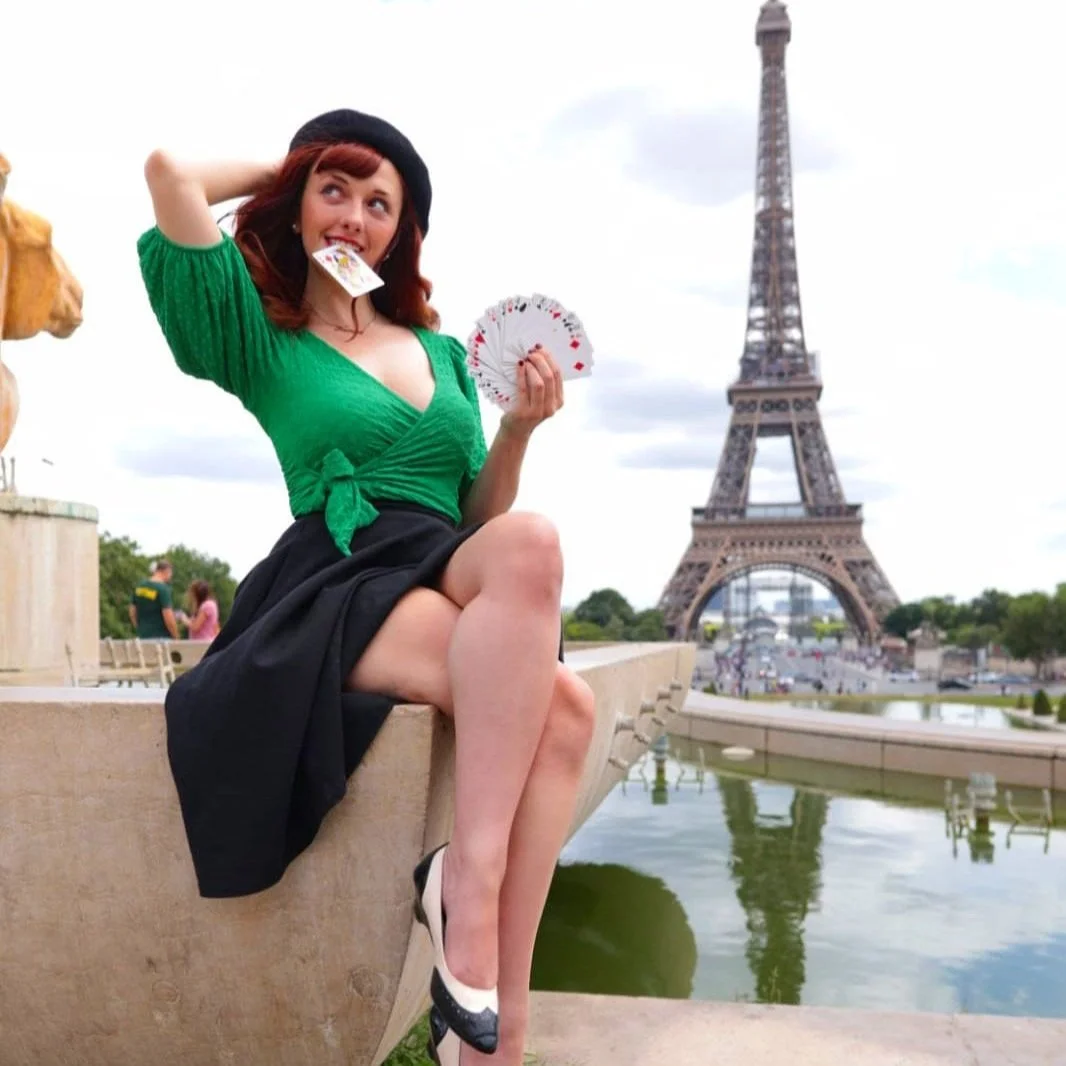
We always leave it too late. What's the fix?

Book next March's session as soon as this one finishes, while you still remember how difficult it was. By October the strongest options are largely committed and by January you're choosing from a short list. That single change takes ten minutes and permanently removes a problem most organizations repeat annually.

How do I book you?

Reach out with your date or timeframe, location or platform, expected attendance, and who's in the room. If you're set on March, enquire well before the autumn, since it books up early. If you're flexible, autumn dates offer more availability and a better planning conversation, and I'm happy to talk through which would suit your program before you commit to either.

Book It Well, Whenever It Is

There's nothing wrong with March, and there's a good deal wrong with leaving it until January and taking whoever's left. If your program benefits from the concentration, commit to it and book in the summer. If it doesn't, an autumn date gives you genuine choice, an audience that isn't already saturated, and a program that looks like an ongoing commitment rather than an annual obligation.

Either way, a women month magic show works the same in October as in March. The difference is whether you got the session you wanted.

Reach out with your timeframe, and let's work out what suits your program.

Katrina Kroetch
Magic Show Las Vegas for Retirement Communities and Senior Living

Magic Show Las Vegas for Retirement Communities and Senior Living

The Las Vegas valley has one of the larger concentrations of retirement communities in the country, and the activity directors running them program more entertainment in a month than most event planners book in a year. It's a genuinely demanding job, and it gets almost no attention from performers, who mostly write for weddings and corporate events.

So this is written for that reader. I'm Magical Katrina, an award winning magician and mentalist, and I want to explain what a magic show Las Vegas communities book actually involves, and what makes the difference between a session residents enjoy and one they endure politely.

Program for Adults

The most important point and the one performers most often get wrong. Residents in a retirement community are adults with careers behind them, considerable life experience, and no patience whatsoever for being addressed as though they were children.

Entertainment pitched that way is noticed immediately and resented quietly. What works is exactly what works for any adult audience: genuinely skilled material, an assumption of intelligence, and a conversational manner rather than an exaggerated one. A magic show Las Vegas communities rebook is one where residents felt respected, and activity directors can tell within five minutes which sort of performer has arrived.

Mentalism Lands Particularly Well

Worth knowing when choosing. Traditional magic delights, and mentalism engages, which suits an audience with time, curiosity, and the inclination to think about what they've just seen.

Residents frequently have more appetite for a genuine puzzle than a general audience does, and the conversations afterwards are often better. A magic show Las Vegas blending close up magic with mentalism gives people something to discuss over dinner and at the next day's coffee, which is worth more in a community setting than in a one off event, since the audience continues living together afterwards.

Sightlines Matter More Than Volume

The practical consideration that most affects how well a session goes. Community rooms are frequently wide rather than deep, with seating arranged for meetings, and residents at the edges can end up watching a performer's shoulder.

Arrange seating in a shallower arc rather than long rows, keep the front row genuinely close, and if the room is large, consider two shorter sessions rather than one that half the audience can't see properly. Close up magic works best when people are near it, so a magic show Las Vegas in a community setting is considerably better with forty people close than eighty spread across a hall.

Sound and Clarity

Related and worth planning. A proportion of any adult audience has some hearing loss, and community rooms often have hard surfaces and poor acoustics.

A performer who speaks clearly, faces the audience, and doesn't rely on quick verbal patter is doing most of the work. If your room has a sound system, offer it, and check whether residents using hearing loops need anything specific. It's also worth seating people who prefer to be closer at the front as a matter of course rather than waiting for anyone to ask, which most activity directors already do instinctively.

Timing Suits the Afternoon

Practical scheduling advice. Mid to late afternoon generally works better than evening in these settings, both for energy and because evening programming competes with dinner service and residents' own routines.

Around forty five minutes is a sensible length, occasionally an hour where the audience is engaged, and shorter is better than longer if you're unsure. In Vegas specifically, summer afternoons keep everyone indoors anyway, which makes programming during those months both easier to fill and more welcome. A magic show Las Vegas scheduled for a July afternoon is likely to draw a fuller room than one in March.

It Needs Nothing From Your Space

The reason this format suits community programming particularly. A magic show Las Vegas performed close up or as a small stage set requires no stage, no power, no rigging, and no setup beyond a performer arriving with a case.

That means a multipurpose room, a dining room after service, a library, or a lounge all work without borrowing equipment, moving furniture, or involving maintenance. For an activity director programming several things a week with limited support, entertainment that requires nothing is considerably easier to say yes to than something needing an AV setup nobody has time to arrange.

Participation, Handled Carefully

Worth being deliberate about. Residents participating in magic is a genuine pleasure for them and for the room, and it needs to be done with the same care you'd apply to any adult audience.

Nobody should be made to look foolish, put on the spot without an easy way out, or asked to do anything physically awkward. A participant should end up as the person something remarkable happened to, and a performer with experience in these settings reads that instinctively. If particular residents would love to be involved or would rather not be, tell the performer beforehand, since activity directors usually know exactly who's who.

Independent Living, Assisted Living, and Memory Care

Different settings with different considerations, and worth being clear when booking. Independent living residents are, for programming purposes, simply an adult audience, and the session should be pitched exactly as it would be anywhere else.

Assisted living settings may call for a shorter session and a smaller room. Memory care requires genuine specialist experience, a different pace, and a performer who has worked in those settings before, and any performer without that experience should say so rather than improvising. Tell whoever you book which setting they're coming into, and expect an honest answer about their experience with it.

Recurring Programming

Practically, communities tend to book differently from event clients. Rather than a single date, activity directors are filling a calendar continuously and value performers they can call again.

That usually means a booking is the start of a conversation rather than a transaction, with seasonal returns, different sessions across a year, or a rotation among several communities under the same management. Among magic show Las Vegas options, performers who understand that pattern are easier to work with than those treating each date as a one off negotiation.

A Note on "Local vs. Traveling In"

Worth knowing: performers who travel to Las Vegas often have availability when local ones are booked, particularly during convention weeks when corporate clients take the calendar. Travel is discussed openly and factored into the quote rather than being your problem. I'm based in the Los Angeles area and travel to Las Vegas regularly, including for community and family audiences rather than only tourist and corporate work.

Why Book Magical Katrina

If you'd like a magic show Las Vegas for your community, here's my case. I'm a member of the Magic Circle in London and the Academy of Magical Arts in Hollywood, I've earned multiple magic awards, and I've appeared on Penn & Teller: Fool Us and Masters of Illusion. I blend close up magic with mentalism, which suits an audience that enjoys a genuine puzzle, I perform for adults as adults, and I need no stage, power, or setup, so any room in your community works as it is. I'm fully insured with a COI available.

Frequently Asked Questions

What do residents actually respond to?

Being treated as the adults they are. Residents have careers behind them and considerable life experience, and entertainment pitched as though for children is noticed immediately and resented quietly. What works is genuinely skilled material, an assumption of intelligence, and a conversational manner. Activity directors can usually tell within five minutes which sort of performer has arrived.

Is mentalism suitable for this audience?

Particularly, since it engages rather than simply delights, and suits an audience with time, curiosity, and an inclination to think about what they've seen. Residents frequently have more appetite for a genuine puzzle than a general audience, and it gives people something to discuss afterwards, which matters more in a community where the audience continues living together than at a one off event.

How should we arrange the room?

In a shallower arc rather than long rows, with the front row genuinely close, since community rooms are often wide rather than deep and residents at the edges end up watching a performer's shoulder. Close up magic works best when people are near it, so forty people close is considerably better than eighty spread across a hall. Consider two shorter sessions for a large room.

What about residents with hearing loss?

A performer who speaks clearly, faces the audience, and doesn't rely on rapid verbal patter does most of the work. Offer your sound system if you have one, check whether anyone using a hearing loop needs something specific, and seat people who prefer to be closer at the front as a matter of course. Hard surfaced community rooms make clarity matter more than volume.

When should we schedule it?

Mid to late afternoon generally works better than evening, both for energy and because evening programming competes with dinner service and residents' routines. Around forty five minutes is sensible, and shorter is better than longer if you're unsure. In Vegas, summer afternoons keep everyone indoors, so a magic show Las Vegas in July is likely to draw a fuller room than one in March.

Does it work in assisted living or memory care?

Assisted living usually calls for a shorter session and a smaller room. Memory care requires genuine specialist experience, a different pace, and a performer who has worked in those settings, and anyone without that experience should say so rather than improvising. Tell whoever you book which setting they're coming into and expect an honest answer about their experience with it.

How do I book you, and what do you need to get started?

Reach out with your community, the setting, your preferred dates, the room you'd use, and roughly how many residents you expect. That's enough for me to check availability, recommend a length, and send a quote including travel. If you're programming across several communities under the same management, mention that, since it's usually easier to arrange together.

Program It Like Any Adult Audience

The communities that program entertainment well do one thing consistently: they book for residents as capable adults rather than as a category. A magic show Las Vegas works in that setting when the material is genuinely good, the room is arranged so everyone can see, the session is pitched at a sensible length in the afternoon, participation is handled with care, and nothing is required from a space that wasn't built for performance.

If you're filling a calendar and want something residents will still be talking about at coffee the next morning, I'd be glad to hear from you.

Reach out with your community and dates, and let's find something that works.

Katrina Kroetch
Corporate Magician for Executive Dinners and Board Events

Corporate Magician for Executive Dinners and Board Events

Entertainment for twelve senior people is a genuinely awkward problem, and most organizations solve it by not attempting it. A band makes no sense, a comedian for a dozen people is uncomfortable for everyone including the comedian, and anything involving participation risks asking a chief executive to do something undignified in front of their board.

So executive dinners tend to be a good room, a good menu, and conversation, which is fine and occasionally rather flat. I'm Magical Katrina, an award winning magician and mentalist, and I want to explain why a corporate magician is one of the few things that genuinely works with a small senior group, and what to be careful about.

Most Entertainment Needs a Crowd

Start with why the problem exists. Almost all performance entertainment is designed for scale, drawing energy from an audience large enough to have a collective reaction, and it fails when there isn't one.

A stage act performing to twelve people at a dinner table is uncomfortable in a way everyone in the room feels, since there's no crowd to hide in and every reaction is individually visible. That's why organisations stop looking. Close up magic is the exception: it isn't a scaled down version of a show, it's a form built for exactly this situation, performed at conversational distance for a handful of people at a time.

It Improves as the Group Shrinks

Worth stating plainly, because it's counterintuitive. At a reception for two hundred, a performer reaches groups in sequence and most guests get a few minutes each.

At a dinner for fourteen, everyone sees everything, from a few feet away, together, and the entire group shares each reaction rather than hearing about it afterwards. A corporate magician working an executive dinner is operating in the format's ideal conditions rather than adapting to difficult ones. The small guest list that makes other entertainment impossible is precisely what makes this work better than it would at a larger event.

It Moves a Formal Room to Human

The functional argument, and the reason to consider it for a board or leadership dinner specifically. These evenings usually begin formally, with people slightly performing for each other, aware of hierarchy and of who's watching.

That formality dissolves eventually, usually somewhere into the second course, and everything useful happens afterwards. A corporate magician accelerates it considerably, because genuine astonishment is one of the few things that produces an unguarded reaction from people who spend their working lives being composed. A room that has been surprised together is a different room, and if your dinner has a purpose beyond eating, arriving at that state earlier is worth something.

Dignity Is the Whole Requirement

The thing to be careful about, and the reason many executives are wary of entertainment. Senior people cannot be made to look foolish in front of their peers, their board, or their team, and any performer who doesn't understand that will create a genuinely bad evening.

Done properly, a participant becomes the person something extraordinary happened to rather than the butt of anything. Nobody is asked to perform, guess wrong publicly, or do anything undignified. Worth asking any corporate magician directly how they handle senior participants, and expecting an answer that reflects experience rather than reassurance, since this is the single risk that matters at this kind of event.

Discretion Matters at This Level

Related, and worth establishing. An executive dinner or board event frequently involves conversations that aren't public, people whose presence isn't advertised, and an organisation that would rather the evening wasn't discussed elsewhere.

A performer at that table should understand it: no photographs, no social media, no mention of who was present, and no lingering once the booking is finished. Among corporate magician options, the ones who work regularly at this level treat that as a requirement rather than a courtesy, and it's worth confirming at the outset alongside insurance and terms rather than assuming.

Where It Fits in the Evening

Practically, the strongest placement is between courses, which is when a long dinner has its natural gaps and when conversation at a table of twelve tends to fragment into two or three separate ones.

A corporate magician working those gaps gives the whole table a shared focus without interrupting service or requiring anyone to move. Some hosts prefer the drinks reception beforehand, particularly if guests don't all know each other. What generally doesn't work is anything after the substantive discussion, since senior people leave promptly once business concludes and you'll be performing to whoever's left.

Client Hospitality at Executive Level

A specific application worth considering. Entertaining a small number of senior clients is expensive per head and justified entirely by relationship value, and the usual solution is a very good restaurant.

The difficulty is that your client has also been to very good restaurants with your competitors. A corporate magician at that table provides something they haven't had at the last three dinners, gives them a story to tell colleagues afterwards with your organisation attached, and creates the informal moment where a business relationship becomes a human one. For hospitality whose entire purpose is the relationship, that's a better return than a more expensive wine.

What to Brief

Getting this right takes about a minute of preparation. Tell your performer who's in the room, roughly how senior, and whether it's internal, a board, or clients.

Mention anything sensitive: a difficult period, a recent departure, a deal in progress, or any individual who would particularly enjoy or particularly dislike being involved. Say whether you want anything referenced or would rather it stayed entirely neutral. A corporate magician can only calibrate to what they know, and at this kind of event calibration is most of the job, since the difference between a suitable evening and an awkward one is largely a matter of pitch.

Why Book Magical Katrina

If you'd like a corporate magician for an executive dinner, here's my case. I'm a member of the Magic Circle in London and the Academy of Magical Arts in Hollywood, I've earned multiple magic awards, and I've performed for companies including Formula 1, the Olympics, Porsche, Prada, Zapier, and the Ritz Carlton, with appearances on Penn & Teller: Fool Us and Masters of Illusion. I work particularly well with small senior groups, I blend close up magic with mentalism, which suits a room that thinks for a living, and I treat participants with care so nobody is ever the joke. I need no stage, sound, or setup, so a private dining room works exactly as it is, and I'm fully insured.

Frequently Asked Questions

Isn't twelve people too few for entertainment?

For most entertainment, yes, since almost all of it is designed for scale and draws energy from a crowd. A stage act performing to twelve at a dinner table is uncomfortable for everyone, which is why organisations stop looking. Close up magic is the exception, because it's built for exactly this situation rather than being a scaled down version of a show.

Does it really work better with a small group?

It does, which surprises people. At a reception for two hundred a performer reaches groups in sequence and most guests get a few minutes, whereas at a dinner for fourteen everyone sees everything from a few feet away and the whole group shares each reaction. A corporate magician at an executive dinner is working in the format's ideal conditions rather than adapting.

How do you avoid embarrassing senior people?

By treating it as the entire requirement. Senior people cannot be made to look foolish in front of peers, a board, or their team, and a participant should become the person something extraordinary happened to rather than the butt of anything. Ask any performer directly how they handle senior participants and expect an answer reflecting experience, since this is the one risk that matters here.

When during the evening should it happen?

Between courses, when a long dinner has natural gaps and conversation at a table of twelve fragments into separate ones. That gives the whole table a shared focus without interrupting service or moving anyone. Some hosts prefer the drinks reception, particularly if guests don't all know each other. What fails is anything after the substantive discussion, since senior people leave promptly once business concludes.

Is this suitable for client hospitality?

Particularly, since entertaining senior clients is expensive per head and justified entirely by relationship value, and your client has also been to very good restaurants with your competitors. A corporate magician provides something they haven't had at the last three dinners, gives them a story with your organisation attached, and creates the moment where a business relationship becomes a human one.

What about confidentiality?

It should be treated as a requirement rather than a courtesy. These evenings frequently involve conversations that aren't public and people whose presence isn't advertised, so expect no photographs, no social media, no mention of who was present, and no lingering afterwards. Performers who work at this level understand that, and it's worth confirming at the outset alongside insurance and terms.

How do I book you, and what do you need to get started?

Reach out with your date, the venue or restaurant, how many will attend, and whether it's an internal, board, or client dinner. That's enough for me to check availability and send a quote. It's also worth telling me anything sensitive about the group or the moment, since calibration is most of the job at this kind of event and a minute of briefing changes what I can do.

The Format Built for This Room

A dinner for a dozen senior people is the situation most entertainment cannot serve, which is why so many of these evenings consist of a good menu and hope. A corporate magician performing close up magic is the exception: it needs no stage or crowd, it works better at fourteen than at two hundred, it moves a formal room to something human before the conversation that matters, and it treats everyone in it with the dignity a senior audience requires.

If you're planning a board dinner, an executive evening, or hospitality for a small group of clients, I'd be glad to hear about it.

Reach out with your date and the shape of the evening, and let's talk.

Katrina Kroetch