When to Book a Seattle Magician

When to Book a Seattle Magician

"Book early" is the standard advice and it's useless without a number attached, because early means one thing for a July wedding and something entirely different for a Tuesday in February. What you actually need is a sense of where your event sits in the local calendar.
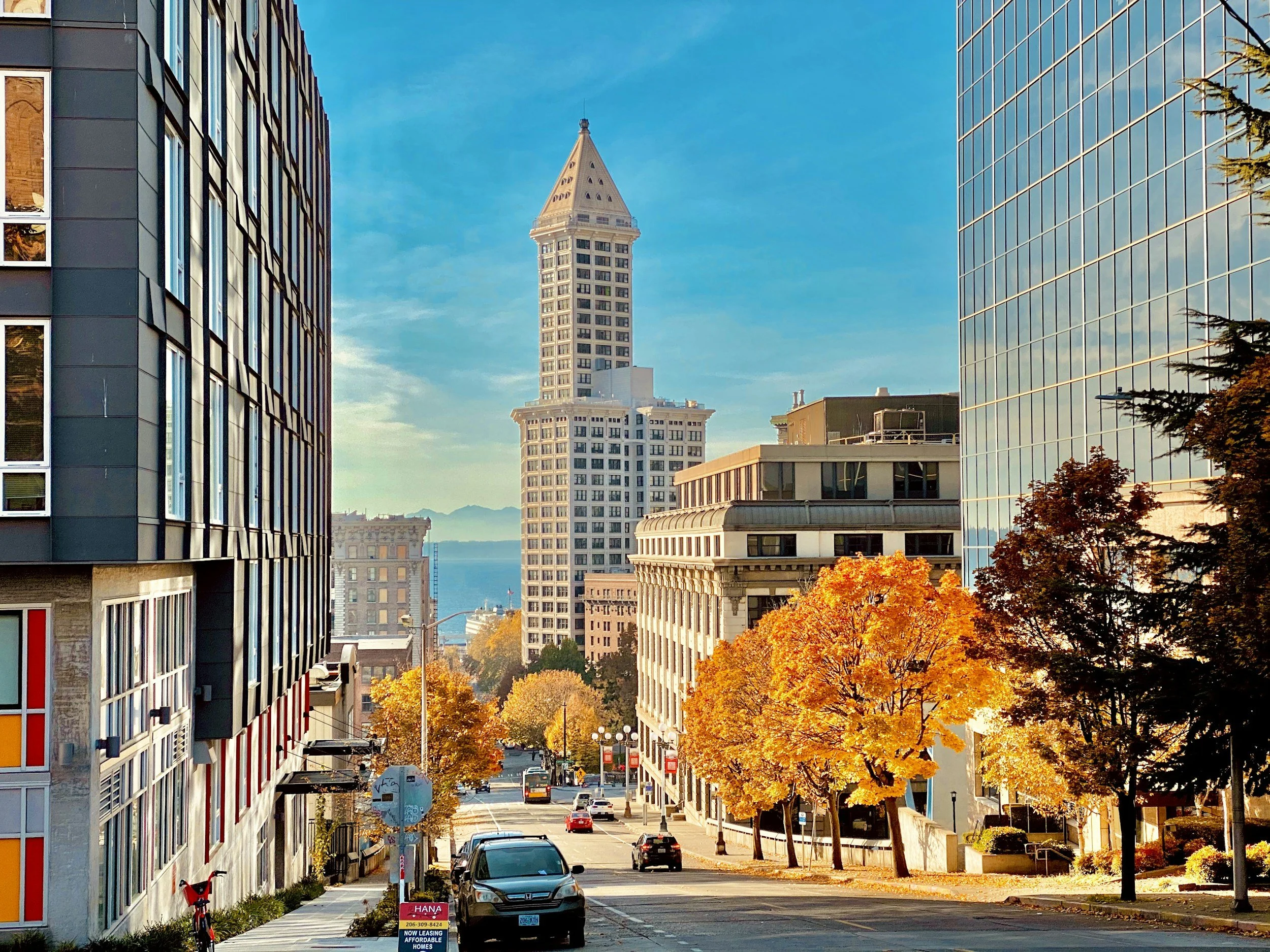
Seattle's calendar has a distinctive shape, driven largely by weather and by a corporate sector that plans in its own rhythms. I'm Magical Katrina, an award winning magician and mentalist, and I want to set out the real booking picture for a Seattle magician, so you know how urgent your enquiry actually is.

Summer Weddings Are the Sharpest Peak

The defining feature of the Pacific Northwest calendar. Reliable weather here arrives late and leaves early, which concentrates an enormous proportion of the year's weddings into roughly July through September.

That compression makes those Saturdays the most contested dates of the year by a considerable margin, more so than in cities where the wedding season spreads across six or seven months. Couples routinely book a Seattle magician twelve to eighteen months ahead for a peak summer Saturday, and a year is normal rather than cautious. If your wedding falls in that window, treat entertainment as something to arrange shortly after confirming the venue.

The Shoulder Months Are Genuinely Available

The corollary, and it's worth knowing. Late spring and early autumn weddings, May, June, and October, have meaningfully better availability across every supplier category, not just entertainment.

Couples who can be flexible find better choice and often better rates, and October in particular can be lovely here. Off season and weekday weddings are more available still. That's one of several practical arguments for looking outside the peak, and it applies to venues and photographers as much as to a Seattle magician, so a small shift in date can improve your whole supplier list.

December Is the Corporate Crush

The other hard peak. Corporate holiday parties compress a year's worth of demand into roughly four weeks, and the first three weeks of December on a Thursday or Friday are among the most contested dates in the calendar.

Realistically, a specific performer for a prime December date means booking in the summer. By October most established options for those dates have gone, and by late November you're choosing from whoever remains rather than whoever suits. If your holiday party is an annual fixture, book next year's as soon as this year's date is confirmed, which removes the problem permanently.

Tech Company Cycles Run Their Own Calendar

Something particular to this region. A large share of Seattle corporate events are run by technology companies, whose calendars follow product cycles, fiscal years, and planning periods rather than the traditional event seasons.

That produces demand at moments that don't align with anything else: a launch in March, a team event tied to the end of a quarter, an offsite scheduled around a planning cycle. The practical implication is that Seattle's corporate calendar has fewer genuinely dead periods than other markets, so don't assume a Seattle magician will be freely available in February simply because it isn't December.

Gala Season Concentrates in Spring and Autumn

The benefit and fundraising calendar here clusters in two windows, roughly April through early June and late September through November, when arts organisations, hospitals, and nonprofits hold their annual events.

Three to six months ahead is a reasonable target for a gala, and organisations with a fixed annual date should book considerably further out. Since gala dates are usually set early for venue reasons, there's rarely a good excuse for leaving entertainment until the run of show is being finalised, by which point you've narrowed your options to whoever happens to be free.

The Quiet Window Is January to March

Genuinely easier, and useful if your event is flexible. The early part of the year is the quietest stretch here, with the December rush finished, wedding season months away, and the weather discouraging anything outdoors.

If you're planning something internal, a team event, or anything that could happen in one month as easily as another, that window offers better availability and often a more attentive planning conversation, since a performer with fewer competing enquiries has more time for yours. It's also a period when a bit of brightness is genuinely welcome, which is not the worst reason to schedule something.

Lead Times at a Glance

A summary to work from:

Peak summer weddings. Twelve to eighteen months, especially Saturdays in July, August, and September.

Shoulder season weddings. Six to twelve months, with genuinely better choice.

December corporate parties. Six months, ideally booked the previous summer.

Galas and fundraisers. Three to six months, longer for fixed annual dates.

Corporate events outside peaks. Four to eight weeks, though earlier widens your choice.

Private parties. Two to three months, more within a peak.

Early Booking Buys Choice, Not Just Availability

Worth understanding what you gain beyond avoiding disappointment. Booking early means selecting from everyone rather than from whoever remains, which is the difference between hiring the right Seattle magician and hiring an available one.

It also produces a better event. A performer with three months to think about yours will ask more questions, suggest more, and tailor more than one confirming a booking eleven days out. That difference shows in preparation as much as in who you end up with, and it's the part people don't anticipate when they leave entertainment until last.

If You're Already Late

None of this helps if your event is in three weeks, so practically: enquire anyway, and enquire widely rather than one at a time. Availability is genuinely unpredictable, cancellations happen, and performers sometimes have gaps in otherwise busy periods.

Be flexible where you can, since a Tuesday or an earlier start may open options a Saturday evening won't. Be upfront about the timeline rather than burying it, because anyone who can't help will say so quickly and may suggest someone who can. And consider performers who travel in, since their calendars differ from locally based ones.

A Note on "Local vs. Traveling In"

Relatedly: performers who travel to Seattle work from a different calendar than those based here, so a date that's impossible locally is sometimes straightforward for someone travelling. I'm based in the Los Angeles area and travel to Seattle, with travel discussed openly and factored into the quote. For a contested summer Saturday, widening the search geographically is one of the more effective things you can do.

Why Book Magical Katrina

If you're planning ahead, here's my case. I'm a member of the Magic Circle in London and the Academy of Magical Arts in Hollywood, I've earned multiple magic awards, and I've performed for clients including Formula 1, the Olympics, Porsche, Zapier, and the Ritz Carlton, with appearances on Penn & Teller: Fool Us and Masters of Illusion, across events in over 20 countries. I confirm availability quickly with a clear quote and written agreement, I'm fully insured with a COI available, and I travel to Seattle regularly, so my calendar may differ from locally based performers on a contested date.

Frequently Asked Questions

Why is the summer wedding season so contested here?

Because reliable weather arrives late and leaves early, which concentrates an enormous share of the year's weddings into roughly July through September. That compression makes those Saturdays the most contested dates of the year by a considerable margin, more so than in cities where the season spreads across six or seven months. Twelve to eighteen months ahead is normal for a peak Saturday.

When should we book a December corporate party?

The summer before, realistically. Holiday parties compress a year's demand into four weeks, and the first three weeks on a Thursday or Friday are among the most contested dates in the calendar. By October the best options for prime dates have gone. For an annual fixture, book next year's as soon as this year's date is confirmed, which removes the problem entirely.

Are there genuinely better months for weddings?

Yes. Late spring and early autumn, May, June, and October, have meaningfully better availability across every supplier category rather than just entertainment, and often better rates. October in particular can be lovely here. Off season and weekday weddings are more available still, so a small shift in date can improve your venue, photographer, and Seattle magician options together.

Is February quiet for corporate events?

Quieter, though less than you'd expect, because a large share of Seattle corporate events are run by technology companies whose calendars follow product cycles and fiscal years rather than traditional seasons. That produces demand at moments that don't align with anything else, so don't assume availability simply because it isn't December. Enquire rather than presuming.

When is the easiest time to book?

January through March, with the December rush over, wedding season months away, and weather discouraging anything outdoors. If your event is flexible, that window offers better availability and often a more attentive planning conversation, since a performer with fewer competing enquiries has more time for yours. A bit of brightness in the early part of the year is also not the worst idea.

Our event is in three weeks. Is it hopeless?

Not necessarily. Enquire widely rather than sequentially, since availability is unpredictable and cancellations happen. Be flexible where possible, as a Tuesday or an earlier start may open options a Saturday won't, and be upfront about the timeline so anyone who can't help says so quickly. Consider performers who travel in, since their calendars differ from local ones.

How do I check your availability?

Reach out with your date, location or venue, event type, and rough guest count, and I'll confirm availability quickly and send a clear quote including travel. If the date is taken I'll say so immediately rather than leaving you waiting, and if a different timing or format would serve your event better I'll mention that too. A deposit secures the date once you're happy.
Work Out Which Window You're In

The useful version of "book early" is knowing your own calendar. A Saturday wedding in August, a December corporate party, and an internal team event in February are entirely different problems, and treating them the same is how people end up disappointed. Identify which window your event falls into, aim for the matching lead time, and remember that booking early buys choice and preparation rather than simply avoiding a scramble.

Whenever your event is, I'd be glad to check availability.

Katrina Kroetch
Magicians in Las Vegas: What Out of Town Planners Should Know

Magicians in Las Vegas: What Out of Town Planners Should Know

Planning an event in Las Vegas for the first time is unlike planning one anywhere else, and most of the surprises arrive after you've committed. The city runs on conventions and hospitality at enormous scale, which makes it exceptionally good at hosting events and exceptionally particular about how things are done.

None of it is difficult once you know, and quite a lot of it is expensive if you don't. I'm Magical Katrina, an award winning magician and mentalist who performs in Vegas regularly, and I want to set out what planners from elsewhere should know, and where magicians in Las Vegas fit around those constraints.

Venues Have Minimum Spends

The first surprise for anyone used to smaller markets. Restaurant private rooms, hotel function space, cabanas, and lounges typically carry a minimum spend rather than a rental fee, and those minimums assume a certain volume of food and drink.

That changes how you budget. A room that appears free may require a substantial commitment on catering, and a group smaller than the space was designed for will struggle to reach it. Work out your minimums before falling in love with a venue, and remember that entertainment usually sits outside that figure, which is worth knowing when a magicians in Las Vegas quote arrives alongside a catering commitment you hadn't anticipated.

Hotel Production Costs Are the Real Budget Risk

The item that most frequently derails a first Vegas budget. Convention hotels have in house audio visual providers, and rates for staging, sound, lighting, screens, and technicians are set at convention scale.

A modest stage with basic sound can cost more than the entertainment standing on it, and planners arriving from smaller markets are routinely startled. This matters directly to your entertainment decision, because anything requiring production carries a second invoice you may not have modelled. Among magicians in Las Vegas, close up performers need no stage, sound, power, or technicians, which sidesteps that cost entirely rather than reducing it.

In House and Preferred Supplier Rules

Worth checking early. Many properties require you to use their in house providers for certain services, or to work from a preferred supplier list, and bringing in an outside vendor may involve fees, approvals, or simply not be permitted.

Entertainment is usually less restricted than production, but confirm rather than assume, particularly at large convention properties. What is almost always required is a certificate of insurance from any outside supplier, so ask your performer for one early rather than in the week before. A professional magicians in Las Vegas booking will have that ready without prompting.

Distances Inside Resorts Are Deceptive

A practical reality that catches everyone. Properties here are vast, and the walk from a hotel room to a meeting space, or between two venues on the same site, can take fifteen or twenty minutes.

That affects your run of show more than you expect. Guests will arrive late from a session across the property, transitions between rooms take longer than scheduled, and anything requiring people to relocate mid event loses momentum. It's an argument for entertainment that works within a single space and doesn't require guests to gather, and it's a reason to build considerably more slack into your schedule than you would elsewhere.

Peak Weeks Change Everything

The seasonal factor that determines both cost and availability. When a major convention is in town, hotel rates multiply, venues book out, and every supplier in the city is committed.
If your dates fall in one of those weeks, plan considerably further ahead and expect higher prices across everything, including entertainment. If your dates are flexible, checking the convention calendar before fixing them can save a substantial amount, and it improves availability across the board. Among magicians in Las Vegas, local performers are frequently booked out during peak weeks, which is when performers who travel in tend to have availability that locals don't.

Service Charges and What's Actually Included

Worth reading carefully on any quote. Food and beverage in Vegas typically carries a service charge and tax that add meaningfully to a headline figure, and some properties add administrative fees on top.

The number you're quoted for catering is rarely the number you pay. That isn't sharp practice, it's standard here, but planners from markets where quotes are more inclusive get caught by it. Ask for a fully loaded figure early so your entertainment budget isn't the thing that gets cut when the catering invoice turns out to be twenty five percent higher than the one you approved.

Local or Traveling In

A question specific to booking here. There are excellent performers based in Vegas and excellent performers who travel in, and the practical difference is availability rather than quality.

During busy periods local performers are booked first, since they're the obvious search result, while those who travel work from a different calendar. Travel should be discussed openly, factored into the quote, and handled by the performer rather than by you. I'm based in the Los Angeles area and travel to Las Vegas regularly, which frequently means availability on dates when local options have gone. Judge on skill and fit rather than postcode.

Entertainment Is the Easy Part

Worth ending the practical section on, because it's genuinely true. Compared with venue minimums, production costs, supplier rules, and service charges, booking a performer is straightforward: a date, a room, a guest count, a quote, and a deposit.

That's especially true of close up magic, which requires nothing from your venue, adds nothing to your production plan, has no minimum spend attached, and doesn't care how far your guests walked to get there. Among the many things that will complicate your first Vegas event, a magicians in Las Vegas booking is unlikely to be one of them.

Why Book Magical Katrina

If you're planning a Vegas event from elsewhere, here's my case. I'm a member of the Magic Circle in London and the Academy of Magical Arts in Hollywood, I've earned multiple magic awards, and I've performed for clients including Formula 1, the Olympics, Porsche, Prada, and the Ritz Carlton, with appearances on Penn & Teller: Fool Us and Masters of Illusion. I need no stage, sound, power, or technicians, so nothing lands on your AV invoice, I provide a COI without being chased, I travel to Vegas regularly with travel factored into the quote, and I'm used to schedules that shift because guests are walking across a resort.

Frequently Asked Questions

What surprises first time Vegas planners most?

Hotel production costs. Convention properties have in house audio visual providers with rates set at convention scale, and a modest stage with basic sound can cost more than the entertainment standing on it. Planners from smaller markets are routinely startled, and it matters to your entertainment choice, since anything requiring production carries a second invoice you may not have modelled.

How do venue minimum spends work?

Most private rooms, cabanas, and function spaces carry a minimum spend on food and drink rather than a rental fee, and those minimums assume a certain volume. A room that looks free may require a substantial catering commitment, and a group smaller than the space was built for will struggle to reach it. Establish your minimums before choosing a venue rather than afterwards.

Are we allowed to bring in our own suppliers?

Usually for entertainment, though check rather than assume, particularly at large convention properties where in house or preferred supplier rules may apply to certain services and outside vendors can involve fees or approvals. What's almost always required is a certificate of insurance from any outside supplier, so ask your performer for one early rather than in the final week.

Why does the schedule keep slipping?

Because distances inside resorts are deceptive, and a walk between two spaces on the same property can take fifteen or twenty minutes. Guests arrive late from sessions elsewhere and transitions take longer than planned. Build considerably more slack into your run of show than you would elsewhere, and favour entertainment that works within one space without requiring guests to gather.

How much do peak convention weeks matter?

Enormously. Hotel rates multiply, venues book out, and every supplier in the city is committed, so plan much further ahead and expect higher prices across everything. If your dates are flexible, checking the convention calendar before fixing them saves a substantial amount. Local magicians in Las Vegas book out first during those weeks, which is when travelling performers often have availability.
Should we book someone local or bring someone in?

The practical difference is availability rather than quality, since there are excellent performers in both categories. Local performers are booked first because they're the obvious search result, while those travelling in work from a different calendar. Travel should be discussed openly and factored into the quote rather than being your problem to arrange, so judge on skill and fit.

How do I book you, and what do you need to get started?

Reach out with your dates, the property or venue, event type, and rough guest count. That's enough for me to check availability and send a quote including travel. I'll send a COI without being asked, and since I need nothing from your venue or your AV provider, there's nothing to coordinate beyond agreeing a time that fits your run of show.

Plan for How the City Works

Las Vegas is genuinely excellent at hosting events and it operates on its own terms, most of which are invisible until you're committed. Establish venue minimums early, model production costs before choosing entertainment that needs them, check supplier rules, allow for the walking, avoid peak convention weeks if your dates move, and get fully loaded catering figures rather than headline ones.

Do that and the rest becomes straightforward, including choosing among magicians in Las Vegas, which is one of the few parts of a Vegas event that stays simple.

Reach out with your dates and venue, and I'll tell you exactly what I need, which is very little.

Katrina Kroetch
Zoom Magician for AGMs and Member Meetings

Zoom Magician for AGMs and Member Meetings

The annual general meeting is the least attended event in most organizations' calendars, and everybody involved knows it. Members receive the notice, register the date, and decline on the reasonable basis that an hour of accounts, resolutions, and board reports is not how they want to spend an evening.

For some organizations that's merely disappointing. For others it's a procedural problem, because you need people there. I'm Magical Katrina, an award winning magician and mentalist, and I want to explain where a Zoom magician fits into an AGM or member meeting, which is a narrower and more practical use than it might first appear.

When Attendance Is a Requirement

The distinctive thing about this category. Most events want attendance because it's good. AGMs sometimes need it because the constitution says so, and an organization that cannot reach quorum has a genuine problem rather than a thin room.

That changes the arithmetic considerably. If you're chasing members to attend so business can be conducted, spending modestly on something that makes the invitation appealing is straightforwardly rational. A Zoom magician gives you a concrete reason for a member to join rather than an appeal to duty, and for organizations that struggle year after year with the same problem, that's a practical solution rather than an indulgence.

Members Owe You Nothing

Worth understanding why the problem persists. Members of a club, association, society, or mutual are not employees, and they've usually already paid their subscription. Attending the AGM benefits the organization rather than them personally.

So an appeal to obligation reaches the committed few and nobody else, which is why the same fifteen people attend every year. Something enjoyable changes the proposition from a duty to an evening worth an hour, and among all the levers available to a membership secretary, giving people a genuine reason to turn up is more effective than another reminder about the importance of participation.

Put It Before the Business, Not After

The practical guidance, and it matters more here than at most events. The temptation is to place something enjoyable at the end as a reward for sitting through the accounts.

That fails, because members who joined reluctantly will leave the moment the resolutions pass, and the people you most wanted to reach never experience it. Opening with a Zoom magician means members join on time, are in a reasonable mood when the formal business starts, and stay because they're already there. If your concern is quorum specifically, the entertainment needs to be the reason people arrive rather than a reward for remaining.

Keep the Formal Business Genuinely Formal

An important caveat, and one a company secretary will want addressed. The statutory portion of an AGM is a proper proceeding with rules about notice, voting, minutes, and the conduct of business, and nothing should compromise that.

The solution is clean separation. Entertainment happens before the meeting is formally opened, or clearly after it's closed, with the chair marking the transition explicitly. A Zoom magician performing for thirty minutes and then handing back to a chair who opens the meeting properly is not a threat to the integrity of your proceedings, provided the boundary is clear and minuted appropriately.

It Suits Member Bodies Better Than Boardrooms

Worth being honest about fit. This works well for clubs, societies, associations, mutuals, membership charities, residents' associations, and similar bodies, where members are volunteers or subscribers and the meeting is partly social.

It suits a listed company's shareholder meeting considerably less, where the audience is institutional, the proceedings are scrutinized, and anything unusual invites comment. If your AGM is a governance exercise attended by professional investors, this is not for you and I'd say so rather than pretending otherwise. The question worth asking is whether your members would be pleased or puzzled.

It Reaches Members Who Never Engage

Beyond quorum, there's a membership development argument. Most organizations have a small active core and a large silent majority who pay their subscription and participate in nothing.

Those members are the ones who eventually lapse, usually without any single reason. An AGM that they actually attend, and enjoy, is a rare point of contact that isn't a renewal notice. A Zoom magician doesn't build loyalty by itself, but a member who spent an enjoyable hour with your organization has a different relationship with it than one whose entire experience is an annual payment and a newsletter.

Virtual Suits This Category Anyway

Practically, many member organizations have moved these meetings online permanently, and for good reason. Members are geographically spread, an evening meeting in one location excludes everybody else, and hybrid arrangements are complicated to run well.

A virtual AGM reaches the whole membership equally, which is exactly what a meeting requiring broad participation needs. Adding a Zoom magician works within that format without any additional venue, travel, or setup, and it costs the same whether thirty members join or three hundred. For an organization counting attendance, that scaling matters.

Say What It Is in the Notice

Practical advice on promotion. The AGM notice is usually a formal document that nobody reads past the date, and burying the entertainment in paragraph four achieves nothing.

Mention it clearly and early, in the covering message rather than the formal notice if your governance requires the notice to stay austere. Members decide whether to attend within seconds of opening the email, and the thing that changes their mind needs to be in those seconds. Among the levers available for AGM attendance, saying plainly that the evening includes something enjoyable is the one most organizations underuse.

Why Book Magical Katrina

If you'd like a Zoom magician for a members' meeting, here's my case. I'm a member of the Magic Circle in London and the Academy of Magical Arts in Hollywood, I've earned multiple magic awards, and I've performed for organizations and companies including Formula 1, the Olympics, Porsche, Zapier, and the Ritz Carlton, with appearances on Penn & Teller: Fool Us. My virtual material is built for video and everyone participates using ordinary household items, whatever their age or confidence with technology. I understand where the boundary sits between the entertainment and your formal business, and I'll finish cleanly and hand back to your chair.

Frequently Asked Questions

Why is AGM attendance so difficult?

Because members owe you nothing. They're not employees, they've usually paid their subscription already, and attending benefits the organization rather than them personally, so an appeal to obligation reaches the committed few and nobody else. That's why the same fifteen people attend every year, and why something that changes the proposition from a duty to an evening worth an hour works better than another reminder.

Does this actually help with quorum?

That's the most practical use. If you need members present so business can be conducted, spending modestly on something that makes the invitation appealing is rational rather than indulgent. A Zoom magician gives a concrete reason to join rather than an appeal to duty, which for organizations that struggle with the same problem annually is a solution rather than a nicety.

Where should it sit in the agenda?

Before the formal business, not after. The temptation is to place it at the end as a reward for sitting through the accounts, but members who joined reluctantly leave the moment resolutions pass, so the people you most wanted to reach never experience it. Opening with it means members join on time and stay because they're already there.

Won't it undermine the formality of the meeting?

Not with clean separation, which is what a company secretary will want. Entertainment happens before the meeting is formally opened or clearly after it's closed, with the chair marking the transition explicitly and the minutes reflecting it. A performer finishing and handing back to a chair who then opens proceedings properly poses no threat to the integrity of your business.

Is this appropriate for every kind of AGM?

No. It suits clubs, societies, associations, mutuals, membership charities, and residents' associations, where members are volunteers or subscribers and the meeting is partly social. It suits a listed company's shareholder meeting considerably less, where the audience is institutional and anything unusual invites comment. The question is whether your members would be pleased or puzzled.

Does it help beyond attendance?

With the silent majority, potentially. Most organizations have a small active core and a large group who pay their subscription and participate in nothing, and those members are the ones who eventually lapse without any single reason. A meeting they attended and enjoyed is a rare point of contact that isn't a renewal notice, which is worth something over time.

How do I book you, and what do you need to get started?

Reach out with your meeting date, platform, expected attendance, and where in the agenda you're considering placing it. That's enough for me to check availability and send a quote. It's worth telling me how formal your proceedings are, since I'll plan to finish cleanly and hand back to your chair rather than blurring the boundary between the two parts of the evening.

Give Them a Reason to Join

AGMs fail on attendance because they ask members to give up an evening for something that benefits the organization rather than them, and no amount of reminding changes that calculation. A Zoom magician does: a concrete reason to join, placed early enough to secure attendance rather than reward it, reaching a geographically spread membership at the same cost regardless of numbers, and finishing cleanly so your formal business proceeds exactly as it should.

If you're chasing quorum every year, that's a problem worth solving properly.

Reach out with your meeting date and membership numbers, and let's talk about it.

Katrina Kroetch
Magician Zoom Party: Virtual Birthday Parties for Kids

Magician Zoom Party: Virtual Birthday Parties for Kids

Virtual children's parties have a reputation, largely earned during a period when nobody had a choice. A screen of twenty overexcited children, three of them muted, one holding the camera at an angle showing only a ceiling, and a well meaning adult trying to run a game that was never designed for video.

Done properly it's considerably better than that, and for some families it's genuinely the right option rather than a compromise. I'm Magical Katrina, an award winning magician and mentalist with a Family Entertainer of the Year honour, and I want to explain how a magician Zoom party actually works for children, and what makes the difference between chaos and a party they remember.

When Virtual Genuinely Suits

Worth saying first, since it isn't always the right choice. It works particularly well when a child's friends are scattered, after a house move or across a wide catchment, or when family who'd otherwise miss the party entirely can join from another country.

It also suits families who don't want the expense or scale of a venue party, children who find large loud gatherings genuinely difficult, and situations where an in person party isn't practical. What it's less suited to is replacing a party for a group of children who all live nearby and could easily be in one room. A magician Zoom party is a good option chosen deliberately rather than a substitute accepted reluctantly.

Shorter Than You Think

The single most important thing to get right. Children's attention on screen runs considerably shorter than in a room, where the energy of other children carries them along.

Realistically: around twenty to twenty five minutes for four to six year olds, thirty minutes for six to eight year olds, and up to forty for older children. That sounds brief and it's genuinely the right length, because a show that ends while children still want more is a success and one that runs ten minutes long unravels visibly. Any magician Zoom party that promises an hour for young children is either padding or hasn't performed for them on video.

The Mute Question

The practical decision every host faces. Fully muted, the performer gets no reaction and children feel like they're watching television. Fully unmuted, twenty households of background noise makes anything impossible.

What works is usually somewhere between, with a sensible default of everyone unmuted for reactions and the host muting individuals who have a barking dog or a sibling shouting. Discuss it with your performer beforehand, since experienced ones have a preference and will tell you how they like to run it. What matters most is that one adult is watching for problems so the performer can concentrate on performing.

Everyone Needs Something in Their Hands

The thing that separates a genuinely interactive magician Zoom party from a broadcast. Good virtual magic has children participating with ordinary household objects, so the magic happens in their own hands rather than on a screen.

Your performer should tell you exactly what each child needs, usually one or two everyday items, and your job is passing that on to parents clearly when you send the link, then again in a reminder the day before. Children without the items feel left out immediately, and it's the most common avoidable problem with these parties. Put it in bold in the message and expect a few parents to miss it anyway.

Set Up the Screen Properly

Twenty minutes of preparation makes a considerable difference. Get the birthday child on the largest screen available rather than a phone, positioned so they can be seen from the waist up rather than filling the frame with one eye.

Sit them somewhere with light in front rather than behind, clear the space so they can hold things up, and do a quick test call the day before. It's also worth mentioning to other parents that a laptop or tablet on a table works better than a handheld phone. A magician Zoom party works far better when the birthday child is clearly visible, since they'll be involved throughout.

The Birthday Child Should Be Central

Worth telling your performer explicitly. In a room it's obvious who the party is for. On a screen of identical squares, the birthday child is one tile among twenty unless someone makes a point of it.

A good performer will build moments around them specifically, so they hold the object, make the choice, and have the impossible thing happen in their own hands while their friends watch. That's what stops a virtual party feeling generic, and it's the part children describe afterwards. Give the performer their name, their age, and one or two things they're interested in, which takes a moment and changes the experience noticeably.

Manage the Background

Practical advice for the host. Ask parents, in the same message as the household objects, to have their child somewhere reasonably quiet, with siblings occupied elsewhere if possible, and the television off.

You won't achieve this universally and it improves things considerably. It's also worth having a second adult in your household free during the party, so one of you can handle a technical problem, a child who has fallen off the call, or a parent messaging to ask what the objects were, while the other stays with the birthday child. Trying to host, troubleshoot, and enjoy it simultaneously is how the person organising ends up seeing none of it.

Cake and the Ending

A small thing that gives the party a shape. Virtual parties end awkwardly by default, with a gradual drift of children leaving as parents call them away.

Plan the ending: the magic, then cake and singing with everyone still on, then a clear goodbye rather than an open ended fade. It gives the party a proper finish and means the birthday child experiences a moment of everyone celebrating them at once. Some families also do presents afterwards offline, which is generally kinder than watching twenty children wait while one child unwraps things on camera.

Why Book Magical Katrina

If you'd like a magician Zoom party for your child, here's my case. I'm a member of the Magic Circle in London and the Academy of Magical Arts in Hollywood, I've earned multiple magic awards including a Family Entertainer of the Year honour, and I've appeared on Blippi as a performer and magic consultant, along with Penn & Teller: Fool Us and Masters of Illusion. My virtual material is built specifically for video and designed so every child participates with ordinary household items, I pitch the length honestly for the age group rather than overselling, and I make the birthday child the star of the show. I handle all the technical side myself.

Frequently Asked Questions

How long should a virtual children's party be?

Shorter than you'd expect, since attention on screen runs well below what it does in a room where other children carry the energy. Around twenty to twenty five minutes for four to six year olds, thirty for six to eight year olds, and up to forty for older children. A show ending while they still want more is a success, and any magician Zoom party promising an hour for young children is padding.

Should the children be muted?

Usually somewhere in between, with everyone unmuted for reactions and the host muting individual households with a barking dog or a shouting sibling. Fully muted means the performer gets nothing back and children feel they're watching television, while fully unmuted makes anything impossible. Discuss it beforehand, since experienced performers have a preference, and have one adult watching for problems.

What do the children need to have with them?

Usually one or two ordinary household items, which your performer should specify exactly. Your job is passing that on clearly when you send the link and again in a reminder the day before, ideally in bold. Children without the items feel left out immediately, and it's the most common avoidable problem with these parties, so expect a few parents to miss it regardless.

How do we set up for the birthday child?

Largest screen available rather than a phone, positioned so they're visible from the waist up, with light in front rather than behind and space to hold things up. Do a quick test call the day before. It's worth mentioning to other parents that a laptop or tablet on a table works better than a handheld phone, since they'll all be participating.

Will our child actually feel like it's their party?

Only if the performer makes it so, which is worth requesting explicitly. On a screen of identical squares the birthday child is one tile among twenty unless someone makes a point of it, whereas a good performer builds moments around them, so they hold the object and the impossible thing happens in their hands. Give the performer their name, age, and a couple of interests.

How should the party end?

Deliberately, since virtual parties otherwise dissolve into a gradual drift of children being called away. Plan it: the magic, then cake and singing with everyone still on, then a clear goodbye rather than an open ended fade. Presents are usually better done offline afterwards, rather than twenty children watching one child unwrap things on camera.

How do I book you, and what do you need to get started?

Reach out with your party date and time, your child's age and the ages of their friends, roughly how many will join, and the platform you'll use. That's enough for me to check availability, recommend a length for that age group, and send a quote. I'll tell you exactly what household items to mention, and I'll make sure the birthday child is the centre of it.

A Party, Not a Video Call

Virtual children's parties earned their reputation during a period when everyone was improvising, and done deliberately they work well. The things that matter are unglamorous: keep it shorter than instinct suggests, sort the mute approach in advance, make sure every child has the objects in their hands, set the birthday child up on a proper screen, and plan a real ending.

Get those right and a magician Zoom party gives your child something genuinely memorable, with friends and family who couldn't otherwise be there all in the same place.

Reach out with your date and your child's age, and let's make it a good one.

Katrina Kroetch
Zoom Magician Cost: What's Actually Included in the Quote

Zoom Magician Cost: What's Actually Included in the Quote

Virtual bookings look simple from the outside: a performer, a link, an hour. That simplicity hides several things worth clarifying before you agree a figure, and the item most often overlooked isn't money at all, it's whether you're allowed to record the session.

Better to establish all of it early than to discover it afterwards. I'm Magical Katrina, an award winning magician and mentalist, and I want to set out what a zoom magician cost typically covers, what usually sits outside it, and the questions worth asking any performer before you book.

The Performance Is the Smallest Part

Worth understanding what you're actually paying for. A virtual show involves the session itself, plus preparation, plus a technical check, plus material developed specifically for video over a considerable period.

The hour your audience sees is the visible portion of something considerably larger, which is why quotes don't scale neatly with duration. A thirty minute show is not half the price of an hour, because most of the work sits either side of the performance rather than inside it. Understanding that makes a zoom magician cost easier to read, and it explains why shortening a booking saves less than people expect.

A Real Starting Figure

Since vagueness is unhelpful, here's a concrete anchor from my own pricing: my virtual shows start around $1,400, with the exact figure depending on length, audience size, and customisation.

That gives you something to plan against. It also helps when comparing quotes, since a figure dramatically below the range usually reflects inexperience with virtual performance specifically, which is a distinct skill from performing in a room. Plenty of excellent in person performers are weak on camera, and the gap shows immediately.

Technical Check and Rehearsal

Normally included and worth confirming. Any professional will want a short technical check before the day, testing the platform, sound, and how the session will run, particularly if your organisation uses a configured environment or restricts external participants.

For a larger or more complex event, a fuller run through with your host or producer may be sensible, coordinating who introduces whom and how the transition works. That's typically part of the booking rather than an addition, but ask rather than assume, since a zoom magician cost that excludes any preparation call is a signal about how the performer works.

Who Handles the Platform

Worth settling early. In most bookings the client hosts on their own platform and account, sending the link and managing admissions, while the performer joins as a participant and handles their own camera, lighting, and audio.

That division suits most organisations, since your IT environment is yours and your people know it. What you shouldn't need to provide is technical support for the performer's own setup, which is entirely their responsibility. Confirm who is hosting, who admits guests, and who manages any waiting room, since those small logistics cause more day of confusion than anything technical.

The Household Objects Briefing

Included as standard with any properly designed virtual show, and worth knowing about. Participation usually requires attendees to have one or two ordinary items to hand, and the performer should tell you exactly what to mention and when.

Your only job is including that line when you send the invitation and the reminder. If a performer doesn't provide this, either the show isn't genuinely participatory or they haven't thought about it, and both are worth knowing before you book. A zoom magician cost should cover that briefing as a matter of course rather than as an extra.

Recording Rights Are Not Automatic

The most commonly overlooked item, and the one that causes genuine awkwardness afterwards. A performer's material is their intellectual property, developed over years, and a recording of it circulating internally or externally is a different proposition from a live session.

Some performers permit recording freely, some allow it for internal use only, some for a limited period, and some not at all. None of those positions is unreasonable, and the important thing is agreeing it in writing before the event rather than pointing a camera and hoping. If you need a recording for colleagues in other time zones, say so at the enquiry stage, since it may affect the quote and it certainly affects the agreement.

Audience Size Usually Matters

Worth checking rather than assuming. Some performers quote for a defined number of attendees, and a session designed for forty runs differently from one for four hundred, particularly regarding interaction.

Be realistic about numbers rather than optimistic, and mention if attendance is uncertain. Very large audiences may change the format, the interaction model, or the price, and it's better to establish that beforehand than to have a performer arrive expecting a workshop and find a broadcast. Most quotes assume a range, so ask what yours covers.

What Usually Costs Extra

A short list worth knowing before you commit.

Significant customisation. Building your brand, message, or a bespoke element into the material is genuine work.

Multiple sessions. Covering time zones or shifts means separate performances, though repeated sessions on one day are usually more economical than separate bookings.

Recording rights, where permitted, depending on the performer.

Awkward hours. A session timed for a distant time zone may be reflected.

Extended length beyond what was agreed.

The Awkward Questions

A few things clients rarely ask and occasionally wish they had. What happens if your platform fails on the day, and who bears that. What the cancellation terms are, in both directions. What happens if attendance is dramatically higher or lower than expected. And whether the performer has a backup connection, which for a professional is a reasonable expectation rather than a luxury.

Reasonable answers exist for all of these, and any experienced performer answers immediately because they're asked routinely. The concern isn't the specific policy, it's whether someone has one. Vagueness about the awkward scenarios usually means limited experience of them.

Why Book Magical Katrina

For transparency about my own terms: I'm a member of the Magic Circle in London and the Academy of Magical Arts in Hollywood, I've earned multiple magic awards, and I've performed for companies including Formula 1, the Olympics, Porsche, Zapier, and the Ritz Carlton, with appearances on Penn & Teller: Fool Us. My virtual shows start around $1,400, including a technical check, the household objects briefing, and my own camera, lighting, and audio setup. I'll set out recording permissions in writing before the event, and if something would be extra I'll say so before you book rather than afterwards.

Frequently Asked Questions

Why isn't a shorter show proportionally cheaper?

Because the hour your audience sees is the visible part of something larger. A virtual booking includes preparation, a technical check, and material developed specifically for video over a considerable period, so most of the work sits either side of the performance rather than inside it. That's why a thirty minute show isn't half the price of an hour, and why shortening saves less than people expect.

Is a technical check included?

Normally, and it's worth confirming. Any professional will want a short check before the day, testing the platform, sound, and how the session runs, particularly if your organisation uses a configured environment or restricts external participants. A larger event may warrant a fuller run through with your host. A zoom magician cost that excludes any preparation call tells you something about how that performer works.

Who hosts the session?

Usually you, on your own platform and account, sending the link and managing admissions, while the performer joins as a participant and handles their own camera, lighting, and audio. What you shouldn't need to provide is technical support for their setup. Confirm who hosts, who admits guests, and who manages any waiting room, since those logistics cause more confusion on the day than anything technical.

Can we record the show?

Ask, and get it in writing beforehand. A performer's material is their intellectual property, developed over years, and a recording circulating afterwards is a different proposition from a live session. Some permit recording freely, some for internal use only, some for a limited period, and some not at all. If you need a recording for other time zones, say so at enquiry stage, since it may affect the quote.

Does audience size change the price?

Often, since a session designed for forty runs differently from one for four hundred, particularly regarding interaction. Be realistic rather than optimistic about numbers and mention if attendance is uncertain. Very large audiences may change the format, the interaction model, or the figure, and it's better to establish that beforehand than to have a performer expecting a workshop and find a broadcast.

What typically costs extra?

Significant customisation building your brand or message into the material, multiple sessions to cover time zones or shifts, recording rights where permitted, sessions timed for awkward hours, and extended length beyond what was agreed. Repeated sessions on a single day are usually more economical than separate bookings, so mention it if you're considering covering several regions.

What should we ask that most people don't?

What happens if your platform fails on the day and who bears that, what the cancellation terms are in both directions, what happens if attendance is dramatically different from expected, and whether the performer has a backup connection. Experienced performers answer immediately because they're asked routinely, and vagueness about the awkward scenarios usually reflects limited experience of them.

Settle the Details, Then the Number

A zoom magician cost is easier to judge once you know what sits inside it: the performance, the preparation, a technical check, the household objects briefing, and the performer's own setup. What sits outside it is a short list, and recording rights are the item most worth settling in writing before the day rather than discovering afterwards.

Ask those questions early, and the quote you're comparing becomes a genuine comparison rather than a headline figure.

Reach out with your event details, and I'll tell you exactly what's included.

Katrina Kroetch
Magician for Zoom Party: Celebrating a Milestone Wedding Anniversary

Magician for Zoom Party: Celebrating a Milestone Wedding Anniversary

A fortieth, fiftieth, or sixtieth wedding anniversary deserves a proper celebration, and frequently the family that would fill a room is spread across several countries. Organising a gathering means flights, hotels, and a date everyone can manage, which sometimes works and often doesn't.

So you end up considering a video call, which is practical and, on the face of it, faintly underwhelming for something that took fifty years. I'm Magical Katrina, an award winning magician and mentalist, and I want to explain how a magician for Zoom party turns that into something that genuinely feels like an occasion.

The Problem With an Anniversary Call

You know how these tend to go. Everyone joins, there's a chorus of greetings, a few people say something lovely, someone's audio doesn't work, the couple say thank you several times, and then a silence arrives that nobody quite knows how to fill.

It's warm and it's thin, and for a fiftieth anniversary that thinness is noticeable. The difficulty isn't the people or the affection, it's that a call has one conversation and no structure, so once the greetings are done there's nothing for it to be about. A magician for Zoom party gives the gathering a centre, which is the thing an anniversary call is otherwise missing entirely.

Let Them Participate, Not Just Receive

Here's what a performance does that toasts don't. At most anniversary celebrations the couple sits and is spoken about: children say kind things, grandchildren wave, and the pair of them smile and thank everybody for an hour.

That's lovely and entirely passive. A magician for Zoom party can build a moment around them specifically, so they hold something, make a choice, and have something impossible happen in their own hands while four generations watch and react at once. Being astonished together is a different experience from being honoured, and for a couple who've spent decades doing things side by side, taking part together tends to land better than being toasted.

Four Generations, One Screen

The structural challenge of these gatherings. Your guest list runs from the couple themselves down through their children, their children's partners, grandchildren, and often great grandchildren, plus a sibling or two and old friends.

Almost nothing engages that range simultaneously. Speeches lose the youngest, games lose the oldest, and slideshows are enjoyed politely by everyone. Magic works across it, since young children respond to the visual surprise, older children engage with the puzzle, adults are astonished despite themselves, and the couple frequently enjoy watching the great grandchildren react as much as the magic. A magician for Zoom party gives a four generation guest list one shared thing.

Nobody Has to Perform

Worth noting for a family gathering. Some relatives are entirely comfortable speaking on a call, and others find it excruciating, particularly older family members and teenagers, who are frequently the two groups asked to contribute.

With a magician for Zoom party, participation means holding an ordinary object and being surprised. Nobody is put on the spot, asked to give a speech, or expected to say something meaningful in front of thirty relatives. That's a relief to a considerable number of people, and it means the quiet cousin and the shy grandchild have exactly the same good time as everyone else.

Help the Couple With the Setup

Practical, and the thing that most often decides whether an anniversary call works. Sort out the technology in advance rather than on the day, with someone doing a proper test call with the couple a few days before, checking the camera position, the sound, and how they'll join.

Get them somewhere comfortable with decent light, seated together where both are in frame, and make sure they know they don't need to do anything but be there. If they'll need the one or two ordinary household objects for the magic, put those out beforehand. A magician for Zoom party works beautifully for celebrants of any age, provided the twenty minutes of preparation happens before rather than while everybody waits.

Keep It Shorter Than You Think

An hour is plenty, and forty five minutes is often better. There's a temptation to programme a long celebration because the occasion is significant, and long video calls tire everybody, particularly the people at the centre of them.

A workable shape: a brief welcome, a few short tributes rather than open ended speeches, then the magic, then informal time for anyone who wants to stay and chat. That way the couple experience the good parts while still fresh, and the people who want a longer conversation can have it afterwards without everyone else sitting through it. Ending while people still wish there were more is the right call.

It Reaches People Who Couldn't Travel

Worth saying, because it's the genuine advantage rather than a consolation. For a fiftieth anniversary, the guest list frequently includes people who simply cannot travel: an elderly sibling, a relative abroad, someone recovering from something, a family with small children and no budget for flights.

A magician for Zoom party includes all of them on exactly the same terms as everyone else. For a couple whose remaining contemporaries are scattered and whose friends of fifty years may no longer travel easily, having those people present is frequently worth more than a larger gathering of people who live nearby.

Why Book Magical Katrina

If you'd like a magician for Zoom party for an anniversary, here's my case. I'm a member of the Magic Circle in London and the Academy of Magical Arts in Hollywood, I've earned multiple magic awards, and I've performed for clients including Formula 1, the Olympics, Porsche, and Prada, with appearances on Penn & Teller: Fool Us and Masters of Illusion. My virtual material is designed so everyone participates using ordinary household items, whatever their age or confidence with technology, and I love building a moment around the people being celebrated. I handle all the technical side and I work across time zones.

Frequently Asked Questions

Why do anniversary calls feel flat?

Because a call has one conversation and no structure, so once the greetings and a few tributes are done there's nothing left for it to be about, and a silence arrives that nobody quite knows how to fill. It's warm and thin, which is noticeable for a fiftieth anniversary. A magician for Zoom party gives the gathering a centre, which is what these calls are otherwise missing.

Can it involve the couple themselves?

Yes, and it's usually why families book it. At most anniversary celebrations the couple sit and are spoken about for an hour, which is lovely and entirely passive. A moment built around them, holding something while something impossible happens in their own hands as four generations react, is participatory instead. For a couple used to doing things side by side, taking part together tends to land better than being toasted.

Our family spans four generations. Will it work?

That range is exactly what most anniversary programming struggles with, since speeches lose the youngest and games lose the oldest. Magic works across it: young children respond to the visual surprise, older children engage with the puzzle, adults are astonished despite themselves, and the couple frequently enjoy watching the great grandchildren react as much as the magic itself.

What if the couple aren't confident with technology?

Sort it out in advance rather than on the day. Have someone do a proper test call a few days before, checking camera position, sound, and how they'll join, and get them somewhere comfortable with decent light, seated together in frame. Put out the one or two household objects they'll need beforehand. Twenty minutes of preparation before the day makes the whole thing work.

Does anyone have to speak?

No, and that's a relief to more people than you'd expect. Some relatives are comfortable on a call and others find it excruciating, particularly older family members and teenagers, who are often the two groups asked to contribute. Participation means holding an ordinary object and being surprised, so nobody is put on the spot or expected to say something meaningful in front of thirty relatives.

How long should the celebration be?

An hour is plenty and forty five minutes is often better, since long video calls tire everybody, particularly the people at the centre. A workable shape is a brief welcome, a few short tributes rather than open ended speeches, then the magic, then informal time for whoever wants to stay. Ending while people still wish there were more is the right instinct.

How do I book you, and what do you need to get started?

Reach out with your date and time, the platform, roughly how many will join, the time zones involved, and a bit about the couple. That's enough for me to check availability and send a quote. From there I'll tell you the household objects to mention when you send the link, and we'll settle where the magic sits relative to any speeches.

Give Them an Occasion, Not a Call

Fifty years together deserves better than a screen full of squares and a silence after the toasts. A magician for Zoom party turns an anniversary gathering into something that actually happened: a shared moment across four generations, a couple who participate rather than sit and receive, relatives who couldn't travel present on the same terms as everyone else, and nobody obliged to make a speech.

If you're marking something significant for two people who've earned it, I'd love to be part of it.

Reach out with your date and details, and let's give them a proper celebration.

Katrina Kroetch
Magician for Zoom: Franchise Network and Franchise Events

Magician for Zoom: Franchise Network and Franchisee Events

Franchise support teams occupy an unusual position. Your franchisees aren't employees, so you can't require anything, and they aren't ordinary customers either, since they trade under your brand and their performance is your performance. What you have is influence rather than authority, and influence depends on whether people turn up.

Most franchise networks find that they mostly don't. I'm Magical Katrina, an award winning magician and mentalist, and I want to explain where a magician for Zoom helps a franchise program, which is more specific than making a call more enjoyable.

Franchisees Are Running Businesses

Start with why attendance is difficult. A franchisee is an owner operator with staff to manage, a roster to cover, and a P and L that is theirs rather than yours, and a Tuesday afternoon call from head office competes directly with all of it.

They'll attend when it's obviously worth an hour and skip when it isn't, which is entirely rational. A magician for Zoom gives your invitation something concrete that a standard agenda doesn't, and the calculation a busy owner makes about whether to join is exactly the point at which most franchise communications lose. It's a small lever on a genuinely difficult problem.

Engagement and Brand Consistency Are Linked

Worth being clear about why this matters commercially rather than culturally. Franchisees who feel connected to the network engage with training, adopt initiatives, follow brand standards, and raise problems early. Those who feel like a franchise fee going out each month do considerably less of all of that.

That's why franchise support teams are measured on engagement in the first place. A magician for Zoom doesn't produce compliance, obviously, but it contributes to the relationship that makes everything else easier. An owner who has had a genuinely good experience of head office is a different conversation from one who has only ever received requirements.

The Gap Between Conventions

The structural problem in most networks. The annual convention is where relationships form: franchisees meet each other, meet the support team, and leave energized. Then there are eleven months of webinars and emails.

That gap is where the energy dissipates. A magician for Zoom partway through the year gives you something that isn't a training module or an update, at a moment when nothing much is happening and attendance is thinnest. It also carries some of the convention's function, giving owners an occasion rather than an obligation, which is what makes people feel part of a network rather than party to an agreement.

Owners Need to Meet Each Other

Something franchise networks want and rarely achieve outside the convention. Franchisees learn more from each other than from head office, and the strongest networks are ones where owners call each other rather than always calling you.

That requires them to have some experience of each other beyond a directory. A magician for Zoom produces a shared moment across the network, which is more than a webinar chat generates. It matters particularly for owners in smaller territories who don't have neighboring franchisees to talk to, and who are often the least connected people in your network despite frequently needing the most support.

New Franchisee Cohorts

A specific and valuable application. New owners join in cohorts, go through onboarding together, and either form a peer group that lasts for years or don't, largely depending on whether anything connected them beyond a shared training schedule.

That peer group is genuinely valuable to you, since a franchisee with three people to call when something goes wrong is less likely to escalate everything to head office and less likely to become disillusioned alone. A magician for Zoom during onboarding gives a cohort a shared experience early, which is when the group either forms or doesn't. It's a small intervention at a high leverage moment.

Regional Groups Without Critical Mass

Practical for networks spread thinly. Regional meetings struggle where a territory has six franchisees, since a meeting of six feels thin and the organizer stops bothering.

A magician for Zoom lets several regions join one session, turning six owners in four regions into a room of twenty four and sharing the cost. It gives regional managers something genuinely promotable rather than another update call, and it introduces owners to franchisees outside their own patch, which is where a lot of useful comparison and problem solving happens.

Place It Early, Not as a Reward

Practical guidance that matters with a voluntary audience. With employees you can put entertainment at the end and people will stay. Franchisees will not, because they have a business to run and will leave the moment the useful part concludes.

Opening with a magician for Zoom rewards the people who joined on time, holds owners through the substantive content, and sets a tone that this call is different from the others in their calendar. It also means the people you most wanted to reach, the ones who nearly didn't join, actually experience it rather than logging off before it starts.

It Works Across a Dispersed Network

Practically, franchise networks are geographically spread by definition, sometimes across countries, and bringing owners together physically happens once a year at most because of cost and time away from their businesses.

A magician for Zoom reaches the entire network on one afternoon, and because the material is visual and participatory rather than dependent on shared references, it works across markets where a quiz or comedic element would fragment. It also scales without changing your workload, whether your network is thirty units or three hundred.

Why Book Magical Katrina

If you'd like a magician for Zoom for a franchise event, here's my case. I'm a member of the Magic Circle in London and the Academy of Magical Arts in Hollywood, I've earned multiple magic awards, and I've performed for companies including Formula 1, the Olympics, Porsche, Zapier, and the Ritz Carlton, with appearances on Penn & Teller: Fool Us. My virtual material is built for video and genuinely participatory, so owners take part rather than watch, and it works across countries and time zones. I have a polished technical setup, I handle everything myself, and I understand that a franchise call has objectives beyond the entertainment.

Frequently Asked Questions

Why is franchisee attendance so hard to get?

Because franchisees are owner operators with staff, roster, and a P and L that's theirs rather than yours, so a head office call competes directly with running a business. They attend when it's obviously worth an hour and skip when it isn't, which is entirely rational. A magician for Zoom gives your invitation something concrete at exactly the point where most franchise communications lose that calculation.

Does engagement actually affect performance?

Indirectly but genuinely, which is why support teams are measured on it. Franchisees who feel connected engage with training, adopt initiatives, follow brand standards, and raise problems early, while those who feel like a fee going out each month do less of all of it. Entertainment doesn't produce compliance, but it contributes to the relationship that makes everything else easier.

When in the year does this help most?

The gap between annual conventions, where energy dissipates across eleven months of webinars and emails. A magician for Zoom partway through the year gives you something that isn't training or an update, at a point when attendance is thinnest, and it carries a little of the convention's function by giving owners an occasion rather than an obligation.

How does it help owners connect with each other?

By producing a shared moment across the network rather than a shared mailing list. Franchisees learn more from each other than from head office, and the strongest networks are ones where owners call each other rather than always calling you. It matters most for owners in smaller territories with no neighboring franchisees, who are often least connected and frequently need the most support.

What about new franchisee onboarding?

That's a high leverage moment. New owners join in cohorts and either form a peer group that lasts years or don't, largely depending on whether anything connected them beyond a training schedule. That peer group is valuable to you, since an owner with three people to call is less likely to escalate everything to head office or become disillusioned alone.

Where should it sit in the agenda?

Early, not as a closing reward. Franchisees have businesses to run and will leave the moment the useful part ends, so anything at the close reaches only the people you'd already kept. Opening with it rewards punctual joiners, holds owners through the substantive content, and signals that this call differs from the others in their calendar.

How do I book you, and what do you need to get started?

Reach out with your date, platform, expected numbers, the regions and time zones involved, and where it sits in your program. That's enough for me to check availability, suggest placement, and send a quote. If several regions are joining one session, mention that, since it's usually more affordable than separate events and gives owners from different territories something shared.

Earn the Hour Before You Ask for It

Franchise networks run on influence rather than authority, and influence depends on owners choosing to engage with a head office they aren't obliged to attend anything for. A magician for Zoom addresses that directly: a genuine reason to join, placed early enough to hold people through the content, connecting owners to each other rather than only to you, and reaching a dispersed network in a single afternoon.

If your franchise calls are well prepared and thinly attended, that's the gap worth closing.

Reach out with your dates and network size, and let's make the invitation worth opening.

Katrina Kroetch
Magician for Birthday Party Las Vegas: Planning a Milestone Birthday for a Parent

Magician for Birthday Party Las Vegas: Planning a Milestone Birthday for a Parent

Vegas advice assumes a particular kind of trip: a group of friends, a suite, a late night, and a schedule built around going out. That's fine, and it describes almost none of what happens when adult children organize a seventieth for their mother.

That trip is a different animal. There are grandchildren, there's an aunt who tires by nine, the group spans fifty years, and the aim is honoring someone rather than surviving until three in the morning. I'm Magical Katrina, an award winning magician and mentalist, and I want to talk about where a magician for birthday party Las Vegas fits into that kind of celebration, which is not where the usual advice puts it.

The Dinner Is the Event

For a milestone birthday with a family group, the celebratory dinner isn't a prelude to the night, it is the night. Everything meaningful happens there: the toasts, the photographs, the moment where someone says something they've been rehearsing on the flight.

That means the dinner carries a lot and lasts a long time, often three hours between the first drink and the last coffee. A magician for birthday party Las Vegas performing close up magic between courses gives that stretch shape, filling the gaps while plates are cleared with something better than everyone reaching for their phones. Because the format needs nothing but the table, it works in a private dining room without altering the restaurant's service.

Three Generations, One Table

The genuine challenge, and it's why so many family celebrations default to simply eating. You have grandparents, adult children, partners, and grandchildren ranging from eight to eighteen, and almost nothing entertains all of them at once.

Magic does, which is unusual. Younger children respond to the visual surprise, teenagers engage with the puzzle if it isn't pitched at babies, adults are astonished despite themselves, and the oldest guests frequently enjoy watching everyone else react as much as the magic itself. A magician for birthday party Las Vegas at a family dinner gives a table spanning fifty years one shared experience rather than several separate ones happening in parallel.

The Guest of Honor Gets a Moment

Here's what magic does that a toast doesn't. Speeches are lovely and they position the person as the subject of something rather than a participant in it, which for some parents is genuinely uncomfortable and for all of them is passive.

A moment built around them specifically is different: they hold something, they make a choice, something impossible happens in their own hands while their children and grandchildren watch and react at once. It's participatory rather than ceremonial. Tell your magician for birthday party Las Vegas who's being celebrated and something about them, and expect that moment to be the one everybody films.

Pace It for the Room, Not for Vegas

Worth saying plainly. The city encourages a certain kind of schedule, and a group containing an eighty year old and a nine year old cannot sustain it, nor should it try.

Realistically: an earlier dinner than you'd book with friends, something gentle beforehand rather than a full day of activity, and an evening that ends at a reasonable hour with an optional continuation for whoever wants one. Entertainment that fits inside the dinner rather than requiring a separate outing suits this pattern exactly, which is another argument for a magician for birthday party Las Vegas working the table rather than planning a show everyone has to travel to.

Energy and Access Are Real Considerations

Practical, and frequently the thing that determines whether the evening is enjoyable or exhausting for the person you're celebrating. Vegas involves considerable walking, and distances inside resorts are longer than they appear on a map.

Keep the day light, book somewhere close to where people are staying, check accessibility if anyone needs it, and resist the temptation to fill every hour because you've all travelled. A milestone birthday where the guest of honor is too tired to enjoy dinner is a planning failure rather than bad luck. Entertainment that comes to the table rather than requiring another trip out is genuinely valuable in that context.

Grandchildren Change the Calculation

Worth thinking about, since their presence shapes the evening. Children at a long adult dinner get restless somewhere around the second course, and a restless nine year old affects everybody's evening including their grandmother's.

Magic helps here in a straightforward way: it gives children something genuinely absorbing at exactly the point their patience runs out, and it does so without separating them from the table or requiring a screen. A magician for birthday party Las Vegas who performs for all ages rather than specializing in one is the right choice for this kind of booking, and it's worth asking directly when you enquire.

What to Tell the Performer

Practical guidance for getting this right. Say who's being celebrated and what the occasion is, since a seventieth is a different evening from a stag weekend and the pitch should reflect that.

Give the age spread honestly, including the youngest and oldest present. Mention anything relevant about the guest of honor, whether they'd love being the center of attention or would rather a lighter touch, and whether there's anything specific worth weaving in. And say where it's happening, since a private dining room, a suite, and a restaurant table are different rooms. Twenty seconds of that transforms what a magician for birthday party Las Vegas can do for your evening.

A Note on "Local vs. Traveling In"

Worth knowing: the best performer for your celebration needn't be Vegas based. Many travel in, with travel discussed openly, factored into the quote, and handled by the performer rather than by you. I'm based in the Los Angeles area and travel to Las Vegas regularly. Peak weekends book out early, so if you're building a trip around a specific date, enquire sooner rather than later.

Why Book Magical Katrina

If you're planning something for a parent's milestone, here's my case. I'm a member of the Magic Circle in London and the Academy of Magical Arts in Hollywood, I've earned multiple magic awards including a Family Entertainer of the Year honor, and I've appeared on Penn & Teller: Fool Us and Masters of Illusion. I perform for every age from young children to adults, so a table spanning three generations is comfortable rather than difficult, and I love building a moment around the person being celebrated. I need no stage, power, or setup, so a private dining room or a suite works equally, and I'm fully insured.

Frequently Asked Questions

Where does it fit if we're not going out afterwards?

The dinner, which for a family milestone is the event rather than a prelude to it. That stretch carries a lot and often runs three hours, so a magician for birthday party Las Vegas performing between courses gives it shape, filling the gaps while plates are cleared with something better than everyone reaching for their phones. It needs nothing but the table, so the restaurant's service is unaffected.

Will it work for a group spanning three generations?

That's the main reason to book it, since almost nothing entertains grandparents, adults, teenagers, and young children simultaneously. Younger children respond to the visual surprise, teenagers engage with the puzzle if it isn't pitched young, adults are astonished despite themselves, and the oldest guests often enjoy watching everyone else react. One shared experience rather than several running in parallel.

Can it involve the person we're celebrating?

Yes, and it's usually why families book it. Speeches position someone as the subject of something rather than a participant, which for some parents is genuinely uncomfortable and for all of them is passive. A moment built around them, holding something while something impossible happens in their own hands as their children and grandchildren react, is participatory rather than ceremonial.

How should we pace the trip?

Gentler than Vegas encourages, since a group containing an eighty year old and a nine year old can't sustain the usual schedule. An earlier dinner than you'd book with friends, something light beforehand rather than a full day, and an evening ending at a reasonable hour with an optional continuation. A birthday where the guest of honor is too tired to enjoy dinner is a planning failure rather than bad luck.

What about the grandchildren getting restless?

That's a genuine consideration, since children at a long adult dinner lose patience around the second course and a restless child affects everyone's evening. Magic gives them something absorbing at exactly that point, without separating them from the table or handing them a screen. Book a performer who works across all ages rather than specializing in children or adults, and ask directly when you enquire.

What should we tell the performer beforehand?

Who's being celebrated and the occasion, the honest age spread including youngest and oldest, whether the guest of honor would love the attention or prefer a lighter touch, anything worth weaving in about them, and where it's happening. A private dining room, a suite, and a restaurant table are different rooms. Twenty seconds of that transforms what a performer can do for your evening.

How do I book you, and what do you need to get started?

Reach out with your date, where you're staying or dining, group size, the age range, and who's being celebrated. That's enough for me to check availability and send a quote including travel. From there we'll settle which part of the evening suits and whether you'd like a moment built around your parent. Vegas weekends book early, so sooner is better if your date is fixed.

Plan the Evening They'd Actually Enjoy

A milestone birthday for a parent is a different trip from the one Vegas advertises, and planning it around the city's usual pattern is how families end up with an exhausted guest of honor and an evening that didn't quite land. A magician for birthday party Las Vegas suits the version that works: something happening at the dinner that is the whole event, one shared experience for a table spanning fifty years, absorbing enough to hold the grandchildren, and a genuine moment for the person you all flew in for.

If you're marking something significant for someone, I'd love to help make it memorable.

Reach out with your date and group details, and let's plan the evening properly.

Katrina Kroetch
Activities for Women's Empowerment: What Works and What Just Feels Good

Activities for Women's Empowerment: What Works and What Just Feels Good

There's a particular kind of event everyone in this space has attended. The room is warm, the speakers are genuinely inspiring, people leave feeling energised, and three weeks later nothing whatsoever has changed. Nobody did anything wrong, and the afternoon achieved very little.

That's worth examining rather than repeating annually. I'm Magical Katrina, an award winning magician and mentalist who speaks at women's events, and I want to look honestly at which activities for women's empowerment tend to produce something durable and which mainly produce a pleasant few hours. I'm a performer rather than a researcher, so this is observation and reasoning rather than evidence, offered as something to argue with.

Inspiration Has a Short Half Life

The most common format and the least durable. A speaker with a remarkable story, an audience that leaves motivated, and a feeling that fades roughly as fast as the feeling after a good film.

That isn't the speaker's fault. Motivation is a state rather than a capability, and states decay, which is why a single inspiring session rarely changes what someone does in March. Among activities for women's empowerment, the inspirational keynote is the format most likely to be evaluated highly on the day and least likely to alter anything measurable. It has a place as an opener or a draw, and it works badly as the whole program.

Capability Outlasts Motivation

The corrective, and it's fairly simple. Someone who leaves knowing how to do something retains it, whereas someone who leaves feeling encouraged doesn't.

That argues for programming that teaches: negotiation with actual scripts and practice, how to make a case for promotion with evidence, how to handle a specific recurring situation, how to price your work, how to run a meeting where you get interrupted. These sessions are less emotionally satisfying to run and considerably more useful. Among activities for women's empowerment, the ones people cite years later are almost always the ones that taught them a concrete thing they used.

Access Beats Advice

The most consistently underrated point. A great deal of programming provides women with advice, when what actually moves careers is access: to people who make decisions, to opportunities before they're advertised, to someone who will advocate for you when you're not present.

Mentoring provides advice. Sponsorship provides access, and the two get conflated constantly. Among activities for women's empowerment, an event that puts junior women in genuine contact with senior decision makers, in a setting where a real conversation can happen, does more than a year of sessions on confidence. It's harder to organize, which is precisely why it's rarer and why it's worth the effort.

Programming for Women Alone Has a Ceiling

Worth stating carefully, because it's easily misread. Sessions for women are valuable, and some conversations genuinely need to happen in that room.

But if every intervention is aimed at women, the implicit theory is that the problem is something women need to fix in themselves, and the people whose decisions actually determine outcomes never attend anything. Among activities for women's empowerment, the ones with the widest effect tend to be those that also reach managers, whose choices about assignments, promotions, and who gets the interesting project shape more careers than any confidence workshop. That doesn't mean fewer women's sessions, it means not stopping there.

The Warm Room Is Not the Measure

A trap for anyone running this programming. The events that feel best in the room, high engagement, emotional resonance, enthusiastic feedback forms, are frequently the ones that change least, because feeling is what you can detect immediately and effect is what you can't.

That mismatch quietly steers program design towards whatever produces good feedback rather than whatever produces outcomes. It's worth noticing when a session was genuinely useful versus merely enjoyable, and being honest when the answer is the latter. Both have value, and confusing them is how organizations end up running the same warm afternoon for a decade.

One Offs Rarely Do Anything

A structural observation. A single event in March, however good, is competing against eleven other months of ordinary organizational behavior.

Programming that recurs, a monthly circle, an ongoing group, a sequence rather than an occasion, has a considerably better chance of amounting to something, because change tends to come from repetition rather than intensity. Among activities for women's empowerment, a modest thing that happens ten times usually beats an impressive thing that happens once, which is inconvenient given that budgets and attention concentrate around a single month each year.

Demonstration Reaches Where Argument Doesn't

Something I notice in my own field, offered as an observation rather than a claim. Magic has been overwhelmingly male throughout its history, and when I perform, particularly for younger audiences, the reaction in the room when the person doing the impossible thing turns out to be a woman is different from the reaction to being told women can do things.

Nothing is explained, which seems to be why it lands. Demonstration bypasses the resistance that argument provokes, and it reaches people who have stopped listening to the explicit version. That's not a substitute for structural work, and it isn't nothing either. Among activities for women's empowerment, showing tends to outperform telling across most formats, not just mine.

Measure Something Uncomfortable

Finally, the honest bit. Attendance and satisfaction are the easiest things to measure and the least informative, since both are dominated by the people who were already engaged.

More useful questions: did anyone get a role, an opportunity, or an introduction they wouldn't otherwise have had. Did anyone use the thing they learned. Did the composition of your candidate pools, shortlists, or promotion rounds change at all. Those are harder to answer and occasionally uncomfortable, which is rather the point. Among activities for women's empowerment, the programs worth continuing are the ones that survive that question.

Frequently Asked Questions

Why doesn't inspirational programming work better?

Because motivation is a state rather than a capability, and states decay roughly as fast as the feeling after a good film. That isn't the speaker's fault, it's the nature of the format. The inspirational keynote is the type most likely to be evaluated highly on the day and least likely to change anything by March. It works as an opener or a draw, and badly as an entire program.

What produces something more durable?

Capability. Someone who leaves knowing how to do something retains it, while someone who leaves feeling encouraged doesn't. That argues for sessions that teach concrete things: negotiation with real scripts and practice, making a case for promotion with evidence, handling a specific recurring situation. They're less emotionally satisfying to run and they're the ones people cite years later.

What's the difference between mentoring and sponsorship?

Mentoring provides advice, sponsorship provides access, and they're conflated constantly. What tends to move careers is access to decision makers, to opportunities before they're advertised, and to someone who advocates for you when you're absent. Among activities for women's empowerment, putting junior women in genuine contact with senior people does more than a year of confidence sessions, and it's harder to organize, which is why it's rarer.

Should programming only be for women?

Not exclusively, though some conversations genuinely need that room. If every intervention targets women, the implicit theory is that the problem is something women must fix in themselves, and the people whose decisions determine outcomes never attend anything. The widest effect usually comes from also reaching managers, whose choices about assignments and promotions shape more careers than any workshop.

How do we know if it's working?

Not from attendance or satisfaction scores, which are the easiest things to measure and the least informative, since both are dominated by people who were already engaged. Ask instead whether anyone got a role, opportunity, or introduction they wouldn't otherwise have had, whether anyone used what they learned, and whether your shortlists or promotion rounds changed. Harder to answer, and rather the point.

Is a single annual event worth doing?

It's worth doing and it rarely amounts to much alone, since one event in March competes with eleven months of ordinary organizational behavior. Programming that recurs, a monthly circle or a sequence rather than an occasion, has a better chance, because change comes from repetition rather than intensity. A modest thing happening ten times usually beats an impressive thing happening once.

Where does something like a performance fit?

As demonstration rather than instruction, which reaches people that argument doesn't. When the person doing the impossible thing turns out to be a woman, nothing is explained, and that seems to be why it lands, since it bypasses the resistance an explicit message provokes. It isn't a substitute for structural work, and showing tends to outperform telling across most formats.

Be Honest About Which You're Running

There's nothing wrong with an event that simply gives people a good afternoon, and organizations need those. The problem is running one while believing it's doing something else, and then repeating it annually because the feedback was warm.

The activities for women's empowerment most likely to matter teach concrete capability, provide genuine access rather than advice, reach the people whose decisions shape outcomes, recur rather than concentrating in one month, and get measured against something uncomfortable. The ones that feel best in the room are frequently not those, and knowing which you're running is most of the work.

Reach out if you're planning something, and I'm glad to talk honestly about where it might fit.

Katrina Kroetch
Strolling Magician Los Angeles: Matching Entertainment to Your Venue

Strolling Magician Los Angeles: Matching Entertainment to Your Venue

Most advice about event entertainment assumes you're choosing freely. In Los Angeles you almost never are, because the venue comes first, it's frequently the largest line on the budget, and by the time entertainment comes up the space already exists along with everything it won't accommodate.

That order matters, since the venue quietly eliminates most of your options before you've compared any of them. I'm Magical Katrina, an award winning magician and mentalist based right here in Los Angeles, and I want to go through what local venue types actually permit, so you can choose something that fits the room you have.

Ask Four Questions First

Before comparing performers, get four answers from your venue: is there a stage or would one need building, is there house sound or must it be hired, where is the power and how much is available, and what are the noise restrictions and curfew.

Those four determine what's possible more than your budget does. Plenty of entertainment options need some combination of staging, sound, and power, and providing them can cost more than the entertainment itself. A strolling magician Los Angeles performing close up magic requires none of the four, which is why this format ends up in so many rooms where nothing else fits.

Private Estates and Homes

The most common venue for LA private events and one of the more constrained. Estate properties are chosen for their setting, which usually means limited power, no stage, no house sound, and neighbors governed by residential noise ordinances.

Amplified entertainment in a residential canyon is a genuine problem rather than a theoretical one, and curfews here are enforced. A strolling magician Los Angeles needs no power, produces no volume beyond conversation, and moves between a lawn, a terrace, and a living room without adjustment. For a host whose venue is someone's home, entertainment that adds no requirements and attracts no complaints is worth a great deal.

Studio Lots and Production Spaces

Distinctive to this city and surprisingly restrictive. Lots and production facilities have their own access procedures, security, insurance requirements, and rules about what may be brought where, plus load in windows that are genuinely enforced.

Anything requiring equipment involves a process. A performer arriving with a case does not. Worth confirming early what your strolling magician Los Angeles will need in terms of access credentials and certificates, since lots ask for documentation that a hotel wouldn't, and sorting it a week ahead is considerably easier than at a gate on the day.

Rooftops and Outdoor Rooms

Wonderful for most of the year and constrained in specific ways. Power is frequently limited, noise rules stricter because of neighboring buildings, and evenings cool sharply enough that a plan to stay outside often doesn't survive contact with ten o'clock.

Entertainment for a rooftop needs to work without power, cope with a breeze, and move indoors at short notice without any adjustment. That's a short list. If your event has an indoor fallback, check that whatever you book works equally well in both, since many options don't, and a band that can't relocate mid event becomes a problem precisely when the evening is going well.

Beach and Malibu Properties

Beautiful, and the most technically awkward category in the region. Wind is constant, power is often generator dependent, sand and salt air are hostile to equipment, and access roads make load in slow.

Add local ordinances and early curfews in some areas and the list of workable entertainment gets short quickly. Close up magic requires nothing, generates no load, transports in a case, and is unaffected by any of it. Among strolling magician Los Angeles bookings for coastal venues, that practical simplicity is usually why the format is chosen rather than any argument about the performance itself.

Historic Downtown Buildings

DTLA has an exceptional stock of historic theatres, banking halls, and landmark interiors, and they come with rules. Protected status frequently means nothing can be fixed to walls or floors, amplified sound is limited, and there are restrictions on what may be brought in.

House policy lists often arrive after you've booked, and anything requiring rigging, stands, or fixings is likely to be refused. A strolling magician Los Angeles performing close up magic is usually approved without discussion, since there is genuinely nothing to install and nothing to attach to a protected surface.

Museums and Gallery Spaces

Popular here and quietly restrictive. Conservation requirements govern lighting, humidity, where food and drink may go, and proximity to works, and staff enforce rather than trust.

Anything with equipment, cabling, or a footprint invites scrutiny and often refusal. Close up magic passes easily because there is nothing to place, plug in, or set up, and a performer moves among guests as at any reception. Check the restrictions before you shortlist anything, since the list is longer than expected and tends to arrive late in the process.

Restaurants and Private Dining Rooms

The default for corporate dinners and smaller celebrations, and among the most restrictive. A private dining room is a table in a room, with no stage, no available sound, minimal spare space, and service running throughout.

That eliminates nearly everything except entertainment that works at a table. A strolling magician Los Angeles performing between courses fits without asking the restaurant to change anything, and it's arguably better there than in a large room, since everyone sees everything from a few feet away and the whole table shares each reaction.

Hotel Ballrooms

The most accommodating option, and where you have genuine choice. Stage, house sound, power, load in access, and staff who do this weekly.

If you have a ballroom, the venue isn't your constraint, so choose on what suits your audience and format. The opposite risk is worth noting: ballrooms are large, and a group of eighty in a room built for three hundred feels sparse regardless of what you book. Entertainment that moves among guests helps a large room feel populated in a way something on a distant stage doesn't.

Being Local Helps With Difficult Rooms

Worth mentioning, since it affects the practical side. Unlike performers travelling in, I'm based in the LA area and can do a site visit beforehand if your venue is unusual, which for an estate, a lot, or a coastal property occasionally saves a surprise.

It also means no travel costs on your budget and straightforward scheduling if your timings shift. Whether your venue is in DTLA, on the Westside, in the Valley, in Malibu, or further out across Southern California, a locally based strolling magician Los Angeles removes a set of logistics rather than adding them.

Why Book Magical Katrina

If your venue is constrained, here's my case. I'm based in the LA area, I'm a member of the Magic Circle in London and the Academy of Magical Arts in Hollywood, I've earned multiple magic awards, and I've performed for clients including Formula 1, the Olympics, Porsche, Prada, and the Ritz Carlton, with appearances on Penn & Teller: Fool Us and Masters of Illusion. I need no stage, sound, power, rigging, or setup, and nothing to load in beyond a case, so I work at estates, lots, rooftops, coastal properties, landmark buildings, museums, and private dining rooms without your venue accommodating anything. I'm fully insured with a COI available.

Frequently Asked Questions

What should I ask my venue before choosing entertainment?

Four things: is there a stage or would one need building, is there house sound or must it be hired, where is the power and how much is available, and what are the noise restrictions and curfew. Those answers determine what's possible more than your budget does, since providing staging and sound can cost more than the entertainment.

Our event is at a private estate. What works there?

Something needing no power and producing no volume. Estates are chosen for setting, which usually means limited power, no stage, no house sound, and neighbors governed by residential noise ordinances that are genuinely enforced. A strolling magician Los Angeles moves between a lawn, a terrace, and a living room without adjustment and attracts no complaints, which matters when the venue is someone's home.

What about a beach or Malibu venue?

It's the most technically awkward category in the region: constant wind, generator dependent power, salt air that's hostile to equipment, slow load in over difficult access, and early curfews in some areas. Close up magic requires nothing, generates no load, travels in a case, and is unaffected by any of it, which is usually why the format gets chosen for coastal events.

Why are historic and landmark venues difficult?

Because protected status frequently means nothing can be fixed to walls or floors, amplified sound is limited, and there are rules about what may be brought in. House policy lists often arrive after you've booked, and anything requiring rigging, stands, or fixings is likely refused. Close up magic is usually approved without discussion, since there's nothing to install.

Is a private dining room too small for entertainment?

It's restrictive but suits the right format. A private dining room is a table in a room, with no stage, no available sound, minimal space, and service running throughout, which eliminates nearly everything except entertainment that works at a table. Performing between courses fits without the restaurant changing anything, and arguably works better there than in a large room.

Does booking someone local help with an unusual venue?

It can. Being based in the LA area means a site visit is straightforward if your venue is unusual, which for an estate, a studio lot, or a coastal property occasionally saves a surprise. It also means no travel costs on your budget and easier scheduling if timings shift, which matters more than people expect once a plan starts moving.

How do I book you, and what do you need to get started?

Reach out with your event date, the venue, event type, and rough guest count, plus anything you know about the room's restrictions. That's enough for me to confirm it works, check availability, and send a quote. Since I need no stage, sound, power, rigging, or setup, the answer for LA venues is almost always that it works, including rooms where most options don't.

Choose for the Room You Booked

In Los Angeles the venue comes first and settles most of your entertainment options before you've compared any of them. Ask about staging, sound, power, and noise before shortlisting anything, then choose what the room genuinely permits rather than what you'd pictured.

Do that and you'll avoid the expensive discovery that your preferred option needs production your venue can't accommodate, in a region full of beautiful spaces that were never designed to host anything.

Reach out with your venue and event details, and I'll confirm it works.

Katrina Kroetch
Company Christmas Party Ideas That Work for Everyone

Company Christmas Party Ideas That Work for Everyone

Most company parties are designed for a particular kind of employee: someone who drinks, has no caring responsibilities, is comfortable in a loud crowded room, and finds an evening of enforced sociability enjoyable rather than exhausting. That describes a decent proportion of any workforce and nothing like all of it.

The people it doesn't describe tend to attend anyway, quietly, and leave early. I'm Magical Katrina, an award winning magician and mentalist, and I want to go through ideas for company Christmas party planning that make the evening work for the whole team, without turning it into a compliance exercise.

Notice What the Party Is Built Around

Start with the honest audit. If you removed the bar from your party, would anything be left? For a great many company events the answer is not much, which tells you what the evening is actually organized around.

That's a problem for the substantial minority who don't drink, whether for health, religion, recovery, pregnancy, medication, or simply preference. They aren't asking you to hold a dry event, they're noticing that the entire evening's structure assumes something they aren't doing. Among ideas for company Christmas party planning, giving the evening a center that isn't the bar is the single change that most improves it for that group.

Non Alcoholic Options People Actually Want

The practical follow on, and it's easily done badly. A jug of orange juice and some sparkling water communicates precisely how much thought went into it.

Proper non alcoholic options, a decent alcohol free beer, an interesting soft cocktail, something that looks like it was chosen rather than remembered, cost very little and are noticed disproportionately. It also matters that they're available at the bar in the same way as everything else, rather than requiring someone to ask for a special exception, which is exactly the small awkwardness that makes people feel like an accommodation rather than a guest.

Timing Excludes More People Than Anything Else

The constraint organizers underestimate most. An evening event starting at seven and running late is straightforwardly impossible for a lot of people with young children, caring responsibilities, long commutes, or health conditions affecting energy.

Those people don't usually explain why they can't come, they just don't. Among ideas for company Christmas party planning, a lunch, an afternoon event, or an evening that starts straight after work and finishes at a reasonable hour opens the party to a considerably wider group. If you must run late, consider a defined earlier portion so people can attend part of it without visibly leaving early.

Food and Observance

Straightforward to get right and frequently fumbled. Ask about dietary requirements properly, with enough notice for the caterer, and treat religious observance as a normal requirement rather than an unusual one.

The test is whether someone with a requirement gets the same experience as everyone else or a visibly lesser one. A single sad vegan plate arriving late while everyone else eats communicates something, however unintentionally. It's also worth remembering that some colleagues fast, observe restrictions, or simply don't celebrate Christmas, which is an argument for framing the event as an end of year celebration rather than assuming.

Noise, Crowds, and Somewhere to Retreat

Increasingly recognized and still rarely planned for. Loud music, crowded rooms, and constant social demand are genuinely difficult for some colleagues, including autistic staff, people with sensory sensitivities, and anyone with hearing loss, who will spend the evening unable to follow a conversation.

Practical adjustments cost nothing: a quieter area or adjacent room, music at a level that permits conversation, and lighting that isn't strobing. Among ideas for company Christmas party planning, the simplest is to ensure there's somewhere in the venue a person can go and still be at the party, which turns an evening someone would leave early into one they can stay at comfortably.

Accessibility as a Baseline

Worth stating because it's still missed. Check step free access, accessible toilets, whether the route from parking or transport works, and whether the venue's layout permits someone using a wheelchair to move around rather than being parked at one table.

Then tell people, unprompted, in the invitation. The burden of asking whether a venue is accessible falls on the person who most needs to know, and removing that by publishing the information is a small courtesy that makes attendance a normal decision rather than a negotiation. Ask about requirements in the same message you ask about dietary needs.

Let People Not Come

The underrated one. Some colleagues simply don't want to attend a work social, for reasons ranging from social exhaustion to personal circumstances they have no obligation to explain.

Making attendance genuinely optional, saying so plainly, and ensuring non attendance isn't noted or joked about afterwards is worth more than any single inclusive measure. Compulsory fun is a well recognized failure, and the pressure is usually informal rather than stated. Among ideas for company Christmas party planning, an evening people choose to attend is better attended and better enjoyed than one they feel obliged to endure.

Entertainment That Doesn't Depend on Drinking

Since it's my area, a specific point. A great deal of party entertainment works best on an audience that's several drinks in, which is fine for the people who are and awkward for those who aren't.

Close up magic doesn't rely on that. It works equally on someone sober at seven o'clock and someone relaxed at ten, it requires no participation beyond watching and holding something, and it gives people who aren't drinking something to do with an evening that would otherwise be conversation and a soft drink. Among ideas for company Christmas party planning, entertainment that lands the same for everyone in the room is quietly one of the more inclusive choices available.

Ask, Then Actually Adjust

Finally, the mechanism. Most of the above becomes straightforward if you ask the team what would make the party work for them, with a genuine route to reply privately.

What matters is doing something with the answers. A survey that produces adjustments builds trust, whereas one that produces nothing produces cynicism and fewer responses next year. You won't accommodate everything, and you don't need to, but visibly acting on two or three things tells people the question was real. Among ideas for company Christmas party planning, that's the difference between inclusion as a value and inclusion as an intention.

Frequently Asked Questions

How do we make it work for people who don't drink?

Start by noticing what the party is built around, since if removing the bar would leave very little, the evening's structure assumes something a substantial minority aren't doing. Give it a center that isn't the bar, and provide proper non alcoholic options that look chosen rather than remembered, available in the same way as everything else rather than requiring someone to ask for an exception.

What excludes the most people?

Timing, usually. An evening event starting at seven and running late is impossible for many people with young children, caring responsibilities, long commutes, or health conditions affecting energy, and they generally don't explain, they just don't come. A lunch, an afternoon event, or an evening finishing at a reasonable hour opens the party to a considerably wider group.

What about colleagues who find loud crowded rooms difficult?

Plan for it, since it affects more people than most organizers assume, including autistic colleagues, those with sensory sensitivities, and anyone with hearing loss who can't follow conversation over music. A quieter adjacent area, music at a level permitting conversation, and no strobing lighting cost nothing. The aim is somewhere a person can go and still be at the party rather than having to leave.

How should we handle dietary and religious requirements?

Ask properly with enough notice for the caterer, and treat religious observance as normal rather than unusual. The test is whether someone with a requirement gets the same experience or a visibly lesser one, since a single plate arriving late while everyone else eats communicates something. Framing the event as an end of year celebration rather than assuming Christmas also helps.

Should attendance be optional?

Yes, explicitly, and it's underrated. Some colleagues don't want to attend a work social for reasons they have no obligation to explain, and the pressure is usually informal rather than stated. Making it genuinely optional, saying so plainly, and ensuring non attendance isn't noted or joked about afterwards is worth more than any single other measure. Compulsory fun is a well recognized failure.

What entertainment suits a mixed room?

Something that doesn't depend on the audience being several drinks in, since a lot of party entertainment does. Close up magic works equally on someone sober at seven and someone relaxed at ten, requires no participation beyond watching and holding something, and gives people who aren't drinking something to do with an evening that would otherwise be conversation and a soft drink.

How do I book you for a company party?

Reach out with your date, venue or location, headcount, and a sense of how the evening runs. That's enough for me to check availability and send a quote. I need no stage, sound, power, or setup, so there's nothing for your venue to provide, and the format works equally well early in an evening as late, which suits a party you're trying to make comfortable for everyone.

Plan for the Whole Team

The measure of a company party isn't whether the people who always enjoy them enjoyed it, it's whether the colleagues who usually leave early stayed. The most useful ideas for company Christmas party planning are unglamorous: don't build the evening around the bar, provide non alcoholic options someone thought about, choose a time that doesn't exclude parents and careers, handle food and observance properly, offer somewhere quieter, publish accessibility information unprompted, and let people decline without it being noticed.

None of that costs much, and together it produces a party more of your team actually wants to attend.

Reach out with your party details, and let's talk about what would work for your room.

Katrina Kroetch
Strolling Magician Las Vegas for Restaurants, Lounges, and Hotel Bars

Strolling Magician Las Vegas for Restaurants, Lounges, and Hotel Bars

Nearly everything written about entertainment in this city is aimed at people planning an event. Considerably less is aimed at the venues themselves, despite restaurants, lounges, hotel outlets, and neighbourhood spots across the valley facing a version of the same question every week: what makes a guest choose here rather than one of several hundred alternatives.

That's a different sort of booking with different requirements. I'm Magical Katrina, an award winning magician and mentalist, and I want to set out how a strolling magician Las Vegas venues engage actually works, and what an operator needs that an event client doesn't.

You Compete With an Entire City

The dynamic that makes this market unlike any other. In most cities a restaurant competes with a neighborhood. Here you compete with everything, including venues with production budgets, celebrity chefs, and marketing spend no independent operator can match.

That's precisely why differentiating on scale is hopeless and differentiating on experience isn't. A strolling magician Las Vegas gives guests something happening at your tables that isn't happening at the other three hundred, and it costs a fraction of what any comparable differentiator would. For an operator who can't outspend the Strip, offering something the Strip mostly doesn't bother with is a more sensible position.

The Locals Trade Is the Steady One

Worth separating, because the two customer bases behave differently. Tourist trade fluctuates with convention weeks, event calendars, and the season, and it rarely returns. Locals trade is steadier, more valuable over time, and considerably harder to win.

Residents choose venues on habit and on whether anything makes a particular night worth planning around. A strolling magician Las Vegas working a defined evening gives you something to promote to locals specifically, which is a different proposition from another offer aimed at visitors. For off Strip and neighborhood venues, that's usually where the growth is anyway.

Dwell Time and the Second Round

The commercial mechanism, stated plainly. Table magic between courses extends the time guests spend at a table without extending service, because gaps that already exist become part of the evening rather than a lull.

Guests enjoying themselves order another round, stay for dessert, and leave later than intended. That's ordinary hospitality economics, and close up magic achieves it without volume, without a stage, and without competing with the kitchen. For a venue where average cover value matters more than turning tables quickly, a strolling magician Las Vegas moves a number that's hard to attribute precisely and easy enough to feel across a quarter.

The Quiet Weeks Between Conventions

A rhythm specific to this city. Convention weeks fill everything, and the weeks between them can be noticeably thin, particularly for venues whose trade skews towards visitors.

Those quieter periods are where programming earns most, and they're also when performers are most available. A strolling magician Las Vegas booked for the slow stretches rather than the busy ones is both cheaper to arrange and more useful, since a full room needs no help. Operators who think about this seasonally rather than as a fixed weekly commitment usually get better value and better availability.

Hotel Outlets Compete Internally

A particular situation worth naming. Restaurants and bars inside a property compete with every other outlet in the same building, plus everything within walking distance, for guests who have already decided to stay there.

Your advantage is proximity, which is not much of an advantage when there are eight options in the same lobby. Programming a strolling magician Las Vegas for a defined window gives your outlet something guests encounter rather than seek out, and gives the front desk and concierge something concrete to mention. That referral matters more in a hotel context than almost any promotion you could run.

It Fits Rooms That Can't Take Anything Else

The practical argument. Dining rooms are built around service, with no stage, poor acoustics, and no square footage that isn't earning.

Live music competes with conversation and irritates as many guests as it pleases. Anything requiring equipment consumes covers. A strolling magician Las Vegas needs no stage, power, sound, or floor area beyond where staff already move, and works at conversational volume within the room's ambient level rather than above it. For most dining rooms it's the only entertainment format that genuinely fits without altering anything.

What Venues Actually Need

Different from what event clients need. Reliability above everything, since a performer who doesn't appear on a promoted night is a service failure rather than a disappointment. Comfort working around service, meaning knowing when to approach a table and when to leave it.

Discretion with guests, which matters here more than most places. Appropriate presentation for your room. Insurance and paperwork handled without chasing. And a willingness to work inside your operation rather than around it. A strolling magician Las Vegas who has worked venues understands that the business continues and the performance fits within it.

Being Honest About Travelling Performers

Worth saying directly, since it affects what I can offer. I'm based in the Los Angeles area and travel to Las Vegas regularly, which suits defined runs, seasonal programming, event weeks, and private dining bookings well.

It does not suit a weekly residency, and I'd rather say so than take an arrangement I can't sustain reliably. If you want a performer in your room every Tuesday for a year, a Vegas based performer will serve you better. If you want programming for particular periods, a slow season, a run of weeks, or your private dining offering, travelling in is entirely workable and travel is factored into the quote.

How These Arrangements Work

Practically, venue bookings tend to be structured as a defined window on a fixed schedule, agreed for a run or a season rather than negotiated each time: two or three hours on particular evenings across a defined period.

That suits both sides, giving you predictability for promotion and staffing and the performer a reliable commitment, with a rate reflecting the arrangement rather than one off pricing. Starting with a trial run of a few weeks is sensible before extending, since how it works depends considerably on your particular room and clientele.

Why Book Magical Katrina

If you're programming a venue, here's my case. I'm a member of the Magic Circle in London and the Academy of Magical Arts in Hollywood, I've earned multiple magic awards, and I've performed for clients including Formula 1, the Olympics, Porsche, Prada, and the Ritz Carlton, with appearances on Penn & Teller: Fool Us and Masters of Illusion. I understand that a venue's business continues around the performance, I work at conversational volume with no stage, power, or sound, and I read when a table wants attention and when it doesn't. I'm fully insured with a COI available, and I'll tell you honestly if a locally based performer suits your plans better.

Frequently Asked Questions

How can a venue compete with the Strip?

Not on scale, which is hopeless against production budgets and marketing spend no independent operator can match. On experience, which is achievable. A strolling magician Las Vegas gives guests something happening at your tables that isn't happening at the other three hundred venues, at a fraction of what any comparable differentiator would cost. Offering something the Strip mostly doesn't bother with is a more sensible position.

Does it help with locals or tourists?

Both, but locals is where it earns most. Tourist trade fluctuates with convention weeks and seasons and rarely returns, while locals trade is steadier, more valuable over time, and harder to win. Residents choose on habit and on whether anything makes a particular night worth planning around, so a defined evening gives you something to promote to locals specifically rather than another visitor offer.

When should we program it?

The quiet weeks between convention periods, which is when it earns most and when performers are most available. Convention weeks fill everything anyway, so a full room needs no help, whereas the thin stretches are where programming makes a difference. Thinking about this seasonally rather than as a fixed weekly commitment usually produces better value and better availability.
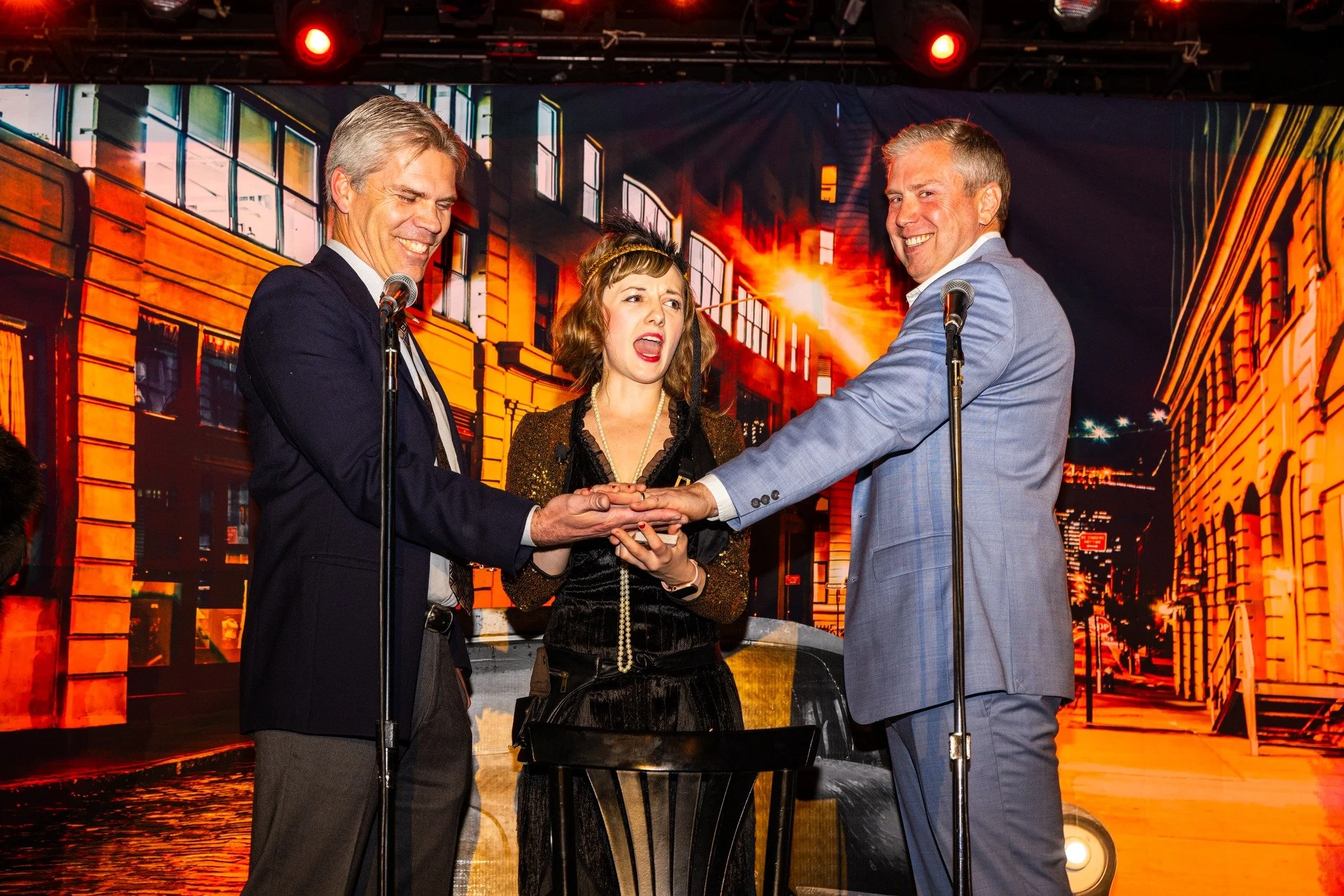
Does it actually affect spend?

Through dwell time, which is ordinary hospitality economics. Table magic between courses extends the time guests spend at a table without extending service, since existing gaps become part of the evening rather than a lull, and guests enjoying themselves order another round and stay for dessert. It's hard to attribute precisely and easy enough to feel in average cover value across a quarter.

We're a hotel outlet. Does that change anything?

Your competition is partly internal, since you compete with every other outlet in the building plus everything within walking distance, for guests who already chose to stay there. Proximity isn't much of an advantage when there are eight options in the lobby. Programming gives your outlet something guests encounter rather than seek out, and gives the concierge something concrete to mention, which matters more than most promotions.

Can you do a weekly residency?

Honestly, no. I'm based in the Los Angeles area and travel to Las Vegas regularly, which suits defined runs, seasonal programming, event weeks, and private dining bookings well, but not a reliable weekly commitment across a year. If that's what you want, a Vegas based performer will serve you better and I'd rather say so than take an arrangement I can't sustain.

How do we start a conversation?

Reach out with your venue, the kind of programming you're considering, and the periods you have in mind, whether that's a slow season, a defined run of weeks, or private dining bookings. I'll come back with availability, terms, and a suggestion for a trial period, since how this works depends considerably on your particular room and clientele rather than on anything general.

Give Them a Reason to Choose You

In a city with several hundred alternatives within a short drive, venues compete for guests who have no shortage of options and no particular reason to return. A strolling magician Las Vegas offers something happening at your tables rather than another discount, extends dwell time in a room that can't accommodate anything else, gives locals a reason to plan a night around your venue, and helps most in exactly the weeks when the city is quiet.

If you're programming a venue rather than planning an event, I'd be glad to talk about what would suit.

Reach out with your venue and the periods you're considering, and let's discuss a trial run.

Katrina Kroetch
San Francisco Magician: Matching Entertainment to Your Venue

San Francisco Magician: Matching Entertainment to Your Venue

Most advice about event entertainment assumes you're choosing freely. In the Bay Area you rarely are, because the venue is booked first, it's expensive, and by the time entertainment comes up the room already exists along with all of its limitations.

That order matters, since the venue quietly eliminates most of your options before you've compared any of them. I'm Magical Katrina, an award winning magician and mentalist, and I want to go through what Bay Area venue types actually permit, so you can choose something that fits the room you have rather than the room you pictured.

Four Questions Before You Compare Anything

Get these answers from your venue first: is there a stage or would one need building, is there house sound or must it be hired, where is the power and how much is available, and are there noise restrictions or a curfew.

Those four determine what's possible more than your budget does. A great many entertainment options need some combination of staging, sound, and power, and providing them can cost more than the entertainment itself. Among San Francisco magician options, close up performers require none of the four, which is why they end up in so many rooms where nothing else would fit.

SOMA Warehouses and Converted Spaces

Popular precisely because they have character, and constrained in specific ways. Older buildings frequently have limited power on original wiring, freight access with booking windows, load in restrictions, and neighbors with opinions about noise.

Anything requiring equipment has to physically get in, within an allotted window, and back out the same way. That eliminates a great deal. A San Francisco magician performing close up magic arrives with everything in a case, which sounds trivial until you've tried to coordinate a band's load in through a shared freight elevator on a Friday afternoon in SOMA.

Tech Office Spaces

The most common corporate venue in the Bay Area and one of the more awkward. Company offices are designed for work, which means an open plan floor, a kitchen area, breakout rooms, and no space intended for performance.

Acoustics are usually poor, there's no stage, and anything amplified competes with a hard surfaced room. What works is entertainment that operates at conversational volume among people standing in the space they already occupy. A San Francisco magician performing close up magic needs nothing moved, nothing hired, and no part of the floor cleared, which for an office event with a facilities team to negotiate with is a considerable simplification.

Rooftops and Outdoor Spaces

Wonderful in September and constrained the rest of the time. Bay Area rooftops face wind, fog, and evenings that cool sharply, plus limited power and stricter noise rules because of neighboring buildings.

Entertainment for a rooftop needs to work without power, cope with wind, and move indoors at short notice without adjustment. That's a short list. If your rooftop plan has an indoor backup, check that whatever you book works equally well in both, since many options don't. Among San Francisco magician bookings for outdoor events, close up performers are chosen for exactly these reasons.

Waterfront and View Venues

A category the city has plenty of, and one where the room's main asset is what's outside it. That has a specific implication: anything requiring a stage or a focal point competes with the view guests came to look at.

Entertainment that moves among people, letting them keep their orientation towards the windows and their conversations, suits these rooms considerably better than something asking the audience to face the other way. It's also worth checking wind exposure if any part of the event is on a terrace, and confirming whether the venue has noise restrictions, which waterfront properties near residential buildings frequently do.

Historic Clubs and Landmark Buildings

Beautiful, and heavily restricted. Landmark status frequently means nothing can be fixed to walls or floors, amplified sound is limited, and there are rules about what may be brought in and where it may go.

House policy lists often arrive after you've booked, and anything requiring rigging, stands, or fixings is likely to be refused. Among San Francisco magician options for these rooms, close up performers are usually approved without a conversation, since there is genuinely nothing to install and nothing to attach to a protected surface.

Museums and Gallery Spaces

Increasingly popular and quietly restrictive. Conservation requirements govern lighting, humidity, food and drink placement, and proximity to works, and staff will be enforcing rather than trusting your suppliers.

Anything with equipment, cabling, or a footprint invites scrutiny and often refusal. Close up magic passes easily because there is nothing to place, plug in, or set up, and a performer simply moves among guests as at any reception. Check the restrictions before comparing options, since the list is usually longer than expected and arrives late.

Restaurants and Private Dining Rooms

The default for corporate dinners and smaller celebrations, and among the most restrictive. A private dining room is a table in a room, with no stage, no available sound system, minimal spare space, and restaurant service running throughout.

That eliminates nearly everything except entertainment that works at a table. A San Francisco magician performing close up magic between courses fits without asking the restaurant to change anything, and it's arguably better there than in a large room, since everyone sees everything from a few feet away and shares each reaction rather than hearing about it.

Wine Country and Estate Venues

An hour north, and a different set of considerations. These venues are chosen for setting rather than facilities, which usually means limited power, no stage, outdoor or partly outdoor space, and generators for anything substantial.

They also involve travel for your suppliers and frequently a curfew driven by local ordinance. Entertainment requiring nothing is worth its weight in this context: no generator load, no load in over gravel, no equipment to transport, and no adjustment when the evening moves inside. Among San Francisco magician bookings for wine country events, that simplicity is usually the deciding factor.

The Square Foot Argument

Worth stating plainly, since it applies across the region. Bay Area venues are expensive per square foot, and any entertainment requiring a stage, equipment, or a footprint consumes space you're paying premium rates for.

Entertainment occupying no space beyond where guests already stand isn't just convenient, it's financially sensible. When comparing a San Francisco magician against other options, factor in whether each requires you to buy or reserve room, since that cost is frequently invisible in the quote and very visible in the venue invoice.

A Note on "Local vs. Traveling In"

Worth knowing: the right performer for your venue needn't be Bay Area based. Many travel in, with travel discussed openly, factored into the quote, and handled by the performer rather than by you. I'm based in the Los Angeles area and travel to San Francisco and the wider Bay Area. Judge on skill and venue fit rather than location, and tell whoever you approach what your room actually allows.

Why Book Magical Katrina

If your venue is constrained, here's my case. I'm a member of the Magic Circle in London and the Academy of Magical Arts in Hollywood, I've earned multiple magic awards, and I've performed for clients including Formula 1, the Olympics, Porsche, Zapier, and the Ritz Carlton, with appearances on Penn & Teller: Fool Us and Masters of Illusion. I need no stage, sound, power, rigging, or setup, and nothing to load in beyond a case, so I work in warehouses, offices, rooftops, landmark buildings, museums, private dining rooms, and estate venues without your venue having to accommodate anything. I'm fully insured with a COI available.

Frequently Asked Questions

What should I ask my venue before choosing entertainment?

Four things: is there a stage or would one need building, is there house sound or must it be hired, where is the power and how much is available, and are there noise restrictions or a curfew. Those answers determine what's possible more than your budget does, since providing staging and sound can cost more than the entertainment itself.

We're using a company office. What works there?

Something that operates at conversational volume among people standing where they already are. Offices are designed for work, so there's no stage, acoustics are poor, and anything amplified competes with a hard surfaced open plan room. A San Francisco magician performing close up magic needs nothing moved, nothing hired, and no floor cleared, which simplifies matters considerably when facilities are involved.

What about a rooftop?

It needs entertainment that works without power, copes with wind, and moves indoors at short notice without adjustment, which is a short list. Bay Area rooftops face wind, fog, evenings that cool sharply, limited power, and stricter noise rules from neighboring buildings. If you have an indoor backup, check that whatever you book works equally well in both, since many options don't.

Why are museums and landmark venues difficult?

Because conservation and landmark requirements govern lighting, what can be fixed to surfaces, amplified sound, and what may be brought in, and staff enforce rather than trust. Policy lists frequently arrive after booking, and anything needing rigging or fixings is likely refused. Close up magic passes easily since there's nothing to place, plug in, or install.

Is a private dining room too small for entertainment?

It's restrictive but suits the right format. A private dining room is a table in a room with no stage, no available sound, minimal space, and service running throughout, which eliminates nearly everything except entertainment that works at a table. Close up magic between courses fits without the restaurant changing anything, and arguably works better there than in a large room.

What about wine country venues?

They're chosen for setting rather than facilities, so expect limited power, no stage, outdoor or partly outdoor space, generators for anything substantial, supplier travel, and often a curfew from local ordinance. Entertainment requiring nothing is worth a great deal there: no generator load, nothing to transport over gravel, and no adjustment when the evening moves inside.

How do I book you, and what do you need to get started?

Reach out with your event date, the venue, event type, and rough guest count, plus anything you know about the room's restrictions. That's enough for me to confirm it works, check availability, and send a quote including travel. Since I need no stage, sound, power, rigging, or setup, the answer for Bay Area venues is almost always that it works, including rooms where most options don't.

Choose for the Room You Booked

In the Bay Area the venue comes first and quietly settles most of your entertainment options before you've compared any of them. Ask about staging, sound, power, and noise before shortlisting anything, then choose what the room genuinely permits rather than what you'd imagined.

Do that and you'll avoid the expensive discovery that your preferred option needs production your venue can't accommodate, in a region where every square foot and every load in window carries a cost.

Reach out with your venue and event details, and I'll confirm it works.

Katrina Kroetch
Fun Conference Ideas That Make Sponsors Want to Come Back

Fun Conference Ideas That Make Sponsors Want to Come Back

Conference programming is almost always designed around delegates, which makes sense, since they're the reason the event exists. But a substantial part of the budget comes from sponsors and exhibitors, and whether they return next year is decided by an experience that most agendas treat as a side room.

The complaint is remarkably consistent: not enough footfall, and the wrong sort. I'm Magical Katrina, an award winning magician and mentalist who works conferences, and I want to offer fun conference ideas aimed specifically at the exhibition floor, because a well programmed sponsor experience is what makes next year's sales conversation easy.

The Empty Hall Problem

Every organizer knows the pattern. Delegates flood the exhibition area during breaks, then disappear entirely when sessions resume, leaving exhibitors standing in an empty hall for forty minutes at a time.

That's a scheduling problem rather than an interest problem, and it's the root of most sponsor dissatisfaction. Among fun conference ideas aimed at sponsors, anything that gives delegates a reason to be in the exhibition space outside break times addresses the actual complaint. That might mean holding refreshments there, placing a program element in the hall, or scheduling a session in a way that makes people pass through rather than around.

Put Something in the Hall Worth Walking To

The straightforward version. Delegates go where something is happening, so if the only thing happening in the exhibition area is exhibitors hoping to be approached, footfall will be limited to people looking for coffee.

Placing something genuinely engaging in the hall changes the traffic pattern. A performer working the space, a demonstration, an interactive element, or a program item that has to be attended there all pull delegates in for reasons that have nothing to do with any individual stand, which then benefits everyone exhibiting. Among fun conference ideas, this is the one sponsors notice most directly, because they can see the difference in who walks past.

Let a Sponsor Own It

A commercially useful variation. Rather than the organizer funding an activity in the hall, sell it as a sponsorship tier: the coffee break with a performer, the interactive element, the thing delegates talk about.

That converts a cost into revenue and gives a sponsor something better than a logo on a lanyard. Sponsors increasingly want an experience associated with their brand rather than signage, and most organizers have very little to offer at that level. Among fun conference ideas for sponsor packages, an activity delegates genuinely want to attend is considerably more sellable than another banner position and considerably more valuable to the sponsor buying it.

Don't Strand Exhibitors During Sessions

A scheduling discipline worth adopting. If your agenda runs six hours of sessions with three short breaks, your exhibitors are effectively working for ninety minutes and standing around for the rest.

Options: longer, fewer breaks rather than short frequent ones, a deliberate session gap where the hall is the only thing happening, or moving a light program element into the exhibition space. Delegates benefit too, since short breaks are the ones everyone complains about anyway. Among fun conference ideas, this costs nothing and changes the exhibitor experience more than any single addition to the floor.

Quality of Traffic Beats Volume

Worth understanding, because it shapes what to program. Sponsors don't actually want footfall, they want conversations, and a hall full of people queueing for coffee produces very few.

That's why giveaway heavy floors disappoint everyone: they generate scans from people collecting things rather than prospects. Programming that gives delegates a reason to stop, engage, and stay for several minutes produces the conversations sponsors are paying for. Among fun conference ideas for exhibition areas, the test is whether an activity holds people in a good mood long enough for a stand conversation to begin naturally.

Where a Performer Fits on a Floor

Since it's my area, specifically. A performer working an exhibition hall does two things: draws delegates into the space generally, and stops individuals long enough for exhibitor teams to talk to them.

Close up magic suits this particularly, since it needs no stage, power, or floor space, works in a busy hall at conversational volume, and moves between stands or works one sponsor's area depending on how it's booked. It also stops people involuntarily, which matters on a floor where delegates have consciously decided not to make eye contact with anyone. Among fun conference ideas for the exhibition area, that stopping power is the specific problem being solved.

Give Sponsors Something to Report Internally

An overlooked part of renewal. The person who sponsored your event has to justify it to someone, usually with numbers that are difficult to produce and a narrative that's easy to forget by March.

Programming that produces something memorable helps them. A sponsored activity delegates talked about, a photograph worth sharing internally, or a specific story from the floor gives your sponsor contact something to say beyond a scan count. Among fun conference ideas, those that generate a story rather than only a statistic make your sponsor's internal case for you, which is where renewal decisions are genuinely made.

Be Honest in the Sales Conversation

Worth saying, since it affects renewal more than programming does. Overselling footfall is the fastest way to lose a sponsor, and it happens constantly because sales conversations happen a year before the event.

Give realistic numbers, be clear about the traffic pattern, and tell sponsors when the hall will be busy and when it won't. A sponsor who was told to expect quiet sessions and experienced quiet sessions is considerably happier than one who was promised constant footfall and got the same reality. Among fun conference ideas and everything else, honest expectations do more for renewal than any single improvement to the floor.

Frequently Asked Questions

Why are sponsors unhappy even when the event goes well?

Because their experience is different from the delegates'. Delegates flood the exhibition area during breaks and vanish when sessions resume, leaving exhibitors in an empty hall for long stretches. That's a scheduling problem rather than a lack of interest, and it's the root of most sponsor dissatisfaction. Programming that gives delegates a reason to be in the hall outside break times addresses the actual complaint.

How do we get delegates into the exhibition area?

Put something there worth walking to. Delegates go where something is happening, and if the only thing happening in the hall is exhibitors hoping to be approached, footfall stays limited to people seeking coffee. A performer working the space, a demonstration, or a program item held there pulls delegates in for reasons unconnected to any individual stand, which benefits everyone exhibiting.

Can we sell the activity as sponsorship?

Yes, and it's worth doing. Selling it as a tier, the coffee break with a performer or the interactive element, converts a cost into revenue and gives a sponsor something better than a logo on a lanyard. Sponsors increasingly want an experience associated with their brand rather than signage, and among fun conference ideas for packages, an activity delegates want to attend is far more sellable than another banner.

Isn't more footfall the goal?

Not really, since sponsors want conversations rather than traffic, and a hall full of people queueing for coffee produces very few. That's why giveaway heavy floors disappoint everyone, generating scans from collectors rather than prospects. The useful test for any activity is whether it holds people in a good mood long enough for a stand conversation to begin naturally.

How does scheduling affect exhibitors?

Considerably. Six hours of sessions with three short breaks means exhibitors work for ninety minutes and stand around for the rest. Longer, fewer breaks, a deliberate gap where the hall is the only thing happening, or moving a light program element into the exhibition space all help. Delegates benefit too, since short breaks are what they complain about anyway, and it costs nothing.

What actually drives renewal?

Honest expectations first, since overselling footfall loses sponsors faster than anything programming can fix. Beyond that, giving your sponsor contact something to report internally: a memorable sponsored activity, a story from the floor, something beyond a scan count. Renewal decisions are made internally by someone justifying the spend, and helping them make that case is more effective than improving the floor alone.

How do I book you for a conference floor?

Reach out with your dates, venue, delegate numbers, and whether you're considering a performer for the exhibition area generally or for a specific sponsor's space. That's enough for me to check availability and send a quote. I need no stage, power, or floor space, so there's nothing to build into your floor plan, and I'm comfortable working a busy hall or a single stand depending on how it's arranged.

Program for the People Paying

Delegate experience gets the attention and sponsor experience pays a substantial share of the bills, which is an odd imbalance given that sponsors decide each year whether to do it again. The most useful fun conference ideas for that group aren't about the agenda at all: put something worth walking to in the hall, schedule so exhibitors aren't stranded, sell the activity as a package where you can, aim for conversations rather than footfall, and be honest about traffic in the sales conversation.

Get that right and next year's sponsorship sells itself, which is a considerably easier position than starting from scratch.

Reach out with your dates and floor plan, and let's talk about the exhibition area.

Katrina Kroetch
Corporate Magician Los Angeles for Product Launches and Brand Activations

Corporate Magician Los Angeles for Product Launches and Brand Activations

Los Angeles runs on activations. Brand launches, press previews, influencer events, pop ups, studio and product reveals, all competing for the attention of people who attend several a week and have developed an efficient way of moving through them: arrive, photograph, collect, leave.

That's the problem your budget is actually trying to solve. I'm Magical Katrina, an award winning magician and mentalist based right here in Los Angeles, and I want to explain how a corporate magician Los Angeles brands and agencies book addresses it, and where magic genuinely helps at a launch rather than simply decorating one.

Your Guests Are Professionally Unimpressed

Start with the audience, because it dictates everything. Editors, creators, buyers, and industry guests in this city have been to activations with budgets most brands cannot match, and many of them work in production themselves.

Spending more places you further along a scale they have stopped noticing. A corporate magician Los Angeles works differently because it isn't on that scale at all: something impossible happening six inches from someone's face, with no camera, no cut, and no crew, is categorically different from production value. People who understand professionally how effects are made frequently react hardest, because their usual explanations aren't available to them.

Attention Is the Real Currency

Worth being precise about what a launch buys. Everything else, the venue, the styling, the catering, the gifting, exists to purchase minutes of genuine attention from people who ration it carefully.

Most launches fail at that rather than at aesthetics. Guests circulate, glance at the product, speak to the two people they know, and go. A corporate magician Los Angeles interrupts that involuntarily, because astonishment stops people before they've decided whether to engage, and it holds a small group for several minutes rather than seconds. That window is long enough for the thing you actually wanted, which is a conversation about your product.

Build the Product Into the Effect

This is what separates magic from general entertainment at a launch, and it's the reason to book a performer rather than a playlist. A skilled corporate magician Los Angeles can build your product, your central benefit, or your campaign line into the effect itself.

Done properly, the impossible moment ends with your message, so the two arrive together and are remembered together. A guest who watched something they cannot explain that culminated in your product's key claim remembers both, whereas a guest handed a fact sheet remembers neither. If a message landing is the objective, that integration is worth considerably more than entertainment sitting alongside the product.

Content Guests Film Willingly

Every activation brief includes social coverage, and the standard solution is a branded backdrop that guests photograph out of politeness.

A corporate magician Los Angeles generates something people film because they want to. Astonishment is inherently shareable: guests record it, post it, and send it to colleagues, with your product in the frame. Content produced willingly reads entirely differently from content produced dutifully, and it reaches audiences beyond the room. For a brief measured on reach, that distinction is a genuine return rather than an added extra.

LA Venues Make This Practical

Activations here happen in converted warehouses, studio lots, private estates, galleries, rooftops, and spaces chosen for their look rather than their infrastructure. Power is frequently limited, load in windows are tight, and outdoor areas make anything amplified awkward.

A corporate magician Los Angeles performing close up magic needs no stage, power, sound, rigging, or setup, and no floor space beyond where guests already stand. Nothing to build into your production plan, nothing to ship, nothing requiring venue approval, and no square footage competing with your product for the room. For a producer already managing a build schedule, that's one line removed entirely.

It Fits a Short Window

LA activations are usually compressed, often two hours in the early evening, because that's what guests will give you between the day and dinner.

A corporate magician Los Angeles requires no program slot at all. It begins when guests arrive and continues until the event ends, working inside the circulation already happening rather than pausing it for a presentation people would drift away from. In a two hour window where every minute of guest attention is expensive, entertainment that occupies none of your run of show while covering the full duration is straightforwardly efficient.

Being Local Removes a Line

Practical, and it affects the budget rather than only the logistics. Unlike performers flying in, I'm based right here in the LA area and serve all of Southern California, so there are no flights, accommodation, or travel costs sitting in your production budget.

It also makes the practical side simpler: a site visit before the day if the space is unusual, flexibility if your schedule shifts during build, and no travel contingency to manage. For agencies running several activations across a season, working with a corporate magician Los Angeles who is genuinely local rather than touring makes repeat bookings considerably easier to schedule.

Why Book Magical Katrina

If you'd like a corporate magician Los Angeles for a launch, here's my case. I'm based here in the LA area, I'm a member of the Magic Circle in London and the Academy of Magical Arts in Hollywood, I've earned multiple magic awards, and I've performed for brands including Formula 1, the Olympics, Porsche, Prada, Zapier, and the Ritz Carlton, with appearances on Penn & Teller: Fool Us and Masters of Illusion. I understand that a launch has an objective rather than simply needing entertainment, so I focus on stopping guests, holding them, and building your message into the moment. I need no stage, power, or setup, and I'm fully insured with a COI available.

Frequently Asked Questions

Why does magic work when our guests have seen everything?

Because it isn't competing on the axis they've stopped noticing. Editors and creators here attend activations with budgets most brands can't match, and many work in production themselves, so spending more simply moves you along a familiar scale. A corporate magician Los Angeles offers something impossible at conversational distance with no camera, cut, or crew, and people who understand how effects are made often react hardest.

How does it help with the message rather than just entertaining?

A skilled performer can build your product, central benefit, or campaign line into the effect itself, so the impossible moment ends with your message and both are remembered together. A guest who watched something inexplicable that culminated in your key claim remembers both, whereas one handed a fact sheet remembers neither. For a launch where a message landing is the objective, that integration is the point.

Will it generate social content?

Yes, and the useful kind. Branded backdrops produce photographs taken out of politeness, whereas a corporate magician Los Angeles generates something guests film because they want to, with your product in frame. Content produced willingly reads entirely differently from content produced dutifully, and it reaches audiences beyond the room, which matters for a brief measured on reach.

Will it work in our venue?

Almost certainly. LA activations happen in converted warehouses, studio lots, estates, galleries, and rooftops chosen for their look rather than their infrastructure, with limited power, tight load in windows, and outdoor areas where anything amplified is awkward. Close up magic needs no stage, power, sound, rigging, or setup, and no floor space beyond where guests stand, so there's nothing to build in or ship.

Our event is only two hours. Does that matter?

No, and it's an argument for this format. It requires no programme slot, beginning when guests arrive and continuing until the event ends, working inside the circulation already happening rather than pausing it for a presentation guests would drift away from. In a compressed window where every minute of attention is expensive, covering the full duration without consuming run of show time is efficient.

Does booking someone local help?

To the budget and the logistics both. There are no flights, accommodation, or travel costs in your production budget, a site visit is straightforward if the space is unusual, and there's flexibility if your schedule shifts during build. For agencies running several activations across a season, a locally based performer makes repeat bookings considerably easier to schedule.

How do I book you, and what do you need to get started?

Reach out with your event date, venue, expected guest numbers, the product or brand, and what you want guests to take away. That's enough for me to check availability and send a quote. From there we'll talk through how the message integration would work, timing across the event, and any coordination with your agency or PR team, and a deposit secures the date.

Buy Attention, Not Atmosphere

A Los Angeles launch is expensive before anyone has stopped at your product, and most of that spend goes on making a room look right for guests who attend rooms like it weekly. A corporate magician Los Angeles buys what the event actually needs: involuntary attention, held long enough for a real conversation, your message inside the moment guests remember, content they choose to share, and none of it requiring a stage, a slot, or a square foot of your venue.

If you're planning a launch and want guests to leave knowing what your product is, I'd love to hear about it, and as a local, I'm right here.

Reach out with your event details, and let's make it land.

Katrina Kroetch
Female Magician Los Angeles for Corporate Events

Female Magician Los Angeles for Corporate Events

Most writing about booking women performers assumes the event is about women, which describes a small fraction of any corporate calendar. The rest is the holiday party, the client reception, the offsite, the launch, and the awards dinner, where the brief is simply to book something that works.

That's what this is about. I'm Magical Katrina, an award winning magician and mentalist based right here in Los Angeles, and I want to explain what a female magician Los Angeles brings to ordinary corporate events, starting with the part that has nothing to do with gender.

Skill Is the Argument

Worth establishing before anything else. Skill in magic and mentalism has nothing to do with gender, and you should book a female magician Los Angeles because she's genuinely excellent, assessed exactly as you'd assess anyone: real footage of live performance, experience with rooms like yours, reviews, and professional communication.

Everything after this is context rather than justification. If a performer is merely adequate, none of it helps, and a booking made on any basis other than quality is apparent within a few minutes. That's true of every performer, and it belongs at the top rather than as a footnote.

Your Guests Make Spectacle Professionally

The defining characteristic of an LA corporate room, and the thing that shapes what works. A meaningful proportion of your guests work in or adjacent to entertainment, which means they produce illusions for a living and have attended events with production budgets no company party can match.

That makes competing on scale pointless. What it doesn't rule out is intimacy, which is precisely what large production cannot deliver. A female magician Los Angeles performing close up magic offers something impossible six inches from a guest's face, with no camera, no cut, and no crew, and people who understand professionally how effects are made frequently react most strongly, because the explanations their expertise supplies simply aren't available.

The Room Isn't Expecting You

Worth naming, since it's a genuine dynamic rather than a talking point. Magic has been overwhelmingly male throughout its history, so most guests arrive carrying a default image of what a magician looks like.

That gap buys a few seconds of extra attention at the start, and expectation is a working material in performance. An audience that hasn't settled into assuming it knows what's coming is marginally more open. It's a small advantage and a real one, and everything after those seconds depends entirely on whether the magic is any good.

It Reads as a Decision

A practical observation about how corporate events land, particularly client facing ones. Guests infer the effort behind an evening from small signals, and entertainment is among the most legible of them.

The default option reads as a booking made from a list, whereas something slightly unexpected reads as a choice somebody made. For a client reception, where the impression carries commercial weight, a female magician Los Angeles contributes to the sense that the evening was considered. That's a distinctiveness argument rather than a gender one, and it applies to any element guests weren't expecting.

It Works Indoors and Out

Practical, and more relevant here than almost anywhere. LA corporate events happen on rooftops, patios, studio lots, private estates, terraces, and gardens for most of the year, with the evening frequently moving inside as it cools.

Anything requiring power, rigging, or sound outdoors is awkward, and anything that can't relocate mid event is a liability. A female magician Los Angeles performing close up magic needs no stage, power, sound, or setup, works on a lawn or a terrace exactly as in a room, and moves indoors without a word being said. For an events lead planning around a venue that's half outside, that flexibility genuinely simplifies things.

It Suits the Formats You Actually Run

A female magician Los Angeles fits the range of corporate events across the city:

Holiday parties. Interactive entertainment that engages a room rather than playing at it.

Client and prospect receptions. Where the impression has commercial consequences.

Team offsites. Resetting attention between sessions and giving the evening a spine.

Brand activations and launches. Drawing a crowd and building a message into a memorable moment.

Executive dinners. Close up magic between courses, needing nothing but the table.

Trade shows and conferences. Stopping delegates and holding them long enough to talk.

It Can Carry Your Message

Worth knowing for corporate work generally, and particularly for activations, which are common here. A skilled performer can weave your product, value proposition, or a key point into the magic, so the thing you want remembered arrives attached to genuine astonishment rather than a slide.

It also never feels like being sold to, which is the right tone for a client evening. Mention your objective when booking a female magician Los Angeles and expect ideas rather than confirmation that it's possible, since a performer who engages with your goal will deliver something tailored rather than standard.

Being Local Is a Practical Advantage

Worth stating plainly, since it affects your budget rather than just convenience. Unlike performers who travel in, I'm based right here in the LA area and serve all of Southern California, so there are no flights, accommodation, or travel costs on your event budget.

That also makes scheduling straightforward, particularly for multi day events, early call times, or anything requiring a site visit. Whether your event is in DTLA, Century City, on the Westside, in the Valley, or further out across Southern California, booking a female magician Los Angeles who is genuinely local removes a set of logistics you'd otherwise be managing.

Why Book Magical Katrina

If you'd like a female magician Los Angeles for a company event, here's my case. I'm based here in the LA area, I'm a member of the Magic Circle in London and the Academy of Magical Arts in Hollywood, I've earned multiple magic awards, and I've performed for companies including Formula 1, the Olympics, Porsche, Prada, Zapier, and the Ritz Carlton, with appearances on Penn & Teller: Fool Us and Masters of Illusion. I blend close up magic with mentalism, which is what holds up in front of an industry crowd, I can weave in a brand or message where useful, and I need no stage, power, or setup. I'm fully insured with a COI available for your venue.

Frequently Asked Questions

Is this only relevant for women's events?

No, and that's the point of this article. Most corporate calendars consist of holiday parties, client receptions, offsites, launches, and awards dinners where the brief is simply to book something that works. A female magician Los Angeles suits those on exactly the same terms as any performer, and everything else here is context rather than justification for the booking.

Will it impress guests who work in entertainment?

More reliably than scale will. Your guests produce illusions professionally and have attended events with production budgets no company party can match, so competing on spectacle is pointless. Close up magic offers intimacy instead, something impossible six inches from their face with no camera, cut, or crew, and people who understand how effects are made often react most strongly because their usual explanations aren't available.

Does the unexpectedness actually matter?

A little, and honestly. Magic has been overwhelmingly male throughout its history, so most guests arrive carrying a default image of what a magician looks like, and that gap buys a few seconds of extra attention at the start. Expectation is a working material in performance, so a less settled audience is a marginally more open one. Everything after those seconds depends on the magic.

Will it work at an outdoor venue?

Yes, and that matters here where events happen on rooftops, patios, studio lots, and terraces for most of the year. Anything requiring power, rigging, or sound outdoors is awkward, and anything that can't relocate mid event is a liability. Close up magic needs none of that, works on a lawn exactly as in a room, and moves indoors without a word when the evening cools.

Can the performance include our message?

Yes, and it's often the reason to book a performer rather than background entertainment, particularly for activations. A skilled female magician Los Angeles can weave your product, value proposition, or key point into the magic so it arrives attached to genuine astonishment rather than a slide, and it never feels like being sold to. Mention your objective when booking and expect ideas.

Does booking someone local make a difference?

To your budget, yes. There are no flights, accommodation, or travel costs on your event budget, and scheduling is straightforward, which matters for multi day events, early call times, or anything needing a site visit. I'm based in the LA area and serve all of Southern California, from DTLA and Century City to the Westside, the Valley, and further out.

How do I book you, and what do you need to get started?

Reach out with your event date, venue or location, event type, and rough guest count, plus what you want the evening to achieve. That's enough for me to check availability and send a quote. From there we'll talk through format, timing, and whether you'd like a message woven in, and a deposit secures your date.

Book What Holds the Room

The ordinary corporate events filling most LA calendars need the same thing each time: entertainment that genuinely works in front of guests who are difficult to impress because impressing people is their profession. A female magician Los Angeles meets that on the same terms as anyone, with close up magic offering intimacy that production can't match, an unexpected performer buying a few seconds of extra attention, a format that works indoors and out, and no travel costs on your budget.

If that suits what you're planning, I'd be glad to hear about it, and as a local, I'm right here.

Katrina Kroetch
Zoom Magician for Public Sector and Government Teams

Zoom Magician for Public Sector and Government Teams

Public sector organizations have a staff engagement problem with an additional layer nobody outside them fully appreciates. You have dispersed teams, thin budgets, and workforces under genuine pressure, and on top of that, anything you spend on staff has to survive scrutiny that a private company never faces.

That combination means a great deal of engagement programming simply doesn't get arranged. I'm Magical Katrina, an award winning magician and mentalist, and I want to explain how a Zoom magician works for public sector teams, including how to justify it and where it genuinely doesn't fit.

Start With the Scrutiny Question

Worth addressing first, because it's what stops most of these conversations. Money spent on staff in the public sector is money that could visibly have gone elsewhere, and someone will ask, whether that's an auditor, a councilor, a union representative, or a local reporter.

So the honest position matters. A Zoom magician is a modest, one off cost with no venue, travel, or catering attached, reaching an entire dispersed workforce for the same figure. It is not a lavish away day, and it doesn't look like one. If you cannot comfortably explain a spend in a sentence, don't make it, and this is one of the few options that survives that test straightforwardly.

Reaching Teams Nobody Reaches

The structural argument, and the strongest one. Public sector workforces are frequently spread across offices, depots, schools, libraries, care settings, and field roles, with a substantial proportion of staff who never attend anything held centrally.

Those staff are usually the ones furthest from headquarters and least likely to receive anything at all. A Zoom magician reaches them at the same cost as everyone else, requires no travel budget, and needs one screen per location rather than a device per person. For an organization whose engagement survey consistently shows a gap between head office and frontline sentiment, that reach is the point rather than a convenience.

Shift Patterns and Service Continuity

The practical constraint. You cannot close a service, empty a ward, or leave a depot unstaffed, so anything requiring the whole workforce at once will not happen.

What works is running shorter sessions more than once, timed around genuine quiet periods rather than around a corporate calendar. A thirty minute Zoom magician session run twice, including one timed for a shift changeover, reaches considerably more people than a single hour at two in the afternoon. Ask service managers when their windows actually fall rather than scheduling from the center, since they know and are rarely asked.

Procurement and Paperwork

Worth being practical, since this is where public sector bookings differ most from corporate ones. Expect to need supplier details, insurance documentation, and possibly onboarding to a procurement system for a relatively small engagement.

A performer who works with public bodies will handle that without complaint, provide a certificate of insurance promptly, and understand that your finance team needs specific things in a specific format. It's worth flagging your requirements at first contact rather than after agreeing a date, since the paperwork frequently takes longer than the booking. A Zoom magician who is vague about documentation will create work for you later.

Platform Constraints

A genuine consideration in the public sector that rarely arises elsewhere. Many organizations restrict which platforms may be used, block external participants by default, or run tightly configured environments where a guest presenter needs arranging in advance.

Worth resolving early. Confirm which platform you can use, whether an external presenter can join, and whether anything needs approving by your IT team, ideally before you agree a date. A Zoom magician working across sectors will be comfortable on whatever you use, but nobody can work around a configuration that blocks them on the day, and IT approvals in large public bodies are rarely quick.

Be Honest About What It Does

Important with this audience, whose staff are alert to gestures substituting for substance. A Zoom magician is a good hour. It does not address staffing levels, pay restraint, workload, restructuring, or the accumulated strain of delivering public services with fewer resources than the work requires.

Presenting it as though it might will be received exactly as you'd expect. Presented straightforwardly as something enjoyable, arranged because teams have worked hard and rarely get anything, it's received well. Staff generally appreciate being offered something genuinely pleasant far more than something instrumental dressed as care, and the framing carries the entire difference.

Where It Genuinely Fits

A few moments where this lands well. Recognition weeks and service anniversaries, where teams often receive a message and nothing else. After a demanding period, an inspection, a major incident, a service reorganization, or a seasonal surge.

At the end of a year, as a straightforward thank you. And for teams that are chronically overlooked, the back office functions, the depot, the out of hours service, where the honest reason for booking is that nobody has arranged anything for them in years. A Zoom magician in those circumstances is a small, defensible, genuinely welcome thing.

Keep It in Work Time and Optional

Two conditions that matter more here than in the private sector. Schedule it within paid time rather than expecting staff to attend on their own, since asking public servants to give unpaid time for their own recognition event is an obvious contradiction.

And make attendance genuinely optional, stated explicitly. Mandatory wellbeing and compulsory fun are both well known failures, and public sector staff have usually seen several examples. A shorter session is easier to accommodate within a working day, which is another argument for thirty to forty five minutes rather than something longer.

Why Book Magical Katrina

If you'd like a Zoom magician for a public sector team, here's my case. I'm a member of the Magic Circle in London and the Academy of Magical Arts in Hollywood, I've earned multiple magic awards, and I've performed for organizations and companies including Formula 1, the Olympics, Porsche, Zapier, and the Ritz Carlton, with appearances on Penn & Teller: Fool Us. My virtual material works whether people watch individually or gathered round one screen, I'm happy to run shorter repeated sessions to cover shifts, I provide insurance documentation promptly, and I'd rather describe accurately what this offers than overstate it.

Frequently Asked Questions

How do we justify spending public money on this?

By keeping it modest and explaining it in a sentence. A Zoom magician is a one off cost with no venue, travel, or catering attached, reaching an entire dispersed workforce for the same figure, which makes the cost per person genuinely low. It doesn't look like a lavish away day because it isn't one. If you can't comfortably explain a spend to an auditor or a reporter, don't make it, and this survives that test.

Will it reach our frontline staff?

That's the main argument for it. Public sector workforces are spread across offices, depots, schools, libraries, care settings, and field roles, and a substantial proportion never attend anything held centrally. Those staff are usually furthest from headquarters and least likely to receive anything. A Zoom magician reaches them at the same cost, needs no travel budget, and requires one screen per location rather than a device per person.

How do we work around shift patterns?

Run shorter sessions more than once, timed around genuine quiet periods rather than a corporate calendar. A thirty minute session run twice, including one timed for a shift changeover, reaches far more people than a single hour mid afternoon. Ask service managers when their windows actually fall rather than scheduling centrally, since they know and are rarely consulted about this sort of thing.

What about procurement and insurance?

Expect to need supplier details, insurance documentation, and possibly onboarding to a procurement system even for a small engagement. A performer who works with public bodies will handle that without complaint and provide a certificate promptly. Flag your requirements at first contact rather than after agreeing a date, since the paperwork frequently takes longer than the booking itself.

Our IT restricts external participants. Is that a problem?

Only if it's discovered late. Confirm which platform you can use, whether an external presenter can join, and whether anything needs IT approval, ideally before agreeing a date. A Zoom magician working across sectors will be comfortable on whatever you use, but nobody can work around a configuration that blocks them on the day, and approvals in large public bodies are rarely quick.

Isn't this a token gesture given the pressures we're under?

It can be, if framed as more than it is. A Zoom magician does not address staffing levels, pay, workload, restructuring, or the strain of delivering services with fewer resources than the work requires. Presented as though it might, it will be received accordingly. Presented as something enjoyable because teams have worked hard and rarely get anything, it's received well.

How do I book you, and what do you need to get started?

Reach out with your preferred date or dates, the platform you use, how many sites or teams are involved, your shift patterns, and any procurement requirements. That's enough for me to check availability, suggest a session structure covering your rosters, and send a quote with the documentation your finance team will need. Running several shorter sessions across a day is straightforward.

Something Small and Defensible

Public sector engagement fails more often on reach and justification than on intent. A Zoom magician addresses both: it costs little, requires no venue or travel, reaches the dispersed teams who never get anything, works around shifts if you run it more than once, and can be explained to anyone who asks in a single sentence.

It won't fix anything structural, and it shouldn't be presented as though it might. It's a good hour, arranged for people who rarely receive one.

Reach out with your sites and rosters, and let's work out what's possible.

Katrina Kroetch
Strolling Magician Los Angeles for Restaurants, Bars, and Hospitality Venues

Strolling Magician Los Angeles for Restaurants, Bars, and Hospitality Venues

Nearly everything written about hiring a performer is aimed at someone planning a single event. Very little is aimed at the venues themselves, despite restaurants, hotel bars, patios, and private dining rooms across Los Angeles facing a recurring version of the same question: what makes a Tuesday worth leaving the house for.

That's a different sort of booking with different requirements. I'm Magical Katrina, an award winning magician and mentalist based right here in Los Angeles, and I want to set out how a strolling magician Los Angeles venues engage actually works, and what an operator needs that an event client doesn't.

The Midweek Problem

Every operator knows the shape of the week. Thursday through Saturday largely fills itself, while Monday through Wednesday takes effort, promotion, or discounting to put the same number of people in a room with the same overheads running.

Discounting works at the cost of margin and teaches regulars to wait for offers, and a discount run repeatedly simply becomes the price. A strolling magician Los Angeles working a defined midweek evening does something different: it gives you a reason to promote that's about experience rather than price, and gives guests a reason to choose Tuesday specifically rather than choosing you eventually.

Dwell Time and the Second Round

The commercial mechanism, stated plainly. Table magic performed between courses extends the time guests spend at a table without extending service, because the gaps that already exist become part of the evening rather than a lull.

Guests enjoying themselves order another round, stay for dessert, and leave later than intended. That's the ordinary economics of hospitality entertainment, and close up magic achieves it without volume, without a stage, and without competing with the kitchen. For a venue where average cover value matters more than turning tables quickly, a strolling magician Los Angeles moves a number that's hard to attribute precisely and easy enough to feel across a quarter.

It Fits Rooms That Can't Take Anything Else

The practical argument for this format. Dining rooms are built entirely around service, with no stage, awkward acoustics, and no square footage that isn't earning.

Live music competes with conversation and irritates as many guests as it pleases. Anything requiring equipment consumes covers. A strolling magician Los Angeles needs no stage, power, sound, or floor area beyond where staff already move, and works at conversational volume within the room's ambient level rather than above it. For most dining rooms it's the only entertainment format that genuinely fits without altering the room.

Patios and Indoor Outdoor Rooms

Specific to Los Angeles and worth its own mention. A large proportion of the city's dining happens on patios, terraces, and in rooms that open to the outside for most of the year, which is a considerable advantage and a constraint for entertainment.

Amplified sound outdoors invites neighbor complaints and frequently runs into local restrictions. Anything requiring power in an outdoor area is awkward. Close up magic works on a patio exactly as it does inside, needs nothing, and moves indoors without adjustment when an evening cools. For a venue whose best space is outdoors, a strolling magician Los Angeles is one of very few options that works in both halves of the room.

Private Dining Is the Strongest Case

If your venue has a private room, that's where this earns most. Private dining is a high margin product sold on experience rather than food alone, and most LA venues compete for that business with a comparable room and a comparable menu.

Offering table magic as an option, or building it into a package, differentiates yours in a way another canapé selection doesn't. It also solves private dining's specific weakness, which is that a long table fragments into separate conversations and the host has no way to bring the room together. A strolling magician Los Angeles gives the group a shared focus between courses without anyone having to make a speech.

Hotel Bars, Lounges, and Industry Rooms

A different application and increasingly common. Hotel bars here compete with an entire neighborhood, and their advantage is guests already in the building rather than any inherent draw.

Programming a strolling magician Los Angeles for a defined window gives a lounge something happening that guests encounter rather than seek out, which is precisely what food and beverage teams are trying to produce. It also gives your front desk something concrete to mention. In a city where a proportion of your guests work in entertainment and are hard to impress with production, magic at conversational distance offers something they haven't seen in that form.

What Venues Actually Need

Different from what event clients need. Reliability above everything, since a performer who doesn't appear on a promoted night is a service failure rather than a disappointment. Comfort working around service, meaning knowing when to approach a table and when to leave it alone.

Discretion with guests, which matters in this city more than most. Appropriate presentation for your room. Insurance and paperwork handled without chasing. And a willingness to work inside your operation rather than around it. A strolling magician Los Angeles who has worked venues understands that the business continues and the performance fits within it.

How Recurring Arrangements Work

Practically, these tend to be structured as a defined window on a fixed schedule: two or three hours on a particular evening, weekly, fortnightly, or monthly, agreed for a season or quarter rather than negotiated each time.

That suits both sides. You get predictability for promotion and staffing, the performer gets a reliable commitment, and the rate reflects an ongoing arrangement rather than one off pricing. It's worth beginning with a trial period, a month or a season, to see how it works in your particular room before extending. Any experienced performer will suggest something similar rather than pressing for a long commitment immediately.

Being Local Matters Here

Worth saying plainly, because for this kind of work it genuinely does. Recurring venue bookings require someone who can commit to a schedule reliably over months, without travel arrangements, cancellations, or availability that depends on being in town.

I'm based right here in the Los Angeles area and serve all of Southern California, which makes an ongoing arrangement straightforward in a way it wouldn't be for a performer travelling in. Whether your venue is on the Westside, in DTLA, the Valley, or further out, scheduling is simple and I can commit to a season rather than a date.

Why Book Magical Katrina

If you're programming entertainment for a venue, here's my case. I'm based in the LA area, I'm a member of the Magic Circle in London and the Academy of Magical Arts in Hollywood, I've earned multiple magic awards, and I've performed for clients including Formula 1, the Olympics, Porsche, Prada, and the Ritz Carlton, with appearances on Penn & Teller: Fool Us and Masters of Illusion. I understand that a venue's business continues around the performance, I work at conversational volume with no stage, power, or sound, and I'm comfortable reading when a table wants attention and when it doesn't. I'm fully insured with a COI available.

Frequently Asked Questions

Why book a performer rather than run a promotion?

Because discounting solves midweek at the cost of margin and teaches regulars to wait for offers, and a discount run repeatedly becomes the price. A strolling magician Los Angeles on a defined evening gives you something to promote that's about experience rather than price, and gives guests a reason to choose that specific night rather than choosing you eventually.

Does it actually affect spend?

Through dwell time, which is the ordinary economics of hospitality entertainment. Table magic between courses extends the time guests spend at a table without extending service, since existing gaps become part of the evening rather than a lull. Guests enjoying themselves order another round and stay for dessert. It's hard to attribute precisely and easy enough to feel in average cover value across a quarter.

Will it work on our patio?

Yes, and it's one of very few options that does. A great deal of LA dining happens outdoors, where amplified sound invites neighbor complaints and often runs into local restrictions, and anything needing power is awkward. Close up magic works on a patio exactly as inside, requires nothing, and moves indoors without adjustment when an evening cools, so it covers both halves of your room.

What about our private dining room?

That's where it earns most. Private dining is a high margin product sold on experience, and most LA venues compete for it with a comparable room and menu, so offering table magic differentiates yours in a way another canapé selection doesn't. It also solves the format's specific weakness, since a long table fragments into separate conversations with no way to bring the room together.

How do recurring bookings usually work?

As a defined window on a fixed schedule, typically two or three hours on a particular evening, weekly, fortnightly, or monthly, agreed for a season or quarter rather than negotiated each time. You get predictability for promotion and staffing, the performer gets a reliable commitment, and the rate reflects the arrangement. Start with a trial month or season before extending.

Does being local make a difference?

For recurring work, considerably. An ongoing venue arrangement needs someone who can commit to a schedule reliably over months without travel arrangements or availability that depends on being in town. I'm based in the LA area and serve all of Southern California, so a season long commitment is straightforward, and scheduling across the Westside, DTLA, the Valley, or further out is simple.

How do I start a conversation with you?

Reach out with your venue, the kind of programming you're considering, and whether you're thinking about a regular evening, seasonal work, or private dining bookings. I'll come back with availability, terms, and a suggestion for how a trial period might work, since it's usually more useful to test it in your room for a month than to commit to a year on paper.

Give Tuesday a Reason

Venues compete for the same guests with broadly comparable food in broadly comparable rooms, and the difference is frequently whether anything is happening. A strolling magician Los Angeles gives a quiet midweek evening something to promote that isn't a discount, extends dwell time in a dining room that can't accommodate anything else, works on the patio where most of your covers are, and differentiates a private dining offer in a crowded market.

If you're programming a venue rather than planning an event, I'd be glad to talk, and as a local, a regular commitment is straightforward.

Reach out with your venue and what you're considering, and let's discuss a trial.

Katrina Kroetch
Zoom Magic Show for Volunteer Recognition and Community Organisations

Zoom Magic Show for Volunteer Recognition and Community Organisations

Organizations that run on volunteers face a recognition problem with no easy answer. You cannot pay people more, promote them, or offer them development, because none of those are why they're there. What you have is thanks, and thanks delivered badly is barely worth delivering at all.

Meanwhile your volunteers are spread across a county, a country, or further, and most of them will never travel to a central event to be thanked. I'm Magical Katrina, an award winning magician and mentalist, and I want to explain how a Zoom magic show can work for volunteer recognition, and be honest about what it does and doesn't achieve.

Recognition Is the Currency You Have

Worth stating plainly, since it shapes everything. Volunteers give time they could have spent elsewhere, usually around jobs and families, and they receive nothing material in return.

That makes recognition disproportionately important rather than a nicety, and it also makes it easy to get wrong. A certificate emailed as a PDF, a paragraph in a newsletter, or an annual thank you that reads as though it was written by committee all technically constitute recognition and none of them feel like much. A Zoom magic show arranged specifically for volunteers is a different sort of gesture, since it costs the organization something and exists purely for their enjoyment rather than for the organization's benefit.

Most Volunteers Never Reach a Central Event

The structural problem. Organizations hold an annual volunteer celebration, usually at headquarters or a regional venue, and the people who attend are the ones who can travel, which is a small and unrepresentative fraction.

Everyone else receives a photograph of it afterwards. That's worse than nothing, because it demonstrates that a celebration happened and they weren't part of it. A Zoom magic show reaches every volunteer wherever they are at the same cost, including the ones in the furthest corner of your network who've quietly done the work for years without meeting anybody from the center. For most volunteer organizations, that reach is the main argument.

It Asks Nothing of Them

The distinction that matters with this audience. Volunteers are already giving you time, and a great deal of what organizations send them is a further request: training, a survey, a consultation, a recruitment push, a fundraising ask.

A Zoom magic show asks for nothing. There's no content to absorb, no feedback form, no call to action at the end. Volunteers join, are astonished, laugh, and go, which is genuinely unusual in their relationship with your organization. That absence is itself the message, and volunteers notice it more clearly than any wording in the invitation would convey.

Be Honest About What It Isn't

Worth saying, because volunteers have a well developed sense for gestures substituting for substance. A Zoom magic show is a nice hour. It does not compensate for poor support, unclear expectations, expenses that go unreimbursed, or a coordinator who never replies.

If your volunteers have genuine grievances, an entertainment evening presented as appreciation will land badly and may do harm. Presented straightforwardly as something enjoyable, arranged because people have worked hard and deserve a good hour, it's received well. The framing carries the whole difference, and it's worth getting right before booking anything.

Don't Take Another Evening

A specific and easily made mistake. Volunteers give their evenings already, and scheduling a recognition event for a weeknight at seven takes another one, which is an odd way to thank someone for their time.

Where possible, offer more than one slot, including a weekend afternoon, and treat attendance as entirely optional in a way that's stated rather than implied. Keeping it short helps enormously: forty five minutes is a gift, ninety is an obligation. A Zoom magic show works well in a compact format, which makes it easier to offer at a time that suits volunteers rather than the organization's calendar.

It Suits Tight Budgets

The practical reality for most organizations in this position. Volunteer recognition budgets are small, frequently scrutinized, and sometimes politically awkward, since money spent on volunteers is money not spent on the cause.

A Zoom magic show compares well here. There's no venue, no travel, no catering, and no per head cost, so a single session reaches thirty volunteers or three hundred for the same figure, which makes the cost per person genuinely low. Several regions or branches can also share one session, spreading the cost further. If your trustees or committee ask, that arithmetic is a straightforward answer.

It Works for Mixed Ages and Confidence

Volunteer bodies frequently span a very wide range: retired people with decades of service, working adults fitting it around jobs, and young volunteers doing their first thing.

Most recognition programming struggles across that range, and anything requiring people to speak up, contribute, or participate in a discussion favors the confident. A Zoom magic show doesn't, since participation means holding an ordinary object and being astonished. The volunteer who has never spoken on a group call takes part exactly as fully as the branch chair, which for an organization trying to thank everyone equally is a useful property.

Where It Fits

A few natural moments. An annual volunteer week or recognition period, where the alternative is usually an email and a certificate. After a major campaign, event, or season, when people have worked particularly hard. At the end of a year, as a seasonal thank you.

And, less obviously, at the start of a recruitment or training push, since volunteers who've recently had a good experience of your organization are considerably more likely to bring someone with them. A Zoom magic show early in that cycle does more than the same session at the end of it.

Why Book Magical Katrina

If you'd like a Zoom magic show for your volunteers, here's my case. I'm a member of the Magic Circle in London and the Academy of Magical Arts in Hollywood, I've earned multiple magic awards, and I've performed for organizations and companies including Formula 1, the Olympics, Porsche, and Prada, with appearances on Penn & Teller: Fool Us. My virtual material is built for video and designed so everyone participates using ordinary household items, whatever their age or confidence with technology. I handle all the technical side, I'm happy to run a shorter format or more than one session, and I'd rather describe accurately what this offers than overstate it.

Frequently Asked Questions

Why does recognition matter so much for volunteers?

Because it's essentially the only currency available. Volunteers give time they could have spent elsewhere, usually around jobs and families, and receive nothing material in return, which makes recognition disproportionately important rather than a nicety. It also makes it easy to get wrong, since a PDF certificate or a paragraph in a newsletter technically counts as recognition and doesn't feel like much.

How does this reach volunteers who can't travel?

That's the main argument for it. Annual volunteer celebrations are attended by the people who can travel, which is a small and unrepresentative fraction, and everyone else receives a photograph afterwards, which demonstrates that a celebration happened without them. A Zoom magic show reaches every volunteer wherever they are at the same cost, including people who've done the work for years without meeting anyone from the center.

Isn't this a bit of a token gesture?

It can be, if framed badly. A Zoom magic show is a nice hour and doesn't compensate for poor support, unclear expectations, unreimbursed expenses, or a coordinator who never replies. If volunteers have genuine grievances, presenting entertainment as appreciation will land badly. Presented straightforwardly as something enjoyable because people worked hard, it's received well. The framing carries the whole difference.

When should we schedule it?

Not on another weeknight evening if you can avoid it, since volunteers already give their evenings and taking another is an odd way to thank someone for their time. Offer more than one slot including a weekend afternoon, state clearly that attendance is optional, and keep it short. Forty five minutes reads as a gift, whereas ninety reads as an obligation.

Can we afford this?

Usually, and the arithmetic is straightforward. There's no venue, travel, catering, or per head cost, so one session reaches thirty volunteers or three hundred for the same figure, making the cost per person genuinely low. Several regions or branches can share a session, spreading it further. That's a clear answer if trustees or a committee ask why money is being spent on volunteers rather than the cause.

Will it work for a wide age range?

Yes, and better than most recognition programming. Volunteer bodies span retired people with decades of service, working adults, and young volunteers doing their first thing, and anything requiring people to speak up or contribute favors the confident. Participation here means holding an ordinary object and being astonished, so the volunteer who never speaks on a call takes part exactly as fully as the branch chair.

How do I book you, and what do you need to get started?

Reach out with your preferred date and time, the platform you use, roughly how many volunteers you expect, the regions and time zones involved, and whether you'd like more than one session to cover different availability. That's enough for me to check availability and send a quote. If several branches want to join one session, mention that, since it's usually more affordable than it looks.
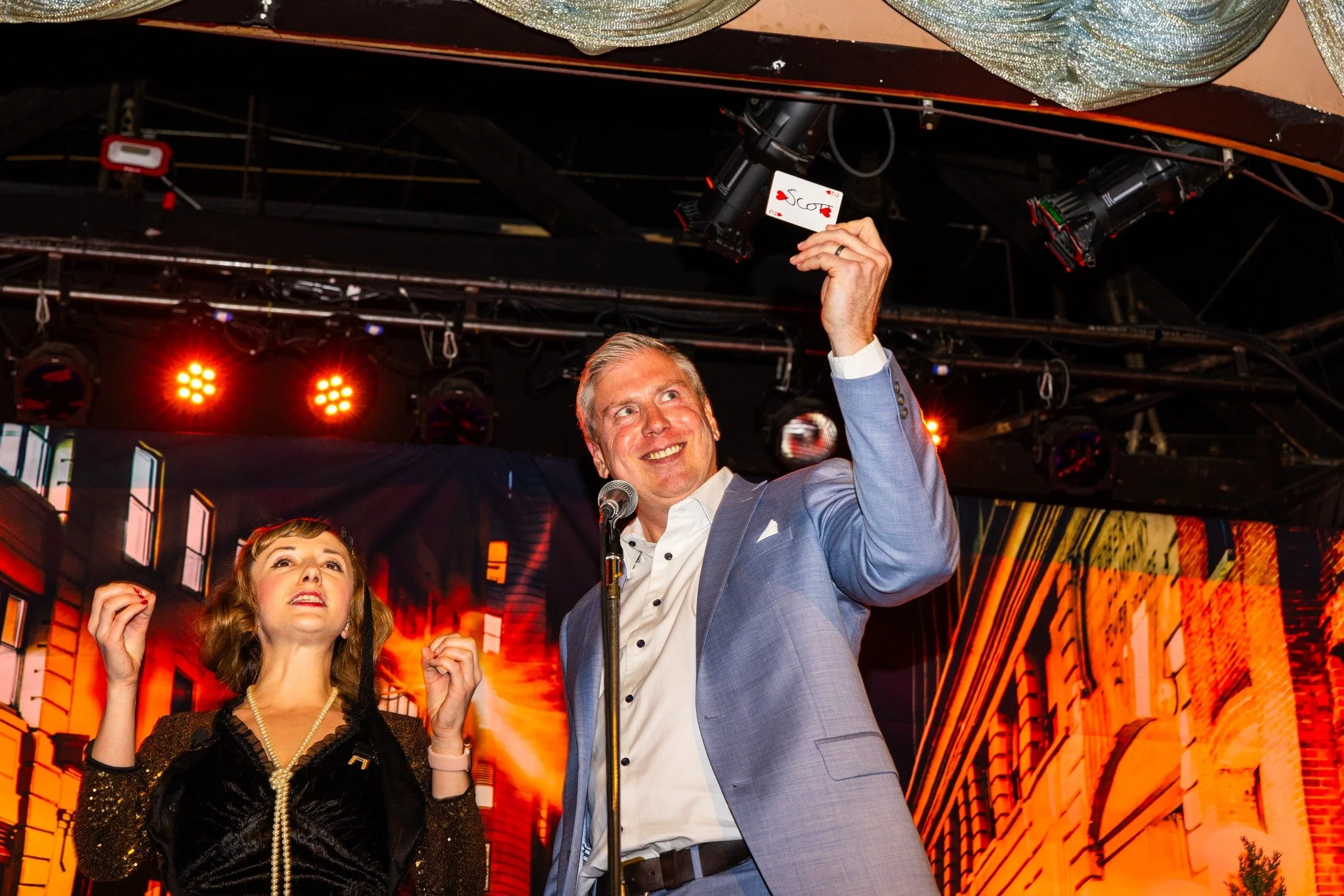
Thank Everyone, Not Just the Ones Who Can Travel

Volunteer recognition fails most often on reach rather than sincerity: the celebration happens, it's genuinely meant, and most of the people being celebrated aren't there. A Zoom magic show solves that particular problem, reaching volunteers wherever they are for the same cost, asking nothing of people who already give you their time, working across a wide range of ages and confidence, and fitting a budget that has to be defended.

It won't fix anything structural, and it isn't meant to. It's a genuinely good hour for people who've earned one.

Reach out with your volunteer numbers and regions, and let's work out what's possible.

Katrina Kroetch
Virtual Magic Show for a Customer Community or User Group

Virtual Magic Show for a Customer Community or User Group

Community managers have a problem that marketing teams don't. Marketing needs people to attend once and convert. Community needs the same people to keep turning up, month after month, for something that isn't a sales conversation, and to eventually care about each other rather than only about your product.

That's considerably harder, and the usual programming doesn't help much. I'm Magical Katrina, an award winning magician and mentalist, and I want to explain where a virtual magic show fits into a customer community program, which is a different job from filling a webinar.

Roadmap Updates Are Not Community

The default program for most user groups is product content: what shipped, what's coming, a customer talking about their implementation. All useful, and all of it a reason to attend rather than a reason to belong.

The distinction matters because product content attracts the same engaged power users who'd have found the information anyway, and does nothing for the much larger group who joined the community and never returned. A virtual magic show isn't product content, which is precisely why it reaches differently. It gives your community something that isn't asking anything of them, which is rarer in a vendor relationship than it should be.
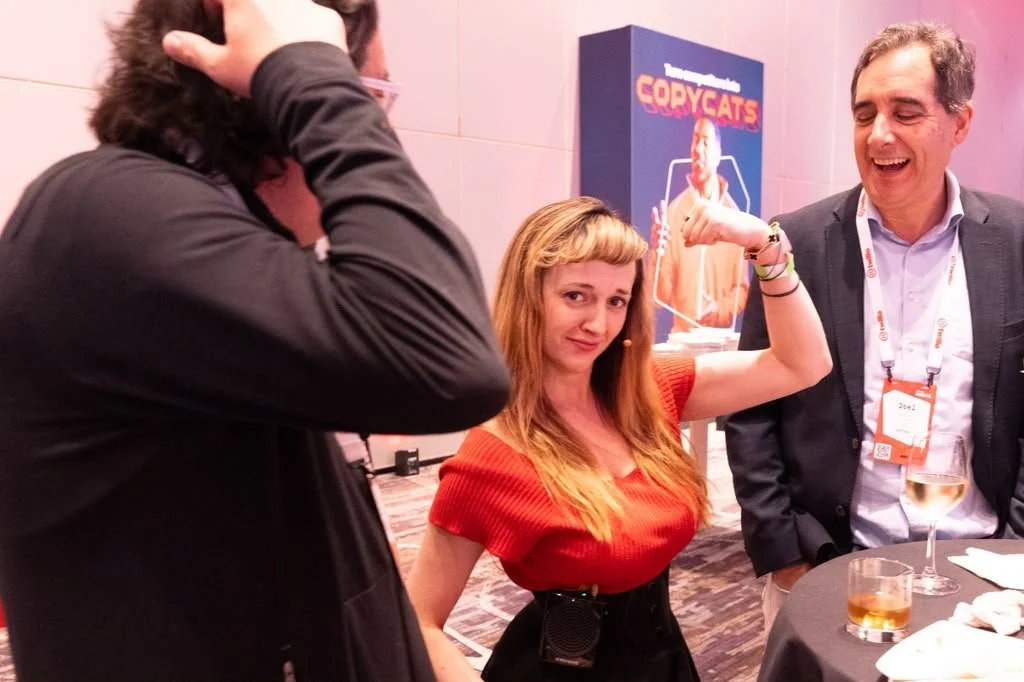
The Quiet Months Are the Problem

Every community program has a rhythm dictated by the product. Around a major release there's plenty to talk about and attendance is straightforward. In the months between, you're programming against nothing much having happened.

Those quiet stretches are where communities lose momentum, because a member who skips three sessions in a row has effectively left. A virtual magic show is a reason to gather that doesn't depend on the roadmap, which makes it particularly useful in exactly the period when your program is thinnest. It's also easy to promote precisely because it's unusual, whereas another session about best practices is not.

Members Should Meet Each Other

The thing every community aspires to and few achieve. A genuine community is one where members value each other's presence, not just yours, and that requires them to have some experience of each other beyond names in a chat panel.

A virtual magic show produces one. When two hundred users across a dozen countries all react to the same impossible thing at once, that's a shared moment rather than a shared mailing list. It won't manufacture relationships by itself, but a community whose members have laughed together once behaves differently in a forum than one whose members have only ever read the same announcements.

It Works for Chapters Too

If your community has regional or local chapters, they face the same difficulty as any volunteer run group: thin attendance, organizer fatigue, and a constant hunt for content.

A virtual magic show can serve several chapters at once, which turns fifteen people in four cities into a room of sixty and shares the cost across regions. It also gives chapter leads something genuinely promotable rather than another call they've had to find a speaker for. For a community team supporting volunteer chapters, supplying something central they can run locally is usually more valuable than another piece of content nobody has time to deliver.

Advisory Boards and Small Groups

The other end of the scale, and it works there too. Customer advisory boards, design partner groups, and top tier customer programs typically involve a small number of senior people who you need candid conversation from.

Those sessions tend to start formally, with everyone slightly performing for the vendor and for each other. Close up magic works better as the group shrinks, so an opening segment does what a dinner does in person: it moves a small senior group from formal to human before the substantive discussion. For a virtual magic show with twelve advisory board members, that's a genuinely efficient use of twenty minutes.

It Says Something About You

Worth noting, since customer perception is what community programs are ultimately shaping. Every vendor tells its customers it values them, usually in a newsletter, and customers have learned to discount it entirely.

Arranging something genuinely enjoyable that asks nothing in return communicates the same thing without saying it. A virtual magic show for your community isn't a webinar with a call to action at the end, and members notice the absence. That's a small signal, repeated over a year of programming, and it contributes to the difference between a community that tolerates your emails and one that turns up.

Where to Place It

A few practical options. As a standalone community event in a quiet month, which is the strongest use. At the start of a longer session to reward punctual attendance and hold people through the substantive content. Or as the social portion following a product update, so the session has a reason to continue after the information has been delivered.

What generally doesn't work is placing it at the very end of a long agenda, since by then you've lost the people you most wanted to reach. If your objective is reaching the disengaged majority rather than rewarding the committed few, put it early or make it the whole event.

It Works Across a Global Membership

Practical for communities spanning countries. A virtual magic show is visual and participatory rather than dependent on shared cultural references, so it lands with members in different markets where a quiz or a comedic segment would fragment.

It also runs on whatever platform you already use and scales from thirty members to two thousand without changing your workload. For a community team covering multiple regions with one program, something that genuinely works everywhere is worth more than something excellent that only works in one market, and it avoids the awkwardness of running a good session for headquarters and a lesser one elsewhere.

Why Book Magical Katrina

If you'd like a virtual magic show for your community, here's my case. I'm a member of the Magic Circle in London and the Academy of Magical Arts in Hollywood, I've earned multiple magic awards, and I've performed for companies including Formula 1, the Olympics, Porsche, Zapier, and the Ritz Carlton, with appearances on Penn & Teller: Fool Us. My virtual material is built for video and genuinely participatory, so members take part rather than watch, and it works across countries and time zones without depending on shared references. I have a polished technical setup, I handle everything myself, and I understand that a community session has objectives beyond the entertainment.

Frequently Asked Questions

Why not just run more product content?

Because product content attracts the same engaged power users who'd have found the information anyway, and does nothing for the much larger group who joined and never returned. It's a reason to attend rather than a reason to belong. A virtual magic show isn't product content, which is exactly why it reaches differently, and it gives your community something that isn't asking anything of them.

When in the year does this help most?

The quiet months between releases, when you're programming against nothing much having happened and attendance drifts. Those stretches are where communities lose momentum, since a member who skips three sessions has effectively left. A virtual magic show is a reason to gather that doesn't depend on the roadmap, and it's easy to promote precisely because it's unusual.

How does it help members connect with each other?

By giving them a shared experience rather than a shared mailing list. When members across several countries all react to the same impossible thing at once, that's something they were part of together. It won't manufacture relationships by itself, but a community whose members have laughed together once behaves differently in a forum than one whose members have only read the same announcements.

Can it work for regional chapters?

Well, and it solves a real problem. Chapters face thin attendance, organizer fatigue, and a constant hunt for content. A virtual magic show can serve several at once, turning fifteen people in four cities into a room of sixty while sharing the cost across regions, and it gives chapter leads something genuinely promotable rather than another call they've had to find a speaker for.

What about a small advisory board?

It suits those particularly, since close up magic works better as the group shrinks. Advisory sessions tend to start formally, with everyone slightly performing for the vendor and each other, and an opening segment does what a dinner does in person: moves a small senior group from formal to human before the substantive discussion. Twenty minutes well spent with twelve people.

Where should it sit in the agenda?

As a standalone event in a quiet month, which is the strongest use, or at the start of a longer session to reward punctuality and hold people through the content. What generally fails is placing it at the very end of a long agenda, since by then you've lost the people you most wanted to reach. If the objective is the disengaged majority, put it early.

How do I book you, and what do you need to get started?

Reach out with your date, platform, expected attendance, the regions and time zones involved, and where it sits in your program. That's enough for me to check availability, suggest placement, and send a quote. If several chapters are joining one session, mention that, since it's usually more affordable than running separate events and gives members across regions something shared.

Give Them a Reason That Isn't Product

Community programs are judged on whether members keep turning up, and product content mostly reaches the people who were always going to. A virtual magic show does something different: it fills the quiet months when your program is thinnest, gives members an experience of each other rather than only of you, serves regional chapters that struggle to fill their own calendars, and communicates that you value your customers without saying so in a newsletter.

If your community is well run and thinly attended, that's the gap worth addressing.

Reach out with your dates and membership numbers, and let's give them something to turn up for.

Katrina Kroetch