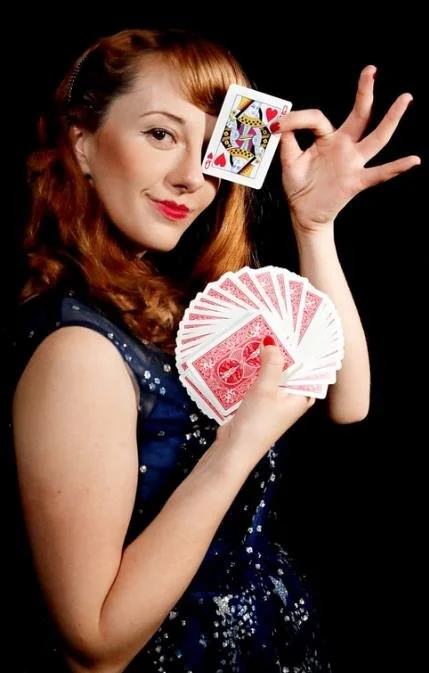
Female Magician in New York for Corporate Events

Female Magician in New York for Corporate Events

Most writing about booking women performers assumes the event is about women, which covers a small proportion of any corporate calendar. The rest of it is the holiday party, the client reception, the team offsite, the launch, and the awards dinner, where the brief is simply to book something that works in front of a demanding room.

That's what this article is about. I'm Magical Katrina, an award winning magician and mentalist, and I want to explain what a female magician in New York brings to ordinary corporate events, starting with the part that has nothing to do with gender at all.

Skill Decides It

Worth establishing before anything else, because everything else depends on it. Skill in magic and mentalism has nothing to do with gender, and you should book a female magician in New York because she's genuinely excellent, assessed exactly as you'd assess anyone: real footage of live performance, relevant experience with rooms like yours, reviews, and professional communication.

What follows is context rather than justification. If a performer is merely competent, none of it helps, and a booking made on any basis other than quality is obvious within about four minutes. That applies to every performer, and it belongs at the top rather than buried at the bottom.

Your Guests Attend a Lot of Events

The defining characteristic of a New York corporate audience. Finance, media, legal, and agency professionals go to receptions constantly, and they've developed a polite, efficient way of enduring entertainment that isn't very good.

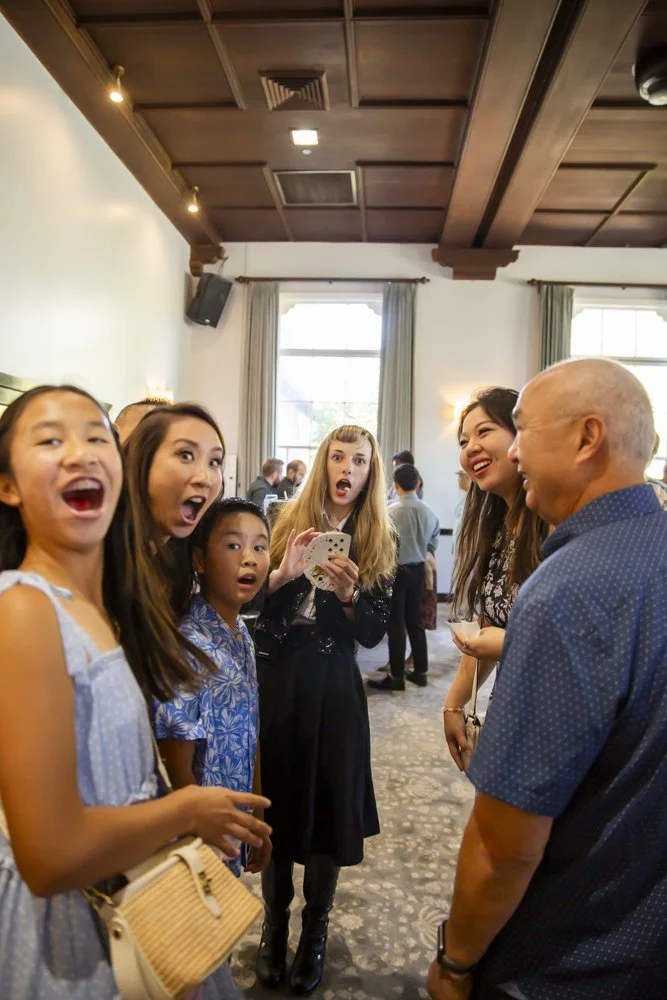
That rules out most of what fills these evenings. Background music is ignored, a photo booth sits unused, and anything competing on production value is measured against things they've already seen. Genuinely skilled close up magic is different, because something impossible happening six inches from someone's face, with no stage and nothing between them and it, can't be filed away as staging. A female magician in New York performing at conversational distance offers something a jaded room hasn't got a category for.

The Room Isn't Expecting You

Worth naming, since it's a genuine dynamic rather than a marketing line. Magic has been overwhelmingly male throughout its history, so most guests arrive carrying a default image of what a magician looks like.

That gap between expectation and reality buys a few seconds of extra attention at the start, and expectation is a working material in performance. An audience that hasn't settled into assuming it knows what's coming is a marginally more open one. It's a small advantage, it's real, and everything after those few seconds depends entirely on whether the magic is any good.

It Reads as a Considered Choice

A practical observation about how corporate events land, particularly client facing ones. Guests infer the effort behind an evening from small signals, and entertainment is among the most legible.

The default option reads as a booking made from a list, while something slightly unexpected reads as a decision. For a client reception, where the impression carries commercial weight, a female magician in New York contributes to the sense that the evening was thought about rather than arranged. That's a distinctiveness argument rather than a gender one, and it applies to any element guests weren't expecting.

Client Events Have Stakes

Worth separating from internal events, because the calculation differs. At a company party you're aiming for enjoyment. At a client reception you're aiming for an impression that affects business, and most corporate hospitality in New York is indistinguishable from the last three events those clients attended.

Magic performed inches from someone's face is not indistinguishable. It signals genuine investment in their experience rather than a default booking, gives clients a story they retell with your company attached, and creates the relaxed moments where your team and theirs connect as people rather than as roles. For hospitality where the relationship is the objective, that's a better return than another round of drinks.

New York Venues Rule Out Most Alternatives

The practical constraint that decides a great deal here. Corporate events happen in offices, converted spaces, rooftops, restaurants, private dining rooms, and hotel spaces, most of which are expensive per square foot and frequently tight, historic, or restricted.

Anything requiring a stage, rigging, sound, or floor space competes with your guests for room you're paying premium rates for, and often can't be installed at all. A female magician in New York performing close up magic needs no stage, power, sound, rigging, or setup, and no space beyond where guests already stand. Nothing to negotiate with the venue, nothing added to a production budget, and nothing consuming square footage.

It Costs Nothing From Your Schedule

New York corporate events are frequently compressed, often two hours in the early evening, because that's what guests will give you between the office and dinner.

Entertainment requiring a slot competes with a program that's already tight, and anything asking a room to stop and watch loses people who came to talk. A female magician in New York works inside the reception that's already happening, beginning when guests arrive and continuing until the event ends. In a two hour window where every minute of attention is expensive, entertainment occupying none of your run of show while covering the full duration is straightforwardly efficient.

It Can Carry Your Message

Worth knowing for corporate work generally. A skilled performer can weave your product, value proposition, or a single key point into the magic itself, so the thing you want remembered arrives attached to genuine astonishment rather than a slide.

That matters because most corporate events have an objective beyond hospitality, and it never feels like being sold to, which is the right tone for a client evening. Mention your objective when booking a female magician in New York and expect ideas rather than confirmation that it's possible, since a performer who engages with your goal will deliver something tailored rather than standard.

A Note on "Local vs. Traveling In"

Worth knowing: there are relatively few women working professionally in magic, so restricting your search to New York based performers shrinks an already small pool. Many travel in, with travel discussed openly, factored into the quote, and handled by the performer rather than by you. I'm based in the Los Angeles area and travel to New York for corporate events. Judge on skill and fit rather than location.

Why Book Magical Katrina

If you'd like a female magician in New York for a company event, here's my case. I'm a member of the Magic Circle in London and the Academy of Magical Arts in Hollywood, I've earned multiple magic awards, and I've performed for companies including Formula 1, the Olympics, Porsche, Prada, Zapier, and the Ritz Carlton, with appearances on Penn & Teller: Fool Us and Masters of Illusion. I blend close up magic with mentalism, which is what lands with a room that has seen everything, I can weave in a brand or message where useful, and I need no stage, power, or setup. I'm fully insured with a COI available for your venue.

Frequently Asked Questions

Is this only for women's events?

No, and that's the point of this article. Most corporate calendars consist of holiday parties, client receptions, offsites, launches, and awards dinners where the brief is simply to book something that works. A female magician in New York suits those on exactly the same terms as any performer, and everything else here is context rather than justification for the booking.

Will it impress a room that goes to events constantly?

More reliably than most options. Finance, media, legal, and agency professionals have developed a polite way of enduring entertainment that isn't very good, and anything competing on production value is measured against things they've already seen. Something impossible happening six inches from someone's face, with nothing between them and it, can't be filed away as staging, which is why close up work holds a jaded room.

Does the unexpectedness genuinely matter?

A little, and honestly. Magic has been overwhelmingly male throughout its history, so most guests arrive with a default image of what a magician looks like, and that gap buys a few seconds of extra attention. Expectation is a working material in performance, so an audience that hasn't settled into knowing what's coming is marginally more open. Everything after those seconds depends on the magic.

Why does it suit client events particularly?

Because the calculation differs from an internal party. At a client reception you're aiming for an impression that affects business, and most corporate hospitality in New York is indistinguishable from the last three events those clients attended. Magic at conversational distance isn't, it signals genuine investment in their experience, and it gives clients a story they retell with your company attached to it.

What does it need from our venue?

Nothing, which matters in a city where event space is expensive per square foot and frequently tight, historic, or restricted. Close up magic needs no stage, power, sound, rigging, or setup, and no space beyond where guests already stand. There's nothing to negotiate with the venue, nothing added to a production budget, and nothing consuming square footage you're paying premium rates for.

Does it take time from our program?

No, which matters when New York corporate events are often compressed into two hours between the office and dinner. It works inside the reception that's already happening, beginning as guests arrive and continuing until the event ends, rather than requiring a slot or asking the room to stop and watch. Covering the full duration while occupying none of your run of show is efficient in a tight window.

How do I book you, and what do you need to get started?

Reach out with your event date, venue or location, event type, and rough guest count, plus what you want the evening to achieve. That's enough for me to check availability and send a quote including travel. From there we'll talk through format, timing, and whether you'd like a message woven in, and a deposit secures your date.

Book What Works in the Room

The ordinary corporate events filling most New York calendars need the same thing each time: entertainment that genuinely holds a room of people who attend a great many of these. A female magician in New York meets that on the same terms as anyone, with close up work offering something a jaded audience has no category for, an unexpected performer buying a few seconds of extra attention, and a format that asks nothing of a venue where every square foot and every minute is expensive.

If that suits what you're planning, I'd be glad to hear about it.

Reach out with your event details, and let's see whether I'm the right fit.

Katrina Kroetch
Strolling Magician New York for Restaurants, Bars, and Hospitality Venues

Strolling Magician New York for Restaurants, Bars, and Hospitality Venues

Almost everything written about hiring performers is aimed at people planning a one off event. Considerably less is aimed at the venues themselves, despite restaurants, hotel bars, members' clubs, and private dining rooms across New York having a recurring version of the same problem: how to make a Tuesday feel worth leaving the house for.

That's a different sort of booking with different requirements. I'm Magical Katrina, an award winning magician and mentalist, and I want to set out how a strolling magician New York venues engage actually works, and what an operator needs from a performer as opposed to what an event planner needs.

The Midweek Problem

Every operator knows the shape of the week. Thursday through Saturday largely looks after itself, and Monday through Wednesday requires effort, promotion, or discounting to fill the same room with the same overheads running.

Discounting solves it at the cost of margin and trains regulars to wait for offers. A strolling magician New York working a defined midweek evening does something different: it gives you a reason to promote that's about the experience rather than the price, and it gives guests a reason to choose Tuesday specifically rather than simply choosing you eventually. That distinction matters over a year, because a discount you run repeatedly becomes the price.

Dwell Time and the Second Drink

The commercial mechanism, stated plainly. Table magic performed between courses extends the time guests spend at a table without extending service, because the gaps that already exist become part of the experience rather than a lull.

Guests who are enjoying themselves order another round, stay for dessert, and leave later than they intended. That's the ordinary economics of hospitality entertainment, and close up magic does it without volume, without a stage, and without competing with the kitchen. For a venue where the average cover value matters more than turning tables quickly, a strolling magician New York affects the number in a way that's difficult to attribute precisely and reasonably easy to feel.

It Suits Rooms That Can't Take Anything Else

The practical argument for this format specifically. New York restaurant dining rooms are tight, acoustically poor, and designed entirely around service, with no stage, no sightlines, and no space that isn't earning.

Live music competes with conversation and frequently annoys as many guests as it pleases. Anything requiring equipment consumes covers. A strolling magician New York needs no stage, no power, no sound, and no floor area beyond where staff already move, and it works at conversational volume within the room's ambient level rather than above it. For most dining rooms it's the only entertainment format that genuinely fits.

Private Dining Rooms Are the Strongest Case

If your venue has a private room, this is where it earns most. Private dining is a high margin product sold on experience rather than food alone, and most venues in New York compete for that business with a comparable room and a comparable menu.

Offering table magic as an option, or including it in a package, differentiates the room in a way another canapé selection doesn't. It also solves the specific weakness of private dining, which is that a long table fragments into separate conversations and the host has no way to bring the room together. A strolling magician New York gives the group a shared focus between courses without requiring anyone to make a speech.

Hotel Bars and Lounges

A different application, and increasingly common. Hotel bars in New York compete with the entire neighborhood, and their advantage is guests who are already in the building rather than any inherent appeal.

Programming a strolling magician New York for a defined window gives a lounge something happening that guests can encounter rather than having to seek out, which is precisely the behavior hotel food and beverage teams are trying to produce. It also gives your concierge and front desk something concrete to mention, which is worth more than a printed card, and it works in a room with no stage and continuous service.

Members' Clubs and Recurring Programming

For clubs and venues with a regular membership, the calculation is retention rather than footfall. Members expect the program to give them reasons to come in beyond the ordinary offering, and that program is a constant demand on whoever runs it.

A strolling magician New York on a recurring basis, monthly or seasonally, is straightforward to schedule, requires nothing from the building, and produces something members mention to guests they bring. Venues that find a performer who suits the room frequently book on an ongoing arrangement rather than event by event, which is simpler for both sides and considerably better value than one off pricing.

What Venues Actually Need

Different from what event clients need, and worth being clear about. Reliability above all, since a performer who doesn't turn up on a promoted night is a service failure rather than a disappointment. Comfort working around service, meaning knowing when to approach a table and when not to.

Discretion with guests, particularly in hotels and clubs where privacy is part of the offer. Appropriate presentation for your room. Insurance and paperwork handled without chasing. And a willingness to work within your operation rather than around it. A strolling magician New York who has worked venues understands that the room's business continues and the performance fits inside it.

How These Arrangements Usually Work

Practically, recurring bookings tend to be structured as a defined window on a fixed schedule: two or three hours on a particular evening, weekly, fortnightly, or monthly, agreed for a season or a quarter rather than negotiated each time.

That suits both sides. You get predictability for promotion and staffing, the performer gets a reliable commitment, and the rate reflects the ongoing arrangement rather than one off pricing. It's worth starting with a trial period, a month or a season, to see how it works in your particular room before committing further. Any experienced performer will suggest something similar.

A Note on "Local vs. Traveling In"

Worth knowing: I'm based in the Los Angeles area and travel to New York for events, which makes me better suited to defined runs, seasonal programming, or private dining bookings than to weekly recurring work. If you're looking for an ongoing weekly residency, a New York based performer will suit you better, and I'd say so rather than taking a booking I can't sustain. For seasonal programming or private dining, travel is discussed openly and factored into the quote.

Why Book Magical Katrina

If you're programming entertainment for a venue, here's my case. I'm a member of the Magic Circle in London and the Academy of Magical Arts in Hollywood, I've earned multiple magic awards, and I've performed for clients including Formula 1, the Olympics, Porsche, Prada, and the Ritz Carlton, with appearances on Penn & Teller: Fool Us and Masters of Illusion. I understand that a venue's business continues around the performance, I work at conversational volume with no stage, power, or sound, and I'm comfortable reading when a table wants attention and when it doesn't. I'm fully insured with a COI available.

Frequently Asked Questions

Why book a performer rather than run a promotion?

Because a discount solves midweek at the cost of margin and trains regulars to wait for offers, and a discount you run repeatedly becomes the price. A strolling magician New York on a defined midweek evening gives you something to promote that's about experience rather than price, and gives guests a reason to choose that particular night rather than simply choosing you eventually.

Does it actually affect spend?

Through dwell time, which is the ordinary economics of hospitality entertainment. Table magic between courses extends the time guests spend at a table without extending service, because existing gaps become part of the experience rather than a lull. Guests enjoying themselves order another round and stay for dessert. It's difficult to attribute precisely and reasonably easy to feel in the average cover value.

Will it work in our dining room?

Almost certainly, and it's usually the only format that does. New York dining rooms are tight, acoustically poor, and built entirely around service, with no stage and no space that isn't earning. Live music competes with conversation, and anything requiring equipment consumes covers. Close up magic needs no stage, power, sound, or floor area, and works at conversational volume within the room's ambient level.

What about our private dining room?

That's where it earns most. Private dining is a high margin product sold on experience, and most New York venues compete for it with a comparable room and menu. Offering table magic differentiates yours in a way another canapé selection doesn't, and it solves private dining's specific weakness: a long table fragments into separate conversations with no way to bring the room together.

How do recurring bookings usually work?

As a defined window on a fixed schedule, typically two or three hours on a particular evening, weekly, fortnightly, or monthly, agreed for a season or quarter rather than negotiated each time. That gives you predictability for promotion and staffing and the performer a reliable commitment, with a rate reflecting the ongoing arrangement. Start with a trial month or season before committing further.

What should we expect from a performer working our venue?

Reliability above all, since not turning up on a promoted night is a service failure rather than a disappointment. Comfort working around service, meaning knowing when to approach a table and when not to. Discretion with guests, appropriate presentation for your room, paperwork handled without chasing, and a willingness to work within your operation rather than around it.

How do I start a conversation with you?

Reach out with your venue, the kind of programming you're considering, and whether you're thinking about a defined run, seasonal work, or private dining bookings. I'm based in Los Angeles and travel to New York, so I suit seasonal programming and private dining better than weekly residencies, and I'll tell you honestly if a locally based performer would serve you better for what you have in mind.

Give Tuesday a Reason

Venues compete for the same guests with broadly comparable food in broadly comparable rooms, and the difference is frequently whether anything is happening. A strolling magician New York gives a quiet midweek evening something to promote that isn't a discount, extends dwell time in a dining room that can't accommodate anything else, differentiates a private dining offer, and gives a hotel lounge something guests encounter rather than seek out.

If you're programming a venue rather than planning an event, I'd be glad to talk about what would suit.

Reach out with your venue and what you're considering, and let's discuss it.

Katrina Kroetch
Corporate Christmas Party Ideas: A Month by Month Planning Timeline

Corporate Christmas Party Ideas: A Month by Month Planning Timeline

Company Christmas parties are usually organized by someone who already has a full time job, often at short notice, and frequently by whoever was in the room when it was mentioned. The result is a familiar pattern: nothing much happens until October, then everything happens at once, and the available options are whatever nobody else booked.

Most of the difficulty is sequencing rather than effort. I'm Magical Katrina, an award winning magician and mentalist, and I want to lay out when things actually need doing, so your corporate Christmas party ideas are chosen from what's good rather than from what's left.

June and July: Venue and Date

The two decisions everything else depends on, and the ones that suffer most from delay. December venues get booked astonishingly early, and the ones with character go first.

Lock in your date and venue over the summer. That sounds absurdly early in July and it is precisely why it works, because you're choosing while the calendar is open rather than fitting around what remains. If your company holds the party annually, book next year's before you finish this one, which is the single most effective thing an organizer can do and takes ten minutes.

July and August: Budget and Headcount

Once the venue is fixed, establish the two numbers that constrain every subsequent choice: how much you have and roughly how many people are coming.

Get budget approved rather than assumed, since a figure agreed in a corridor in August has a way of shrinking in November. And be realistic about headcount, including partners if you're inviting them and the reliable overestimate that comes from asking who's interested rather than who's committed. Most disappointing corporate Christmas party ideas are the result of a plan built on numbers that turned out to be wrong rather than a bad idea.

August and September: Entertainment

Earlier than most organizers expect, and the reason so many settle. Good performers are booked for December through the summer, and by October the strongest options for prime dates are gone.

If entertainment matters to you, treat it as a summer decision alongside the venue rather than an autumn one. Among corporate Christmas party ideas, this is where the gap between planning early and planning late is most visible, because venues and caterers have capacity constraints while individual performers simply become unavailable. There is no equivalent of a second table at a restaurant.

September: Catering and Drinks

Now the details that shape the evening. Confirm your catering approach, whether that's a seated meal, food stations, or something more casual, and settle the drinks arrangement.

This is also the moment to sort dietary requirements properly rather than as an afterthought, which means asking rather than assuming and giving people a real way to respond. And decide on genuinely good non alcoholic options rather than a token gesture, since a meaningful proportion of any workforce doesn't drink and notices whether the evening was built around a bar.

Early October: Save the Date

Tell people. This sounds obvious and is frequently left until November, by which point colleagues have made other plans for the good December evenings.

A save the date in early October, even without full details, protects your attendance considerably. Include the date, the rough timings, and whether partners are invited, since that last one affects people's planning more than organizers realize. Among corporate Christmas party ideas, none of them work for people who aren't there, and attendance is largely decided by whether you told people before their diary filled.

Late October: Run of Show

Now build the actual shape of the evening. When guests arrive, when food happens, whether there are speeches, when entertainment sits, and when it ends.

Doing this in October rather than the week before matters, because it's when you discover the problems: the awards will overrun, the venue's kitchen needs an hour's notice, or the entertainment you booked needs a slot you haven't left. Sharing a draft run of show with your venue and your suppliers at this point gives everyone time to flag what won't work, which is considerably better than discovering it on the night.

November: Confirmations and Details

The month of unglamorous administration, and the one that determines whether the evening runs smoothly. Confirm final numbers with the venue and caterer, chase the people who haven't replied, and reconfirm every supplier with the date, timings, and address.

Also handle the practical things people forget: parking and transport information, accessibility requirements, a plan for how people get home, and whether anyone needs to be told about the dress code. Among corporate Christmas party ideas, none of them survive an evening where a third of the guests couldn't find the venue or didn't know it started at seven.

The Final Fortnight: Brief Your Suppliers

The step most organizers skip entirely, and it noticeably improves the result. A week or two out, give your suppliers context beyond the logistics.

Tell your entertainment who's in the room, roughly how senior, what the culture is like, and anything sensitive: a difficult year, a recent restructure, a colleague leaving. Ten minutes of this transforms a generic booking into something suited to your specific evening. Suppliers can only tailor what they know about, and most receive a date, a headcount, and nothing else, which produces exactly the generic version that implies.

On the Night: Stop Organizing

Worth saying, because organizers rarely enjoy the party they built. By the evening itself, everything that can be arranged has been, and standing at the edge managing things helps nobody.

Hand over anything ongoing to a colleague or to the venue, tell your suppliers who to find if something changes, and then attend your own event. The value of all the preceding months is partly that it earns you an evening off. Among corporate Christmas party ideas, the one nobody writes down is that the person who organized it should get to enjoy it.

Frequently Asked Questions

When should we start planning?

June or July, which sounds absurd and is precisely why it works. December venues book astonishingly early and the ones with character go first, so a summer decision means choosing while the calendar is open rather than fitting around what remains. If your company holds the party annually, book next year's before you finish this one, which takes ten minutes and solves the problem permanently.

When should we book entertainment?

August or September, earlier than most organizers expect. Good performers are booked for December through the summer, and by October the strongest options for prime dates have gone. Unlike venues and caterers, who have capacity constraints, individual performers simply become unavailable, so there's no equivalent of adding a second table. Treat it as a summer decision alongside the venue.

When do we need to tell staff?

Early October at the latest, even without full details. Colleagues make plans for good December evenings well in advance, and a save the date protects attendance considerably. Include the date, rough timings, and whether partners are invited, since that last point affects people's planning more than organizers realize. Among corporate Christmas party ideas, none work for people who aren't there.

What should happen in November?

Unglamorous administration that determines whether the evening runs. Confirm final numbers with the venue and caterer, chase non responders, and reconfirm every supplier with date, timings, and address. Then handle what people forget: parking and transport, accessibility requirements, how people get home, and the dress code. These aren't exciting, and they're what actually separates a smooth evening from a fraught one.

What's the step most organizers skip?

Briefing suppliers properly a week or two out. Most receive a date, a headcount, and nothing else, which produces exactly the generic result that implies. Ten minutes telling your entertainment who's in the room, how senior, what the culture is like, and anything sensitive, such as a difficult year or a recent restructure, transforms a standard booking into something suited to your specific evening.

It's already November. What now?

Prioritize ruthlessly. Confirm whatever is still outstanding, tell staff immediately if you haven't, and be flexible on date and format, since a Tuesday or an earlier start opens options a December Friday won't. For entertainment, enquire widely rather than one at a time and be upfront about the timeline, since anyone who can't help will say so quickly and might suggest someone who can.

How do I book you for a December party?

Reach out with your party date, venue or location, headcount, and a sense of how the evening runs. That's enough for me to check availability and send a quote. I need no stage, sound, power, or setup, so there's nothing for your venue to provide. December fills up months ahead, so summer enquiries genuinely help, though it's always worth asking.

Sequence Beats Effort

The difference between a good company party and a stressful one is rarely how hard the organizer worked, it's whether things happened in the right order. Venue and date in the summer, budget and numbers straight after, entertainment before autumn, catering in September, save the date in early October, run of show late October, confirmations through November, and a proper supplier brief in the final fortnight.

Follow that and your corporate Christmas party ideas get chosen from everything available rather than from whatever survived until you got round to it.

Reach out with your date and details, and let's get the entertainment settled early.

Katrina Kroetch
How Much Does a London Magician Cost?

How Much Does a London Magician Cost?

This is usually the first practical question and the hardest to research, since most performers don't publish rates and the ones who do tend to quote a headline figure that turns out not to apply to your event. That's frustrating when you're trying to build a budget rather than browse.

There's a reason for it, and it isn't evasiveness. I'm Magical Katrina, an award winning magician and mentalist and a member of the Magic Circle in London, and I want to explain what a London magician actually charges for, which variables move the number, and how to get a real figure quickly.

Why There's No Standard Rate

If you're hoping for a fixed price, the reason you won't find a dependable one is that a magician's fee is a quote for a particular job rather than a product price, in the same way a photographer's or a caterer's is.

A performer working a two hour drinks reception for three hundred people in the City and one doing a short set at a child's party in Clapham are doing genuinely different work, and a single figure covering both would be meaningless. What's useful is knowing the variables, because once you understand what moves a quote you can estimate where your event sits and have a far better conversation with any London magician you approach.

Skill and Demand Move It Most

The largest factor is the performer: how good they are and how busy their diary is.

Someone with decades of experience, television credits, major corporate clients, and genuine demand commands considerably more than someone building a career, and that gap reflects something real. A highly skilled performer astonishes a room reliably, handles a difficult crowd, recovers gracefully when something unexpected happens, and never leaves you anxious about how it's going. A significant difference between two London magician quotes usually reflects a genuine difference in what happens at your event.

Format and Duration

What you're booking matters considerably. Strolling close up magic through a two hour reception, a forty minute featured set, and a full evening combining both are different commitments and priced accordingly.

Duration is the obvious part, but format matters too, since a stage show typically involves more preparation, equipment, and technical coordination than strolling magic, and a keynote fused with magic involves substantial custom development. Being clear about roughly what you want and how long produces a far more accurate quote, and lets a good performer suggest something that fits your budget rather than guessing at it.

Guest Numbers

Audience size affects pricing in ways people don't always anticipate. For strolling magic, more guests means more groups to reach, which either extends the performance time or requires a longer booking to cover the room properly.

For a stage performance, larger audiences may require sound equipment and a different style of show, and very large events sometimes need a second performer. An accurate guest count genuinely helps, and it's worth being realistic rather than optimistic, since a performer booked for eighty who arrives to two hundred cannot cover the room, which serves nobody well.

Date and Season

Timing affects price and availability. December is by far the busiest month, with corporate Christmas parties filling diaries across the capital, and prime dates in the first three weeks are the most contested of the year.

Summer is peak wedding season, with Saturdays from May through September going first. January, February, and much of the early year are considerably quieter. If your date falls in a peak, factor that in and start early, which is the simplest way to keep costs reasonable while still getting a London magician you actually want rather than whoever remains.

Travel Within and Beyond London

Location affects the figure, though usually modestly. Central London is straightforward, outer boroughs slightly less so, and a venue an hour outside the M25 involves genuinely different travel.

Most performers absorb local travel and itemize anything further. Worth saying honestly: this shouldn't restrict you to performers in your immediate area, since travel is typically a small component and restricting yourself geographically can mean missing someone better suited to your event. Ask whether the quote is inclusive, since a slightly higher all in figure can work out cheaper than a lower one with travel added afterwards.

Two Things to Check on Any UK Quote

Practical points worth raising with any supplier. First, ask whether the figure includes VAT, since UK suppliers differ in how they present quotes and it's an unpleasant surprise late in a budget.

Second, ask about public liability insurance, which many London venues require and will ask to see before the day. Most professionals carry it and can supply a certificate without fuss, and it's normally included rather than charged separately. A London magician who is vague about either is telling you something about how often they work at venues that ask.

One Real Number

Since vagueness is unhelpful when budgeting, here's a concrete anchor from my own pricing: my virtual and online shows start around $1,400, with the exact figure depending on length, audience size, and customization.

In person events vary more widely, because format, duration, guest count, travel, and date all apply, so I quote those individually rather than publishing a number that would mislead half the people reading it. What I can promise is a clear, transparent quote sent quickly once I know your details, which is the fastest route to knowing what a London magician costs for your specific event.

The False Economy

Worth taking seriously. It's tempting to sort options by price and work upwards, but entertainment is an area where the cheapest choice frequently turns out to be the most expensive.

If a performer is flat, awkward, or fails to engage your guests, you haven't saved money, you've spent money on nothing and lost the chance to make your event memorable. Nobody remembers the fee, everyone remembers whether the entertainment was any good. A skilled London magician at a fair price delivers genuine value, while a cheap performer who falls flat is a wasted line entirely.

How to Get an Accurate Quote

Getting a real number takes one message. Share your event date, venue or location, the type of event, your approximate guest count, roughly how long you'd like the performance, and anything specific you're hoping for.

With those details, any professional can give you an accurate quote rather than a vague range. It costs nothing, carries no obligation, and lets you budget properly. A clear, prompt, professional quote is also a useful signal in itself, since performers who handle the business side well tend to handle the event well too.

Why Book Magical Katrina

If you're weighing options, here's my case. I'm a member of the Magic Circle in London and the Academy of Magical Arts in Hollywood, I've earned multiple magic awards, and I've performed for clients including Formula 1, the Olympics, Porsche, Prada, and the Ritz Carlton, with appearances on Penn & Teller: Fool Us and Masters of Illusion, across events in over 20 countries. I blend close up magic with sophisticated mentalism, which suits a worldly London audience, I need no stage, sound, or setup, and I give clear, transparent quotes with no surprises. I'm based in the Los Angeles area and travel to London, with travel discussed openly and factored in rather than added later.

Frequently Asked Questions

Why won't magicians publish a fixed price?

Because a fee is a quote for a specific job rather than a product price, in the way a photographer's or caterer's is. A performer working a two hour City reception for three hundred people and one doing a short set at a child's party are doing genuinely different work, so a single figure would be meaningless. Understanding the variables lets you estimate where your event sits and have a better conversation.

What affects the price most?

The performer's skill and demand, by a considerable margin, since someone with decades of experience, television credits, and a full diary commands more than someone building a career, and that gap reflects what happens at your event. After that: format and duration, guest numbers, customization, your date and its seasonal demand, and travel.

Does the date change the cost?

Yes. December is by far the busiest month, with corporate Christmas parties filling diaries across the capital, and prime dates in the first three weeks are the most contested of the year. Summer is peak wedding season, with Saturdays from May through September going first. January and February are much quieter. For a peak date, start early to keep costs reasonable and still get a London magician you want.

What should we check on a UK quote?

Two things. Whether the figure includes VAT, since suppliers differ in how they present quotes and it's an unpleasant late surprise in a budget. And whether the performer carries public liability insurance and can supply a certificate, which many London venues require before the day. Most professionals handle both without fuss, and vagueness about either is worth noticing.

Does travel add much?

Usually modestly. Central London is straightforward, outer boroughs slightly less so, and a venue an hour beyond the M25 involves genuinely different travel, which is normally itemized while local travel is absorbed. Ask whether the quote is inclusive, since a slightly higher all in figure can work out cheaper than a lower one with travel added afterwards. It shouldn't restrict your search geographically.

Should we just book the cheapest option?

Entertainment is an area where cheapest frequently becomes most expensive. If a performer is flat or fails to engage your guests, you haven't saved money, you've spent money on nothing and lost the chance to make the event memorable. Nobody remembers the fee, everyone remembers whether the entertainment was good. Judge on what a performer delivers for the price rather than on price alone.

How do I get an accurate quote from you?

Send me your event date, venue or location, event type, approximate guest count, roughly how long you'd like the performance, and anything specific you're hoping for. That's enough for me to check availability and come back with an accurate, transparent quote with no surprises, including travel. There's no obligation, and if I'm not the right fit for your event or budget, I'll tell you honestly.

Spend Well Rather Than Less

There's no single answer to what a London magician costs, because the fee reflects the performer, the format, the duration, your guest count, any customization, your date, and travel. What you can do is understand those variables, check the VAT and insurance questions early, be clear about your event when you enquire, and judge quotes on value rather than the headline number.

Entertainment is the part of an event guests actually remember, which makes it a poor place to economize and a good place to spend well.

Reach out with your event details, and I'll send a clear quote.

Katrina Kroetch
Female Magician in San Francisco for Corporate Events

Female Magician in San Francisco for Corporate Events

Most of what gets written about booking women performers assumes the event is about women: an International Women's Day session, a diversity initiative, an employee resource group evening. Those are worth doing, and they're not what this article is about.

This is about the ordinary corporate events that make up most of the calendar, the holiday party, the client reception, the team offsite, the launch, where the brief is simply to book something good. I'm Magical Katrina, an award winning magician and mentalist, and I want to explain what a female magician in San Francisco brings to those events, and be honest about the part that has nothing to do with gender.

Skill Is the Whole Argument

Let me establish this first, because everything else depends on it. Skill in magic and mentalism has nothing to do with gender, and you should book a female magician in San Francisco because she's genuinely excellent, assessed on exactly the criteria you'd apply to anyone: real footage of live performance, relevant experience, reviews, and professionalism.

What follows in this article is context rather than justification. If a performer is merely adequate, none of it matters, and a booking made for any reason other than quality will be obvious in the room. That's true of every performer, and it's worth saying plainly at the top rather than at the bottom.

Bay Area Rooms Are Analytical

The audience characteristic that shapes what works here. Corporate events in San Francisco are full of engineers, product people, researchers, and founders, whose instinct on encountering something impossible is to begin working out how.

That makes them a wonderful audience rather than a difficult one. Someone applying real analytical attention who still cannot account for what happened experiences astonishment considerably more intensely than a casual observer, because their certainty was better founded. A female magician in San Francisco blending close up magic with mentalism tends to get the strongest reaction from precisely the person who arrived most confident they'd catch the method, and mentalism in particular fascinates people who think for a living.

The Room Isn't Expecting You

Worth naming, since it's a genuine dynamic rather than a talking point. Magic has been overwhelmingly male throughout its history, so most people arrive at a corporate event carrying a default mental image of what a magician looks like.

That gap between expectation and reality buys a few seconds of extra attention at the start, and in performance terms, expectation is a working material. An audience that hasn't quite settled into assuming they know what's coming is a slightly more open audience. It's a small advantage, it's real, and what happens after those seconds is entirely down to whether the magic is any good.

Some Companies Do Consider This

Worth addressing honestly rather than pretending otherwise. A number of Bay Area organizations now think about supplier diversity, including for events, and some event leads have a genuine preference for booking women performers where the quality is equal.

If that describes your organization, the useful framing is that it should be a tiebreaker rather than a criterion. Book the best performer for your event, and where two are genuinely comparable, let it inform the decision. A female magician in San Francisco booked because she was the strongest option, who also happens to serve a supplier commitment, is a good outcome. One booked to satisfy a policy despite being weaker serves nobody, including the policy.

It Reads as Considered

A practical observation about how corporate events land. Attendees form impressions of the effort behind an event from small signals, and entertainment is one of the more legible ones.

Something slightly unexpected reads as a deliberate choice, whereas the default option reads as a booking made from a list. For a client event particularly, where the impression is the point, a female magician in San Francisco contributes to a sense that the evening was thought about. That's not a gender argument so much as a distinctiveness one, and it applies to any element of an event that isn't what guests were expecting.

It Works for the Formats You Actually Run

Practically, a female magician in San Francisco fits the range of Bay Area corporate events:

Holiday parties. Where the challenge is getting a reserved room mixing.

Client and prospect receptions. Where the impression has commercial consequences.

Team offsites. Resetting attention between sessions and giving the evening a spine.

Launches and activations. Drawing a crowd and building a message into a memorable moment.

Executive dinners. Close up magic between courses, needing nothing but the table.

Conference receptions. Standing out during weeks when the city is full of competing events.

It Can Carry a Message

Worth knowing for corporate work generally. A skilled performer can weave your company's product, value proposition, or a key point into the magic itself, so the thing you want remembered arrives attached to genuine astonishment rather than a slide.

That matters because most corporate events have an objective beyond hospitality. It also never feels like being sold to, which is the right tone for a client event. Mention your objective when booking a female magician in San Francisco and expect ideas rather than simple confirmation that it can be done, since a performer who engages with your goal is likely to deliver something tailored.

It Fits Bay Area Venues

The practical constraint here as everywhere. Corporate events happen in offices, converted warehouses, rooftops, museum spaces, restaurants, and hotel rooms, many with no stage, awkward acoustics, limited power, and space charged at premium rates.

Close up magic requires none of it: no stage, no sound, no power, no rigging, no setup time, and no floor space beyond where guests already stand. That means nothing to negotiate with the venue, nothing to add to a production budget, and nothing consuming square footage you're paying for. For an events lead already managing a venue with rules, that simplicity is worth a great deal.

A Note on "Local vs. Traveling In"

Worth knowing: there are relatively few women working professionally in magic, so restricting your search to Bay Area based performers shrinks an already small pool considerably. Many travel in, with travel discussed openly, factored into the quote, and handled by the performer rather than by you. I'm based in the Los Angeles area and travel to San Francisco and the wider Bay Area for corporate events. Judge on skill and fit rather than location.

Why Book Magical Katrina

If you'd like a female magician in San Francisco for a company event, here's my case. I'm a member of the Magic Circle in London and the Academy of Magical Arts in Hollywood, I've earned multiple magic awards, and I've performed for companies including Formula 1, the Olympics, Porsche, Prada, Zapier, and the Ritz Carlton, with appearances on Penn & Teller: Fool Us and Masters of Illusion. I blend close up magic with mentalism, which is what genuinely lands with an analytical Bay Area room, I can weave in a brand or message where useful, and I need no stage, power, or setup. I'm fully insured with a COI available for your venue.

Frequently Asked Questions

Is this only relevant for women's events?

No, and that's rather the point of this article. Most corporate calendars consist of holiday parties, client receptions, offsites, and launches where the brief is simply to book something good. A female magician in San Francisco suits those events on the same terms as any performer, and the considerations that follow are context rather than justification for the booking.

Should gender factor into our decision at all?

As a tiebreaker rather than a criterion, if your organization thinks about supplier diversity. Book the best performer for your event, and where two are genuinely comparable, let it inform the choice. A performer booked because she was the strongest option who also serves a supplier commitment is a good outcome, whereas one booked to satisfy a policy despite being weaker serves nobody, including the policy.

Will it work with an engineering audience?

Better than with most audiences. Bay Area corporate rooms are full of people whose instinct on encountering something impossible is to work out how, and someone applying real analytical attention who still cannot account for it experiences astonishment more intensely than a casual observer. Mentalism in particular fascinates people who think for a living, and the strongest reactions usually come from whoever arrived most confident.

Does the unexpectedness actually matter?

A little, and honestly. Magic has been overwhelmingly male throughout its history, so most people arrive carrying a default image of what a magician looks like, and that gap buys a few seconds of extra attention at the start. Expectation is a working material in performance, so a slightly less settled audience is a slightly more open one. What happens after those seconds is entirely down to the magic.

Can the performance include our message?

Yes, and it's often the reason to book a performer rather than background entertainment. A skilled female magician in San Francisco can weave your product, value proposition, or key point into the magic, so it arrives attached to genuine astonishment rather than a slide, and it never feels like being sold to. Mention your objective when booking and expect ideas rather than simple confirmation.

What does it need from our venue?

Nothing, which matters in the Bay Area where events happen in offices, converted warehouses, rooftops, museum spaces, and restaurants with no stage, awkward acoustics, limited power, and premium priced space. Close up magic needs no stage, sound, power, rigging, or setup, and no floor area beyond where guests already stand, so there's nothing to negotiate and nothing added to a production budget.

How do I book you, and what do you need to get started?

Reach out with your event date, venue or location, event type, and rough guest count, plus what you want the event to achieve. That's enough for me to check availability and send a quote including travel. From there we'll talk through format, timing, and whether you'd like a message woven in, and a deposit secures your date.

Book the Best Performer for the Room

The ordinary corporate events that fill most calendars call for the same thing every time: entertainment that genuinely works in front of the people you've invited. A female magician in San Francisco meets that on the same terms as anyone, with an analytical Bay Area room being an unusually good audience for skilled close up magic and mentalism, an unexpected performer buying a few seconds of extra attention, and a format that asks nothing of your venue or your budget beyond the fee.

If that suits what you're planning, I'd be glad to hear about it.

Reach out with your event details, and let's see whether I'm the right fit.

Katrina Kroetch
Strolling Magician San Francisco for Conferences and Trade Shows

Strolling Magician San Francisco for Conferences and Trade Shows

Exhibiting in San Francisco during a major conference week is one of the more expensive things a company does. Between the booth, the build, the travel, the hotel rates that triple for the week, and the staff time, the cost per genuine conversation can be alarming. And your competitors are all there too, spending similarly, competing for the same finite attention.

The problem isn't visibility, it's stopping power. I'm Magical Katrina, an award winning magician and mentalist, and I want to explain how a strolling magician San Francisco exhibitors hire actually generates booth traffic, and why the conversations that follow tend to be better than the ones a giveaway produces.

Delegates Have Learned Not to Stop

Start with the behavior you're trying to interrupt. People walk exhibition floors in a defensive state: overstimulated, slightly tired, and deliberately avoiding eye contact with anyone who might pitch them.

That's a learned response, because stopping usually means being talked at. Most booth tactics don't overcome it, since merchandise attracts people who want merchandise and screens get walked past. A strolling magician San Francisco works differently because astonishment stops people involuntarily, before the decision to engage has been made. Someone who has just seen something impossible has already stopped walking, which is the difficult part solved.

Holding Them Is Worth More Than Stopping Them

The distinction that matters commercially. A prize wheel or a giveaway stops someone for fifteen seconds, which isn't long enough for anything useful to happen.

A strolling magician San Francisco holds a small group for several minutes, and crucially in a good mood. That gives your team a genuine window, since a person who has just been delighted at your booth is dramatically more receptive to a conversation than someone cold approached in an aisle. The magic doesn't replace your sales team, it creates the conditions in which they can actually work, which is a better use of budget than more collateral nobody takes home.

The Leads Are Different

Worth understanding, because it affects what you get back from the week. Giveaway driven traffic skews heavily towards people collecting free things, which inflates your scan count and wastes your team's day qualifying badges that were never going to convert.

Magic attracts differently. People stop because they're intrigued, they stay because they're engaged, and then they're standing at your booth in a genuinely positive frame of mind. Exhibitors who use a strolling magician San Francisco well brief the performer to hand off warmly to a team member, so the transition from astonishment to conversation feels natural rather than like a trap closing.

Build the Product Into the Effect

Here's what separates magic from general entertainment at a trade show. A skilled performer can build your product, your value proposition, or a single key message into the effect itself.

The thing you want remembered then arrives attached to a moment of genuine wonder, which is roughly the best mnemonic available. A delegate who watched something impossible that ended with your central benefit remembers both, whereas one who took a branded item remembers neither. If your message is the reason you're exhibiting, mention it when booking a strolling magician San Francisco, since building it in is usually straightforward.

The Evening Events Matter Too

Beyond the floor, San Francisco conference weeks generate an enormous parallel program: sponsor receptions, hosted dinners, hospitality suites, and satellite events run by companies who aren't exhibiting at all.

Those evenings are frequently where the actual business happens, and they underperform for a predictable reason. By evening, delegates have absorbed a day of sessions and are talked out, so a reception where everyone stands making dutiful conversation serves nobody. A strolling magician San Francisco moving through that room gives people something genuinely engaging and, more usefully, gives near strangers an immediate shared reaction to discuss.

Competing During a Conference Week

The specifically local challenge. When one of the major technology conferences is in town, the city fills with competing events, and your reception is one of forty happening that evening within a few blocks.

Being different matters more than being lavish, because delegates have already been to three receptions this week with good catering. Something happening at your event that isn't happening at the others is what gets remembered and mentioned, and a strolling magician San Francisco is a straightforward way to be the one people describe rather than the third identical drinks reception of the week.

It Fits Booth Constraints

Practically decisive for many exhibitors. Booth space in San Francisco is expensive, and every square foot allocated to something other than product demonstration and conversation is space you're paying premium rates for.

A strolling magician San Francisco performing close up magic needs no stage, power, sound, or setup, and no floor space beyond where delegates are already standing. There's nothing to build into your stand design, nothing to ship, and nothing requiring the venue's approval. For an exhibitor already managing a build schedule and a shipping deadline, entertainment with no physical footprint is genuinely useful rather than merely convenient.

A Note on "Local vs. Traveling In"

Worth knowing: the best strolling magician San Francisco for your exhibition may travel in, and during major conference weeks local performers book out early since every company in town needs something. Travel is discussed openly, factored into the quote, and handled by the performer rather than by you. I'm based in the Los Angeles area and travel to San Francisco for events, which frequently means availability when local options have gone.

Why Book Magical Katrina

If you'd like a strolling magician San Francisco for your conference presence, here's my case. I'm a member of the Magic Circle in London and the Academy of Magical Arts in Hollywood, I've earned multiple magic awards, and I've performed for companies including Formula 1, the Olympics, Porsche, Prada, Zapier, and the Ritz Carlton, with appearances on Penn & Teller: Fool Us and Masters of Illusion. I understand that exhibiting has objectives rather than simply needing entertainment, so I focus on stopping delegates, holding them, handing off warmly to your team, and building your message into the magic. I need no stage, power, or setup, and I'm fully insured with a COI available.

Frequently Asked Questions

How does a magician generate booth traffic?

By interrupting behavior delegates have learned. People walk exhibition floors avoiding eye contact because stopping usually means being pitched at, so most booth tactics fail. A strolling magician San Francisco works because astonishment stops people involuntarily, before they've decided whether to engage. Someone who has just seen something impossible has already stopped walking, which is the difficult part.

Are the leads actually better?

Generally, yes. Giveaway traffic skews towards people collecting free items, which inflates scan counts and wastes your team's day. Magic attracts people who are intrigued, holds them for several minutes rather than fifteen seconds, and leaves them in a positive frame of mind before your team qualifies them in normal conversation. Brief the performer to hand off warmly and the transition feels natural.

Can the magic include our product?

Yes, and it's the main reason to book a magician rather than general entertainment. A skilled performer can build your product, value proposition, or key message into the effect, so it arrives attached to genuine wonder rather than a slide. A delegate who watched something impossible ending with your central benefit remembers both, whereas one who took a branded item remembers neither.

What about our evening reception?

That's often where it's most valuable. San Francisco conference weeks generate an enormous parallel program of receptions and dinners, and by evening delegates are talked out, so a room of dutiful conversation serves nobody. A strolling magician San Francisco gives people something engaging and gives near strangers an immediate shared reaction, which is what a reception is meant to produce.

How do we stand out during a big conference week?

By being different rather than lavish, since delegates have already attended three receptions this week with good catering. Your event is one of forty happening within a few blocks that evening, so something happening at yours that isn't happening at the others is what gets remembered and mentioned. That's a straightforward way to be the reception people describe rather than the third identical one.

What space do you need at our booth?

None beyond where delegates already stand. Close up magic needs no stage, power, sound, or setup, so there's nothing to build into your stand design, nothing to ship, and nothing requiring venue approval. Given what booth space costs in San Francisco, entertainment with no physical footprint is a genuine advantage as well as one less thing on your build schedule.

How do I book you, and what do you need to get started?

Reach out with your event dates, the venue, your booth details or the parts of the program you're considering, and what you want the activity to achieve. That's enough for me to check availability and send a quote including travel. From there we'll talk through timing across the day, how you'd like handoffs to your team handled, and whether you want a message built in. Conference weeks book out early.

Buy Attention, Not Merchandise

Exhibiting in San Francisco is expensive before anyone stops at your booth, and most of that spend goes on being present rather than being noticed. A strolling magician San Francisco changes the arithmetic: it stops delegates involuntarily, holds them long enough for a real conversation, produces better traffic than giveaways, carries your message inside the moment they remember, and takes up none of the square footage you're paying for.

If you're exhibiting or hosting during a conference week, I'd love to hear what you're planning.

Reach out with your dates and venue, and let's make your presence worth what it costs.

Katrina Kroetch
Birthday Party Magicians Near Me: How to Set Up the Room So the Show Works

Birthday Party Magicians Near Me: How to Set Up the Room So the Show Works

Almost nobody thinks about the room. You book the performer, you plan the food, you work out the timings, and then on the day the show happens in whatever space happens to be free, with children sitting wherever they land and three adults having a conversation by the door.

The performer will cope, because they always do. But a handful of small decisions genuinely affect how well a show lands, and none of them take any effort if you know about them beforehand. I'm Magical Katrina, an award winning magician and mentalist with a Family Entertainer of the Year honor, and here's what actually helps when you've booked among the birthday party magicians near me options and want the show to go as well as it can.

Sit the Children on the Floor

The single most useful thing you can do, and it surprises parents who've laid out chairs. Children sitting on the floor in a loose semicircle works considerably better than children on chairs.

They can see past each other because they're at staggered heights, they're closer together which concentrates the energy, and they're less able to wander because getting up is a more deliberate act. Chairs spread a group out, create sight line problems, and give children something to fidget with and tip backwards. Almost every birthday party magicians near me option will ask for this, so it's worth clearing the floor space in advance rather than moving furniture while everyone waits.

Adults Behind, Not Beside

The second most useful. Parents naturally position themselves around the edges or among the children, which splits the room's attention and gives children something to look at other than the show.

Ask adults to stand or sit behind the children rather than at the sides. That keeps every child facing one direction, means parents can still see everything, and stops the show having two audiences in different places. It also helps enormously with the reflex some parents have of prompting their child, which is well meant and reliably disruptive. Behind the group, that instinct fades naturally.

Put the Performer's Back to the Light

A small technical point that makes a genuine difference. If there's a bright window or a strong light source, the performer should have it behind them rather than facing it, and the children should not be looking directly into it.

Children squinting into a window will lose interest quickly, and a performer lit from behind is harder to watch. If your room has one obviously bright wall, set up so the performer stands against it. This matters more for afternoon parties in summer than at any other time, and it costs nothing to think about while you're deciding which end of the room the show happens in.

Doors, Kitchens, and Traffic

Consider what's behind the performer and what's happening around the room. A show performed in front of an open door to a kitchen where food is being prepared is competing with movement, noise, and the arrival of the cake.

Where possible, position the performer with a plain wall behind them, close the door to any room with activity in it, and ask whoever's managing food not to carry things through during the show. It sounds fussy written down and it's genuinely the difference between a room that stays with the performer and one that turns its head every ninety seconds. Among birthday party magicians near me, any experienced performer will quietly do this themselves if the room allows it.

Turn the Television Off

Obvious, frequently forgotten, and worth stating. A television on in the corner, even muted, will hold a proportion of the room's attention throughout.

The same applies to a tablet propped up for a younger sibling, background music that someone forgot to pause, and a phone playing something in a corner. None of it seems significant at the time, and all of it competes. Take thirty seconds before the show starts to switch off anything with a screen or a speaker, and the difference in how the room settles is immediate.

Very Young Siblings

The most common genuine difficulty, and one worth planning for rather than hoping about. A two year old sibling at a party for six year olds will not sit still, will wander into the performance space, and will be perfectly happy doing so.

That's entirely normal and no performer minds a bit of it. What helps is having one adult loosely responsible for very young children, ready to scoop up a wanderer without fuss, and ideally a spot at the side where a toddler can be entertained without being in the show's sight line. If you know there'll be several much younger children, mention it when booking, since a birthday party magicians near me option can adjust the material to accommodate them.

Pets

Worth a line, because it's a real one. A dog that wants to join in will join in, and a cat walking through the middle of a routine is a genuinely losing battle for any performer.

Most parties are fine with a pet present, and some children love it. But if your dog is excitable, likes attention, or is nervous around groups of loud children, the show is easier for everyone if they're in another room for that half hour. It's also kinder to the animal, since a room of thirty children shouting at a magic trick is not most pets' idea of a good afternoon.

What the Performer Actually Needs

Reassuringly little, and worth confirming rather than assuming. For most children's shows: a clear floor area for the children to sit, a bit of space for the performer to stand and work, somewhere to put a case, and access to the room a few minutes before starting.

That's usually the whole list. Some performers want a table, some don't, and some need a power socket for a sound system if the group is large. Ask when you book rather than on the day, and among birthday party magicians near me options, be slightly wary of anyone with elaborate requirements for a children's party, since the format genuinely doesn't call for much.

Halls and Outdoor Parties

If you're not at home, two adjustments. In a hired hall, resist spreading the children out across the space, since a large room encourages exactly that and it weakens everything. Seat them in a tighter group nearer one end rather than using the full room.

Outdoors, wind is the main enemy, followed by sun in children's eyes and uneven ground. Choose a sheltered spot with the sun behind the performer, and have an indoor fallback for a show, since a windy garden makes close up work genuinely difficult. Most birthday party magicians near me would rather perform in a small lounge than a breezy lawn, which surprises people.

Why Book Magical Katrina

If you'd like a performer who'll help you get this right, here's my case. I'm a member of the Magic Circle in London and the Academy of Magical Arts in Hollywood, I've earned multiple magic awards including a Family Entertainer of the Year honor, and I've appeared on Blippi as a performer and magic consultant, along with Penn & Teller: Fool Us and Masters of Illusion. I'll tell you exactly what I need before the day, which is very little, I'm used to rooms that aren't ideal, and I make the birthday child the star. I'm fully insured with a COI available if your venue asks.

Frequently Asked Questions

Should the children sit on chairs or the floor?

The floor, in a loose semicircle. Children at staggered heights can see past each other, sitting close together concentrates the energy, and getting up becomes a deliberate act rather than an easy fidget. Chairs spread a group out, create sight line problems, and give children something to tip backwards. Most birthday party magicians near me will ask for this, so clear the floor space in advance.

Where should the parents be?

Behind the children rather than at the sides or among them. That keeps every child facing one direction, lets parents see everything, and avoids the show having two audiences in different parts of the room. It also naturally reduces the reflex some parents have of prompting their own child, which is well meant and reliably disruptive to the performer's timing.

Does the lighting really matter?

More than you'd expect. If there's a bright window, the performer should have it behind them rather than facing it, and children shouldn't be looking into it. Children squinting will lose interest quickly, and a performer lit from behind is harder to watch. It costs nothing to consider while deciding which end of the room the show happens in, and it matters most for afternoon parties in summer.

What about much younger siblings?

Entirely normal and no performer minds a bit of wandering. What helps is one adult loosely responsible for very young children, ready to scoop up a wanderer without fuss, and a spot at the side where a toddler can be occupied out of the show's sight line. If several much younger children will attend, mention it when booking so the material can accommodate them.

Should we put the dog away?

If they're excitable, attention seeking, or nervous around loud children, yes, for that half hour. A dog that wants to join in will join in, and a cat walking through a routine is a losing battle. It's also kinder to the animal, since a room of children shouting at a magic trick isn't most pets' idea of a good afternoon. A calm pet in the corner is usually fine.

What does the performer need from us?

Very little: a clear floor area for the children, space to stand and work, somewhere to put a case, and access to the room a few minutes beforehand. Some want a table, some need a socket for sound with a large group. Ask when booking rather than on the day, and be slightly wary of elaborate requirements for a children's party, since the format doesn't call for much.

Is a hall better than a living room?

Not necessarily, and a small room often works better. Halls encourage spreading children out across the space, which weakens everything, so seat them in a tighter group nearer one end rather than using the full room. Outdoors, wind is the main problem, and most performers would rather work in a small lounge than a breezy garden, which usually surprises people.

Small Choices, Noticeable Difference

None of this requires effort, and all of it helps. Children on the floor in a semicircle, adults behind rather than beside them, the performer's back to the light and to a plain wall, screens off, a plan for the toddlers, the dog somewhere else, and a room that isn't doubling as a thoroughfare for the cake.

Do that and whichever of the birthday party magicians near me you booked will give your children a noticeably better show, simply because nothing is competing with them.

Reach out with your party details, and I'll tell you exactly what I need for your room.

Katrina Kroetch
Online Magician for Channel Partner and Reseller Events

Online Magician for Channel Partner and Reseller Events

Channel programmes have an attention problem that internal communications teams never face. Your partners are independent businesses, they carry several vendors, and every one of those vendors is sending them enablement webinars, product updates, and quarterly briefings. Attendance is entirely voluntary, and the honest position is that most partners attend very little of it.

That's a genuine commercial issue rather than an engagement nicety, because mindshare determines which products get sold. I'm Magical Katrina, an award winning magician and mentalist, and I want to explain where an online magician helps a channel program, which is more specific than making an event enjoyable.

You Are Competing With Every Other Vendor

Start with the reality. A reseller carrying six vendors receives six sets of partner communications, and the sessions blur into a single category of thing they mean to get to and don't.

Nothing about a well made deck changes that, because everyone has one. What changes it is being noticeably different from the other five, and an online magician achieves that at the point it matters most, which is when a partner is deciding whether this particular invitation is worth an hour. Differentiation in a channel program is usually discussed in terms of margin and incentives, but attention is upstream of both.

Attendance Is the Actual Metric

Worth stating plainly, because partner enablement is frequently judged by content quality when it should be judged by turnout. A brilliantly constructed session attended by eleven partners out of four hundred has not enabled anybody.

So the useful question for a partner event isn't whether the content is good, it's whether people will come. An online magician gives you something concrete to put in the invitation, which measurably shifts registration and, more importantly, the conversion from registration to attendance. If your partner sessions routinely see heavy drop off between the two, that gap is where this earns its cost.

Partners Aren't Obliged to Like You

The relationship difference that shapes everything. Employees attend because attendance is expected, and their goodwill is somewhat assumed. Partners have no such obligation, and their warmth towards your organization is a genuine variable that affects behavior.

An online magician contributes to that warmth in a way a product roadmap doesn't. A partner who spent an hour genuinely enjoying something you arranged has a different relationship with your brand than one who has only ever received requests to sell more. For channel teams working on mindshare rather than contractual obligation, an occasion that isn't asking for anything is unusually valuable.

It Connects Partners to Each Other

Something channel programs often want and rarely achieve. Partners in the same program are sometimes competitors and frequently strangers, and the community that vendor programs aspire to build tends to exist on a portal rather than in reality.

An online magician gives a room of partners a shared moment, which is more than a webinar chat ever produces. When forty partner principals across a region all react to the same impossible thing at once, that's a genuine collective experience rather than a directory. It won't turn a partner base into a community by itself, but it's a considerably better start than another discussion prompt.

Where It Fits in a Partner Program

A few placements that work well:

Partner kickoff and annual program launches. Where you need attendance and want the year to start on something other than targets.

Enablement sessions with poor historic turnout. Attach it to the content people keep missing.

Partner advisory councils. Small, senior groups where an informal element helps genuine conversation.

Awards and recognition for top partners. Where recognition otherwise consists of a slide and a certificate.

Regional partner meetings. Across time zones, where travel isn't justified but connection matters.

Place It Before the Content, Not After

Practical guidance that matters here more than internally. With an obligated audience you can place entertainment at the end as a reward. With a voluntary one, anything at the end reaches only the people who stayed, which is the group you already had.

Put an online magician at the start and you reward punctual attendance, hold partners through the substantive portion, and give them a reason to stay rather than dropping off after the part concerning their margin. It also sets a tone that this session is different from the five other vendor webinars in their calendar, which affects how they receive everything that follows.

Regional Programs and Time Zones

For channel teams covering several countries, this is a practical advantage. Partner networks are geographically spread by definition, and bringing partners together physically means travel budgets and a calendar negotiation that rarely happens more than annually.

An online magician reaches your entire partner base wherever they are, and because the material is visual and participatory rather than language dependent, it works across a multinational partner network in a way a quiz or a comedic element wouldn't. Several regions can join one session, which spreads cost and gives partners from different markets a rare shared experience.

It Suits Small Senior Groups Too

Worth noting for advisory councils and top tier programs, where the group might be twelve partner principals rather than four hundred resellers.

Close up magic works better as the group gets smaller, since everyone sees everything and shares each reaction rather than watching a presentation. For a senior partner group where the objective is candid conversation rather than information transfer, an online magician early in the session does the same work a dinner would do in person: it moves the room from formal to human before the substantive discussion starts.

Why Book Magical Katrina

If you'd like an online magician for a partner event, here's my case. I'm a member of the Magic Circle in London and the Academy of Magical Arts in Hollywood, I've earned multiple magic awards, and I've performed for companies including Formula 1, the Olympics, Porsche, Zapier, and the Ritz Carlton, with appearances on Penn & Teller: Fool Us. My virtual material is built for video and genuinely participatory, so partners take part rather than watch, and it works across countries and time zones without depending on shared references. I have a polished technical setup, I handle everything myself, and I understand that a partner session has commercial objectives beyond the entertainment.

Frequently Asked Questions

Why is partner attendance so hard to get?

Because partners are independent businesses carrying several vendors, all of whom send enablement webinars, product updates, and briefings, and attendance is entirely voluntary. Those sessions blur into a category of thing partners mean to get to and don't. Nothing about a well made deck changes that, since everyone has one. An online magician makes the invitation noticeably different at the moment a partner is deciding whether it's worth an hour.

Shouldn't we focus on content quality instead?

Content quality matters, but it's the wrong thing to optimize first. A brilliantly constructed session attended by eleven partners out of four hundred hasn't enabled anybody, so the useful question is whether people will come. If your sessions see heavy drop off between registration and attendance, that gap is the problem, and it's where an online magician earns its cost rather than in the content itself.

Where should it sit in the agenda?

At the start, not the end. With an obligated internal audience you can place entertainment as a closing reward, but with a voluntary partner audience anything at the end reaches only the people who stayed, which is the group you already had. Opening with it rewards punctual attendance, holds partners through the substantive portion, and signals that this session differs from other vendor webinars.

Does it work for a multinational partner network?

Yes, and better than most alternatives. Partner networks are geographically spread by definition, and material that's visual and participatory rather than language dependent works across markets where a quiz or comedic element would fragment. Several regions can join one session, which spreads the cost and gives partners from different countries a rare shared experience rather than parallel local meetings.

What about a small advisory council?

It suits those particularly well. Close up magic works better as the group shrinks, since everyone sees everything and shares each reaction rather than watching a presentation. For a senior partner group where the objective is candid conversation rather than information transfer, an online magician early in the session does what a dinner does in person: it moves the room from formal to human before the real discussion.

How does this affect the commercial relationship?

Through goodwill, which for partners is a genuine variable rather than an assumption. Employees attend because it's expected, whereas partners have no obligation and their warmth towards your brand affects behavior. A partner who spent an hour genuinely enjoying something you arranged has a different relationship with you than one who has only ever received requests to sell more. Mindshare is built partly on that.

How do I book you, and what do you need to get started?

Reach out with your event date, platform, expected partner numbers, the regions and time zones involved, and where it sits in your program. That's enough for me to check availability, suggest placement, and send a quote. If several regions are joining one session, mention that, since it's usually more affordable than running separate events and gives partners across markets something shared.

Earn the Hour Before You Ask for It

Channel programs compete for attention before they compete on margin, and a partner deciding between six vendor invitations is making that decision on whether anything looks worth the time. An online magician addresses that directly: a genuine reason to attend, placed early enough to hold partners through the content, building goodwill with people under no obligation to give you any, and reaching a geographically spread network in one session.

If your partner sessions are well made and thinly attended, that's the gap worth closing.

Reach out with your dates and partner numbers, and let's make the invitation worth opening.

Katrina Kroetch
Magician Rental Near Me: How Long Do You Actually Need?

Magician Rental Near Me: How Long Do You Actually Need?

Once you've decided to book a performer, a question arrives that nobody prepares you for: how long? An hour sounds thin, three hours sounds expensive, and there's no obvious way to work out which is right for a hundred people at a drinks reception.

Get it wrong in either direction and it shows. I'm Magical Katrina, an award winning magician and mentalist, and I want to give you a practical way to work out what you actually need when you're comparing magician rental near me options, including the cases where booking less is the better decision.

The Arithmetic of Strolling Magic

Start with how the format works, because the number follows from it. A performer doing close up magic moves through your guests performing for small groups, spending roughly ten to fifteen minutes with each.

That means a rough rule: one performer covers somewhere around thirty to forty guests per hour properly. Not glimpsed, not passed by, but genuinely performed for. So for eighty guests you're looking at around two hours to reach everybody, and for a hundred and fifty, either three hours or a second performer. When you're assessing a magician rental near me, this arithmetic is the thing to apply rather than guessing at a number that sounds reasonable.

Guest Count Is the Main Variable

Everything else adjusts around it. Some practical guidance for strolling magic at a mingling event:

Up to about forty guests. One hour covers the room comfortably.

Forty to eighty. Two hours, which is the most commonly booked length for good reason.

Eighty to a hundred and twenty. Two to three hours, or two performers for two hours.

Above a hundred and twenty. Two performers, since three hours of one performer means guests early in the rotation waiting a long time before anything reaches them.

Those are honest working figures rather than sales guidance, and any performer who has done this often will give you something similar.

Be Realistic About Numbers

The most common cause of a booking that disappoints, and it's usually accidental. Someone books for the number they told the venue, or the number who confirmed, or an optimistic figure from three months ago.

A performer booked for sixty who arrives to a hundred and forty cannot cover the room, and the guests who miss out notice. Tell your magician rental near me the realistic attendance, including partners, late additions, and the colleagues who always turn up. If the number is uncertain, say that too, since a performer would far rather plan for a range than discover it on arrival. Accurate information here matters more than almost anything else in the booking.

Two Performers Often Beats More Hours

Worth understanding, because it's counterintuitive and frequently the better answer. For a large event, adding a second performer usually produces a better result than extending one performer's time.

The reason is rotation. Three hours of one performer means the last groups reached have spent most of the event watching other people be astonished, and by then the room's energy has already moved on. Two performers for two hours reaches everyone within a window where the event still has momentum. If you're weighing a longer magician rental near me booking against a second performer for a big room, the second performer is usually the stronger choice.

Longer Isn't Automatically Better

The opposite mistake, and it happens too. There's a temptation to book a performer for the entire duration of an event on the assumption that more is better value.

It generally isn't. Once a room has been covered, additional time produces diminishing returns, and at a party that runs into dancing or a late bar, a performer working the fourth hour is competing with an evening that has moved on to something else. Most events are better served by concentrated coverage during the right window than by thin coverage across the whole thing. Ask a magician rental near me where the useful window sits rather than defaulting to the full event.

Stage Sets Work Differently

If you're booking a featured performance rather than strolling magic, the calculation changes entirely, because you're not covering a room, you're filling a slot.

Twenty to forty five minutes is the normal range, and longer is rarely better. A tight thirty minute set for a seated audience is stronger than an hour that outstays its welcome, particularly after a meal. If you want both formats, strolling during a reception then a featured set later, treat them as separate elements when discussing timing, since the strolling portion still needs enough length to reach the room.

Event Type Shifts the Answer

A few adjustments worth knowing. At a wedding, the cocktail hour is usually the target window, so the booking length follows that stretch rather than the whole day. At a corporate reception, the useful window is generally from when guests arrive until dinner is called.

At a children's party, you're booking a show rather than coverage, so length follows the age group: around thirty minutes for very young children, forty five for school aged. At a dinner, performing between courses across a longer evening may mean a longer booking with gaps built into it. Tell your magician rental near me the shape of the event and expect a recommendation rather than a standard package.

Ask for an Honest Recommendation

The most useful thing you can do. Give a performer your guest count, event type, and schedule, and ask directly what they'd recommend rather than what you should book.

A professional will tell you if you're proposing more than you need, because a booking that oversells is worse for them than a shorter one that goes well and gets recommended. If someone encourages you towards the longest option without asking about your numbers or your schedule, that's worth noticing. Among magician rental near me options, the performer who tells you two hours is plenty when you offered to book three is usually the one to trust.

Why Book Magical Katrina

If you'd like a straightforward recommendation, here's my case. I'm a member of the Magic Circle in London and the Academy of Magical Arts in Hollywood, I've earned multiple magic awards, and I've performed for clients including Formula 1, the Olympics, Porsche, and Prada, with appearances on Penn & Teller: Fool Us and Masters of Illusion, across events in over 20 countries. I'll tell you honestly how long your event actually needs based on your numbers and schedule, including when that's less than you were planning to book, and I'd rather do two hours well than three hours thinly.

Frequently Asked Questions

How many guests can one performer cover in an hour?

Roughly thirty to forty, performed for properly rather than glimpsed, since close up magic means spending around ten to fifteen minutes with each small group. That arithmetic gives you a starting point: eighty guests needs about two hours, and a hundred and fifty needs three hours or a second performer. Apply it rather than guessing at a number that sounds reasonable.

What's the most common booking length?

Two hours, and for good reason, since it covers the forty to eighty guest range comfortably, which describes a great many events. Up to about forty guests, one hour is enough. Between eighty and a hundred and twenty, two to three hours or two performers. Above that, two performers is generally better than extending one.

Is it better to book longer or add a second performer?

For a large event, a second performer usually wins. Three hours of one performer means the last groups reached have spent most of the event watching others be astonished, by which point the room's energy has moved on. Two performers for two hours reaches everyone while the event still has momentum, which produces a noticeably better result for the same overall spend.

Can we book too much time?

Yes, and it happens. Once a room has been covered, extra time produces diminishing returns, and a performer working the fourth hour of a party that's moved on to dancing is competing with an evening doing something else. Most events are better served by concentrated coverage during the right window than thin coverage across the whole thing. Ask where the useful window sits.

How long should a stage show be?

Twenty to forty five minutes, and longer is rarely better. A tight thirty minute set for a seated audience is stronger than an hour that outstays its welcome, particularly after a meal. If you want strolling magic during a reception and a featured set later, treat them as separate elements when discussing timing, since the strolling portion still needs enough length to cover the room.

What if we're not sure how many will attend?

Say so, and give a realistic range rather than an optimistic figure. A performer booked for sixty who arrives to a hundred and forty cannot cover the room, and the guests who miss out notice. Accurate information matters more than almost anything else in the booking, and any performer would far rather plan for uncertainty than discover it on arrival.

How do I book you, and what do you need to get started?

Reach out with your event date, location, type, realistic guest count, and the shape of the evening. That's enough for me to recommend a length, check availability, and send a quote. If your numbers or schedule mean you need less than you were planning to book, I'll say so, since I'd rather do two hours well than three hours thinly.

Book the Right Amount, Not the Most

Working out how long to book a magician rental near me comes down to arithmetic rather than instinct: roughly thirty to forty guests covered per performer per hour, applied to a realistic attendance figure, concentrated in the window where your event genuinely benefits. For larger rooms, a second performer usually beats a longer booking, and for most events, the full duration is more than you need.

Give a performer your real numbers and your schedule, and ask what they'd recommend. The good ones will sometimes tell you to book less.

Reach out with your guest count and schedule, and I'll tell you what your event actually needs.

Katrina Kroetch
Women's History Month Event Ideas for Remote and Hybrid Organisations

Women's History Month Event Ideas for Remote and Hybrid Organisations

Most Women's History Month programming assumes a building. A panel in the auditorium, a lunchtime session in the big meeting room, a display in reception, and an invitation to the people who happen to work there. If a third of your organization doesn't, that program quietly tells them something you didn't intend.

Distributed workforces need a different approach rather than a diluted version of the same one. I'm Magical Katrina, an award winning magician and mentalist, and I want to go through Women's History Month event ideas that genuinely work when your people are spread across cities, countries, and time zones.

Stop Streaming the Office Session

The default approach and the least effective. An in person panel is arranged at headquarters, and remote colleagues are given a link.

It fails predictably. Remote attendees get poor audio, no way into the discussion, and the experience of watching other people participate in something. Most drop off within twenty minutes, and the impression left is that they were an afterthought rather than an audience. Among Women's History Month event ideas for hybrid organizations, this is the one to rule out first, because it actively communicates the opposite of what the programming is meant to convey.

Design Virtual First

The alternative that works, and it's a genuine shift rather than a technical one. Build the session for a screen from the start, then let office based colleagues gather to watch together if they'd like.

That inverts the usual hierarchy. Everyone participates on the same terms, the format is designed for the medium rather than adapted to it, and nobody is receiving a degraded version. Among Women's History Month event ideas for distributed organizations, virtual first is the single decision that most improves how the programming lands, and it costs nothing beyond thinking about it in the right order.

Choose Formats That Survive a Screen

Not everything translates. Long panels are considerably harder to sit through remotely than in a room, and anything relying on the energy of a physical audience loses most of it in transmission.

What works online: shorter sessions, interactive formats, small group discussions in breakouts, practical workshops where people do something, and genuine entertainment. What struggles: extended panels, keynotes over about twenty five minutes, and anything requiring people to volunteer contributions in front of a large silent gallery. Among Women's History Month event ideas, choosing formats suited to the medium matters more than choosing impressive speakers.

Take Time Zones Seriously

The constraint that most reveals whether remote colleagues were genuinely considered. A session scheduled for headquarters' convenience tells everyone in other regions exactly where they sit.

Practical options: rotate which region is inconvenienced across the month, run the same session twice at different hours, or record and pair it with a live discussion in each region. Keeping sessions short helps enormously, since an hour at an awkward time is far more tolerable than three. Among Women's History Month event ideas, being visibly thoughtful about timing communicates more than the content of any single session does.

Use the Month, Not One Day

An advantage of remote programming worth exploiting. Physical events concentrate on a date because rooms and travel require it, whereas distributed programming can spread across four weeks without any additional logistics.

That opens up sequences: a short session each week, a reading group meeting twice, a series of conversations in different regions, or an asynchronous element running throughout. Among Women's History Month event ideas for remote organizations, spreading the program reduces the pressure on any single session to work for everybody and gives people multiple chances to engage rather than one they might miss.

Build Something Asynchronous

Genuinely useful for global teams, and frequently overlooked. Not everything needs to be a live session, and some of the most engaged participation happens when people can contribute on their own time.

Options: a shared channel where people post about a woman who influenced them, a rolling collection of recommendations, a written interview series with women across the organization, or a recorded conversation people can watch when it suits. Among Women's History Month event ideas, asynchronous elements reach the people who can never make live sessions, which in a genuinely global organization is a substantial group.

Give ERG Chapters Something to Run

If your organization has employee resource groups with regional chapters, March is when they're most likely to be under resourced and improvising.

Providing a central asset they can run locally, a session, a discussion guide, a booked speaker several chapters can share, solves that. It also lets regions add their own context rather than receiving something entirely designed elsewhere. Among Women's History Month event ideas, supporting chapters to run their own version is more effective than a single central event, since local sessions attract people who wouldn't join a global call.

Include Something Enjoyable

The pattern worth avoiding is a month of earnest sessions delivered to people already spending their working lives on video calls.

At least one genuinely enjoyable element does real work: it reaches colleagues who wouldn't join a panel, it gives your organizers something easy to promote, and it provides a break rather than another meeting about a serious subject. Among Women's History Month event ideas for remote teams specifically, something people attend willingly matters more than usual, because the alternative to attending is simply carrying on working, unobserved, in their own house.

Where My Work Fits

Briefly, since it's relevant. I perform magic and mentalism virtually and speak about building a career in a field, magic, that has been overwhelmingly male, either as a performance, a talk woven with magic, or both.

For a distributed organization it works because everyone participates identically using ordinary household objects, wherever they are, and nobody has to speak up in front of a global gallery. It tends to be the session that reaches people who skip the panels, while still carrying the theme. If your organization is planning March, I'm glad to talk it through.

Frequently Asked Questions

Why doesn't streaming the office event work?

Because remote attendees get poor audio, no route into the discussion, and the experience of watching other people participate in something. Most drop off within twenty minutes, and the impression left is of being an afterthought. Among Women's History Month event ideas for hybrid organizations, it's the approach to rule out first, since it communicates the opposite of what the programming intends.

What does virtual first actually mean?

Building the session for a screen from the start, then letting office based colleagues gather to watch together if they want, rather than the reverse. It inverts the usual hierarchy so everyone participates on the same terms and nobody receives a degraded version. It's the single decision that most improves how distributed programming lands, and it costs nothing beyond thinking about it in the right order.

Which formats work best online?

Shorter sessions, interactive formats, breakout discussions, practical workshops where people do something, and genuine entertainment. What struggles: extended panels, keynotes running beyond about twenty five minutes, and anything requiring people to volunteer contributions in front of a large silent gallery. Choosing formats suited to the medium matters more than choosing impressive speakers.

How do we handle time zones?

Deliberately, since a session scheduled for headquarters' convenience tells everyone elsewhere where they sit. Rotate which region is inconvenienced across the month, run the same session twice at different hours, or record it and pair it with live regional discussions. Keep sessions short, since an hour at an awkward time is far more tolerable than three, and be transparent about the compromise.

Should everything be a live session?

No, and asynchronous elements reach people who can never make live ones, which in a global organization is a substantial group. A shared channel where people post about a woman who influenced them, a rolling collection of recommendations, a written interview series, or a recorded conversation all work. Among Women's History Month event ideas, the asynchronous parts often generate the most participation.

How do we support regional ERG chapters?

Give them something central they can run locally: a session, a discussion guide, or a booked speaker several chapters share. That solves the under resourcing chapters usually face in March while letting regions add their own context. Local sessions also attract people who wouldn't join a global call, so supporting chapters is frequently more effective than one central event.

Do you run virtual sessions for distributed teams?

Yes. I perform magic and mentalism virtually and can speak about building a career in a field that has been overwhelmingly male, as a performance, a talk woven with magic, or both. Everyone participates identically using ordinary household objects wherever they are, and nobody has to speak up in front of a global gallery. Reach out with your date, time zones, and expected numbers.

Program for Where People Actually Are

The failure mode for distributed organizations is planning March for headquarters and inviting everyone else to watch. The Women's History Month event ideas that work instead start from the screen rather than the room: virtual first, formats suited to the medium, timing that doesn't consistently favors one region, a program spread across the month, asynchronous options for people who can never attend live, support for regional chapters, and at least one thing people genuinely enjoy.

None of that costs more than the alternative. It just requires designing for the workforce you have rather than the one the format assumes.

Reach out with your dates and time zones, and let's build something that reaches everyone.

Katrina Kroetch
Magicians in Las Vegas for Hotels, Resorts, and VIP Guest Services

Magicians in Las Vegas for Hotels, Resorts, and VIP Guest Services

Most writing about entertainment in this city is aimed at the people bringing an event to town. Considerably less is aimed at the properties themselves, despite hotels, resorts, and casino hosts arranging entertainment constantly: for suites, for hosted guests, for property events, and for the guest whose host has been asked to make something memorable happen on short notice.

That's a different kind of booking with different requirements. I'm Magical Katrina, an award winning magician and mentalist, and I want to set out how magicians in Las Vegas work with properties rather than planners, and what a hotel actually needs from a performer.

Host Arranged Experiences

The most common version. A casino host or VIP services team has a high value guest in house, and the brief is to arrange something the guest couldn't simply buy themselves.

That's genuinely difficult in a city where anything purchasable has already been purchased. A magicians in Las Vegas booking works here because a private performance in a suite isn't a ticket, it's something arranged specifically for that guest and their party, happening in their own room with them at the center of it. Against a backdrop of comped shows and reservations, the distinction between something bought and something arranged is precisely what a host is trying to create.

Suites Suit This Format

Practically, the suite is where most of these bookings happen, and it's the setting close up magic is built for. A suite has seating, a bar, a view, and no stage, no sound system available, and no space to create either.

That rules out essentially every other entertainment option. A performer arriving with everything in a case, needing no power, no setup, and no coordination with the property's technical staff, is the only thing that works in that room without a production conversation. For a host arranging something with a few hours' notice, entertainment that requires nothing from the building is the difference between possible and not.

Discretion Matters More Than It Does Elsewhere

Something specific to this audience. Properties deal with guests whose privacy is a genuine consideration, and a performer entering a suite is entering a private setting rather than an event space.

What a hotel needs is someone who understands that: no photographs, no social media, no mention of who was in the room, no lingering, and appropriate presentation on the property. Among magicians in Las Vegas, the ones properties use repeatedly tend to be selected as much for that as for the performance. It's worth establishing directly when you first work with someone, and any performer with experience of this kind of booking will expect the conversation.

Reliability Beats Everything

The second requirement, and the one that determines repeat work. A property booking on behalf of a guest is putting its own service reputation behind the arrangement, which is a different exposure from an event planner booking a party.

That means arriving early, being contactable, handling a schedule that shifts because a guest's dinner ran long, and never being the reason something didn't happen. Among magicians in Las Vegas, performers who work with properties regularly understand that the booking is a service commitment rather than a gig. If a performer is difficult to reach or vague about timing, that risk lands on the host rather than on them.

Lounge and Hospitality Programming

Beyond individual guests, properties program entertainment for their own spaces: hospitality lounges, host events, player parties, and periods when a property wants something happening for guests in a defined area.

Close up magic suits this because it works in a room without a stage, moves between groups rather than requiring an audience to assemble, and can operate for a defined window in a space that continues functioning around it. A magicians in Las Vegas booking of this kind is closer to a residency than an event, and properties frequently book on a recurring basis once they've found someone who fits their operation.

Property Events and Staff

Worth mentioning, since it's frequently overlooked. Hotels and resorts hold their own events: team celebrations, service awards, holiday parties for staff, and departmental recognition, often for a workforce that spends its working life delivering exactly this kind of experience to other people.

That audience is unusually satisfying to perform for and unusually discerning, since they've watched a great deal of entertainment from the service side. Magicians in Las Vegas working a property's own staff event are performing for people who know how hospitality is delivered, which raises the bar and makes the reaction more genuine when it lands.

What Properties Should Confirm

A short list worth establishing before a first booking. Insurance and a certificate, since properties require it as standard. Comfort with short notice, since host arranged bookings frequently are. Willingness to work within the property's protocols rather than around them.

Also worth confirming how a performer handles a booking that changes or cancels late, which in this line of work happens regularly through no fault of anyone. A magicians in Las Vegas relationship that works long term is one where both sides understand that guest schedules move, and where the performer's terms accommodate that reality rather than penalizing it at every turn.

Why It Works Better Than Comped Tickets

The strategic argument, and the reason properties book this rather than defaulting to what they already have available. A comped show, a table, or a suite upgrade are all things the property can provide easily, which is precisely why guests receiving them experience them as standard rather than special.

Something arranged, in their room, for their group specifically, reads entirely differently. Among magicians in Las Vegas bookings, this is the version that generates a story the guest tells afterwards, with your property attached to it. For host relationships built on making individual guests feel personally looked after, that distinction is the whole point.

A Note on "Local vs. Traveling In"

Worth knowing: performers who travel to Las Vegas often have availability when local ones don't, particularly during convention weeks when local performers are booked by corporate clients well ahead. I'm based in the Los Angeles area and travel to Las Vegas regularly, with travel discussed openly and factored into the quote. For properties working with short lead times, it's worth having more than one option in your contacts.

Why Book Magical Katrina

If you're arranging entertainment for guests or property events, here's my case. I'm a member of the Magic Circle in London and the Academy of Magical Arts in Hollywood, I've earned multiple magic awards, and I've performed for clients including Formula 1, the Olympics, Porsche, Prada, and the Ritz Carlton, with appearances on Penn & Teller: Fool Us and Masters of Illusion. I need no stage, power, sound, or setup, so a suite or a lounge works without any coordination with your technical team, I understand discretion in a private setting, and I'm fully insured with a COI available. I reply quickly, which matters when a host is working to a short deadline.

Frequently Asked Questions

Why book a performer when we can comp a show?

Because a comped show, table, or upgrade is something the property provides easily, which is exactly why guests experience them as standard rather than special. Something arranged in their own suite, for their group specifically, reads entirely differently. Among magicians in Las Vegas bookings, that's the version generating a story the guest tells afterwards with your property attached to it.

Does it work in a suite?

It's the ideal setting. A suite has seating, a bar, and no stage, no available sound system, and no space to create either, which rules out essentially every other option. A performer arriving with everything in a case, needing no power, setup, or coordination with technical staff, is the only thing that works there without a production conversation, which matters when a host has a few hours' notice.

How do you handle guest privacy?

As a requirement rather than a courtesy. A performer entering a suite is entering a private setting, so no photographs, no social media, no mention of who was present, no lingering, and appropriate presentation on the property. Among magicians in Las Vegas, the performers properties use repeatedly are selected as much for that as for the performance. It's worth establishing directly at the first booking.

What if the timing changes?

It frequently will, since guest schedules move through no fault of anyone, and a performer working with properties should expect that. What matters is being contactable, arriving early, and handling a shifted schedule without it becoming the host's problem. A relationship that works long term is one where the performer's terms accommodate that reality rather than penalizing every change.

Can you work on short notice?

Often, and it's a normal part of this kind of booking. Host arranged experiences are frequently arranged the same day or the day before, which is why properties tend to keep more than one performer in their contacts. Performers who travel to Las Vegas also work from a different calendar than local ones, so availability is worth checking even during busy weeks.

Do you work property events as well as guest bookings?

Yes, and hotel staff events are unusually satisfying to perform for. Team celebrations, service awards, and holiday parties are attended by people who deliver hospitality professionally and have watched a great deal of entertainment from the service side, which raises the bar. When something genuinely lands with that audience, the reaction is more honest than almost anywhere else.

How do we set up a working relationship?

Reach out with the kind of bookings you anticipate, whether that's suite performances for hosted guests, lounge programming, or property events. I'll send terms, a COI, and a clear sense of availability and lead times. For properties, it's usually most useful to establish the practical details once rather than negotiating each booking from scratch, so that a host arranging something at short notice can simply check a date.

Something the Guest Couldn't Buy

Properties can provide almost anything in this city, which is precisely the difficulty: guests experience most of it as standard. What they can't easily buy is something arranged for them specifically, in their own suite, with them at the center of it. That's the gap magicians in Las Vegas fill for hotels, resorts, and VIP services, and it requires nothing from the building beyond a room and a time.

If your property arranges entertainment for guests or its own teams, I'd be glad to be a useful contact.

Reach out with the kind of bookings you handle, and let's set up the practical details.

Katrina Kroetch
Magicians New York: Matching Entertainment to Your Venue

Magicians New York: Matching Entertainment to Your Venue

Most advice about event entertainment assumes you're choosing in a vacuum. In New York you almost never are, because the venue comes first, it costs a great deal, and by the time you're thinking about entertainment the room is already booked, along with all of its limitations.

That order matters, since the venue quietly eliminates most of your options before you've compared any of them. I'm Magical Katrina, an award winning magician and mentalist, and I want to go through what New York's various venue types actually permit, so you can choose entertainment that fits the room you have rather than the room you imagined.

Ask the Venue Four Questions First

Before comparing performers, get four answers from your venue: is there a stage or would one need building, is there house sound or must it be hired, where is the power and how much is available, and are there noise restrictions or a curfew.

Those four answers determine what's possible more than your budget does. A great many entertainment options require some combination of staging, sound, and power, and in New York providing them can cost more than the entertainment itself. Among magicians New York offers, close up performers require none of the four, which is why they end up in so many rooms where nothing else would fit.

Lofts and Converted Spaces

Downtown lofts and converted industrial rooms are popular precisely because they have character, and they come with a specific set of problems. Freight elevators with booking windows, load in restrictions, limited power on old wiring, and building rules about noise after certain hours.

Anything requiring equipment has to physically get up there, within an allotted window, and be removed the same way. That rules out a great deal. Close up magic arrives in a jacket pocket, which sounds trivial until you've tried to coordinate a band's load in through a single freight elevator shared with two other events in the building.

Rooftops

Wonderful for two hours in June and constrained in every other respect. Power is frequently limited, noise restrictions are stricter because of neighboring buildings, wind affects anything light or amplified, and there is usually no shelter if weather turns.

Entertainment for a rooftop needs to work without power, cope with wind, and move indoors at short notice without any adjustment. That's a short list, and magicians New York hosts book for rooftop events tend to be close up performers for exactly those reasons. If your rooftop plan has an indoor backup room, check that whatever you book works equally well in both, since many things don't.

Private Dining Rooms

The most common New York venue for corporate dinners and private celebrations, and one of the most restrictive. A private dining room is a room with a table in it, usually with no stage, no sound system available to you, minimal spare space, and a restaurant's service running through the whole evening.

That eliminates nearly everything except entertainment that works at a table. Close up magic performed between courses is one of the few options that fits without asking the restaurant to change anything, and it's arguably better in that setting than in a large room, since everyone at the table sees everything from a few feet away and shares each reaction.

Historic Clubs and Landmark Buildings

Beautiful, prestigious, and heavily restricted. Landmark status frequently means nothing can be fixed to walls or floors, amplified sound is limited, and there are rules about what may be brought in and where it may go.

Venues like these often have a house policy list that arrives after you've booked. Anything requiring rigging, stands, or fixings is likely to be refused. Among magicians New York clients book for these rooms, close up performers are usually the only entertainment approved without a conversation, since there is genuinely nothing to install and nothing to attach to a listed surface.

Hotel Ballrooms

The most accommodating option, and the one where you have real choice. Stage, house sound, power, load in access, and staff who do this weekly.

If you have a ballroom, the venue isn't your constraint, so choose on what suits your audience and format rather than on what's physically possible. Worth noting the opposite risk: ballrooms are large, and a group of eighty in a room built for three hundred feels sparse regardless of what you book. Entertainment that moves among guests can help make a large room feel populated in a way something on a distant stage doesn't.

Galleries and Museum Spaces

Increasingly popular and quietly restrictive. Conservation requirements govern lighting, humidity, food and drink placement, and proximity to works, and staff will be watching enforcement rather than trusting your suppliers.

Anything with equipment, cabling, or a footprint invites scrutiny and often refusal. Close up magic passes easily because there is nothing to place, plug in, or set up, and a performer simply moves among guests as they would at any reception. If you're using a space like this, check the restrictions before you compare magicians New York options, since the list is usually longer than expected.

Restaurants and Bar Buyouts

A full or partial buyout is a common New York solution for parties of forty to a hundred, and the constraints are the restaurant's operation rather than the building's. Service continues, the space is designed for eating rather than performance, acoustics are usually poor, and there's rarely a natural focal point.

Entertainment competing with the room's noise will lose. Something working in small groups at conversational distance doesn't have to compete, since it operates within the ambient level rather than above it. That's why close up work suits buyouts particularly well, whereas anything amplified struggles in a room built to be full of conversation.

The Square Foot Argument

Worth stating plainly because it applies everywhere in this city. New York venues are expensive per square foot, and any entertainment requiring a stage, equipment, or a footprint is consuming space you're paying premium rates for.

Entertainment that occupies no space beyond where guests already stand is not just practically convenient, it's financially sensible. When you're comparing magicians New York offers against other options, factor in whether each requires you to buy or reserve room, since that cost is frequently invisible in the quote and very visible in the venue invoice.

A Note on "Local vs. Traveling In"

Worth knowing: the right performer for your venue needn't be based in New York. Many travel in, with travel discussed openly, factored into the quote, and handled by the performer rather than by you. I'm based in the Los Angeles area and travel to New York for events. Judge on skill and venue fit rather than location, and tell whoever you approach what your room actually allows.

Why Book Magical Katrina

If your venue is constrained, here's my case. I'm a member of the Magic Circle in London and the Academy of Magical Arts in Hollywood, I've earned multiple magic awards, and I've performed for clients including Formula 1, the Olympics, Porsche, Prada, and the Ritz Carlton, with appearances on Penn & Teller: Fool Us and Masters of Illusion. I need no stage, sound, power, rigging, or setup time, and nothing to load in beyond what fits in a case, so I work in lofts, rooftops, private dining rooms, landmark buildings, galleries, and restaurant buyouts without your venue having to accommodate anything. I'm fully insured with a COI available.

Frequently Asked Questions

What should I ask my venue before choosing entertainment?

Four things: is there a stage or would one need building, is there house sound or must it be hired, where is the power and how much is available, and are there noise restrictions or a curfew. Those answers determine what's possible more than your budget does, since providing staging and sound in New York can cost more than the entertainment itself.

We've booked a loft. What works there?

Something that arrives without equipment. Downtown lofts and converted spaces have freight elevators with booking windows, load in restrictions, limited power on old wiring, and building noise rules. Anything requiring equipment has to physically get up there within an allotted window and come back down the same way. Close up magic arrives in a pocket, which is why it suits these buildings.

What about a rooftop?

It needs entertainment that works without power, copes with wind, and moves indoors at short notice without adjustment, which is a short list. Rooftops have limited power, stricter noise rules because of neighboring buildings, and no shelter if weather turns. If you have an indoor backup room, check that whatever you book works equally well in both, since many options don't.

Our event is in a private dining room. Is that too small?

It's restrictive but well suited to the right format. A private dining room has a table, no stage, no available sound system, minimal spare space, and restaurant service running through the evening, which eliminates nearly everything except entertainment that works at a table. Close up magic between courses fits without asking the restaurant to change anything, and arguably works better there than in a large room.

Why are historic and landmark venues difficult?

Because landmark status frequently means nothing can be fixed to walls or floors, amplified sound is limited, and there are rules about what may be brought in. House policy lists often arrive after you've booked, and anything requiring rigging, stands, or fixings is likely refused. Among magicians New York clients use in these rooms, close up performers are usually approved without discussion, since there's nothing to install.

Does venue choice affect cost as well as options?

Yes, and it's frequently invisible until the venue invoice. New York space is expensive per square foot, so entertainment requiring a stage, equipment, or a footprint consumes room you're paying premium rates for. When comparing options, factor in whether each requires you to buy or reserve space, since that cost sits in a different line from the performer's quote but is very real.

How do I book you, and what do you need to get started?

Reach out with your event date, the venue, event type, and rough guest count, plus anything you know about the room's restrictions. That's enough for me to confirm it works, check availability, and send a quote. Since I need no stage, sound, power, rigging, or setup, the answer for New York venues is almost always that it works, including in rooms where most options don't.

Choose for the Room You Booked

In New York the venue comes first and quietly decides most of your entertainment options before you've compared any of them. Ask about staging, sound, power, and noise before shortlisting anything, then match your choice to what the room genuinely permits rather than to what you'd pictured.

Do that and you'll avoid the common and expensive discovery that your chosen option requires production your venue can't accommodate, in a city where every square foot and every load in window carries a cost.

Reach out with your venue and event details, and I'll confirm it works.

Katrina Kroetch
Women's History Month for Kids: How to Answer the Hard Questions

Women's History Month for Kids: How to Answer the Hard Questions

The activities are the easy part. You read a book about a woman who did something remarkable, or your child comes home from school having made a poster, and then somewhere in the middle of it a question arrives that you weren't quite ready for.

Why weren't women allowed to do that? Or, more pointedly, was that allowed? Or the one that stops most adults briefly: is it still like that? I'm Magical Katrina, an award winning magician and mentalist, and while I'm not a teacher, I perform for a great many children and hear these questions regularly. Here's how I'd think about answering them during Women's History Month for kids.

The Questions Are the Point

First, a reframe. Adults often feel they've mishandled something when a child asks a difficult question, as though the goal was a tidy story that didn't provoke one.

The opposite is true. A child asking why women weren't allowed to do something has understood the thing you were trying to convey, which the poster on the wall was never going to achieve on its own. During Women's History Month for kids, those questions are the moment the topic stops being decorative and becomes real. The aim isn't to avoid them but to answer in a way that's honest, proportionate to the child's age, and doesn't leave them either misinformed or upset.

Be Honest, and Keep It Short

The most useful principle. Children generally want considerably less detail than adults assume, and a short truthful answer works better than a careful, lengthy one.

"For a long time, lots of people believed women shouldn't do certain jobs, so women weren't allowed to. People were wrong about that, and it took a lot of work to change it." That's enough for most young children, and if they want more they'll ask. The instinct to soften it into vagueness is worth resisting, because children detect evasion and it makes the subject seem more alarming than a plain answer would. During Women's History Month for kids, plain and brief beats thorough.

"Was That Fair?"

The question children ask most, and the easiest to answer well because you can simply agree with them.

No, it wasn't fair, and you don't need to complicate that. Children have an extremely well developed sense of fairness, which is precisely why this lands, and confirming their instinct rather than adding nuance is the right move. What you can add, if they're old enough, is that people at the time often thought it was normal, which is a genuinely useful idea: that whole societies can be wrong about something everybody accepts. That thought will do more long term work than any individual fact.

"Is It Still Like That?"

The harder one, and where adults tend to either overclaim progress or overstate difficulty.

An honest answer holds both: things are much better than they were, women can do all of those jobs now, and there are still some places and situations where it's harder for women than it should be. Both halves matter. A child told everything is fixed will be confused when they notice otherwise, and one told nothing has changed is being handed a false and discouraging picture. During Women's History Month for kids, the accurate answer is that a great deal changed and some things haven't yet, which children handle perfectly well.

Adjust for Age Without Sanitizing

The practical calibration. Younger children need the simplest version: some people were wrong, it's better now, look at all these women doing brilliant things. That's not a distortion, it's an age appropriate summary.

Older children can handle specifics: laws that excluded women, jobs they couldn't hold, the fact that changes were fought for rather than granted. Teenagers can and should handle the genuine complexity, including that progress was uneven and that different groups of women experienced it differently. What you're avoiding is sanitizing for older children who can tell they're being managed, and overwhelming younger ones who can't yet place it.

When You Don't Know, Say So

Frequently the situation, and it's fine. Children ask specific questions about history that most adults can't answer, and pretending otherwise is both unnecessary and a missed opportunity.

"I don't know, let's find out" models exactly the behavior you want, and looking it up together is more valuable than a confident wrong answer or a vague deflection. It also removes the pressure to be an authority on the topic, which stops many parents engaging with Women's History Month for kids at all. You don't need to be well informed to have these conversations, you need to be willing to have them.

Don't Let It End in Despair

Something worth watching, particularly with sensitive children. It's possible to answer honestly and leave a child feeling that the world is unfair and there's nothing to be done, which is neither accurate nor useful.

The corrective is emphasis rather than dishonesty. The story of women's history contains a great deal of injustice and a great deal of people successfully changing things, and the second half is as true as the first. End on what changed and who changed it rather than on what was wrong. During Women's History Month for kids, the useful takeaway isn't that things were bad, it's that things can be changed by people who decide to change them.

Let Them Reach Their Own Conclusions

The most effective approach with children over about seven, and it requires some restraint. Rather than telling them what to think about what they've learned, ask what they think.

"Why do you think people believed that?" or "What would you have done?" produces considerably more engagement than a conclusion handed down. Children who arrive at a view themselves hold it more firmly than children who were given one, and they're less likely to treat the whole subject as an adult message being delivered at them. It also frequently produces observations sharper than anything you'd have offered.

Boys Ask These Questions Too

Worth noting since it's often overlooked. Boys ask exactly the same questions, sometimes more directly, and they deserve the same honest answers rather than a sense that this topic isn't really about them.

A boy who understands that people used to be wrong about what women could do, and that it took effort to change, carries that into how he thinks about capability for the rest of his life. During Women's History Month for kids, treating boys' questions as equally worth answering, rather than as slightly off topic, is one of the more consequential small choices available to a parent or teacher.

Where a Bit of Wonder Helps

Briefly, since it's my corner of this. Magic has historically been overwhelmingly male, and when I perform for families I notice something in the room, particularly among girls, when the person doing the impossible thing turns out to be a woman who is very good at it.

Nobody explains anything, which is rather the point. It's demonstration rather than instruction, and it tends to prompt exactly the sort of questions this article is about, asked at home afterwards rather than in the moment. If your school or community group is planning something for March, I'm glad to hear about it.

Frequently Asked Questions

What do I say when a child asks why women weren't allowed?

Keep it short and honest. Something like: for a long time lots of people believed women shouldn't do certain jobs, so women weren't allowed to, and people were wrong about that, and it took a lot of work to change. That's enough for most young children, and if they want more they'll ask. Resist softening it into vagueness, since children detect evasion and it makes the subject seem more alarming.

How do I answer "was that fair?"

Agree with them. It wasn't fair, and that doesn't need complicating, since children have a well developed sense of fairness which is precisely why this lands. For older children you can add that people at the time often thought it was normal, which introduces a genuinely valuable idea: that whole societies can be wrong about something everybody accepts.

What about "is it still like that?"

Hold both halves. Things are much better than they were and women can do all those jobs now, and there are still places and situations where it's harder for women than it should be. A child told everything is fixed will be confused when they notice otherwise, and one told nothing has changed is handed a discouraging and false picture. The accurate answer is that a lot changed and some things haven't yet.

How much detail is appropriate at different ages?

Younger children need the simplest version: some people were wrong, it's better now, look at these women doing brilliant things. Older children can handle specifics like laws that excluded women and the fact that changes were fought for rather than granted. Teenagers can handle genuine complexity, including that progress was uneven. Avoid sanitizing for older children, who notice being managed, and overwhelming younger ones.

What if I don't know the answer?

Say so, and look it up together. Children ask specific historical questions most adults can't answer, and "I don't know, let's find out" models exactly the behavior you want while being more valuable than a confident wrong answer. It also removes the pressure to be an authority, which is what stops many parents engaging with Women's History Month for kids at all.

How do I stop it feeling depressing?

Through emphasis rather than dishonesty. The story contains a great deal of injustice and a great deal of people successfully changing things, and the second half is as true as the first. End on what changed and who changed it rather than on what was wrong. The useful takeaway isn't that things were bad, it's that things can be changed by people who decide to change them.

Should boys be part of these conversations?

Absolutely, and they ask the same questions, sometimes more directly. They deserve the same honest answers rather than a sense that the topic isn't really about them. A boy who understands that people used to be wrong about what women could do, and that changing it took effort, carries that into how he thinks about capability for life. Treating their questions as equally worth answering matters.

Answer Plainly and Keep Going

The hard questions during Women's History Month for kids are a sign the topic has landed rather than a sign you've mishandled it. Answer briefly and honestly, agree that it wasn't fair, be accurate that things improved without pretending everything is resolved, adjust the detail to the age in front of you, admit when you don't know, end on the people who changed things, and include every child in the conversation.

None of that requires expertise. It requires being willing to have the conversation, which is most of the job.

Reach out if your school or group is planning something for March, and let's talk.

Katrina Kroetch
When to Book a Halloween Magician, and What to Do If You're Late

When to Book a Halloween Magician, and What to Do If You're Late

Halloween has a booking problem that Christmas doesn't. December spreads its demand across four weeks and dozens of possible dates, whereas Halloween concentrates almost everything into a single weekend and the days immediately around it. That makes the availability picture unusually sharp: performers are either free or they aren't, and there's very little middle ground.

Which means timing matters more here than for almost any other event. I'm Magical Katrina, an award winning magician and mentalist, and I want to set out when a Halloween magician actually books out, which dates go first, and what your realistic options are if you're reading this in the second half of October.

The Weekend Beats the Day

The first thing worth understanding, because it surprises people. The 31st itself is often not the most contested date.

Unless Halloween falls on a Friday or Saturday, most parties happen on the nearest weekend rather than on the day, since guests won't come out on a Tuesday and children have school. So the Friday and Saturday before Halloween are typically the peak, and if the 31st lands midweek it can be quieter than the weekend either side. If your date is flexible at all, checking availability for the actual day before assuming it's impossible is worth doing, and it occasionally solves the problem entirely.

Corporate Books Earlier Than Family

The two markets run on different clocks. Companies planning a Halloween party or an autumn team event tend to book in August and September, because their events go through approvals and calendars fill early.

Family parties, school events, and community programming book considerably later, often late September into early October, because parents and volunteers work to shorter horizons. So the picture for a Halloween magician differs depending on which market you're in: corporate enquiries arriving in October are frequently late, whereas a family party enquiry at the same moment is normal, and availability reflects that. Community and library programming sits somewhere between, usually confirmed by early autumn.

The Realistic Lead Times

A summary you can work from. For a corporate Halloween party on the peak weekend, August is comfortable and September is sensible. For a children's party or family event, four to six weeks ahead is reasonable. For school and library programming, the summer term before, since budgets and calendars are set then.

For weddings with an October date, entertainment should be booked with your other suppliers a year or more out rather than treated as a seasonal booking at all. And for anything on the peak Friday or Saturday, add a month to whatever you were thinking, since those two dates absorb most of the season's demand.

Why Early Booking Buys More Than Availability

Worth understanding what you gain beyond avoiding disappointment. Booking early means choosing from everyone rather than whoever remains, which is the difference between the right Halloween magician for your event and an available one.

It also produces a better event. A performer with six weeks to think about your party will ask more questions, pitch the spookiness properly for your audience, and tailor more than one confirming a booking on the Wednesday before. For Halloween in particular, where getting the tone right for your specific room matters, that preparation shows.

If You're Reading This in Mid October

Right, the practical part. You may still be fine, and there are several things that genuinely improve your chances rather than simply hoping.

Enquire widely rather than one at a time, since availability is unpredictable and waiting for each reply in turn wastes the days you have. Be upfront that your date is close, because anyone who can't help will say so immediately and might suggest someone who can. And ask about the actual 31st if your party is currently penciled for the weekend, since midweek Halloweens are frequently more available than the Saturday before.

Flexibility Is Your Best Asset

The single most useful thing you can offer at short notice. If your event is fixed to one date, one venue, and one time, your options are whatever remains. If you can move any of those, they widen considerably.

An afternoon rather than an evening, a Sunday rather than a Saturday, the week after Halloween rather than the week before, or the day itself rather than the nearest weekend, any of these can open up a Halloween magician who is otherwise booked. For family and children's events in particular, the weekend after Halloween is genuinely underused and children do not mind in the slightest, since costumes and sweets are equally good on 2 November.

Look Beyond Local Performers

The option people overlook when they're short of time. Performers who travel to your area work from a completely different calendar than those based there, so a date that's impossible locally can be entirely straightforward for someone travelling.

Travel is discussed openly, factored into the quote, and handled by the performer rather than by you, so it adds a conversation rather than a task. When you're late in the season and running out of local options, widening the search geographically is frequently more effective than continuing to work through a shrinking local list. It costs nothing to ask, and the availability picture is often quite different.

What Not to Do

Two things worth avoiding when time is short. Don't book someone without seeing genuine footage of live performance, however available they are, since a bad Halloween show at a children's party or a corporate event is considerably worse than none.

And don't accept a quote dramatically below everything else on the assumption that late means bargain. It usually reflects inexperience rather than availability, and October is not the month to find out. A Halloween magician who is free at short notice is often simply well organized or travelling to your area, and the normal checks still apply.

A Note on "Local vs. Traveling In"

Worth knowing: I'm based in the Los Angeles area and travel for events, including at short notice when my calendar allows. Travel is discussed openly and factored into the quote rather than being your problem to arrange. If your date is close and local options have run out, it's genuinely worth an enquiry rather than assuming distance rules it out.

Why Book Magical Katrina

If you're booking for October, here's my case. I'm a member of the Magic Circle in London and the Academy of Magical Arts in Hollywood, I've earned multiple magic awards including a Family Entertainer of the Year honor, and I've appeared on Penn & Teller: Fool Us and Masters of Illusion. I blend close up magic with mentalism, which is exactly the combination Halloween calls for, I perform for every age from young children to adults, and I know where the line sits between atmospheric and genuinely unsettling. I reply quickly, which matters in October, and I'll tell you straight away if I'm not free rather than leaving you waiting.

Frequently Asked Questions

When do Halloween dates actually book out?

Corporate parties for the peak weekend are largely gone by early October, having been booked in August and September, while family parties and children's events book later, often late September into early October. School and library programming is usually confirmed by early autumn. The Friday and Saturday nearest Halloween absorb most of the season's demand and go first by a considerable margin.

Is the 31st itself the busiest date?

Often not, which surprises people. Unless Halloween falls on a Friday or Saturday, most parties happen on the nearest weekend, since guests won't come out on a Tuesday and children have school. So a midweek 31st can be quieter than the weekend either side. If your date is flexible, checking availability for the actual day before assuming it's impossible occasionally solves the problem entirely.

How far ahead should we book?

For a corporate party on the peak weekend, August is comfortable and September sensible. For a children's or family party, four to six weeks is reasonable. For school and library programming, the summer term before, since budgets and calendars are set then. For an October wedding, book with your other suppliers a year or more out. Add a month for anything on the peak Friday or Saturday.

It's mid October. Is it hopeless?

Not necessarily. Enquire widely rather than sequentially, since waiting for each reply wastes days you don't have. Be upfront that your date is close, because anyone who can't help will say so immediately and may suggest someone who can. Ask about the actual 31st if you've penciled the weekend. And offer any flexibility you have on time, day, or format.

What flexibility helps most?

An afternoon rather than an evening, a Sunday rather than a Saturday, the week after Halloween rather than the week before, or the day itself rather than the nearest weekend. Any of these can open up a Halloween magician who is otherwise booked. For children's events, the weekend after Halloween is genuinely underused, and children do not mind at all since costumes and sweets work equally well on 2 November.

Should we consider performers from outside our area?

Yes, and it's the most overlooked option when time is short. Performers who travel work from a different calendar than local ones, so a date that's impossible locally can be straightforward for someone travelling. Travel is discussed openly, factored into the quote, and handled by the performer, so it adds a conversation rather than a task. Widening geographically often beats working through a shrinking local list.

Does late availability mean we should expect a discount?

No, and be cautious of quotes dramatically below everything else, since that usually reflects inexperience rather than availability. A performer free at short notice is frequently just well organized or travelling to your area. The normal checks still apply: see genuine footage of live performance before booking, because a poor Halloween show is considerably worse than no entertainment at all.

Ask Sooner, and Ask Wider

Halloween concentrates a season's demand into roughly one weekend, which makes the availability picture unusually stark and timing unusually important. If you're planning ahead, aim for August or September for corporate and four to six weeks for family events. If you're already late, enquire widely rather than one at a time, offer whatever flexibility you have, consider the day itself rather than the weekend, and look beyond locally based performers.

And if your date is close, it costs nothing to ask. Sometimes the answer is yes.

Reach out with your date and details, and I'll tell you straight away whether I'm free.

Katrina Kroetch
How to Choose a Female Mentalist for Your Event

How to Choose a Female Mentalist for Your Event

Choosing a mentalist involves a few considerations that don't arise when you book a magician. The material is more personal, participants are more exposed, and there's an ethical dimension that varies genuinely between performers and matters more than most clients realise until afterwards.

None of it is complicated, but it's worth knowing before you compare options. I'm Magical Katrina, an award winning magician and female mentalist, and I want to set out what actually distinguishes a good booking from a risky one in this particular corner of the field.

Start With Genuine Skill

The same first principle as any performer, and worth stating before the mentalism specific points. Skill decides everything, and skill in this discipline has nothing to do with gender, so book a female mentalist because she's genuinely excellent using exactly the criteria you'd apply to anyone.

What comes on top is distinctiveness: the field has been overwhelmingly male, so audiences arrive with a default image that a woman performing quietly overturns, which buys a few seconds of extra attention at the start. That's a genuine bonus and never a substitute for the work. Any performer suggesting otherwise is selling you the wrong thing.

Ask How Participants Are Handled

The question that matters most and the one clients rarely think to ask. Mentalism involves people's own thoughts, memories, and choices, which is precisely what makes it powerful and precisely what makes handling it badly worse than a card trick going wrong.

A good female mentalist protects participants: nobody is made to look foolish, nothing genuinely private is exposed, and the volunteer becomes the star of an extraordinary moment rather than its subject. Ask directly how they choose participants and what happens if someone is reluctant. An experienced performer answers immediately, because they think about it constantly. Vagueness here is the single most useful warning sign available to you.

Ask Where They Stand on Psychic Claims

The ethical dimension, and it varies more than clients expect. Some performers present mentalism honestly as entertainment built on skill and psychology. Others claim genuine psychic ability, or maintain a deliberate ambiguity that lets audiences conclude whatever they'd like.

This matters practically rather than philosophically. Your guests are a mixed group, and an honest female mentalist is comfortable for all of them, since nobody is asked to believe anything: the sceptic enjoys the puzzle without feeling tested, and the guest who takes such claims seriously isn't having a belief used for an evening's entertainment. Ask the question directly, and let the answer inform your choice.

Check They've Worked With Your Kind of Audience

Mentalism lands differently across settings, and experience in one doesn't guarantee competence in another. A performer who is excellent at corporate receptions may be poorly suited to a wedding, and someone strong in a theatre may not know how to work a room during a dinner.

Ask a female mentalist how often they perform for events like yours specifically, and look for genuine footage of live performances with audiences resembling your own. Corporate rooms, wedding guests, private parties, and conference delegates all react differently, and the calibration is learned rather than assumed. Someone who asks detailed questions about your audience before quoting is demonstrating exactly the awareness you want.

Watch Real Footage, Not a Reel

Non negotiable, and more important with mentalism than with magic. A promotional edit set to music tells you nothing about the thing that actually determines whether this works, which is how the performer interacts with a real person in a real moment.

What you want is sustained footage of live performance: how they approach a group, how they treat a nervous participant, whether the room's reaction looks genuine, and whether their manner would suit your guests. A female mentalist working professionally will have this and share it readily. Reluctance to provide anything beyond a polished reel is worth taking seriously as information.

Consider the Register

Mentalism can be pitched in quite different tones, and matching that to your event matters more than most clients anticipate. The same material can feel elegant and intriguing at a formal dinner, sharp and impressive at a corporate reception, warm and playful at a private party, or genuinely eerie in the right atmosphere.

Ask how a female mentalist would pitch it for your particular occasion, and describe the mood you're aiming for. A performer who has one fixed register will deliver it regardless of the room, whereas one who adjusts will ask what you want the evening to feel like. That question, asked by them rather than by you, is a good sign.

Match the Format to Your Room

The practical constraint that decides a great deal. Mentalism works both close up among mingling guests and as a featured performance for a seated audience, but they're different bookings.

If guests will be standing at a reception, you want someone who works a room in small groups. If you have a seated audience and a program slot, a featured set makes sense. If your event has both phases, say so. A female mentalist should tell you which format suits your event rather than defaulting to whichever they prefer, and should be honest if your room isn't well suited to either.

Ask About Customization

Worth raising if your event has a purpose beyond entertainment. Mentalism lends itself unusually well to weaving in a company message, a milestone, or a moment built around a specific person, since the material is already about people and information.

Ask what's possible and what it adds to the quote. For a corporate event, a launch, or a celebration with a guest of honor, that integration is frequently what makes the booking worth more than generic entertainment. A female mentalist who has ideas when you describe your event, rather than simply confirming it can be done, is likely to deliver something tailored rather than standard.

Why Book Magical Katrina

If you're comparing options, here's my case. I'm a member of the Magic Circle in London and the Academy of Magical Arts in Hollywood, I've earned multiple magic awards, and I've performed for clients including Formula 1, the Olympics, Porsche, Prada, and the Ritz Carlton, with appearances on Penn & Teller: Fool Us and Masters of Illusion, across events in over 20 countries. I perform mentalism honestly as entertainment rather than claiming psychic ability, I look after participants carefully so guests feel like stars rather than subjects, and I blend mentalism with close up magic for a range most performers don't offer. I have live footage and reviews to share, and I'm fully insured.

Frequently Asked Questions

What should I ask that I wouldn't ask a magician?

How participants are handled, and where the performer stands on psychic claims. Mentalism involves people's own thoughts and choices, which makes careless handling worse than a card trick going wrong, so ask how they choose participants and what happens if someone is reluctant. And ask directly whether they present it as entertainment or claim genuine ability, since that affects how comfortable your mixed audience will be.

Why does the psychic question matter?

Practically rather than philosophically. Your guests hold a range of views, and an honest female mentalist is comfortable for all of them because nobody is asked to believe anything: the sceptic enjoys the puzzle without feeling tested, and someone who takes such claims seriously isn't having a belief used for entertainment. Performers vary genuinely on this, so it's worth asking rather than assuming.

How do I know participants will be safe?

Ask, and judge the answer. A good performer protects participants: nobody is made to look foolish, nothing genuinely private is exposed, and the volunteer becomes the star of an extraordinary moment rather than its subject. Experienced performers answer immediately because they think about it constantly, whereas vagueness here is the most useful warning sign available. Mention any guests who'd particularly love or hate being involved.

What kind of footage should I look for?

Sustained live performance rather than a promotional edit set to music, since the polished reel tells you nothing about what matters. Watch how the performer approaches a group, how they treat a nervous participant, whether the room's reaction looks genuine, and whether their manner suits your guests. A working female mentalist will have this and share it readily, and reluctance is itself informative.

Does experience with my type of event matter?

Considerably, since mentalism lands differently across settings and competence in one doesn't transfer automatically. A performer excellent at corporate receptions may suit a wedding poorly, and someone strong in a theatre may not know how to work a dinner. Ask how often they perform for events like yours and look for footage with comparable audiences. Calibration is learned rather than assumed.

Can it be tailored to our event?

Usually, and mentalism lends itself to this unusually well since the material is already about people and information. A company message, a milestone, or a moment built around a guest of honour can often be woven in. Ask what's possible and what it adds to the quote, and note whether the performer offers ideas when you describe your event rather than simply confirming it can be done.

How do I book you, and what do you need to get started?

Reach out with your event date, venue or location, type, rough guest count, and whether guests will be seated or mingling, plus the mood you're aiming for. That's enough for me to recommend a format, check availability, and send a quote. I'm happy to share live footage and answer everything above in detail, and to tell you honestly if your event would be better served another way.

Ask the Two Questions That Matter

Choosing a female mentalist follows the same fundamentals as booking any performer, with two additions that genuinely distinguish a good booking from a risky one: how participants are looked after, and whether the performer is honest about what mentalism is. Ask both directly, watch real footage rather than a reel, check they've worked with audiences like yours, and match the format to whether your guests are seated or mingling.

Get those right and you'll book someone who astonishes your guests and looks after them while doing it.

Reach out with your event details, and ask me anything on this list.

Katrina Kroetch
So You Want to Be a Female Magician: Honest Advice for Getting Started

So You Want to Be a Female Magician: Honest Advice for Getting Started

Every so often someone emails me asking how to start. Sometimes it's a woman in her thirties who has been quietly practising for a year and wonders whether it's too late. Sometimes it's a teenager. Occasionally it's a parent asking on behalf of a daughter who has just watched something and announced this is what she's doing now.

The advice is largely the same in each case, and it's less about being a woman than people expect. I'm Magical Katrina, an award winning magician and mentalist, and this is what I'd tell anyone thinking about becoming a female magician, including the parts nobody puts on a poster.

The Craft Comes First and It Takes Ages

Let's be honest at the outset. The thing that will determine whether this works is whether your magic is genuinely good, and getting there involves an unglamorous number of hours alone with a deck of cards, doing the same move until it stops looking like a move.

There is no shortcut, no natural talent that substitutes for it, and no amount of stage presence that covers weak technique in close up work. A female magician who is excellent will find opportunities, and one who isn't won't, which is both the hard news and, if you think about it, quite a fair arrangement. If you enjoy the practice itself, you're in a good position. If you only enjoy the performing, this will be a difficult road.

Learn From Books First

An unfashionable opinion that most working professionals share. There's an enormous amount of magic on video now, much of it excellent, and it's tempting to learn entirely that way.

But the foundational books, and every magician will point you to the same handful, teach structure, theory, and why things work rather than just what to do. People who learn only from video tend to acquire a collection of tricks, while people who work through the classic texts acquire an understanding they can build on for decades. Start with the standard beginner texts on card and coin work, and take them slowly. A female magician with genuine grounding in fundamentals will outpace someone with a larger repertoire and no theory.

Find a Society, Genuinely

The single most useful practical step, and the one most beginners avoid because it feels intimidating. Magic clubs and societies exist in most cities, they generally welcome newcomers, and they are where you will learn fastest.

Watching experienced performers up close, having your work criticized by people who know what they're looking at, and simply being around others doing this seriously accelerates everything. Yes, you will frequently be one of few women in the room. That's the current reality of the field and it's improving. It is also, in my experience, considerably less hostile than the anecdotes suggest, and the performers worth learning from tend to care about whether you're serious rather than anything else.

Perform Before You Feel Ready

The mistake almost everyone makes is waiting until they're good enough, which never arrives, because performing is a separate skill from technique and can only be learned by doing it.

Start with friends, then family gatherings, then a friend's party where nobody is paying you. You will be worse than you hoped and it will teach you more than another six months of practice would. A female magician who has performed fifty times badly is further along than one who has practiced alone for two years and never faced an audience. The gap between doing a move correctly and doing it while someone is watching, talking, and picking up your props is enormous, and only reps close it.

Develop Your Own Register

Something worth thinking about early. There is a default performing style, patter heavy, presentational, faintly showbiz, that many beginners absorb because it's what magic sounded like historically.

You do not have to perform that way, and you'll be considerably better if you find something closer to how you actually speak. Conversational, warm, dry, understated, whatever is genuinely yours. Audiences respond to a person rather than a persona, and for a female magician in particular, adopting a style built by and for men decades ago rarely fits well. The strongest performers are recognizably themselves with the volume slightly raised.

The Business Is Half the Job

Nobody mentions this and it's true. Working professionally means quoting, contracts, invoices, insurance, a website, answering enquiries promptly, marketing, and turning up reliably.

Plenty of technically gifted magicians earn very little because they're poor at the rest of it, and plenty of merely good performers do well because they're organized, easy to work with, and answer emails. If you want this as a career rather than a hobby, treat the business side as a discipline to learn rather than an annoyance around the real work. Clients rebook people who are excellent and straightforward, in roughly that order of importance.

On Being One of Few

The part people expect me to lead with. Being a female magician means you'll frequently be the only woman at a lecture, a convention, or a booking, and occasionally someone will assume you're the assistant.

That's real and it's mostly minor. It also carries a genuine advantage: you're memorable in a field where most performers aren't, and audiences arrive with an expectation you get to overturn, which is a head start on astonishment. What I'd say to anyone worrying about it is that the difficulty of this career is overwhelmingly the craft rather than the reception. Be good enough and the rest becomes a footnote reasonably quickly.

It's Better Than It Was

Worth saying, because the story of women in magic gets told as a grievance and it's more hopeful than that. There are more women working professionally now, more visibly, and at higher levels. Societies are more welcoming than decades old anecdotes suggest. Clients increasingly ask for women specifically.

Progress is uneven and the numbers remain lopsided, but the direction is clear, and someone starting today will have an easier time than the generation before mine did. If you're weighing whether the field will have you, the honest answer is that it will, provided you do the work the same as anyone else.

Where to Actually Start This Week

Practically, if you want to begin: get one of the standard beginner books on card magic and work through the first chapter properly rather than skimming for tricks. Find your nearest magic society and go once, even though you'll feel like an impostor.

Learn three things properly rather than thirty badly, and perform them for actual people within a month. Film yourself, which is unpleasant and instructive. And accept that the first year is mostly frustration, because everyone's is. Becoming a female magician worth booking follows exactly the same path as becoming any magician worth booking, and the path is long, unglamorous, and entirely open to you.

Frequently Asked Questions

Is it too late to start?

Almost certainly not, and this question comes overwhelmingly from people in their twenties and thirties who imagine everyone else began at eight. Plenty of working professionals started as adults. What matters is the hours you're willing to put in rather than when you began, and adults frequently progress faster than children because they practice deliberately rather than randomly.

How do I actually learn?

Books first, whatever the internet suggests. The foundational texts teach structure, theory, and why things work rather than just what to do, and people who learn only from video tend to acquire tricks without understanding. Start with the standard beginner books on card and coin work, take them slowly, and learn three things properly rather than thirty badly.

Should I join a magic club if I'll be the only woman?

Yes, and it's the most useful practical step available. Societies are where you'll learn fastest, through watching experienced performers up close and having your work criticized by people who know what they're looking at. You will often be one of few women, which is the field's current reality and improving, and in my experience it's considerably less hostile than the anecdotes suggest.

When should I start performing?

Before you feel ready, since performing is a separate skill from technique and can only be learned by doing it. Start with friends, then family, then an unpaid party. You'll be worse than you hoped and learn more than another six months of practice would teach you. Someone who has performed fifty times badly is further along than someone who has practiced alone for two years.

Does being a woman make it harder?

Less than people expect. You'll frequently be the only woman in a room and occasionally someone will assume you're the assistant, which is real and mostly minor. It also makes you memorable in a field where most performers aren't, and audiences arrive with an expectation you get to overturn. The difficulty of this career is overwhelmingly the craft rather than the reception.

What do people underestimate about doing this professionally?

The business half. Quoting, contracts, invoices, insurance, a website, prompt replies, marketing, and reliability. Plenty of technically gifted magicians earn very little because they're poor at all of that, and plenty of merely good performers do well because they're organized and easy to work with. Clients rebook people who are excellent and straightforward, roughly in that order.

What should I do first?

Get a standard beginner book on card magic and work through the first chapter properly rather than skimming for tricks. Find your nearest magic society and attend once despite feeling like an impostor. Learn three things well and perform them for real people within a month. Film yourself, which is unpleasant and instructive. And expect the first year to be mostly frustration, because everyone's is.

Do the Hours

If you take one thing from this, make it that the path to becoming a female magician worth booking is identical to the path for anyone else: books, a society, an unreasonable number of practice hours, performing before you're ready, and learning the business side properly. Being a woman will make you memorable and occasionally mildly irritated. It will not make you good, and nothing except the work will.

The field is more open than it was and considerably more open than the stories suggest. Go and do the hours.

Katrina Kroetch
Harry Potter Wedding: Making It Work for Guests Who Aren't Fans

Harry Potter Wedding: Making It Work for Guests Who Aren't Fans

Somewhere in the planning of a themed wedding comes a slightly uncomfortable thought: what will the guests who don't care about this make of it? Your university friends will love it. Your partner's grandmother has never read a word of it, and your uncle is going to have opinions.

That worry stops a lot of couples from committing properly, and they end up with a diluted version that satisfies nobody. I'm Magical Katrina, an award winning magician and mentalist who performs at weddings, and I want to work through how to plan a Harry Potter wedding that your entire guest list enjoys, rather than one that half the room is politely enduring.

Build in Two Layers

The principle that solves most of this. Design your wedding so it works completely as a beautiful autumnal, candlelit, slightly gothic celebration, and let the theme sit on top as a second layer that fans will notice and everyone else will simply experience as atmosphere.

Done this way, a Harry Potter wedding reads to your grandmother as an elegant evening in a candlelit hall with old books and greenery, and to your closest friends as full of references they'll be delighted by. Nobody is excluded, because the base layer is genuinely lovely on its own terms. The failure mode is a wedding that only makes sense if you know the source material, which leaves a proportion of your guests spectating something they don't understand.

Which Elements Work for Everyone

Some choices read as beautiful regardless of whether a guest recognizes the reference, and those are where to concentrate.

Candles in quantity. Deep jewel tones. Antique books, brass, amber glass, and old keys. Long banquet tables. A venue with stone, dark wood, or vaulted ceilings. Parchment style stationery with wax seals. Table names instead of numbers. Rich, slightly wild floral arrangements rather than tight modern ones. Every one of those is simply good wedding styling that happens to serve the theme, which is exactly what you want doing the heavy lifting at a Harry Potter wedding.

Which Elements Only Land for Fans

Equally worth knowing, so you can use them deliberately and sparingly. Direct references, specific naming, quotations, and anything requiring familiarity are enjoyable for the people who get them and invisible or slightly baffling for those who don't.

That doesn't mean avoiding them, it means placing them where they enhance rather than carry. Table names, a reading, a detail on the stationery, a signature cocktail, a moment during the reception. Used as accents at a Harry Potter wedding they delight the fans without leaving anyone else outside the joke. Used as the structure of the day, they turn your wedding into an event with an entry requirement.

Don't Require Guest Participation

The single most common way themed weddings alienate people. Asking guests to dress up, take part in something themed, or engage with the concept puts everyone who isn't enthusiastic in an awkward position, and there will be more of them than you think.

Guests who'd enjoy dressing up generally will anyway if you signal it's welcome. Guests who wouldn't should be able to attend in ordinary wedding clothes and feel entirely appropriate. A Harry Potter wedding that guests experience without needing to opt into anything is far more comfortable for the room, and it means the people who do embrace it stand out as delighted rather than compliant.

Keep the Ceremony Universal

The part where restraint pays off most. Whatever you do with the reception, the ceremony is the moment your entire guest list is watching for the same reason, including relatives who have travelled and people for whom this is the significant part of the day.

Atmosphere is fine here, candles, music, rich florals, an aisle lined with lanterns. What generally isn't is anything that makes the ceremony itself feel like a themed performance. A reading from the books works beautifully if it means something to you both, and one is plenty. Keeping the ceremony recognizably a wedding first, at a Harry Potter wedding as anywhere, means nobody feels the actual marriage came second to the concept.

Handling the Family Who Think It's Silly

A real problem worth addressing rather than avoiding. Some couples face genuine resistance, usually from parents, framed as concern that the day won't be dignified or that photographs will look ridiculous in twenty years.

The most effective response is showing rather than explaining. A mood board of candlelit halls, antique books, and jewel toned florals looks like an elegant wedding, because it is one, and it usually resolves the objection faster than any argument. It also helps to be clear about what you're not doing: no costumes required, no themed ceremony, no plastic props. Most resistance to a Harry Potter wedding is resistance to an imagined version rather than to the one you're actually planning.

Entertainment Everyone Enjoys

Worth a specific mention, since it's an area where themed weddings often go wrong by choosing something that only works if guests are invested.

Magic is unusual in that it fits the theme perfectly while requiring nothing from the guest. Someone who has never read a page still enjoys something impossible happening in their hands, and someone who loves the books enjoys the same thing with an extra layer of delight. At a Harry Potter wedding, close up magic during the cocktail hour is one of the few elements that's genuinely on theme and genuinely universal, which is a rare combination.

A Practical Note on the Theme

One honest point. The books and films are protected intellectual property, so while you're entirely free to plan a wedding inspired by them, professional suppliers generally avoid reproducing official artwork, logos, characters, or copyrighted text in items they create for you.

In practice this reinforces the approach above, since the elements that work for every guest, atmosphere, candlelight, venue character, styling, and paper, are all yours to shape freely. It mostly affects custom stationery and illustration, where a supplier will steer you towards original designs in the same spirit. Worth a brief conversation with anyone you commission.

Why Book Magical Katrina

If you'd like entertainment that works for your whole guest list, here's my case. I'm a member of the Magic Circle in London and the Academy of Magical Arts in Hollywood, I've earned multiple magic awards, and I've performed for clients including Formula 1, the Olympics, Porsche, and Prada, with appearances on Penn & Teller: Fool Us and Masters of Illusion. My magic is warm and elegant rather than gimmicky, which suits a wedding wanting enchantment without novelty, and it requires nothing from guests beyond being astonished. I need no stage or setup, I'm based in the Los Angeles area and travel for weddings, and I'm fully insured with a COI available.

Frequently Asked Questions

How do we include the theme without excluding people?

Build in two layers. Design the wedding so it works completely as a beautiful candlelit, autumnal celebration, and let the theme sit on top as a second layer fans will notice and everyone else experiences as atmosphere. That way a Harry Potter wedding reads to unfamiliar guests as an elegant evening and to your closest friends as full of references. The failure mode is a day that only makes sense if you know the source material.

Which elements work for guests who aren't fans?

Anything that's simply good styling: candles in quantity, deep jewel tones, antique books, brass and amber glass, long banquet tables, a venue with stone or dark wood, parchment style stationery with wax seals, table names rather than numbers, and rich, slightly wild florals. All of it serves the theme while reading to any guest as a beautiful wedding, which is exactly what should do the heavy lifting.

Should we ask guests to dress up?

Better not to require it. Asking guests to dress up or participate puts everyone who isn't enthusiastic in an awkward position, and there will be more of them than you expect. Guests who'd enjoy it generally will anyway if you signal it's welcome, while others should be able to attend in ordinary wedding clothes and feel entirely appropriate. That also makes the people who embrace it look delighted rather than compliant.

How much theme should be in the ceremony?

Atmosphere yes, performance no. The ceremony is the moment your entire guest list is watching for the same reason, including relatives who travelled and people for whom this is the significant part of the day. Candles, music, and rich florals are fine, and one reading from the books works beautifully if it means something to you. Keep it recognizably a wedding first.

Our parents think it's silly. What helps?

Showing rather than explaining. A mood board of candlelit halls, antique books, and jewel toned florals looks like an elegant wedding because it is one, and that usually resolves the objection faster than argument. Being clear about what you're not doing helps too: no costumes required, no themed ceremony, no plastic props. Most resistance is to an imagined version rather than the one you're planning.

What entertainment suits a mixed guest list?

Something that fits the theme while requiring nothing from the guest. Magic is unusual in that respect, since someone who has never read a page still enjoys something impossible happening in their hands, and a fan enjoys the same thing with an extra layer of delight. At a Harry Potter wedding, close up magic during the cocktail hour is genuinely on theme and genuinely universal.

Are there restrictions on using the theme?

You're free to plan a wedding inspired by the books and films. The practical point is that they're protected intellectual property, so professional suppliers generally avoid reproducing official artwork, logos, characters, or copyrighted text in items they create for you. That mainly affects custom stationery and illustration, where suppliers will suggest original designs in the same spirit. Have a brief conversation with anyone you commission.

A Wedding First, a Theme Second

The couples who pull this off best are the ones who plan a genuinely beautiful wedding and let the theme live in its atmosphere, its details, and a handful of well placed references. Done that way, a Harry Potter wedding doesn't ask anything of your guests: the ones who love it are delighted, the ones who've never read a word simply attend a lovely evening in a candlelit room, and nobody spends the day feeling outside something.

If you'd like entertainment that works for both halves of that guest list, I'd love to be part of your day.

Reach out with your wedding date and venue, and let's talk.

Katrina Kroetch
Magician Near Me: The Misconceptions That Stop People Booking

Magician Near Me: The Misconceptions That Stop People Booking

Most people who end up delighted they booked a magician spent a while not booking one, because something about the idea didn't quite fit their event. Usually it's an assumption, formed years ago from a particular kind of performance, that doesn't describe what they'd actually be getting.

I'd rather address those directly than pretend they don't exist. I'm Magical Katrina, an award winning magician and mentalist, and I want to go through the things that stop people searching magician near me from following through, including the ones that are entirely fair.

"Isn't It For Children?"

The most common, and it comes from the fact that most people's last encounter with magic was at a birthday party aged seven.

Children's entertainment is a genuine specialty and it looks nothing like adult work. A magician near me performing for an adult audience is doing sophisticated close up magic and mentalism at conversational distance, which engages people intellectually as much as visually and produces a completely different reaction. The single most reliable indicator that an adult booking has gone well is a room of grown professionals arguing at length about how something happened, which is not the response a children's entertainer is aiming for.

"It'll Be a Bit Cheesy"

Fair, because it sometimes is. There's a style of performance, patter heavy, slightly showbiz, delivered at an audience, that people reasonably associate with the word magician and don't want at their event.

But that's a style rather than the art form, and plenty of performers work in a completely different register: conversational, warm, and closer to a good guest than to a cabaret act. When you're assessing a magician near me, watch genuine footage of live performance rather than a promotional edit, and you'll know within thirty seconds whether their register suits your event. The variation between performers is enormous, and it's the thing worth judging.

"Our Guests Would Be Embarrassed"

The concern that stops the most bookings, and one worth answering plainly. Nobody should be embarrassed, ever.

A skilled magician near me never makes a participant the butt of a joke. The volunteer becomes the star of an extraordinary moment rather than its target, and a professional reads who genuinely wants to take part and who doesn't. If you have particular guests who'd love being involved or would hate it, say so beforehand and it will be handled. The version of this people fear, someone being made to look foolish in front of colleagues, is bad practice rather than an inherent feature.

"We Don't Have a Stage"

Almost nobody does, and it doesn't matter for the format most events actually want.

Close up magic requires no stage, no microphone, no sound system, no power, no rigging, and no setup time. A magician near me performing this way needs nothing but your guests and enough room to stand among them, which is why it works in apartments, private dining rooms, marquees, listed buildings, and venues with restrictions on what can be installed. If someone's requirements sound elaborate, ask precisely what your venue must provide, because for most bookings the honest answer is nothing at all.

"It's Probably Expensive"

Reasonable to wonder, and the honest answer is that it depends what you're comparing it to.

Against a band, magic is usually considerably less, since there's no equipment, no crew, and no sound hire. Against a DJ, it's often comparable. Against a photo booth, it may be more, though it reaches every guest rather than the ones who wander over. What's genuinely true is that a magician near me requires no additional production spend, which matters at venues where hiring sound and staging would add a substantial second cost. Ask for a quote before assuming, since it costs nothing and the number is often lower than people expect.

"It Would Take Over the Evening"

Understandable if you're picturing a show, and entirely wrong for strolling work.

Close up magic never occupies the room. There's no announcement, no gathering, no moment when everyone stops, and no slot in your running order. A magician near me works quietly among small groups while your event carries on around it, which is why it suits weddings, dinners, and receptions with tight schedules. If anything the risk is the opposite, that guests who missed a group ask why they didn't get any, which is a manageable problem and a good sign.

"Sophisticated Guests Won't Be Impressed"

The assumption I find most consistently wrong, and pleasingly so.

Accomplished, skeptical people applying genuine scrutiny and still unable to explain what happened experience astonishment considerably more intensely than casual observers, because their certainty was better founded. Engineers, lawyers, surgeons, and executives are among the best audiences rather than the hardest, and mentalism in particular fascinates people who think analytically for a living. A magician near me performing for a demanding room is usually working in ideal conditions rather than against the odds.

"It's Not Really Our Sort of Thing"

The vaguest objection and sometimes the most honest one. Some events genuinely don't suit it, and I'd rather say so than argue everyone into a booking.

If your party is built around dancing, music comes first. If you want purely ambient atmosphere while people talk business, a musician fits better. If you have a very large mingling crowd and one performer, most guests won't get much. Those are real limits. But if your event involves guests who'll be together for a couple of hours with gaps to fill and people who don't all know each other, a magician near me is worth a quote at minimum.

Why Book Magical Katrina

If any of that has shifted your thinking, here's my case. I'm a member of the Magic Circle in London and the Academy of Magical Arts in Hollywood, I've earned multiple magic awards, and I've performed for clients including Formula 1, the Olympics, Porsche, and Prada, with appearances on Penn & Teller: Fool Us and Masters of Illusion, across events in over 20 countries. My work is warm and conversational rather than showbiz, I treat every guest with care, I need no stage or setup, and I'm fully insured with a COI available. If your event genuinely wouldn't suit it, I'll tell you.

Frequently Asked Questions

Is magic only for children's parties?

No, and children's entertainment is a genuine specialty that looks nothing like adult work. A magician near me performing for adults does sophisticated close up magic and mentalism at conversational distance, engaging people intellectually as much as visually. The reliable sign of a good adult booking is a room of professionals arguing at length about how something happened, which isn't what a children's entertainer aims for.

Will it feel cheesy?

It can, with the wrong performer, and that concern is fair. There's a patter heavy, slightly showbiz style that many people associate with the word and don't want at their event. But that's a style rather than the art form, and plenty of performers work conversationally, closer to a good guest than a cabaret act. Watch genuine live footage rather than a promotional edit and you'll know within thirty seconds.

Could our guests end up embarrassed?

They shouldn't be, ever. A skilled performer never makes a participant the butt of a joke, and the volunteer becomes the star of an extraordinary moment rather than its target. A professional reads who wants to take part and who doesn't. If particular guests would love it or hate it, say so beforehand. The version people fear is bad practice rather than something inherent to the format.

Do we need a stage or special equipment?

No. Close up magic requires no stage, microphone, sound system, power, rigging, or setup time, just your guests and room to stand among them. That's why it works in apartments, private dining rooms, marquees, listed buildings, and venues with installation restrictions. If a performer's requirements sound elaborate, ask exactly what your venue must provide, since for most bookings the honest answer is nothing.

Is it expensive?

It depends on the comparison. Against a band it's usually considerably less, since there's no equipment, crew, or sound hire, and against a DJ it's often comparable. It also requires no additional production spend, which matters where staging and sound would add a substantial second cost. Ask for a quote before assuming, since it costs nothing and the figure is frequently lower than expected.

Will it dominate the evening?

Not with strolling close up magic, which never occupies the room. There's no announcement, no gathering, no moment when everyone stops, and no slot in your running order, so a magician near me works quietly among small groups while your event carries on. That's precisely why it suits weddings, dinners, and receptions where the schedule is already full.

Will demanding guests actually enjoy it?

Usually more than easy ones. Accomplished, skeptical people applying real scrutiny and still unable to explain what happened experience astonishment more intensely, because their certainty was better founded. Engineers, lawyers, surgeons, and executives are among the best audiences rather than the hardest, and mentalism particularly fascinates people who think analytically for a living.

How do I book you, and what do you need to get started?

Reach out with your event date, location, type, and rough guest count. That's enough for me to check availability and send a quote, and to tell you honestly whether this would suit your event. If your party is built around dancing, or you want purely ambient atmosphere, I'll say that another option would serve you better rather than taking a booking that won't land.

Judge It on Your Own Event

The assumptions that stop people searching magician near me from following through are mostly formed from a single memory of a particular kind of performance, and they describe one corner of a very varied field. It isn't only for children, it needn't be cheesy, nobody should be embarrassed, no stage is required, it rarely costs what people assume, it won't take over your evening, and demanding guests tend to enjoy it most.

The genuine question isn't whether magic suits events in general, it's whether it suits yours, which takes one message to establish.

Reach out with your event details, and I'll tell you honestly either way.

Katrina Kroetch
How to Choose Corporate Christmas Party Entertainment

How to Choose Corporate Christmas Party Entertainment

There's no shortage of lists telling you what you could book for a company party. What's harder to find is anything explaining how to decide, which is the actual problem once you have three quotes on your desk and a room you haven't seen since last December.

Most disappointing party entertainment isn't badly performed, it's badly matched: the right act in the wrong room, or the wrong slot, or in front of an audience it wasn't built for. I'm Magical Katrina, an award winning magician and mentalist, and I want to set out how to choose corporate Christmas party entertainment properly, in the order the decisions actually need making.

Start With Seated or Mingling

This single question settles more than anything else, and it's the one people skip.

If your guests will be standing with drinks, moving between conversations, then anything requiring a seated, attentive audience will fail, however good it is. If they'll be seated at tables through a meal and a program, then anything designed to work a mingling crowd has nowhere to go. Some parties are both, in sequence, which opens up more options but requires you to know which portion the entertainment is for. Get this right before comparing any corporate Christmas party entertainment options, because it eliminates most of them immediately.

Then Look Honestly at Your Venue

The second constraint, and the one that quietly kills good ideas. Does the room have a stage, or would one need building? Is there sound, or would it need hiring? Where's the power? What are the restrictions on rigging, and does the venue have a noise limiter?

Historic venues, restaurants, and unusual spaces frequently can't accommodate things that a hotel function room can. Options requiring infrastructure look affordable until you add the production costs to make them possible. When comparing corporate Christmas party entertainment, ask each supplier precisely what your venue must provide, and check it against reality rather than assuming.

Consider Who's Actually in the Room

Worth thinking about beyond headcount. Is this a group who work together daily, or people from several offices who barely know each other? Is the culture formal or relaxed? Is there a wide age range, a wide seniority range, or both?

Colleagues who see each other constantly need something that gives them new material rather than another evening of the same conversation. Groups who don't know each other need something that gets them mixing. A formal culture rules out anything requiring people to be silly in front of their director. Matching corporate Christmas party entertainment to the actual room, rather than to a generic idea of a company party, is what separates a good booking from an expensive one.

Decide Where It Sits in the Evening

Timing affects what works as much as format does. Early in the evening, guests are arriving in waves, sober, and not yet mixing, which is when entertainment doing icebreaking work earns most. Later, once the meal is done and people have been drinking for three hours, the room wants something different entirely.

A common error is booking something that requires attention for a slot when the room can't give it. If your entertainment needs people to listen, put it before dinner rather than after the second bottle. If it works alongside conversation, it can sit anywhere. Ask suppliers where their corporate Christmas party entertainment works best rather than assuming it's flexible.

Work Out What Share of Budget It Deserves

A useful reframe. Entertainment usually competes with venue, catering, and drinks for the same pot, and it typically loses, ending up as whatever's left.

But guests judge a party on how it felt rather than on the canapés, and the felt experience is largely determined by whether anything happened. Consider what proportion of your budget is currently going to things people will remember versus things they'll simply consume. It's not an argument for spending recklessly on corporate Christmas party entertainment, it's an argument for deciding the split deliberately rather than by default, since the default reliably underweights the part that shapes the evening.

Ask What Happens if the Room Doesn't Cooperate

The question that separates experienced suppliers from optimistic ones. Company parties do not run to plan: the meal overruns, the speeches take twice as long, a third of the room disappears outside, and the timing you agreed evaporates.

Ask each supplier what happens then. Can they start late, shorten, or work around a shifting schedule? Do they need a specific slot, or can they operate in whatever gaps appear? Anyone who has done many company parties will answer immediately, because they've handled it repeatedly. Vagueness here predicts difficulty on the night, and it's a more revealing question than anything about their material.

Brief Properly Once You've Chosen

Having decided, ten minutes of context noticeably improves what you get. Tell your supplier the shape of the evening, the room, the numbers, and the culture. Mention anything sensitive: a difficult year, a recent restructure, a leaving colleague, a group with a particular dynamic.

Say whether you want anything referenced, your company's year, a milestone, an inside joke everyone shares, or whether you'd rather it stayed entirely neutral. Good corporate Christmas party entertainment is tailored to a room, and suppliers can only tailor what they know about. Most organizers provide a date and a headcount and receive precisely the generic version that implies.

Warning Signs Worth Noticing

A few things to watch when comparing. No genuine footage of live performances, only promotional edits. Reluctance to put terms in writing. A quote dramatically below everything else, which reflects something. Elaborate technical requirements that your venue would have to fund.

And the most predictive: how they communicate before you've paid them. Slow, vague, or evasive responses at enquiry stage reliably predict the same on the night. When choosing corporate Christmas party entertainment, the supplier who answers clearly, asks about your event, and is straightforward about what they need is usually the one who turns up and does what was agreed.

Frequently Asked Questions

What's the first thing to decide?

Whether your guests will be seated or mingling, since it eliminates most options immediately. Anything requiring a seated, attentive audience fails at a standing reception however good it is, and anything designed to work a mingling crowd has nowhere to go once people are at tables. Some parties are both in sequence, which opens up more choices but requires knowing which portion the entertainment is for.

How much should we spend on entertainment?

Deliberately rather than by default, since it usually competes with venue, catering, and drinks and ends up as whatever's left. Guests judge a party on how it felt rather than on the canapés, and that's largely determined by whether anything happened. Consider what share of your budget currently goes to things people will remember versus things they'll simply consume, and decide the split consciously.

What should we check about our venue?

Whether there's a stage or one would need building, whether sound exists or must be hired, where the power is, what the rigging restrictions are, and whether there's a noise limiter. Historic venues, restaurants, and unusual spaces frequently can't accommodate what a hotel function room can. Ask each supplier exactly what your venue must provide, then verify it rather than assuming.

When in the evening should the entertainment happen?

Depends what it needs from the room. Early on, guests are arriving in waves and not yet mixing, which is when entertainment doing icebreaking work earns most. Later, after a meal and several drinks, the room wants something different. If your corporate Christmas party entertainment requires attention, place it before dinner rather than after the second bottle. If it works alongside conversation, it can sit anywhere.

What's the most revealing question to ask a supplier?

What happens if the evening doesn't run to plan, because it won't. The meal overruns, speeches take twice as long, and the agreed timing evaporates. Ask whether they can start late, shorten, or work around a shifting schedule, and whether they need a specific slot or can operate in whatever gaps appear. Anyone experienced answers immediately, and vagueness predicts difficulty on the night.

What should we tell them once we've booked?

The shape of the evening, the room, the numbers, and the culture, plus anything sensitive such as a difficult year, a recent restructure, or a particular group dynamic. Say whether you want anything referenced or would rather it stayed neutral. Suppliers can only tailor what they know about, and organizers who provide only a date and a headcount receive exactly the generic version that implies.

How do I book you, and what do you need to get started?

Reach out with your party date, venue or location, headcount, and a sense of how the evening runs, particularly whether guests will be seated or mingling. That's enough for me to tell you honestly whether close up magic suits your event, recommend where it should sit, and send a quote. I need no stage, sound, power, or setup, so there's nothing your venue has to provide.

Choose for the Room You'll Have

Most disappointing corporate Christmas party entertainment is a matching problem rather than a quality one, which is why comparing options before understanding your own event is the wrong order. Establish whether guests are seated or mingling, check honestly what your venue can accommodate, think about who's actually in the room, decide where in the evening it belongs, and only then compare what's available.

Do that and the shortlist narrows itself, usually to two or three options that genuinely fit rather than a dozen that might.

Reach out with the shape of your evening, and I'll tell you honestly whether I'm the right fit.

Katrina Kroetch
Halloween Magic Show for a Halloween Wedding

Halloween Magic Show for a Halloween Wedding

Couples who marry near Halloween tend to fall into two groups. Some genuinely love the occasion and want the day to reflect it. Others simply liked an October date, and find themselves with a wedding that's autumnal by circumstance and wondering how much to lean into it.

Either way, there's a balance to strike: enough atmosphere to feel intentional, not so much that your wedding photographs look like a themed party. I'm Magical Katrina, an award winning magician and mentalist, and I want to explain why a Halloween magic show suits this kind of wedding unusually well, and how it fits without tipping the day into costume territory.

Atmosphere Beats Decoration

The principle that governs a good October wedding. What makes a room feel autumnal or slightly gothic isn't props, it's light: candles in quantity, deep tones, warm low lighting, and a venue with some age to it.

That's also the register close up magic performs best in. A Halloween magic show at a wedding isn't pumpkins and plastic bats, it's something genuinely inexplicable happening in a candlelit room among guests holding drinks. The theme lives in the atmosphere and the entertainment reinforces it rather than announcing it, which is exactly the balance couples want when they've chosen an October date and don't want the day to become a costume event.

Mentalism Is the Right Register

If there's one occasion where mentalism outperforms traditional magic, this is it. Traditional close up magic delights, which is lovely and slightly cheerful. Mentalism unsettles gently, which is precisely the note a Halloween adjacent wedding is reaching for.

A Halloween magic show built around mentalism means a guest thinking of something private and hearing it said aloud, or a choice that turns out to have been predicted. In a candlelit room in late October, at a wedding with an autumnal edge, that lands with genuine atmosphere rather than novelty. It gives the day the frisson couples are after without a single decorative skull being involved.

Spooky, Not Sinister

Worth being clear about tone, since a wedding has a broad guest list. The aim is atmospheric and intriguing, not genuinely unsettling, and there's a real difference.

Your grandmother, your partner's colleagues, and the children of guests are all in the room, and a Halloween magic show at a wedding should produce delight with an edge rather than anything anyone finds uncomfortable. A performer who works weddings knows where that line sits and pitches accordingly. If you have particular concerns, guests who'd dislike anything dark, or a religious element to your ceremony, mention it when booking and expect the register to be adjusted.

It Works for Guests Who Aren't Into It

The practical concern for couples whose theme is more enthusiasm than consensus. A proportion of your guests will love a Halloween wedding, and a proportion will be politely along for the ride.

Magic works for both, because it isn't thematic entertainment, it's genuinely good entertainment that happens to suit the atmosphere. The guest who thinks the theme is a bit much still enjoys something impossible happening in their hands, and never has to engage with the theme to do so. A Halloween magic show is one of the few elements of a themed wedding that doesn't require guests to be on board with the theme, which is worth having.

It Fills the Cocktail Hour

The universal wedding problem, and the strongest placement here as everywhere. While you're having photographs taken, and October light means those happen earlier and faster, your guests are in a room with drinks, many not knowing each other.

A Halloween magic show through that stretch transforms it. Guests are astonished a few at a time, groups form and mix, and the atmosphere builds rather than sagging. For an autumnal wedding it also does something useful with the light: as afternoon turns to evening and candles start doing the work, magic at conversational distance suits the darkening room far better than something staged.

The Honest Part About What's Real

Guests always ask, and at a Halloween adjacent wedding they ask more. What a Halloween magic show involves is entertainment built on skill, practice, psychology, and technique rather than anything supernatural, and an ethical performer will say so freely.

That honesty doesn't reduce the atmosphere at all. Your guests still can't explain what happened, and the eeriness holds, because the impossibility is real even when the explanation isn't. It also keeps the evening comfortable for guests who'd be genuinely uneasy about claims of psychic ability, which at a wedding with a mixed guest list including religious family members is a consideration worth taking seriously.

It Suits an Autumn Venue

Practically, the venues that suit an October wedding tend to be exactly the ones that suit close up magic. Historic halls, manor houses, converted churches, barns, libraries, and anywhere with stone, dark wood, and candlelight.

Those spaces frequently have no stage, awkward acoustics, restrictions on what can be installed, and limited power, which rules out a great deal of entertainment. A Halloween magic show performed close up needs none of it, so it works in a room chosen for atmosphere rather than facilities. It also works indoors and out, which matters in October when an outdoor plan needs a reliable alternative.

Why Book Magical Katrina

If you'd like a Halloween magic show for an autumn wedding, here's my case. I'm a member of the Magic Circle in London and the Academy of Magical Arts in Hollywood, I've earned multiple magic awards, and I've performed for clients including Formula 1, the Olympics, Porsche, Prada, and the Ritz Carlton, with appearances on Penn & Teller: Fool Us and Masters of Illusion. I blend close up magic with mentalism, which is exactly the combination an October wedding calls for, my work is warm and elegant rather than showy, and I know where the line sits between atmospheric and uncomfortable for a mixed wedding guest list. I need no stage or setup, and I'm fully insured with a COI available for your venue.

Frequently Asked Questions

Will it make our wedding feel like a themed party?

Not if it's handled properly, and this is one of the few theme elements that doesn't risk it. A Halloween magic show at a wedding isn't pumpkins and plastic bats, it's something genuinely inexplicable happening in a candlelit room among guests with drinks. The theme lives in atmosphere rather than decoration, and the entertainment reinforces it without announcing it, which is the balance most October couples want.

Why mentalism rather than ordinary magic?

Because the register suits the occasion. Traditional close up magic delights, which is lovely and slightly cheerful, whereas mentalism unsettles gently, which is exactly the note an autumnal wedding is reaching for. A guest thinking of something private and hearing it said aloud, in a candlelit room in late October, lands with genuine atmosphere rather than novelty, and no decorative skulls are required.

What about guests who aren't into Halloween?

They're fine, and this is one of the few themed elements that doesn't require anyone to be on board. Magic isn't thematic entertainment, it's genuinely good entertainment that happens to suit the atmosphere, so the guest who finds the theme a bit much still enjoys something impossible happening in their hands without engaging with the theme at all.

Could it be too dark for our guest list?

Not with a performer who works weddings. The aim is atmospheric and intriguing rather than genuinely unsettling, and your grandmother, your partner's colleagues, and guests' children are all in the room. A Halloween magic show at a wedding should produce delight with an edge, nothing uncomfortable. Mention any specific concerns when booking, including religious elements, and expect the register to be adjusted.

Is any of it actually supernatural?

No, and an ethical performer will say so freely even in October. It's entertainment built on skill, practice, psychology, and technique. That honesty doesn't reduce the atmosphere, since your guests still can't explain what happened and the eeriness holds. It also keeps the evening comfortable for guests who'd be genuinely uneasy about claims of psychic ability, which matters with a mixed wedding guest list.

Will it work at our venue?

Almost certainly, since the venues suiting October weddings are exactly those suiting close up magic: historic halls, manor houses, converted churches, barns, and anywhere with stone, dark wood, and candlelight. Those spaces often have no stage, awkward acoustics, installation restrictions, and limited power, none of which matters for close up work. It also works indoors and out, which is useful in October.

How do I book you, and what do you need to get started?

Reach out with your wedding date, venue or location, and a realistic guest count, plus a sense of how much you're leaning into the theme. That's enough for me to check availability and send a quote. From there we'll talk through your timeline and where the magic sits, usually the cocktail hour, and a deposit secures your date. October dates go early, so enquiring well ahead helps.

Atmosphere Rather Than Costume

An October wedding works best when the theme is felt rather than displayed, which is why candlelight and a venue with character do more than any amount of decoration. A Halloween magic show belongs in exactly that approach: genuinely inexplicable things happening at conversational distance in a darkening room, mentalism supplying the frisson you were after, and guests who aren't into the theme enjoying it every bit as much as those who are.

If you're marrying in October and want the atmosphere without the costume party, I'd love to be part of your day.

Reach out with your date and venue, and let's talk.

Katrina Kroetch