Illusionist NYC: What the Word Means and What Your Event Actually Needs

Illusionist NYC: What the Word Means and What Your Event Actually Needs

People searching for an illusionist NYC are usually picturing one of three quite different things, and which one they have in mind changes everything about what they should book, what it costs, and whether their venue can accommodate it at all.

Some are imagining large scale stage illusions, the kind where something substantial vanishes. Some mean close up magic performed among guests. Some mean mentalism, the mind reading end of things. The word gets used for all of it. I'm Magical Katrina, an award winning magician and mentalist, and I want to untangle the terminology and, more usefully, help you work out which one your event actually needs.

What People Usually Picture

The image the word conjures is generally the theatrical one: a performer on a stage, a substantial piece of apparatus, dramatic lighting, and something disappearing in a way that requires equipment.

That's a legitimate branch of the art and it's genuinely spectacular in the right setting. It's also, for most events, entirely impractical, and it's worth understanding why before you spend time searching for it. Large scale illusion requires staging, rigging, lighting, technical crew, load in time, and a room built to accommodate all of that. An illusionist NYC working in that idiom is producing a theatrical show, which is a different purchase from event entertainment.

Why That Rarely Suits a New York Event

The practical objection is specific to this city. New York venues are expensive per square foot and frequently tight, historic, oddly shaped, or restricted in what can be installed, and event budgets here are dominated by venue and catering rather than entertainment.

A format requiring a stage, rigging, and technical crew consumes both space and budget that most events don't have spare. It also needs a seated audience facing one direction, which rules out receptions, dinners with a program, and anything where guests are meant to mingle. For the majority of New York corporate events, weddings, and parties, hiring an illusionist NYC in the theatrical sense is solving a problem you don't have at a cost you'd rather spend elsewhere.

What Most Events Actually Need

Here's the more useful framing. Ask what you want the entertainment to achieve rather than what you want it to look like.

If your guests will be mingling at a reception, you need something that goes to them: close up magic performed for small groups, moving through the room. If you have a seated audience and a program, you need something that works from a stage without requiring one to be built. If you want your guests genuinely impressed rather than merely entertained, mentalism tends to do that with sophisticated audiences. An illusionist NYC worth booking will ask about the shape of your event before recommending any of them.

Close Up Magic

The workhorse of event entertainment, and what most people end up wanting once they've thought about it. A performer moves among your guests performing at conversational distance, with the magic happening in people's own hands.

It requires nothing: no stage, no sound, no power, no rigging, no setup time, and no floor space beyond where guests already stand. It works at a reception, between courses at a dinner, in a hospitality suite, or in a tight downtown venue where nothing else would fit. And it produces stronger reactions than stage work in many settings, because the impossibility is happening inches away with nothing to explain it.

Mentalism

The other thing people mean, and increasingly the thing sophisticated audiences respond to most. Rather than objects behaving impossibly, a mentalist appears to know what someone is thinking, predict a choice, or reveal information they couldn't have.

It suits adult and corporate audiences particularly well, because it engages people intellectually as well as producing astonishment, and it works at conversational distance or from a stage. For a New York room of accomplished, skeptical professionals, mentalism frequently lands harder than traditional magic, since people applying genuine scrutiny who still can't account for what happened experience the effect more intensely than casual observers.

When Grand Illusion Genuinely Is Right

To be fair to the theatrical version, there are events where it's the correct choice. A large conference with a proper stage, an auditorium, a gala with production values and a seated audience of hundreds, or a launch built around spectacle with a budget to match.

If that describes your event, you're looking for a theatrical production rather than event entertainment, and you should be talking to performers who tour that kind of show, with a technical rider and a production timeline. It's a different conversation and a different budget. Being honest about that saves everyone time, and an illusionist NYC who takes a booking they're wrong for serves nobody.

How to Work Out Which You Need

A short set of questions that resolves it quickly. Will your guests be standing and mingling, or seated facing a stage? Does your venue have a stage, or would one need building? Is there a slot in your program for a performance, or only gaps between other things? Is your audience adults, and would you rather they were impressed or entertained?

Mingling plus no stage plus no program slot points firmly to close up magic. Seated with a program slot allows a stage set. Adult and sophisticated points towards mentalism whichever format you choose. An illusionist NYC asking these questions before quoting is doing the job properly.

A Note on "Local vs. Traveling In"

Worth knowing: the right performer for your event needn't be based in New York. Many travel in, with travel discussed openly, factored into the quote, and handled by the performer rather than by you. I'm based in the Los Angeles area and travel to New York for events. Judge on skill and format fit rather than location, and share your event's shape when you enquire.

Why Book Magical Katrina

If close up magic or mentalism is what your event needs, here's my case. I'm a member of the Magic Circle in London and the Academy of Magical Arts in Hollywood, I've earned multiple magic awards, and I've performed for clients including Formula 1, the Olympics, Porsche, Prada, and the Ritz Carlton, with appearances on Penn & Teller: Fool Us and Masters of Illusion, across events in over 20 countries. I work in close up magic and mentalism rather than large scale stage illusion, which means no stage, no rigging, no technical requirements, and no demands on a New York venue. If your event genuinely needs a theatrical production, I'll tell you so.

Frequently Asked Questions

What does illusionist actually mean?

It gets used for three quite different things: large scale stage illusions with apparatus and rigging, close up magic performed among guests, and mentalism, the mind reading end of the art. Which one someone means changes everything about cost, staging, and venue requirements. Most people searching for an illusionist NYC picture the theatrical version but actually need one of the other two.

Why isn't grand illusion right for most events?

Because it requires staging, rigging, lighting, technical crew, load in time, and a room built to accommodate it, plus a seated audience facing one direction. New York venues are expensive per square foot and frequently tight or restricted, and budgets here are dominated by venue and catering. For most receptions, dinners, and parties it solves a problem you don't have at a cost better spent elsewhere.

What suits a mingling reception?

Close up magic, which is what most people end up wanting once they've thought about the shape of their event. A performer moves among guests performing at conversational distance, with the magic happening in people's own hands, requiring no stage, sound, power, rigging, or setup. It works in tight downtown venues where nothing else fits, and it often produces stronger reactions than stage work.

What's mentalism, and who is it for?

Rather than objects behaving impossibly, a mentalist appears to know what someone is thinking, predict a choice, or reveal something they couldn't know. It suits adult and corporate audiences particularly well because it engages people intellectually as well as astonishing them. For a New York room of accomplished, skeptical professionals it frequently lands harder than traditional magic, since scrutiny intensifies the effect rather than defeating it.

When is a theatrical show the right choice?

When you have a proper stage and a seated audience of hundreds, a conference auditorium, a gala with production values, or a launch built around spectacle with a matching budget. In that case you're buying a theatrical production rather than event entertainment, with a technical rider and a production timeline. It's a different conversation, and a performer who takes a booking they're wrong for serves nobody.

How do I work out what I need?

Ask four questions. Will guests be standing and mingling, or seated facing a stage? Does your venue have a stage, or would one need building? Is there a slot in your program, or only gaps between other things? And is your audience adult and sophisticated? Mingling with no stage and no slot points firmly to close up magic, while an adult audience points towards mentalism whichever format you choose.

How do I book you, and what do you need to get started?

Reach out with your event date, venue or location, event type, rough guest count, and the shape of the evening, particularly whether guests are seated or mingling. That's enough for me to recommend a format, check availability, and send a quote. If what you actually need is a theatrical production rather than close up work, I'll say so rather than selling you the wrong thing.
Book the Format, Not the Word

Searching for an illusionist NYC will return performers doing genuinely different work, and the term itself won't tell you which. What resolves it is your event rather than the vocabulary: whether guests are seated or mingling, whether your venue could accommodate staging, whether your program has a slot, and whether you want an audience impressed or simply entertained.

Answer those, and the right format becomes obvious. For most New York events it's close up magic, mentalism, or both.

Reach out with the shape of your event, and I'll tell you honestly what suits it.
Katrina Kroetch
What to Expect From a Women's Month Magic Show

What to Expect From a Women's Month Magic Show

If you've booked a magician for your organization's Women's History Month programming, or you're considering it, there's a reasonable question you may not want to ask directly: what actually happens? Most descriptions are written to persuade rather than inform, which leaves programmers approving something they can't quite picture.

So here's the honest version. I'm Magical Katrina, an award winning magician and mentalist, and I want to describe what a women month magic show actually contains, how the personal story sits alongside the performance, and what it isn't, so you can decide whether it suits your program.

It Is, First, a Magic Show

Worth establishing before anything else. The session is a genuine performance by someone whose profession is magic and mentalism, not a talk with a few tricks inserted to hold attention.

That matters because the thematic value depends entirely on the performance being good. A women month magic show where the magic is mediocre doesn't demonstrate anything except that the booking was made for the theme, which audiences detect instantly. What makes it work is that the astonishment is real, and everything else follows from that. If you're evaluating options, assess the magic first and the message second, in that order.

The Story Is Woven In, Not Delivered

The most common concern from programmers, and a fair one. Nobody wants a session that stops being entertaining and becomes a lecture about barriers, however sincere.

The way this works is that the story surfaces through the performance rather than interrupting it. Magic has been overwhelmingly male for its entire history, so a woman performing it at a high level is already saying something without a word being spoken, and the spoken elements are brief, specific, and personal rather than general and instructive. A women month magic show should demonstrate the point and let the audience draw the conclusion, which is more persuasive than being told it and considerably more enjoyable.

You Choose the Balance

Practically, this is adjustable, and you should decide deliberately rather than leaving it to chance.

At the lighter end, it's essentially a performance with the resonance implicit and only a few sentences of context. In the middle, there's a woven narrative running through the show, with the story of building a career in a field where women were the exception surfacing between pieces. At the substantive end, it's closer to a keynote with magic throughout, carrying a genuine argument. Tell whoever you book which you want, since the same performer can pitch a women month magic show at any of those and the right choice depends entirely on what else is in your program.

The Audience Takes Part

Expect participation, though not the kind people fear. Nobody is asked to share how they feel, discuss their experiences, or speak in front of colleagues.

Participation means holding an object, making a choice, thinking of something, and then being astonished when it's revealed. That distinction matters for a workplace audience, particularly around this subject, since sessions requiring personal disclosure exclude the people least comfortable speaking up, who are frequently the ones the programming is meant to reach. A women month magic show puts everyone on the same footing regardless of seniority or confidence.

It's Calibrated to Your Room

A session for a hundred employees at an all hands, a lunchtime employee resource group meeting of twenty, a leadership audience, and a conference plenary are genuinely different rooms, and the same material would land differently in each.

Expect a performer to ask about your audience: who's attending, roughly how senior, whether it's voluntary attendance, and what else is in your program. A women month magic show delivered without that information is generic by default. If you've told them the room contains mostly senior leaders, or mostly early career women, or a genuinely mixed group including plenty of men, the session should reflect that.

What It Isn't

Worth being clear, because expectations vary. This is not diversity training, and it shouldn't be counted as such. It doesn't cover policy, unconscious bias, inclusive hiring, or anything requiring expertise I don't have and wouldn't claim.

It also isn't a substitute for the substantive work of an inclusion program, and I'd be uncomfortable with an organization presenting it that way. What it is: an hour that people genuinely enjoy, delivered by someone whose career happens to illustrate the theme, which gives your Women's Month programming something people attend willingly rather than dutifully. That's a real contribution, and a limited one.

How It Ends

Usually on the magic rather than on a summary, which is deliberate. Sessions that conclude with a list of takeaways tend to flatten the effect of everything preceding them, and audiences don't need a message restated after they've watched it demonstrated.

Expect a women month magic show to finish with something strong, a brief closing thought if the format calls for it, and time for questions if your program has room. Some organizations follow it with a short discussion, which works well precisely because people are warmed up and talking rather than sitting in silence waiting for someone brave to begin.

Practical Details

The session typically runs thirty to forty five minutes as a performance, longer if you've chosen the keynote weighting. It works in person or virtually, which matters if your workforce is distributed.

In person, it needs no stage, sound, or setup for close up work, and minimal for a stage set. Virtually, it runs on your existing platform with everyone participating using ordinary household objects. Either way there's nothing for your team to arrange beyond a room or a link, and a women month magic show shouldn't add to the workload of whoever is already coordinating a month of programming.

Frequently Asked Questions

Is it a magic show or a talk?

Primarily a performance, by someone whose profession is magic and mentalism rather than a speaker who uses tricks to hold attention. The balance is adjustable: a performance with implicit resonance, a woven narrative running through the show, or something closer to a keynote with magic throughout. Decide which you want when booking, since the right choice depends on what else is in your program.

Will it turn into a lecture about barriers?

It shouldn't. The story surfaces through the performance rather than interrupting it, and the spoken elements are brief, specific, and personal rather than general and instructive. Magic has been overwhelmingly male for its entire history, so a woman performing it well already says something before anyone speaks. A women month magic show should demonstrate the point and let the audience draw the conclusion.

Does anyone have to share personal experiences?

No, and that's an important distinction for a workplace audience. Participation means holding an object, making a choice, or thinking of something, then being astonished when it's revealed. Nobody is asked to discuss how they feel or speak in front of colleagues. Sessions requiring disclosure exclude the people least comfortable speaking up, who are frequently the ones the programming is meant to reach.

Can it count as diversity training?

No, and it shouldn't be presented that way. It doesn't cover policy, unconscious bias, inclusive hiring, or anything requiring expertise a performer doesn't have. It also isn't a substitute for the substantive work of an inclusion program. What it offers is an hour people genuinely enjoy, delivered by someone whose career illustrates the theme, which is a real contribution and a limited one.

How does it suit different audiences?

Through briefing. A hundred employees at an all hands, an employee resource group of twenty, a leadership audience, and a conference plenary are genuinely different rooms. Expect a performer to ask who's attending, roughly how senior, whether attendance is voluntary, and what else is in your program. A women month magic show delivered without that information will be generic by default.

How long is it, and what do we need to provide?

Typically thirty to forty five minutes as a performance, longer with keynote weighting. In person it needs no stage, sound, or setup for close up work and minimal for a stage set. Virtually it runs on your existing platform with everyone participating using ordinary household objects. There's nothing for your team to arrange beyond a room or a link.

How do I book you, and what do you need to get started?

Reach out with your date or timeframe, location or platform, expected attendance, who's in the room, and which balance you'd like between performance and story. That's enough for me to check availability and send a quote. I'm happy to talk through the options before you commit, particularly if you're unsure how much narrative weighting suits your program. March books up early, so enquiring in January or before helps.

Know What You're Approving

A women month magic show is a genuine performance with a story running through it, pitched at whatever weighting you choose, requiring no disclosure from your audience and nothing from your team beyond a room or a link. It isn't training, it isn't a substitute for the harder work of an inclusion program, and it doesn't pretend to be either.

What it is, when the magic is genuinely good, is the session in your Women's Month program that people attend because they want to rather than because they were asked to, and remember afterwards.

Reach out with your details, and I'll tell you honestly whether it suits your program.

Katrina Kroetch
Magic Show Las Vegas for Schools, Libraries, and Community Events

Magic Show Las Vegas for Schools, Libraries, and Community Events

Almost everything written about entertainment in Las Vegas is aimed at people who flew in for a weekend. Which is odd, because the city has hundreds of thousands of children in it, a substantial library district, community centers across the valley, and a year round need for programming that has nothing to do with the Strip.

If you're a librarian, a teacher, or a community programmer here, none of that content is for you. I'm Magical Katrina, an award winning magician and mentalist with a Family Entertainer of the Year honor, and I want to write the version that is: what a magic show Las Vegas schools and libraries book actually involves.

Attendance Is the First Problem

Worth starting here, because a great deal of good community programming goes unattended for want of something concrete to promote.

"A family event" is a calendar entry. "A magic show" is a reason to come, and it's the sort of thing parents forward to each other and mention at the school gate. A magic show Las Vegas libraries and schools book gives you something specific for a flyer, a newsletter, and a noticeboard, which materially affects turnout. For branches trying to reach families who don't usually visit, a named draw does considerably more than a general invitation to a program.

It Handles a Public Age Range

The structural advantage for institutional programming. Most activities serve one age band, so a craft session loses the older children and a story time loses the ten year olds, and you end up running several things or accepting that part of the room is waiting.

Good magic works on several levels at once. Young children respond to the visual surprise, older children engage with the puzzle, teenagers get pulled in if it isn't pitched at babies, and the adults who came as chaperones are frequently the most astonished people present. A magic show Las Vegas at a family event gives a mixed public audience one shared experience rather than something that splits them by age.

It Needs Almost Nothing From Your Space

Practically decisive for most venues. School multipurpose rooms, library program rooms, and community center halls frequently have no stage, limited AV, awkward acoustics, and a layout designed for something else.

A magic show Las Vegas performed close up or as a small stage show needs no stage, no sound system, no power, and no setup beyond arriving. That means it works in a library room among the shelves, a cafeteria with tables pushed back, or a community room with a low ceiling, and you won't need to borrow equipment or move furniture. For programmers without technical support, that's often what makes something bookable at all.

Numbers Can Be Unpredictable

A genuine advantage for drop in events, where you never quite know whether twelve people or ninety will turn up.

Activities requiring materials mean either buying for an unknown number or turning families away, both uncomfortable. Magic doesn't have that problem: everyone watches, everyone reacts, and there's no cost per head. A magic show Las Vegas serves a room of twenty and a room of a hundred equally well, and a performer can adjust the format on arrival if the turnout is very different from what you expected, which with public programming it frequently is.

The Summer Problem

Specific to this city and worth planning around. Las Vegas summers push families indoors, and libraries and community centers become genuinely important spaces for children with nowhere else comfortable to be.

That makes summer programming both more needed and more attended here than in milder places, and summer reading programs in particular draw families who don't visit at other times. A magic show Las Vegas as an anchor event for a summer program is a strong use of a limited budget, since it draws attendance during the months when your rooms are most valuable to the community and when families are actively looking for something to do.

Budget Realities

Worth addressing plainly, since schools and library branches rarely have much. A magic show Las Vegas costs what a professional performer costs, but there are ways to make it work.

Several branches or schools can share a performer across a day, which spreads travel and usually reduces the cost per site considerably. A shorter session costs less while still anchoring your event. Friends groups, parent associations, and library foundations are frequently willing to fund something that visibly drives attendance, since that's the outcome they exist to support. What's rarely worth doing is booking the cheapest available option, since a show that doesn't hold the room is worse than none.

Practical Notes for Programmers

A few things that make these sessions work. Keep the length age appropriate: around thirty minutes for young children, forty five for a school aged group. Schedule around your actual quiet periods rather than institutional convenience.

Tell the performer the real age range, the expected numbers, and the room, since a cafeteria with three hundred students and a library room with twenty families need different approaches. And mention if you'd like the session tied to a theme, a summer reading program, a literacy initiative, or a seasonal event, since that's usually straightforward to accommodate and makes the booking work harder for you.

A Note on "Local vs. Traveling In"

Worth knowing: performers who travel to Las Vegas often have availability when local ones don't, particularly during convention weeks when local performers are booked by corporate clients. Travel is discussed openly and factored into the quote rather than being your problem to arrange. I'm based in the Los Angeles area and travel to Las Vegas regularly, including for schools and community events rather than only tourist and corporate work.

Why Book Magical Katrina

If you'd like a magic show Las Vegas for your school, library, or community event, here's my case. I'm a member of the Magic Circle in London and the Academy of Magical Arts in Hollywood, I've earned multiple magic awards including a Family Entertainer of the Year honor, and I've appeared on Blippi as a performer and magic consultant, along with Penn & Teller: Fool Us and Masters of Illusion. I perform for every age from preschoolers to adults, which is what a public audience requires, I need no stage or setup, and I'm used to rooms where numbers are unpredictable. I'm fully insured with a COI available.

Frequently Asked Questions

Will it work for a wide range of ages?

Yes, and that's the main reason it suits public programming. Most activities serve one age band, so a craft session loses older children and a story time loses the ten year olds. Good magic works on several levels at once: young children respond to the visual surprise, older children engage with the puzzle, teenagers get drawn in if it isn't pitched young, and accompanying adults are often the most astonished people there.

What does it need from our room?

Almost nothing, which matters for multipurpose rooms, library program spaces, and community halls. A magic show Las Vegas performed close up or as a small stage show needs no stage, sound system, power, or setup beyond arriving, so it works among library shelves, in a cafeteria with tables pushed back, or in a low ceilinged community room. You won't need to borrow AV or rearrange furniture.

What if we don't know how many people will come?

That's fine, and it's an advantage of the format. Activities requiring materials mean buying for an unknown number or turning families away, whereas magic has no cost per head and serves twenty people or a hundred equally. A performer can also adjust the format on arrival if turnout differs from expectations, which with drop in public programming it frequently does.

Is this good for summer programming?

Particularly, since Las Vegas summers push families indoors and libraries and community centers become genuinely important spaces for children. Summer programming is both more needed and better attended here than in milder places, and summer reading programs draw families who don't visit at other times. An anchor event during those months is a strong use of a limited budget, because that's when your rooms matter most.

How can we afford it?

Several branches or schools can share a performer across a day, which spreads travel and reduces the cost per site considerably. A shorter session costs less while still anchoring your event. Friends groups, parent associations, and library foundations are frequently willing to fund something that visibly drives attendance. What's rarely worth doing is booking the cheapest option, since a show that doesn't hold the room is worse than none.

How long should the session be?

Age appropriate rather than as long as possible. Around thirty minutes suits young children, since attention at that age genuinely doesn't stretch further, and forty five works for a school aged group. Tell the performer your real age range, expected numbers, and the room, since a cafeteria with three hundred students and a library room with twenty families call for different approaches entirely.

How do I book you, and what do you need to get started?

Reach out with your date, venue, expected audience and age range, and anything about your program worth knowing, including whether you'd like it tied to a theme such as summer reading. That's enough for me to check availability, recommend a format and length, and send a quote. If you're a school or library group considering several sites, mention that, since it's often more affordable than it looks.

Programming That Fills the Room

The test for community programming is whether people come and whether they're glad they did. A magic show Las Vegas helps with both: something concrete to promote, one activity that works across every age in a public room, no demands on a space that wasn't built for performance, and no problem if twice as many families turn up as you expected.

If you're planning something for your school, library, or community center, I'd be glad to hear about it.

Reach out with your date and audience, and let's put on something they turn up for.

Katrina Kroetch
Corporate Magician for an Awards Evening or Recognition Dinner

Corporate Magician for an Awards Evening or Recognition Dinner

Awards evenings have a structural problem that everyone notices and nobody quite addresses. For the people being recognized, it's a genuinely significant night. For everyone else, it's a long dinner punctuated by applauding colleagues they may not know, in categories that don't concern them, for roughly two hours.

That imbalance is built into the format rather than being anyone's fault. I'm Magical Katrina, an award winning magician and mentalist, and I want to explain where a corporate magician fits into a recognition evening, which is specifically in the stretches the program doesn't serve.

Most of the Room Isn't Being Recognized

Start with the arithmetic. A typical awards evening has perhaps twelve winners and three hundred guests, which means the overwhelming majority of the room is present to witness rather than to receive.

That's fine and it's the point of having an audience, but it does mean most attendees are experiencing a long sequence of moments that belong to other people. Energy dips between categories, conversation resumes and gets shushed, and by the eighth award the applause is polite rather than warm. A corporate magician gives the evening something for the audience rather than only for the recipients, which is what most recognition dinners lack entirely.

The Reception Is Underused

Before the program starts there's almost always a drinks reception, treated as the period during which people arrive and find their tables.

It's actually the most valuable stretch of the evening, because it's the only part where guests can move, talk, and mix before being seated for two hours. A corporate magician working that reception means people arrive at dinner having already talked to someone outside their team, in a good mood, rather than filing in from a corridor. That matters for the rest of the evening, since a warm room applauds differently and a table that's already talking behaves differently through a long program.

Between Courses, Between Categories

Awards dinners are structured in blocks, and the gaps between them are where evenings lose momentum: the pause while the next presenter finds the stage, the interval between courses, the stretch after the third award when everyone has settled into passive spectating.

A corporate magician performing table side during those gaps keeps the room lifted without competing with the program. Nobody has to be gathered, no announcement is needed, and it stops entirely when the next category begins. For an evening built from segments, having something that occupies the joins rather than requiring its own segment is unusually practical.

It Gives the Evening a Second Thing

Worth stating plainly. Most awards evenings consist of exactly one element: the awards. Dinner is the vehicle and the room is the setting, but there is nothing else happening.

That places enormous weight on the recognition itself carrying two hours, which it can't quite do for people who aren't nominated. A corporate magician gives the evening a second element, so guests have something to describe afterwards besides who won what. For organizations that run this annually and struggle to make each year feel different from the last, that's frequently the easiest lever available.

Guests Who Travelled Deserve More Than a Certificate

A consideration for organization bringing people in. Winners and their managers often travel for an awards dinner, sometimes considerable distances, for a moment on stage lasting under a minute.

That's a lot of effort for a short reward, and the surrounding evening is what determines whether the trip felt worthwhile. A corporate magician contributes to that directly, giving the evening substance beyond the ceremony. It also matters for the finalists who didn't win, who travelled on the same basis and go home with nothing, and for whom the quality of the evening is the entire return on the journey.

It Takes No Program Time

Practically decisive, and the first question most organizers ask. Your run of show is already tight: welcome, dinner service, a video, categories, speeches, a closing, and something always overruns.

A corporate magician performing close up magic requires no stage, no microphone, no sound, and no slot in the program, because it happens during the reception and in the gaps between segments. For a committee that has spent weeks negotiating minutes out of the running order, entertainment that costs nothing from the schedule is unusually easy to approve, and it's often the reason this gets chosen over a band or a comedian.

It Suits a Seated Room

Something worth knowing about the format. Many entertainment options need a standing, mingling audience to work properly, which an awards dinner doesn't have once people are seated.

Close up magic is one of the few things that works perfectly at a table. Performed for eight or ten people at conversational distance, it's arguably better than working a standing crowd, since everyone sees everything and the whole table shares the reaction. A corporate magician moving between tables during the natural gaps is operating in ideal conditions rather than adapting to difficult ones.

Why Book Magical Katrina

If you'd like a corporate magician for your awards evening, here's my case. I'm a member of the Magic Circle in London and the Academy of Magical Arts in Hollywood, I've earned multiple magic awards, and I've performed for companies including Formula 1, the Olympics, Porsche, Prada, Zapier, and the Ritz Carlton, with appearances on Penn & Teller: Fool Us and Masters of Illusion. I understand that at a recognition dinner the awards are the point and the entertainment serves the room around them, so I work the reception and the gaps and stop when the program resumes. I need no stage, sound, or program time, and I'm fully insured with a COI available.

Frequently Asked Questions

Why does an awards dinner need entertainment at all?

Because most of the room isn't being recognized. A typical evening has a dozen winners and several hundred guests, so the majority are witnessing moments that belong to other people for around two hours. Energy dips between categories and applause becomes polite rather than warm. A corporate magician gives the evening something for the audience rather than only for the recipients, which most recognition dinners lack entirely.

When during the evening does it happen?

The drinks reception before the program, which is the only stretch where guests can move and mix before being seated, and then in the gaps between segments: while a presenter finds the stage, between courses, or after the room has settled into passive spectating. It stops when the next category begins, so it occupies the joins in your evening rather than requiring a segment of its own.

Does it take time from our program?

No, and it's usually the reason this gets chosen over a band or a comedian. Close up magic needs no stage, microphone, sound, or slot in the run of show, since it works during the reception and in the natural gaps. For a committee that has spent weeks negotiating minutes out of an already tight running order, entertainment costing nothing from the schedule is unusually easy to approve.

Will it work with everyone seated at tables?

Particularly well, and better than most alternatives. Many entertainment options need a standing, mingling audience, which an awards dinner doesn't have once people are seated. Close up magic performed for eight or ten people at conversational distance is arguably the format at its best, since everyone sees everything and the whole table shares each reaction rather than hearing about it afterwards.

What about guests who travelled and didn't win?

They're among the people this helps most. Finalists and their managers often travel considerable distances for a moment on stage lasting under a minute, and those who don't win go home with nothing but the evening itself. A corporate magician gives the night substance beyond the ceremony, which for those guests is the entire return on the journey they made.

Will it distract from the awards?

It shouldn't, and a professional will work to that. The awards are the point, and the entertainment exists to serve the room around them rather than compete for attention. Performing during the reception and in the gaps, stopping when the program resumes, means the recognition keeps its full weight while the stretches between categories stop losing the room. Brief your performer on the run of show and expect them to respect it.

How do I book you, and what do you need to get started?

Reach out with your event date, venue, guest numbers, and an outline of your run of show including how many categories you're presenting. That's enough for me to check availability, suggest where the magic sits, and send a quote. From there we'll settle timing around your program, and a deposit secures the date. Awards season concentrates in certain months, so early enquiries help.

Look After the Audience, Not Just the Winners

An awards evening is designed around the people receiving something, which is right, and it leaves several hundred guests spectating through an evening that belongs to others. A corporate magician fills exactly that gap: the reception nobody plans for, the pauses between categories, and the tables where guests are seated for two hours with nothing to do between rounds of applause.

If you're planning a recognition dinner and want the whole room to enjoy it, I'd be glad to hear about it.

Reach out with your date and run of show, and let's look after the audience too.

Katrina Kroetch
How Much Does a Seattle Magician Cost?

How Much Does a Seattle Magician Cost?

This is usually the first practical question and the hardest to research, because most performers don't publish rates and the ones who do tend to quote a headline figure that turns out not to apply to your event. That's frustrating when you're trying to build a budget rather than browse.

There's a reason for it, and it isn't evasiveness. I'm Magical Katrina, an award winning magician and mentalist, and I want to explain what a Seattle magician actually charges for, which variables move the number, and how to get a real figure for your specific event without a lengthy back and forth.

Why There's No Single Price

If you're hoping for a flat rate, the reason you won't find a dependable one is that a magician's fee is a quote for a particular job rather than a product price, in the same way a photographer's or a caterer's is.

A performer working a two hour corporate reception for three hundred people downtown and one doing a short set at a child's party in Ballard are doing genuinely different work, and a figure covering both would be meaningless. What's useful is understanding the variables, because once you know what moves a quote you can estimate roughly where your event sits and have a far more productive conversation with any Seattle magician you approach.

Skill and Demand Move the Number Most

The largest factor is the performer themselves: how good they are and how busy their calendar is.

Someone with decades of experience, television credits, major corporate clients, and genuine demand commands considerably more than someone building a career, and that gap reflects something real. A highly skilled performer astonishes a room reliably, handles a difficult crowd, recovers gracefully when something unexpected happens, and never leaves you anxious about how it's going. When comparing quotes, a significant difference between two Seattle magician options usually reflects a genuine difference in what happens at your event.

Format and Duration

What you're booking matters considerably. Strolling close up magic through a two hour reception, a forty minute featured stage set, and a full evening combining both are different commitments and priced accordingly.

Duration is the obvious part, but format matters too, since a stage show typically involves more preparation, equipment, and technical coordination than strolling magic, and a keynote fused with magic involves substantial custom development. Being clear about roughly what you want and how long produces a far more accurate quote, and it lets a good performer suggest something that fits your budget rather than guessing.

Guest Numbers

Audience size affects pricing in ways people don't always anticipate. For strolling magic, more guests means more groups to reach, which either extends the performance time or requires a longer booking to cover the room properly.

For a stage performance, larger audiences may require sound equipment and a different style of show, and very large events sometimes need more than one performer. So an accurate guest count genuinely helps, and it's worth being realistic rather than optimistic, since a performer booked for eighty who arrives to find two hundred can't cover the room properly, which serves nobody.

Date and Seasonal Demand

Timing affects both price and availability here as everywhere. December is the busiest month by a wide margin, with corporate holiday parties filling calendars, and prime dates in the first three weeks are the most contested of the year.

Summer is peak wedding season, with Saturdays from June through September going first. January, February, and the early part of the year are considerably quieter. If your date falls in a peak, factor that in and start early, which is the simplest way to keep costs reasonable while still getting a Seattle magician you actually want rather than whoever remains.

Travel Across the Region

Location matters more here than in a compact city, because the Puget Sound region is genuinely spread out and divided by water. An event downtown, on the Eastside, in Tacoma, up in Everett, or across on the peninsula involves meaningfully different travel, and traffic across the bridges at certain hours affects timing as much as distance.

That's usually reflected in a quote, though local travel is often absorbed. Worth saying honestly: this shouldn't restrict you to performers in your immediate area, since travel is typically a modest component and restricting yourself geographically can mean missing someone better suited to your event.

One Real Number

Since vagueness is unhelpful when you're budgeting, here's a concrete anchor from my own pricing: my virtual and Zoom shows start around $1,400, with the exact figure depending on length, audience size, and customization.

In person events vary more widely, because format, duration, guest count, travel, and date all apply, so I quote those individually rather than publishing a number that would mislead half the people reading it. What I can promise is a clear, transparent quote sent quickly once I know your details, which is genuinely the fastest route to knowing what a Seattle magician costs for your specific event.

The False Economy Problem

Worth taking seriously. It's tempting to sort options by price and work upwards, but entertainment is an area where the cheapest choice frequently turns out to be the most expensive.

If a performer is flat, awkward, or fails to engage your guests, you haven't saved money, you've spent money on nothing and lost the opportunity to make your event memorable. Nobody remembers the fee, everyone remembers whether the entertainment was any good. A skilled Seattle magician at a fair price delivers genuine value, while a cheap performer who falls flat is a wasted line item entirely.

How to Get an Accurate Quote Fast

Getting a real number takes one message. Share your event date, location or venue, the type of event, your approximate guest count, roughly how long you'd like the performance, and anything specific you're hoping for.

With those details, any professional Seattle magician can give you an accurate quote rather than a vague range. It costs nothing, carries no obligation, and lets you budget properly. A clear, prompt, professional quote is also a useful signal in itself, since performers who handle the business side well tend to handle the event well too.

Why Book Magical Katrina

If you're weighing options, here's my case. I'm a member of the Magic Circle in London and the Academy of Magical Arts in Hollywood, I've earned multiple magic awards, and I've performed for clients including Formula 1, the Olympics, Porsche, Zapier, and the Ritz Carlton, with appearances on Penn & Teller: Fool Us and Masters of Illusion, across events in over 20 countries. I blend close up magic and sophisticated mentalism, which suits the region's analytical crowds, I'm versatile across strolling, stage, and keynote formats, and I give clear, transparent quotes with no surprises. I'm fully insured with a COI available, and I travel to Seattle with logistics handled.

Frequently Asked Questions

Why won't magicians publish a fixed price?

Because a fee is a quote for a specific job rather than a product price, in the way a photographer's or caterer's is. A performer working a two hour corporate reception for three hundred people and one doing a short set at a child's party are doing genuinely different work, so a single figure would be meaningless. Understanding the variables lets you estimate where your event sits and have a better conversation.

What affects the price most?

The performer's skill and demand, by a considerable margin, since someone with decades of experience, television credits, and a full calendar commands more than someone building a career, and that gap reflects what actually happens at your event. After that: format and duration, guest numbers, customization, your date and its seasonal demand, and travel across the region.

Does the date change the cost?

Yes. December is the busiest month by a wide margin with corporate holiday parties filling calendars, and the first three weeks are the most contested dates of the year. Summer is peak wedding season, with Saturdays from June through September going first. January and February are considerably quieter. If your date falls in a peak, start early to keep costs reasonable and still get a Seattle magician you want.

How does travel around the region affect it?

More than in a compact city, since the Puget Sound region is spread out and divided by water. Downtown, the Eastside, Tacoma, Everett, and the peninsula involve meaningfully different travel, and bridge traffic affects timing as much as distance. It's usually reflected in the quote, though local travel is often absorbed. It shouldn't restrict your search, since travel is typically a modest component of the total.

Should I just book the cheapest option?

Entertainment is an area where cheapest frequently becomes most expensive. If a performer is flat or fails to engage your guests, you haven't saved money, you've spent money on nothing and lost the chance to make your event memorable. Nobody remembers the fee, everyone remembers whether the entertainment was good. Judge a Seattle magician on what they deliver for the price rather than on price alone.

What does a virtual show cost?

My virtual and Zoom shows start around $1,400, with the exact figure depending on length, audience size, and customization. That's a concrete anchor to plan against. In person events vary more widely since format, duration, guest count, travel, and date all apply, which is why I quote those individually rather than publishing a number that would mislead half the people reading it.

How do I get an accurate quote from you?

Send me your event date, location or venue, the type of event, approximate guest count, roughly how long you'd like the performance, and anything specific you're hoping for. That's enough for me to check availability and come back with an accurate, transparent quote with no surprises. There's no obligation, and if I'm not the right fit for your event or budget, I'll tell you honestly.

Spend Well Rather Than Less

There's no single answer to what a Seattle magician costs, because the fee reflects the performer, the format, the duration, your guest count, any customization, your date, and travel across a spread out region. What you can do is understand those variables, be clear about your event when you enquire, and judge quotes on value rather than the headline number. Entertainment is the part of an event guests actually remember, which makes it a poor place to economies

If you'd like a clear, honest quote for your Seattle event, I'd be glad to send one.

Reach out with your event details, and let's make it genuinely unforgettable.

Katrina Kroetch
Magicians in Las Vegas for Elopements and Micro Weddings

Magicians in Las Vegas for Elopements and Micro Weddings

Couples who elope to Las Vegas have usually made a deliberate decision rather than a compromise. They didn't want two hundred guests, a seating plan, or eighteen months of arrangements, and they chose something small on purpose. What they often haven't worked out is what the celebration actually consists of once the ceremony is done.

Because that's the odd thing about a very small wedding: the ceremony takes twenty minutes, and then there's a lovely dinner, and then it's an evening. There's no reception to fill and no structure to lean on. I'm Magical Katrina, an award winning magician and mentalist, and I want to explain how magicians in Las Vegas fit into an elopement or micro wedding, which is quite different from how they fit into a full one.

Small Weddings Have No Built In Structure

A conventional wedding has a shape that carries the day: a ceremony, a cocktail hour, a receiving line, a meal with speeches, a first dance, a party. Nobody has to invent anything, because the format supplies the sequence.

An elopement has a ceremony and then whatever you decide. That's the freedom people chose, and it's also why some couples find the afternoon slightly flat afterwards, particularly if guests have flown in and everyone is now at a restaurant with several hours ahead. Magicians in Las Vegas performing at a small celebration give the evening something to happen inside it, which a very small group otherwise has to generate entirely through conversation.

The Dinner Is the Whole Reception

For most micro weddings, the meal afterwards isn't a course before the dancing, it's the entire celebration. Which means it carries a lot of weight and lasts a long time.

That's exactly where close up magic works best. Magicians in Las Vegas performing at a table of ten or fourteen between courses give the meal moments rather than just a duration, and it's a considerably better use of the gaps than everyone reaching for their phones while plates are cleared. Because the format needs nothing but the table, it works in a private dining room without any adjustment to the restaurant's service or timings.

Small Groups Are the Ideal Audience

Worth saying, because couples sometimes assume entertainment requires a crowd. The opposite is true for this kind of magic.

Close up magic improves as the group shrinks. At a wedding of two hundred, a performer reaches groups in sequence and most guests get a few minutes. At a celebration of twelve, everyone sees everything, from a few feet away, together, and the whole group shares each reaction rather than hearing about it secondhand. Magicians in Las Vegas working a micro wedding are performing in the format's ideal conditions, which is why intimate celebrations often produce the strongest reactions of any event I do.

Your Guests Travelled for This

Elopements usually involve a small number of people who made a genuine effort to be there: parents who flew in, a sibling who took time off, two close friends who booked flights for a twenty minute ceremony.

Those guests have invested more per person than guests at a large wedding, and the day contains less to occupy them. Magicians in Las Vegas give them something beyond the ceremony and the meal, which matters when someone has crossed the country to attend something short. It also gives a group who may not all know each other, your family and theirs, meeting properly for the first time, something to react to together rather than making careful conversation over a long dinner.

It Marks the Occasion Without Adding Formality

Here's what appeals to couples who chose small deliberately. Adding structure to an elopement risks recreating the thing you were avoiding, and nobody wants speeches, a receiving line, or a schedule at a celebration whose entire point was not having those.

Close up magic adds nothing formal. There's no announcement, no stage, no moment where everyone must stop and pay attention, and no item added to a running order you deliberately didn't create. Magicians in Las Vegas performing at a small celebration simply move among your guests during the evening you'd planned anyway, which suits couples who wanted an occasion rather than an event.

The Couple Can Be at the Centre

For a celebration with almost no ceremony beyond the ceremony, this matters. At a large wedding there are countless moments where the couple is the focus. At an elopement dinner, there's the toast and not much else.

Magicians in Las Vegas can build a moment around the two of you specifically, with something impossible happening in your hands while the handful of people who came watch and react. For couples who wanted the day to feel significant without wanting a production, that's frequently the thing they describe afterwards. Mention it when booking, since it's easily arranged and easy to leave out if you'd rather the attention stayed off you.

It Works Wherever You're Celebrating

Micro weddings here happen in all sorts of places: a suite, a private dining room, a small restaurant, a rooftop, a chapel's adjoining space, or a house rented for the weekend.

Most of those have no stage, no sound system, and no space for anything requiring setup, which rules out most entertainment entirely. Magicians in Las Vegas performing close up magic need none of it and work in all of those settings without adjustment. For a couple who deliberately avoided a venue with a wedding coordinator and a package, entertainment that requires nothing from the space is one of the few options that fits.

A Note on "Local vs. Traveling In"

Worth knowing: the best of the magicians in Las Vegas for your celebration needn't be Vegas based. Many performers travel in, with travel discussed openly, factored into the quote, and handled by the performer rather than by you. I'm based in the Los Angeles area and travel to Las Vegas regularly. For a small celebration, it's also worth asking about a shorter booking, since a micro wedding doesn't need the same duration a large reception would.

Why Book Magical Katrina

If you'd like a magician for your elopement, here's my case. I'm a member of the Magic Circle in London and the Academy of Magical Arts in Hollywood, I've earned multiple magic awards, and I've performed for clients including Formula 1, the Olympics, Porsche, Prada, and the Ritz Carlton, with appearances on Penn & Teller: Fool Us and Masters of Illusion. My magic is warm and elegant rather than showy, which suits an intimate celebration, and I work particularly well with small groups where a staged performance would be entirely wrong. I need no stage or setup, so a suite or a private dining room works equally, and I'm fully insured.

Frequently Asked Questions

Isn't our wedding too small for entertainment?

Quite the opposite, since close up magic improves as the group shrinks. At a large wedding a performer reaches groups in sequence and most guests get a few minutes, whereas at a celebration of twelve everyone sees everything from a few feet away, together, sharing each reaction rather than hearing about it afterwards. Magicians in Las Vegas working a micro wedding are performing in the format's ideal conditions.

Where would it happen if there's no reception?

The dinner, which at a micro wedding is the entire celebration rather than a course before dancing. Performing between courses at a table of ten or fourteen gives the meal moments rather than just a duration, and it's better than everyone reaching for phones while plates are cleared. Because it needs nothing but the table, it works in a private dining room without adjusting the restaurant's service.

Won't it make the day more formal than we wanted?

No, and that's why it suits couples who chose small deliberately. Close up magic adds no announcement, no stage, no moment where everyone must stop, and no item on a running order you purposely didn't create. Magicians in Las Vegas simply move among your guests during the evening you'd planned anyway, so the occasion is marked without recreating the formality you were avoiding.

Can it involve the two of us?

Yes, and it's worth considering. At a large wedding there are countless moments where the couple is the focus, whereas an elopement dinner has the toast and little else. A moment built around you both, with something impossible happening in your hands while the handful of people who came react, is frequently what couples describe afterwards. It's also easy to leave out if you'd rather the attention stayed elsewhere.

Will it work where we're celebrating?

Almost certainly. Micro weddings here happen in suites, private dining rooms, small restaurants, rooftops, and rented houses, most of which have no stage, no sound system, and no room for anything requiring setup. Close up magic needs none of that, which makes it one of very few options that fits a couple who deliberately avoided a venue with a coordinator and a package.

Do we need to book as long as a big wedding would?

No, and it's worth asking about a shorter booking. A micro wedding doesn't require the duration a large reception would, since there's no room to work through group by group, and a shorter session at a table of twelve can be entirely sufficient. Tell your performer your guest count and the shape of the evening, and expect a sensible recommendation rather than a standard package.

How do I book you, and what do you need to get started?

Reach out with your date, where you're celebrating, and how many guests you're expecting. That's enough for me to check availability and send a quote, including a recommendation on length suited to a small group. From there we'll talk through where in the evening it sits, usually the dinner, and whether you'd like a moment built around the two of you. A deposit secures the date.

Make a Small Day Feel Like an Occasion

Choosing to elope means choosing not to have the structure a big wedding supplies, which is exactly the appeal and also why the celebration afterwards can feel slightly shapeless. Magicians in Las Vegas offer a way to mark it properly without adding formality: something genuinely astonishing at the dinner that is your reception, in the ideal conditions for close up magic, for a handful of people who travelled to be there.

If you're planning something small and want it to feel like an occasion, I'd love to be part of it.

Reach out with your date and guest count, and let's talk.

Katrina Kroetch
Zoom Magician for Healthcare Teams and Staff Appreciation

Zoom Magician for Healthcare Teams and Staff Appreciation

Appreciation programming in healthcare has a credibility problem, and everyone working in it knows why. Staff have watched a difficult few years, many are short handed, and a pizza in the break room during Nurses Week does not answer the questions people are actually asking about staffing and pay.

So let me be careful about what follows. I'm Magical Katrina, an award winning magician and mentalist, and I want to explain how a Zoom magician can practically reach a clinical workforce, and be clear about the limits of what an hour of entertainment offers a team carrying genuine fatigue.

What This Doesn't Do

Stating it first, because it matters more here than in most settings. A Zoom magician does not address understaffing, roster pressure, pay, moral injury, or the accumulated exhaustion of clinical work. Nothing on an appreciation calendar does, and presenting entertainment as though it might will be received exactly as you'd expect by people who have heard a great deal of that language already.

What it can offer is a genuine break, an hour that isn't work, and something that isn't another mandatory training module or a survey about wellbeing. That's a real but modest thing, and organizations are better served describing it accurately than dressing it up.

The Practical Problem Is Reaching People

Assuming you know what you're offering, the hard part in healthcare is logistics rather than content. Clinical staff can't all leave the floor at once, shifts run around the clock, many teams are spread across sites, and a significant proportion of staff don't have organizational laptops or check email regularly.

That rules out most things you might arrange. A Zoom magician is one of the few formats that survives those constraints: no venue, no travel, one screen in a break room or office rather than a device each, short enough to fit a genuine break, and repeatable so different shifts can attend rather than only whoever happened to be on days.

Run It More Than Once

The single most useful design decision. A single session at two in the afternoon reaches the people who were on that shift and excludes everyone else, which in a workforce alert to who gets what is worse than it sounds.

Two or three shorter sessions across a day, including one timed for a night shift changeover, reaches considerably more people and signals that the whole workforce was thought about rather than the daytime portion of it. A Zoom magician of thirty minutes run three times costs less trouble than most alternatives and covers roster properly. Ask ward or department managers when their genuinely quieter windows fall rather than scheduling from a corporate calendar.

Break Room Screens Work Fine

Practically, this usually means a handful of staff gathered round one screen in a break room, an office, or a training room, with people dropping in and out as work allows.

That works, and the collective reaction in a small room is part of the value. It also means one connection per area rather than one per person, which is the difference between feasible and not. Tell your performer that's the setup, since addressing six people around a laptop is different from addressing sixty individual squares, and it's worth them knowing that some people will arrive halfway through and leave before the end because a bell went.

Nobody Should Have to Perform

Relevant in a hierarchical clinical environment. A lot of engagement activity asks staff to share how they're feeling, contribute to a discussion, or participate in front of senior colleagues, which for many is another demand rather than a break.

With a Zoom magician, participation means holding an object and being astonished. Nobody speaks, discloses anything, or has to appear enthusiastic in front of a matron or a clinical lead. For staff who find wellbeing programming intrusive rather than supportive, and there are many, that's a session they can genuinely attend without cost.

Where It Fits in the Calendar

A few moments where this lands better than others. Nurses Week, allied health professions days, and similar recognition periods, where teams often get a card and a roster that hasn't changed. After a demanding stretch, a winter surge, an inspection, a major incident, or a service reorganization. And at the point a team has completed something significant, where the acknowledgement is otherwise brief.

A Zoom magician also works for the corporate and administrative side of a healthcare organization, who are frequently overlooked entirely on the grounds that they aren't clinical, which they notice.

Frame It Honestly

Worth emphasizing, since healthcare staff have a well developed detector for gestures substituting for substance. Describe it as what it is: something enjoyable, arranged as a break, because people have been working hard.

Don't attach it to resilience language, don't imply it addresses burnout, and don't schedule it in a week when a difficult announcement is landing. Presented straightforwardly it's received well, and staff generally appreciate being offered something genuinely pleasant rather than something instrumental. Presented as an intervention, it invites the reaction it deserves.

Don't Take Their Break

A small but consequential point. Scheduling this over the only rest period someone gets defeats the purpose entirely, and asking staff to attend outside their shift is worse.

Where possible, arrange for it to sit within paid time, treat attendance as genuinely optional, and say so clearly. A Zoom magician running for thirty minutes is easier to accommodate within a working day than something longer, which is another argument for shorter repeated sessions. If the only way to run it is on people's own time, it's worth reconsidering whether it's a gift at all.

Why Book Magical Katrina

If you'd like a Zoom magician for a healthcare team, here's my case. I'm a member of the Magic Circle in London and the Academy of Magical Arts in Hollywood, I've earned multiple magic awards, and I've performed for organizations and companies including Formula 1, the Olympics, Porsche, Zapier, and the Ritz Carlton, with appearances on Penn & Teller: Fool Us. My virtual material is built for video and works whether people watch individually or gathered round one screen, I'm happy to run shorter repeated sessions to cover shifts including nights, and I handle all the technical side. I'd rather describe honestly what this offers than overstate it.

Frequently Asked Questions

Is this a wellbeing intervention?

No, and it shouldn't be described as one. A Zoom magician does not address understaffing, roster pressure, pay, moral injury, or accumulated exhaustion, and presenting it as though it might will be received poorly by staff who have heard a great deal of that language. What it offers is a genuine break, an hour that isn't work, and something that isn't another module or survey. Modest, but real.

How do we reach staff who can't leave the floor?

Run it more than once. A single session reaches whoever was on that shift and excludes everyone else, which a workforce alert to who gets what will notice. Two or three shorter sessions across a day, including one timed for a night shift changeover, covers roster properly. Ask ward and department managers when their genuinely quieter windows fall rather than scheduling from a corporate calendar.

What about staff without laptops?

It usually works on one screen in a break room, office, or training room, with people gathered round and dropping in and out as work allows. That means one connection per area rather than a device each, which is the difference between feasible and impossible. Tell your performer that's the setup, and that some people will arrive halfway through and leave before the end.

Does anyone have to participate in front of colleagues?

No, and that matters in a clinical hierarchy. A lot of engagement activity asks staff to share feelings or contribute in front of senior colleagues, which for many is another demand rather than a break. With a Zoom magician, participation means holding an object and being astonished, so nobody speaks, discloses anything, or performs enthusiasm in front of a clinical lead.

When is the right time to run it?

Recognition periods such as Nurses Week, where teams often get a card and an unchanged roster. After a demanding stretch, a winter surge, an inspection, or a reorganization. Or when a team has completed something significant and the acknowledgement is otherwise brief. Avoid scheduling it in a week when a difficult announcement is landing, which makes it look like a distraction rather than a thank you.

Should it happen in work time?

Yes where possible, and it certainly shouldn't take someone's only rest period or ask them to attend outside their shift. Treat attendance as genuinely optional and say so. A thirty minute session is easier to accommodate within a working day than something longer, which is another argument for shorter repeated sessions. If the only way to run it is on people's own time, it's worth asking whether it's really a gift.

How do I book you, and what do you need to get started?

Reach out with your preferred date or dates, how many sites or areas are involved, roughly how many staff per area, your shift pattern, and whether people will watch individually or gathered on one screen. That's enough for me to check availability, suggest a session structure covering your roster, and send a quote. Running several shorter sessions across a day is straightforward.

An Hour That Doesn't Ask Anything

Healthcare staff are offered a great deal of wellbeing content and comparatively little that's simply enjoyable. A Zoom magician is a modest, honest thing: no content to absorb, no disclosure required, nothing to be resilient about, and no pretense that it addresses the problems people actually raise. Just something good, arranged so that night shifts and busy wards can reach it too.

If that's a useful thing to offer your teams, I'd be glad to help you make it reach everyone.

Reach out with your roster and sites, and let's work out what's possible.

Katrina Kroetch
Magician Zoom Party: Virtual Retirement and Farewell Parties

Magician Zoom Party: Virtual Retirement and Farewell Parties

Retirement parties are among the hardest events to get right, and virtual ones are harder still. The structure almost always ends up the same: a series of people saying kind things, a slideshow, a gift held up to a camera, and the person themselves sitting through forty minutes of being described in the past tense by colleagues they may not have seen in years.

It's well meant and it's frequently a bit awkward for everybody, particularly the person it's for. I'm Magical Katrina, an award winning magician and mentalist, and I want to explain how a magician Zoom party changes the shape of a virtual retirement or farewell, and why that shape is the problem worth solving.

The Person Spends It Being Talked About

Here's the thing nobody quite names. At a retirement party, the guest of honor has almost nothing to do. They listen, they react appropriately to each tribute, they say a few words at the end, and they manage their face through an hour of public affection, which is genuinely tiring for anyone who isn't naturally comfortable with attention.

Speeches matter and shouldn't be cut. But an event made entirely of them puts the person in a passive role at their own occasion. A magician Zoom party gives them something to actually participate in, where they're at the center of something happening rather than the subject of a description, and most people find that considerably easier to enjoy.

The Guest List Spans Decades

The other structural difficulty, and one virtual events make more visible. A long career produces a guest list of current colleagues, people who left years ago, a former manager, someone they mentored in 2009, and occasionally family.

Those people share the honoree and almost nothing else. On a video call they can't cluster into the small conversations that would happen naturally in a room, so the event defaults to a sequence of monologues with everyone else silent. A magician Zoom party gives that mixed group something to experience together in the present, which produces the collective reaction a room would have generated on its own and a call otherwise can't.

Former Colleagues Can Actually Come

One genuine advantage of doing this virtually rather than a compromise to accept. People who left the organization, moved abroad, or retired themselves are usually the ones the honoree most wants there, and they're precisely the people who can't attend a lunchtime gathering in an office.

Online, they can. A magician Zoom party is worth mentioning in the invitation for exactly this reason, since it gives a former colleague who hasn't seen anyone in five years a concrete reason to join something rather than a vague sense they'd be intruding on a work event. For many retirements, the presence of those people matters more to the person than anything else on the agenda.

It Gives the Occasion a Shape

Virtual events fail on structure more than content. Someone hosts, people speak in a slightly uncertain order, there's a gap where nobody's sure whose turn it is, and then it ends without quite ending.

A magician Zoom party provides a defined center: something scheduled, a clear high point, and a natural sequence to build around. That takes the pressure off whoever is hosting, which is usually a colleague who volunteered and is now managing speaker order, a slideshow, and the awareness that the person's whole career is being marked by an hour they organized in between other work.

The Honoree Gets a Moment They're Present For

Worth drawing out, because it's the strongest reason to do this. A retirement party gives someone a great deal of praise they receive while slightly overwhelmed, and many people afterwards describe the whole thing as a blur.

A magician Zoom party can build a moment around them specifically: they hold something, they make a choice, something impossible happens to them while thirty years of colleagues watch and react at once. That's an experience rather than a tribute, and people tend to remember it in detail precisely because they were doing something rather than being addressed. Tell your performer who's retiring, and anything about them worth weaving in.

It Suits People Who Hate a Fuss

Consider the person. A significant proportion of people retiring after a long career would genuinely rather not have an hour of attention, and organizers often know this while feeling that doing nothing would be worse.

A magician Zoom party offers a middle path: the occasion is marked properly, but the person isn't the sole focus for the entire duration, since there's something else happening that everyone including them is watching. For someone who finds sustained tribute uncomfortable, that's a considerable relief, and organizers who know the honoree well frequently pick it for exactly this reason.

Practical Structure

A shape that works: brief welcome, the speeches while people are freshest, the show, and then informal time for anyone who wants to stay and talk. Around thirty to forty five minutes for the performance is right, with the whole thing kept under ninety minutes.

Schedule it during working hours if most attendees are current colleagues, and consider time zones if former colleagues are joining from elsewhere. Mention the ordinary household objects people will need in the same message as the link. And tell the honoree what's happening, or don't, depending on whether they'd prefer to know, which is worth asking someone who knows them well.

Why Book Magical Katrina

If you'd like a magician Zoom party for a retirement or farewell, here's my case. I'm a member of the Magic Circle in London and the Academy of Magical Arts in Hollywood, I've earned multiple magic awards, and I've performed for clients including Formula 1, the Olympics, Porsche, and Prada, with appearances on Penn & Teller: Fool Us and Masters of Illusion. My virtual material is built for video and designed so everyone participates using ordinary household items, whatever their age or comfort with technology, which matters when your guest list spans thirty years. I handle all the technical side, and I'm glad to build a moment around the person retiring.

Frequently Asked Questions

Why do virtual retirement parties feel awkward?

Because they're made almost entirely of speeches, which leaves the guest of honor with nothing to do but listen and manage their face through an hour of public affection. Tributes matter and shouldn't be cut, but an event composed only of them puts the person in a passive role at their own occasion. A magician Zoom party gives them something to participate in rather than only be described during.

Our guest list spans decades. Does that work?

It's the usual difficulty and it's what this helps with. A long career produces current colleagues, people who left years ago, a former manager, someone they mentored, and sometimes family, who share the honoree and little else. On video they can't cluster into small conversations, so it becomes a sequence of monologues. Something everyone experiences together in the present produces the collective reaction a room would have generated naturally.

Can former colleagues join?

Yes, and that's a genuine advantage rather than a compromise. People who left, moved abroad, or retired themselves are frequently the ones the honoree most wants there, and they're exactly who can't attend an office gathering. Mentioning a magician Zoom party in the invitation gives them a concrete reason to join rather than a vague sense they'd be intruding on a work event.

What if the person hates being the center of attention?

This is often why organizers choose it. Many people retiring after a long career would rather not have an hour of sustained tribute, while doing nothing feels worse. A magician Zoom party marks the occasion properly without making the person the sole focus throughout, since something else is happening that everyone including them is watching. For someone uncomfortable with fuss, that's a considerable relief.

How should we structure the event?

Brief welcome, then the speeches while people are freshest, then the show, then informal time for anyone who wants to stay and talk. Around thirty to forty five minutes for the performance works well, with the whole event under ninety minutes. Schedule during working hours if most attendees are current colleagues, and consider time zones if former colleagues are joining from elsewhere.

Should we tell the person in advance?

Depends entirely on them, and it's worth asking someone who knows them well rather than assuming. Some people would much rather know what's coming so they aren't caught out, particularly if they're uncomfortable with surprises or attention. Others would enjoy it more unannounced. Either works, but the performer should be told which, since it affects how the moment is introduced.

How do I book you, and what do you need to get started?

Reach out with your date and time, the platform, roughly how many people will join, the time zones involved, and a bit about the person retiring. That's enough for me to check availability and send a quote. From there I'll tell you the household objects to mention when you send the link, and we'll settle where the show sits relative to the speeches.

Mark It Properly, Not Just Formally

A retirement deserves more than an hour of people describing someone in the past tense while that person sits looking gracious. A magician Zoom party changes the shape: the speeches still happen, but the occasion also contains something everyone experiences together, a guest list spanning decades gets a shared moment in the present, former colleagues have a reason to come, and the person leaving gets to participate in their own send off rather than only receive it.

If you're marking the end of someone's career, I'd be glad to help make it a good one.

Reach out with your date and details, and let's give them a proper send off.

Katrina Kroetch
Magician Zoom Party: Virtual Retirement and Farewell Parties

Magician Zoom Party: Virtual Retirement and Farewell Parties

Retirement parties are among the hardest events to get right, and virtual ones are harder still. The structure almost always ends up the same: a series of people saying kind things, a slideshow, a gift held up to a camera, and the person themselves sitting through forty minutes of being described in the past tense by colleagues they may not have seen in years.

It's well meant and it's frequently a bit awkward for everybody, particularly the person it's for. I'm Magical Katrina, an award winning magician and mentalist, and I want to explain how a magician Zoom party changes the shape of a virtual retirement or farewell, and why that shape is the problem worth solving.

The Person Spends It Being Talked About

Here's the thing nobody quite names. At a retirement party, the guest of honor has almost nothing to do. They listen, they react appropriately to each tribute, they say a few words at the end, and they manage their face through an hour of public affection, which is genuinely tiring for anyone who isn't naturally comfortable with attention.

Speeches matter and shouldn't be cut. But an event made entirely of them puts the person in a passive role at their own occasion. A magician Zoom party gives them something to actually participate in, where they're at the center of something happening rather than the subject of a description, and most people find that considerably easier to enjoy.

The Guest List Spans Decades

The other structural difficulty, and one virtual events make more visible. A long career produces a guest list of current colleagues, people who left years ago, a former manager, someone they mentored in 2009, and occasionally family.

Those people share the honoree and almost nothing else. On a video call they can't cluster into the small conversations that would happen naturally in a room, so the event defaults to a sequence of monologues with everyone else silent. A magician Zoom party gives that mixed group something to experience together in the present, which produces the collective reaction a room would have generated on its own and a call otherwise can't.

Former Colleagues Can Actually Come

One genuine advantage of doing this virtually rather than a compromise to accept. People who left the organization, moved abroad, or retired themselves are usually the ones the honoree most wants there, and they're precisely the people who can't attend a lunchtime gathering in an office.

Online, they can. A magician Zoom party is worth mentioning in the invitation for exactly this reason, since it gives a former colleague who hasn't seen anyone in five years a concrete reason to join something rather than a vague sense they'd be intruding on a work event. For many retirements, the presence of those people matters more to the person than anything else on the agenda.

It Gives the Occasion a Shape

Virtual events fail on structure more than content. Someone hosts, people speak in a slightly uncertain order, there's a gap where nobody's sure whose turn it is, and then it ends without quite ending.

A magician Zoom party provides a defined center: something scheduled, a clear high point, and a natural sequence to build around. That takes the pressure off whoever is hosting, which is usually a colleague who volunteered and is now managing speaker order, a slideshow, and the awareness that the person's whole career is being marked by an hour they organized in between other work.

The Honoree Gets a Moment They're Present For

Worth drawing out, because it's the strongest reason to do this. A retirement party gives someone a great deal of praise they receive while slightly overwhelmed, and many people afterwards describe the whole thing as a blur.

A magician Zoom party can build a moment around them specifically: they hold something, they make a choice, something impossible happens to them while thirty years of colleagues watch and react at once. That's an experience rather than a tribute, and people tend to remember it in detail precisely because they were doing something rather than being addressed. Tell your performer who's retiring, and anything about them worth weaving in.

It Suits People Who Hate a Fuss

Consider the person. A significant proportion of people retiring after a long career would genuinely rather not have an hour of attention, and organizers often know this while feeling that doing nothing would be worse.

A magician Zoom party offers a middle path: the occasion is marked properly, but the person isn't the sole focus for the entire duration, since there's something else happening that everyone including them is watching. For someone who finds sustained tribute uncomfortable, that's a considerable relief, and organizers who know the honoree well frequently pick it for exactly this reason.

Practical Structure

A shape that works: brief welcome, the speeches while people are freshest, the show, and then informal time for anyone who wants to stay and talk. Around thirty to forty five minutes for the performance is right, with the whole thing kept under ninety minutes.

Schedule it during working hours if most attendees are current colleagues, and consider time zones if former colleagues are joining from elsewhere. Mention the ordinary household objects people will need in the same message as the link. And tell the honoree what's happening, or don't, depending on whether they'd prefer to know, which is worth asking someone who knows them well.

Why Book Magical Katrina

If you'd like a magician Zoom party for a retirement or farewell, here's my case. I'm a member of the Magic Circle in London and the Academy of Magical Arts in Hollywood, I've earned multiple magic awards, and I've performed for clients including Formula 1, the Olympics, Porsche, and Prada, with appearances on Penn & Teller: Fool Us and Masters of Illusion. My virtual material is built for video and designed so everyone participates using ordinary household items, whatever their age or comfort with technology, which matters when your guest list spans thirty years. I handle all the technical side, and I'm glad to build a moment around the person retiring.

Frequently Asked Questions

Why do virtual retirement parties feel awkward?

Because they're made almost entirely of speeches, which leaves the guest of honor with nothing to do but listen and manage their face through an hour of public affection. Tributes matter and shouldn't be cut, but an event composed only of them puts the person in a passive role at their own occasion. A magician Zoom party gives them something to participate in rather than only be described during.

Our guest list spans decades. Does that work?

It's the usual difficulty and it's what this helps with. A long career produces current colleagues, people who left years ago, a former manager, someone they mentored, and sometimes family, who share the honoree and little else. On video they can't cluster into small conversations, so it becomes a sequence of monologues. Something everyone experiences together in the present produces the collective reaction a room would have generated naturally.

Can former colleagues join?

Yes, and that's a genuine advantage rather than a compromise. People who left, moved abroad, or retired themselves are frequently the ones the honoree most wants there, and they're exactly who can't attend an office gathering. Mentioning a magician Zoom party in the invitation gives them a concrete reason to join rather than a vague sense they'd be intruding on a work event.

What if the person hates being the center of attention?

This is often why organizers choose it. Many people retiring after a long career would rather not have an hour of sustained tribute, while doing nothing feels worse. A magician Zoom party marks the occasion properly without making the person the sole focus throughout, since something else is happening that everyone including them is watching. For someone uncomfortable with fuss, that's a considerable relief.

How should we structure the event?

Brief welcome, then the speeches while people are freshest, then the show, then informal time for anyone who wants to stay and talk. Around thirty to forty five minutes for the performance works well, with the whole event under ninety minutes. Schedule during working hours if most attendees are current colleagues, and consider time zones if former colleagues are joining from elsewhere.

Should we tell the person in advance?

Depends entirely on them, and it's worth asking someone who knows them well rather than assuming. Some people would much rather know what's coming so they aren't caught out, particularly if they're uncomfortable with surprises or attention. Others would enjoy it more unannounced. Either works, but the performer should be told which, since it affects how the moment is introduced.

How do I book you, and what do you need to get started?

Reach out with your date and time, the platform, roughly how many people will join, the time zones involved, and a bit about the person retiring. That's enough for me to check availability and send a quote. From there I'll tell you the household objects to mention when you send the link, and we'll settle where the show sits relative to the speeches.

Mark It Properly, Not Just Formally

A retirement deserves more than an hour of people describing someone in the past tense while that person sits looking gracious. A magician Zoom party changes the shape: the speeches still happen, but the occasion also contains something everyone experiences together, a guest list spanning decades gets a shared moment in the present, former colleagues have a reason to come, and the person leaving gets to participate in their own send off rather than only receive it.

If you're marking the end of someone's career, I'd be glad to help make it a good one.

Reach out with your date and details, and let's give them a proper send off.

Katrina Kroetch
Zoom Magician Cost: How to Get the Most From a Fixed Budget

Zoom Magician Cost: How to Get the Most From a Fixed Budget

Most articles about pricing explain what drives a quote, which is useful if you're still deciding whether to book anything. It's considerably less useful if you already have a number, that number is fixed, and your actual question is what you can get for it.

That's a different problem, and it has a different answer. I'm Magical Katrina, an award winning magician and mentalist, and I want to work through the practical version: where the genuine trade offs sit in a zoom magician cost, which economies are sensible, and which ones quietly ruin the thing you're paying for.

Start With a Real Anchor

Vagueness doesn't help anyone budgeting, so here's a concrete figure to work from: my own virtual shows start around $1,400, with the exact number depending on length, audience size, and customization.

That gives you something to plan against rather than a page of considerations. If your budget is comfortably above that, you have room to add customization or length. If it's below, you have options worth exploring before concluding it isn't possible, several of which are below. And if you're gathering quotes, having a real anchor makes it easier to judge whether something is suspiciously cheap, which is worth knowing.

Shorten Before You Downgrade

The first principle of working to a fixed number. If your budget won't stretch to what you first imagined, reduce the length rather than the quality of the performer.

A shorter session with someone genuinely excellent gives your audience the experience you wanted, whereas a longer one with someone cheaper gives them a longer version of something that doesn't land. Audiences remember whether it was good, not whether it was forty five minutes or thirty. Among ways of managing a zoom magician cost, shortening is the economy that costs you least, and thirty minutes of genuine astonishment is a perfectly complete event.

Share Across Teams, Sites, or Chapters

The most underused option, and often the one that solves the problem entirely. A virtual show costs roughly the same whether thirty people watch or three hundred, which means the cost per person falls sharply as you add attendees.

So if your department can't justify the spend alone, ask whether two departments could run it jointly. If one office can't, ask about several offices. Associations do this across chapters, schools across branches, and companies across regions. Splitting a zoom magician cost three ways turns an uncomfortable figure into a straightforward one, and it usually produces a better event, since a bigger audience makes the occasion feel more significant.

Look at the Date

Timing affects availability and sometimes pricing, and it's the easiest variable to move if your event isn't tied to a specific occasion.

December is the busiest month by a wide margin, and prime dates in it are the most contested of the year. January, February, and August are considerably quieter. If your event is an internal celebration, a team session, or anything that could happen in one month as easily as another, asking about a quieter period is worth doing. It also tends to buy you a more attentive planning conversation, since a performer with fewer competing enquiries has more time for yours.

Skip the Customisation, Not the Performer

Customization is genuinely valuable, particularly for corporate events, but it's real work and it's reflected in the quote.

If your budget is tight, this is a reasonable thing to forgo. A standard show performed brilliantly is considerably better than a customized show performed adequately, and most audiences will never know what they didn't get. Among ways to manage a zoom magician cost, dropping the bespoke elements while keeping the quality is a sensible order of priorities. You can always add it another year when the budget allows.

Combine Occasions

A practical option organizations frequently miss. If you were planning a separate wellbeing session, a team social, and an end of year celebration, consider whether one properly funded event serves better than three thinly funded ones.

Three mediocre sessions consume more budget in total and produce less than one that people genuinely enjoyed. This works particularly well when the occasions are adjacent anyway, an all hands with a celebration attached, or a recognition moment folded into a social. Consolidating lets a modest zoom magician cost buy something good rather than spreading the same money into three forgettable hours.

What Not to Economize On

Worth stating plainly, since these are the economies that don't work. Don't book someone without genuine footage of live virtual performances, whatever the saving, because virtual performing is a distinct skill and plenty of excellent in person performers are weak on video.

Don't accept a performer without a proper technical setup, since poor camera and audio quality is immediately visible and reflects on your event rather than on them. And be wary of quotes dramatically below everything else you've received, since that difference reflects something, usually inexperience. Entertainment that falls flat costs you the entire spend rather than the difference you saved.

Ask What Your Number Buys

The most practical advice here, and the one people are oddly reluctant to follow. Tell performers your budget rather than asking for a quote and hoping.

A professional will tell you honestly what's achievable at that level, whether that's a shorter session, a standard show without customization, or a recommendation to wait until you have more. That conversation takes two minutes and saves the awkward round of quotes that all come back above your figure. Most performers would rather work within a real budget than not hear from you, and being upfront about a zoom magician cost ceiling usually produces better options than concealing it.

Why Book Magical Katrina

If you're working to a fixed figure, here's my case. I'm a member of the Magic Circle in London and the Academy of Magical Arts in Hollywood, I've earned multiple magic awards, and I've performed for companies including Formula 1, the Olympics, Porsche, Zapier, and the Ritz Carlton, with appearances on Penn & Teller: Fool Us. My virtual shows start around $1,400, and I'll tell you honestly what that buys and what it doesn't. I'm happy to discuss shorter formats, shared sessions across teams or sites, and quieter dates, and if your budget genuinely doesn't stretch to something worth doing, I'll say so rather than selling you a compromised version.

Frequently Asked Questions

What does a virtual show actually cost?

My own virtual shows start around $1,400, with the exact figure depending on length, audience size, and customization. That gives you a concrete anchor to plan against rather than a page of considerations. If you're comparing quotes, having a real number also helps you judge whether something is suspiciously cheap, which usually reflects inexperience rather than a bargain.

Should we shorten the show or find someone cheaper?

Shorten, every time. A shorter session with someone genuinely excellent delivers the experience you wanted, whereas a longer one with a cheaper performer gives your audience more of something that doesn't land. People remember whether it was good, not whether it ran thirty or forty five minutes. Among ways of managing a zoom magician cost, reducing length is the economy that costs you least.

How can we stretch the budget further?

Share it. A virtual show costs roughly the same for thirty people as for three hundred, so the cost per person falls sharply as you add attendees. If one department, office, chapter, or site can't justify the spend alone, ask whether several could run it jointly. Splitting three ways turns an uncomfortable figure into a straightforward one, and a larger audience usually makes the occasion feel more significant too.

Does the date affect what we pay?

It affects availability and sometimes pricing. December is by far the busiest month and its prime dates are the most contested of the year, while January, February, and August are much quieter. If your event isn't tied to a specific occasion, asking about a quieter period is worth doing, and it usually buys a more attentive planning conversation as well as better availability.

Is customization worth paying for on a tight budget?

Not if the alternative is compromising on the performer. Customization is genuinely valuable, particularly for corporate events, but it's real work and it's reflected in the quote. A standard show performed brilliantly beats a customized show performed adequately, and most audiences never know what they didn't get. Drop the bespoke elements, keep the quality, and add customization another year.

What should we never economize on?

Genuine footage of live virtual performances, since virtual performing is a distinct skill and many excellent in person performers are weak on video. A proper technical setup, because poor camera and audio quality is immediately visible and reflects on your event. And treat quotes dramatically below everything else with caution, since entertainment that falls flat costs you the whole spend rather than the difference you thought you were saving.

Should we tell performers our budget?

Yes, and people are oddly reluctant to. A professional will tell you honestly what's achievable at your level, whether that's a shorter session, a standard show, or a recommendation to wait. That conversation takes two minutes and saves a round of quotes that all come back above your figure. Most performers would rather work within a real budget than not hear from you at all.

How do I get a quote from you?

Send me your event date, platform, approximate audience size, how long you'd like, and your budget if you have a fixed one. I'll come back quickly with what's achievable at that level, and I'd rather tell you honestly that something isn't possible than sell you a compromised version of it. If a shorter format or a shared session across teams would make it work, I'll suggest that.

Spend the Number You Have Well

Working to a fixed figure isn't a matter of finding the cheapest performer, it's a matter of deciding what to trade. Shorten before you downgrade, share the cost across teams or sites, move the date if you can, drop customization before quality, and consider consolidating several thin events into one good one. What holds a zoom magician cost together is the performer being genuinely good, and that's the one variable worth protecting.

If you have a number and want to know honestly what it buys, just ask.

Reach out with your details and your budget, and I'll tell you what's possible.

Katrina Kroetch
Magician for Zoom Party: Keeping a Friend Group Together Across Cities

Magician for Zoom Party: Keeping a Friend Group Together Across Cities

There's a particular stage a friend group reaches. Everyone lived in the same city once, saw each other constantly, and had a group chat that never stopped. Then people moved for jobs, partners, and cheaper housing, and now there are four cities involved, two time zones, someone with a small child, and a chat that's mostly links.

You still all care about each other. It's just harder to do anything about it. I'm Magical Katrina, an award winning magician and mentalist, and I want to explain why a magician for Zoom party works for a scattered friend group, and what it fixes about the video calls you've probably already tried.

The Problem With Catch Up Calls

You know how this goes because you've done it. Someone organizes a call, six people join, and there's a lovely twenty minutes of updates: new job, new flat, the child, the thing with the landlord. Then everyone has been updated, and the conversation slows.

Nobody wants to admit it's slowing, so it limps on for another quarter of an hour before someone mentions they should probably go. It's not that people don't want to be there. It's that a video call has only one conversation and no structure, so once the news is exhausted there's nothing left to do. A magician for Zoom party gives the call something to be about besides taking turns speaking.

You Need Something to Do, Not Something to Discuss

When you all lived in the same place, you didn't spend time together by talking, you spent it doing things: eating, walking somewhere, watching something, sitting in a pub not saying much. The conversation was a byproduct.

Video calls strip that away and leave only the talking, which is why they feel like harder work than being together did. A magician for Zoom party restores the missing element: something is happening that everyone is experiencing at once, and the reactions and the conversation come from that rather than being the entire burden. It's a small structural difference and it changes how the whole thing feels.

It Works Even Though Nobody's in the Same Room

Here's what makes this different from watching something together, which groups also try. Streaming a film in sync is fine, but everyone is having a private experience in parallel rather than a shared one.

With a magician for Zoom party, everyone holds the same ordinary object at their own kitchen table, in four different cities, and something impossible happens to all of them simultaneously. That's genuinely shared rather than parallel, and it produces the noise and reaction that a synchronized film doesn't. For a group whose whole problem is being in different places, an experience that ignores the distance is worth more than one that merely coordinates around it.

It Handles the People Who've Joined Since

Every long standing friend group accumulates newer people: partners who arrived after the original era, someone's flatmate who became a friend, a work friend absorbed along the way.

Those people spend group calls slightly outside the conversation, since a lot of it is shared history they weren't there for. A magician for Zoom party puts everyone in the same position, because nobody has an advantage in being astonished. It's the rare part of a group catch up that doesn't rely on knowing what happened in 2016, which makes it considerably more comfortable for the people who joined later and are quietly tolerating another round of stories about a house they never visited.

Good for Birthdays When Nobody Can Travel

The specific occasion this suits best. Someone in the group is turning thirty or forty, everyone would have been there once, and now flights and childcare mean four people can make it and five can't.

A magician for Zoom party gives you something better than a call where everyone sings badly and then talks about how they wish they could be there. The person can be built into the magic specifically, holding something impossible while the whole group watches and reacts at once. It's a genuine moment rather than a substitute for one, which matters when the alternative is a birthday marked by a group video call that everyone found slightly sad.

Time Zones and Small Children

The two practical constraints on any scattered group, and worth planning around rather than hoping.

Keep it shorter than you think, since an hour is generous for anyone joining at eleven at night or with a toddler asleep upstairs. Pick a time that's genuinely workable for the furthest person rather than convenient for the majority, or accept that they'll join for part of it. And tell people in advance, so it's a plan rather than a summons, which meaningfully improves who actually turns up. A magician for Zoom party typically runs thirty to forty five minutes, which suits those constraints well.

It's Easy for Whoever Organizes

There is always one person in a friend group who arranges everything, and they are frequently tired of it.

A magician for Zoom party requires almost nothing from that person: the same link you'd send anyway, one message mentioning the ordinary household objects people should have to hand, and that's it. The performer handles their own camera, lighting, audio, and everything else. For the friend who has spent a decade herding this group into calendars, an evening that runs itself is a genuine gift, and it means they get to enjoy it rather than facilitate it.

Why Book Magical Katrina

If you'd like a magician for Zoom party for your group, here's my case. I'm a member of the Magic Circle in London and the Academy of Magical Arts in Hollywood, I've earned multiple magic awards, and I've performed for clients including Formula 1, the Olympics, Porsche, and Prada, with appearances on Penn & Teller: Fool Us and Masters of Illusion. My virtual material is built specifically for video and designed so everyone participates using ordinary household items, and I'm happy to build a moment around someone if you're marking a birthday. I handle all the technical side, and I work across time zones.

Frequently Asked Questions

Why do our group video calls run out of steam?

Because a call has one conversation and no structure, so once everyone has given their news the only thing left is talking about talking. It's not that people don't want to be there. When you all lived in the same city you spent time together doing things, with conversation as a byproduct, and video calls strip that away. A magician for Zoom party gives the call something to be about.

Isn't this the same as watching a film together?

Not quite. Streaming something in sync means everyone has a private experience in parallel, whereas with a magician for Zoom party everyone holds the same ordinary object at their own table in different cities and something impossible happens to all of them at once. That's genuinely shared rather than coordinated, and it produces the reactions and noise that a synchronized film doesn't.

What about partners and newer friends?

They're often the people it helps most. Long standing groups accumulate newer members who spend calls slightly outside a conversation built on shared history they weren't part of. Being astonished doesn't require knowing what happened in 2016, so everyone is in the same position. It's the rare part of a group catch up that doesn't rely on stories about a house half the room never visited.

Is it good for a milestone birthday?

It's what it suits best. When someone turns thirty or forty and flights and childcare mean half the group can't travel, a magician for Zoom party offers something better than everyone singing badly and saying they wish they could be there. The person can be built into the magic specifically, holding something impossible while the whole group reacts at once. It's a genuine moment rather than a substitute.

How do we handle time zones?

Keep it short, since an hour is generous for anyone joining at eleven at night or with a child asleep upstairs, and a session usually runs thirty to forty five minutes. Choose a time that genuinely works for the furthest person rather than for the majority, or accept they'll join for part of it. And give people notice so it's a plan rather than a summons, which improves attendance considerably.
How much work is it to organize?

Almost none, which matters because one person in every group arranges everything and is usually tired of it. You send the same link you'd send anyway, plus one message mentioning the ordinary household objects people should have to hand. The performer handles camera, lighting, audio, and the rest. The organizer gets to enjoy the evening rather than facilitate it, which is rarer than it should be.
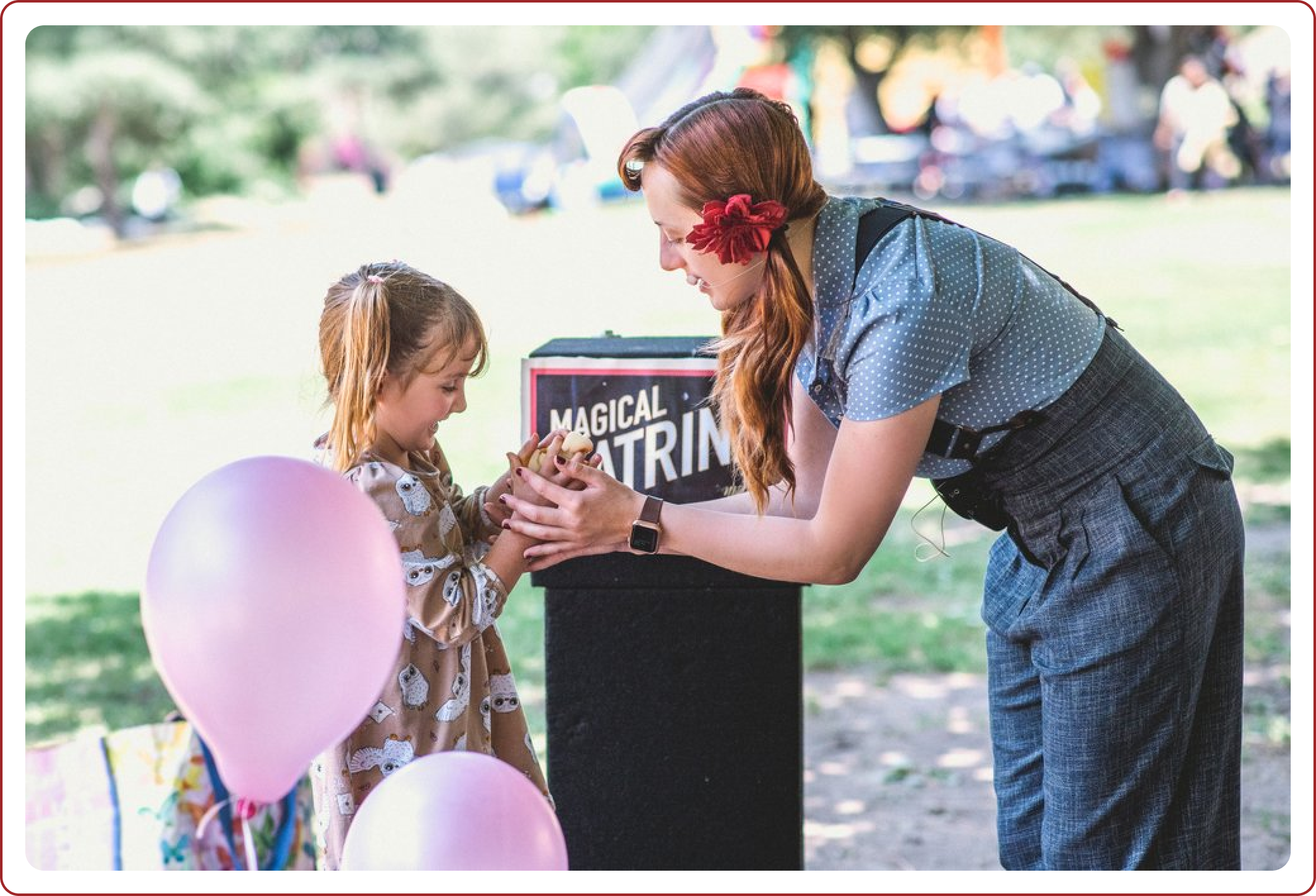
How do I book you, and what do you need to get started?

Reach out with your preferred date and time, the time zones involved, roughly how many people will join, and whether you're marking anything in particular. That's enough for me to check availability and send a quote. From there I'll tell you the one or two household objects to mention when you send the link, and we'll settle the timing around the furthest away person.

Something to Do Together, From Four Cities

Friend groups don't drift apart because anyone stopped caring, they drift because the practical business of being together stops being easy and nobody quite replaces it. A magician for Zoom party is a modest answer to that: an hour where something is genuinely happening, everyone reacts at once, the newer people are on equal footing, and the person who always organizes gets to be a guest for once.

If your group has been meaning to do something for months, this is an easy thing to actually do.

Reach out with your date and details, and let's give everyone a proper evening.

Katrina Kroetch
Magician for Zoom: Virtual Alumni Events and Reunions

Magician for Zoom: Virtual Alumni Events and Reunions

Alumni relations has a numbers problem that everyone in the field knows. You have tens of thousands of graduates on a database, a few hundred who engage regularly, and an enormous middle group who open the emails occasionally, feel warmly about the institution, and have never once attended anything.

Virtual events were supposed to solve that, and partly did, until it became clear that a webinar from a faculty member reaches roughly the same committed people who came to things anyway. I'm Magical Katrina, an award winning magician and mentalist, and I want to explain where a magician for Zoom genuinely helps an alumni program, which is more specific than making an event more fun.

Your Graduates Are Everywhere

Start with the structural advantage. Alumni are scattered across countries and continents, which makes physical events inherently exclusionary: a reunion on campus serves people who can travel, and chapter events serve cities with enough graduates to justify a room.

A magician for Zoom reaches everyone identically, wherever they are, at the same cost. That matters particularly for the graduates who live somewhere without a chapter, who are often the ones with the least connection to the institution and the most to gain from any. For an office trying to engage a global alumni body rather than the same domestic core, virtual programming that people genuinely want to attend is the only practical route.

Reunion Years Need Something for the Absent

Reunion programming concentrates on the people who come back, and rightly so. But a fiftieth or twenty fifth reunion has far more graduates who won't attend than who will, whether for cost, distance, health, or simply not knowing whether anyone they remember will be there.

A magician for Zoom gives you something for that group: a genuine event rather than a livestream of a dinner they're not at, which is the alumni equivalent of streaming an office party to remote staff and lands equally poorly. A session designed for the graduates who couldn't travel, rather than a window onto the one they missed, is received very differently and often reaches more people than the reunion itself.

Alumni Who Never Overlapped Have Nothing to Talk About

Here's the awkward reality of alumni events beyond reunion years. A gathering of graduates spanning thirty years contains people whose only shared reference is a set of buildings, and the conversation reliably becomes a comparison of how the campus has changed.

A magician for Zoom gives them something to react to together in the present rather than a shared past to excavate. That's more useful than it sounds, because the connection alumni offices actually want is between graduates rather than between graduates and nostalgia. Something happening now, that everyone experiences simultaneously, produces a different quality of interaction than another round of which halls of residence people lived in.

It Reaches the Never Engaged

The group every alumni office is trying to reach. Graduates who have never attended anything typically haven't because the offerings feel institutional: a lecture, a panel, an update on the strategic plan, a request.

A magician for Zoom doesn't read as institutional, which is precisely its value. It's a genuine reason to attend rather than an obligation to support, and it doesn't require anyone to feel they're being cultivated. For a first contact with a graduate who has ignored fifteen years of newsletters, an event they simply enjoyed is a considerably better start than one that asked them for something.

It Warms a Room Before a Giving Ask

Worth addressing directly, since alumni engagement and development are rarely separable. If your event includes a giving element, the mood at the point of the ask affects the response, exactly as it does at an in person gala.

A magician for Zoom placed before that portion means the ask lands into a room that has just laughed together rather than into silence and switched off cameras. It also holds attendance through the section where drop off usually happens, which is immediately before anyone mentions money. Place it early or mid program rather than at the end, since entertainment scheduled as a closing reward reaches only the people you'd already kept.

Chapter Events Without Critical Mass

A practical use worth considering. Alumni chapters in smaller cities struggle because thirty graduates in a region translates to eight at an event, which feels thin and discourages the organizer from trying again.

A magician for Zoom lets several chapters join one session, which turns eight people in three cities into a room of twenty four and shares the cost across regions. It also gives chapter volunteers something genuinely promotable rather than another wine evening, and it costs a fraction of what a physical gathering with catering would. For alumni offices supporting a network of small volunteer led chapters, that's a straightforwardly useful option.

It Works Across Time Zones and Generations

Two practical points. Alumni bodies span the world, so any event involves a scheduling compromise, and a shorter session that people join at an awkward hour is far more tolerable than a long one.

They also span decades, meaning a room containing graduates in their twenties and their eighties. A magician for Zoom works across that range in a way most programming doesn't, since astonishment doesn't depend on shared cultural references or technical confidence, and participation means holding an object rather than speaking up in front of strangers from other generations.

Why Book Magical Katrina

If you'd like a magician for Zoom for an alumni event, here's my case. I'm a member of the Magic Circle in London and the Academy of Magical Arts in Hollywood, I've earned multiple magic awards, and I've performed for organizations and companies including Formula 1, the Olympics, Porsche, Zapier, and the Ritz Carlton, with appearances on Penn & Teller: Fool Us. My virtual material is built for video and designed so everyone participates using ordinary household items, whatever their age or confidence with technology, and it works across time zones. I understand that an alumni event usually has an objective beyond entertainment, and I'm happy to fit around a program that includes one.

Frequently Asked Questions

Why not just run a faculty webinar?

Because those reach roughly the same committed graduates who attended things anyway. The enormous middle group of alumni who feel warmly about the institution but have never attended anything usually stay away because the offerings feel institutional. A magician for Zoom doesn't read that way, which is its value: a genuine reason to attend rather than an obligation to support, and a better first contact than something that asks for engagement.

What can we offer graduates who can't attend a reunion?

Something designed for them rather than a livestream of the dinner they're missing, which lands as poorly as streaming an office party to remote staff. A magician for Zoom gives the absent group a genuine event of their own, and since any reunion year has far more graduates who won't attend than who will, that session frequently reaches more people than the reunion itself.

Our alumni span thirty years and have nothing in common. Does that matter?

It's the usual difficulty, and it's why conversation at these events becomes a comparison of how campus has changed. A magician for Zoom gives graduates something to react to in the present rather than a shared past to excavate, which produces a different quality of interaction. The connection alumni offices want is between graduates rather than between graduates and nostalgia.

Can it work alongside a giving ask?

Yes, and placement matters. The mood at the point of an ask affects the response exactly as it does at an in person gala, so entertainment before that portion means it lands into a room that has just laughed together. It also holds attendance through the section where drop off usually happens, which is immediately before anyone mentions money. Place it early or mid program rather than at the end.

How does this help small chapters?

Chapters in smaller cities struggle because thirty graduates in a region means eight at an event, which feels thin and discourages volunteers from trying again. A magician for Zoom lets several chapters join one session, turning eight people in three cities into a room of twenty four, sharing the cost across regions, and giving chapter volunteers something genuinely promotable rather than another wine evening.

Will it work for a group spanning several generations?

Yes, and better than most programming. Alumni bodies contain graduates in their twenties and their eighties, and astonishment doesn't depend on shared cultural references or confidence with technology. Participation means holding an ordinary object rather than speaking up in front of strangers from other generations, so the quieter attendees take part on exactly the same terms as the confident ones.

How do I book you, and what do you need to get started?

Reach out with your preferred date, platform, expected attendance, the time zones involved, and an outline of your program, including whether there's a giving element. That's enough for me to check availability, suggest placement, and send a quote. If you're considering several chapters joining one session, mention that too, since it's usually more affordable than it looks.

Reach the Graduates You Never Hear From

Alumni programming tends to serve the people already engaged, because they're the ones who respond and give feedback. A magician for Zoom is one of the few formats that reaches further: graduates in countries without a chapter, those who couldn't travel to a reunion, alumni spanning generations who have nothing in common but a set of buildings, and the large quiet group who have never attended anything because nothing on offer felt like it was for them.

If you'd like an event people attend because they want to rather than because they should, I'd be glad to hear about it.

Reach out with your date and program, and let's reach further than usual.

Katrina Kroetch
Birthday Party Magician Las Vegas: Parties for Locals, Not Visitors

Birthday Party Magician Las Vegas: Parties for Locals, Not Visitors

Almost everything written about entertainment in Las Vegas assumes you flew in. Suites, cabanas, the Strip, a group of twelve who arrived on Friday. Which is fine, except that around two million people actually live here, and most of them are throwing birthday parties in Summerlin, Henderson, and the north west valley rather than in a hotel penthouse.

If you're a resident planning a party at home, that content isn't for you. I'm Magical Katrina, an award winning magician and mentalist, and I want to write the version that is: what a birthday party magician Las Vegas residents book actually involves, in the settings locals genuinely use.

Home Parties Are the Norm Here

Unlike dense cities where space is the constraint, Las Vegas residents mostly have houses with living rooms, dining rooms, and back yards, which makes hosting at home entirely practical.

That suits close up magic exactly. A birthday party magician Las Vegas performing at a house needs no stage, no sound system, no power, and no floor space beyond where guests are already standing, so there's nothing to clear, hire, or set up. It works in a living room, around a dining table, or moving between the kitchen and the patio, which is how house parties actually work rather than how they're diagrammed.

The Yard and the Heat

The practical local consideration nobody outside Vegas thinks about. For a good portion of the year, a back yard party means genuine heat, and from roughly June through September an afternoon outside is not comfortable for guests or performers.

Sensible timings help: evening rather than afternoon in summer, and afternoon is entirely fine from October through April, when the weather here is superb. A birthday party magician Las Vegas performing close up magic works indoors and out without adjustment, so a party that starts on the patio and retreats inside when it gets uncomfortable loses nothing. Worth mentioning your likely setup when booking so timing can be discussed sensibly.

Local Parties Have Wider Guest Lists

Something that distinguishes a resident's party from a visitor's. A destination birthday is a group of friends who flew in. A local party is frequently three generations: the birthday person, their friends, their parents, their children, a neighbor, and a cousin's family.

That range is difficult to entertain with any single thing. Good magic works across it, since young children respond to the visual surprise, older children engage with the puzzle, adults are astonished despite themselves, and grandparents often enjoy watching everyone else react. A birthday party magician Las Vegas at a family party gives a genuinely mixed room one shared experience rather than something that entertains one age band while the rest wait.

Kids' Parties Are a Different Booking

Worth separating clearly, since locals book both. A children's birthday party requires a performer genuinely experienced with children, which is a distinct skill from being good at magic, and the age matters enormously.

For three to five year olds, expect a shorter show, around thirty minutes, that's bright, visual, and immediate. For six to eight year olds, a fuller show of around forty five minutes works well. For nine and up, the material needs to be genuinely baffling rather than colorful, since children that age reject anything they consider babyish. When contacting a birthday party magician Las Vegas, be specific about ages rather than saying children, and expect a good performer to ask.

Adult Birthdays at Home Work Beautifully

For a fortieth, fiftieth, or sixtieth held at home, close up magic and mentalism suit an adult crowd in a way most party entertainment doesn't. A DJ in a living room is awkward, and a band is impossible, whereas magic performed at conversational distance is exactly right for a room of adults with drinks.

It also solves the specific problem of an adult house party: the energy plateaus once everyone has arrived and settled into conversation. A birthday party magician Las Vegas moving between groups refreshes it continuously, and gives the host the chance to enjoy their own party rather than working the room trying to keep it going.

Local Venues Beyond the Strip

If you're not hosting at home, residents have plenty of options that have nothing to do with tourism: community centers, park pavilions, restaurants with private rooms, clubhouses in master planned communities, and event spaces around the valley.

Most of these have no stage, limited AV, and layouts designed for something else, which rules out a lot of entertainment. A birthday party magician Las Vegas performing close up magic needs none of it, so it works in a clubhouse room, a restaurant's private dining space, or a park pavilion equally. It's one of the few options that adapts to whatever room you managed to book rather than requiring a particular kind of space.

Booking Is Easier Off Season

A genuine local advantage worth using. Demand here spikes around conventions, holidays, and major event weekends, when performers are booked by visiting groups and corporate clients paying premium rates.

A local party on an ordinary Saturday in February is a considerably easier booking than one during a convention week or in December. If your date is flexible, avoiding those peaks improves both availability and, often, what you pay. If it isn't, book earlier than you otherwise would, since a birthday party magician Las Vegas may have their weekend claimed by a corporate client months ahead.

A Note on "Local vs. Traveling In"

Worth knowing: performers who travel to Las Vegas often have availability when locally based ones don't, particularly during busy weeks, and travel is discussed openly and factored into the quote rather than being your problem to arrange. I'm based in the Los Angeles area and travel to Las Vegas regularly, including for residents' parties rather than only visitor events. Judge on skill and fit rather than location.

Why Book Magical Katrina

If you'd like a birthday party magician Las Vegas for a party at home, here's my case. I'm a member of the Magic Circle in London and the Academy of Magical Arts in Hollywood, I've earned multiple magic awards including a Family Entertainer of the Year honor, and I've appeared on Blippi as a performer and magic consultant, along with Penn & Teller: Fool Us and Masters of Illusion. I perform for every age from preschoolers to adults, so I can handle a genuinely mixed family party, I need very little space or setup, and I make the birthday person the star. I'm fully insured with a COI available if your venue asks.

Frequently Asked Questions

Will it work in my house?

Yes, and houses here suit it well. Close up magic needs no stage, sound system, power, or floor space beyond where guests already stand, so there's nothing to clear, hire, or set up. A birthday party magician Las Vegas works in a living room, around a dining table, or moving between the kitchen and patio, which is how house parties actually function rather than how they're planned on paper.

What about a backyard party in summer?

Timing matters more than anything else. From roughly June through September an afternoon outside isn't comfortable for guests or performers, so evening works better, while afternoons are excellent from October through April. Close up magic works indoors and out without adjustment, so a party that starts on the patio and moves inside when it gets uncomfortable loses nothing. Mention your setup when booking so timing can be discussed.

We'll have kids and grandparents. Does that work?

That range is exactly what most single activities struggle with, and it's where magic performs well. Young children respond to the visual surprise, older children engage with the puzzle, adults are astonished despite themselves, and grandparents often enjoy watching everyone else react. A birthday party magician Las Vegas gives a genuinely mixed family party one shared experience rather than entertaining one age band while the rest wait.

Is a kids' party a different booking?

Yes, and worth treating as one. A children's party needs a performer genuinely experienced with children, which is a distinct skill from being good at magic, and age matters enormously: three to five year olds need a shorter, brighter show of around thirty minutes, six to eight year olds handle forty five, and nine and up need genuinely baffling material rather than anything they'd consider babyish.

Does it suit an adult birthday at home?

Particularly well. A DJ in a living room is awkward and a band impossible, whereas close up magic and mentalism at conversational distance is exactly right for a room of adults with drinks. It also fixes the specific problem of an adult house party, where energy plateaus once everyone settles into conversation, and it lets the host enjoy their own party rather than working the room.

When is it easiest to book?

Off season and away from peaks. Demand here spikes around conventions, holidays, and major event weekends, when performers are booked by visiting groups and corporate clients. A local party on an ordinary Saturday in February is a much easier booking than one during a convention week or in December. If your date is fixed within a peak, book considerably earlier than you otherwise would.

How do I book you, and what do you need to get started?

Reach out with your party date, your area, whether it's at home or a venue, who the birthday is for and their age, the guest ages, and rough numbers. That's enough for me to check availability, recommend a format and length, and send a quote. From there we'll talk through timing and any special touches for the birthday person, and a deposit secures the date.

A Party at Home, Not on the Strip

Most Vegas entertainment content is written for people who flew in, which is unhelpful if you live here and are planning something in your own back yard. A birthday party magician Las Vegas works particularly well for a local party: it fits a house without any setup, it handles a family guest list spanning three generations, it works indoors and out as the weather dictates, and it adapts to whatever community room or restaurant you managed to book.

If you're planning a birthday here at home, I'd love to help make it a good one.

Reach out with your date and details, and let's make the day genuinely magical.

Katrina Kroetch
Magician for Birthday Party Las Vegas: Planning a Surprise Party

Magician for Birthday Party Las Vegas: Planning a Surprise Party

Surprise parties have a peculiar structure. Enormous effort goes into a single moment lasting about eight seconds, and then everybody stands in a room together for the next four hours with no further plan. The reveal is the part everyone remembers organising and the part nobody thinks past.

That gap is where surprise parties either soar or quietly deflate. I'm Magical Katrina, an award winning magician and mentalist, and I want to walk through how a magician for birthday party Las Vegas fits around a surprise specifically, because the timing considerations are genuinely different from an ordinary party.

What Happens After the Surprise

Here's the thing organizers discover in the moment. The reveal goes beautifully, everyone shouts, the guest of honor is genuinely astonished and possibly slightly emotional, there's a wave of hugging and photographs, and then, roughly twelve minutes later, the energy drops off a cliff.

Everyone has done the thing they came for. The guest of honor is doing a circuit of the room saying variations of "I had no idea" to twenty different people. It's lovely and it's also a peak with nowhere to go. A magician for birthday party Las Vegas placed after that stretch gives the evening a second act rather than leaving it to find its own way, which surprise parties are particularly bad at.

Don't Book the Performer for the Reveal

Worth being clear, since it's the instinct. Some hosts imagine the magician being part of the surprise itself, or performing immediately as the guest of honor walks in.

Both are mistakes. The reveal belongs to the guest of honor and the people who arranged it, and anything competing with that moment dilutes it. More practically, nobody is capable of watching magic in the ten minutes after being surprised, since they're processing, hugging, and finding out who travelled to be there. A magician for birthday party Las Vegas should arrive already, wait discreetly, and begin once the room has settled, which is usually thirty to forty five minutes after the reveal.

The Performer Needs to Arrive Before the Guest of Honor

An obvious point that trips people up. If the performer arrives after the surprise, they walk in during the emotional peak, which is awkward for everyone and slightly deflating.

So the performer should be there and set up, which for close up magic means simply present, before the guest of honor arrives. Tell them the real timings, including when the guest of honor is expected and how late that will realistically be, since surprise parties run on someone else's punctuality. A professional magician for birthday party Las Vegas will happily wait out of sight for half an hour, but only if they know that's the plan rather than discovering it on arrival.

Somewhere to Wait Matters

Related and practical. In a suite, a private dining room, or a house, the performer needs somewhere to be that isn't the main room while everyone waits in the dark for a car to pull up.

That might be a bedroom, a kitchen, a corridor, or outside. It doesn't need to be comfortable, it just needs to exist and be identified in advance rather than improvised while everyone is whispering. Mention it when you book a magician for birthday party Las Vegas, since it's the sort of detail that's trivial when planned and awkward when not. It also avoids the guest of honor arriving to find an unexplained stranger among the guests.

Keeping It Secret

Surprise parties leak, and entertainment is a common source. Someone mentions it in a group chat that includes the wrong person, or a payment appears on a shared account.

Practically: keep the booking conversation to one person if you can, be careful about which chat you discuss it in, and if you share finances with the guest of honor, consider how the deposit will appear. None of this is the performer's responsibility, but a magician for birthday party Las Vegas will follow your lead on discretion if you tell them the party is a surprise, including how they should respond if they encounter the guest of honor beforehand in a hotel lobby, which in Vegas happens more than you'd expect.

It Gives the Guest of Honor a Second Moment

Here's the part worth thinking about. A surprise party gives the person one enormous moment, at the start, which they experience while overwhelmed and barely take in.

A magician for birthday party Las Vegas can give them a second one later, when they've settled and can actually enjoy it: built around them specifically, with them holding something impossible while the people who travelled to be there watch and react. Several hosts have told me afterwards that this was the part the guest of honor described most vividly, precisely because they were present for it in a way they weren't for the reveal itself. Tell your performer who's being celebrated.

Vegas Adds Its Own Logistics

If you're doing this in Vegas, the setting helps and complicates in specific ways. A suite is ideal for a surprise, since you control the space entirely and there's no restaurant staff to coordinate with, and close up magic works there with no setup at all.

A restaurant is harder, since the surprise depends on the venue's cooperation and the timing of a table. Either way, a magician for birthday party Las Vegas performing close up magic needs no stage, sound, power, or setup, which matters a great deal when you're also managing a surprise, a group who've flown in, and a schedule dependent on someone unwittingly arriving on time.

A Note on "Local vs. Traveling In"

Worth knowing: the best magician for birthday party Las Vegas for your surprise needn't be Vegas based. Many performers travel in, with travel discussed openly, factored into the quote, and handled by the performer rather than by you. I'm based in the Los Angeles area and travel to Las Vegas regularly. Judge on skill and fit rather than location, and share your dates and where you're staying when you reach out.

Why Book Magical Katrina

If you'd like a magician for birthday party Las Vegas for a surprise, here's my case. I'm a member of the Magic Circle in London and the Academy of Magical Arts in Hollywood, I've earned multiple magic awards, and I've performed for clients including Formula 1, the Olympics, Porsche, Prada, and the Ritz Carlton, with appearances on Penn & Teller: Fool Us and Masters of Illusion. I'm used to working around a reveal, waiting discreetly, and starting when the room is genuinely ready rather than when the schedule says. I need no stage, power, or setup, I'll follow your lead on discretion, and I love building a second moment around the person being celebrated.

Frequently Asked Questions

Should the magician be part of the surprise itself?

No. The reveal belongs to the guest of honor and the people who arranged it, and anything competing with that moment dilutes it. Practically, nobody can watch magic in the ten minutes after being surprised, since they're processing, hugging, and finding out who travelled. A magician for birthday party Las Vegas should be there already, wait discreetly, and begin once the room settles, usually thirty to forty five minutes later.

When exactly should the performance start?

After the reveal has fully landed and the initial circuit of hugs and photographs is done, which is generally thirty to forty five minutes in. That's also roughly when surprise parties lose momentum, since everyone has done the thing they came for and the guest of honor is repeating "I had no idea" around the room. Placing the magic there gives the evening a genuine second act.

When should the performer arrive?

Before the guest of honor, always. If they arrive afterwards they walk in during the emotional peak, which is awkward and slightly deflating. Give them the real timings, including how late the guest of honor will realistically be, since surprise parties run on someone else's punctuality. A professional will happily wait out of sight for half an hour, provided they know that's the plan rather than discovering it on arrival.

Where does the performer wait?

Somewhere that isn't the main room: a bedroom, a kitchen, a corridor, or outside. It needn't be comfortable, it just needs to exist and be agreed in advance rather than improvised while everyone is whispering in the dark. Mention it when booking a magician for birthday party Las Vegas, since it also avoids the guest of honor arriving to find an unexplained stranger standing among the guests.

How do we stop it leaking?

Keep the booking conversation to one person where possible, be careful which group chat you discuss it in, and if you share finances with the guest of honor, think about how the deposit will appear. Tell your performer it's a surprise so they follow your lead on discretion, including how to respond if they run into the guest of honor beforehand in a hotel lobby, which in Vegas happens more than you'd expect.

Can the magic feature the person being celebrated?

Yes, and it's particularly valuable at a surprise party. The reveal gives them one enormous moment they experience while overwhelmed and barely take in, whereas a moment built around them later, once they've settled, is something they're genuinely present for. Hosts frequently tell me afterwards that this was the part the guest of honor described most vividly. Tell your performer who's celebrating.

How do I book you, and what do you need to get started?

Reach out with your date, where you're holding it, rough guest count, who's being celebrated, and the fact that it's a surprise. That's enough for me to check availability and send a quote. From there we'll work out arrival timing, where I'll wait, and when to start relative to the reveal, and a deposit secures the date. Vegas weekends book early, so sooner is better.

Plan the Hour After the Shouting

Surprise parties concentrate everything into one moment and leave the rest of the evening to look after itself, which is why so many of them peak in the first twenty minutes. A magician for birthday party Las Vegas solves the part nobody plans: a second act once the room has settled, a moment the guest of honour is actually present for, and something for a group of people who've done the surprising and now have four hours together.

If you're organising something for someone worth the effort, I'd love to help with the part after the shouting.

Reach out with your date and details, and let's plan the timing properly.

Katrina Kroetch
Activities for Women's Empowerment in Community Groups and Women's Networks

Activities for Women's Empowerment in Community Groups and Women's Networks

Running a women's network is a particular kind of unpaid work. You organize around a job, the same fifteen people come to everything, the mailing list has four hundred names on it, and every few months someone asks whether the group is really achieving anything. Most groups that fold don't fail dramatically, they simply run out of the energy required to keep organizing.

That's a different problem from what a company or a conference faces. I'm Magical Katrina, an award winning magician and mentalist who speaks at women's events, and I want to offer activities for women's empowerment that suit a volunteer run group trying to sustain itself as much as to program well.

Sustainability Matters More Than Ambition

Start here, because it's the thing that determines whether a network still exists in three years. An ambitious program that exhausts the two people organizing it is worse than a modest one that runs indefinitely.

So the most valuable activities for women's empowerment for a network are usually the repeatable ones: a format you can run monthly without reinventing it, that doesn't require a venue negotiation each time, and that other members can take over. Grand annual events have their place, but a group survives on the ordinary rhythm between them. When you're choosing what to program, ask honestly whether you could still be doing it in a year.

Mentoring Circles Beat Mentoring Schemes

Formal one to one matching schemes are the most commonly attempted and most commonly abandoned of all activities for women's empowerment, because matching is laborious, pairs fizzle, and administering it falls to whoever set it up.

Circles work considerably better. Six to eight women meeting regularly, ideally at mixed career stages, with a rotating focus on one member's actual situation each time, produces most of the value of mentoring with a fraction of the administration. It's also self sustaining once established, since the group runs itself. For a network with limited organizer capacity, this is probably the highest return structure available.

Use the Expertise Already in the Room

Networks routinely look outward for speakers when the most useful knowledge is sitting in the membership. Your members include people who negotiate contracts, run teams, hire, present, raise money, and manage difficult stakeholders.

Among activities for women's empowerment, member led skills sessions cost nothing, strengthen the person delivering as much as those attending, and build the reciprocity that keeps a group alive. Ask directly rather than issuing a general call, since most people won't volunteer but will say yes when asked specifically. It also solves the perennial problem of finding speakers, which is what quietly consumes most organizers' time.

Design for the People Who Aren't Coming

The recurring frustration of any network: the same committed group attends everything while hundreds on the list never engage. It's easy to program for the people in the room, since they're the ones giving feedback.

But the members who don't come are usually the ones with the least time, which frequently means those with caring responsibilities, demanding jobs, or long commutes. Among activities for women's empowerment, offering some things that fit those lives, shorter sessions, lunchtime rather than evening, online options, or something recorded, reaches a different group entirely. It won't convert everyone, but it changes who your network is actually for.

Program Something Enjoyable

A pattern worth avoiding is the network that only ever runs earnest sessions. Panels on barriers, discussions of structural inequity, and workshops on resilience are valuable and, cumulatively, quite heavy.

At least one genuinely enjoyable event a year does real work: it reaches members who wouldn't attend a panel, it gives your committee something easy to promote, and it reminds people that belonging to this group is a pleasure rather than an obligation. Among activities for women's empowerment, the social and celebratory ones are frequently what people cite when asked why they stayed in a network, even though they're rarely what the group describes as its purpose.

Collaborate With Other Groups

The cheapest way to solve both attendance and organizer fatigue. Another women's network, a professional association, a local business group, or a university society all have their own members and their own committees.

A jointly run event means shared work, shared costs, and two mailing lists, and it usually produces a more ambitious program than either group could manage alone. Among activities for women's empowerment, collaboration returns more than almost anything else relative to effort, and it also introduces your members to a wider circle, which is the thing they joined for in the first place.

Include Men Where It Helps

Worth considering deliberately rather than by default. Some sessions genuinely benefit from being women only, particularly candid discussions where people need to speak freely.

Others lose considerably by excluding the people whose behavior and decisions shape the environment being discussed. A session on sponsorship attended entirely by women who need sponsors and not by the people positioned to provide it achieves less than it could. Among activities for women's empowerment, it's worth deciding session by session rather than adopting a blanket policy, and being explicit either way so members know what they're attending.

Measure Something Honest

Finally, since groups get asked whether they're achieving anything. Attendance numbers are a weak measure, and satisfaction surveys are completed by the people who came.

More useful questions: how many members have made a connection through the group that they'd describe as valuable, how many first time attendees returned, and whether anyone can point to something concrete that happened because the network exists. Those are harder to answer and considerably more informative. Among activities for women's empowerment, the ones producing answers to those questions are the ones worth repeating.

Where My Work Fits

Briefly. I perform magic and mentalism and speak about building a career in a field, magic, that has been overwhelmingly male, either as a performance, a talk woven with magic, or both.

For a network, it tends to work as the enjoyable event that still carries the theme: the one that draws members who don't come to panels, gives your committee something genuinely promotable, and demonstrates the point rather than restating it. It needs no stage or AV, which suits borrowed rooms, and works for a small chapter meeting or a larger joint event. If your group is planning something, I'm glad to talk it through.

Frequently Asked Questions

How do we keep a network going long term?

Prioritize sustainability over ambition, since most groups that fold simply run out of organizer energy. Favor repeatable formats you could run monthly without reinventing them, that don't require a venue negotiation each time, and that other members can take over. Grand annual events have their place, but a group survives on the ordinary rhythm between them. Ask whether you could still be running it in a year.

Do mentoring schemes work?

Formal one to one matching is the most commonly attempted and most commonly abandoned option, because matching is laborious, pairs fizzle, and administration falls to whoever set it up. Circles work better: six to eight women at mixed career stages meeting regularly, with a rotating focus on one member's actual situation. That delivers most of the value with a fraction of the work, and becomes self sustaining once established.

How do we find speakers without spending money?

Look inward first. Your members negotiate contracts, run teams, hire, present, and manage difficult stakeholders, and member led skills sessions cost nothing while strengthening the person delivering as much as those attending. Ask people directly rather than issuing a general call, since most won't volunteer but will say yes when asked specifically. It also solves the speaker hunt that quietly consumes most organizers' time.

How do we reach members who never attend?

Recognize that they're usually the ones with least time, often those with caring responsibilities, demanding jobs, or long commutes, and program for those lives specifically. Shorter sessions, lunchtime rather than evening, online options, or recorded content reach a different group entirely. Among activities for women's empowerment, designing something for the people not in the room changes who your network is actually for.

Should everything be serious?

No, and networks that only run earnest sessions become heavy going. At least one genuinely enjoyable event a year reaches members who wouldn't attend a panel, gives your committee something easy to promote, and reminds people that belonging is a pleasure rather than an obligation. Social and celebratory events are frequently what members cite when asked why they stayed, even if they're not the stated purpose.

Should men be included?

Decide session by session rather than adopting a blanket policy. Some sessions genuinely benefit from being women only, particularly candid discussions where people need to speak freely. Others lose by excluding the people whose decisions shape what's being discussed, since a session on sponsorship attended only by those who need sponsors achieves less than it could. Be explicit either way so members know what they're attending.

Do you work with community groups and networks?

Yes. I perform magic and mentalism and speak about building a career in a field that has been overwhelmingly male, as a performance, a talk woven with magic, or both. It works well as the enjoyable event that still carries the theme, needs no stage or AV, and scales from a small chapter meeting to a larger joint event. Reach out with your date and expected numbers.

Build Something That Lasts

The most useful activities for women's empowerment for a community group or network aren't the most impressive ones, they're the ones you can sustain: repeatable formats, mentoring circles that run themselves, sessions led by members rather than sourced externally, collaboration with other groups, and at least one thing a year that's simply enjoyable. A network that still exists in five years will have done more good than an ambitious one that burned out its committee in eighteen months.

If an enjoyable event that still says something would help your group, I'd be glad to hear about it.

Reach out with your date and numbers, and let's put on something your members turn up for.

Katrina Kroetch
Strolling Magician Los Angeles for Quinceañeras and Sweet Sixteens

Strolling Magician Los Angeles for Quinceañeras and Sweet Sixteens

A quinceañera is not a birthday party with a bigger cake. It has a structure closer to a wedding: a ceremony with real meaning, a court, a formal entrance, choreographed dances, a photographer working through a list, relatives who have travelled, and a fifteen year old at the center of the largest occasion of her life so far.

Entertaining that room is genuinely difficult, because it contains two audiences with almost nothing in common. I'm Magical Katrina, an award winning magician and mentalist based right here in Los Angeles, and I want to explain where a strolling magician Los Angeles fits into a quinceañera or sweet sixteen, and just as importantly, where it doesn't.

The Traditions Come First

Let me say this before anything else, because it matters more than any argument for booking. The ceremonial elements of a quinceañera, the mass, the presentation, the father daughter dance, the changing of the shoes, the toast, are the point of the day rather than decoration around it.

Entertainment belongs in the social portions and nowhere near those moments. A strolling magician Los Angeles working a celebration properly performs during the reception, the mingling, and the gaps, and is entirely absent during anything ceremonial. If your celebration has specific traditions with timings that matter, and it will, tell your performer, and expect a professional to plan around your schedule rather than asking you to accommodate them.

Two Audiences, One Room

Here's the practical challenge. There are the quinceañera's friends, fifteen and sixteen year olds who care intensely about how the evening reads to each other. And there are the adults: parents, grandparents, tías and tíos, padrinos, family friends, many of whom have travelled and some of whom rarely see each other.

A DJ serves the first group completely and the second barely at all, and once the music starts the adults are conversing over it. A strolling magician Los Angeles covers the half of the room the DJ doesn't reach, and the earlier stretch before dancing begins, so both audiences are genuinely looked after rather than one waiting through the other's portion of the night.

Teenagers Have to Be Taken Seriously

This is where entertainment most often misjudges the room, and it shows within seconds. Fifteen and sixteen year olds will visibly reject anything pitched as children's entertainment, and at a celebration where the guest of honor cares deeply about her friends' impressions, that's worse than having booked nothing.

What works is treating them as the sharp audience they are: magic that's genuinely baffling rather than colorful, delivered conversationally rather than performed at them. Mentalism lands particularly well at this age, since being told what you were thinking is enormously satisfying to someone who considers themselves hard to fool. A strolling magician Los Angeles experienced with this age group knows the difference, and so will every teenager in the room.

The Adults Are Delighted Too

Meanwhile the adult guests, frequently the majority, are seated at tables in a room where they may know only their own side of the family, waiting through the formal portions.

Close up magic works on them simultaneously and differently. Adults tend to be more genuinely astonished than the teenagers, having had considerably longer to become certain that impossible things don't happen. A strolling magician Los Angeles moving between tables gives the adult half of the room something to enjoy that isn't sitting politely, and gives relatives who see each other rarely something to react to together rather than another update on everyone's year.

The Reception Is the Slot

If there's a mass or ceremony, there's usually a reception or cocktail stretch afterwards while the family and the court are being photographed, which takes considerably longer than anyone plans for.

That's where a strolling magician Los Angeles does the most work. Guests are standing or seated with drinks, relatives from different sides may not have met, teenagers are hovering at the edge of an adult room, and the family isn't there. Magic moving group to group through that stretch warms the whole room, so when the formal entrance happens the energy already exists rather than needing to be built from a standing start.

It Doesn't Compete With Anything

Worth reassuring families about, since the day is already full. Strolling magic requires no stage, no microphone, no sound, no power, and no slot in the running order.

The celebration already includes a ceremony, photographs, a formal entrance, dances, a meal, toasts, cake, and the DJ's program, with something always running late. A strolling magician Los Angeles works inside the gaps that already exist, so nothing is displaced and nothing extra has to be coordinated. It complements the DJ rather than competing for the room, which is the arrangement that works for everyone.

LA Venues Suit It

Celebrations here happen in banquet halls, hotel ballrooms, church halls, event spaces, backyards with tents, and private venues across the county, many with no stage, awkward layouts, or partly outdoor space.

Close up magic needs none of it, so it works in a banquet hall in the Valley, an event space downtown, or a backyard in East LA equally, and moves indoors without adjustment when an evening cools. For a family already managing catering, a photographer, a DJ, décor, and a court, entertainment with no requirements at all is genuinely one less thing.

The Guest of Honor, Carefully

Families often ask about featuring the quinceañera, and it's worth thinking about rather than assuming. She is already carrying an enormous amount of attention, and some young women welcome more while others have had quite enough by the reception.

Done well, a moment built around her is participatory and fun rather than another occasion where she is being looked at: she holds the object, she makes the choice, something impossible happens to her while her friends react. That feels different from being the subject of speeches. But ask her, or judge honestly, and tell your strolling magician Los Angeles either way.

Based Right Here in Los Angeles

Worth knowing: unlike performers who travel in, I'm based right here in the LA area and serve all of Southern California. That means no travel costs, familiarity with the venues families use, and straightforward scheduling. Whether your celebration is in the Valley, East LA, Long Beach, the Inland Empire, or further out, booking is simple. Just share your date and venue when you reach out.

Why Book Magical Katrina

If you'd like a strolling magician Los Angeles for your daughter's celebration, here's my case. I'm based here in the LA area, I'm a member of the Magic Circle in London and the Academy of Magical Arts in Hollywood, I've earned multiple magic awards including a Family Entertainer of the Year honor, and I've appeared on Penn & Teller: Fool Us and Masters of Illusion. I perform for every age from young children to adults, so I engage a mixed room rather than pitching at one group, I know how to treat teenagers as the capable audience they are, and I work around your traditions and schedule rather than asking you to work around me. I need no stage or setup, and I'm fully insured with a COI available for your venue.

Frequently Asked Questions

Will it interfere with our traditions?

It shouldn't, and a professional will plan around them. The ceremonial elements, the mass, the presentation, the father daughter dance, the changing of the shoes, the toast, are the point of the day rather than decoration, and entertainment belongs in the social portions and nowhere near them. Tell your performer your specific traditions and timings, and expect them to work around your schedule rather than the reverse.

Why hire a magician when we have a DJ?

Because the room holds two audiences with almost nothing in common: teenagers focused on the dance floor and adult relatives conversing at tables, often over the music. A DJ serves the first completely and the second barely. A strolling magician Los Angeles covers the half the DJ doesn't reach and the earlier stretch before dancing begins, and it needs no slot in an already full running order.

Will teenagers actually enjoy it?

Yes, if the performer understands them. Fifteen and sixteen year olds visibly reject anything pitched as children's entertainment, which at a celebration where the guest of honor cares about her friends' impressions is worse than booking nothing. What works is genuinely baffling magic delivered conversationally rather than performed at them, and mentalism lands especially well with an age group that considers itself hard to fool.

When during the celebration should it happen?

The reception or cocktail stretch after the ceremony, while the family and court are being photographed, which always runs longer than planned. Guests are waiting, relatives from different sides may not have met, and teenagers are hovering at the edge of an adult room. A strolling magician Los Angeles working that stretch warms the room, so the energy already exists when the formal entrance happens.

Does it work in a banquet hall or backyard?

Both, and everything in between. Celebrations here happen in banquet halls, hotel ballrooms, church halls, event spaces, and backyards with tents, many with no stage, awkward layouts, or partly outdoor space. Close up magic needs no stage, sound, power, or setup, so it works anywhere and moves indoors without adjustment when an evening cools, which matters for a family already coordinating a great deal.

Can it feature our daughter?

Yes, though it's worth considering rather than assuming. She's already carrying an enormous amount of attention, and some young women welcome more while others have had enough by the reception. Done well, a moment built around her is participatory and fun rather than another occasion where she's looked at, since she holds the object and something impossible happens to her. Ask her, and tell your performer either way.

How do I book you, and what do you need to get started?

Reach out with your date, venue or location, rough guest count, the split between teenagers and adults, and an outline of your schedule including your traditions. That's enough for me to check availability and send a quote. From there we'll settle timing, usually the reception, and whether you'd like a moment built around the guest of honor. Popular dates book early, so sooner helps.

Look After Everyone in the Room

A quinceañera or sweet sixteen asks you to entertain teenagers and grandparents in the same room, on a day already containing a ceremony, photographs, formal dances, a meal, toasts, and a DJ. A strolling magician Los Angeles handles exactly that: engaging teenagers on their own terms, genuinely astonishing the adults, warming the reception while photographs run long, staying entirely clear of the traditions that matter, and asking nothing of your venue.

If you're planning a celebration and want every guest looked after, I'd love to hear about it, and as a local, I'm right here.

Reach out with your date and details, and let's make the day genuinely memorable.

Katrina Kroetch
Company Christmas Party Ideas for Hybrid Teams

Company Christmas Party Ideas for Hybrid Teams

Fully remote companies have this figured out, more or less: everyone is in the same situation, so you plan a virtual event and nobody is disadvantaged. Fully office based companies have it easier still. Hybrid organizations have the genuinely difficult version, where whatever you plan will suit one group better than the other, and the group it suits less will notice.

I'm Magical Katrina, an award winning magician and mentalist, and I want to work through ideas for company Christmas party planning when part of your workforce comes into an office and part doesn't, because most advice quietly assumes you're one or the other.

The Thing That Doesn't Work

Let's start with the default, because it's both the most common approach and the least successful. An in person party is arranged, and remote colleagues are invited to join via a video link.

This fails reliably. Remote attendees get the experience of watching other people enjoy a party, with poor audio, no ability to join a conversation, and a growing awareness that they're an afterthought. Most drop off within twenty minutes and quietly conclude that the company thinks of them as peripheral. Among ideas for company Christmas party planning for hybrid teams, this is the one to rule out first, because it's worse than not inviting them at all.

Model One: Two Genuine Events

The most straightforward answer. Run an in person party for those who can attend, and a separate virtual event designed properly for remote colleagues, each planned on its own terms rather than one being a diluted version of the other.

The important word is designed. A virtual event that's a video call with a quiz is not equivalent to an evening with dinner and drinks, and remote staff will make that comparison. A properly built virtual celebration with genuine entertainment is. Among ideas for company Christmas party planning, this model is the most workable for most hybrid organizations, provided both events receive real thought rather than one receiving the budget and the other receiving a calendar invitation.

Model Two: Virtual First, Then Optional Gathering

An approach some hybrid companies prefer. Make the company wide celebration virtual, so everyone participates identically, then let local groups organize their own in person gatherings afterwards or separately.

This has an appealing logic: the official event is genuinely equal, and the office based social happens without being framed as the main occasion. It also works well for organizations with several offices, where an in person party at headquarters privileges one location. Among ideas for company Christmas party planning, this model puts fairness first, though it does mean your central event is virtual, which some leadership teams resist.

Model Three: Regional Gatherings

If your remote staff cluster geographically, several smaller in person events can work better than one large one plus a video link.

Three gatherings of twenty in different cities gives everybody an actual evening out, and the total cost is often comparable to one large party plus travel for the people who'd otherwise be flown in. It loses the whole company together element, which some organizations value, but it gains genuine participation for everyone. Among ideas for company Christmas party planning for a dispersed workforce, this is worth modelling on a spreadsheet before dismissing.

Keep the Spend Per Head Honest

Here's the test that matters, and the one remote employees apply instinctively. If the office party costs a substantial amount per attendee and the remote celebration is an hour long call, the disparity is visible regardless of how it's framed.

Among ideas for company Christmas party planning for hybrid teams, aiming for genuine parity of spend per person is the clearest way to avoid resentment. That might mean a delivered hamper or a meal allowance alongside a virtual event, or a properly booked performer rather than a quiz someone in HR is running. It's not about matching the format, which is impossible, it's about matching the evident level of investment.

Choose Formats That Work Equally

If you do want one shared moment across both groups, choose an element that works identically in both settings rather than one that translates poorly.

Speeches work reasonably well both ways. A band does not. Anything depending on physical proximity, food, or a room's atmosphere favors the in person group heavily. Entertainment designed for video, where everyone participates from wherever they are with ordinary objects to hand, is one of the few things that genuinely works the same for someone at home and someone in an office. Among ideas for company Christmas party elements, that equality is worth prioritizing when you're choosing what the shared portion contains.

Ask Rather Than Assume

Worth stating, because organizations frequently get this wrong in good faith. Remote employees do not all want the same thing: some would genuinely rather have a hamper and an early finish than a video call, others feel excluded when there's nothing, and preferences vary by how long someone has been remote and whether they've ever met their colleagues.

A short question in a survey resolves it, and it also demonstrates that the question was considered, which is itself worth something. Among ideas for company Christmas party planning, asking your remote staff what would actually feel good to them is cheaper and more effective than guessing well.

Watch the Timing

A small practical point that causes disproportionate irritation. In person parties usually happen in the evening, which is fine for people who were in the office anyway and less fine for a remote employee expected to log on at seven for a company social from their kitchen.

If there's a virtual element, schedule it during working hours rather than expecting remote staff to give up an evening for something office based colleagues are attending as an outing. Among ideas for company Christmas party planning, treating remote colleagues' evenings as freely available is a small assumption that lands badly, and correcting it costs nothing.

Where a Virtual Performer Fits

Since it's my area, briefly. A virtual magic show works for a hybrid organization because it's one of the few things that genuinely doesn't disadvantage the remote half: everyone participates with ordinary household objects, nobody needs to be in a room, and the experience is identical whether you're at a kitchen table or an office desk.

It also works as the shared portion of a split celebration, with both groups joining the same session before the in person party continues separately, which gives you a genuine whole company moment without pretending a video link to a party is participation.

Frequently Asked Questions

Can't we just stream the office party to remote staff?

This is the approach to rule out first, because it fails reliably. Remote attendees get the experience of watching others enjoy a party, with poor audio, no way into a conversation, and a growing sense of being an afterthought. Most drop off within twenty minutes. Among ideas for company Christmas party planning for hybrid teams, it's worse than not inviting them, because it makes the exclusion explicit.

What's the most workable model?

Two genuine events for most organizations: an in person party for those who can attend, and a separate virtual celebration designed properly on its own terms. The important word is designed, since a video call with a quiz isn't equivalent to an evening with dinner and drinks, and remote staff will make that comparison. Both events need real thought rather than one getting the budget and the other a calendar invitation.

How do we make it feel fair?

Aim for genuine parity of spend per person, which is the test remote employees apply instinctively. If the office party costs a substantial amount per head and the remote celebration is an hour long call, the disparity is visible however it's framed. That might mean a delivered hamper or meal allowance alongside the virtual event, or a properly booked performer rather than a quiz someone is running internally.

What works equally well for both groups?

Very little, which is why choosing carefully matters. Speeches translate reasonably. A band doesn't, and anything relying on physical proximity, food, or a room's atmosphere heavily favors the in person group. Entertainment designed for video, where everyone participates from wherever they are using ordinary objects, is one of the few things that genuinely works the same at a kitchen table and an office desk.

Should we ask our remote staff what they want?

Yes, and organizations frequently get this wrong in good faith by assuming. Preferences genuinely vary: some remote employees would rather have a hamper and an early finish than a video call, others feel excluded when nothing is offered, and views differ depending on how long someone has been remote. A short survey question resolves it and demonstrates the question was considered, which is worth something itself.

When should the virtual element happen?

During working hours, rather than expecting remote colleagues to give up an evening for something office based staff are attending as an outing. It's a small assumption that lands badly, since an evening video call from your own kitchen is not equivalent to a night out. Correcting it costs nothing and removes a common source of disproportionate irritation.

How do I book you for a hybrid celebration?

Reach out with your date, platform, headcount across both groups, and how you're structuring the celebration. That's enough for me to check availability and send a quote. A virtual session works as the shared portion of a split event, with both groups joining before the in person party continues separately, which gives you a genuine whole company moment. December fills up early, so enquiring ahead helps.

Plan for Both Halves Deliberately

Hybrid organizations get the hardest version of this problem, and the common failure is planning an in person party and bolting on a video link, which reliably makes remote colleagues feel peripheral. The workable ideas for company Christmas party planning here involve deliberate choices: two properly designed events, or a virtual central celebration, or regional gatherings, with honest parity of spend and a shared element that genuinely works for both groups.

If you'd like the shared portion to be something that doesn't disadvantage anyone, I'd be glad to help.

Reach out with your date and structure, and let's make both halves work.

Katrina Kroetch
Strolling Magician Las Vegas for Bachelorette and Bachelor Parties

Strolling Magician Las Vegas for Bachelorette and Bachelor Parties

A Vegas bachelorette or bachelor weekend has a rhythm that anyone who has organized one knows intimately. There's the arrival, the suite, the getting ready stretch that always runs longer than planned, dinner somewhere expensive, and then whatever the night becomes. The organizer, usually one heroic friend, has a spreadsheet and a group chat that has stopped reading it.

The gaps in that rhythm are where these weekends either sparkle or drift. I'm Magical Katrina, an award winning magician and mentalist, and I want to explain where a strolling magician Las Vegas fits into a party weekend, and why the suite before dinner is usually the answer.

The Suite Stretch Is the Opportunity

Every one of these weekends has it: a couple of hours in the suite before dinner, with drinks, people getting ready in shifts, music on, and a group who are excited but not yet properly going.

That stretch is genuinely enjoyable and it's also unstructured, which means it can drift. A strolling magician Las Vegas working that window turns it into something rather than a holding pattern before the evening starts. It's also the most intimate part of the weekend, which suits close up magic exactly, since the whole group is in one room and everyone sees everything from a few feet away.

The Group Doesn't All Know Each Other

Here's the thing organizers underestimate. A bachelorette or bachelor party assembles the bride or groom's different worlds: school friends, university friends, work friends, a sister, a future sister in law, a cousin, and someone's plus one who nobody has met.

By Sunday everyone is friendly. By Friday evening they're being polite and mostly talking to whoever they arrived with. A strolling magician Las Vegas collapses that considerably, because shared astonishment gives people who've just met something genuine to react to together within the first hour. For a weekend where the whole point is the bride or groom seeing their people get on, accelerating that on the first evening changes everything that follows.

It Makes the Bride or Groom the Centre

For a milestone that's entirely about one person, this is where magic does something no other entertainment does. The performance can be built around them specifically.

Rather than a general set, the bride or groom becomes the center of the most astonishing moment of the evening, holding something impossible in their own hands while everyone who flew across the country to be there watches and reacts at once. That's a genuinely different experience from a sash and a novelty crown, and it tends to be the thing they mention when describing the weekend afterwards. Tell your performer who's being celebrated when you book.

Vegas Makes Impressing People Harder

Worth acknowledging. Your group is in a city that supplies enormous entertainment, and by Saturday they will have seen a show, eaten somewhere impressive, and been to a club with production values.

A strolling magician Las Vegas isn't competing on that scale, and doesn't need to. Something impossible happening six inches from someone's face, in your suite, with no stage and nothing between them and it, offers intimacy rather than spectacle. It's also the only part of the weekend that happens for your group specifically rather than being something you bought tickets to. In a city of mass produced experiences, that particularity is the scarce thing.

It Suits a Suite Perfectly

Practically decisive. A suite has seating, a bar, a view, and no stage, no sound system available to you, and no space to create either. Anything requiring setup is impossible.

Close up magic needs nothing at all: no stage, no power, no sound, no setup time, and no floor space beyond where people are already standing. A strolling magician Las Vegas simply arrives and works the room. There's nothing to arrange with the hotel, nothing to move, and nothing for the organizer to coordinate beyond a time, which matters when that person is already managing dinner reservations, table bookings, and a group chat.

Dinner Works Too

If the suite doesn't suit your timings, the hosted dinner is the other strong placement. Long tables fragment into separate conversations, and the stretches between courses drag, particularly at a restaurant where the service is leisurely.

A strolling magician Las Vegas performing table side between courses gives the whole group a shared focus and fills those gaps naturally. Because close up magic needs nothing but the table, it works in a private dining room without any adjustment to the restaurant's service. It also means the bride or groom gets their moment somewhere everyone is together and paying attention, rather than in a suite where half the group is still getting ready.

It Doesn't Take Over the Weekend

Worth reassuring the organizer about. Booking a performer sounds like adding an item to an itinerary that's already ambitious, and nobody wants another thing everyone has to be somewhere for.

It isn't that. A strolling magician Las Vegas typically works for around an hour, inside something already happening, and requires no one to gather, sit down, or stop what they're doing. It slots into the suite stretch or the dinner you've already booked rather than competing with the show, the club, or the pool day. For a weekend built on a schedule that will change at least twice, that flexibility is genuinely useful.

A Note on "Local vs. Traveling In"

Worth knowing: the best strolling magician Las Vegas for your weekend needn't be Vegas based. Many performers travel in, with travel discussed openly, factored into the quote, and handled by the performer rather than by you. I'm based in the Los Angeles area and travel to Las Vegas regularly. Peak weekends book out early here, so widening the search geographically often helps if your dates are fixed.

Why Book Magical Katrina

If you'd like a strolling magician Las Vegas for a party weekend, here's my case. I'm a member of the Magic Circle in London and the Academy of Magical Arts in Hollywood, I've earned multiple magic awards, and I've performed for clients including Formula 1, the Olympics, Porsche, Prada, and the Ritz Carlton, with appearances on Penn & Teller: Fool Us and Masters of Illusion. I blend close up magic with mentalism, which suits an adult group who've seen a lot, and I love building a moment around the person being celebrated. I need no stage, power, or setup, so a suite or a private dining room works equally, and I'm fully insured.

Frequently Asked Questions

Where does it fit in the weekend?

Usually the suite before dinner, which every one of these weekends has: a couple of hours with drinks while people get ready in shifts. It's enjoyable but unstructured, so it can drift, and a strolling magician Las Vegas turns it into something. The hosted dinner is the other strong placement, performing table side between courses when a long table would otherwise fragment into separate conversations.

Will it work in a hotel suite?

Particularly well, and it's the most common setting. A suite has seating, a bar, and no stage, no sound system available to you, and no space to create either, which rules out most entertainment. Close up magic needs nothing at all and simply works the room, so there's nothing to arrange with the hotel and nothing for the organizer to coordinate beyond agreeing a time.

Can it focus on the bride or groom?

Yes, and it's usually why groups book it. Rather than a general set, they become the center of the evening's most astonishing moment, holding something impossible while everyone who flew in watches and reacts at once. It's a genuinely different experience from a sash and a novelty crown, and it tends to be what they mention afterwards. Just tell your performer who's being celebrated.

Our group doesn't all know each other. Does that help?

It's one of the strongest arguments for booking. These weekends assemble school friends, work friends, family, and someone's plus one who nobody has met, and by Friday evening people are being polite and talking to whoever they arrived with. Shared astonishment gives near strangers something genuine to react to within the first hour, and a group that connects early spends the rest of the weekend actually enjoying each other.

Won't it just get lost among everything else in Vegas?

Not really, because it isn't competing on the same axis. Your group will see a show, eat somewhere impressive, and go to a club, all of it enormous and none of it specific to them. A strolling magician Las Vegas offers intimacy rather than spectacle, and it's the only part of the weekend arranged for your group specifically rather than bought as tickets. That particularity is the scarce thing here.

Does it complicate the itinerary?

No, which matters when the organizer is already managing reservations and a group chat that stopped reading the spreadsheet. It runs for around an hour inside something already happening, requires nobody to gather or sit down, and slots into the suite stretch or the dinner you've booked rather than competing with the show, the club, or the pool day. Weekend schedules change, and this adapts.

How do I book you, and what do you need to get started?

Reach out with your dates, where you're staying, group size, and who's being celebrated. That's enough for me to check availability and send a quote. From there we'll work out which part of the weekend suits, usually the suite before dinner or the dinner itself, and whether you'd like a moment built around the bride or groom. Peak weekends book early, so sooner is better.

Fill the Best Gap in the Weekend

A Vegas party weekend is full of things you bought tickets to, and the parts people remember are usually the unscheduled stretches in between. A strolling magician Las Vegas turns the best of those, the suite before dinner, into something genuinely memorable: friend groups who've never met connecting on the first evening, the bride or groom at the center of something impossible, and an hour that belongs to your group rather than to the city.

If you're organizing a weekend for someone worth the effort, I'd love to be part of it.

Reach out with your dates and details, and let's make the weekend memorable.

Katrina Kroetch
When to Book a San Francisco Magician

When to Book a San Francisco Magician

"Book early" is the standard advice and it's useless on its own, because early means something different for a December corporate party than for a Tuesday in February. What you actually need is a sense of where your event sits in the local calendar and how much time that leaves you.

The Bay Area has some peaks that don't exist elsewhere, particularly around the major conference weeks that periodically take over the city. I'm Magical Katrina, an award winning magician and mentalist, and I want to set out the real booking calendar for a San Francisco magician, so you can work out how urgent your enquiry actually is.

The Conference Weeks Distort Everything

This is the genuinely local factor. When one of the large technology conferences is in town, the city fills: hotels are full, venues are booked, and an enormous number of companies run their own satellite events, dinners, and client receptions around the main program.

During those weeks, demand for a San Francisco magician spikes well beyond a normal period, because every company with a presence in town is hosting something. If your event falls in one of those weeks, treat it like December: book months ahead rather than weeks. And if your event is flexible, checking the conference calendar before fixing your date can save you a great deal of difficulty, and often money on the venue too.

December Is the Other Hard Month

The corporate holiday season compresses a year's worth of party demand into roughly four weeks, and the first three weeks of December on a Thursday or Friday are among the most contested dates of the year.

Realistically, a specific performer for a prime December date means booking in the summer. By October most established options will have their best December dates gone, and by late November you're choosing from whoever remains rather than whoever's best. If your holiday party is an annual fixture, book next year's as soon as this year's date is confirmed, which is the simplest way to avoid the scramble entirely.

Wedding Season Runs Longest

Weddings book further ahead than anything else. Couples routinely secure a San Francisco magician twelve to eighteen months out, based on their venue date, and a year ahead is entirely normal rather than cautious.

Peak season here runs roughly May through October, with September and October particularly contested since the weather is at its best, and Saturdays in those months go first. If your wedding falls in that window on a Saturday, treat entertainment as something to arrange shortly after confirming the venue rather than as a final detail. Off season and weekday weddings genuinely do have better availability, which is one of several practical arguments for them.

Gala Season Concentrates Twice

The Bay Area's benefit calendar clusters in two windows, roughly late April through June and late September through November, when arts organizations, museums, hospitals, and nonprofits hold their annual events.

Three to six months ahead is a reasonable target for a gala, and organizations running an annual event with a fixed date should book considerably further out. Since gala dates are usually set early for venue reasons, there's rarely a good excuse for leaving entertainment until the run of show is being finalized, at which point you've narrowed your options to whoever happens to be free.

Corporate Events Move Faster

Outside December, corporate bookings work on shorter timelines: often four to eight weeks for a client event, a launch, or an internal celebration, sometimes less. That's simply how corporate planning runs, and performers who do this work expect it.

The tradeoff is choice rather than availability. A San Francisco magician booked six weeks out will be available, though not necessarily the specific person you wanted, particularly if your date sits near a peak. If you have flexibility on date, ask about availability before fixing it. And if you're planning several events across a quarter, booking them together is considerably easier than approaching each as it arrives.

The Quieter Windows

Useful to know, because they're genuinely easier. January and February are the quietest months in the Bay Area for this work, with some corporate exceptions, and August is quieter as people take holidays.

If your event is flexible on timing, or you're planning something internal that could happen at any point, these windows offer better availability and often more attentive planning, since a performer with three enquiries for a December Thursday has considerably more time for a February one. Rates aside, the quality of the planning conversation is genuinely different when someone isn't juggling a peak.

Lead Times at a Glance

A rough summary to work from:

Weddings in peak season. Twelve to eighteen months, especially Saturdays.

December corporate parties. Six months, ideally booked the previous summer.

Major conference weeks. Several months, treated like December.

Galas and fundraisers. Three to six months, longer for annual fixed dates.

Corporate events outside peaks. Four to eight weeks, though earlier widens choice.

Private parties. Two to three months, more in a peak season.

Early Booking Buys Choice, Not Just Availability

Worth understanding what you gain, because it isn't only avoiding disappointment. Booking early means choosing from everyone rather than from whoever's left, which is the difference between hiring the right San Francisco magician and hiring an available one.

It also produces a better event. A performer with three months to think about your evening will ask more questions, suggest more, and tailor more than one confirming a booking eleven days out. The difference between an early and a late booking shows up in preparation as much as in who you end up with, which is the part people don't anticipate.

If You're Already Late

None of this helps if your event is in three weeks, so practically: enquire anyway, and enquire widely rather than one at a time. Availability is genuinely unpredictable, cancellations happen, and performers sometimes have gaps in otherwise busy periods.

Be flexible where you can, since a Tuesday or an earlier start may open options a Friday evening won't. Be upfront about the timeline rather than burying it, because anyone who can't help will say so quickly and may suggest someone who can. And consider looking beyond locally based performers, since those who travel in often have different availability.

A Note on "Local vs. Traveling In"

Relatedly: performers who travel to the Bay Area work from a different calendar than those based here, so a date that's impossible locally is sometimes straightforward for someone travelling. I'm based in the Los Angeles area and travel to San Francisco and the wider Bay Area, with travel discussed openly and factored into the quote. For a contested date, widening the search geographically is one of the more effective things you can do.

Why Book Magical Katrina

If you're planning ahead, here's my case. I'm a member of the Magic Circle in London and the Academy of Magical Arts in Hollywood, I've earned multiple magic awards, and I've performed for clients including Formula 1, the Olympics, Porsche, Zapier, and the Ritz Carlton, with appearances on Penn & Teller: Fool Us and Masters of Illusion, across events in over 20 countries. I confirm availability quickly with a clear quote and written agreement, I'm fully insured with a COI available, and I travel to the Bay Area regularly, so my calendar may differ from locally based performers on a contested date.

Frequently Asked Questions

How do the big tech conferences affect availability?

Considerably, and it's the genuinely local factor. When a major technology conference is in town the city fills, and an enormous number of companies run their own satellite dinners, client receptions, and events around the main program. Demand for a San Francisco magician spikes well beyond normal, so treat those weeks like December and book months ahead. If your date is flexible, check the conference calendar before fixing it.

When should we book a December corporate party?

The summer before, realistically. The holiday season compresses a year's demand into four weeks, and the first three weeks on a Thursday or Friday are among the most contested dates of the year. By October most established performers will have their best December dates gone. For an annual fixture, book next year's as soon as this year's date is confirmed, which avoids the scramble entirely.

How far ahead do weddings need?

Twelve to eighteen months, particularly Saturdays in peak season, which runs roughly May through October with September and October most contested. Couples routinely book based on their venue date rather than treating entertainment as a final detail. Off season and weekday weddings genuinely have better availability, which is one of several practical arguments in their favor if you have any flexibility.

What about a gala or fundraiser?

Three to six months, and longer for annual events with fixed dates. The Bay Area benefit calendar clusters in two windows, roughly late April through June and late September through November. Since gala dates are usually set early for venue reasons, there's rarely a good excuse for leaving entertainment until the run of show is being finalized, when your options have narrowed to whoever is free.

When is it easiest to book?

January and February are the quietest months, with some corporate exceptions, and August is quieter as people take holidays. If your event is flexible, those windows offer better availability and often more attentive planning, since a performer with three enquiries for a December Thursday has considerably more time for a February one. The planning conversation is genuinely different outside a peak.

Our event is in three weeks. Is it hopeless?

Not necessarily. Enquire anyway and enquire widely rather than sequentially, since availability is unpredictable and cancellations happen. Be flexible where possible, as a Tuesday or an earlier start may open options a Friday won't. Be upfront about the timeline so anyone who can't help says so quickly. And consider performers who travel in, since their calendars differ from locally based ones.

How do I check your availability?

Reach out with your date, location or venue, event type, and rough guest count, and I'll confirm availability quickly and send a clear quote. If the date is taken I'll say so immediately rather than leaving you waiting, and if I think a different timing or format would serve your event better I'll mention it. A deposit secures the date once you're happy with the quote.

Work Out Which Window You're In

The useful version of "book early" is knowing your own calendar. A Saturday wedding in September, a party during a major conference week, and an internal event in February are entirely different problems, and treating them the same is how people end up disappointed. Identify which window your event falls into, aim for the matching lead time, and remember that booking early buys you choice and preparation rather than simply avoiding a scramble.

Whenever your event is, I'd be glad to check availability.

Reach out with your date and details, and let's see what's possible.

Katrina Kroetch
Fun Conference Ideas to Beat the Afternoon Slump

Fun Conference Ideas to Beat the Afternoon Slump

Every conference organiser knows the moment. It's two fifteen, the room has eaten, the speaker is good, and roughly a third of the audience has quietly gone. Phones are out, laptops are open on other things, and the people who look most attentive have simply developed better posture about it.

This is usually treated as inevitable, or as a scheduling problem to be worked around. It's actually a design problem, and it's fixable. I'm Magical Katrina, an award winning magician and mentalist who works conferences, and I want to offer fun conference ideas aimed specifically at the parts of the day where you lose the room.

Understand What's Actually Happening

Attention doesn't decline steadily, it collapses at predictable points: after lunch, in the last session before the day ends, and across day two of a multi day program. Delegates have been sitting, listening, and being sociable since breakfast, which is genuinely tiring even when they're enjoying it.

That matters because content delivered into a depleted room may as well not have been delivered. So the most valuable fun conference ideas aren't about adding fun for its own sake, they're about protecting the value of the sessions you've spent months arranging. Framed that way, programming variety is an efficiency measure rather than an indulgence, which is also how it should be presented to whoever controls the budget.

Shorten the Sessions

The simplest intervention and the one organizers most resist, because speakers want their full slot and the agenda is already agreed.

But a forty minute session that people are present for beats a sixty minute session where the last twenty are lost, and delegates consistently rate shorter sessions higher. Among fun conference ideas that cost nothing, cutting session length and building the recovered minutes into breaks is the single highest return change available. If you can't shorten everything, shorten the post lunch slot specifically, since that's where the loss is steepest.

Vary the Format, Not Just the Topic

A common mistake is assuming variety means different subjects. From the delegate's chair, six presentations on six subjects is still six presentations.

Genuine variety means changing what people are doing: a panel after a keynote, a workshop after a panel, small group discussion after a plenary, something interactive after something passive. Among fun conference ideas, alternating the mode of engagement does more for attention than alternating the content, because the fatigue is about sitting and receiving rather than about the specific information. Look at your agenda and mark what delegates are physically doing in each block. If it's identical throughout, that's your problem.

Make Breaks Genuinely Restorative

Most conference breaks are fifteen minutes, which is enough time to queue for coffee and check email and not enough to recover from anything.

Longer breaks feel wasteful on paper and are consistently the thing delegates value most, because they permit an actual conversation, a walk outside, or genuine rest. Among fun conference ideas, extending breaks and reducing session count is counterintuitive but effective. Consider also what your breaks contain: standing in a corridor holding a cup is not restorative, whereas somewhere to sit, daylight, or something to look at makes a real difference to who comes back alert.

Watch What You're Feeding People

Unglamorous and directly relevant. A heavy lunch is the single most reliable predictor of a difficult afternoon, and conference catering defaults to exactly that.

Lighter options, plenty of water, and avoiding a long seated lunch that runs straight into a plenary all measurably affect the two fifteen problem. Among fun conference ideas, this isn't fun at all, but it's the cheapest fix available and it works. If your budget allows one change, moving from a heavy seated lunch to something lighter and more mobile will do more for your afternoon than a better speaker in the slot.

Energizers Without the Cringe

Many organizers know they need something in the afternoon and reach for an energizer, then discover that asking professional adults to stand up and do stretches produces visible resentment.

The problem isn't the goal, it's the imposition. Anything requiring delegates to perform on command, physically or socially, is resisted by exactly the people whose attention you're trying to recover. The fun conference ideas that work in this slot are things delegates receive rather than perform: something to watch that genuinely engages them, something surprising, or something that changes the register of the room without asking anything of the individuals in it.

Where Entertainment Fits

Since it's my area, specifically. A performance placed after a content heavy block does something a break alone doesn't: it changes what the room is doing, produces genuine reaction, and resets attention rather than merely pausing it.

Close up magic works particularly well in this slot because it can move through a room during a break or a refreshment period without requiring a stage, a slot, or delegates to be reassembled. A stage set works if you have a plenary and want a defined reset. Either way, among fun conference ideas for the afternoon, something that produces an involuntary reaction is more effective than something that asks for a voluntary one.

Fix the Last Session

The other predictable loss point, and one organizers frequently ignore. The final session of a day competes with people wanting to leave, check into hotels, or make calls, and the final session of a conference competes with trains and flights.

Two options work: schedule something genuinely worth staying for and promote it, or accept the reality and end earlier than you'd like. What doesn't work is putting important content in the closing slot and hoping. Among fun conference ideas, closing with something enjoyable is a legitimate strategy, since it means delegates leave on a good impression rather than drifting out during a summary.

Judge It by Who's Still There

A practical measure to take away. Rather than assessing your program by feedback forms, which are completed by the people who stayed, count the room at two fifteen on day one and again at the same point on day two.

That number tells you more about your agenda design than any survey. If it drops significantly, the problem is structural rather than a matter of speaker quality, and the fun conference ideas above are aimed at it. Organizers who track this tend to make different scheduling decisions the following year, usually shorter sessions, longer breaks, and something in the afternoon that isn't another person talking.

Frequently Asked Questions

Why does attention collapse after lunch?

Because delegates have been sitting, listening, and being sociable since breakfast, which is genuinely tiring even when enjoyable, and a heavy lunch compounds it considerably. Attention doesn't decline steadily, it collapses at predictable points: after lunch, in the last session of the day, and across day two. The most useful fun conference ideas target those specific points rather than adding fun generally.

What's the highest return change we can make?

Shortening sessions and building the recovered time into breaks. A forty minute session people are present for beats a sixty minute one where the last twenty are lost, and delegates consistently rate shorter sessions higher. It costs nothing. If you can't shorten everything, shorten the post lunch slot specifically, since that's where the loss is steepest and most predictable.

Do energizers work?

Rarely, because they ask professional adults to perform on command, which produces visible resentment from exactly the people whose attention you want back. The goal is right but the imposition is wrong. Among fun conference ideas for the afternoon, things delegates receive rather than perform work far better: something to watch that genuinely engages them, or something surprising that changes the register without asking anything of individuals.

Does the catering really matter?

More than most organizers acknowledge. A heavy lunch is the single most reliable predictor of a difficult afternoon, and conference catering defaults to exactly that. Lighter options, plenty of water, and avoiding a long seated lunch running straight into a plenary all measurably affect the problem. If your budget allows one change, this will do more for your afternoon than a better speaker in the slot.

Where does entertainment fit in the agenda?

After a content heavy block, where it changes what the room is doing rather than merely pausing it. Close up magic suits this because it moves through a room during a break or refreshment period without needing a stage, a slot, or delegates to be reassembled, while a stage set works if you have a plenary and want a defined reset. Something producing an involuntary reaction beats something requesting a voluntary one.

How do we know if our agenda is working?

Count the room at two fifteen on day one and at the same point on day two, rather than relying on feedback forms completed by the people who stayed. That number tells you more about your agenda design than any survey, and if it drops significantly the problem is structural rather than about speaker quality. Organizers who track it tend to shorten sessions and lengthen breaks the following year.

How do I book you for a conference?

Reach out with your dates, venue, delegate numbers, and an outline of your agenda, particularly where the difficult slots are. That's enough for me to check availability, suggest a placement, and send a quote. I need no stage, power, or setup for close up work, so there's nothing to add to your production plan, and I'm used to fitting around a program that's already fixed.

Design for the Room You'll Actually Have

Conference agendas are built optimistically, assuming a room as attentive at half past two on day two as it was at nine on day one. It won't be, and no speaker can compensate for that. The most useful fun conference ideas accept it and design around it: shorter sessions, genuinely restorative breaks, varied formats, lighter catering, and something in the difficult slots that delegates receive rather than perform.

If you'd like something that resets a flagging room without asking anything of it, I'd be glad to hear what you're planning.

Reach out with your agenda, and let's look at where the difficult slots are.

Katrina Kroetch