Strolling Magician New York for Holiday Parties

Strolling Magician New York for Holiday Parties

New York holiday parties are shaped almost entirely by what was available. The good venues went in September, budgets were set before anyone saw the room, and a great many companies end up in an office floor cleared for the evening, a restaurant buyout with the tables pushed back, or a bar with a section roped off.

That's the reality your entertainment has to work in. I'm Magical Katrina, an award winning magician and mentalist, and I want to explain why a strolling magician New York companies book suits a December party here, starting with the rooms rather than the atmosphere.

The Room Was Chosen by Availability

The defining constraint. By the time most companies confirm a December date, they're selecting from what remains rather than what they wanted, and the result is frequently a space that wasn't designed for a party at all.

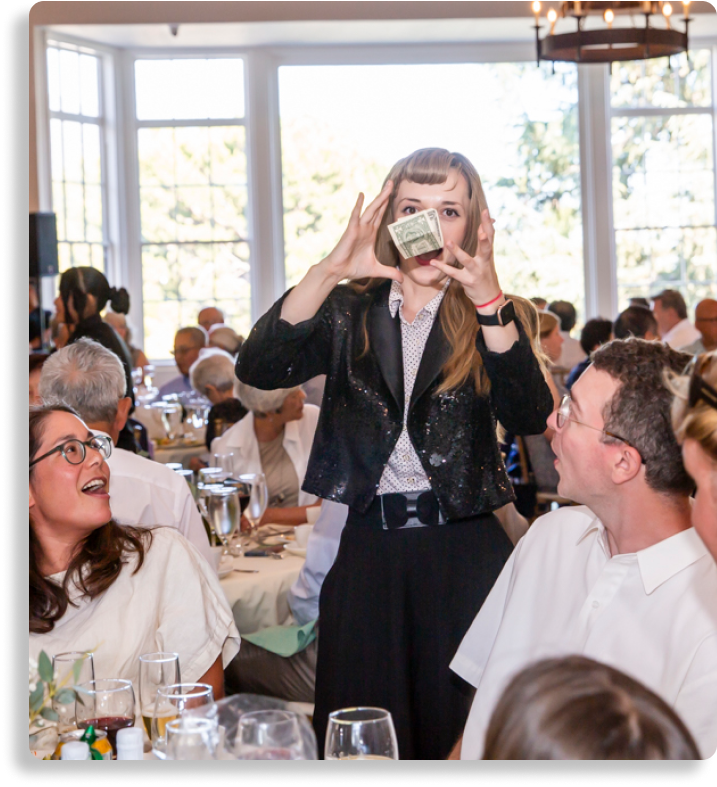
Office floors have no stage, hard surfaces, and strip lighting. Restaurant buyouts have furniture that can't be moved far and service running through the evening. Bars are loud by design. A strolling magician New York performing close up magic needs no stage, power, sound, rigging, or floor space beyond where guests already stand, which means whatever room you ended up with will work exactly as it is.

Office Parties in the Office

Worth addressing directly, since a great many New York companies hold the party where they work. It saves the venue cost and creates a specific problem: the space is familiar, functional, and doesn't feel like an occasion.

Decoration helps marginally, and what changes a room is something happening in it. A performer moving between groups gives an ordinary floor the sense that this is an event rather than a Thursday with drinks, and it does so without requiring anything to be installed, hired, or removed at the end. For a company party held in the office, that's frequently the only practical way to change how the space feels.

Nobody Has Any Spare Space

Practically decisive here more than in most cities. New York venues are tight, and in December they're tighter, because you've squeezed more people in than the room comfortably holds.

Anything requiring a footprint competes directly with your guests, and in a restaurant buyout it competes with tables you're paying for. A strolling magician New York occupies no space at all: the performer stands where guests are already standing, moves as they move, and leaves nothing behind. For a room at capacity, that's the difference between possible and not.

Two Hours Is the Format

The New York December reality. Holiday parties here are frequently short, an early evening window between the office and whatever people are doing afterwards, because that's what guests will give you in a month when everyone has several commitments.

Anything requiring a program slot competes with a schedule that's already compressed, and anything asking the room to stop and watch loses the people who came to talk. Strolling magic works inside the reception that's already happening, beginning as guests arrive and continuing until the end, covering the whole event while occupying none of your run of show.

Guests Arrive Across the Whole First Hour

Something particular to this city and this month. People come from different offices, meetings overrun, the subway is unpredictable, and your seven o'clock start means a room that fills gradually until nearly eight.

That early stretch is awkward: the first arrivals stand about, the host watches the door, and energy doesn't build until enough people are present. A strolling magician New York works from the first arrivals rather than requiring a full room, so the people who came on time get something rather than waiting. It makes the party feel like it has started before it technically has.

Colleagues Still Won't Mix

The universal problem, sharper in large New York offices where people genuinely don't know colleagues on other floors. People arrive, find the team they see daily, and talk to them.

Left alone that persists all evening, and the company concludes its culture is fine because everyone seemed to have a pleasant time in their own group. A performer working the room breaks that up mechanically: four people from three teams react to something together and are a group for the next twenty minutes. That's considerably more reliable than hoping the bar manages it.

It Suits a Restaurant Buyout

Worth separating out, since it's the most common New York solution for parties of forty to a hundred. A buyout means the restaurant's own space, its own service, and a room designed for eating rather than for an event.

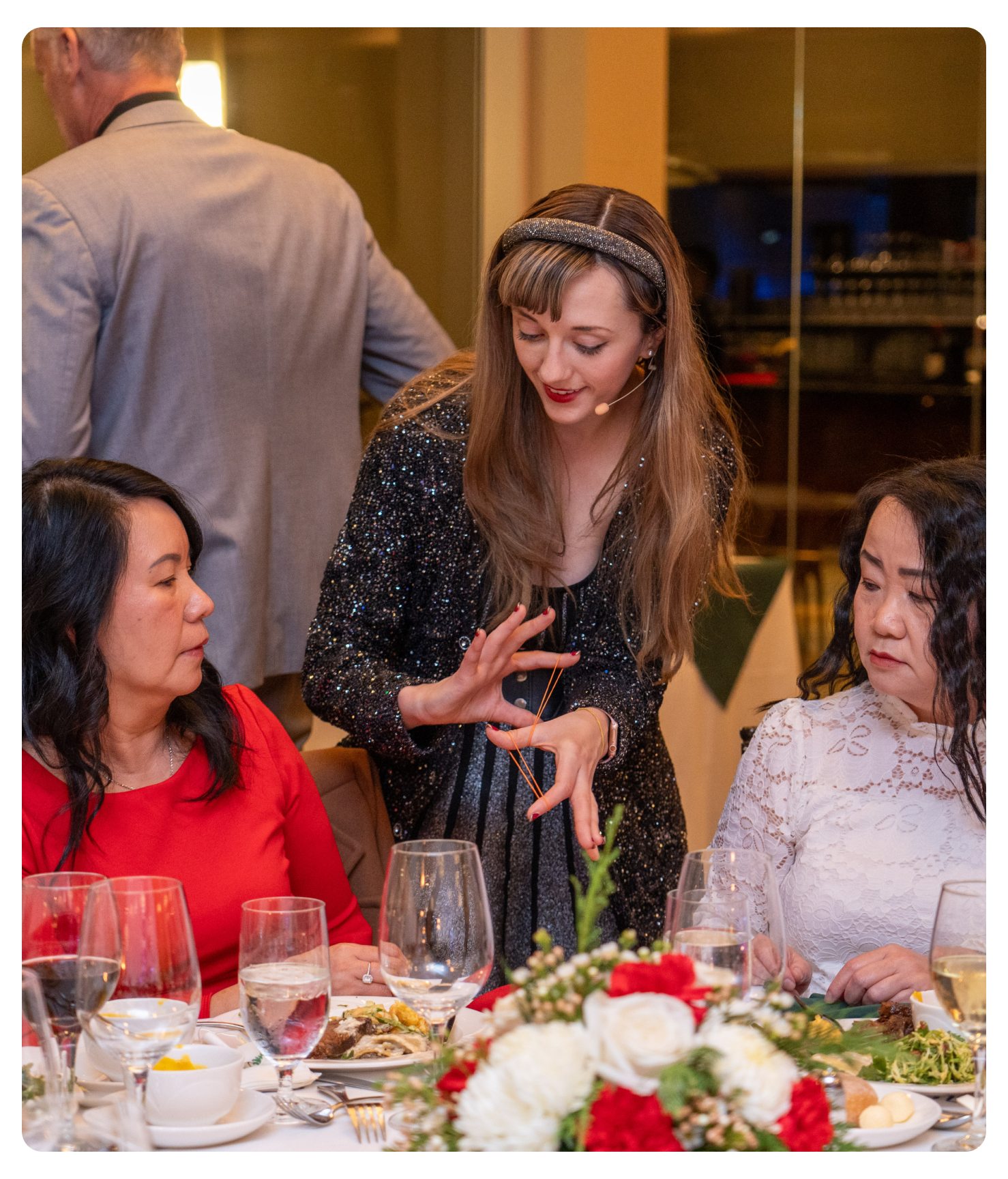
Entertainment competing with the room's noise will lose, and anything needing a focal point has nowhere to go. Close up magic operates within the ambient level rather than above it, works in small groups at conversational distance, and doesn't interrupt service. Among strolling magician New York bookings for December, buyouts are where the format's fit is most obvious.
Book Considerably Earlier Than Feels Necessary

The constraint that governs everything. December compresses a year of demand into four weeks, and the first three weeks on a Thursday or Friday are the most contested dates of the year by a wide margin.

A specific performer for a prime date realistically means enquiring in the summer, and by October most established options are committed. If your party is an annual fixture, book next year's as soon as this year's date is confirmed. If it's already November, enquire widely rather than sequentially and be flexible on day and time, since a Tuesday or an earlier start opens options a Friday won't.

A Note on "Local vs. Traveling In"

Worth knowing: performers who travel to New York work from a different calendar than those based there, so a December date that's impossible locally is sometimes straightforward for someone travelling. I'm based in the Los Angeles area and travel to New York, with travel discussed openly and factored into the quote rather than appearing later.

Why Book Magical Katrina

If you're planning a December party, here's my case. I'm a member of the Magic Circle in London and the Academy of Magical Arts in Hollywood, I've earned multiple magic awards, and I've performed for companies including Formula 1, the Olympics, Porsche, Prada, Zapier, and the Ritz Carlton, with appearances on Penn & Teller: Fool Us and Masters of Illusion. I need no stage, power, sound, or setup, so whatever room you secured will work, I start with the first arrivals rather than waiting for a full room, and I'm fully insured with a COI available.

Frequently Asked Questions

Our venue isn't really designed for a party. Does that matter?

Not for this format, and it's the usual December situation since the good rooms went in September. Office floors, restaurant buyouts, and roped off bar sections all work, because close up magic needs no stage, power, sound, rigging, or floor space beyond where guests already stand. Whatever room you ended up with will accommodate it exactly as it is.

We're holding it in our own office. Will it feel like an event?

It will if something is happening in the space, since decoration alone changes a familiar functional floor only marginally. A performer moving between groups gives an ordinary office the sense that this is an occasion rather than a Thursday with drinks, without anything being installed, hired, or removed afterwards, which is frequently the only practical way to change how the space feels.

The room is already at capacity. Is there space for entertainment?

There's no space required. Anything with a footprint competes directly with your guests and, in a buyout, with tables you're paying for, whereas a strolling magician New York stands where guests already stand, moves as they move, and leaves nothing behind. For a room packed tighter than it comfortably holds, that's the difference between possible and not.

We only have two hours. Does that work?

Well, and it's an argument for the format. Strolling magic works inside the reception that's already happening, beginning as guests arrive and continuing until the end, rather than requiring a slot or asking the room to stop. Covering the whole event while occupying none of your run of show suits the compressed early evening window New York parties actually use.

Guests arrive over an hour. Is that a problem?

It's a reason to book this rather than something scheduled. People come from different offices with meetings overrunning, so a seven o'clock start means a room filling until nearly eight, leaving early arrivals standing about while energy fails to build. A performer works from the first arrivals, so the party feels like it has started before it technically has.

Will it actually get people mixing?

More reliably than a bar and a playlist. In large New York offices people genuinely don't know colleagues on other floors, so they arrive, find the team they see daily, and stay there all evening. A performer approaching four people from three teams gets them reacting together, and they remain a group afterwards.

How late can we leave the booking?

Earlier than feels necessary, since December compresses a year of demand into four weeks and the first three weeks on a Thursday or Friday are the most contested dates of the year. A prime date realistically means enquiring in the summer, and by October most established options are committed. If it's already November, enquire widely and be flexible on day and time.
Make the Room You Got Work

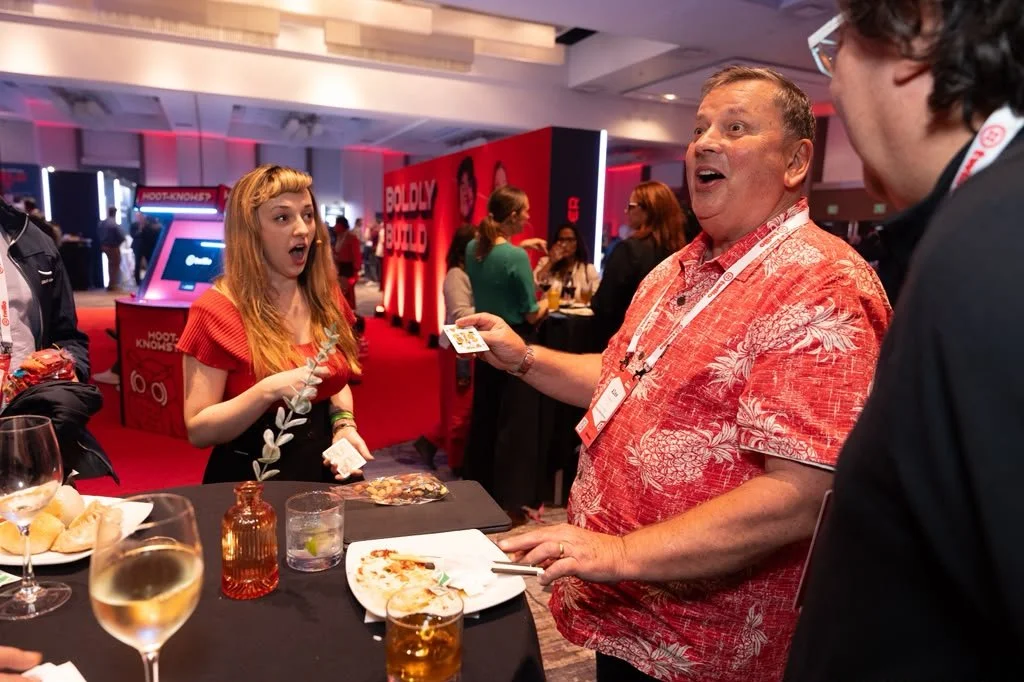
New York December parties are shaped by what was available rather than what was wanted, which means the entertainment has to fit an office floor, a buyout, or a bar section rather than a room designed for an occasion. A strolling magician New York does exactly that: nothing required from the venue, no space consumed in a room already at capacity, working from the first arrivals through to the end, and getting colleagues from different floors talking to each other.

If you're planning something for December, I'd be glad to hear about it.

Reach out with your date and venue, and I'll confirm it works.

Katrina Kroetch
Corporate Christmas Party Ideas When Half Your Team Is New

Corporate Christmas Party Ideas When Half Your Team Is New

A Christmas party assumes something most organizations don't examine: that the people attending have relationships to enjoy. Colleagues catch up, teams sit together, the running joke gets repeated, and the evening works because a year of shared experience is underneath it.

If you've grown quickly, or hired heavily, or your team is largely remote, that assumption doesn't hold. I'm Magical Katrina, an award winning magician and mentalist, and I want to offer corporate Christmas party ideas for the situation where a substantial proportion of the room joined this year and hasn't really met anybody.

The Party's Job Has Changed

Start with what's actually different. At an established company, the Christmas party is a reward and a release, and the social work happens on its own because people already know each other.

At a company where a third or half the room is new, the party is the first time many of these people have been in a room together, and left to itself it will produce exactly what you'd expect: the people who know each other talking, and the new joiners standing near the edges or clustering with the other people they recognize from their own induction cohort. Among corporate Christmas party ideas, recognizing that the evening has a job to do is the starting point.

New Joiners Cluster With New Joiners

The specific pattern worth planning around. People who joined recently find each other, because they're the only ones whose social position is comparable, and they spend the evening together.

That's pleasant and it defeats the purpose, since they're already the people they know. What you want is new joiners talking to established colleagues, which won't happen through proximity alone and is unlikely to happen through anybody's initiative, because approaching a group mid conversation is socially expensive and nobody in that group will break off to include a stranger.

Video Colleagues Are Not the Same as Known Colleagues

Worth naming, since remote and hybrid organizations frequently assume this problem is solved. Someone who has appeared in twenty meetings alongside a colleague may never have had an actual conversation with them.

They know each other's names, roles, and video backgrounds, and have no relationship. Meeting in person for the first time is genuinely awkward for both of them, which is why the moment people fear at a party like this is the one where you realize you're standing next to someone you technically know well and have nothing to say to. A party can make that easier or considerably worse depending on how it's structured.

Don't Rely on the Bar

The default approach and the one that fails here. At an established company the bar works because relationships already exist and alcohol loosens them.

With a room of near strangers it does something different: confident people become more confident and everyone else stands about more comfortably. It also excludes the meaningful proportion of any workforce who don't drink, who in a room where they know nobody have no other structure at all. Among corporate Christmas party ideas for a newly grown team, anything that leaves the social work entirely to a bar is asking too much of it.

Use Seating Deliberately

The single most effective intervention and the one people resist. If your party includes a meal, assign seats, and mix teams deliberately rather than letting people sit with whoever they arrived with.

Colleagues grumble mildly about assigned seating and consistently report better conversations, which is a trade worth taking. Seat new joiners among established colleagues rather than together, and avoid seating whole teams as blocks. If you're not doing a meal, consider whether you could, since a seated dinner produces conversation between strangers in a way a standing reception simply doesn't.

Avoid Forced Mixing

Worth distinguishing from the above, since the instinct to solve this with an icebreaker is strong and usually counterproductive. Asking colleagues to introduce themselves, complete a bingo card, or participate in a structured exercise is resisted by exactly the people you're trying to include.

New joiners are particularly exposed, since they're being asked to perform sociability in front of people whose judgement they're still calibrating. What works instead is anything that produces a shared reaction without requiring anyone to volunteer, since two people who both just saw something impossible have a conversation that starts itself rather than one they had to initiate.

Something That Moves Around the Room

The structural point underneath several of these. New joiners don't circulate, because circulating alone is difficult, so anything that reshuffles the room without requiring individual initiative does the work for them.

That might be a performer moving between groups, refreshments in a different space from the reception, or a program element that requires relocating. The mechanism matters more than the specific choice: people end up standing next to someone different without having decided to. Among corporate Christmas party ideas for a room of strangers, movement is more useful than atmosphere.

Say Something Brief About the Year

Worth doing when a lot of people are new, and it needn't be long. A short acknowledgement from someone senior that the company has grown, that a lot of the room joined recently, and that this is the first time everyone has been together gives people permission to introduce themselves.

It also gives new joiners a frame for the evening: they're not interlopers at an established company's party, they're part of a year the company is marking. Two minutes, not ten, and no attempt to make it a speech about values, which the room will absorb as ordinary corporate content rather than as the welcome it was meant to be.

Name Badges Are Not Beneath You

A small practical point that organizations of a certain size resist. If a meaningful share of your company has never met, name badges remove a genuine barrier, since people avoid conversations where they'd have to admit they don't know who someone is.

It feels slightly like a conference and it works. Include the team or department rather than only the name, so people have something to open with. If badges feel too formal for an evening event, consider them for a daytime or lunch format, where they read as entirely normal and solve the same problem.

Frequently Asked Questions

Why is this party different from a normal one?

Because a Christmas party assumes relationships that make the social side work on its own, and if a third or half the room joined this year those relationships don't exist. Left to itself, the evening produces established colleagues talking to each other and new joiners standing at the edges, which is the opposite of what the party was meant to achieve.

Won't new joiners just introduce themselves?

Rarely, and they'll cluster with other new joiners instead, since those are the only people whose social position is comparable. That's pleasant and defeats the purpose, because they already know each other. Approaching an established group mid conversation is socially expensive and nobody in that group will break off to include a stranger.

Our team meets on video constantly. Isn't that enough?

No, since appearing in twenty meetings alongside someone isn't a relationship. People know each other's names, roles, and video backgrounds and have never had an actual conversation, which makes meeting in person genuinely awkward for both. A party can ease that or make it worse depending on how it's structured.

Should we run icebreakers?

Generally not, since asking colleagues to introduce themselves or complete an exercise is resisted by exactly the people you're trying to include, and new joiners are most exposed because they're performing sociability in front of people whose judgement they're still calibrating. Anything producing a shared reaction without requiring volunteers works considerably better.

What's the most effective single change?

Assigned seating at a meal, mixing teams deliberately and seating new joiners among established colleagues rather than together. People grumble mildly and consistently report better conversations, which is a trade worth taking. If you're not planning a meal, consider whether you could, since a seated dinner produces conversation between strangers that a standing reception doesn't.

Are name badges too much?

Not if a meaningful share of your company has never met, since people avoid conversations where they'd have to admit not knowing who someone is. Include team or department as well as name so there's something to open with. If they feel too formal for an evening, a daytime or lunch format makes them entirely normal.

Should leadership mention it?

Briefly, and it helps. A short acknowledgement that the company has grown, that many people joined recently, and that this is the first time everyone has been together gives permission to introduce yourself and frames new joiners as part of the year rather than interlopers. Two minutes rather than ten, and not a speech about values.

Plan for a Room of Strangers

If your company has grown quickly, the Christmas party is doing a job it wasn't designed for, and the usual corporate Christmas party ideas assume relationships that a third of your room doesn't have. Seat people deliberately, avoid forced introductions, give the evening something that reshuffles the room without requiring anyone to circulate alone, acknowledge the growth briefly from the front, and use name badges without embarrassment.

Do that and the party does something more valuable than a good evening, which is turning a list of new hires into people who know somebody outside their own team.

Reach out with your date and headcount, and let's talk about what would help the room.

Katrina Kroetch
London Magician: Booking a Keynote Speaker for Your Conference or Company Event

London Magician: Booking a Keynote Speaker for Your Conference or Company Event

Most people searching for a London magician want entertainment: a drinks reception, a summer party, a client evening. That's a legitimate booking and it isn't what this page is about.

This is about the keynote, which is a different product entirely. I'm Magical Katrina, an award winning magician and mentalist and a member of the Magic Circle here in London, and I want to explain what a magic led keynote involves, why it suits a London audience, and how to judge whether it fits your program.

A Speaker Who Uses Magic

Worth establishing immediately, since both versions exist and the marketing rarely distinguishes them. One is an entertainer who adds remarks about resilience at the end, which audiences recognize instantly and quietly discount.

The other is a keynote with genuine content, where the magic is the delivery mechanism rather than the interval. Ideas are demonstrated rather than described, points are proven on the audience rather than asserted at them, and the argument and the performance are the same object. Ask any speaker you're considering which of the two they're offering, because the difference is substantial and the description frequently isn't.

London's Speaking Market Is Crowded

The context worth acknowledging. London has an enormous professional speaking circuit, and delegates at a conference here have sat through a great many competent talks by credible people with good slides.

That makes differentiation genuinely hard, and it means a keynote booked purely on credentials arrives into a room that has heard someone similar before. What holds a London audience isn't authority, which they've seen plenty of, it's unpredictability. A London magician delivering a keynote is doing something the room hasn't got a template for, which is worth more in a saturated market than another impressive biography.

Your Audience Is Trained to Evaluate

The second local factor. London corporate and conference rooms are full of people from finance, law, consulting, and professional services, whose working lives consist of examining claims, finding the weakness, and not accepting propositions at face value.

That's a poor audience for a conventional keynote, since they'll assess rather than absorb, and an unusually good one for a keynote that demonstrates. The evidence becomes their own experience rather than the speaker's credentials, and a room applying genuine scrutiny that still cannot account for what happened is more affected than a casual one, not less.

Demonstration Beats Assertion

The mechanism underneath the format. A conventional keynote asserts things: that perception is unreliable, that attention is narrower than people assume, that expectation shapes what an audience notices before anyone has spoken.

A magic led keynote demonstrates them in real time, using what just happened to the audience as the evidence. Delegates don't accept the point because it was argued well, they accept it because they experienced it. Among reasons to book a London magician as a speaker rather than as entertainment, that difference in how an argument lands is the substantive one.

What the Talk Covers

A keynote needs subject matter rather than only a device. My talks draw on building a career in an unusual field and cover areas including marketing and attention, entrepreneurship and building something without a template, communication and how people actually receive information, and ADHD and working with the way your own mind operates.

Those are shaped to the audience and the brief rather than delivered as fixed sets, and the right emphasis depends on who's in the room. If your event has a theme, tell me at the enquiry stage and I'll tell you honestly whether I can serve it well or whether you need a different speaker.

London Venues Restrict Production

Practically relevant here more than in most cities. A great many London events happen in historic buildings, livery halls, listed interiors, and converted spaces where nothing can be fixed to walls, amplified sound is limited, and production requirements meet a policy list.

A keynote needs a microphone and the staging your other speakers are already using, with no additional rigging, no special lighting, no technical rehearsal beyond a normal sound check, and nothing added to your production budget. That means it works in rooms that couldn't accommodate a staged performance, which widens where you can program it considerably.

Where It Sits in a Program

The difficult slots are where it earns most. The opening session, where it establishes that this event isn't the usual sequence of presentations.

The post lunch stretch, where attention reliably collapses and a conventional speaker struggles hardest. The closing address, where it sends delegates away with something they'll describe rather than a summary they'll forget. And the second morning of a multi day event, where attendance itself dips. Among placements for a London magician speaking rather than performing, anywhere a conventional talk would struggle is where this has the clearest advantage.

The Magic Circle Connection

Worth mentioning, since it's genuine rather than decorative. I'm a member of the Magic Circle, the world's most prestigious magic society, which is headquartered in London, and that's a real tie to the city's magic world rather than a credential quoted from elsewhere.

For a keynote it matters mainly as evidence that the performance side is serious, since a talk built on demonstration depends entirely on the demonstration being genuinely good. A keynote where the magic is mediocre doesn't work, however strong the content, and credentials are one way of establishing that the foundation is sound.

When Another Speaker Suits Better

Worth saying honestly. If your keynote needs detailed technical content, sector specific analysis, or a particular expert credential, you need a subject matter expert rather than a speaker whose expertise lies elsewhere.

If your event is purely social, book entertainment instead, since nobody at a reception wants a message delivered at them. And if your program has no slot and no seated audience, a keynote has nowhere to go. I'd rather establish that at the enquiry stage than take a booking that's wrong for the brief.

A Note on "Local vs. Traveling In"

Worth knowing: I'm based in the Los Angeles area and travel to London for conferences and corporate events, with travel discussed openly and factored into the quote rather than appearing later. Speaking slots are usually fixed well in advance, so early enquiries genuinely help.

Why Book Magical Katrina

If you're considering a keynote, here's my case. I'm a member of the Magic Circle in London and the Academy of Magical Arts in Hollywood, I've earned multiple magic awards, and I've performed and spoken for organizations including Formula 1, the Olympics, Porsche, Prada, and the Ritz Carlton, with appearances on Penn & Teller: Fool Us and Masters of Illusion, across events in over 20 countries. I write to the brief rather than delivering a fixed set, I need only the staging your other speakers use, and I'll tell you honestly if another speaker would serve your theme better.

Frequently Asked Questions

Is this a keynote or a magic show?

A keynote, with magic as the delivery mechanism rather than the interval. There's a version that's an entertainer adding remarks about resilience at the end, which audiences recognize and discount immediately. The version worth booking has genuine content where the argument and the performance are the same object, so ask any speaker which they're offering.

Why does it suit a London audience?

Because the speaking circuit here is crowded and delegates have sat through a great many competent talks by credible people, so authority doesn't differentiate. It also suits rooms full of finance, law, and consulting professionals trained to examine claims and find the weakness, since a demonstrated keynote makes the evidence their own experience rather than the speaker's credentials.

What does the talk actually cover?

Material drawn from building a career in an unusual field: marketing and attention, entrepreneurship and building without a template, communication and how people receive information, and ADHD and working with how your own mind operates. These are shaped to the audience and brief rather than delivered as fixed sets, so tell me your theme and I'll say whether I can serve it.

What does it need from our venue?

A microphone and the staging your other speakers are already using, with no additional rigging, special lighting, technical rehearsal beyond a sound check, or anything added to your production budget. That matters in London where many events are in historic and listed buildings with policy lists, and it means the talk works in rooms that couldn't host a staged performance.

Where should it sit in our program?

Wherever a conventional speaker would struggle: the opening session to establish this isn't the usual sequence, the post lunch stretch where attention collapses, the closing address so delegates leave with something they'll describe, or the second morning of a multi day event where attendance dips. The difficult slots are where this format has the clearest advantage.

Does the Magic Circle membership matter for a keynote?

Mainly as evidence that the performance side is serious, since a talk built on demonstration depends entirely on the demonstration being genuinely good. A keynote where the magic is mediocre doesn't work however strong the content. It's also a real tie to London's magic world rather than a credential quoted from elsewhere, the society being headquartered here.

When would you tell us to book someone else?

When your keynote needs detailed technical content, sector specific analysis, or an expert credential I don't have, when your event is purely social and entertainment would serve better, or when your program has no slot and no seated audience. I'd rather establish that at the enquiry stage than take a booking that's wrong for the brief.

A Keynote in a Market Full of Keynotes

London delegates have heard a great many good speakers, which makes credentials a weak differentiator and unpredictability a strong one. Booking a London magician as a keynote speaker rather than as entertainment addresses that: a room that can't anticipate what's coming, points demonstrated on an audience trained to evaluate rather than asserted at them, a message that survives past the following week, and nothing your venue has to accommodate.

If you have a difficult slot or something you need to land, I'd be glad to hear what you're planning.

Reach out with your dates and theme, and let's talk about the room.

Katrina Kroetch
London Magician: Booking a Keynote Speaker for Your Conference or Company Event

London Magician: Booking a Keynote Speaker for Your Conference or Company Event

Most people searching for a London magician want entertainment: a drinks reception, a summer party, a client evening. That's a legitimate booking and it isn't what this page is about.

This is about the keynote, which is a different product entirely. I'm Magical Katrina, an award winning magician and mentalist and a member of the Magic Circle here in London, and I want to explain what a magic led keynote involves, why it suits a London audience, and how to judge whether it fits your program.

A Speaker Who Uses Magic

Worth establishing immediately, since both versions exist and the marketing rarely distinguishes them. One is an entertainer who adds remarks about resilience at the end, which audiences recognize instantly and quietly discount.

The other is a keynote with genuine content, where the magic is the delivery mechanism rather than the interval. Ideas are demonstrated rather than described, points are proven on the audience rather than asserted at them, and the argument and the performance are the same object. Ask any speaker you're considering which of the two they're offering, because the difference is substantial and the description frequently isn't.

London's Speaking Market Is Crowded

The context worth acknowledging. London has an enormous professional speaking circuit, and delegates at a conference here have sat through a great many competent talks by credible people with good slides.

That makes differentiation genuinely hard, and it means a keynote booked purely on credentials arrives into a room that has heard someone similar before. What holds a London audience isn't authority, which they've seen plenty of, it's unpredictability. A London magician delivering a keynote is doing something the room hasn't got a template for, which is worth more in a saturated market than another impressive biography.

Your Audience Is Trained to Evaluate

The second local factor. London corporate and conference rooms are full of people from finance, law, consulting, and professional services, whose working lives consist of examining claims, finding the weakness, and not accepting propositions at face value.

That's a poor audience for a conventional keynote, since they'll assess rather than absorb, and an unusually good one for a keynote that demonstrates. The evidence becomes their own experience rather than the speaker's credentials, and a room applying genuine scrutiny that still cannot account for what happened is more affected than a casual one, not less.

Demonstration Beats Assertion

The mechanism underneath the format. A conventional keynote asserts things: that perception is unreliable, that attention is narrower than people assume, that expectation shapes what an audience notices before anyone has spoken.

A magic led keynote demonstrates them in real time, using what just happened to the audience as the evidence. Delegates don't accept the point because it was argued well, they accept it because they experienced it. Among reasons to book a London magician as a speaker rather than as entertainment, that difference in how an argument lands is the substantive one.

What the Talk Covers

A keynote needs subject matter rather than only a device. My talks draw on building a career in an unusual field and cover areas including marketing and attention, entrepreneurship and building something without a template, communication and how people actually receive information, and ADHD and working with the way your own mind operates.

Those are shaped to the audience and the brief rather than delivered as fixed sets, and the right emphasis depends on who's in the room. If your event has a theme, tell me at the enquiry stage and I'll tell you honestly whether I can serve it well or whether you need a different speaker.

London Venues Restrict Production

Practically relevant here more than in most cities. A great many London events happen in historic buildings, livery halls, listed interiors, and converted spaces where nothing can be fixed to walls, amplified sound is limited, and production requirements meet a policy list.

A keynote needs a microphone and the staging your other speakers are already using, with no additional rigging, no special lighting, no technical rehearsal beyond a normal sound check, and nothing added to your production budget. That means it works in rooms that couldn't accommodate a staged performance, which widens where you can program it considerably.

Where It Sits in a Program

The difficult slots are where it earns most. The opening session, where it establishes that this event isn't the usual sequence of presentations.

The post lunch stretch, where attention reliably collapses and a conventional speaker struggles hardest. The closing address, where it sends delegates away with something they'll describe rather than a summary they'll forget. And the second morning of a multi day event, where attendance itself dips. Among placements for a London magician speaking rather than performing, anywhere a conventional talk would struggle is where this has the clearest advantage.

The Magic Circle Connection

Worth mentioning, since it's genuine rather than decorative. I'm a member of the Magic Circle, the world's most prestigious magic society, which is headquartered in London, and that's a real tie to the city's magic world rather than a credential quoted from elsewhere.

For a keynote it matters mainly as evidence that the performance side is serious, since a talk built on demonstration depends entirely on the demonstration being genuinely good. A keynote where the magic is mediocre doesn't work, however strong the content, and credentials are one way of establishing that the foundation is sound.

When Another Speaker Suits Better

Worth saying honestly. If your keynote needs detailed technical content, sector specific analysis, or a particular expert credential, you need a subject matter expert rather than a speaker whose expertise lies elsewhere.

If your event is purely social, book entertainment instead, since nobody at a reception wants a message delivered at them. And if your program has no slot and no seated audience, a keynote has nowhere to go. I'd rather establish that at the enquiry stage than take a booking that's wrong for the brief.

A Note on "Local vs. Traveling In"

Worth knowing: I'm based in the Los Angeles area and travel to London for conferences and corporate events, with travel discussed openly and factored into the quote rather than appearing later. Speaking slots are usually fixed well in advance, so early enquiries genuinely help.

Why Book Magical Katrina

If you're considering a keynote, here's my case. I'm a member of the Magic Circle in London and the Academy of Magical Arts in Hollywood, I've earned multiple magic awards, and I've performed and spoken for organizations including Formula 1, the Olympics, Porsche, Prada, and the Ritz Carlton, with appearances on Penn & Teller: Fool Us and Masters of Illusion, across events in over 20 countries. I write to the brief rather than delivering a fixed set, I need only the staging your other speakers use, and I'll tell you honestly if another speaker would serve your theme better.

Frequently Asked Questions

Is this a keynote or a magic show?

A keynote, with magic as the delivery mechanism rather than the interval. There's a version that's an entertainer adding remarks about resilience at the end, which audiences recognize and discount immediately. The version worth booking has genuine content where the argument and the performance are the same object, so ask any speaker which they're offering.

Why does it suit a London audience?

Because the speaking circuit here is crowded and delegates have sat through a great many competent talks by credible people, so authority doesn't differentiate. It also suits rooms full of finance, law, and consulting professionals trained to examine claims and find the weakness, since a demonstrated keynote makes the evidence their own experience rather than the speaker's credentials.

What does the talk actually cover?

Material drawn from building a career in an unusual field: marketing and attention, entrepreneurship and building without a template, communication and how people receive information, and ADHD and working with how your own mind operates. These are shaped to the audience and brief rather than delivered as fixed sets, so tell me your theme and I'll say whether I can serve it.

What does it need from our venue?

A microphone and the staging your other speakers are already using, with no additional rigging, special lighting, technical rehearsal beyond a sound check, or anything added to your production budget. That matters in London where many events are in historic and listed buildings with policy lists, and it means the talk works in rooms that couldn't host a staged performance.

Where should it sit in our program?

Wherever a conventional speaker would struggle: the opening session to establish this isn't the usual sequence, the post lunch stretch where attention collapses, the closing address so delegates leave with something they'll describe, or the second morning of a multi day event where attendance dips. The difficult slots are where this format has the clearest advantage.

Does the Magic Circle membership matter for a keynote?

Mainly as evidence that the performance side is serious, since a talk built on demonstration depends entirely on the demonstration being genuinely good. A keynote where the magic is mediocre doesn't work however strong the content. It's also a real tie to London's magic world rather than a credential quoted from elsewhere, the society being headquartered here.

When would you tell us to book someone else?

When your keynote needs detailed technical content, sector specific analysis, or an expert credential I don't have, when your event is purely social and entertainment would serve better, or when your program has no slot and no seated audience. I'd rather establish that at the enquiry stage than take a booking that's wrong for the brief.

A Keynote in a Market Full of Keynotes

London delegates have heard a great many good speakers, which makes credentials a weak differentiator and unpredictability a strong one. Booking a London magician as a keynote speaker rather than as entertainment addresses that: a room that can't anticipate what's coming, points demonstrated on an audience trained to evaluate rather than asserted at them, a message that survives past the following week, and nothing your venue has to accommodate.

If you have a difficult slot or something you need to land, I'd be glad to hear what you're planning.

Reach out with your dates and theme, and let's talk about the room.

Katrina Kroetch
Female Magician in San Francisco: Booking a Keynote Speaker

Female Magician in San Francisco: Booking a Keynote Speaker

Most people searching for a female magician in San Francisco are looking for entertainment: a reception, a company party, a client evening. That's a legitimate booking and it isn't what this page is about.

This is about the keynote, which is a genuinely different product with a different purpose. I'm Magical Katrina, an award winning magician and mentalist, and I want to explain what a magic led keynote involves, why it suits a Bay Area audience particularly, and how to judge whether it fits your program.

A Speaker Who Uses Magic

Worth establishing first, since both versions exist and they're not the same. One is an entertainer who adds remarks about innovation at the end, which audiences recognize instantly and discount.

The other is a keynote with genuine content, where the magic is the delivery mechanism rather than the interval. Ideas are demonstrated rather than described, points are proven on the audience rather than asserted at them, and the argument and the performance are the same object. Ask any speaker you're considering which of the two they're offering, since the distinction is substantial and the marketing rarely makes it.

Bay Area Audiences Assess Rather Than Absorb

The reason this format suits this market. Rooms here are full of engineers, researchers, product people, and founders, whose professional habit is to evaluate a claim rather than accept it and to look for the mechanism behind anything presented to them.

That's a difficult audience for a conventional keynote, since they'll assess the argument while you're making it and remain unconvinced by authority alone. It's an unusually good audience for a keynote that demonstrates, because the evidence is their own experience rather than the speaker's credentials, and a room applying genuine scrutiny that still can't account for what happened is more affected than a casual one.

Demonstration Beats Assertion

The mechanism underneath the format. A conventional keynote asserts things: that perception is unreliable, that attention is narrower than people assume, that expectation shapes what an audience notices, that certainty and accuracy are different.

A magic led keynote demonstrates them in real time, on the audience, using what just happened as the evidence. Attendees don't accept the point because it was argued persuasively, they accept it because they experienced it. Among reasons to book a female magician in San Francisco as a speaker rather than as entertainment, that difference in how an argument lands is the substantive one.

What the Talk Actually Argues

A keynote needs content rather than only a device. My talks draw on building a career in an unusual field and cover areas including marketing and attention, entrepreneurship and building something without a template, communication and how people actually receive information, and ADHD and working with the way your own mind operates.

For a Bay Area audience, the material on expectation and attention tends to land hardest, since everyone in that room is building, selling, or leading something where perception determines outcomes as much as substance does. It's shaped to the brief rather than delivered as a fixed set, so tell me your theme and I'll say honestly whether I can serve it.

It Suits Women in Tech Programming Year Round

Worth mentioning, since a great deal of Bay Area programming in this area concentrates into a single month and then stops. A keynote drawing on building a career in a field that has been overwhelmingly male works in March and works equally in September.

That matters practically: March is heavily oversubscribed for speakers, availability disappears by January, and an organization booking late chooses from whoever remains. Booking outside the month means genuine choice, an audience that isn't saturated with similar sessions, and a program that reads as ongoing rather than annual. Among considerations for a female magician in San Francisco speaking, timing is worth thinking about deliberately.

People Retain It

The outcome that justifies the format. Conference and all-hands content decays quickly, and by the following week most attendees hold a handful of impressions rather than the substance of what they heard.

What survives is what surprised them. A point attached to a moment of genuine astonishment persists where the same point on a slide doesn't, which means the message you wanted delivered is still there in a month. If your keynote exists to convey something rather than fill a slot, that retention is the entire argument for the format.

Where It Sits in a Program

The difficult slots are where it earns most. An opening session, where it establishes that this event isn't the usual sequence of presentations.

The post lunch stretch, where attention reliably collapses and a conventional speaker struggles hardest. A closing address, where it sends people away with something they'll describe. And the second morning of a multi day event, where attendance itself dips. Among placements for a female magician in San Francisco speaking rather than performing, anywhere a conventional talk would struggle is where this has the clearest advantage.

What It Needs From Your Venue

Less than most keynotes, which matters here. Bay Area event space is expensive and production costs accumulate quickly, so a speaker with technical requirements carries a second invoice.

A keynote needs a microphone and the staging your other speakers are already using. No additional rigging, no special lighting, no technical rehearsal beyond a normal sound check, and nothing added to your AV budget. That also means it works in an office space or a converted venue that couldn't host a staged performance, which widens where you can program it considerably.

When Another Speaker Suits Better

Worth saying honestly. If your keynote needs detailed technical content, sector specific analysis, or a particular expert credential, you need a subject matter expert rather than a speaker whose expertise lies elsewhere.

If your event is purely social, book entertainment instead, since nobody at a reception wants a message delivered at them. And if your program has no slot and no seated audience, a keynote has nowhere to go. I'd rather establish that at the enquiry stage than take a booking that's wrong for the brief, which serves neither of us.

A Note on "Local vs. Traveling In"

Worth knowing: I'm based in the Los Angeles area and travel to San Francisco and the wider Bay Area for conferences and corporate events, with travel discussed openly and factored into the quote rather than appearing later. Speaking slots are usually fixed well in advance, so early enquiries genuinely help.

Why Book Magical Katrina

If you're considering a keynote, here's my case. I'm a member of the Magic Circle in London and the Academy of Magical Arts in Hollywood, I've earned multiple magic awards, and I've performed and spoken for organizations including Formula 1, the Olympics, Porsche, Prada, Zapier, and the Ritz Carlton, with appearances on Penn & Teller: Fool Us and Masters of Illusion, across events in over 20 countries. I write to the brief rather than delivering a fixed set, I need only the staging your other speakers use, and I'll tell you honestly if another speaker would serve your theme better.

Frequently Asked Questions

Is this a keynote or a magic show?

A keynote, with magic as the delivery mechanism rather than the interval. There's a version that's an entertainer adding remarks at the end, which audiences recognize and discount immediately. The version worth booking has genuine content where the argument and the performance are the same object, so ask any speaker which of the two they're offering.

Why does it suit a Bay Area audience?

Because rooms here are full of people whose professional habit is to evaluate claims rather than accept them and to look for the mechanism behind anything presented. That's difficult for a conventional keynote and unusually good for one that demonstrates, since the evidence is their own experience and a room applying genuine scrutiny that still can't account for what happened is more affected than a casual one.

What does the talk actually cover?

Material drawn from building a career in an unusual field: marketing and attention, entrepreneurship and building without a template, communication and how people receive information, and ADHD and working with how your own mind operates. For Bay Area audiences the expectation and attention material lands hardest, since perception determines outcomes in their work as much as substance does.

Can we book it outside March?

Yes, and it's frequently better. A talk about building a career in a field that has been overwhelmingly male works in September as well as March, and March is heavily oversubscribed with availability gone by January. Booking outside the month means genuine choice, an unsaturated audience, and a program that reads as ongoing rather than annual.

What does it deliver beyond enjoyment?

Retention. Event content decays quickly and what people keep is what surprised them, so a point attached to genuine astonishment persists where the same point on a slide doesn't. If your keynote exists to convey something rather than fill a slot, the message still being there in a month is the substantive argument for the format.

What do you need from our venue?

A microphone and the staging your other speakers are already using. No additional rigging, no special lighting, no technical rehearsal beyond a normal sound check, and nothing added to your AV budget, which matters where event space is expensive. It also means the talk works in an office or converted venue that couldn't host a staged performance.

When would you tell us to book someone else?

When your keynote needs detailed technical content, sector specific analysis, or an expert credential I don't have, when your event is purely social and entertainment would serve better, or when your program has no slot and no seated audience. I'd rather establish that at the enquiry stage than take a booking that's wrong for the brief.

A Keynote an Analytical Room Can't Dismiss

Bay Area audiences are trained to assess rather than absorb, which makes a conventional keynote hard work and a demonstrated one unusually effective. Booking a female magician in San Francisco as a speaker rather than as entertainment addresses that directly: a room that can't predict what's coming, points proven on the audience rather than argued at them, a message that survives past the following week, and nothing added to your production budget.

If you have a difficult slot or something you need to stick, I'd be glad to hear what you're planning.

Reach out with your dates and theme, and let's talk about the room.

Katrina Kroetch
Strolling Magician San Francisco for Restaurants and Private Dining

Strolling Magician San Francisco for Restaurants and Private Dining

Almost everything written about hiring a performer is aimed at someone planning an event. Very little is aimed at the venues themselves, despite restaurants, private dining rooms, and hotel outlets across San Francisco facing the same recurring question: what makes a guest choose here, and what makes a company book their dinner with you rather than the place two blocks over.

That's a different sort of booking with different requirements. I'm Magical Katrina, an award winning magician and mentalist, and I want to set out how a strolling magician San Francisco venues engage actually works, and what an operator needs that an event client doesn't.

Private Dining Is Where This Earns Most

Start with the strongest case, since it's specific to this city. San Francisco venues compete hard for corporate group bookings, and a great many of those are team dinners, client dinners, and company celebrations booked by people with a budget and a choice of comparable rooms.

Those buyers are choosing between private dining rooms that look broadly similar and cost broadly the same. Offering table magic as an option, or building it into a package, gives you something genuinely different to put in front of a company planning a dinner. Among reasons to work with a strolling magician San Francisco, differentiating your private dining offer is the one with the clearest commercial return.

It Solves the Long Table Problem

A practical benefit worth naming, since every private dining host experiences it. A long table of fourteen fragments into three separate conversations within twenty minutes, and the people at one end never speak to the people at the other.

Hosts notice this and some of them dread it, particularly when the dinner has a purpose beyond eating. Table magic between courses gives the whole room a shared focus without anybody having to make a speech, which is frequently the part a host was worried about. That's a genuine selling point for your private dining, and it's the sort of detail a booker remembers when choosing where to hold the next one.

The Midweek Problem

The other application, and it's familiar to every operator. Thursday through Saturday largely fills itself, while Monday through Wednesday takes effort, promotion, or discounting to put the same number of covers in with the same overheads running.

Discounting works at the cost of margin and teaches regulars to wait for offers, and a discount run repeatedly simply becomes the price. A strolling magician San Francisco on a defined midweek evening gives you something to promote that's about experience rather than price, and a reason for guests to choose Tuesday specifically rather than choosing you eventually.

Dwell Time and Average Spend

The commercial mechanism, stated plainly. Table magic between courses extends the time guests spend at a table without extending service, because the gaps that already exist become part of the evening rather than a lull.

Guests enjoying themselves order another round, stay for dessert, and leave later than intended. In a city where the cost per cover is high and turning tables quickly isn't always the goal, that's a meaningful lever. It's difficult to attribute precisely and easy enough to feel across a quarter, and it costs a fraction of what any comparable differentiator would.

It Fits Rooms That Can't Take Anything Else

The practical argument for this format. San Francisco dining rooms are frequently tight, acoustically unhelpful, and built entirely around service, with no stage and no square footage that isn't earning.

Live music competes with conversation and irritates as many guests as it pleases. Anything requiring equipment consumes covers. A strolling magician San Francisco needs no stage, power, sound, or floor area beyond where staff already move, and works at conversational volume within the room's ambient level rather than above it. For most dining rooms it's the only format that genuinely fits.

Your Guests Are a Good Audience

Worth knowing, since it affects how it lands. A substantial share of this city's dining trade is technology, science, and professional services, and those guests' instinct on encountering something impossible is to work out how.

That makes them a better audience rather than a harder one, since analytical attention intensifies the effect rather than defeating it. It also means the reaction tends to be loud and conversational rather than polite, which is precisely what you want in a room you're trying to make feel busy and alive. The guest who arrived most certain they'd catch it is usually the one telling the next table about it.

What Venues Actually Need

Different from what event clients need. Reliability above everything, since a performer who doesn't appear on a promoted night is a service failure rather than a disappointment.

Comfort working around service, meaning knowing when to approach a table and when to leave it alone. Appropriate presentation for your room. Insurance and paperwork handled without chasing. And a willingness to work inside your operation rather than around it. A strolling magician San Francisco who has worked venues understands that the business continues and the performance fits within it.

How These Arrangements Work

Practically, venue bookings tend to be structured as a defined window on a fixed schedule, agreed for a run or a season rather than negotiated each time, or booked per private dining event as they come in.

The first suits midweek programming, the second suits private dining. Both give you predictability and give the performer a reliable commitment, with rates reflecting an ongoing arrangement rather than one off pricing. Starting with a trial run of a few weeks is sensible before extending, since how it works depends considerably on your particular room and clientele.

Being Honest About Travelling Performers

Worth saying directly, since it affects what I can offer. I'm based in the Los Angeles area and travel to San Francisco and the wider Bay Area, which suits private dining bookings, defined runs, and seasonal programming well.

It doesn't suit a standing weekly residency, and I'd rather say so than take an arrangement I can't sustain reliably. If you want someone in your room every Wednesday for a year, a Bay Area based performer will serve you better. For private dining and programmed periods, travelling in is entirely workable and travel is factored into the quote.

Why Book Magical Katrina

If you're programming a venue, here's my case. I'm a member of the Magic Circle in London and the Academy of Magical Arts in Hollywood, I've earned multiple magic awards, and I've performed for clients including Formula 1, the Olympics, Porsche, Prada, Zapier, and the Ritz Carlton, with appearances on Penn & Teller: Fool Us and Masters of Illusion. I understand that a venue's business continues around the performance, I work at conversational volume with no stage, power, or sound, and I read when a table wants attention and when it doesn't. I'm fully insured with a COI available.

Frequently Asked Questions

Why start with private dining?

Because San Francisco venues compete hard for corporate group bookings, and those buyers are choosing between private rooms that look broadly similar and cost broadly the same. Offering table magic as an option or building it into a package gives you something genuinely different to put in front of a company planning a team or client dinner, which is the clearest commercial return available.

What problem does it solve for a private dinner?

The long table one. A table of fourteen fragments into three separate conversations within twenty minutes and the ends never speak to each other, which hosts notice and some dread, particularly when the dinner has a purpose. Table magic between courses gives the room a shared focus without anyone making a speech, which is frequently the part the host was worried about.

Why not just discount midweek?

Because discounting costs margin and teaches regulars to wait for offers, and a discount run repeatedly becomes the price. A strolling magician San Francisco on a defined midweek evening gives you something to promote that's about experience rather than price, and a reason for guests to choose Tuesday specifically rather than choosing you eventually.

Does it actually affect spend?

Through dwell time, which is ordinary hospitality economics. Table magic between courses extends the time guests spend at a table without extending service, since existing gaps become part of the evening, and guests enjoying themselves order another round and stay for dessert. In a city with a high cost per cover, that's a meaningful lever.

Will it work in our dining room?

Almost certainly, and it's usually the only format that does. Rooms here are frequently tight, acoustically unhelpful, and built around service, with no stage and no square footage that isn't earning. Close up magic needs no stage, power, sound, or floor area, and works at conversational volume within the room's ambient level rather than above it.

How do these arrangements usually work?

Either a defined window on a fixed schedule agreed for a run or season, which suits midweek programming, or booked per event as private dining bookings come in. Both give you predictability and the performer a reliable commitment, with rates reflecting an ongoing arrangement. Start with a trial of a few weeks before extending, since it depends on your room.

Can you do a weekly residency?

Honestly, no. I'm based in the Los Angeles area and travel to San Francisco, which suits private dining bookings, defined runs, and seasonal programming well, but not a reliable weekly commitment across a year. If that's what you want, a Bay Area based performer will serve you better and I'd rather say so than take something I can't sustain.

Give Companies a Reason to Book You

San Francisco venues compete for the same guests and the same corporate dinners with broadly comparable rooms and menus, and the difference is frequently whether anything is happening. A strolling magician San Francisco gives your private dining offer something a booker hasn't seen elsewhere, solves the long table problem hosts quietly dread, extends dwell time in a room that can't accommodate anything else, and gives a quiet midweek evening something to promote that isn't a discount.

If you're programming a venue rather than planning an event, I'd be glad to talk about what would suit.

Reach out with your venue and what you're considering, and let's discuss a trial.

Katrina Kroetch
Birthday Party Magicians Near Me: What Actually Happens on the Day

Birthday Party Magicians Near Me: What Actually Happens on the Day

You've booked, the date is in the diary, and somewhere around the week before it occurs to you that you have no real idea what's about to happen in your living room. How long before they arrive. Whether you need to do anything. What you're supposed to do while it's going on.

Nobody explains this, and it's easy to picture. I'm Magical Katrina, an award winning magician and mentalist with a Family Entertainer of the Year honor, and I want to walk through what genuinely happens when you've booked among the birthday party magicians near me options, from the doorbell to the end of the afternoon.

They Arrive Before They Start

Expect your performer about fifteen to thirty minutes before the show, which is a good sign rather than an inconvenience. That time is for finding you, seeing the room, and setting anything out, not for standing in your hallway.

For most children's shows setup is genuinely minimal: somewhere to leave a coat and a case, a moment to look at where the children will sit, and a brief conversation with you. If your party is somewhere with parking difficulties or an awkward entrance, mention it in advance, since arriving late because of a car park is the sort of avoidable problem that starts an afternoon badly.

The Brief Conversation on Arrival

Short and useful. Expect to be asked where the children will sit, roughly how many there are, the birthday child's name, whether the ages are what you said, and when exactly you'd like them to start.

Use it to mention anything relevant: a child who'd love to be involved, one who'd hate it, a younger sibling who may wander, or a slight change to your timings. Thirty seconds of that noticeably improves the next half hour. A birthday party magicians near me option who doesn't ask any of this is planning to deliver the same show they always deliver, which is worth noticing for next time.

Getting the Children Settled

The performer will usually want the children seated before they begin, and most will handle that themselves rather than asking you to manage it, since it's the first part of the performance.

What helps is having the space already clear and the adults briefed to sit or stand behind the children rather than around the sides. Expect the first two minutes to be noisy and slightly chaotic and to settle quickly, which is normal. If your child is nervous about being the center of attention, mention it beforehand rather than in the moment, and a good performer will adjust how they handle the opening.

How the Show Is Structured

Most children's shows follow a similar shape, and knowing it helps you picture the afternoon. It opens with something immediate and visual to get everyone watching, builds through pieces that involve children coming up or holding things, and finishes with something bigger that the whole room is invested in.

The birthday child is usually featured at some point, frequently near the end. Throughout, the performer is managing the room as much as performing, which is why an experienced children's entertainer looks relaxed while doing several things at once. Length follows the age group rather than the clock, so a good performer will finish when the children's attention does rather than running to a fixed minute.

Your Child Will Be Involved

Worth knowing so you can tell them. The birthday child is normally brought in at some point, holding something, making a choice, or being the center of a moment while their friends watch.

For most children that's the best part of the party. For a child who'd find it excruciating, tell the performer beforehand and expect it to be handled differently, since a good one will include them in a way that doesn't expose them. What shouldn't happen is a child being pushed into something they're visibly uncomfortable with, and any birthday party magicians near me worth booking reads that instantly and moves on.

What You Should Be Doing

Almost nothing, which surprises parents who expect to be assisting. You don't need to introduce anyone, manage the children, or hover nearby.

The one genuinely useful thing is being available if something needs sorting: a child who needs the toilet, a doorbell, or a sibling having a moment. Sit at the back, watch, and take photographs if you'd like. The half hour your performer is working is the only stretch of the afternoon where the party is somebody else's responsibility, and using it to reorganize the kitchen is a missed opportunity.

If a Child Gets Upset or Disruptive

It happens at most parties and it's rarely a problem. A child who shouts out, wants to tell everyone how a trick is done, or gets overexcited is entirely normal, and an experienced performer absorbs that as part of the job rather than treating it as an interruption.

A child who becomes genuinely upset is different, and the right response is for a parent to quietly remove them for a moment rather than for the show to stop. If it's your child, go, and don't feel the afternoon is ruined. Performers who work with children have seen all of it, and none of it is the disaster it feels like at the time.

How It Ends

Most shows finish with something that gives the room a clear ending, followed by the performer acknowledging the birthday child and usually leading everyone in wishing them a happy birthday.

That's a natural handover point to whatever comes next, which for most parties is food or cake. Expect the performer to pack up quickly and quietly rather than lingering, and to have a brief word with you before leaving. If they're staying for the cake as part of the booking, that will have been agreed beforehand rather than decided on the day.

Afterwards

The balance is settled per your agreement, usually on the day or by invoice depending on what you arranged. Beyond that, nothing is required of you.

If your child had a good afternoon, a review takes two minutes and matters enormously to a working performer, particularly for children's entertainers where parents choose largely on recommendation. If anything wasn't right, say so directly rather than only in a review, since most things are fixable and any professional would rather hear it from you. And if another party is coming, mention it, since dates are easier to hold with notice.

Why Book Magical Katrina

If you're picturing the afternoon, here's my case. I'm a member of the Magic Circle in London and the Academy of Magical Arts in Hollywood, I've earned multiple magic awards including a Family Entertainer of the Year honor, and I've appeared on Blippi as a performer and magic consultant, along with Penn & Teller: Fool Us and Masters of Illusion. I arrive early, ask what I need to know, settle the children myself, make the birthday child the star without putting them on the spot, and need very little from your room. I'm fully insured with a COI available if your venue asks.

Frequently Asked Questions

How early will they arrive?

Usually fifteen to thirty minutes before the show, which is for finding you, seeing the room, and setting out rather than standing in your hallway. For most children's shows setup is minimal: somewhere for a coat and case, a look at where children will sit, and a brief word with you. Mention parking or entrance difficulties in advance.

What will they ask me on arrival?

Where the children will sit, roughly how many, the birthday child's name, whether the ages are as expected, and when to start. Use it to mention anything relevant: a child who'd love to be involved, one who'd hate it, a wandering younger sibling, or a timing change. Thirty seconds of that noticeably improves the next half hour.

Do I need to get the children sitting down?

Usually not, since most performers handle that themselves as the first part of the performance. What helps is clear space and adults briefed to sit behind the children rather than around the sides. Expect the first two minutes to be noisy and to settle quickly, which is normal rather than a sign anything is going wrong.

Will my child be brought up?

Normally yes, at some point, holding something or being the center of a moment while their friends watch, which for most children is the best part of the party. If yours would find it excruciating, say so beforehand and expect it to be handled differently. No child should be pushed into something they're visibly uncomfortable with.

What should I be doing during the show?

Almost nothing. You don't need to introduce anyone, manage the children, or hover. Just be available if something needs sorting, such as a child needing the toilet or the doorbell going. Sit at the back and watch, since that half hour is the only part of the afternoon where the party is somebody else's responsibility.

What if a child gets upset or disruptive?

Both are normal and rarely a problem. A child shouting out or getting overexcited is absorbed as part of the job by anyone experienced. A genuinely upset child is different, and the right response is a parent quietly removing them for a moment rather than the show stopping. If it's yours, go, and don't feel the afternoon is ruined.

How does it finish?

With something that gives the room a clear ending, then the performer acknowledging the birthday child and usually leading everyone in wishing them happy birthday, which hands over naturally to food or cake. Expect them to pack up quickly and have a brief word with you. Staying for the cake, if it's happening, will have been agreed beforehand.

How do I book you, and what happens next?

Reach out with your party date, location, your child's age, the guest ages, and rough numbers. I'll confirm availability, recommend a length for that age group, and send a quote and agreement. Closer to the day I'll check timings and anything that's changed, and on the day I'll arrive early, find you, and take it from there.

Less to Manage Than You Think

The afternoon is considerably simpler than it looks from the week before. Your performer arrives early, asks a few questions, settles the children themselves, runs a show shaped to their ages, brings your child into it, finishes cleanly, and packs up quietly.

What's asked of you is a clear space, a brief conversation, and being reachable if something needs sorting. Everything else about the half hour a birthday party magicians near me booking covers is somebody else's job, which is rather the point of booking one.

Reach out with your party details, and I'll tell you exactly what I'll need on the day.

Katrina Kroetch
Online Magician as a Virtual Keynote Speaker

Online Magician as a Virtual Keynote Speaker

Virtual keynotes have a poor reputation and it's largely deserved. A speaker who commands a room struggles on a screen, the audience has email open, nobody can be seen reacting, and forty minutes of talking head is a considerably harder ask than the same talk delivered live.

Organizations respond by booking shorter sessions or abandoning keynotes entirely, which solves the symptom. I'm Magical Katrina, an award winning magician and mentalist, and I want to explain what an online magician delivering a keynote actually does differently, and why participation rather than presentation is the thing that works on a screen.

Virtual Attention Collapses Faster

Start with the mechanism, since it explains most of the failure. In a room, a wandering audience is still physically present, visible to the speaker, and held by the people around them. On a call, a wandering audience opens another window.

That happens considerably earlier than planners assume and it happens invisibly, since a gallery of faces looks identical whether people are engaged or answering email. A conventional virtual keynote is therefore competing against every other thing on the attendee's screen, with none of the social pressure a room supplies. Content quality doesn't overcome that, because the audience isn't listening critically, they've simply gone.

Watching Is the Problem, Not Listening

The distinction that matters when choosing a virtual speaker. People will listen to something while doing other things, which is precisely why podcasts work and precisely why virtual keynotes fail.

If a session can be absorbed passively, attendees will absorb it passively while working, and they'll retain almost none of it. What holds people is having something to do, which is why an online magician as a keynote speaker works on video where a conventional speaker struggles: the audience participates using objects in their own hands rather than watching someone talk, and you cannot participate while answering email.

Participation Is the Differentiator

Worth being specific, since plenty of virtual sessions claim interactivity and deliver polls. A poll is a task rather than an experience, and attendees complete it and return to their inbox.

Genuine participation means each person doing something physical at their own desk, with the outcome happening to them rather than being reported at them. In a keynote context that means the ideas are demonstrated on the audience individually rather than described to them collectively, which is the one thing video does as well as a room. Everything else about a screen is a disadvantage, and that single element is a genuine advantage.

What the Talk Covers

A keynote needs substance rather than a device. My talks draw on building a career in an unusual field and cover areas including marketing and attention, entrepreneurship and building something without a template, communication and how people actually receive information, and ADHD and working with the way your own mind operates.

For a virtual audience, the material about attention and perception lands with particular force, since everyone watching is currently managing their own attention badly and knows it. It's shaped to the audience and the brief rather than delivered as a fixed set, so tell me your theme and I'll say honestly whether I can serve it well.

Where It Sits in a Virtual Agenda

Placement matters more online than in a room, since attendees leave without anyone noticing. The strongest positions are the opening, where it rewards punctual attendance and sets an expectation that this event isn't the usual sequence of presentations.

Early on the second day of a multi day virtual event, where attendance genuinely drops. And immediately before the session you most need people to absorb. What consistently fails is the closing slot, which reaches only the people who stayed, and that's the group you already had. Among placements for an online magician speaking rather than entertaining, anywhere attention is at risk is where it earns most.

Shorter Is Better Online

Practical guidance that applies to any virtual keynote. Forty minutes is generally the ceiling and thirty is frequently better, where the same talk in a room could comfortably run longer.

That isn't a compromise, it's a recognition that watching a screen is more effortful than sitting in an audience. A tight thirty minutes that people are fully present for delivers more than fifty they drift through, and an organizer who states the finish time and honors it earns attendance at the next session. Virtual audiences are unusually sensitive to overrunning because there's nothing social holding them there.

The Technical Side Is the Speaker's Job

Worth establishing, since it's where virtual events most often go wrong. Your speaker should handle their own camera, lighting, and audio to a professional standard, and should have a backup connection.

You shouldn't be troubleshooting a keynote speaker's setup during your own event. Ask what their setup is and whether they have a contingency, and expect a specific answer rather than reassurance. A performer who works virtually regularly has invested in this properly, because a video session with poor picture and sound reflects on your event rather than on them.

It Reaches Everyone Equally

An advantage worth stating, since it's the reason many organizations run virtual events at all. A keynote delivered online reaches your whole organization at the same cost, including people across countries, on other sites, and working from home.

For distributed organizations that's not a compromise on an in person event, it's a broader reach than an in person event could achieve. It also means the people furthest from headquarters, who typically receive least, get exactly the same session as everyone else, which for a company wide meeting is worth something beyond the content itself.

When a Virtual Keynote Is Wrong

Honestly, since sometimes it is. If your audience will be in a room together anyway, book a speaker in the room, since nothing about video improves on that.

If your keynote needs detailed technical content or a specific expert credential, you need a subject matter expert. And if your event is purely social, book entertainment rather than a keynote, since nobody joining a virtual social wants a message delivered at them. I'd rather establish that at the enquiry stage than take a booking that's wrong for the brief.

Why Book Magical Katrina

If you're considering a virtual keynote, here's my case. I'm a member of the Magic Circle in London and the Academy of Magical Arts in Hollywood, I've earned multiple magic awards, and I've performed and spoken for companies including Formula 1, the Olympics, Porsche, Zapier, and the Ritz Carlton, with appearances on Penn & Teller: Fool Us. My virtual material is built for video rather than adapted from a live set, everyone participates using ordinary household items, I have a polished technical setup with contingency, and I work across time zones. I write to the brief rather than delivering a fixed talk.

Frequently Asked Questions

Why do virtual keynotes usually fail?

Because attention collapses faster on video and invisibly. In a room a wandering audience is still present and held by the people around them, whereas on a call they open another window, and a gallery looks identical whether people are engaged or answering email. A conventional virtual keynote competes with everything else on the screen without the social pressure a room supplies.

What actually holds a remote audience?

Having something to do. People will listen while working, which is why podcasts succeed and virtual keynotes fail, so anything absorbable passively will be absorbed passively and retained barely at all. An online magician as a keynote speaker works because the audience participates using objects in their own hands, and you cannot participate while answering email.

Isn't a poll interactive enough?

A poll is a task rather than an experience, so attendees complete it and return to their inbox. Genuine participation means each person doing something physical at their own desk with the outcome happening to them rather than being reported at them, which means ideas are demonstrated on the audience individually rather than described collectively.

How long should a virtual keynote be?

Forty minutes at most and thirty is frequently better, where the same talk in a room could run longer. That's not a compromise, it's recognition that watching a screen is more effortful than sitting in an audience. A tight thirty minutes people are fully present for delivers more than fifty they drift through, and virtual audiences are unusually sensitive to overrunning.

Where should it go in our agenda?

The opening, which rewards punctual attendance and sets an expectation that this isn't the usual sequence of presentations, early on the second day of a multi day event where attendance drops, or immediately before the session you most need absorbed. The closing slot consistently fails, since it reaches only the people who stayed.

Who handles the technical side?

Your speaker should, to a professional standard, including camera, lighting, audio, and a backup connection, and you shouldn't be troubleshooting their setup during your own event. Ask what their setup is and whether they have contingency, expecting a specific answer rather than reassurance, since a session with poor picture and sound reflects on your event rather than theirs.

When is a virtual keynote the wrong choice?

When your audience will be in a room together anyway, since nothing about video improves on that. When your keynote needs detailed technical content or a specific expert credential, in which case you need a subject matter expert. And when your event is purely social, since nobody joining a virtual social wants a message delivered at them.

How do I book you, and what do you need to get started?

Reach out with your date, platform, expected attendance, time zones, your theme, and where in the agenda you're considering it. That's enough for me to check availability, discuss how the talk would be shaped for your audience, and send a quote. If a different placement or a different format would serve you better, I'll say so.

Give Them Something to Do, Not Watch

Virtual keynotes fail because a screen makes passive attention optional and invisible, and the usual fixes address the symptom rather than the cause. An online magician delivering a keynote inverts the format: the audience participates rather than watches, the ideas are demonstrated on them individually rather than described collectively, and the one thing video does as well as a room becomes the entire basis of the session.

If you've stopped booking virtual keynotes because they don't land, that's the reason and it's addressable.

Reach out with your date and theme, and let's talk about your agenda.

Katrina Kroetch
Magician Rental Near Me: Booking on Someone Else's Behalf

Magician Rental Near Me: Booking on Someone Else's Behalf

A significant proportion of entertainment bookings are made by someone who won't be hosting the event and occasionally won't be attending it. An assistant arranging a dinner for an executive. An adult child organizing a parent's birthday. An office manager booking for a team they don't socialize with. Someone giving a booking as a gift.

That's a different position from booking your own party, and it carries a risk nobody warns you about: if it doesn't suit, you'll hear about it. I'm Magical Katrina, an award winning magician and mentalist, and I want to set out what to establish when you're working through magician rental near me options for somebody else.

Establish Who Actually Decides

The first thing to sort out, and the one that causes most difficulty when it's unclear. Are you choosing, or presenting options to someone who chooses, or executing a decision already made?

Those are three different jobs, and assuming you're in one while the other person thinks you're in another produces exactly the awkward conversation you want to avoid. Clarify it early, preferably in writing, even if it feels unnecessary. If you're choosing, you also need the authority to answer a performer's questions, since a magician rental near me booking will involve decisions about length, format, and timing that somebody has to make.

Find Out What They'd Actually Like

Worth doing before you shortlist anything. The person the event is for has preferences, and they're frequently different from what you'd choose for yourself.

Some people love being the center of attention and some find it excruciating. Some would enjoy something interactive and some want to be left alone to talk to their guests. If you can ask, ask, even briefly. If you can't because it's a surprise, ask someone who knows them well, since a sibling or a colleague usually has a clear view and is easier to consult than you'd expect.

The Mismatch Risk Is Yours

Worth being honest about, because it shapes how carefully you should check. If the entertainment suits, the host gets a good evening. If it doesn't, the conversation afterwards is with you.

That argues for caution over ambition. Something warm and widely enjoyable is a safer choice than something distinctive that might not land with a particular person or room, and close up magic is generally a low risk option precisely because it doesn't require anyone to participate, sit down, or engage if they'd rather not. Among magician rental near me options for a booking you're making on someone else's behalf, the format that asks least of the room is the sensible default.

You May Not Know the Room

The information problem specific to this position. You're being asked about guest numbers, ages, and the shape of an evening you won't attend, and you may be guessing at several of them.

Say so rather than guessing confidently. A performer would far rather hear that you think it's around forty but the host is still inviting people, than receive a firm figure that turns out to be wrong. Being upfront about what you don't know is more useful than appearing across the detail, and it lets a professional plan for the uncertainty rather than discovering it.

Assistants Booking for Executives

A common version worth addressing directly. If you're arranging a client dinner or a board evening, the risks are dignity and discretion rather than enjoyment.

Senior people cannot be made to look foolish in front of peers or clients, and the evening may involve conversations that aren't public. Establish with any performer how they handle senior participants and what their approach to discretion is, since those are the two things that could genuinely go wrong. A magician rental near me who has worked at that level answers both immediately, and a vague answer is worth acting on.

Adult Children Booking for a Parent

The other common version, with different risks. Here the question is usually whether the person would enjoy being the center of something, and families are frequently wrong about this in both directions.

Ask them if you can. If it's a surprise, ask a sibling or their partner, and be prepared for the answer that they'd hate a fuss, in which case something that happens around the room rather than to them is the better choice. Tell the performer either way, since a good one will adjust entirely and a moment built around someone who didn't want it is uncomfortable for everybody.

Gifting a Booking

A specific situation worth thinking through. Giving entertainment as a gift is lovely and it hands the recipient a set of decisions and logistics, which is less lovely.

If you're doing it, either arrange it completely, with a date and venue already fixed, or give something flexible enough that they can use it when it suits rather than a booking they must now plan around. Also check they actually want an event at all, since a gift that obliges someone to host something is a gift with homework attached, and the thought behind it gets lost fairly quickly.

Who Handles the Day

The practical detail most often left unresolved. If you booked it and you won't be there, somebody at the event needs to know the performer is coming, when, and who they should find on arrival.

Tell the performer who that is and give them a contact number for the day rather than yours if you'll be unreachable. Also tell the person on site what's been arranged, since a performer arriving unannounced at an event nobody was told about is an awkward start. It takes one message and it prevents the most common problem with bookings made remotely.

Get It in Writing and Share It

Sensible practice when you're the intermediary. Make sure the written agreement, the timings, and what's included are documented, and send them to whoever needs them.

That protects you if anybody asks questions later, and it means the host isn't relying on your memory of a phone call. It also matters for expenses or approvals, since a magician rental near me booking made on a company's behalf will eventually need a proper invoice and clear terms rather than an arrangement that lived in your inbox.

Why Book Magical Katrina

If you're arranging something for somebody else, here's my case. I'm a member of the Magic Circle in London and the Academy of Magical Arts in Hollywood, I've earned multiple magic awards, and I've performed for clients including Formula 1, the Olympics, Porsche, and Prada, with appearances on Penn & Teller: Fool Us and Masters of Illusion. I'll ask you what you know and work with what you don't, I treat participants carefully so nobody is ever the joke, I provide a written agreement and a COI without being chased, and I'm happy to liaise with whoever is on site on the day.

Frequently Asked Questions

What should I establish first?

Whether you're choosing, presenting options, or executing a decision already made, since those are three different jobs and assuming you're in one while somebody else thinks you're in another produces exactly the awkward conversation you want to avoid. Clarify it early and in writing, since you'll also need authority to answer a performer's questions about length, format, and timing.

How do I know what they'd like?

Ask if you can, even briefly, since preferences vary enormously and some people love being the center of attention while others find it excruciating. If it's a surprise, ask someone who knows them well, since a sibling, partner, or close colleague usually has a clear view and is easier to consult than you'd expect.

What if I don't know the guest numbers?

Say so rather than guessing confidently. A performer would far rather hear that you think it's around forty but invitations are still going out than receive a firm figure that turns out wrong. Being upfront about what you don't know is more useful than appearing across the detail, and it lets a professional plan for uncertainty rather than discovering it.

I'm booking for an executive. What matters most?

Dignity and discretion rather than enjoyment. Senior people can't be made to look foolish in front of peers or clients, and the evening may involve conversations that aren't public. Establish how any performer handles senior participants and what their approach to discretion is, since those are the two things that could genuinely go wrong, and a vague answer is worth acting on.

I'm booking for a parent who hates a fuss. What then?

Choose something that happens around the room rather than to them, and tell the performer explicitly. Families are frequently wrong about this in both directions, so ask a sibling or their partner if you can't ask directly. A good performer adjusts entirely, and a moment built around someone who didn't want it is uncomfortable for everybody present.

Is entertainment a good gift?

It can be, provided you either arrange it completely with a date and venue fixed, or give something flexible they can use when it suits. A booking the recipient must now plan around is a gift with homework attached. It's also worth checking they want an event at all, since the thought gets lost fairly quickly if it creates obligations.

What if I won't be at the event?

Make sure somebody on site knows the performer is coming, when, and who to find, and give the performer that person's contact number rather than yours if you'll be unreachable. Also tell the host what's been arranged, since a performer arriving unannounced at an event nobody was told about is an awkward start and it takes one message to prevent.

How do I book you if I'm not the host?

Reach out with whatever you know about the date, venue, numbers, and who it's for, and flag what you're unsure of. I'll ask the questions that matter, work around the gaps, and send a written agreement and a COI you can pass on. I'm also happy to liaise with whoever is on site on the day rather than relying on you being reachable.

Book Carefully When It Isn't Yours

Arranging entertainment for somebody else's event carries a risk your own party doesn't, since a mismatch comes back to you rather than to them. Establish who decides, find out what the person would actually like, be honest about what you don't know, choose a format that asks little of the room, make sure somebody on site is expecting the performer, and get the terms in writing.

Do that and a magician rental near me booking made on someone else's behalf is straightforward, and the credit for a good evening lands where it should.

Reach out with what you know, and I'll work with the rest.

Katrina Kroetch
Women's History Month Event Ideas for Shift Based and Frontline Workforces

Women's History Month Event Ideas for Shift Based and Frontline Workforces

There's an uncomfortable pattern in a lot of organizations. The workforce is majority women, most of them working shifts in wards, stores, depots, kitchens, or care settings, and the Women's History Month program consists of a lunchtime panel at head office attended by forty people from the corporate functions.

The women the month is nominally about are at work, on their feet, and unaware it's happening. I'm Magical Katrina, an award winning magician and mentalist, and I want to offer Women's History Month event ideas designed for shift based and frontline workforces, since almost everything written on the subject assumes a desk.

Notice Who Your Program Actually Reaches

Start with an honest audit, since it's usually clarifying. Take last year's March program and work out what proportion of your female workforce could realistically have attended anything.

For many organizations the answer is a small minority, and the ones excluded are frequently those in the lowest paid roles with the least autonomy over their time. That's worth knowing before planning this year, because a program that celebrates women while reaching mainly the ones with desks and diaries is making a statement nobody intended. Among Women's History Month event ideas, the first useful one is measuring the gap.

The Barriers Are Practical, Not Cultural

Worth being clear, since organizations sometimes conclude frontline staff aren't interested. They generally are, and they can't attend a midday webinar because they're with a patient, on a checkout, or driving.

The barriers are specific: no desk, no work laptop, no email they check regularly, no control over when they take a break, and no ability to leave the floor. Any programming that requires a scheduled hour at a fixed time excludes them by design rather than by choice. Solve those constraints and attendance follows, because the appetite was never the problem.

Repeat Short Sessions Around Rosters

The single most effective change. A one hour session at two in the afternoon reaches whoever happens to be on that shift and nobody else, which in a twenty four hour operation is a small fraction.

Two or three shorter sessions across a day, including one timed for a shift changeover and ideally one covering nights, reaches considerably more people. Twenty minutes repeated three times beats an hour delivered once, and it signals that the whole workforce was considered rather than the daytime portion of it. Ask site or ward managers when their genuine quiet windows fall rather than scheduling from a central calendar.

Go to Them

The approach that works when bringing people to a session doesn't. Rather than asking staff to attend something, put something where they already are: a break room, a staff area, a depot canteen, a ward corridor.

That might be a display, a short talk, a visitor, or something delivered in fifteen minutes during a handover. It's less impressive than a program and it reaches people who would otherwise get nothing. Among Women's History Month event ideas for frontline settings, physically going to where staff are is worth more than any amount of invitation.

Recognition Reaches Further Than Content

Worth knowing what this workforce actually values, which frequently differs from what corporate programming offers. A panel discussion about barriers is less useful to someone on a ward than being told, specifically, that their work is noticed.

Genuine recognition costs nothing and travels: naming individuals for something real, having a senior person visit a site rather than sending a message, or asking teams who they'd nominate and then acting on it. Among things you could do in March, specific and personal recognition of women doing demanding jobs lands harder than a session about women in general.

Use the Channels They Actually See

Practical, and it's where a great deal of programming quietly fails. If your staff don't check work email, an email announcing your program reaches nobody.

What works: physical notices where people take breaks, team briefings at handover, the manager telling their team directly, and whatever messaging app that workforce genuinely uses. Ask a frontline manager how information actually reaches their team and use that, rather than the channel head office prefers. It's an unglamorous fix and it changes participation more than the content does.

Include the People Who Deliver It

Worth noting, since it's a common blind spot. In many organizations the people who would organize a March event locally are themselves frontline staff or first line managers, and asking them to run something is adding unpaid work to a demanding job.

If you want site level activity, resource it: provide something ready to run, give people paid time to do it, and don't expect a ward manager to build a program around a full workload. Among Women's History Month event ideas for large organizations, supplying something central that sites can run locally is considerably more realistic than asking each site to invent its own.

Be Honest About Gestures

The point this workforce will apply whether or not you do. Frontline staff have a well developed sense for gestures substituting for substance, and a March program lands very differently depending on what else is happening.

If the same organization has women on insecure hours, unequal pay bands, or persistent understaffing, an event will be received as exactly what it is. That doesn't mean doing nothing, it means being honest about what an event is and isn't, and pairing it with something real if you can. A modest event honestly framed is welcome. A month of programming presented as commitment while the substantive issues go unaddressed is worse than silence.

Something Enjoyable Counts

Worth saying, since programming for this workforce tends to be earnest. People working demanding shifts frequently receive training, briefings, wellbeing content, and surveys, and comparatively little that's simply good.

An enjoyable session that asks nothing of them, reaches them where they are, and doesn't require them to reflect on anything is a genuine offering rather than a lesser one. Among Women's History Month event ideas for frontline teams, something people enjoyed is remembered considerably longer than something they were told, and it doesn't need to carry a message to be worth doing.

Where My Work Fits

Briefly, since it's relevant to that last point. I perform magic and mentalism and speak about building a career in a field that has been overwhelmingly male, in person or virtually, in sessions short enough to run more than once across a day.

For dispersed or shift based workforces, a virtual session reaches every site at the same cost, needs one screen per location rather than a device per person, and can be repeated to cover roster. It demonstrates the point rather than delivering it, which suits an audience with limited patience for being told things. If you're planning March, I'm glad to talk it through.

Frequently Asked Questions

How do we know if our program is reaching people?

Take last year's program and work out what proportion of your female workforce could realistically have attended anything. For many organizations it's a small minority, and the ones excluded are frequently in the lowest paid roles with the least control over their time. That measurement is the most useful thing you can do before planning this year.

Why don't frontline staff attend?

Practical barriers rather than lack of interest. No desk, no work laptop, no email they check regularly, no control over break times, and no ability to leave the floor. Any programming requiring a scheduled hour at a fixed time excludes them by design. Solve those constraints and attendance follows, because the appetite was never the problem.

What's the most effective change we could make?

Repeating short sessions around roster rather than running one long one. A single hour at two in the afternoon reaches whoever is on that shift and nobody else, whereas twenty minutes repeated three times, including one timed for a changeover and ideally one covering nights, reaches considerably more people and signals the whole workforce was considered.

What if we can't bring people to a session at all?

Go to them. Put something where staff already are: a break room, a depot canteen, a staff area, delivered in fifteen minutes during a handover. It's less impressive than a program and it reaches people who would otherwise get nothing, which is the actual measure. Among Women's History Month event ideas for frontline settings, that's frequently the only thing that works.

What do frontline staff actually value?

Specific recognition more than content. A panel about barriers is less useful to someone on a ward than being told plainly that their work is noticed, and genuine recognition costs nothing: naming individuals for something real, a senior person visiting a site rather than sending a message, or asking teams who they'd nominate and acting on it.

How should we communicate it?

Through channels staff actually see, since an email announcing your program reaches nobody if they don't check work email. Physical notices where people take breaks, team briefings at handover, managers telling their teams directly, and whatever messaging app the workforce genuinely uses. Ask a frontline manager how information reaches their team and use that.

Isn't this all just a gesture?

It can be, and this workforce will apply that test whether or not you do. If the same organization has women on insecure hours, unequal pay bands, or persistent understaffing, an event is received as exactly what it is. Be honest about what an event is and isn't, pair it with something substantive where you can, and don't present a program as commitment.

Program for the Whole Workforce

The test for Women's History Month event ideas in a shift based organization isn't whether the program was good, it's what proportion of your women could have attended any of it. Measure that first, then design around the actual constraints: repeat short sessions across roster, go to where staff work rather than asking them to come to you, use the channels they see, resource the people who'd deliver it locally, and recognize individuals specifically.

And include something people simply enjoy, since a workforce receiving a great deal of training and very little else will notice which one you offered.

Reach out with your sites and roster, and let's work out what could actually reach everyone.

Katrina Kroetch
Magicians in Las Vegas: A Keynote for Your Company Meeting or Sales Kickoff

Magicians in Las Vegas: A Keynote for Your Company Meeting or Sales Kickoff

A great many companies hold their annual meeting, sales kickoff, or leadership summit in Las Vegas, and the reasons are practical: flights, hotel capacity, meeting space, and somewhere people are willing to travel to. What they get is a room of their own people, a heavy agenda, and a city actively competing for everyone's attention.

That's a different problem from a conference. I'm Magical Katrina, an award winning magician and mentalist, and I want to explain where a keynote fits into an internal company meeting, and why organizations book magicians in Las Vegas as speakers rather than only as entertainment for the evening.

Your Audience Is Not a Conference Crowd

Start with the difference that shapes everything. Conference delegates chose to attend, paid for it, and are there for content. Your people were told to be there, know each other, and have opinions about the agenda before it starts.

That's a harder room in some ways and an easier one in others. They'll give you attention if the content earns it and switch off visibly if it doesn't, and unlike delegates they can't slip out to the exhibition hall. A magicians in Las Vegas keynote works here because it doesn't ask for attention politely, it takes it, which matters in a room where politeness has already been exhausted by the second morning.

The Agenda Is Heavy

The structural problem with internal meetings. Annual meetings and kickoffs are content dense by necessity: numbers, strategy, product, territory, compensation, process changes, and a leadership address, compressed into a day or two because that's the time you can justify taking.

Most of that is necessary and none of it is enjoyable. A keynote placed inside that agenda is doing something specific: giving a room a break from the format without giving them a break from thinking, which is different from entertainment and more useful. If your program is four sessions of slides in a row, the fifth will not land regardless of how good it is.

Vegas Competes With You

The local factor that internal meeting organizers underestimate. Your delegates are in a city offering more distraction than anywhere else, a proportion were out later than intended, and every session is competing with a pool, a casino floor, and whatever their colleagues are doing instead.

That raises the bar on everything in your agenda, and it makes the second day considerably harder than the first. A magicians in Las Vegas keynote helps with attendance as well as attention, since a session people want to be at is a session they turn up for, and turnout on day two is a genuine problem at Vegas meetings rather than a theoretical one.

What a Keynote Delivers That a Leadership Talk Doesn't

Worth being clear, since your program already has leadership speaking. A talk from your chief executive carries authority and information, and it can't carry surprise, because everyone in the room knows what to expect from it.

An outside keynote does something different: it introduces an idea from outside your organization's frame, demonstrated rather than asserted, which people remember precisely because it wasn't part of the expected sequence. If your meeting has a theme you want retained, having it arrive from an unexpected direction is considerably more effective than having it repeated from the front by three different executives.

Ideas That Transfer to a Commercial Room

Worth naming what the content actually is, since a keynote needs substance rather than only a device. My talks draw on building a career in an unusual field and cover areas including marketing and attention, entrepreneurship and building something without a template, communication and how people actually receive information, and ADHD and working with the way your own mind operates.

For a sales or commercial audience, the material about expectation and attention lands most directly, since everyone in that room is working on how people perceive things rather than only on what's true. It's shaped to the audience and the brief rather than delivered as a fixed set, so tell me your theme and I'll say honestly whether I can serve it.

Where It Sits in an Internal Program

The placement matters more than at a conference, since your agenda has fewer natural breaks. The strongest positions are early on the second morning, where attendance and attention both dip, and immediately before the session you most need people to absorb.

The opening is also strong if you want to set a tone other than business as usual. What generally fails is the final slot before people leave for dinner, since by then the room is planning its evening. Among placements for magicians in Las Vegas speaking rather than performing, the difficult slots are where this earns most, exactly as at a conference.

Be Careful If the News Is Difficult

Worth saying honestly, since kickoffs frequently deliver unwelcome information. If your meeting is announcing a quota increase, a territory carve, a restructure, or a compensation change people won't like, an outside keynote placed nearby will not soften it and may read as an attempt to.

Sales and commercial audiences notice that immediately. If the meeting contains genuinely difficult news, place the keynote well away from it, frame it plainly as something separate, and don't ask it to do work it can't do. A session that's honestly what it is will be welcomed, and one presented as a sweetener will be resented.

What It Needs From Your Production

Practically relevant, since Vegas hotel production costs are set at convention scale and an unexpected requirement is expensive.

A keynote needs a microphone and the staging your other speakers are already using. No additional rigging, no special lighting, no technical rehearsal beyond a normal sound check, and nothing that adds a line to your AV invoice. For an organizer who has already discovered what a ballroom setup costs at a convention property, a speaker who works with what's in the room is worth knowing about.

A Note on "Local vs. Traveling In"

Worth knowing: I'm based in the Los Angeles area and travel to Las Vegas regularly for corporate meetings, with travel discussed openly and factored into the quote rather than appearing later. Convention weeks book out early across every category, so if your meeting falls in one, an early enquiry genuinely helps.

Why Book Magical Katrina

If you're building an agenda, here's my case. I'm a member of the Magic Circle in London and the Academy of Magical Arts in Hollywood, I've earned multiple magic awards, and I've performed and spoken for companies including Formula 1, the Olympics, Porsche, Prada, Zapier, and the Ritz Carlton, with appearances on Penn & Teller: Fool Us and Masters of Illusion. I write to the brief rather than delivering a fixed set, I need only the staging your other speakers use, and I'll tell you honestly if a different placement or a different speaker would serve your meeting better.

Frequently Asked Questions

How is an internal meeting different from a conference?

Your audience was told to attend, knows each other, and has opinions about the agenda before it starts, whereas conference delegates chose to be there and came for content. That's a harder room in some ways, since they'll switch off visibly if the content doesn't earn attention, and an easier one in others, since they can't slip out to an exhibition hall.

Why does the agenda make this necessary?

Because annual meetings and kickoffs are content dense by necessity: numbers, strategy, product, territory, compensation, and a leadership address compressed into a day or two. Most of it is necessary and none of it is enjoyable, and a fifth session of slides won't land however good it is. A keynote gives the room a break from the format without a break from thinking.

Does being in Vegas actually matter?

Considerably, and organizers underestimate it. Your people are in a city offering more distraction than anywhere else, a proportion were out later than intended, and every session competes with a pool and a casino floor. That makes day two genuinely harder, and a session people want to attend helps with turnout as well as attention.

What does an outside keynote add that our leadership can't?

Surprise. A talk from your chief executive carries authority and information and cannot carry surprise, because everyone knows what to expect from it. An outside keynote introduces an idea from beyond your organization's frame, demonstrated rather than asserted, which people remember because it wasn't part of the expected sequence.

Where should it sit in our agenda?

Early on the second morning, where attendance and attention both dip, or immediately before the session you most need absorbed. The opening also works if you want to set a tone other than business as usual. What fails is the final slot before dinner, since by then the room is planning its evening rather than listening.

What if we're delivering difficult news?

Place it well away from that and frame it plainly as something separate. If your meeting announces a quota increase, a territory carve, or a compensation change people won't like, a keynote placed nearby won't soften it and may read as an attempt to, which commercial audiences notice immediately. A session that's honestly what it is will be welcomed.

What do you need from our production?

A microphone and the staging your other speakers are already using. No additional rigging, no special lighting, no technical rehearsal beyond a normal sound check, and nothing that adds a line to your AV invoice, which matters at a convention property where production costs are set at scale.

How do I book you, and what do you need to get started?

Reach out with your meeting dates, the property, attendance, your theme, and your agenda, particularly where the heavy content blocks sit and whether difficult news is being delivered. That's enough for me to check availability, suggest placement, and send a quote including travel. If a different slot would serve you better, I'll say so.

Protect the Agenda You're Paying For

A company meeting in Las Vegas is expensive before you add a single supplier: flights, hotels, meeting space, and a day or two of an entire team not doing their jobs. The risk isn't that the content is wrong, it's that a room stops receiving it somewhere in the second morning while a city competes for their attention.

Booking among magicians in Las Vegas as a keynote speaker addresses that directly: a session people turn up for, an idea from outside your organization's frame, delivered by demonstration rather than assertion, and nothing added to your production budget.

Reach out with your dates and agenda, and let's work out where it should sit.

Katrina Kroetch
Magicians New York: What Out of Town Planners Should Know

Magicians New York: What Out of Town Planners Should Know

Planning an event in New York from somewhere else is unlike planning one anywhere else, and most of the surprises arrive after you've committed. The city runs on density and rules, which makes it exceptionally capable of hosting events and exceptionally particular about how things get done.

None of it is difficult once you know, and a good deal of it is expensive if you don't. I'm Magical Katrina, an award winning magician and mentalist who performs in New York regularly, and I want to set out what visiting planners should know, and where magicians New York clients book fit around those constraints.

Space Is the Budget

The first thing to internalize. New York venues are priced per square foot in a way that shapes everything downstream, and a room that looks comparable to one in another city will cost considerably more and be meaningfully smaller.

That changes how you should think about every element. Anything requiring a footprint, a stage, a build, or storage is consuming space you're paying premium rates for, and the cost of that rarely appears in the supplier's quote. Among magicians New York options, close up performers need no space beyond where guests already stand, which is worth understanding as a budget consideration rather than merely a convenience.

Buildings Have Rules You Won't See Coming

The second surprise, and it catches nearly everyone. Many New York venues sit inside buildings with their own requirements: freight elevator booking windows, load in and load out times that are enforced, restrictions on when suppliers can access the space, and rules about what can be brought through the lobby.

Ask for the building's requirements as well as the venue's, since they're frequently different documents held by different people. A supplier who can't get their equipment in during the allotted window is a problem you discover on the day. Entertainment that arrives in a case sidesteps all of it, which is why it ends up in so many New York events.

In House and Preferred Suppliers

Worth checking early. A number of venues require you to use their in house providers for certain services, or to work from a preferred list, and bringing in an outside vendor may involve fees, approvals, or refusal.

Entertainment is usually less restricted than production or catering, but confirm rather than assume, particularly at hotels and larger venues. What is almost always required is a certificate of insurance from any outside supplier, frequently naming the venue and sometimes the building. Ask your performer for one at booking rather than in the final week, since it's routine for professionals and irritating to chase.

Everything Takes Longer

The practical reality visiting planners consistently underestimate. Crossing the city takes longer than the map suggests, at unpredictable times, and a supplier travelling between boroughs is exposed to that in ways they can't fully control.

That affects your run of show more than expected. Build genuine slack into your schedule, expect guests to arrive across a longer window than they would elsewhere, and ask suppliers to arrive earlier than seems necessary. Among magicians New York professionals, arriving well ahead is standard practice for exactly this reason, and a performer cutting it fine is taking a risk with your event.

Catering Quotes Are Not Final Figures

Worth reading carefully on anything involving food and drink. New York catering typically carries a service charge and tax that add meaningfully to a headline figure, and some venues add administrative fees on top.

That isn't sharp practice, it's standard here, and planners from markets with more inclusive quoting get caught by it. Ask for a fully loaded figure early so your entertainment budget isn't the line that gets cut when the catering invoice arrives higher than the one you approved. It's a common sequence and an avoidable one.

Your Guests Attend a Lot of Events

Worth knowing when planning content rather than logistics. New York professionals go to receptions constantly, which means a good venue and decent catering describe every event they've been to this month.

That raises the bar on anything you're doing to be memorable, and it lowers the return on spending more within familiar categories. Something genuinely different does more than something more expensive, which is a useful principle when your venue and catering are already consuming most of the budget. It's also why close up magic tends to work well here, since it isn't competing on production value guests have grown used to.

Compressed Timings Are Normal

A cultural point that surprises planners from elsewhere. New York events are frequently shorter than their equivalents in other cities, often a two hour window in the early evening, because that's what attendees will give you between the office and their own plans.

Plan for that rather than against it. A tight, well run two hours produces a better event than a four hour one people leave halfway through, and anything requiring a program slot is competing for minutes you genuinely don't have. Entertainment that works within the reception rather than pausing it suits the format the city actually uses.

Entertainment Is the Simple Part

Worth ending the practical section on, because it's true. Compared with venue minimums, building rules, supplier requirements, service charges, and a schedule exposed to city traffic, booking a performer is straightforward: a date, a room, a guest count, a quote, and a deposit.

That's especially true of close up magic, which requires nothing from your venue, adds nothing to your production plan, needs no building approval, and doesn't care how long the freight elevator is booked for. Among the many things that will complicate your first New York event, a magicians New York booking is unlikely to be one of them.

A Note on "Local vs. Traveling In"

Worth knowing: performers who travel to New York work from a different calendar than those based there, so a date that's impossible locally is sometimes straightforward for someone travelling. I'm based in the Los Angeles area and travel to New York for events, with travel discussed openly and factored into the quote rather than appearing later.

Why Book Magical Katrina

If you're planning a New York event from elsewhere, here's my case. I'm a member of the Magic Circle in London and the Academy of Magical Arts in Hollywood, I've earned multiple magic awards, and I've performed for clients including Formula 1, the Olympics, Porsche, Prada, and the Ritz Carlton, with appearances on Penn & Teller: Fool Us and Masters of Illusion. I need no stage, sound, power, or setup, so nothing lands on your production plan or your building's load in schedule, I provide a COI without being chased, and I arrive well ahead because in this city that matters.

Frequently Asked Questions

What surprises visiting planners most?

How much the per square foot cost of space shapes everything. A New York room comparable to one elsewhere costs considerably more and is meaningfully smaller, which means anything requiring a footprint, a stage, or storage is consuming premium space. That cost rarely appears in a supplier's quote and very much appears in your venue invoice.

What building rules should we ask about?

Freight elevator booking windows, enforced load in and load out times, restrictions on when suppliers can access the space, and rules about what can come through the lobby. Ask for the building's requirements as well as the venue's, since they're frequently different documents held by different people, and a supplier who can't get equipment in during their window is a problem you discover on the day.

Can we bring in our own suppliers?

Usually for entertainment, though check rather than assume, particularly at hotels and larger venues where in house or preferred supplier rules may apply and outside vendors can involve fees or approvals. What's almost always required is a certificate of insurance naming the venue and sometimes the building, so ask your performer for one at booking rather than in the final week.

Why does the schedule keep slipping?

Because everything takes longer than the map suggests, at unpredictable times, and suppliers travelling between boroughs are exposed to that in ways they can't control. Build genuine slack into your run of show, expect guests to arrive across a longer window than elsewhere, and ask suppliers to arrive earlier than seems necessary. Professionals here do that as standard.

Are catering quotes what we'll actually pay?

Usually not, since New York catering typically carries a service charge and tax that add meaningfully to a headline figure, with some venues adding administrative fees. That's standard rather than sharp practice, and planners from markets with more inclusive quoting get caught by it. Ask for a fully loaded figure early so entertainment isn't the line that gets cut.

How long should the event be?

Shorter than you might plan elsewhere. New York events are frequently a two hour window in the early evening because that's what attendees will give you, and a tight, well run two hours beats a four hour event people leave halfway through. Anything requiring a program slot is competing for minutes you genuinely don't have.

How do I book you, and what do you need to get started?

Reach out with your dates, the venue, event type, and rough guest count. That's enough for me to check availability and send a quote including travel. I'll send a COI without being asked, and since I need nothing from your venue, your building, or your production plan, there's nothing to coordinate beyond agreeing a time.

Plan for How the City Works

New York is exceptionally good at hosting events and it operates on its own terms, most of which are invisible until you're committed. Establish venue minimums and the true cost of space early, get the building's rules as well as the venue's, confirm supplier requirements and insurance, allow considerably more slack in your schedule than feels necessary, and get fully loaded catering figures rather than headline ones.

Do that and the rest becomes straightforward, including choosing among magicians New York, which is one of the few parts of a New York event that stays simple.

Reach out with your dates and venue, and I'll tell you exactly what I need, which is very little.

Katrina Kroetch
Women's History Month for Kids: Programming for Libraries and Youth Groups

Women's History Month for Kids: Programming for Libraries and Youth Groups

Programming for a public children's audience is a different job from teaching one. You don't know who's coming, you don't know how old they'll be, half of them are there because a parent needed somewhere to go on a wet Saturday, and the session has to work whether eight children turn up or forty.

Most March programming advice assumes a classroom. I'm Magical Katrina, an award winning magician and mentalist who performs for libraries and family audiences, and I want to offer Women's History Month for kids ideas built for public programming, where the constraints are attendance, age range, and a budget of almost nothing.

You Are Programming for an Unknown Room

Start with the defining constraint. A teacher knows exactly who's in front of them. You'll get whoever walks in, which might be toddlers with a parent, a group of nine year old’s, and a teenager who came with a younger sibling, all in the same session.

That rules out anything pitched at a single age band, and it argues for activities that work across a range rather than being aimed at the middle of one. Among Women's History Month for kids ideas for public settings, the ones that survive an unpredictable room are those where a four year old and a ten year old can both take something from the same thing, at different levels.

Avoid Anything With a Cost Per Head

The practical constraint that shapes budgets. Craft materials, printed packs, and anything requiring supplies mean either buying for a number you don't know or turning families away, and both are uncomfortable.

Activities with no per head cost are considerably easier to run: something to watch, something to look at, something families do with what's already in the room. That's also why a performance based session works well for public programming, since forty children cost no more than twenty and a performer can adjust on arrival if the turnout is very different from what you expected, which with drop in sessions it frequently is.

Displays Only Work If Children Use Them

Worth being honest about, since every library will do one. A display of notable women is easy to produce and largely decorative, because children walk past displays at roughly the level of wallpaper.

What changes that is giving them something to do with it: a question to answer, a name to find, a sticker to add, a vote for who they'd most like to meet, a blank space for their own suggestion. That converts a display into an activity and costs the same. Among Women's History Month for kids ideas requiring no budget, making a display interactive is the highest return change available.

Program for the Children Who Came Reluctantly

Worth thinking about specifically. A proportion of any public session contains children who didn't choose to be there, and they'll decide within two minutes whether this is something they're going to engage with.

Anything that opens with an explanation loses them. Anything that opens with something happening keeps them. That's a general principle for children's programming and it applies with particular force to a topic they may have already encountered at school, since a child who thinks they know what this is about has already decided to be elsewhere mentally.

Let the Point Arrive Sideways

The approach that works best with a public children's audience. A session announced as being about women's history sets an expectation of a lesson, whereas a session that's genuinely enjoyable and happens to involve women doing remarkable things makes the point without anyone having to sit through it being made.

That's not avoiding the subject, it's recognizing that demonstration reaches children where explanation doesn't. Among Women's History Month for kids approaches in a library, the ones that work tend to lead with the activity and let the theme emerge, rather than the reverse. Children who enjoyed something come back, and children who were taught something politely don't.

Something Concrete to Promote

The attendance problem, which is where public programming lives or dies. Families choose between your session and everything else available on a Saturday, and a listing saying activities for Women's History Month competes poorly.

A named, specific thing performs considerably better: a performance, a visitor, a workshop with a title, something with a clear picture attached. That gives you something for the noticeboard, the newsletter, and the local parents' group, and it reaches families who don't usually attend. For sessions where you need a room full rather than a room, a concrete draw does more than a general invitation.

School Groups Are a Different Session

Worth separating, since many libraries host both. A visiting school group is a known age band, a captive audience, and a teacher who has expectations, which is closer to classroom programming than to a public session.

If you're running both in March, don't use the same plan. The school session can be more structured and can assume everyone is roughly the same age, whereas the public session needs to survive whoever arrives. Among Women's History Month for kids programming, the commonest mistake in a library is treating a drop in family session like a class visit.

Reach the Families Who Don't Come

The ambition worth holding, since public programming tends to serve the families who already use the library. Those are frequently not the families the program would most benefit.

Practical ways in: promote through schools rather than only through library channels, run a session at a time that suits working parents rather than mid morning on a weekday, and make it explicitly free and drop in so nobody worries about booking or cost. A concrete attraction helps here too, since it gives a parent who doesn't usually visit a specific reason rather than a general invitation to a building they don't use.

Where a Live Performance Fits

Briefly, since it's my corner of this. Magic has been overwhelmingly male throughout its history, and when I perform for family audiences I notice a particular reaction, especially among girls, when the person doing the impossible thing turns out to be a woman.

Nothing is explained, which seems to be why it works. It also solves several of the constraints above at once: it works across an unpredictable age range, it has no cost per head, it gives you something concrete to promote, and it needs no stage or AV in a room that wasn't built for performance. If you're planning March programming, I'm glad to hear about it.

Frequently Asked Questions

How do we plan when we don't know who's coming?

Choose activities that work across an age range rather than being pitched at one. A public session might contain toddlers with a parent, nine year old’s, and a teenager who came with a sibling, so anything aimed at a single band loses most of the room. The sessions that survive are those a four year old and a ten year old can both take something from.

What can we run with almost no budget?

Anything without a cost per head, since craft materials and printed packs mean buying for an unknown number or turning families away. Something to watch, something to look at, or something families do with what's in the room all work. A performance based session suits public programming for the same reason: forty children cost no more than twenty.

Are displays worth doing?

Only if children use them, since a display of notable women is easy to produce and largely decorative, and children walk past displays at roughly the level of wallpaper. Give them something to do with it: a question, a name to find, a sticker to add, a vote, or a blank space for their own suggestion. That costs the same and changes everything.

How do we reach children who didn't want to come?

Lead with something happening rather than an explanation, since a proportion of any public session contains children who didn't choose to be there and they decide within two minutes whether to engage. That applies with particular force to a topic they may have met at school, because a child who thinks they know what this is about has already checked out.

Should we announce the theme?

Let it arrive sideways. A session announced as being about women's history sets an expectation of a lesson, whereas one that's genuinely enjoyable and happens to involve women doing remarkable things makes the point without anyone sitting through it being made. Children who enjoyed something come back, and children who were taught something politely don't.

How do we improve attendance?

Give families something concrete to choose. A listing saying activities for Women's History Month competes poorly against everything else available on a Saturday, whereas a named performance, visitor, or workshop with a picture attached performs considerably better. That also gives you something for schools, newsletters, and local parents' groups.

Is a school visit the same session?

No, and treating a drop in family session like a class visit is the commonest mistake here. A visiting school group is a known age band with a captive audience and a teacher with expectations, so it can be more structured. A public session has to survive whoever arrives, which requires a different plan entirely.

Prograe for the Room You'll Actually Get

Public Women's History Month for kids programming succeeds on attendance and on surviving an unpredictable room, neither of which classroom advice addresses. Choose activities that work across ages, avoid anything with a cost per head, make your display something children interact with, lead with something happening rather than an explanation, and give families a concrete reason to choose your session over everything else on a Saturday.

Do that and the theme lands without anyone having to be taught it, which is the version children remember.

Reach out if you're planning something for March, and let's talk about your room.

Katrina Kroetch
Halloween Magician for Retirement Communities and Senior Living

Halloween Magician for Retirement Communities and Senior Living

Retirement communities take Halloween seriously, and activity directors put considerable effort into it: decoration, a themed lunch, occasionally a visit from the grandchildren, and something in the calendar for the week itself. It's one of the better attended dates of the autumn.

What's frequently missing is entertainment pitched correctly for the room. I'm Magical Katrina, an award winning magician and mentalist, and I want to set out what a Halloween magician should actually offer a senior living audience, and what makes the difference between a session residents enjoy and one they sit through politely.

Program for Adults

The most important point and the one most often got wrong. Residents are adults with careers behind them and decades of experience, and entertainment pitched as though for children is noticed immediately and resented quietly.

That applies at Halloween as much as any other date, and arguably more, since the seasonal framing tempts performers towards something cartoonish. What works is genuinely skilled material, an assumption of intelligence, and a conversational manner. A Halloween magician worth rebooking is one residents felt respected by, and activity directors can usually tell within five minutes which sort of performer has arrived.

Mentalism Suits This Audience and This Season

A useful combination worth knowing about. Traditional magic delights, which is cheerful, whereas mentalism unsettles gently, which is closer to the register the season calls for.

It also suits an audience with time, curiosity, and the inclination to think about what they've seen. Residents frequently have more appetite for a genuine puzzle than a general audience, and a Halloween magician blending close up magic with mentalism gives people something to discuss over dinner and at the next day's coffee. In a community where the audience continues living together afterwards, that conversation is worth more than it would be at a one off event.

Atmospheric, Not Frightening

Worth being clear about tone. Halloween in this setting wants mystery and intrigue rather than genuine fright, and the difference matters more than at a private party.

Nothing should be startling, loud, or unsettling in a way anyone would find uncomfortable, and a performer used to family and community audiences pitches this correctly without being asked. It's worth confirming when you book, particularly if your community includes assisted living residents or if families and grandchildren will be visiting. The aim is enjoyable and slightly eerie rather than anything anybody has to brace for.

Sightlines Decide How It Goes

The practical consideration that most affects a session. Community rooms are frequently wide rather than deep, with seating laid out for meetings, and residents at the edges end up watching a performer's shoulder.

Arrange seating in a shallower arc rather than long rows, keep the front row genuinely close, and if the room is large, consider two shorter sessions rather than one half the audience can't see properly. Close up magic works best when people are near it, so a Halloween magician in a community setting does considerably better with forty people close than eighty spread across a hall.

Clarity Over Volume

Related and worth planning. A proportion of any adult audience has some hearing loss, and community rooms frequently have hard surfaces and unhelpful acoustics.

A performer who speaks clearly, faces the audience, and doesn't rely on rapid verbal patter does most of the work. Offer your sound system if you have one, check whether anyone using a hearing loop needs something specific, and seat people who prefer to be closer at the front as a matter of course. Most activity directors do this instinctively, and it's worth confirming with the performer that they'll work with it.

Afternoons Work Best

Practical scheduling. Mid to late afternoon generally suits these settings better than evening, both for energy and because evening programming competes with dinner service and residents' own routines.

Around forty five minutes is sensible, occasionally an hour where the audience is engaged, and shorter is better than longer if you're unsure. For Halloween specifically, an afternoon session also sits comfortably alongside a themed lunch or a visit from families, which many communities schedule on the same day. Ask your performer to work around whatever else is happening rather than treating the session as the whole event.

It Needs Nothing From Your Room

The reason this format suits community programming particularly. A Halloween magician performing close up or a small stage set requires no stage, no power, no rigging, and no setup beyond arriving with a case.

That means a multipurpose room, a dining room after service, a library, or a lounge all work without borrowing equipment, moving furniture, or involving maintenance. For an activity director programming several things a week with limited support, entertainment requiring nothing is considerably easier to approve than something needing an AV setup nobody has time to arrange.

When Families Visit

Worth planning for, since many communities schedule Halloween events when grandchildren are around. That changes the room: you now have an audience spanning eighty years, with small children present.

Good magic handles that range, and it's worth telling the performer in advance rather than letting them discover it. A Halloween magician who performs for all ages will pitch to the whole room rather than to one group, which is what a mixed family session needs. It also means keeping the material firmly on the atmospheric side, since young children will be present whether or not you planned for them.

Book Earlier Than You'd Expect

The seasonal constraint. October concentrates a season's demand into a few weeks, and the weekend nearest Halloween absorbs most of it, with private parties and corporate bookings taken months ahead.

Community programming is frequently decided later than that, which is how activity directors find nobody available. If Halloween matters to your calendar, treat it like a December booking and arrange it in the summer. If you're reading this in October, ask about weekday afternoons specifically, since those are considerably more available than the weekend either side.

A Note on "Local vs. Traveling In"

Worth knowing: performers who travel often have availability when local ones are booked, and October fills up early for everyone. Travel is discussed openly and factored into the quote rather than being your problem. I'm based in the Los Angeles area and travel for events, including community and family audiences rather than only corporate work.

Why Book Magical Katrina

If you'd like a Halloween magician for your community, here's my case. I'm a member of the Magic Circle in London and the Academy of Magical Arts in Hollywood, I've earned multiple magic awards, and I've appeared on Penn & Teller: Fool Us and Masters of Illusion. I blend close up magic with mentalism, which suits an audience that enjoys a genuine puzzle, I perform for adults as adults, I keep the tone atmospheric rather than frightening, and I need no stage, power, or setup. I'm fully insured with a COI available.

Frequently Asked Questions

What do residents actually respond to?

Being treated as the adults they are. Residents have careers behind them and decades of experience, and entertainment pitched as though for children is noticed immediately and resented quietly, which applies at Halloween more than usual since the season tempts performers towards something cartoonish. What works is genuinely skilled material and a conversational manner.

Is mentalism suitable here?

Particularly, and it suits the season. Traditional magic delights, which is cheerful, whereas mentalism unsettles gently, which is closer to the register Halloween calls for, and it engages an audience with time and curiosity. It also gives residents something to discuss afterwards, which matters more in a community where the audience continues living together than at a one off event.

How frightening should it be?

Atmospheric rather than genuinely frightening. Nothing startling, loud, or unsettling in a way anyone would find uncomfortable, since the aim is mystery and intrigue rather than fright. Worth confirming when you book, particularly if your community includes assisted living residents or if families and grandchildren will be visiting on the day.

How should we arrange the room?

In a shallower arc rather than long rows, with the front row genuinely close, since community rooms are often wide rather than deep and residents at the edges watch a performer's shoulder. Close up magic works best when people are near it, so forty people close is better than eighty across a hall. Consider two shorter sessions for a large room.

What about residents with hearing loss?

A performer who speaks clearly, faces the audience, and avoids rapid verbal patter does most of the work. Offer your sound system if you have one, check whether anyone using a hearing loop needs something specific, and seat people who prefer to be closer at the front as a matter of course. Clarity matters more than volume in a hard surfaced room.

What if families are visiting?

Tell the performer in advance, since it changes the room to an audience spanning eighty years with small children present. Good magic handles that range, and a Halloween magician who performs for all ages will pitch to the whole room rather than one group. It also means keeping the material firmly atmospheric, since young children will be there whether or not you planned for them.

How early should we book?

Treat it like December and arrange it in the summer, since October concentrates a season's demand into a few weeks with the weekend nearest Halloween absorbing most of it. Community programming is frequently decided later, which is how activity directors find nobody available. If it's already October, ask about weekday afternoons, which are considerably more available.

Pitch It Right and They'll Rebook You

Halloween is one of the better attended dates in a community calendar, and the entertainment either respects the audience or quietly doesn't. A Halloween magician works in this setting when the material is genuinely good, the tone is atmospheric rather than frightening, the room is arranged so everyone can see, the session sits in the afternoon at a sensible length, and nothing is required from a space that wasn't built for performance.

If you're programming for October, I'd be glad to hear what you're planning.

Reach out with your community and date, and let's find something residents enjoy.

Katrina Kroetch
The Ethics of Mentalism: Where I Draw the Line

The Ethics of Mentalism: Where I Draw the Line

Mentalism sits closer to people than most performance. It uses their thoughts, their memories, and their choices as material, which is precisely what makes it powerful and precisely why it carries responsibilities that a card trick doesn't.

Performers in this field vary considerably in how they handle that, and clients rarely ask. I'm Magical Katrina, an award winning magician and female mentalist, and I want to set out where I draw the line, partly because it's worth stating publicly and partly because it gives anyone booking a mentalist a sense of what to ask about.

I Don't Claim Psychic Ability

The clearest line and the one that matters most. What I do is entertainment built on skill, practice, psychology, and technique. It is not evidence of anything supernatural, and I say so plainly whenever anyone asks.

Some performers claim otherwise, and some maintain a deliberate ambiguity that lets audiences conclude what they like without anything explicit being said. The second is more common than the first and I find it harder to defend, since it produces the same effect while allowing the performer to disclaim responsibility for it. If a female mentalist won't answer this question directly, that vagueness is itself the answer.

Why Honesty Doesn't Reduce the Effect

The objection I hear most, usually from other performers, is that admitting it's a trick spoils it. In my experience the opposite is true.

Your certainty still failed. You still can't explain what happened. The knowledge that a rational explanation exists somewhere doesn't help you locate it, and the astonishment is unaffected by knowing the category it belongs to. What honesty removes isn't the wonder, it's the discomfort of an audience member who believes something they've been encouraged to believe by someone who knows it isn't true.

Some Techniques Shouldn't Be Used on Paying Audiences

Worth stating without going into detail, since detail isn't the point. There are techniques within this field that work by exploiting how people fill gaps, and they can be used to produce apparently specific information about someone's life without knowing anything at all.

Those methods have a long history outside entertainment, in contexts where people were charged money for false comfort. Using them on a corporate audience for a laugh is a lesser version of the same thing, and I'd rather not build a set around techniques whose main historical application was exploitation. That's a personal position rather than an industry standard, and it's worth knowing that positions differ.

Nothing Touching Bereavement or Health

A firm line for me. Mentalism can appear to produce information about people who have died or about someone's medical circumstances, and both land very differently from a prediction about a chosen word.

I don't perform anything in that territory. A room of thirty people frequently contains someone recently bereaved or dealing with something serious, and you have no way of knowing who. What reads as an impressive moment to most of the room can be genuinely distressing to one person in it, and no effect is worth that. If a performer's material goes there, ask how they handle it, and consider whether your guest list makes that a risk you want to take.

Participants Are Never the Joke

The line that applies to all performance and matters more here, because the material is personal. A participant in a mentalism piece has offered a thought, a memory, or a choice, which is a small act of trust.

Nobody should be made to look foolish, have anything genuinely private exposed, or find themselves the target of a laugh. The volunteer becomes the person something extraordinary happened to rather than the subject of anything. That requires actually paying attention to the person in front of you rather than executing a routine, and it's the part of this work I'd defend most strongly.

Reading the Room and Stopping

Related and less discussed. Occasionally something lands harder than expected, or a participant becomes emotional for reasons the performer can't see and doesn't need to know.

The right response is to move on gracefully and quietly, without making it a moment or drawing the room's attention to it. That means being willing to abandon something that was going well, which requires watching the person rather than the effect. Any experienced female mentalist has done this, and a performer who hasn't considered the possibility hasn't performed enough for it to have come up.

No Information Gathering Beforehand

Worth mentioning, since clients occasionally offer. I don't want personal information about your guests in advance, and I don't ask staff or family for details to use.

Aside from the ethics, it produces worse magic, since an effect built on secretly acquired information is fragile and feels different from one built on technique. It also creates an uncomfortable position for whoever supplied it. If a performer asks you for private details about attendees, that's worth thinking about carefully, and the answer to what it's for should satisfy you completely before you provide anything.

Why This Matters When You're Booking

The practical relevance for a client rather than a philosophical one. Your guest list is mixed: sceptics, believers, people going through things you don't know about, and colleagues who have to work together afterwards.
An honest performer is comfortable for all of them, because nobody is asked to believe anything and nobody's beliefs are used as material. A female mentalist who claims genuine ability puts some of your guests in an awkward position and some in a credulous one, which at a work event or a family celebration is a risk you're carrying rather than one they are.
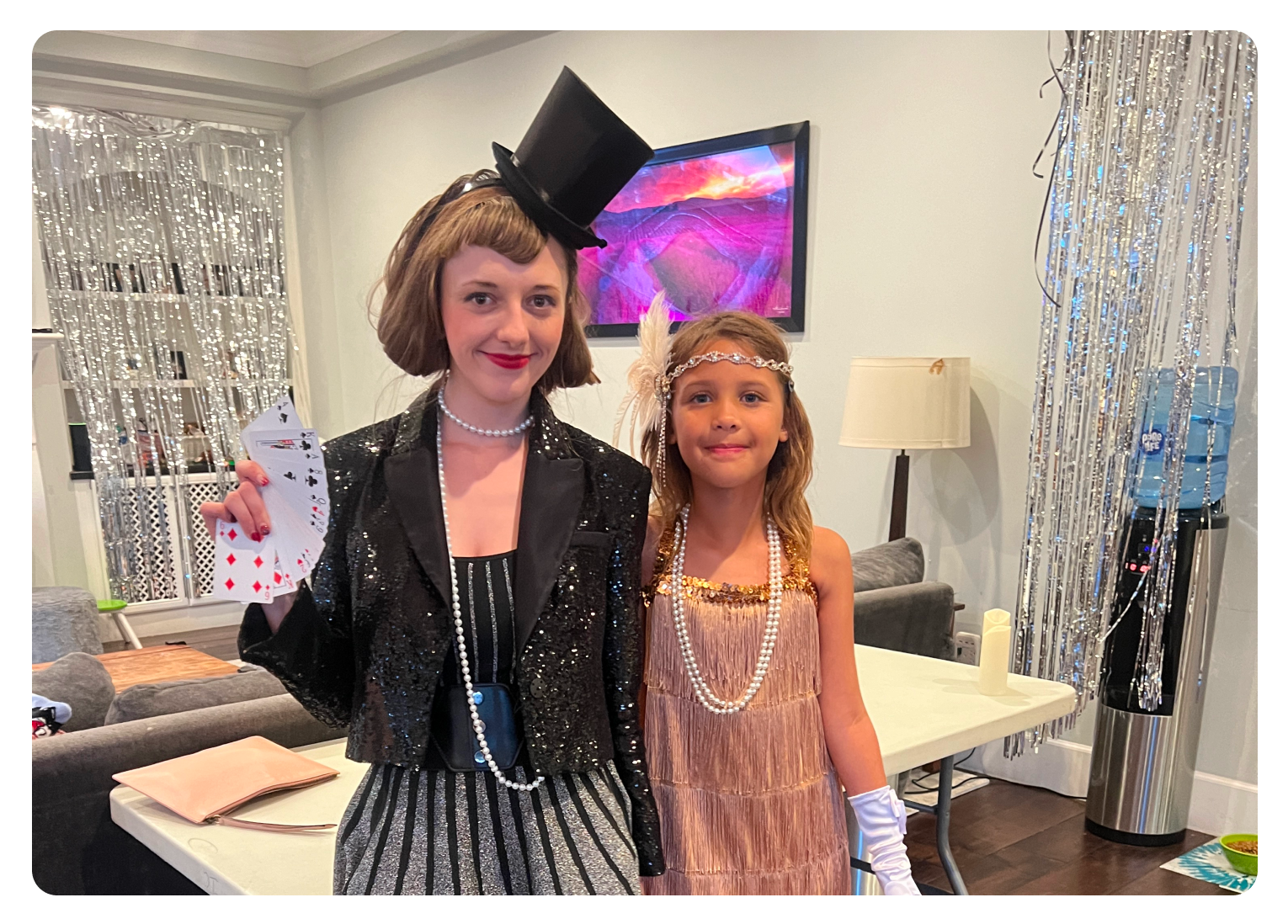
Questions Worth Asking Any Mentalist

If this is useful as a checklist: how do you describe what you do, and do you claim any genuine ability. How do you choose participants, and what happens if someone is reluctant. Does your material touch on bereavement, health, or anything private. What do you do if a participant becomes upset.

None of those are hostile questions and any experienced performer answers them immediately, because they've thought about all of it. The specific answers matter less than whether they have any, since a performer without positions on this hasn't worked enough for the situations to have arisen.

Frequently Asked Questions

Do you claim to be psychic?

No. What I do is entertainment built on skill, practice, psychology, and technique, and I say so plainly. Some performers claim otherwise and some maintain deliberate ambiguity that lets audiences conclude what they like, which is more common and harder to defend, since it produces the same effect while disclaiming responsibility for it.

Doesn't admitting it's a trick spoil the effect?

In my experience the opposite. Your certainty still failed, you still can't explain what happened, and knowing a rational explanation exists doesn't help you find it. What honesty removes isn't the wonder, it's the discomfort of an audience member believing something they've been encouraged to believe by someone who knows it isn't true.

Are there techniques you won't use?

Yes. There are methods that work by exploiting how people fill gaps, producing apparently specific information about someone's life without knowing anything, and their main historical application was charging people for false comfort. Using them on a corporate audience for a laugh is a lesser version of the same thing. That's a personal position rather than an industry standard.

What about material involving death or illness?

I don't perform anything in that territory. A room of thirty frequently contains someone recently bereaved or dealing with something serious and you have no way of knowing who, so what reads as impressive to most of the room can be genuinely distressing to one person in it. If a performer's material goes there, ask how they handle it.

How do you protect participants?

By treating them as the person something extraordinary happened to rather than the subject of anything. Nobody is made to look foolish, has anything genuinely private exposed, or becomes the target of a laugh. That requires paying attention to the person rather than executing a routine, and being willing to abandon something that was going well if they seem uncomfortable.

Do you want information about our guests beforehand?

No, and I don't ask staff or family for details. Aside from the ethics, it produces worse magic, since an effect built on secretly acquired information is fragile and feels different from one built on technique. If a performer asks you for private details about attendees, the answer to what it's for should satisfy you completely before you provide anything.

What should I ask a mentalist before booking?

How they describe what they do and whether they claim genuine ability, how they choose participants and what happens if someone is reluctant, whether their material touches bereavement, health, or anything private, and what they do if a participant becomes upset. Any experienced performer answers immediately, and the specific answers matter less than whether they have any.

Wonder Without the Woo

Mentalism works because it operates close to people, and everything I'd defend about how I perform follows from taking that seriously. No claims of genuine ability, no material touching bereavement or health, no techniques whose history is exploitation, no information gathered in advance, and participants who leave as the star of something rather than the subject of it.

None of that reduces the astonishment. It just means a female mentalist performing this way is safe to put in front of a room containing people whose circumstances you don't know, which describes every room.

Reach out with your event details, and ask me anything on this list.

Katrina Kroetch
Female Magician as a Keynote Speaker: What the Talk Actually Covers

Female Magician as a Keynote Speaker: What the Talk Actually Covers

Most people searching for a female magician are looking for entertainment, and most of what's written about it treats performance as the whole offering. There's another thing available, which is a keynote, and it's a genuinely different booking with a different purpose.

Worth explaining properly rather than mentioning in passing. I'm Magical Katrina, an award winning magician and mentalist, and I want to set out what a magic led keynote actually covers, who books it, and how to tell whether it suits your event.

A Speaker Who Uses Magic

The distinction that matters most, since both versions exist. One is a performer who adds a few remarks about believing in yourself at the end, which audiences recognize instantly and quietly discount.

The other is a keynote with genuine content, where the magic is the delivery mechanism rather than the interval. Ideas are demonstrated rather than described, points are proven on the audience rather than asserted at them, and the argument and the performance are the same object. That's the version worth booking, and it's worth asking any speaker directly which of the two they're offering, since the description frequently doesn't distinguish them.

The Career Is the Material, Not the Message

Worth being clear, because this is where these talks most often go wrong. A career in a field that has been overwhelmingly male is the source material, and it isn't in itself an argument.

What makes it a keynote is what's transferable: what being consistently underestimated actually teaches you and what it costs, how expectation shapes what an audience concludes before anybody has spoken, what it takes to build something in a field with no established path, and how attention and perception work in practice rather than in theory. Those are ideas an audience can use, which is the difference between a talk and a story.

Expectation Is a Working Material

The idea that sits closest to the craft, and the one audiences find most immediately useful. In performance, what an audience expects determines what they notice, what they discount, and what they conclude, and a performer works with that deliberately.

That transfers directly. Everyone presenting, pitching, negotiating, or leading is operating on an audience's expectations rather than on the facts alone, and a female magician working in a field where the audience's default assumption is wrong before she speaks has a practical rather than theoretical relationship with that. It's demonstrable in the room, which is why it lands harder than the same point made from a slide.

Being Underestimated Is Data

The second thread, and it's handled honestly rather than triumphantly. Being underestimated has genuine costs and it also produces information most people never get, because you see how audiences and rooms behave when they've made an assumption they haven't examined.

For an audience of people who lead, hire, present, or sell, that's a useful vantage point rather than a grievance. It also produces the most reliably surprising moment in any of these talks, since the demonstration and the argument arrive together and the audience has just supplied the evidence themselves.

Who Books It

Practically, this suits several settings. Conferences wanting an opening or closing keynote that people retain rather than a session they sit through.

Leadership meetings and company gatherings built around a theme. Women's networks and employee resource groups, though usefully at any point in the year rather than only in March. Industry events where the audience is professional and skeptical. And sales or client facing organizations, where perception, attention, and expectation are the working material of the job. Among reasons to book a female magician as a speaker, the common thread is having a message you want to survive past the following week.

How It Differs From Booking a Performance

Worth understanding, since the process is different. A performance needs logistics: date, format, audience size, and where it sits.

A keynote needs a conversation about your theme, your audience, and what you want people to leave with, so expect a call rather than an email exchange and expect questions about your organization. It's also priced differently, on preparation and content rather than time and coverage, which is why a forty minute keynote and a longer performance can cost similar amounts. Most of a keynote's work happens before the day.

What It Needs From Your Venue

Less than most keynotes. A microphone and the staging your other speakers are already using, with no additional rigging, no special lighting, no technical rehearsal beyond a normal sound check, and nothing added to your production budget.

That matters for organizers working in hotel function rooms, office spaces, or venues where production costs accumulate quickly. It also means the talk works in rooms that wouldn't accommodate a staged performance, which widens where you can program it considerably.

Where It Sits in a Program

The difficult slots are where it earns most. An opening session, where it establishes that this event isn't the usual sequence of presentations. The post lunch stretch, where attention reliably collapses and a conventional speaker struggles hardest.

A closing address, where it sends people away with something they'll describe rather than a summary they'll forget. Or the second morning of a multi day event, where attendance itself dips. Among placements for a female magician speaking rather than performing, anywhere a conventional talk would struggle is where this format has the clearest advantage.

When Another Speaker Suits Better

Worth saying plainly. If your keynote needs detailed technical content, sector specific analysis, or a particular expert credential, you need a subject matter expert rather than a speaker whose expertise lies elsewhere.

If your event is purely social, book entertainment, since nobody at a reception wants a message delivered at them. And if your program has no slot and no seated audience, a keynote has nowhere to go. I'd rather establish that at the enquiry stage than take a booking that's wrong for the brief, which serves neither of us.

Why Book Magical Katrina

If you're considering a keynote, here's my case. I'm a member of the Magic Circle in London and the Academy of Magical Arts in Hollywood, I've earned multiple magic awards, and I've performed and spoken for organizations including Formula 1, the Olympics, Porsche, Prada, and the Ritz Carlton, with appearances on Penn & Teller: Fool Us and Masters of Illusion, across events in over 20 countries. I write to the brief rather than delivering a fixed set, I need only the staging your other speakers use, and I'll tell you honestly if another speaker would serve your theme better.

Frequently Asked Questions

Is this a keynote or a magic show?

A keynote, with magic as the delivery mechanism rather than the interval. There's a version that's a performer adding remarks about believing in yourself at the end, which audiences recognize and discount immediately. The version worth booking has genuine content where the argument and the performance are the same object, so ask any speaker which they're offering.

What does the talk actually argue?

That expectation shapes what an audience concludes before anyone speaks, that being underestimated produces information most people never get, and that building something without an established path requires particular habits. The career is the source material rather than the message, and what makes it a keynote is what's transferable to an audience who lead, hire, present, or sell.

Why does the expectation idea land so well?

Because it's demonstrable in the room rather than asserted from a slide. Everyone presenting, pitching, negotiating, or leading operates on an audience's expectations rather than on facts alone, and a female magician working where the default assumption is wrong before she speaks has a practical relationship with that rather than a theoretical one.

Who typically books this?

Conferences wanting an opening or closing keynote people retain, leadership meetings and company gatherings built around a theme, women's networks and employee resource groups at any point in the year, industry events with professional and skeptical audiences, and client facing organizations where perception and attention are the working material. The common thread is wanting a message to survive past the following week.

How is booking a keynote different from a performance?

A performance needs logistics: date, format, audience size, placement. A keynote needs a conversation about your theme, audience, and desired outcome, so expect a call and questions about your organization. It's also priced on preparation and content rather than time and coverage, which is why a forty minute keynote and a longer performance can cost similar amounts.

What do you need from our venue?

A microphone and the staging your other speakers are already using. No additional rigging, no special lighting, no technical rehearsal beyond a normal sound check, and nothing added to your production budget, which matters in hotel function rooms and office spaces where costs accumulate. It also means the talk works in rooms that couldn't host a staged performance.

When would you tell us to book someone else?

When your keynote needs detailed technical content, sector specific analysis, or an expert credential I don't have, when your event is purely social and entertainment would serve better, or when your program has no slot and no seated audience. I'd rather establish that at the enquiry stage than take a booking that's wrong for the brief.

A Talk Built on What the Job Actually Teaches

Booking a female magician as a keynote speaker isn't booking a performance with a message attached. It's booking a talk about expectation, attention, and what being consistently underestimated actually teaches, delivered by demonstrating those things on the audience rather than describing them from a slide.

If your program has a slot and something you need people to retain, that's the case for the format, and if it doesn't, I'd rather tell you than take the booking.

Reach out with your event and theme, and let's talk about the room.

Katrina Kroetch
Harry Potter Wedding: Personal Touches That Mean Something

Harry Potter Wedding: Personal Touches That Mean Something

There's a version of this wedding that appears repeatedly: the same table names, the same stationery style, the same handful of details, executed beautifully and entirely interchangeable with the last four couples who did it. It looks lovely and it could belong to anybody.

The weddings that don't feel like that have one thing in common, which is that the details connect to the couple rather than only to the theme. I'm Magical Katrina, an award winning magician and mentalist who performs at weddings, and I want to work through how to make a Harry Potter wedding genuinely yours.

Generic Within a Genre Is Still Generic

Start with the problem, because it's easy to miss. A themed wedding feels distinctive compared with an untheméd one, which disguises the fact that it may be entirely standard compared with other weddings of the same theme.

Guests who've been to one before recognize it immediately, and the couple's own photographs end up looking like a category rather than a day. The fix isn't a more obscure reference, it's a detail that comes from your relationship rather than from a list. Among decisions at a Harry Potter wedding, the ones that make it yours are almost never the ones everybody makes.

Start With Why It's Your Theme

The most useful question and one couples rarely articulate. There's a reason this is your theme, and it's usually specific: it's what you read as a child, or it's what you talked about on your first date, or one of you introduced the other to it, or you read them aloud to each other during a difficult year.

That story is what makes the theme yours rather than a choice from a Pinterest board, and it's the source of every detail worth including. Work out what your actual connection is, and let the day reflect that rather than the theme in general. A wedding built on your reason will look different from one built on the idea.

Table Names That Say Something

The most commonly used element and the most commonly wasted. Table names offer a genuine opportunity and are almost always filled with the obvious choices, which tell guests nothing except that you like the books.

Better: name them after places you've been together, the years of your relationship, books you've both read, or things that matter to you both with a nod to the theme in the styling rather than the words. Guests read table names and remember the ones that clearly mean something. It costs nothing to make that choice, and it's the difference between decoration and a detail.

Readings and Words

Worth thinking about carefully, since this is where couples most often reach for the obvious. A reading from the books can be lovely if it genuinely means something to you, and it's frequently chosen because it's the expected thing rather than because it resonates.

One is plenty, and a reading that connects to your relationship rather than to the theme will land better with a room containing people who've never read a page. If nothing from the books says what you want said, don't force it. A Harry Potter wedding doesn't require literary references any more than a beach wedding requires poems about the sea.

Details Only You Would Know

The richest source and the most overlooked. The elements that make a wedding feel personal are usually small and specific: a phrase you use, a running joke, an object that matters, something only your closest friends will spot.

Those details do more than any amount of styling, because guests notice that the day was built rather than bought. They also age far better, since a day full of your own references still feels like yours in twenty years, whereas a day full of standard theme elements looks dated the moment the trend moves. Ask yourselves what three details nobody else's wedding could have, and build from there.

Bring Your Families In

An easy way to add meaning and one couples frequently forget when a theme is doing the work. Your parents and grandparents have no relationship with your theme, and they do have a relationship with you.

Include something of theirs: a piece of jewelry, a fabric, a recipe at the dinner, a photograph, a tradition from one side of the family. That sits perfectly comfortably alongside candlelight and antique books, and it means the older half of your guest list finds something recognizable in a day otherwise built around something they don't know. It also tends to be the detail people mention afterwards.

Favors and Gifts Worth Keeping

A small point where themed weddings frequently overspend on things guests discard. Themed favors are bought in bulk, look charming on the table, and are left behind in significant numbers.

If you want to give something, give something people would keep or use: something edible, something small and genuinely nice, or something connected to your story with a note explaining why. Guests keep things that mean something and discard things that were part of a scheme. Among Harry Potter wedding budget lines, favors are where money most often goes into the bin, and a smaller number of better things beats a table full of trinkets.

The Test

A simple check for any detail you're considering. Could another couple with the same theme have used this exact element without changing anything?

If yes, it's decoration, which is fine in moderation and shouldn't be most of the day. If no, because it involves your names, your history, your families, or something specific to you, it's a personal touch. A wedding needs some of the first and is made by the second, and couples who apply that test to their planning list usually find the balance is currently the wrong way round.

Entertainment That Fits the Same Principle

Briefly, since it applies. Themed entertainment frequently means something bought off a shelf that any couple could have booked, whereas the elements guests remember tend to be things that happened rather than things that were displayed.

Close up magic sits naturally in the atmosphere of this kind of wedding without requiring anything thematic, and a moment built around the two of you specifically is precisely the sort of detail that couldn't belong to anyone else. It's also on theme without being decorative, which at a Harry Potter wedding is a rare and useful quality.

A Practical Note on the Theme

One honest point. The books and films are protected intellectual property, so while you're free to plan a wedding inspired by them, professional suppliers generally avoid reproducing official artwork, logos, characters, or copyrighted text in items they create for you.

In practice this pushes you towards exactly the approach above, since the elements that are genuinely yours are also the ones nobody has any claim over. It mainly affects custom stationery and illustration, where a supplier will suggest original designs in the same spirit. Worth a brief conversation with anyone you commission.

Frequently Asked Questions

Why does a themed wedding still feel generic?

Because it's distinctive compared with an untheméd wedding while being entirely standard compared with others of the same theme. Guests who've been to one recognize it immediately, and photographs end up looking like a category rather than a day. The fix isn't a more obscure reference, it's details drawn from your relationship rather than from a list.

Where should we start?

With why it's your theme, which is usually specific: what you read as a child, what you talked about on a first date, or what one of you introduced the other to. That story is what makes it yours rather than a choice from a board, and it's the source of every detail worth including. A wedding built on your reason looks different from one built on the idea.

What should we do with table names?

Something that means something, rather than the obvious choices which tell guests only that you like the books. Places you've been together, years of your relationship, books you've both read, or things that matter to you both, with the theme in the styling rather than the words. Guests remember table names that clearly mean something.

Should we have a reading from the books?

Only if it genuinely resonates rather than because it's expected, and one is plenty. A reading connected to your relationship lands better with a room containing people who've never read a page, and if nothing from the books says what you want said, don't force it. A themed wedding doesn't require literary references any more than a beach wedding requires sea poems.

How do we include family who don't know the theme?

By including something of theirs: a piece of jewelry, a fabric, a recipe at dinner, a photograph, or a tradition from one side of the family. That sits comfortably alongside candlelight and antique books, gives the older half of your guest list something recognizable, and tends to be the detail people mention afterwards.

Are themed favors worth it?

Rarely, since they're bought in bulk, look charming on the table, and are left behind in significant numbers. Give something people would keep or use instead: something edible, something small and genuinely nice, or something connected to your story with a note explaining why. A smaller number of better things beats a table full of trinkets.

How do we tell if a detail is personal or generic?

Ask whether another couple with the same theme could have used it unchanged. If yes, it's decoration, which is fine in moderation and shouldn't be most of the day. If no, because it involves your names, history, families, or something specific to you, it's a personal touch. Most couples find their balance is currently the wrong way round.

Build a Day Only You Could Have

The Harry Potter wedding that people remember isn't the one with the most theme elements, it's the one where the details clearly belonged to a particular couple. Start from why the theme is yours, choose table names that mean something, include your families, use readings only where they resonate, spend on things guests would keep, and apply the test to everything on your list.

Do that and the theme becomes the atmosphere your day happens in rather than the thing your day is about, which is the version that still looks like yours in twenty years.

Reach out with your wedding date and venue, and let's talk about the evening.

Katrina Kroetch
Magician Near Me: How to Check Someone Is Actually Good

Magician Near Me: How to Check Someone Is Actually Good

Every performer's website says they're excellent, and every one has a page of glowing quotes. That's true of the outstanding ones and the mediocre ones alike, which leaves you comparing marketing rather than ability.

There are ways to check, and most people don't use them because they feel slightly awkward to ask about. I'm Magical Katrina, an award winning magician and mentalist, and I want to set out what actually tells you whether someone is good, when you're working through magician near me results and trying to choose.

Sustained Footage Is the Only Real Evidence

The single most useful check, and the one that separates a confident booking from a hopeful one. A promotional showreel, thirty seconds of reaction shots cut to music, tells you nothing except that the performer has hired an editor.

What you want is a continuous stretch of real performance: two or three minutes without cuts, in a room, with an audience. That shows you how they approach a group, how they handle a participant, whether reactions look genuine, and whether their manner would suit your guests. Any working performer has this. If someone offers only a polished reel, ask directly, and treat reluctance as information rather than an oversight.

Watch for How They Treat People

What to actually look for in that footage, since most people watch the tricks. The tricks are almost never the problem, and how a performer treats participants frequently is.

Watch whether the volunteer looks delighted or slightly cornered. Watch what happens when somebody interrupts or gets something wrong. Watch whether the performer is generous with the reaction or hurrying to the next thing. Among magician near me options, that's the difference between a performer your guests enjoy and one they endure politely, and it's visible within a minute if you know to look.

Reviews Are Useful If You Read Them Properly

Not for the star rating, which is uniformly high across the industry, but for what the reviewer actually describes.

Look for specifics: reviews that mention what happened, how the performer handled something, or what guests said afterwards. Generic praise tells you little, whereas a review saying they arrived early, dealt gracefully with a delayed schedule, and had guests talking about it a week later tells you a great deal. Also look for reviews from events like yours, since being excellent at corporate receptions doesn't guarantee competence at a children's party.

Credentials Mean Something, Within Limits

Worth being honest about, since performers lean on these heavily. Membership of a serious magic society indicates that a performer is genuinely part of the professional field rather than someone who bought a kit, and it usually involves some form of assessment.

What it doesn't tell you is whether they're right for your event, whether they're reliable, or whether they're pleasant to work with. Television credits are similar: they prove a performer reached a certain standard in a competitive selection process, and they say nothing about how they handle a wedding cocktail hour. Treat credentials as a floor rather than a recommendation, and check the rest separately.

Ask for a Reference From a Comparable Event

Rarely requested and genuinely informative. Ask to speak to a client whose event resembled yours, or at minimum for reviews specifically from that kind of booking.

What you're checking isn't whether the magic was good, since it probably was. You're checking whether they replied promptly, arrived when they said, handled a schedule that shifted, worked well with the venue, and left the host relaxed. Those determine whether your event runs smoothly, and they're precisely what another client will tell you unprompted. A magician near me who works regularly will have references available without hesitation.

Notice How They Communicate Before You Pay

The most predictive signal available and the cheapest to obtain. How someone handles an enquiry reliably indicates how they'll handle your event.

Prompt, clear replies that ask questions about your event suggest someone organized who prepares. Slow, vague, or evasive responses at the stage when they're trying to win your business suggest the same or worse once they have it. If you're comparing two performers and one asked about your venue, guest ages, and schedule while the other sent a price, you have more information than any credential provides.

Check They've Done Your Kind of Event

Worth separating out, since it's the most common mismatch. Corporate work, weddings, children's parties, trade shows, and after dinner sets require genuinely different skills, and being excellent at one guarantees nothing about another.

Ask how often they perform at events like yours, and look for footage and reviews from that context specifically. Websites frequently lead with the most impressive material rather than the most representative, so a performer whose site is all corporate may do three children's parties a year. Among magician near me options, relevant experience predicts your outcome better than general excellence does.

Ask the Awkward Questions

The ones people skip because raising them feels distrustful, and which any professional answers without hesitation because they're asked constantly.

Do they carry public liability insurance and can they provide a certificate. What happens if they're ill. What are the cancellation terms in both directions. If it's a children's event, do they hold a current background check. The specific answers matter less than whether they have them, since a performer who has thought about these has experience of them, and one who hasn't is telling you something about how much work they actually do.

Three Checks, Ten Minutes

If you do nothing else, do these. Watch two minutes of unedited live footage. Read three reviews for specifics rather than sentiment. And notice whether they asked you anything about your event before quoting.

That takes about ten minutes and it eliminates most of the risk in a booking. It also, incidentally, tends to sort a shortlist quickly, because performers who are genuinely working have all three available and performers who aren't tend to be missing at least one of them.

Why Book Magical Katrina

If you're checking, here's what I'd offer. I'm a member of the Magic Circle in London and the Academy of Magical Arts in Hollywood, I've earned multiple magic awards, and I've performed for clients including Formula 1, the Olympics, Porsche, and Prada, with appearances on Penn & Teller: Fool Us and Masters of Illusion, across events in over 20 countries. I'll send sustained live footage rather than a reel, references from events like yours, and insurance documentation without being chased, and I'll ask about your event before I quote for it.

Frequently Asked Questions

What's the single most useful check?

Sustained live footage, meaning two or three minutes of continuous real performance in a room with an audience, rather than a promotional showreel cut to music. That shows how they approach a group, handle a participant, and whether reactions look genuine. Any working performer has this, so ask directly and treat reluctance as information rather than an oversight.

What should I look for in the footage?

How they treat people rather than the tricks, since the tricks are rarely the problem. Watch whether the volunteer looks delighted or slightly cornered, what happens when someone interrupts or gets something wrong, and whether the performer is generous with the reaction or hurrying on. That's visible within a minute and it's the difference between guests enjoying it and enduring it.

How useful are reviews?

Useful if you read them for specifics rather than the star rating, which is uniformly high across the industry. Look for reviews mentioning what actually happened, how something was handled, or what guests said afterwards, and look for reviews from events like yours, since being excellent at corporate receptions doesn't guarantee competence at a children's party.

Do credentials and television credits matter?

Within limits. Serious magic society membership indicates someone is genuinely part of the professional field rather than a hobbyist, and television credits prove they reached a standard in a competitive process. Neither tells you whether they suit your event, whether they're reliable, or whether they're pleasant to work with. Treat credentials as a floor and check the rest separately.

Should I ask for references?

Yes, and few people do. Ask to speak to a client whose event resembled yours, or at minimum for reviews from that kind of booking. You're checking whether they replied promptly, arrived on time, handled a shifting schedule, worked well with the venue, and left the host relaxed, which is what determines whether your event runs smoothly.

What does their communication tell me?

More than any credential. How someone handles an enquiry reliably predicts how they'll handle your event, since prompt, clear replies that ask about your venue, guest ages, and schedule suggest someone who prepares. Slow or evasive responses at the stage they're trying to win your business suggest the same or worse afterwards.

What awkward questions should I ask?

Whether they carry public liability insurance and can supply a certificate, what happens if they're ill, what the cancellation terms are in both directions, and for a children's event whether they hold a current background check. Professionals answer without hesitation because they're asked constantly, and the specific answers matter less than whether they have them.

How do I check you?

Ask, and I'll send sustained live footage rather than a reel, references from events comparable to yours, and a certificate of insurance without being chased. I'll also ask about your date, venue, guest count, and the shape of your event before quoting, since a quote given without that is a guess. If I'm not right for your event, I'd rather tell you than take the booking.

Ten Minutes Beats a Better Website

Working through magician near me results means comparing marketing until you start checking properly, and the checks are quicker than people expect. Watch unedited live footage and pay attention to how participants are treated. Read reviews for specifics rather than sentiment. Confirm they've done your kind of event rather than something adjacent. Notice whether they asked you anything. And raise the awkward questions, which professionals expect.

Do that and you'll be choosing on evidence rather than on who has the better photographs.

Reach out with your event details, and ask me for any of it.

Katrina Kroetch
Corporate Christmas Party Entertainment for a Lunch or Daytime Event

Corporate Christmas Party Entertainment for a Lunch or Daytime Event

More organizations are holding their Christmas party at lunchtime, and the reasons are sound: it costs less, it includes people who can't do evenings, attendance is better, and nobody has to arrange childcare or a taxi home. It's a genuinely good decision that solves several problems at once.

It also creates one that catches organizers out, which is that entertainment designed for an evening party frequently doesn't work at midday. I'm Magical Katrina, an award winning magician and mentalist, and I want to explain what changes and what corporate Christmas party entertainment actually suits a daytime event.

The Room Is Sober

Start with the difference that governs everything else. A great deal of party entertainment relies, quietly, on an audience that has been drinking for two hours, and performers know it even if organizers don't.

At midday your colleagues are sober, alert, and considerably more discerning. Anything that would have carried a relaxed evening room on energy alone falls flat, and anything requiring people to be uninhibited will be met with polite refusal. That isn't a worse audience, it's a more honest one, and it means corporate Christmas party entertainment for a lunch has to be genuinely good rather than merely lively.

People Are Going Back to Work

The second constraint, and it shapes the mood more than organizers expect. If your lunch finishes at three and people return to their desks, nobody is fully letting go, and they shouldn't be expected to.

That rules out anything demanding abandon, and it argues for something people can enjoy without having to shift register. It also means a shorter, tighter event: two hours is generous for a daytime party, and entertainment needs to fit inside that rather than assuming an evening's worth of runway. Plan the whole thing to finish cleanly rather than trailing off.

Nobody Is Hiding in the Dark

An underrated difference. Evening parties happen in low light, which flatters everything and lets people stand at the edges comfortably, and daytime events happen in ordinary light in ordinary rooms.

That exposes weak entertainment considerably. Something staged looks staged, a performer working a bright function room has nowhere to hide, and the atmosphere a dimly lit evening supplies for free has to be generated by the content instead. It's a genuine reason to choose skill over spectacle for a lunch, since spectacle depends on production that daylight tends to undermine.

Close Up Magic Suits Daytime Particularly

Since it's my area, the specific case. Close up magic doesn't rely on atmosphere, low light, or an audience several drinks in, because it happens at conversational distance and the astonishment is the same in any lighting.

A sober audience is also a better audience for it rather than a harder one, since people paying genuine attention who still cannot explain what happened experience it more forcefully than a relaxed evening crowd. Among corporate Christmas party entertainment options for a lunch, formats that improve with attention rather than depending on its absence are the ones that transfer.

It Works Around a Meal

Practically decisive for a lunch specifically, since the meal is usually the entire structure of the event. There's no reception, no dancing, and no long evening, just people at tables for a couple of hours.

That eliminates anything needing a standing crowd or a separate slot. Table magic between courses works inside the meal that's already happening, gives a long lunch shape, and stops a table of eight fragmenting into three separate conversations. For a daytime party built entirely around a seated meal, entertainment that works at the table rather than requiring an audience is the format that fits.

Colleagues Still Don't Mix

Worth noting, since the problem doesn't disappear at lunchtime. People sit with the colleagues they see daily and talk to them, and a seating plan helps only if you use one.

Entertainment moving between tables reshuffles attention if not seating, and it gives people from different teams a shared reaction to discuss. That matters as much at a lunch as an evening party, and it's frequently the reason organizations hold the event at all. If your daytime party is meant to connect people, something that moves through the room does more than a longer lunch would.

What Doesn't Transfer

Worth naming plainly. Anything built for a late evening crowd struggles: comedy pitched at a loosened room, party bands, anything requiring dancing, and formats that depend on people being uninhibited.

Also anything requiring darkness or heavy production, since a bright function room defeats it and hiring lighting for a lunch is disproportionate. And anything requiring a full evening's runway, since your two hours are largely occupied by a meal. Among corporate Christmas party entertainment options, the evening staples are precisely the ones to reconsider when you move to midday.

Keep It Short and Deliberate

Practical guidance on the shape of the day. A daytime party works best tightly run: arrival and drinks briefly, the meal, entertainment during or immediately after it, and a clean finish.

Resist the temptation to stretch it, since a lunch that drifts into an awkward afternoon serves nobody and people start checking the time. Ending while everyone is still enjoying it is the right instinct, particularly if colleagues are returning to work, and it leaves the event remembered as good rather than long.

Why Book Magical Katrina

If you're planning a Christmas lunch, here's my case. I'm a member of the Magic Circle in London and the Academy of Magical Arts in Hollywood, I've earned multiple magic awards, and I've performed for companies including Formula 1, the Olympics, Porsche, Prada, Zapier, and the Ritz Carlton, with appearances on Penn & Teller: Fool Us and Masters of Illusion. My work doesn't depend on low light or a drinking audience, it works at a table between courses without interrupting service, and it needs no stage, sound, power, or setup. I'm fully insured with a COI available.

Frequently Asked Questions

Why doesn't evening entertainment work at lunchtime?

Because a great deal of it quietly relies on an audience that's been drinking for two hours. At midday colleagues are sober, alert, and more discerning, so anything that would have carried an evening room on energy falls flat and anything requiring uninhibited participation meets polite refusal. It's a more honest audience rather than a worse one.

Does it matter that people go back to work?

It shapes the mood considerably. If the lunch finishes at three and people return to their desks, nobody is fully letting go and they shouldn't be expected to, which rules out anything demanding abandon. It also means a shorter event, since two hours is generous for a daytime party, and entertainment has to fit inside that rather than assuming an evening's runway.

Why does the lighting matter?

Because evening parties happen in low light that flatters everything and lets people stand comfortably at the edges, whereas daytime events happen in ordinary light in ordinary rooms. That exposes weak entertainment, since something staged looks staged and a performer in a bright function room has nowhere to hide. Atmosphere has to come from the content rather than the setting.

What actually works at a Christmas lunch?

Formats that don't depend on atmosphere or alcohol and work around a meal, since the meal is usually the entire structure. Table magic between courses fits inside what's already happening, gives a long lunch shape, and stops a table fragmenting into separate conversations. A sober audience is also a better audience for close up work, since attention intensifies the effect.

Will colleagues still mix at a daytime event?

Not on their own, since people sit with the colleagues they see daily regardless of the hour. Entertainment moving between tables reshuffles attention if not seating and gives people from different teams a shared reaction. If your daytime party exists partly to connect people, something moving through the room does more than a longer lunch would.

What should we avoid booking?

Anything built for a late evening crowd: comedy pitched at a loosened room, party bands, anything requiring dancing, and formats depending on people being uninhibited. Also anything requiring darkness or heavy production, since a bright room defeats it and hiring lighting for a lunch is disproportionate. The evening staples are exactly what to reconsider at midday.

How long should the event be?

Around two hours, tightly run: brief arrival and drinks, the meal, entertainment during or immediately after, and a clean finish. Resist stretching it, since a lunch drifting into an awkward afternoon serves nobody and people start checking the time. Ending while everyone is still enjoying it leaves the event remembered as good rather than long.

Plan for Midday, Not a Shrunken Evening

Moving your Christmas party to lunchtime is a sensible decision that solves several problems, and it fails when the entertainment is chosen as though it were still an evening event. A sober room in ordinary light with two hours and a meal in the middle needs something different: corporate Christmas party entertainment that doesn't depend on atmosphere, works at a table, improves with attention rather than requiring its absence, and finishes cleanly.

Choose for the room you'll actually have and a Christmas lunch frequently produces a better event than the evening version it replaced.

Reach out with your date and the shape of your lunch, and let's talk about what would suit.

Katrina Kroetch
Halloween Magic Show for Restaurants, Bars, and Venues

Halloween Magic Show for Restaurants, Bars, and Venues

Halloween is one of the few genuinely themed revenue nights in a venue's calendar, and every operator in your area knows it. Which means your Halloween offer is competing with a street full of the same thing: some decoration, a themed cocktail, a playlist, and a hope that people choose you.

Differentiation on that night is hard and it's worth doing, because the trade is real. I'm Magical Katrina, an award winning magician and mentalist, and I want to explain how a Halloween magic show works as venue programming rather than as private party entertainment.

Everyone Has Decoration and a Themed Cocktail

Start with the competitive reality. The standard Halloween offer costs a venue very little and differentiates almost nothing, since your neighbours are doing precisely the same at a similar price.

Guests choosing where to spend Halloween are choosing between broadly identical propositions, which usually means they default to habit or proximity. A Halloween magic show gives you something to promote that isn't decoration, and something happening in the room that guests can't get three doors down. In a night where everyone is competing on atmosphere, actual content is the differentiator.

It Gives You Something to Advertise

Practically, this is where the value shows first. Marketing a Halloween night is difficult precisely because the offer is generic: a photograph of a pumpkin and a cocktail says the same thing as everyone else's.

A named attraction changes the message from we are open on Halloween to something is happening on Halloween. That's a considerably better post, a better listing, and a better reason for someone to book a table rather than decide on the night. Among ways of promoting a Halloween magic show night, the fact that you can promote it at all is a substantial part of the return.

Mentalism Suits an Adult Venue Crowd

Worth knowing when choosing a format. Traditional magic delights, which is cheerful, whereas mentalism unsettles gently, which is closer to the register a Halloween night in a bar or restaurant is reaching for.

For an adult crowd who came out for atmosphere rather than novelty, a performer working in mentalism produces exactly that: a guest thinking of something private and hearing it said aloud, in a candlelit room in late October. A Halloween magic show built around mentalism suits a venue considerably better than something colourful and family oriented, and it's worth asking any performer how much of their work sits in that register.

Table Magic Works in a Busy Room

The practical argument for this format specifically. Your Halloween night will be loud, full, and running normal service, which eliminates most entertainment.

Live music competes with conversation, anything amplified fights the room, and anything requiring a stage consumes covers you're trying to sell. Close up magic performed table to table needs no stage, power, sound, or floor space, and works at conversational volume within the room's ambient level rather than above it. It also works around service rather than interrupting it, which on your busiest themed night matters more than usual.

It Fills a Midweek Halloween

The scheduling problem operators know well. When Halloween falls midweek, the trade splits: some guests come out on the night itself and many go out on the nearest weekend, leaving you with two half nights rather than one full one.

Programming something specific on the midweek date gives people a reason to choose the actual day, which is otherwise the weaker of the two. A Halloween magic show on a Tuesday the thirty first is a stronger proposition than decoration alone, and midweek is also when a performer is most likely to be available, since the weekend either side is where private bookings concentrate.

Guests Stay Longer

The commercial mechanism, stated plainly. Table magic between courses extends the time guests spend at a table without extending service, because the gaps that already exist become part of the evening rather than a lull.

People enjoying themselves order another round and stay for dessert, which on a themed night with a full room affects the numbers meaningfully. It's difficult to attribute precisely and easy enough to feel in average spend, and it costs a fraction of what a comparable differentiator would. For a night where you're already at capacity, extending dwell time is the remaining lever.

What Operators Need From a Performer

Different from what a private client needs, and worth establishing. Reliability above everything, since a performer who doesn't appear on a night you've promoted is a service failure rather than a disappointment.

Comfort working around service, meaning knowing when to approach a table and when to leave it. Appropriate tone for a public room, which on Halloween means atmospheric rather than genuinely frightening, since you'll have a mixed crowd and possibly families earlier in the evening. Insurance and paperwork handled without chasing. And a willingness to work inside your operation rather than around it.

Book Absurdly Early

The constraint that decides whether any of this is possible. October concentrates a season's demand into a few weeks, and the weekend nearest Halloween absorbs most of it, with private parties and corporate bookings taken months ahead.

Venue programming is frequently decided later than that, which is how operators find themselves with nobody available. If Halloween matters to your trade, treat it like a December booking and arrange it in the summer. If you're reading this in October, ask about the actual date rather than the weekend, since midweek availability is genuinely better.

A Note on "Local vs. Traveling In"

Worth knowing: performers who travel often have availability when local ones are booked, and October fills up early for everyone. Travel is discussed openly and factored into the quote rather than being your problem. I'm based in the Los Angeles area and travel for events, and for a single date rather than a season, travelling in is entirely straightforward.

Why Book Magical Katrina

If you're programming Halloween, here's my case. I'm a member of the Magic Circle in London and the Academy of Magical Arts in Hollywood, I've earned multiple magic awards, and I've performed for clients including Formula 1, the Olympics, Porsche, Prada, and the Ritz Carlton, with appearances on Penn & Teller: Fool Us and Masters of Illusion. I blend close up magic with mentalism, which is the register a Halloween venue night calls for, I work at conversational volume around service with no stage or setup, and I read when a table wants attention and when it doesn't. I'm fully insured with a COI available.

Frequently Asked Questions

How do we differentiate on a night everyone is competing for?

Not with decoration, since the standard offer costs little and differentiates nothing, and your neighbours are doing the same at a similar price. Guests choosing where to spend Halloween face broadly identical propositions and default to habit or proximity. A Halloween magic show gives you something happening in the room that they can't get three doors down.

Does it help with promotion?

Substantially, and it's where the value shows first. Marketing a generic Halloween night is difficult because a photograph of a pumpkin says what everyone else's says, whereas a named attraction changes the message from we are open on Halloween to something is happening on Halloween. That's a better post, a better listing, and a better reason to book a table in advance.

What format suits a bar or restaurant crowd?

Mentalism rather than colourful family magic, since traditional magic delights while mentalism unsettles gently, which is closer to the register an adult Halloween night is reaching for. A guest thinking of something private and hearing it said aloud in a candlelit room in late October produces exactly the atmosphere you're selling, so ask performers how much of their work sits there.

Will it work in a full, loud room?

Better than the alternatives. Live music competes with conversation, anything amplified fights the room, and anything needing a stage consumes covers. Close up magic performed table to table needs no stage, power, sound, or floor space, works at conversational volume within the room's ambient level, and operates around service rather than interrupting it.

What if Halloween falls midweek?

That's where it helps most. A midweek Halloween splits the trade between the night itself and the nearest weekend, leaving two half nights, and programming something specific gives people a reason to choose the actual day. Midweek is also when performers are most available, since the surrounding weekend is where private and corporate bookings concentrate.

Does it affect spend?

Through dwell time, which is ordinary hospitality economics. Table magic between courses extends the time guests spend at a table without extending service, since existing gaps become part of the evening, and people enjoying themselves order another round and stay for dessert. On a themed night with a full room, that's the remaining lever once you're at capacity.

How early should we book?

Treat it like December and arrange it in the summer. October concentrates a season's demand into a few weeks, the weekend nearest Halloween absorbs most of it, and private and corporate bookings are taken months ahead, whereas venue programming is frequently decided later, which is how operators end up with nobody available. If it's already October, ask about the actual date rather than the weekend.

Give Them a Reason to Choose You

Halloween is one of the few nights where guests actively decide where to go rather than defaulting, and every venue in your area is competing with the same decoration and a themed cocktail. A Halloween magic show gives you something genuinely different: content rather than atmosphere, something worth promoting, a format that works in a full loud room around service, and a reason for guests to book the midweek date rather than the weekend.

If Halloween matters to your trade, I'd be glad to talk about programming it.

Reach out with your venue and date, and let's make it a night people choose.

Katrina Kroetch