Magicians in Las Vegas for Team Offsites and Leadership Retreats

Magicians in Las Vegas for Team Offsites and Leadership Retreats

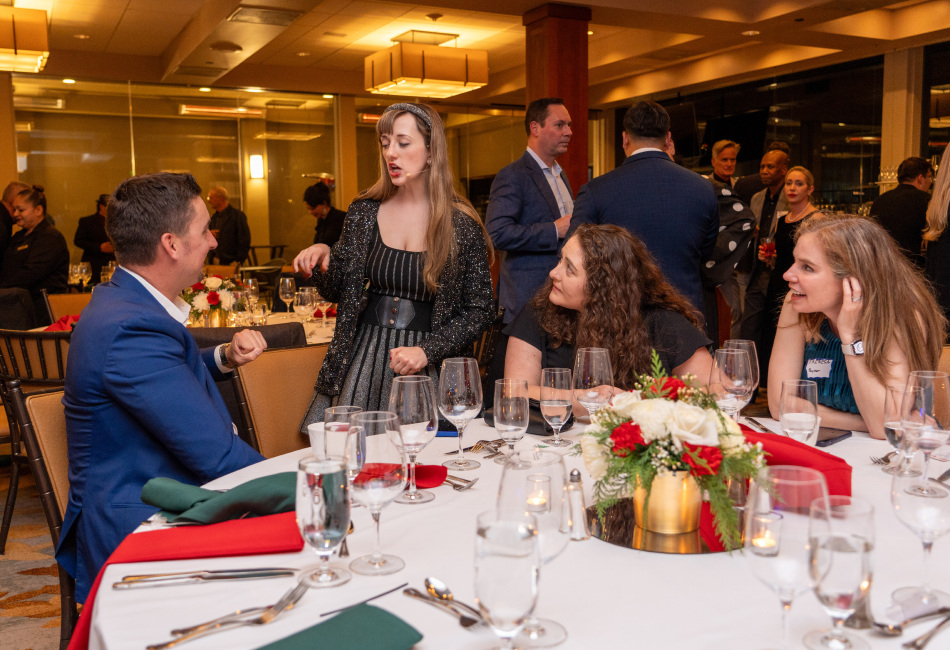
A team offsite is a different animal from a conference. Twenty or forty people, a suite or a private room, two days of genuinely hard working sessions, and an evening in between that somebody has to plan and nobody quite knows what to do with.

The usual arguments for entertainment don't apply, since this group already knows each other. I'm Magical Katrina, an award winning magician and mentalist, and I want to set out where magicians in Las Vegas fit into an offsite, which is a narrower case than at a conference and a real one.

The Mixing Argument Doesn't Apply

Start by discarding the standard case. Most corporate entertainment is justified on getting people talking to colleagues they don't know, which is genuinely the point at a conference or a holiday party.

At an offsite, twenty people have just spent eight hours in a room together and will do it again tomorrow. Nobody needs introducing. That means the evening has to justify itself differently, and organizers who book entertainment on the mixing argument frequently find it lands oddly with a group who've been talking to each other all day.

The Evening Has to Be Unlike the Day

What actually matters. An offsite day is dense, deliberate, and hard work: strategy, difficult conversations, decisions, and a facilitator keeping the group on task.

The evening's job is to be the opposite. What fails is anything that extends the working register, which is why a dinner with a continued discussion feels like a long day rather than an evening off. Something genuinely unlike the agenda gives the group a break that a change of room doesn't, and it's what people remember from an offsite that otherwise blurs into slides.

Don't Program More Team Building

Worth saying directly, since it's the reflex. A group that has spent the day in facilitated sessions does not want an evening of structured activities, and will experience anything resembling an exercise as more work.

That's true even when they enjoyed the day. The distinction people draw is between things done to them and things they simply experience, and an evening should be firmly in the second category. A magicians in Las Vegas booking that people watch and react to rather than participate in structurally is considerably better received than another activity with an objective attached.

Senior Groups Need Care

Worth flagging, since leadership retreats bring particular sensitivities. A room of senior people cannot be made to look foolish in front of each other, and the hierarchy in the room doesn't dissolve because it's evening.

Anything requiring participation, competition, or performance risks exactly that, and the person who'd be most embarrassed is usually the one everyone else watches. Ask how a performer handles senior participants, and expect an answer reflecting experience. At a leadership offsite, that judgement matters more than the material does.

Your Room Has No Facilities

Practically decisive. Offsites happen in hospitality suites, private dining rooms, resort meeting spaces, and occasionally somewhere off property, none of which has a stage, a sound system, or space to spare once a group is in it.

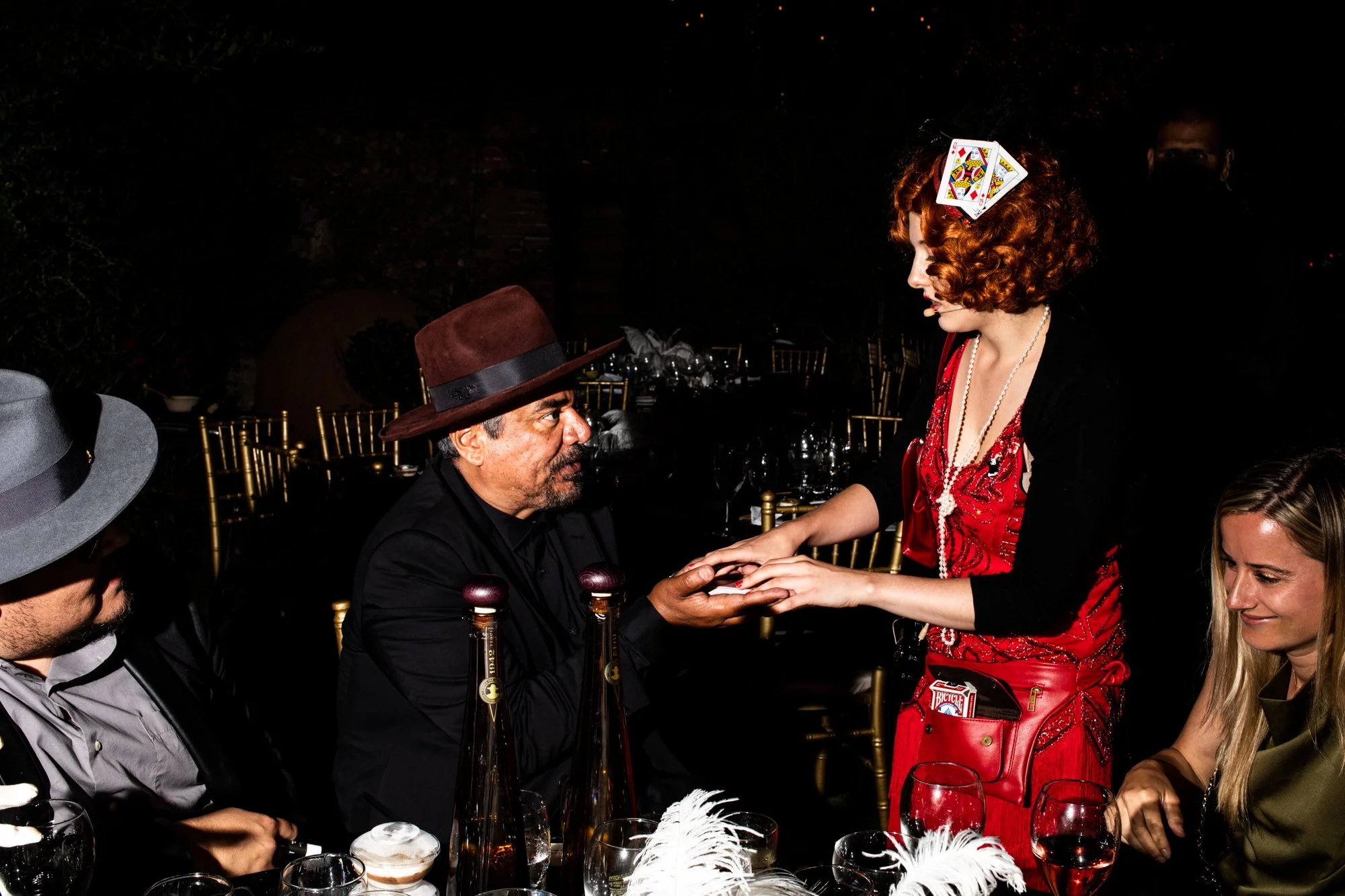
Close up magic needs none of it, works in a suite or around a dinner table exactly as it is, and requires nothing from a venue you booked for working sessions rather than for events. For a group of twenty around a table, it's one of very few formats that fits the setting rather than dominating it.

Small Groups Are the Right Size

Worth stating, since organizers assume otherwise. Close up magic improves as the group shrinks, since everyone sees everything from a few feet away and the whole room shares each reaction rather than hearing about it.

Twenty people around a dinner table is close to ideal conditions, and considerably better than the same performer working a room of three hundred. If you've assumed your group is too small to justify entertainment, the opposite is closer to true: you're getting the version of this that works best.

It Marks the Evening as Separate

The underrated function. An offsite blurs, and by the second afternoon people struggle to recall which discussion happened when.

Something distinct in the middle gives the two days a shape and a punctuation mark, which helps more than it sounds. Groups consistently reference the evening when describing an offsite afterwards, partly because it's the part that wasn't work. Among reasons to book magicians in Las Vegas for an offsite, giving two indistinguishable days a center is a genuine one.

Sometimes They'd Rather Have the Evening

Worth saying honestly. If your group has travelled, worked hard all day, and has an early start tomorrow, an unstructured evening is frequently the better gift.

Some teams want dinner and bed, and programming an event because the budget existed produces resentment rather than goodwill. Ask them, or ask two people who'll tell you the truth. If the answer is that they'd rather have the time, give them the time, and book something for the evening people are actually looking forward to instead.

A Note on "Local vs. Traveling In"

Worth knowing: many performers travel to Las Vegas, with travel discussed openly and factored into the quote rather than being your problem to arrange. I'm based in the Los Angeles area and travel to Vegas regularly for corporate groups of every size, including small offsites rather than only large events.

Why Book Magical Katrina

If you're planning an offsite, here's my case. I'm a member of the Magic Circle in London and the Academy of Magical Arts in Hollywood, I've earned multiple magic awards, and I've performed for companies including Formula 1, the Olympics, Porsche, Prada, Zapier, and the Ritz Carlton, with appearances on Penn & Teller: Fool Us and Masters of Illusion. I work particularly well with small senior groups, nobody is put on the spot or made the joke, and I need no stage, sound, or setup, so a suite or a dinner table works exactly as it is.

Frequently Asked Questions

The usual argument doesn't fit our group. Does entertainment still make sense?

It has to justify itself differently, since twenty people who've spent eight hours in a room together don't need introducing. The case at an offsite is that the evening should be unlike the day, and something genuinely different from the agenda gives the group a break that a change of room doesn't.

What should the evening do?

The opposite of the day, since an offsite day is dense, deliberate, and hard work. What fails is anything extending the working register, which is why a dinner with continued discussion feels like a long day rather than an evening off. The evening is what people remember from an offsite that otherwise blurs into slides.

Should we book a team building activity?

No, since a group that has spent the day in facilitated sessions will experience anything resembling an exercise as more work, even if they enjoyed the day. The distinction people draw is between things done to them and things they simply experience, and an evening should be firmly in the second category.

We're a leadership group. Any particular concerns?

Dignity, since a room of senior people cannot be made to look foolish in front of each other and the hierarchy doesn't dissolve because it's evening. Anything requiring participation, competition, or performance risks exactly that. Ask how a performer handles senior participants and expect experience rather than reassurance.

Our room is a suite with no facilities. Does that matter?

No, and it's the usual offsite situation. Close up magic needs no stage, sound, or space to spare, works in a suite or around a dinner table exactly as it is, and requires nothing from a venue booked for working sessions rather than events. It's one of very few formats that fits the setting rather than dominating it.

Is twenty people too small?

Closer to ideal than too small, since close up magic improves as the group shrinks, with everyone seeing everything from a few feet away and the whole room sharing each reaction. Twenty around a dinner table is considerably better conditions than a room of three hundred, so you're getting the version that works best.

Is there a reason not to book anything?

Yes, if your group has travelled, worked hard, and has an early start, since an unstructured evening is frequently the better gift and programming an event because the budget existed produces resentment. Ask two people who'll tell you the truth, and if they'd rather have the time, give them the time.

How do I book you, and what do you need to get started?

Reach out with your dates, the property, group size, and roughly how the two days are structured. That's enough for me to check availability, suggest which evening works best, and send a quote including travel. Tell me about the seniority of the group too, since it affects how I'd handle participation.

Give Them an Evening That Isn't the Day

An offsite is two days of concentrated work with an evening in the middle that has to be genuinely different from them, and the usual arguments for entertainment don't apply to a group who've been talking to each other since breakfast. A magicians in Las Vegas booking works there when it's something people experience rather than participate in, careful with a senior room, and suited to a suite or a dinner table rather than requiring a venue.

And if your group would honestly rather have the evening free, give it to them, since that's the better version of the same intention.

Reach out with your dates and group, and I'll tell you honestly whether it suits.

Katrina Kroetch
Magicians New York: Planning an Outdoor or Rooftop Event

Magicians New York: Planning an Outdoor or Rooftop Event

New York's outdoor event season is short, expensive, and heavily booked, which is why a rooftop in June is secured in February and why everybody wants the same eight weeks. It's also less reliable than the photographs suggest.

Heat, humidity, wind at height, and residential noise rules all shape what's possible. I'm Magical Katrina, an award winning magician and mentalist, and I want to set out what planning an outdoor event here actually involves, and where magicians New York hosts book fit around it.

The Usable Season Is Narrow

Start with the window. Genuinely comfortable outdoor evenings here run from late spring into early summer, and again from September into early October, with high summer frequently too hot and humid for a room full of people standing in formalwear.

That means the popular dates are concentrated, and venues know it. If your event is flexible, September is the most reliable month for an outdoor evening and considerably easier to book than June. If it isn't flexible, plan for the conditions you'll actually get rather than the ones the venue photographed in May.

Humidity Empties a Terrace

The specific problem in July and August, and it's underestimated. Heat alone is manageable, and heat with New York humidity at seven in the evening moves people indoors quickly regardless of how good the view is.

Guests in suits and dresses reach their limit faster than hosts expect, and a terrace that looked full at six is noticeably thinner by eight. Plan for that rather than hoping: shade, fans where permitted, cold drinks available outside rather than only at an indoor bar, and an indoor space genuinely open rather than nominally available.

Nearly Every Rooftop Has an Indoor Half

The structural reality and the most useful thing to plan around. Almost all New York rooftop and terrace venues include an interior space, and almost every outdoor event here uses both, frequently transitioning mid evening without any announcement.

A format that can't move with your guests ends up performing to an empty terrace while the room is inside. A magicians New York booking for close up work relocates with people and nobody notices, since there's nothing to move, reconnect, or set up again. Tell your performer both spaces are in play and they'll work the whole event rather than half of it.

Noise Rules Are Real and Enforced

Practically important and frequently discovered late. Rooftops sit above residential neighbors, and many venues operate under conditions restricting amplified sound after a particular hour or limiting it entirely.

That can mean music ending earlier than your event does. Close up magic is unaffected, since it operates at conversational volume and doesn't register as amplified entertainment, which means it continues through the part of the evening when the music has had to stop. For a venue with a sound curfew, that's a genuinely useful property rather than a technicality.

Wind at Height Is a Factor

Worth knowing, since it catches people out. A terrace on the thirtieth floor behaves differently from a garden, and wind affects candles, light décor, signage, and anything on a table that isn't weighted.

It also affects performers: anything with cards, papers, or light objects is harder outdoors at height than indoors, which experienced performers plan around rather than discover. It's a minor consideration for close up work and a significant one for anything involving lightweight materials or amplified sound, which wind carries away from an audience rather than towards it.

Getting Anything Up There Is a Problem

The New York specific logistics point. Rooftop venues sit inside buildings with freight elevator booking windows, load in restrictions, and rules about what can be carried through a lobby.

Anything requiring equipment, staging, or a build is exposed to all of it, with time slots that are enforced rather than flexible. A supplier arriving with a case avoids the question entirely, which at a rooftop venue is worth more than it would be at ground level. Ask about building access early for every supplier, since it's a process rather than a formality.

Read Your Weather Clause

Practical and frequently skipped. Venue contracts for outdoor spaces usually specify who decides whether to move indoors, when that decision is made, and what happens if the weather turns after setup.

Read it before signing, since a venue that makes the call at noon for a seven o'clock event is a different proposition from one that decides at five. Also confirm that the indoor space is actually included rather than available for an additional fee, which is a distinction people discover on a rainy afternoon.

Tell Guests to Bring a Layer

Small and consistently appreciated. An evening that's warm at six is cooler at ten, particularly at height and near water, and guests dressed for a summer party feel it.

One line in the invitation prevents a terrace emptying earlier than it needs to, and heaters or wraps where the venue permits them extend your usable outdoor time by a genuine margin. None of it is expensive, and it's the difference between an outdoor space used all evening and one abandoned after two hours.

A Note on "Local vs. Traveling In"

Worth knowing: performers who travel to New York work from a different calendar than those based there, which matters in a season where the popular dates concentrate into a few weeks. Travel is discussed openly and factored into the quote. I'm based in the Los Angeles area and travel to New York for events throughout the year.

Why Book Magical Katrina

If your event has outdoor space in play, here's my case. I'm a member of the Magic Circle in London and the Academy of Magical Arts in Hollywood, I've earned multiple magic awards, and I've performed for clients including Formula 1, the Olympics, Porsche, Prada, and the Ritz Carlton, with appearances on Penn & Teller: Fool Us and Masters of Illusion. I need no stage, power, sound, or setup, so a terrace and an interior room work identically, I move with your guests when the evening turns, and I work at conversational volume, which continues after a sound curfew stops the music.

Frequently Asked Questions

  • When is the outdoor season here?

Narrower than people assume: genuinely comfortable evenings run from late spring into early summer and again from September into early October, with high summer frequently too hot and humid for a room of people in formalwear. September is the most reliable month and considerably easier to book than June if your date is flexible.

  • Is humidity really a problem?

More than heat alone, since New York humidity at seven in the evening moves people indoors quickly regardless of the view, and guests in suits and dresses reach their limit faster than hosts expect. Plan for shade, fans where permitted, cold drinks available outside, and an indoor space genuinely open rather than nominally available.

  • Should we plan for both spaces?

Yes, since almost all rooftop and terrace venues include an interior and almost every outdoor event here uses both, frequently transitioning mid evening without announcement. A format that can't move with your guests performs to an empty terrace, whereas close up magic relocates unnoticed with nothing to move or reconnect.

  • What about noise restrictions?

Real and enforced, since rooftops sit above residential neighbors and many venues operate under conditions restricting amplified sound after a particular hour. That can mean music ending before your event does. Close up magic is unaffected at conversational volume, so it continues through the part of the evening when the music has stopped.

  • Does wind matter at height?

Genuinely, since a terrace on the thirtieth floor behaves differently from a garden, affecting candles, light décor, signage, and anything unweighted. It also affects performers using cards or light objects, which experienced ones plan around, and it carries amplified sound away from an audience rather than towards it.

  • What about getting equipment up there?

It's a process rather than a formality, since rooftop venues sit inside buildings with freight elevator windows, load in restrictions, and lobby rules, all enforced rather than flexible. Anything requiring staging or a build is exposed to all of it, whereas a supplier arriving with a case avoids the question entirely.

  • What should we check in the venue contract?

The weather clause: who decides whether to move indoors, when that decision is made, and what happens if conditions turn after setup. A venue calling it at noon for a seven o'clock event is different from one deciding at five. Also confirm the indoor space is included rather than available for an additional fee.

  • How do I book you, and what should I tell you?

Reach out with your date, venue, guest numbers, and which spaces are in play. That's enough for me to check availability and send a quote, and I'll plan for both spaces as standard since I need no stage, power, or setup and can move with your guests the moment the evening turns.

Plan for the Evening, Not the Photograph

A New York rooftop is a genuinely lovely setting and a moving target, since the usable season is short, the humidity empties a terrace in high summer, the music stops before you'd like, and at some point half your event is indoors. A magicians New York booking for close up work suits all of that: nothing needed from a venue with a freight elevator schedule, conversational volume that outlasts a sound curfew, and relocation inside that nobody notices happening.

Book September if you can, read the weather clause, and tell your guests to bring a layer.

Reach out with your date and venue, and I'll plan for both spaces.

Katrina Kroetch
Women's History Month for Kids: What Works With Teenagers

Women's History Month for Kids: What Works With Teenagers

Teenagers have been receiving versions of this since they were six. Assemblies, posters, worksheets, and a rotating cast of the same admirable figures, delivered with an earnestness they learned to recognise somewhere around year five.

By thirteen they're alert to being managed, and anything that feels like a lesson with a predetermined conclusion gets dismissed before it starts. I'm Magical Katrina, an award winning magician and mentalist, and I want to set out what Women's History Month for kids looks like when the kids are teenagers.

They've Heard It Before

Start with the honest assessment. A fifteen year old has encountered this topic annually for a decade, and the version they've received has been consistently simplified: remarkable women who overcame obstacles, presented approvingly.

That's not wrong and it's been said to them enough. Repeating it produces polite disengagement rather than interest, and the polite disengagement is worse than resistance because nobody notices it. Among Women's History Month for kids approaches for this age, assuming the subject is fresh is the mistake that undermines everything else.

Earnestness Is What They're Reacting To

Worth being precise about the obstacle, since it isn't the subject. Teenagers are alert to adults telling them what to think, and a session where the conclusion is evident from the title invites them to switch off rather than engage.

They'll engage with the same subject presented as genuinely complicated, contested, or open. What they won't engage with is being walked towards a position everyone in the room already knows they're expected to reach. That's not cynicism, it's a reasonable response to a decade of exactly that, and it's the thing to design around.

Give Them Something to Argue With

The approach that works at this age. Teenagers engage through disagreement, and a session that invites genuine argument produces attention that a session inviting agreement doesn't.

That means material with actual complexity: a figure whose legacy is contested, a question without a settled answer, a decision people still disagree about. Let them take positions and defend them, including positions adults in the room find uncomfortable. A room arguing is a room paying attention, and it's considerably more productive than a room nodding.

Contemporary Beats Historical

Practical and worth acting on. Historical figures feel finished to teenagers, and admirable people from a century ago register as a different category of person rather than as anyone they could resemble.

Someone working now, in a field they recognize, facing obstacles that plainly still exist, lands completely differently. That's true whether it's a scientist, a founder, an athlete, or anyone whose work is visibly unfinished. Among Women's History Month for kids choices for teenagers, the shift from historical to contemporary does more than any change of format.

Don't Patronize the Material

Worth stating, since programming for teenagers frequently gets this wrong in both directions. Simplified content is noticed immediately and resented, and so is content that assumes they can't handle complexity or difficult detail.

Fifteen year old’s can discuss structural obstacles, contested legacies, and uncomfortable history. What they can't do is pretend to find a sanitized version interesting. If the honest version of a subject is complicated, give them the complicated version, since the simplified one signals that you don't think they're capable of the real one.

The Boys Are Half the Room

Worth planning around, since this is where sessions most often fail with this age group. Teenage boys are acutely sensitive to being cast as the problem, and a session framed that way produces defensiveness and disengagement that spreads.

Frame it as a subject rather than a message, let the boys hold opinions and argue them, and avoid anything that makes them the audience for a correction. That isn't softening the content, it's recognizing that a room where half the participants have disengaged isn't achieving anything regardless of how accurate the material is.

Show Rather Than Tell

The principle that applies across ages and matters most here. Teenagers discount assertion and respond to demonstration, which is why a person in the room doing something genuinely difficult lands where a presentation about achievement doesn't.

That might be a visitor with a real job, someone whose work they can see rather than hear about, or anything where the evidence is in front of them. The point arrives without an argument being made, which is precisely what an audience alert to being persuaded responds to. Nothing needs saying about it afterwards.

Be Honest About What One Session Does

Worth acknowledging, since expectations shape disappointment. A single session doesn't change how a fifteen year old thinks about anything, and treating it as though it might sets you up to conclude it failed.

What it can do is present something they hadn't considered, complicate a picture they thought was settled, or introduce a person they remember. That's modest and real. Over years and across many small encounters, those accumulate into something, which is a reasonable thing to aim at and a poor thing to claim.

Where a Live Performance Fits

Briefly, since it's my corner. Magic has been overwhelmingly male throughout its history, and when I perform for teenage audiences, the fact that the person doing something genuinely difficult and baffling is a woman does its own work without a word of framing.

It also solves the engagement problem, since teenagers who'd dismiss a talk can't dismiss something they can't explain. The material is genuinely hard, the skill is undeniable, and the point is demonstrated rather than delivered. If you're planning March programming for this age group, I'm glad to talk it through.

Frequently Asked Questions

Why doesn't the usual approach work at this age?

Because a fifteen year old has encountered the topic annually for a decade in a consistently simplified form, so repeating it produces polite disengagement rather than interest. That disengagement is worse than resistance because nobody notices it, and assuming the subject is fresh undermines everything else you plan.

What are they actually reacting to?

Earnestness rather than the subject, since teenagers are alert to adults telling them what to think and a session whose conclusion is evident from the title invites switching off. They'll engage with the same subject presented as genuinely complicated or contested, and won't engage with being walked towards a position they know they're expected to reach.

What does work?

Giving them something to argue with, since teenagers engage through disagreement and a session inviting genuine argument produces attention that one inviting agreement doesn't. That means real complexity: a contested legacy, a question without a settled answer, or a decision people still disagree about, with room to take positions and defend them.

Historical figures or contemporary ones?

Contemporary, since historical figures feel finished and people from a century ago register as a different category rather than as anyone a teenager could resemble. Someone working now, in a recognizable field, facing obstacles that plainly still exist, lands completely differently and does more than any change of format.

Are we pitching it too simply?

Possibly, since simplified content is noticed immediately and resented at this age, as is anything assuming they can't handle complexity. Fifteen year old’s can discuss structural obstacles and uncomfortable history, and the simplified version signals that you don't think they're capable of the real one.

How do we avoid losing the boys?

Frame it as a subject rather than a message, let them hold and argue opinions, and avoid anything casting them as the audience for a correction, since teenage boys are acutely sensitive to being made the problem and the resulting disengagement spreads. That's recognizing a practical reality rather than softening the content.

Why does demonstration work better than explanation?

Because teenagers discount assertion and respond to evidence in front of them, which is why a person doing something genuinely difficult lands where a presentation about achievement doesn't. The point arrives without an argument being made, which is what an audience alert to being persuaded actually responds to.

What can one session realistically achieve?

Presenting something they hadn't considered, complicating a picture they thought was settled, or introducing a person they remember. It won't change how a fifteen year old thinks about anything on its own, and treating it as though it might sets you up to conclude it failed. Over years, small encounters accumulate.

Stop Explaining and Start Showing

Women's History Month for kids looks completely different at fifteen than at five, because the audience has heard the simplified version for a decade and can spot a predetermined conclusion from the title. What works instead is complexity they can argue with, contemporary figures rather than finished historical ones, material that doesn't patronize them, framing that doesn't cast the boys as the problem, and demonstration rather than explanation.

And it's worth being honest that one session presents something rather than changes anything, which is a reasonable aim and a poor claim.

Reach out if you're planning something for this age group, and I'm glad to talk about what would land.

Katrina Kroetch
Halloween Magician: What Actually Changes About the Performance

Halloween Magician: What Actually Changes About the Performance

Search in September and you'll find a great many performers offering Halloween shows. A proportion of them are offering their usual act with a themed photograph on the listing, which is fine and worth knowing before you book something expecting otherwise.

There are genuine differences, though, and they're worth understanding. I'm Magical Katrina, an award winning magician and mentalist, and I want to set out what actually changes when a Halloween magician performs for the season, and how to tell whether a performer has thought about it.

Mentalism Suits the Season, Magic Doesn't Especially

Start with the substantive difference. Traditional magic delights: an object behaves impossibly, people laugh, and the reaction is warm and immediate.

Mentalism unsettles gently: a performer appears to know what somebody is thinking, predicts a choice made freely, or reveals something they couldn't know, and the reaction is quieter and slower. That register is considerably closer to what a Halloween event is reaching for, which is why a Halloween magician working in mentalism feels seasonal in a way that a colorful magic set doesn't, regardless of what's on the listing.

The Pacing Changes

Less obvious and genuinely different. Magic tends to move briskly, with effects arriving at a rhythm that keeps a room lively.

Seasonal work slows down. Longer pauses, quieter delivery, and more space around each moment let the unease build rather than resolving into laughter immediately. That's a performance choice rather than a material one, and it's part of why the same performer can feel entirely different in October than in June without changing much of what they're actually doing.

Tone Is Calibrated to the Room

The thing that matters most practically and varies most between events. A Halloween corporate party, a family attraction, a senior living community, and an adult private party want four different levels of atmosphere.

A performer who does the same thing at all four hasn't thought about it. What should happen is a genuine adjustment: intrigue and mystery for a family audience, something with more edge for an adult evening, and nothing startling anywhere that young children or unprepared guests might be. Ask how a performer calibrates that, and expect a specific answer rather than a reassurance.

Atmosphere Does More Than Material

Worth understanding, since it changes what you should prioritize. A Halloween event's mood comes mainly from the venue, the lighting, and the season rather than from the performer's content.

That means a performer working in a candlelit room in late October has a great deal of help, and the same material in a bright function room in June would land completely differently. The practical implication is that your lighting and venue choices contribute more to how the entertainment feels than the specific effects do, which is worth knowing when allocating effort.

Costume Is Mostly Presentation

Worth being straightforward about. Plenty of performers dress for the season, and it's presentation rather than performance: a darker look, something more formal or more gothic, or a light nod to the occasion.

That's perfectly legitimate and it isn't what makes a show seasonal. If a listing's Halloween offering consists of a costume and nothing else, you're booking a standard set in a different outfit. Ask what changes beyond the clothes, since the answer tells you whether you're buying seasonal work or seasonal packaging.

What Doesn't Change

Worth stating, since it reassures hosts. The fundamentals are identical: nobody is put on the spot, participants are treated carefully, nothing genuinely frightening happens at a mixed event, and the performer reads the room rather than delivering regardless.

Those don't flex for the season. A performer who becomes less careful with participants because it's Halloween has misunderstood the occasion, and a set designed to unsettle should never unsettle an individual guest. The atmosphere is for the room rather than aimed at anybody in it.

Nothing Should Be Genuinely Frightening

Worth being explicit, since it's the concern hosts raise. Seasonal work aims at intrigue rather than fright, and startling, loud, or distressing content has no place at most events.

At a public venue you don't control who encounters it, at a family event young children are present, and at a corporate party guests didn't opt into a scare experience. If your event genuinely wants something frightening, that's a different product and worth saying explicitly, since most Halloween magician bookings should be atmospheric and nothing more.

How to Tell From a Listing

Practical, since this is what you're actually comparing. Look for footage from a seasonal event rather than a themed photograph, and watch the pacing and register rather than the effects.

Ask what proportion of their work is mentalism, since that's the substantive difference. Ask how they'd adjust for your particular audience, and expect specifics about tone rather than a claim that it suits everyone. And ask what changes beyond the costume, which is the question that sorts the field quickly and which few performers are asked.

A Note on "Local vs. Traveling In"

Worth knowing: performers who travel often have availability when local ones are booked, and October fills early everywhere. Travel is discussed openly and factored into the quote rather than being your problem. I'm based in the Los Angeles area and travel for events throughout the season.

Why Book Magical Katrina

If you're comparing options, here's my case. I'm a member of the Magic Circle in London and the Academy of Magical Arts in Hollywood, I've earned multiple magic awards, and I've performed for clients including Formula 1, the Olympics, Porsche, Prada, and the Ritz Carlton, with appearances on Penn & Teller: Fool Us and Masters of Illusion. I blend close up magic with mentalism, which is the register the season actually calls for, I calibrate tone to the room rather than delivering the same thing everywhere, and nothing I do is designed to frighten anybody.

Frequently Asked Questions

Is Halloween magic actually different?

It can be, and a proportion of listings are a standard act with a themed photograph. The genuine differences are register and pacing: mentalism rather than traditional magic, slower delivery, and more space around each moment. Ask what changes beyond the costume, since the answer tells you whether you're buying seasonal work or seasonal packaging.

Why does mentalism suit the season?

Because of the feeling it produces. Traditional magic delights, with an object behaving impossibly and a warm immediate reaction, whereas mentalism unsettles gently, with a performer appearing to know what someone is thinking and a quieter, slower response. That register is considerably closer to what a Halloween event is reaching for.

Does the pacing really change?

Genuinely, and it's less obvious than the material. Magic tends to move briskly with effects arriving at a rhythm that keeps a room lively, whereas seasonal work slows down, with longer pauses and more space letting unease build rather than resolving into laughter. That's a performance choice rather than a content one.

Should the tone be the same at every event?

No, and a performer who does the same thing at a corporate party, a family attraction, a senior living community, and an adult private party hasn't thought about it. Expect intrigue and mystery for a family audience, more edge for an adult evening, and nothing startling anywhere young children or unprepared guests might be.

What contributes most to the atmosphere?

The venue, the lighting, and the season rather than the performer's material, since a performer in a candlelit room in late October has a great deal of help that the same material wouldn't get in a bright function room in June. Your lighting and venue choices contribute more than the specific effects do.

Is the costume the point?

No, and if a listing's Halloween offering consists of a costume and nothing else, you're booking a standard set in a different outfit. Dressing for the season is presentation rather than performance, which is perfectly legitimate, and the question worth asking is what changes beyond the clothes.

Will anything be frightening?

It shouldn't be at most events, since seasonal work aims at intrigue rather than fright and startling or distressing content has no place where you don't control who's present. At a public venue, a family event, or a corporate party, guests didn't opt into a scare experience. If you genuinely want something frightening, say so, since that's a different product.

How do I book you, and what should I tell you?

Reach out with your date, venue, audience, and what kind of event it is, since a Halloween magician should be calibrating to your particular room. That's enough for me to check availability, suggest an approach, and send a quote including travel, and I'll tell you honestly what I'd do differently for your audience.

Ask What Changes Beyond the Costume

The difference between seasonal work and seasonal packaging is real and easy to check. A Halloween magician who has genuinely thought about the season leans on mentalism rather than traditional magic, slows the pacing, calibrates tone to your particular audience, and understands that the venue and the lighting are doing most of the atmospheric work.

Ask for footage from a seasonal event, ask how much of their work is mentalism, and ask what they'd adjust for your room. Three questions, and they sort the field faster than any amount of comparing listings.

Reach out with your date and audience, and I'll tell you what I'd do differently for your room.

Katrina Kroetch
Female Mentalist: What It's Like to Be the One Chosen

Female Mentalist: What It's Like to Be the One Chosen

A reasonable number of people at any event quietly hope they won't be chosen. They've seen performers pick someone out, they don't want to be looked at, and mentalism sounds like it might involve having something private revealed in front of colleagues or family.

Worth addressing plainly, since the reality is considerably less alarming. I'm Magical Katrina, an award winning magician and female mentalist, and I want to explain what actually happens when a mentalist chooses you, and what you can expect if it's your turn.

You Won't Be Chosen at Random

Start with how selection actually works, since it isn't arbitrary. An experienced performer reads a room continuously and chooses people who are engaged, relaxed, and giving signals that they'd enjoy taking part.

Someone sitting back, avoiding eye contact, or looking uncomfortable is not who a performer approaches, because a reluctant participant produces a worse moment for everybody including the performer. If you'd rather not be involved, that's generally visible without you having to do anything, and any performer worth booking is reading for it rather than ignoring it.

What You're Usually Asked to Do

The reality, which surprises people. Most of the time you'll be asked to think of something ordinary: a word, a number, a place you've been, a name. Sometimes you'll hold an object or make a choice.

That's it. You won't be asked to perform, speak at length, reveal anything personal, or do anything requiring skill or confidence. The participation is genuinely minimal, which is deliberate, since the point is that something impossible happens to an ordinary person rather than that the person does something impressive.

Your Private Thoughts Are Not at Risk

The fear worth addressing directly. Mentalism appears to involve reading minds, and people reasonably worry that something they'd rather keep to themselves might surface.

It doesn't work that way. A performer asks you to think of something specific and ordinary, within boundaries they set, and that's the only thing in play. Nobody is scanning your private life, and any performer who implied otherwise would be doing something considerably more troubling than entertainment. What you're asked to think of is chosen precisely because it's safe to say out loud.

You Can Say No, Easily

Worth knowing, since people fear being trapped. If a performer approaches and you'd rather not, a shake of the head or a small gesture is enough, and a good one moves on without making anything of it.

That should be completely invisible to the room. Nobody should be pressured, coaxed in front of colleagues, or made to feel they've spoiled something, and a performer who does any of that is not good at this. If you're a host booking for guests, that's worth asking about, since it's the difference between a comfortable room and an uncomfortable one.

You Won't Be Made to Look Foolish

The other common fear and the one that matters most. Some performance traditions get laughs at a volunteer's expense, and people carry that expectation into anything involving audience participation.

Mentalism done properly is the opposite: you become the person something extraordinary happened to, which is a considerably better position than being the subject of a joke. The astonishment belongs to you rather than to the performer, and the room is impressed alongside you rather than at you. Among things to ask a female mentalist before booking, how they treat participants is the one that separates a good evening from an awkward one.

Nobody Can Actually Read Your Mind

Worth saying plainly, since some performers leave it ambiguous. What happens is entertainment built on skill, practice, psychology, and technique, and it isn't evidence of anything supernatural.

That should be clear rather than implied, and a performer who lets an audience conclude they have genuine abilities is doing something I find difficult to defend. Knowing it's a trick doesn't reduce the effect, incidentally: your certainty still failed, you still can't explain it, and the knowledge that a rational explanation exists somewhere doesn't help you locate it.

The Chosen Person Usually Enjoys It Most

Worth noting, since the anticipation is worse than the reality. People who were mildly anxious about being picked are reliably the ones talking about it afterwards, because the experience is genuinely different from watching.

Something impossible happening in your own hands, with your own thought, is a different order of experience from seeing it happen to somebody else. That's why performers choose participants at all rather than doing everything themselves, and it's why the person who was worried beforehand is frequently the one describing it at the end of the night.

If You're Hosting Rather Than Attending

A note for whoever booked the performer. If you know a guest would genuinely hate being involved, say so in advance rather than hoping it's noticed.

A performer told that a particular person should be left alone will leave them alone, and nobody will know a decision was made. That applies to a shy colleague, a senior client who can't be seen to be surprised, a child who'd find it excruciating, or anyone else. It takes one sentence when you book, and it removes the only part of the evening that could genuinely go wrong.

What a Good Performer Does When Someone Is Uncomfortable

Worth describing, since it's the real test. Occasionally something lands harder than expected, or a participant becomes uneasy for reasons nobody can see.

The right response is to move on gracefully and quietly, without making it a moment or drawing the room's attention. That means being willing to abandon something that was going well, which requires watching the person rather than the effect. Any experienced performer has done this, and one who hasn't considered the possibility hasn't performed enough for it to have arisen.

Why Book Magical Katrina

If you're hosting and want your guests comfortable, here's my position. I'm a member of the Magic Circle in London and the Academy of Magical Arts in Hollywood, I've earned multiple magic awards, and I've performed for clients including Formula 1, the Olympics, Porsche, and Prada, with appearances on Penn & Teller: Fool Us and Masters of Illusion. I choose participants by reading the room, nobody is ever pressured or made the joke, declining is easy and invisible, and I'll leave anybody alone if you tell me in advance.

Frequently Asked Questions

How do performers choose who to involve?

Not at random. An experienced performer reads the room continuously and approaches people who are engaged, relaxed, and signaling that they'd enjoy it, since a reluctant participant produces a worse moment for everybody. Sitting back or avoiding eye contact is generally enough to be passed over without you having to do anything.

What will I actually be asked to do?

Usually think of something ordinary such as a word, a number, a place, or a name, and sometimes hold an object or make a choice. You won't be asked to perform, speak at length, reveal anything personal, or do anything requiring skill, since the point is that something impossible happens to an ordinary person rather than that you do something impressive.

Could something private come out?

No, since a performer asks you to think of something specific and ordinary within boundaries they set, and that's the only thing in play. Nobody is scanning your private life, and what you're asked to think of is chosen precisely because it's safe to say out loud. Any performer implying otherwise would be doing something troubling.

Can I say no?

Easily, and it should be invisible to the room. A shake of the head or a small gesture is enough, and a good performer moves on without making anything of it. Nobody should be pressured, coaxed in front of colleagues, or made to feel they've spoiled something, and a performer who does that isn't good at this.

Will I be made to look foolish?

Not by anyone doing this properly, which is the opposite of some performance traditions that get laughs at a volunteer's expense. You become the person something extraordinary happened to, the astonishment belongs to you rather than the performer, and the room is impressed alongside you rather than at you.

Can a mentalist really read minds?

No, and it's worth stating plainly rather than leaving ambiguous. What happens is entertainment built on skill, practice, psychology, and technique. Knowing that doesn't reduce the effect, since your certainty still failed and you still can't explain it, and the existence of a rational explanation somewhere doesn't help you find it.

I'm hosting and one guest would hate this. What do I do?

Tell the performer in advance rather than hoping it's noticed. A female mentalist told that a particular person should be left alone will leave them alone, and nobody will know a decision was made. It takes one sentence when you book and removes the only part of the evening that could genuinely go wrong.

How do I book you, and what should I tell you?

Reach out with your date, venue, event type, and rough guest count, and mention anyone who'd rather not be involved or anything sensitive about the group. I read the room and choose accordingly, nobody is put on the spot, and I'd rather know in advance than work it out on the night.

It's Better Than You're Imagining

The anticipation of being chosen is consistently worse than the experience, since what's asked of a participant is minimal, nothing private is at risk, declining is easy and invisible, and the person involved becomes the center of something remarkable rather than the subject of a joke.

If you're hosting, a female mentalist worth booking reads the room, respects a shake of the head, and will leave anybody alone if you mention them beforehand. That's the difference between guests enjoying an evening and guests spending it hoping not to be noticed.

Reach out with your event details and anything I should know about your guests.

Katrina Kroetch
Female Magician: Booking Under a Supplier Diversity Policy

Female Magician: Booking Under a Supplier Diversity Policy

A great many organisations have supplier diversity commitments, and almost all of them were written with professional services in mind: consultancies, agencies, technology vendors, and facilities contractors. Entertainment is rarely mentioned and rarely counted, despite being a category where the imbalance is stark.

That's a gap worth closing thoughtfully rather than mechanically. I'm Magical Katrina, an award winning magician and mentalist, and I want to set out how booking a female magician fits a supplier diversity policy, and how to do it without producing the thing everyone wants to avoid.

Entertainment Is Usually Outside the Policy

Start with why this doesn't happen automatically. Supplier diversity programs typically focus on spend categories large enough to report on, and a one off entertainment booking is small, irregular, and frequently paid from a departmental budget rather than through procurement.

That means it falls outside the reporting entirely, and nobody is asked about it. It also means the imbalance in that category persists unexamined, since a market where women are a small minority of working professionals stays that way if nobody buying ever notices. Among categories where a policy could make a proportionate difference, entertainment is unusually tractable.

Most Policies Don't Fit a Sole Trader

Practically important and worth knowing before you start. Supplier diversity frameworks frequently require certification, formal registration, or a documented ownership structure, which suits an incorporated business and fits a self employed performer awkwardly.

Plenty of excellent performers are sole traders who have never registered with a certification scheme, because it isn't designed for them and there's no commercial reason to. If your policy requires certification, ask whether an exception process exists for small engagements, since a framework that excludes every individual practitioner in a category isn't achieving what it was written for.

Quality Still Decides It

The point that matters most, and it protects everybody. A booking made to satisfy a target rather than on merit produces a poor event, and the person most damaged by it is the performer, who becomes the example somebody cites next time.

Assess a female magician on exactly the criteria you'd apply to anyone: sustained live footage rather than a promotional edit, experience with events like yours, reviews with specifics, and professional communication at the enquiry stage. If she's excellent, book her and the policy is satisfied incidentally. If she isn't, book someone else, because a bad booking sets the argument back rather than advancing it.

Widening the Search Is the Practical Step

Where a policy can genuinely change an outcome. The commonest reason organizations don't book women in this category is that their shortlist came from a local search or an agency's default suggestions, both of which reflect an existing imbalance.

Ask your agency specifically. Search beyond your immediate area, since performers travel routinely and travel is a modest component of a total. Ask performers you know for recommendations, which is faster than a directory and produces professional judgement rather than paid placement. Those three steps change what's on a shortlist considerably more than a policy statement does.

Pay the Same

Worth stating plainly, since it undermines everything otherwise. A commitment to diverse suppliers means paying them at the rate the work commands, not looking for a cheaper option within a category.

If your organization books a woman because the rate was lower, that isn't a diversity outcome, it's a procurement one. It also entrenches the problem, since a market where the underrepresented group is expected to be cheaper is a market where the underrepresentation persists. Budget the engagement properly and assess on quality, which is the only version of this that achieves anything.

Don't Tell the Performer Why

A courtesy worth extending. A performer told she was booked partly to satisfy a policy has been handed something awkward to carry into a room, particularly if she's excellent and would have won the booking anyway.

Book her because she's the right choice, brief her like any supplier, and leave the reporting to your own systems. Nobody performing at your event needs to know which internal box the engagement ticked. That's true of every supplier and it's especially worth observing here, where the alternative is genuinely uncomfortable.

Repeat Booking Is Worth More Than a Single One

The point that distinguishes a commitment from a gesture. A single booking satisfies a target for a year and changes nothing structurally.

What changes something is booking the same performer again because it went well, recommending her to colleagues, and adding her to whatever approved supplier list your organization maintains so the next event doesn't start from a blank search. Visibility and repeat work are what build a career, and they're both within an organization's gift at no additional cost.

Mention It to Your Agency

Practical, since many corporate bookings go through intermediaries. Agencies propose from their own rosters, and those rosters reflect the market rather than your policy.

Telling your agency that you'd like women included on shortlists is a straightforward request that produces different suggestions immediately. It also, over time, affects who agencies sign, since demand shapes rosters. That's a small ask with a disproportionate effect and considerably more useful than a policy document nobody outside procurement reads.

Why Book Magical Katrina

If you're looking at this category, here's my case on the merits. I'm a member of the Magic Circle in London and the Academy of Magical Arts in Hollywood, I've earned multiple magic awards, and I've performed for clients including Formula 1, the Olympics, Porsche, Prada, Zapier, and the Ritz Carlton, with appearances on Penn & Teller: Fool Us and Masters of Illusion, across events in over 20 countries. I work across close up, stage, mentalism, keynote, family, and virtual formats, I handle corporate paperwork without chasing, and I'd rather be booked because I'm right for your event than for any other reason.
Frequently Asked Questions

Why isn't entertainment usually covered?

Because supplier diversity programs focus on spend categories large enough to report on, and a one off entertainment booking is small, irregular, and frequently paid departmentally rather than through procurement. It falls outside the reporting entirely, which means the imbalance in a category where women are a small minority persists unexamined.

Our policy requires certification. Does that work here?

Frequently not, since frameworks requiring certification or documented ownership structures suit incorporated businesses and fit self employed performers awkwardly. Plenty of excellent performers have never registered with a scheme because it isn't designed for them. Ask whether an exception process exists for small engagements, since excluding every individual practitioner defeats the purpose.

How do we avoid tokenism?

Assess on exactly the criteria you'd apply to anyone: sustained live footage, relevant experience, reviews with specifics, and professional communication at enquiry. If she's excellent, book her and the policy is satisfied incidentally. If she isn't, book someone else, since a bad booking sets the argument back and the performer carries the damage.

What's the most effective practical step?

Widening the shortlist, since the commonest reason organizations don't book women here is that the list came from a local search or an agency's defaults, both reflecting the existing imbalance. Ask your agency specifically, search beyond your area since performers travel, and ask performers you know for recommendations.

Should we expect a lower rate?

No, and looking for one undermines the whole exercise, since booking a woman because the rate was lower is a procurement outcome rather than a diversity one. It also entrenches the problem, because a market where the underrepresented group is expected to be cheaper stays underrepresented. Budget properly and assess on quality.

Should we tell the performer about the policy?

Better not to, since a performer told she was booked partly to satisfy a policy has been handed something awkward to carry into a room, particularly if she'd have won the booking anyway. Book her because she's the right choice, brief her like any supplier, and leave the reporting to your own systems.

What actually makes a difference beyond one booking?

Repeat work and visibility, since a single booking satisfies a target for a year and changes nothing structurally. Booking the same performer again, recommending her to colleagues, and adding her to your approved supplier list so the next event doesn't start from a blank search are all within your gift at no additional cost.

How do I book you, and what will you need from us?

Reach out with your date, venue, event type, and guest count, and tell me what your procurement process requires. I'll send a written agreement, a certificate of insurance, and tax documentation without being chased. And I'd rather you booked me because I suit your event than for any other reason, which is the only basis worth working on.

Book Well and the Policy Follows

A supplier diversity commitment that reaches entertainment is unusual and straightforward to act on: widen the shortlist beyond a local search, ask your agency directly, assess on the same criteria you'd apply to anyone, pay the rate the work commands, and book again if it went well.

What doesn't work is booking a female magician to satisfy a target, since a poor event damages the performer more than the organization and hands the next sceptic an example. Book on merit and the policy takes care of itself, which is the only version of this that achieves what it was written for.

Reach out with your event details, and judge me on whether I suit it.

Katrina Kroetch
Harry Potter Wedding: Planning a Summer One

Harry Potter Wedding: Planning a Summer One

The look most couples have in mind for this wedding is an autumn or winter one: candlelight, dark wood, heavy textures, old books, and a room that feels enclosed and warm against the weather outside. It's a genuinely beautiful aesthetic and it belongs to the darker half of the year.

Most weddings happen in summer. I'm Magical Katrina, an award winning magician and mentalist who performs at weddings, and I want to work through what a Harry Potter wedding looks like on a June date, and which elements transfer.

The Aesthetic Is Seasonal

Start with the honest assessment, since it saves disappointment later. The imagery couples are drawing on is autumnal and wintry: candles against early darkness, dark greenery, brass, and interiors that feel sheltered.

On a July evening with daylight until nine, none of those read the way they do in November. Candles in a bright room look like unlit candles, dark florals sit oddly against summer light, and heavy fabrics look warm in the wrong sense. That's not a reason to move your date, and it is a reason to plan differently rather than reproducing a winter mood board in July.

Candlelight Doesn't Arrive Until Late

The specific problem and the one that most affects the day. Candlelight is central to this look and it does nothing in daylight, which on a midsummer evening means your atmosphere arrives around the point people are thinking about leaving.

Plan the timeline around that. A later ceremony, a longer reception, and dinner timed so the room darkens during it gives your candlelight something to do. Alternatively, accept that the daytime portion looks different from the evening one and design them separately rather than expecting a single consistent look across fourteen hours of light.

Choose a Venue That Controls Light

The single most useful decision for a summer date. A venue with large windows and a bright interior will look bright regardless of what you put in it, whereas one with smaller windows, darker interiors, or the ability to close shutters or draw heavy curtains gives you the room you're imagining.

Historic buildings, halls with paneled interiors, cellars, and rooms with limited natural light all work considerably better on a summer date than a modern space with glass on three sides. Among Harry Potter wedding decisions for a June date, the venue does more than any styling choice can.

Swap the Florals Rather Than Forcing Them

Practical and worth discussing with your florist. Deep autumn tones, dried elements, and dark foliage look extraordinary in October and slightly odd in June, particularly in daylight.

What transfers is the shape and texture rather than the palette: wild, slightly unruly arrangements, foliage heavy rather than bloom heavy, and greenery that reads as woodland rather than as garden party. A florist who understands the mood can produce something that feels right for the season and still recognizably yours, which is a better outcome than forcing November flowers into a summer room.

Heavy Textures Need Editing

Worth thinking about for both styling and clothing. Velvet, wool, heavy drapery, and layered fabrics carry a great deal of the feeling and are genuinely uncomfortable in summer heat.

Keep them where they're structural rather than wearable: table runners, book stacks, and details rather than suits and full sleeves. For clothing, texture in lighter weights does the same work as weight itself, and guests standing in a warm room in heavy formalwear will remember the temperature rather than the aesthetic. It's a swap rather than a loss.

Lean Into the Lighter Version

Worth considering rather than fighting the season. There's a reading of this world that isn't gothic at all: greenhouses, gardens, long tables outdoors, warm stone, and a slightly bookish garden party feeling that suits summer perfectly.

That's a legitimate interpretation and it photographs beautifully in June, where the candlelit version doesn't. Couples frequently arrive with one image in mind and discover the lighter one fits their actual venue, date, and budget considerably better. It's worth looking at properly before committing to recreating a winter interior in midsummer.

Outdoor Elements Work in Your Favor

The genuine advantage of a summer date, and worth using. Long tables under trees, an outdoor ceremony, lanterns strung between branches, and a reception that moves outside are all available to you and aren't in November.

Those elements suit the theme more naturally than people expect, since the source material has as much woodland and open air in it as it has candlelit halls. If you're marrying in summer, building around what the season offers produces something better than approximating what it doesn't.

Evening Is Where the Two Meet

The practical resolution for most summer couples. Plan the daytime as a lighter, greener, more outdoor version and let the evening become the candlelit one as the light goes.

That gives you both looks in one day, each at the hour it works, rather than a single mood that half succeeds. It also means your candles, your darker styling, and your indoor space earn their place during the reception when they read properly, and your photographs have genuine range rather than a consistent look that fought the conditions.

A Practical Note on the Theme

One honest point, as with any themed wedding drawing on this material. The books and films are protected intellectual property, so while you're free to plan a wedding inspired by them, professional suppliers generally avoid reproducing official artwork, logos, characters, or copyrighted text in items they make for you.

In practice that pushes you towards atmosphere rather than reproduction, which is the better version anyway and particularly so in summer, where mood carries the theme more successfully than literal references do. Worth a brief conversation with anyone you commission.

Frequently Asked Questions

Does this aesthetic work in summer at all?

Yes, with adjustments, since the imagery couples draw on is autumnal and wintry: candles against early darkness, dark greenery, and sheltered interiors. On a July evening with daylight until nine, those don't read the same way, so plan differently rather than reproducing a winter mood board in June.

What's the biggest problem?

Candlelight, which is central to the look and does nothing in daylight, so on a midsummer evening your atmosphere arrives around the time people think about leaving. Plan the timeline around it with a later ceremony and dinner timed so the room darkens during it, or design the daytime and evening as separate looks.

What should we prioritize?

The venue, since it does more than any styling choice can. Large windows and bright interiors look bright regardless of what you put in them, whereas smaller windows, darker interiors, or the ability to close shutters gives you the room you're imagining. Historic halls, paneled rooms, and cellars all work better in summer than a modern glass space.

What about the flowers?

Swap the palette rather than forcing it, since deep autumn tones and dark foliage look extraordinary in October and slightly odd in June daylight. What transfers is shape and texture: wild, foliage heavy arrangements that read as woodland rather than garden party. A florist who understands the mood can produce something seasonal and recognizably yours.

Can we still use velvet and heavy fabrics?

Where they're structural rather than wearable, such as table runners and details, since velvet and layered fabrics carry much of the feeling and are genuinely uncomfortable in heat. For clothing, texture in lighter weights does the same work, and guests in heavy formalwear will remember the temperature rather than the aesthetic.

Is there a summer version of this theme?

Yes, and it's worth looking at properly: greenhouses, gardens, long tables outdoors, warm stone, and a bookish garden party feeling. It's a legitimate reading of the same world, it photographs beautifully in June where the candlelit version doesn't, and couples frequently find it fits their venue and budget better.

How do we get both looks?

Plan the daytime as the lighter, greener, more outdoor version and let the evening become the candlelit one as the light goes. That gives you both at the hour each works, rather than one mood that half succeeds, and your photographs have genuine range rather than a consistent look that fought the conditions.

Plan for the Light You'll Actually Have

A Harry Potter wedding in summer isn't a compromised version of a winter one, provided you stop trying to make it that. Choose a venue that controls light, time the evening so your candles arrive when they can be seen, swap the palette rather than forcing it, keep heavy textures structural rather than wearable, and use the outdoor elements a June date gives you and November doesn't.

Do that and you'll get two looks across one day, each at the hour it works, which is more than a single mood fighting the season would deliver.

Reach out with your wedding date and venue, and let's talk about the evening.

Katrina Kroetch
Magician Near Me: Accessibility at Your Event

Magician Near Me: Accessibility at Your Event

Most conversations about accessibility at events cover the venue: step free access, accessible toilets, and parking. Entertainment rarely gets discussed, partly because nobody asks and partly because performers aren't used to answering.

That's a gap worth closing, and the considerations are more practical than people expect. I'm Magical Katrina, an award winning magician and mentalist, and I want to set out what's worth thinking about when you're booking a magician near me and your guest list includes people with access requirements.

Ask Rather Than Assume

The principle underneath everything. Access needs vary enormously between individuals, and what suits one person doesn't generalize, so the useful step is asking your guests rather than designing around assumptions.

Ask in the invitation, give a private route to reply, and give enough notice for adjustments to be made. That's a better approach than any checklist, including this one. What follows is a set of things worth raising with a performer rather than a substitute for asking the people actually attending.

Close Up Work Solves Several Problems

Worth knowing, since it's the genuine advantage. A stage show requires everyone to see and hear from a distance, which creates sightline and audibility problems for a proportion of any audience.

Close up magic happens at conversational distance for small groups, which means guests see clearly without competing for a view and hear at normal speaking volume rather than through a sound system. For a guest with partial hearing, limited mobility, or anyone who'd struggle at the back of a room, a magician near me working close up is meeting them where they are rather than requiring them to reach a performance.

Sightlines and Seating

Practical and worth planning deliberately. If any part of your event is a seated performance, guests using wheelchairs, guests who need to sit, and guests with limited vision should be seated where the view is genuinely good rather than wherever there's space.

That's obvious and it's frequently handled badly, with accessible seating placed at the back or to the side because that's where the space was. Ask your venue where accessible positions are and check the sightline yourself. For close up work the question barely arises, since the performer comes to the table, which is one of the quiet advantages of the format.

Hearing in a Noisy Room

Worth addressing, since receptions are loud. A guest with hearing loss at a busy reception is already working hard, and entertainment adding volume makes that worse.

Close up magic operates at conversational level, which is considerably easier than a performance competing with a room. A performer who faces people, speaks clearly, and doesn't rely on rapid patter does most of the remaining work. If you know a guest uses a hearing aid or a loop system, mention it, since a performer who knows will position themselves and pace accordingly rather than discovering it mid conversation.

Participation Without Reaching or Standing

Worth raising with a performer directly. Close up magic frequently involves a guest holding something, choosing something, or handing something back, all of which assume a certain range of movement.

None of that is fixed. A performer can adapt to a guest who can't easily reach, hold, or stand, and a good one does it without drawing attention to the adaptation, which is the part that matters. Tell them in advance if it's relevant, since the adjustment is invisible when planned and conspicuous when improvised.

Nobody Should Be Put on the Spot

A point that applies generally and matters more here. Participation should always be optional and easy to decline invisibly, and that's particularly true for a guest who may need to decline for reasons they'd rather not explain in front of a table.

Ask any performer how they handle someone who doesn't want to take part, and expect an answer reflecting experience rather than reassurance. A performer whose instinct is to read the person rather than push the effect is the one you want, and that judgement is what separates a comfortable event from an awkward one.

Being Honest About the Visual Element

The limitation worth stating rather than glossing. Magic is substantially visual, and a guest who is blind or has low vision will not experience it in the same way as a sighted guest, however the performance is run.

Some things help. Close up work is tactile in a way a stage show isn't, since objects can be held and examined, and a performer can describe what's happening rather than relying on it being seen. But I'd rather say clearly that this is a visual medium with real constraints than claim an accessibility it doesn't have. If that matters for a guest, discuss it specifically rather than assuming it's covered.

Sensory Considerations

Frequently missed and simple to address. Some guests find sudden noise, crowding, or prolonged social contact genuinely difficult, and a performer arriving unexpectedly at a table is a social interaction they didn't choose.

Worth mentioning if any guest would find that hard, since a performer can approach differently, keep it brief, or leave that table alone entirely. It's also worth having a quieter space available at any event, which helps a wider range of guests than people assume and costs nothing beyond identifying a room.

Questions Worth Asking a Performer

A short list. How do you handle someone who doesn't want to participate. Can you adapt if a guest can't hold or reach for something. Do you perform seated or standing, and does it matter.

Also: do you rely on rapid speech, and can you work at conversational volume. None of those are unusual, and a performer who has thought about them will answer specifically. Someone who hasn't been asked before will say so honestly, which is fine, and someone who's dismissive is telling you how the evening will go.

Why Book Magical Katrina

If accessibility is part of your planning, here's my position. I'm a member of the Magic Circle in London and the Academy of Magical Arts in Hollywood, I've earned multiple magic awards, and I've performed for clients including Formula 1, the Olympics, Porsche, and Prada, with appearances on Penn & Teller: Fool Us and Masters of Illusion. I work close up at conversational volume, nobody is ever put on the spot, I adapt for guests who can't easily hold or reach without making it conspicuous, and I'll be honest about what a visual format can and can't accommodate.

Frequently Asked Questions

Where should we start?

By asking your guests rather than designing around assumptions, since access needs vary enormously and what suits one person doesn't generalize. Ask in the invitation, give a private route to reply, and allow enough notice for adjustments. That's more useful than any checklist, including this one.

Is close up magic better than a stage show for accessibility?

In several respects, yes. A stage show requires everyone to see and hear from a distance, creating sightline and audibility problems for a proportion of any audience, whereas close up magic happens at conversational distance for small groups, so guests see clearly without competing for a view and hear at normal speaking volume.

What about a guest with hearing loss?

Close up work helps considerably, since it operates at conversational level rather than competing with a busy room, and a performer who faces people and avoids rapid patter does most of the rest. Mention it if a guest uses a hearing aid or loop system, so the performer positions themselves and paces accordingly rather than discovering it mid conversation.

Can you adapt for someone who can't hold or reach something?

Yes, and tell the performer in advance since the adjustment is invisible when planned and conspicuous when improvised. Close up magic frequently involves holding or choosing something, which assumes a range of movement, and a good performer adapts without drawing attention to the adaptation, which is the part that matters.

What if a guest doesn't want to take part?

Participation should always be optional and easy to decline invisibly, which matters particularly for someone declining for reasons they'd rather not explain at a table. Ask how a performer handles that and expect experience rather than reassurance, since a performer who reads the person rather than pushing the effect is the one you want.

What about blind and low vision guests?

This is where I'd be honest rather than reassuring. Magic is substantially visual and a blind or low vision guest won't experience it the same way, however it's run. Close up work is more tactile than a stage show, since objects can be held and examined, and a performer can describe what's happening, but the constraints are real and worth discussing specifically.

Are there sensory considerations?

Yes, and they're simple to address. A performer arriving unexpectedly at a table is a social interaction a guest didn't choose, which some find genuinely difficult, so mention it and the performer can approach differently, keep it brief, or leave that table alone. Having a quieter space available helps a wider range of guests than people assume.

How do I book you, and what should I tell you?

Reach out with your event details and anything you know about guests' access requirements. I'll work close up at conversational volume, adapt where needed without making it conspicuous, and never put anybody on the spot, and I'll tell you honestly where a visual format has limits rather than claiming otherwise.

Ask Early and Ask Plainly

Accessibility at an event is mostly a matter of asking the right questions before the day: what your guests actually need, where accessible seating genuinely has a view, whether anyone would struggle with volume or with being approached, and how a performer handles participation.

A magician near me working close up solves more of this than a staged format does, since it comes to the guest rather than requiring the guest to reach it. And where a visual medium has limits, it's better to say so than to discover it on the night.

Reach out with your event details and any access requirements, and I'll tell you plainly what I can accommodate.

Katrina Kroetch
Corporate Christmas Party Entertainment When the Party Is in Your Office

Corporate Christmas Party Entertainment When the Party Is in Your Office

Plenty of companies hold the Christmas party in their own office, and the reasons are sound: no venue cost, no travel for staff, and nobody negotiating a minimum spend in October. It frees up most of the budget for everything else.

It also creates the problem that the room is the room people work in. I'm Magical Katrina, an award winning magician and mentalist, and I want to set out what corporate Christmas party entertainment needs to do when the party is happening where the desks are.

The Space Is the Whole Challenge

Start with what you're working against. An office is familiar, functional, and associated with work, and your colleagues have spent the year in it. Nothing about walking into it at six signals that this evening is different.

That's the job entertainment is actually doing at an office party, and it's a different job from the one it does at a venue. A hired space supplies occasion on its own, whereas an office supplies the opposite, so something genuinely has to happen for the evening to register as an event rather than as drinks after work.

Decoration Does Less Than You'd Hope

Worth saying, since it's where budgets go first. Lights, a tree, and some greenery improve a room marginally and don't change what it is, particularly with the same desks, the same carpet, and the same strip lighting underneath.

That doesn't mean skip it, and it means don't expect it to carry the evening. The money spent making an office look festive would frequently do more spent on something happening in it, since guests notice activity considerably more than they notice decor. Among corporate Christmas party entertainment decisions for an office party, that allocation is worth reconsidering.

Lighting Is the Exception

The one environmental change that genuinely works. Strip lighting is what makes an office feel like an office, and turning most of it off transforms a room more than any amount of decoration.

Lamps, string lights, and whatever your building permits will do more for the atmosphere than a tree. Check what you're allowed to switch off, since some buildings control lighting centrally and some have minimum requirements for occupied floors. It's the cheapest meaningful change available and the one most offices overlook.

Your Building Has Rules

Practically important and frequently discovered late. Offices sit inside buildings with fire routes, capacity limits, rules about what can be brought in, security procedures for guests, and sometimes restrictions on noise for neighboring tenants.

Ask facilities or your building manager early rather than assuming, particularly about amplified music, external suppliers, and how late you can run. Entertainment requiring rigging, power, or equipment through a loading bay is where those rules bite hardest, and a supplier who arrives with nothing avoids the question entirely.

Nothing Should Need Installing

The practical constraint that shapes your options. Your office has to function normally the next morning, which means anything installed has to come out the same night, by someone, after the party.

That rules out staging, sound systems, and most production, since the cost isn't the hire but the clearing. A corporate Christmas party entertainment choice needing no setup and no removal is worth considerably more in an office than it would be in a venue, because somebody on your team would otherwise be dismantling it at midnight.

Acoustics Are Against You

Worth knowing when choosing a format. Offices have hard surfaces, low ceilings, and no acoustic design, so amplified music becomes a wash and anything requiring people to listen at a distance struggles.

That rules out a good deal and leaves formats that work at conversational distance. Close up magic operates at exactly that level, performs within the room's ambient noise rather than above it, and doesn't compete with the conversations that are the point of the evening. For a space that was never designed to host anything, that fit is practical rather than aesthetic.

Guests Spread Into the Whole Floor

The social reality. At a venue, people stay in the room, whereas in an office they wander into meeting rooms, corridors, kitchens, and their own desk areas.

That's fine and it means entertainment fixed in one place reaches whoever is standing near it. Something moving through the floor reaches everybody, including the group who've settled in a meeting room and the people by the kitchen who've been there an hour. For a party spread across a floor plate, mobility matters more than it would in a single room.

Give People a Reason to Leave Their Desks

A specific office party phenomenon. Colleagues gravitate to their own area, sit at or near their desks, and talk to the people they sit with, which is precisely the pattern the party was meant to interrupt.

A performer moving through breaks that up, since a group forms around them and disperses differently. It's also worth clearing desks and closing that area if you can, since a party happening around people's workstations feels like an extended afternoon rather than an occasion. Small structural changes to the floor do more than most organizers expect.

Check Insurance and Supplier Access

Worth handling early, since offices have procedures venues handle routinely. Ask your building what external suppliers need, whether visitors must be registered, and whether a certificate of insurance is required.

Most professionals provide a COI without being asked, and a performer who is vague about it is telling you something. Also confirm who lets suppliers in, since an office reception unstaffed at six in the evening is a common way for an arrival to go wrong. It's one email to facilities and it prevents the usual problems.

Frequently Asked Questions

Why does an office party feel flat?

Because the space is familiar, functional, and associated with work, and colleagues have spent the year in it, so nothing about walking in at six signals that the evening is different. A hired venue supplies occasion on its own, whereas an office supplies the opposite, which means something genuinely has to happen for it to register as an event.

Isn't decoration enough?

It does less than people hope, since lights and a tree improve a room marginally without changing what it is, particularly with the same desks and strip lighting underneath. Don't skip it, and don't expect it to carry the evening, since guests notice activity considerably more than decor and the budget frequently does more spent on something happening.

What environmental change actually works?

Lighting. Strip lighting is what makes an office feel like an office, and turning most of it off transforms a room more than any amount of decoration. Lamps and string lights do more than a tree. Check what you're allowed to switch off, since some buildings control lighting centrally or require minimums on occupied floors.

What should we check with the building?

Fire routes, capacity limits, what can be brought in, security procedures for guests, noise restrictions for neighboring tenants, and how late you can run. Ask facilities early rather than assuming, particularly about amplified music and external suppliers, since entertainment needing rigging or power is where those rules bite hardest.

Why does setup matter so much here?

Because your office has to function normally the next morning, so anything installed has to come out the same night, by someone, after the party. That rules out staging and most production, since the cost isn't the hire but the clearing, and entertainment needing no setup or removal is worth more in an office than in a venue.

What about the acoustics?

They're against you, since offices have hard surfaces, low ceilings, and no acoustic design, so amplified music becomes a wash and anything requiring listening at a distance struggles. That leaves formats working at conversational distance, within the room's ambient noise rather than above it, which also doesn't compete with the conversations.

Our guests will spread across the floor. Does that matter?

It means anything fixed in one place reaches only whoever stands near it, whereas something moving through the floor reaches everybody, including the group in a meeting room and the people by the kitchen. It's also worth clearing and closing desk areas if you can, since a party around workstations feels like an extended afternoon.

What do we need to arrange for suppliers?

Ask your building what external suppliers require, whether visitors must be registered, and whether a certificate of insurance is needed, which most professionals provide unasked. Also confirm who lets suppliers in, since an unstaffed reception at six in the evening is a common way for an arrival to go wrong.

Make Something Happen in the Room

An office party saves a great deal of money and spends it back in atmosphere, since the room actively works against the occasion. The corporate Christmas party entertainment that suits it has to need nothing installed, work within difficult acoustics, move across a floor where guests have scattered, and give people a reason to leave the area they sit in every day.

Turn off most of the lights, close the desk areas if you can, spend less on decoration than instinct suggests, and put the difference into something actually happening.

Reach out with your date and floor layout, and let's talk about what would work in your space.

Katrina Kroetch
Halloween Magic Show for Hotels and Resorts

Halloween Magic Show for Hotels and Resorts

Hotels and resorts sell Halloween weekends on the promise that something will be happening. Families book a stay expecting a program, arrive with children who've been told there will be activities, and form their view of the whole stay partly on whether the schedule delivered.

That's a different proposition from a ticketed event. I'm Magical Katrina, an award winning magician and mentalist, and I want to set out how a Halloween magic show works as resort programming, where the audience is already staying with you and the stakes are guest satisfaction rather than footfall.

Your Audience Is Already Paying

Start with what distinguishes this from other Halloween bookings. A ticketed event has to attract an audience, whereas your guests are already there, already paid, and already expecting the program they were sold.

That makes the risk different. You aren't trying to fill a room, you're trying to avoid a family who booked a Halloween weekend concluding that the activities were thin. Among reasons to program a Halloween magic show at a resort, protecting the promise you made at the point of booking is the commercial one.

Guests Arrive and Leave Across the Weekend

The scheduling reality. Families check in from the afternoon onwards, leave at different times, and don't all overlap, which means a single event on one evening reaches whoever happens to be staying that night.

Programming across the weekend reaches considerably more of your guests. Two or three shorter sessions across Friday, Saturday, and Sunday cover the changing population, and they cost less per session than separate bookings. Ask about multi day rates when you enquire, since most performers price a block more favorably than single days and a resort weekend is exactly that.

Families Come as Mixed Groups

Worth planning around, since resort families aren't a single age band. A booking party frequently includes a toddler, a nine year old, teenagers, parents, and occasionally grandparents who came along for a family weekend.

Entertainment pitched at children entertains a third of them while everyone else waits, which at a resort matters because the adults are your guests too and are forming a view of the stay. Good magic works across the whole range, and it's worth asking any performer specifically how they handle mixed family groups rather than accepting a claim that it suits everyone.

Atmospheric, Not Frightening

Worth being clear about tone, since a resort has no control over who wanders into a communal space. A family Halloween program wants intrigue rather than genuine fright, particularly where young children are present and their parents didn't opt into a scare experience.

That's straightforward for a performer used to family audiences and worth confirming at booking. If you also run a separate scare event for older guests, keep the two clearly distinct in your program so families know which is which, and let the general programming be the part everybody can attend without preparation.

The Weather Will Interfere

Practical and worth planning for, since Halloween sits in a season where outdoor programming is provisional in most markets. A trail, a lawn activity, or an outdoor screening is a fine plan until it rains.

Entertainment that works indoors without adjustment is a genuine contingency rather than only a program item. Close up magic needs no stage, power, sound, or setup, works in a lobby, a function room, a restaurant, or a lounge exactly as it is, and can be relocated at an hour's notice. For a resort with an outdoor program and a weather risk, having something that doesn't care is worth more than it appears on the schedule.

Lobbies and Lounges Work

Worth knowing when planning where. Resort programming frequently defaults to a function room, and roaming through the spaces guests are already occupying reaches considerably more of them.

A performer working a lobby during the arrival period, a restaurant during dinner service, or a lounge in the early evening meets families where they are rather than requiring them to attend something scheduled. That suits a resort audience particularly, since guests on holiday resist timetables and respond well to things that simply happen around them.

It Reaches the Adults Too

Worth noting for guest satisfaction. A resort Halloween program aimed entirely at children leaves the paying adults supervising rather than enjoying anything, which is a common complaint in feedback that hotels rarely address.

Entertainment that genuinely reaches both means parents have a good time rather than watching their children have one. For a property measured on guest scores and repeat bookings, that distinction is worth more than an additional children's activity, since the adults are the ones filling in the review.

Book Earlier Than You'd Expect

The seasonal constraint. October concentrates a season's demand into a few weeks, and the weekend nearest Halloween absorbs most of it, with private and corporate bookings taken months ahead.

Resort programming is frequently decided later, which is how activity managers find nobody available. If Halloween matters to your bookings, treat it like December and arrange it in the summer. If you're reading this in October, ask about weekdays and the weekends either side, which are considerably more available.

A Note on "Local vs. Traveling In"

Worth knowing: performers who travel often have availability when local ones are booked, and October fills early everywhere. Travel is discussed openly and factored into the quote rather than being your problem. I'm based in the Los Angeles area and travel for events, and a defined block of dates across a weekend suits travelling in well.

Why Book Magical Katrina

If you're programming a resort weekend, here's my case. I'm a member of the Magic Circle in London and the Academy of Magical Arts in Hollywood, I've earned multiple magic awards including a Family Entertainer of the Year honor, and I've appeared on Blippi as a performer and magic consultant, along with Penn & Teller: Fool Us and Masters of Illusion. I perform for mixed family groups without pitching at one age, I work roaming or as a set piece, I need no stage or power, and I can be moved indoors at short notice when the weather turns.

Frequently Asked Questions

How is this different from a ticketed Halloween event?

Your audience is already there, already paid, and already expecting the program they were sold, so you aren't filling a room, you're avoiding a family concluding that the activities were thin. Protecting the promise made at the point of booking is the commercial reason to program a Halloween magic show at a resort.

Should we program one event or several?

Several, since guests check in from the afternoon onwards, leave at different times, and don't all overlap, which means a single evening event reaches whoever happens to be staying that night. Two or three shorter sessions across the weekend reach considerably more guests and cost less per session than separate bookings.

Our guests come as mixed family groups. Does that work?

It's the normal situation, with a toddler, a nine year old, teenagers, parents, and sometimes grandparents in one party. Entertainment pitched at children entertains a third of them while everyone else waits, which matters because the adults are your guests too. Ask performers specifically how they handle mixed groups.

How frightening should it be?

Atmospheric rather than genuinely frightening, since a resort has no control over who wanders into a communal space and young children may be present whose parents didn't opt into a scare experience. If you run a separate scare event for older guests, keep the two clearly distinct in your program.

What if the weather turns?

That's an argument for this format, since Halloween sits in a season where outdoor programming is provisional and a trail or lawn activity is a fine plan until it rains. Close up magic needs no stage, power, sound, or setup, works in a lobby or lounge exactly as it is, and can be relocated at an hour's notice.

Where should it happen?

In the spaces guests already occupy rather than only a function room, since a performer roaming a lobby during arrivals, a restaurant at dinner, or a lounge in the early evening reaches considerably more people. Guests on holiday resist timetables and respond well to things that simply happen around them.

Does it matter that adults enjoy it too?

Considerably, since a program aimed entirely at children leaves paying adults supervising rather than enjoying anything, which is a common complaint hotels rarely address. Entertainment reaching both means parents have a good time rather than watching their children have one, and the adults are the ones filling in the review.

How early should we book?

Treat it like December and arrange it in the summer, since October concentrates a season's demand into a few weeks with the weekend nearest Halloween absorbing most of it. Resort programming is frequently decided later, which is how activity managers find nobody available. If it's already October, ask about weekdays and the surrounding weekends.

Deliver the Weekend You Sold

Families book a Halloween stay expecting something to happen, and a thin program is remembered in the review rather than at the time. A Halloween magic shosuits resort programming because it reaches the mixed family groups you actually have, works in the lobby and lounge rather than requiring attendance at a scheduled slot, includes the adults rather than occupying the children, and moves indoors the moment the weather turns.

Program it across the weekend rather than on one evening, and your guests encounter it whenever they happen to be there.

Reach out with your dates and property, and let's talk about the weekend.

Katrina Kroetch
Illusionist NYC for Property Launches and Broker Events

Illusionist NYC for Property Launches and Broker Events

Property marketing in New York runs on events. Sales galleries open with a reception, buildings launch to brokers before they launch to buyers, and agents are invited to something most weeks by developers who all want the same thing: attendance, attention, and the building remembered when a client asks what's available.

Brokers, meanwhile, have a great many invitations. I'm Magical Katrina, an award winning magician and mentalist, and I want to explain what an illusionist NYC developers book brings to a launch or broker event, which is about dwell time rather than entertainment.

Brokers Attend a Lot of These

Start with the competitive reality. An agent working a Manhattan market is invited to launches, previews, and broker breakfasts constantly, frequently with comparable catering in comparable spaces.

That makes differentiation genuinely hard, and it means attendance is a decision rather than a given. Something happening that isn't happening at the other three launches that week gives brokers a reason to choose yours, and gives them something to mention to colleagues afterwards, which is how a building enters conversation in a market where word of mouth between agents matters considerably.

The Objective Is Dwell Time

Worth being clear about what you're buying. A launch event succeeds when people stay long enough to look properly at the space, talk to your sales team, and form an impression that lasts beyond the evening.

A guest who arrives, takes a drink, walks through, and leaves in twenty minutes has attended without absorbing anything. An illusionist NYC working the room extends that: people stop, engage, and remain in the space considerably longer than they'd planned, which is precisely the condition under which your sales team can have a genuine conversation rather than a handshake.

Sales Galleries Have No Facilities

Practically decisive. A sales gallery, a model apartment, or an unfinished floor has no stage, no sound system, frequently limited power, and a layout designed for showing property rather than hosting events.

That eliminates nearly every form of entertainment. Close up magic needs no stage, power, sound, or floor space beyond where guests already stand, works in a model kitchen or an empty living room exactly as it is, and leaves nothing behind. For a space you're presenting as a finished product, entertainment requiring no equipment or cabling is worth a great deal.

It Doesn't Compete With the Space

Worth noting, since it's a real risk with launch events. Anything that becomes the center of the room draws attention away from the building, which is the opposite of what a launch is for.

A performer working small groups keeps people circulating, engaged, and moving through the space rather than gathering in one place watching something. That's a genuine distinction: the entertainment supports the viewing rather than replacing it, and guests leave having actually seen the property rather than having enjoyed an evening in it.

Your Sales Team Needs Openings

The practical benefit for the people working the room. Approaching a broker or a prospective buyer cold at a launch is awkward for both parties, and your team spends the evening looking for openings.

A group that has just reacted to something together is considerably easier to join, and the conversation starts from a shared moment rather than from a pitch. Brief your team on that, since the value isn't the entertainment itself but what it makes possible, and a sales team standing at the side watching a performer is wasting the thing they were given.

Discretion With Prospective Buyers

Worth establishing, since high value residential sales involve privacy expectations. Prospective buyers at a private viewing or an invitation only preview may not want to be photographed, named, or noticed.

Any supplier at that event should treat that as a condition rather than a courtesy: no photographs, no social media, and no mention of who attended. A performer who works this kind of event understands it without being asked. It's worth confirming explicitly at booking alongside insurance and terms, particularly if your event includes buyers rather than only agents.

Measure Conversations, Not Attendance

Worth deciding in advance, since it determines whether this gets judged fairly. Attendance at a launch tells you about your invitation list, and what matters is whether your team had substantive conversations and whether brokers left with the building in mind.

Ask your sales team afterwards how many genuine conversations they had compared with a typical launch, which is a more useful measure than a headcount and is the thing the entertainment actually affects. A room of forty people who stayed an hour beats eighty who passed through in twenty minutes.

New York Specifics Worth Checking

Practically relevant. Building access, freight elevator availability, and residential rules apply to sales galleries and model units as they do to any New York venue, and a supplier arriving with a case avoids nearly all of it.

Certificates of insurance are frequently required by the building rather than only by you, so ask what the building's requirements are and pass them on at booking. For events in occupied buildings, noise and timing restrictions may apply, which affects amplified entertainment and doesn't affect a illusionist NYC working at conversational volume.

A Note on "Local vs. Traveling In"

Worth knowing: performers who travel to New York work from a different calendar than those based there, so a date that's impossible locally is sometimes straightforward for someone travelling. I'm based in the Los Angeles area and travel to New York for corporate and marketing events, with travel discussed openly and factored into the quote.

Why Book Magical Katrina

If you're launching something, here's my case. I'm a member of the Magic Circle in London and the Academy of Magical Arts in Hollywood, I've earned multiple magic awards, and I've performed for clients including Formula 1, the Olympics, Porsche, Prada, and the Ritz Carlton, with appearances on Penn & Teller: Fool Us and Masters of Illusion. I work small groups so people keep circulating rather than gathering, I need no stage, power, or sound, so a sales gallery or an unfinished floor works exactly as it is, and I understand discretion as a condition rather than a courtesy.

Frequently Asked Questions

Why do we need entertainment at a launch?

Because brokers are invited to launches, previews, and breakfasts constantly, frequently with comparable catering in comparable spaces, which makes attendance a decision rather than a given. Something happening that isn't happening at the other three launches that week gives them a reason to choose yours and something to mention to colleagues.

What are we actually buying?

Dwell time. A launch succeeds when people stay long enough to look properly at the space, talk to your team, and form a lasting impression, whereas a guest who arrives, takes a drink, and leaves in twenty minutes has attended without absorbing anything. An illusionist NYC extends that considerably.

Won't it distract from the property?

Not if it's the right format, and it's a real risk with anything that becomes the center of the room. A performer working small groups keeps people circulating and moving through the space rather than gathering to watch, so the entertainment supports the viewing rather than replacing it and guests leave having actually seen the property.

Our sales gallery has no facilities. Does that matter?

No, and it's the usual situation, since a gallery, model apartment, or unfinished floor has no stage, no sound, limited power, and a layout designed for showing property. Close up magic needs none of it, works in a model kitchen or empty living room exactly as it is, and leaves nothing behind.

How does it help our sales team?

By creating openings, since approaching a broker or prospective buyer cold is awkward for both parties and your team spends the evening looking for them. A group that has just reacted to something together is far easier to join, and the conversation starts from a shared moment rather than a pitch. Brief your team accordingly.

What about privacy for prospective buyers?

Treat it as a condition of the booking rather than a courtesy, since buyers at a private viewing may not want to be photographed, named, or noticed. No photographs, no social media, and no mention of who attended. Confirm it explicitly at booking, particularly if your event includes buyers rather than only agents.

How should we judge whether it worked?

On conversations rather than attendance, since a headcount tells you about your invitation list. Ask your sales team how many substantive conversations they had compared with a typical launch, which is what the entertainment actually affects. Forty people who stayed an hour beats eighty who passed through in twenty minutes.

How do I book you, and what do you need to get started?

Reach out with your date, the address, expected numbers, whether it's a broker event or includes prospective buyers, and any building requirements such as insurance wording. That's enough for me to check availability and send a quote including travel, and I'll supply a COI for the building without being chased.

Keep Them in the Room

A property launch is an expensive way to get people through a door, and most of what happens next is out of your hands once they've taken a drink and looked around. An illusionist NYC changes the part you can influence: guests who stay considerably longer, circulate rather than cluster, give your sales team openings that don't require a cold approach, and leave with something to mention when a colleague asks what they saw this week.

And it works in an unfinished space with no power, which most entertainment doesn't.

Reach out with your date and address, and let's talk about the evening.

Katrina Kroetch
Women Month Magic Show for a Whole Workforce, Not Just the Women

Women Month Magic Show for a Whole Workforce, Not Just the Women

Most March programming is attended overwhelmingly by women, plus a handful of men who came because they're supportive or because their director suggested it. The sessions are frequently good, and the people whose assumptions shape daily working life are mostly elsewhere.

That's a programming problem rather than a cultural one. I'm Magical Katrina, an award winning magician and mentalist, and I want to set out how a women month magic show works for a whole workforce, and what changes when the room isn't self selected.

Self Selection Is the Whole Issue

Start with the mechanism. A session about barriers, progression, or women's experience attracts people who already care about the subject, which is a valuable audience and a narrow one.

The people who'd benefit most from encountering something are the ones least likely to choose to. That isn't hostility, it's ordinary human behavior: nobody attends optional sessions about subjects they consider settled. Among women month magic show decisions, choosing something the whole workforce would attend voluntarily is the difference between reaching forty people and reaching four hundred.

Program Something People Would Choose

The practical consequence. If you want a mixed room, the event has to be worth attending on its own terms rather than on the strength of the theme.

That means leading with the thing rather than the subject: something genuinely enjoyable, unusual, or worth seeing, which happens to be delivered by a woman doing something demanding in a field that has been overwhelmingly male. The theme arrives with the person rather than in the invitation. That's not evasion, it's recognizing that an invitation to be lectured performs differently from an invitation to something good.

Demonstration Beats Assertion in a Mixed Room

The substantive argument, and it's why this format suits the purpose. A talk about underestimation asks a mixed audience to accept a proposition, and a proportion of any room will privately push back rather than reconsider.

Watching a woman do something genuinely difficult at a high level, with skill nobody can dispute, doesn't require anybody to accept anything. The impression forms without an argument being made, which is considerably more effective with people who aren't predisposed to agree. Among the reasons a women month magic show works for a whole workforce, that avoidance of the debate is the main one.

Don't Make Anyone the Target

A framing point that determines whether men attend the next one. Sessions that position the men in the room as the problem produce defensiveness, disengagement, and a reputation that makes the following year's attendance worse.

That's true even when the content is accurate, because being told you're the obstacle rarely produces reflection in practice. An event that's simply good, with the point demonstrated rather than directed at anybody, avoids that entirely. If you want men in the room next March as well as this one, how they experienced this one determines it.

Watch the Invitation Wording

Practical and it affects attendance more than the content does. An invitation headed as a Women's History Month session tells a portion of your workforce that it isn't for them, however inclusive the intention.

An invitation describing what's actually happening, with the occasion mentioned rather than leading, reaches considerably more people. That's not hiding the purpose, since the purpose is evident the moment the event starts. It's recognizing that people decide whether to attend from a subject line, and a subject line that reads as a category filters the room before anybody arrives.

Senior Men Attending Changes the Room

Worth engineering deliberately. If two or three senior men attend visibly and stay for the whole thing, the signal to everyone else is considerable, and it costs nothing beyond asking them directly.

Ask specifically rather than issuing a general invitation, since a direct request from an organizer is difficult to decline and a general one is easy to overlook. It's also worth asking them to say something brief or simply to be seen there, since visible senior attendance does more for the room's composition than any amount of promotion.

The Women in the Room Still Matter Most

Worth stating, since this argument can drift. Programming for a mixed audience doesn't mean diluting the occasion to keep everybody comfortable, and it doesn't mean the women who'd have attended anyway should get less from it.

They should get more, since a good event reaches them as well as everybody else. What changes is the framing and the format rather than the substance, and if a choice genuinely comes down to a session that serves women well versus one that gets men through the door, serve the women. The point is that those two objectives are usually compatible rather than opposed.

When a Women Only Session Is Right

Worth being clear, since sometimes it is. Sessions where women speak candidly about experience, discuss progression frankly, or need a room without their male colleagues in it are valuable and can't be mixed.

Run both if you can: a closed session for candor and an open event for reach, at different points in the month. They do different jobs and neither substitutes for the other. What doesn't work is running only the closed version and concluding that the organization has marked the occasion, since most of the organization didn't encounter it.

Frequently Asked Questions

Why does only a narrow group attend?

Self selection, since a session about barriers or women's experience attracts people who already care, which is valuable and narrow. The people who'd benefit most from encountering something are least likely to choose to, which isn't hostility but ordinary behavior: nobody attends optional sessions about subjects they consider settled.

How do we get a mixed room?

Program something people would choose on its own terms, leading with the thing rather than the subject: something genuinely enjoyable or worth seeing that happens to be delivered by a woman doing something demanding in a field that's been overwhelmingly male. The theme arrives with the person rather than in the invitation.

Why does this format suit a mixed audience?

Because demonstration beats assertion. A talk about underestimation asks a room to accept a proposition and a proportion will privately push back, whereas watching a woman do something genuinely difficult with undisputed skill requires nobody to accept anything. The impression forms without an argument, which works better with people not predisposed to agree.

What should we avoid?

Positioning the men in the room as the problem, since that produces defensiveness, disengagement, and a reputation that makes next year's attendance worse, even when the content is accurate. An event that's simply good, with the point demonstrated rather than directed at anybody, avoids that entirely.

Does the invitation wording matter?

More than the content does for attendance, since an invitation headed as a Women's History Month session tells a portion of your workforce it isn't for them however inclusive the intention. Describing what's actually happening, with the occasion mentioned rather than leading, reaches considerably more people without hiding anything.

How do we get senior men there?

Ask them directly and specifically rather than issuing a general invitation, since a direct request from an organizer is difficult to decline and a general one is easy to overlook. Two or three senior men attending visibly and staying throughout signals more to the rest of the workforce than any amount of promotion.

Are we diluting it for the women who'd come anyway?

You shouldn't be, since a good event reaches them as well as everybody else, and what changes is framing and format rather than substance. If a choice genuinely comes down to serving women well versus getting men through the door, serve the women. Those objectives are usually compatible rather than opposed.

Should we still run a women only session?

If you have the capacity, yes, since sessions where women speak candidly or need a room without male colleagues are valuable and can't be mixed. Run both at different points in the month, since they do different jobs. What fails is running only the closed session and concluding the organization marked the occasion.

Reach the Room You Actually Have

A women month magic show programmed for the whole workforce reaches people that a session about the subject never will, because it's worth attending on its own terms and because it demonstrates rather than argues. That matters most with the audience least inclined to choose a session about women's experience, which is precisely the audience whose assumptions shape working life.

Program something people want to attend, describe it accurately without leading with the category, ask senior men directly rather than generally, and run a closed session alongside it if you can.

Reach out if you're planning something for March, and I'm glad to talk about your room.

Katrina Kroetch
Magic Show Las Vegas: After Dinner Entertainment for Corporate Events

Magic Show Las Vegas: After Dinner Entertainment for Corporate Events

Most corporate entertainment in Las Vegas is strolling work: a performer moving among guests during a reception. The other option is a set piece, delivered from the front of the room to a seated audience after dinner, and it's a genuinely different product with different requirements.

Choosing between them matters more than choosing a performer. I'm Magical Katrina, an award winning magician and mentalist, and I want to set out what an after dinner magic show Las Vegas organizers book actually involves, and when it's the right call.

When a Stage Show Is Right

Start with the decision, since booking the wrong format is the commonest error. A stage show suits an event where guests will be seated anyway, where there's a defined program slot, and where you want a shared moment the whole room experiences at once.

An awards dinner, a gala, a closing night, or a company dinner with a run of show all qualify. What doesn't is a standing reception, an event where people are circulating, or a program with no slot to give. In those cases strolling magic does the job considerably better, and a performer worth booking will tell you so.

Your Room Is Probably Round Tables

The practical reality of a Vegas ballroom, and it affects everything. Round tables mean a proportion of your audience has their back to the front of the room and has to turn, which is uncomfortable across a long set.

That argues for a shorter, tighter show rather than an extended one, and for staging positioned so sightlines work from most of the room rather than from the head table. Ask your venue about the layout in advance and tell your performer, since a set designed for a theatre and delivered to a room of round tables is a different experience for the audience.

Technical Requirements Are Modest

Worth setting out, since organizers expect more than is needed. An after dinner set requires a microphone, whatever staging your other speakers are using, and lighting sufficient for the audience to see the performer clearly.

That's it for most performers working this format. No rigging, no special effects, and no technical rehearsal beyond a sound check. At a convention property where production costs are set at scale, that matters: a magic show Las Vegas delivered after dinner should add nothing to your AV invoice beyond what your program already requires.

Where It Sits in the Evening

Placement, and it genuinely determines the outcome. After dinner and before the awards works well, since the room is settled and attention is available. After the awards works if the evening continues, and fails if people are already leaving.

What doesn't work is placing a set after a long program of speeches, when the room has been seated and spoken at for two hours. If your evening includes substantial content, put the show earlier rather than saving it, since an audience's capacity for sitting still is finite and largely spent by the time the final speaker finishes.

Length Should Be Shorter Than You Think

Practical guidance. Thirty to forty five minutes suits a corporate after dinner audience, and anything longer tests a room that has been seated since the first course.

Shorter and sharper consistently outperforms longer and thorough in this setting. That's true even when the material is excellent, because the constraint is the audience's physical patience rather than the quality of what they're watching. A performer who suggests forty minutes rather than an hour is reading the room correctly rather than short changing you.

The Drinking Question

Worth addressing honestly, since it changes what works. A corporate dinner audience at nine o'clock, after a reception and wine with dinner, is a different proposition from the same group at seven.

Neither is unworkable and they need different handling. A later, looser room suits something punchier and more interactive, while an earlier room can take something more considered. Tell your performer where in the evening you're placing them and roughly what the drinking has been, since it's genuinely useful information and clients are frequently too polite to mention it.

A Seated Audience Is Harder Than a Reception

Worth understanding when comparing formats. Strolling magic reaches small groups who are relaxed, standing, and close, which is forgiving. A stage set has to hold three hundred people simultaneously, most of whom are some distance away and several of whom would rather be talking.

That's a genuinely harder performance, and it's why the format costs more and why not every performer does both well. Ask specifically for footage of a stage set to a corporate audience rather than close up footage, since the two demonstrate different skills and a performer excellent at one isn't automatically good at the other.

Consider Both

Worth raising, since it's frequently the best answer for a substantial evening. Strolling magic during the reception and a set after dinner cover two different parts of the night and serve different purposes.

That's two bookings' worth of work and priced accordingly, though usually more economical from one performer than two. It suits awards dinners and galas with a genuine reception and a seated program. For a simpler evening it's unnecessary, and for a long formal event it means the whole night has something rather than one portion of it.

A Note on "Local vs. Traveling In"

Worth knowing: many performers travel to Las Vegas, with travel discussed openly and factored into the quote rather than being your problem to arrange. I'm based in the Los Angeles area and travel to Vegas regularly for corporate events, which sometimes means availability during convention weeks when local performers are committed.

Why Book Magical Katrina

If you're planning a seated evening, here's my case. I'm a member of the Magic Circle in London and the Academy of Magical Arts in Hollywood, I've earned multiple magic awards, and I've performed for companies including Formula 1, the Olympics, Porsche, Prada, and the Ritz Carlton, with appearances on Penn & Teller: Fool Us and Masters of Illusion. I work across stage and close up formats, which means I'll tell you honestly which suits your evening, I need only the staging your other speakers use, and I'll recommend a length that fits your room rather than the longest option.

Frequently Asked Questions

When is a stage show the right choice?

When guests will be seated anyway, there's a defined program slot, and you want a shared moment the whole room experiences at once, which describes awards dinners, galas, and company dinners with a run of show. It's wrong for a standing reception or an event where people circulate, where strolling magic does the job considerably better.

Does a ballroom of round tables cause problems?

It affects sightlines, since a proportion of your audience has their back to the front and has to turn, which is uncomfortable across a long set. That argues for a shorter, tighter show and staging positioned for most of the room rather than the head table. Ask your venue about the layout and tell your performer.

What do you need technically?

A microphone, whatever staging your other speakers are using, and lighting sufficient to see the performer clearly. No rigging, special effects, or technical rehearsal beyond a sound check. At a convention property where production costs are set at scale, a magic show Las Vegas after dinner should add nothing to your AV invoice.

Where should it go in the evening?

After dinner and before the awards works well, since the room is settled and attention is available, and after the awards works if the evening continues. What fails is placing it after a long program of speeches, when the room has been seated and spoken at for two hours and its capacity for sitting still is spent.

How long should it be?

Thirty to forty five minutes, since anything longer tests a room seated since the first course. Shorter and sharper consistently outperforms longer and thorough here, because the constraint is physical patience rather than material quality. A performer suggesting forty minutes rather than an hour is reading the room correctly.

Does it matter how much guests have been drinking?

Genuinely, since a room at nine after a reception and wine with dinner is a different proposition from the same group at seven. Neither is unworkable and they need different handling, with a looser room suiting something punchier. Tell your performer where you're placing them and roughly what the drinking has been.

Is a stage show harder than strolling?

Considerably, since strolling reaches small relaxed groups standing close, which is forgiving, whereas a set has to hold three hundred people simultaneously, most at a distance and several of whom would rather be talking. Ask for footage of a stage set to a corporate audience rather than close up footage, since they demonstrate different skills.

Can we have both?

Frequently the best answer for a substantial evening: strolling during the reception and a set after dinner, covering different parts of the night. That's two bookings' worth of work priced accordingly, though usually more economical from one performer than two, and it suits awards dinners and galas with a genuine reception and a seated program.

Choose the Format Before the Performer

An after dinner magic show Las Vegas organizers book is a different product from strolling magic, and the choice should follow from your evening rather than from preference. Seated audience with a program slot points to a stage set. Standing reception with no slot points to strolling. A long formal evening with both frequently wants both.

Then keep the set shorter than instinct suggests, place it before your audience's patience runs out, and ask for footage of the format you're actually buying.

Reach out with your run of show, and I'll tell you honestly which format suits it.

Katrina Kroetch
Corporate Magician: Contracts, Insurance, and Getting a Supplier Through Procurement

Corporate Magician: Contracts, Insurance, and Getting a Supplier Through Procurement

The hard part of a corporate entertainment booking is rarely choosing the performer. It's getting them onto your approved supplier list, obtaining a certificate of insurance with the wording your venue requires, raising a purchase order, and discovering three weeks out that finance needs a form nobody mentioned.

None of that appears on performers' websites. I'm Magical Katrina, an award winning magician and mentalist who works with corporate clients, and I want to set out the paperwork side of booking a corporate magician, and how to get it out of the way early.

Ask What Your Own Process Requires

Start here, since the delay is usually internal rather than with the supplier. Organizations vary enormously: some accept an invoice and a contract, others require vendor onboarding, security review, and a form set that takes weeks.

Find out what applies to a small supplier before you enquire, since it determines your lead time more than availability does. If your organization has a simplified process for low value or one off suppliers, that's worth knowing too, since it frequently exists and event managers frequently don't know about it.

Certificates of Insurance and Venue Wording

The single most common source of last minute scrambling. Most venues require a certificate of insurance from outside suppliers, and many require specific wording, such as naming the venue as an additional insured.

Ask your venue what they require in writing, pass it to your performer at booking rather than a fortnight out, and expect a certificate to arrive without chasing. Any professional carries public liability insurance and is used to producing this, and the delay is usually in obtaining the venue's exact requirement rather than in the performer supplying it. Get the wording first.

Purchase Orders Need Raising Early

Practically important and frequently overlooked. Many organizations can't pay an invoice without a purchase order raised in advance, and some won't allow a supplier to be engaged at all until one exists.

That matters to a corporate magician because a performer who arrives and invoices against no purchase order may wait months for payment through no fault of anybody. Raise it when you confirm the booking, tell the performer the number, and ask them to reference it on the invoice. It takes five minutes and prevents the most common payment problem in corporate bookings.

Payment Terms Mean Something Different to a Small Supplier

Worth understanding rather than treated as administration. Thirty or sixty day terms are unremarkable to a finance department and meaningful to a self employed performer who has already done the work.

That doesn't make your terms unreasonable, and it's worth being straight about them at the outset so nobody is surprised. Many performers ask for a deposit precisely because it de risks a long payment cycle, and a client who explains their terms at booking rather than at invoicing is doing something genuinely appreciated. If you can get an entertainment invoice paid faster, it's noticed.

Tax and Onboarding Documentation

The routine set worth requesting upfront. Depending on your jurisdiction and organization, that may include tax forms, bank details on headed documentation, a signed supplier agreement, proof of insurance, and sometimes a security or compliance questionnaire.

Ask for all of it at booking in one message rather than discovering each requirement separately. A performer who works with corporate clients regularly will send the standard set unprompted, and one who doesn't is worth chasing early rather than in the final week. The requirements rarely change, so a single request covers it.

What a Written Agreement Should Contain

Worth knowing what good looks like. A proper agreement sets out the date, the venue, the arrival and performance times, the duration, the fee, what's included, the deposit and balance terms, and what happens if either party cancels.

That's it, and it should be a page or two rather than a document requiring legal review. If you receive something vaguer, ask for the specifics in writing, since ambiguity about timings and inclusions is what produces disagreements on the day. If your organization requires its own contract instead, say so early, since a performer may need to read it rather than sign it immediately.

Regulated Organizations Need Longer

Worth stating plainly, since the lead time surprises people. In finance, healthcare, government, defense, and some legal environments, engaging any external supplier involves review processes that take weeks regardless of how small the engagement is.

None of it is difficult and all of it is slow. Start earlier than you'd need to elsewhere, ask what's required at the outset, and get your performer to supply everything upfront so the process runs in parallel with your planning rather than after it. The obstacle is almost never the approval, it's discovering the process exists three weeks before the event.

Ask for Everything at Booking

The practical recommendation that covers most of this. When you confirm, ask in one message for the contract, the certificate of insurance with your venue's wording, tax documentation, and anything your onboarding process requires.

A corporate magician who works corporately will have it back within a day or two. That single request removes almost every source of late scrambling, and it also tells you something useful about the supplier: professionals produce this immediately, and anyone who takes a fortnight to find an insurance certificate is telling you how the rest of it will go.

Who Needs to Know What

A small organizational point that prevents the usual confusion. Your venue needs the certificate of insurance, your finance team needs the tax documentation and invoice details, your procurement team needs whatever onboarding requires, and your performer needs the purchase order number and the venue contact.

Send each thing to the right place when you receive it rather than holding everything until the end. That's a ten minute habit and it's the difference between a booking that's quietly finished in week one and one that's still being chased in the final fortnight.

Why Book Magical Katrina

If you're booking through a corporate process, here's my case. I'm a member of the Magic Circle in London and the Academy of Magical Arts in Hollywood, I've earned multiple magic awards, and I've performed for companies including Formula 1, the Olympics, Porsche, Prada, Zapier, and the Ritz Carlton, with appearances on Penn & Teller: Fool Us and Masters of Illusion. I send a written agreement, a certificate of insurance with your venue's wording, and tax documentation without being chased, I reference your purchase order on the invoice, and I'm familiar with corporate onboarding processes.

Frequently Asked Questions

What causes most of the delay?

Your own process rather than the supplier, since organizations vary from accepting an invoice and a contract to requiring vendor onboarding, security review, and a form set taking weeks. Find out what applies to a small supplier before you enquire, and ask whether a simplified process exists for low value or one off suppliers, since it frequently does.

What should we do about insurance certificates?

Ask your venue what they require in writing, including any specific wording such as naming them as additional insured, and pass it to your performer at booking rather than a fortnight out. The delay is usually in obtaining the venue's exact requirement rather than in the performer supplying it, so get the wording first.

Why does the purchase order matter so much?

Because many organizations can't pay an invoice without one raised in advance, and some won't allow a supplier to be engaged until it exists. A performer who invoices against no purchase order may wait months for payment through nobody's fault. Raise it at confirmation, give the performer the number, and ask them to reference it.

Are thirty day terms a problem?

Not unreasonable, and worth being straight about at the outset so nobody is surprised, since terms that are unremarkable to a finance department are meaningful to a self employed performer who has already done the work. Many ask for a deposit precisely to de risk a long cycle, and faster payment on an entertainment invoice is noticed.

What documentation should we request?

Everything in one message at booking: the contract, a certificate of insurance with your venue's wording, tax documentation, and whatever your onboarding requires. A corporate magician who works corporately will return it within a day or two, and anyone taking a fortnight to find an insurance certificate is telling you how the rest will go.

What should a written agreement contain?

The date, venue, arrival and performance times, duration, fee, what's included, deposit and balance terms, and cancellation provisions for both parties. That's a page or two rather than something requiring legal review. If your organization requires its own contract, say so early since a performer may need to read it rather than sign immediately.

We're in a regulated organization. How much longer?

Weeks rather than days, since engaging any external supplier involves review processes regardless of how small the engagement is. None of it is difficult and all of it is slow, so start early, ask what's required at the outset, and get everything supplied upfront so the process runs in parallel with your planning rather than after it.

How do I book you, and what will you send?

Reach out with your date, venue, event type, and guest count, and tell me what your procurement process requires. I'll send a written agreement, a COI with your venue's wording, and tax documentation without being chased, reference your purchase order on the invoice, and work to whatever onboarding your organization needs.

Do the Paperwork in Week One

Booking a corporate magician is straightforward and the administration around it is where bookings stall, almost always because a requirement surfaced late rather than because anything was difficult. Ask what your own process needs before you enquire, get the venue's insurance wording in writing first, raise the purchase order at confirmation, and request the whole document set in one message at booking.

Do that and the paperwork is finished in the first week, which leaves the rest of your planning for the parts that actually need attention.

Reach out with your event details and what your procurement process requires, and I'll send everything upfront.

Katrina Kroetch
Seattle Magician: What Out of Town Planners Should Know

Seattle Magician: What Out of Town Planners Should Know

Seattle is straightforward to run an event in and it has a handful of local characteristics that visiting planners consistently get wrong. The supplier market is smaller than the city's profile suggests, campus venues have procedures nobody mentions, and the weather isn't what people from elsewhere assume.

None of it is difficult once you know. I'm Magical Katrina, an award winning magician and mentalist who performs in Seattle, and I want to set out what visiting planners should establish early, and where Seattle magician bookings fit around those constraints.

The Supplier Market Is Smaller Than You Expect

Start with the thing that catches people out. Seattle has a major corporate presence and a comparatively modest supplier base, which means fewer options in most categories than a city of its economic profile implies.

That matters practically: good venues, caterers, and entertainment book out earlier than they would in a larger market, and the choice within any category is narrower. Book earlier than you'd need to elsewhere, and widen your search geographically rather than assuming a shortage means nobody is available. Performers travel routinely, and travel is usually a modest component of a total.

Campus Venues Have Procedures

The genuinely local factor. A substantial share of Seattle corporate events happen on company campuses rather than at hired venues, and those come with security, visitor registration, badge requirements, and sometimes escorting for suppliers.

Find out early what your suppliers need to get in, since it's frequently a process with a lead time rather than a formality. Also confirm what the space actually provides, since offices are designed for work rather than events: no stage, hard acoustics, and no spare room. Entertainment requiring production is difficult in that context and frequently impossible.

The Weather Isn't What You Think

Worth correcting, since visitors plan around a reputation rather than the reality. Seattle's rain is persistent drizzle across the darker months rather than dramatic storms, and the summers are genuinely excellent, frequently dry and pleasant from July into September.

That means an outdoor summer event is more viable here than visitors expect, and an outdoor event between October and May is not. The practical requirement outside those summer months is indoor space with any outdoor area treated as a bonus, and a format that moves inside without adjustment, since at some point it will.

Geography Distorts Schedules

Practically relevant and easy to underestimate. The region includes water, bridges, and ferries, and travel times vary considerably more than a map suggests, particularly at the hours your event needs them not to.

An attendee coming from the Eastside, from the north, or from an island is exposed to that in ways they can't fully control. Build genuine slack into your run of show, expect guests to arrive across a longer window than elsewhere, and ask suppliers to arrive earlier than seems necessary. Anyone working here does that as standard, because the alternative is arriving as your event starts.

Insurance Documentation Is Standard

Worth handling at booking rather than the final week. Most venues here require a certificate of insurance from outside suppliers, sometimes naming the venue specifically, and campus venues occasionally require more.

Any professional carries this and provides it without fuss, and chasing it late is an avoidable irritation during the week you're busiest. Ask your performer for one when you confirm, along with anything your venue's documentation requires. A Seattle magician who is vague about insurance is telling you something about how often they work at venues that ask.

Catering Quotes Aren't Final Figures

Worth checking early, since it affects the rest of your budget. Catering here typically carries service charges and tax that add meaningfully to a headline figure, and some venues add administrative fees.

That's standard rather than sharp practice, and planners from markets with more inclusive quoting get caught by it. Ask for a fully loaded figure early so your entertainment line isn't the one cut when the catering invoice arrives higher than the one you approved. It's a common sequence and one question prevents it.

Your Audience Is Technical

Worth knowing when planning content rather than logistics. Seattle corporate rooms are frequently full of engineers, researchers, and product people whose instinct is to work out how something functions rather than simply enjoy it.

That's an advantage for the right entertainment rather than an obstacle. Someone applying genuine analytical attention who still cannot account for what happened is more astonished than a casual observer, because their certainty was better founded. A Seattle magician blending close up magic with mentalism tends to get the strongest reaction from the guest who arrived determined to catch the method.

Entertainment Is the Simple Part

Worth ending the practical section on. Compared with campus access procedures, a thin supplier market, regional travel times, and catering surcharges, booking a performer is straightforward: a date, a room, a guest count, a quote, and a deposit.

That's especially true of close up magic, which requires nothing from your venue, adds nothing to your production plan, needs no security clearance for equipment, and doesn't care how long the bridge took. Among the things that will complicate your first Seattle event, a Seattle magician booking is unlikely to be one of them.

A Note on "Local vs. Traveling In"

Worth knowing: performers who travel to Seattle work from a different calendar than those based there, which matters in a market where the local pool is smaller than the demand. Travel is discussed openly and factored into the quote. I'm based in the Los Angeles area and travel to Seattle for events.

Why Book Magical Katrina

If you're planning a Seattle event from elsewhere, here's my case. I'm a member of the Magic Circle in London and the Academy of Magical Arts in Hollywood, I've earned multiple magic awards, and I've performed for clients including Formula 1, the Olympics, Porsche, Zapier, and the Ritz Carlton, with appearances on Penn & Teller: Fool Us and Masters of Illusion. I need no stage, sound, power, or setup, so nothing lands on your production plan or your venue's access process, I provide a COI without being chased, and I arrive early because regional travel times here are unpredictable.

Frequently Asked Questions

What surprises visiting planners most?

The size of the supplier market, since Seattle has a major corporate presence and a comparatively modest supplier base, meaning fewer options than the city's profile implies. Venues, caterers, and entertainment book out earlier than in a larger market, so book earlier than you'd need to elsewhere and widen your search geographically.

Our event is on a company campus. What should we check?

What your suppliers need to get in, since campus venues have security, visitor registration, badge requirements, and sometimes escorting, which is a process with a lead time rather than a formality. Also confirm what the space provides, since offices are built for work with no stage, hard acoustics, and no spare room.

Do we need to plan around rain?

Between October and May, yes, though not in the way visitors expect: the rain is persistent drizzle rather than dramatic storms. The summers are genuinely excellent and frequently dry from July into September, so an outdoor summer event is more viable than visitors assume. Outside those months, plan indoors with outdoor space as a bonus.

Why do schedules slip here?

Because the region includes water, bridges, and ferries, and travel times vary considerably more than a map suggests, particularly at the hours you need them not to. Attendees from the Eastside, the north, or an island are exposed to that, so build genuine slack into your run of show and ask suppliers to arrive earlier than seems necessary.

What paperwork will suppliers need?

A certificate of insurance usually, sometimes naming the venue specifically, with campus venues occasionally requiring more. Any professional carries this and provides it without fuss, so ask at booking rather than the final week. Vagueness about insurance tells you something about how often a supplier works at venues that ask.

Are catering quotes what we'll actually pay?

Usually not, since catering here typically carries service charges and tax that add meaningfully to a headline figure, with some venues adding administrative fees. That's standard rather than sharp practice, and planners from markets with more inclusive quoting get caught. Ask for a fully loaded figure early.

Will our technical audience enjoy entertainment?

More than most audiences, since Seattle corporate rooms are full of people whose instinct is to work out how something functions, and someone applying genuine scrutiny who still cannot account for it is more astonished than a casual observer. The guest determined to catch the method is usually the one still discussing it.

How do I book you, and what do you need to get started?

Reach out with your dates, the venue, event type, and rough guest count. That's enough for me to check availability and send a quote including travel. I'll send a COI without being asked, and since I need nothing from your venue or its access process, there's nothing to coordinate beyond agreeing a time.

Plan for How This Market Works

Seattle is an easy place to hold an event provided you account for a few local realities: a supplier base smaller than the city's profile suggests, campus venues with access procedures that take time, a climate that's better in summer and worse in winter than visitors assume, and a region where travel times are genuinely unpredictable.

Establish those early and the rest becomes straightforward, including choosing among Seattle magician options, which is one of the few parts of a Seattle event that stays simple.

Reach out with your dates and venue, and I'll tell you exactly what I need, which is very little.

Katrina Kroetch
Magicians in Las Vegas for Vow Renewals and Anniversary Celebrations

Magicians in Las Vegas for Vow Renewals and Anniversary Celebrations

Vow renewals bring people back to Las Vegas for reasons a first wedding doesn't. A couple marking twenty five or fifty years, frequently with children and grandchildren who weren't born when they married, and sometimes returning to the city where they eloped without telling anybody.

It's a genuinely different occasion from a wedding, and it gets planned as though it were one. I'm Magical Katrina, an award winning magician and mentalist, and I want to set out what a magicians in Las Vegas booking brings to a vow renewal, and what makes the day work.

It's a Family Event, Not a Wedding

Start with the difference that shapes everything. A wedding is about a couple beginning something, with a guest list of friends, colleagues, and extended family, and a day structured around ceremony and celebration.

A vow renewal is usually about a family, with a smaller guest list consisting mostly of people related to the couple, spanning three generations. That changes the register entirely: less formality, more warmth, and an occasion where the couple are frequently organizing something for their children and grandchildren rather than for themselves.

The Room Spans Sixty Years

The practical consequence, and it's the hardest part to program. A vow renewal guest list runs from grandchildren who are small to the couple themselves and occasionally their own surviving parents.

Entertainment pitched at any single age band serves a fraction of that room. Magic is one of the few things that genuinely doesn't: astonishment needs no shared reference or cultural context, and a performer working table to table adjusts between a group of grandchildren and a group of adults without anybody noticing. For an occasion whose whole point is the family being together, that matters more than it would at a wedding.

The Grandchildren Are Half the Reason

Worth recognizing, since couples frequently don't say it directly. Plenty of vow renewals happen because the couple want their grandchildren to see something, to be part of a family occasion, and to have a memory of their grandparents together.

That means the day should include them properly rather than tolerate them. Something the children genuinely enjoy makes the occasion work on the terms the couple actually wanted, and a magicians in Las Vegas booking that reaches a seven year old and an eighty year old equally is doing exactly the job. Tell the performer how many children there are and roughly what ages.

Keep the Schedule Short

Practical advice that differs from wedding planning. A wedding fills a day, and a vow renewal doesn't need to, since the guest list is smaller, older, and frequently travelling.

A ceremony, a meal, and a few hours together is generally right, with plenty of room to sit down. Older guests tire, small children tire earlier, and an event stretched to wedding length leaves the couple saying goodbye to people who'd rather have stayed. Something enjoyable in a shorter event beats a longer one that gradually empties.

Vegas Suits This Better Than People Expect

Worth noting, since couples sometimes feel self conscious about the choice. Las Vegas is straightforward for a family spread across several states to reach, offers accommodation at every price point, and handles ceremonies with an efficiency other destinations don't.

It also lets a family make a weekend of it without anybody organizing a wedding. For a couple who want their children and grandchildren together for three days rather than for six hours, that's the practical argument, and the entertainment options mean the trip has content beyond the ceremony itself.

The Couple Should Get a Moment

Worth asking for, since it's the thing people remember. At a wedding the couple are the center of everything by default, and at a vow renewal they frequently spend the day looking after everybody else.

A moment built around the two of them, with their children and grandchildren watching something impossible happen in their own hands, puts them back at the center without requiring a speech. Tell your performer it's a vow renewal, how long they've been married, and anything about the couple worth knowing, and it's straightforward to arrange.

Venues Are Simpler Than a Wedding

Practically relevant, since the scale is different. Vow renewals here happen in chapels, hotel suites, restaurant private rooms, resort function spaces, and occasionally outdoors, with guest numbers frequently under thirty.

Close up magic needs no stage, power, sound, or setup, so all of those work exactly as they are, and it suits a smaller room considerably better than it suits a large one. For a family gathering in a suite or a private dining room, a magicians in Las Vegas booking is one of very few entertainment options that fits the space rather than dominating it.

Don't Recreate the Wedding

A gentle point worth making. Some couples plan a vow renewal as a second wedding, with the dress, the formality, and the full program, and that's entirely their choice.

Frequently what they actually want is the family together, which a smaller and less formal occasion delivers better. If the couple eloped originally, a renewal is sometimes the first time their family has witnessed anything, which is meaningful and doesn't require a wedding's worth of structure. The ceremony can be brief and the time together is the point.

A Note on "Local vs. Traveling In"

Worth knowing: performers who travel to Las Vegas often have availability when local ones are booked, particularly during busy weeks. Travel is discussed openly and factored into the quote rather than being your problem to arrange. I'm based in the Los Angeles area and travel to Las Vegas regularly, including for family celebrations rather than only corporate events.

Why Book Magical Katrina

If you're planning a renewal, here's my case. I'm a member of the Magic Circle in London and the Academy of Magical Arts in Hollywood, I've earned multiple magic awards including a Family Entertainer of the Year honor, and I've appeared on Penn & Teller: Fool Us and Masters of Illusion. I perform for every age at once without pitching at anybody, I'm glad to build a moment around the couple, and I need no stage or setup, so a suite or a private dining room works exactly as it is.

Frequently Asked Questions

How is a vow renewal different from a wedding?

It's usually a family event rather than a couple's event, with a smaller guest list consisting mostly of relatives spanning three generations. That changes the register entirely: less formality, more warmth, and an occasion where the couple are frequently organizing something for their children and grandchildren rather than for themselves.

What makes the entertainment difficult?

The age range, since the guest list runs from small grandchildren to the couple and occasionally their own parents, and anything pitched at a single band serves a fraction of the room. Magic is one of few things that genuinely crosses it, since astonishment needs no shared reference and a performer adjusts between groups without anybody noticing.

Should we plan around the grandchildren?

Frequently yes, since plenty of renewals happen because the couple want their grandchildren to see something and have a memory of them together. That means including the children properly rather than tolerating them, and something they genuinely enjoy makes the occasion work on the terms the couple actually wanted.

How long should the day be?

Shorter than a wedding, since the guest list is smaller, older, and frequently travelling. A ceremony, a meal, and a few hours together is generally right, with plenty of room to sit down. Older guests tire and small children tire earlier, and an event stretched to wedding length empties gradually.

Why Las Vegas for this?

Because it's straightforward for a family spread across several states to reach, offers accommodation at every price point, and handles ceremonies efficiently. It also lets a family make a weekend of it without anybody organizing a wedding, which suits couples who want their children and grandchildren together for three days rather than six hours.

Can the couple get their own moment?

Yes, and it's worth asking for, since at a renewal the couple frequently spend the day looking after everybody else rather than being the center of it. A moment built around the two of them, with their family watching something impossible happen in their own hands, puts them back at the center without requiring a speech.

Will it work in a suite or a small room?

Particularly well, since close up magic needs no stage, power, sound, or setup and suits a smaller room considerably better than a large one. Renewals here happen in chapels, suites, restaurant private rooms, and function spaces with numbers frequently under thirty, and this is one of few options that fits the space rather than dominating it.

How do I book you, and what do you need to get started?

Reach out with your date, the venue or property, rough guest numbers, how many children are coming and their ages, and how long the couple have been married. That's enough for me to check availability, suggest timing, and send a quote including travel, and to plan a moment for the two of them.

Give the Family the Day They Came For

A vow renewal isn't a second wedding, it's a family occasion with a ceremony in it, and the things that make it work follow from that: a room spanning three generations, grandchildren who are frequently half the reason it's happening, a shorter day than a wedding, and a couple who deserve to be at the center of something rather than hosting it.

A magicians in Las Vegas booking suits all of that, reaching every age at once in a room of thirty without needing a stage, and giving the couple a moment their family will describe afterwards.

Reach out with your date and who's coming, and let's plan something for all of them.

Katrina Kroetch
Zoom Magician for Organizations With Restricted IT

Zoom Magician for Organisations With Restricted IT

Plenty of organizations assume virtual entertainment isn't available to them, because their platform blocks external participants, their staff work with cameras off by default, or anything involving an outside supplier goes through an approval process measured in weeks.

Most of those obstacles are smaller than they look. I'm Magical Katrina, an award winning magician and mentalist, and I want to set out what genuinely prevents a Zoom magician session in a restricted environment, what's usually solvable, and what to ask your IT team before you get as far as enquiring.

The Common Blockers Are Mostly Solvable

Start with reassurance, since organizers in these environments frequently rule this out before checking. The usual obstacles are external participant restrictions, platform limitations, camera policies, and approval processes, and none of them is automatically fatal.

What matters is establishing early which apply to you, since the answers determine the format rather than whether a session can happen. Ten minutes with whoever manages your platform is worth more than any amount of speculation, and it's a conversation most organizers skip because they assume they know the answer.

External Guests Are the First Question

The most common restriction and usually the simplest. Many organizations require external participants to be approved, admitted manually, or invited through a specific process, and some block them entirely on certain platforms.

If yours allows guests with approval, that's a lead time question rather than an obstacle: find out how long it takes and start earlier. If your primary platform blocks external participants outright, ask whether a secondary platform is permitted for this kind of session, since many organizations have one approved for exactly these situations. A Zoom magician can work on whatever platform you're permitted to use.

Cameras Off Is Fine

Worth addressing, since it stops people unnecessarily. Plenty of organizations have a cameras off culture, whether for bandwidth, privacy, or simple convention, and organizers assume participatory entertainment requires everyone visible.

It doesn't. A session works perfectly well with attendees watching and taking part with their cameras off, since the astonishment doesn't depend on the performer seeing them. Reactions happen in the chat rather than on screen, which is a different atmosphere and an entirely workable one. Tell the performer to expect it so they're not performing to a wall of initials without warning.

Bandwidth Limits Are Worth Checking

Practical and occasionally genuine. Some sites, particularly clinical settings, manufacturing facilities, and remote locations, have connections that struggle with video for large numbers of simultaneous users.

That's worth establishing before you plan, since the solution is usually gathering people around fewer screens at those sites rather than abandoning the session. One screen in a break room serving eight people is a completely workable arrangement and should be flagged to the performer, since addressing a room through a single camera differs from addressing eight separate squares.

The Performer Joins From Outside

Worth clarifying, since it reassures IT teams. A Zoom magician joins your session as an external participant on their own equipment and connection, with no access to your network, no software installed on your systems, and no data exchanged beyond the call itself.

That's a smaller footprint than most external suppliers, and it's worth stating plainly when your security team asks. The performer needs nothing from your infrastructure, which is a genuinely different proposition from a vendor requiring integration, file sharing, or access to anything.

Approval Processes Need Lead Time

The practical constraint that catches organizers out. In regulated environments, engaging an external supplier can involve procurement, security review, contract terms, and insurance verification, none of which is difficult and all of which takes time.

Start earlier than you'd need to elsewhere, ask what documentation is required at the outset, and get a performer to supply certificates, contracts, and tax paperwork upfront rather than on request. A performer who works with corporate clients regularly will have all of it ready. The obstacle is rarely the approval itself, it's discovering the process exists three weeks before the date.

Recording Rules Matter Here

Worth flagging, since restricted environments frequently have policies. Some organizations record everything by default and others prohibit recording entirely, and both affect a session.

Default recording needs raising with the performer, since their material is their intellectual property and permissions vary. A prohibition on recording is no obstacle at all and worth mentioning so nobody plans around a recording that can't happen. Settle it at booking rather than discovering the policy in the first two minutes of the session.

What Genuinely Doesn't Work

Worth being honest about the limits. If your environment prohibits external participants on every permitted platform with no exception, there's no workaround, and the honest answer is that a live external session isn't available to you.

Equally, if attendees can't use personal items at their desks for security or clinical reasons, a participatory format loses much of what makes it work. Those situations are genuinely rare and they exist. If either applies, better to establish it in a ten minute conversation than after a procurement process.

Questions to Put to Your IT Team

A short list to use before you enquire. Can external participants join a session, and what's the approval process and lead time. Which platforms are permitted for a session involving an outside supplier.

Are there bandwidth constraints at any site, and would gathering people around shared screens help. What's the policy on recording. And what documentation does procurement or security need from an external supplier. Those six answers tell you the shape of what's possible and take one email to obtain.

Why Book Magical Katrina

If you work in a restricted environment, here's my case. I'm a member of the Magic Circle in London and the Academy of Magical Arts in Hollywood, I've earned multiple magic awards, and I've performed for companies including Formula 1, the Olympics, Porsche, Zapier, and the Ritz Carlton, with appearances on Penn & Teller: Fool Us. I join as an external participant on my own equipment with no access to your systems, I'll work on whichever platform you're permitted to use, I supply contracts, insurance, and tax documentation upfront, and cameras off is entirely fine.

Frequently Asked Questions

Our platform blocks external guests. Is that the end of it?

Not necessarily. If guests are allowed with approval, it's a lead time question rather than an obstacle, so find out how long it takes and start earlier. If your primary platform blocks them outright, ask whether a secondary platform is approved for this kind of session, since many organizations have one for exactly these situations.

Our staff keep cameras off. Does that ruin it?

No, and it stops people unnecessarily. A session works with attendees watching and participating with cameras off, since the astonishment doesn't depend on the performer seeing them, and reactions happen in the chat instead. Tell the performer to expect it so they aren't performing to a wall of initials without warning.

Some of our sites have poor connections. What then?

Gather people around fewer screens at those locations rather than abandoning the session, since one screen in a break room serving eight people is entirely workable. Flag it to the performer though, since addressing a room through a single camera is different from addressing eight separate squares and affects how they work.

What access does the performer need to our systems?

None. A Zoom magician joins as an external participant on their own equipment and connection, with no network access, no software installed on your systems, and no data exchanged beyond the call. That's a smaller footprint than most external suppliers and worth stating plainly when your security team asks.

How far ahead should we start in a regulated environment?

Earlier than elsewhere, since engaging an external supplier can involve procurement, security review, contract terms, and insurance verification, none of it difficult and all of it slow. Ask what documentation is needed at the outset and get certificates, contracts, and tax paperwork supplied upfront rather than on request.

What about recording?

Settle it at booking, since some organizations record everything by default and others prohibit it entirely. Default recording needs raising with the performer because their material is their intellectual property and permissions vary, and a prohibition is no obstacle at all but worth mentioning so nobody plans around a recording that can't happen.

Is there a situation where it genuinely can't work?

Rarely, and yes. If external participants are prohibited on every permitted platform with no exception, there's no workaround. And if attendees can't use personal items at their desks for security or clinical reasons, a participatory format loses much of what makes it work. Better to establish either in ten minutes than after a procurement process.

How do I book you, and what do you need to get started?

Reach out with your date, the platform you're permitted to use, expected attendance, and anything you already know about your restrictions. I'll send contracts, a certificate of insurance, and tax documentation upfront for your procurement process, and I'll work with cameras off, shared screens, or whatever your environment requires.

Ask Before You Rule It Out

Organizers in restricted environments frequently decide a Zoom magician isn't possible without asking, and the obstacles are usually smaller than assumed: guest access is often a lead time question, cameras off is fine, poor bandwidth is solved with shared screens, and the performer needs nothing from your systems at all.

What genuinely requires planning is the approval process, which is slow rather than difficult. Start early, ask your IT team the six questions above, and you'll know the shape of what's possible before you've spent any effort on it.

Reach out with your platform and restrictions, and I'll tell you honestly whether it works.

Katrina Kroetch
Magician Zoom Party: Introducing a New Baby to Family Far Away

Magician Zoom Party: Introducing a New Baby to Family Far Away

A new baby produces an enormous amount of goodwill from people who can't get there. Grandparents in another country, aunts and uncles across time zones, and close friends who won't meet the baby for months and are following along through photographs.

The parents, meanwhile, have no capacity whatsoever. I'm Magical Katrina, an award winning magician and mentalist, and I want to explain how a magician Zoom party works as a welcome for a new arrival, with the important qualification that it only works if somebody other than the parents organizes it.

The Parents Cannot Organize This

Start with the rule that governs everything else. New parents are exhausted, their days have no shape, and adding an event to their list is a burden regardless of how lovely the intention.

If you're a sibling, a close friend, a grandparent, or the person who always organizes things, this is yours to run entirely. That means sending the invitation, booking anything that needs booking, hosting the call, and managing every practical detail. The parents' only job is to be there, and if they're late or distracted, that's fine. Organize it on that basis or don't organize it.

Wait a Few Months

Practical and worth resisting the instinct on. The first weeks are the worst possible time: nobody is sleeping, the household is chaotic, and the parents have no bandwidth for anything scheduled.

Two or three months in is considerably better. Things have settled slightly, the baby is more responsive, and the parents can enjoy an hour rather than endure it. The family abroad have also been waiting long enough for it to feel like an occasion rather than an interruption. There's no deadline on introducing a baby, and later is almost always kinder than sooner.

Keep It Genuinely Short

The thing organizers get wrong. Forty five minutes is generous and half an hour is frequently right, since a baby will need something at an unpredictable moment and the parents will be watching the clock regardless.

Tell everybody the finish time in the invitation, and mean it. A short, warm hour that ended while everyone wished it were longer is a success, and an event that ran ninety minutes while the parents visibly wanted to leave isn't. Be explicit that people can drop off whenever they need to, particularly the parents.

It Reaches People Who Won't Meet the Baby for Months

The genuine value, and it's substantial. A grandparent abroad, a relative who can't travel, or a friend on another continent may be a year away from meeting this child in person.

A virtual gathering gives them something in the meantime that a photograph doesn't: seeing the baby live, hearing the parents talk, and being part of a moment with the rest of the family rather than receiving updates individually. For families spread across countries, that shared moment is what's actually missing, since everybody is being kept informed separately and nobody is experiencing it together.

Give the Family Something Beyond Cooing

The design point, and it's why entertainment fits here. A call built entirely around a baby has a predictable shape: everybody looks at the baby, says how lovely they are, asks how the parents are coping, and then the conversation runs out.

That's twenty minutes of genuine warmth followed by a stretch where people are waiting for something to happen. A magician Zoom party gives the gathering a middle, which lets the family be together doing something rather than performing enthusiasm at a screen. It also takes the focus off the parents for a while, which they'll appreciate more than you'd expect.

Remember the Older Sibling

Worth planning for, since it's a detail families forget. If there's an older child, the past few months have involved a great deal of attention going elsewhere, and a family gathering centered on the new baby is more of the same.

Building a moment around the older sibling costs nothing and is noticed enormously. Tell the performer there's an older child and roughly how old, and let them be the one something impossible happens to while relatives watch. For a four year old who has recently become less interesting to everybody, that's a genuinely good half hour.

Manage Expectations With Guests

Practical and worth doing in advance. Tell people the baby may sleep through the whole thing, may cry, or may not appear for long, and that the parents may need to disappear at short notice.

Setting that expectation removes any pressure on the parents to produce a performing infant, and it stops relatives feeling short changed. Anyone who's had a baby understands immediately, and the relatives who haven't need telling. It's one line in the invitation and it makes the whole thing considerably more relaxed for the people it's meant to be for.

Practical Notes

A few things worth getting right. Send the household objects list with the invitation and again on the day, since people miss it once.

Give the time in the relevant zones rather than assuming people convert correctly, particularly if grandparents abroad are joining at an awkward hour. Ask an older relative if they need a test call beforehand. And make sure somebody other than the parents is admitting people and handling the technical side, since the whole premise is that they do nothing.

Why Book Magical Katrina

If you're organizing something for a new arrival, here's my case. I'm a member of the Magic Circle in London and the Academy of Magical Arts in Hollywood, I've earned multiple magic awards including a Family Entertainer of the Year honor, and I've appeared on Blippi as a performer and magic consultant, along with Penn & Teller: Fool Us and Masters of Illusion. I perform for every age at once, I'm glad to build a moment around an older sibling, I keep things short, and I handle all the technical side so whoever is organizing doesn't have to.

Frequently Asked Questions

Should the parents organize it?

No, and that's the rule everything else follows from. New parents are exhausted, their days have no shape, and adding an event to their list is a burden regardless of intention. If you're a sibling, friend, or grandparent, run it entirely: invitation, booking, hosting, and every practical detail. Their only job is to be there.

When should we do it?

Two or three months after the birth rather than in the first weeks, which are the worst possible time since nobody is sleeping and the parents have no bandwidth for anything scheduled. Later, things have settled slightly, the baby is more responsive, and the parents can enjoy an hour rather than endure it.

How long should it be?

Forty five minutes at most and half an hour is frequently right, since the baby will need something at an unpredictable moment and the parents will be watching the clock. Tell everybody the finish time and mean it, and say explicitly that people can drop off whenever they need to, particularly the parents.

What does it offer that photographs don't?

A shared moment, which is what's actually missing for scattered families, since everybody is being kept informed separately and nobody is experiencing it together. For a grandparent abroad or a relative who can't travel and may be a year from meeting this child, seeing the baby live alongside the rest of the family is genuinely different.

Why not just have a call?

Because a call built entirely around a baby has a predictable shape: everybody looks, says how lovely they are, asks how the parents are coping, and then the conversation runs out. That's twenty minutes of warmth followed by waiting. A magician Zoom party gives the gathering a middle and takes the focus off the parents for a while.

What about an older sibling?

Plan for them, since the past few months have involved attention going elsewhere and a gathering centered on the new baby is more of the same. Building a moment around them costs nothing and is noticed enormously, so tell the performer there's an older child and roughly how old, and let them be the one something impossible happens to.

What should we tell guests beforehand?

That the baby may sleep through it, may cry, or may not appear for long, and that the parents may disappear at short notice. That removes pressure to produce a performing infant and stops relatives feeling short changed. It's one line in the invitation and it makes the whole thing more relaxed for the people it's for.

How do I book you, and what do you need to get started?

Reach out with your date and time, the platform, roughly how many will join, the time zones involved, and whether there's an older sibling. That's enough for me to check availability and send a quote. I'll tell you the household objects to mention, and I'll keep it short, since that's what this occasion needs.

Organize It So They Don't Have To

A new baby is exactly the occasion a scattered family wants to mark and exactly the moment the parents can't organize anything. A magician Zoom party works here when somebody else runs it entirely: held a couple of months in rather than immediately, kept to half an hour, expectations set so nobody needs a performing infant, and something happening in the middle so the gathering isn't twenty minutes of cooing followed by silence.

Include the older sibling, tell the grandparents abroad the right time in their own zone, and let the parents do nothing at all.

Reach out with your date and who's joining, and I'll keep it short and easy.

Katrina Kroetch
Zoom Magician Cost: What the Cheapest Option Usually Means

Zoom Magician Cost: What the Cheapest Option Usually Means

Anyone gathering quotes for a virtual performer discovers a considerable spread, and the natural assumption is that the expensive ones are charging what they can get away with. Sometimes that's true. Frequently the difference is substance rather than margin, and it's worth knowing what you're comparing.

I'm Magical Katrina, an award winning magician and mentalist, and I want to set out what tends to differ across the range of a zoom magician cost, including when the cheaper option is genuinely the right call.

Adapted Versus Built for Video

The biggest difference and the least visible one in a quote. A performer who works live and does virtual sessions on the side is generally delivering an adapted version of a live set, with the camera pointed at material designed to be seen in a room.

A performer who has genuinely built for video has different material: effects that work in a frame, participation that happens in each attendee's own hands rather than on the performer's table, and pacing designed for people watching on a screen. The second costs more and is a substantially different product, and it's the single thing most worth asking about.

Picture and Sound

Immediately visible and frequently the giveaway. At the lower end you get a laptop webcam, room lighting, and whatever audio the computer provides, which on a large corporate call looks exactly like what it is.

Higher up you get a proper camera, deliberate lighting, and a dedicated microphone, because the performer has invested in the thing your audience actually experiences. That matters more than it would in a room, since on video the production quality is the performance quality as far as your attendees can tell. Ask what their setup is, and ask for footage from an actual virtual session rather than a live one.

Contingency

Worth asking about specifically, since it's invisible until it matters. Established performers have a backup connection, a plan for a failed platform, and a network of colleagues if they're ill.

At the lower end, frequently none of that exists, and the answer to what happens if their internet fails is that your event has a problem. That risk is worth pricing: a session that doesn't happen costs you considerably more than the difference between two quotes. It's also a fair proxy for how much of their income this represents, since people who do this seriously have insured against it.

Communication and Briefing

A reliable indicator available before you commit. A higher end booking generally involves being asked about your audience, your objective, your platform, your time zones, and anything sensitive, because that's what shapes the session.

A cheaper booking is frequently transactional: a date, a price, and a link. Neither is wrong, and the first produces something built for your event while the second produces a standard set delivered competently. If your session has a purpose beyond filling an hour, that difference shows up on the day, and you can assess it during the enquiry rather than afterwards.

Reading a Virtual Room

The hardest thing to evaluate and the most experience dependent. A virtual audience gives a performer very little feedback: no laughter to speak of, a gallery of faces, and a chat that may or may not be active.

Performers who work virtually constantly have learned to read that and adjust. Those who do it occasionally tend to deliver their planned session regardless of how it's landing, which is fine when it's landing and awkward when it isn't. That skill is genuinely worth paying for on a session that matters, and it's part of what separates the ends of the market.

A Real Anchor

Since vagueness doesn't help when budgeting: my virtual shows start around $1,400, with the figure depending on length, audience size, and customization.

That's a mid to upper market figure for a performer who works virtually as a substantial part of their business, with material built for video and a professional setup. Quotes considerably below that generally reflect one or more of the differences above, and quotes considerably above usually reflect television profile or a name your audience would recognize. None of those is wrong, and knowing which you're buying is the point.

When Cheaper Is Genuinely Right

Worth saying clearly, since this article would otherwise read as an argument for spending more. Plenty of situations don't need the upper end.

A small informal internal session, a team social where the objective is a pleasant hour, a low stakes event with a modest budget, or an audience who'd be perfectly happy with something competent. In those cases a lower priced performer delivers what's needed and the difference buys you nothing. The mistake isn't choosing the cheaper option, it's choosing it for a client event, a conference session, or anything where a poor result would matter.

Match the Spend to the Stakes

The principle underneath all of this. Ask what happens if the session is merely adequate rather than good.

If the answer is that people had a slightly dull hour on a Thursday, book accordingly. If it's that your clients formed an impression of your organization, your conference program has a gap in it, or your international team's one annual gathering fell flat, spend accordingly. A zoom magician cost should reflect the consequence of it not working rather than the length of the session.

How to Tell Which You're Looking At

Practically, three checks. Ask for sustained footage from a real virtual session rather than a live one or a promotional edit, and watch how the audience is being used.

Ask what their technical setup is and whether they have contingency, expecting specifics. And notice whether they ask about your event before quoting. Those three take ten minutes and tell you considerably more than a price comparison does, since they reveal which product you're being offered rather than which number is lowest.

Why Book Magical Katrina

If you're comparing, here's my case. I'm a member of the Magic Circle in London and the Academy of Magical Arts in Hollywood, I've earned multiple magic awards, and I've performed for companies including Formula 1, the Olympics, Porsche, Zapier, and the Ritz Carlton, with appearances on Penn & Teller: Fool Us. My virtual shows start around $1,400, my material is built for video rather than adapted from a live set, I have a professional setup with contingency, and I'll ask about your event before quoting for it. If your situation genuinely calls for something simpler, I'll say so.

Frequently Asked Questions

Why is the range so wide?

Because the product genuinely differs rather than only the margin. The main variables are whether the material was built for video or adapted from a live set, the technical setup, whether contingency exists, how much briefing happens, and how much experience the performer has reading a virtual room. Those add up to different products at different prices.

What's the biggest difference?

Adapted versus built for video, and it's the least visible one in a quote. A performer who works live and does virtual on the side points a camera at material designed for a room, whereas one who has built for video has effects that work in a frame and participation that happens in each attendee's own hands. It's the thing most worth asking about.

Does the technical setup really matter?

On video, yes, since the production quality is the performance quality as far as your attendees can tell. At the lower end you get a laptop webcam, room lighting, and computer audio, which on a large corporate call looks exactly like what it is. Ask what their setup is and for footage from an actual virtual session.

What about contingency?

Ask specifically, since it's invisible until it matters. Established performers have a backup connection, a plan for a failed platform, and colleagues if they're ill, whereas at the lower end frequently none of that exists. A session that doesn't happen costs considerably more than the difference between two quotes.

How much should we expect to pay?

My virtual shows start around $1,400 depending on length, audience size, and customization, which is a mid to upper market figure for someone who works virtually as a substantial part of their business. Considerably below generally reflects the differences above, and considerably above usually reflects television profile or name recognition.

When is the cheapest option fine?

For a small informal internal session, a team social where the objective is a pleasant hour, or a low stakes event with a modest budget, where a lower priced performer delivers what's needed and the difference buys nothing. The mistake is choosing it for a client event or a conference session where a poor result would matter.

How do we decide what to spend?

Ask what happens if the session is merely adequate. If the answer is that people had a slightly dull hour on a Thursday, book accordingly, and if it's that clients formed an impression of your organization or your team's one annual gathering fell flat, spend accordingly. The zoom magician cost should reflect the consequence of it not working.

How do we tell which we're looking at?

Three checks taking ten minutes: ask for sustained footage from a real virtual session rather than a live one or a promotional edit, ask what their technical setup and contingency are and expect specifics, and notice whether they ask about your event before quoting. Those reveal which product you're being offered rather than which number is lowest.

Compare the Product, Not the Number

The spread in a zoom magician cost reflects genuine differences: material built for video rather than adapted from a room, a professional setup rather than a laptop, contingency that exists rather than doesn't, briefing that shapes the session, and experience reading an audience that gives almost no feedback.

None of that means you should always buy the expensive option. It means you should know which you're buying and match it to what happens if the session is merely adequate, which for plenty of internal sessions is nothing much and for a client event is quite a lot.

Reach out with your event and what's riding on it, and I'll tell you honestly what you need.

Katrina Kroetch
Magician for Zoom Party: A Virtual Engagement Celebration

Magician for Zoom Party: A Virtual Engagement Celebration

An engagement produces a burst of goodwill from people spread across several countries, most of whom will not see the couple for months and some of whom will shortly be asked to fly somewhere expensive for a wedding.

An in person engagement party asks a lot of those people twice. I'm Magical Katrina, an award winning magician and mentalist, and I want to explain why a magician for Zoom party suits an engagement celebration particularly well, and what it can do that a gathering in one city can't.

You'll Be Asking Them to Travel Later

Start with the practical consideration couples rarely weigh. If your wedding will require guests to travel, and most weddings require somebody to, then an engagement party in one location asks a subset of those people to do it twice.

That's a genuine cost for friends and family who'd happily do it once. A virtual celebration removes the first ask entirely, which means nobody spends money on your engagement that they'd rather spend on your wedding. Among magician for Zoom party occasions, this is the one where the format saves your guests something concrete.

The Two Sides Haven't Met

The structural opportunity. An engagement brings together two families and two friend groups who mostly don't know each other and who will spend a wedding day in the same room.

Introducing them beforehand makes that day considerably easier, and an engagement celebration is the natural moment. Virtually, everyone can be there rather than whoever lives near the venue, which means the introduction actually happens across the whole guest list rather than among the locals. A performer working the room gets people from both sides reacting together, which is a better introduction than a round of names.

It Takes Pressure Off Rather Than Adding It

Worth saying, since engagements generate obligation quickly. Between the wedding planning, the family expectations, and everyone wanting to see you, a couple can find themselves with a diary full of events they didn't choose.

A short virtual celebration discharges the desire to mark the engagement without adding a party to organize, a venue to book, or a weekend to give up. It's an hour, everyone is included, nobody travels, and the couple can go back to planning the thing that actually matters. For couples feeling slightly overwhelmed, that lightness is the point.

Keep It Cheap Deliberately

Practical and worth stating plainly. Wedding budgets are finite, and money spent on an engagement party is money not spent on the wedding, which most couples would rather avoid.

A virtual celebration costs a fraction of a venue and catering, and it reaches considerably more people. If you want something with a bit of occasion to it, spending modestly on entertainment for an hour is a better use of the budget than a room and canapés for whoever could get there. It also sets a reasonable tone early, which for families with opinions about wedding spending is not a small thing.

Give the Couple Something to Do

The design point. Engagement calls follow a predictable shape: everyone says congratulations, someone asks how the proposal happened, the couple tells the story, and then the conversation runs out.

Something happening in the middle gives the hour structure. It also means the couple are participating in something rather than being the subject of everybody's attention for sixty minutes, which is more enjoyable for most people than being congratulated repeatedly. A magician for Zoom party built around the two of them together gives them a moment that isn't a speech.

Include the People Who Can't Come to the Wedding

Worth thinking about, since every wedding has them. Guest lists get cut, venues have capacity, and some people who genuinely care about the couple won't be at the wedding.

A virtual engagement celebration includes them, which is a kindness and costs nothing. For an elderly relative who won't travel, a friend abroad who can't take the time, or a wider circle who didn't make the final list, being at the engagement is a meaningful substitute for being at the wedding. Several couples have told me afterwards that this was the part they were gladdest about.

Keep It Short

Practical guidance for this occasion specifically. An hour is plenty and forty five minutes frequently better, since the energy of congratulations doesn't sustain longer than that.

A workable shape: fifteen minutes of arrival and hellos, a few words from whoever wants to say something, then the magic, then informal time for anyone who wants to stay. Tell people the finish time so they can commit without fearing an open ended evening, and be relaxed about time zones, since somebody will be joining at an awkward hour to be there.

Practical Notes

A few things worth getting right. Send the household objects list with the invitation and again on the day, since people miss it once and anyone without the items feels left out.

Give the time in two or three relevant zones rather than assuming people convert correctly. Ask somebody other than the couple to host the call, since the two of them shouldn't be managing admissions and mute buttons at their own celebration. And tell the performer which two people are being celebrated, since a moment built around the couple is the thing people will describe afterwards.

Why Book Magical Katrina

If you'd like a magician for Zoom party for an engagement, here's my case. I'm a member of the Magic Circle in London and the Academy of Magical Arts in Hollywood, I've earned multiple magic awards, and I've performed for clients including Formula 1, the Olympics, Porsche, and Prada, with appearances on Penn & Teller: Fool Us and Masters of Illusion. My virtual material is built for video with everyone participating using ordinary household items, I work across time zones, I'm glad to build a moment around the two of you, and I handle all the technical side.

Frequently Asked Questions

Why do this virtually rather than having a party?

Because if your wedding will require guests to travel, an engagement party in one location asks a subset of them to do it twice, which is a genuine cost for people who'd happily do it once. A virtual celebration removes that first ask entirely, so nobody spends on your engagement what they'd rather spend on your wedding.

What does it do that a local party can't?

Include everybody, which matters because an engagement brings together two families and two friend groups who mostly don't know each other and who'll share a wedding day. Introducing them beforehand makes that day easier, and virtually the introduction happens across the whole guest list rather than only among the people who live nearby.

We're already overwhelmed. Is this more work?

Less, which is rather the point. A short virtual celebration discharges the desire to mark the engagement without a party to organize, a venue to book, or a weekend to give up. It's an hour, everyone is included, nobody travels, and you can go back to planning the thing that actually matters.

Won't it just be everyone saying congratulations?

That's what happens without something in the middle, since the shape is predictable: congratulations, the proposal story, and then the conversation runs out. Something happening gives the hour structure and means the couple are participating rather than being the subject of everybody's attention for sixty minutes, which most people find more enjoyable.

What about people who won't be at the wedding?

Include them, since every wedding has them: guest lists get cut, venues have capacity, and some people who genuinely care won't be there. A virtual engagement celebration includes an elderly relative who won't travel, a friend abroad, or the wider circle who didn't make the list, which is a kindness that costs nothing.

How long should it be?

An hour at most and forty five minutes frequently better, since the energy of congratulations doesn't sustain longer. Fifteen minutes of hellos, a few words from whoever wants to speak, then the magic, then informal time works well. Tell people the finish time so they can commit without fearing an open ended evening.

Should we host the call ourselves?

Ask somebody else to, since the two of you shouldn't be managing admissions and mute buttons at your own celebration. Also send the household objects list with the invitation and again on the day, give the time in two or three relevant zones, and tell the performer which two people are being celebrated.

How do I book you, and what do you need to get started?

Reach out with your date and time, the platform, roughly how many will join, the time zones involved, and a little about the two of you. That's enough for me to check availability and send a quote, and I'll tell you the household objects to mention when you send out the link.

Mark It Without Asking Anything

An engagement is worth celebrating and it arrives at a moment when your people are about to be asked for a great deal: time, travel, and money for a wedding. A magician for Zoom party marks it without any of that, including the relatives who won't make the wedding, introducing two families who'll shortly share a day, and giving the two of you an hour that's genuinely enjoyable rather than sixty minutes of being congratulated.

Keep it short, let somebody else host the call, and spend the money on the wedding.

Reach out with your date and a little about the two of you, and let's make the hour count.

Katrina Kroetch