Zoom Magician for a Remote First Company Where Nobody Has Met

Zoom Magician for a Remote First Company Where Nobody Has Met

Remote first companies work, and they're missing something specific that nobody quite names. Colleagues who have worked together for two years know each other's roles, calendars, and video backgrounds, and have never had a conversation that wasn't about work.

That's not a failure of culture, it's an absence of the informal contact every office generates by accident. I'm Magical Katrina, an award winning magician and mentalist, and I want to explain where a Zoom magician fits into a company where nobody has ever been in a room together, and what it can and can't do.

Offices Produce Relationships by Accident

Start with what's actually missing. An office generates relationships as a byproduct of proximity: the queue for coffee, the walk to the station, the ten minutes before a meeting starts, the overheard conversation you join.

None of that is programmed and all of it accumulates. A remote first company has to create deliberately what an office produces for free, and most attempts to do so are recognizably manufactured, which is why they feel awkward. That's the honest starting position: you're substituting for something incidental, and anything scheduled will always be a partial substitute rather than an equivalent.

People Know Roles, Not People

The specific shape of the gap. In a remote first company, colleagues know what everyone does with considerable precision and know almost nothing about who they are.

That's fine operationally and it limits things quietly. People collaborate more readily with colleagues they know as people, ask for help more easily, and give the benefit of the doubt more often when something goes wrong. A Zoom magician doesn't manufacture friendship, and it does create the one thing missing: a shared non work experience, which is the substrate all of that ordinarily grows from.

Relationships Stop at the Team Boundary

Worth noticing, since it's the version of this problem that affects the business. Remote first companies usually manage within teams reasonably well, because those people meet constantly and build rapport through sheer volume of contact.

Across teams, nothing happens. Someone in one function has no reason to speak to someone in another and no mechanism for doing so, which in an office would be solved by lunch. That's where the cost shows up: slower cross team work, more formality, and colleagues who've been in the same company for years operating as strangers. Anything that mixes across teams addresses a real business problem rather than only a social one.

Scheduled Socializing Feels Forced Because It Is

Worth acknowledging, since employees know it. A calendar invitation for a virtual social is a manufactured version of something that used to happen naturally, and everyone receiving it recognizes that.

The invitations that work are the ones that offer something genuinely good rather than an opportunity to socialize. Nobody needs an hour to chat with colleagues they speak to daily, and plenty of people will attend something they'd actually enjoy. The distinction sounds small and it determines attendance, which is the difference between a session that works and one that quietly stops being scheduled.

Optional Has to Mean Optional

Practical, and it matters more in remote first companies than elsewhere. Without the social cover an office provides, declining a virtual social is visibly a decision rather than a shrug, which makes optional attendance less optional than it looks.

Say clearly that attendance is genuinely optional, don't track it, and don't reference who came in the following all hands. People who'd rather not spend an hour on a video call after a day of video calls have a reasonable position, and respecting it produces better attendance over time than pressure does. A Zoom magician for the people who want it beats a mandatory session for everyone.

Participation Beats Conversation

The format point specific to this audience. A virtual social built on conversation puts the burden on the attendees: somebody has to start talking, breakout rooms produce polite introductions, and the confident dominate while everyone else watches.

Something everybody experiences at once removes that burden entirely. Participation in a Zoom magician session means holding an object and reacting, not performing sociability in front of colleagues you've never met. For a company where nobody has the relationships that make casual conversation easy, that difference is the whole thing.
The Chat Is the Point

Worth designing for rather than ignoring. In a remote first company the text chat during a session is where the actual social interaction happens, since it's lower stakes than speaking and everyone can participate at once.

A good session produces a chat full of reactions, jokes, and people responding to each other, which is closer to an office moment than anything a conversation based format achieves. Let it run rather than asking people to stay quiet, and expect the quieter colleagues to be considerably more present there than on camera. It's frequently where the connection actually forms.

Be Honest About What It Does

Worth saying, since remote first companies are frequently sold fixes for this. A single session doesn't build a culture, replace the informal contact an office provides, or resolve whether people feel connected to a company they've never visited.

What it does is give everybody a shared reference point, mix people across teams who'd otherwise never interact, and provide an hour that's genuinely enjoyable rather than useful. Repeated occasionally alongside whatever else you do, that accumulates into something. Presented as a culture initiative, it will be recognized as a gesture, which in a remote first company is noticed unusually quickly.

Why Book Magical Katrina

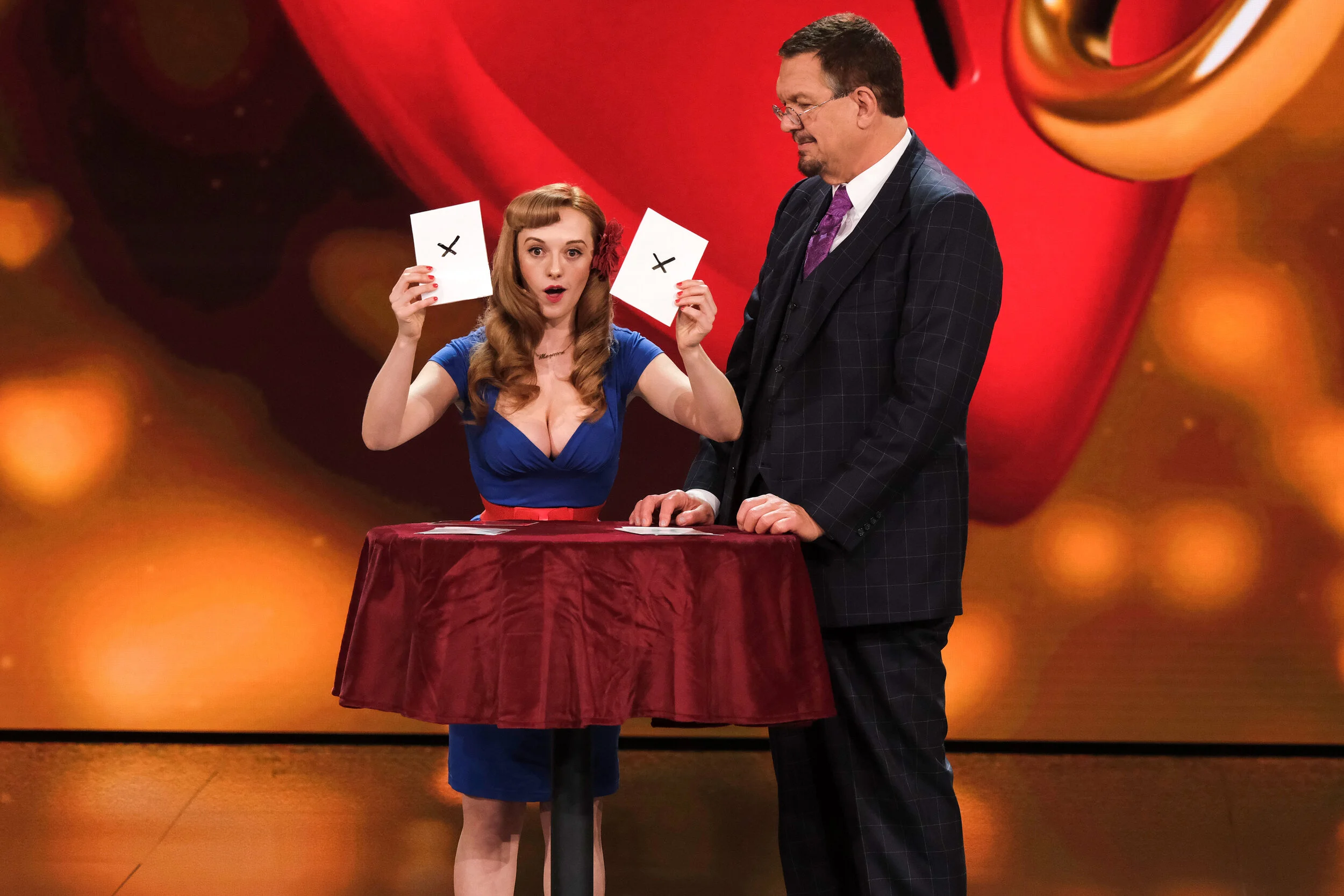
If you're running a distributed company, here's my case. I'm a member of the Magic Circle in London and the Academy of Magical Arts in Hollywood, I've earned multiple magic awards, and I've performed for companies including Formula 1, the Olympics, Porsche, Zapier, and the Ritz Carlton, with appearances on Penn & Teller: Fool Us. My virtual material is built for video rather than adapted from a live set, everyone participates using ordinary household items, nobody is put on the spot or asked to speak, and I work across time zones so your whole company can attend the same session.

Frequently Asked Questions

What are we actually missing?

The informal contact an office generates by accident: the coffee queue, the walk to the station, the ten minutes before a meeting. None of it is programmed and all of it accumulates, so a remote first company has to create deliberately what an office produces for free. That's the honest starting position, and anything scheduled is a partial substitute rather than an equivalent.

Our team works well together. Is this a problem?

Within teams, usually not, since those people meet constantly and build rapport through volume of contact. Across teams, nothing happens, because someone in one function has no reason or mechanism to speak to someone in another. That shows up as slower cross team work, more formality, and colleagues operating as strangers after years in the same company.

Why do virtual socials feel forced?

Because they are: a calendar invitation for a virtual social is a manufactured version of something that used to happen naturally, and everyone recognizes that. The invitations that work offer something genuinely good rather than an opportunity to socialize, since nobody needs an hour to chat with colleagues they speak to daily and plenty will attend something they'd enjoy.

How do we handle attendance?

Make it genuinely optional, don't track it, and don't reference who came afterwards. Without the social cover an office provides, declining is visibly a decision rather than a shrug, which makes optional attendance less optional than it looks. People who'd rather not spend an hour on video after a day of video have a reasonable position.

Why not just book something conversational?

Because it puts the burden on attendees who don't have the relationships that make casual conversation easy. Somebody has to start talking, breakout rooms produce polite introductions, and the confident dominate. Participation in a Zoom magician session means holding an object and reacting rather than performing sociability in front of colleagues you've never met.

What about the chat?

Let it run, since in a remote first company it's where the actual social interaction happens, being lower stakes than speaking and open to everyone at once. A good session produces a chat full of reactions and people responding to each other, which is closer to an office moment than a conversation based format achieves, and quieter colleagues are considerably more present there.

Will this fix how connected people feel?

No, and claiming otherwise would be recognized quickly in a remote first company. A session gives everybody a shared reference point, mixes people across teams who'd never otherwise interact, and provides an hour that's genuinely enjoyable. Repeated occasionally alongside whatever else you do, that accumulates. Presented as a culture initiative, it reads as a gesture.

How do I book you, and what do you need to get started?

Reach out with your date, platform, expected attendance, and the time zones involved. That's enough for me to check availability and send a quote. If you're considering something recurring across the year rather than a single session, mention it, since a series is easier to schedule and priced more favourably than separate bookings.

Build the Substrate, Not the Culture

A remote first company works perfectly well and lacks the accidental contact that turns colleagues into people who know each other. A Zoom magician doesn't solve that and it does the useful part: a shared experience everybody has at once, people mixing across team boundaries they'd never otherwise cross, participation that asks nothing of colleagues who've never met, and a chat full of the kind of interaction an office produces by accident.

Do that occasionally and honestly, and it accumulates into something real.

Reach out with your dates and numbers, and let's give everybody something in common.

Katrina Kroetch
Magician Zoom Party: Celebrating a Grandparent or Older Relative

Magician Zoom Party: Celebrating a Grandparent or Older Relative

Milestone birthdays for grandparents and older relatives produce the same problem repeatedly. The family has spread across the country or further, travel isn't straightforward for everyone, and gathering three generations in one place on one weekend turns out to require six months of negotiation and somebody always can't make it.

Meanwhile the person being celebrated would mostly just like to see everybody. I'm Magical Katrina, an award winning magician and mentalist, and I want to explain how a magician Zoom party works for that occasion, and how to make it feel like a celebration rather than a scheduled video call.

Everyone Can Actually Come

Start with the advantage, since it's the whole reason to consider this. A physical gathering for an older relative means the grandchildren travelling, the family abroad deciding whether it's worth the flights, and somebody inevitably sending apologies.

A virtual gathering has none of that. The grandson in another country joins, the cousins who couldn't justify the trip join, and the great grandchildren appear on screen in pajamas from three time zones. For a person who'd genuinely rather see everybody than have a party, that completeness is worth considerably more than a venue would be.

Well Wishing Runs Out Fast

The specific problem with these calls and the reason to program something. What usually happens is a round of people saying lovely things in turn, which is genuinely touching for about twenty minutes.

Then it stalls, because there's no natural next thing and everyone is aware of being watched. The guest of honor ends up managing their face through a series of tributes while the family waits for a turn. A magician Zoom party gives the evening a middle: something happening that everyone reacts to together, which is a different and easier kind of connection than a queue of good wishes.

Let Them Take Part Rather Than Watch

The distinction worth designing around. At most celebrations for an older relative, the person is the audience for everyone else's affection, which is lovely and entirely passive.

Something they participate in is different. Holding an object while something impossible happens in their own hands, with three generations of their family watching and reacting at once, makes them part of the evening rather than the subject of it. That's frequently what people describe afterwards, and it's the difference between a nice call and one the family talks about. Tell your performer who's being celebrated.

Make Joining Genuinely Easy

The practical point that determines whether any of this works. If the person being celebrated isn't confident with video calls, the technology is the barrier and it's entirely solvable with a little preparation.

Send the link well in advance and test it with them beforehand, ideally a day or two earlier so there's time to sort anything out. If someone local can sit with them, that's better again. Keep the instructions simple and written down, and make sure they know they don't need to do anything except be there. Ten minutes of preparation prevents the scenario where everyone is assembled and the guest of honor can't get in.

Think About How They'll Experience It

Worth a little planning. A laptop propped on a table at an awkward angle produces a worse evening than a screen positioned properly, and this matters more for the person the event is for than for anyone else.

Set them up somewhere comfortable, with the screen at a sensible height and distance, in a room that isn't echoing. If hearing is a consideration for anyone, mention it, since a performer who speaks clearly and faces the camera does most of the work, and asking other guests to mute when they aren't speaking removes a great deal of background noise from a large family call.

Keep It Shorter Than You Think

Practical and frequently got wrong. An hour is plenty and forty five minutes is often better, however much everyone is enjoying it, since concentrating on a screen is more effortful than being in a room together.

A workable shape: a short welcome, brief words from a couple of people rather than everybody in turn, then the magic, then informal time for whoever wants to stay and chat. That way the guest of honor experiences the best of it while fresh rather than at the end of a long call, and the people who want a proper conversation can have one afterwards.

The Grandchildren Are Part of It

Worth planning for, since young children are frequently the reason these gatherings matter. A call built entirely around adults taking turns to speak loses them within minutes, and a bored child on a video call affects everybody's experience.

Something visual and participatory holds them, which incidentally is what the adults enjoy too. A magician Zoom party works across that whole range without pitching at anybody, so a five year old and their great grandmother get the same thing at the same time. For a family celebration spanning generations, that's rarer than it sounds.

It Doesn't Have to Be the Actual Day

Worth mentioning, since it removes pressure. The birthday itself may already have a lunch, a visit, or a quiet day the person would prefer, and a large video call on top of that is a lot.

The weekend after works just as well, and frequently better, since people can commit properly rather than fitting it around something else. The occasion is being marked either way. If the person being celebrated would rather have the day itself quietly with immediate family, plan the gathering for another evening and let both happen properly.

Why Book Magical Katrina

If you'd like a magician Zoom party for a family celebration, here's my case. I'm a member of the Magic Circle in London and the Academy of Magical Arts in Hollywood, I've earned multiple magic awards including a Family Entertainer of the Year honor, and I've appeared on Penn & Teller: Fool Us and Masters of Illusion. I perform for every age at once without pitching at anybody, I'm glad to build a moment around the person being celebrated, I handle all the technical side, and I work across time zones so the family abroad can join.

Frequently Asked Questions

Why do it virtually rather than gathering?

Because everyone can actually come. A physical gathering means grandchildren travelling, family abroad weighing up flights, and somebody inevitably sending apologies, whereas a virtual one includes the grandson in another country, the cousins who couldn't justify the trip, and the great grandchildren in three time zones. For someone who'd rather see everybody, that completeness is the point.

Won't it just be everyone saying nice things?

That's what usually happens and it stalls after twenty minutes, because there's no natural next thing and everyone is aware of being watched, leaving the guest of honor managing their face through a queue of tributes. A magician Zoom party gives the evening a middle, where everyone reacts to something together rather than taking turns.

Can the person being celebrated take part?

Yes, and it's usually the reason families book it. At most celebrations for an older relative they're the audience for everyone else's affection, which is lovely and entirely passive, whereas holding something while the impossible happens in their own hands, with three generations watching, makes them part of the evening rather than its subject.

They aren't confident with video calls. Will it work?

Yes, with a little preparation. Send the link well in advance and test it with them a day or two beforehand so there's time to sort anything out, and if someone local can sit with them, better still. Keep instructions simple and written down, and make sure they know they need do nothing except be there.

How should we set them up?

Somewhere comfortable, with the screen at a sensible height and distance, in a room that isn't echoing, since a laptop at an awkward angle produces a worse evening for the person the event is for. If hearing is a consideration, mention it, and ask other guests to mute when not speaking, which removes a great deal of background noise from a large family call.

How long should it be?

An hour at most, and forty five minutes is often better, since concentrating on a screen is more effortful than being in a room. A short welcome, brief words from a couple of people rather than everybody in turn, then the magic, then informal time works well, so the guest of honor experiences the best of it while fresh.

What about the young grandchildren?

They're frequently why these gatherings matter, and a call built around adults taking turns loses them within minutes. Something visual and participatory holds them, which is what the adults enjoy too, and a performer working across the whole range means a five year old and their great grandmother get the same thing at the same time.

How do I book you, and what do you need to get started?

Reach out with your date and time, the platform, roughly how many will join, the time zones involved, and a little about the person you're celebrating. That's enough for me to check availability and send a quote. I'll tell you the household objects to mention, and I'm happy to keep things simple for anyone less confident with the technology.

Get Everyone in One Place

A milestone for a grandparent or older relative is exactly the occasion a scattered family struggles to mark properly, and the gathering that requires everyone to travel is the one somebody always misses. A magician Zoom party removes that: every generation present at once, an evening with something in the middle rather than a queue of tributes, a moment the person takes part in rather than watches, and the grandchildren held for long enough to be part of it.

If you're marking something significant for someone in your family, I'd love to help.

Reach out with your date and who you're celebrating, and let's make it an evening they'll remember.

Katrina Kroetch
Zoom Magician Cost: Booking a Series Rather Than a One Off

Zoom Magician Cost: Booking a Series Rather Than a One Off

Plenty of organisations don't need one virtual session, they need four. The same thing run three times to cover shifts. A session for each region at a sensible local hour. Something quarterly rather than annual. A cohort event that repeats with every new intake.

That's a different purchase from a single booking and it's priced differently, which most people don't realize when they enquire. I'm Magical Katrina, an award winning magician and mentalist, and I want to explain how a zoom magician cost works when you're booking a series rather than one event.

Why Repeats Cost Less Per Session

Start with the mechanism, since it explains the whole arrangement. A single booking carries all the preparation: understanding your organization, shaping the session for your audience, the technical setup, and the administrative work of quoting, contracting, and confirming.

A second session for the same client reuses most of that. The performer already knows your audience, the material is already shaped, and the arrangement is already agreed. That's why a series is genuinely cheaper per session rather than merely discounted, and why performers are usually willing to price it accordingly rather than grudgingly.

Same Day Repeats Are the Most Efficient

Worth knowing if you're covering shifts or time zones, since it's the cheapest version of a series. Two or three sessions on the same day, with gaps between them, cost considerably less than the same number spread across separate weeks.

The performer sets up once, is already in the right frame of mind, and blocks one day rather than three. If your requirement is covering a twenty four hour operation or reaching several regions, ask specifically about same day repeats rather than assuming each session is priced independently. Among ways to reduce a zoom magician cost across multiple sessions, this is the most effective.

A Real Anchor

Since vagueness is unhelpful, here's a concrete starting point: my virtual shows start around $1,400 for a single session, with the exact figure depending on length, audience size, and customization.

For a series, the first session sits around that and subsequent ones are priced lower, with the reduction depending on how many there are and whether they're on the same day or spread out. I quote those individually rather than publishing a formula, since the arrangements vary considerably. What's worth knowing is that the second session never costs what the first one did, and you should expect that rather than having to ask.

Spread Across Months Is Different

Worth distinguishing, since it's a different kind of commitment. A quarterly session or something recurring across a year carries less efficiency than same day repeats, because each one needs scheduling, confirming, and preparing separately.

It does carry other advantages. The performer knows your organization properly by the third session, can vary the material across the series so returning attendees see something new, and you have dates held in advance rather than competing for availability each time. It's priced more favorably than four unrelated bookings, and less favorably than four on the same day.

Budget It Centrally

Practical, and it affects whether a series is possible at all. Organizations frequently fund sessions departmentally, which means each region or team negotiates separately, pays single session rates, and the organization spends more in total for a worse outcome.

Funding it centrally lets you commit to a series, secures better pricing, and means every part of the organization gets the same thing rather than whichever department had budget. If you're running something across several regions or shifts, that central funding decision is worth making early, since it's difficult to retrofit once departments have started booking independently.

What to Ask For

A short list when you're planning more than one session. Whether same day repeats are priced differently from separate dates. Whether the material varies across sessions for returning attendees. Whether dates can be held provisionally while you confirm internally.

Also ask what happens if you need to cancel one session of several, since that's worth agreeing at the outset rather than discovering later. And ask whether there's a threshold at which the arrangement changes, since several performers price differently above a certain number of sessions. None of that is unusual to ask and any professional will answer directly.

Don't Commit to More Than You'll Use

Worth saying honestly. A series booked because the per session figure looked attractive, then half cancelled because nobody had capacity to run them, is worse value than three sessions you actually wanted.

Be realistic about how many you'll genuinely deliver, particularly for something spread across a year, since enthusiasm in January rarely survives contact with October. Start with a smaller commitment and extend it if it works, which most performers will accommodate and which protects you from paying for sessions that don't happen. Among decisions about a zoom magician cost for a series, honest scoping matters more than negotiating hard.

When a Series Isn't the Answer

Worth flagging, since it isn't always. If your requirement is genuinely one event, book one event, and don't manufacture a series to access better per session pricing.

And if you're considering a recurring program because a single session went well, be aware that novelty is part of what worked, and the fourth session of anything is a different experience from the first. Spacing them out, varying the format, and being willing to stop when it stops landing is better than committing to a calendar that turns something enjoyable into something routine.

What It Saves Besides Money

Worth mentioning, since it's frequently the larger benefit. Booking a series once means one negotiation, one contract, one set of approvals, and one supplier relationship rather than four of each.

For whoever is organizing, that administrative saving is substantial and rarely counted. It also means dates are secured in advance rather than discovering the performer you wanted is unavailable for your December session because you only asked in November. For organizations where procurement takes longer than the booking itself, a single arrangement covering a year is worth more than the price difference.

Why Book Magical Katrina

If you're planning more than one session, here's my case. I'm a member of the Magic Circle in London and the Academy of Magical Arts in Hollywood, I've earned multiple magic awards, and I've performed for companies including Formula 1, the Olympics, Porsche, Zapier, and the Ritz Carlton, with appearances on Penn & Teller: Fool Us. My virtual shows start around $1,400 for a single session, with series priced lower per session, I'll vary material across a series so returning attendees see something new, and I'm happy to start with a small commitment rather than asking you to sign up for a year.

Frequently Asked Questions

Why does a series cost less per session?

Because a single booking carries all the preparation: understanding your organization, shaping the session, technical setup, and the administrative work of quoting and contracting. A second session reuses most of that, since the performer already knows your audience and the material is already shaped. That makes it genuinely cheaper rather than merely discounted.

What's the cheapest way to cover shifts or regions?

Same day repeats, since two or three sessions on one day with gaps between them cost considerably less than the same number across separate weeks. The performer sets up once and blocks one day rather than three. Ask specifically about that rather than assuming each session is priced independently.

How much does it actually cost?

My virtual shows start around $1,400 for a single session depending on length, audience size, and customization. For a series the first sits around that and subsequent ones are priced lower, with the reduction depending on how many there are and whether they're same day or spread out. I quote individually rather than publishing a formula.

Is a recurring program across the year priced the same?

Less favorably than same day repeats and better than four unrelated bookings, since each session needs scheduling, confirming, and preparing separately. It carries other advantages though: the performer knows your organization properly by the third session, material can vary for returning attendees, and your dates are held in advance rather than competed for.

Should we fund it departmentally or centrally?

Centrally, if you can. Departmental funding means each region negotiates separately, pays single session rates, and the organization spends more in total for a worse outcome. Central funding lets you commit to a series, secures better pricing, and means everyone gets the same thing rather than whichever department had budget. It's hard to retrofit later.

What should we ask when negotiating?

Whether same day repeats are priced differently from separate dates, whether material varies for returning attendees, whether dates can be held provisionally while you confirm internally, what happens if you cancel one session of several, and whether there's a threshold at which the arrangement changes. None of that is unusual and any professional answers directly.

Should we commit to a full year?

Probably not initially. A series booked for the per session rate and then half cancelled because nobody had capacity is worse value than three sessions you actually wanted, and enthusiasm in January rarely survives contact with October. Start smaller and extend if it works, which most performers accommodate and which protects you from paying for sessions that don't happen.

How do I get a quote for a series?

Reach out with roughly how many sessions you're considering, whether they'd be on the same day or spread across months, expected attendance for each, and the time zones involved. That's enough for me to send a quote covering the whole arrangement, and I'm happy to structure it so you can start with fewer and extend rather than committing upfront.

Ask About the Second One

If you need more than one virtual session, say so when you enquire rather than booking them separately, since a zoom magician cost for a series is genuinely lower per session and the administrative saving is frequently larger than the price difference. Same day repeats are the most efficient, central funding beats departmental, and honest scoping beats negotiating hard.

And don't commit to a year on the strength of one good session, since the fourth of anything is a different experience from the first. Start with what you'll actually use.

Reach out with how many sessions you're considering, and I'll quote the whole arrangement.

Katrina Kroetch
Magician for Zoom Party: A New Year Gathering Across Time Zones

Magician for Zoom Party: A New Year Gathering Across Time Zones

New Year is the occasion most likely to find a friend group scattered. People are at their parents', abroad, working, with a partner's family, or simply in a different country from the one they were in when the group formed, and the night itself is the least practical evening of the year to organise anything.

It's also a moment people genuinely want to mark together. I'm Magical Katrina, an award winning magician and mentalist, and I want to explain how a magician for Zoom party works for a New Year gathering, including why the obvious timing is usually the wrong one.

Midnight Isn't a Shared Moment

Start with the practical problem nobody mentions. For a group spread across countries, there is no single midnight, and building an evening around one means everybody else is marking a moment that isn't theirs.

The friend in Sydney has already been to bed. The one on the west coast is still at work. Trying to synchronize produces an event that serves one time zone properly and inconveniences everyone else, which is a poor basis for a celebration. Among magician for Zoom party decisions for New Year, choosing a time that suits the group rather than any particular midnight is the one that makes the rest work.

Pick a Time, Not a Countdown

The practical solution and it's freeing once you accept it. Rather than attempting to gather at anybody's midnight, choose a time that's reasonable for most people and treat it as your gathering rather than as a countdown.

That might be earlier in the evening for the majority, or entirely separate from the thirty first. The group is what matters rather than the clock, and once you stop trying to synchronize a moment that can't be synchronized, the evening becomes considerably easier to organize and considerably more enjoyable for the people who'd otherwise be attending at four in the morning.

Consider Doing It in January

Worth suggesting, since it solves several problems at once. New Year's Eve is the single most contested night of the year for everybody's attention, with existing plans, family obligations, and people working.

A gathering in the first or second week of January has none of that competition, reaches more of your group, and lands in a month that genuinely lacks anything to look forward to. Among the reasons to move it, better attendance is the practical one and the emptiness of January is the better one. Nobody minds marking the new year slightly after it started.

Not Everyone Enjoys New Year

Worth acknowledging when organizing, since it shapes who comes. A significant number of people find the occasion difficult or simply dislike the pressure to have an extraordinary evening, and the obligation to be visibly having fun is part of what makes it uncomfortable.

An informal gathering with people they actually know, requiring no going out and no performing enjoyment, is frequently exactly what those friends want. A magician for Zoom party suits that, since it gives an evening some shape without demanding anybody be enthusiastic, and people can watch quietly if that's what they'd prefer.

It Beats the Alternative for Most People

Worth stating plainly. New Year's Eve out is expensive, overbooked, and frequently disappointing, with inflated prices, queues, and transport that doesn't work.

An evening at home with your actual friends on a screen, with something genuinely good happening in it, compares considerably better than it sounds. That's especially true for people with young children, anyone who doesn't drink, and anyone who has spent one too many New Years paying a premium for a night that didn't live up to it. The format suits the occasion better than the occasion's reputation suggests.

Give the Evening a Shape

The reason to program something rather than simply opening a call. An unstructured group video call at New Year goes the way they always go: enthusiastic for twenty minutes, then a few people talking while everyone else watches, then people drifting off.

Something happening gives the evening a middle. A magician for Zoom party provides forty five minutes where everybody is doing the same thing and reacting together, which is precisely what an unstructured call lacks, and the conversation afterwards is considerably better than the conversation before because people have something to discuss.

Keep It Short and Let People Go

Practical for this occasion in particular. People have other things happening, partners in the room, children asleep upstairs, and their own plans later.

An hour is plenty and forty five minutes is frequently better. Say the finish time in the invitation so people can commit without worrying they're signing up for the whole evening, and be relaxed about people joining late or leaving early, since at New Year almost everybody has something else going on. A tight, well timed gathering that people wished were longer beats an open ended one that dwindles.

Practical Notes

A few things worth getting right. Send the household objects list with the invitation and again on the day, since people will miss it once and anyone without the items feels excluded.

Be explicit about the time zone in the invitation, giving the time in two or three of the relevant zones rather than assuming people will convert it correctly, since at least one person always gets this wrong. And pick a date early, because even a January gathering competes with people's diaries once the month gets going.

Why Book Magical Katrina

If you'd like a magician for Zoom party for New Year, here's my case. I'm a member of the Magic Circle in London and the Academy of Magical Arts in Hollywood, I've earned multiple magic awards, and I've performed for clients including Formula 1, the Olympics, Porsche, and Prada, with appearances on Penn & Teller: Fool Us and Masters of Illusion. My virtual material is built for video with everyone participating using ordinary household items, I work across time zones, and I handle all the technical side. January dates are considerably easier to book than the thirty first.

Frequently Asked Questions

How do we handle everyone being in different time zones?

Stop trying to synchronize midnight, since for a scattered group there isn't one and building an evening around a particular country's means everybody else marks a moment that isn't theirs. Choose a time that's reasonable for most people and treat it as your gathering rather than a countdown, which makes everything else considerably easier.

Should we do it on New Year's Eve at all?

Not necessarily, and January frequently works better. New Year's Eve is the most contested night of the year, with existing plans, family obligations, and people working, whereas the first or second week of January has none of that competition, reaches more of your group, and lands in a month that genuinely lacks anything to look forward to.

Some of our friends dislike New Year. Will they come?

More likely to than to anything requiring going out, since a significant number of people find the occasion difficult or dislike the pressure to have an extraordinary evening. An informal gathering with people they know, requiring no travel and no performing enjoyment, is frequently exactly what those friends want, and they can watch quietly if they'd prefer.

Isn't a video call a poor substitute for going out?

Less than you'd think, since New Year's Eve out is expensive, overbooked, and frequently disappointing, with inflated prices, queues, and transport that doesn't work. An evening at home with your actual friends and something genuinely good happening compares well, particularly for people with young children, anyone not drinking, and anyone who has paid a premium for a disappointing night before.

Why not just open a call?

Because unstructured group calls at New Year go the way they always do: enthusiastic for twenty minutes, then a few people talking while everyone else watches, then people drifting off. A magician for Zoom party gives the evening a middle, where everybody is doing the same thing and reacting together, and the conversation afterwards is better for it.

How long should it be?

An hour at most and forty five minutes is frequently better, since people have partners in the room, children asleep, and their own plans. Say the finish time in the invitation so people can commit without fearing they're signing up for the whole evening, and be relaxed about late arrivals and early departures.

What should we send people in advance?

The household objects list, with the invitation and again on the day, since people miss it once and anyone without the items feels excluded. Also state the time in two or three relevant time zones rather than assuming people convert correctly, since at least one person always gets this wrong, and pick your date early even for January.

How do I book you, and what do you need to get started?

Reach out with your preferred date and time, the platform, roughly how many will join, and the time zones involved. That's enough for me to check availability and send a quote. I'll tell you the household objects to mention, and I'd gently suggest considering a January date, since availability and attendance are both considerably better.

Mark It Together, Whenever That Is

New Year scatters people more than any other occasion, and the instinct to gather everyone at midnight is what makes it difficult, since for a group across countries there isn't one midnight to gather at. Pick a time that suits your people rather than the clock, consider January instead of the thirty first, keep it short, and give the evening something happening in the middle rather than hoping conversation carries it.

A magician for Zoom party does that last part, and it reaches the friends who'd never have made it out anyway.

Reach out with your date and time zones, and let's get everyone in one place.

Katrina Kroetch
Magician for Zoom: Making a Hybrid Event Work for the Remote Half

Magician for Zoom: Making a Hybrid Event Work for the Remote Half

Hybrid events have a consistent failure pattern. The people in the room have a good time, the people on screens watch them have it, and afterwards the feedback splits neatly along that line while the organisers conclude it went well because the room was enthusiastic.

It's the commonest complaint from distributed teams and one of the easier things to improve. I'm Magical Katrina, an award winning magician and mentalist, and I want to explain where a magician for Zoom fits into a hybrid event, which is specifically about not disadvantaging the half who aren't there.

Remote Attendees Watch Other People Enjoy Themselves

Start with the mechanism. When a group is physically together, the energy in that room is generated by proximity: people laugh with each other, react together, and feed off the atmosphere.

None of that transmits. A remote attendee sees a wide shot of a room having an experience they aren't part of, hears laughter they can't share, and misses the side conversations entirely. That's a worse experience than a fully remote event, where at least everyone is in the same position. Among reasons to think carefully about a magician for Zoom at a hybrid event, this is the problem worth solving rather than the format itself.

It's Usually the Same People Excluded

Worth noticing, since it compounds. The remote half at a hybrid event is rarely random: it's the regional offices, the international teams, the people furthest from headquarters, and the colleagues who work from home permanently.

Those are frequently the same people who receive less attention generally, and a hybrid event that treats them as an audience for headquarters reinforces something an organization probably didn't intend. If your remote attendees are always the same group, the two tier experience is telling them something over and over. That's worth designing against deliberately rather than hoping the technology handles it.

The Basics Matter More Than You'd Think

Practical and frequently neglected. Remote attendees at hybrid events consistently report the same problems: they can't hear people in the room, the camera shows a wide shot of nothing in particular, and questions from the floor are inaudible.

Fix those first, since no programming overcomes bad audio. Use microphones that pick up the room rather than relying on a laptop, repeat questions before answering them, and frame the camera on whoever is speaking. A remote attendee who can hear and see properly is already having a considerably better event than most hybrid formats deliver.

Choose Elements That Work Identically

The design principle, and it's where a magician for Zoom genuinely earns its place. Most hybrid programming is a room based activity that remote people observe: a speaker on a stage, a panel, an activity happening in a physical space.

A participatory virtual format inverts that. Everyone takes part using ordinary objects wherever they are, the performer works to the camera rather than to the room, and nobody is advantaged by being physically present. It's one of the few elements where the remote half has an experience genuinely equal to the room's, which for an organization trying to demonstrate that distributed colleagues matter is worth more than the entertainment itself.

Run It to the Camera, Not the Room

Worth specifying, since it's the practical difference between a hybrid element that works and one that doesn't. A performer delivering to the room with a camera pointed at them is doing an in person event that remote people watch.

A performer delivering to the camera, with the room following on a screen, treats both audiences equally. That feels slightly counterintuitive to whoever is in the room, and it produces a considerably better event overall. Worth agreeing with your performer in advance which they're doing, since the same session run the two ways produces very different feedback from the remote half.

Give the Remote Half Something the Room Doesn't Have

An idea worth considering. If the room has the advantage of proximity, the remote half can be given something in return: a chance to participate first, a dedicated moment, or an element that only they take part in.

That inverts the dynamic briefly, and it's noticed. It doesn't need to be elaborate, and the signal matters more than the substance. Among ways to improve a hybrid event, deliberately privileging the remote audience once is one of the more effective and least expensive, since it demonstrates awareness that the format disadvantages them.

Sometimes Fully Remote Is Better

Worth saying honestly, since organizations rarely consider it. If the majority of your people are remote, or the in person portion is a small group at headquarters, running the event entirely online frequently produces a better result than a hybrid one.

Everyone in the same format is fairer and easier to deliver well than a split that requires managing two audiences simultaneously. The instinct that in person is inherently better holds when most people are in the room, and stops holding when they aren't. Ask which group is the majority, and design for them rather than for the group that happens to be near the office.

Don't Let the Room Speak for Everyone

A final practical point about feedback. If you ask how the event went and the answer comes mainly from the room, you'll conclude it went well, because for them it did.

Ask the remote attendees separately and specifically: whether they could hear, whether they felt part of it, and whether they'd rather it had been fully online. Those answers are consistently more critical and considerably more useful, and they're the ones that tell you whether your hybrid format is working or whether the room is simply enjoying itself while everyone else watches.

Why Book Magical Katrina

If you're running a hybrid event, here's my case. I'm a member of the Magic Circle in London and the Academy of Magical Arts in Hollywood, I've earned multiple magic awards, and I've performed for companies including Formula 1, the Olympics, Porsche, Zapier, and the Ritz Carlton, with appearances on Penn & Teller: Fool Us. My virtual material is built for video, everyone participates using ordinary household items wherever they are, and I'm happy to run a hybrid session to the camera so the remote half has the same experience as the room. I work across time zones.

Frequently Asked Questions

Why do hybrid events disappoint remote attendees?

Because the energy in a physical room is generated by proximity and none of it transmits. A remote attendee sees a wide shot of people having an experience they aren't part of, hears laughter they can't share, and misses the side conversations. That's frequently worse than a fully remote event, where at least everyone is in the same position.

Does it matter who the remote half usually is?

Considerably, since it's rarely random: it's the regional offices, international teams, and permanently remote colleagues, who frequently receive less attention generally. A hybrid event treating them as an audience for headquarters reinforces something organizations don't intend, and if it's always the same group, the two tier experience is telling them something repeatedly.

What should we fix first?

The basics, since no programming overcomes bad audio. Remote attendees consistently report that they can't hear people in the room, the camera shows a wide shot of nothing, and floor questions are inaudible. Use microphones that pick up the room, repeat questions before answering, and frame the camera on whoever is speaking.

What kind of element works for both audiences?

A participatory virtual format, since most hybrid programming is a room based activity that remote people observe. When everyone takes part using ordinary objects wherever they are and the performer works to the camera, nobody is advantaged by being physically present, which makes a magician for Zoom one of the few genuinely equal elements available.

Should it be run to the room or the camera?

The camera, with the room following on a screen, since a performer delivering to the room with a camera pointed at them is running an in person event that remote people watch. Running to the camera feels slightly counterintuitive to those present and produces a considerably better event overall, so agree which in advance.

Should we ever just run it fully remote?

Frequently, and organizations rarely consider it. If most of your people are remote, or the in person portion is a small group at headquarters, running entirely online is fairer and easier to deliver well than managing two audiences simultaneously. Ask which group is the majority and design for them rather than for whoever happens to be near the office.

How do we know if it actually worked?

Ask the remote attendees separately and specifically, since feedback dominated by the room will tell you it went well because for them it did. Ask whether they could hear, whether they felt part of it, and whether they'd have preferred it fully online. Those answers are consistently more critical and considerably more useful.

How do I book you, and what do you need to get started?

Reach out with your date, platform, how many will be in the room and how many remote, the time zones involved, and where in the agenda you're considering it. That's enough for me to check availability, suggest placement, and send a quote. Mention it's hybrid specifically, since it changes how I'd run the session.

Design for the People Who Aren't There

A hybrid event is judged by the room and experienced very differently by everyone else, which is why the format has the reputation it does. Fix the audio and the camera first, choose at least one element that works identically for both audiences, run it to the camera rather than to the room, consider giving the remote half something the room doesn't get, and ask them separately how it went.

A magician for Zoom is one of the few things that genuinely delivers the same experience to both halves, which is why it suits hybrid better than most of what's on offer.

Reach out with your numbers in the room and on screens, and let's make it fair.

Katrina Kroetch
Birthday Party Magician Las Vegas: Parties Spanning Four Generations

Birthday Party Magician Las Vegas: Parties Spanning Four Generations

Milestone birthdays bring families together in a way ordinary ones don't. People fly in, the cousins come, somebody brings a baby, and an aunt who hasn't travelled in years makes the trip. Vegas is a common choice precisely because everyone can get there.

What you end up with is a room spanning eighty years, which is the hardest possible audience to entertain. I'm Magical Katrina, an award winning magician and mentalist, and I want to set out what actually works when a birthday party magician Las Vegas is performing for four generations at once.

Most Entertainment Picks an Age and Loses the Rest

Start with why this is difficult. Nearly every entertainment option is designed for a particular audience, and at a family party that means it serves part of the room and leaves the rest waiting politely.

A DJ pitched at the thirty year old’s bores the children and is too loud for the older guests. Something for the children bores everyone over twelve. A band plays music one generation chose. That splitting is visible from anywhere in the room, and it's the reason family milestone parties so often end up as three separate groups occupying the same space.

Magic Genuinely Works Across Ages

Worth explaining why, since it's the exception rather than a claim. Astonishment doesn't require a shared reference point, a cultural context, or a particular age, and a five year old and an eighty five year old watching the same impossible thing react identically.

That's unusual. Comedy depends on reference, music depends on taste, and both split a family room. A birthday party magician Las Vegas working close up performs for small groups at conversational distance, adjusting naturally between a table of grandchildren and a table of grandparents without anybody noticing the adjustment. For a room spanning generations, that adaptability is the whole argument.

Don't Let It Be Pitched at the Children

An important distinction, since families frequently assume magic means a children's show. A performance pitched for young children will be enjoyable for them and faintly embarrassing for everyone else, which is the same splitting problem in a different form.

What you want is material sophisticated enough to genuinely fool the adults, performed in a way children can follow and enjoy. Those aren't in conflict, and any performer working with family audiences handles both. Say explicitly when you book that the room spans all ages rather than describing it as a children's party, since the two produce entirely different preparation.

Practical Points for Older Guests

Worth planning for, since it affects whether half your family enjoys the evening. Sightlines and clarity matter more than they do at other parties.

Seat older guests where they can see comfortably rather than at the back, keep background music low enough that conversation is possible, and choose a venue that isn't acoustically punishing, which in Vegas rules out a good deal. If anyone has hearing difficulty, mention it, since a performer who speaks clearly and faces people does most of the work. It's also worth thinking about how far people have to walk inside a resort property, which is further than it looks.

And for the Youngest

The other end of the room. Small children at a long adult party get tired, bored, and eventually loud, which is nobody's fault and entirely predictable.

Plan something for them, whether that's an earlier portion of the evening pitched their way, a quieter space they can retreat to, or simply accepting that they'll leave at eight with a parent. A birthday party magician Las Vegas performing close up reaches them early and well, which frequently buys an hour of goodwill from the children and considerable gratitude from their parents.

Time It for the Middle of the Range

A scheduling point families get wrong. An evening that starts at nine suits the adults and excludes the children and the oldest guests, while an afternoon suits the youngest and disappoints everyone in between.

An early evening start, with the entertainment in the first part rather than the last, serves the widest range. The people who want to continue afterwards can, and the people who need to leave at nine have had the main part of the evening rather than missing it. Among decisions about a multigenerational party, timing determines who actually experiences it more than anything else.

Let the Generations Mix

Something worth engineering, since it doesn't happen on its own. Families divide by age at parties: the cousins together, the parents together, the grandparents at a table.

That's comfortable and it wastes the reason everyone travelled. Something moving through the room gives generations a shared moment, and a performer approaching a table with a grandmother, a teenager, and a seven year old at it gets all three reacting together. For a family that sees each other rarely, those moments are frequently what people remember from the trip rather than the meal.

Vegas Venues Need Checking

Practically relevant here. The city offers suites, restaurant private rooms, resort function spaces, and clubs, and they vary enormously in how well they suit a family group spanning ages.

Check the noise level, whether children are permitted at the times you want, how far guests walk from parking or a hotel room, and whether there's anywhere quieter to retreat to. Many Vegas spaces are designed for adult groups at volume, which suits part of your guest list and not the rest. A birthday party magician Las Vegas needs nothing from the venue, so choose the room for your family rather than for the entertainment.

A Note on "Local vs. Traveling In"

Worth knowing: performers who travel to Las Vegas often have availability when local ones are booked, particularly during busy weeks. Travel is discussed openly and factored into the quote rather than being your problem to arrange. I'm based in the Los Angeles area and travel to Las Vegas regularly, including for family celebrations rather than only corporate events.

Why Book Magical Katrina

If you're planning a family milestone, here's my case. I'm a member of the Magic Circle in London and the Academy of Magical Arts in Hollywood, I've earned multiple magic awards including a Family Entertainer of the Year honor, and I've appeared on Penn & Teller: Fool Us, Masters of Illusion, and on Blippi as a performer and magic consultant. I perform for every age from young children to adults without pitching down to anybody, I work table to table so every generation gets something, and I need no stage or setup, so whichever room you choose will work.

Frequently Asked Questions

Why is a family milestone party so hard to entertain?

Because nearly every option is designed for a particular audience, so it serves part of the room and leaves the rest waiting. A DJ pitched at the thirty year old’s bores the children and is too loud for older guests, something for the children bores everyone over twelve, and a band plays music one generation chose. That splitting is visible from anywhere in the room.

Why does magic work better across ages?

Because astonishment doesn't require a shared reference, a cultural context, or a particular age, so a five year old and an eighty five year old react identically to the same impossible thing. Comedy depends on reference and music on taste, both of which split a family room, whereas close up magic adjusts naturally between tables without anybody noticing.

Won't it be pitched at the children?

Not if you brief it properly, and it's worth being explicit. A performance aimed at young children is enjoyable for them and faintly embarrassing for everyone else, which is the same splitting problem in another form. Say the room spans all ages rather than calling it a children's party, since the two produce entirely different preparation.

What should we plan for older guests?

Sightlines and clarity, which matter more here than at other parties. Seat them where they can see comfortably rather than at the back, keep background music low enough for conversation, and choose a venue that isn't acoustically punishing, which in Vegas rules out a good deal. Also consider how far people walk inside a resort, which is further than it looks.

What about the young children?

Plan for them tiring, since small children at a long adult party get bored and eventually loud, which is entirely predictable. Either pitch an earlier portion their way, provide a quieter space to retreat to, or accept they'll leave at eight with a parent. Close up magic reaches them early and well, which buys goodwill from the children and gratitude from their parents.

When should we start?

Early evening, with the entertainment in the first part rather than the last. Nine o'clock suits the adults and excludes the children and oldest guests, while an afternoon suits the youngest and disappoints everyone between. An early start means those who need to leave at nine have had the main part of the evening rather than missing it.

How do we get the generations mixing?

Engineer it, since families divide by age at parties and it wastes the reason everyone travelled. Something moving through the room gives generations a shared moment, and a performer approaching a table with a grandmother, a teenager, and a seven year old gets all three reacting together. For families who see each other rarely, those are the moments people remember.

How do I book you, and what do you need to get started?

Reach out with your date, the venue or area, rough numbers, and the age range in the room, including how young the youngest guests are and whether anyone has hearing or mobility considerations. That's enough for me to check availability, recommend timing, and send a quote including travel.

One Thing Everybody Gets

A family milestone in Vegas assembles people who rarely share a room and spans a range no single entertainment option is built for. A birthday party magician Las Vegas working close up handles that better than the alternatives: no shared reference required, adjustment between tables that nobody notices, something the children and the grandparents both genuinely enjoy, and moments where generations react to something together rather than sitting in separate groups.

If your family is travelling in for something significant, I'd love to help make it worth the trip.

Reach out with your date and the ages in the room, and let's plan it properly.

Katrina Kroetch
Magician for Birthday Party Las Vegas: Celebrating Someone Who Hates a Fuss

Magician for Birthday Party Las Vegas: Celebrating Someone Who Hates a Fuss

Vegas birthday planning assumes a particular kind of celebrant: someone who wants the suite, the table, the sparklers, and the room singing at them. Plenty of people are that person and plenty genuinely aren't, and the second group tends to get planned for as though they were the first.

If you're organizing something for someone who dreads being the center of attention, the standard advice actively works against you. I'm Magical Katrina, an award winning magician and mentalist, and I want to set out how a magician for birthday party Las Vegas fits into a celebration for somebody who'd rather not be looked at.

Shy Is Not the Same as Uncomfortable

Worth distinguishing early, since the two get conflated and they need different handling. Some people are mildly self conscious and secretly enjoy the fuss once it happens, and some genuinely find being the focus of a room unpleasant.

The first can be gently included. The second cannot, and pushing produces an evening they endure rather than enjoy, frequently while performing gratitude for the effort. If you're unsure which you're dealing with, ask them, or ask their partner or closest friend, since guessing wrongly is the most common way these evenings go astray.

Ask Rather Than Surprise

The most important decision and the one that goes against instinct. A surprise party is exactly the wrong format for someone who dislikes attention, since it combines the two things they'd avoid: being the center of a room and having no warning.

Telling them removes the element people think makes it special and gives them the thing they actually need, which is preparation. Many people who dread a fuss will genuinely enjoy an evening they knew about, with people they chose, in a format they agreed to. Among magician for birthday party Las Vegas decisions, whether to surprise someone is the one worth getting right before anything else.

Keep the Guest List Small

Practical and effective. The discomfort usually scales with the number of people looking, so twelve close friends produces a completely different evening from sixty acquaintances.

A smaller group also allows a format with no stage, no announcements, and no moment where the room's attention turns as one. Vegas makes large celebrations easy and that isn't an argument for having one. If the person being celebrated would prefer dinner with ten people to a suite with fifty, that's the better evening regardless of what the city is set up to provide.

Skip the Standard Moments

Worth naming the specific things to avoid, since venues will offer them automatically. The sung entrance, the sparkler parade, the announcement over the sound system, the moment where everyone turns and applauds.

Those are enjoyable for many people and genuinely awful for others, and venues here provide them enthusiastically unless told otherwise. Say clearly when you book that you don't want any of it, and repeat it on the night to whoever is looking after you, since the instruction frequently doesn't travel from the reservation to the floor. That single conversation prevents most of what could go wrong.

Let the Attention Move Around the Room

The structural solution, and it's where entertainment genuinely helps. The problem with a celebration is that it points at one person for an evening, and the alternative isn't no celebration, it's an evening where something else carries the focus.

A magician for birthday party Las Vegas performing close up magic does exactly that: the performer moves between small groups, the attention travels with them, and the person being celebrated gets to be part of a group enjoying something rather than the object of everyone's gaze. They can participate as much or as little as they want, and nobody notices which.

Brief the Performer Clearly

Essential, and it takes one sentence. Tell whoever you book that the birthday person would rather not be singled out, and any professional will adjust entirely.

What that looks like in practice: no building a moment around them, no announcing whose birthday it is, no bringing them to the front of a group. They're treated as one guest among others, which is precisely what they want and the opposite of the default. A magician for birthday party Las Vegas who handles this well makes it look like nothing was adjusted at all, which is the point.

Let Others Have the Fun

A reframe worth offering, since it helps the organizer too. A celebration doesn't have to center the person it's for, and an evening where their favorite people have a genuinely good time is a gift to them even if nobody sings.

Many reluctant celebrants enjoy watching people they love enjoy themselves considerably more than they'd enjoy being celebrated. Plan for the guests and let the birthday person be a host rather than an exhibit, and you'll frequently find they had a better evening than the version everyone assumed they should have.

Give Them an Exit

Small and genuinely considerate. Someone who finds these evenings effortful should know they can leave without a scene, and telling them so in advance makes the whole event easier to face.

Practically, that means no speeches timed for the end, no expectation they'll close the night, and no comment when they go. In Vegas specifically, where evenings sprawl and people move between venues, it's easy to build in without anyone noticing. Knowing they can go at eleven frequently means they stay until one.

Mark It Properly Anyway

Worth saying, since the alternative to a fuss isn't ignoring the occasion. A quiet, well chosen evening with the right people, somewhere they'd actually like, with something genuinely good happening in it, marks a birthday perfectly well.

The thing being avoided is the spotlight rather than the acknowledgement. Get the guest list right, choose a format that doesn't require them to perform enjoyment, and give the evening something memorable that isn't about them, and you've done the job. A magician for birthday party Las Vegas contributes exactly that: something the evening will be remembered for that doesn't point at anybody.

A Note on "Local vs. Traveling In"

Worth knowing: performers who travel to Las Vegas often have availability when local ones are booked, particularly during busy weeks. Travel is discussed openly and factored into the quote rather than being your problem to arrange. I'm based in the Los Angeles area and travel to Las Vegas regularly, including for private celebrations rather than only corporate events.

Why Book Magical Katrina

If you're planning something like this, here's my case. I'm a member of the Magic Circle in London and the Academy of Magical Arts in Hollywood, I've earned multiple magic awards, and I've performed for clients including Formula 1, the Olympics, Porsche, and Prada, with appearances on Penn & Teller: Fool Us and Masters of Illusion. I read participants carefully, I'll happily treat the birthday person as one guest among others if that's what suits them, and nobody in my audiences is ever put on the spot. I need no stage or setup, so an intimate dinner works as well as a larger room.

Frequently Asked Questions

How do I know if they'd genuinely hate a fuss?

Ask, or ask their partner or closest friend, since shy and genuinely uncomfortable are different and get conflated. Some people are mildly self conscious and enjoy the fuss once it happens, while others find being the focus of a room unpleasant and will endure the evening while performing gratitude. Guessing wrongly is the commonest way these evenings go astray.

Should we still surprise them?

Generally not, since a surprise combines the two things they'd avoid: being the center of a room and having no warning. Telling them removes what people think makes it special and gives them what they actually need, which is preparation. Many who dread a fuss genuinely enjoy an evening they knew about with people they chose.

How big should the guest list be?

Smaller than you'd default to, since discomfort scales with the number of people looking, and twelve close friends produces a completely different evening from sixty acquaintances. Vegas makes large celebrations easy and that isn't an argument for one. Dinner with ten they'd enjoy beats a suite with fifty they'd endure.

What should we tell the venue?

That you don't want the sung entrance, the sparklers, the announcement, or the moment where the room turns and applauds, since venues here provide those enthusiastically unless told otherwise. Say it when you book and repeat it on the night to whoever is looking after you, since the instruction frequently doesn't travel from the reservation to the floor.

How does entertainment help rather than make it worse?

By moving the attention around the room. The problem with a celebration is that it points at one person all evening, and a magician for birthday party Las Vegas working close up travels between small groups, so the person being celebrated is part of a group enjoying something rather than the object of everyone's gaze, participating as much or as little as they like.

What should we tell the performer?

One sentence: that the birthday person would rather not be singled out. Any professional adjusts entirely, meaning no moment built around them, no announcing whose birthday it is, and no bringing them to the front. They're treated as one guest among others, and a performer who handles it well makes it look like nothing was adjusted at all.

Isn't this just not celebrating?

No, since what's being avoided is the spotlight rather than the acknowledgement. A quiet, well chosen evening with the right people, somewhere they'd like, with something genuinely good happening in it marks a birthday perfectly well. Plan for the guests, let the birthday person be a host rather than an exhibit, and they frequently enjoy it more than the expected version.

How do I book you, and what do you need to get started?

Reach out with your date, the venue or area, rough guest numbers, and a note that the person being celebrated would prefer not to be the center of attention. That's enough for me to check availability and send a quote including travel, and it tells me everything I need about how to handle the room on the night.

Celebrate Them, Not At Them

Marking a birthday for someone who dreads attention means dropping almost everything Vegas offers by default: the surprise, the large group, the sung entrance, the moment where the room turns. What replaces it is an evening with the right people, in a format that asks nothing of them, with something genuinely good happening that points at nobody in particular.

A magician for birthday party Las Vegas fits that precisely, moving the attention around the room rather than fixing it on one person, and giving the evening something memorable that isn't a spotlight.

Reach out with your date and a note about who you're celebrating, and I'll handle it carefully.

Katrina Kroetch
Activities for Women's Empowerment: Running an ERG Program Without Burning Out

Activities for Women's Empowerment: Running an ERG Program Without Burning Out

Employee resource groups run on a small number of people doing a second job for nothing. The lead has a full role, a committee that helps when it can, a budget that requires justifying, and a workload that spikes every March before subsiding into eleven months of trying to keep something going.

Most advice for these groups is about what to program. Very little is about how to sustain it. I'm Magical Katrina, an award winning magician and mentalist who speaks at women's events, and I want to offer activities for women's empowerment designed around the reality that the person organizing them is already stretched.

Name the Structural Problem First

Worth saying plainly, since it underlies everything else. The work of running a women's network usually falls to women, unpaid and unrecognized, in addition to jobs they're actually assessed on.

That's a genuine equity issue rather than a grumble, and it's worth raising with whoever sponsors your group. Options exist: recognizing the work in performance reviews, allocating protected time, or resourcing it centrally rather than relying on goodwill. Among activities for women's empowerment an organization could undertake, properly resourcing the people delivering them is one of the more substantive and least common.
Sustainability Beats Ambition

The programming principle that keeps a group alive. An ambitious calendar that exhausts its organizers is worse than a modest one that runs for years, because groups rarely fail dramatically, they simply stop.

Choose formats you could repeat without reinventing them: a recurring circle, a regular slot, something with a structure that doesn't require fresh planning each time. Grand annual events have their place, and a group survives on the ordinary rhythm between them. Ask honestly whether you could still be doing this in eighteen months, and if the answer is no, program something else.

Stop Doing Things That Aren't Working

Rarely discussed and genuinely useful. ERG programs accumulate activities because somebody started them, and they continue long after they've stopped earning their effort, since nobody wants to be the person who cancelled something.

Review annually and stop things deliberately. The monthly session six people attend, the newsletter nobody reads, the initiative that made sense two years ago. Stopping frees capacity for something that works, and it's considerably better than continuing everything at diminishing quality. Among activities for women's empowerment, the most valuable decision in any given year is frequently a subtraction.
Use the Expertise in the Membership

The approach that solves the perennial speaker problem without budget. Your members negotiate, present, hire, manage difficult stakeholders, and run projects, and most of them would say yes if asked directly.

Member led sessions cost nothing, strengthen the person delivering as much as those attending, and build the reciprocity that keeps a group alive. Ask specific people rather than issuing an open call, since most won't volunteer and will agree when approached. It also removes the task that quietly consumes most organizer's time, which is finding someone to speak.

Get Executive Sponsorship That Means Something

Worth distinguishing from nominal sponsorship, which every group has. A sponsor who lends their name and attends once a year provides very little, whereas one who allocates budget, protects time, attends regularly, and raises the group's work in leadership conversations changes what's possible.

Ask for specifics rather than support in principle: a budget line, time recognized somewhere, and their presence at more than the March event. If you can't get that, it's worth knowing, since it tells you how much the organization actually values this and lets you scale your ambition to the reality rather than to the rhetoric.

Plan for the Lead Leaving

The failure mode that ends more groups than any other. Networks built around one committed person dissolve when that person changes role, leaves, or simply runs out of energy, because nothing was documented and nobody else knows how anything works.

Write down what you do and how. Share the mailing list and the supplier contacts. Bring in a deputy early and let them run things while you're still there. Among activities for women's empowerment, none matter if the group folds in two years, and succession is the unglamorous work that determines whether it doesn't.

Spread the Calendar Beyond March

A practical point with several benefits. Concentrating everything into one month exhausts organizers, competes with every other internal event, and signals that this is an annual obligation rather than an ongoing concern.

Spreading activity across the year reduces the spike in your workload, improves attendance because your sessions aren't competing with four others, and gives you genuine choice of speakers, since March books out months ahead while September doesn't. It's better for the program and considerably better for the people running it.
Program Something People Simply Enjoy

Worth including deliberately, since ERG calendars tend towards the earnest. Panels on barriers, sessions on progression, and discussions about structural issues are valuable and, cumulatively, quite heavy.

At least one genuinely enjoyable event a year reaches members who wouldn't attend a panel, gives you something easy to promote, and reminds people that belonging to this group is a pleasure rather than an obligation. It's also considerably less work to organize than a panel, which for a stretched committee is not a trivial consideration.

Measure Something That Justifies the Budget

Practical, since you'll be asked. Attendance numbers are the easiest thing to report and the least persuasive, because they're dominated by people who were already engaged.

More useful: how many members made a connection they'd describe as valuable, whether anyone got an opportunity through the group, whether first time attendees returned, and whether your membership is growing beyond the committed core. Those answers are harder to gather and considerably more convincing to whoever controls the budget, and they tell you what to keep doing.

Where My Work Fits

Briefly. I perform magic and mentalism and speak about building a career in a field, magic, that has been overwhelmingly male, as a performance, a talk woven with magic, or both, in person or virtually.

For an ERG it tends to work as the enjoyable event that still carries the theme: something that draws members who skip the panels, is easy to promote, and requires very little organizing from a committee that hasn't got spare capacity. It also works at any point in the year rather than only in March, which matters given how oversubscribed that month is. If you're planning, I'm glad to talk it through.

Frequently Asked Questions

Why does ERG work fall on the same people?

Because it's usually unpaid, unrecognized, and taken on in addition to jobs people are actually assessed on, and it typically falls to the women the group serves. That's a genuine equity issue worth raising with your sponsor, since options exist: recognition in performance reviews, protected time, or resourcing the work centrally rather than relying on goodwill.

How do we keep the group going long term?

Prioritize sustainability over ambition, since groups rarely fail dramatically and simply stop. Choose formats you could repeat without reinventing them each time, and ask honestly whether you could still be doing this in eighteen months. Grand annual events have their place, but a group survives on the ordinary rhythm between them.

What should we stop doing?

Whatever has stopped earning its effort, which accumulates because nobody wants to cancel something somebody started. The monthly session six people attend, the newsletter nobody reads, the initiative that made sense two years ago. Reviewing annually and stopping things deliberately frees capacity, and the most valuable decision in a given year is frequently a subtraction.

How do we find speakers without a budget?

Look inward, since your members negotiate, present, hire, and manage difficult stakeholders, and most would say yes if asked directly rather than through an open call. Member led sessions cost nothing, strengthen the person delivering, and build reciprocity, and they remove the task that quietly consumes most organizers' time.

What should we ask from an executive sponsor?

Specifics rather than support in principle: a budget line, time recognized somewhere, and attendance at more than the March event. A sponsor who lends their name and appears annually provides very little. If you can't get specifics, that's worth knowing, since it tells you how much the organization values this and lets you scale ambition to reality.

How do we stop the group folding when the lead leaves?

Document what you do and how, share the mailing list and supplier contacts, and bring in a deputy early who runs things while you're still there. Networks built around one committed person dissolve when that person moves on, because nothing was written down and nobody else knows how anything works. Succession is unglamorous and it determines survival.

Should everything happen in March?

No, and spreading activity across the year reduces your workload spike, improves attendance because you aren't competing with four other internal events, and gives genuine choice of speakers, since March books out months ahead while September doesn't. It also signals an ongoing concern rather than an annual obligation, which members notice.

What should we measure?

Not attendance, which is dominated by people already engaged. Ask instead how many members made a connection they'd describe as valuable, whether anyone got an opportunity through the group, whether first time attendees returned, and whether membership is growing beyond the committed core. Harder to gather and considerably more convincing to whoever holds the budget.

Build Something That Survives You

The most useful activities for women's empowerment in an ERG context are shaped by what the people running it can sustain: repeatable formats rather than ambitious ones, sessions led by members rather than sourced externally, a calendar spread across the year rather than concentrated in March, an annual decision about what to stop, and a deputy who could run it tomorrow.

And it's worth asking your organization to resource the work properly, since a program delivered by exhausted volunteers is a strange way to demonstrate that the organization values the people delivering it.

Reach out if you're planning something, and I'm glad to talk about what would suit your group.

Katrina Kroetch
Strolling Magician Los Angeles for Client Holiday Events

Strolling Magician Los Angeles for Client Holiday Events

December in Los Angeles produces a particular kind of event: the client reception, the agency open house, the thank you evening that firms and studios hold for the people they've worked with all year. They're genuinely worth doing and they have an obvious problem.

Your clients are being invited to several of them, by your competitors, in the same three weeks. I'm Magical Katrina, an award winning magician and mentalist based right here in Los Angeles, and I want to explain how a strolling magician Los Angeles helps a client holiday event do the job it exists for.

This Isn't a Staff Party

Worth separating, since the two get planned the same way and shouldn't be. A staff party exists for the experience: people enjoy themselves, the year gets marked, and the objective is the evening itself.

A client event exists for the relationship. It's a business expense justified by what happens afterwards rather than what happens on the night, and the measure isn't whether guests had a nice time so much as whether your organization is remembered warmly when a decision gets made in March. A strolling magician Los Angeles at a client event is working towards that rather than towards atmosphere.

Your Clients Have Three of These This Week

The competitive problem, and it's sharper in December than any other month. The people you're inviting are being invited to comparable evenings by everyone else they work with, in comparable venues, with comparable drinks.

That makes spending more within the standard categories a poor return, since they've had the upgraded version twice already. Being different does considerably more than being better. Among reasons to book a strolling magician Los Angeles for a client evening, being the one your clients describe to a colleague rather than the third reception of the week is the substantive one.

Guests Drop In Rather Than Stay

A practical feature of December client events that changes what works. Unlike a staff party where people arrive and remain, client guests come for an hour, sometimes less, frequently on their way to another commitment.

That means anything scheduled reaches only whoever happens to be present, and a performance at eight o'clock misses the clients who came at six and left at seven. A strolling magician Los Angeles performing close up magic works continuously across the whole window, so every guest gets something regardless of when they arrived or how briefly they stayed. For an event with a rolling guest list, that coverage matters more than a single moment would.

Your Team Needs the Conversations

Something worth planning for deliberately. The purpose of the evening is your people talking to your clients, and that's harder than it appears, since your team frequently ends up talking to each other while clients cluster with whoever they arrived with.

Entertainment moving through the room breaks that up mechanically. It also gives your team an easy way into a conversation, since approaching a group that has just reacted to something is considerably simpler than approaching one mid conversation. Brief your team on that beforehand and the evening produces more of the interactions it exists for.

A Story Attached to Your Name

The commercial mechanism, stated plainly. What you want from a client event is that your organization comes up in conversations you're not part of, and a pleasant reception rarely achieves that because there's nothing to recount.

An evening where something genuinely inexplicable happened gives a client something to tell colleagues, with your company attached to it every time. That extends the evening's reach well beyond the people who attended, which for a December event competing with several others is the return that justifies the line. It's also considerably cheaper than upgrading the venue or the wine.

Industry Guests Are Hard to Impress

The local factor. A meaningful proportion of LA client lists work in or adjacent to entertainment, which means they produce polished experiences professionally and have attended events with budgets no firm's reception can match.

Competing on production is therefore pointless. What large production cannot deliver is intimacy: something impossible happening six inches from a guest's face, with no crew, no camera, and nothing between them and it. People who understand professionally how effects are made frequently react hardest, because the explanations their expertise usually supplies simply aren't available.

It Works Wherever You're Hosting

Practically relevant, since these events frequently happen in your own offices, a studio space, a rooftop, or a restaurant booked in October. Those spaces have no stage, variable acoustics, and no room to spare once guests arrive.

A strolling magician Los Angeles performing close up magic needs no stage, power, sound, rigging, or setup, works in an office reception area exactly as in a private dining room, and moves between indoor and outdoor space without adjustment, which in LA December matters since half these events use both.

It Takes No Time From a Short Event

Worth noting, since client evenings are deliberately brief. Two hours is typical, sometimes less, because that's what clients will give you in a month when everyone has several commitments.

Anything requiring a program slot competes with a window you can't extend, and anything asking the room to stop and watch loses guests who came to talk to your team. Strolling magic works inside the reception that's already happening, from the first arrivals through to the last, without occupying a minute of a schedule that barely has one.

Being Local Keeps It Simple

Worth mentioning, since December logistics are unforgiving. Unlike a performer flying in, I'm based right here in the LA area and serve all of Southern California, so there are no travel costs on your budget and no logistics to coordinate.

It also means flexibility if the date shifts, which with client events it sometimes does, and a genuine chance of helping at short notice if you're arranging late. Whether your event is in Century City, on the Westside, downtown, or on a lot, scheduling is straightforward.

Why Book Magical Katrina

If you're hosting clients this December, here's my case. I'm based in the LA area, I'm a member of the Magic Circle in London and the Academy of Magical Arts in Hollywood, I've earned multiple magic awards, and I've performed for clients including Formula 1, the Olympics, Porsche, Prada, and the Ritz Carlton, with appearances on Penn & Teller: Fool Us and Masters of Illusion. I blend close up magic with mentalism, which holds up in front of an industry crowd, I work continuously across a rolling guest list, and I need no stage, power, or setup. I'm fully insured with a COI available.

Frequently Asked Questions

How is this different from our staff party?

By objective. A staff party exists for the experience, whereas a client event exists for the relationship and is justified by what happens afterwards rather than on the night. The measure isn't whether guests had a nice time so much as whether your organization is remembered warmly when a decision gets made months later.

Our clients are invited to several of these. How do we stand out?

Not by spending more within the standard categories, since they've had the upgraded venue and the better wine twice already this month. Being different does considerably more than being better, and being the evening your clients describe to a colleague rather than the third reception of the week is the substantive return on the budget.

Guests only stay an hour. Does entertainment still work?

That's an argument for this format specifically. Anything scheduled reaches only whoever is present at that moment, so a performance at eight misses the clients who came at six. A strolling magician Los Angeles works continuously across the whole window, so every guest gets something regardless of when they arrived or how briefly they stayed.

How does it help our team talk to clients?

By breaking up the clustering that otherwise happens, since your people tend to talk to each other while clients stay with whoever they arrived with. It also gives your team an easy opening, because approaching a group that has just reacted to something is far simpler than approaching one mid conversation. Brief them beforehand and you'll get more of the interactions the evening exists for.

Will it impress guests who work in entertainment?

More reliably than production will, since they produce polished experiences professionally and have attended events with budgets no firm's reception can match. Intimacy is what production can't deliver, and people who understand how effects are made frequently react hardest, because their usual explanations aren't available to them.

We're hosting in our own office. Does that work?

Yes, and it's common for these events. Offices have no stage, variable acoustics, and no room to spare once guests arrive, which rules out most entertainment. Close up magic needs no stage, power, sound, rigging, or setup, works in a reception area exactly as in a private dining room, and moves between indoor and outdoor space without adjustment.

How do I book you, and what do you need to get started?

Reach out with your date, venue, expected guest numbers, and the window you're hosting across. That's enough for me to check availability and send a quote. Being local means no travel costs, straightforward rescheduling if your date shifts, and a genuine chance of helping if you're arranging late in the season.

Be the One They Mention in January

A client holiday event is an expense justified by what your clients remember, and in December they're attending several near identical evenings hosted by people who all want the same thing. A strolling magician Los Angeles addresses that directly: something happening continuously across a rolling guest list, an industry crowd impressed by intimacy rather than scale, easier openings for your team, and a story your clients tell with your name attached.

If you're hosting clients this December, I'd love to hear about it, and as a local, I'm right here.

Reach out with your date and venue, and let's make yours the one they remember.

Katrina Kroetch
Ideas for a Company Christmas Party With an International Team

Ideas for a Company Christmas Party With an International Team

An international team turns a simple December decision into a complicated one. Not everyone marks Christmas, public holidays fall on different dates, year end means different things in different places, and any single event means somebody is joining at an hour nobody would choose.

Most advice assumes one country and one set of customs. I'm Magical Katrina, an award winning magician and mentalist, and I want to go through ideas for company Christmas party planning when your colleagues are spread across several countries and don't all share the same December.

Not Everyone's December Looks the Same

Start with the obvious point that organizations still get wrong. Christmas is a public holiday in many countries and not in others, it's a religious occasion for some colleagues and a cultural one for others, and for a portion of any international workforce it's simply a period when clients in other markets are unavailable.

That doesn't mean avoiding the occasion, which frequently reads as awkward overcorrection. It means not assuming the reference points are shared, and being aware that a celebration built entirely around one country's traditions positions everybody else as a guest at it. Among ideas for company Christmas party planning internationally, that awareness matters more than any specific choice.

Name It Carefully

A small decision with a disproportionate effect on how the invitation reads. Christmas party is accurate in some markets and inaccurate in others, and in a genuinely international organization it signals whose calendar the company runs on.

End of year celebration, winter party, annual party, or simply a thank you for the year all work and none of them read as a correction of anything. That's not about avoiding the word, it's about choosing one that includes everyone rather than one that requires most of your colleagues to translate. If your company genuinely is a Christmas celebrating organization in one market, name the local event accordingly and the global one differently.

Local Events Usually Beat a Global One

The structural decision, and for most international organizations the answer is regional. A single global event means one or two time zones are served well and the rest are joining early in the morning or late at night, which is a poor basis for a celebration.

Regional or country level events let each group have something at a reasonable hour, in a format that suits local expectations, with colleagues they actually work alongside. Among ideas for company Christmas party planning across borders, several good local events generally beat one compromised global one, and the total cost is frequently comparable.

If You Do Run Something Global, Keep It Short

Where a single company wide moment matters, and sometimes it genuinely does, design it as a short shared element rather than a full event.

Thirty or forty five minutes at a time that's tolerable for most regions, with the actual celebrating happening locally afterwards, works considerably better than a two hour global session somebody is attending at midnight. Rotate which region is inconvenienced if you do this annually. And be honest in the invitation about the compromise, since acknowledging it explicitly is received far better than pretending the time suits everybody.

Budget Parity Matters More Than Format

The thing colleagues notice and organizations rarely examine. If headquarters holds a substantial evening event and the smaller offices receive a modest lunch, people compare, and the comparison reaches conclusions about where the company's attention sits.

Aim for genuine parity of spend per head rather than identical formats, since what's appropriate varies considerably by market and cost of living differs. That may mean different events of comparable investment rather than the same event replicated. Among ideas for company Christmas party planning internationally, spend equity is the one most likely to be noticed if you get it wrong.

Let Regions Choose Their Own Format

Related, and it solves several problems at once. What constitutes a good work celebration differs genuinely between countries: expectations about alcohol, timing, whether partners attend, formality, and whether a meal is central all vary.

Central teams designing one format and imposing it internationally produce events that feel imported in most markets. Give regions a budget and a broad intention and let them decide what suits, which produces better events and considerably less work for whoever is coordinating. Set the standard for spend and inclusion centrally, and leave the format to people who know their own market.

Watch the Public Holidays

Practical and easily missed. December holiday patterns differ substantially between countries, with some marking dates others don't, and a date that's ordinary in one market may be a public holiday or a significant family occasion in another.

Check before fixing regional dates rather than assuming a shared calendar, and be aware that some colleagues take extended leave across the period while others don't. It's a small research task that prevents the specific awkwardness of scheduling a celebration on a day a portion of your team was never going to be available.

Include the People Who Aren't Celebrating

Worth thinking about, since every international organization has colleagues for whom this period isn't personally significant. They're frequently the ones still working while others are away, covering for absent teams, or handling clients in markets that don't pause.

Acknowledging that is worth more than an invitation to a party. A genuine thank you to the people covering, flexibility for those observing other occasions during the year, and awareness that January or another moment might matter more to some colleagues than December does. Among ideas for company Christmas party planning, that broader awareness is what distinguishes a genuinely international approach from a translated one.

Something That Works Across Markets

If you do want a shared element, choose one that doesn't depend on language, humor, or cultural reference. Comedy fragments across markets, anything built on shared references excludes people, and a quiz about the year tends to favor whoever was closest to head office.

Something visual and participatory travels considerably better, since astonishment doesn't require translation and everyone can take part with an ordinary object regardless of where they are. Among the options for a company wide moment across borders, formats that work identically in every market are worth more than impressive ones that only land in one.

Frequently Asked Questions

Should we still call it a Christmas party?

It depends on your organization. Christmas party is accurate in some markets and not in others, and in a genuinely international company it signals whose calendar you run on. End of year celebration, winter party, or annual party all work without reading as a correction. If one market genuinely celebrates Christmas, name the local event accordingly and the global one differently.

One global event or several local ones?

Usually several local ones. A single global event serves one or two time zones well and leaves the rest joining early or late, which is a poor basis for a celebration, whereas regional events let each group have something at a reasonable hour in a format suiting local expectations. The total cost is frequently comparable.

What if we want one company wide moment?

Keep it short and design it as a shared element rather than a full event. Thirty or forty five minutes at a tolerable hour, with the actual celebrating happening locally afterwards, works far better than a two hour session somebody attends at midnight. Rotate which region is inconvenienced, and acknowledge the compromise honestly in the invitation.

How do we make it fair across countries?

Aim for genuine parity of spend per head rather than identical formats, since appropriate formats and costs of living vary considerably. If headquarters holds a substantial evening event and smaller offices get a modest lunch, colleagues compare and draw conclusions about where the company's attention sits. Among ideas for company Christmas party planning, spend equity is most noticed when it's wrong.

Should regions choose their own format?

Yes, since what constitutes a good work celebration differs genuinely between countries, including expectations about alcohol, timing, whether partners attend, and formality. Central teams imposing one format produce events that feel imported in most markets. Set the standard for spend and inclusion centrally and leave the format to people who know their own market.

What about colleagues who don't mark the occasion?

Acknowledge them beyond an invitation. They're frequently the ones still working while others are away, covering for absent teams, or handling clients in markets that don't pause. A genuine thank you to the people covering, and awareness that another moment in the year may matter more to some colleagues, distinguishes a genuinely international approach from a translated one.

What shared element actually works across markets?

Something visual and participatory rather than dependent on language, humor, or reference. Comedy fragments across markets and a quiz about the year favors whoever sits closest to head office, whereas astonishment doesn't require translation and everyone can take part with an ordinary object wherever they are. Formats working identically everywhere beat impressive ones that land in one market.

Plan for Several Decembers, Not One

An international team doesn't share a December, and the ideas for company Christmas party planning that work across borders start from that rather than working around it. Name the event so it includes everybody, let regions run their own celebrations at sensible hours in formats that suit them, aim for parity of spend rather than identical events, check the public holidays before fixing dates, and acknowledge the colleagues for whom this period isn't personally significant.

And if you want one shared moment, keep it short and choose something that works the same in every market rather than something that only lands in one.

Reach out with your regions and time zones, and let's talk about what would work everywhere.

Katrina Kroetch
Strolling Magician Las Vegas: What to Tell Your Performer Before the Event

Strolling Magician Las Vegas: What to Tell Your Performer Before the Event

Briefing a performer for a Las Vegas event involves a few things that never come up elsewhere. Resort properties have their own access procedures, schedules move because a session ran long half a mile away, and your guests may have been awake since four in the morning in another time zone.

None of it is complicated and all of it helps. I'm Magical Katrina, an award winning magician and mentalist, and I want to set out what's genuinely worth telling a strolling magician Las Vegas before your event, beyond the usual date and headcount.

Property Access and Credentials

The Vegas specific item that catches people out. Resort properties frequently require vendors to enter through a particular entrance, register in advance, collect credentials, or be escorted, and convention properties can be stricter still.

Find out what your performer will need and tell them in advance rather than letting them discover it at a security desk. It's rarely difficult and it's frequently a process with a lead time, and a performer standing at the wrong entrance twenty minutes before they're due to start is an avoidable problem. Ask your venue contact directly, since the answer varies considerably by property and by event type.

Insurance Documentation

Related and worth handling early. Most resort and convention venues require a certificate of insurance from outside suppliers, sometimes naming the property specifically, and the request frequently arrives late in the process.

Ask your performer for one at booking rather than in the final week, since it's routine for any professional and irritating to chase when you're busy. If your venue has specific wording requirements, pass those on at the same time. A strolling magician Las Vegas who works property events regularly will have this ready without prompting.

The Schedule Will Move

Worth saying explicitly rather than hoping. Vegas events run late more reliably than events elsewhere, because sessions overrun, guests are walking considerable distances inside properties, and a group coming from a conference session across a resort will not arrive when the agenda says.

Give your performer the realistic timings rather than the printed ones, and tell them where the flexible portions are. Also give them a contact number for the day, since the useful thing on a moving schedule is being able to send a message rather than relying on a plan agreed three weeks earlier. Any professional expects drift and handles it easily, provided they're told.

How Guests Are Arriving

Specific to this city and worth mentioning. Distances inside resorts are deceptive, and a group coming from a session, a meal, or another part of the property will filter in across a longer window than you'd expect.

Tell your performer that, since it changes how they start. A room that fills over forty minutes needs a performer working from the first arrivals rather than waiting for everyone, and knowing in advance means they plan for it rather than standing at the side wondering whether to begin. It also affects how long the useful window actually is.

Whether Guests Have Been Drinking Since Lunch

Worth flagging honestly, because it genuinely changes the room. A corporate group at an evening reception on day one behaves differently from the same group on the final night of a conference after a day at the pool.

Neither is a problem and they're different audiences. Tell your performer which you're expecting, since the pacing, the material, and the approach to participation all adjust. It's the sort of thing clients feel awkward mentioning and performers are grateful to know, and it's considerably better raised in advance than assessed in the first five minutes.

Time Zones and Fatigue

Frequently overlooked and genuinely relevant. Attendees who flew in from the east coast or from overseas may be several hours out, and a nine o'clock start feels like midnight to a portion of your room.

That affects energy and attention, and a performer who knows will pitch accordingly rather than assuming a fresh audience. For international groups it matters more, and it's worth mentioning alongside the language mix if your attendees are travelling from several countries. Among things to tell a strolling magician Las Vegas, this is one that rarely occurs to clients and consistently helps.

Describe a Room You Haven't Seen

The situation many Vegas planners are in, since the event may be the first time you've stood in the space yourself. Say so rather than describing it confidently.

What helps: whether it's a suite, a ballroom, a private dining room, a cabana, or a convention space, roughly how many people it holds, whether any of it is outdoors, and whether guests will be seated or standing. If you genuinely don't know, say that too, since a performer would far rather plan for uncertainty than arrive expecting something different. Close up magic adapts to almost any room, and the adaptation is easier when it isn't a surprise.

Who Is Actually in the Room

Worth a line, since Vegas events assemble unusual mixes. Internal team, clients, prospects, partners, a mixture, or a group where several companies are represented.

Also mention if the group has been together all week or has just arrived, since a group who've spent three days together behaves entirely differently from strangers on their first evening. And flag anyone being celebrated or recognized, since a moment built around a person is straightforward to arrange and easy to leave out if you'd rather.

Anything Sensitive

The same principle that applies anywhere, and worth stating. A difficult announcement earlier in the program, a restructure, a departure, or a subject to avoid.

A brief note is enough and no explanation is needed. Performers work in rooms with histories constantly and would far rather know than discover it. This is the information that prevents genuine awkwardness rather than merely improving the evening, and it's the item clients most often leave out of a brief.

What You Don't Need to Worry About

Worth stating, since clients apologise for things that don't matter. You don't need to worry that your room has no stage, that the space is oddly shaped, that guests will be spread across indoor and outdoor areas, or that your timings will move.

You don't need to provide equipment, a table, power, or a technical contact. And you don't need a run of show for close up work, since it operates in whatever gaps exist. A strolling magician Las Vegas needs a room with your guests in it, and nearly everything else people worry about mentioning is not an obstacle.

Why Book Magical Katrina

If you'd like a performer who'll ask for all of this, here's my case. I'm a member of the Magic Circle in London and the Academy of Magical Arts in Hollywood, I've earned multiple magic awards, and I've performed for clients including Formula 1, the Olympics, Porsche, Prada, and the Ritz Carlton, with appearances on Penn & Teller: Fool Us and Masters of Illusion. I'll ask about property access, your realistic timings, and who's in the room before the day, I provide a COI without being chased, and I arrive early because Vegas schedules move.

Frequently Asked Questions

What's the Vegas specific thing to check?

Property access, since resort venues frequently require vendors to use a particular entrance, register in advance, collect credentials, or be escorted, and convention properties can be stricter. Find out what your performer needs and tell them in advance rather than letting them discover it at a security desk, since it's often a process with a lead time.

When should we sort the insurance certificate?

At booking rather than the final week, since most resort and convention venues require one from outside suppliers, sometimes naming the property specifically, and the request frequently arrives late. It's routine for any professional and irritating to chase when you're busy. Pass on any specific wording requirements at the same time.

Our schedule will probably slip. Should we say so?

Yes, and give the realistic timings rather than the printed ones. Vegas events run late more reliably than events elsewhere, since sessions overrun and guests walk considerable distances inside properties. Also give a contact number for the day, since sending a message beats relying on a plan agreed three weeks earlier. Professionals expect drift and handle it easily when told.

Does it matter how guests arrive?

It changes how a performer starts. Distances inside resorts are deceptive, so a group coming from a session or a meal filters in across a longer window than expected, and a room filling over forty minutes needs someone working from the first arrivals rather than waiting. Knowing in advance means they plan for it rather than hesitating at the side.

Should we mention that guests have been drinking?

Yes, and performers are grateful to know. A corporate group at an evening reception on day one behaves differently from the same group on the final night after a day at the pool, and neither is a problem. The pacing, material, and approach to participation all adjust, and it's better raised in advance than assessed in the first five minutes.

What if we haven't seen the room ourselves?

Say so rather than describing it confidently. What helps is whether it's a suite, ballroom, private dining room, cabana, or convention space, roughly its capacity, whether any of it is outdoors, and whether guests will be seated or standing. Close up magic adapts to almost any room, and the adaptation is easier when it isn't a surprise.

What don't we need to worry about?

No stage, an oddly shaped space, guests spread between indoor and outdoor areas, or timings that will move. You don't need to provide equipment, a table, power, or a technical contact, and you don't need a run of show for close up work since it operates in whatever gaps exist. Nearly everything people apologise for isn't an obstacle.

How do I book you, and what should I send?

Reach out with your date, the property or venue, event type, and rough guest count. Once booked, one message covering property access requirements, realistic timings, who's in the room, how guests will arrive, and anything sensitive is ideal. I'll ask about anything you haven't mentioned and send a COI for your venue without being chased.

Ten Minutes That Change the Evening

Briefing a strolling magician Las Vegas takes the same information as anywhere, plus a handful of things specific to this city: how vendors get into your property, what the schedule will realistically do, how your guests will arrive and what state they'll be in, and what the room actually is if you've never stood in it.

That's one message, and it's the difference between a performer arriving prepared and one adapting on the spot while your event is already running.

Reach out with your event details, and I'll ask about the rest.

Katrina Kroetch
San Francisco Magician: What Out of Town Planners Should Know

San Francisco Magician: What Out of Town Planners Should Know

Planning an event in the Bay Area from somewhere else is unlike planning one in most cities, and the surprises tend to arrive after commitments have been made. The region is expensive, geographically spread, and operates on a calendar distorted by a handful of enormous conferences.

None of it is difficult once you know, and some of it is costly if you don't. I'm Magical Katrina, an award winning magician and mentalist who performs in San Francisco and the wider Bay Area, and I want to set out what visiting planners should know, and where San Francisco magician options fit around those constraints.

Everything Costs More Than You Budgeted

The first thing to internalize. Venues, catering, staffing, and hotels all price higher here than in most comparable markets, and a budget built on experience elsewhere will be short.

That matters most for the elements with fixed requirements. Anything needing a stage, a build, or dedicated floor space is consuming room you're paying premium rates for, and that cost sits in your venue invoice rather than the supplier's quote. Among San Francisco magician options, close up performers need no space beyond where guests already stand, which is worth understanding as a budget consideration rather than a convenience.

The Conference Weeks Distort Everything

The genuinely local factor that catches visiting planners. When one of the major technology conferences is in town, hotel rates multiply, venues book out, and every supplier in the region is committed, frequently months ahead.

If your dates fall in one of those weeks, plan considerably further ahead and expect higher prices across everything. If your dates are flexible, checking the conference calendar before fixing them can save a substantial amount and improve availability across the board. It's the single most useful thing a visiting planner can do early, and it's the check people most often skip.

The Region Is Bigger Than It Looks

A practical reality that affects schedules. The Bay Area functions as one metropolitan region and spans considerable distances, with traffic and bridge crossings that make journey times unpredictable at exactly the hours your event needs them not to be.

An attendee travelling from the Peninsula to the city, or across to the East Bay, is exposed to that. Build genuine slack into your run of show, expect guests to arrive across a longer window than elsewhere, and ask suppliers to arrive earlier than seems necessary. Any professional working here does that as standard, because the alternative is arriving as your event starts.

Office and Campus Venues Have Their Own Rules

Particular to this market, since a great many Bay Area corporate events happen on company premises rather than at hired venues. Those come with security, access procedures, visitor registration, and sometimes badge requirements for suppliers.

Ask early what your suppliers will need to get in, since it's frequently a process rather than a formality and it can take longer than you'd expect. Also confirm what the space actually provides, since offices are designed for work rather than events and typically have no stage, hard acoustics, and no spare room. Entertainment requiring production is difficult in that context and frequently impossible.

Certificates of Insurance Are Standard

Worth raising at booking rather than the week before. Most venues here require a certificate of insurance from outside suppliers, sometimes naming the venue specifically, and campus venues occasionally require more.

Any professional carries this and provides it without fuss, and chasing it late is an avoidable irritation during the week you're busiest. Ask your performer for one when you confirm the booking, along with anything your venue's own documentation requires. A San Francisco magician who is vague about insurance is telling you something about how often they work at venues that ask.

Catering Quotes Are Not Final

Worth checking carefully. Bay Area catering typically carries service charges and tax that add meaningfully to a headline figure, and some venues add administrative fees on top.

That's standard rather than sharp practice, and planners from markets with more inclusive quoting get caught by it. Ask for a fully loaded figure early so your entertainment line isn't the one that gets cut when the catering invoice arrives higher than the one you approved. It's a common sequence and entirely avoidable with one question at the right moment.

Your Audience Is Analytical

Worth knowing when planning content rather than logistics. Bay Area rooms are frequently full of engineers, researchers, product people, and founders, whose instinct is to work out how something functions rather than simply enjoy it.

That's an advantage rather than an obstacle for the right entertainment. Someone applying genuine scrutiny who still cannot account for what happened is more astonished than a casual observer, because their certainty was better founded. A San Francisco magicianblending close up magic with mentalism tends to get the strongest reaction from precisely the guest who arrived determined to catch the method.

Entertainment Is the Straightforward Part

Worth ending the practical section on, since it's true. Compared with venue costs, conference week pricing, campus access procedures, regional travel times, and catering surcharges, booking a performer is simple: a date, a room, a guest count, a quote, and a deposit.

That's especially true of close up magic, which requires nothing from your venue, adds nothing to your production plan, needs no security clearance for equipment, and doesn't care how long the drive from the Peninsula took. Among the things that will complicate your first Bay Area event, a San Francisco magician booking is unlikely to be one of them.

A Note on "Local vs. Traveling In"

Worth knowing: performers who travel to the Bay Area work from a different calendar than those based there, so a date that's impossible locally is sometimes straightforward for someone travelling, particularly during conference weeks. I'm based in the Los Angeles area and travel to San Francisco and the wider Bay Area, with travel discussed openly and factored into the quote rather than appearing later.

Why Book Magical Katrina

If you're planning a Bay Area event from elsewhere, here's my case. I'm a member of the Magic Circle in London and the Academy of Magical Arts in Hollywood, I've earned multiple magic awards, and I've performed for clients including Formula 1, the Olympics, Porsche, Zapier, and the Ritz Carlton, with appearances on Penn & Teller: Fool Us and Masters of Illusion. I need no stage, sound, power, or setup, so nothing lands on your production plan or your venue's access process, I provide a COI without being chased, and I arrive early because journey times here are unpredictable.

Frequently Asked Questions

What surprises visiting planners most?

The cost of everything, since venues, catering, staffing, and hotels price higher here than in most comparable markets and a budget built on experience elsewhere will be short. It matters most for elements with fixed requirements, since anything needing a stage or dedicated floor space consumes premium room and that cost sits in your venue invoice rather than a supplier's quote.

How much do the big conference weeks matter?

Enormously. Hotel rates multiply, venues book out, and every supplier is committed months ahead. If your dates fall in one, plan considerably further ahead and expect higher prices across everything. If your dates are flexible, checking the conference calendar before fixing them is the single most useful thing a visiting planner can do, and the check most often skipped.

Why does the schedule keep slipping?

Because the region spans considerable distances with traffic and bridge crossings that make journey times unpredictable at exactly the hours you need them not to be. Attendees travelling from the Peninsula or the East Bay are exposed to that, so build genuine slack into your run of show and ask suppliers to arrive earlier than seems necessary.

Our event is at a company office. What should we check?

What your suppliers need to get in, since campus and office venues have security, access procedures, visitor registration, and sometimes badge requirements that are a process rather than a formality. Also confirm what the space provides, since offices are built for work with no stage, hard acoustics, and no spare room, which makes entertainment requiring production difficult or impossible.

What paperwork will we need from suppliers?

A certificate of insurance, usually, and sometimes one naming the venue specifically, with campus venues occasionally requiring more. Any professional carries this and provides it without fuss, so ask at booking rather than the week before. Vagueness about insurance tells you something about how often a supplier works at venues that ask.

Are catering quotes what we'll actually pay?

Usually not, since Bay Area catering typically carries service charges and tax that add meaningfully to a headline figure, with some venues adding administrative fees. That's standard rather than sharp practice, and planners from markets with more inclusive quoting get caught. Ask for a fully loaded figure early so entertainment isn't the line that gets cut.

Will our technical audience enjoy entertainment?

More than most audiences. Bay Area rooms are full of people whose instinct is to work out how something functions, and someone applying genuine scrutiny who still cannot account for what happened is more astonished than a casual observer, because their certainty was better founded. The guest determined to catch the method is usually the one still discussing it.

How do I book you, and what do you need to get started?

Reach out with your dates, the venue, event type, and rough guest count. That's enough for me to check availability and send a quote including travel. I'll send a COI without being asked, and since I need nothing from your venue or its access process, there's nothing to coordinate beyond agreeing a time that fits your run of show.

Plan for How the Region Works

The Bay Area is an excellent place to hold an event and it operates on its own terms, most of which are invisible until you've committed. Check the conference calendar before fixing dates, budget above what the same event would cost elsewhere, establish supplier access requirements at campus venues early, allow considerably more slack for travel than feels necessary, and get fully loaded catering figures rather than headline ones.

Do that and the rest becomes straightforward, including choosing among San Francisco magician options, which is one of the few parts of a Bay Area event that stays simple.

Reach out with your dates and venue, and I'll tell you exactly what I need, which is very little.

Katrina Kroetch
Fun Conference Ideas for a Small or First Time Conference

Fun Conference Ideas for a Small or First Time Conference

Most conference advice assumes a production budget, a professional organizer, a venue with breakout rooms, and enough delegates that the failure of any single element goes unnoticed. If you're running something for eighty people, organized by a committee doing it around their actual jobs, almost none of it applies.

Small conferences also have genuine advantages that larger ones can't buy. I'm Magical Katrina, an award winning magician and mentalist who works conferences, and I want to offer fun conference ideas for events at that scale, starting with what to stop imitating.

Don't Run a Small Version of a Big Conference

The commonest mistake, and it makes everything harder. A large conference has parallel tracks, a main stage, an exhibition hall, an app, and a production company, and reproducing that at eighty delegates produces a thin imitation rather than a smaller equivalent.

Two parallel sessions for eighty people means forty in each room, which feels sparse and forces delegates to miss half the program they paid for. A main stage in a room that size is unnecessary. Among fun conference ideas for a small event, the first is to stop borrowing a format designed for a problem you don't have and design for the one you do.

Everyone Fitting in One Room Is an Advantage

The thing a large conference cannot replicate, and it's worth building around rather than apologizing for. At eighty delegates, everybody can be in one room, hear the same thing, and react together.

That produces a shared experience across the entire event, which at a thousand delegates is impossible. It also means your whole audience has the same reference points by the second session, which makes conversation between strangers considerably easier. Program for togetherness rather than choice: a single track everyone attends beats parallel sessions that split a room too small to be split.

Networking Is Actually Achievable

The other genuine advantage. At a large conference, a delegate meets a handful of people and leaves; at eighty, it's realistic for someone to have spoken to a substantial proportion of the room by the end.

That only happens if you design for it. Seat people at round tables rather than in rows, assign seating and mix organizations, use table hosts to include anyone attending alone, and place the social element early on the first day before groups form. Among fun conference ideas at this scale, the ones that get delegates talking deliver more than any speaker will, because the conversations are the thing a small event can genuinely offer.

Spend on People, Not Production

The budget principle. A small conference cannot afford staging, lighting, and an AV crew, and it doesn't need them, because a room of eighty doesn't require production to be seen or heard.

What that money buys instead is a better speaker, decent food, a nicer venue, or something genuinely memorable in the program. Delegates notice all of those and notice production only when it's poor. For an event where every pound is visible, spending it on what people experience directly rather than on what makes it look like a bigger conference is the better allocation.

Choose a Venue, Not a Conference Centre

Related and worth stating. Conference centers are built for scale and feel empty at eighty people, with rooms sized for three times your number and a corridor atmosphere that makes a small event feel underattended.

A characterful venue at the right size does the opposite: a room that's comfortably full reads as successful, whereas the same group in a cavernous hall reads as disappointing regardless of how good the program is. Among fun conference ideas that cost nothing, matching the room size to your actual numbers is the one that most affects how the day feels.

Fewer Sessions, Longer Breaks

Counterintuitive and consistently right at small scale. First time organizers tend to over program, filling every hour because empty space feels like poor value.

Delegates experience it differently. Long breaks are consistently what people rate highest, because that's when the conversations happen, and at a small conference those conversations are the product. Cut a session, extend the breaks, and give people somewhere comfortable to sit. It also reduces your workload, which for a committee doing this alongside their jobs is not a trivial consideration.

One Memorable Thing Beats Several Adequate Ones

The programming principle for a limited budget. A small conference can't do everything well, and attempting a full program of good elements produces a uniformly adequate day.

Choose one thing to be genuinely memorable: a speaker worth the fee, an unusual venue, something in the program people won't have seen elsewhere, or a dinner that's properly good. Delegates remember events by their peaks rather than their averages, and a day with one outstanding element and several ordinary ones is recalled far better than a uniformly competent one.

Don't Neglect the First Thirty Minutes

The part first time organizers most often spend on housekeeping, and the point at which delegates decide what kind of event this is.

Fire exits and the WIFI code are necessary and take two minutes. What follows should establish that this is worth attending rather than describing the agenda everyone is holding. At a small conference that matters more, because there's no exhibition hall or parallel track to absorb a poor start, and a room that decides early this is going to be dull will be harder to recover than a larger crowd would.

Ask Delegates Afterwards, Properly

The thing that improves the second one. Most feedback forms ask about satisfaction, which tells you little and is answered mainly by people who enjoyed it.

Ask specific questions instead: which session they'd tell a colleague about, whether they met anyone useful, what they'd cut, and whether they'd come again. Those answers are actionable in a way ratings aren't, and for a first time conference they're the difference between repeating the format and improving it. Among fun conference ideas, the most valuable are frequently the ones a delegate suggests after the first event.

Where Entertainment Fits at This Scale

Since it's my area, briefly. A small conference can't stage a production and doesn't need to, and the formats that work are the ones that need nothing from a room and operate among people rather than at them.

Close up magic suits that particularly, since it requires no stage, sound, or slot, works in a room of eighty better than a room of eight hundred, and can move through a reception or the gaps in a program without consuming time you don't have. For an event where everybody is together anyway, something everybody experiences at once is worth more than it would be at scale.

Frequently Asked Questions

What's the biggest mistake at a small conference?

Running a small version of a big one. Parallel tracks, a main stage, an exhibition hall, and heavy production are designed for problems you don't have, and reproducing them at eighty delegates produces a thin imitation. Two parallel sessions for eighty means forty in each room, which feels sparse and makes delegates miss half the program they paid for.

What can a small conference do that a large one can't?

Put everybody in one room reacting to the same thing, which produces a shared experience across the entire event and gives your whole audience the same reference points by the second session. It also makes genuine networking achievable, since at eighty delegates it's realistic for someone to have spoken to a substantial proportion of the room.

Where should a limited budget go?

On what delegates experience directly rather than on production. A room of eighty doesn't need staging, lighting, or an AV crew to be seen and heard, and that money buys a better speaker, decent food, a nicer venue, or something genuinely memorable instead. Delegates notice all of those and notice production only when it's poor.

Should we book a conference center?

Usually not, since they're built for scale and feel empty at small numbers, with rooms sized for three times your group. A characterful venue at the right size does the opposite, because a room that's comfortably full reads as successful while the same group in a cavernous hall reads as underattended regardless of the program.

Are we programming too much?

Probably, since first time organizers tend to fill every hour because empty space feels like poor value. Delegates consistently rate long breaks highest, because that's when the conversations happen, and at a small conference those conversations are the product. Cut a session, extend the breaks, and reduce your own workload at the same time.

How do we make it memorable on a small budget?

Choose one thing to be genuinely outstanding rather than several to be adequate, since delegates remember events by their peaks rather than their averages. A speaker worth the fee, an unusual venue, something in the program people won't have seen elsewhere, or a properly good dinner will be recalled long after a uniformly competent day is forgotten.

What should we ask in feedback?

Specific questions rather than satisfaction ratings, which tell you little and are answered mainly by people who enjoyed it. Ask which session they'd tell a colleague about, whether they met anyone useful, what they'd cut, and whether they'd come again. Those are actionable, and for a first conference they're the difference between repeating and improving.

Design for Eighty, Not Eight Hundred

The most useful fun conference ideas for a small or first time event aren't scaled down versions of what large conferences do. They follow from what a small event actually is: everybody in one room, genuine conversation between people who can realistically all meet, a budget spent on what delegates experience rather than on looking bigger, fewer sessions with longer breaks, and one thing done outstandingly rather than several done adequately.

Do that and your delegates will have a better day than they'd have at an event ten times the size, which is the advantage worth using.

Reach out with your dates and delegate numbers, and let's talk about the program.

Katrina Kroetch
Corporate Magician Los Angeles for Awards and Recognition Evenings

Corporate Magician Los Angeles for Awards and Recognition Evenings

Los Angeles holds more awards evenings per capita than anywhere, and most of them share a structure: a reception, a dinner, a long sequence of categories, and several hundred people applauding colleagues in categories that don't concern them.

For the winners it's a significant night. For everyone else it's a long dinner with intermittent clapping. I'm Magical Katrina, an award winning magician and mentalist based right here in Los Angeles, and I want to explain where a corporate magician Los Angeles fits into a recognition evening, which is specifically the parts of the night the program doesn't serve.

Most of the Room Isn't Collecting Anything

Start with the arithmetic, since it explains the problem. A typical awards evening has perhaps a dozen winners and several hundred guests, which means the overwhelming majority are there to witness rather than receive.

That's the point of having an audience and it does mean most attendees experience a long sequence of moments belonging to other people. Energy dips between categories, conversation resumes and gets hushed, and by the eighth award the applause is dutiful. A corporate magician Los Angeles gives the evening something for the audience rather than only for the recipients, which is what most recognition dinners lack entirely.

Your Guests Attend Ceremonies Professionally

The local factor worth accounting for. In this city a significant proportion of any awards room has been to a great many of these, some of them with production budgets no internal ceremony can match.

That makes competing on scale pointless and raises the bar on anything intended to be memorable. What large production cannot deliver is intimacy: something impossible happening six inches from a guest's face, with no camera, no cut, and nothing between them and it. People who understand professionally how effects are made frequently react hardest, because the explanations their expertise usually supplies aren't available.

The Reception Is Underused

Before the program there's almost always a drinks reception, treated as the stretch during which people arrive and find their tables.

It's actually the most valuable part of the evening, because it's the only portion where guests can move, mix, and talk before being seated for two hours. A corporate magician Los Angeles working that reception means people arrive at dinner having spoken to someone outside their own team, in a good mood, rather than filing in from a corridor. A warm room applauds differently, and a table already talking behaves differently through a long program.

Between Courses, Between Categories

Awards evenings are built in blocks, and the joins are where the night loses momentum: the pause while the next presenter finds the stage, the gap between courses, the stretch after the third award when everyone has settled into passive spectating.

A performer working those gaps keeps the room lifted without competing with the program. Nobody has to be gathered, no announcement is needed, and it stops the moment the next category begins. For an evening assembled from segments, having something that occupies the joins rather than requiring its own segment is unusually practical.

It Takes No Program Time

Practically decisive, and the first question most organizers ask. Your run of show is already tight: welcome, dinner service, a video, categories, speeches, a closing, and something always overruns.

A corporate magician Los Angeles performing close up magic requires no stage, microphone, sound, or slot, since it works during the reception and in the gaps between segments. For a committee that has spent weeks negotiating minutes out of the running order, entertainment costing nothing from the schedule is unusually easy to approve, and it's frequently why this gets chosen over a band or a comedian.

Finalists Who Didn't Win

Worth thinking about, since it's a real part of the room. Nominees and their teams frequently travel across the city or in from elsewhere for a moment that lasts under a minute, and most of them go home without it.

The surrounding evening determines whether that journey felt worthwhile. A corporate magician Los Angeles contributes directly, giving the night substance beyond the ceremony for exactly the people whose return on attending is otherwise nothing. For an internal awards program you want people to enter again next year, that matters more than the trophies do.

LA Venues Suit the Format

Practically relevant here. Awards evenings in this city happen in hotel ballrooms, studio lots, historic theatres, private estates, and converted spaces, many chosen for character rather than facilities and several partly outdoors.

Anything requiring rigging, power, or installation runs into venue policies or simply can't be accommodated. Close up magic needs none of it, works among seated tables as easily as at a reception, and moves indoors without adjustment when an evening cools. For an organizer working with a venue chosen for how it looks, entertainment that asks nothing is genuinely useful.

Being Local Keeps It Simple

Worth mentioning, since awards evenings involve long planning cycles and shifting details. Unlike a performer travelling in, I'm based right here in the LA area and serve all of Southern California, so there are no travel costs on your budget and no logistics to coordinate.

It also means flexibility if timings move, which on an evening with a run of show being revised until the week before they invariably do. Whether your ceremony is downtown, on the Westside, in Pasadena, or further out, scheduling is straightforward.

Why Book Magical Katrina

If you'd like a corporate magician Los Angeles for an awards evening, here's my case. I'm based in the LA area, I'm a member of the Magic Circle in London and the Academy of Magical Arts in Hollywood, I've earned multiple magic awards, and I've performed for companies including Formula 1, the Olympics, Porsche, Prada, Zapier, and the Ritz Carlton, with appearances on Penn & Teller: Fool Us and Masters of Illusion. I understand that at a recognition evening the awards are the point and entertainment serves the room around them, so I work the reception and the gaps and stop when the program resumes. I need no stage, sound, or program time.

Frequently Asked Questions

Why does an awards dinner need entertainment?

Because most of the room isn't collecting anything. A typical evening has a dozen winners and several hundred guests, so the majority are witnessing moments that belong to other people for two hours, energy dips between categories, and applause becomes dutiful. A corporate magician Los Angeles gives the evening something for the audience rather than only the recipients.

Will it impress guests who attend a lot of ceremonies?

More reliably than scale will. In this city a significant proportion of any awards room has been to a great many, some with production budgets no internal ceremony can match, so competing on spectacle is pointless. Intimacy is what production can't deliver, and people who understand how effects are made frequently react hardest of anyone present.

When during the evening does it happen?

The drinks reception, which is the only stretch where guests can move and mix before being seated, and then in the gaps between segments: while a presenter finds the stage, between courses, or after the room has settled into passive spectating. It stops when the next category begins, so it occupies the joins rather than needing a segment of its own.

Does it take time from our program?

No, and it's usually why this gets chosen over a band or a comedian. Close up magic needs no stage, microphone, sound, or slot in the run of show, since it works during the reception and in the natural gaps. For a committee that has spent weeks negotiating minutes out of an already tight running order, that makes it unusually easy to approve.

What about nominees who don't win?

They're among the people this helps most. Finalists and their teams frequently travel for a moment lasting under a minute and most go home without it, so the surrounding evening determines whether the journey felt worthwhile. For an internal awards program you want people entering again next year, that matters more than the trophies do.

Will it work at our venue?

Almost certainly. LA awards evenings happen in ballrooms, studio lots, historic theatres, estates, and converted spaces, many chosen for character rather than facilities and several partly outdoors, where rigging and installation run into venue policies. Close up magic needs none of it, works among seated tables as easily as at a reception, and moves indoors without adjustment.

How do I book you, and what do you need to get started?

Reach out with your event date, venue, guest numbers, and an outline of your run of show including how many categories you're presenting. That's enough for me to check availability, suggest where the magic sits, and send a quote. Being local means no travel costs and straightforward rescheduling if your timings move, which on an awards evening they usually do.

Look After the Audience, Not Just the Winners

An awards evening is designed around the people receiving something, which is right, and it leaves several hundred guests spectating through a night that belongs to others. A corporate magician Los Angeles fills exactly that gap: the reception nobody plans for, the pauses between categories, the tables where guests sit for two hours between rounds of applause, and the nominees who travelled and went home without a trophy.

If you're planning a recognition evening and want the whole room to enjoy it, I'd be glad to hear about it, and as a local, I'm right here.

Reach out with your date and run of show, and let's look after the audience too.

Katrina Kroetch
Female Magician Los Angeles: Booking a Keynote Speaker

Female Magician Los Angeles: Booking a Keynote Speaker

Most people searching for a female magician Los Angeles want entertainment: a company party, a client evening, a launch. That's a legitimate booking and it isn't what this page is about.

This is the keynote, which is a different product with a different purpose and a different budget. I'm Magical Katrina, an award winning magician and mentalist based right here in Los Angeles, and I want to explain what a magic led keynote involves, why it suits an LA audience, and how to judge whether it fits your event.

A Speaker Who Uses Magic

Worth establishing immediately, since both versions exist and the marketing rarely separates them. One is a performer who adds a few remarks about creativity at the end, which audiences recognize instantly and discount.

The other is a keynote with genuine content, where the magic is the delivery mechanism rather than the interval. Ideas are demonstrated rather than described, points are proven on the audience rather than asserted at them, and the argument and the performance are the same object. Ask any speaker which of the two they're offering, since the difference is substantial and the description frequently isn't.

Your Audience Makes Illusions Professionally

The local factor that shapes everything here. A meaningful proportion of LA corporate and conference rooms contains people who work in or adjacent to entertainment, which means they build things that look real for a living and have watched a great deal of polished delivery.

That makes them a hard audience for a conventional keynote, since production and presentation are their own field and they assess rather than absorb. It makes them an unusually good audience for one that demonstrates, because the explanations their professional knowledge normally supplies aren't available to them, and a room that can't account for what just happened is more affected than a casual one.

Demonstration Beats Assertion

The mechanism underneath the format. A conventional keynote asserts things: that perception is unreliable, that attention is narrower than people assume, that expectation shapes what an audience concludes before anyone speaks.

A magic led keynote demonstrates them in real time, using what just happened to the audience as the evidence. Attendees don't accept the point because it was argued well, they accept it because they experienced it. Among reasons to book a female magician Los Angeles as a speaker rather than as entertainment, that difference in how an argument lands is the substantive one.

What the Talk Argues

A keynote needs content rather than only a device. My talks draw on building a career in an unusual field and cover areas including marketing and attention, entrepreneurship and building something without a template, communication and how people actually receive information, and ADHD and working with the way your own mind operates.

For an LA audience, the material about expectation and perception tends to land hardest, since everyone in that room is working professionally on how things are received rather than only on what they are. It's shaped to the audience and the brief rather than delivered as a fixed set, so tell me your theme and I'll say honestly whether I can serve it well.

Who Books It Here

Practically, this suits several settings in this market. Conferences and industry events wanting an opening or closing keynote people retain rather than sit through.

Company gatherings and leadership meetings built around a theme. Brand and agency events where perception and attention are the working material of the job. Women's networks and employee resource groups, usefully at any point in the year rather than only in March. And organizations whose audiences have seen a great deal of polished presentation and are correspondingly hard to impress with more of it.

People Retain It

The outcome that justifies the format. Event content decays quickly, and by the following week most attendees hold a few impressions rather than the substance of what they heard.

What survives is what surprised them. A point attached to a moment of genuine astonishment persists where the same point on a slide doesn't, which means the message you wanted delivered is still there in a month. If your keynote exists to convey something rather than fill a slot, that retention is the entire argument for the format.

Where It Sits in a Program

The difficult slots are where it earns most. An opening session, where it establishes that this event isn't the usual sequence of presentations.

The post lunch stretch, where attention reliably collapses and a conventional speaker struggles hardest. A closing address, where it sends people away with something they'll describe. And the second morning of a multi day event, where attendance itself dips. Among placements for a female magician Los Angeles speaking rather than performing, anywhere a conventional talk would struggle is where this has the clearest advantage.

What It Needs From Your Venue

Less than most keynotes, which matters at LA venues chosen for character rather than facilities. A keynote needs a microphone and the staging your other speakers are already using.

No additional rigging, no special lighting, no technical rehearsal beyond a normal sound check, and nothing added to your production budget. That means it works on a studio lot, in a converted space, at an estate, or in an office, which widens where you can program it considerably compared with a speaker carrying technical requirements.

Being Local Is Practically Useful

Worth mentioning, since speaking slots move. Unlike a speaker flying in, I'm based right here in the LA area and serve all of Southern California, so there are no travel costs on your budget and no logistics to coordinate.

It also means flexibility if your date or timing shifts, which with corporate programs it frequently does, and the option of meeting beforehand if the brief is complex enough to warrant it. For an event being planned across several months with a moving agenda, a locally based speaker removes a set of complications rather than adding them.

When Another Speaker Suits Better

Worth saying honestly. If your keynote needs detailed technical content, sector specific analysis, or a particular expert credential, you need a subject matter expert rather than a speaker whose expertise lies elsewhere.

If your event is purely social, book entertainment instead, since nobody at a reception wants a message delivered at them. And if your program has no slot and no seated audience, a keynote has nowhere to go. I'd rather establish that at the enquiry stage than take a booking that's wrong for the brief.

Why Book Magical Katrina

If you're considering a keynote, here's my case. I'm based in the LA area, I'm a member of the Magic Circle in London and the Academy of Magical Arts in Hollywood, I've earned multiple magic awards, and I've performed and spoken for organizations including Formula 1, the Olympics, Porsche, Prada, Zapier, and the Ritz Carlton, with appearances on Penn & Teller: Fool Us and Masters of Illusion, across events in over 20 countries. I write to the brief rather than delivering a fixed set, I need only the staging your other speakers use, and there are no travel costs on your budget.

Frequently Asked Questions

Is this a keynote or a magic show?

A keynote, with magic as the delivery mechanism rather than the interval. There's a version that's a performer adding remarks about creativity at the end, which audiences recognize and discount immediately. The version worth booking has genuine content where the argument and the performance are the same object, so ask any speaker which of the two they're offering.

Why does it suit an LA audience?

Because a meaningful proportion of rooms here contains people who build things that look real for a living and have watched a great deal of polished delivery, which makes them hard for a conventional keynote and unusually receptive to one that demonstrates. The explanations their professional knowledge normally supplies aren't available, and a room that can't account for what happened is more affected.

What does the talk actually cover?

Material drawn from building a career in an unusual field: marketing and attention, entrepreneurship and building without a template, communication and how people receive information, and ADHD and working with how your own mind operates. For LA audiences the expectation and perception material lands hardest, since that's the working material of their jobs.

What does it deliver beyond enjoyment?

Retention. Event content decays quickly and what people keep is what surprised them, so a point attached to genuine astonishment persists where the same point on a slide doesn't. If your keynote exists to convey something rather than fill a slot, the message still being there in a month is the substantive argument for the format.

Where should it sit in our program?

Wherever a conventional speaker would struggle: an opening session to establish this isn't the usual sequence, the post lunch stretch where attention collapses, a closing address so people leave with something they'll describe, or the second morning of a multi day event where attendance dips. The difficult slots are where this has the clearest advantage.

What do you need from our venue?

A microphone and the staging your other speakers are already using, with no additional rigging, special lighting, technical rehearsal beyond a sound check, or anything added to your production budget. That matters at LA venues chosen for character rather than facilities, and it means the talk works on a studio lot, in a converted space, at an estate, or in an office.

Does booking someone local help?

For a keynote, yes, since speaking slots move. There are no travel costs on your budget, no logistics to coordinate, flexibility if your date or timing shifts, which with corporate programs it frequently does, and the option of meeting beforehand if the brief warrants it. For a program planned across months with a moving agenda, that removes complications.

When would you tell us to book someone else?

When your keynote needs detailed technical content, sector specific analysis, or an expert credential I don't have, when your event is purely social and entertainment would serve better, or when your program has no slot and no seated audience. I'd rather establish that at the enquiry stage than take a booking that's wrong for the brief.

A Keynote for a Room That's Seen Everything

Los Angeles audiences watch polished delivery professionally, which makes a conventional keynote hard work and a demonstrated one unusually effective. Booking a female magician Los Angeles as a speaker rather than as entertainment addresses that: a room that can't predict what's coming, points proven on people who assess for a living, a message that survives past the following week, nothing added to your production budget, and no travel on your invoice.

If you have a difficult slot or something you need to land, I'd be glad to hear what you're planning, and as a local, I'm right here.

Reach out with your dates and theme, and let's talk about the room.

Katrina Kroetch
When Not to Book a Zoom Magician

When Not to Book a Zoom Magician

Almost everything written about virtual entertainment is written to sell it, including a good deal of what I've written. That's reasonable enough, and it leaves a gap, because there are genuinely situations where booking one is a poor decision and nobody says so.

I'd rather be useful than persuasive. I'm Magical Katrina, an award winning magician and mentalist, and this is an honest account of when a Zoom magician is the wrong answer, from someone who would otherwise be taking the booking.

When Your Team Would Rather Have the Hour

The most common case and the one organizations most consistently misjudge. If your people are over scheduled, behind, and quietly desperate for an afternoon without a calendar invitation, an optional enjoyable session is still a calendar invitation.

Giving them the hour back is worth more than anything you could book, and it costs nothing. Ask occasionally rather than assuming, since the answer varies by team and by period, and a session people attended reluctantly because declining felt awkward is worse than no session at all. Among reasons not to book a Zoom magician, this is the one I'd raise most often.

When Difficult News Is Landing

Timing matters more than most organizations allow for. If redundancies are in progress, results were poor, or a restructure is being announced, an entertainment session placed nearby will be read as an attempt to soften it.

That's true even when it isn't the intention and even when the booking was made months earlier. If something difficult is happening, postpone rather than proceeding, and say plainly why. A session moved to a better moment is welcomed, whereas one held in the wrong week is remembered as tone deaf and reflects on whoever arranged it rather than on the performer.

When People Could Reasonably Be Together

Worth saying since it's obvious and gets overlooked. If your team is in one office, or in one city, or already gathering for something else, a shared experience in a room beats a shared experience on a screen every time.

Virtual formats exist to solve distance and dispersion. Where those aren't your problem, a virtual session is a worse version of an available alternative, and the fact that it's easier to arrange isn't a reason to prefer it. Book something in the room, and save the virtual option for when your people genuinely can't be in one.

When the Objective Needs Something Else

The category worth thinking through honestly. A Zoom magician is entertainment, and entertainment addresses morale, connection, attendance, and attention. It does not address training, information transfer, skills, or strategy.

If your objective is that people learn something, book training. If it's that they understand a change, communicate it properly. If it's that a message is retained, consider a keynote rather than a performance, since those are different products. And if the real problem is workload, pay, staffing, or a manager, an entertainment session will be recognized for what it is, which is a gesture pointed at the wrong thing.

When the Numbers Don't Work

A practical constraint at both ends. For a very small group, a handful of people, the economics are poor and something less formal frequently serves better, since a booked session for six can feel disproportionate.

For a very large audience, the interaction that makes this format work becomes harder, and beyond a certain scale you're delivering a broadcast rather than a shared experience. Both are workable and both are worth thinking about rather than assuming any group size suits. Ask a performer directly what audience size their format genuinely works for, and be skeptical of anyone who says all of them.

When Nobody Has Capacity to Host It

Underrated and frequently decisive. A virtual session needs someone to promote it, send the link, mention the household objects, admit people, and introduce the performer, which isn't onerous and does require somebody paying attention.

If the person who would do that is already underwater, the session will be under promoted, the objects message will be forgotten, and attendance will disappoint, after which the conclusion will be that it didn't work. It did work, nobody had time to run it. Better to wait a month for a period when somebody can give it half an hour.

When Attendance Would Be Mandatory

Worth stating firmly. Compulsory fun is a well recognized failure, and a session people were required to attend arrives with a resentment no performer can overcome.

If your organizational culture means an optional invitation from leadership is effectively mandatory, that's worth acknowledging honestly rather than working around. In that situation either fix how the invitation is framed, or accept that you'll get a room of people who'd rather be elsewhere, which produces a worse experience for everyone including the attendees who would genuinely have enjoyed it.

When You Want It to Fix Something

The broadest version of the above and the one worth ending on. Entertainment is a good hour. It is not a culture initiative, a retention strategy, a wellbeing intervention, or evidence of anything.

Organizations that book it as a good hour are consistently pleased with it. Organizations that book it expecting it to demonstrate a commitment, shift a survey score, or substitute for a structural fix are consistently disappointed, and reasonably so. The expectation determines the outcome more than the session does, which is why I'd rather set it accurately at the enquiry stage than have it discovered afterwards.

When It Is the Right Call

For balance, since this article is otherwise one sided. A Zoom magician suits a genuinely dispersed team that can't easily gather, a quiet period in a program, a moment worth marking, an event needing something people will attend willingly, and any occasion where you want an hour that asks nothing of anybody.

Those are real and common situations, and in them it does something useful. The distinction is between booking it for what it is and booking it as a solution to something it can't reach, and most disappointment I hear about traces back to the second.

Why This Matters When You Enquire

Practical rather than philosophical. If you tell a performer what you're trying to achieve, a good one will tell you whether it's the right booking, including when it isn't.

That conversation costs two minutes and prevents the far more expensive outcome of an event that disappoints. Any performer unwilling to tell you their format is wrong for your situation is selling rather than advising, and the difference shows up later. Among things worth asking a Zoom magician at the enquiry stage, whether they'd recommend it at all is the most useful.

Why Book Magical Katrina

If you've read this far and it still sounds right for you, here's my case. I'm a member of the Magic Circle in London and the Academy of Magical Arts in Hollywood, I've earned multiple magic awards, and I've performed for companies including Formula 1, the Olympics, Porsche, Zapier, and the Ritz Carlton, with appearances on Penn & Teller: Fool Us. My virtual material is built for video and genuinely participatory, I handle all the technical side, and I'll tell you honestly if your situation is one of the ones above rather than taking a booking that won't land.

Frequently Asked Questions

How do we know if our team would rather have the hour?

Ask them, since the answer varies by team and by period and organizations consistently misjudge it. If people are over scheduled and behind, an optional enjoyable session is still a calendar invitation, and giving the hour back is worth more than anything you could book. A session attended reluctantly because declining felt awkward is worse than none.

We booked months ago and now we're announcing redundancies. What should we do?

Postpone, and say plainly why. An entertainment session placed near difficult news is read as an attempt to soften it even when that isn't the intention and even when the booking predates the announcement. A session moved to a better moment is welcomed, whereas one held in the wrong week reflects badly on whoever arranged it.

Our team is all in one office. Should we still do it virtually?

No. Virtual formats exist to solve distance and dispersion, so where those aren't your problem a virtual session is a worse version of an available alternative, and being easier to arrange isn't a reason to prefer it. Book something in the room and save the virtual option for when people genuinely can't be together.

What if we want people to learn something?

Then book training rather than entertainment. A Zoom magician addresses morale, connection, attendance, and attention, and doesn't address training, information transfer, skills, or strategy. If you want a message retained rather than an hour enjoyed, a keynote is a different product worth considering, and if the real issue is workload or pay, an event will be recognized for what it is.

Is there a group size that doesn't work?

Both extremes are worth thinking about. For a handful of people the economics are poor and something less formal frequently serves better, while beyond a certain scale the interaction that makes the format work becomes harder and you're delivering a broadcast. Ask a performer what size their format genuinely suits, and be skeptical of anyone who says all of them.

What if nobody has time to organize it?

Wait a month. A virtual session needs someone to promote it, send the link, mention the household objects, admit people, and introduce the performer, which isn't onerous but does need attention. If that person is underwater, attendance will disappoint and the conclusion will be that it didn't work, when in fact nobody had time to run it.

When is it the right call?

For a genuinely dispersed team that can't easily gather, a quiet period in a program, a moment worth marking, an event needing something people attend willingly, and any occasion where you want an hour that asks nothing of anybody. Those are common situations where it does something useful, provided it's booked as what it is rather than as a solution to something else.

Book It for What It Is

A Zoom magician is a genuinely good hour for a dispersed team, and it is not a fix for an exhausted workforce, a difficult announcement, a training need, or a structural problem. Most disappointment with virtual entertainment traces back to an expectation set wrongly at the start rather than to a session that underperformed.

If your situation is one of the ones above, don't book it, or postpone it to a month where it fits. And if you're unsure, describe what you're trying to achieve when you enquire, because any performer worth booking will tell you when the answer is no.

Reach out with what you're trying to achieve, and I'll tell you honestly whether this is it.

Katrina Kroetch
Strolling Magician Los Angeles for Wrap Parties and Production Celebrations

Strolling Magician Los Angeles for Wrap Parties and Production Celebrations

A wrap party is an unusual event. The guest list is people who have worked punishing hours together for weeks or months, except that a good proportion of them have never actually met, because the camera department and post and the production office occupy different parts of the same undertaking.

It's also a room of people who produce illusions professionally, which makes impressing them a specific challenge. I'm Magical Katrina, an award winning magician and mentalist based right here in Los Angeles, and I want to explain why a strolling magician Los Angeles productions book suits a wrap party, and what to consider when planning one.

Your Crew Has Barely Met Each Other

The structural feature of the guest list. Departments work alongside each other for months with minimal crossover, and the wrap party is frequently the first time the grips and the editors and the production coordinators are in the same room with time to talk.

That's the point of the evening and it doesn't happen on its own, since people arrive with their own department and stay there. A strolling magician Los Angeles working the room breaks that mechanically: a performer approaches four people from three departments, they react to something together, and they're a group for the next twenty minutes. For an event whose purpose is a company of people acknowledging they were one, that matters more than the bar does.

They Make Illusions for a Living

The particular challenge of this audience, and the reason spectacle is the wrong instinct. Your guests spend their working lives building things that look real, and many of them could tell you precisely how a given effect was achieved on screen.

Competing on production with people who produce professionally is pointless. What large production structurally cannot deliver is intimacy: something impossible happening six inches from someone's face, with no camera, no cut, no crew, and nothing between them and it. People who understand how effects are made frequently react hardest, because the explanations their expertise supplies simply aren't available to them.

The Crew Wants to Relax, Not Be Performed At

Worth saying, since it shapes the format. After a long shoot, people want a drink, a conversation, and to not be asked to do anything, and an evening built around a stage act asks them to sit and watch when they'd rather be talking.

A strolling magician Los Angeles performing close up magic arrives at people rather than summoning them. Nobody has to gather, sit down, or stop a conversation, and the magic happens inside the evening they were already having. For a crew that has spent months being told where to stand, entertainment that requires nothing of them is a better fit than something they have to attend.

Budgets Are Decided Late

The practical reality of wrap party planning. Money is confirmed towards the end, the venue is frequently booked at short notice, and whoever is organizing is doing it alongside the actual job of wrapping a production.

That rules out anything requiring a build, a technical plan, or lead time. A performer needing no stage, power, sound, or setup can be added to an evening decided three weeks out, works in whatever room was available, and adds nothing to anyone's workload. Among strolling magician Los Angeles bookings, wrap parties are the ones most often arranged late, and the format suits that reality rather than fighting it.

The Room Has a Wide Hierarchy

Something worth planning around. A wrap party contains department heads, cast, runners, and crew at every level, and the social dynamics of a working production don't entirely dissolve because there's a bar.

Close up magic works across that well, since it reaches small groups wherever they've settled rather than requiring anybody to move towards the center of a room. A performer who reads the room properly gives the runners the same attention as the department heads, and a genuinely shared moment across that hierarchy is rarer at these events than it should be. It's worth mentioning to a performer if the balance matters to you.

Venues Are Whatever Was Available

Practically decisive. Wrap parties happen in bars, restaurant back rooms, private houses, rented spaces, and occasionally on a stage or lot, and they're booked to a timeline that doesn't allow much choosing.

Those rooms mostly have no stage, no available sound system, and no spare space. A strolling magician Los Angeles needs none of it and works in a bar, a back room, or a house exactly as they are, moving between indoor and outdoor areas without adjustment. Given how many LA venues are half outdoors and how quickly evenings cool, that flexibility matters more here than elsewhere.

It Gives People Something to Talk About

Worth noting for a party whose conversation is otherwise entirely about the shoot. Crews rehash the production at length, which is enjoyable for an hour and eventually exhausting, particularly for anyone who had a difficult time of it.

Something happening that isn't about the job gives the evening a second subject. It also gives people from different departments something to discuss that doesn't require establishing what each other actually did, which is the conversation that stalls fastest between a colorist and a location manager who have never spoken.

Being Local Helps With Short Notice

Worth mentioning, since these bookings are frequently late. A performer travelling in needs flights and logistics arranged, which narrows what's possible when a party is confirmed three weeks out.

I'm based right here in the LA area and serve all of Southern California, so a late enquiry is worth making rather than assuming it's hopeless, and there are no travel costs on a budget that was probably scrutinized. It also means flexibility if the date moves, which on a production it frequently does.

Why Book Magical Katrina

If you're planning a wrap party, here's my case. I'm based in the LA area, I'm a member of the Magic Circle in London and the Academy of Magical Arts in Hollywood, I've earned multiple magic awards, and I've appeared on Penn & Teller: Fool Us and Masters of Illusion and worked as a performer and magic consultant on Blippi, so I understand production rooms from both sides. I blend close up magic with mentalism, which holds up in front of people who make effects professionally, I need no stage, power, or setup, and I'm fully insured with a COI available.

Frequently Asked Questions

Why does a wrap party need entertainment?

Because the guest list is people who worked on the same production for months without meeting, since departments have minimal crossover, and they'll arrive with their own department and stay there all evening. A performer approaching four people from three departments gets them reacting together, which is the point of the evening and doesn't happen on its own.

Will it impress a crew who make effects for a living?

More reliably than production will, since your guests build things that look real and many could explain how a given screen effect was achieved. Competing on spectacle with professionals is pointless, whereas intimacy is what production can't deliver: something impossible six inches from their face with no camera, cut, or crew. They frequently react hardest of anyone.

The crew are exhausted. Is an act the right idea?

A stage act probably isn't, since it asks people who want a drink and a conversation to sit and watch. A strolling magician Los Angeles arrives at people rather than summoning them, so nobody gathers, sits down, or stops talking, and the magic happens inside the evening they were already having. For a crew told where to stand for months, that suits better.

We're booking late. Does that rule it out?

Not necessarily, and the format suits late planning. There's no build, technical plan, or lead time required, so it can be added to an evening decided three weeks out, works in whatever room was available, and adds nothing to anyone's workload. Being locally based also means a late enquiry is worth making rather than assuming it's hopeless.

Our venue is a bar with no space. Will that work?

Yes, and it's the usual situation. Wrap parties happen in bars, back rooms, houses, and rented spaces booked on a timeline that doesn't allow much choosing, mostly with no stage, no available sound, and no spare room. Close up magic needs none of it and moves between indoor and outdoor areas without adjustment, which matters when LA evenings cool.

Our room has a wide range of seniority. Does that matter?

It's worth mentioning to a performer if the balance matters to you. A wrap party contains department heads, cast, runners, and crew at every level, and the working hierarchy doesn't entirely dissolve at a bar. Close up magic reaches small groups wherever they've settled, and a performer reading the room properly gives the runners the same attention as the department heads.

How do I book you, and what do you need to get started?

Reach out with your date, the venue if you have one, rough guest numbers, and anything worth knowing about the production or the room. That's enough for me to check availability and send a quote. Being local means no travel costs, straightforward scheduling if the date moves, and a genuine chance of helping at short notice.

An Evening That Isn't About the Shoot

A wrap party exists so a company of people who worked together can acknowledge it, and most of them have barely met. A strolling magician Los Angeles does the specific work that requires: getting departments talking to each other rather than staying in their own groups, impressing a room that makes illusions professionally by offering intimacy rather than scale, asking nothing of a crew who want to relax, and fitting whatever venue was available at short notice.

If you're wrapping something, I'd love to help send everyone off properly, and as a local, I'm right here.

Reach out with your date and venue, and let's talk.

Katrina Kroetch
Zoom Magic Show: What to Tell Your Performer Before the Session

Zoom Magic Show: What to Tell Your Performer Before the Session

Most virtual bookings are made with four pieces of information: a date, a time, a rough headcount, and a platform. That's enough to confirm a booking and it isn't enough to get the best out of one, which is why many organizations receive a competent generic session rather than something that felt built for their room.

The gap is almost always information, and virtual sessions need different information from in person ones. I'm Magical Katrina, an award winning magician and mentalist, and I want to set out what's genuinely worth telling a performer before a Zoom magic show, and what you don't need to worry about.

The Platform and Who Controls It

Start with the practical basics, since they cause more day of confusion than anything else. Which platform are you using, who is hosting, who admits people, and is there a waiting room.

Most bookings work with the client hosting on their own account and the performer joining as a participant, which suits most organizations since your environment is yours. What matters is that everyone knows the arrangement in advance. Also flag whether your organization restricts external participants or requires approval for guests, since that's a configuration problem to solve in advance rather than a surprise five minutes before a Zoom magic show is due to start.

Realistic Attendance, Not Registrations

The number most often wrong, and it matters differently online than in a room. Virtual registrations routinely exceed attendance by a wide margin, and the figure you give a performer should be your honest expectation rather than the sign up list.

Say if it's uncertain and give a range. A session for thirty runs differently from one for three hundred, particularly regarding how interaction works, and a performer planning for one and finding the other has to adjust live rather than having prepared properly. Being upfront about uncertainty is more useful than a confident figure that turns out to be wrong.

Where People Are Joining From

Specific to virtual and frequently omitted. Tell your performer the time zones involved and roughly how the audience is distributed, since a session where half the room is joining at nine in the evening behaves differently from one where everybody is at their desk mid morning.

Also mention whether people will watch individually from their own screens or gathered around one in a meeting room or break area, since addressing a room of twelve through a single camera is genuinely different from addressing twelve separate squares. A performer who knows which they're facing will handle it considerably better.

What the Session Is For

Worth stating explicitly, since it changes the approach. A team social, a thank you after a difficult period, a wellbeing week item, an onboarding session for new joiners, a client event, and a break in a long conference agenda are all different jobs.

Say which yours is and what you'd like people to take from it, even briefly. A performer who knows the session exists to help new joiners feel part of something will pitch differently from one who thinks it's end of year entertainment. Among things worth telling a performer before a Zoom magic show, the objective is the one most likely to change what they actually do.

Who's in the Room

Useful context and easy to supply. Roughly how senior, whether people know each other, whether several teams or offices are joining, whether it's internal or includes clients, and whether the audience spans a wide range of ages or technical confidence.

That last point matters more virtually than in person, since a group unfamiliar with the platform needs a different pace and clearer instructions. If your audience includes people who rarely use video calls, say so, and consider whether joining instructions need to be more detailed than you'd normally send.

Anything Sensitive

Worth raising even though it feels awkward. A recent redundancy round, a difficult set of results, a colleague who died, a restructure people are unhappy about, or a subject that would land badly.

A brief note is enough and no explanation is needed. Performers work in rooms with histories constantly and would far rather know than discover it, and the alternative is an upbeat session pitched into a room that isn't. This is the information that prevents genuine awkwardness rather than merely improving the hour, and it's the one clients most often leave out.

Whether You Want to Record

Best settled at booking rather than on the day. A performer's material is their intellectual property, and permissions vary: some allow recording freely, some for internal use only, some for a limited period, and some not at all.

If you need a recording for colleagues in other time zones, say so early, since it may affect the arrangement and it certainly affects what needs agreeing. Turning a camera on and hoping is the version that produces an awkward conversation afterwards, and a two minute discussion at the enquiry stage prevents it entirely.

The Household Objects Message

Practical and the single most common avoidable problem. A participatory Zoom magic show requires attendees to have one or two ordinary items to hand, and your performer should tell you exactly what to mention.

Your job is putting that in the invitation and repeating it in a reminder the day before, ideally prominently. People miss it once, and attendees without the items feel excluded immediately. If a performer doesn't give you this proactively, ask, since either the session isn't genuinely participatory or they haven't thought about it.

What You Don't Need to Worry About

Worth stating, since clients apologize for things that don't matter. You don't need to worry that some people will have cameras off, that a few will join late, that your platform isn't the one the performer usually uses, or that the room contains people who won't say anything.

You don't need a run of show, a rehearsal, or a technical contact standing by. And you don't need to warn people that something is happening beyond mentioning the objects. A good virtual performer handles their own camera, lighting, sound, and contingency, and everything else people worry about is not an obstacle.

Send It in One Message

Practically, put all of this in a single message when you book rather than in six over the following weeks, and add anything that changes as it changes.

Platform, hosting arrangements, realistic numbers, time zones, viewing setup, objective, audience, sensitivities, and recording intentions, in one email, takes ten minutes and transforms what a performer can prepare. Most clients send a fraction of it and receive a correspondingly generic session, which is a shame given how little the difference costs.

Why Book Magical Katrina

If you'd like a performer who'll ask for all of this, here's my case. I'm a member of the Magic Circle in London and the Academy of Magical Arts in Hollywood, I've earned multiple magic awards, and I've performed for companies including Formula 1, the Olympics, Porsche, Zapier, and the Ritz Carlton, with appearances on Penn & Teller: Fool Us. I'll ask about your platform, audience, time zones, and objective before the day, I'll tell you exactly what to put in the invitation, and I handle my own technical setup including contingency.

Frequently Asked Questions

What are the basics to confirm?

Which platform, who's hosting, who admits people, and whether there's a waiting room, since those cause more day of confusion than anything technical. Also flag whether your organization restricts external participants or requires guest approval, which is a configuration problem to solve in advance rather than a surprise five minutes before a Zoom magic show is due to start.

What number should we give?

Your honest expectation rather than the registration list, since virtual sign ups routinely exceed attendance by a wide margin. Say if it's uncertain and give a range, because a session for thirty runs differently from one for three hundred, particularly regarding interaction, and a performer planning for one and finding the other has to adjust live rather than prepare properly.

Why do time zones matter to the performer?

Because a session where half the room is joining at nine in the evening behaves differently from one where everyone is at their desk mid morning, and a performer who knows can pitch accordingly. Also mention whether people watch individually or gathered around one screen, since addressing a room of twelve through a single camera differs from addressing twelve separate squares.

Does it matter what the session is for?

It's the single thing most likely to change what a performer actually does. A team social, a thank you after a difficult period, an onboarding session, a client event, and a break in a conference agenda are different jobs, and a performer who knows the session exists to help new joiners feel included will pitch differently from one expecting end of year entertainment.

Should we mention difficult things?

Yes, and a brief note without explanation is enough. A recent redundancy round, poor results, a bereavement, or an unpopular restructure are all worth flagging, since performers work in rooms with histories constantly and would far rather know. The alternative is an upbeat session pitched into a room that isn't, which is the awkwardness this prevents.

When should we discuss recording?

At booking rather than on the day. A performer's material is their intellectual property and permissions vary, from free recording to internal use only to not at all. If you need a recording for other time zones, say so early since it may affect the arrangement. Turning a camera on and hoping produces the awkward conversation this avoids.

What don't we need to worry about?

Cameras off, people joining late, your platform not being the one the performer usually uses, or quiet attendees who won't speak. You don't need a run of show, a rehearsal, or a technical contact standing by, and you don't need to warn people beyond mentioning the objects. A good virtual performer handles their own setup and contingency.

How do I book you, and what should I send?

Reach out with your date, platform, expected attendance, and time zones. Once booked, one message covering hosting arrangements, viewing setup, your objective, who's in the room, anything sensitive, and recording intentions is ideal. I'll tell you exactly what to put in the invitation about household objects, and I'll ask about anything you haven't mentioned.

Ten Minutes That Change the Hour

The difference between a generic virtual session and one that felt built for your organization is rarely the fee and almost always the brief. Tell your performer the platform and hosting arrangements, your realistic numbers, the time zones and viewing setup, what the session is for, who's in the room, anything sensitive, and whether you want to record it.

That's one email before a Zoom magic show, and most clients send a fraction of it, which is why most sessions deliver a fraction of what they could have.

Reach out with your event details, and I'll ask about the rest.

Katrina Kroetch
Virtual Magic Show: Accessibility Considerations for Your Event

Virtual Magic Show: Accessibility Considerations for Your Event

Organizations increasingly ask suppliers about accessibility, and most entertainment suppliers have never been asked and don't have an answer. That's a poor position for everyone, including the performer, and it means the conversation tends to happen late and badly.

I'd rather set out what I know and be clear about what I don't. I'm Magical Katrina, an award winning magician and mentalist, and I want to go through the accessibility considerations that genuinely apply to a virtual magic show, including where the format has real limitations.

Start by Asking, Not Assuming

The principle underneath everything. Access requirements vary enormously between individuals, and what works for one person doesn't generalize, so the useful step is asking your attendees what they need rather than designing around assumptions.

Ask in the invitation, give a private route to reply, and give enough notice that adjustments can actually be made. That's a better approach than any checklist, including this one. What follows is a set of things worth raising with a supplier, not a substitute for asking the people who'll be attending your event.

Captions and Platform Features

The most straightforward consideration, and largely in your hands rather than your performer's. Most major platforms offer automatic captions, and some organizations arrange live human captioning, which is considerably more accurate.

Decide which you're using and tell your supplier, since a performer who knows captions are running can speak at a pace that helps rather than hinders them. Automatic captions struggle with fast speech, overlapping voices, and unusual words, and a session where the performer is aware of that is measurably easier to follow. It costs nothing to mention and it makes a genuine difference.

Participation Without Speaking

Worth knowing, since it's a genuine strength of this format. Participation in a virtual magic show means holding an object, making a choice, or thinking of something, rather than speaking in front of colleagues.

That matters for a range of people: anyone with a speech difference, anyone whose first language isn't the one the event is in, anyone who finds unexpected speaking genuinely difficult, and anyone who simply doesn't want to. Sessions built on discussion, breakout rooms, or volunteering to speak exclude those attendees by design, and a format where the participation is physical rather than verbal includes them without anybody having to ask for an adjustment.

Being Honest About the Visual Element

The limitation worth stating plainly rather than glossing. A magic performance is substantially visual, and an attendee who is blind or has low vision will not experience it in the same way as a sighted attendee, however the session is run.

There are things that help. A performer can describe what's happening rather than relying on the camera to convey it, which is good practice generally and better for everyone on a small screen. Some material works primarily through what someone holds and experiences in their own hands rather than through what's seen. But I'd rather say clearly that this is a visual medium with real constraints than claim an accessibility it doesn't have, and if that matters for your audience, it's worth discussing specifically rather than assuming it's covered.

The Household Objects Question

Worth thinking about, since it's the one requirement a virtual magic show places on attendees. Participation usually involves having an ordinary item to hand, and while the items are deliberately common, that assumes someone can fetch and handle them.

For most audiences that's unproblematic. For an audience that may include people with limited mobility or dexterity, or people joining from somewhere other than home, it's worth checking that the items are genuinely easy to obtain and manipulate, and worth making clear that anyone without them can still watch and enjoy. A performer should be able to tell you what's needed well in advance so you can flag it, and should never make an attendee without an object feel excluded.

Sensory Considerations

Frequently missed and easy to address. Virtual events can involve sudden sound changes, rapid visual movement, and busy backgrounds, all of which are uncomfortable for some attendees and genuinely difficult for others.

Worth asking a supplier about their setup: whether their background is plain, whether there are abrupt loud moments, and whether anything flashes or moves rapidly. None of that is inherent to magic and all of it is a choice a performer makes. It's also worth telling attendees in advance what to expect, so anyone who needs to can prepare or decide.

Time Zones Are an Access Issue

Worth framing this way, since organizations rarely do. A session scheduled at a time that requires some colleagues to join late at night or very early isn't only inconvenient, it can be genuinely inaccessible for people managing health conditions, caring responsibilities, or fatigue.

Rotating which region is inconvenienced, running a session twice, or keeping it short all help. Among accessibility considerations for a virtual magic show, timing is one of the more consequential and one of the easiest to get wrong, because it feels like a logistics decision rather than an inclusion one.

Cameras Off Should Be Fine

A small point with real impact. Some attendees can't or won't have their camera on, for reasons ranging from bandwidth to home circumstances to anxiety, and a session that requires visible participation excludes them.

A virtual magic show works perfectly well for someone watching with their camera off, since the astonishment doesn't depend on being seen. Worth confirming with your performer that nobody will be called on unexpectedly or asked to turn a camera on, and worth saying so in the invitation, since the attendees who need that reassurance are unlikely to ask for it.

Recording and Catching Up

Practical and worth raising early. A recording allows people who couldn't attend live, for access reasons or otherwise, to experience something of the session afterwards.

That needs settling with the performer in advance, since material is their intellectual property and permissions vary, and it's an easier conversation at booking than on the day. Be aware too that a recording is a lesser experience for something participatory, so it's a supplement rather than a substitute. If catching up matters for your audience, mention it at the enquiry stage since it may affect the arrangement.

What to Ask Any Virtual Supplier

A short list worth using regardless of who you book. Are you comfortable with captions running, and will you adjust your pace. Does anything in your session require speaking, standing, or quick movement. What's needed from attendees, and what happens if they don't have it.

Does your setup involve sudden sound or rapid visual movement. Will anyone be put on the spot. And can the session be recorded, and on what terms. Those questions take two minutes and most suppliers have never been asked them, which is itself informative.

Why Book Magical Katrina

If accessibility is part of your brief, here's my position. I'm a member of the Magic Circle in London and the Academy of Magical Arts in Hollywood, I've earned multiple magic awards, and I've performed for companies including Formula 1, the Olympics, Porsche, Zapier, and the Ritz Carlton, with appearances on Penn & Teller: Fool Us. Participation in my sessions never requires anyone to speak or turn a camera on, I'm happy to adjust pace for captions, I'll tell you exactly what attendees need well in advance, and I'll be honest with you about what a visual format can and can't accommodate rather than claiming otherwise.

Frequently Asked Questions

Where should we start?

By asking your attendees rather than designing around assumptions, since access requirements vary enormously between individuals and what works for one person doesn't generalize. Ask in the invitation, give a private route to reply, and allow enough notice for adjustments to be made. That's more useful than any checklist, including this one.

Do captions work with this kind of session?

Yes, and it helps if the performer knows they're running, since automatic captions struggle with fast speech and unusual words while a performer aware of that can adjust their pace. Decide whether you're using automatic captions or arranging live human captioning, which is considerably more accurate, and tell your supplier either way.

Does anyone have to speak or be on camera?

Not in a well run session. Participation in a virtual magic show means holding an object, making a choice, or thinking of something rather than speaking, which includes people with speech differences, those working in a second language, and anyone who finds unexpected speaking difficult. Confirm nobody will be called on and say so in the invitation.

What about blind and low vision attendees?

This is where I'd be honest rather than reassuring. Magic is substantially visual, and a blind or low vision attendee will not experience it the same way however the session is run. Describing what's happening rather than relying on the camera helps, and some material works through what's held rather than seen, but the constraints are real and worth discussing specifically.

Could the household objects be a barrier?

Possibly, and it's worth checking. The items are deliberately common, and that assumes someone can fetch and handle them, which may not hold for attendees with limited mobility or dexterity or people joining from somewhere other than home. Ask for the list well in advance, and confirm that anyone without them can still watch and enjoy without being made to feel excluded.

Are time zones an accessibility issue?

Worth treating as one, since a session requiring colleagues to join very late or very early isn't only inconvenient and can be genuinely inaccessible for people managing health conditions, caring responsibilities, or fatigue. Rotating which region is inconvenienced, running it twice, or keeping it short all help, and it's easy to get wrong because it feels like logistics.

Can we record it for people who can't attend?

Possibly, and it needs settling with the performer in advance, since material is their intellectual property and permissions vary. It's an easier conversation at booking than on the day. Be aware that a recording is a lesser experience for something participatory, so treat it as a supplement rather than a substitute, and mention it at the enquiry stage.

Ask the Questions Early

An accessible virtual magic show is mostly a matter of asking the right questions before the day: what your attendees actually need, whether captions are running and whether the performer will adjust, what's required of participants, whether anyone might be put on the spot, and whether a recording is possible.

And it's worth being honest about the limits, since a visual format has them. I'd rather tell you that than have you discover it, and if your audience makes that a genuine concern, it's better discussed at the enquiry stage than assumed away.

Reach out with your event details and any access requirements, and I'll tell you plainly what I can accommodate.

Katrina Kroetch
Female Magician in New York for Galas and Fundraisers

Female Magician in New York for Galas and Fundraisers

New York's benefit season produces an extraordinary number of evenings that resemble each other. Reception, dinner, video, honoree, auction, appeal, and a room of donors who attended two other galas that month and will attend another next week.

Committees know this, which is why the planning conversation keeps returning to how to make the evening feel like something rather than like the format. I'm Magical Katrina, an award winning magician and mentalist, and I want to explain what a female magician in New York contributes to a benefit, and why it's a decision about the appeal rather than about entertainment.

Skill Decides It

Worth establishing before anything else. Skill in magic and mentalism has nothing to do with gender, and you should book a female magician in New York because she's genuinely excellent, assessed on exactly the criteria you'd apply to anyone.

What comes on top is distinctiveness, which for a gala is a real consideration rather than a flourish, since your donors have seen a great deal and an evening that feels considered reads differently from one that follows the template. That's a bonus on top of genuine skill rather than a reason on its own, and it belongs at the top rather than buried in a closing paragraph.

The Reception Decides the Appeal

The argument that matters most to a committee. Every gala has a drinks reception, usually treated as the period during which guests arrive, and it's actually the hour that determines the temperature of the room when your appeal comes.

Left alone, a reception is donors standing with the people they already know, discussing the season and the venue. A female magician in New York working that hour changes it: guests are astonished a few at a time, groups mix, and by the time dinner is called the room is animated rather than patient. Anyone who has fundraised in a room knows that a warm room gives differently from a restrained one.

Your Donors Attend Several of These

The New York specific problem. A significant donor attends multiple benefits in a season, frequently in the same venues with comparable catering and a familiar running order.

That makes spending more within the standard categories a poor return, since they've experienced the upgraded version already. Something different does considerably more than something better, which is a useful principle when your budget is being scrutinized by a board. Among the reasons committees book a female magician in New York, being the evening donors describe afterwards rather than the third gala of the month is the substantive one.

Donor Cultivation Happens in the Gaps

Beyond the appeal itself, a benefit exists to deepen relationships with people who might give more later, and that work happens in informal moments rather than during the program.

A performer creates them efficiently. When a board member, a longstanding donor, and a prospect who has just arrived all react to something impossible together, that's a shared experience rather than an introduction. Development teams know how difficult it is to manufacture genuine warmth between a prospect and an organization in one evening, and a moment of collective delight achieves more than another conversation about the mission.

It Takes No Program Time

Practically decisive for a committee that has spent weeks trimming the run of show. Your evening already contains a welcome, dinner service, a video, an honoree, an auction, and the appeal, and something always overruns.

A female magician in New York performing close up magic requires no stage, microphone, sound, or slot in the program, since it happens during the reception and between courses in gaps that already exist. Entertainment costing nothing from the schedule is unusually easy to approve, and it's frequently the reason this gets chosen over something requiring a segment.

It Works in New York Gala Venues

Worth noting, since the rooms here are varied and frequently restrictive. Benefits happen in museum galleries, historic halls, converted spaces, hotel ballrooms, and rooms with listed status where installation is limited and power is old.

Close up magic needs none of it, so it works among exhibits, in a landmark interior, or in a ballroom without any conversation with the venue about what's permitted. For an organization using a donated or discounted space that comes with a policy list, entertainment adding no requirements is genuinely practical rather than merely convenient.

Justifying It to the Board

Worth addressing directly, since someone will ask. Entertainment at a benefit sits alongside catering, venue, and production in the cost of raising money, and the fair question is whether it improves the return.

The honest answer is that it affects the reception, the mood at the appeal, and donor relationships, which are the mechanisms by which a gala actually raises anything, and that it costs considerably less than most other lines on a gala budget. That's a straightforward case for a board: a modest spend aimed at the part of the evening everything else depends on, rather than an indulgence.

A Note on "Local vs. Traveling In"

Worth knowing: there are relatively few women working professionally in magic, so restricting your search to New York based performers shrinks an already small pool, particularly during the concentrated benefit seasons. Many travel in, with travel discussed openly and factored into the quote. I'm based in the Los Angeles area and travel to New York for events, which frequently means availability on contested dates.

Why Book Magical Katrina

If you'd like a female magician in New York for your benefit, here's my case. I'm a member of the Magic Circle in London and the Academy of Magical Arts in Hollywood, I've earned multiple magic awards, and I've performed for clients including Formula 1, the Olympics, Porsche, Prada, and the Ritz Carlton, with appearances on Penn & Teller: Fool Us and Masters of Illusion, across events in over 20 countries. My work is elegant and warm rather than showy, which suits a formal evening, I blend close up magic with mentalism, and I need no stage, sound, or program time. I'm fully insured with a COI available for your venue.

Frequently Asked Questions

Why hire a performer for a fundraiser?

Because it improves the mechanisms by which a gala raises money. The reception determines the temperature of the room when your appeal comes, and left alone it's donors standing with people they already know. A female magician in New York working that hour means guests are astonished a few at a time and arrive at dinner animated rather than patient, and a warm room gives differently from a restrained one.

Our donors go to several galas a season. Will this register?

More reliably than spending more within the standard categories, since they've experienced the upgraded catering and the better venue already. Something different does considerably more than something better, which matters when your budget is scrutinized by a board. Being the evening donors describe afterwards rather than the third gala of the month is the substantive return.

Does it take time from our program?

No, and that's part of the appeal. Close up magic needs no stage, microphone, sound, or slot in the run of show, since it works during the reception and between courses in gaps that already exist. For a committee that has spent weeks trimming an evening of welcome, dinner, video, honoree, auction, and appeal, that makes it unusually easy to approve.

How does it help with donor relationships?

By creating the informal moments where cultivation actually happens. When a board member, a longstanding donor, and a newly arrived prospect all react to something impossible together, that's a shared experience rather than an introduction, and development teams know how hard genuine warmth is to manufacture in a single evening.

Will it work in our venue?

Almost certainly, since close up magic needs no stage, power, rigging, or setup. New York benefits happen in museum galleries, historic halls, converted spaces, and ballrooms, many with listed status, installation limits, and old wiring. Entertainment adding no requirements is genuinely practical when you're using a donated or discounted space with a policy list attached.

How do we justify it to the board?

As a modest line aimed at the part of the evening everything else depends on. Entertainment sits alongside catering, venue, and production in the cost of raising money, and the relevant question is whether it improves the return. A warm reception, a receptive room at the appeal, and deeper donor relationships are the mechanisms that produce giving, and this costs less than most other gala lines.

Does it matter that the performer is a woman?

Book on skill first, since skill in magic has nothing to do with gender. What a female magician in New York adds is distinctiveness, which for a gala is a genuine consideration rather than a flourish, since donors have seen a great deal and an evening that feels considered reads differently from one that follows the template. It's a bonus on top of real excellence.

Warm the Room Before You Ask

A benefit succeeds on how guests feel when the appeal arrives, and in New York that room contains donors who have attended several near identical evenings this season. A female magician in New York addresses exactly that: a reception that builds rather than idles, prospects and board members connecting over something real, an evening donors describe afterwards, and not a minute taken from a program you've already trimmed twice.

If you'd like your next benefit to reach the appeal with the room already warm, I'd be glad to hear about it.

Reach out with your date and run of show, and let's make the evening work.

Katrina Kroetch