






Corporate Christmas Party Ideas When Not Everybody Celebrates Christmas

Corporate Christmas Party Ideas When Not Everybody Celebrates Christmas

Plenty of planners arrive at December with a workforce where a meaningful number of people don't celebrate Christmas, and the two usual responses are both unsatisfying. Either the party goes ahead as a full Christmas event and some colleagues attend somebody else's festival, or everything specific is stripped out and what's left is a December drinks with no character at all.

There's a better version, and it isn't a compromise between those two. I'm Magical Katrina, an award winning magician and mentalist, and I want to offer corporate Christmas party ideas that work for a genuinely mixed workforce without producing an event nobody enjoys.

The Problem Isn't the Name

Start by locating it accurately. The thing that excludes people usually isn't the word Christmas on the invitation, it's an event whose content assumes a shared tradition: carols, a nativity reference, a secret Santa that's compulsory, or a program built around customs half the room didn't grow up with.

A colleague who doesn't celebrate Christmas can enjoy a brilliant December party enormously. What they can't do is participate in somebody else's rituals and feel like a guest at their own company's event. Separating the occasion from the content is the whole of the solution, and it's a smaller change than most planners expect.

Mark the End of the Year, Not the Festival

The reframe that does the most work. Everybody in your organization has had the same year, finished the same quarter, and is about to take some version of a break, and that is genuinely shared regardless of what anybody celebrates.

An end of year party has a real reason to exist that includes the whole workforce, and it loses nothing in warmth or scale. You can still hold it in December, still decorate, still have a proper dinner. What changes is that the thing being marked is the year you all had rather than a festival some of you observe, which is both more inclusive and, frankly, more relevant to the room.

Keep the Decoration, Lose the Participation

Practically the most useful distinction. Nobody minds a tree, lights, or a festive looking room, because looking at somebody else's decoration costs you nothing and the room should feel like an occasion.

What causes genuine discomfort is being required to take part: a carol everybody's expected to sing, a gift exchange that's awkward to decline, or a quiz assuming knowledge of traditions. Keep the atmosphere and make participation in anything tradition specific genuinely optional, with no visible cost to opting out. That single rule resolves most of the problem.

Food and Drink Are Where It Goes Wrong

Worth getting right, since this is the most common failure and the easiest to fix. A single menu with pork at the center, a bar with no considered alternatives, and a venue that treats dietary requirements as an afterthought excludes people far more concretely than any program element.

Ask on the invitation, take the answers seriously, and make sure the options are good rather than apologetic. A guest handed a visibly lesser plate has been told something. On drinks, having proper alternatives rather than a jug of orange juice matters for a long list of reasons, several of which have nothing to do with religion at all.

Check the Date Against More Than One Calendar

Worth doing before you book. December holds observances beyond Christmas, some of which move year to year, and a party scheduled directly on top of one will quietly lose attendance from exactly the colleagues you were trying to include.

Five minutes with a calendar before confirming a venue prevents a problem that can't be fixed afterwards. It's also worth asking rather than assuming, since you may have no idea which dates matter to people in your organization and somebody will be glad to be asked.

Entertainment That Needs No Shared Reference

Why this matters more than it sounds. A comedian relies on cultural reference, a quiz relies on common knowledge, a singalong relies on everybody knowing the words, and all three quietly sort a mixed room into the people who are in on it and the people who aren't.

Magic has no such requirement. Astonishment works identically regardless of what anybody grew up with, and a room of people from eleven countries reacts to it in exactly the same way at exactly the same moment. For a workforce where shared references are the thing you don't have, entertainment that needs none is the most reliable option on the list.

The Shared Moment Is the Point

Worth saying plainly, since inclusion is sometimes discussed as though it only means subtraction. The reason you're holding a party is so that your people have an experience together, and the goal isn't a neutral event, it's one everybody is actually inside.

Something the whole room reacts to at the same moment does that in a way that individually enjoyable activities don't. A mixed workforce rarely gets a genuinely common experience, and giving them one is more valuable here than at a company where everybody shares a background already.

Ask, Then Decide

The practical step most planners skip. A short question to the people in your organization about what they'd want from December produces considerably better information than a committee guessing, and it costs nothing.

You'll learn which dates to avoid, who'd rather it weren't called a Christmas party and who doesn't mind at all, and occasionally that the thing you were worried about isn't an issue while something you hadn't considered is. Asking also matters in itself, since a colleague consulted about an event feels differently about attending it than one who was simply invited.

Why Book Magical Katrina

If you're planning for a mixed workforce, here's my case. I'm a member of the Magic Circle in London and the Academy of Magical Arts in Hollywood, I've earned multiple magic awards, and I've performed for clients including Formula 1, the Olympics, Porsche, Prada, Zapier, and the Ritz Carlton, with appearances on Penn & Teller: Fool Us and Masters of Illusion. I've performed for audiences in over twenty countries, my work relies on no cultural reference or shared background, nothing in it requires anybody to participate who'd rather not, and I need no stage, power, or sound so your venue works as it is.

Frequently Asked Questions

Should we stop calling it a Christmas party?

Possibly, though the name usually isn't the problem. What excludes people is content assuming a shared tradition, and a colleague who doesn't celebrate Christmas can enjoy a December party enormously provided they aren't asked to participate in somebody else's rituals.

What should we call it instead?

An end of year party works, since everybody has had the same year and is about to take a break, which is genuinely shared regardless of what anybody celebrates. It loses nothing in warmth or scale and the thing being marked is more relevant to the room.

Do we have to remove the decorations?

No, since nobody minds a tree or lights and the room should feel like an occasion. The difference is between atmosphere, which costs nobody anything, and required participation in something tradition specific, which should be genuinely optional with no visible cost to declining.

What's the most common mistake?

Food and drink, since a single menu with pork at the centre and dietary requirements treated as an afterthought excludes people far more concretely than any program element. Ask on the invitation, take the answers seriously, and make the alternatives good rather than apologetic.

Does the date matter?

Considerably, since December holds observances beyond Christmas and some of them move year to year, so a party scheduled on top of one will lose attendance from the colleagues you were trying to include. Five minutes with a calendar before confirming a venue prevents a problem you can't fix later.

Why does magic suit a mixed workforce?

Because it needs no shared reference, whereas a comedian relies on cultural knowledge, a quiz on common knowledge, and a singalong on everybody knowing the words. A room of people from eleven countries reacts to magic identically at the same moment, which is the thing a mixed room otherwise lacks.

Isn't inclusion just about removing things?

No, and treating it that way produces an event with no character. The reason for a party is a shared experience, so the goal isn't a neutral evening but one everybody is inside, and a mixed workforce rarely gets a genuinely common moment otherwise.

Should we ask people first?

Yes, since a short question produces better information than a committee guessing and costs nothing. You'll learn which dates to avoid and who minds the name, and being consulted changes how somebody feels about attending in a way that being invited doesn't.

Build an Event Everybody Is Inside

The most useful corporate Christmas party ideas for a mixed workforce aren't about stripping the occasion back. Mark the end of the year rather than the festival, keep the decoration and make participation optional, get the food and drink genuinely right, check the date against more than one calendar, and ask your people before you decide.

Then program something that works without requiring anybody to share a background, which is the one thing a room from eleven different countries will experience in exactly the same way.

Reach out with your date and roughly who's attending, and I'll tell you how I'd work the room.

Katrina Kroetch
London Magician for Summer Parties

London Magician for Summer

London's corporate summer party is a different event from its Christmas party, and planners who approach it the same way are repeatedly surprised. The season runs roughly from late May to the middle of July, it happens largely outdoors or half outdoors, and it competes with annual leave, Wimbledon, half term, and every client's own summer drinks.

Treated as its own thing, it produces better events than December does. I'm Magical Katrina, an award winning magician and mentalist, and I want to set out what a London magician contributes to a summer party, and what the season demands that Christmas doesn't.

Summer Parties Are Receptions, Not Dinners

Start with the structural difference. A Christmas party is typically a seated dinner with a program, whereas a summer party is overwhelmingly a standing reception: a rooftop, a garden, a terrace, a marquee, or a riverside space with drinks and food you can hold.

That changes what works. Anything requiring a seated audience and a stage is fighting the format, while anything that moves through a standing crowd belongs there naturally. Most summer party programming that disappoints was designed for a room with chairs in it.

Your Guests Arrive Across Two Hours

Practically the most important scheduling reality. A summer party starting at six thirty in central London receives guests from six until past eight, because people finish calls, leave different offices, and travel across town in rush hour.

Nothing should be scheduled for a precise moment when a third of your guests are still on the Northern line. What works is something that begins with whoever is there and continues as the room fills, which means the people who arrived promptly get a proper experience rather than standing about waiting for everybody else.

The Weather Is Two Plans, Always

The constraint every London summer party has and roughly half ignore. A July evening in this city can be twenty six degrees and golden or it can rain steadily from five, and you will not know which until the week itself.

Every supplier you book should work in both versions. That's straightforward for catering and bar, awkward for anything with a stage or technical requirement, and effortless for close up magic, which works on a terrace or in the room inside with nothing to move, cover, or reconnect. When the party relocates indoors at seven, the entertainment relocating with it should not be one of your worries.

Marquees and Gardens Have No Infrastructure

Worth knowing when choosing a format. A garden square, a livery hall courtyard, a Thames side terrace, or a marquee in a private garden has no stage, no usable sound, limited power, and frequently a firm noise restriction agreed with the neighbors.

Close up magic requires none of it. That matters in a city where the attractive summer venues are attractive precisely because they aren't conventional event spaces, and where a residential noise curfew can rule out amplified entertainment entirely. Ask what any supplier needs from the site before you commit to a space.

Attendance Is the Season's Real Problem

Worth being honest about. December parties are the social event of the year and people attend, whereas summer parties compete with annual leave, school holidays, and the general reluctance to spend a warm Thursday evening at a work function.

That means the summer party has to be worth coming to rather than merely scheduled, and the thing people ask each other beforehand is what it'll actually be like. Something genuinely worth seeing is an attendance argument as much as an entertainment one, and the party people enjoyed last July is the one they turn up to this year.

Mixed Groups Need Something That Crosses Them

Worth planning for, since summer parties frequently include people a Christmas party doesn't. Many London firms use the summer event for clients, partners, families, or the wider business rather than the team alone.

A mixed room has no shared references, no in jokes, and no common ground beyond the host. Magic needs none of those, since astonishment doesn't require context and a performer adjusts between a group of clients and a group of graduate trainees without changing what they're doing. For an event where half the room doesn't know the other half, that's the practical advantage.

The Season Books Earlier Than People Expect

The commercial reality. Everybody knows December fills early and far fewer planners realise that the good summer dates go in February and March, because every firm in London wants the same handful of Thursday evenings in late June.

If you're planning a summer party, the venue and the entertainment want booking in the first quarter. If it's already May, ask about weeks either side of the obvious ones, earlier evenings, and Tuesday or Wednesday dates, which remain considerably more available than the contested Thursdays.

Keep the Formal Part Very Short

Worth saying plainly. Summer party speeches are longer than they should be and land worse than they would in December, because a standing crowd outdoors with drinks has a much shorter tolerance than a seated room between courses.

Five minutes is generous and ten is too many. Say what needs saying early, while people are still arriving and attentive, then let the evening be a reception. Everything else you've programmed works better in a room that isn't waiting for the speeches to finish.

A Note on My London Connection

Worth saying clearly: I'm based in the Los Angeles area and I'm a member of the Magic Circle in London, where I perform when I'm in the UK. Travel is discussed openly and factored into the quote rather than being your problem to arrange, and for London dates it's worth asking early since I plan UK work in advance rather than flying over for a single booking.

Why Book Magical Katrina

If you're planning a summer party, here's my case. I'm a member of the Magic Circle in London and the Academy of Magical Arts in Hollywood, I've earned multiple magic awards, and I've performed for clients including Formula 1, the Olympics, Porsche, Prada, and the Ritz Carlton, with appearances on Penn & Teller: Fool Us and Masters of Illusion. I need no stage, power, or sound so a marquee or a terrace works exactly as it is, I move indoors with your guests if the weather turns, I start with the first arrivals rather than a full room, and I'm fully insured with a certificate available for your venue.

Frequently Asked Questions

How is a summer party different from a Christmas party?

It's a standing reception rather than a seated dinner, usually on a rooftop, terrace, garden, or in a marquee, which means anything requiring a seated audience and a stage is fighting the format. Most disappointing summer programming was designed for a room with chairs in it.

When do guests actually arrive?

Across two hours, since people finish calls, leave different offices, and cross London in rush hour, so a six thirty start receives guests until past eight. Nothing should be scheduled for a precise moment, and what works begins with whoever is there and continues as the room fills.

What about the weather?

Plan both versions, since a July evening here can be twenty six degrees or steady rain and you won't know until the week. Close up magic works on a terrace or in the room inside with nothing to move, cover, or reconnect, so relocating at seven isn't one of your problems.

Will it work in a marquee or a garden?

Yes, since close up magic needs no stage, usable sound, power, or setup, which matters where the attractive London summer venues aren't conventional event spaces. It also works where a residential noise restriction rules out amplified entertainment entirely.

How do we get people to come?

Make it worth attending rather than merely scheduled, since summer competes with annual leave, school holidays, and a reluctance to spend a warm Thursday at a work function. The thing people ask beforehand is what it'll be like, and the party they enjoyed last July is the one they turn up to this year.

Our summer party includes clients and families. Does that work?

Particularly well, since a mixed room has no shared references or common ground beyond the host, and astonishment requires no context. A performer adjusts between a group of clients and a group of graduate trainees without changing what they're doing.

When should we book?

The first quarter, since the good summer dates go in February and March while every firm in London wants the same few Thursdays in late June. If it's already May, ask about the weeks either side, earlier evenings, and Tuesday or Wednesday dates, which are considerably more available.

How long should the speeches be?

Five minutes, and certainly not ten, since a standing crowd outdoors with drinks has far less tolerance than a seated room between courses. Say it early while people are arriving and attentive, then let the evening be a reception.

Plan the Season You're Actually In

A London summer party is a standing reception with staggered arrivals, two weather plans, a venue with no infrastructure, and guests who need a reason to come rather than an invitation. Booking a London magician suits all of that: nothing to install in a marquee, no stage to strike when the party moves inside, a start that doesn't wait for a full room, and something that works across a mixed group of clients, families, and staff.

Book the date in February, keep the speeches to five minutes, and plan for rain you probably won't get.

Reach out with your date and venue, and I'll tell you how I'd work your summer party.

Katrina Kroetch
Female Magician in San Francisco for Sales Kickoffs

Female Magician in San Francisco for Sales Kickoffs

A sales kickoff is two or three days of content delivered to people whose job is talking, and by the afternoon of day one the room has absorbed the new territory model, the new comp plan, and four product updates. They are not tired of the company. They are tired of sitting down.

What you put in the evening slots decides whether they arrive at day two restored or merely later. I'm Magical Katrina, an award winning magician and mentalist, and I want to set out what booking a female magician in San Francisco brings to an SKO, and where in the agenda it belongs.

Skill Decides It

Let me be direct about the keyword. Skill in magic has nothing to do with gender, and you should book me because I'm genuinely excellent at this: thirteen years of performance, awards from my peers, and a room full of experienced sales people who've seen a lot of event programming and still can't work out what happened.

That said, there's a bonus. A sales organization's SKO stage is frequently a succession of men, and the field notices who gets put in front of them. Somebody different in the program registers, and that's a real benefit on top of the work being good. Book me for the performance, and take the rest as a bonus.

Your Audience Is the Hardest in Business

Start with the honest assessment. Sales people are professionally resistant to being sold to, highly attuned to anything inauthentic, and quick to form a collective verdict on whether something is worth their attention.

That makes an SKO audience unforgiving and genuinely rewarding. A room of two hundred reps who decide something is good will say so loudly, and the same room will visibly disengage from anything that feels like filler. Programming for this audience means choosing things that survive scrutiny rather than things that look good on an agenda.

The Evening Is Not a Reward, It's Part of the Design

Worth reframing, since the evening slot is usually treated as the fun bit after the real work. The reason you flew everybody to San Francisco is partly content and largely the relationships between people who normally sell alone from different cities.

That happens in the evening. A rep who now knows three colleagues well enough to text them about a deal has produced more value than any session in the deck, and the evening programming either enables that or gets in its way. Treat it as structural rather than decorative and the whole SKO works better.

Receptions Beat Sit Down Shows After a Content Day

Practically the most useful scheduling point. A room that has been seated and facing forward since eight in the morning does not want to be seated and facing forward again at seven.

Strolling magic during the reception works with that rather than against it, since people stand, move, hold a drink, and encounter something in groups of six or eight. If you want something from a stage, put it at the start of the evening and keep it short, then let the room go back to talking. The single most common SKO programming error is a second sitting down after a day of sitting down.

Mixing the Regions Doesn't Happen on Its Own

The real problem to solve. An SKO reception sorts instantly: East sits with East, the enterprise team sits with the enterprise team, and the new hires stand together because they don't know anybody.

That's the opposite of why you gathered them. Something moving through the room gives people from different teams a shared thing to react to, which is how two strangers holding drinks become two colleagues who'll answer each other's messages in March. For a distributed sales organization, those connections are the actual return on the event.

Awards Nights Need Something Between the Categories

Worth planning for specifically. An SKO awards dinner has a long sequence of categories, and the room's attention drops sharply after the first few while the people who haven't won yet wait.

Something in the gaps changes the shape of that evening. Strolling between courses, or a short set positioned between award blocks, resets the room so the later categories land with energy rather than politeness. If you're running thirty minutes of awards, the thing that goes beside them matters more than most agendas acknowledge.

Mentalism Suits a Sales Audience Particularly

Worth knowing when choosing what to book. I work in both magic and mentalism, and for a room of sales people the mentalism lands hard, because reading a room and reading a person is adjacent to what they do all day.

A rep who spends their working life trying to understand what somebody isn't saying watches that with a different kind of attention. It also makes for conversation afterwards that connects to their work rather than sitting apart from it, which for an SKO is a useful quality in anything you programme.

San Francisco Venues Come With Constraints

Practically relevant for a Bay Area SKO. Your reception is likely in a hotel function room, a restaurant buyout, a Mission or SoMa event space, or a venue with a firm curfew and a noise arrangement with its neighbors.

Close up magic needs no stage, power, sound, or setup, works in the room as it is, and doesn't compete with the volume ceiling a San Francisco venue has agreed with the building next door. For an agenda that's already tight and a venue that's already complicated, entertainment with no technical requirement is one fewer thing to coordinate.

A Note on "Local vs. Traveling In"

Worth knowing: I'm based in the Los Angeles area and travel to San Francisco regularly for corporate events. Travel is discussed openly and factored into the quote rather than being your problem to arrange. For January SKO season, booking early matters considerably, since the whole technology sector runs kickoffs in the same few weeks.

Why Book Magical Katrina

If you're building an SKO agenda, here's my case. I'm a member of the Magic Circle in London and the Academy of Magical Arts in Hollywood, I've earned multiple magic awards, and I've performed for clients including Formula 1, the Olympics, Porsche, Prada, Zapier, and the Ritz Carlton, with appearances on Penn & Teller: Fool Us and Masters of Illusion. I work magic and mentalism so a sales audience gets the version that suits them, I need no stage, power, or sound, I'll work a reception rather than requiring your room to sit down again, and I'm fully insured with a certificate available on request.

Frequently Asked Questions

Is a sales audience difficult?

Demanding and rewarding, since sales people are professionally resistant to being sold to and quick to form a collective verdict. Two hundred reps who decide something is good will say so loudly, and the same room visibly disengages from filler, so program things that survive scrutiny rather than things that look good on an agenda.

Where should entertainment sit in the agenda?

In the evening, and treated as structural rather than decorative, since the relationships between reps who normally sell alone from different cities are a large part of why you flew everybody in. A rep who now knows three colleagues well enough to text them about a deal has produced real value.

Reception or a stage show?

Reception, after a content day, since a room seated and facing forward since eight does not want to be seated and facing forward again at seven. Strolling works with that, and if you want something from a stage, put it early and keep it short before letting the room go back to talking.

What problem does it actually solve?

The room sorting by region and team, since an SKO reception separates instantly and the new hires stand together because they know nobody. Something moving through gives people from different teams a shared thing to react to, which is how strangers become colleagues who answer each other's messages in March.

What about our awards dinner?

Put something between the award blocks, since attention drops sharply after the first few categories while the people who haven't won wait. Strolling between courses or a short set between blocks resets the room so the later categories land with energy rather than politeness.

Magic or mentalism for this room?

Mentalism lands particularly hard with sales people, since reading a room and reading a person is adjacent to what they do all day. It also produces conversation afterwards that connects to their work rather than sitting apart from it, which is useful in anything you program at an SKO.

Will it work in our venue?

Yes, since close up magic needs no stage, power, sound, or setup and doesn't compete with the volume ceiling a San Francisco venue has agreed with its neighbors. For a tight agenda and a complicated venue, entertainment with no technical requirement is one fewer thing to coordinate.

When should we book for January?

Earlier than feels necessary, since the whole technology sector runs kickoffs in the same few weeks and the available dates in January go quickly. If your SKO is annual, booking the following year's as soon as this one finishes is the straightforward approach.

Design the Evening, Don't Fill It

An SKO succeeds on content and on the relationships it creates between people who sell alone for the rest of the year, and the evening is where the second one happens. Booking a female magician in San Francisco gives you something a demanding audience will actually rate, works in a reception rather than asking a tired room to sit down again, resets an awards dinner between categories, and needs nothing from a venue that's already complicated.

Book it because the performance is good. That it's somebody your field hasn't seen on an SKO stage before is a bonus on top.

Reach out with your dates and the shape of your agenda, and I'll tell you where I'd fit.

Katrina Kroetch
Strolling Magician San Francisco for Investor and LP Events

Strolling Magician San Francisco for Investor and LP Events

An investor event is the hardest kind of room to program, because nothing you add can interrupt the reason people came. Limited partners, founders, and prospective investors turn up to have conversations with specific people, and anything that stops the room to look at a stage has cost them the hour they allocated.

That's a real constraint and it doesn't mean the room should be bare. I'm Magical Katrina, an award winning magician and mentalist, and I want to set out what a strolling magician San Francisco booking does at an investor event, and why the format suits this room better than any alternative.

Nobody Came for the Program

Start with the honest framing. At a fund's annual meeting, a portfolio dinner, a demo day reception, or an LP gathering, the attendees are there to speak to a handful of named people and the event is the pretext.

Anything requiring their attention competes with that purpose rather than serving it. This is why so much investor event programming fails: a speaker, a band, or a scheduled performance interrupts the thing the room is actually for, and the attendees politely wait for it to finish. Strolling works precisely because it never asks the room to stop.

The Room Needs a Reason to Mix

The real problem worth solving. An investor reception reliably sorts itself within ten minutes: the fund's team talks to the fund's team, founders talk to founders they already know, and the LPs who flew in stand in a cluster near the bar wondering who to approach.

That sorting is the failure mode, because the value of the evening lies in the connections that don't happen automatically. Something moving through the room gives strangers a shared thing to react to, which is the oldest and most reliable way to convert two people standing near each other into two people in conversation. For an event whose whole purpose is introductions, that's substantive rather than decorative.

Founders Are Pitching, and It's Exhausting

Worth considering, since it shapes the mood. Every founder in the room is working: calibrating how they come across, watching for the partner they wanted to meet, and delivering some version of their company for the ninth time that evening.

A few minutes of something genuinely surprising is a release from that, and founders consistently remember the event that gave them one. It also softens the room generally, which makes the conversations after it better. If you're hosting people who are performing all evening, giving them ninety seconds of not performing is a kindness with a commercial return.

Small Rooms, High Value Guests

The structural feature of these events. A conference has two thousand attendees and an LP dinner has thirty five, where every single person is individually significant and the host knows all their names.

That changes what good looks like. At thirty five people a performer reaches everybody properly, with time at each group rather than a circuit, which is a considerably better experience than the same booking at a large reception. It also means nothing can be rough, because there's no crowd to hide in and every interaction is with somebody who matters to you.

Discretion Is Part of the Job

Worth being explicit about, since these rooms are sensitive. Conversations at an investor event are frequently confidential, people are negotiating, and an attendee may not want it known publicly that they were in the room at all.

A performer working these events reads a closed conversation and doesn't approach it, leaves a group that's mid negotiation alone, and doesn't photograph anybody or post about the evening. That's not a small thing. It's one of the few genuine differences between somebody who works corporate rooms regularly and somebody who performs at parties, and it's worth asking about directly.

San Francisco Venues Are Frequently Not Event Spaces

Practically relevant here more than almost anywhere. These events happen in a fund's own office, a private dining room in Jackson Square, a converted SoMa space, a rooftop in the Financial District, or somebody's home in Pacific Heights.

None of those have a stage, usable sound, or a lighting rig, and most of them have a strict noise or capacity arrangement. Close up magic needs none of it and works in the room as it is, which is why it suits the venues this city's investor events actually use. For an office reception where the furniture is desks pushed back, it's the only format that works properly.

Timing Around the Real Agenda

Worth planning carefully, because these events have a sequence that matters. The partner remarks, the portfolio presentations, or the fund update are the formal part, and everything else is arranged around them.

Strolling belongs in the arrival window and the period after the formal remarks, when conversations are forming and people are deciding whether to stay. It should stop entirely while anybody is speaking. A performer who understands they're supporting the agenda rather than being part of it is the one who makes this work, and that's worth stating when you book.

Demo Days Need the Opposite of a Show

Worth separating out, since demo days are their own thing. The presentations are the event, the reception afterwards is where investors actually approach founders, and the reception is frequently under programmed because all the planning went into the stage.

That reception is where the value is created and it benefits enormously from something that keeps people in the room longer. A reception that empties twenty minutes after the last pitch has wasted its purpose, and the most useful thing you can do is give attendees a reason to stay and circulate while the conversations they came for actually happen.

A Note on "Local vs. Traveling In"

Worth knowing: I'm based in the Los Angeles area and travel to San Francisco regularly for corporate and investor events. Travel is discussed openly and factored into the quote rather than being something you arrange, and for a Bay Area date it's a short hop that rarely changes the shape of a booking.

Why Book Magical Katrina

If you're hosting founders or LPs, here's my case. I'm a member of the Magic Circle in London and the Academy of Magical Arts in Hollywood, I've earned multiple magic awards, and I've performed for clients including Formula 1, the Olympics, Porsche, Prada, Zapier, and the Ritz Carlton, with appearances on Penn & Teller: Fool Us and Masters of Illusion. I work corporate and investor rooms constantly, I read a closed conversation and leave it alone, I need no stage, power, or sound so your office or a private dining room works as it is, and I stop entirely while anybody is speaking.

Frequently Asked Questions

Won't entertainment interrupt the networking?

Not if it's the right format, since strolling never asks the room to stop and a scheduled performance does. At a fund's annual meeting or a portfolio dinner, attendees came to speak to specific people, so anything requiring their attention competes with the purpose rather than serving it.

What problem does it actually solve?

The room sorting itself, since an investor reception reliably separates within ten minutes into the fund's team, founders who already know each other, and LPs standing near the bar. Something moving through gives strangers a shared thing to react to, which is how two people standing near each other become two people talking.

Does it work for a group of thirty five?

Better than for a large reception, since a performer reaches everybody properly with time at each group rather than running a circuit. It also raises the bar, because at that size every person is individually significant and there's no crowd for anything rough to hide in.

Our conversations are confidential. Is that a problem?

It shouldn't be, and it's worth asking about directly. A performer who works these rooms reads a closed conversation and doesn't approach, leaves a group mid negotiation alone, and doesn't photograph anybody or post about the evening, which is a real difference from somebody who performs at parties.

Our venue is our own office. Does that work?

Yes, since close up magic needs no stage, power, sound, or lighting and works in the room as it is. That matters in San Francisco particularly, where these events happen in offices, private dining rooms, converted SoMa spaces, and homes rather than in event venues.

Where does it fit around our remarks?

In the arrival window and after the formal part, when conversations are forming and people are deciding whether to stay, and it should stop entirely while anybody is speaking. A performer who understands they're supporting your agenda rather than being part of it is what makes this work.

What about a demo day?

Focus it on the reception rather than the presentations, since the pitches are the event but the reception is where investors actually approach founders, and it's usually under programmed. A reception that empties twenty minutes after the last pitch has wasted its purpose.

What do you need to know to quote?

Your date, the venue or area, roughly how many attendees, and the shape of the evening including when any formal remarks sit. That's enough for me to check availability and send a quote, and I'll plan the coverage around your agenda rather than against it.

Serve the Conversations, Don't Interrupt Them

An investor event exists so that particular people talk to each other, and the best thing programming can do is help that happen rather than pause it. A strolling magician San Francisco booking suits this room because it never stops the evening, gives strangers an opening, works in an office or a private dining room with nothing installed, and goes quiet the moment somebody picks up a microphone.

For a demo day reception or an LP dinner, that combination does more for the purpose of the evening than any scheduled act would.

Reach out with your date and the shape of your evening, and I'll tell you how I'd work the room.

Katrina Kroetch
Birthday Party Magicians Near Me: When Your Child Hates Being the Centre of Attention

Birthday Party Magicians Near Me: When Your Child Hates Being the Centre of Attention

Some children want to be hauled on stage, handed a wand, and applauded. Others would rather sink into the carpet, and plenty of parents of that second sort of child delay booking a performer entirely, because the picture in their head is their quiet seven year old being pulled to the front of a room while thirty other children watch.

That worry is reasonable and the solution is simpler than most parents expect. I'm Magical Katrina, an award winning magician and mentalist, and I want to set out what to ask when you're searching for birthday party magicians near me and the birthday child would rather not be looked at.

The Spotlight Is a Choice, Not a Requirement

Start with the reassurance, because it's true. Nothing about a children's show requires the birthday child to be at the front, and any performer who insists otherwise has a routine they're protecting rather than a party they're running.

A good performer can give your child an entirely wonderful hour in which they are never once singled out, or in which they're involved in small ways from exactly where they're sitting. That's a decision made before the show starts, and it's made by you telling somebody about your child. The failure mode isn't performers who don't care, it's parents who assume it's fixed and never mention it.

Say It When You Book

The single most useful thing in this article. One sentence in your first email, something like "the birthday girl is shy and would hate being brought to the front," changes the entire shape of what arrives.

Say it early rather than on the day, since a performer told at the door is improvising and a performer told three weeks ago has planned. Most parents feel oddly embarrassed raising it, as though they're asking for a favour or admitting something about their child. It's neither. It's the most useful piece of information you can hand over and a professional will be glad to have it.

Shy and Reluctant Are Different Things

Worth distinguishing, because the handling differs. Some children are shy and badly want to be involved anyway, and taking them at their word when they say no at the start of the party is a mistake, since they frequently change their mind twenty minutes in once they've seen what's involved.

Others genuinely do not want it and will not change their mind. Tell your performer which one you think you've got, and tell them to check in rather than assume. The best version is a child who is offered quietly, declines or accepts freely, and is not asked twice. A child who feels they were allowed to choose has had a good party either way.

Involvement Without the Front of the Room

Practically the most useful thing a performer can do. There's an enormous amount of middle ground between being ignored and being stood up in front of everybody, and the whole of it is available.

A child can hold something from their seat, choose a card without standing, name a number, or be the person a performer talks to quietly while the rest of the room watches something else. They get the feeling of being special, which is the actual point, without a single moment of being on display. For a quiet child this is almost always better than the stage version, and frequently better full stop.

Close Up Magic Suits Shy Children Better

Worth knowing when you're choosing a format. A stage style show creates one performer, one focal point, and an audience, which is the arrangement a self conscious child finds hardest.

Magic performed close up, at the table or on the floor among the children, has no front and no spotlight. Your child is part of a small cluster of children rather than a member of an audience, and attention is distributed rather than aimed. If you know your child struggles with being watched, this format difference matters more than anything else you'll choose.

Watch Out for the Rehearsed Birthday Moment

Worth asking about directly. Plenty of children's entertainers build the finale around the birthday child: brought up, given a hat, made to say a line, applauded, photographed. For an outgoing child that's the highlight of the year and for a quiet one it's an ordeal with a cake at the end of it.

Ask what happens at the end of the show and whether the birthday child is required for it. If the answer is a fixed routine that can't be adjusted, that's useful information about who you're hiring. A performer who can deliver the same ending while leaving your child sitting down is the one you want.

Tell Them What Else Is True

Worth including alongside the shyness. The useful picture isn't only that your child is quiet, it's whatever else helps somebody read the room: that she'll warm up after twenty minutes, that he goes silent when his cousins are there, that she'll say no automatically and then be upset if nobody asks again.

Parents know these things precisely and rarely think to pass them on. A performer with that detail can give your child exactly the right amount of attention, which is a thing you cannot judge from the front of a room on first meeting a child.

The Siblings and the Loud One

Practically relevant in most rooms. If your birthday child is quiet, there is almost certainly a confident child at the party who will volunteer for everything, and the easy mistake is a show where that child becomes the co star while the birthday child watches.

A good performer spreads involvement deliberately and manages the enthusiastic volunteer without squashing them. Mention if there's a sibling or a particular guest who tends to take over, since that's as useful as mentioning the shyness and it's the other half of the same problem.

Why Book Magical Katrina

If your child is a quiet one, here's my case. I've earned multiple magic awards including a Family Entertainer of the Year honour, I've appeared on Blippi as a performer and magic consultant, and I've been seen on Penn & Teller: Fool Us and Masters of Illusion. I perform close up among the children rather than from a stage, I'll ask you about your child before the party and plan around what you tell me, I offer involvement quietly and never ask twice, and no part of my show depends on the birthday child standing at the front.

Frequently Asked Questions

Will the magician make my shy child perform?

Not if you say so, since nothing about a children's show requires the birthday child to be at the front and any performer insisting otherwise is protecting a routine. The usual problem isn't performers who don't care, it's parents who assume it's fixed and never mention it.

When should I mention it?

In your first email rather than on the day, since a performer told at the door is improvising while one told three weeks ago has planned. One sentence is enough, and there's nothing to feel awkward about, because it's the most useful information you can hand over.

My child says no but might change her mind. What then?

Say exactly that, since shy and genuinely reluctant are different and plenty of children decline at the start and want in twenty minutes later. Ask your performer to check in rather than assume either way, since a child who feels they were allowed to choose has had a good party regardless of what they chose.

Can my child be involved without being at the front?

Yes, and there's a great deal of middle ground: holding something from their seat, choosing without standing, naming a number, or being talked to quietly while the room watches something else. They get the feeling of being special without a moment of being on display, which for a quiet child is usually better.

Is close up magic better than a stage show for this?

Generally yes, since a stage show creates one focal point and an audience, which is the hardest arrangement for a self conscious child. Close up magic has no front and no spotlight, so your child is part of a small cluster rather than a member of an audience.

What should I ask about the end of the show?

Whether the birthday child is required for the finale, since plenty of entertainers build it around them being brought up, given a hat, and applauded. If that's a fixed routine that can't be adjusted, that tells you something useful about who you're hiring.

What else is worth telling the performer?

Anything that helps somebody read your child: that she warms up after twenty minutes, that he goes quiet around his cousins, that she'll refuse automatically and then be upset if nobody asks again. Parents know this precisely and rarely pass it on, and it's exactly what lets a performer get the amount of attention right.

What about the confident child who volunteers for everything?

Mention them, since if your birthday child is quiet there's usually somebody who'll take over, and the easy failure is a show where that child becomes the co star. A good performer spreads involvement deliberately and manages an enthusiastic volunteer without squashing them.

The Party Can Be Built Around Your Child

When you're comparing birthday party magicians near me for a child who'd rather not be looked at, the question isn't whether a performer is good with children generally. It's whether they'll ask about yours, plan around the answer, offer involvement without pressure, and run an ending that doesn't need your child standing at the front.

All of that follows from one sentence in your first message. Say the thing you've been hesitating to say, and the party you get back will be built around the child you actually have.

Reach out with your date and a line about your birthday child, and I'll tell you how I'd handle it.

Katrina Kroetch
Online Magician for Remote Onboarding Cohorts

Online Magician for Remote Onboarding Cohorts

A new starter at a remote company spends their first week in a sequence of systems training, policy documents, and introductory calls where they are the only person who doesn't know anybody. They finish Friday having met their manager, possibly their team, and nobody else, which is the point at which a good hire starts quietly wondering whether they've joined anything at all.

Online Magician for Remote Onboarding Cohorts

The cohort sitting in the same sessions is the obvious answer, and most onboarding programs never actually introduce them to each other. I'm Magical Katrina, an award winning magician and mentalist, and I want to set out what an online magician contributes to a remote onboarding cohort, and why this particular slot is worth more than it looks.

Week One Is Where Attachment Forms Or Doesn't

Start with why this matters commercially rather than pleasantly. Early attrition is expensive and it is largely decided in the first fortnight, where a new hire forms a sense of whether this company is a place with people in it or a sequence of tools they've been granted access to.

A remote starter has none of the accidental connection an office gives: no lunch queue, no desk neighbor, no walk to the station with somebody from their cohort. Whatever connection they get has to be put there deliberately, and most onboarding programs build a thorough curriculum and forget that part entirely.

Your Cohort Is Already in the Room

The practical observation. Companies hiring continuously run onboarding in cohorts, which means ten or fifteen people who started the same week are already attending the same sessions and have no reason to speak to each other.

Those people are the single most useful network a new starter can have, because they're the only colleagues who don't yet know anything either. A cohort that bonds becomes a group who ask each other the questions they're too embarrassed to ask their manager, and that is worth considerably more over six months than any session in the curriculum.

Nobody Volunteers in Week One

The constraint that defeats most attempts at this. A new starter with no standing, no sense of the culture, and no idea who the senior people on the call are will not speak first, will not share something personal, and will dread an icebreaker that requires them to.

That's why the standard approach fails. Asking a room of strangers to introduce themselves and share a fun fact produces compliance rather than connection, and it's actively unpleasant for anybody careful about how they come across in their first week. Whatever you put in this slot has to work without requiring bravery from people who have none available yet.

Shared Astonishment Does the Work

Why magic suits this slot specifically. A group reacting to the same thing at the same moment has a shared experience without anybody having had to perform or disclose anything, which is precisely what a new cohort needs and precisely what an icebreaker can't deliver.

Nobody has to be interesting. Nobody has to speak if they'd rather not. They end the session having reacted together to something they can't explain, which gives them a thing to talk about that isn't their own background, and that is a considerably easier first conversation for a nervous new starter than being asked about their hobbies.

It Says Something About the Company

Worth considering, since onboarding is a signal as much as a process. A new starter whose first week contains nothing but systems training has been told what this company thinks about the social side of work, and they heard it clearly.

A company that put something genuinely enjoyable into week one has said something different, and new hires talk about it. In practice this is one of the few onboarding elements that gets mentioned unprompted months later, which for an employer brand and for referrals is worth more than the booking costs.

Monthly Cohorts Mean Variety Matters

Worth planning for if you hire continuously. A program running every month needs content that doesn't degrade, and the facilitator who delivers the same session twelve times a year becomes a fixture rather than an event.

For an online magician booking that's straightforward, since material varies between cohorts and the people attending have never seen it. It also means the people running onboarding aren't delivering it themselves, which matters when a People team of three is responsible for every cohort all year and this is the one hour that doesn't require them to be on.

Keep It Early, Short, and Not Compulsory Feeling

Practically useful for placement. Day one or two works better than Friday, since the value is in the cohort knowing each other before the week's sessions rather than after them.

Forty five minutes is plenty. Cameras on helps considerably and should be invited rather than mandated, since a new starter told to turn a camera on in week one has been given an order before they've been given a welcome. Most people turn them on once the room feels safe, and that's the better route to the same place.

Time Zones Decide the Hour

Worth settling early for a distributed cohort. A company hiring across regions has new starters in several time zones in the same cohort, and a session at a convenient hour for headquarters is an evening or a very early morning for somebody.

Pick the hour that's least bad across the group rather than most convenient for the organizers, and if the spread is genuinely impossible, two shorter sessions serve better than one that half the cohort attends resentfully. Online removes the travel problem and doesn't remove this one, so it's worth the five minutes of arithmetic.

Why Book Magical Katrina

If you're building a remote onboarding program, here's my case. I'm a member of the Magic Circle in London and the Academy of Magical Arts in Hollywood, I've earned multiple magic awards, and I've performed for clients including Formula 1, the Olympics, Porsche, Prada, Zapier, and the Ritz Carlton, with appearances on Penn & Teller: Fool Us and Masters of Illusion. I've worked with distributed teams in over twenty countries, I vary material across recurring cohorts so a monthly program stays fresh, I work in your existing video platform with nothing to install, and nobody is required to speak or disclose anything to be part of it.

Frequently Asked Questions

Why does week one matter so much?

Because early attrition is expensive and largely decided in the first fortnight, where a new hire forms a sense of whether this is a place with people in it or a set of tools they've been given access to. A remote starter gets none of the accidental connection an office provides, so whatever connection exists has to be put there deliberately.

Why focus on the cohort rather than the team?

Because the cohort is the only group who don't know anything either, which makes them the people a new starter can ask the questions they're too embarrassed to ask a manager. They're already attending the same sessions and usually have no reason to speak to each other, so the network is sitting there unused.

Why not just run an icebreaker?

Because a new starter with no standing and no sense of the culture won't speak first or share something personal, so introductions and fun facts produce compliance rather than connection. Anything in this slot has to work without requiring bravery from people who don't have any available in week one.

Why does magic suit onboarding?

Because a group reacting to the same thing at the same moment gets a shared experience without anybody performing or disclosing anything. They finish with something to talk about that isn't their own background, which is a far easier first conversation for a nervous new starter.

We onboard monthly. Does it get stale?

Not for the attendees, since each cohort is seeing it for the first time, and material varies between sessions. It also means your People team isn't delivering it, which matters when a team of three runs every cohort all year and this is the one hour that doesn't require them to be on.

Where in the week should it go?

Day one or two rather than Friday, since the value is in the cohort knowing each other before the week's sessions rather than after. Forty five minutes is plenty, and cameras should be invited rather than mandated, because a new starter ordered to turn a camera on has been given an instruction before a welcome.

How do we handle time zones?

Pick the hour that's least bad across the cohort rather than most convenient for headquarters, since a distributed cohort has people in several regions. If the spread is genuinely impossible, two shorter sessions work better than one that half the group attends resentfully.

What do you need from us to run it?

Your date, the rough cohort size, the platform you use, and the time zones involved. I work in your existing video setup with nothing for anybody to install, and if you're running a recurring program we can set the pattern once rather than arranging each cohort from scratch.

Put the People In

A remote onboarding program can teach somebody every system in the company and still leave them finishing week one having met nobody. Booking an online magician for a cohort session early in the week gives fifteen strangers a shared experience without asking any of them to be brave, and gives them a reason to talk to each other afterwards.

The people who started the same week as you are the colleagues you keep for years, if anybody ever introduces you. That introduction is cheap, it takes forty five minutes, and new hires remember it long after they've forgotten the expenses policy.

Reach out with your cohort pattern and platform, and I'll tell you how it fits your onboarding week.

Katrina Kroetch
Magician Rental Near Me: What Happens Between Booking and the Event

Magician Rental Near Me: What Happens Between Booking and the Event

Most advice about hiring a performer stops at the moment you sign. You compared quotes, picked somebody, paid a deposit, and then there's a gap of weeks or months where very little appears to happen, and first time bookers spend that gap quietly wondering whether anything is actually arranged.

That silence is normal and it also hides the few real failures. I'm Magical Katrina, an award winning magician and mentalist, and I want to set out what should happen between a magician rental near me booking and the event itself, so you can tell a quiet professional from somebody who has forgotten you.

Quiet Is Normal, Silent Isn't

Start with the distinction that matters. A performer booked six months out has nothing to discuss with you for most of that period, and a flurry of emails in month two would be invented work rather than service.

What you should have is a written confirmation within a day or two of booking, a date in the diary you can both see, and a clear idea of when the next contact happens. If you've got those three things, months of quiet is a sign of a working arrangement rather than a neglected one. If you've got none of them, that's different, and it's worth chasing now rather than in the final week.

What Should Arrive Immediately

The practical checklist for the first few days. Within roughly forty eight hours of agreeing terms you should have, in writing: the date and arrival time, the performance length and format, the fee, what the deposit was and what remains, when the balance is due, and the cancellation terms on both sides.

If any of those live only in a phone conversation, ask for them in an email. Not because anybody is untrustworthy, but because the person you spoke to may be unwell on the day and the person covering needs the same information you have. Everything in writing also protects you in the one case that matters, which is the event where something goes wrong.

The Insurance Certificate Is a Now Job

Worth doing early rather than late. Plenty of venues require a certificate of insurance from every supplier, and plenty of bookers discover that requirement eleven days before the event when the venue sends its supplier pack.

Ask for the certificate when you book. A working professional produces it in a day because it already exists, and getting it into your file now means the venue request is a forward rather than a scramble. This is the single most common late stage panic in event planning and it is entirely preventable in the first week.

When the Details Firm Up

Worth knowing so you're not waiting for the wrong thing. The useful conversation about your event happens roughly two to four weeks out, because that's when your own plans are real: numbers are closer to final, the running order exists, and you know whether the dinner is at seven or half past.

Trying to settle that in month one wastes both of you, since everything you agree will change. What you want is a performer who tells you when that conversation will happen, rather than one you have to initiate at the last minute because nothing has been said since the deposit.

What Your Performer Needs From You

Practically the most useful part of the gap. Nearer the event, expect to be asked for the venue name and address, your own mobile number for the day, the name of whoever is running the room, the guest count, the running order, and anything unusual about the space or the group.

That list is short and a performer who asks for none of it is a mild warning sign, because those are the things that let somebody arrive prepared rather than improvising. The question I'd most want answered is what the event is actually for, since a retirement dinner and a sales kickoff want different handling even when the format on paper is identical.

Tell Them When Things Change

Worth doing as it happens rather than in a batch. Events move constantly: the venue changes, the numbers drop, the dinner slips by half an hour, the surprise element gets abandoned because somebody told the guest of honour.

None of that is a problem if it's passed on. All of it becomes a problem on the day if it isn't, and a performer arriving at the wrong building or planning around a format you dropped weeks ago is a failure that was entirely avoidable. One short message each time something shifts is the whole of what's required.

The Final Week

The confirmation that should arrive without you asking. In the last week you should hear from your performer with the arrival time, the address they're coming to, a mobile number, and confirmation of what they'll be doing.

If that hasn't arrived by about five days out, chase it. Most of the time it's an oversight and you'll have a reply within the hour. Occasionally it's the first sign of a genuine problem, and discovering that with five days left is survivable in a way that discovering it on the day is not. This is the one point in the gap where I'd actively recommend not waiting politely.

What a Problem Actually Looks Like

Worth naming, since the real warning signs are specific rather than vague. Somebody who doesn't answer two messages across a fortnight, who can't produce an insurance certificate after a week of asking, who won't put terms in writing, or who is vague about whether they've got your date are all telling you something.

A performer who is simply quiet, replies within a day or two when you write, and has already sent you everything in writing is fine. Distinguishing between those two patterns is the actual skill here, and anxiety about the first type tends to get aimed at the second.

Why Book Magical Katrina

If you're hiring somebody for the first time, here's my case. I'm a member of the Magic Circle in London and the Academy of Magical Arts in Hollywood, I've earned multiple magic awards, and I've performed for clients including Formula 1, the Olympics, Porsche, Prada, and the Ritz Carlton, with appearances on Penn & Teller: Fool Us and Masters of Illusion. Everything goes in writing on day one, I'm fully insured and can send a certificate of insurance the same day you ask, I'll tell you exactly when we'll go through your details, and you'll have my confirmation in the final week without having to ask for it.

Frequently Asked Questions

Is it normal to hear nothing after booking?

Largely yes, since a performer booked months out genuinely has nothing to discuss for most of that period. What matters is that you have written confirmation, a date you can both see, and a clear sense of when the next contact happens, because quiet with those three things in place is a working arrangement.

What should I have in writing straight away?

The date and arrival time, the performance length and format, the fee, the deposit paid and balance outstanding, when that balance is due, and cancellation terms on both sides. If any of it exists only in a phone conversation, ask for an email, since the person covering for somebody unwell needs the same information you have.

When should I ask about insurance?

At the point of booking rather than when your venue asks. Plenty of venues require a certificate from every supplier and plenty of bookers discover that eleven days out, whereas a working professional produces it in a day because it already exists, which turns a late scramble into a forward.

When do we actually discuss the details?

Roughly two to four weeks out, since that's when your own plans are real: numbers are closer to final, the running order exists, and timings are settled. Agreeing it in month one wastes both of you because everything will change, so what you want is somebody who tells you when that conversation happens.

What will my performer need from me?

The venue name and address, your mobile number for the day, who's running the room, the guest count, the running order, and anything unusual about the space or the group. A performer who asks for none of that is a mild warning sign, and the most useful thing you can add is what the event is actually for.

Do I need to tell them about every change?

Yes, as it happens rather than in a batch, since events move constantly and none of it is a problem if it's passed on. A performer arriving at the wrong venue or planning around a format you dropped weeks ago is an avoidable failure, and one short message per change is all it takes.

What should arrive in the final week?

Arrival time, the address, a mobile number, and confirmation of what they're doing, without you having to ask. If it hasn't arrived by about five days out, chase it, since most of the time it's an oversight and occasionally it's a genuine problem you'd far rather find with five days left.

How do I tell a quiet professional from a problem?

By specifics rather than by feel. Two unanswered messages across a fortnight, no insurance certificate after a week of asking, terms that never appear in writing, or vagueness about whether they hold your date are all real signs, whereas somebody simply quiet who replies within a day or two is fine.

The Gap Should Be Boring

A good magician rental near me booking produces a dull few weeks: everything agreed in writing early, the insurance certificate in your file before the venue asks for it, a known point two to four weeks out where you go through the details, and a confirmation in the final week you didn't have to request.

If that's what your gap looks like, the silence in between means nothing is wrong. If it isn't, the fix is to ask for the missing pieces now, while there's still time for the answer to matter.

Reach out with your date and venue, and I'll send you everything in writing the same day.

Katrina Kroetch
Women's History Month Event Ideas for School and Trust Staff

Women's History Month Event Ideas for School and Trust Staff

Schools spend March delivering programming for children, and the staff delivering it are a largely female workforce who receive nothing themselves. Nobody plans an event for them, because there's no time in the day, no budget line, and everybody is already running an assembly about somebody remarkable.

That's a gap worth noticing. I'm Magical Katrina, an award winning magician and mentalist, and I want to offer Women's History Month event ideas aimed at the adults in a school or trust rather than at the pupils.

Your Staff Get Nothing in March

Start with the observation. A school's March programming is entirely outward facing: assemblies, displays, lessons, and reading lists, all produced by teachers, teaching assistants, office staff, and site teams on top of their actual work.

Those people are disproportionately women, frequently in roles with limited progression, and they spend the month celebrating other people's achievements. Marking the month for them isn't an indulgence, it's noticing the group doing the work.

There Is No Time in the Day

The constraint that rules out most options. A school day has no gaps: staff are teaching, covering, supervising a duty, or eating lunch in fifteen minutes while answering a parent's email.

Anything requiring an hour during the day doesn't happen. What works is after school, a twilight session, an inset slot if one falls conveniently, or something attached to a meeting that was happening anyway. Decide the slot before deciding the content, since in a school the slot is the binding constraint.

After School Means Short

Practically important. Staff staying after the day ends are giving up time they'd have spent planning, marking, or going home, and an event that overruns is remembered for that rather than for anything in it.

Forty five minutes with a stated finish time is generous. Say the time in the invitation, hold to it, and let anybody who wants to stay do so. Staff attendance at anything optional depends almost entirely on whether the last one finished when it said it would.

Recognition Costs Nothing and Lands Hardest

The reliable option in a sector with no budget. Naming specific people for specific work, publicly and sincerely, is remembered considerably longer than most programming and requires no money at all.

Ask across the school who should be recognized, including the people in support roles who never appear in anything. A head teacher naming a teaching assistant, an office manager, or a site supervisor by name with detail does more in two minutes than any session would, and in a profession where thanks are frequently generic, specificity is the whole thing.

Include the Whole Staff, Not Just Teachers

Worth planning deliberately, since school events default to teaching staff. A school workforce includes office staff, teaching assistants, catering, cleaning, and site teams, many of whom are women and most of whom are invited to nothing.

Those groups also work different hours, which means a twilight session for teachers reaches none of the catering team. If you want to reach the whole staff, that's a different plan: something brief in a shared space, or two short things at times that suit different groups. It's more effort and it's the difference between a staff event and a teachers' event.

Trusts Can Do What Single Schools Can't

Worth knowing if you're part of a multi school trust. One school has thirty staff and no budget, whereas a trust has several hundred and a central function that can arrange something properly.

A trust wide event, virtual or at one site, reaches a scale that justifies a proper booking and spreads the cost across schools. It also connects staff who never meet, which for somebody who is the only person in their role at their school is genuinely valuable. If you're at trust level, that's the version worth running.

Virtual Reaches the People Who Can't Travel

Practically useful across a trust or a federation. Staff at different sites, part time staff, and anybody with caring responsibilities after school are all easier to reach online than in a room somewhere.

Something after school on a video call, kept short, reaches considerably more of a dispersed workforce than an in person event at one site. It costs the same regardless of how many join, which for a trust with eight schools is the arrangement that makes a proper booking affordable.

Ask Before You Plan

Worth doing, since assumptions in schools run strong. A quick question to staff about whether they'd want anything, and what, produces better information than a committee deciding.

You may find they'd rather have the time back, which is a legitimate answer and worth hearing. You may find somebody has wanted to run something for years. Either way, five minutes of asking prevents a well meant event that staff attend out of politeness, which in a profession this stretched is worse than doing nothing.

Frequently Asked Questions

Why plan something for staff?

Because a school's March programming is entirely outward facing and produced by a largely female workforce who receive nothing themselves. Those people spend the month celebrating other people's achievements on top of their actual work, and marking it for them is noticing the group doing it.

When can it possibly happen?

After school, a twilight session, an inset slot, or attached to a meeting that was happening anyway, since a school day has no gaps and anything requiring an hour during it doesn't happen. Decide the slot before the content, since in a school the slot is the binding constraint.

How long should it be?

Forty five minutes with a stated finish time, since staff staying after the day are giving up planning, marking, or going home, and an event that overruns is remembered for that. Attendance at anything optional depends almost entirely on whether the last one finished when it said it would.

What works with no budget at all?

Recognition, since naming specific people for specific work, publicly and sincerely, is remembered longer than most programming and costs nothing. Ask who should be recognized including support roles, and have a head teacher name them with detail, since in a profession where thanks are generic, specificity is the whole thing.

How do we include support staff?

Plan for them deliberately, since school events default to teaching staff while office, catering, cleaning, and site teams are invited to nothing and work different hours. A twilight session reaches none of the catering team, so consider something brief in a shared space or two short things at different times.

Can a trust do more than a school?

Considerably, since one school has thirty staff and no budget while a trust has several hundred and a central function that can arrange something properly. A trust wide event spreads the cost, justifies a proper booking, and connects staff who never meet, which matters for anybody who is the only person in their role.

Should it be virtual?

Across a trust or federation, frequently yes, since staff at different sites, part time staff, and anybody with caring responsibilities after school are easier to reach online. It costs the same regardless of numbers, which for a trust with eight schools makes a proper booking affordable.

Should we ask staff first?

Yes, since assumptions run strong and five minutes of asking prevents a well meant event attended out of politeness. You may find they'd rather have the time back, which is a legitimate answer, or that somebody has wanted to run something for years.

Notice the People Doing the Work

The most useful Women's History Month event ideas for a school are aimed at the adults, since the pupils are already well served and the staff delivering that programming are a largely female workforce receiving nothing. Pick the slot before the content, keep it to forty five minutes with a finish time you honor, include the support staff who are invited to nothing, and recognize specific people by name, which costs nothing and lands hardest.

And if you're at trust level, run it across the schools, since that's the scale at which a school workforce can be served properly.

Reach out if you're planning something for staff, and I'm glad to talk about what fits a school budget.

Katrina Kroetch
Magicians New York: Booking at Short Notice

Magicians New York: Booking at Short Notice

New York dates disappear earlier than almost anywhere, which means an organizer working to a short timeline here assumes everybody good is committed and frequently doesn't bother asking.

That assumption costs more bookings than the shortage does. I'm Magical Katrina, an award winning magician and mentalist, and I want to set out what's genuinely available when you're looking for magicians New York on a tight timeline, and how to search properly.

Availability Is Less Uniform Than You Think

Start with why this isn't hopeless. Performers' calendars aren't evenly full, they have gaps between committed dates, and cancellations happen for the same reasons your own plans change.

A Tuesday in February is frequently wide open, and even a contested evening sometimes has an opening nobody claimed because everybody assumed otherwise. The people who get short notice bookings are the ones who asked, and a surprising amount of late availability goes unused for want of an enquiry.

Enquire Widely in One Afternoon

The single most useful change to how you search. With three weeks, contacting one performer, waiting two days, then contacting the next spends your remaining time on a process rather than a result.

Send five enquiries in an afternoon. That's not rude and it's what every professional expects at short notice, particularly if you say plainly that you're working to a tight timeline and contacting several people. You'll have a shortlist by the following morning rather than the end of the week.

Lead With the Date

Worth doing in your first message. Performers would far rather know immediately that your event is in eighteen days than discover it after two exchanges about format.

Being straightforward gets a fast answer either way, and anybody who can't help will frequently suggest somebody who can, which is genuinely valuable when you're short of time. Burying the date in the third paragraph slows everything down and irritates the people whose help you want.

Flexibility on the Hour Beats Flexibility on the Day

Practically the biggest lever. Your date is usually fixed and the hour frequently isn't, and a performer unavailable at eight may be free at five.

Ask about earlier slots, shorter bookings, and whether part of your event could be covered rather than the whole thing. An hour at the reception is considerably better than nothing and it's available when a full evening isn't. In a market like this, that flexibility opens more doors than anything else you can offer.

Weeknights Are a Different Market

Worth knowing, since New York's demand concentrates sharply. Thursday and Friday evenings in the contested seasons are gone months ahead, and Monday through Wednesday is a different picture entirely.

If your event can move within the week, say so, since that's frequently the difference between finding somebody excellent and settling. A Tuesday booking in this city is a considerably easier ask than a Thursday one, and most organizers never mention that their date has any flexibility at all.

Performers Who Travel In Have Different Calendars

Worth knowing, since it widens the field considerably. Somebody based elsewhere works from a different diary than a New York performer, so a date that's gone locally is sometimes straightforward for them.

Travel is discussed openly and factored into a quote rather than being your problem to arrange, and at short notice it's frequently how an organizer finds somebody genuinely good rather than whoever remained. If your local search has come up empty, widening it geographically is the next step rather than lowering your standards.

Don't Skip the Checks

The caution, since rushing produces poor decisions. Whatever your timeline, ask for the same three things: sustained footage of live performance, confirmation of insurance, and terms in writing.

Those take minutes and they're what protects you. A performer who can't produce footage or a certificate within a day isn't busy, they're disorganized, and distinguishing between the two is the point. Short notice is a reason to move quickly rather than to skip diligence.

Watch for the Too Available

Worth being alert to, since urgency makes people generous. Somebody immediately free for a contested New York date, quoting well below everybody else, and vague about insurance and terms is telling you something.

Genuine short notice availability usually comes with a straightforward explanation: a gap, a cancellation, or a quieter period. Somebody with no explanation and unlimited flexibility is worth more questions rather than fewer, and a deadline is precisely when a poor decision is easiest to make.

Why Book Magical Katrina

If you're working to a tight timeline, here's my case. I'm a member of the Magic Circle in London and the Academy of Magical Arts in Hollywood, I've earned multiple magic awards, and I've performed for clients including Formula 1, the Olympics, Porsche, Prada, and the Ritz Carlton, with appearances on Penn & Teller: Fool Us and Masters of Illusion. I travel to New York regularly and work from a different calendar than local performers, I reply the same day, and if I can't help I'll say so immediately so you can move on.

Frequently Asked Questions

Is two or three weeks too late in New York?

Frequently not, since calendars aren't evenly full, performers have gaps between committed dates, and cancellations happen. A weekday is often wide open and even a contested evening sometimes has an opening nobody claimed, since a surprising amount of late availability goes unused for want of an enquiry.

How should we search?

Widely rather than sequentially, since contacting one performer and waiting two days spends your remaining time on a process. Send five enquiries in an afternoon and say plainly that you're on a tight timeline and approaching several people, which every professional expects at short notice.

What should the first message say?

The date, immediately, since performers would rather know your event is in eighteen days than discover it after two exchanges about format. A fast answer either way helps, and anybody who can't will frequently suggest somebody who can, which is valuable when you're short of time.

What's the biggest lever?

Flexibility on the hour rather than the day, since your date is usually fixed and the time frequently isn't, and a performer unavailable at eight may be free at five. Ask about earlier slots, shorter bookings, or covering part of your event, since an hour at the reception beats nothing.

Does the day of the week matter here?

Considerably, since Thursday and Friday evenings in the contested seasons are gone months ahead while Monday through Wednesday is a different picture. If your event can move within the week, say so, since a Tuesday booking in this city is a far easier ask than a Thursday one.

Should we look outside New York?

It widens the field considerably, since somebody based elsewhere works from a different diary and a date gone locally is sometimes straightforward for them. Travel is discussed openly and factored into the quote, and at short notice it's frequently how organizers find somebody genuinely good rather than whoever remained.

What shouldn't we skip?

Sustained footage of live performance, confirmation of insurance, and terms in writing, which take minutes and are what protects you. A performer who can't produce footage or a certificate within a day isn't busy, they're disorganized, and short notice is a reason to move quickly rather than skip diligence.

How do I check your availability today?

Send your date, venue or area, event type, and rough guest count, and I'll tell you within the day whether I'm free and what it would cost. If I'm not available I'll say so immediately rather than leaving you waiting, since at short notice a fast no is worth nearly as much as a yes.

Ask Before You Assume

Plenty of short notice magicians New York searches end in a good booking, and most that don't ended because somebody assumed rather than asked. Enquire widely in a single afternoon, lead with your date, be flexible on the hour and the weekday rather than the week, look beyond the city, and check footage, insurance, and terms exactly as you would with six months' notice.

What you're likely to lose at short notice is choice rather than quality, and the thing that costs you most is spending three of your remaining twenty days waiting for replies you could have had in parallel.

Reach out with your date and details, and I'll tell you today whether I can help.

Katrina Kroetch
Women's History Month for Kids: Running It With a Mixed Class

Women's History Month for Kids: Running It With a Mixed Class

Primary teachers run March programming to a class that's roughly half boys, and the sessions that go wrong tend to go wrong in the same way: somewhere in the first few minutes, half the class decides this is about somebody else and quietly stops paying attention.

That's avoidable with a few small choices. I'm Magical Katrina, an award winning magician and mentalist, and I want to set out how Women's History Month for kids works in a mixed primary classroom, where the children are young enough that this is all still being formed.

Primary Age Is Not Teenage Age

Start with the useful distinction. Teenagers are alert to being managed and resist anything that feels like a predetermined conclusion, whereas seven and eight year olds mostly take the world as it's presented to them.

That means primary is the easier audience and the more consequential one, since what children absorb at that age about who does what becomes the assumption they carry. It also means heavy framing is unnecessary. Presented without emphasis, a woman who did something remarkable is simply a person who did something remarkable, which is the whole lesson.

Teach It as History, Not as a Category

The approach that keeps everybody in the room. A session introduced as being about women invites children to sort themselves into whether it applies to them, which at primary age they will do within seconds.

A session about explorers, engineers, codebreakers, or doctors, which happens to feature women, holds the whole class. The children learn exactly the same thing and nobody has been told in advance whether it's for them. That's not avoiding the subject, it's recognizing that a seven year old's attention follows the framing rather than the content.

Boys Need to See Themselves in It Too

Worth saying plainly, since it determines whether half the class engages. If every story is about a woman overcoming men who stood in her way, boys at primary age hear something about themselves, and they disengage or get defensive.

That's not an argument for softening history. It's an argument for including the men who taught, supported, collaborated with, and worked alongside the women you're teaching about, which is accurate as well as useful. Children of both sexes should finish the session able to imagine being in the story.

Avoid the Overcoming Frame

Worth examining, since it's the default. Most primary material presents remarkable women as people who overcame obstacles, which is true and is a slightly discouraging thing to hear repeatedly at seven.

Children find the work more interesting than the obstacles. What the person actually did, how they did it, what was difficult about the problem rather than about the circumstances, is more engaging for the whole class and leaves girls with a picture of the job rather than of the barriers. Teach the achievement and let the context sit behind it.

Use Living People

Practically effective at this age. Historical figures are interesting and finished, whereas somebody working now, in a job a child can picture, suggests something a child could do.

A scientist, an engineer, a pilot, a surgeon, or anybody with a visible job lands differently from somebody from a century ago. It also sidesteps the overcoming frame entirely, since a person doing a job now is simply doing a job. If you can get a visitor, that's better again, and a parent in the class is frequently the easiest route.

Let Them Ask Difficult Questions

Worth being ready for, since a mixed primary class produces them. Somebody will ask why there weren't more women doing these jobs, somebody will ask whether it's unfair, and somebody will ask why there isn't a boys' month.

All three deserve short, honest, undefensive answers rather than being deflected. At this age children are genuinely asking rather than challenging, and an honest answer satisfies them. The question about a boys' month in particular is not a provocation at seven, and answering it plainly matters more than the lesson plan.

Show Rather Than Tell

The principle that works across ages and works particularly here. Children of this age absorb considerably more from watching somebody do something than from being told about somebody who did.

That's an argument for visitors, demonstrations, and anything where the thing happens in front of them. A woman doing something difficult in the room is a different kind of lesson from a woman in a book, and it needs no framing at all, which for a mixed class is precisely the advantage.

Keep It in the Curriculum, Not Beside It

Worth considering, since March programming frequently sits apart from the teaching. A standalone session in March teaches children that this is a special topic, which is the opposite of the intended lesson.

Women included across the year in science, history, and reading, without announcement, does considerably more than a week of focused material. March is a reasonable prompt for checking whether that's happening rather than the whole of the work. If the only women in your curriculum appear in March, that's the thing worth changing.

Frequently Asked Questions

Is primary different from secondary for this?

Considerably, since teenagers resist anything with a predetermined conclusion while seven and eight year olds take the world as presented. That makes primary the easier audience and the more consequential one, because what children absorb at that age about who does what becomes the assumption they carry.

How do we keep the whole class engaged?

Teach it as history rather than as a category, since a session introduced as being about women invites children to sort themselves into whether it applies. A session about explorers, engineers, or doctors that happens to feature women holds everybody and teaches exactly the same thing.

What about the boys in the class?

Include the men who taught, supported, and worked alongside the women you're teaching about, which is accurate as well as useful. If every story is about overcoming men who stood in the way, boys hear something about themselves and disengage, and children of both sexes should be able to imagine being in the story.

Should we focus on obstacles overcome?

Less than most material does, since children find the work more interesting than the obstacles and hearing repeatedly at seven that remarkable women had a hard time is slightly discouraging. Teach what the person did and how, and let the context sit behind it.

Historical figures or living ones?

Living, where you can, since historical figures are interesting and finished whereas somebody working now in a job a child can picture suggests something a child could do. It also sidesteps the overcoming frame entirely, and a parent in the class is frequently the easiest visitor to arrange.

What if a child asks why there isn't a boys' month?

Answer it plainly and briefly, since at seven it's a genuine question rather than a provocation and an honest answer satisfies them. The same applies to questions about fairness and about why there weren't more women doing these jobs, all of which deserve short undefensive answers.

Why does demonstration work better?

Because children of this age absorb more from watching somebody do something than from being told about somebody who did. A woman doing something difficult in the room is a different lesson from a woman in a book, and it needs no framing, which for a mixed class is the advantage.

Should this all happen in March?

No, since a standalone March session teaches children that this is a special topic, which is the opposite of the intended lesson. Women included across the year in science, history, and reading without announcement does considerably more, and March is a prompt for checking whether that's happening.

Teach the Work, Not the Category

Women's history month for kids lands best in a mixed primary class when it isn't announced as being about a category at all. Teach explorers and engineers who happen to be women, include the men who worked alongside them, focus on what the work was rather than what the obstacles were, use people who are alive now, and answer the difficult questions plainly when they come.

And if the women in your curriculum only appear in March, the most useful thing this month can do is prompt you to change that for the other eleven.

Reach out if you're planning something for March, and I'm glad to talk about what works with a mixed class.

Katrina Kroetch
Halloween Magician for Clubs and Member Organisations

Halloween Magician for Clubs and Member Organisations

Clubs and member organizations program October because members expect it. A country club, a social club, a residents' association, or a members' sports club runs a family day or an evening, and the same families attend every year with a reasonable sense of what last year was like.

That recurring audience changes what works. I'm Magical Katrina, an award winning magician and mentalist, and I want to set out what a Halloween magician contributes to a club event, and what a committee should think about.

Your Members Remember Last Year

Start with the difference from a one off event. A public attraction has a new audience each year, whereas your members have attended your October event repeatedly and will compare it to what they remember.

That makes repetition the risk rather than attendance. Something they've seen before is pleasant and unremarkable, and an activities committee that books the same thing annually finds attendance quietly declining without anybody complaining. Varying what you program matters more here than it would almost anywhere.

The Membership Spans Four Generations

The structural feature worth planning around. A club event brings small children, school age children, teenagers, parents, and older members, many of whom have been members for decades.

Entertainment pitched at one band serves a fraction and leaves everybody else waiting, which at a members' event is particularly noticeable because the older members fund a great deal of what the club does. Magic crosses the range, since astonishment needs no shared reference and a performer adjusts between a group of children and a table of adults without changing what they're doing.

Families Arrive Across the Afternoon

Practically relevant for a daytime event. Members come when they like, stay as long as suits them, and leave when the children have had enough.

Short sessions repeated across the afternoon reach considerably more families than one scheduled performance, which catches whoever happened to be there. A performer moving through the room continuously works even better, since members encounter it rather than attending it, which suits a club afternoon where nobody consults a program.

Decide Whether It's for Children or Everybody

Worth settling, since committees frequently don't. A children's entertainer produces an afternoon where children are occupied and adults stand around the edges, which is a children's party members happen to be supervising.

If the point is a club event, book something reaching the whole membership. If the point is somewhere for children to be while adults socialize, a children's entertainer is the right choice and the adults' side needs its own thought. Either is legitimate and the committee should choose rather than discover.

Keep It Atmospheric

Worth being clear about tone at a members' event. Your audience includes very young children, older members, and people who came for the club rather than for Halloween, and nothing should be genuinely frightening.

Intriguing and slightly mysterious suits the occasion without any risk, and a performer who works these settings adjusts accordingly. If your club runs a separate evening event for adults, that can carry more atmosphere, and the family afternoon shouldn't. Say which you're booking for.

Committees Have Day Jobs

Practically important. Club events are organized by volunteers on a committee alongside their actual lives, and anything requiring significant coordination doesn't happen or happens badly.

That argues for something needing one email, one booking, and a room. Ask what a performer requires from you, and be cautious of anything needing a stage, sound, or technical preparation, since your committee will be setting up tables and managing a bar rather than running a production.

Your Clubhouse Has Nothing

Worth knowing when choosing a format. A clubhouse function room, a dining room, or a terrace has no stage, no usable sound system, and furniture built for other purposes.

Close up magic needs none of it, works in the room exactly as it is, and leaves nothing to clear before the room reverts to normal use that evening. For a club where the same space hosts a quiz on Thursday and a lunch on Sunday, entertainment requiring no setup is what makes an event straightforward.

Book Early for October

The seasonal constraint. October concentrates a season's demand into a few weeks, and the weekend nearest Halloween is the most contested of the autumn.

Club committees frequently decide later than corporate bookers, which is how activities directors find nobody available. If your October event is annual, book next year's as soon as this year's is done. If it's already October, ask about the weekends either side or a weekday, which are considerably more available.

A Note on "Local vs. Traveling In"

Worth knowing: performers who travel often have availability when local ones are booked, and October fills early everywhere. Travel is discussed openly and factored into the quote rather than being your problem. I'm based in the Los Angeles area and travel for events throughout the season.

Why Book Magical Katrina

If you're programming a club event, here's my case. I'm a member of the Magic Circle in London and the Academy of Magical Arts in Hollywood, I've earned multiple magic awards including a Family Entertainer of the Year honour, and I've appeared on Blippi as a performer and magic consultant, along with Penn & Teller: Fool Us and Masters of Illusion. I perform for every age at once, I need no stage, power, or sound so your clubhouse works as it is, and I'll work the room across an afternoon rather than requiring everybody to gather.

Frequently Asked Questions

What's different about a members' audience?

They remember last year, since your members attend repeatedly and compare, which makes repetition the risk rather than attendance. Something they've seen before is pleasant and unremarkable, and a committee booking the same thing annually finds attendance quietly declining without anybody complaining.

How do we handle the age range?

Book something that crosses it, since a club event brings small children through to members of decades' standing and anything pitched at one band leaves everybody else waiting. That's particularly noticeable at a members' event because older members fund a great deal of what the club does.

Should we schedule one performance?

Not for a daytime event, since members arrive when they like and leave when the children have had enough, so one scheduled performance catches whoever was there. Short sessions repeated, or a performer moving through continuously, means members encounter it rather than attending it.

Is this for the children or for everybody?

Decide rather than discover, since a children's entertainer produces an afternoon where children are occupied and adults stand around the edges. If the point is a club event, book something reaching the whole membership, and if it's somewhere for children to be, the adults' side needs its own thought.

How frightening should it be?

Not at all for a family afternoon, since your audience includes very young children, older members, and people who came for the club rather than for Halloween. Intriguing and slightly mysterious suits it, and if you run a separate adult evening, that can carry more atmosphere.

How much work is this for our committee?

It should be one email, one booking, and a room, since club events are organized by volunteers alongside their actual lives. Be cautious of anything needing a stage, sound, or technical preparation, since your committee will be setting up tables and managing a bar.

Will it work in our clubhouse?

Yes, since close up magic needs no stage, usable sound, or particular furniture, works in the room exactly as it is, and leaves nothing to clear before the space reverts to normal use. That matters where the same room hosts a quiz on Thursday and a lunch on Sunday.

When should we book?

Earlier than committees usually do, since October concentrates a season's demand into a few weeks and the weekend nearest Halloween is the most contested of the autumn. If it's annual, book next year's as soon as this year's is done, and if it's already October, ask about the surrounding weekends.

Program for the People Who Come Every Year

A club's October event is attended by the same families annually, which makes variety matter more than it would for a public audience and makes the age range wider than almost any other booking. A Halloween magician suits both: something most members won't have seen, reaching four generations at once, needing nothing from a clubhouse that reverts to a dining room tomorrow.

Decide whether you're programming for children or for the membership, keep the tone light, and book considerably earlier than feels necessary.

Reach out with your date and roughly who attends, and let's talk about the afternoon.

Katrina Kroetch
Female Mentalist for Weddings: What It Adds and What to Watch

Female Mentalist for Weddings: What It Adds and What to Watch

Couples considering entertainment for a reception usually think about magic, and mentalism is a slightly different proposition. It produces a quieter, stranger reaction than magic does, it suits an adult room, and it carries one consideration that matters more at a wedding than anywhere else.

Worth understanding before you book either. I'm Magical Katrina, an award winning magician and mentalist, and I want to set out what a female mentalist adds to a wedding reception, and the thing to brief carefully.

Skill Decides It

Worth establishing first. Skill in mentalism has nothing to do with gender, and you should book a female mentalist because she's genuinely excellent, assessed on exactly the criteria you'd apply to anyone: sustained footage, wedding experience, and professional communication.

What follows is distinctiveness, which at a wedding is a real consideration since your guests have attended a great many and the format rarely varies. That's a bonus on top of genuine excellence rather than a reason by itself.

It Produces a Different Reaction

Start with what distinguishes it. Magic delights: an object behaves impossibly, people laugh, and the reaction is warm and immediate.

Mentalism unsettles gently: somebody appears to know what a guest is thinking, and the reaction is quieter, slower, and frequently more memorable. At a wedding reception, where the day is already full of warmth, that change of register is noticeable. Guests who've seen magic at three weddings have usually not seen this.

Adults Respond to It Particularly

Worth knowing when choosing. A wedding reception is largely an adult room, and mentalism engages people intellectually as well as producing astonishment, which suits that audience better than it suits children.

If you have a lot of children at your wedding, a performer who blends both is the better booking, since mentalism alone can go over younger guests. Ask what the mix would be for your room rather than assuming, since most performers who do this work adjust across a reception naturally.

The Couple Moment Is Worth Asking For

The thing couples remember. A moment built around the two of you, where something impossible involves you both while your guests watch, is a different kind of wedding memory from a performance everybody observed.

Mentalism suits that particularly, since it can be built around things specific to you rather than being a general effect performed in your direction. Tell your performer a little about the two of you when you book, and whether you'd enjoy being the centre of something or would find it excruciating, since couples vary enormously.

Brief the Family Situation Honestly

The caution that matters more at a wedding than at any other event. A wedding room contains family history a performer cannot see: a divorce, an estrangement, a recent loss, a complicated relationship between two tables.

A mentalist asking about relationships, names, or people somebody is thinking of is operating close to that without knowing it. Tell them what they need to avoid, including anybody who shouldn't be approached and any subject to stay away from. Ten minutes of honest briefing prevents the one awkward moment that would otherwise be remembered.

Mention Anybody Grieving

Worth separating, since it's the most common version and the easiest to get wrong. A great many weddings include somebody who has recently lost a partner, a parent who isn't there, or a family member whose absence is felt by everybody.

Tell the performer. Anything touching on absent people, memories, or who somebody is thinking of needs steering well clear of that, and a professional will handle it invisibly once they know. Without knowing, they're performing in a minefield they can't see, and the risk is entirely preventable with one sentence.

The Reception Is the Slot

Practically, the drinks reception during photographs is where this earns most. Guests are standing, waiting, and talking to whoever they arrived with, and there's typically an hour with nothing programmed.

A female mentalist working that hour means guests who travelled and know half the room have something to do, and it mixes two families who otherwise stay on their own sides. It also needs no stage, sound, or slot in a schedule already containing a ceremony, photographs, a meal, speeches, and dancing.

It Works Between Courses Too

Worth knowing if your day is seated. A wedding breakfast has natural gaps while plates are cleared, and a performer working tables during service reaches a defined group properly rather than catching people in passing.

That's particularly useful at a long seated meal where guests are with the same eight people for two hours, since it gives each table something shared. It also means the tables furthest from the top table get attention, which at a wedding they otherwise frequently don't.

Why Book Magical Katrina

If you'd like a female mentalist at your wedding, here's my case. I'm a member of the Magic Circle in London and the Academy of Magical Arts in Hollywood, I've earned multiple magic awards, and I've performed for clients including Formula 1, the Olympics, Porsche, and Prada, with appearances on Penn & Teller: Fool Us and Masters of Illusion. I blend mentalism with close up magic so a mixed room is covered, nobody is put on the spot, I brief carefully on family situations, and I need no stage, sound, or time from your schedule.

Frequently Asked Questions

How is mentalism different from magic at a wedding?

It produces a different reaction. Magic delights, with an object behaving impossibly and a warm immediate response, whereas mentalism unsettles gently, with somebody appearing to know what a guest is thinking, producing something quieter and frequently more memorable. Guests who've seen magic at three weddings usually haven't seen this.

Does it suit all guests?

It suits an adult room particularly, since it engages people intellectually as well as astonishing them, and mentalism alone can go over younger guests. If you have a lot of children, a performer who blends both is the better booking, so ask what the mix would be for your room.

Can you do something for just the two of us?

Yes, and it's worth asking for, since a moment built around you both while guests watch is a different memory from a performance everybody observed. Mentalism suits that particularly, and tell your performer whether you'd enjoy being the center of something or would find it excruciating.

What should we brief about the family?

Anything a performer cannot see: a divorce, an estrangement, a complicated relationship between two tables, and anybody who shouldn't be approached. A mentalist asking about relationships or people somebody is thinking of operates close to that without knowing, and ten minutes of honest briefing prevents the one awkward moment.

What if somebody is grieving?

Tell the performer, since a great many weddings include somebody who recently lost a partner or a parent who isn't there. Anything touching on absent people or memories needs steering clear, and a professional handles it invisibly once they know. Without knowing, they're working in a minefield they can't see.

When should it happen?

The drinks reception during photographs usually, since guests are standing, waiting, and talking to whoever they arrived with, with typically an hour unprogrammed. It mixes two families who otherwise stay on their own sides, and needs no stage, sound, or slot in a schedule that's already full.

Does it work during the meal?

Well, since a wedding breakfast has natural gaps while plates are cleared and a performer working tables reaches a defined group properly. That's useful at a long seated meal where guests are with the same eight people for two hours, and it means tables far from the top table get attention.

How do I book you, and what should I tell you?

Reach out with your date, venue, guest numbers, and the rough shape of your day. Then tell me about the two of you, anybody who shouldn't be approached, and anything sensitive about the family, since that briefing is what lets me work your room without stepping anywhere I shouldn't.

Brief It Properly and It's the Thing They Remember

A female mentalist adds something to a wedding that magic doesn't: a quieter, stranger reaction in a day already full of warmth, a moment that can be built around the two of you specifically, and a format that needs nothing from a schedule you've spent months arranging.

What it needs from you is honesty about the room. Tell your performer who shouldn't be approached, what subjects to avoid, and who's grieving, and they'll work around all of it invisibly. That conversation takes ten minutes and it's the difference between a wedding story people tell for years and one nobody mentions.
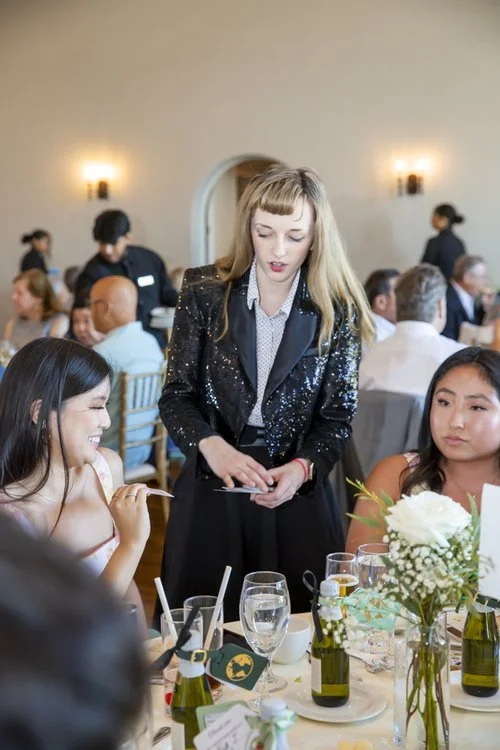
Reach out with your date and a little about your day, and let's talk about where it would fit.

Katrina Kroetch
Female Magician for School Assemblies and Enrichment Days

Female Magician for School Assemblies and Enrichment Days

Schools book performers for assemblies, enrichment weeks, careers days, and end of term events, usually on a small budget, arranged by a teacher doing it alongside a full teaching load. The practical considerations matter considerably more than anything else.

I'm Magical Katrina, an award winning magician and mentalist with a Family Entertainer of the Year honor, and I want to set out what a school should check when booking a female magician, and what genuinely works in a school hall.

Check the Practical Things First

Start with what any school needs regardless of the performer. Current safeguarding clearance, public liability insurance, references from other schools, and experience with the age group you're booking for.

Ask for all of it at enquiry rather than in the final week, and expect it back promptly. A performer who works with schools regularly has it ready and provides it unprompted. Anybody vague about clearance or insurance is not somebody to be booking into a building full of children, whatever their footage looks like.

Ask About the Age Group Specifically

Worth doing, since it's where school bookings most often misfire. A performer excellent with five year olds may be poor with Year 9, and the reverse is equally true.

Those are genuinely different skills rather than one adjusted for height. Ask what proportion of their work is with your age group, and ask for footage of them performing for children of that age rather than at a corporate event. The gap between a performer who works primary and one who works secondary is wider than most schools assume.

Halls Are Difficult Rooms

Practically relevant. A school hall has hard floors, high ceilings, a stage nobody can use properly, and acoustics that make anything spoken at distance hard to follow for children sitting at the back.

The practical fixes are simple: seat children close together at one end rather than spread across the space, keep the front rows genuinely at the front, and don't use the stage unless sightlines genuinely require it. A performer who asks about the room before arriving is one who's worked in school halls, since everybody who has knows what they're walking into.

Assembly Length Is Shorter Than You Think

Worth planning realistically. An assembly slot is typically twenty to thirty minutes including getting children in and out, which means the actual performance is shorter than the slot.

Say the real figure when you book rather than the timetabled one, and build in the five minutes at each end that a hall full of children genuinely takes. A performer given thirty minutes who discovers they have eighteen is cutting material on the spot, which is worse for everybody than having planned for eighteen.

The Role Model Element Is Real and Secondary

Worth being straightforward about. Magic has been overwhelmingly male throughout its history, and girls seeing a woman doing something genuinely difficult and impressive registers without anybody framing it.

That's a real benefit and it shouldn't be the reason you book. Book the performer who's excellent with your age group, and take the rest as an addition. A booking made on the basis of representation alone, with a performer who isn't right for the room, teaches children something considerably less useful than a brilliant performance does.

Careers Days Are a Different Booking

Worth separating, since schools frequently conflate them. A performance entertains, and a careers session answers how somebody ended up doing this, what the work actually involves, and what a day looks like.

Both are legitimate and they need different preparation. If you want the careers angle, say so, since it means a different session rather than the same show with a few minutes added. For secondary students particularly, somebody describing an unusual career honestly is frequently more valuable than the performance itself.

Enrichment Weeks Need More Than One Session

Practically useful. If you're booking for an enrichment day or week, several shorter sessions across year groups reach considerably more children than one long assembly.

That's usually cheaper per child and better received, since each group gets something pitched at them rather than a compromise aimed at the middle. Ask about a day rate rather than a session rate, since most performers price a block considerably more favorably than separate bookings.

Say Your Budget Plainly

The practical advice for school buyers. Schools frequently send a vague enquiry, receive a corporate quote, and go away without replying.

Say what you can spend in the first message, since the performer will confirm it works, propose something shorter, or tell you honestly it doesn't. Many reduce rates for schools, and none can offer what they haven't been asked for. Mention whether it's a state school, what the occasion is, and roughly how many children, since all of it affects the answer.

Why Book Magical Katrina

If you're booking for a school, here's my case. I'm a member of the Magic Circle in London and the Academy of Magical Arts in Hollywood, I've earned multiple magic awards including a Family Entertainer of the Year honour, and I've appeared on Blippi as a performer and magic consultant, along with Penn & Teller: Fool Us and Masters of Illusion. I perform for every age without pitching at the wrong one, I need no stage, power, or sound so your hall works as it is, I provide clearance and insurance documentation unprompted, and no child is ever brought up who doesn't clearly want to be.

Frequently Asked Questions

What should we check first?

Current safeguarding clearance, public liability insurance, references from other schools, and experience with your age group, asked for at enquiry rather than the final week. A performer who works with schools has it ready unprompted, and vagueness about clearance is disqualifying whatever the footage looks like.

Does the age group really matter?

Considerably, since a performer excellent with five year olds may be poor with Year 9 and the reverse is equally true, which are genuinely different skills rather than one adjusted for height. Ask what proportion of their work is with your age group and for footage of them performing for children that age.

What works in a school hall?

Seating children close together at one end rather than spread across the space, keeping the front rows genuinely at the front, and not using the stage unless sightlines require it, since halls have hard floors, high ceilings, and acoustics that defeat anything spoken at distance.

How long is an assembly really?

Shorter than the slot, since twenty to thirty minutes typically includes getting children in and out. Say the real figure rather than the timetabled one and build in five minutes at each end, since a performer given thirty who discovers they have eighteen is cutting material on the spot.

Should we book on the role model basis?

As an addition rather than the reason. Girls seeing a woman doing something genuinely difficult registers without anybody framing it, and that's real, but a booking made on representation alone with a performer who isn't right for the room teaches children less than a brilliant performance does.

Is a careers session different from a show?

Entirely, since a performance entertains while a careers session answers how somebody ended up doing this and what the work involves. Say which you want, since it means different preparation, and for secondary students an honest account of an unusual career is frequently more valuable than the performance.

How should we structure an enrichment day?

Several shorter sessions across year groups rather than one long assembly, since that reaches more children, is usually cheaper per child, and lets each group get something pitched at them. Ask about a day rate, since most performers price a block considerably more favorably.

How do we approach a performer on a school budget?

Say what you can spend in the first message, since a vague enquiry produces a corporate quote and most schools then go away without replying. Mention the occasion and roughly how many children, since many performers reduce rates for schools and none can offer what they haven't been asked for.

Book for the Room, Not the Headline

A school booking succeeds on unglamorous things: clearance and insurance in order, a performer genuinely experienced with your age group, a realistic assembly length, and children seated close together rather than spread across a difficult hall.

Book a female magician because she's excellent with the children you're booking for, and let the rest be the addition it genuinely is. Girls in that hall will notice without anybody pointing it out, and they'll notice it considerably more if the performance was brilliant.

Reach out with your date, age groups, and what you can spend, and I'll tell you plainly what's possible.

Katrina Kroetch
Harry Potter Wedding: Where the Theme Is Worth Spending On

Harry Potter Wedding: Where the Theme Is Worth Spending On

A themed wedding invites spending in a hundred small directions, and most of them produce something lovely that guests never consciously register. The couple notices every detail because they chose each one, and the people in the room experience an overall impression.

That gap is where themed wedding budgets disappear. I'm Magical Katrina, an award winning magician and mentalist who performs at weddings, and I want to set out where a Harry Potter wedding budget genuinely earns its keep and where it quietly doesn't.

Guests Experience an Impression, Not an Inventory

Start with the principle underneath everything. You will remember that the place cards, the table names, the favors, the signage, the menus, and the welcome board were all considered. Your guests will remember that the room felt a particular way.

That means a few strong elements produce almost the same impression as forty small ones, at a fraction of the cost and effort. The forty version is a great deal of work for a difference most people in the room cannot articulate and would not notice if it were absent.

Lighting Does More Than Anything

The single highest return decision. The atmosphere of this theme lives in light: warm, low, and candle heavy rather than bright and even.

Whatever you can spend on lighting, or on turning the venue's existing lighting down, changes the room more than any amount of styling placed within it. A plainly dressed room lit beautifully reads better than an elaborately dressed room under standard venue lighting, and the second costs considerably more. If one thing gets the budget, make it this.

The Entrance Sets Everything

Worth concentrating effort on. Guests form their impression of the whole day in the first thirty seconds, and that impression carries through the evening whether or not the rest matches it.

A strong arrival moment, whether that's the approach, the doorway, or whatever greets people as they walk in, does disproportionate work. It's also one of very few elements every single guest definitely experiences, which is not true of table details, favours, or anything on the far side of the room.

Table Names Are Worth It, Favours Usually Aren't

Two specifics worth separating. Table names are read aloud, discussed, photographed, and become the thing people remember about where they sat, which for a small cost is a genuinely good return.

Favours are picked up, looked at, and left on the table by a meaningful proportion of guests. That's not universal and it is common, and the money spent on them is frequently the largest themed line producing the least impression. If you're cutting something, start there.

Food and Drink Register More Than Decor

Worth knowing, since themed couples underweight it. Guests experience the food and drink directly and continuously, and a single well executed themed element there is noticed by everybody in the room.

A drink with a name, a dessert that fits the feeling, or something at the welcome that nods to the theme does more than a dozen printed details. It's also an element your caterer can usually handle without a specialist supplier, which keeps the cost reasonable and the coordination simple.

Spend on What Happens, Not Only What Sits There

Worth considering, since themed budgets skew heavily towards objects. A room full of beautiful things is a static experience, and a wedding is remembered for moments rather than for decor.

Something happening during the reception or between courses is experienced by guests rather than observed, which is a different kind of memory. For a theme built on wonder specifically, an element where something genuinely impossible occurs sits comfortably with the feeling you're building and reaches every guest rather than the ones seated near a particular detail.

Make Rather Than Buy, Selectively

Practical for a themed wedding. Stationery, signage, and table names are straightforward to make or to have made cheaply, and nobody can tell a professionally produced table name from a well made one at six feet.

What's worth buying properly is anything structural, anything guests touch, and anything photographed closely. The distinction is whether a shortcut shows. A great deal of themed wedding content assumes everything must be bought from a specialist, which is expensive and frequently unnecessary.

Beware the Long Tail

The budget trap specific to themed weddings. No single item is expensive, and there are two hundred of them, and the total arrives as a surprise.

Set a figure for themed elements at the start and track it, since the alternative is discovering in month eight that the accumulated small purchases exceeded what you'd have spent on something substantial. A themed wedding is not inherently more expensive than any other, and it becomes so through accumulation rather than through any decision anybody made.

A Practical Note on the Theme

One honest point, as with any themed wedding drawing on this material. The books and films are protected intellectual property, so while you're free to plan a wedding inspired by them, professional suppliers generally avoid reproducing official artwork, logos, characters, or copyrighted text in items they make for you.

That pushes you towards atmosphere rather than reproduction, which is the better version anyway and happens to be the cheaper one. Worth a brief conversation with anyone you commission.

Frequently Asked Questions

Why does themed spending disappear?

Because you'll remember every detail you chose and guests experience an overall impression. A few strong elements produce almost the same effect as forty small ones at a fraction of the cost, and the forty version is a great deal of work for a difference most people cannot articulate.

What's the highest return decision?

Lighting, since this theme's atmosphere lives in warm, low, candle heavy light rather than bright and even. A plainly dressed room lit beautifully reads better than an elaborately dressed room under standard venue lighting, and the second costs considerably more.

Where should we concentrate effort?

The entrance, since guests form an impression of the whole day in the first thirty seconds and it carries through the evening. It's also one of very few elements every single guest definitely experiences, unlike table details or anything on the far side of the room.
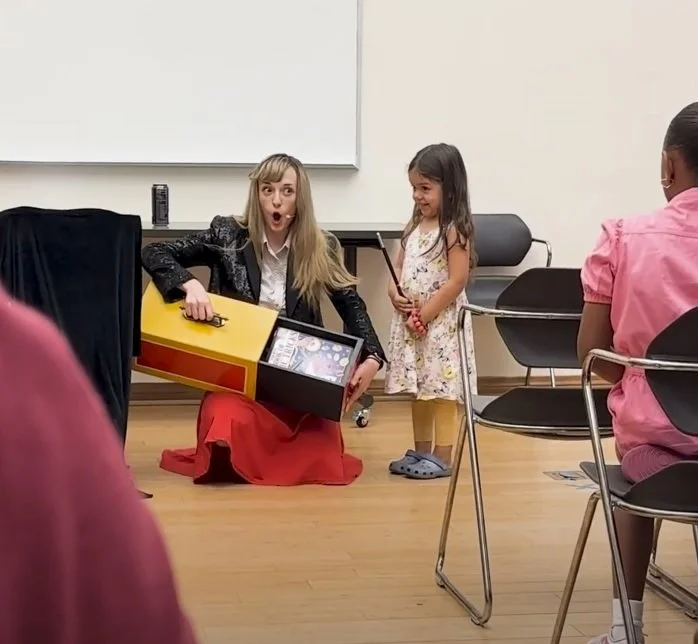
Are favors worth it?

Frequently not, since a meaningful proportion of guests pick them up, look at them, and leave them on the table, which makes them the largest themed line producing the least impression. Table names, by contrast, are read aloud, discussed, and photographed for a small cost.

What about food and drink?

Underweighted by themed couples, since guests experience it directly and continuously and one well executed themed element is noticed by everybody. A named drink or a dessert that fits does more than a dozen printed details, and your caterer can usually handle it without a specialist.

Should we spend on things or on moments?

Themed budgets skew heavily towards objects, and a room full of beautiful things is static while a wedding is remembered for moments. Something happening during the reception or between courses is experienced rather than observed, which for a theme built on wonder sits comfortably with the feeling.

What should we make rather than buy?

Stationery, signage, and table names, since nobody can tell a professionally produced table name from a well made one at six feet. Buy properly anything structural, anything guests touch, and anything photographed closely, since the question is whether a shortcut shows.

How do we avoid the budget creeping?

Set a figure for themed elements at the start and track it, since no single item is expensive and there are two hundred of them. A themed wedding isn't inherently more expensive than any other and becomes so through accumulation rather than through any decision anybody made.

Spend on Light, Arrival, and What Happens

A Harry Potter wedding budget works hardest when it's concentrated rather than distributed: lighting that transforms the room, an arrival every guest experiences, a drink or a dish everybody encounters, and something happening during the evening rather than another object sitting on a table.

Set a figure for themed elements and track it, make the things nobody inspects closely, skip the favors, and remember that your guests are forming one impression rather than auditing a list.

Reach out with your wedding date and venue, and let's talk about the part of the evening people actually experience.

Katrina Kroetch
Magician Near Me: Booking as a Surprise

Magician Near Me: Booking as a Surprise

Booking entertainment as a surprise is a lovely thing to do and it has a failure mode nobody plans for: the person being surprised didn't want to be the centre of attention, and now they're being watched reacting to something in front of everybody they know.

Worth thinking through first. I'm Magical Katrina, an award winning magician and mentalist, and I want to set out what to consider when booking a magician near me as a surprise, including the question most people skip.

Ask Yourself Whether They'd Want It

Start with the honest question. Some people love a surprise and being the focus of an evening, and plenty of others find both genuinely uncomfortable and would rather have known.

You know which one this person is. If there's any doubt, ask somebody who knows them well, and weigh their answer properly rather than deciding they'll enjoy it once it's happening. Most surprises that go wrong were obvious in advance to at least one person who didn't want to spoil the plan.

A Surprise Performer Isn't a Surprise Spotlight

Worth separating, since they frequently get conflated. Somebody can be surprised that there's a performer at their party without being made the center of the performance.

That distinction solves most of the problem. A performer who arrives unexpectedly and works the whole room gives everybody the surprise, including the guest of honor, without putting them on display. If the person would hate attention, that's the version to book, and it's entirely normal to say so.

Tell the Performer What You Know

The practical instruction. Tell them it's a surprise, who it's for, what they're like, and specifically whether they'd enjoy being the focus of a moment or would find it excruciating.

Any professional will plan around that, and the adjustment is invisible when it's known in advance. Also mention anything sensitive, anybody who shouldn't be approached, and anything about the occasion worth handling gently. Ten minutes of briefing is the difference between a surprise that lands and one that's endured politely.

Someone Has to Let Them In

The logistics people forget. A performer arriving at a venue or a house where the guest of honour is standing by the door is not a surprise, and nor is somebody explaining a case to the host in front of everybody.

Appoint somebody who isn't you, tell them when the performer arrives, and give them a plan: where the performer waits, how they get in, and who starts them. Also give the performer that person's number rather than yours, since you'll be hosting. It's five minutes of planning and it's where surprise bookings usually unravel.

Keep the Guest List in on It

Worth doing, since guests are the hardest part of any secret. Tell everybody except the person being surprised, and tell them clearly what they should and shouldn't say.

Guests who know something is happening behave differently from guests who are improvising, and somebody always mentions something. A short message to the group a few days before, saying there's a surprise and asking them not to allude to it, prevents most of the near misses. It also means the room is ready rather than confused when the performer appears.

Decide When It Happens

Worth planning rather than leaving to the evening. A surprise performer works best once everybody has arrived, had a drink, and settled, which is usually later than hosts expect.

Too early and half the guests are still arriving. Too late and the energy has already peaked or people have started leaving. Agree a time with your appointed person, build in slack because the evening will run late, and let the performer start when the room is right rather than at a fixed minute.

Surprise Parties Have Their Own Rules

Worth mentioning if the whole party is the surprise, not just the entertainment. In that case the arrival moment is already a lot for the person being surprised, and anything immediately afterwards competes with it.

Give them twenty minutes to greet people and recover before anything else happens. A performer starting the moment the lights come up is adding to a moment that's already full, and the magic lands considerably better once the person has had a drink and stopped being startled.

It's Fine to Tell Them

Worth saying, since hosts assume a surprise is always better. Plenty of people enjoy anticipation more than surprise, and telling somebody you've booked something gives them a week of looking forward to it.

That's a legitimate choice rather than a failure of nerve, and for a person who dislikes being caught off guard it's the kinder version. The entertainment is the same either way, and the only thing you lose is one moment of astonishment at the start.

Why Book Magical Katrina

If you're planning a surprise, here's my case. I'm a member of the Magic Circle in London and the Academy of Magical Arts in Hollywood, I've earned multiple magic awards, and I've performed for clients including Formula 1, the Olympics, Porsche, and Prada, with appearances on Penn & Teller: Fool Us and Masters of Illusion. Nobody is put on the spot who doesn't want to be, I'll work with whoever you appoint rather than contacting you on the night, and I'll build a moment around the person only if you tell me they'd enjoy it.

Frequently Asked Questions

Should we check whether they'd want a surprise?

Yes, since some people love being the focus of an evening and plenty find it genuinely uncomfortable. If there's any doubt, ask somebody who knows them well and weigh the answer properly, since most surprises that go wrong were obvious in advance to at least one person who didn't want to spoil the plan.

Can we surprise them without putting them on the spot?

Easily, and the two get conflated. Somebody can be surprised that there's a performer without being made the center of the performance, so a performer who arrives unexpectedly and works the whole room gives everybody the surprise without putting the guest of honour on display.

What should we tell the performer?

That it's a surprise, who it's for, what they're like, and specifically whether they'd enjoy being the focus of a moment or would find it excruciating. Also anything sensitive, anybody who shouldn't be approached, and anything about the occasion worth handling gently.

Who manages the arrival?

Somebody who isn't you, since you'll be hosting. Give them a plan for where the performer waits, how they get in, and who starts them, and give the performer their number rather than yours. That's where surprise bookings usually unravel, and it's five minutes of planning.

Should guests know?

Yes, since guests are the hardest part of any secret and somebody always mentions something. A short message a few days before, saying there's a surprise and asking them not to allude to it, prevents most near misses and means the room is ready rather than confused.

When should it happen?

Once everybody has arrived, had a drink, and settled, which is later than hosts expect. Too early and half the guests are still arriving, too late and the energy has peaked. Agree a time with your appointed person, build in slack, and let the performer start when the room is right.

What if the whole party is a surprise?

Give the person twenty minutes to greet people and recover first, since the arrival moment is already a lot and anything immediately afterwards competes with it. Magic lands considerably better once they've had a drink and stopped being startled.

Is it ever better to tell them?

Frequently, since plenty of people enjoy anticipation more than surprise and a week of looking forward to something is a real pleasure. For somebody who dislikes being caught off guard it's the kinder version, and the only thing you lose is one moment of astonishment at the start.

Surprise the Room, Not the Person

A surprise booking works when the surprise is that something wonderful is happening, rather than that somebody is suddenly the centre of attention. Ask yourself honestly whether they'd enjoy the second version, tell the performer what you know about them, appoint somebody else to manage the arrival, let the guests in on it, and wait until the room has settled.

And if the honest answer is that they'd rather know, tell them. A magician near me booking is just as good anticipated as it is unannounced, and for plenty of people the week of looking forward to it is the better gift.

Reach out with your date and a little about the person, and I'll plan it around them.

Katrina Kroetch
Corporate Christmas Party Entertainment for a Very Large Party

Corporate Christmas Party Entertainment for a Very Large Party

Entertainment that works beautifully for eighty people does something quite different at five hundred. The format is identical, the room is six times the size, and a proportion of your guests will go home having experienced none of it.

That's an arithmetic problem rather than a quality one. I'm Magical Katrina, an award winning magician and mentalist, and I want to set out how corporate Christmas party entertainment scales, and what a large party actually needs.

Do the Coverage Arithmetic

Start with the calculation almost nobody does. A performer working close up reaches groups of four or five for a few minutes each, which across three hours covers a meaningful number of people and nowhere near five hundred.

Work it out before you book: a performer might reach somewhere between eighty and a hundred and fifty guests in an evening depending on the room and the format. Divide your headcount by that and you have the number of performers your party actually needs, which is frequently more than one and almost never the one everybody books by default.

Partial Coverage Is Fine If You Plan It

Worth saying, since the arithmetic above sounds discouraging. A single performer at a party of five hundred is not a wasted booking, provided you understand what it achieves and position it accordingly.

Place them where the concentration is: a reception area, a particular room, or the stretch before dinner when people are standing. What doesn't work is booking one performer and expecting the room to be covered, then concluding afterwards that it didn't land. Decide what you're buying and the result matches.

Two Performers Is a Different Product

Worth knowing, since it's the usual answer at this size. Two performers working different areas cover roughly twice the room and change the feel of an event considerably, since guests encounter something wherever they are rather than in one corner.

That's not twice the cost of one in every case, since performers who work together regularly frequently quote more favorably as a pair. Ask about it rather than assuming, and ask whether they've worked together before, since two performers who coordinate are considerably better than two who happen to be in the same room.

A Staged Element Earns Its Place at Scale

The point where the calculation changes. At eighty people, a stage show is one option among several. At five hundred, it's the only format that reaches everybody at once.

That's a genuine argument for a staged element at a large party, provided your room has sightlines and your program has a slot. A common structure at this size is strolling work during the reception for as much of the room as it reaches, then something from the stage after dinner that everybody experiences. The two do different jobs and the combination covers the arithmetic.

Your Room Decides What's Possible

Practically decisive at scale. Five hundred people in a ballroom with a stage and sightlines supports a staged element. Five hundred spread across three rooms and a mezzanine does not, however good the performer.

Walk the space and be honest about where people will actually be. A large party frequently spreads into areas the plan didn't account for, and entertainment placed in the main room reaches whoever stayed in it. If your venue has multiple spaces, that's an argument for more performers rather than a longer booking.

Dinner Service Creates Natural Gaps

Worth using at this size. A seated dinner for five hundred takes a long time to serve, and the stretches between courses are when guests are captive, seated, and available.

A performer working tables during service gaps reaches a defined group properly rather than catching people in passing, which at a large party is a more efficient use of the time than working a crowded reception. Ask your venue how long service will take, since it's usually longer than they first say and it's your best coverage window.

Don't Book One of Everything

Worth cautioning, since large budgets invite it. A party of five hundred with a band, a DJ, a photo booth, a caricaturist, and a magician has spent a great deal on elements competing with each other for the same guests.

Fewer things done properly reaches more people than many things done thinly. If your budget is substantial, two performers of the same kind covering the room beats five different attractions each reaching a corner of it. That's the opposite of how large party budgets usually get spent.

Tell the Performer the Real Number

Practically important and frequently fudged. A booking made for three hundred that turns out to be five hundred means the same performer reaching a smaller proportion, and the organizer concluding afterwards that it didn't work.

Give the honest figure at enquiry, and tell them if it changes. Any professional will tell you what coverage to expect at that number and whether you need more than one, and a performer who doesn't raise it when you say five hundred hasn't thought about your event.

Frequently Asked Questions

How many people can one performer reach?

Somewhere between eighty and a hundred and fifty in an evening depending on the room and format, since close up work reaches groups of four or five for a few minutes each. Divide your headcount by that and you have the number of performers your party actually needs, which is frequently more than one.

Is one performer at a big party a waste?

No, provided you understand what it achieves and position them where the concentration is, such as a reception area or the stretch before dinner. What fails is booking one and expecting the room covered, then concluding it didn't land. Decide what you're buying and the result matches.

Should we book two?

At this size usually, since two performers working different areas cover roughly twice the room and guests encounter something wherever they are. It isn't always twice the cost, since performers who work together regularly often quote favorably as a pair, and ask whether they've worked together before.

Does a stage show make more sense at scale?

Yes, since at eighty people it's one option and at five hundred it's the only format reaching everybody at once, provided your room has sightlines and your program has a slot. A common structure is strolling during the reception then something staged after dinner.

What if our venue has several rooms?

That's an argument for more performers rather than a longer booking, since entertainment placed in the main room reaches whoever stayed in it and a large party frequently spreads into areas the plan didn't account for. Walk the space and be honest about where people will be.

When's the best coverage window?

Dinner service, since a seated dinner for five hundred takes a long time and the gaps between courses are when guests are captive, seated, and available. A performer working tables reaches a defined group properly rather than catching people in passing. Ask your venue how long service takes.

Should we book several different attractions?

Usually not, since a band, a DJ, a photo booth, a caricaturist, and a magician compete for the same guests, and fewer things done properly reaches more people than many done thinly. Two performers of the same kind covering the room beats five attractions each reaching a corner.

What should we tell the performer?

The real headcount at enquiry and any change afterwards, since a booking made for three hundred that turns out to be five hundred means a smaller proportion reached and an organizer concluding it didn't work. A performer who doesn't raise coverage when you say five hundred hasn't thought about your event.

Work Out the Coverage First

The corporate Christmas party entertainment decision at scale is arithmetic before it's taste. Work out how many guests one performer realistically reaches, divide your headcount by it, and decide honestly whether you're buying coverage or a feature in one part of the room.

Then use the structure that fits: two performers rather than one, a staged element that reaches everybody at once, dinner service gaps rather than a crowded reception, and fewer things done properly rather than five attractions competing for the same five hundred people.

Reach out with your headcount and venue, and I'll tell you honestly what one performer covers.

Katrina Kroetch
Halloween Magic Show for Libraries and Museums

Halloween Magic Show for Libraries and Museums

Libraries and museums program October because families expect something, attendance is high, and it's one of the few months where a public institution can draw people who don't usually come. The budget is small, visible, and accounted for.

That shapes what works considerably more than the season does. I'm Magical Katrina, an award winning magician and mentalist, and I want to set out what a Halloween magic show looks like in a library or museum, and how to approach it with the resources these institutions actually have.

Your Audience Arrives Across the Day

Start with the structural difference from a school or a private booking. Library and museum visitors come when they like, stay as long as they like, and don't consult a program before arriving.

That means a single session at two o'clock reaches whoever happened to be there at two o'clock. Short sessions repeated through the day reach considerably more people, with families able to join and leave without disruption. Among Halloween magic show approaches in these settings, repetition beats duration every time.

Say Your Budget Plainly

The practical advice that saves everybody time. Public institutions frequently send a vague enquiry, receive a corporate quote, and go away without replying.

Saying what you can spend in your first message produces a useful answer immediately: the performer will confirm it works, propose something shorter, or tell you honestly it doesn't. Many reduce rates for libraries, museums, and educational work, and none can offer what they haven't been asked for. Mention what the institution is and who attends, since it frequently affects the answer.

Your Space Has Nothing

Practically relevant. A library activity room, a community space, or a museum education suite has hard floors, no stage, no sound system worth using, and furniture built for other purposes.

Close up magic needs none of it, works in a room exactly as it is, and leaves nothing to clear before the next booking. That matters in buildings where the same room hosts a toddler group at eleven and a reading group at four, and where whoever is organizing cannot spend an afternoon arranging a setup.

Galleries Are a Different Proposition

Worth separating for museums. A performance in an education room reaches whoever chose to attend, whereas something happening in a gallery reaches everybody passing through, including families who had no idea it was on.

That's a considerably larger audience and it suits a format needing no equipment, since a gallery has restrictions on what can be installed and how close anybody stands to anything. If your building allows it, programming in the public space rather than a side room is usually the better choice.

The Audience Is Every Age

Worth planning around, since public programming isn't segmented. Toddlers, school age children, teenagers dragged along, parents, and grandparents, many of whom came for the building rather than the program.

Entertainment pitched at one band serves a fraction of the room. Magic crosses it, since astonishment needs no shared reference and a performer adjusts between a group of small children and a group of adults without changing what they're doing. Tell your performer the realistic spread rather than assuming a family audience means children.

Keep It Atmospheric, Not Frightening

Worth being clear about, since you don't control who walks in. A public institution has visitors who didn't opt into a scare experience, including very young children and people who wandered into the room.

Something intriguing and slightly mysterious suits October without any risk. Anything startling or genuinely frightening has no place in a setting where somebody's three year old might be standing at the back. Confirm the tone when you book, and expect a performer who works these settings to raise it themselves.
Promote It Through What You Already Have

Practically useful, since marketing budgets are minimal. Your noticeboards, your newsletter, your social accounts, your local library network, and the schools you already work with reach the families you want.

Local parent groups and community pages do more than paid promotion at this scale. And front of house staff mentioning it to visitors the week before is the cheapest promotion available and the most consistently overlooked. A short briefing to the desk team is worth more than a poster.

Measure Reach, Not Attendance at One Session

Worth deciding in advance, since it determines what you conclude. Attendance at a single session tells you about the timing rather than the programming.

Better measures across a day: total people reached, how many were visitors who don't usually come, and whether anybody asked when you're doing it again. Those are more useful for a report and they tend to argue for several short sessions rather than one event, which is the right answer anyway.

A Note on "Local vs. Traveling In"

Worth knowing: performers who travel often have availability when local ones are booked, and October fills early everywhere. Travel is discussed openly and factored into the quote rather than being your problem. I'm based in the Los Angeles area and travel for events, and a block of short sessions across one day suits travelling in well.

Why Book Magical Katrina

If you're programming October, here's my case. I'm a member of the Magic Circle in London and the Academy of Magical Arts in Hollywood, I've earned multiple magic awards including a Family Entertainer of the Year honour, and I've appeared on Blippi as a performer and magic consultant, along with Penn & Teller: Fool Us and Masters of Illusion. I perform for every age at once, I need no stage, power, or sound, I'll do several short sessions across a day rather than one long one, and I'll tell you honestly if your budget would do more elsewhere.

Frequently Asked Questions

Should we run one session or several?

Several, since visitors arrive across the day and don't consult a program, which means a single session at two reaches whoever was there at two. Short sessions repeated through the day reach considerably more people, with families able to join and leave without disruption.

How should we approach a performer on a small budget?

Say what you can spend in your first message, since a vague enquiry produces a corporate quote and most institutions then go away without replying. Many reduce rates for libraries, museums, and educational work, and none can offer what they haven't been asked for.

Our room has no facilities. Is that a problem?

No, since close up magic needs no stage, power, or sound, works in the room exactly as it is, and leaves nothing to clear before the next booking. That matters in buildings where the same space hosts a toddler group at eleven and a reading group at four.

Should we program in a gallery or an education room?

The gallery if your building allows it, since a side room reaches whoever chose to attend whereas a public space reaches everybody passing through, including families who had no idea it was on. A format needing no equipment suits a gallery's restrictions.

What about the age range?

It's everybody, since public programming isn't segmented: toddlers, school age children, teenagers, parents, and grandparents, many of whom came for the building. Entertainment pitched at one band serves a fraction of the room, so tell your performer the realistic spread.

How frightening should it be?

Not at all, since you don't control who walks in and a public institution has visitors who didn't opt into a scare experience, including very young children. Something intriguing and slightly mysterious suits October without risk, and a performer who works these settings should raise it themselves.

How do we promote it?

Through what you already have: noticeboards, your newsletter, social accounts, your library network, and the schools you work with, plus local parent groups and community pages. Front of house staff mentioning it to visitors the week before is the cheapest promotion available and the most overlooked.

How do we report on it?

On total people reached across the day, how many were visitors who don't usually come, and whether anybody asked when you're doing it again, rather than attendance at one session, which tells you about the timing. Those measures also argue for several short sessions, which is the right answer anyway.

Program Where the Visitors Already Are

October is one of the few months a library or museum can reach families who don't usually come, and the programming that works is shaped by a drop in audience and a small visible budget. Run several short sessions rather than one, put them in the public space if your building allows it, keep the tone intriguing rather than frightening, and brief your front of house team, who will do more for attendance than any poster.

A Halloween magic show suits all of that, since it needs nothing from a room, reaches every age at once, and can be repeated across a day for a fraction of what separate bookings would cost.

Reach out with your date and what you can spend, and I'll tell you plainly what's possible.

Katrina Kroetch
Illusionist NYC for Restaurant, Bar, and Hotel Openings

Illusionist NYC for Restaurant, Bar, and Hotel Openings

An opening night in New York has a narrow job. The room is full of press, operators, people who attend openings professionally, and a handful of guests who'll decide whether to tell anybody, and all of it has to produce coverage, posts, and a reason to come back.

That's a different brief from a party. I'm Magical Katrina, an award winning magician and mentalist, and I want to set out what an illusionist NYC operators book contributes to an opening, which is about what leaves the room rather than what happens in it.

The Room Attends Openings for a Living

Start with the audience. Press, critics, operators, and a particular set of guests go to openings constantly, which means your space, your canapés, and your cocktails are being compared against everything else they've seen this month.

That makes differentiation genuinely hard and spending more rarely achieves it. What's scarce for that audience is something they haven't had at the last four openings, which is a lower bar than it sounds and one that money alone doesn't clear.

They Need a Reason to Stay

The practical objective. An opening guest who arrives, takes a drink, photographs the room, and leaves in twenty minutes has attended without forming a view of the place.

Someone who stays an hour has eaten properly, talked to your team, noticed the service, and formed an impression that survives the week. Something happening extends that considerably, and dwell time at an opening is what converts attendance into coverage and return visits. An illusionist NYC working the room is doing exactly that job.

It Shouldn't Compete With the Room

Worth being clear about, since it's the risk. You've spent months on a space, a menu, and a look, and anything that becomes the center of attention pulls focus from what you're launching.

A performer working small groups keeps people circulating, looking at the room, and talking to each other rather than gathering to watch something. That's the distinction between entertainment that supports an opening and entertainment that hijacks it, and it's worth asking any performer directly how they work.

Give People Something to Post

Increasingly the point of an opening night. Your guests document what they see, and a beautiful room produces photographs of a beautiful room, which looks like every other opening in their feed.

Something surprising at close range gets filmed and shared, and it reaches people who weren't invited. Tell your performer if that matters, since moments designed to be captured differ from moments designed to be watched. It's also worth having somebody on your team filming, since your own footage is usable and a guest's rarely is.

Press Are Working, Not Socializing

Worth understanding about the register. Critics, writers, and editors at an opening are forming a view, taking notes, and deciding whether there's a story, which means they're not there to be entertained.

Anything demanding participation or enthusiasm from that group is misjudged. What works is something they encounter while doing their job, which they can then mention or not. A few of them will write about it, which is a better outcome than any amount of pressing a press release into somebody's hand.

Your Space Is Not Set Up for This

Practically relevant on an opening night specifically. The room is full, the furniture is placed for service rather than events, and every square foot is either a guest or a station.

Close up magic needs no stage, power, sound, or floor area, works between tables and at the bar exactly as the room is, and doesn't displace anything you've arranged. For a space you've spent months designing, entertainment that requires you to move nothing is the only kind worth considering.

Friends and Family Nights Are Different

Worth separating, since the objective changes. A friends and family or soft opening is a service rehearsal with a forgiving audience, and the point is testing the kitchen and the floor rather than impressing anybody.

Entertainment there is usually unnecessary and occasionally unhelpful, since it distracts from the thing you're actually testing. Save it for the press night or the public opening, where the room's impression matters. A performer worth booking will tell you the same.

Consider the Nights After

Worth thinking about, since an opening is one evening and the months afterwards are the business. Plenty of venues program something regular on their quiet nights once they're open, which is a different arrangement from an opening booking and frequently a more useful one.

If the opening goes well, that conversation is worth having. A performer who understands your room and your service from the opening night is considerably easier to program regularly than somebody starting cold.

A Note on "Local vs. Traveling In"

Worth knowing: performers who travel to New York work from a different calendar than those based there, which matters when your opening date moves, as opening dates do. Travel is discussed openly and factored into the quote. I'm based in the Los Angeles area and travel to New York for events.

Why Book Magical Katrina

If you're opening a venue, here's my case. I'm a member of the Magic Circle in London and the Academy of Magical Arts in Hollywood, I've earned multiple magic awards, and I've performed for clients including Formula 1, the Olympics, Porsche, Prada, and the Ritz Carlton, with appearances on Penn & Teller: Fool Us and Masters of Illusion. I work small groups continuously rather than gathering a crowd, I need no stage, power, or floor space, and I work around service rather than against it.

Frequently Asked Questions

What's hard about a New York opening?

The audience attends them constantly, so your space, canapés, and cocktails are compared against everything else they've seen this month. That makes differentiation genuinely hard and spending more rarely achieves it, since what's scarce is something they haven't had at the last four openings.

What are we actually buying?

Dwell time, since a guest who arrives, photographs the room, and leaves in twenty minutes has attended without forming a view. Someone who stays an hour has eaten, talked to your team, noticed the service, and formed an impression that survives the week, which is what converts attendance into coverage.

Won't it distract from the venue?

Only if it's the wrong format, which is the genuine risk after months spent on a space and a menu. A performer working small groups keeps people circulating and looking at the room rather than gathering to watch, which is the difference between supporting an opening and hijacking it.

Does it help with social coverage?

Considerably, since a beautiful room produces photographs of a beautiful room that look like every other opening in a feed, whereas something surprising at close range gets filmed and shared beyond the guest list. Have somebody on your team filming too, since your own footage is usable.

Press will be there. Does that change things?

It rules out anything demanding participation, since critics and editors are forming a view and deciding whether there's a story rather than being entertained. What works is something they encounter while working, which they can mention or not, and a few will.

Our space is full and the furniture is placed. Does it fit?

Yes, since close up magic needs no stage, power, sound, or floor area and works between tables and at the bar exactly as the room is, displacing nothing you've arranged. For a space you've spent months designing, that's the only kind of entertainment worth considering.

Should we do it at the friends and family night?

Usually not, since a soft opening is a service rehearsal with a forgiving audience and the point is testing the kitchen and floor rather than impressing anybody. Entertainment there distracts from what you're actually testing, so save it for the press night or public opening.

What about after the opening?

Worth a conversation if it goes well, since an opening is one evening and the months afterwards are the business. Plenty of venues program something regular on quiet nights, and a performer who already understands your room and service is easier to program than somebody starting cold.

Make Them Stay Long Enough to Form a View

A New York opening is judged by what leaves the room: the posts, the coverage, and whether anybody intends to come back. An illusionist NYC working small groups extends how long guests stay, gives them something to film that isn't another photograph of a beautiful bar, works around a full room without displacing anything, and lets the press encounter it while doing their job.

Save it for the night that matters rather than the service rehearsal, and if it works, talk about the quiet nights afterwards.

Reach out with your opening date and the space, and let's talk about the evening.

Katrina Kroetch
Women Month Magic Show: Marking March for the First Time

Women Month Magic Show: Marking March for the First Time

Plenty of organizations have never marked March, and then somebody decides this is the year. There's no network, no history, no budget line, and no precedent, and whoever raised it has usually been handed the job of making it happen.

That's a reasonable position to start from. I'm Magical Katrina, an award winning magician and mentalist, and I want to set out how to approach a first women month magic show or anything else for March, when nobody in the organization has done this before.

Ask the Women First

Start here, since skipping it is the commonest first time mistake. An event designed by a committee of people who thought it was a good idea, without asking the women it's for, produces something well meant and occasionally wrong.

Ask a handful of women across the organization what they'd actually find worthwhile, including whether they'd want anything at all. Some will have strong views, some will be indifferent, and a few will tell you about something structural that matters more than an event. All of that is useful before you book anything.

Do One Thing Properly

The principle for a first year. The instinct is a program: a week of sessions, a panel, a speaker, and something social, which is a great deal of work for a committee that doesn't exist yet.

One genuinely good thing beats four adequate ones, and it's achievable by whoever is doing this alongside their actual job. It also sets a sustainable precedent, since next year's organizer has to match what you did. A modest first year that went well is a considerably better foundation than an ambitious one nobody could repeat.

Don't Let It Become a Permanent Obligation

Worth thinking about early. A first event creates an expectation, and the person who organized it is frequently assumed to own it indefinitely.

Decide at the outset whether this is a one off, an annual commitment, or an experiment, and say so. If you want it to continue, agree who owns it and whether they get any time for it. Plenty of first year efforts become nobody's job in year two, which is how organizations end up with a gap that looks like going backwards.

Avoid the Earnest Trap

Worth knowing, since first attempts frequently over correct towards worthiness. A session about barriers and progression is a legitimate choice and it attracts the people who already care, which at a first event means a small self selected room.

Something people would attend on its own terms reaches considerably more of the organization, and the theme arrives with it. A women month magic show works that way: it's worth attending regardless, and a woman doing something technically demanding in a field that's been overwhelmingly male carries the point without a presentation about it.

Get Somebody Senior Behind It

Practically decisive for a first event. With no history, people don't know whether this is a real organizational thing or something a few colleagues arranged, and a senior person attending visibly answers that.

Ask specifically, with a date, and ask them to stay rather than appear. It costs nothing and it determines whether your first event is treated as legitimate, which matters more in year one than any amount of promotion. It also makes a budget conversation easier next year.

Keep the Claims Small

Worth getting right, since overclaiming at a first event invites skepticism that's hard to recover from. An hour doesn't change progression, pay, or culture, and describing it as though it might produces exactly the eye rolling you're trying to avoid.

Describe it as what it is: something worth attending, marking an occasion the organization hasn't marked before. That's modest, true, and considerably more persuasive to a skeptical audience than a statement about commitment to change.

Expect Some Resistance

Worth anticipating rather than being surprised by. Somebody will ask why there isn't an equivalent for men, somebody will think it's performative, and somebody will be quietly unenthusiastic.

None of that needs a confrontation. A short honest answer, an event that's genuinely good, and no grand claims handle most of it. First events attract more scrutiny than established ones precisely because they're new, and the best response is something people enjoyed rather than an argument.

Write Down What Happened

The thing that makes a second year possible. Attendance, a few specific responses, what you spent, how long it took you, and what you'd change.

That page is what gets a budget next time and what stops the next organizer starting from nothing. It takes twenty minutes while it's fresh, and it's the single most useful thing a first time organizer can leave behind. Most don't, which is why so many organizations have done this once and can't remember how.

Frequently Asked Questions

Where should we start?

By asking a handful of women across the organization what they'd find worthwhile, including whether they'd want anything at all. An event designed by people who thought it was a good idea, without asking, produces something well meant and occasionally wrong, and the answers frequently point at something more useful than an event.

Should we plan a whole week?

No, since one genuinely good thing beats four adequate ones and is achievable by somebody doing this alongside their job. It also sets a sustainable precedent, because next year's organizer has to match what you did, and a modest first year that went well is a better foundation than an ambitious one nobody can repeat.

How do we avoid being stuck with it forever?

Decide at the outset whether it's a one off, an annual commitment, or an experiment, and say so. If you want it to continue, agree who owns it and whether they get time for it, since plenty of first year efforts become nobody's job in year two, which looks like going backwards.

What kind of event works best first time?

Something people would attend on its own terms, since a session about barriers attracts those who already care and produces a small self selected room. A women month magic show is worth attending regardless, and the theme arrives with the performer rather than in the invitation.

Does senior support matter?

More in year one than any other year, since with no history people don't know whether this is a real organizational thing or something a few colleagues arranged. Ask somebody senior specifically, with a date, and ask them to stay rather than appear.

How should we describe it?

Modestly and accurately, since an hour doesn't change progression, pay, or culture, and describing it as though it might produces exactly the eye rolling you're trying to avoid. Something worth attending, marking an occasion the organization hasn't marked before, is true and more persuasive.

What if people push back?

Expect it, since somebody will ask why there's no equivalent for men and somebody will think it's performative. None of it needs a confrontation: a short honest answer, an event that's genuinely good, and no grand claims handle most of it, since first events attract more scrutiny precisely because they're new.

What should we do afterwards?

Write a page: attendance, a few specific responses, what you spent, how long it took, and what you'd change. That's what gets a budget next time and stops the next organizer starting from nothing. It takes twenty minutes and most people don't do it.

Start Small and Write It Down

A first March doesn't need a program, a committee, or a statement of commitment. It needs somebody to ask the women in the organization what would be worthwhile, to do one thing properly rather than four things thinly, to get a senior person into the room, to claim nothing beyond what an hour can do, and to write down what happened.

A women month magic show suits a first year because it's worth attending on its own terms, which means the room isn't only the people who already cared, and the point arrives without anybody having to make it.

Reach out if you're planning a first one, and I'm glad to talk about what would suit your organization.

Katrina Kroetch
Magic Show Las Vegas: What a Venue Should Know Before Programming One

Magic Show Las Vegas: What a Venue Should Know Before Programming One

Programming a show into a venue is a different decision from booking a performer for an event. You're committing a night, a room, and a share of your marketing to something that has to justify itself week after week, in a city where the competition is extraordinary.

Worth thinking through properly. I'm Magical Katrina, an award winning magician and mentalist, and I want to set out what a venue should consider before programming a magic show Las Vegas audiences could choose over everything else on offer here.

Decide What the Show Is For

Start with the objective, since it determines everything else. A show can fill a quiet night, raise your average spend, give you a reason to market the venue, or become a draw in its own right.

Those lead to different decisions about which night, whether to ticket, and what to spend. A show meant to lift a dead Tuesday is a different product from one meant to become a destination, and venues that haven't decided tend to get neither. Settle it before you approach anybody.

Program the Night That Needs It

The commercial principle. A Friday fills regardless, which means a show there displaces business you'd have had anyway and the lift is minimal.

Monday through Wednesday is where capacity sits and where a reason to come out changes the number. That's the opposite of how venues usually schedule entertainment, and it's the version that affects revenue rather than atmosphere. If you're trialling, trial midweek, since the result will tell you something.

Ticketed or Free Changes the Audience

Worth deciding deliberately, since both work and they produce different rooms. A free show in a bar brings people who were coming anyway plus whoever walks in, and it raises spend rather than generating admission revenue.

A ticketed show brings people who came specifically, which means a committed audience and a marketing obligation, since empty seats at a ticketed show look considerably worse than a quiet bar. For most venues starting out, free with a strong drinks offer is the lower risk route, and ticketing is a later decision once you know the show draws.

Your Room Decides the Format

Practically important. A room with sightlines, a defined performance area, and reasonable acoustics supports a seated show. A bar with pillars, hard surfaces, and people standing supports close up work and nothing else.

Be honest about which you have rather than hoping. A seated show in a room where half the audience can't see produces complaints, whereas close up magic moving between tables works in almost any room and needs no stage, power, or sound. Most venues considering this for the first time have the second kind of room.

Protect the Service

Worth planning, since it's where venue bookings go wrong. A show that stops service, blocks a server's route, or makes the room too quiet to take orders costs you money during the hour it's meant to make you money.

Agree the practicalities before the first night: where the performer works, when, and how it interacts with service. A performer who's worked venues understands this and plans around your floor rather than expecting the floor to plan around them. Ask directly how they handle it.

Brief Your Staff

The detail that determines whether it works. Your servers and bar team need to know what's happening, when, and what to tell a guest who asks.

A room where the staff can explain what's going on and mention it to arriving guests performs considerably better than one where they're as surprised as the customers. It takes five minutes at a pre shift and it affects both the atmosphere and the spend. Staff who like the arrangement also sell it, which is worth more than any sign.

Trial Before You Commit

The sensible approach for both sides. Three or four nights tells you how your guests respond, whether your team likes working alongside it, and what it does to covers, without committing a season.

Agree what you're measuring beforehand and compare against a like for like night rather than against a Friday. Most performers prefer this too, since a residency that isn't working serves nobody. If it works, a regular arrangement is straightforward and considerably better value than ad hoc bookings.

Measure Covers, Not Reaction

Worth deciding in advance. A room that seemed to enjoy itself tells you very little, and venues routinely continue or cancel on impression.

Better measures: covers and revenue on programmed nights against comparable unprogrammed ones, average spend per head, and whether people return. Those are what the programming affects. A show that lifted a Tuesday from forty covers to seventy has earned its place regardless of how the room looked to you on the night.

Las Vegas Is a Hard Market

Worth being realistic about. This city has more entertainment per square mile than anywhere, and a venue show competes with everything on the Strip for a visitor's evening.

That argues for programming aimed at your existing traffic rather than at drawing people across town, at least to begin with. A show that makes your regulars stay longer and spend more is achievable. A show that pulls visitors away from a headline production is a considerably larger undertaking, and it's worth knowing which you're attempting.

Why Book Magical Katrina

If you're considering programming something, here's my case. I'm a member of the Magic Circle in London and the Academy of Magical Arts in Hollywood, I've earned multiple magic awards, and I've performed for clients including Formula 1, the Olympics, Porsche, and Prada, with appearances on Penn & Teller: Fool Us and Masters of Illusion. I need no stage, power, or sound, I work around service rather than against it, I'll brief your team, and I'm happy to trial a few nights before anything regular.

Frequently Asked Questions

What should we decide first?

What the show is for, since filling a quiet night, raising average spend, giving you a marketing reason, and becoming a destination lead to different decisions about the night, ticketing, and spend. Venues that haven't decided tend to get none of them.

Which night should we program?

The one that needs it, since a Friday fills regardless and a show there displaces business you'd have had anyway. Monday through Wednesday is where capacity sits and where a reason to come out changes the number, which is the opposite of how venues usually schedule.

Should we ticket it?

Both work and they produce different rooms. Free brings people who were coming anyway plus walk ins and raises spend, whereas ticketed brings a committed audience and a marketing obligation, since empty seats look worse than a quiet bar. Free with a strong drinks offer is the lower risk start.

What kind of show suits our room?

Be honest about sightlines, since a room with a defined performance area and reasonable acoustics supports a seated show while a bar with pillars and standing customers supports close up work and nothing else. Most venues considering this for the first time have the second kind of room.

Will it interfere with service?

It shouldn't, and that's worth agreeing before the first night: where the performer works, when, and how it interacts with service. A show that stops service or blocks a server's route costs you money during the hour it's meant to make you money, so ask directly how a performer handles it.

Do we need to tell our staff?

Yes, and it's the detail that determines whether it works, since a room where staff can explain what's happening and mention it to arriving guests performs considerably better than one where they're as surprised as the customers. Five minutes at a pre shift, and staff who like it will sell it.

Should we commit to a residency?

Trial three or four nights first, since that tells you how guests respond, whether your team likes it, and what it does to covers without committing a season. Agree what you're measuring beforehand and compare against a like for like night rather than a Friday.

How should we judge it?

On covers and revenue against comparable unprogrammed nights, average spend per head, and whether people return, rather than on how the room looked. A show that lifted a Tuesday from forty covers to seventy has earned its place regardless of your impression on the night.

Start Midweek and Measure Properly

Programming a magic show Las Vegas guests could choose over anything else is a commercial decision rather than an entertainment one, and the venues that get it right decide the objective first, program the night that actually needs help, match the format to the room they genuinely have, protect service, brief the floor, and judge it on covers rather than atmosphere.

Trial it midweek, compare like for like, and aim first at making your existing traffic stay longer rather than at pulling the Strip across town.

Reach out and let's arrange a few trial nights.

Katrina Kroetch