






Corporate Magician: Why a Business Audience Is Different

Corporate Magician: Why a Business Audience Is Different

Plenty of performers work weddings, birthdays, and corporate events and describe them as the same job with different clothes. They aren't, and the differences are the reason a performer who's excellent at one can be mediocre at the other.

Worth understanding before you book somebody whose footage is all family parties. I'm Magical Katrina, an award winning magician and mentalist, and I want to set out what makes a business audience distinctive, and what to look for in a corporate magician as a result.

Nobody Chose to Be There

Start with the fundamental difference. Guests at a wedding or a birthday came because they care about somebody, and they arrive wanting the evening to go well.

A corporate audience is at a work event, frequently on a Thursday, sometimes instead of going home. A proportion are there because attendance was expected. That's a cooler starting point, and a performer used to warm rooms can misjudge it badly by arriving with the energy that works at a party and meeting polite resistance.

The Hierarchy Is in the Room

The constraint that governs everything, and it doesn't dissolve because it's evening. At a corporate event, a participant's colleagues, their manager, and occasionally their chief executive are watching.

That means anything embarrassing is embarrassing in front of people whose opinion materially affects somebody's career. A corporate magician has to read seniority continuously, know who can be approached and who shouldn't be, and never put a person in a position they'd regret. Ask any performer how they handle senior participants, since the answer separates those who work these rooms from those who visit them.

People Are Partly Working

Worth understanding about the register. At a client event, your staff are hosting. At a conference, delegates are networking with intent. At an awards dinner, people are being seen.

Entertainment demanding participation, enthusiasm, or performance from people who are quietly doing their jobs is misjudged. What works is something they can encounter while continuing to do what they came for, which is why strolling formats suit corporate events so consistently and why a performer insisting the room gather is fighting the occasion.

The Client Is Not the Audience

A structural difference performers underestimate. At a private party, the person who booked is in the room and sees it. At a corporate event, the booker is frequently an events manager whose reputation rides on it, who may be watching from the side, managing three other things at once.

That means a corporate magician is working for somebody whose career exposure is real, and the professional side matters as much as the performance: arriving early, being easy to reach, handling paperwork, and never creating a problem the booker has to explain. Performers who only work consumer events frequently underweight all of it.

Material Has to Clear a Higher Bar

Worth being specific about. A corporate room is mixed in age, background, nationality, and seniority, and anything depending on shared cultural reference, risqué content, or humour at somebody's expense will land badly with a meaningful proportion.

That's narrower than a party, where a performer can read a single crowd and adjust. Corporate material has to be genuinely universal, which is harder than it sounds and is one of the main things experience buys. Ask for footage from corporate events rather than parties, since it demonstrates a different skill.
Analytical Rooms Are a Feature

The compensation, and it's substantial. Corporate audiences frequently contain engineers, lawyers, researchers, and analysts whose professional instinct is to work out how something functions.

That makes them a better audience rather than a harder one, since somebody applying genuine scrutiny who still cannot account for what happened is more affected than a casual observer. Mentalism suits these rooms particularly, since it engages the same faculties that make them skeptical. A performer who enjoys that room is usually very good in it.

The Objective Is Rarely Just Entertainment

Worth knowing, since it changes what good looks like. A birthday party wants a good time. A corporate event usually wants something else as well: colleagues mixing, clients impressed, a conference reception that isn't flat, or an evening people remember the company for.

A performer who understands that will ask about your objective rather than just your date, and will work the room accordingly, spending time where it's useful rather than randomly. That question in an enquiry is a reliable signal of somebody who works corporately.

How to Tell From a Listing

Practically, a few checks. Ask for sustained footage from a corporate event rather than a party, and watch how the performer handles a room that isn't already warm.

Ask how they handle senior participants and somebody who doesn't want to take part. Ask whether they carry insurance and provide a certificate. And notice whether they ask about your audience and objective before quoting. Those four reveal whether somebody works business rooms or simply accepts bookings for them.

Why Book Magical Katrina

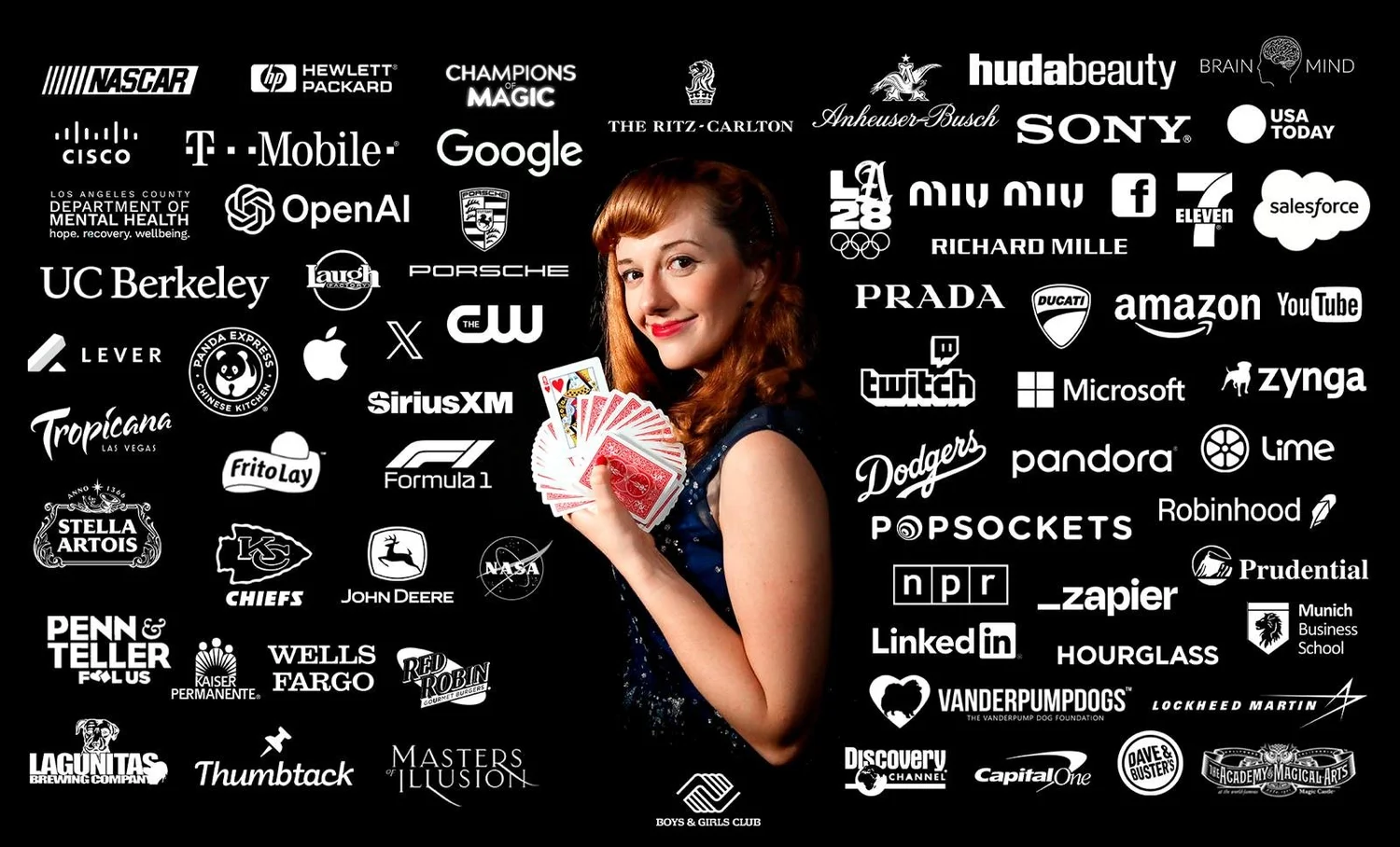
If you're booking for a business audience, here's my case. I'm a member of the Magic Circle in London and the Academy of Magical Arts in Hollywood, I've earned multiple magic awards, and I've performed for companies including Formula 1, the Olympics, Porsche, Prada, Zapier, and the Ritz Carlton, with appearances on Penn & Teller: Fool Us and Masters of Illusion. I read seniority carefully, nobody is put on the spot or made the joke, my material works across a mixed professional room, and I handle the paperwork so the person who booked me never has to explain anything.

Frequently Asked Questions

Is a corporate room really different from a party?

Substantially, since guests at a wedding or birthday came because they care about somebody and arrive wanting it to go well, whereas a corporate audience is at a work event and a proportion are there because attendance was expected. That's a cooler starting point a party performer can misjudge.

What's the main constraint?

Hierarchy, which doesn't dissolve because it's evening, since a participant's colleagues, manager, and occasionally chief executive are watching. Anything embarrassing happens in front of people whose opinion affects somebody's career, so a performer has to read seniority continuously and know who shouldn't be approached.

Why does strolling suit corporate events?

Because people are partly working: staff hosting at a client event, delegates networking at a conference, people being seen at an awards dinner. Entertainment demanding participation from people quietly doing their jobs is misjudged, whereas something they encounter while continuing is the right fit.

Does it matter that the booker isn't the audience?

Considerably, since at a corporate event the person who booked is frequently an events manager whose reputation rides on it. The professional side matters as much as the performance: arriving early, being reachable, handling paperwork, and never creating a problem the booker has to explain.

Why is corporate material harder?

Because the room is mixed in age, background, nationality, and seniority, so anything depending on shared cultural reference, risqué content, or humor at somebody's expense fails with a meaningful proportion. Corporate material has to be genuinely universal, which is one of the main things experience buys.

Are business audiences tough?

Better rather than tougher, since they frequently contain engineers, lawyers, researchers, and analysts whose instinct is to work out how something functions, and somebody applying real scrutiny who still can't account for it is more affected than a casual observer. Mentalism suits those rooms particularly.

What should we ask a performer?

For sustained footage from a corporate event rather than a party, how they handle senior participants and somebody who doesn't want to take part, whether they carry insurance and provide a certificate, and whether they ask about your audience and objective before quoting. Those four reveal who works business rooms.

How do I book you, and what do you need to get started?

Reach out with your date, venue, event type, guest numbers, and what you're hoping the evening achieves. That's enough for me to check availability and send a quote, and the objective matters as much as the logistics, since it determines how I'd work the room.

Book Somebody Who Works These Rooms

A corporate magician is doing a different job from a party performer, even with identical material: a cooler room, a hierarchy that stays intact, people who are partly working, a booker with reputational exposure, and material that has to clear a mixed professional audience without a single misstep.

Ask for corporate footage, ask how they handle seniority and participation, and notice whether they ask about your objective. The performer who asks what the evening is for is usually the one who's done this often enough to know it matters.

Reach out with your event and what you want it to achieve, and let's talk about the room.
Katrina Kroetch
Seattle Magician: Planning an Outdoor or Summer Event

Seattle Magician: Planning an Outdoor or Summer Event

Seattle's reputation does it a disservice in summer. Visitors plan around rain and discover that July and August are frequently dry, warm, and light until nearly ten at night, which makes them among the best conditions for an outdoor evening anywhere.

The window is short and the shoulder months are not the same thing at all. I'm Magical Katrina, an award winning magician and mentalist who performs in Seattle, and I want to set out what the climate means for an outdoor event, and what that implies when you're booking a Seattle magician.

Summer Is Genuinely Excellent

Start with the correction, since visitors plan around the wrong thing. From roughly July into mid September, Seattle evenings are dry, mild, and long, with usable light considerably later than most of the country.

That makes an outdoor summer event more reliable here than in cities with dramatic weather, and it means the terrace or garden you're considering is a realistic plan rather than an optimistic one. If your date is flexible and outdoor space matters, that window is where to put it.

The Light Changes Your Timeline

The practical consequence people miss. In July it's properly light until close to ten, which is lovely and means anything depending on darkness arrives very late in the evening.

Candlelight, lighting design, and anything atmospheric does nothing until the sun goes, so if those matter, plan a later start or accept that the daytime and evening portions will look different. For a reception running six until nine, you're essentially planning a daylight event, which is a different aesthetic from the one in the photographs you've been sent.

Outside That Window, Plan Indoors

Worth being direct about. From October through May the rain is persistent rather than dramatic, the evenings are dark early, and an outdoor plan is a plan that will move.

That doesn't rule out using outdoor space, and it means the indoor half is the real venue with the terrace as a bonus. A format that relocates without adjustment matters here more than in a city where the plan either works or doesn't: a Seattle magician performing close up moves with your guests and nothing needs carrying, reconnecting, or setting up again.

Evenings Cool Faster Than People Expect

Worth planning for even in summer. A warm Seattle afternoon becomes a noticeably cool evening once the sun drops, particularly near water, and guests dressed for a summer day feel it well before they'd admit it.

Heaters where the venue permits, wraps or blankets, and a line in the invitation suggesting a layer all extend your usable outdoor time by a real margin. None of it is expensive, and it's the difference between a terrace used all evening and one abandoned at nine.

Water Changes the Conditions

Locally specific and frequently underestimated. A venue on the Sound, a lake, or a waterfront is cooler and breezier than one a mile inland, sometimes considerably, and wind affects candles, light décor, and anything on a table that isn't weighted.

Ask the venue directly how their outdoor space behaves in the evening, since they'll know and visitors never think to ask. The view is usually worth it, and it's worth going in knowing that a waterfront terrace is a different proposition from a sheltered garden.

Guests Arrive Across a Window

The regional logistics point. The area's bridges, ferries, and traffic mean travel times vary considerably more than a map suggests, and guests arrive across a longer window than an invitation implies.

A format that works from the first arrivals rather than requiring a full room suits that, since early guests get something instead of standing about, and nothing needs scheduling for a moment when half the room is still travelling. Build genuine slack into whatever running order you have.

Corporate Summer Events Are a Real Category

Worth noting, since the market here does them well. With a short reliable window and a large corporate population, Seattle companies hold summer parties, family days, and outdoor gatherings in genuine numbers, and the good venues for those book early.

If your organization runs one, treat the booking timeline like December's: secure the date well ahead rather than in May. That applies to entertainment too, since the same few summer weekends are contested by everybody.

Choose a Format That Doesn't Care

The conclusion underneath all of it. The more your entertainment depends on power, staging, sound, or a fixed position, the more exposed your event is to a decision made at five o'clock about whether to move inside.

Close up magic needs none of it, works on a lawn exactly as in a room, and relocates with your guests without anybody noticing. For a city where the summer is excellent and the shoulder months are provisional, that weather independence is worth more than it appears on a quote.

A Note on "Local vs. Traveling In"

Worth knowing: performers who travel to Seattle work from a different calendar than those based there, which matters in a market where the local pool is smaller than the demand, particularly in the summer weeks. Travel is discussed openly and factored into the quote. I'm based in the Los Angeles area and travel to Seattle for events.

Why Book Magical Katrina

If your event has outdoor space in play, here's my case. I'm a member of the Magic Circle in London and the Academy of Magical Arts in Hollywood, I've earned multiple magic awards, and I've performed for clients including Formula 1, the Olympics, Porsche, Zapier, and the Ritz Carlton, with appearances on Penn & Teller: Fool Us and Masters of Illusion. I need no stage, power, sound, or setup, so a lawn and an indoor room work identically, and I move with your guests the moment the evening turns.

Frequently Asked Questions

Is an outdoor summer event actually realistic here?

More than visitors expect, since from roughly July into mid September evenings are dry, mild, and light until nearly ten, which makes conditions among the best anywhere. The reputation for rain applies to the darker months rather than the summer, so a terrace or garden is a realistic plan.

How does the late light affect planning?

It pushes anything atmospheric very late, since candlelight and lighting design do nothing until the sun goes, which in July is close to ten. A reception running six until nine is essentially a daylight event, so plan a later start if darkness matters or accept that the evening will look different from the photographs.

What about events outside the summer?

Plan indoors with outdoor space as a bonus, since from October through May the rain is persistent, evenings are dark early, and an outdoor plan is one that will move. A format relocating without adjustment matters more here than in a city where the plan either works or doesn't.

Will it get cold in the evening?

Noticeably, even in summer, since a warm afternoon becomes a cool evening once the sun drops, particularly near water, and guests dressed for a summer day feel it before they'd say so. Heaters, wraps, and a line in the invitation suggesting a layer extend your outdoor time by a real margin.

Does a waterfront venue behave differently?

Considerably, since a venue on the Sound, a lake, or a waterfront is cooler and breezier than one a mile inland, and wind affects candles, light décor, and anything unweighted. Ask the venue how the space behaves in the evening, since they'll know and visitors never think to ask.

Why do guests arrive late here?

Because bridges, ferries, and traffic make travel times vary considerably more than a map suggests, so guests arrive across a longer window than the invitation implies. A format working from the first arrivals means early guests get something rather than standing about.

We're planning a company summer event. When should we book?

Like December, since Seattle's short reliable window and large corporate population mean summer parties and family days are held in genuine numbers and the good venues book early. The same few weekends are contested by everybody, which applies to entertainment as well as venues.

How do I book you, and what should I tell you?

Reach out with your date, venue, guest numbers, and whether outdoor space is in play. That's enough for me to check availability and send a quote, and I'll plan for both spaces as standard since I need no stage, power, or setup and can move with your guests when the evening turns.

Use the Window, Plan for the Rest

Seattle's summer is better for outdoor events than its reputation suggests and considerably shorter than visitors assume, which makes the date the decision that matters most. Put outdoor plans in the July to September window, remember that the light runs late and anything atmospheric arrives with it, plan for a cool evening near water, and book early because everybody wants the same weekends.

Outside that window, treat the indoor room as the venue and choose a Seattle magician whose format moves with your guests rather than one that commits you to a space before you know the weather.

Reach out with your date and venue, and I'll plan for both spaces.

Katrina Kroetch
Magicians in Las Vegas for Galas and Fundraisers

Magicians in Las Vegas for Galas and Fundraisers

A Las Vegas benefit has a particular shape. The venue is usually a resort ballroom, a substantial proportion of the room is sitting at corporate sponsor tables rather than attending as individual donors, and the local philanthropic community is small enough that the same faces appear at most of the year's major events.

All three change what works. I'm Magical Katrina, an award winning magician and mentalist, and I want to set out what a magicians in Las Vegas booking contributes to a gala, which is mostly about the room's temperature when the appeal arrives.

Half the Room Is There on a Sponsor Table

Start with the local structure. A great many Vegas benefit guests are at a table their employer bought, filled with colleagues and clients, which means a meaningful proportion didn't choose to attend and have no existing relationship with the cause.

That's not a problem to solve so much as a reality to plan around. Those guests are considerably more likely to engage with the organization if the evening was genuinely enjoyable, and considerably less likely if they sat through three hours of program they didn't come for. The entertainment is doing conversion work on people who arrived neutral.

The Same People Attend Everything

Worth knowing, since it raises the bar. In a philanthropic community this size, your major donors and corporate supporters attend a substantial share of the year's benefits, which means they've seen the standard format repeatedly.

Differentiation matters more here than in a larger city, and it doesn't require spending more. An evening that felt considered rather than templated is remembered, and in a small community that memory affects next year's table purchases. Among magicians in Las Vegas bookings, a benefit is where being slightly different earns disproportionately.

The Reception Decides the Appeal

The argument that matters commercially. Every gala has a drinks reception, usually treated as the stretch during which guests arrive and find their tables, and it's the hour that determines how the room feels when you ask.

Left alone it's people standing with colleagues from their own table. A performer working that hour changes it: guests are astonished a few at a time, groups reshuffle, and by the time dinner is called the room is animated rather than patient. Anyone who has run an appeal knows a warm room gives differently from a restrained one.

Sponsor Tables Don't Mix

The social problem worth addressing. A table bought by a company arrives together, knows each other, and talks to each other all evening, which means your benefit assembles two hundred people into twenty separate dinners.

That's a missed opportunity for an organization whose supporters would benefit from meeting each other. Something moving between tables mixes them in a way seating plans alone don't, and for a nonprofit building a donor community rather than running a single event, that contact is worth as much as the ticket revenue.

It Helps the Auction

Worth noting, since that's where much of the money is. Auctions run on mood: a room enjoying itself bids, and a polite, flat room doesn't.

Entertainment during the reception and between courses sustains energy across the stretch before the auction rather than letting it dissipate through dinner service, and it keeps tables conversational rather than watchful when bidding opens. Neither effect is easy to attribute precisely, and both are recognizable to anyone who has watched the same lot perform differently in two different rooms.

It Takes No Program Time

Practically decisive for a committee that has trimmed the evening twice. Your gala already contains a welcome, dinner service, a video, an honoree, an auction, and the appeal, and something always overruns.

Close up magic requires no stage, microphone, sound, or slot, since it works during the reception and between courses in gaps that exist anyway. Entertainment costing nothing from the schedule is unusually easy to approve, and it's frequently why this is chosen over a band or a comedian.

Resort Ballrooms Are Easy and Expensive

Practically relevant. Unlike benefits in cities where venues come with restrictions, a Vegas resort ballroom has staging, sound, lighting, and experienced staff, so almost anything is technically possible.

What constrains you is cost rather than capability, since production packages at these properties are priced accordingly. A performer needing none of that production is worth understanding as a budget decision: it adds nothing to an AV quote that's frequently the second largest line after catering.

Justifying It to the Board

Worth addressing, since somebody will ask. Entertainment at a benefit sits alongside venue, catering, and production in the cost of raising money, and the fair question is whether it improves the return.

The honest answer is that it affects the reception, the mixing of tables, the mood through dinner, and the room's temperature at the auction and appeal, which are the mechanisms by which a gala raises anything. It also costs considerably less than most other lines, and in a room where half the guests arrived on somebody else's ticket, it's the element most likely to convert them into people who come back.

A Note on "Local vs. Traveling In"

Worth knowing: performers who travel to Las Vegas often have availability when local ones are booked, particularly in the busy benefit seasons. Travel is discussed openly and factored into the quote rather than being your problem to arrange. I'm based in the Los Angeles area and travel to Las Vegas regularly.

Why Book Magical Katrina

If you're planning a benefit, here's my case. I'm a member of the Magic Circle in London and the Academy of Magical Arts in Hollywood, I've earned multiple magic awards, and I've performed for clients including Formula 1, the Olympics, Porsche, Prada, and the Ritz Carlton, with appearances on Penn & Teller: Fool Us and Masters of Illusion. My work is warm and elegant rather than showy, which suits a formal evening, I need no stage, sound, or program time, and I move between tables so your sponsor tables actually meet each other.

Frequently Asked Questions

Why does the sponsor table structure matter?

Because a meaningful proportion of guests are at a table their employer bought, filled with colleagues and clients, which means they didn't choose to attend and have no relationship with the cause. The entertainment is doing conversion work on people who arrived neutral, and an enjoyable evening makes them considerably more likely to engage.

Does differentiation matter more here?

Yes, since in a philanthropic community this size your major donors and corporate supporters attend a substantial share of the year's benefits and have seen the standard format repeatedly. An evening that felt considered rather than templated is remembered, and that memory affects next year's table purchases.

Why focus on the reception?

Because it's the hour that determines how the room feels when you ask, and left alone it's people standing with colleagues from their own table. A performer working it means guests are astonished a few at a time and arrive at dinner animated rather than patient, and a warm room gives differently.

Will our tables mix?

Not on their own, since a table bought by a company arrives together and talks to each other all evening, which means your benefit assembles two hundred people into twenty separate dinners. Something moving between tables mixes them in a way seating plans don't, which matters for building a donor community.

Does it affect the auction?

Through mood, which auctions depend on, since a room enjoying itself bids and a flat room doesn't. Entertainment during the reception and between courses sustains energy across the stretch before the auction and keeps tables conversational rather than watchful when bidding opens.

Does it take program time?

No, and that's frequently why it's chosen over a band or comedian. Close up magic needs no stage, microphone, sound, or slot, working during the reception and between courses in gaps that exist anyway, which makes it unusually easy to approve for a committee that has trimmed the evening twice.

What about the venue?

Resort ballrooms make almost anything technically possible, so what constrains you is cost rather than capability, since production packages at these properties are priced accordingly. A performer needing none of that production adds nothing to an AV quote that's frequently your second largest line after catering.

How do we justify it to the board?

As a modest line aimed at the mechanisms that produce giving: the reception, the mixing of tables, the mood through dinner, and the room's temperature at the appeal. It costs considerably less than most lines, and in a room where half the guests arrived on somebody else's ticket, it's the element most likely to convert them.

Warm the Room, Then Mix It

A Las Vegas benefit is shaped by sponsor tables that don't mix, a community that has seen every format, and a resort ballroom where production is possible and expensive. A magicians in Las Vegas booking addresses all three: a reception that builds rather than idles, tables introduced to each other by something other than a seating plan, an evening that feels considered to people who attend a dozen of these a year, and not a minute taken from a program you've already trimmed.

If you'd like your next benefit to reach the appeal with the room already warm, I'd be glad to hear about it.

Reach out with your date and run of show, and let's make the evening work.

Katrina Kroetch
Magician Zoom Party: Thanksgiving for Family Who Can't Travel

Magician Zoom Party: Thanksgiving for Family Who Can't Travel

Every Thanksgiving leaves people out. Somebody is working, somebody couldn't afford the flights, somebody is too far, somebody is newly in another country, and they spend the day getting a phone call and seeing photographs of a table they weren't at.

An hour online doesn't replace being there, and it's considerably better than the phone call. I'm Magical Katrina, an award winning magician and mentalist, and I want to set out how a magician Zoom party works at Thanksgiving, which is mostly about timing it around meals that aren't happening simultaneously.

Don't Compete With the Meal

Start with the scheduling, since this is where these gatherings fail. Thanksgiving dinner is the fixed point in everybody's day and nothing should be arranged against it, including an online gathering that somebody has to leave the kitchen for.

Either the afternoon before the meals start, or the evening afterwards when everybody has eaten and is sitting down, works considerably better than anything in the middle. The evening after is frequently best, since people are full, relaxed, and no longer cooking, which is the most sociable any household is all day.

Households Eat at Different Times

The practical complication. Across time zones and family traditions, your relatives will be eating anywhere from early afternoon to late evening, which means there's no single hour when everybody is equally free.

Pick a time that works for the person who'd otherwise be most alone, and accept that somebody will be joining mid preparation. Saying so in the invitation helps, since people are considerably more relaxed about an awkward time when it's acknowledged rather than assumed to suit them. And keep it short enough that nobody has to choose between it and their own dinner.

It's for the People Not at a Table

Worth being clear about the purpose. A gathering that's mostly households showing each other their meals is pleasant and brief, and it isn't what this is for.

The value is in including the relative who's alone this year, the one working a shift, the student abroad, or the family who couldn't travel. Designing around them rather than around the big household produces something they'll remember, and the rest of the family enjoys it regardless. If one person is the reason you're doing this, build the hour around them.

Keep It to Forty Five Minutes

Practical and worth stating in the invitation. Thanksgiving is a long day, people have been cooking since morning, and children are in various states by the evening.

Forty five minutes is generous. Say the finish time, hold to it, and let anybody who wants to carry on do so informally afterwards. A short gathering everybody enjoyed is the success condition, and an hour and a half with people drifting off is the thing to avoid on a day when everybody is already tired.

Give It Something to Do

The design point. A Thanksgiving call has a predictable shape: everybody says hello, the food gets described, somebody holds up a dish, the children are paraded briefly, and then the conversation runs out while nobody wants to be first to leave.

Something happening in the middle gives the hour a shape, and at Thanksgiving particularly it means the gathering is an event rather than a check in. A magician Zoom party reaching every age at once suits a call where there are children in three households and grandparents in another, which is the usual arrangement.

Children Are in Several Houses

Worth planning around, since it's the specific Thanksgiving shape. Cousins who'd normally spend the day together are in different states, and the children are frequently the ones who miss each other most and have the least to say on a video call.

Something they all participate in simultaneously, in their own hands, gives them a shared experience rather than a round of being asked how school is going. For cousins who only see each other at holidays, that's a genuinely better version of the call than the one they'd otherwise have.

Somebody Who Isn't Cooking Should Host

Practically important on this day specifically. Whoever is hosting the big meal cannot also be managing a video call, admitting people, and chasing somebody whose audio isn't working.

Ask a relative who isn't cooking, or one of the people joining from elsewhere, to run the call. They handle the admissions, keep an eye on the chat, and close it down at the stated time. It's the only arrangement that works on a day when half the family is standing over a stove.

Practical Notes

A few things worth getting right. Send the household objects list with the invitation and again on the day, since people are busy and will miss it once.

Give the time in the relevant zones, since this is a day when everybody's schedule is different. Ask older relatives whether they'd like a test call beforehand. And tell people the finish time, since on Thanksgiving an open ended invitation competes with everything else happening in their house.

Why Book Magical Katrina

If you're organizing something for Thanksgiving, here's my case. I'm a member of the Magic Circle in London and the Academy of Magical Arts in Hollywood, I've earned multiple magic awards including a Family Entertainer of the Year honor, and I've appeared on Penn & Teller: Fool Us and Masters of Illusion. My virtual material is built for video with everybody participating using ordinary household items, it works for every age at once, I keep to the finish time, and I handle the technical side.

Frequently Asked Questions

When should we schedule it?

Not against the meal, since that's the fixed point in everybody's day. The afternoon before meals start, or the evening afterwards when everybody has eaten and is sitting down, works considerably better, and the evening after is frequently best since people are full, relaxed, and no longer cooking.

Our families eat at different times. How do we pick an hour?

Choose one that works for the person who'd otherwise be most alone, accept that somebody will join mid preparation, and say so in the invitation, since people are more relaxed about an awkward time when it's acknowledged. Keep it short enough that nobody chooses between it and their dinner.

Who is this actually for?

The people not at a table: the relative who's alone this year, the one working a shift, the student abroad, or the family who couldn't travel. A gathering that's mostly households showing each other their meals is pleasant and brief, and designing around the person who'd otherwise be excluded produces something they'll remember.

How long should it be?

Forty five minutes, since Thanksgiving is a long day, people have been cooking since morning, and children are in various states by the evening. Say the finish time, hold to it, and let anybody who wants to carry on do so informally rather than stretching the whole gathering.

Won't it just be everyone describing their food?

That's the predictable shape without something in the middle: hellos, the food, a dish held up, the children paraded, and then the conversation running out while nobody wants to leave first. Something happening gives the hour a shape and makes it an event rather than a check in.

What about the children?

They're frequently who misses out most, since cousins who'd normally spend the day together are in different states and have the least to say on a video call. Something they all participate in simultaneously, in their own hands, gives them a shared experience rather than a round of being asked about school.

Who should host the call?

Somebody who isn't cooking, since whoever is hosting the big meal cannot also manage admissions and chase somebody whose audio isn't working. Ask a relative joining from elsewhere to run it, handle the chat, and close it at the stated time.

How do I book you, and what do you need to get started?

Reach out with your date and time, the platform, roughly how many households will join, the time zones involved, and the ages of any children. That's enough for me to check availability and send a quote, and I'll tell you the household objects to mention when you send the link.

Include the People Who Aren't There

Thanksgiving is organized around a table, which means it's organized around the people who could get to one. A magician Zoom party is for the others: the relative alone this year, the cousin abroad, the family who couldn't travel, and the children who only see each other at holidays and have nothing to say on a video call.

Hold it the evening after rather than against the meal, keep it to forty five minutes, let somebody who isn't cooking run it, and give the hour something to do beyond describing what everybody ate.

Reach out with your date and who's joining, and let's make the hour count.

Katrina Kroetch
Zoom Magician Cost: What Else a Virtual Event Actually Costs

Zoom Magician Cost: What Else a Virtual Event Actually Costs

Organizers budget for the performer and treat everything else as free, because the other costs don't arrive as invoices. That produces a business case that looks cheap and a project that consumed considerably more than the number on it.

Worth seeing the whole picture before comparing quotes. I'm Magical Katrina, an award winning magician and mentalist, and I want to set out what a virtual event costs beyond a zoom magician cost, since the fee is frequently not the largest line.

The Biggest Number Is Everybody's Hour

Start with the cost nobody counts and which dwarfs all the others. Two hundred people attending a one hour session is two hundred hours of working time, and whatever your organization's average cost per hour is, that figure is considerably larger than any performer fee.

That isn't an argument against running it, and it's the right frame for deciding what to book. If you're spending two hundred hours of your organization's time either way, the difference between a cheap session and a genuinely good one is marginal against the total and decisive for whether those hours were worth spending.

Platform Costs Can Appear

Practically relevant for larger audiences. Standard licenses cap participant numbers, and sessions above that threshold may require a larger plan, a webinar license, or an add on that your IT team has to arrange.

Check your limit before you plan the guest list rather than discovering it a week out. It's usually a modest cost and occasionally an approval process, and in regulated organizations the approval takes longer than the payment does. That's a timeline issue as much as a budget one.

Anything Shipped Is Expensive

Worth knowing when comparing formats. Sessions requiring kits, ingredients, or materials sent to attendees carry a per head cost that frequently exceeds the facilitator fee, plus postage, plus the administration of collecting addresses.

International addresses multiply that sharply, and a proportion of kits won't arrive or won't be collected. A participatory session using ordinary household items avoids all of it, which is a genuine cost difference rather than a convenience. When you're comparing a quote against a kit based alternative, compare the loaded totals rather than the headline fees.

Staff Time Is Real

The line that never appears in a budget. Organizing a virtual event takes somebody several hours of promotion, coordination, briefing, and follow up, and running it well takes a moderator for the duration and somebody at a tech check beforehand.

That's perhaps six to ten hours of internal time for a single session. Nobody invoices for it and it's real, and it's worth stating in a business case rather than pretending the event cost only the fee. It's also the strongest argument for choosing something that needs minimal coordination, since simplicity saves a cost you're genuinely paying.

Promotion Takes More Time Than You'd Think

Worth separating, since it determines attendance. Announcing properly means multiple messages, a calendar invitation, briefing managers, and chasing a senior sponsor to mention it.

That's a few hours spread across a fortnight, done by somebody with another job. It's also the part most likely to be skipped when the organizer is busy, which produces the low turnout that makes the whole exercise look like poor value. Budget the time deliberately rather than hoping it happens.

Recording and Editing Cost Something Too

Worth considering if you want footage. A raw recording is free and largely unusable, and anything you'd actually share internally requires somebody to edit it, which is either an internal cost or an external one.

That's frequently not worth doing for a participatory session, since the recording doesn't capture what made it work. If your communications team wants something, a few clips cost considerably less than an edited full session and perform better, which is a budget decision as much as an editorial one.

A Realistic Anchor

Since vagueness doesn't help when building a case: my virtual shows start around $1,400, depending on length, audience size, and customization.

For a session reaching two hundred people, that's a fraction of the value of the time those people are spending, a smaller line than most catering budgets, and the only part of the exercise that produces anything memorable. Presenting it alongside the honest total, rather than as an isolated number, usually makes approval easier rather than harder.

Present the Whole Figure

The practical recommendation for anybody writing a business case. A proposal showing only the performer fee invites the question of whether it's necessary, whereas one showing the fee, the internal time, and the value of the attendee hours frames it correctly.

That framing changes the conversation from "why are we spending this on entertainment" to "given what this hour already costs us, what should be in it." Finance teams respond considerably better to a complete figure than to a small one that turns out to be incomplete.

Why Book Magical Katrina

If you're building a case, here's my case. I'm a member of the Magic Circle in London and the Academy of Magical Arts in Hollywood, I've earned multiple magic awards, and I've performed for companies including Formula 1, the Olympics, Porsche, Zapier, and the Ritz Carlton, with appearances on Penn & Teller: Fool Us. My shows start around $1,400, nothing needs shipping to your attendees, I need one email and a link rather than hours of coordination, and I'll tell you what to put in your invitation so the promotion takes less time.

Frequently Asked Questions

What's the largest cost of a virtual event?

Everybody's hour, since two hundred people attending a one hour session is two hundred hours of working time, which at any organization's average cost exceeds any performer fee considerably. That's the right frame for deciding what to book rather than an argument against running it.

Will we need to pay for the platform?

Possibly for larger audiences, since standard licenses cap participant numbers and sessions above that may need a bigger plan, a webinar license, or an add on. Check your limit before planning the guest list, since in regulated organizations the approval takes longer than the payment.

What about sessions that ship things to attendees?

They carry a per head cost frequently exceeding the facilitator fee, plus postage and the administration of collecting addresses, with international addresses multiplying it sharply and a proportion never arriving. Compare loaded totals rather than headline fees when weighing those against something using household items.

How much internal time does this take?

Perhaps six to ten hours for a single session: promotion, coordination, briefing, follow up, a moderator for the duration, and somebody at a tech check. Nobody invoices for it and it's real, which is also the strongest argument for choosing something needing minimal coordination.

Should we budget time for promotion?

Deliberately, since announcing properly means multiple messages, a calendar invitation, briefing managers, and chasing a senior sponsor, spread across a fortnight by somebody with another job. It's the part most likely to be skipped when the organizer is busy, which produces the low turnout that makes the whole thing look poor value.

Is recording worth the cost?

Frequently not for a participatory session, since a raw recording is largely unusable and anything shareable requires editing, which is an internal or external cost. A few clips cost considerably less than an edited full session and perform better if your communications team wants something.

What should we expect to pay for the performer?

My virtual shows start around $1,400 depending on length, audience size, and customization. For a session reaching two hundred people, that's a fraction of the value of the time being spent, a smaller line than most catering budgets, and the only part of the exercise producing anything memorable.

How should we present this to finance?

As a complete figure rather than the fee alone, since a proposal showing only the performer cost invites the question of whether it's necessary, whereas one including internal time and attendee hours frames it correctly. That changes the conversation to what should be in an hour that already costs you a great deal.

Budget the Whole Thing, Then Choose Well

A zoom magician cost is the visible line in an exercise where the invisible ones are larger: the hours your attendees are spending, the internal time organizing and promoting it, any platform license, and anything shipped. Seeing all of it changes the decision, since the gap between an adequate session and a genuinely good one is small against the total and decisive for the outcome.

Present the complete figure, choose a format that doesn't add shipping or coordination, and spend the saved time on promotion, since the only genuinely wasted budget is a good session nobody attended.

Reach out with your numbers, and I'll give you a figure you can put in a business case.

Katrina Kroetch
Magician for Zoom Party: A Milestone Birthday for Scattered Friends

Magician for Zoom Party: A Milestone Birthday for Scattered Friends

By the time somebody turns forty or fifty, their friends are distributed across cities and countries, with children and jobs and reasons they can't travel on a particular Saturday. A party at home reaches whoever lives nearby, which is frequently the smallest and least representative group.

Online reaches all of them. I'm Magical Katrina, an award winning magician and mentalist, and I want to set out how a magician for Zoom party works for a milestone birthday, which is mostly about a guest list geography would otherwise have decided for you.

The Guest List Stops Being Geographic

Start with what changes. An in person fiftieth is attended by people within driving distance, plus two or three who made an effort, which means the room is mostly local friends and family rather than the people who've mattered most.

Online, everybody is equally invited: the university friend in another country, the colleague from two jobs ago, the cousin who never travels. For a milestone specifically, seeing people from several different periods of a life in one place is unusual and genuinely moving, and it's something the in person version structurally can't produce.

Your Friend Group Spans Twenty Years

The structural feature worth planning around. A fiftieth gathers school friends, university friends, former colleagues, current colleagues, neighbors, and family, most of whom know the birthday person well and each other not at all.

That produces the same problem a reunion has: people stay in the groups they arrived with. A magician for Zoom party working the room gets four people from different parts of somebody's life reacting to the same thing, which is both the point of gathering them and the thing that doesn't happen on its own.

Don't Let It Become a Round of Speeches

The failure mode for milestone celebrations. The default is everybody taking a turn to say something warm, which is lovely for about fifteen minutes and then becomes a long wait while twenty people deliver tributes to somebody increasingly uncomfortable.

Two or three short contributions are plenty. Something happening in the middle gives the hour a shape that isn't sequential praise, and it takes the focus off the person who's been the centre of attention since the call started. Most people find that a relief rather than a loss.

Keep It to an Hour

Practical and worth stating in the invitation. An online gathering has none of the natural structure of a party, with no food arriving, no bar to visit, and no way to drift into another room.

An hour works, ninety minutes is stretching, and two hours produces people silently leaving. Say the finish time, hold to it, and if a smaller group wants to stay on afterwards, let that happen informally. A short gathering everybody wished were longer is the success condition.

Somebody Other Than the Birthday Person Hosts

Worth arranging, since it's frequently overlooked. The person being celebrated shouldn't be admitting people from a waiting room, managing mute buttons, or chasing somebody whose audio isn't working.

Ask a friend or a sibling to run the call. They handle the admissions, introduce anybody who needs introducing, keep an eye on the chat, and close things down at the stated time. It's an hour of attention and it means the birthday person spends their own party being at it.

Time Zones Are Part of the Guest List

Worth planning around, since spread friend groups span continents. Somebody will be joining at an awkward hour, and the kindest approach is to acknowledge it rather than pretend the time suits everybody.

Pick a time that works for the largest number and for anybody who particularly matters, state it in two or three zones in the invitation, and be relaxed about people dropping off. Anyone who joins at six in the morning to be there has made a gesture worth acknowledging on the call.

Give Them a Moment of Their Own

Worth asking for, since it's what people remember. A moment built around the birthday person, where something impossible happens in their own hands while friends from four different decades watch, is a different thing from being toasted.

Tell your performer who it's for, roughly what they're like, and whether they'd enjoy attention or find it excruciating, since people vary enormously on that. It's straightforward to arrange and it gives the hour something that isn't a photograph of a screen full of faces.

Practical Notes

A few things worth getting right. Send the household objects list with the invitation and again on the day, since people miss it once and anybody without the items feels left out.

Give the time in the relevant zones, ask older relatives if they'd like a test call beforehand, and tell people the finish time. And if there's a group who want to carry on afterwards, say so at the start, since people plan their evening around what they've been told.

Why Book Magical Katrina

If you're organizing a milestone birthday, here's my case. I'm a member of the Magic Circle in London and the Academy of Magical Arts in Hollywood, I've earned multiple magic awards, and I've performed for clients including Formula 1, the Olympics, Porsche, and Prada, with appearances on Penn & Teller: Fool Us and Masters of Illusion. My virtual material is built for video with everybody participating using ordinary household items, I work across time zones, and I'm glad to build a moment around whoever you're celebrating.

Frequently Asked Questions

Why do this online rather than having a party?

Because an in person fiftieth is attended by people within driving distance plus two or three who made an effort, which is the smallest and least representative group. Online, the university friend abroad and the colleague from two jobs ago are equally invited, which the in person version structurally can't produce.

Our friends don't all know each other. Is that a problem?

It's the usual situation at a milestone, since the list spans school, university, former and current colleagues, neighbors, and family, all of whom know the birthday person and not each other. Something that gets four people from different parts of a life reacting together is the point of gathering them.

Won't it just be everyone making speeches?

That's the default and it's lovely for fifteen minutes before becoming a long wait while twenty people deliver tributes to somebody increasingly uncomfortable. Two or three short contributions are plenty, and something happening in the middle gives the hour a shape that isn't sequential praise.

How long should it be?

An hour, since an online gathering has none of a party's natural structure, with no food arriving and no way to drift into another room. Ninety minutes is stretching and two hours produces people silently leaving. Say the finish time, hold to it, and let a smaller group stay on informally.

Should the birthday person host the call?

No, since they shouldn't be admitting people, managing mute buttons, or chasing somebody whose audio isn't working at their own party. Ask a friend or sibling to run it, handling admissions, introductions, the chat, and closing down at the stated time.

What about friends in other countries?

Pick a time that works for the largest number and anybody who particularly matters, state it in two or three zones, and be relaxed about people dropping off. Somebody joining at six in the morning has made a gesture worth acknowledging on the call rather than pretending the time suited everybody.

Can we do something just for them?

Yes, and it's what people remember, since a moment where something impossible happens in their own hands while friends from four decades watch is different from being toasted. Tell your performer what they're like and whether they'd enjoy attention or find it excruciating, since people vary enormously.

How do I book you, and what do you need to get started?

Reach out with your date and time, the platform, roughly how many will join, the time zones involved, and a little about the person being celebrated. That's enough for me to check availability and send a quote, and I'll tell you the household objects to mention in the invitation.

Gather the People Geography Separated

A milestone birthday is the point at which somebody's friends are most scattered and most worth gathering, which is exactly when an in person party reaches the fewest of them. A magician for Zoom party puts school friends, former colleagues, family, and the person who moved abroad in one place, gets them reacting to something together rather than sitting in silence, and gives the hour a shape that isn't twenty consecutive toasts.

Keep it to an hour, let somebody else run the call, and make sure there's a moment that belongs to them.

Reach out with your date and a little about who it's for, and let's make the hour count.

Katrina Kroetch
Magician for Zoom: Corporate Alumni Network Events

Magician for Zoom: Corporate Alumni Network Events

An alumni network asks former employees for their time when the organization has no claim on it whatsoever. They don't work for you, they're not paid to attend, and a proportion of them left feeling mixed about the place.

That makes it the most voluntary audience in corporate life. I'm Magical Katrina, an award winning magician and mentalist, and I want to set out where a magician for Zoom fits into an alumni program, which is on the giving side rather than the asking side.

Nobody Has to Come

Start with what distinguishes this from every other internal event. Employees attend things out of obligation, curiosity, or because their manager mentioned it. Alumni attend only because they want to.

That means an event has to be worth the hour on its own terms, with no institutional pull behind it. Most alumni programming is a panel, an update on how the business is doing, or a networking session, and the attendance reflects that. Something people would genuinely choose is a different proposition entirely.

They Left on Different Terms

Worth acknowledging when planning. Your alumni include people who left for better jobs, people who were let go, people who were glad to go, and people who still feel warmly about the place.

Programming that assumes affection produces something that reads badly to a proportion of the room. An update on the firm's performance is interesting to some alumni and irrelevant or irritating to others. Something enjoyable that doesn't require anybody to feel anything about the organization reaches all of them equally, which is the only format that does.

Give Before You Ask

The principle that makes alumni programs work. Organizations run these networks for rehiring, referrals, and business development, which are all things the organization wants.

Alumni know that. A program that only ever asks produces declining attendance, whereas one that gives people something they value, whether that's genuine connection, useful content, or simply a good hour, earns the goodwill the asking depends on. A magician for Zoom sits firmly on the giving side, which is where most alumni programs are thinnest.

They Want Each Other, Not You

Worth understanding, since it changes what to program. Alumni value the network considerably more than the organization, since the people they worked with are the actual relationship and the company is the thing they have in common.

That means connection between alumni is the product. Anything producing genuine interaction, where people end up talking to somebody they worked with five years ago or somebody from a different office entirely, is doing what they came for. A session they watch does not.

Virtual Is the Only Channel

The structural reality. Alumni are scattered across cities, countries, and industries, and an in person event reaches whoever lives near wherever you held it.

That's usually the head office city, which means the same forty people every time. Virtual reaches the alumni in Singapore, the one who moved to a different industry, and the one who'd never travel for this. For a network whose whole value is breadth, online is the main channel rather than a compromise.

Don't Make It a Recruitment Pitch

Worth saying plainly, since it's the commonest failure. An alumni event that turns into a discussion of open roles, or where somebody from talent acquisition speaks for ten minutes, is read exactly as it is.

Rehiring is a legitimate objective and it's served by goodwill rather than by pitching. Alumni who enjoyed an event come back, stay in touch, and respond when you approach them individually about a role. Alumni who sat through a recruitment session stop opening the emails. Keep the two entirely separate.

Keep It Short and Say the Finish Time

Practical, since this audience has no obligation to stay. An hour is the maximum and forty five minutes is frequently better, with a clearly stated finish time in the invitation.

People with no reason to attend except interest will commit more readily to something whose shape they know, and they'll leave an open ended event without hesitation. Honour the time, and the next invitation is easier to accept. That's the whole mechanism for a voluntary audience.

Measure Return Attendance

Worth tracking, since it's the number that matters. Attendance at one event tells you about the invitation, and the proportion who come back tells you whether the program is working.

A network with growing return attendance is building something, and one with high first time numbers and poor repeats is burning through its list. That's a more useful measure than headcount, and it tends to argue for giving people a good hour rather than an informative one.

Why Book Magical Katrina

If you run an alumni program, here's my case. I'm a member of the Magic Circle in London and the Academy of Magical Arts in Hollywood, I've earned multiple magic awards, and I've performed for companies including Formula 1, the Olympics, Porsche, Zapier, and the Ritz Carlton, with appearances on Penn & Teller: Fool Us. My sessions are genuinely participatory rather than something people watch, they work across countries and time zones, and I'll keep to whatever finish time you've promised.

Frequently Asked Questions

What makes alumni different from employees?

Nobody has to come, since employees attend out of obligation, curiosity, or because a manager mentioned it, whereas alumni attend only because they want to. That means an event has to be worth the hour on its own terms, with no institutional pull behind it, which most alumni programming isn't.

Does it matter how people left?

Considerably, since your alumni include people who left for better jobs, people who were let go, people who were glad to go, and people who still feel warmly. Programming assuming affection reads badly to a proportion of the room, whereas something enjoyable that requires no feeling about the organization reaches everybody.

What's the principle for alumni programming?

Give before you ask, since organizations run these networks for rehiring, referrals, and business development and alumni know it. A program that only ever asks produces declining attendance, whereas one giving people something they value earns the goodwill the asking depends on.

What do alumni actually want?

Each other, since the people they worked with are the actual relationship and the company is the thing they have in common. Anything producing genuine interaction, where somebody ends up talking to a former colleague or somebody from a different office, is doing what they came for, and a session they watch isn't.

Should our events be virtual?

Mainly, since alumni are scattered across cities, countries, and industries, and an in person event reaches whoever lives near where you held it, which is usually head office and the same forty people. Virtual reaches the alumni abroad and the one who'd never travel for this.

Can we mention open roles?

Not in the event, since an alumni gathering that turns into a discussion of vacancies is read exactly as it is. Rehiring is served by goodwill rather than pitching, and alumni who enjoyed an event respond when approached individually, whereas those who sat through a recruitment session stop opening the emails.

How long should it be?

An hour at most and forty five minutes frequently better, with a clearly stated finish time, since an audience with no obligation to attend commits more readily to something whose shape they know and leaves an open ended event without hesitation. Honour the time and the next invitation is easier.

What should we measure?

Return attendance rather than headcount, since attendance at one event tells you about the invitation and the proportion who come back tells you whether the program works. High first time numbers with poor repeats means you're burning through your list rather than building something.

Give Them an Hour Worth Having

An alumni network runs entirely on goodwill the organization no longer has any claim to, which makes it the one audience that genuinely cannot be programmed at. A magician for Zoom suits it precisely: something people would choose, requiring no feeling about the company, producing interaction between alumni rather than a broadcast from you, and reaching the ones who live nowhere near your office.

Keep the recruitment conversation separate, honour the finish time, and track who comes back rather than who came.

Reach out with your alumni numbers and where they are, and let's find a time that works.

Katrina Kroetch
Birthday Party Magician Las Vegas: Planning From Another City

Birthday Party Magician Las Vegas: Planning From Another City

Planning a party in a city you don't live in means making every decision without seeing anything. You're choosing a venue from photographs, booking suppliers you'll never meet, paying deposits to strangers, and arriving the day before hoping it all exists.

Most of it is manageable with the right checks. I'm Magical Katrina, an award winning magician and mentalist, and I want to set out how to organize a Las Vegas celebration remotely, including how to judge a birthday party magician Las Vegas you can't meet in advance.

Photographs Tell You Almost Nothing

Start with the venue, since it's the decision you can least verify. Photographs are taken at the best angle, in the best light, with nobody in the room, and they'll tell you what a space looks like rather than how it works.

Ask the questions photographs can't answer: how many people fit comfortably rather than maximum capacity, whether there's a separate area or it's one room, how loud it gets, what's immediately outside the door, and whether anything else is happening nearby at the same time. Those five answers tell you more than twenty images.

Ask for a Video Walkthrough

Practical and surprisingly effective. Plenty of venues will send a quick phone video of the space if you ask, and a thirty second clip taken on an ordinary evening shows you the room as it actually is.

If they won't, that's information too. A venue confident in its space is generally happy to show it, and one that offers only marketing photographs may be managing expectations. It costs you one email and it's the closest thing to visiting available.

Judge Suppliers on What You Can Verify

The principle for everybody you book without meeting. You can't shake somebody's hand, so rely on the things that are checkable: sustained footage of real performances rather than promotional edits, reviews with specifics rather than adjectives, confirmation of insurance, and terms in writing.

Those four take ten minutes and they're what protects you when you can't visit. A birthday party magician Las Vegas who provides all four quickly is demonstrating exactly the professionalism you need from somebody you're trusting sight unseen, and one who's vague about any of them is telling you something useful early.

Pay Deposits, But Get Terms First

Worth being clear about, since remote booking makes people nervous. A deposit is entirely normal, and it secures your date in a city where dates genuinely run out.

What should accompany it is a written agreement setting out the date, venue, times, duration, fee, what's included, and what happens if either side cancels. Pay the deposit against that rather than against an email exchange. Any professional has one and sends it without being asked, and the absence of one is a reason to pause rather than to proceed carefully.

Your Suppliers Don't Know Each Other

The coordination problem that being local would solve. A venue, a caterer, a performer, and a photographer booked separately have no relationship, and in a city you're not in, nobody is making sure they all know the plan.

Send one message to all of them a fortnight out with the date, the timings, the address, the point of contact, and anything each needs from the others. That's ten minutes and it prevents the most common remote planning failure, which is three suppliers arriving with three different understandings of when things start.

Appoint a Local Point of Contact

Worth doing, even informally. Somebody who'll be in Las Vegas before you, a family member arriving early or a friend who lives there, who suppliers can reach and who can confirm things exist.

Give their number to everybody and tell them what the job involves. It needn't be onerous, and it means that when a performer arrives at a hotel and reception has no record of a private room, there's somebody to call who isn't you on a flight. For a remotely planned event, that single appointment removes most of the day's risk.

Arrive the Day Before

Practically the best thing you can do. Flying in the morning of a celebration leaves you no time to fix anything, and things that were agreed by email occasionally aren't what you pictured.

A day ahead lets you see the room, confirm the timings in person, and handle whatever needs handling without doing it in your party clothes. If the celebration matters enough to fly a family in for, it's worth one extra night to arrive with time.

Confirm Everything in Writing

Worth insisting on throughout. Remote planning runs on email and phone calls, and anything agreed verbally with somebody you've never met is the thing that gets remembered differently.

After any call, send a short message confirming what was agreed. That's not distrust, it's the normal practice of anybody who organizes things at a distance, and suppliers who work with out of town clients expect it. It also means the whole arrangement is in one place when you need to check something from an airport.

A Note on "Local vs. Traveling In"

Worth knowing: performers who travel to Las Vegas often have availability when local ones are booked, and travel is discussed openly and factored into the quote rather than being your problem to arrange. I'm based in the Los Angeles area and travel to Las Vegas regularly, which for a remotely planned event means one fewer party arranging their own logistics.

Why Book Magical Katrina

If you're planning from elsewhere, here's my case. I'm a member of the Magic Circle in London and the Academy of Magical Arts in Hollywood, I've earned multiple magic awards, and I've performed for clients including Formula 1, the Olympics, Porsche, and Prada, with appearances on Penn & Teller: Fool Us and Masters of Illusion. I send footage, terms, and confirmation of insurance the same day, I confirm everything in writing, and I need no stage or setup, so whichever room you've booked sight unseen will work.

Frequently Asked Questions

How do we choose a venue we can't visit?

By asking what photographs can't show: how many fit comfortably rather than maximum capacity, whether there's a separate area or one room, how loud it gets, what's immediately outside, and whether anything else is happening nearby. Those five answers tell you more than twenty images.

Is there a way to see the space?

Ask for a quick phone video, since plenty of venues will send one and a thirty second clip taken on an ordinary evening shows the room as it actually is. If they won't, that's information too, since a venue confident in its space is generally happy to show it.

How do we judge suppliers we'll never meet?

On what's checkable: sustained footage of real performances rather than promotional edits, reviews with specifics, confirmation of insurance, and terms in writing. Those four take ten minutes and are what protects you when you can't visit, and vagueness about any of them is useful information early.

Should we pay a deposit to someone we haven't met?

Yes, and get written terms first, since a deposit is normal and secures your date in a city where dates genuinely run out. The agreement should cover the date, venue, times, duration, fee, inclusions, and cancellation. Any professional sends one unprompted, and its absence is a reason to pause.

How do we coordinate suppliers from a distance?

Send one message to all of them a fortnight out with the date, timings, address, point of contact, and anything each needs from the others. That's ten minutes and it prevents the commonest remote planning failure, which is three suppliers arriving with three different understandings of when things start.

Should we have somebody local?

Yes, even informally: a family member arriving early or a friend who lives there, whose number everybody has and who can confirm things exist. It means that when a performer arrives and reception has no record of a private room, there's somebody to call who isn't you on a flight.

When should we arrive?

The day before, since flying in on the morning leaves no time to fix anything and things agreed by email occasionally aren't what you pictured. A day ahead lets you see the room and confirm timings without doing it in your party clothes, which is worth one extra night.

How do I book you from out of state?

Send your date, the property or area, rough numbers, and what you're celebrating. I'll reply the same day with availability and a quote, send terms and insurance confirmation in writing, and confirm everything by email so the whole arrangement is in one place when you need to check it from an airport.

Verify What You Can, Then Arrive Early

Planning a birthday party magician Las Vegas booking and everything around it from another city is mostly a matter of replacing what you'd normally see with what you can check. Ask the venue the questions photographs can't answer, request a phone video, judge suppliers on footage and insurance and written terms, send one coordinating message to everybody a fortnight out, and appoint somebody local who can pick up a phone.

Then fly in a day early, because the thing that goes wrong is always the thing you'd have spotted by walking into the room.

Reach out with your date and what you're planning, and I'll confirm in writing the same day.

Katrina Kroetch
Magician for Birthday Party Las Vegas: Celebrating an Older Relative

Magician for Birthday Party Las Vegas: Celebrating an Older Relative

Families bring an older relative to Las Vegas for a milestone birthday because everybody can reach it, there's lodging at every price, and nobody has to host thirty people in a house. Those are good reasons.

Then the weekend gets planned around what the family wants to do, and the person being celebrated spends it keeping up. I'm Magical Katrina, an award winning magician and mentalist, and I want to set out how a magician for birthday party Las Vegas fits into a celebration for an older relative, and how to build the weekend around them.

Plan Around Their Day, Not the Family's

Start with the principle that fixes most of it. A family weekend naturally organizes itself around the people with the most energy, which means late dinners, long walks between places, and a schedule that accumulates.

Your guest of honour may be managing all of that gracefully and finding it exhausting. Ask them what they'd actually like to do and when they're at their best, and build the weekend around those answers rather than fitting them into a plan everybody else made. It's a short conversation and it changes the whole trip.

One Evening, Early Rather Than Late

Practical advice that differs from how most milestone weekends run. Pick one evening to be the celebration, start it earlier than a family of adults would choose, and keep it to a couple of hours.

Seven o'clock for two hours produces a celebration everybody including the guest of honour enjoyed. Nine o'clock running to midnight produces photographs of somebody who'd rather have gone to bed an hour ago. If the family wants a late night afterwards, let that be separate and optional rather than part of the occasion.

Come to Them Rather Than Moving Everybody

The venue principle. Las Vegas involves a great deal of walking, long distances inside properties, and crowds, all of which turn an evening out into a logistical undertaking for somebody who tires more easily.

A suite or a private dining room in their own hotel removes all of it. A magician for birthday party Las Vegas performing close up needs no stage, power, or setup, so a suite works exactly as it is, and it means the celebration happens where the person being celebrated is already comfortable rather than at the end of a journey.

Think About Seating and Sound

Practically, two small things make a disproportionate difference. Make sure there's somewhere comfortable for them to sit throughout, rather than a standing reception where everybody else is fine and they're looking for a chair.

And consider the noise, since a loud room makes conversation genuinely hard work for a proportion of people. A quieter private room where guests can hear each other is a better evening for everybody and particularly for the person the evening is for. Close up magic suits that too, happening at conversational volume rather than competing with a room.

The Grandchildren Are Part of the Point

Worth recognizing, since families frequently don't say it. A great many of these celebrations happen because somebody wants their grandchildren or great grandchildren in the same room as them, and a photograph that everybody will keep.

That means the event should include the children properly rather than tolerating them, and it means something that reaches every age at once is doing exactly the job. A room spanning four generations is difficult to program and magic is one of the few things that crosses it, since astonishment needs no shared reference and a performer adjusts between a group of children and a table of adults without changing what they're doing.

Give Them a Moment, Not a Speech

Worth planning deliberately. The default for a milestone birthday is speeches, which put the guest of honour in the position of being talked about for twenty minutes while everybody watches them react.

Some people love that and plenty find it uncomfortable. A moment built around them, where something impossible happens in their own hands with the family watching, puts them at the center without requiring them to perform gratitude. Tell your performer who it's for, how old they're turning, and a little about them, and it's straightforward to arrange.

Take the Photographs Early

Practical and worth insisting on. Whatever family photographs you want with the guest of honour should happen at the start of the evening while everybody is fresh.

Leaving them until later means gathering thirty people around somebody who's tired, at the point in the evening when they're least likely to look like themselves. Get them done, then let the celebration be a celebration. It's the most common regret at these events and entirely avoidable with one decision made in advance.

Don't Program the Whole Weekend

Worth saying, since families overcorrect in the other direction. Two or three fixed points across a weekend with genuine gaps around them suits everybody, and particularly somebody who needs an afternoon to rest before an evening.

Let the celebration be the one thing that matters and let the rest be optional. People who want to do more can, and the person at the centre isn't obliged to attend everything to feel included. A weekend with space in it is kinder than one where every hour is accounted for.

A Note on "Local vs. Traveling In"

Worth knowing: performers who travel to Las Vegas often have availability when local ones are booked. Travel is discussed openly and factored into the quote rather than being your problem to arrange. I'm based in the Los Angeles area and travel to Las Vegas regularly for family celebrations.

Why Book Magical Katrina

If you're planning a milestone, here's my case. I'm a member of the Magic Circle in London and the Academy of Magical Arts in Hollywood, I've earned multiple magic awards including a Family Entertainer of the Year honour, and I've appeared on Penn & Teller: Fool Us and Masters of Illusion. I perform for every age at once, I work at conversational volume and come to people where they're sitting, I need no stage or setup so a suite works as it is, and I'm glad to build a moment around whoever you're celebrating.

Frequently Asked Questions

How should we plan the weekend?

Around their day rather than the family's, since a family weekend naturally organises itself around the people with the most energy, producing late dinners and a schedule that accumulates. Ask what they'd actually like to do and when they're at their best, and build from there.

When should the celebration be?

One evening, earlier than a group of adults would choose, lasting a couple of hours. Seven o'clock for two hours produces a celebration everybody enjoyed, whereas nine until midnight produces photographs of somebody who'd rather have gone to bed. Let any late night be separate and optional.

Where should we hold it?

Somewhere that comes to them, since Las Vegas involves a great deal of walking, long distances inside properties, and crowds that turn an evening out into an undertaking. A suite or private dining room in their own hotel removes all of it, and close up magic needs no stage or setup so a suite works as it is.

What small things make a difference?

Somewhere comfortable to sit throughout rather than a standing reception, and a quieter room, since noise makes conversation genuinely hard work for a proportion of people. A private room where guests can hear each other is better for everybody, and close up magic happens at conversational volume rather than competing with a room.

Should we include the grandchildren?

They're frequently why it's happening, since a great many of these celebrations exist so somebody can be in a room with their grandchildren and have a photograph everybody keeps. That means including children properly, and something reaching every age at once is doing exactly the job in a room spanning four generations.

Are speeches a good idea?

For some people, though the default puts the guest of honour in the position of being talked about for twenty minutes while everybody watches them react, which plenty find uncomfortable. A moment where something impossible happens in their own hands puts them at the center without requiring them to perform gratitude.

When should we take photographs?

At the start while everybody is fresh, since leaving them until later means gathering thirty people around somebody who's tired, when they're least likely to look like themselves. It's the most common regret at these events and entirely avoidable with one decision made in advance.

How do I book you, and what should I tell you?

Reach out with your date, the property, rough numbers, the age range including children, and a little about the person being celebrated. That's enough for me to check availability, suggest timing and length, and send a quote including travel, and it tells me what I need to build a moment around them.

Build It Around the Person It's For

A milestone celebration for an older relative goes wrong in a predictable way: the weekend gets planned around everybody else's energy, and the person at the centre spends it keeping up. The fixes are simple and nobody makes them by default: ask what they'd like, hold the celebration early rather than late, bring it to where they're staying, make sure there's a chair and a room where people can hear each other, and take the photographs first.

Then a magician for birthday party Las Vegas gives a room spanning four generations something they all experience together, and gives the person turning eighty or ninety a moment that isn't a speech about them.

Reach out with your date and who you're celebrating, and let's plan an evening that suits them.

Katrina Kroetch
Activities for Women's Empowerment in Male Dominated Trades and Industries

Activities for Women's Empowerment in Male Dominated Trades and Industries

In construction, manufacturing, transport, utilities, and engineering, a woman is frequently not a minority in a room but the only one on her site. There may be four others in the organization, spread across three depots and two shift patterns, who have never met.

That's a completely different situation from an office network. I'm Magical Katrina, an award winning magician and mentalist who built a career in a field that has been overwhelmingly male, and I want to look at activities for women's empowerment in industries where the numbers are genuinely small.

Office Programming Doesn't Transfer

Start with why the standard approach fails here. Network events, lunchtime sessions, and panel discussions assume a central building, a predictable working day, and enough people in one place to make a room.

None of that applies on a site, a depot, or a production floor. An event at head office reaches head office, and the women the network exists for are on shift three hours away. Copying what the corporate function does produces something that looks like a program and reaches almost nobody it was designed for.

The Problem Is Isolation, Not Development

Worth naming, since it changes what to prioritize. In an office, a women's network addresses progression, visibility, and sponsorship. On a site where somebody is the only woman, the first problem is simply that there's nobody else.

That means the highest value thing you can do is connection rather than content. Putting four people who've never met in contact with each other, even informally and even virtually, does more than any session about career development. Among activities for women's empowerment in these industries, introducing people to each other is the whole first phase.

Virtual Reaches People a Central Event Can't

The practical answer. A network spread across sites, depots, and shifts cannot gather in person without travel, time off, and cost that nobody will approve regularly.

Something online, scheduled around shift patterns rather than office hours, reaches everybody at the same cost. It also works for people who'd find a central event intimidating, since joining from a break room is a lower barrier than travelling to head office and walking into a room of strangers. Virtual is the main channel here rather than the fallback.

Pair People Across Sites

Worth doing deliberately and cheaply. If you have eight women across six locations, pairing or grouping them, with a standing arrangement to talk, costs nothing and addresses the isolation directly.

That works better than a formal mentoring program at this scale, since the point isn't seniority transfer but having somebody who understands the specific experience of your work. Two people on different sites who speak monthly are a network, and that's achievable in an organization where a conventional program isn't.

Conditions Matter More Than Programming

The honest part, and worth saying plainly. In these industries the things that drive women out are frequently practical: facilities that assume a male workforce, equipment and protective gear sized for men, changing arrangements, and shift patterns designed around assumptions about caring responsibilities.

No amount of programming compensates for that. If your organization has sites where the facilities are inadequate or the equipment doesn't fit, fixing those is the work, and an event held while they remain is noticed for the gap between the two. Address the conditions, then run the network.

Apprentices and New Starters Are Most at Risk

Worth targeting specifically. Someone in their first year, on a site where they're the only woman, with nobody to ask whether what they're experiencing is normal, is the person most likely to leave the industry entirely.

Connecting new starters to somebody further along, from the first week rather than after six months, is the single highest return intervention available. It costs an introduction. Retention at that stage determines your pipeline a decade out, which is an argument finance understands better than most diversity propositions.

Keep It Practical Rather Than Aspirational

Worth considering for content, since the register matters with this workforce. Sessions about leadership journeys and personal brand land differently on a production floor than in a corporate office.

What tends to be welcomed is practical: how somebody handled a specific situation, what to do about a particular problem, and straightforward conversation rather than a program. Ask the people in your network what would actually help rather than importing a curriculum, since the answers in these industries are frequently more concrete than the ones an office network would give.

Something Enjoyable Earns Attention

Worth noting, since engagement is harder here. People doing physical work across long shifts have limited patience for anything that feels like an additional obligation, and an invitation to a development session competes with going home.

Something genuinely enjoyable attached to a gathering gets people there who wouldn't attend a session, which is the prerequisite for everything else. That's where my own work occasionally fits, virtually or in person, and it's an addition to substantive work rather than a substitute for it. If you're building a network in an industry like this, I'm glad to talk it through.

Frequently Asked Questions

Why doesn't office style programming work here?

Because it assumes a central building, a predictable working day, and enough people in one place to make a room, none of which applies on a site, depot, or production floor. An event at head office reaches head office while the women it exists for are on shift three hours away.

What should we prioritize first?

Connection rather than content, since on a site where somebody is the only woman the first problem is that there's nobody else. Putting four people who've never met in contact, even informally and virtually, does more than any session about career development.

Should our network be virtual?

Mainly, since a group spread across sites and shifts can't gather in person without travel and time off that nobody approves regularly. Online sessions scheduled around shift patterns reach everybody at the same cost, and joining from a break room is a lower barrier than travelling to head office.

What works at very small numbers?

Pairing people across sites with a standing arrangement to talk, which costs nothing and addresses isolation directly. That beats a formal mentoring program at this scale, since the point is having somebody who understands your specific experience rather than seniority transfer.

What matters more than events?

Conditions, since the things that drive women out of these industries are frequently practical: facilities assuming a male workforce, equipment and protective gear sized for men, and shift patterns built on assumptions about caring responsibilities. An event held while those remain is noticed for the gap.

Who should we focus on?

Apprentices and new starters, since somebody in their first year on a site where they're the only woman, with nobody to ask whether what they're experiencing is normal, is most likely to leave the industry. Connecting them to somebody further along in week one is the highest return intervention available.

What content actually lands?

Practical rather than aspirational, since sessions about leadership journeys and personal brand land differently on a production floor than in a corporate office. Ask your network what would help rather than importing a curriculum, since the answers here tend to be more concrete.

How do we get people to attend anything?

By making it worth the time, since people doing physical work across long shifts have limited patience for anything resembling an additional obligation and an invitation competes with going home. Something genuinely enjoyable gets people there who wouldn't attend a session, which is the prerequisite for everything else.

Connect People, Then Fix the Rest

The activities for women's empowerment that work in trades and industry start from a different problem than office programs do. The issue is isolation rather than development, the audience is dispersed across sites and shifts rather than gathered in a building, and the things driving people out are frequently facilities and equipment rather than culture in the abstract.

So connect people to each other first, go virtual because it's the only channel that reaches everybody, pair new starters with somebody further along in their first week, and fix the practical conditions before running anything that would look hollow alongside them.

Reach out if you're building something for a dispersed network, and I'm glad to talk about what would reach people.

Katrina Kroetch
Strolling Magician Los Angeles for Hotels and Resorts

Strolling Magician Los Angeles for Hotels and Resorts

A hotel has guests in the building every night who have nothing planned, a bar that's quiet on weekdays, and a guest experience team measured on scores they can't directly control. That's a different brief from a private event, and most entertainment sold to hotels ignores it.

I'm Magical Katrina, an award winning magician and mentalist based right here in Los Angeles, and I want to set out what a strolling magician Los Angeles does in a hotel, which is a revenue and guest satisfaction question rather than an entertainment one.

Your Guests Have Nowhere to Be

Start with the audience you already have. A substantial proportion of guests on any given evening are travelling alone or in pairs, have finished whatever brought them to the city, and are deciding between the hotel bar and their room.

That decision is worth money. Something happening in the bar makes it the obvious choice rather than the default one, and a guest who stays for two drinks instead of none is both a better experience and a better margin. Among reasons a hotel books a strolling magician Los Angeles, converting room nights into bar covers is the one that shows up in numbers.

It Extends Dwell Time

The commercial mechanism, and it's measurable. Guests who are engaged stay longer, order again, and leave with a better impression of the property than guests who had one drink and went upstairs.

Close up magic does that without changing anything about the bar: no stage, no sound, no reserved area, and no interruption to service. A performer moving between tables and the bar reaches people where they're already sitting, which for a hotel bar on a weekday evening is a considerably better use of floor space than anything requiring installation.

Weekdays Need It More Than Weekends

Worth thinking about when scheduling. A hotel bar on a Friday fills regardless, whereas Tuesday and Wednesday are the nights with capacity and the guests least likely to come down.

Programming the quiet nights produces more lift than programming the busy ones, and it costs the same. That's the opposite of how most venues schedule entertainment, and it's the version that affects revenue rather than atmosphere. Try it midweek before committing to a weekend residency.

Your Guests Don't Share a Language

Worth considering in this market particularly, since LA hotels serve a genuinely international guest base. Entertainment depending on language, humour, or cultural reference reaches a fraction of the room.

Magic doesn't, since astonishment needs no shared context and the experience happens visually and in people's own hands. For a property with guests from a dozen countries in the lobby on any given evening, that's a practical consideration rather than a nicety, and it's why this format works in hospitality where comedy or music frequently doesn't.

It Helps Your Events Sales Too

Worth raising internally, since it's an argument the commercial team will understand. A hotel that can offer entertainment as part of a private event package has something to sell beyond the room and the catering.

That means your events team can propose it to a corporate client or a wedding party without the client sourcing it themselves, which makes your proposal stronger and keeps the margin in the building. Plenty of properties use a regular performer that way, with guest programming and event work from the same relationship.

Nothing Gets Installed

Practically decisive for a working hotel. A lobby and a bar have to function normally, look right in photographs, and accommodate whatever else the property is doing that evening.

Close up magic needs no stage, power, sound, rigging, or reserved floor area, sets up in the time it takes to put a coat down, and leaves nothing behind. For a director of guest experience who'd otherwise be negotiating with facilities about a platform, that's the difference between a program that happens and one that's discussed for a year.

Measure the Right Things

Worth deciding before you trial it. Footfall through a lobby tells you about the hotel rather than the programming.

Better measures: bar covers and revenue on programmed nights against comparable unprogrammed ones, average dwell time, and whether it appears in guest feedback unprompted. Those are what the entertainment actually affects, and a property that tracks them properly can decide whether to continue on evidence rather than impression.

Trial Before a Residency

The sensible approach for both sides. A few evenings tells you how your guests respond, whether your bar team likes working alongside it, and what it does to the numbers, without committing a budget line for a year.

Most performers would rather do that too, since a residency that isn't working serves nobody. Agree what you're measuring before the first night, compare against a like for like evening, and decide from there. If it works, a regular arrangement is straightforward and considerably better value than ad hoc bookings.

Being Local Makes a Residency Practical

Worth mentioning, since regularity is the point. Unlike a performer travelling in, I'm based right here in the LA area, so there are no travel costs on a recurring arrangement and no logistics to coordinate week to week.

That matters for a hotel more than for a one off client, since a weekly or monthly booking with travel attached stops being viable quickly. It also means flexibility when your calendar changes, which in a hotel it constantly does.

Why Book Magical Katrina

If you're programming a property, here's my case. I'm based in the LA area, I'm a member of the Magic Circle in London and the Academy of Magical Arts in Hollywood, I've earned multiple magic awards, and I've performed for clients including Formula 1, the Olympics, Porsche, Prada, and the Ritz Carlton, with appearances on Penn & Teller: Fool Us and Masters of Illusion. I need nothing installed, I work in a bar without interrupting service, I'm happy to trial before anything regular, and there are no travel costs on a recurring booking.

Frequently Asked Questions

What's the commercial case?

Converting room nights into bar covers, since a substantial proportion of guests on any evening have finished whatever brought them here and are choosing between the bar and their room. Something happening makes the bar the obvious choice, and a guest who stays for two drinks instead of none is a better experience and a better margin.

How does it affect revenue specifically?

Through dwell time, since guests who are engaged stay longer, order again, and leave with a better impression. Close up magic does that without changing anything about the bar: no stage, no sound, no reserved area, and no interruption to service, reaching people where they're already sitting.

Which nights should we program?

The quiet ones, since a Friday fills regardless while Tuesday and Wednesday have capacity and guests least likely to come down. Programming the quiet nights produces more lift at the same cost, which is the opposite of how most venues schedule and the version that affects revenue rather than atmosphere.

Our guests are international. Does that matter?

It's an argument for this format, since entertainment depending on language, humour, or cultural reference reaches a fraction of the room. Magic needs no shared context, happening visually and in people's own hands, which is why it works in hospitality where comedy or music frequently doesn't.

Can we use it for our events business?

Yes, and it's worth raising with your commercial team, since a hotel that can offer entertainment within a private event package has something to sell beyond the room and the catering. Your events team can propose it rather than the client sourcing it, which strengthens your proposal and keeps the margin in the building.

What do you need installed?

Nothing, since close up magic needs no stage, power, sound, rigging, or reserved floor area, sets up in the time it takes to put a coat down, and leaves nothing behind. For a lobby and bar that must function normally and look right, that's the difference between a program that happens and one that's discussed.

How should we measure it?

On bar covers and revenue on programmed nights against comparable unprogrammed ones, average dwell time, and whether it appears unprompted in guest feedback. Footfall through a lobby tells you about the hotel rather than the programming, and tracking the right things lets you decide on evidence.

Should we commit to a residency straight away?

Better to trial a few evenings, since that tells you how guests respond, whether your bar team likes working alongside it, and what it does to the numbers without committing a budget line. Agree what you're measuring beforehand, compare like for like, and decide from there.

Program the Quiet Nights

A hotel already has the audience, the room, and the reason: guests with nothing planned choosing between the bar and the lift. A strolling magician Los Angeles turns that decision, extends how long people stay, works across an international guest base without depending on language, and needs nothing installed in a space that has to function normally.

Trial it midweek, measure covers rather than footfall, and talk to your events team about offering it to clients as well.

Reach out and let's arrange a trial evening.

Katrina Kroetch
Ideas for a Company Christmas Party: Should You Invite Partners?

Ideas for a Company Christmas Party: Should You Invite Partners?

The plus one question gets decided by default in most organizations, usually by repeating whatever happened last year, and it has more effect on the evening than almost any other choice. It also doubles your catering bill.

Worth deciding deliberately. I'm Magical Katrina, an award winning magician and mentalist, and I want to set out what partners genuinely do to a company party, so the decision is made on purpose rather than by inheritance.

It Halves Your Budget Per Head

Start with the arithmetic, since it drives everything else. Inviting partners doubles your numbers, which means the same budget buys half as much per person.

That's a real trade: a better evening for staff, or an acceptable evening for staff and their partners. Neither answer is wrong and organizations rarely state the choice explicitly, which is how a party ends up mediocre for twice as many people. Work out the per head figure both ways before deciding, since the difference is usually starker than expected.

Partners Improve Behavior

The genuine argument in favor, and nobody says it out loud. A party where colleagues have brought their partners is a better behaved party, with less drinking, fewer incidents, and considerably less of whatever your HR team is quietly worried about.

That matters more in some organizations than others, and in a year following a difficult party it matters a great deal. If conduct is a concern, inviting partners addresses it more effectively than any amount of messaging about expectations, and without anybody having to say so.

Partners Reduce Mixing

The genuine argument against, and the one organizers underweight. Colleagues who brought somebody spend the evening with that person, which means the cross team mixing a party is partly for simply doesn't happen.

Somebody who came alone circulates and talks to people from other departments. Somebody who came with their partner has a companion all evening and talks to fewer colleagues than they would have. If your objective is people from different parts of the organization meeting each other, partners work directly against it.

Coming Alone Can Feel Conspicuous

Worth considering, since it's rarely discussed. At a partners party, staff who attend alone are visibly the people who came alone, which for some is entirely fine and for others is a reason not to attend at all.

That's a quiet exclusion that doesn't show up in any feedback, since nobody writes to say the plus one policy made them skip it. If a meaningful proportion of your workforce is single, recently separated, or simply doesn't want to bring anybody, a partners party is a less welcoming event than it appears from the inside.

Partners Know Nobody

Practically relevant for what you program. A partner has heard about these colleagues for years, has met almost none of them, and is now making conversation with strangers for an evening.

That's a considerable ask, and a party that leaves them to it is one they'll decline next year, which affects staff attendance too. If you're inviting partners, program something that reaches people who don't share the organization's context, since anything depending on internal reference points, in jokes, or company news excludes half the room by design.

Decide What the Evening Is For

The question that resolves it. If the party is a thank you to staff, partners are a generous addition and a budget decision. If it's a chance for the organization to come together, partners work against it. If it's largely about goodwill and attendance, partners usually improve both.

Most organizations haven't decided, which is why the plus one question feels difficult. Answer it first and the rest is arithmetic.

Alternatives Worth Considering

Worth knowing, since it isn't binary. Some organizations alternate, with partners invited every other year, which gives you both kinds of evening across a cycle.

Others hold a staff only party and a separate family or partners event at a different time, frequently a daytime one, which serves both purposes properly rather than compromising on one evening. And some invite partners to a specific portion, such as the reception or the meal, with the later part being staff only. Each has trade offs and all of them beat defaulting.

Whatever You Decide, Say It Clearly

Practically important. Ambiguity on the invitation produces some people bringing somebody and others not, which gives you the mixing problem and the conspicuous problem at once.

Be explicit, give the reason briefly if there is one, and stick to it. If you're not inviting partners this year because you'd rather spend the budget on a better evening for staff, say that, since people accept a stated reason considerably more readily than an unexplained change from last year.

Frequently Asked Questions

What's the real cost of inviting partners?

Half your budget per head, since doubling the numbers means the same money buys half as much per person. That's a genuine trade between a better evening for staff and an acceptable one for staff and partners, and organizations rarely state the choice, which is how a party ends up mediocre for twice as many people.

Is there an argument in favor nobody mentions?

Behavior, since a party where colleagues brought their partners involves less drinking, fewer incidents, and considerably less of what HR quietly worries about. In a year following a difficult party, that addresses conduct more effectively than any messaging about expectations, and without anybody having to say so.

What's the main argument against?

Mixing, since colleagues who brought somebody spend the evening with that person and talk to fewer colleagues than they would alone. If your objective is people from different parts of the organization meeting each other, partners work directly against it.

Does it affect staff who'd come alone?

Yes, and it's rarely discussed, since at a partners party people who attend alone are visibly the ones who came alone, which for some is a reason not to attend. That's a quiet exclusion that never shows up in feedback, because nobody writes to say the plus one policy made them skip it.

How does it change what we program?

Considerably, since a partner has heard about these colleagues for years and met almost none of them, and is making conversation with strangers all evening. Anything depending on internal reference points, in jokes, or company news excludes half the room by design, so program something that reaches people without the organization's context.

How do we actually decide?

By answering what the evening is for. A thank you to staff makes partners a generous addition and a budget decision, a chance for the organization to come together means partners work against it, and an evening about goodwill and attendance usually benefits from them. Most organizations haven't decided, which is why it feels difficult.

Are there alternatives to choosing?

Several: alternate years so you get both kinds of evening across a cycle, hold a staff party and a separate daytime family or partners event, or invite partners to one portion such as the reception with the later part staff only. Each has trade offs and all beat defaulting to last year.

How should we communicate it?

Explicitly, with a brief reason if there is one, since ambiguity means some people bring somebody and others don't, giving you the mixing problem and the conspicuous problem at once. People accept a stated reason considerably more readily than an unexplained change from last year.

Decide It Rather Than Inheriting It

Among ideas for company Christmas party planning, the plus one question is the one most often settled by default and most consequential when it is. Partners halve your spend per head, improve conduct noticeably, reduce the cross team mixing a party is partly for, and make attending alone conspicuous for the people who would.

None of that points one way. What matters is deciding what the evening is actually for, choosing accordingly, considering the alternatives, and saying clearly on the invitation what you've chosen.

Reach out with your date and numbers, and let's talk about what would work for the room you'll have.

Katrina Kroetch
Strolling Magician Las Vegas for Golf Days and Country Club Events

Strolling Magician Las Vegas for Golf Days and Country Club Events

A corporate golf day ends with a reception and a dinner, and by that point your guests have been outdoors for five hours, have been drinking since somewhere around the turn, and are considerably more tired than people arriving fresh at an evening event.

That's a different room from a standard corporate dinner. I'm Magical Katrina, an award winning magician and mentalist, and I want to set out what a strolling magician Las Vegas does at a golf day or country club event, and what the afternoon does to the audience you'll have.

The Room Arrives Tired

Start with the physical reality. Five hours in Las Vegas sun, a cart, and a course is genuinely depleting, and your guests arrive at the clubhouse wanting a drink, a chair, and not much else.

That rules out anything demanding: activities, participation requiring energy, or a program expecting attention. What works is something that comes to people where they're sitting and asks nothing of them beyond watching. For an audience in that state, entertainment that reaches them in their chair is the only kind that lands.

Players Finish at Different Times

The structural scheduling problem. A shotgun start finishes everybody together, and most other formats don't, which means guests trickle into the clubhouse across an hour or more.

A performer working from the first arrivals gives early finishers something rather than leaving them watching a television at the bar, and it means the reception feels underway before it technically is. Anything scheduled for a particular moment reaches whoever happened to be in the room. Among reasons to book a strolling magician Las Vegas for a golf day, covering that uneven arrival window is the practical one.
Everybody Clusters by Foursome

Worth planning around, since it defeats the point of the day. Groups who played together have spent five hours with each other, have shared jokes and a scorecard, and will sit together at dinner without anybody suggesting it.

For a corporate golf day, where the objective is clients meeting your people or guests meeting each other, that's the opposite of what you wanted. Something moving between tables breaks the foursomes up, which seating plans alone rarely manage, since people simply move back.

The Drinking Has Been Going On for Hours

Worth being realistic about, since it changes what works. By the dinner, a proportion of the room has been drinking steadily since mid morning, and the register of the evening reflects that.

A performer needs to handle that cheerfully rather than being thrown by it, which is a matter of experience rather than material. Tell them what the day has been, since a golf day dinner is a different proposition from a formal corporate evening and a performer who expects the latter will misjudge the room. Most who work these events anticipate it.

Charity Tournaments Have a Program

Worth separating, since the shape differs. A charity golf day usually ends with prize giving, a raffle or auction, and some words from the organization, which means the dinner has content and a running order.

Entertainment that requires its own slot competes with that. Close up magic works during the reception beforehand and between courses, in the gaps that exist anyway, which leaves your program untouched. It also helps the auction specifically, since a room that's engaged bids more readily than one that's been sitting through announcements since the plates were cleared.

Clubhouses Have No Facilities

Practically relevant. A clubhouse dining room, a terrace, or a function space has no stage, usually no sound system worth using, and a layout built for dining rather than events.

Close up magic needs none of it, works around tables exactly as they are, and requires nothing from club staff who are running a dinner service. Many clubs also have dress codes and rules about what suppliers can do and where, so check those when you book and pass them on, since a performer arriving in the wrong thing is an avoidable awkwardness.

Outdoor Receptions Need a Fallback

Worth planning for in this climate. A clubhouse terrace at six is lovely in March and punishing in July, and the reception may move indoors depending on the month and the day.

A format that relocates without adjustment handles that, since close up magic moves with your guests and nothing needs carrying or reconnecting. Tell your performer both spaces are possible, and they'll work whichever one your guests end up in rather than the one on the original plan.

Tell Them Who the Guests Are

Worth doing, since golf days frequently mix populations. Clients, prospects, staff, and sometimes partners, with different relationships to your organization and different reasons for being there.

A performer who knows which tables are clients and which are colleagues works the room differently, spending time where it's most useful to you. Mention any guest of honor, anybody senior from a client organization, and anybody who'd rather not be the center of attention. Two minutes, and it changes what the hour achieves.

A Note on "Local vs. Traveling In"

Worth knowing: performers who travel to Las Vegas often have availability when local ones are booked, particularly in tournament season. Travel is discussed openly and factored into the quote rather than being your problem to arrange. I'm based in the Los Angeles area and travel to Las Vegas regularly for corporate events.

Why Book Magical Katrina

If you're planning a golf day dinner, here's my case. I'm a member of the Magic Circle in London and the Academy of Magical Arts in Hollywood, I've earned multiple magic awards, and I've performed for clients including Formula 1, the Olympics, Porsche, Prada, and the Ritz Carlton, with appearances on Penn & Teller: Fool Us and Masters of Illusion. I work from the first arrivals rather than a full room, I come to people in their chairs, I take nothing from your prize giving, and I handle a relaxed room cheerfully.

Frequently Asked Questions

What's different about a golf day dinner?

The room arrives tired, since five hours in Las Vegas sun on a course is depleting and guests want a drink and a chair rather than a program. That rules out anything demanding, and what works is something coming to people where they're sitting and asking nothing beyond watching.

Our players finish at different times. Does that matter?

It's an argument for this format, since guests trickle into the clubhouse across an hour or more unless you've run a shotgun start. A performer working from the first arrivals gives early finishers something rather than leaving them at the bar, and nothing needs scheduling for a moment.

Will the groups mix?

Not on their own, since foursomes have spent five hours together with shared jokes and a scorecard and will sit together without anybody suggesting it. For a day where the objective is clients meeting your people, something moving between tables breaks that up where seating plans rarely do.

People will have been drinking all day. Is that a problem?

Not for an experienced performer, and it does change the register, so tell them what the day has been. A golf day dinner is a different proposition from a formal corporate evening, and a performer expecting the latter will misjudge the room, whereas most who work these events anticipate it.

We're running a charity tournament with prize giving. Does it fit?

Yes, since close up magic works during the reception and between courses in gaps that exist anyway, leaving your program untouched. It also helps an auction, because a room that's engaged bids more readily than one that's been sitting through announcements since the plates were cleared.

Will it work in a clubhouse?

Yes, and clubhouses typically have no stage, no usable sound system, and a layout built for dining, all of which close up magic needs nothing from. Check your club's dress code and supplier rules when you book and pass them on, since a performer arriving in the wrong thing is avoidable.

Our reception is on the terrace. What if it's too hot?

Tell your performer both spaces are possible and they'll work whichever your guests end up in, since close up magic relocates with people and nothing needs carrying or reconnecting. A terrace at six is lovely in March and punishing in July, so plan for the move rather than hoping.

What should we tell the performer?

Which tables are clients and which are colleagues, since golf days mix clients, prospects, staff, and partners, and a performer who knows spends time where it's most useful to you. Also mention any guest of honor, anybody senior from a client organization, and anybody who'd rather not be noticed.

Bring It to Them

A golf day ends with a room that has been outdoors for five hours, is sitting down gratefully, and has clustered into the groups it played with. A strolling magician Las Vegas suits exactly that: arriving with the first finishers rather than waiting for a full room, coming to people in their chairs, breaking up foursomes that a seating plan won't, and taking nothing from a prize giving that's already running late.

Tell them who's at which table, mention the dress code, and plan for the terrace to be too hot.

Reach out with your date and the club, and let's talk about the evening.

Katrina Kroetch
San Francisco Magician: Planning a December Party

San Francisco Magician: Planning a December Party

San Francisco has a large corporate population and a modest supply of event venues, which means December behaves differently here than the city's profile suggests. Every company wants the same fifteen evenings and there are fewer rooms to put them in than anybody expects.

Knowing the sequence helps. I'm Magical Katrina, an award winning magician and mentalist, and I want to set out how December works in this city, where a San Francisco magician fits into it, and what to do if you've left it late.

The Venue Market Is Smaller Than the Demand

Start with the structural issue. The Bay Area's corporate base is enormous and its event venue supply is not, which means the good rooms on prime December evenings go earlier here than in cities with more of them.

By October the second and third weeks on a Thursday are largely committed, and by November you're choosing from what remains. If your party is an annual fixture, book next year's as soon as this year's date is confirmed. That sounds excessive and it's simply how a constrained market works.

Your Numbers Are Hard to Predict

The local complication. Distributed and hybrid companies have a December party that's frequently the only occasion all year when everybody is in one place, which means attendance is unusually high relative to headcount.

People who never come to anything come to this, and some fly in for it. That makes catering and capacity harder to judge than a normal party, and it argues for building in more headroom than you'd think. It also raises the stakes, since this is the one in person event a proportion of your staff will attend all year.

Prices Rise and Minimums Appear

Worth budgeting for. Venue hire, catering minimums, and staffing all increase for December, and some venues switch to minimum spend arrangements for the season that don't apply the rest of the year.

Do the arithmetic per head before agreeing to a minimum, and ask what happens if you don't reach it. That's standard practice rather than sharp dealing, and planners who assume December pricing resembles March pricing find their entertainment budget absorbed by the venue quote.

Office Parties Are the Common Fallback

Worth planning for properly. When venues are gone, plenty of Bay Area companies hold the party in their own space, which saves the cost and introduces a different problem.

An office has hard acoustics, no stage, no sound system, and a floor that must function normally tomorrow. Entertainment needing no installation and no removal is the only kind that genuinely fits, which is why a San Francisco magician at an office party is usually performing close up rather than anything requiring a setup. Turn off most of the overhead lighting too, since it does more for the room than decoration will.

Weekdays and Lunches Have Availability

The practical answer if you're late. A Monday or Tuesday in December has availability that a Thursday doesn't, and a lunch or afternoon event has considerably more.

Neither is a downgrade if you frame it that way. A December lunch is cheaper, better attended, includes people who can't do evenings, and finishes at a sensible hour, which a surprising proportion of staff privately prefer. If your dates are flexible at all, that flexibility is worth more in December than any negotiation.

Book Entertainment When You Book the Room

Worth doing in the right order. Organizers routinely secure a venue, arrange catering, and look for entertainment in late November, by which point performers who work regularly in this market are committed.

Enquire as soon as your date is confirmed, even before the format is settled. A held date is easy to adjust and an unavailable performer isn't, and that gap is where most December disappointment comes from.

Expect People to Arrive Across an Hour

Worth planning around. Bay Area commutes are long and unpredictable, December weather makes them worse, and guests arrive across a considerably wider window than an invitation implies.

A format that works from the first arrivals rather than requiring a full room suits that, since early guests get something instead of standing about and nothing needs scheduling for a moment when half the room is still on the bridge. Build slack into whatever running order you have.

If You're Reading This in November

The realistic advice. Enquire widely rather than sequentially, since waiting two days between approaches spends the time you don't have.

Be flexible on day and time, consider lunches, look beyond the city into the Peninsula and East Bay for venues, and consider performers who travel in since they work from a different calendar than locals during the busiest weeks. And state your date and budget plainly in the first message, since December enquiries get answered quickly or not at all.

A Note on "Local vs. Traveling In"

Worth knowing: performers who travel to the Bay Area work from a different calendar than those based there, which matters most in December when local performers are heavily committed. Travel is discussed openly and factored into the quote. I'm based in the Los Angeles area and travel to San Francisco and the wider Bay Area, including through December.

Why Book Magical Katrina

If you're planning December here, here's my case. I'm a member of the Magic Circle in London and the Academy of Magical Arts in Hollywood, I've earned multiple magic awards, and I've performed for companies including Formula 1, the Olympics, Porsche, Zapier, and the Ritz Carlton, with appearances on Penn & Teller: Fool Us and Masters of Illusion. I need no stage, power, or setup, so an office floor works as readily as a venue, I work from the first arrivals rather than a full room, and I'll tell you quickly whether your date is free.

Frequently Asked Questions

When should we book?

Earlier than feels necessary, since the Bay Area's corporate base is enormous and its venue supply isn't, so good rooms on prime December evenings go sooner than in cities with more of them. If your party is an annual fixture, book next year's as soon as this year's date is confirmed.

Why are our numbers hard to predict?

Because distributed and hybrid companies have a December party that's frequently the only occasion all year when everybody is in one place, so attendance is unusually high relative to headcount. People who never come to anything come to this, and some fly in, which makes catering and capacity harder to judge.

What happens to prices?

Venue hire, catering minimums, and staffing all increase, and some venues switch to minimum spend arrangements for the season. Do the arithmetic per head before agreeing to a minimum and ask what happens if you don't reach it, since planners who assume December resembles March find the venue quote absorbing their entertainment budget.

We can't find a venue. Is an office party workable?

Yes, and it's the common fallback, though an office has hard acoustics, no stage, no sound, and a floor that must function tomorrow. Entertainment needing no installation or removal is the only kind that fits, and turning off most of the overhead lighting does more for the room than decoration will.

What if our dates are flexible?

That's worth more in December than any negotiation, since a Monday or Tuesday has availability a Thursday doesn't and a lunch or afternoon event has considerably more. A December lunch is cheaper, better attended, and finishes at a sensible hour, which a lot of staff privately prefer.

When should we book entertainment?

As soon as your date is confirmed, even before the format is settled, since organizers routinely arrange the venue and catering then look in late November when performers who work regularly here are committed. A held date is easy to adjust and an unavailable performer isn't.

Our guests will arrive over an hour. Does that matter?

It's an argument for a format that works from the first arrivals rather than requiring a full room, since Bay Area commutes are long and December weather makes them worse. Early guests get something instead of standing about, and nothing needs scheduling for a moment when half the room is still travelling.

It's already November. What should we do?

Enquire widely rather than sequentially, be flexible on day and time, consider lunches, look into the Peninsula and East Bay for venues, and consider performers who travel in since they work from a different calendar. State your date and budget plainly, since December enquiries get answered quickly or not at all.

Work Backwards From the Date

December in San Francisco punishes late planning more than most cities, because the corporate population is large and the venue supply isn't. If it's still summer, fix the date, the room, and the entertainment together and stop thinking about it.

If it's November, be flexible on the day, look at lunches and weekdays, widen your venue search beyond the city, and consider a San Francisco magician who travels in, since their December calendar looks nothing like a local performer's. And budget for more people than your headcount suggests, because this may be the one night they all turn up.

Reach out with your date, and I'll tell you quickly whether I'm free.

Katrina Kroetch
Fun Conference Ideas for a Hybrid Conference

Fun Conference Ideas for a Hybrid Conference

Hybrid conferences solve an access problem and create an experience problem. The people in the room get a conference, and the people at home get a video feed of other people having one, which is a worse product sold at a lower price and frequently described as equivalent.

The social parts are where that gap is widest. I'm Magical Katrina, an award winning magician and mentalist who works conferences, and I want to offer fun conference ideas that genuinely include remote delegates rather than letting them watch.

Streaming the Social Parts Makes It Worse

Start with the instinct to avoid. Organizers stream the drinks reception, the dinner, or the entertainment so remote attendees aren't excluded, and the result is a camera pointed at a room of people enjoying themselves.

That's actively worse than nothing, since it demonstrates precisely what somebody is missing while offering no way to participate. If a session depends on being in the room, don't stream it. Give remote delegates something else at that hour, or give them the time back.

Program Separately for the Remote Room

The principle that resolves most of it. Remote attendees are a second audience with different needs rather than a camera angle on the first one, and treating them as a distinct group produces a better experience for both.

That might mean a parallel session, a dedicated networking format, or simply a clear schedule where remote delegates know which parts are for them and which aren't. Among fun conference ideas for a hybrid event, honesty about what remote attendees are actually getting beats pretending the experience is the same.

Some Formats Include Everybody Equally

Worth knowing, since a few genuinely work across both. Anything where participation happens at each person's own desk or table, with ordinary objects they have to hand, reaches a remote delegate exactly as it reaches somebody in the room.

That's rare and it's the reason to look for it. Most entertainment is spatial: it happens in a place, and watching it from elsewhere is a diminished version. A format where the thing happens in your own hands is the exception, and it's the only category that genuinely doesn't privilege the room.
Somebody Must Own the Remote Audience

Practically decisive and frequently missing. In most hybrid events, the remote audience belongs to nobody: the AV company handles the feed, the organizers are managing the room, and the chat goes unread for hours.

Assign a person whose entire job is the remote room. They watch the chat, respond, flag questions, and tell you when something isn't working. That's one person for the duration and it's the single biggest difference between a hybrid conference and a conference that happens to be filmed.
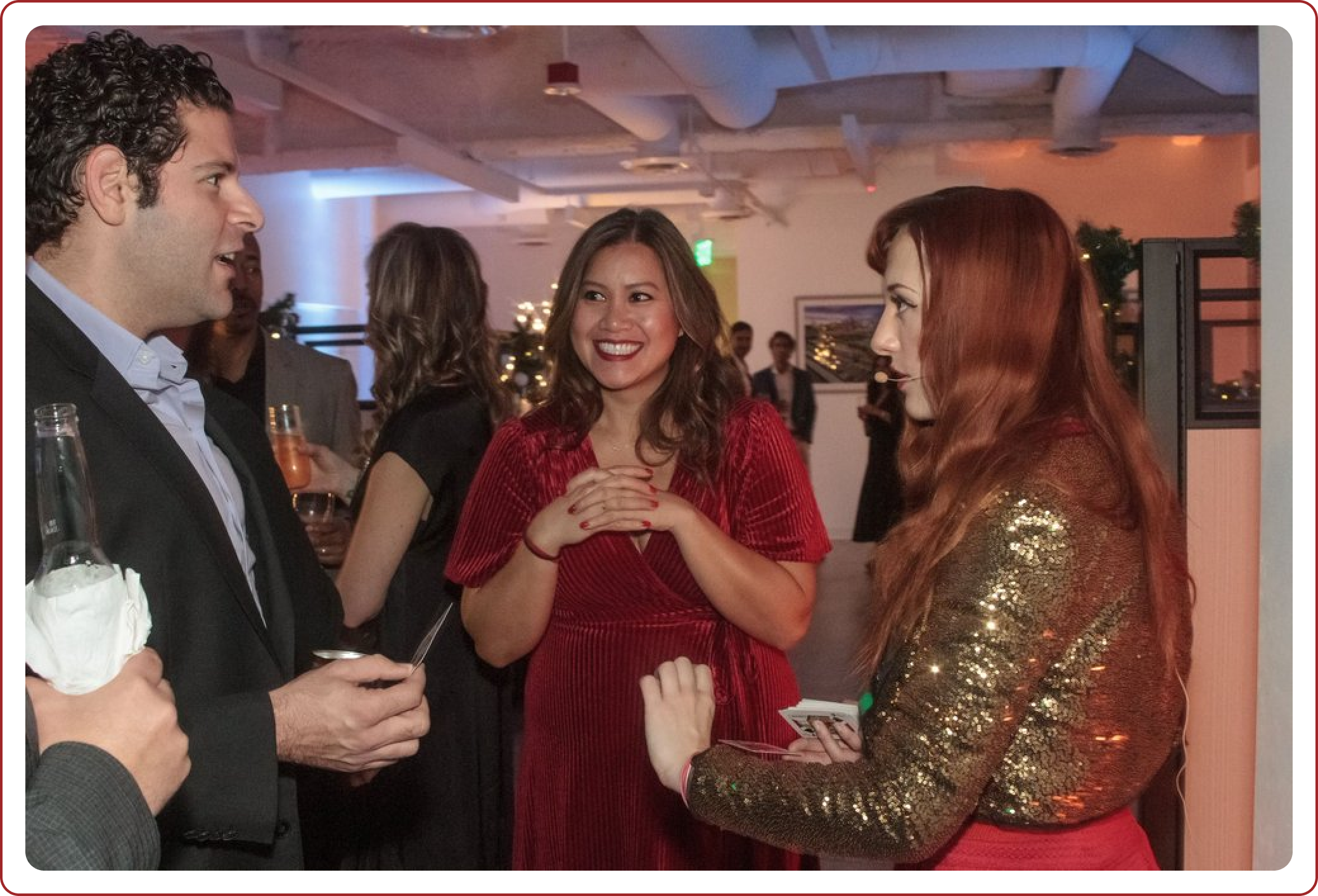
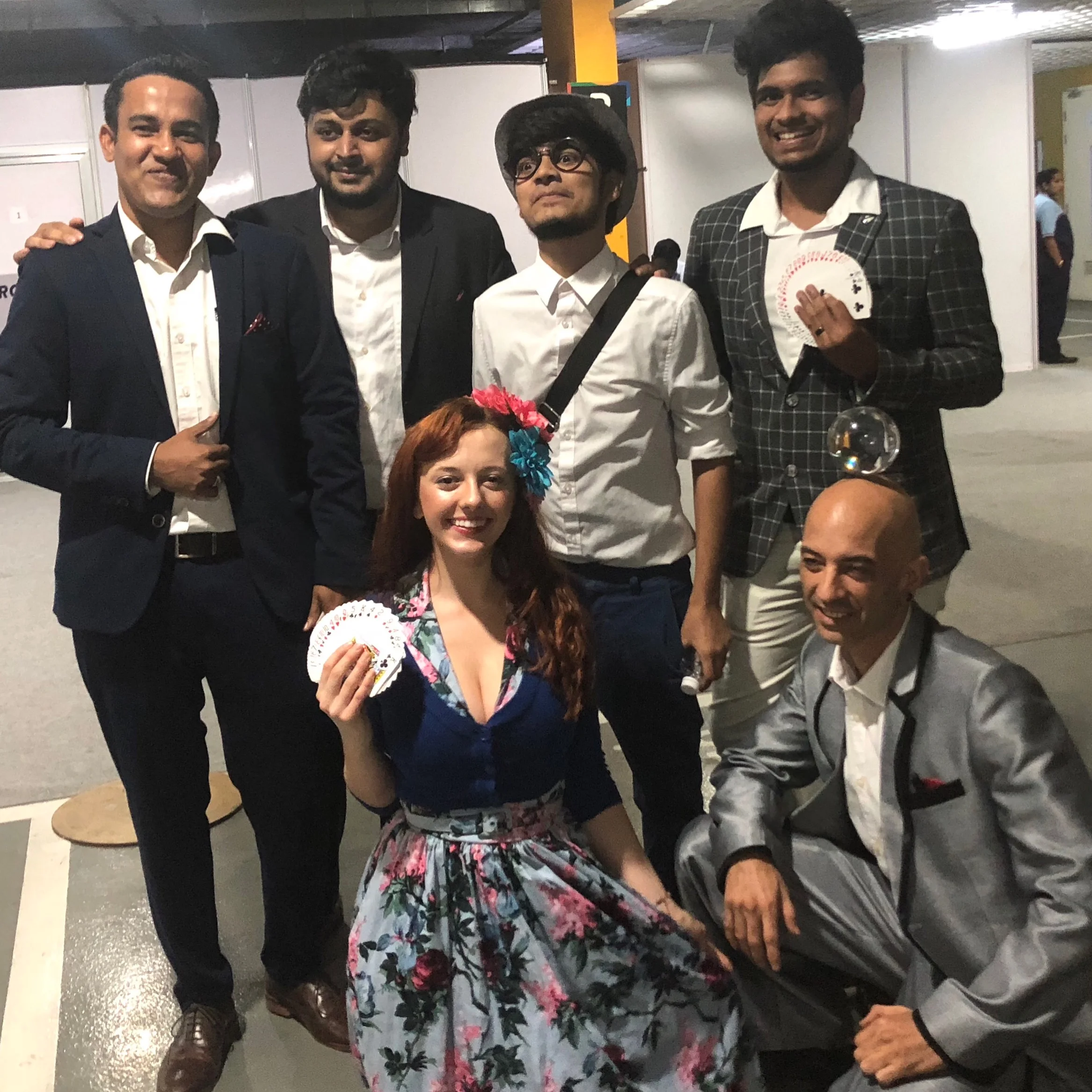
The Chat Is Their Networking

Worth understanding, since organizers underuse it. In person delegates network in breaks, and remote delegates have the chat and nothing else.

Keep it open, have your remote host participate in it, and create reasons for people to use it beyond questions for speakers. Introductions, topics, and prompts all work. A busy chat is the remote equivalent of a lively coffee break, and an empty one means your remote delegates have spent the day alone with a video feed.

Don't Put Remote Last in the Schedule

A structural point. Hybrid programs are usually built around the room, with remote delegates receiving whatever happens to be stream able, which means they get the keynotes and none of the texture.

If you're serious about the remote experience, build something into the schedule that's theirs, ideally earlier rather than as an afterthought at the end. Remote attendance declines across a day considerably faster than in person attendance, because leaving requires closing a tab rather than walking out of a room.

Be Honest About the Price Difference

Worth considering commercially. A remote ticket is a different product, and pricing it as a discount on the same thing sets an expectation you can't meet.

Describing it accurately, as access to the sessions with a defined set of additional elements, is fairer and produces fewer disappointed attendees. The organizations that do hybrid well tend to be explicit about what each ticket includes rather than implying equivalence and hoping nobody notices.

Sometimes Two Events Is the Answer

The honest conclusion for some conferences. If your remote audience is large, hybrid frequently serves them badly, and a separate virtual event designed for them would serve them considerably better.

That's more work and it's worth considering, particularly if remote numbers are growing. A well designed online event with its own program, its own networking, and its own timing beats being the secondary audience at somebody else's conference. If your remote delegates are an afterthought in practice, running two things properly is better than running one thing twice as badly.

Frequently Asked Questions

Should we stream the social parts?

No, since a camera pointed at a room of people enjoying themselves demonstrates exactly what somebody is missing while offering no way to participate, which is worse than nothing. If a session depends on being in the room, give remote delegates something else at that hour or give them the time back.

How do we genuinely include remote attendees?

By treating them as a second audience with different needs rather than a camera angle on the first, which might mean a parallel session, a dedicated networking format, or a clear schedule showing which parts are for them. Honesty about what they're getting beats pretending the experience is the same.

Are there formats that work for both?

A few, specifically anything where participation happens at each person's own desk or table with ordinary objects, since that reaches a remote delegate exactly as it reaches somebody in the room. Most entertainment is spatial and watching it from elsewhere is diminished, which makes this category the exception.

What's the biggest operational gap?

Nobody owning the remote audience, since the AV company handles the feed, organizers manage the room, and the chat goes unread for hours. Assign one person whose entire job is the remote room, watching the chat, responding, and flagging problems. That's the single biggest difference between hybrid and a filmed conference.

How do remote delegates network?

Through the chat and nothing else, since in person delegates network in breaks. Keep it open, have your remote host participate, and create reasons to use it beyond speaker questions. A busy chat is the remote equivalent of a lively coffee break, and an empty one means a day alone with a video feed.

Where should remote programming sit in the schedule?

Earlier rather than as an afterthought, since hybrid programs are usually built around the room and remote delegates get the keynotes and none of the texture. Remote attendance also declines across a day faster than in person attendance, because leaving requires closing a tab rather than walking out.

How should we price remote tickets?

As a different product described accurately rather than as a discount on the same thing, since implying equivalence sets an expectation you can't meet. Being explicit about what each ticket includes produces fewer disappointed attendees than hoping nobody compares.

Is hybrid always the right answer?

No, and if your remote audience is large it frequently serves them badly. A separate virtual event with its own program, networking, and timing beats being the secondary audience at somebody else's conference, and if remote delegates are an afterthought in practice, two events run properly is better than one run twice as badly.

Design for Two Audiences or Choose One

The fun conference ideas that work for a hybrid event all start from accepting that remote delegates are a separate audience rather than a feed of the main one. Don't stream the parts that depend on being in the room, give the remote audience an owner, treat the chat as their networking, put something that's theirs early in the schedule, and describe their ticket honestly.

And if the remote experience is consistently an afterthought, consider running two events rather than one, since a conference designed for the people attending it beats a compromise that serves neither group properly.

Reach out with your program and your remote numbers, and let's talk about what reaches both rooms.

Katrina Kroetch
Corporate Magician Los Angeles for Recruiting and Hiring Events

Corporate Magician Los Angeles for Recruiting and Hiring Events

A recruiting event is a strange kind of sales. You're trying to attract people who have other options, who are forming an impression of your company from an hour in a room, and who will tell their friends about it either way.

Most of those events are a table, some branded material, and three people hoping somebody approaches. I'm Magical Katrina, an award winning magician and mentalist based right here in Los Angeles, and I want to set out what a corporate magician Los Angeles does at a careers fair or hiring event, which is a traffic and conversation problem rather than an entertainment one.

Candidates Don't Want to Approach You

Start with the social difficulty that defines these events. Walking up to a stand and introducing yourself to a recruiter is awkward, particularly for the candidates who'd be most worth meeting and are least inclined to self promote.

So the people who approach are disproportionately the confident ones, and a proportion of the room circles without ever speaking to anybody. Anything that gives a candidate a reason to stop that isn't "I want to talk about a job" removes the hardest part of the interaction, which is the first thirty seconds.

Your Stand Has Two Seconds

The practical version at a careers fair. Attendees walk aisles scanning, comparing, and avoiding eye contact with the companies they've decided against.

Something impossible happening at eye level breaks that, because it interrupts involuntarily rather than asking permission. A corporate magician Los Angeles working the front of your stand gives you a reason for people to break stride that a banner and a bowl of branded pens doesn't. That's the mechanism, and everything else follows from it.

Your Recruiters Need Openings

The thing that converts the traffic. A candidate who has just reacted to something with three other people is considerably easier to start a conversation with than one who walked up cold.

The performer holds a small group for a few minutes and finishes, and your team should be positioned to talk to people who are relaxed and standing still. Brief them on that beforehand, since recruiters who watch the performer instead of working the crowd have doubled the audience and halved the conversations.

Candidates Judge You on the Experience

Worth understanding, since it's what you're actually buying. A candidate's impression of a company at a hiring event is formed from the room, the people, and how the hour felt, considerably more than from anything on a slide.

A stand that was interesting, where somebody enjoyed themselves and talked to three people from the company, produces a different impression from one where they collected a leaflet. That's employer brand in practice rather than in theory, and it travels, since candidates tell their friends about events in a way they never tell them about job adverts.

It Works at an Open House Too

Worth noting, since not every hiring event is a fair. Companies increasingly run their own open evenings, campus sessions, and hiring days, where candidates come to you and the problem inverts: they're already in the room and the risk is an hour that feels like a presentation.

Something genuinely enjoyable in the middle makes an evening feel like a company worth working for rather than a recruitment exercise. For an open house specifically, that's the whole impression you're trying to create, and it costs considerably less than the catering.

Measure Conversations, Not Footfall

Worth deciding in advance, since otherwise this gets judged on the wrong number. A headcount at a fair tells you about the fair rather than about your stand.

Better measures: how many substantive conversations your recruiters had compared with a typical event, how many candidates asked a follow up question, and how many applied afterwards referencing the event. Those are what the entertainment actually affects, and forty genuine conversations beats two hundred leaflets taken.

Your Venue Won't Have Anything

Practically relevant. Careers fairs happen in campus halls, convention spaces, and hotel function rooms, and open houses happen in your own offices, none of which gives you a stage, sound, or spare floor area at your stand.

Close up magic needs none of it, works at the front of a stand or in a reception area exactly as it is, and occupies no floor space you've paid for. For a recruiting team with a modest budget and a two metre stand, entertainment adding nothing to the footprint is what makes it practical.

Being Local Helps Across a Season

Worth mentioning, since recruiting runs in cycles. Unlike a performer travelling in, I'm based right here in the LA area and serve all of Southern California, so there are no travel costs across multiple events in a hiring season.

It also means flexibility if a date moves or you add an event, which with campus schedules and hiring cycles happens regularly. If you're running several events across a season, mention it, since a series is easier to schedule and priced more favorably than individual bookings.

Why Book Magical Katrina

If you're planning a hiring event, here's my case. I'm based in the LA area, I'm a member of the Magic Circle in London and the Academy of Magical Arts in Hollywood, I've earned multiple magic awards, and I've performed for companies including Formula 1, the Olympics, Porsche, Prada, and Zapier, with appearances on Penn & Teller: Fool Us and Masters of Illusion. I work small groups continuously rather than gathering crowds, I hand people over to your recruiters rather than holding them, and I need no power, rigging, or floor space.

Frequently Asked Questions

Why don't candidates approach our stand?

Because walking up and introducing yourself to a recruiter is awkward, particularly for candidates who'd be most worth meeting and are least inclined to self promote. The people who approach are disproportionately the confident ones, and a proportion of the room circles without speaking to anybody.

What does a performer actually solve?

The first thirty seconds, by giving candidates a reason to stop that isn't "I want to talk about a job." Attendees walk aisles scanning and avoiding eye contact, and something impossible at eye level interrupts involuntarily rather than asking permission, which a banner and branded pens don't.

What do our recruiters need to do?

Be positioned to talk to people who are relaxed and standing still when the performer finishes with a group, rather than watching. Brief them beforehand, since recruiters who watch the performer have doubled the audience and halved the conversations, which is the opposite of what you booked it for.

How does this affect employer brand?

Directly, since a candidate's impression is formed from the room, the people, and how the hour felt far more than from anything on a slide. A stand where somebody enjoyed themselves and spoke to three people from the company produces a different impression from one where they took a leaflet, and candidates tell their friends about events.

Does it work for our own open house?

Particularly well, since candidates are already in the room and the risk inverts: an hour that feels like a presentation. Something genuinely enjoyable in the middle makes an evening feel like a company worth working for rather than a recruitment exercise, and it costs considerably less than the catering.

How should we judge whether it worked?

On conversations rather than footfall, since a headcount tells you about the fair rather than your stand. Count substantive conversations compared with a typical event, candidates who asked a follow up question, and applications referencing the event. Forty genuine conversations beats two hundred leaflets taken.

Will it fit our stand?

Yes, since close up magic needs no stage, sound, power, or floor area and works at the front of a stand or in a reception exactly as it is. For a recruiting team with a modest budget and a two meter stand, entertainment adding nothing to the footprint is what makes it practical at all.

We run several events a season. Does that help?

Considerably, since a series is easier to schedule and priced more favorably than individual bookings, and being local means no travel costs across a hiring season. It also means flexibility when a date moves or you add an event, which with campus schedules happens regularly.

Remove the Hardest Part of the Conversation

A hiring event asks candidates to do something socially difficult, which is why most stands spend the day waiting. A corporate magician Los Angeles removes that: a reason to stop that isn't a job conversation, a few minutes of enjoying something with strangers, and a recruiter stepping in when people are relaxed rather than approaching them cold.

Brief your team to work the crowd rather than watch, measure conversations rather than footfall, and remember that candidates tell their friends about the event either way.

Reach out with your dates and venue, and let's talk about the season.

Katrina Kroetch
Female Magician Los Angeles for Women's Networks in Entertainment

Female Magician Los Angeles for Women's Networks in Entertainment

A women's network at a studio, an agency, a production company, or a streamer is programming for the hardest audience available: people who produce events professionally, have seen every speaker format, and can tell within two minutes whether something was put together properly.

That rules out most of what gets booked elsewhere. I'm Magical Katrina, an award winning magician and mentalist based right here in Los Angeles, and I want to set out what a female magician Los Angeles brings to a network event in this industry, starting with the part that isn't about gender.

Skill Decides It

Worth establishing first. Skill in magic and mentalism has nothing to do with gender, and you should book a female magician Los Angeles because she's genuinely excellent, assessed on the criteria you'd apply to anyone.

What follows is context. For a network in an industry with its own history on this subject, a woman doing something technically demanding at a high level in a field that has been overwhelmingly male carries the theme without framing. That's an addition on top of excellence rather than a reason by itself.

Production Won't Impress Them

Start with the thing that fails here and nowhere else as reliably. Your audience makes convincing things for a living, has attended events with budgets no internal network can approach, and is professionally immune to scale.

Spending more on production is therefore money spent on the element least likely to register. What large production structurally cannot deliver is intimacy: something impossible happening six inches from somebody's face, with no crew, no camera, and nothing between them and it. People who construct effects professionally frequently react hardest, because their usual explanations aren't available at that distance.

They've Seen Every Format

Worth accepting rather than working around. A panel, a fireside chat, a keynote, a workshop, and a networking hour are all familiar, and an audience that has attended hundreds of events evaluates yours against all of them.

That doesn't mean those formats can't work, and it means the content has to be genuinely good rather than structurally adequate. If you're choosing between a competent panel and something nobody in the room has seen before, the second is a better bet with this particular audience, since novelty is scarce for them and quality alone is not.

Attendance Competes With Production Schedules

The practical constraint specific to this industry. People are on set, in post, on location, or working to a release date, and their hours are neither predictable nor theirs.

That means an evening event loses a proportion of your intended audience to things they can't control. A lunchtime, an early evening that releases people rather than extending their day, or something scheduled in a quieter part of the production calendar performs considerably better. Ask the people you most want there when they could actually come, rather than picking a date and inviting them to it.

The Shared Ground Is Real

Worth using, since it's genuinely there. Magic has been overwhelmingly male throughout its modern history, and women working in it professionally have a version of an experience plenty of people in this room recognize from their own careers.

That's not a lecture and it doesn't need delivering as one. It's simply true, and it arrives with the performer rather than in a slide. For a network event, something demonstrating rather than describing that experience is a different proposition from a session about it, and it suits an audience skeptical of being told things.

Your Venue Is an Office or a Lot

Practically, these happen in a company's own space: a screening room, a commissary, an office floor, a lot, or a reserved restaurant section. None has entertainment facilities, and whatever production equipment exists is for work rather than events.

Close up magic needs no stage, power, sound, or setup, works in any of those exactly as it is, and requires nothing from a facilities team already managing a working building. For a network with a modest budget inside a company where booking a space is its own process, that simplicity matters.

Be Honest About What It Does

Worth saying, since this audience will notice overclaiming immediately. An event doesn't change how work is allocated, who gets promoted, or who gets hired, and presenting it as though it might invites exactly the skepticism this industry runs on.

What it does is produce a well attended hour that senior and junior women both enjoyed, contact between people who don't normally speak, and goodwill towards a network that has to keep earning attendance. Those are modest and real, and they're what makes the next event easier to fill.

Being Local Helps With a Moving Date

Worth mentioning, since dates shift here more than most places. Unlike a performer travelling in, I'm based right here in the LA area and serve all of Southern California, so there are no travel costs and no logistics to coordinate.

It also means flexibility when your date moves around a production schedule, which with this audience it frequently does, sometimes more than once.

Why Book Magical Katrina

If you run a network program, here's my case. I'm based in the LA area, I'm a member of the Magic Circle in London and the Academy of Magical Arts in Hollywood, I've earned multiple magic awards, and I've performed for clients including Formula 1, the Olympics, Porsche, and Prada, with appearances on Penn & Teller: Fool Us and Masters of Illusion, alongside work on Blippi as a performer and magic consultant. I understand production environments, I need no stage or setup, nobody is put on the spot, and there are no travel costs on your budget.

Frequently Asked Questions

Why won't production impress this audience?

Because they make convincing things for a living and have attended events with budgets no internal network can approach, which makes scale the element least likely to register. Intimacy is what large production can't deliver, and people who construct effects professionally frequently react hardest when their usual explanations aren't available.

They've seen every format. Does that matter?

It raises the bar rather than ruling formats out, since an audience that has attended hundreds of events evaluates yours against all of them. If you're choosing between a competent panel and something nobody has seen before, the second is a better bet here, since novelty is scarce for this audience and competence alone isn't.

When should we hold it?

When the people you most want there can actually come, which means asking them rather than picking a date and inviting them to it. Production schedules make hours unpredictable, so a lunchtime or an early evening that releases people rather than extending their day performs considerably better than a standard evening event.

Is there a natural connection to the theme?

A genuine one, since magic has been overwhelmingly male throughout its modern history and women working in it professionally have a version of an experience plenty of people in this room recognize. It arrives with the performer rather than in a slide, which suits an audience skeptical of being told things.

Will it work in our space?

Yes, since close up magic needs no stage, power, sound, or setup and works in a screening room, commissary, office floor, or reserved restaurant section exactly as it is. That matters when whatever production equipment exists is for work rather than events and booking a space is its own process.

What should we claim it achieves?

Something modest and true, since this audience notices overclaiming immediately. It won't change how work is allocated or who gets hired, and suggesting otherwise invites exactly the skepticism this industry runs on. A well attended hour people genuinely enjoyed is a real outcome.

Our date might move. Is that a problem?

Not with a local performer, since there are no flights to rearrange and no travel logistics, which matters in an industry where dates shift around production schedules, sometimes more than once. Tell me as soon as you know and we'll find another evening.

How do I book you, and what do you need to get started?

Reach out with your date, the venue or floor, expected numbers, and what the network is aiming at. That's enough for me to check availability, suggest a length, and send a quote, and being local means no travel costs and straightforward rescheduling if your date moves.

Give Them Something They Haven't Produced Themselves

A women's network in this industry is programming for people who make events professionally, which makes the usual options harder rather than impossible. A female magician Los Angeles offers the one thing a production budget can't buy: something impossible happening at conversational distance, to an audience whose expertise makes the experience stronger rather than weaker.

Ask the people you want there when they can come, keep the claims modest, and let the theme arrive with the performer rather than in the invitation.

Reach out with your date and what your network is aiming at, and let's talk about the format.

Katrina Kroetch
Zoom Magician: Who Should Introduce the Session, and What to Say

Zoom Magician: Who Should Introduce the Session, and What

The two minutes before a performer begins do more to shape a virtual session than anybody plans for. A room that's been told what's about to happen, by somebody whose presence signals this is worth their time, starts in a completely different place from one that's been read a list of credentials by a nervous organizer.

It's a small thing that's easy to get right. I'm Magical Katrina, an award winning magician and mentalist, and I want to set out how to introduce a Zoom magician so the session starts where you want it to.

A Senior Person Beats the Organizer

Start with who does it. The person who booked the session is frequently the person who introduces it, and that's usually the wrong choice.

An introduction from somebody senior signals that this is a sanctioned use of an hour rather than something the events team arranged. That matters most in organizations where people are unsure whether an optional session is a genuine invitation, which is most organizations. Ask a senior sponsor to do ninety seconds, and ask them specifically rather than hoping they'll offer.

It Should Take Under Two Minutes

The constraint that prevents most of the mistakes. An introduction is a handover, not a segment, and the longer it runs the more energy it takes out of the room.

Ninety seconds is plenty: who you are if not everybody knows, why the session is happening, what people should have to hand, and the handover. Anything longer and you're asking an audience that joined for something enjoyable to listen to internal communications first, which is precisely how a session starts flat.

Don't Oversell It

The commonest mistake and the most damaging. An introduction promising that this will be amazing, that people will be blown away, or that it's the best thing they'll see this year sets a bar the performer now has to clear rather than simply meet.

It also produces resistance, since telling an audience how impressed they're going to be invites them to decide otherwise. Understate it. "Something a bit different this afternoon" works considerably better than a build up, because astonishment lands harder when it wasn't promised in advance.

Don't Apologize for It Either

The opposite error, and it happens more than you'd think. An organizer slightly embarrassed to have booked entertainment introduces it apologetically, as a bit of fun, a break from the real work, or something they hope people will indulge.

That tells the room it isn't worth their attention before anything has happened. If you booked it, back it. A straightforward introduction without either hype or apology is the only register that works, and it's harder than it sounds for somebody who's been managing the booking for weeks.

Don't Explain the Format

Worth knowing, since organizers reach for this when they're unsure what else to say. Explaining how the session will work, what the performer will do, or what to expect removes the thing the session depends on.

The performer will explain anything people need to know, in the right order and at the right moment. An introduction that pre empts that has given away the shape of the hour and left the performer starting from a room that thinks it already knows what's coming. Leave it to them.

Do the Housekeeping Before the Handover

Practical sequencing. Anything administrative belongs before the performer takes over: whether it's being recorded, that cameras are optional, that the chat is open, that there's a finish time, and who to message if somebody has a problem.

Get it all out before the handover rather than letting it interrupt afterwards. A performer who starts and is then stopped for an announcement about recording has lost the opening, and the room has to be rebuilt. Thirty seconds of housekeeping first is considerably better than one interruption later.

Tell People What to Have Ready

The one piece of content the introduction must include. A participatory session needs attendees to have ordinary household items to hand, and somebody will have missed the message.

Say it in the introduction, clearly, and give people fifteen seconds to fetch something. That's the difference between a room where everybody takes part and one where a proportion watch because they don't have what they need. Ask your performer what to say, and say exactly that rather than paraphrasing it.

Make the Handover Clean

The line itself. Name the performer, hand over clearly, and stop talking: "I'll hand over to Katrina, who's going to take it from here."

What doesn't work is trailing off, asking the performer a question, or starting a conversation on camera, since the room doesn't know whether the session has begun. A clean handover lets a performer start properly rather than negotiating their way into the hour. Then turn your camera off or move out of the way, since the audience should be watching one person.

Think About the Ending Too

Worth planning, since it's usually improvised. When the session finishes, somebody should thank the performer briefly, remind people of anything that follows, and close the call.

That takes thirty seconds and gives the hour a proper ending rather than a drift into silence while people work out whether to leave. If there's a next step, a drinks chat, a return to the agenda, or simply a thank you, say it. The last thirty seconds are remembered more than they should be.

Why Book Magical Katrina

If you'd like a session that starts well, here's my case. I'm a member of the Magic Circle in London and the Academy of Magical Arts in Hollywood, I've earned multiple magic awards, and I've performed for companies including Formula 1, the Olympics, Porsche, Zapier, and the Ritz Carlton, with appearances on Penn & Teller: Fool Us. I'll send you exactly what to say in your introduction and what to ask people to have ready, so whoever is doing it isn't improvising.

Frequently Asked Questions

Who should introduce the session?

Somebody senior rather than the person who booked it, since an introduction from a senior sponsor signals that this is a sanctioned use of an hour rather than something the events team arranged. That matters in organizations where people are unsure whether an optional session is a genuine invitation.

How long should it be?

Under two minutes, since an introduction is a handover rather than a segment and the longer it runs the more energy it takes out of the room. Ninety seconds covers who you are, why this is happening, what people should have to hand, and the handover itself.

What's the commonest mistake?

Overselling, since promising people will be blown away sets a bar the performer must clear rather than meet, and telling an audience how impressed they'll be invites them to decide otherwise. Understate it, because astonishment lands harder when it wasn't promised in advance.

Is there an opposite error?

Yes, and it's apologizing, since an organizer slightly embarrassed to have booked entertainment introduces it as a bit of fun or something they hope people indulge. That tells the room it isn't worth their attention before anything has happened. If you booked it, back it.

Should we explain what's going to happen?

No, since the performer will explain anything people need to know in the right order at the right moment, and an introduction that pre empts that gives away the shape of the hour. Leave the format to them rather than reaching for it because you're unsure what else to say.

When should we do the housekeeping?

Before the handover, including recording, cameras, the chat, the finish time, and who to message with a problem. A performer who starts and is then stopped for an announcement has lost the opening and the room has to be rebuilt, so thirty seconds first beats one interruption later.

What must the introduction include?

What people should have to hand, since a participatory session needs ordinary household items and somebody will have missed the message. Say it clearly, give people fifteen seconds to fetch something, and ask your performer for the exact wording rather than paraphrasing it.

How should we end the session?

Deliberately rather than by drifting, with somebody thanking the performer briefly, reminding people of anything that follows, and closing the call. Thirty seconds gives the hour a proper ending rather than silence while people work out whether to leave, and the last thirty seconds are remembered more than they should be.

Hand Over and Get Out of the Way

An introduction to a Zoom magician has one job: to tell a room this is worth their hour and then stop. Ask somebody senior to do it, keep it under two minutes, resist both the build up and the apology, say what people should have to hand, do the housekeeping first, and hand over cleanly.

Then turn your camera off. The session you booked starts considerably better from a room that was handed over to properly than from one that was talked at for five minutes first.

Reach out with your date, and I'll send you exactly what to say.

Katrina Kroetch
Strolling Magician Los Angeles for Dinner Parties and House Gatherings

Strolling Magician Los Angeles for Dinner Parties and House Gatherings

A dinner party has a shape everybody recognizes. Drinks, a first course where the table finds its feet, a main course where the conversation is genuinely good, and then a stretch after the plates are cleared where the evening either lifts or quietly starts winding towards people checking the time.

That second half is where something helps. I'm Magical Katrina, an award winning magician and mentalist based right here in Los Angeles, and I want to set out what a strolling magician Los Angeles does at a dinner party or house gathering of twelve to thirty people.

The Evening Has a Natural Dip

Start with the thing hosts recognize without naming. After the main course, the table has had the conversation it came to have, people have paired off with whoever they're next to, and the energy either gets a lift or starts declining.

A host usually tries to supply that themselves, by opening more wine, moving people around, or suggesting something. Something arriving between courses does it without the host having to engineer anything, and a table that has reacted to something together talks differently afterwards. That's the function, and it's more useful at a dinner than at any other kind of party.

Table Magic Fits a Seated Evening

Practically, the format suits a dinner more neatly than it suits a reception. Guests are seated, they aren't going anywhere, and there are natural gaps between courses while plates are cleared and the next thing arrives.

A performer works those gaps, moving around the table or between tables without requiring anybody to stop eating or face a particular direction. Nothing is scheduled, nothing interrupts, and the meal proceeds exactly as planned. For a host who's spent two days cooking, entertainment that doesn't touch the timings is the only kind worth considering.

Twelve People Is Ideal

Worth saying, since hosts assume small numbers don't justify it. Close up magic improves as the group shrinks, because everybody sees everything from a few feet away and the whole table shares each moment rather than hearing about it afterwards.

A dinner for twelve is better conditions than a party of two hundred, not worse. It also means every guest gets the full experience rather than a proportion of the room catching some of it, which at a dinner where you invited each person deliberately is what you'd want.

You're Cooking, Which Means You're Absent

The host's problem, and it's particular to dinners. You're in the kitchen between courses, plating, checking, and serving, which means you miss stretches of your own party and spend the rest of it half listening for something boiling over.

A performer working the table during exactly those gaps means your guests are having a good time at the moments you can't be there. Hosts mention that afterwards more than anything else, and at a dinner party, where the host is structurally absent at intervals, it does more than it would at a standing party.

Mixed Tables Don't Always Mix

Worth planning around, since dinner parties frequently assemble people who don't all know each other. Work friends, neighbors, a couple somebody brought, and family, seated together and expected to find common ground.

Conversation at a table of twelve fragments into two or three clusters within minutes, and the people at the ends talk to each other all night. Something the whole table reacts to together resets that, which is one of the few things that does. For a host whose seating plan was a small act of optimism, it's the mechanism that makes it work.

Your Guests May Be Hard to Impress

The local consideration. An LA dinner table frequently includes people who work in or adjacent to entertainment, who make convincing things professionally and have seen a great deal.

Scale won't impress them and intimacy might, since something impossible happening six inches from somebody's face, with no crew and no camera, is precisely what large production can't deliver. People who understand how effects are constructed frequently react hardest, because their usual explanations aren't available to them at that distance.

Nothing to Set Up, Nothing to Clear

Practically decisive in a home. A strolling magician Los Angeles performing close up needs no stage, power, sound, or floor space, arrives with a case, and sets up in the time it takes to take a coat.

That matters at a dinner party more than at a venue, since there's no spare room, no corner that isn't being used, and nobody to dismantle anything at midnight. At the end of the evening there's nothing to clear beyond the glasses you already have, which after two days of cooking is the only acceptable arrangement.

Being Local Keeps It Simple

Worth mentioning for a private evening. Unlike a performer travelling in, I'm based right here in the LA area and serve all of Southern California, so there are no travel costs on a private budget and no logistics to coordinate.

It also means flexibility if your evening shifts, which with a dinner party it frequently does once people are relaxed and nobody wants to move to the next thing on time.

Why Book Magical Katrina

If you're hosting a dinner, here's my case. I'm based in the LA area, I'm a member of the Magic Circle in London and the Academy of Magical Arts in Hollywood, I've earned multiple magic awards, and I've performed for clients including Formula 1, the Olympics, Porsche, and Prada, with appearances on Penn & Teller: Fool Us and Masters of Illusion. I work between courses without touching your timings, I need nothing from your house, and I'm as happy at a table of twelve as at a party of two hundred.

Frequently Asked Questions

When in the evening does it work best?

After the main course, since that's where a dinner party has its natural dip: the table has had the conversation it came for, people have paired off with whoever they're next to, and the energy either lifts or starts declining. Something arriving then does what a host usually tries to engineer themselves.

Will it interrupt the meal?

No, since a performer works the natural gaps between courses while plates are cleared and the next thing arrives, moving around the table without requiring anybody to stop eating or face a particular direction. Nothing is scheduled and your timings proceed exactly as planned.

Is twelve people too few?

Better rather than worse, since close up magic improves as the group shrinks and everybody sees everything from a few feet away, with the whole table sharing each moment. Every guest gets the full experience rather than a proportion of the room catching some of it.

I'll be cooking. Does that matter?

It's rather the point, since you're in the kitchen between courses and structurally absent from stretches of your own party. A performer working the table during exactly those gaps means your guests are having a good time at the moments you can't be there, which hosts mention afterwards more than anything else.

Our guests don't all know each other. Does it help?

Considerably, since conversation at a table of twelve fragments into two or three clusters within minutes and the people at the ends talk to each other all night. Something the whole table reacts to together resets that, which is one of the few things that does.

Some of our guests work in entertainment. Will they be impressed?

Frequently more than anybody, since scale won't impress them and intimacy might: something impossible six inches from their face with no crew or camera is what large production can't deliver. People who understand how effects are constructed react hardest when their usual explanations aren't available.

What do you need from our house?

Somewhere to leave a case and nothing else, since close up magic needs no stage, power, sound, or floor space and sets up in the time it takes to take a coat. There's nothing to clear at the end beyond the glasses you already have.

How do I book you, and what do you need to know?

Reach out with your date, the area, guest numbers, and roughly how the evening is structured, including whether it's seated throughout or starts with drinks. That's enough for me to check availability and send a quote, and being local means no travel costs and flexibility if the evening shifts.

Lift the Second Half

A dinner party's first half takes care of itself and its second half is where hosts quietly work. A strolling magician Los Angeles addresses exactly that: arriving in the gaps between courses without touching your timings, resetting a table that has fragmented into clusters, giving your guests something at the moments you're in the kitchen, and leaving nothing to clear at the end of the night.

Twelve people around a table is the best version of this rather than the smallest, and as a local there's nothing on your budget but the evening itself.

Reach out with your date and numbers, and let's talk about the evening.

Katrina Kroetch
Zoom Magic Show for a Multilingual Audience

Zoom Magic Show for a Multilingual Audience

Plenty of organizations hold virtual events for audiences where English is a second or third language for a substantial proportion of the room. The session happens in English, everybody attends, and a meaningful number of people follow perhaps sixty percent of it and say nothing.

That's a solvable problem with the right format. I'm Magical Katrina, an award winning magician and mentalist, and I want to set out what works for a Zoom magic show with a multilingual audience, and what genuinely doesn't translate.

Vocabulary Isn't the Barrier

Start with the misconception. Organizations assume the issue is whether people know the words, and for professional audiences it usually isn't, since colleagues working in English all day have the vocabulary.

What causes people to lose a session is speed, idiom, cultural reference, and humor that depends on wordplay. A performer speaking quickly with regional expressions is considerably harder to follow than one speaking plainly about the same thing. That's a performance choice rather than a language problem, which means it's fixable.

Visual Participation Travels

The structural advantage of this format. A Zoom magic show built on participation has people holding an object, making a choice, and seeing something happen in their own hands, and none of that requires understanding every word.

The experience is sensory rather than verbal, which is why it crosses language groups more reliably than a talk, a quiz, or comedy. Somebody following half the speech still fully experiences the thing itself, which is almost never true of content based sessions. For a genuinely multilingual room, that's the main argument.

Humor Is the First Thing to Go

Worth knowing when choosing between formats. Humor depends on wordplay, timing, shared reference, and cultural context, which makes it the least portable element of any performance.

A comedian or a quiz host working an international room is doing the hardest version of their job, and the proportion of the audience genuinely enjoying it is smaller than the organizer thinks. Astonishment, by contrast, requires no shared context at all. If your room spans several first languages, that difference matters more than anything else in the comparison.

People Understand More Than They'll Volunteer

Worth planning around, since it affects participation. Someone working in a second language frequently understands well and is reluctant to speak in front of colleagues, particularly to a performer in front of three hundred people.

That means verbal participation excludes people who'd happily take part otherwise. A format where participation is physical rather than spoken, holding something or making a choice rather than answering aloud, includes them properly. Worth asking any performer how participation works, since the answer determines who's genuinely able to join in.

The Chat Is Where People Use Their Own Language

Worth allowing rather than discouraging. In multilingual sessions, people frequently react in the chat in their own language, which is a sign it's working rather than a problem to manage.

Don't ask people to use English in the chat. A reaction in Portuguese or Japanese is still a reaction, and the colleagues who share that language will respond to it, which is exactly the connection the session exists to create. Tell your moderator to leave it alone unless something needs addressing.

Interpretation Usually Doesn't Help

Worth being honest about, since organizations sometimes propose it. Simultaneous interpretation works well for presentations and poorly for a live interactive performance, since the delay breaks the timing that the experience depends on.

A participant following an interpreter is a beat behind, which means they react after everybody else and the shared moment fragments. If your session is content heavy, interpretation is worth considering. If it's participatory, a performer speaking plainly and slowly serves the room better than an interpreted version would.

Brief the Performer on the Mix

Practical and frequently omitted. Tell them which languages are in the room, roughly what proportion, and whether English is a working language for everybody or a second language for most.

A performer who knows will slow down, avoid idiom, repeat instructions, and check that everybody has what they need before moving on. None of that is difficult and all of it is invisible if nobody mentions the audience in advance. It's one sentence in your brief and it changes the experience for a substantial part of the room.

Be Honest About the Limits

Worth saying plainly. A session in English will always be easiest for first language speakers, and a format that travels well is not the same as one that's identical for everybody.

What's achievable is a session where somebody following seventy percent of the words still has the full experience of the thing itself, which is considerably better than most virtual programming manages. Claiming more than that isn't necessary, since that's already the strongest case available and it's genuinely true.

Why Book Magical Katrina

If your audience spans languages, here's my case. I'm a member of the Magic Circle in London and the Academy of Magical Arts in Hollywood, I've earned multiple magic awards, and I've performed for companies including Formula 1, the Olympics, Porsche, Zapier, and the Ritz Carlton, with appearances on Penn & Teller: Fool Us, across events in over 20 countries. My material is participatory rather than verbal, I speak plainly and avoid idiom when I know the room, and I've worked with audiences across a great many first languages.

Frequently Asked Questions

Is vocabulary the main problem?

Usually not, since colleagues working in English all day have the vocabulary. What loses people is speed, idiom, cultural reference, and humor depending on wordplay, which means a performer speaking quickly with regional expressions is considerably harder to follow than one speaking plainly about the same thing.

Why does this format travel better?

Because the experience is sensory rather than verbal, with people holding an object, making a choice, and seeing something happen in their own hands, none of which requires understanding every word. Somebody following half the speech still fully experiences the thing itself, which is almost never true of content based sessions.

What's the hardest format for a multilingual room?

Anything built on humor, since it depends on wordplay, timing, shared reference, and cultural context, making it the least portable element of any performance. A comedian or quiz host working an international room is doing the hardest version of their job, and fewer people are enjoying it than the organizer thinks.

Will people take part?

If participation is physical rather than spoken, yes. Someone working in a second language frequently understands well and is reluctant to speak in front of colleagues, so verbal participation excludes people who'd otherwise join in. Ask how participation works, since the answer determines who's genuinely able to take part.

Should we ask people to use English in the chat?

No, since people reacting in their own language is a sign it's working, and the colleagues who share that language will respond, which is exactly the connection the session exists to create. Tell your moderator to leave the chat alone unless something needs addressing.

Would simultaneous interpretation help?

Usually not for a live interactive session, since the delay breaks the timing the experience depends on and a participant following an interpreter reacts a beat behind, fragmenting the shared moment. For content heavy sessions it's worth considering, and for participatory ones a performer speaking plainly serves the room better.

What should we tell the performer?

Which languages are in the room, roughly what proportion, and whether English is a working language for everybody or a second language for most. A performer who knows will slow down, avoid idiom, repeat instructions, and check everybody is ready, none of which happens if nobody mentions it.

What can't be solved?

A session in English will always be easiest for first language speakers, and a format travelling well isn't the same as one identical for everybody. What's achievable is somebody following seventy percent of the words having the full experience of the thing itself, which is better than most virtual programming manages.

Choose Something That Doesn't Depend on Words

An audience spanning several first languages is poorly served by most virtual entertainment, since quizzes depend on shared reference, comedy depends on wordplay, and presentations depend on following every sentence. A Zoom magic show built on participation is the exception, because the thing people experience happens in their own hands rather than in the words.

Brief your performer on the language mix, let the chat run in whatever languages people use, skip the interpretation, and accept honestly that it will still be easiest for first language speakers while being genuinely good for everybody else.

Reach out with your audience and the languages involved, and I'll plan around them.

Katrina Kroetch