






Magician Zoom Party for a Family Spread Across Countries

Magician Zoom Party for a Family Spread Across Countries

Some families are only ever all in one place on a screen. Parents in one country, children in another, a sibling who moved years ago, cousins nobody has seen since a wedding. Getting everybody in a room would take four flights, two sets of annual leave, and a year of planning, so it doesn't happen.
The call is the family gathering, which is worth treating as the real thing. I'm Magical Katrina, an award winning magician and mentalist, and I want to set out how to run a magician Zoom party for a family spread across countries, and what's worth getting right.

This Might Be the Only Time Everybody Is There

Start with what makes it different from an ordinary family call. Regular calls are usually two households at a time: you and your mother, you and your brother. Everybody at once is rare, and for many families it happens only when something significant occurs.

That changes what the hour deserves. A call where all twenty two of you are present for the first time in three years is an occasion whether or not anybody calls it one, and planning it slightly rather than just sending a link is the difference between a nice chat and something people remember.

The Hour Is the Hardest Decision

The genuine constraint. A family across three continents has no good time, only a least bad one, and somebody will be having breakfast while somebody else is up past midnight.

Work it out properly rather than defaulting to what suits the organizer. Weekend mornings in Europe catch evening in Asia and late night in Australia; weekend afternoons in the Americas catch evening in Europe. Write the time out in each person's local clock in the invitation rather than making anybody convert, since that's where half the confusion comes from.

Somebody Will Be on a Different Date

Worth knowing, since it causes real confusion. Across enough time zones, your Saturday evening is Sunday morning for part of the family, and a relative who writes down Saturday will miss it entirely.

Say the day and the date in local terms for each group. It sounds fussy and it prevents the single most common failure of an international family call, which is one household joining twenty four hours late and being genuinely upset about it.

Pick One Host and One Link

Practically important with a large scattered family. Multiple people forwarding versions of an invitation across several group chats produces confusion, and somebody always ends up on a link that doesn't work.

Choose one person to own it. One link, sent once in large type, resent unchanged an hour before, and nobody else forwarding anything of their own. That person also starts the call ten minutes early, since a relative who joins to an empty room assumes they got it wrong and leaves.

Conversation Doesn't Scale Past About Eight

The problem every large family call runs into. Six people on a call talk; twenty two people on a call take turns, and the quiet ones say nothing for an hour and then say goodbye.

That's the real reason big family calls feel flat, and it isn't anybody's fault. What helps is having something happen that everybody watches together, because twenty two people can share an experience simultaneously in a way they cannot share a conversation. Then the chatting afterwards has somewhere to start.
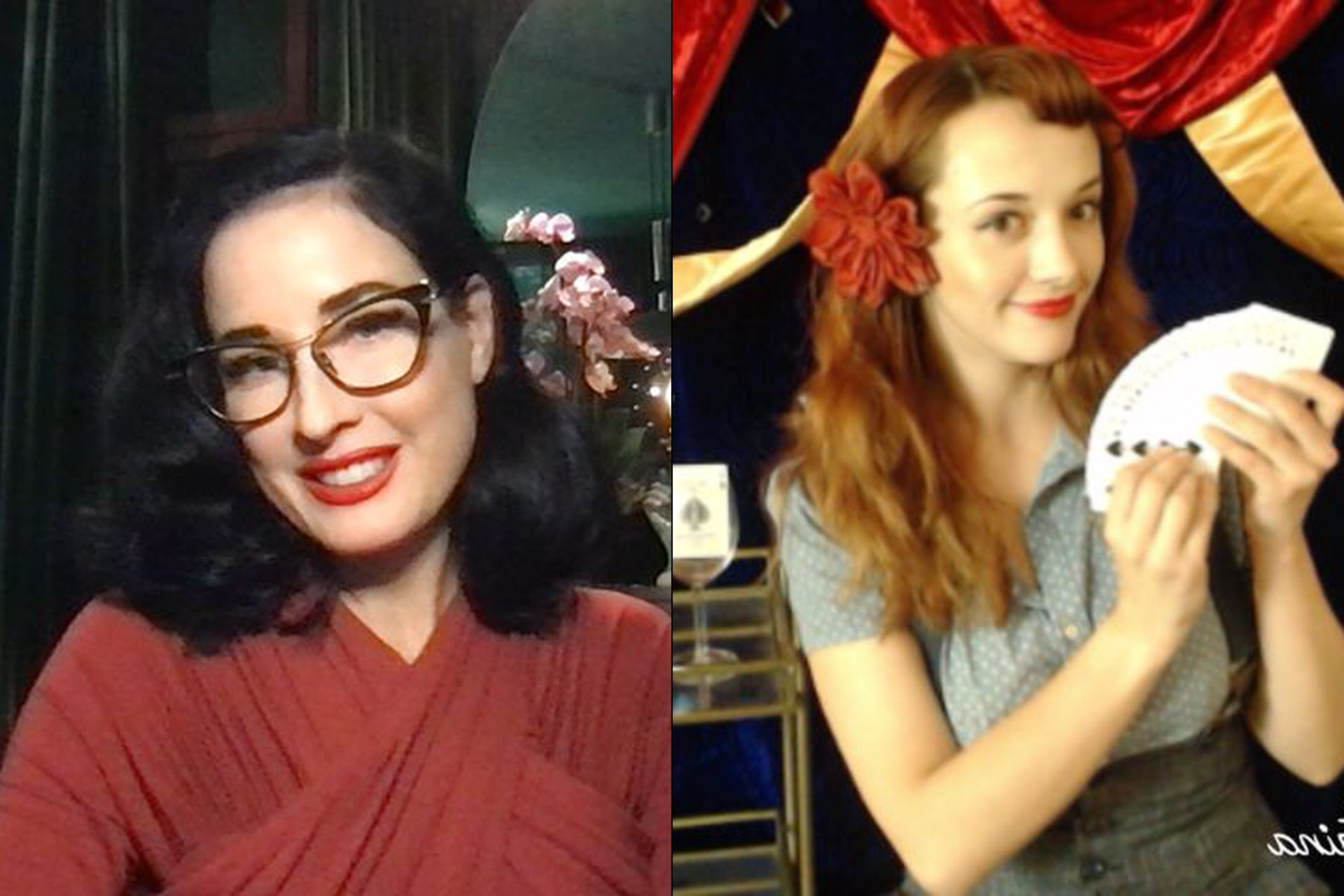
It Gives the Children Something to Do

Worth planning for, since mixed age calls are hard. Children on a long family call lose interest in around four minutes and then either leave or make it difficult for everybody else, and the grandparents who most wanted to see them end up watching an empty chair.

Something genuinely engaging keeps them in frame, which is frequently the whole reason the older generation joined. A grandmother in another country watching her grandchildren react to something astonishing is getting something a conversation can't give her, and it's the part of these calls people describe afterwards.

Different Countries, No Shared References

Worth considering when choosing what to do. Family members who grew up in different places, or who are now in their second language day to day, don't share the television, the jokes, or the vocabulary that a quiz or a game assumes.

Magic requires none of that. Astonishment works identically in every language and needs no cultural background at all, which for a family whose members have diverged across decades and countries is more useful than it sounds. Nobody has to keep up and nobody is left out of the reference.

Help the Relatives Who Find It Hard

Worth arranging in advance. In a family this size somebody will struggle to join, and the fix is a named person, ideally a grandchild, who rings them fifteen minutes early and stays on the phone while they get on.

Do a five minute practice call a couple of days before with anybody you're unsure about. It proves the link works on their device and removes the anxiety, which is the actual obstacle. Twenty minutes of preparation is the difference between everybody being there and the two people the party was partly for missing it.

Why Book Magical Katrina

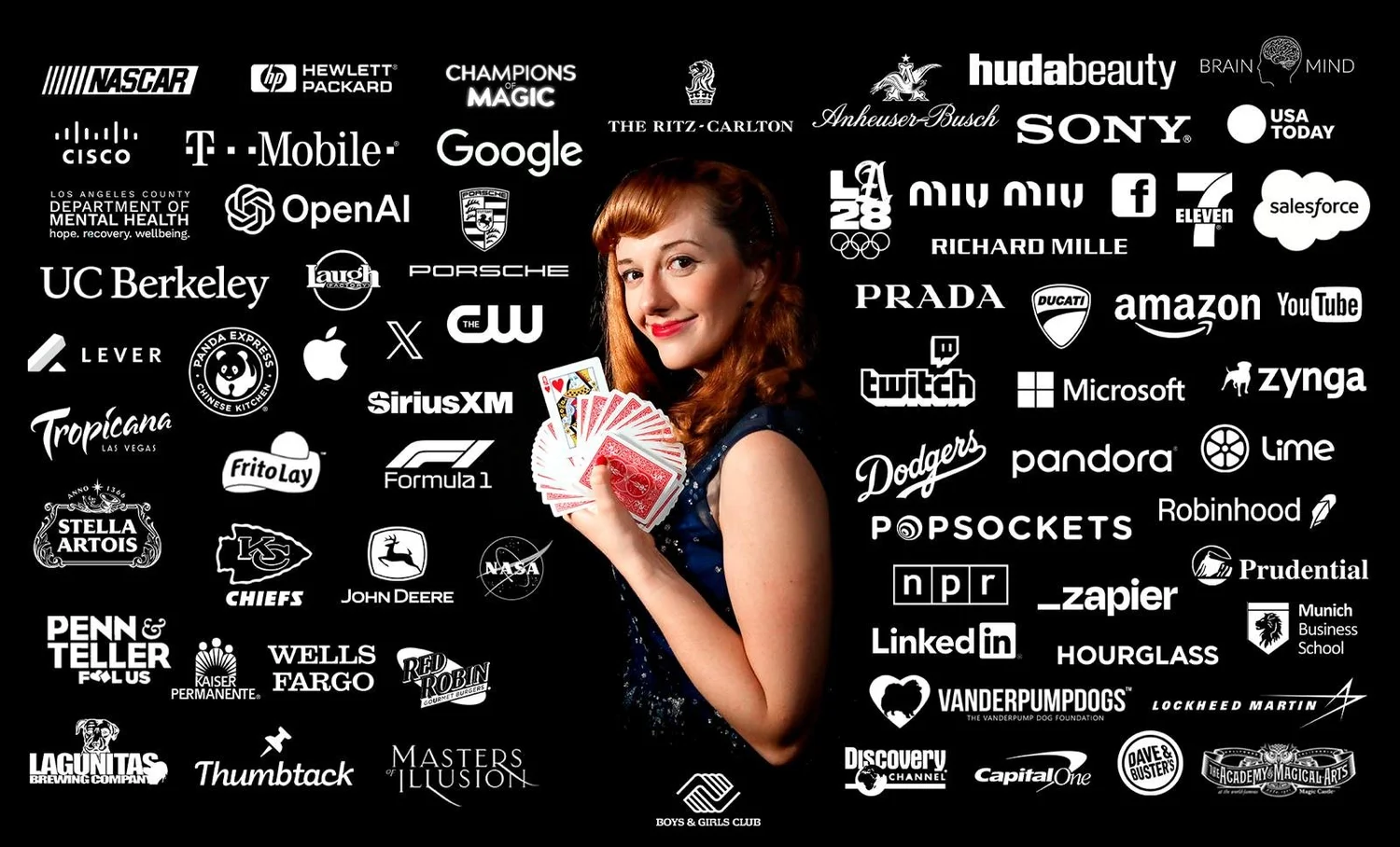
If your family is scattered, here's my case. I'm a member of the Magic Circle in London and the Academy of Magical Arts in Hollywood, I've earned multiple magic awards, and I've performed on Penn & Teller: Fool Us and Masters of Illusion as well as for families and audiences in more than twenty countries. My work needs no shared language or cultural reference, children and grandparents get the same thing at the same moment, your relatives need nothing beyond being on the call, and I'll work around whatever hour your family has settled on.

Frequently Asked Questions

Why treat a family call as an occasion?

Because everybody being on at once is rare, since regular calls are usually two households at a time. A call where all of you are present for the first time in years is an occasion whether anybody names it or not, and planning it slightly beats just sending a link.

How do we choose a time?

Accept there's no good one, only a least bad one, and work it out rather than defaulting to what suits the organizer. Weekend mornings in Europe catch evening in Asia, weekend afternoons in the Americas catch evening in Europe, and the invitation should state each person's local time.

What's the most common mistake?

Somebody joining on the wrong day, since across enough time zones your Saturday evening is Sunday morning for part of the family. Write the day and date in local terms for each group, which sounds fussy and prevents a household missing it entirely.

Who should send the link?

One person, once, in large type, resent unchanged an hour before, with nobody else forwarding their own version. That person should also start ten minutes early, since a relative who joins an empty room assumes they got it wrong and leaves.

Why do big family calls feel flat?

Because conversation doesn't scale past about eight people, so twenty two take turns and the quiet ones say nothing for an hour. Something everybody watches together works, since a large group can share an experience simultaneously in a way they can't share a conversation.

What about the children on the call?

They lose interest in about four minutes and then leave or disrupt it, which means the grandparents who joined to see them end up watching an empty chair. Something engaging keeps them in frame, which is frequently the reason the older generation came.

Our family speaks different languages. Does that matter?

Not for this, since astonishment works identically in every language and needs no cultural background. A quiz or a game assumes shared television, jokes, and vocabulary that a family spread across countries and decades simply doesn't have.

How do we help relatives who struggle with the technology?

Give each one a named person, ideally a grandchild, who rings fifteen minutes early and stays on the phone while they join, and do a five minute practice call a couple of days before. That removes the anxiety, which is the real obstacle.
Make the Screen the Place You All Meet

For a family across several countries, the call isn't a substitute for a gathering, it is the gathering, and it deserves slightly more thought than a forwarded link. Pick the least bad hour, write every local time and date down, give one person the link, start early, and make sure the relatives who find it hard have somebody helping them on.

Then book a magician Zoom party so there's something in the middle that holds the children, reaches the grandparents, and needs no shared language, and your family gets an hour together rather than twenty two people taking turns to speak.

Reach out with your date and where everybody is, and I'll help you work out the hour.
Katrina Kroetch
Zoom Magician Cost: Getting It Approved Internally

Zoom Magician Cost: Getting It Approved Internally

Plenty of people who want to book something for their team stall at the same point. They've found somebody, they know roughly what it costs, and now they have to explain to a manager or a finance partner why the company should pay for a magician.

That conversation is easier than it feels, provided you frame it as what it is rather than as a treat. I'm Magical Katrina, an award winning magician and mentalist, and I want to set out how to make the internal case, what Zoom magician cost looks like in a business case, and which arguments genuinely work.

Lead With the Problem, Not the Booking

Start with the framing that gets approvals. A request to book a magician invites a judgment about magicians. A request to fix a specific problem invites a judgment about the problem, which is the conversation you want.

The problem is usually one of these: attendance at the all hands has been falling, the team has never met, the quarterly call is ignored, the rollout isn't landing, people are leaving within a year. Lead with that, say what you've tried, and present the booking as the proposed fix. Nobody approves entertainment, and plenty of people approve solutions.

Say the Number Early

Practically important. Vagueness about cost makes a request sound bigger than it is, and the person you're asking is almost certainly imagining a larger figure than the real one.

My virtual shows start around fourteen hundred dollars. Put a number in the first two sentences, because a manager who hears a specific figure can make a decision while one who hears "a few thousand, I think" has to come back to you. Precision costs nothing and removes a round of emails.

Use the Per Person Arithmetic

The single most effective number in this conversation. An online performance costs the same whether forty people attend or four hundred, since there's one performance regardless of how many are watching.

That makes the per attendee figure small, and for a large all hands it becomes very small indeed. Do that division before you ask, because it's the calculation your finance partner would do anyway and arriving with it signals you've thought about it. It also compares favorably with almost anything else the company spends on employee experience.

Compare It With Something Real

Worth doing, since every budget is relative. Compare against what the organization already spends on comparable things rather than against zero: a single office party, a round of branded merchandise, one recruitment fee, a day of an external facilitator.

That reframes the question from whether this is worth money to whether it's worth more than the alternative use of the same money. For a distributed workforce in particular, an hour that reaches everybody frequently compares well against something that reaches only the people who could travel to it.

Name the Budget It Should Come From

Worth settling before you ask, since an unowned request stalls. Depending on the purpose, this sits naturally with internal communications, people or employee experience, learning and development, marketing for a customer facing event, or the team's own discretionary budget.

Arriving with a view about which line it belongs to, and why, makes approval a decision rather than a research task. If you genuinely don't know, ask that question first and separately, since "whose budget is this?" is much easier to answer than "will you fund this?"

Say What Success Looks Like

Worth offering, since it's what distinguishes a considered request from an impulse. Name something you'll look at afterwards: attendance against the last three calls, how many stayed to the end, responses in a short pulse survey, whether anybody mentions it unprompted.

You don't need a sophisticated measurement plan and you do need to show you've thought past the booking. A manager asked to approve something unmeasurable is being asked to take it on faith, and one offered even a simple check has been given a reason to say yes.

Address the Obvious Objection Yourself

Worth doing pre emptively. The objection in your manager's head is that this sounds frivolous, and the fastest way past it is to name it rather than wait for it.

Say plainly that it sounds like entertainment and that the reason you're proposing it is that attendance or engagement or retention is a real problem and the conventional fixes haven't worked. Acknowledging the awkwardness defuses it. Pretending it isn't there leaves your manager to raise it, which puts you on the back foot.

Ask for One, Not a Program

Practically useful for a first approval. A request for a quarterly series is a budget commitment and a bigger decision, whereas a request for one event is a small, reversible trial.

Ask for one, run it well, bring back whatever you said you'd measure, and the second conversation is a different and much easier one. Plenty of recurring programs started as a single approval that worked, and almost none started as a successful pitch for a year of funding.

Why Book Magical Katrina

If you're building a case internally, here's my case. I'm a member of the Magic Circle in London and the Academy of Magical Arts in Hollywood, I've earned multiple magic awards, and I've performed for clients including Formula 1, the Olympics, Porsche, Prada, Zapier, and the Ritz Carlton, with appearances on Penn & Teller: Fool Us and Masters of Illusion. I'll give you a clear written quote with everything included so there are no surprises for your finance team, I can provide a certificate of insurance, a W9, and standard terms the day you ask, my fee doesn't change with headcount, and I'm happy to answer a question from your manager directly if that helps.

Frequently Asked Questions

How should I frame the request?

Around the problem rather than the booking, since asking to book a magician invites a judgment about magicians while asking to fix falling attendance invites a judgment about attendance. Say what the problem is, what you've tried, and present this as the proposed fix.

Should I give a figure upfront?

Yes, in the first two sentences, since vagueness makes a request sound bigger and your manager is probably imagining more than the real number. My virtual shows start around fourteen hundred dollars, and a specific figure lets somebody decide rather than come back to you.

What's the strongest number to use?

The per attendee figure, since an online performance costs the same whether forty or four hundred watch, which makes the cost per person small and very small for a large all hands. Do that division before you ask, because your finance partner will.

What should I compare it against?

What the organization already spends on comparable things: a single office party, a round of merchandise, one recruitment fee, a day of an external facilitator. That shifts the question from whether it's worth money to whether it beats the alternative use of the same money.

Whose budget does this come from?

Usually internal communications, people or employee experience, learning and development, marketing for a customer facing event, or a team's discretionary line. Arrive with a view, and if you genuinely don't know, ask that question separately since it's far easier to answer than a funding request.

Do I need to measure it?

Not elaborately, but offer something: attendance against the last three calls, how many stayed to the end, a short pulse question, whether anybody mentions it unprompted. A manager asked to approve something unmeasurable is being asked to take it on faith.

How do I handle the "this sounds frivolous" reaction?

Name it yourself before they do. Say it sounds like entertainment and that you're proposing it because engagement or retention is a genuine problem the conventional fixes haven't solved, since acknowledging the awkwardness defuses it.

Should I ask for a series?

No, ask for one, since a programme is a budget commitment while a single event is a small reversible trial. Run it well, report what you said you'd measure, and the second conversation is much easier.

Make It a Decision, Not a Favour

The difference between an approved request and a stalled one is rarely the amount. It's whether the person approving it was handed a problem, a number, a comparison, a budget line, and a way to tell afterwards whether it worked.

A Zoom magician cost that starts around fourteen hundred dollars and doesn't rise with headcount is a straightforward thing to approve once it's framed that way. Lead with the problem, say the figure early, do the per person division yourself, name the objection before your manager does, and ask for one rather than a year of them.

Reach out and I'll send you a clear written quote you can forward, along with anything your finance team needs.

Katrina Kroetch
Magician for Zoom When Your Team Has Never Met in Person

Magician for Zoom When Your Team Has Never Met in Person

There are teams now where everybody was hired remotely, everybody works remotely, and nobody has ever been in the same room. They know each other's faces from a grid, they know each other's working hours, and they have never once had a conversation that wasn't scheduled.

That's a specific condition rather than a general remote working problem, and it needs a specific answer. I'm Magical Katrina, an award winning magician and mentalist, and I want to set out what booking a magician for Zoom does for a team like that, and what's actually missing.

Everything They Know About Each Other Is Work

Start with the gap. Colleagues in an office accumulate incidental knowledge without trying: who takes the stairs, whose desk is chaos, who is quiet on a Monday, who they bumped into at the coffee machine the week their father was ill.

A team that has never met has none of that. What they have is a list of names, a set of job functions, and whatever shows up in a standup. That isn't a failure of anybody's effort, it's a structural absence, and it means the relationships are thinner than the length of time together would suggest.

Two Years In, Nobody Will Say So

Worth naming, because it's why this persists. In month two it's acceptable to say you don't really know your colleagues. In year two it feels like an admission, so nobody says it, and everybody assumes the problem is theirs alone.

That silence is the thing to break. A team where several people privately feel like outsiders is a team at risk of losing good people for reasons that will appear on no exit interview. If you've noticed the distance, it's extremely likely several of them have too.

Scheduled Time Doesn't Produce Unscheduled Conversation

The design problem. The usual fix is a recurring social call, and the usual outcome is six people making conversation for thirty minutes while four others keep their cameras off.

The reason is that a calendar invitation produces attendance, not connection. What's missing from a never met team isn't time together, it's a shared experience that nobody had to generate themselves. The difference between those two is why most virtual socials quietly stop after four months.

Something Has to Happen That Nobody Organized

Why this works. When a group watches the same surprising thing at the same moment, something is created that no amount of structured conversation produces: a reference they all hold, that none of them had to be interesting to earn.

Afterwards they have something to talk about that isn't the quarter. That's a small thing and it is precisely what a never met team is short of, because every shared reference they have came out of work. For a group with no incidental history, a manufactured shared moment is better than none, and it doesn't feel manufactured while it's happening.

Nobody Should Have to Reveal Anything

Worth being firm about, since the standard remedies get this wrong. Two truths and a lie, personal fact exchanges, and icebreakers all ask people to offer something about themselves to colleagues they don't know well.

For a team that has never met, that's a bigger ask than it looks, and the people most disconnected are the least likely to enjoy it. Magic asks nothing: people can be entirely present, react genuinely, and say nothing at all. For a group where several members are quietly uncomfortable, that matters more than the activity being fun.

It Works Better Than a Team Offsite You Can't Afford

Worth saying honestly, since the real alternative is usually nothing. Flying a distributed team to one city is the best answer to this problem and it costs tens of thousands of dollars, which is why most teams in this position keep not doing it.

An hour online is not equivalent and it's available. My virtual shows start around fourteen hundred dollars, the fee doesn't change with headcount, and it reaches everybody including the people who can't travel. If an offsite is genuinely on the table, do that instead. If it isn't, this is the version that actually happens.

Pick the Hour Properly

Practically important for a team spread across regions. A never met team is usually scattered, and the hour that suits the manager is the evening or the early morning for somebody.

Rotate it if this becomes a regular thing, so the same person isn't always the one joining at ten at night. Choosing the least convenient slot for yourself occasionally is noticed by the people at the edges of the time zone, and for a team where some members already feel peripheral, that signal does work beyond the hour itself.

Don't Wrap It in a Business Agenda

Worth keeping clean. The temptation is to attach this to a quarterly update so the time is justified, and that converts it back into a meeting with something nice at the end.

Let the hour be only what it is. A team that has never met doesn't need another forum for business content, they need sixty minutes where the only thing happening is that they're together. That's the whole point, and diluting it to make it feel productive removes the thing you were buying.

Why Book Magical Katrina

If your team has never been in a room, here's my case. I'm a member of the Magic Circle in London and the Academy of Magical Arts in Hollywood, I've earned multiple magic awards, and I've performed for clients including Formula 1, the Olympics, Porsche, Prada, Zapier, and the Ritz Carlton, with appearances on Penn & Teller: Fool Us and Masters of Illusion. I've worked with distributed teams across more than twenty countries, nothing I do requires anybody to disclose anything or speak if they'd rather not, I work in your existing setup with nothing to install, and my fee is the same whether eight or eight hundred join.

Frequently Asked Questions

What's actually missing from a team that's never met?

Incidental knowledge. Colleagues in an office learn who's quiet on a Monday and whose desk is chaos without trying, whereas a never met team has names, job functions, and whatever appears in a standup, which makes the relationships thinner than the time together suggests.

Why hasn't anybody raised it?

Because in month two it's acceptable to say you don't know your colleagues and in year two it feels like an admission. Several people are probably feeling it privately and assuming it's theirs alone, which is how teams lose good people for reasons that appear on no exit interview.

Don't recurring social calls fix this?

Rarely, since a calendar invitation produces attendance rather than connection, and the usual result is six people making conversation while four keep their cameras off. What's missing isn't time together, it's a shared experience nobody had to generate themselves.

Why does magic help specifically?

Because a group watching the same surprising thing at the same moment ends up with a reference they all hold and none of them had to be interesting to earn. Afterwards they have something to talk about that isn't the quarter, which is exactly what this kind of team lacks.

What about icebreakers?

They ask people to offer something personal to colleagues they don't know well, and the people most disconnected enjoy them least. Magic asks nothing, so somebody can be entirely present, react genuinely, and say nothing at all.

Wouldn't an offsite be better?

Yes, and it costs tens of thousands of dollars, which is why most teams in this position keep not doing it. If an offsite is genuinely on the table, do that. If it isn't, an hour online reaches everybody including the people who can't travel.

How do we choose the time?

Pick the least bad hour rather than the most convenient, and rotate it if this becomes regular so the same person isn't always joining at ten at night. For a team where some members already feel peripheral, that choice is noticed.

Should we attach it to a business update?

No, since that converts it back into a meeting with something nice at the end. A team that has never met doesn't need another forum for business content, they need an hour where the only thing happening is that they're together.

Give Them One Thing That Wasn't Work

A team that has worked together for two years without meeting has an enormous amount of shared history and none of it is personal. Everything they know about each other arrived through a task, which is why the relationships feel thinner than the calendar says they should.

Booking a magician for Zoom gives them one hour that produces a shared reference nobody had to earn by being interesting, asks nothing of the people who'd rather stay quiet, and reaches everybody regardless of where they are. Keep the business agenda out of it, pick the hour with the people at the edges in mind, and let it be exactly what it is.

Reach out with your team size and where everybody is, and I'll tell you how I'd build the hour.

Katrina Kroetch
Magician for Zoom Farewells and Retirement Send Offs

Magician for Zoom Farewells and Retirement Send Offs

A colleague retires after twenty two years, or leaves a team they built, and the people who want to mark it are spread across four countries. What usually happens is a video call where everybody says something kind in turn, the connection drops once, and the person leaving sits watching a grid of faces being nice to them for forty minutes.

They deserve better than that, and it's achievable. I'm Magical Katrina, an award winning magician and mentalist, and I want to set out what booking a magician for Zoom does for a farewell, and how to run the hour so it's genuinely good rather than merely well meant.

The Round of Speeches Is the Problem

Start with the format that fails. The default send off is a sequence of people saying warm things, and it has two faults: it's excruciating for anybody self conscious, and after the fourth person the tributes start to sound alike.

It also puts the person leaving in a strange position, receiving praise in silence on camera while twenty people watch their face. Plenty of people find that genuinely uncomfortable, and the ones who'd hate it most are frequently the quiet, long serving colleagues these events are most often held for.

Ask What They'd Actually Want

Worth doing, and almost nobody does. The person leaving has an opinion about this and asking takes a minute, and the answer frequently surprises the organizers.

Some people want the tributes and would be hurt to miss them. Others would far rather the hour was just everybody together, enjoying something, with two short speeches and no spotlight. A send off designed around what the person wants rather than what's customary is a better farewell, and asking is itself a kindness.

Keep the Speaking Short and Chosen

Practically the most useful structural change. Two or three people speaking well is better than fourteen speaking adequately, and the difference in the room is considerable.

Choose who speaks, tell them beforehand, and ask them to keep it to two minutes. Then open the chat for everybody else, which lets forty people contribute something personal without the call lasting ninety minutes. People write things in a chat they'd never say aloud, and the person leaving can read it afterwards, which many prefer to having heard it live.

Give the Hour Something Other Than Tributes

Why entertainment belongs at a farewell specifically. An hour entirely composed of people being nice about somebody is emotionally one note, and it leaves nowhere for the person leaving to go except gracious.

Something enjoyable in the middle changes the texture completely. It gives everybody, including the guest of honor, a stretch where they're simply part of a group having a good time rather than at the centre of a tribute. That turns the occasion into an event rather than a ceremony, which for most people is the better memory to leave with.

Remote Colleagues Never Got a Leaving Do

The structural argument for taking this seriously. Somebody who worked in an office gets a pub, a card passed round, and the gradual farewell of a last week where people stop by their desk.

A distributed colleague gets none of that. There's no corridor, no leaving drinks, and no accumulation of small goodbyes, so the call is the whole thing. That raises the stakes considerably and it's an argument for treating the hour as a real event rather than a formality, particularly for somebody who gave an organization fifteen or twenty years.

It Gathers People Who Scattered Long Ago

Worth knowing, since the guest list is unusual. A long serving colleague's send off attracts people who left the organization years ago, people now at other companies, and colleagues from parts of the business they worked in a decade back.

Those people won't all know each other, and a call full of strangers connected only by one person needs something to focus on. It's also the one occasion where former colleagues reconnect, which for the person leaving is frequently the most valuable thing about the hour.
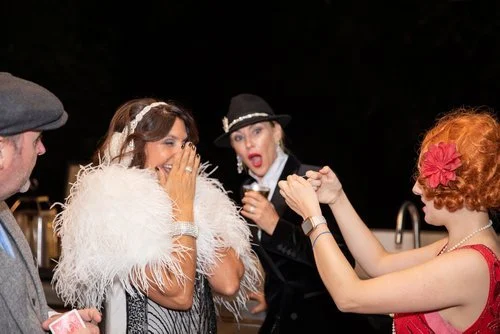
Time Zones and a Hard Finish

Practically important for an international team. A farewell for somebody whose colleagues span continents means an hour that's evening for some and very early for others, and people will join from kitchens and cars.

Pick the least bad hour, say when it will end, and finish on time, since somebody joining at ten at night deserves to know when they can go. A send off that overruns by twenty minutes loses the people furthest away, which is exactly the group who made an effort to be there.

Cost Doesn't Move With the Guest List

Worth knowing for the budget. An online performance costs the same whether thirty or three hundred attend, since there's one performance regardless of how many are watching, and my virtual shows start around fourteen hundred dollars.

For a retirement after a long career, that's usually a modest line against what the occasion warrants, and it reaches everybody who wants to be there rather than only the people who could travel. Set against a leaving gift nobody remembers, it's worth considering where the money does more.

Why Book Magical Katrina

If you're planning a send off, here's my case. I'm a member of the Magic Circle in London and the Academy of Magical Arts in Hollywood, I've earned multiple magic awards, and I've performed for clients including Formula 1, the Olympics, Porsche, Prada, Zapier, and the Ritz Carlton, with appearances on Penn & Teller: Fool Us and Masters of Illusion. I'll build the hour around the person leaving rather than around a format, nothing in it requires anybody to speak who'd rather not, I work in your existing Zoom setup with nothing to install, and my fee is the same whether thirty or three hundred join.

Frequently Asked Questions

What's wrong with a round of speeches?

It's excruciating for anybody self conscious, the tributes start to sound alike after the fourth person, and it leaves the person leaving receiving praise in silence on camera while everybody watches their face. The colleagues who'd find that hardest are frequently the quiet, long serving ones these events are held for.

Should we ask the person what they want?

Yes, and almost nobody does. Some people want the tributes and would be hurt to miss them, while others would rather the hour was everybody together with two short speeches and no spotlight, and asking is itself a kindness.

How should we handle the speaking?

Choose two or three people, tell them beforehand, and ask for two minutes each, since a few speaking well beats fourteen speaking adequately. Then open the chat for everybody else, which lets forty people contribute without a ninety minute call, and people write things they'd never say aloud.

Why book entertainment for a farewell?

Because an hour composed entirely of people being nice about somebody is emotionally one note and leaves the guest of honor nowhere to go except gracious. Something enjoyable in the middle gives everybody, including them, a stretch of simply being part of a group having a good time.

Does this matter more for remote colleagues?

Considerably, since somebody office based gets a pub, a card passed round, and a last week of people stopping by their desk. A distributed colleague gets none of that, so the call is the whole thing, which raises the stakes for somebody who gave fifteen or twenty years.

Who tends to attend these?

More people than you'd expect, including former colleagues who left years ago and people now at other companies. They won't all know each other, so a call connected only by one person needs something to focus on, and the reconnection is frequently the most valuable part of the hour.
How do we handle international colleagues?

Pick the least bad hour, state when it ends, and finish on time, since somebody joining at ten at night deserves to know when they can go. A send off that overruns loses the people furthest away, who are exactly the ones who made an effort.

What does it cost for a big guest list?

The same as for a small one, since there's one performance regardless of how many are watching, and my virtual shows start around fourteen hundred dollars. For a retirement after a long career that's a modest line, and it reaches everybody rather than only those who could travel.

Send Them Off With an Event, Not a Ceremony

A farewell for a remote colleague is the only goodbye they'll get, which is reason enough to design it rather than default to a round of tributes. Ask the person what they'd like, pick two or three speakers and keep them brief, put the rest in the chat, set a finish time and honor it.

Then book a magician for Zoom for the middle of it, so that for twenty minutes everybody including the guest of honor is simply enjoying themselves together, which is a considerably better note to leave a career on than a grid of people saying kind things in turn.

Reach out with your date and a little about the person leaving, and I'll build the hour around them.

Katrina Kroetch
Birthday Party Magician Las Vegas When the Family Works Shifts

Birthday Party Magician Las Vegas When the Family Works Shifts

Standard birthday party advice assumes a Saturday afternoon, two parents who are free, and guests whose families are also free. In Las Vegas that assumption fails constantly, because a large share of this city works hospitality, gaming, and service hours, and Saturday afternoon is when many of those people are at their busiest.

Planning around that is entirely possible and almost nobody writes about it. I'm Magical Katrina, an award winning magician and mentalist, and I want to set out how to plan a party in a shift working household, and what a birthday party magician Las Vegas booking looks like when the schedule isn't standard.

Weekdays Are Genuinely Better Here

Start with the most useful reframe. In most cities a weekday party is a compromise, whereas in Las Vegas it's frequently the option that gets more people there.

A Tuesday afternoon suits a parent working Thursday through Sunday nights, and it suits the guests whose families work the same pattern, which in this city is a substantial proportion of any class list. It's also considerably easier to book: venues have availability, party rooms cost less, and entertainers who are committed on Saturdays are free. If your household works shifts, start by questioning the weekend rather than assuming it.

Ask Before You Pick the Date

Practically the most valuable five minutes. In a school where many families work hospitality hours, the date you choose determines attendance far more than it would elsewhere, and you cannot guess which day works.

A quick message to the parents you most want there, before you commit to anything, tells you what you need to know. Most parents in this city understand the problem immediately and will tell you straight away which days are impossible. That's a far better starting point than an invitation that half your guests regretfully decline.

Shorter Parties Suit Shift Households

Worth considering for the shape of the day. A three hour party is a long commitment for a parent who worked until four in the morning or who starts at six that evening.

Ninety minutes with a clear finish time is kinder to everybody and no worse for the children, who do not measure a party in hours. A tight, well filled ninety minutes is better than a loose three, and for a family where somebody is sleeping before a night shift or getting ready for one, that difference matters considerably.

Plan for Grandparents and Aunts Doing the Handover

Worth being realistic about. In shift working families the person bringing the birthday child's friend may not be that child's parent, and the adults in the room may be a mix of parents, grandparents, aunts, and a neighbour doing somebody a favour.

That's normal here and it's worth planning for rather than being surprised by. Make sure whoever is managing the party knows who belongs to whom, collect a contact number for each child rather than assuming the adult who arrived will be the one collecting, and don't build anything into the afternoon that requires a parent specifically.

Morning Parties Are Underrated

Worth knowing as an option. A late morning party suits a parent who works evenings, suits a parent who finished a night shift and slept, and suits young children considerably better than the middle of the afternoon.

It's also the easiest slot to book anywhere in this city. If your household's rhythm makes evenings impossible, a party from ten thirty to noon with food that works at that hour is a perfectly good party, and the children will not notice anything unusual about it at all.

Keep the Requirements Low

Practically important when a parent is tired. A party needing setup, assembly, a run of show, or somebody managing a schedule is a lot to ask of a household where somebody is working either side of it.

Entertainment that needs no stage, no power, no sound, and no preparation from you removes a whole category of work. Close up magic arrives, performs in whatever space you've got, and leaves, which for a parent fitting a party between shifts is worth more than it sounds. Ask any supplier plainly what they need from you, and be wary of anything that needs much.

Vegas Venues Suit This Better Than Most Cities

Worth knowing when choosing where. This city has an unusual amount of party room availability, community space, and casual venue capacity at weekday and morning times, precisely because the local economy doesn't run on a standard week.

That means a weekday or morning party here is easier to arrange than it would be almost anywhere else, and frequently cheaper. If you've been treating a non weekend party as a sacrifice, the local market is set up to make it the easier option rather than the harder one.

Don't Apologize for the Schedule

Worth saying. Parents in shift working households sometimes feel their child is getting a lesser party because it's on a Wednesday morning rather than a Saturday afternoon, and children do not experience it that way at all.

A seven year old at a party with their friends, cake, and something genuinely good happening is at a birthday party. The day of the week is an adult concern entirely. Plan the version that gets the most people there and works for your household, and the child will remember the party rather than the calendar.

A Note on "Local vs. Traveling In"

Worth knowing: I'm based in the Los Angeles area and travel to Las Vegas regularly. Travel is discussed openly and factored into the quote rather than being your problem to arrange, and weekday and morning dates are generally easier to arrange than contested weekend afternoons.

Why Book Magical Katrina

If you're planning around shifts, here's my case. I've earned multiple magic awards including a Family Entertainer of the Year honour, I've appeared on Blippi as a performer and magic consultant, and I've been seen on Penn & Teller: Fool Us and Masters of Illusion. I need no stage, power, or setup so there's nothing for you to arrange, I perform close up in whatever space you have, I work weekdays and mornings as readily as weekend afternoons, and I keep to the time you've asked for exactly.

Frequently Asked Questions

Is a weekday party a compromise?

Not in this city, where it frequently gets more people there, since a Tuesday afternoon suits a parent working Thursday through Sunday nights and the guests whose families work the same pattern. It's also easier and cheaper to book, with venues available and entertainers free.

How do we pick the date?

Ask the parents you most want there before committing to anything, since in a school where many families work hospitality hours the date determines attendance more than it would elsewhere. Most parents here understand immediately and will tell you which days are impossible.

How long should the party be?

Ninety minutes with a clear finish time, since a three hour party is a long commitment for somebody who worked until four in the morning or starts at six that evening. Children don't measure a party in hours, and a well filled ninety minutes beats a loose three.

What if parents aren't the ones bringing the children?

Plan for it, since in shift working families the adult arriving may be a grandparent, an aunt, or a neighbour doing a favour. Collect a contact number for each child rather than assuming the adult who arrived will collect, and don't build anything in that requires a parent specifically.

Does a morning party work?

Very well, since it suits a parent who works evenings, one who finished a night shift and slept, and young children better than mid afternoon. Ten thirty to noon with food that works at that hour is a perfectly good party and the children notice nothing unusual.

How do we keep it simple?

Choose things that need nothing from you, since a party requiring setup, assembly, or somebody managing a schedule is a lot to ask when somebody is working either side of it. Close up magic needs no stage, power, or preparation, so ask any supplier plainly what they need.

Are weekday venues actually available here?

More than in most cities, since the local economy doesn't run on a standard week, so party rooms, community spaces, and casual venues have weekday and morning availability and frequently charge less. A non weekend party here is the easier option rather than the harder one.

Will my child mind that it isn't a Saturday?

No, since the day of the week is entirely an adult concern. A child at a party with their friends, cake, and something genuinely good happening is at a birthday party, and they'll remember the party rather than the calendar.

Plan the Party Your Household Can Actually Have

A birthday party magician Las Vegas booking works just as well on a Tuesday morning as on a Saturday afternoon, and in a city that runs on shifts, the midweek version frequently gets more of your child's friends through the door.

Ask the families you want there before you pick a date, keep it to ninety minutes, choose a morning if that suits your household, collect contact numbers rather than assuming, and pick suppliers who need nothing from you. Then enjoy it, because your child certainly will.

Reach out with the date you're considering, and I'll tell you straight away if I'm free.

Katrina Kroetch
Magician for Birthday Party Las Vegas When Parents Are Separated

Magician for Birthday Party Las Vegas When Parents Are Separated

A child's birthday party hosted by separated parents has everything a normal party has plus a layer nobody writes about: two households coordinating, adults who may find the afternoon difficult, extended family on both sides, and a child who notices considerably more than anybody assumes.

It's entirely doable and a few decisions make it much easier. I'm Magical Katrina, an award winning magician and mentalist, and I want to set out what a magician for birthday party Las Vegas booking does at a party like this, and what's worth settling beforehand.

The Child's Day Is the Only Objective

Start with the thing that resolves most disagreements. Everything about the party should be decided by what makes the day good for the birthday child, and that single test settles the great majority of questions about guest lists, timings, and who stands where.

It also makes the awkward conversations shorter. Not whether it's fair, not what happened last year, but whether this choice makes the afternoon better for a seven year old. Most parents in this situation already know that and find it genuinely useful to have said it out loud to each other before planning begins.

One Party Is Usually Better Than Two

Worth considering, since two is the common default. Separate parties at each household can work and they ask something of the child: two sets of guests, two celebrations, and an awareness that their birthday is organized around adult arrangements.

One party, if the adults can manage it, is simpler for the child and frequently simpler for everybody. If that genuinely isn't possible, two is fine and the thing to avoid is a competition between them, since a child comparing which parent's party was better has been put in a position no seven year old should be in.

Decide the Roles Before the Day

Practically the most useful preparation. Parties generate a constant stream of small decisions: who greets arriving guests, who manages the cake, who handles a child who's upset, who talks to the entertainer, who takes photographs.

Settling that in advance prevents the two of you negotiating in front of guests, which is the thing children remember from difficult parties. It doesn't need to be formal. A short exchange of messages the week before covering who's doing what removes nearly all of the friction from the afternoon.

A Neutral Venue Removes a Lot of It

Worth thinking about, since the location carries weight. A party at one parent's home makes the other a guest in a way that's uncomfortable for the adults and visible to the child.

A neutral venue avoids that entirely: a party room, a community space, a restaurant, or a hotel suite if family are visiting. It costs more than a house and it removes a whole category of difficulty. For a first party after a separation particularly, a venue that belongs to neither household is frequently worth the money.

Give the Adults Something to Look At

The quietly useful function of entertainment at a party like this. Adults who find each other's company difficult manage much better when there's something in the room other than each other.

An hour where everybody's attention is on the same thing is an hour where nobody has to make conversation, and parents in this situation consistently say that was the easiest part of the afternoon. It also gives the extended family on both sides, who may not have met or may not get on, something to be doing. That's not the main reason to book somebody, and it's a real benefit.

The Child Will Be Watching the Adults

Worth being conscious of. Children at parties like this spend a surprising amount of attention monitoring whether the grown ups are all right, and a child doing that isn't enjoying their party.

Anything that occupies the room properly helps, because a child whose attention is genuinely captured stops checking. That's the actual value of good entertainment at this particular kind of party: not that it fills an hour, but that it gives a watchful child permission to forget about the adults and be seven.

Tell Your Performer the Situation

Worth doing, briefly, when you book. You don't owe anybody your family history and one sentence helps considerably: that the parents are separated, who's hosting, who to take direction from on the day, and anything about the child worth knowing.

A performer with that information handles the afternoon differently. They'll know not to ask a child to bring up both parents together, not to make assumptions about who belongs to whom, and who to check with if something needs deciding. That's a thirty second conversation that prevents an awkward moment.

Las Vegas Venues Make the Neutral Option Easy

Practically relevant here. Las Vegas has an unusual abundance of party rooms, community spaces, and hotel suites available at reasonable notice, which makes the neutral venue option considerably easier than it is in many cities.

A suite works particularly well if family are flying in, since it's self contained, air conditioned, and needs nothing installed. Close up magic requires no stage, power, or setup, so a suite or a party room works exactly as it is, which keeps the day simple when the rest of the arrangements already have moving parts.

Why Book Magical Katrina

If you're planning a party in this situation, here's my case. I've earned multiple magic awards including a Family Entertainer of the Year honor, I've appeared on Blippi as a performer and magic consultant, and I've been seen on Penn & Teller: Fool Us and Masters of Illusion. I perform close up among the children so any room works as it is, I'll take direction from whoever you tell me to, I won't put the birthday child in any position involving the adults, and I'm used to rooms where the grown ups appreciate something to look at.

Frequently Asked Questions

How do we settle disagreements about the party?

Use one test: does this choice make the day better for the birthday child. That settles most questions about guest lists, timings, and arrangements, and it makes the conversations shorter because it's not about fairness or last year.

One party or two?

One is usually better for the child if the adults can manage it, since two sets of guests and two celebrations asks a child to notice that their birthday is organized around adult arrangements. If two is necessary that's fine, and the thing to avoid is any sense of competition between them.

What should we agree beforehand?

Who greets guests, who manages the cake, who handles an upset child, who talks to the entertainer, and who takes photographs. Settling that prevents negotiating in front of guests, which is what children remember from difficult parties, and a few messages the week before is enough.

Does the venue matter?

More than you'd think, since a party at one parent's home makes the other a guest in a way that's uncomfortable for adults and visible to the child. A neutral venue removes that entirely, and for a first party after a separation it's frequently worth the extra cost.

Does entertainment actually help the adults?

Yes, and parents in this situation say so consistently. Adults who find each other's company difficult manage much better when there's something in the room other than each other, and an hour where attention is on the same thing is an hour nobody has to make conversation.

What does it do for the child?

It lets them stop watching the grown ups. Children at parties like this spend real attention monitoring whether the adults are all right, and a child whose attention is genuinely captured forgets to check, which is the actual value of good entertainment here.

What should we tell the performer?

One sentence is plenty: that the parents are separated, who's hosting, who to take direction from on the day, and anything about the child worth knowing. That prevents a performer asking the child to bring up both parents or making assumptions about who belongs to whom.

Will it work in a hotel suite or party room?

Yes, since close up magic needs no stage, power, or setup and works in the room exactly as it is. A suite suits this well if family are flying in, and Las Vegas has more party rooms and suites available at short notice than most cities.

Make It Easy to Be Seven

A birthday party across two households works when the adults decide a few things in advance: one test for every decision, roles settled before the day, a venue that belongs to neither home, and one sentence to whoever you've booked.

A magician for birthday party Las Vegas booking does something specific at a party like this. It gives the adults something to look at other than each other, and it gives a watchful child permission to stop monitoring the room and simply enjoy their birthday, which is the whole point of the afternoon.

Reach out with your date and a line about the arrangements, and I'll fit in with whatever you've planned.

Katrina Kroetch
Activities for Women's Empowerment That Men Actually Attend

Activities for Women's Empowerment That Men Actually Attend

Most women's empowerment programming is attended almost entirely by women. The invitation goes to everybody, the room fills with the same committed group, and the senior people who make hiring and promotion decisions send apologies or simply don't reply.

That attendance pattern is the central weakness of this work, and it's a design problem rather than an attitude problem. I'm Magical Katrina, an award winning magician and mentalist, and I want to offer activities for women's empowerment built to reach a mixed room rather than a self selecting one.

The People Who Need to Hear It Aren't There

Start with the uncomfortable arithmetic. If your organization's decisions about who gets promoted are made largely by men, and your programming is attended largely by women, the programming is reaching the people affected by the problem rather than the people who can change it.

That doesn't make the events worthless, since the network and the solidarity matter in their own right. It does mean a program measured on whether anything changes has to solve attendance first, because no amount of excellent content delivered to the wrong room moves a promotion rate.

The Framing Decides Who Comes

The most useful single change. An event titled as being for women tells everybody else it isn't for them, and they are not being obstructive when they conclude that, they're reading the invitation accurately.

An event about how promotion decisions get made, how sponsorship works, or how a particular team builds its pipeline is about the organization, and the whole organization can attend without anybody feeling they've wandered into somebody else's meeting. The content need not change at all. What changes is who believes they're invited, which is the thing you were trying to fix.

Nobody Comes to Be Told They're the Problem

Worth being honest about, since this is the real barrier. Plenty of men avoid these events because they expect to spend an hour as the implied subject of a critique, and whether or not that expectation is fair, it determines attendance.

An event people expect to feel accused at will be attended by the people who already agree. If you want a mixed room, the programming has to be genuinely useful to everybody in it rather than an argument delivered to a captive audience. That's not softening the message, it's the difference between the message being heard and being avoided.

Make It Worth Attending on Its Own Terms

Practically the most effective lever. People attend things they expect to enjoy or to learn from, and a lunchtime session with a panel and a slide deck competes poorly against the work on somebody's desk.

Something genuinely good in the program changes the calculation for the person who was going to skip it. That's not a trick, it's how every well attended internal event works, and it's why the organizations getting mixed attendance at this programming are usually the ones putting real effort into the hour rather than relying on the importance of the subject.

Put It Where People Already Are

Worth considering, since optional attendance is the whole problem. A session attached to an existing all hands, a team day, or a conference agenda reaches everybody, whereas a standalone invitation reaches whoever opts in.

That removes the self selection entirely. It also sends a different signal, since programming inside the main agenda says this is company business while a lunchtime optional session says this is a side interest for the people who care about it. If you only change one thing, change where it sits.

Seniority in the Room Changes Everything

Worth arranging deliberately. Attendance at optional events follows the most senior person who comes, and one director visibly attending brings more of their team than any number of reminder emails.

Ask specific senior people to attend rather than inviting them, and ask them to be present rather than to speak, since a leader sitting in the audience communicates something a leader delivering opening remarks and then leaving does not. This takes two conversations and it's the highest leverage thing on the list.

Why Magic Suits a Mixed Room

Worth explaining, since it's the practical reason I get booked for this. A speaker on this subject has to calibrate carefully for a room containing people at different levels of agreement, and that calibration is difficult and frequently lands badly in one direction or the other.

Magic sidesteps it. Everybody in the room experiences the same thing, nobody is positioned as the problem or the beneficiary, and the hour is good for all of them equally. Then whatever message you want to deliver lands on a warm room that chose to be there, which is a considerably better position than a cold room that felt obliged.

And Being the Performer Is Part of It

Worth saying plainly, with the usual caveat. I'm booked for these events because I'm genuinely good at this, which is the only reason worth booking anybody, and the fact that I'm a woman in a field that is overwhelmingly male is a bonus on top rather than the argument.

It does mean something, though, and it means it without anybody having to say it. A mixed room watching somebody be excellent at a thing they didn't expect her to be excellent at has absorbed the point of your programming without a slide being shown, which is frequently more effective than the slide would have been.

Why Book Magical Katrina

If you're designing this programming, here's my case. I'm a member of the Magic Circle in London and the Academy of Magical Arts in Hollywood, one of relatively few women to hold both, I've earned multiple magic awards, and I've performed for clients including Formula 1, the Olympics, Porsche, Prada, Zapier, and the Ritz Carlton, with appearances on Penn & Teller: Fool Us and Masters of Illusion. I work mixed rooms constantly, nothing in what I do positions anybody as the problem, I need no stage or setup so a session can sit inside an existing agenda, and I'm happy to speak to the subject or simply be the reason people came.

Frequently Asked Questions

Why does attendance matter so much?

Because if promotion decisions are made largely by men and your programming is attended largely by women, you're reaching the people affected rather than the people who can change things. The network matters in its own right, but a program measured on outcomes has to solve attendance first.

What's the single most useful change?

The framing. An event titled as being for women tells everybody else it isn't for them, whereas an event about how promotion decisions get made or how sponsorship works is about the organization. The content needn't change, only who believes they're invited.

Why don't men attend?

Frequently because they expect to spend an hour as the implied subject of a critique, and whether or not that's fair, it determines attendance. An event people expect to feel accused at gets attended by the people who already agree.

Does that mean softening the message?

No, it means making the hour genuinely useful to everybody in the room rather than delivering an argument to a captive audience. That's the difference between a message being heard and being avoided, which is not the same as diluting it.

Where should the session sit?

Inside something that already exists: an all hands, a team day, or a conference agenda, which reaches everybody rather than whoever opts in. It also signals that this is company business rather than a side interest for the people who care about it.

How do we get senior people there?

Ask specific individuals rather than inviting them generally, and ask them to be present rather than to speak, since attendance follows the most senior person who comes. A leader sitting in the audience says something that opening remarks followed by leaving does not.

Why does magic work for a mixed room?

Because a speaker has to calibrate for a room at different levels of agreement and that frequently lands badly in one direction. Magic sidesteps it, since everybody experiences the same thing, nobody is positioned as the problem, and your message then lands on a warm room.

Does it matter that you're a woman?

It's a bonus rather than the argument, and you should book me because I'm good at this. It does communicate something without anybody saying it, since a mixed room watching somebody be excellent at a thing they didn't expect has absorbed the point without a slide.

Design for the Room You Need, Not the One That Shows Up

The most useful activities for women's empowerment are the ones the whole organization attends, because the people who make decisions about progression are the people the programming needs to reach. Frame the session as being about the organization rather than about women, put it inside an agenda people are already attending, ask named senior people to be in the room, and make the hour genuinely worth turning up to.

Do that and you stop running an excellent event for the forty people who were already convinced.

Reach out with your date and who you're hoping to reach, and I'll tell you how I'd build the session.

Katrina Kroetch
Strolling Magician Los Angeles for Stadium and Arena Suites

Strolling Magician Los Angeles for Stadium and Arena Suites

Corporate suites at the stadiums and arenas around Los Angeles are bought to entertain clients, and the thing most companies discover is that the game does less relationship work than they expected. Guests watch, make small talk about the score, and leave having had a pleasant evening with nobody having had a real conversation.

The suite is an excellent hosting asset and it needs a little designing. I'm Magical Katrina, an award winning magician and mentalist, and I want to set out what a strolling magician Los Angeles booking does in a suite, and why it suits that setting better than it sounds.

The Game Is Not the Program

Start with the honest observation. A suite evening appears to be fully programmed, since there are three hours of sport in front of you, which is exactly why nothing else gets planned.

But your guests didn't come to watch quietly, they came because you invited them, and the sport is the pretext. The hours before the start and the stretches when the match isn't close are where the actual hosting happens, and those are the parts nobody designs. The companies getting real value from a suite are the ones treating it as an event with a game attached.

Suites Are Small, Which Is the Advantage

Worth understanding, since it changes the format entirely. A suite holds somewhere between twelve and thirty people, which is far too few for anything resembling a show and precisely the right number for close up work.

At that size a performer spends genuine time with every single guest rather than running a circuit, which is a substantially better experience than the same booking at a large reception. For a host whose guest list is a dozen clients who each matter individually, that's the right use of the format and the version your guests will remember.

Nobody Has to Look Away From the Match

Practically the most important point for a skeptical host. The worry is that entertainment competes with the game, and with the right format it simply doesn't.

Close up magic happens in the group that's already standing at the back with a drink, during the first hour before kickoff, between periods, in the fourth quarter of a game that's already decided. It never asks anybody to turn around, and it stops entirely when something is happening on the field. A performer who watches the game as closely as your guests do is the one who gets this right.

Your Team Needs an Opening Too

The underrated benefit. Your own people in that suite have a job: talk properly to the clients they invited. Approaching a guest who's watching the game is awkward, and the default is standing near somebody for two hours saying very little.

Something in the room creates natural openings, since two people who just reacted to the same thing have an obvious first sentence available. For an evening whose entire purpose is relationships, that's structural rather than incidental, and it's why a suite with something happening in it produces more conversations than one with only sport.

Guests Arrive Across the First Hour

Worth planning for in this city particularly. Traffic to any Los Angeles venue on a weekday evening is unpredictable, and your guests arrive from twenty minutes before the start to twenty minutes after it.

Something that works from the first arrivals suits that, since the clients who left early and got there on time get hosted rather than standing with your team waiting for the rest. Nothing should be scheduled for a precise moment, because at an LA venue a meaningful share of your list will still be on the freeway.

Suites Have No Infrastructure You Can Use

Practically relevant for what you can book. A suite has a few sockets, a television, catering delivered on a schedule, and no stage, no sound system you'd want, and no space for anything to be set up.

Close up magic needs none of it, works in the suite exactly as it is, and leaves nothing behind for the venue staff. For a space this small with this little flexibility, it's genuinely the only entertainment format that fits, which is worth knowing before you start asking about alternatives.

Mixed Guest Lists Need Something That Crosses Them

Worth considering, since suite lists usually are mixed. You may have clients who follow the sport closely, clients who accepted because you invited them, somebody's partner, and a junior colleague who came to help host.

For the guests who aren't particularly interested in the game, three hours is a long evening, and those are frequently the people you most want to leave happy. Magic requires no interest in sport, no shared references, and no knowledge of anything, which means the guest who came to be polite has a genuinely good time rather than a patient one.

Season Suites Need Variety

Worth planning for if you host repeatedly. A company with a season suite entertains the same clients across the year, and the fourth visit is noticeably less special than the first unless something changes.

Rotating what you put in the suite is the straightforward fix, and entertainment on some nights rather than every night works well. If you host twenty times a season, picking the four or five evenings that matter most and making those different is better than doing nothing all season or something every time.

Why Book Magical Katrina

If you're hosting in a suite, here's my case. I'm a member of the Magic Circle in London and the Academy of Magical Arts in Hollywood, I've earned multiple magic awards, and I've performed for clients including Formula 1, the Olympics, Porsche, Prada, and the Ritz Carlton, with appearances on Penn & Teller: Fool Us and Masters of Illusion. I'm based in the LA area with no travel costs in your quote, I need no stage, power, or setup so a suite works exactly as it is, I work around the game rather than against it, and I start with whoever arrived first.

Frequently Asked Questions

Doesn't the game already fill the evening?

It appears to, which is why nothing else gets planned, but your guests came because you invited them and the sport is the pretext. The hours before the start and the stretches when the match isn't close are where the hosting happens, and those are the parts nobody designs.

Isn't a suite too small for entertainment?

It's the ideal size for close up work, at somewhere between twelve and thirty people. A performer spends real time with every guest rather than running a circuit, which for a host whose list is a dozen individually important clients is the right use of the format.

Will it compete with the match?

No, with the right format. Close up magic happens in the group already standing at the back, before kickoff, between periods, or in a fourth quarter that's decided, and it stops entirely when something is happening on the field.

How does it help our own team?

It creates openings, since approaching a client who's watching the game is awkward and the default is standing near somebody for two hours saying little. Two people who just reacted to the same thing have an obvious first sentence, which for a relationship evening is structural.

Our guests arrive late. Does that matter?

It's guaranteed in this city on a weekday, with arrivals from twenty minutes before the start to twenty minutes after. Something that works from the first arrivals means the clients who got there on time are hosted rather than waiting with your team.

What can a suite actually accommodate?

Very little, which is the point. There's no stage, no sound system you'd want, and no space for a setup, so close up magic is genuinely the only format that fits, works in the suite as it is, and leaves nothing for venue staff.

Half our guests don't follow the sport. Is that a problem?

They're frequently the people you most want to leave happy, and for them three hours is a long evening. Magic requires no interest in sport and no shared references, so the guest who came to be polite has a good time rather than a patient one.

We have a season suite. Should we do this every game?

No, rotate it. The fourth visit is less special than the first unless something changes, so if you host twenty times a season, pick the four or five evenings that matter most and make those different rather than doing something every time.

Treat the Suite as an Event With a Game Attached

A corporate suite is bought for relationships and frequently delivers a pleasant evening instead, because the sport looks like a program and nothing else gets planned. A strolling magician Los Angeles booking changes that: it works in a room of twenty with nothing installed, it never asks anybody to look away from the match, it hands your team an opening with the clients they invited, and it gives the guests who don't follow the sport a reason to be glad they came.

If you host all season, pick the nights that matter and make those the ones people describe afterwards.

Reach out with your venue and date, and I'll tell you how I'd work the suite.

Katrina Kroetch
Ideas for a Company Christmas Party in Your Own Office

Ideas for a Company Christmas Party in Your Own Office

Plenty of companies hold the December party in their own office, usually because a venue would take most of the budget and the office is free. It's a sensible decision and it comes with one specific risk: the room where people answer emails all year does not automatically feel like an occasion just because somebody put up lights.

That's a solvable problem, and solving it is mostly about a few deliberate choices. I'm Magical Katrina, an award winning magician and mentalist, and I want to offer ideas for company Christmas party planning when the venue is the place everybody works.

The Money You Saved Should Be Visible

Start with the principle that makes this work. An office party costs a fraction of a venue party, which means the budget can go into things people actually experience rather than into room hire and a minimum spend on a set menu.

That's the argument for doing it this way, and it only holds if you spend the difference. An office party with the same catering you'd order for a lunch meeting hasn't saved money, it's just a smaller party. Put the saving into food people are pleased to see and one thing they didn't expect, and the office version comes out ahead of the venue version rather than behind it.

Change the Space More Than You Think You Need To

Practically the most important decision. Lights and a tree in a room otherwise exactly as people left it on Friday reads as the office with decorations, and people behave accordingly.

Move furniture properly. Clear the desks in whatever area you're using, change the lighting if you can, shut the doors to the working parts of the building, and set the food somewhere people wouldn't normally eat. The aim is that somebody walking in doesn't immediately see their own monitor, because the moment they do, they're at work.

People Will Leave Early From Their Own Building

The honest risk, and the reason to plan the shape carefully. At a venue, guests have travelled, committed to the evening, and will stay. In the office, the exit is the door they use every day and home is the journey they already know.

That argues for starting at a time that follows naturally from the working day rather than leaving a gap, since people who go home to change frequently don't come back. It also argues for having something worth staying for in the first hour rather than saving everything for later, because your room will be at its fullest early.

Decide If It's Still a Workplace That Evening

Worth settling rather than assuming. An office party has an ambiguity a venue party doesn't: people are in the building where they work, with their manager, and nobody is quite sure which rules apply.

Most people find that answers itself, but it's worth being clear with yourself about what the evening is. If senior people are visibly treating it as a work event, everybody else will too, and the party will be polite. If the point is for your team to actually enjoy themselves, the leadership behaving like guests rather than hosts is what makes that possible.

Program Something, Because the Room Won't Carry Itself

Worth planning for. A good venue does some work for you: the space is interesting, there's a bar, there's somewhere to move to. An office has one room, a table of food, and whatever you've put in it.

Without something happening, an office party is a group of colleagues standing in the room they stand in all day, having the conversations they have all day, slightly earlier in the evening. Something genuinely good in that space is what makes it an event, and in an office it's doing more of the work than it would at a venue.

Your Office Has No Stage, No Sound, No Power to Spare

Practically relevant for what you can book. An open plan floor or a boardroom has no stage, no usable sound system, sockets already full of monitors, and a ceiling that makes any amplified sound unpleasant.

Close up magic needs none of it, works in the room exactly as it is, and leaves nothing to clear before people arrive for work in the morning. For a party where the same space has to function as an office at nine the next day, entertainment with nothing to install and nothing to strike is the practical choice rather than merely a convenient one.

Think About Who Isn't Comfortable

Worth considering, since an office party has its own version of this. Your colleagues who don't drink, who are new, who work in a different part of the building, or who are the only person from their team in that evening are all easier to leave standing alone in an office than at a venue, where moving around is natural.

Something that circulates reaches those people. So does seating, so does food that requires standing somewhere specific, and so does somebody senior deliberately talking to the people on the edge of the room. The office version makes isolation slightly more likely, so it's worth planning against.

Someone Has to Clear Up

Practically important and routinely forgotten. At a venue, the evening ends and you go home. In your office, somebody is responsible for the room being usable in the morning, and if you haven't decided who, it'll be whoever is left or the facilities person arriving early.

Settle it in advance, pay somebody if you can, and choose suppliers who leave nothing behind. It's not a glamorous planning item and it's the one that determines whether the people who organized the party remember it fondly.

Why Book Magical Katrina

If your party is in your own office, here's my case. I'm a member of the Magic Circle in London and the Academy of Magical Arts in Hollywood, I've earned multiple magic awards, and I've performed for clients including Formula 1, the Olympics, Porsche, Prada, Zapier, and the Ritz Carlton, with appearances on Penn & Teller: Fool Us and Masters of Illusion. I need no stage, power, sound, or setup so your floor works exactly as it is, I leave nothing to clear before Monday, I work from the first arrivals rather than a full room, and I'll deliberately reach the people standing at the edges.

Frequently Asked Questions

Is an office party a cheap compromise?

Only if you don't spend the saving. It costs a fraction of a venue party, which means the budget can go into things people experience rather than room hire and a set menu, but an office party with meeting room catering is just a smaller party.

How do we stop it feeling like work?

Change the space more than feels necessary: move furniture properly, clear the desks in the area you're using, change the lighting, shut the doors to the working parts of the building, and put the food somewhere people wouldn't normally eat. If somebody walks in and sees their own monitor, they're at work.

Why do people leave early?

Because the exit is the door they use daily and home is a journey they already know, unlike at a venue where they've travelled and committed. Start at a time that follows on from the working day rather than leaving a gap, since people who go home to change frequently don't come back.

When should we program the main thing?

Early, since your room will be at its fullest in the first hour and saving everything for later means a thinner audience for it. Something worth staying for early also gives people a reason not to drift off at seven.

Do we need to book entertainment at all?

In an office, more than at a venue. A good venue does some work for you with an interesting space and somewhere to move to, whereas an office is one room and a table of food, so without something happening it's colleagues standing where they stand all day.

Will anything work in an open plan office?

Close up magic will, since it needs no stage, usable sound, spare power, or setup and leaves nothing to clear before nine the next morning. Amplified formats are a poor fit, because office ceilings make sound unpleasant and your sockets are already full.

How do we include everybody?

Plan against isolation deliberately, since an office makes it easier to leave somebody standing alone than a venue where moving around is natural. Something that circulates helps, as does seating, and as does somebody senior making a point of talking to the people at the edge of the room.

What's the thing people forget?

Clearing up, since somebody has to make the room usable in the morning and if you haven't decided who it'll be whoever is left or the facilities person arriving early. Settle it in advance and choose suppliers who leave nothing behind.

Make the Room Feel Like Somewhere Else

The best ideas for company Christmas party planning in your own office all come down to the same thing: the space has to stop feeling like the space. Change it properly rather than decorating it, spend the money you saved on things people experience, start early and program early because the room thins out, and decide in advance who is clearing up.

Then put something genuinely good in the middle of it, since in an office that's carrying more of the evening than it would anywhere else.

Reach out with your date and roughly how many are coming, and I'll tell you how I'd work your floor.

Katrina Kroetch
Strolling Magician Las Vegas for Incentive Trips

Strolling Magician Las Vegas for Incentive Trips

An incentive trip is not a conference with better weather. The attendees qualified for it, they have been told all year that this is the reward, and a meaningful number of them brought a partner who has heard about it for months and has their own expectations of the week.

That raises the standard considerably on everything you program. I'm Magical Katrina, an award winning magician and mentalist, and I want to set out what a strolling magician Las Vegas booking contributes to an incentive program, and what makes this kind of trip different to plan for.

They Earned This, Which Changes Everything

Start with the thing that separates incentive travel from every other corporate event. Attendees at a conference were sent, whereas attendees on an incentive trip competed for a place and won.

That means anything that feels cheap, generic, or like something they'd get at a sales meeting undercuts the entire premise of the program. The trip is the proof that the company rewards performance, and a reward that feels ordinary sends a message about what the achievement was worth. Everything on the itinerary is read through that lens, including the entertainment.

Partners Are Half Your Audience

The planning fact most programs underweight. A large proportion of qualifiers bring a spouse or partner, and that person has no colleagues in the room, no shared references, and no interest in anything that turns into shop talk.

Programming aimed at the sales organization leaves them standing at the edge. Magic crosses that completely, since astonishment requires no knowledge of the company, the quarter, or anybody's numbers, and a performer moves between a group of qualifiers and a table of partners without changing anything. For an audience that's half outsiders by design, that matters more than it does anywhere else.

The Awards Dinner Is the Centre of the Week

Worth getting right above everything else. Most incentive programs build to a formal dinner where the top performers are recognized, and that evening is what people remember and describe when they get home.

The risk is a long sequence of categories where attention drops after the first few while everybody waits for their name. Strolling between courses or something in the gaps between award blocks resets the room, so the later recognitions land with real energy rather than politeness. If you program one thing properly across the week, this is the evening.

Qualifiers Don't All Know Each Other

The structural problem worth solving. Top performers come from different regions, different divisions, and sometimes different acquired companies, and plenty of them have never met despite appearing on the same leaderboard all year.

A week together is supposed to produce those relationships, and left alone the room sorts by region within an hour. Something moving through a reception gives strangers an opening, which is how two people who were names on a dashboard become colleagues who call each other. For a sales organization, that network is a genuine return on an expensive week.

Free Time Is the Point, So Don't Overfill It

Worth saying, since the instinct runs the other way. People who earned a trip to Las Vegas want some of it to themselves, and an itinerary scheduled from eight in the morning turns a reward into an obligation.

The good programs have a small number of excellent moments and a lot of open time. That argues for entertainment that attaches to things already happening, a welcome reception, a dinner, a hospitality suite, rather than requiring its own slot on an already crowded schedule. Strolling fits that shape exactly, since it adds nothing to the itinerary.

Suites and Receptions, Not Ballrooms

Practically relevant for format. A great deal of incentive programming happens in hospitality suites, on terraces, at a restaurant buyout, or in a reception before the dinner rather than in a ballroom with a stage.

Close up magic needs no stage, power, sound, or setup and works in any of those exactly as it is, which suits a program moving between venues across several days. For a hospitality suite on the first evening, where there's no production and no technical support at all, it's the only entertainment format that works without arrangements.

Arrivals Are Spread Across a Whole Day

Worth planning for, since qualifiers fly in from everywhere. People land throughout the first day, go to their rooms, and come down to the welcome reception at different times across two hours.

Something that works from the first arrivals suits that, so the people who got in at two have a proper evening rather than standing with the three others who arrived early. The first night sets the tone for the week, and a thin opening reception is a poor start to something people competed all year to attend.

Tell Your Performer Who's in the Room

Practically useful. An incentive group has a specific composition: qualifiers, partners, a handful of executives who flew in for the dinner, and sometimes customers or channel partners mixed in.

A performer who knows that works the room accordingly, spending time with the partners who don't know anybody, recognizing the people being honored that evening, and staying clear of whatever executive conversation is happening in the corner. That briefing takes five minutes and makes a visible difference to how the evening runs.

A Note on "Local vs. Traveling In"

Worth knowing: I'm based in the Los Angeles area and travel to Las Vegas regularly for corporate events. Travel is discussed openly and factored into the quote rather than being your problem to arrange, and for a multi day program it's straightforward to cover more than one evening.

Why Book Magical Katrina

If you're running an incentive program, here's my case. I'm a member of the Magic Circle in London and the Academy of Magical Arts in Hollywood, I've earned multiple magic awards, and I've performed for clients including Formula 1, the Olympics, Porsche, Prada, and the Ritz Carlton, with appearances on Penn & Teller: Fool Us and Masters of Illusion. I work qualifiers and partners equally rather than pitching at the sales team, I need no stage, power, or sound so a hospitality suite works as it is, I add nothing to your itinerary since I attach to events already happening, and I can cover several evenings of a multi day program.

Frequently Asked Questions

How is an incentive trip different from a conference?

The attendees competed for a place and won rather than being sent, so anything generic undercuts the premise of the program. The trip is proof that the company rewards performance, and a reward that feels ordinary says something about what the achievement was worth.

What about the partners who come along?

They're half your audience and the group most programs underweight, since they have no colleagues in the room and no interest in shop talk. Magic requires no knowledge of the company or the numbers, so a performer works qualifiers and partners the same way without changing anything.

Which evening matters most?

The awards dinner, since that's what people describe when they get home. The risk is attention dropping after the first few categories while everybody waits for their name, so something between courses or between award blocks resets the room and the later recognitions land properly.

What problem does it solve during the week?

Qualifiers not knowing each other, since top performers come from different regions and divisions and plenty have never met despite being on the same leaderboard. Something moving through a reception gives strangers an opening, which turns names on a dashboard into colleagues who call each other.

Shouldn't we fill the itinerary?

No, since people who earned a trip want some of it to themselves and a schedule running from eight turns a reward into an obligation. Good programs have a few excellent moments and plenty of open time, which argues for entertainment attached to events already happening rather than taking its own slot.

Will it work in a hospitality suite?

Yes, since close up magic needs no stage, power, sound, or setup and works in a suite, on a terrace, or at a restaurant buyout exactly as it is. That suits a program moving between venues with no production or technical support.

Our group arrives across the whole first day. Does that matter?

It's normal and worth planning for, since qualifiers fly in from everywhere and come down to the welcome reception across two hours. Something that works from the first arrivals means early guests get a proper evening, and the first night sets the tone for the week.

What should we tell you beforehand?

Who's in the room: qualifiers, partners, executives flying in for the dinner, and any customers or channel partners mixed in. That briefing takes five minutes and lets me spend time with the partners who know nobody, recognize the people being honored, and stay clear of the executive conversation in the corner.

Program It Like a Reward, Not a Meeting

An incentive trip is judged by people who earned it and by partners who've heard about it all year, which sets a higher bar than any conference. A strolling magician Las Vegas booking fits that brief: it works for qualifiers and partners equally, it resets an awards dinner between categories, it gives top performers from different regions a reason to talk, and it attaches to the evenings you already have rather than filling the itinerary further.

Get the awards dinner and the first reception right, leave the rest of the week open, and the trip does what you designed it to do.

Reach out with your dates and program, and I'll tell you which evenings I'd work.

Katrina Kroetch
San Francisco Magician for January Healthcare and Biotech Week

San Francisco Magician for January Healthcare and Biotech Week

For one week every January, San Francisco fills with the healthcare and life sciences industry. The main investor conference is the reason everybody flies in, but the actual business happens across hundreds of satellite events: hotel suite receptions, restaurant buyouts near Union Square, breakfast meetings, and investor dinners scheduled back to back from seven in the morning.

Hosting one of those well is genuinely difficult, and most of the difficulty isn't the program. I'm Magical Katrina, an award winning magician and mentalist, and I want to set out what a San Francisco magician booking does during that week, and what the week itself demands.

Your Guests Are at Four Events That Day

Start with the governing reality. An executive attending that week has breakfast with one company, meetings all morning, a lunch, two receptions in the early evening, and a dinner, and they will leave at least two of those early.

That changes the objective entirely. You're not competing for their interest against nothing, you're competing against the reception they're going to next, and the measure of a successful evening is how many people stayed past the point they'd planned to leave. Anything that makes your room the one they didn't rush away from is doing the actual work.

Everything Is Booked, Including the Performers

The practical warning, and it applies months ahead. Hotel suites, private dining rooms, and restaurants near Moscone and Union Square are committed early, frequently by the previous summer, and the same is true of anybody good you might want to book.

If you're planning a January event, the time to arrange it is well before Christmas, and ideally in the autumn. Leaving it until the first week of January means taking whatever remains, which in that particular week is not much. This is the single most contested week in the San Francisco calendar and it rewards planning further ahead than feels reasonable.

Suites Are the Real Venue

Worth knowing for format. A great many of these events happen in hotel suites and private dining rooms rather than event spaces, because that's what's available and because the right size is thirty people rather than three hundred.

A suite has no stage, no sound system, limited power, and furniture arranged for sleeping in. Close up magic needs none of it and works in the room exactly as it is, which is why it suits this week's venues particularly. For a reception in a suite on the fourteenth floor, entertainment with nothing to carry in and nothing to install is the only practical option.

Thirty People Is the Right Size and the Harder Room

Worth planning for honestly. These events are small by design, because the point is that your team talks properly to a specific list of people rather than that a large room is impressed.

At thirty attendees a performer reaches everybody with real time at each group, which is a better experience than the same booking at a large reception. It also raises the standard considerably, since every person in the room matters to you and there's no crowd for anything mediocre to hide in. Small rooms are the best use of this format and the least forgiving.

The Conversations Are the Entire Purpose

Worth keeping central. Your guests are investors, potential partners, analysts, and executives, and the reason for the evening is that specific conversations happen.

Anything that stops the room competes with that. Strolling magic during the reception supports it instead, since it gives people a shared thing to react to and makes the next conversation easier to start, which matters enormously in a room where half the attendees are meeting for the first time. A scheduled performance in a thirty person suite reception is almost always a mistake.

Discretion Matters More Here Than Almost Anywhere

Worth asking about directly. Conversations that week concern unannounced data, financing, partnership discussions, and things that move share prices, and an attendee may not want it known publicly which company's dinner they attended.

A performer working these rooms reads a closed conversation and leaves it alone, doesn't approach a group that's clearly mid business, and doesn't photograph the room or post about the evening. For a publicly traded company or a business in a financing process, that isn't a nicety. Ask the question before you book anybody.

The Room Needs Mixing, Not Just Filling

The problem worth solving. A satellite reception brings your team, a list of guests who mostly don't know each other, and a scattering of people who flew in alone and arrived early because their previous meeting finished.

Without something to focus on, that room divides into your own people talking to each other and guests standing in twos. Something moving through the space breaks that up, which is the difference between an evening where your team spoke to eight guests properly and one where they spoke to three and felt the evening was fine.

Build for Staggered Arrivals

Practically important that week more than most. Meetings overrun, the walk from Moscone takes longer than anybody plans, and guests arrive across ninety minutes because they came from another reception they left early.

Something that starts with whoever is present and continues as the room changes suits that, so the guests who arrived at six get a proper evening rather than standing with your team until the room fills. Nothing should be scheduled for a precise moment during that week, because a third of your list will be elsewhere when it happens.

A Note on "Local vs. Traveling In"

Worth knowing: I'm based in the Los Angeles area and travel to San Francisco regularly for corporate and investor events. Travel is discussed openly and factored into the quote rather than being your problem to arrange. For that January week specifically, I'd encourage asking early, since it books out further ahead than any other week in the Bay Area calendar.

Why Book Magical Katrina

If you're hosting that week, here's my case. I'm a member of the Magic Circle in London and the Academy of Magical Arts in Hollywood, I've earned multiple magic awards, and I've performed for clients including Formula 1, the Olympics, Porsche, Prada, Zapier, and the Ritz Carlton, with appearances on Penn & Teller: Fool Us and Masters of Illusion. I work investor and corporate rooms constantly, I read a closed conversation and leave it alone, I need no stage, power, or sound so a hotel suite works exactly as it is, and I start with the first arrivals rather than waiting for a full room.

Frequently Asked Questions

What's the real objective for a satellite event?

Keeping people past the point they'd planned to leave, since your guests are attending four events that day and will leave at least two early. You're competing against the reception they're going to next rather than against nothing.

How far ahead should we book?

Before Christmas, and ideally in the autumn, since suites, private dining rooms, and restaurants near Moscone go early and so does anybody good you'd want to book. Leaving it to the first week of January means taking what remains, which in that week is not much.

Will this work in a hotel suite?

Yes, and suites are the most common venue for these events. Close up magic needs no stage, sound, or power and works in the room exactly as it is, which matters when the furniture is arranged for sleeping in and you're on the fourteenth floor.

Our event is only thirty people. Is that too small?

It's the right size and the harder room. A performer reaches everybody properly with real time at each group, which is better than the same booking at a large reception, and it raises the standard because every person matters to you and nothing mediocre can hide.

Won't it interrupt the business conversations?

Not in the right format. Strolling supports them by giving people a shared thing to react to, which makes the next conversation easier in a room where half the guests are meeting for the first time, whereas a scheduled performance in a suite reception is almost always a mistake.

Our discussions are confidential. How is that handled?

By reading a closed conversation and leaving it alone, not approaching a group that's mid business, and not photographing or posting about the evening. That week involves unannounced data and financing discussions, so for a public company it isn't a nicety, and it's worth asking anybody you consider.

What problem does it actually solve?

The room dividing, since a satellite reception has your team, guests who mostly don't know each other, and people who arrived early alone. Something moving through breaks that up, which is the difference between your team speaking properly to eight guests and speaking to three.

Guests will arrive across the whole evening. Does that matter?

It's guaranteed that week, since meetings overrun and the walk from Moscone takes longer than anybody plans. Something that starts with whoever is present means early guests get a proper evening, and nothing should be scheduled for a precise moment.

Be the Room They Didn't Leave Early

During healthcare and biotech week, your satellite event is one of four on your guests' schedule that day, and success is measured in who stayed and who your team actually spoke to. A San Francisco magician booking suits that week precisely: it works in a hotel suite with nothing installed, it's at its best in a room of thirty, it starts with the first arrivals, and it never asks the room to stop talking.

Book it in the autumn rather than in January, and ask whoever you're considering how they handle a confidential room.

Reach out with your date and venue, and I'll tell you how I'd work the evening

Katrina Kroetch
Fun Conference Ideas for Delegates Who Came Alone

Fun Conference Ideas for Delegates Who Came Alone

A meaningful proportion of any conference audience arrived on their own. They were sent by their employer, they're the only person from their organization, and they will spend two days surrounded by people who appear to already know each other.

That delegate's experience decides your satisfaction scores and whether they come back, and most programming is designed as though everybody arrived with colleagues. I'm Magical Katrina, an award winning magician and mentalist, and I want to offer fun conference ideas aimed specifically at the person who came alone.

The Solo Delegate Is Your Hardest Audience

Start with the honest picture. Somebody attending alone has no group to sit with, nobody to debrief a session with, and no natural cover during the breaks, which is when a conference is least comfortable to attend by yourself.

They also have the least ability to rescue a bad experience. A group of four colleagues can enjoy a mediocre conference by enjoying each other, whereas somebody alone experiences exactly what you programmed and nothing else. If you want to know whether your event is actually good, that delegate's view is the one that tells you.

The Breaks Are Where It Goes Wrong

The specific moment worth designing for. Sessions are fine when you're alone, because everybody faces forward and nobody notices. The coffee break is where it becomes visible, and so is lunch, and so is the reception on the first evening.

Twenty minutes holding a cup and looking at your phone is the standard solo delegate experience, and it happens four or five times a day. That's a considerable proportion of their conference, and improving those windows does more for their experience than another keynote would.

Networking Sessions Help the Wrong People

Worth being honest about. Structured networking usually benefits delegates who were going to network anyway, since confident attendees work a room regardless and the formal session simply gives them a venue.

The person who came alone and finds this difficult is frequently the person least served by an instruction to go and network. What they need isn't a designated hour, it's a reason that a conversation might start without them having to initiate it, which is a different design problem and a more solvable one.

Something Happening Gives People a Way In

Why this works mechanically rather than vaguely. The hardest part of talking to a stranger is the first sentence, and a solo delegate standing in a break has nothing available except the weather and the venue.

Something happening in the room removes that problem entirely, because two people who just watched the same thing have an obvious opening and neither of them had to be brave. That's the whole mechanism, and it's why a performer moving through a coffee break does more for solo delegates than a networking app, a name badge color system, or an instruction from the stage.

Nobody Should Have to Volunteer

Worth insisting on, since the wrong format makes this worse. Programming that requires attendees to put themselves forward, join a group exercise, or speak in front of a room is precisely what a solo delegate is already anxious about.

The useful version asks nothing of anybody. Somebody can be entirely part of what's happening while standing at the edge of a group and saying nothing, and then find they're in a conversation a minute later because somebody turned to them. That's the shape to aim for, and it's the opposite of an icebreaker.

Say Something From the Stage, Early

Practically useful and costs nothing. A chair acknowledging on the first morning that plenty of people are here on their own, and that they should feel free to join any table or conversation, measurably changes behavior.

It gives explicit permission to the person who was worried about intruding, and it tells the delegates who came with colleagues that they should make room. Thirty seconds of acknowledgement from the stage is the cheapest intervention available and almost nobody does it.

The First Evening Decides Their Conference

Worth concentrating your effort on. A solo delegate who met two people on the first evening has a completely different second day: they have somebody to sit with, somebody to compare sessions with, and a reason to come back next year.

One who met nobody on the first evening frequently skips the second evening, leaves early, and rates the event poorly. That makes the opening reception the single highest value slot in your program for this audience, and it's usually the one with the least programming in it.

Seated Meals Are Better Than Standing Ones For This

Worth considering when you plan the catering format. A standing lunch is comfortable for groups and genuinely difficult alone, since there's nowhere to settle and no conversation you're obviously part of.

Seated tables with open seating force a gentle kind of introduction that standing never does. If your budget only allows one properly seated meal across the event, put it on the first day rather than the last, since that's when it changes the rest of somebody's conference rather than ending it.

Why Book Magical Katrina

If you're designing for solo delegates, here's my case. I'm a member of the Magic Circle in London and the Academy of Magical Arts in Hollywood, I've earned multiple magic awards, and I've performed for clients including Formula 1, the Olympics, Porsche, Prada, Zapier, and the Ritz Carlton, with appearances on Penn & Teller: Fool Us and Masters of Illusion. I work breaks and receptions rather than requiring a stage slot, nobody has to volunteer or speak to be part of it, I need no setup so I can work a coffee break in a foyer, and I'll deliberately approach the people standing on their own.

Frequently Asked Questions

How many delegates attend alone?

A meaningful proportion at almost every conference, since plenty of people are sent as the only attendee from their organization. They're also your hardest audience, because a group of colleagues can enjoy a mediocre event by enjoying each other while somebody alone experiences only what you programmed.

Which part of the day is hardest?

The breaks, since sessions are fine when everybody faces forward and nobody notices. Twenty minutes holding a cup and looking at a phone is the standard solo experience and it happens four or five times a day, so improving those windows does more than another keynote.

Don't networking sessions solve this?

Not for the people who need it most, since structured networking mainly benefits delegates who were going to network anyway. Somebody who finds it difficult needs a reason a conversation might start without them initiating it, which is a different and more solvable problem.

Why does entertainment help specifically?

Because the hardest part of talking to a stranger is the first sentence, and two people who just watched the same thing have an obvious opening without either having to be brave. That's why a performer in a coffee break does more than a networking app or a badge color system.

Won't that put shy delegates on the spot?

Not if the format is right. Programming that requires volunteering or speaking in front of a room is exactly what a solo delegate dreads, whereas the useful version lets somebody be entirely part of it while standing at the edge saying nothing.

Is there anything free we can do?

Yes, and almost nobody does it. A chair acknowledging on the first morning that plenty of people are here alone and should feel free to join any table gives explicit permission to the person worried about intruding and tells everyone else to make room.

Which slot matters most?

The first evening reception, since a delegate who met two people on day one has somebody to sit with, somebody to compare sessions with, and a reason to return. One who met nobody frequently skips the second evening, leaves early, and rates the event poorly.

Does the catering format matter?

Considerably. Standing lunches are comfortable for groups and difficult alone, while seated tables with open seating produce a gentle introduction. If you can only afford one properly seated meal, put it on the first day rather than the last.

Design for the Person Standing Alone

The most useful fun conference ideas for solo delegates aren't additional content, they're changes to the windows where attending alone is uncomfortable. Program the breaks and the first evening rather than the sessions, choose formats that ask nobody to volunteer, seat your first meal, and have your chair say out loud on the first morning that coming alone is normal.

Get that right and the delegate who arrived knowing nobody leaves having met people, which is the difference between a conference they tolerated and one they register for again.

Reach out with your dates and program, and I'll tell you which windows I'd work.

Katrina Kroetch
Corporate Magician Los Angeles for Team Building Sessions

Corporate Magician Los Angeles for Team Building Sessions

Team building has a reputation problem, and it's deserved. Most of what gets booked under that heading is an activity that occupies ninety minutes, produces a photograph, and teaches nothing anybody carries back to their work. Your team is polite about it and nobody mentions it again.

There's a version that works considerably better, and it isn't an activity. I'm Magical Katrina, an award winning magician and mentalist, and I want to set out what a corporate magician Los Angeles booking does in a team building slot, and why it's a different proposition from entertainment at a party.

Entertainment and Team Building Are Different Bookings

Start with the distinction, since the words get used interchangeably. Entertainment at an evening event is there so people enjoy themselves, and that's a legitimate and complete purpose.

A team building session has a different job: the group should leave having had a shared experience that changes something about how they work together, or at minimum having talked to colleagues they don't normally talk to. That means the session has to be built differently, and it means asking a performer what the session is actually for rather than booking the same hour you'd book for a Christmas party.

The Activity Isn't the Problem, the Sorting Is

Worth locating accurately. The reason most team building fails isn't that the activity is bad, it's that groups sort themselves into the people they already know and spend the session reinforcing exactly the relationships that didn't need work.

Anything that doesn't actively mix the room has achieved nothing beyond a change of scene. What you want is a session where the engineer who never speaks to anybody in operations ends up in a conversation with them, and that has to be designed rather than hoped for. It's the single question worth asking about any team building booking.

Nobody Should Have to Perform

The constraint that rules out a great deal of what's on the market. Improvisation workshops, karaoke, and anything requiring people to be funny in front of colleagues is enjoyable for the confident third of your team and quietly unpleasant for everybody else.

The quiet senior engineer who dreads it isn't being difficult, and a session that makes a third of your people uncomfortable has damaged something rather than built it. Magic has the useful property that the audience experiences it together without anybody being required to expose themselves, which for a mixed group is a considerable advantage over most of the alternatives.

Mentalism Opens a Real Conversation

Why this works as more than an hour of fun. I work in both magic and mentalism, and the mentalism connects directly to things teams genuinely care about: how people read each other, how assumptions form, how suggestion works, and how confidently we believe things that turn out to be wrong.

That gives a facilitator or a leader something to build on afterwards. A session that leaves a group talking about how easily they were all certain about something incorrect is more useful to a team than one that leaves them talking about who won. If you want the hour to connect to the rest of your away day, that's the thread to pull.

It Can Be the Thing That Makes the Day Human

Practically the most common use. A team away day is mostly content: strategy, planning, roadmaps, and breakout groups, and by the afternoon the room is flagging badly.

Something in the middle or at the end resets the group, and a reset is worth more than an additional session. A room that has laughed together works better in the final hour than a room that has been in content since nine. If you're designing a day, the question isn't whether you can afford an hour for this, it's whether the last two hours are any good without it.

Mixed Seniority Needs Something That Crosses It

Worth planning for, since away days frequently include everybody. A session with a director, three managers, and ten individual contributors has a visible hierarchy, and most team building asks people to be playful in front of the person who writes their review.

That's a real constraint and it's why activities frequently fall flat with mixed groups. Magic needs no vulnerability from anybody, and the reaction is the same regardless of job title, which means for an hour everybody in the room is in exactly the same position. For a group with a hierarchy in it, that's unusually valuable.

It Works Where You Actually Are

Practically useful for LA teams. Away days happen in offices with the furniture rearranged, in hotel meeting rooms, in rented creative spaces, and on patios, and most of those have no stage, no sound worth using, and a tight schedule with a room booked by somebody else at four.

Close up work needs no stage, power, or setup, happens in the room as it is, and finishes exactly when you need the space back. For an away day where the agenda is already full and the room has to revert, entertainment with no load in is the practical choice.

Be Clear What You Want From the Hour

Worth settling before you book, since it changes what gets delivered. An hour designed to mix a room is different from an hour designed to reward a team, which is different again from an hour designed to feed a discussion about assumptions and perception.

Tell whoever you're booking which of those you want and why the day is happening, since a performer given that information builds a different session than one handed a time slot. The bookings that disappoint are nearly always the ones where nobody said what the hour was for.

Why Book Magical Katrina

If you're designing an away day, here's my case. I'm a member of the Magic Circle in London and the Academy of Magical Arts in Hollywood, I've earned multiple magic awards, and I've performed for clients including Formula 1, the Olympics, Porsche, Prada, Zapier, and the Ritz Carlton, with appearances on Penn & Teller: Fool Us and Masters of Illusion. I work magic and mentalism so the session can connect to perception and assumption rather than just being an hour of fun, nothing in it requires anybody to perform or expose themselves, I'm based in the LA area with no travel costs in your quote, and I need no stage, power, or setup so your meeting room works as it is.

Frequently Asked Questions

How is this different from booking entertainment?

Entertainment exists so people enjoy themselves, which is a complete purpose, whereas a team building session should leave the group having had a shared experience that changes something or at least having talked to colleagues they don't normally talk to. That requires a differently built hour, so say which you want.

Why does most team building fail?

Because groups sort themselves into the people they already know and spend the session reinforcing relationships that didn't need work. Anything that doesn't actively mix the room has achieved a change of scene, so the question worth asking is how the session gets the engineer talking to operations.

Will anybody be made to perform?

No, and that matters more than it sounds. Improvisation workshops and anything requiring people to be funny in front of colleagues works for the confident third and is quietly unpleasant for everybody else, whereas magic lets the group share an experience without anybody exposing themselves.

Can it connect to a real discussion?

Yes, through the mentalism, which touches how people read each other, how assumptions form, and how confidently we believe things that turn out to be wrong. A group talking afterwards about how easily they were all certain about something incorrect is more useful than one talking about who won.

Where should it sit in an away day?

In the middle or at the end, since a day that's mostly content has a room flagging badly by the afternoon and a reset is worth more than an additional session. The question isn't whether you can afford the hour, it's whether your last two hours are any good without it.

We have mixed seniority. Does that work?

Particularly well, since most team building asks people to be playful in front of whoever writes their review. Magic needs no vulnerability from anybody and the reaction is identical regardless of job title, so for an hour everybody in the room is in the same position.

Will it work in our meeting room?

Yes, since close up work needs no stage, power, or setup, happens in the room as it is, and finishes when you need the space back. That suits an away day with a full agenda in a room somebody else has booked at four.

What should we tell you when booking?

What the hour is for and why the day is happening, since an hour designed to mix a room differs from one designed to reward a team or to feed a discussion about perception. The bookings that disappoint are the ones where nobody said what the hour was meant to achieve.

Design the Hour Around What You Need

Team building earns its reputation when it's an activity booked to fill an afternoon. It works when the hour is designed: to mix a room that sorts itself, to reset a group that's been in content since nine, or to open a conversation about how confidently people believe things that aren't so.

A corporate magician Los Angeles booking does all three without asking anybody to perform, works in the room you've already got, and crosses a hierarchy that most activities quietly struggle with. Tell whoever you book what the hour is for, and you'll get a considerably better one.

Reach out with your date and what you want the session to do, and I'll tell you how I'd build it.

Katrina Kroetch
Female Magician Los Angeles for Studio and Production Company Events

Female Magician Los Angeles for Studio and Production Company Events

Booking entertainment for people who make entertainment professionally is a specific challenge. A room of producers, executives, writers, and crew has an extremely well developed sense of what's good, has seen an enormous amount of it, and will form a collective verdict on whatever you've programmed within about ninety seconds.

That's a demanding brief and it's also the most satisfying room there is. I'm Magical Katrina, an award winning magician and mentalist, and I want to set out what booking a female magician Los Angeles brings to a studio or production company event, and what this audience specifically requires.

Skill Decides It

Let me be direct about the keyword. Skill in magic has nothing to do with gender, and you should book me because I'm genuinely excellent at this: thirteen years of performance, awards from my peers, and a room of people who evaluate performance for a living and still can't account for what happened in front of them.

There's a bonus, and in this industry it's not a small one. Who gets booked, who gets put on a stage, and who gets hired as talent is an active conversation across every studio and production company in this city. Somebody different in the program registers, and that's a real benefit on top of the work being good. Book me for the performance and take the rest as a bonus.

This Audience Can't Be Impressed by Production

Start with what doesn't work. A room that includes people who light, shoot, edit, and design for a living is unimpressed by production value, because they know exactly what it cost and they've seen it done better.

What does land is craft they can't account for. An audience that understands how effects are made is a considerably harder room for anything technical and a considerably better one for something genuinely skillful performed three feet away with nothing to hide behind. The industry room is the one where close up work outperforms spectacle most clearly.

Crew and Executives in the Same Room

The structural feature worth planning around. A wrap party, a studio holiday event, or a production company celebration puts department heads, crew, assistants, and executives in one space, and those groups have different working lives and frequently don't socialize.

Entertainment that pitches at the executive end of the room fails most of the people in it, and the reverse is also true. Magic crosses the whole range, since astonishment needs no seniority and a performer moves between a group of grips and a table of executives without changing what they're doing. For a room this stratified, that's the practical advantage.

Nobody Wants a Formal Program

Worth knowing about the format. These events are receptions, parties, and dinners where people are catching up with colleagues they worked with for four months and may not see again, and the conversation is the event.

A scheduled performance interrupts exactly what people came for. Strolling works instead, because it reaches people in the group they're already standing in and requires nobody to stop and watch. If you want something from a stage, keep it to the few minutes around whatever thanks are being given, then let the room go back to talking.

The Thanks Are the Point of a Wrap Party

Worth getting right, since this is the one formal element that matters. A wrap party exists partly so somebody stands up and thanks the people who made the thing, and that moment deserves a room that's paying attention.

Something good earlier in the evening helps that, because a warm room listens and a bored one doesn't. Program the entertainment before the speeches rather than after, and keep the speeches short, since a crew that worked fourteen hour days for four months would rather have the party than the podium.

Discretion Is Expected

Worth asking about directly, since this is a sector where it matters. Guests at an industry event include people whose projects aren't announced, people managing publicity carefully, and people having conversations that shouldn't travel.

A performer who works these rooms doesn't photograph guests, doesn't post about the evening, doesn't approach a closed conversation, and doesn't trade on the guest list afterwards. In this city that's the minimum standard rather than a differentiator, and it's worth confirming with anybody you're considering before the booking is made.

Your Venue Is Probably Not a Venue

Practically relevant for format. These events happen on a lot, in a soundstage, in a production office with the desks pushed back, on a restaurant patio, or at somebody's house, and almost none of those have a stage, usable sound, or spare power you're allowed to use.

Close up magic needs none of it, works in the space exactly as it is, and leaves nothing to strike. For a stage that has to be clear tomorrow or an office that reverts to work on Monday, entertainment with no load in and no load out is the straightforward option, and your production coordinator will thank you for it.

Dates Move, and Being Local Helps

The practical reality of this industry. Production schedules change, a wrap date shifts by two weeks, and an event planned for the fourteenth happens on the first instead.

I'm based right here in the Los Angeles area, which means no travel costs in your quote, no flights to rearrange when your date moves, and genuine flexibility when the schedule changes, which in this business it reliably does. For an event whose date depends on when principal photography actually finishes, local is worth more than it appears.

Why Book Magical Katrina

If you're planning an industry event, here's my case. I'm a member of the Magic Circle in London and the Academy of Magical Arts in Hollywood, I've earned multiple magic awards, and I've performed for clients including Formula 1, the Olympics, Porsche, Prada, and the Ritz Carlton, with appearances on Penn & Teller: Fool Us and Masters of Illusion and work on Blippi as a performer and magic consultant. I'm based in the LA area with no travel costs and flexibility if your date moves, I perform close up with nothing to install on a stage or in an office, I work crew and executives in the same room, and I don't photograph guests or post about the evening.

Frequently Asked Questions

Isn't this a hard audience?

Demanding and rewarding, since a room of people who evaluate performance for a living forms a verdict quickly. They're unimpressed by production value because they know what it cost, and considerably more impressed by craft they can't account for performed three feet away.

Why does close up work suit an industry room?

Because an audience that understands how effects are made is a hard room for anything technical and a good one for something skillful with nothing to hide behind. The industry room is where close up outperforms spectacle most clearly.

How do we program for crew and executives together?

Book something that crosses the whole range, since these events put department heads, crew, assistants, and executives in one space and anything pitched at one end fails most of the room. Astonishment needs no seniority, so a performer moves between groups without changing what they do.

Should we schedule a performance?

Not a formal one, since these events are about catching up with people you worked with for months and a scheduled act interrupts exactly that. Strolling reaches people in the group they're already in, and anything from a stage should sit in the few minutes around the thanks.

Where should it sit around the speeches?

Before them, since a warm room listens and a bored one doesn't, and the thanks at a wrap party are the one formal element that genuinely matters. Keep the speeches short, because a crew that worked fourteen hour days would rather have the party than the podium.

Our guest list is sensitive. How is that handled?

By not photographing guests, not posting about the evening, not approaching closed conversations, and not trading on the guest list afterwards. In this city that's the minimum standard rather than a differentiator, and it's worth confirming with anybody you're considering.

We're on a stage or in a production office. Does that work?

Yes, since close up magic needs no stage, sound, or power and leaves nothing to strike. That matters for a soundstage that has to be clear tomorrow or an office reverting to work on Monday, and it means no load in for your coordinator to schedule.

Our date might move. Is that a problem?

Less than it would be with somebody travelling in. I'm based in the LA area, so there are no flights to rearrange and no travel costs in your quote, which matters for an event whose date depends on when photography actually finishes.

Program for the Room You Actually Have

An industry event in Los Angeles is a hard room with a wide range of seniority in it, a format where conversation is the point, and a venue that was built for something else entirely. Booking a female magician Los Angeles addresses all of that: craft that stands up to people who assess performance professionally, nothing to install on a stage or in an office, and a performer who works the grips and the executives the same way.

Book it because the performance is good and this audience will know immediately whether it is. That it's somebody they haven't seen at the last four of these is a bonus on top.

Reach out with your date and venue, and I'll tell you how I'd work the room.

Katrina Kroetch
Zoom Magician for an Internal Comms Rollout

Zoom Magician for an Internal Comms Rollout

Internal communications teams are repeatedly asked to make people care about something the organization has decided: a new set of values, a rebrand, a restructured operating model, a strategy refresh. The budget goes on the deck and the video, the launch happens on a company wide call, and a large proportion of the audience reads their email throughout it.

That isn't an attention problem, it's a format problem. I'm Magical Katrina, an award winning magician and mentalist, and I want to set out what booking a Zoom magician does for a rollout moment, and why the hour is worth designing rather than filling.

Nobody Is Watching Your Launch Call

Start with the thing everybody in internal comms already knows. On a company wide call with four hundred people, cameras off, most attendees are working on something else and listening at about thirty percent.

That's the baseline your rollout competes with, and no amount of production value in the video changes it. The announcement you spent three months preparing is received as background audio by people clearing a backlog. If the measure of success is whether anybody remembers this in April, the format matters considerably more than the content does.

The Problem Is That Nothing Is Required of Anybody

Worth locating precisely. A rollout call asks the audience to receive information, and receiving information is a passive act that competes badly with an inbox.

Everything that works in this slot shares one property: it requires the audience to do something, however small. Thinking of a word, holding something up, making a choice, typing in the chat. The moment somebody has done a small physical thing, they're in the call rather than near it, and whatever you say next lands on an audience that's actually present. That's the mechanism, and it's why entertainment in this slot is structural rather than decorative.

Put It at the Start, Not the End

The placement decision that matters most, and most people get it backwards. The instinct is to reward people for sitting through the business content by putting something enjoyable at the end.

That's exactly wrong for a rollout. Something at the start gets the room present before the message, so the announcement lands on an audience that's switched on rather than one that's been half listening for forty minutes. Entertainment at the end is a thank you to the people who stayed. Entertainment at the start is a tool. If your objective is that people absorb the announcement, open with it.

It Signals How Much This Matters

Worth considering, since employees read the format as a message in itself. A rollout delivered as a standard slide deck on a standard call has told people this is standard, regardless of what the slides say about transformation.

An organization that put something genuinely good into the launch hour has said the opposite, and people notice that more reliably than they notice the content. This cuts both ways, so it's worth being honest internally: if the announcement is minor, don't dress it as a moment. If it genuinely matters, make the hour feel different from every other Thursday call.

Be Careful What You Celebrate

The honest caution, and I'd rather say it than take the booking blindly. If your rollout is a restructure with job losses in it, or a change your workforce is likely to resent, entertainment in that hour will read as tone deaf and will damage the message rather than help it.

Magic works for a launch people can plausibly be positive about: new values, a brand people will like, a strategy that means opportunity. It does not work as a sweetener for bad news, and anybody who tells you otherwise is selling you something. If you're unsure which you've got, that uncertainty is itself the answer.

Separate the Moment From the Mechanics

Practically useful for the agenda. A rollout call frequently tries to do two jobs at once: create the moment and explain the detail, and the detail is what kills it.

Keep the live hour for the moment and push the implementation detail into documents, team conversations, and manager briefings afterwards. Nobody absorbs a new operating model from a slide anyway. The live call should make people care and tell them where to find the rest, which is a considerably shorter and better hour than the one most organizations schedule.

A Distributed Workforce Has No Other Way to Gather

The structural point for remote and hybrid organizations. An office based company can hold a launch in a room with everybody in it, and the energy of a full room does half the work for you.

A distributed organization has no equivalent, so the online version isn't a compromise, it's the only all company moment available. That raises the stakes rather than lowering them, and it's an argument for treating the hour seriously rather than treating it as a webinar. For a remote first company, the launch call is the launch.

One Fee, Whatever the Headcount

Worth knowing for the business case. An online performance costs the same for a thousand people as for a hundred, since there's one performance regardless of how many are watching, and my virtual shows start around fourteen hundred dollars.

For an internal comms budget already committed to video production and design, that's usually a small line against the total, and it's the part of the hour that determines whether anybody was present for the rest of it. Set against the cost of a rollout nobody remembers, the arithmetic is straightforward.

Why Book Magical Katrina

If you're planning a rollout, here's my case. I'm a member of the Magic Circle in London and the Academy of Magical Arts in Hollywood, I've earned multiple magic awards, and I've performed for clients including Formula 1, the Olympics, Porsche, Prada, Zapier, and the Ritz Carlton, with appearances on Penn & Teller: Fool Us and Masters of Illusion. I build the hour around getting your audience physically participating before your message lands, I work in your existing Zoom setup with nothing to install, my fee is the same whether a hundred or a thousand attend, and I'll tell you honestly if I think your announcement isn't the right fit for this.

Frequently Asked Questions

Why do rollout calls get ignored?

Because on a company wide call with cameras off, most attendees are working on something else and listening at about thirty percent, and no amount of production value in the video changes that. The announcement is received as background audio by people clearing a backlog.

What actually fixes it?

Requiring something of the audience, however small: thinking of a word, holding something up, making a choice, typing in the chat. Once somebody has done a small physical thing they're in the call rather than near it, and whatever you say next lands on an audience that's present.

Should the entertainment go at the start or the end?

The start, which is the opposite of most people's instinct. Something at the end thanks the people who stayed, whereas something at the start gets the room present before your message, so the announcement lands on an audience that's switched on rather than half listening.

Does it matter what people think of the format?

Considerably, since employees read the format as a message. A rollout delivered as a standard deck on a standard call has told people this is standard whatever the slides claim, and an organization that put something good into the hour has said the opposite.

We're announcing a restructure. Does this work?

Probably not, and I'd say so rather than take the booking. Entertainment alongside job losses or a change people will resent reads as tone deaf and damages the message, and if you're unsure which kind of announcement you have, that uncertainty is the answer.

How much detail should the live call carry?

Less than you're planning. Keep the live hour for the moment and push implementation detail into documents, manager briefings, and team conversations, since nobody absorbs a new operating model from a slide and the detail is what kills the call.

Does this matter more for remote companies?

Yes, since an office based company gets the energy of a full room for free while a distributed one has no equivalent, which makes the online version the only all company moment available. For a remote first organization, the launch call is the launch.

What does it cost for a large company?

The same as for a small one, since there's one performance regardless of how many are watching, and my virtual shows start around fourteen hundred dollars. Against a budget already committed to video and design, it's a small line that determines whether anybody was present for the rest.

Design the Hour, Don't Fill It

A rollout succeeds if people are still talking about it in April, and that depends less on the deck than on whether anybody was actually in the room when you said it. Booking a Zoom magician for the opening of a launch call gets your audience participating before your message arrives, which is the difference between an announcement received and an announcement heard.

Put it at the start, keep the implementation detail out of the live hour, and be honest with yourself about whether this is news people can be positive about.

Reach out with your date, your platform, and what you're announcing, and I'll tell you whether I think it fits.

Katrina Kroetch
Strolling Magician Los Angeles for Awards Season Parties

Strolling Magician Los Angeles for Awards Season Parties

Awards season in Los Angeles is its own event calendar. From early January through the beginning of March the city holds viewing parties, nominee dinners, campaign events, guild receptions, and after parties, and most of them are hosted by people who will host several more before the season ends.

That repetition is the interesting constraint. I'm Magical Katrina, an award winning magician and mentalist, and I want to set out what a strolling magician Los Angeles booking does at an awards season event, and what this particular stretch of the year demands.

Your Guests Are at Their Fifth Party This Month

Start with the honest premise. The people attending your event in February have been to several others, will go to more, and have formed a working sense of what these evenings are like.

That makes novelty genuinely valuable rather than decorative. A beautifully catered room with a good bar is the baseline everybody meets, and the thing people mention afterwards is whatever they hadn't encountered at the previous four. If you're competing for attention in a month this crowded, something unexpected does more than an upgrade to anything already on the list.

The Telecast Owns the Timeline

The scheduling reality for viewing parties specifically. A broadcast has a start time, a long middle, and a conclusion you can't move, and everything you've planned fits around it rather than the reverse.

Strolling works unusually well with that shape because it needs no slot of its own. Guests arrive, the room fills, the broadcast starts, and a performer works the pre show window and then the commercial breaks and the quieter categories, going quiet entirely for the moments the room actually wants to watch. Nothing is scheduled against the thing people came for.

The Long Middle Is Where Rooms Die

Worth planning for specifically. A viewing party is energetic at the start, energetic at the end, and loses the room somewhere in the middle hour when the categories are technical and the outcome isn't in question.

That middle is where guests check their phones, drift outside, or leave. Something happening in the room during that stretch holds people through it, and holding the room means your party is still full for the ending rather than thinned out. For a host who wants the evening to peak properly, this is the most useful hour to program.

Nominee Dinners Are Small and High Stakes

Worth distinguishing, since these are a different event. A nominee dinner, a campaign event, or a guild reception may be thirty or forty people, every one of whom matters to whoever is hosting, and the purpose is conversation rather than spectacle.

At that size a performer reaches everybody properly with real time at each group, which is a considerably better experience than the same booking at a large party. It also raises the standard, because there's no crowd for anything rough to hide in and the host knows every name in the room.

Discretion Is the Whole Job

Worth asking about directly, since this is the sector where it matters most. Guests at an awards season event include people who are managing publicity carefully, people whose attendance isn't public, and people having conversations that are not for repeating.

A performer who works these rooms doesn't photograph anybody, doesn't post about the evening, doesn't approach a closed conversation, and doesn't treat the guest list as a credential afterwards. In this industry that's not a nicety, it's the minimum requirement, and the one question I'd insist a host asks before booking anybody.

Private Homes Are the Real Venue

Practically important for format. A great many of these events happen in houses: a terrace in the Hills, a garden in Hancock Park, a living room with the furniture moved. There's no stage, no sound system worth using, limited power, and a host who does not want anything installed in their home.

Close up magic needs none of it, works in the room exactly as it is, and leaves no trace when it's over. For a host whose venue is their own house and whose evening is already being catered by three suppliers, entertainment with nothing to set up and nothing to strike is the straightforward option.

Arrivals Are Spread and Unpredictable

Worth planning around in this city. Guests come from other events, from work that ran late, and across a town where the traffic between Santa Monica and Los Feliz can be anything on a weekday evening.

Something that begins with whoever is present and continues as the room fills suits that, since the people who arrived on time get a proper evening rather than standing about. Nothing should be scheduled for a single precise moment at an LA event in February, because a meaningful share of your guests will not be there for it.

Being Local Matters in This Season

Worth knowing when you're booking in a compressed calendar. Awards season concentrates an enormous number of events into eight weeks, and performers travelling in are committed early or unavailable.

I'm based right here in the Los Angeles area, which means no travel costs in your quote, flexibility if your date moves, and availability for the short notice bookings this season produces constantly. When a party gets added to the calendar eleven days out, which happens throughout February, local is the difference between finding somebody good and finding whoever remained.

Why Book Magical Katrina

If you're hosting during awards season, here's my case. I'm a member of the Magic Circle in London and the Academy of Magical Arts in Hollywood, I've earned multiple magic awards, and I've performed for clients including Formula 1, the Olympics, Porsche, Prada, and the Ritz Carlton, with appearances on Penn & Teller: Fool Us and Masters of Illusion. I'm based in the LA area with no travel costs in your quote, I need no stage, power, or sound so a private home works exactly as it is, I go quiet for the moments your room wants to watch, and I don't photograph guests or post about the evening.

Frequently Asked Questions

Why does novelty matter so much this season?

Because your guests have been to several of these parties this month and will go to more, so a beautifully catered room with a good bar is the baseline everybody meets. The thing people mention afterwards is whatever they hadn't encountered at the previous four.

How does it fit around the broadcast?

Without a slot of its own, since strolling works the arrival window, the commercial breaks, and the quieter categories, then goes quiet for the moments your room wants to watch. Nothing competes with the thing people came for, which a scheduled performance inevitably would.

What's the hardest part of a viewing party?

The middle hour, when the categories are technical and the outcome isn't in question, which is when guests check their phones, drift outside, or leave. Something happening in the room holds people through it, so your party is still full for the ending rather than thinned out.

We're hosting forty people, not two hundred. Does that work?

Better, since at that size a performer reaches everybody properly with real time at each group. It also raises the standard, because there's no crowd for anything rough to hide in and the host knows every name in the room.

Our guest list is sensitive. How do you handle that?

By not photographing anybody, not posting about the evening, not approaching a closed conversation, and not using the guest list as a credential afterwards. In this industry that's the minimum requirement rather than a nicety, and it's the question I'd insist you ask anybody you're considering.

Our venue is a private home. Is that a problem?

It's the most common venue for these events and it works, since close up magic needs no stage, sound, power, or setup and leaves no trace. That matters for a host who doesn't want anything installed in their house and already has three suppliers in the kitchen.

Guests will arrive across two hours. Does that matter?

It's normal in this city in February and worth planning for. Something that begins with whoever is present and continues as the room fills means early guests get a proper evening, and nothing should be scheduled for a single precise moment.

How late can we book?

Later than in most seasons, and being local is why. Awards season produces parties added eleven days out constantly, and since I'm based in the LA area there are no travel arrangements to make, so a short notice date is frequently straightforward.

Program the Hour the Room Would Otherwise Lose

An awards season party in Los Angeles is competing with four others your guests attended this month, runs to a broadcast timeline you don't control, and loses the room in the middle hour. A strolling magician Los Angeles booking addresses all three: something they haven't seen at the other parties, no slot of its own to schedule, and a reason to stay through the technical categories.

Add a private home with nothing to install, a guest list that requires discretion, and a date that might move, and the case gets straightforward.

Reach out with your date and venue, and I'll tell you how I'd work the evening.

Katrina Kroetch
Zoom Magic Show for December and the End of Year

Zoom Magic Show for December and the End of Year

December online events are not January online events held in a colder month. The calendar is compressed into about three usable weeks, half your people are taking leave at different times, and the thing you're booking is the final company moment before everybody disappears until the new year.

That last point changes what you should be aiming for. I'm Magical Katrina, an award winning magician and mentalist, and I want to set out what a Zoom magic show needs to do in December specifically, and how to plan one in a month that gives you almost no room.

You Have Three Weeks, Not Four

Start with the calendar reality. The usable December window runs from roughly the first of the month to the middle of the third week, after which attendance collapses as people begin leave and stop treating the diary as binding.

That means your event sits in a narrow band that every other team in your organization is also competing for, alongside client commitments, quarter end, and the three other things already in the calendar that week. Pick your date early and defend it, because a December event moved twice ends up in the dead zone where nobody attends.

The Good Dates Go in October

The booking reality, and the reason to act now rather than in November. December is the single most contested month for any entertainment booking, and the first two weeks are gone early while people are still deciding whether they'll do anything at all.

If you know you want something, book it before you've finalized every other detail, since the date is the scarce resource and the agenda can be settled afterwards. If it's already late in the season, ask about the first week of December, earlier hours, and Monday to Wednesday dates, which remain considerably more available than the contested Thursday and Friday slots.

Nobody Has Any Attention Left

Worth planning around rather than fighting. By mid December your people are closing out the year, covering for colleagues already on leave, and mentally partway into the break, and a long event with a substantial program is a poor fit for that state.

Shorter is better. Forty five minutes that people enjoy beats ninety they endure, and an event that finishes early in December is received as a gift rather than as a disappointment. This is the one month where cutting your own program is the right instinct.

It's the Last Thing They'll Remember

Worth taking seriously, since placement gives this disproportionate weight. The final company gathering of the year is what people carry into their break and back in January, and for a remote workforce it's frequently the only all company moment they'll have had in months.

That argues for something genuinely good rather than something adequate. A quiz nobody wanted or a call that was mostly logistics is a thin note to end a year on, particularly for anybody who's had a difficult one. Something people actually enjoyed is worth the small difference in cost given where it sits in the calendar.

Remote Teams Get Nothing Else

The structural point for distributed organizations. An office based company has a December that includes a party, decorations, people bringing food in, and the general sense of a season happening around them.

A remote workforce has none of that unless somebody creates it deliberately. The December online event isn't a lesser substitute for a party, it's the only end of year moment most of your people will get, and treating it as the real thing rather than a token produces a noticeably different event. For a distributed team, this is the highest value hour of the year to get right.

Leave Means You Won't Get Everybody

Worth accepting rather than solving. Whatever date you pick, some proportion of your workforce will be on leave, travelling, or finishing early, and chasing full attendance in December is a losing exercise.

Plan for the people who come rather than the people who don't. Something that works well for sixty percent of your organization is better than a date compromise that suits nobody, and the recording that absent colleagues won't watch is not worth designing around. Pick the date that catches the most people and let the rest be fine.

Make It Explicitly Not Work

Practically useful for tone. A December event that includes a business update, a look ahead to next year, or any form of performance review adjacent content has told your people this is a meeting with decorations.

If you want it to land as an end of year moment, keep the work out of it. Thanks are welcome and brief remarks are fine, but the agenda item that says strategy for the coming year belongs in a different hour entirely. The reason people remember a good December event is that it was the one hour in the month that asked nothing of them.

Cost Doesn't Move With the Headcount

Worth knowing if your budget is already committed. An online performance costs the same for four hundred people as for forty, since there's one performance regardless of how many are watching, and my virtual shows start around fourteen hundred dollars.

For a December line that has to cover the entire company, that arithmetic is useful, and it's usually a fraction of what a single office party for the same number would have cost. If you've got a modest end of year budget and a distributed workforce, this is one of the few things that reaches all of them for one fee.

Why Book Magical Katrina

If you're planning your end of year event, here's my case. I'm a member of the Magic Circle in London and the Academy of Magical Arts in Hollywood, I've earned multiple magic awards, and I've performed for clients including Formula 1, the Olympics, Porsche, Prada, Zapier, and the Ritz Carlton, with appearances on Penn & Teller: Fool Us and Masters of Illusion. I work in your existing Zoom setup with nothing to install, my fee is the same whether forty or four hundred attend, I keep it to a length that suits a tired December audience, and I've performed for teams across more than twenty countries.

Frequently Asked Questions

When is the real December window?

Roughly the first of the month to the middle of the third week, after which attendance collapses as people begin leave and stop treating the diary as binding. That narrow band is contested by every other team in your organization, so pick a date early and defend it rather than moving it twice.

How early should we book?

Now rather than in November, since December is the most contested month for any entertainment booking and the first two weeks go early. Book before you've finalized the rest of the agenda, since the date is the scarce resource and everything else can be settled afterwards.

How long should it be?

Shorter than you'd plan in another month. Forty five minutes people enjoy beats ninety they endure, since by mid December your team is closing out the year and partly into the break, and an event that finishes early in December is received as a gift.

Why does the December event matter more?

Because it's the last company moment before everybody disappears, so it's what people carry into the break and back in January. For a remote workforce it's frequently the only all company gathering in months, which argues for something genuinely good rather than adequate.

We're fully remote. Is this really a substitute for a party?

It isn't a substitute, it's the only end of year moment most of your people will get, since a remote workforce has no decorations, no food brought in, and no sense of a season happening around them. Treating it as the real thing produces a noticeably different event.

What if people are on leave?

Accept it and plan for the people who come, since chasing full attendance in December is a losing exercise and some proportion will always be away. Something that works well for sixty percent beats a date compromise suiting nobody, and the recording absent colleagues won't watch isn't worth designing around.

Can we include a business update?

Better not to, since a December event with a business update or a look ahead has told your people this is a meeting with decorations. Brief thanks are welcome, but the strategy item belongs in a different hour, because what people remember is the one hour that asked nothing of them.

What does it cost for a large company?

The same as for a small one, since there's one performance regardless of how many are watching, and my virtual shows start around fourteen hundred dollars. For an end of year line covering the whole company, that's usually a fraction of a single office party for the same number of people.

End the Year on Something Good

A December Zoom magic show has one job, which is to be the last thing your people experience together before the year closes. Book the date now rather than in November, keep it shorter than you would in March, leave the business update out entirely, and plan for the people who turn up rather than chasing the ones who can't.

For a distributed workforce it's the only December moment they'll get, which makes it worth doing properly rather than filling.

Reach out with your date and roughly how many will join, and I'll tell you how I'd shape the hour.
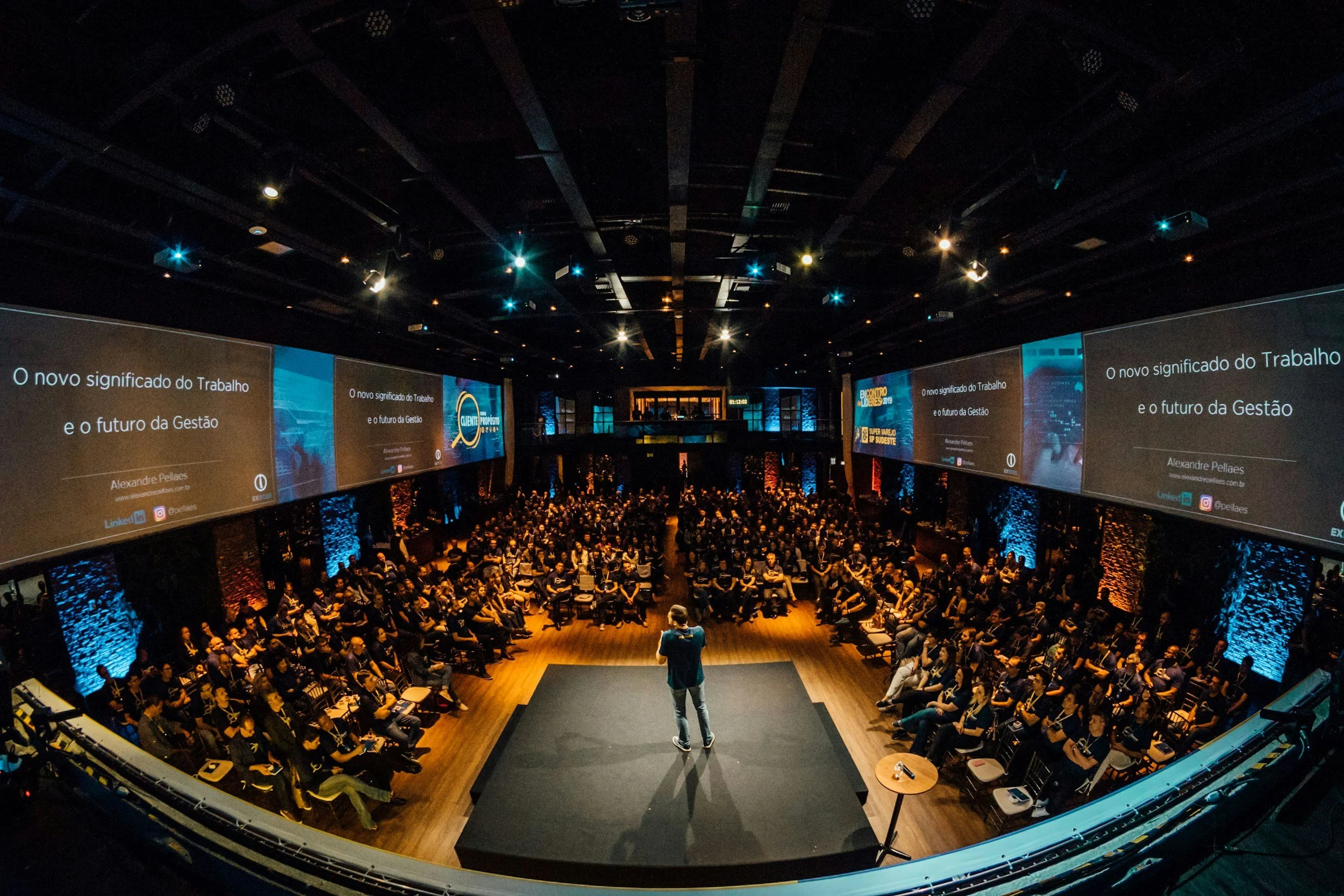
Katrina Kroetch
Virtual Magic Show for a Large Audience: What Changes Above 100 People

Virtual Magic Show for a Large Audience: What Changes Above 100 People

Most advice about virtual entertainment assumes a team of twenty five with cameras on and everybody's name visible. Plenty of bookings aren't that at all: an all hands of eight hundred, a customer webinar with twelve hundred registered, or a conference's online audience spread across every time zone you operate in.

Those are different events and they need different decisions. I'm Magical Katrina, an award winning magician and mentalist, and I want to set out what changes when a virtual magic show is for hundreds of people rather than dozens, and what stays exactly the same.

The Cost Doesn't Scale With the Headcount

Start with the commercial point, because it's the strongest argument for doing this at scale. An online performance costs the same for eight hundred people as it does for eighty, since there's one performance and one hour of my time regardless of how many windows are watching.

My virtual shows start around fourteen hundred dollars, and the cost per attendee at a large all hands becomes extremely small. For an internal communications team that has been told to do something meaningful for the whole company on a limited budget, this is one of the few options that genuinely gets better the more people you have.

Interaction Has to Be Engineered, Not Assumed

The real difference at scale. With twenty five people I can involve individuals by name, respond to what somebody says, and work the room much as I would in person. With eight hundred, that spontaneity has to be replaced by structure.

That's a design question rather than a limitation. Participation at scale runs through things everybody can do at once: a choice made in their own heads, something held up at home, an action taken simultaneously, a poll, or the chat. The experience of being personally involved is entirely achievable for a thousand people. It just has to be built deliberately rather than arising naturally.

Everybody Should Do Something in the First Few Minutes

Practically the most important decision. A large virtual audience decides very early whether this is something they're part of or something playing at them, and once they've decided the second thing, they open their email and you've lost them.

Asking the whole audience to do something small in the opening minutes changes that: hold up a hand, think of a word, grab a coin. It commits people physically, which matters enormously when the alternative is a passive window in a browser tab. At eight hundred people this is the single highest leverage choice in the whole hour.

Cameras Off Is Fine, and You Should Say So

Worth settling in advance. At twenty five people, cameras on transforms the experience. At eight hundred, cameras are usually off by platform default and that's completely workable, which is worth telling your performer so they plan for it rather than discovering it.

A performer accustomed to a visible room will struggle without one. A performer who works large audiences builds the show around chat, polls, and simultaneous actions instead, and uses a small number of volunteers brought forward rather than expecting the room. Decide this early, because it shapes everything about how the hour is built.

Volunteers Need Picking Before the Event

Worth arranging rather than improvising. At scale you can't scan a gallery for somebody willing, and trawling a chat of eight hundred for a volunteer wastes two minutes of everybody's time.

The straightforward version is identifying two or three willing people in advance, letting them know they'll be brought in, and having them ready to unmute. That takes one email and it makes the difference between a smooth segment and an awkward pause. It also means you avoid the person who volunteers enthusiastically and then can't get their microphone working.

Pick the Platform Deliberately

Worth deciding rather than defaulting. A meeting format with eight hundred participants behaves differently from a webinar format with the same number: one has a visible gallery and open chat, the other has attendees who can't see each other and a moderated question panel.

Both work and they produce different events. If you want the audience to feel like a crowd, meeting format with chat open does that. If you need control and your IT team prefers it, webinar format is fine provided the performer knows in advance, since the interaction has to be designed around what the platform actually permits.

Time Zones Decide Who Actually Attends

Worth being realistic about for a global audience. An hour that suits headquarters is the middle of the night somewhere, and a large multinational audience always has people for whom any single time is unreasonable.

Pick the least bad hour rather than the most convenient one, and consider two sessions if your spread genuinely can't be covered by one. A recording helps less than people expect for something live and interactive, since the whole value is in being there while it happens, so if a region matters to you, it's worth giving them their own session rather than a video.

Have Somebody Running the Room

Practically essential above a hundred people and frequently forgotten. Somebody on your side should handle admissions, mute problems, chat moderation, and the person who joins forty minutes late with their microphone open.

A performer managing an audience of eight hundred shouldn't also be managing the platform, and the events that go smoothly at scale all have a host doing that work quietly. It's one person for one hour and it's the difference between a professional event and one that keeps stopping.

What Doesn't Change at All

Worth saying, since scale makes people anxious. The magic works identically. Astonishment doesn't dilute across a larger audience, nobody's reaction is diminished by the fact that seven hundred other people are also reacting, and the quality of the hour is unaffected.

What's lost is individual recognition, which matters for a team of twenty and matters very little for a company wide event where most attendees wouldn't have been named anyway. What's gained is the thing a large organization almost never gets, which is the entire workforce experiencing the same moment simultaneously.

Why Book Magical Katrina

If you're programming for a large online audience, here's my case. I'm a member of the Magic Circle in London and the Academy of Magical Arts in Hollywood, I've earned multiple magic awards, and I've performed for clients including Formula 1, the Olympics, Porsche, Prada, Zapier, and the Ritz Carlton, with appearances on Penn & Teller: Fool Us and Masters of Illusion. I build shows around simultaneous participation rather than a visible gallery, I work in your existing platform in either meeting or webinar format, my fee is the same whether eighty or eight hundred people attend, and I've performed for audiences across more than twenty countries.

Frequently Asked Questions

Does it cost more for a bigger audience?

No, since there's one performance regardless of how many windows are watching, so the cost per attendee falls as the audience grows. My virtual shows start around fourteen hundred dollars, which for a large all hands makes this one of the few options that gets better the more people you have.

Can a thousand people really be involved?

Yes, but it has to be engineered rather than assumed. Participation at scale runs through things everybody does at once: a choice made in their own heads, something held up at home, a simultaneous action, a poll, or the chat, and the feeling of being personally involved is entirely achievable.

What's the most important thing to get right?

Having everybody do something small in the first few minutes, since a large audience decides early whether they're part of this or being played at, and once they decide the second thing they open their email. Committing people physically early is the highest leverage choice in the hour.
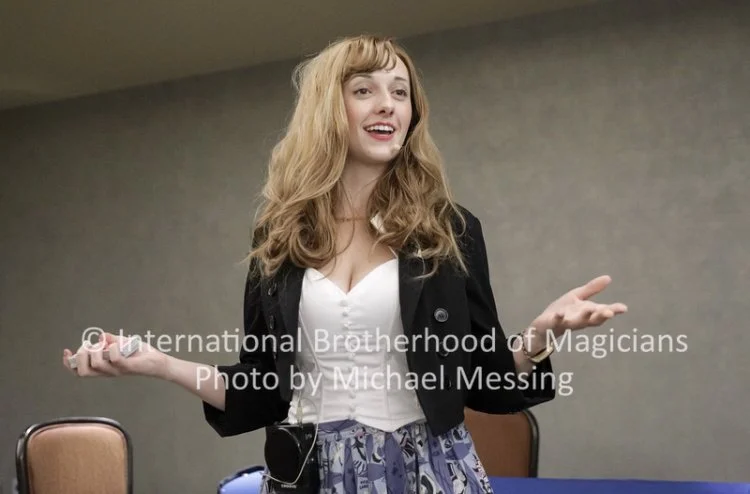
Our cameras will all be off. Is that a problem?

Not at all, but say so in advance so it's planned for rather than discovered. A performer used to a visible room will struggle, whereas one who works large audiences builds around chat, polls, and simultaneous actions, with a few volunteers brought forward rather than expecting the gallery.

How do volunteers work at this size?

Arrange them beforehand, since you can't scan a gallery of eight hundred and trawling the chat wastes everybody's time. Identify two or three willing people, tell them they'll be brought in, and have them ready to unmute, which also avoids the volunteer whose microphone doesn't work.

Meeting format or webinar format?

Either, provided the performer knows which. Meeting format with chat open makes the audience feel like a crowd, while webinar format gives you and your IT team more control, and the interaction has to be designed around what the platform actually permits.

What about global time zones?

Pick the least bad hour rather than the most convenient, and consider two sessions if one can't cover your spread. A recording helps less than people expect, since the value of something live and interactive is being there, so a region that matters is better served by its own session.

What do we need to provide on the day?

One person running the room: admissions, mute problems, chat moderation, and the late joiner with an open microphone. A performer managing eight hundred people shouldn't also be managing the platform, and every event that runs smoothly at scale has somebody doing that quietly.

Scale Is an Advantage Here

A virtual magic show for a large audience isn't a compromised version of a small one. The fee doesn't move with the headcount, the magic doesn't dilute, and you get the thing a big organisation almost never manages, which is everybody experiencing the same moment at once.

What it requires is deliberate design: participation everybody can do simultaneously, something physical in the first few minutes, volunteers arranged in advance, a platform choice made on purpose, and one person on your side running the room.

Reach out with your date, your platform, and roughly how many will attend, and I'll tell you how I'd build it.

Katrina Kroetch
Female Magician in New York for Finance and Professional Services Events

Female Magician in New York for Finance and Professional Services Events

Finance and professional services firms in New York entertain constantly, and the people they entertain have been to an enormous number of events. A client who attends forty dinners a year has sat through the same steakhouse evening repeatedly, and the firm hosting the forty first is trying to be the one they remember in March.

That's a harder brief than it sounds, and most of the budget goes on things that don't achieve it. I'm Magical Katrina, an award winning magician and mentalist, and I want to set out what booking a female magician in New York does for a firm event, and where it fits in a client entertaining program.

Skill Decides It

Let me be direct about the keyword. Skill in magic has nothing to do with gender, and you should book me because I'm genuinely excellent at this: thirteen years of performance, awards from my peers, and a room of experienced professionals who've seen a great deal and still can't account for what happened in front of them.

There's a bonus, and in this sector it's a real one. Finance and professional services rooms are historically male and the people in them notice who a firm puts in front of their clients. Somebody different in the program registers, and that's a genuine benefit on top of the work being good. Book me for the performance and take the rest as a bonus.

Your Clients Have Been to This Dinner Already

Start with the competitive problem. Your clients are entertained by your competitors with roughly the same budget, in roughly the same restaurants, with roughly the same wine, and the events blur into a single remembered evening.

Differentiation is the whole objective of a client entertaining line, and it isn't achieved by spending more on the same format. Something a client hasn't experienced at the other eleven dinners they attended this quarter is worth considerably more than an upgrade to the venue, and it costs substantially less than one.

The Point Is the Conversation

Worth keeping central. A client dinner exists so that your people talk to their people, and anything competing with that is working against the purpose however good it is.

This is why a full performance after dinner frequently disappoints at a client event: the room was mid conversation and has been asked to stop. Strolling magic during drinks, or something short between courses, supports the evening instead. It gives people a shared thing to react to, which makes the next twenty minutes of conversation easier, particularly for the junior person at the table who hasn't found an opening yet.

Juniors Have Nothing to Say to a Managing Director

Practically the most useful thing this does internally. At a firm dinner, your associates and analysts are seated near senior clients and have no natural route into conversation, so they talk to each other and the senior people talk to the senior people.

Something the whole table reacts to resolves that instantly, because a shared experience gives a junior person a first sentence they didn't have to invent. Firms spend a great deal on client relationships and then seat the people who will own those relationships in five years at a table where they say nothing all evening. This is a cheap fix for that.

Mentalism Suits This Audience Specifically

Worth knowing when deciding what to book. I work in both magic and mentalism, and professional services audiences respond to the mentalism particularly, because reading people, reading intent, and noticing what somebody hasn't said is adjacent to their working lives.

A room of lawyers, bankers, or consultants watches that with a different quality of attention than a general audience does. It also produces conversation afterwards that connects to their work rather than sitting apart from it, which at a client event is a useful property in anything you program.

Discretion Is Non Negotiable

Worth asking about directly, since these rooms are sensitive. Conversations at a firm event are confidential, deals are discussed, and a client may not want it widely known which bank's dinner they attended.

A performer who works these rooms reads a closed conversation and leaves it alone, doesn't approach a group that's clearly mid business, and doesn't photograph the room or post about the evening. Compliance and marketing teams at financial institutions care about this considerably, and it's one of the real differences between somebody who works corporate rooms and somebody who works parties. Ask the question.

New York Venues Vary More Than You'd Think

Practically relevant for format. These events happen in private dining rooms, firm offices with the chairs pushed back, members' clubs, hotel suites, and occasionally a trading floor after hours, and almost none of them have a stage or usable sound.

Close up magic needs no stage, power, or setup, works in a private dining room exactly as it is, and leaves nothing to clear. For a firm whose events happen in its own offices or in restaurants with no technical capability, that's the format that doesn't require a conversation with the venue.

Compliance and Procurement Will Ask

Worth preparing for, since this sector has process. Expect to be asked for a certificate of insurance, a W9, standard terms, and in some firms a supplier onboarding form before anything can be paid.

A performer who can produce all of that within a day is a different proposition from one who can't, and if you've worked in this sector you already know which one costs you a fortnight. Ask for the paperwork at the point of booking rather than when your finance team asks for it, since that's the step that delays otherwise straightforward bookings.

A Note on "Local vs. Traveling In"

Worth knowing: I'm based in the Los Angeles area and travel to New York regularly for corporate events. Travel is discussed openly and factored into the quote rather than being your problem to arrange, and for the contested weeks in the autumn and December it's worth asking early.

Why Book Magical Katrina

If you're programming a firm event, here's my case. I'm a member of the Magic Circle in London and the Academy of Magical Arts in Hollywood, I've earned multiple magic awards, and I've performed for clients including Formula 1, the Olympics, Porsche, Prada, Zapier, and the Ritz Carlton, with appearances on Penn & Teller: Fool Us and Masters of Illusion. I work magic and mentalism so this audience gets the version that suits them, I read a closed conversation and leave it alone, I need no stage, power, or sound so a private dining room works as it is, and I'm fully insured with a certificate and standard paperwork available the day you ask.

Frequently Asked Questions

Why not just spend more on the venue?

Because your clients are entertained by your competitors with similar budgets in similar restaurants, so the evenings blur. Something a client hasn't experienced at the other eleven dinners this quarter differentiates you considerably more than an upgrade, and costs substantially less.

Won't entertainment interrupt the conversation?

Only if you book the wrong format. A full performance after dinner asks a room that was mid conversation to stop, whereas strolling during drinks or something short between courses gives people a shared thing to react to and makes the next twenty minutes easier.
How does this help our junior people?

It gives them an opening, since associates seated near senior clients usually have no route into conversation and end up talking to each other. A shared experience hands them a first sentence they didn't have to invent, which matters because they'll own those relationships in five years.

Magic or mentalism for this audience?

Mentalism lands particularly well, since reading people and noticing what somebody hasn't said is adjacent to the working lives of lawyers, bankers, and consultants. It also produces conversation afterwards that connects to their work rather than sitting apart from it.

Our conversations are confidential. Is that an issue?

It shouldn't be, and ask about it directly. A performer who works these rooms reads a closed conversation and leaves it alone, doesn't approach a group that's mid business, and doesn't photograph or post about the evening, which compliance and marketing teams care about considerably.

Will it work in a private dining room?

Yes, since close up magic needs no stage, power, sound, or setup and leaves nothing to clear. That suits a sector whose events happen in private dining rooms, members' clubs, firm offices with the chairs pushed back, and restaurants with no technical capability.

What paperwork will you need to provide?

A certificate of insurance, a W9, standard terms, and a supplier onboarding form if your firm uses one. Ask for all of it at the point of booking rather than when finance does, since that's the step that delays otherwise straightforward bookings in this sector.

How far ahead should we book?

Earlier for the autumn and December weeks, which are the contested ones, and a few weeks is frequently enough outside those. If you run a recurring client entertaining program, setting dates in advance is simpler than arranging each event individually.

Be the Evening They Remember

A client entertaining budget is spent to be remembered, and the format that achieves that isn't a better version of the dinner your competitors are also hosting. Booking a female magician in New York gives your clients something they haven't had elsewhere, supports the conversation rather than interrupting it, hands your junior people a way into the room, and needs nothing from a private dining room.

Book it because the performance is good and will stand up to a demanding audience. That it's somebody your clients haven't seen at the other eleven dinners is a bonus on top.

Reach out with your date, venue, and roughly who's attending, and I'll tell you how I'd work the evening.

Katrina Kroetch
Strolling Magician New York for Fashion and Brand Events

Strolling Magician New York for Fashion and Brand Events

A fashion or brand event in New York has a particular problem that corporate events don't. The guests are press, buyers, stylists, and people with followings, they are attending three things that evening, and the room they are standing in is competing for their time against the two parties they haven't got to yet.

Holding that room for an extra forty minutes is the entire objective. I'm Magical Katrina, an award winning magician and mentalist, and I want to set out what a strolling magician New York booking does at a brand event, and why it suits this audience better than most programming.

Your Guests Are Leaving Soon

Start with the honest premise. At a showroom evening, a press preview, a launch party, or a Fashion Week adjacent event, a meaningful proportion of the room arrived knowing roughly how long they'd stay and where they're going next.

That reframes what good programming does here. You're not entertaining a captive audience, you're giving people a reason to stay past the point they'd planned to leave, because a half empty room an hour in reads badly to everybody still in it and to anybody photographing it. Anything that keeps the room full longer is doing commercial work rather than decorative work.

Nobody Will Sit Down or Face Forward

The format constraint, and it's absolute. These events are standing, moving, circulating affairs with no seating plan and no appetite for a scheduled performance that asks the room to stop and watch.

A program element announced from a microphone empties a fashion room rather than filling it. Something moving through the space works because it requires no compliance: guests encounter it in the group they're already standing in, give it the attention they want to give it, and go back to their conversation. For a room with this much self direction, that's the only format that doesn't fight the evening.

It Has to Suit the Brand, Not Just the Room

Worth taking seriously, since this audience reads tone instantly. A brand event has a carefully built aesthetic, and entertainment that sits outside it is worse than no entertainment, because it tells the room something about the brand's judgment.

Magic can be elegant, restrained, and genuinely sophisticated, or it can be none of those things, and the difference is entirely in who you book. Ask to see footage of the performer working rooms like yours, and ask directly how they'd pitch the tone for your brand. Somebody who works luxury and fashion rooms regularly will have a straightforward answer, and that question is the most useful one in the process.

The Content Problem Nobody Mentions

Practically relevant for anybody measuring this event. A brand evening needs guests to post, and the room itself is frequently the only thing to photograph, which means everybody's content looks like everybody else's and the volume is lower than the budget deserved.

Something happening in the room gives people a thing worth filming that isn't the product shot they already have. That's a genuine return on an entertainment line and it's the argument I'd lead with if you're justifying the spend internally, since a brand event's reach is now a measurable output rather than an impression.

Press and Buyers Are Working

Worth considering, since this audience isn't off duty. An editor is assessing a collection, a buyer is making decisions, and both are being approached by brand people all evening with a version of the same conversation.

A few minutes of something genuinely surprising is a break from that, and it makes the conversation afterwards warmer. The practical version of this: your team's chance to talk properly to the editor they wanted is considerably better after that editor has had an unexpectedly good two minutes than before it.

It Gives Your Team an Opening

The underrated use. Your brand team's job that evening is to speak to specific people, and approaching a stranger holding a drink in a loud room is awkward for everybody involved.

Something in the room creates natural openings, because two people who just reacted to the same thing have an obvious first sentence available to them. For an event whose purpose is relationships rather than attendance, that's structural rather than incidental, and it's why strolling outperforms a stage act at a brand night even when the stage act is better.

New York Spaces Have No Infrastructure

Practically important here more than almost anywhere. These events happen in showrooms, galleries, lofts in Tribeca or Chelsea, retail spaces after hours, and rooftops, none of which have a stage, usable sound, spare power, or a technical crew.

Close up magic needs none of it and leaves the space exactly as the brand built it, which matters when somebody has spent two days styling a room that cannot have a speaker stand in the middle of it. If your venue is a retail floor that opens at ten tomorrow, entertainment with nothing to install and nothing to strike is the only sensible option.

Arrival Windows Are Long and Unpredictable

Worth planning around. A New York fashion crowd arrives across two hours or more, because they're coming from other events, from shows that overran, and from across a city where nothing runs to time.

Programming that starts with whoever is there and continues as the room changes composition is the right shape. The guests who arrived first should get something rather than standing in a half empty room, and the ones arriving at nine should encounter the same evening rather than its remains. Nothing should be scheduled for a single moment at an event like this.

A Note on "Local vs. Traveling In"

Worth knowing: I'm based in the Los Angeles area and travel to New York regularly for corporate and brand events. Travel is discussed openly and factored into the quote rather than being your problem to arrange. For September and February, booking early matters considerably, since the city's event calendar compresses sharply in those weeks.

Why Book Magical Katrina

If you're programming a brand event, here's my case. I'm a member of the Magic Circle in London and the Academy of Magical Arts in Hollywood, I've earned multiple magic awards, and I've performed for clients including Prada, Porsche, Formula 1, the Olympics, and the Ritz Carlton, with appearances on Penn & Teller: Fool Us and Masters of Illusion. I work luxury and brand rooms regularly and pitch the tone to match, I need no stage, power, or sound so a styled showroom stays exactly as built, I start with the first arrivals rather than a full room, and I'm fully insured with a certificate available for your venue.

Frequently Asked Questions

What's the actual objective here?

Keeping the room full longer, since a meaningful proportion of your guests arrived knowing how long they'd stay and where they're going next. A half empty room an hour in reads badly to everybody still in it and to anybody photographing it, so anything that extends the stay is doing commercial work.

Will a fashion crowd watch a performance?

Not a scheduled one, since these events are standing and circulating with no appetite for being asked to stop and face forward. Something moving through the space requires no compliance, so guests encounter it in the group they're already in and give it the attention they choose to.

How do we know it'll suit our brand?

Ask to see footage of the performer working rooms like yours and ask directly how they'd pitch the tone. This audience reads tone instantly, and entertainment outside your aesthetic is worse than none because it says something about the brand's judgment, so somebody who works these rooms will have a straightforward answer.

Does it help with content?

Considerably, since a brand evening needs guests to post and the room is frequently the only thing to photograph, which means everybody's content looks the same. Something happening in the room gives people a thing worth filming that isn't the product shot they already have.

Our guests are press and buyers. Is that a problem?

It's the reason to do it. They're working all evening and being approached with versions of the same conversation, so a few minutes of something surprising is a break, and your team's chance to talk properly to an editor is better after that editor has had an unexpectedly good two minutes.

How does it help our team?

It creates openings, since approaching a stranger holding a drink in a loud room is awkward and two people who just reacted to the same thing have an obvious first sentence. For an event about relationships rather than attendance, that's structural rather than incidental.

Will it work in our showroom?

Yes, since close up magic needs no stage, sound, power, or crew and leaves the space exactly as styled. That matters when somebody spent two days on a room that can't have a speaker stand in it, or when the venue is a retail floor opening at ten tomorrow.

Our guests arrive across the whole evening. Does that matter?

It's normal for New York and worth planning for, since people come from other events and shows that overran. Programming should start with whoever is there and continue as the room changes, so early guests get something and nine o'clock arrivals encounter the evening rather than its remains.

Keep the Room, Then Keep the Tone

A brand event in New York is judged on whether the room stayed full, whether the guests posted, and whether your team got the conversations they came for. A strolling magician New York booking serves all three: it extends the stay, it gives people something to film that isn't the product, and it hands your team an opening with the editor they'd otherwise have to approach cold.

The thing to get right is tone. Ask for footage, ask how they'd pitch it for your brand, and book somebody who works these rooms rather than somebody who works parties.

Reach out with your date, venue, and a sense of the brand, and I'll tell you how I'd pitch the evening.

Katrina Kroetch